Crawl Space Cleanup & Encapsulation in Belmont, North Carolina
Belmont sits on Piedmont clay that drains less than 0.2 inches per hour — trapping moisture against your foundation after every rain. Combined with high humidity from May through August and decades of vented crawl space construction, most Belmont homes are fighting a losing battle beneath the floor. Palm Build provides complete crawl space remediation: inspection, cleanup, mold treatment, vapor barrier installation, and dehumidification — engineered for Gaston County clay soil.
15 miles from Belmont 30-45 min Response IICRC Certified
Why Belmont Crawl Spaces Are Especially Vulnerable
Belmont's Piedmont clay soil, peninsula geography, and decades of vented crawl space
construction create a perfect storm of moisture problems beneath your home. These are
not maintenance issues — they are structural threats driven by geology and climate that
require engineered solutions.
<0.2"/hr
Clay drainage rate
70-90%
Summer humidity
80%+
Vented crawl space RH
60% RH
Mold growth threshold
Piedmont Clay Soil (<0.2 in/hr Drainage)
<0.2 in/hr
Clay drainage rate
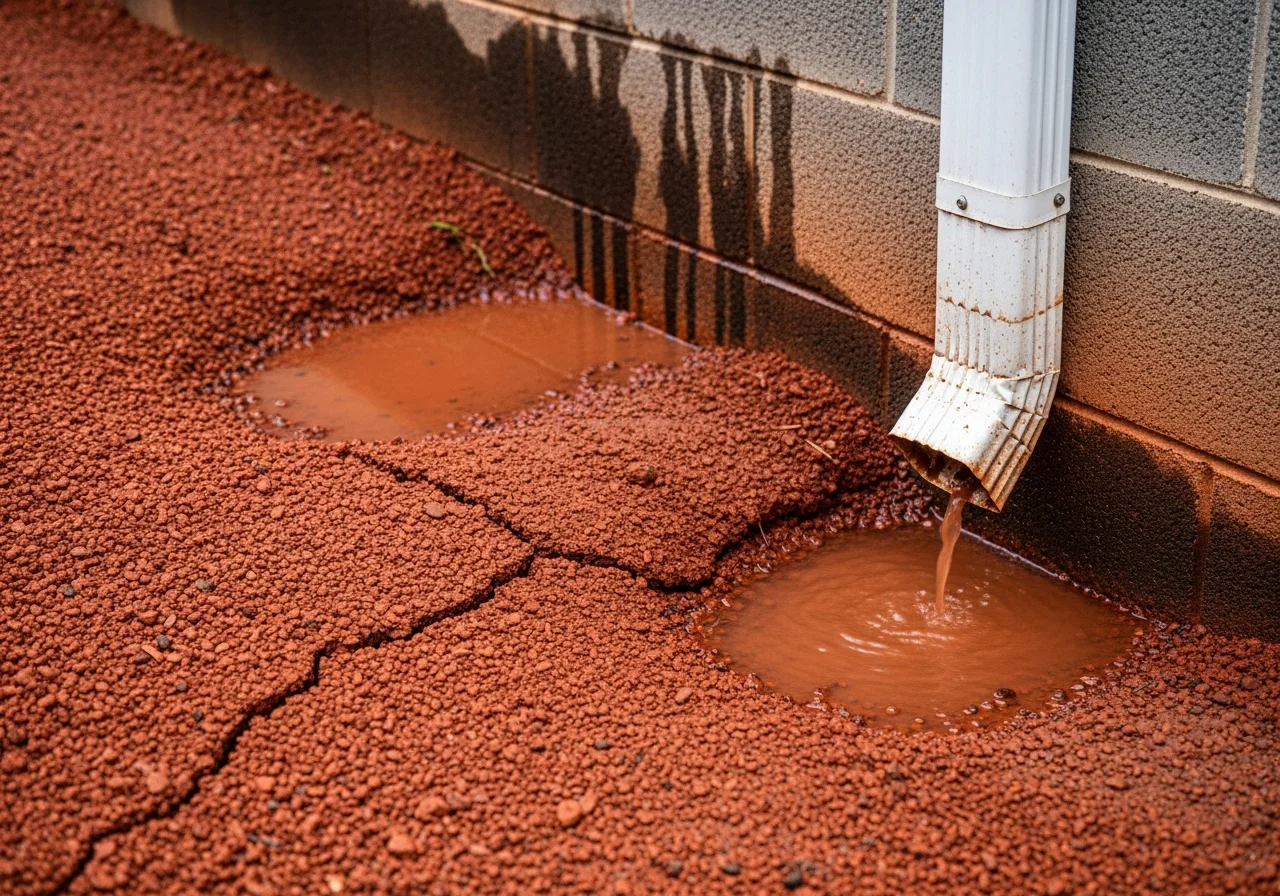
Belmont sits atop Piedmont clay that drains at less than 0.2 inches per hour. After every Gaston County rainstorm, water pools against your foundation for days — migrating through concrete block by capillary action and evaporating into the crawl space as a continuous moisture source. No passive ventilation system can overcome the moisture load that this clay delivers.
Peninsula Geography Amplifies Moisture
3 waterways
Surrounding Belmont
Belmont sits on a peninsula surrounded by the Catawba River, South Fork, and Lake Wylie. This geography means groundwater levels remain elevated year-round, and storm runoff from upstream converges around the town from multiple directions. Homes near the river corridor face both surface water intrusion and elevated water tables that push moisture up through crawl space floors.
Vented Construction Over Clay
80%+ RH
Vented crawl space in summer
Many Belmont homes — especially those built before 1985 — have vented crawl spaces over bare clay soil. The foundation vents were designed to circulate drying air, but in Belmont's humid subtropical climate, they deliver warm, moisture-laden air that condenses on cooler crawl space surfaces. Advanced Energy NC research found that vented crawl spaces consistently exceed 80% relative humidity during summer months.
High Humidity May Through August
70-90%
Outdoor humidity May-Aug
Outdoor humidity in Belmont reaches 70-90% from May through August — four continuous months where every cubic foot of air entering through foundation vents deposits condensation on cooler crawl space surfaces. Mold colonization begins at 60% relative humidity. In a vented Belmont crawl space, mold growth conditions are not occasional — they are the default state for nearly half the calendar year.
Belmont's Piedmont clay holds water against foundations for days after every rain — the
primary driver of crawl space failure in Gaston County homes.
Warning Signs Checklist
8 Signs Your Belmont Crawl Space Needs Professional Help
Crawl space problems announce themselves through symptoms you notice inside your home
long before you ever look beneath the floor. If you recognize three or more of these
signs in your Belmont home, a professional crawl space inspection is warranted.
Musty Odors on First Floor
Early warning
A persistent earthy or musty smell — especially noticeable when you first walk in from outside — indicates active mold in the crawl space migrating into living areas via the stack effect. This is not "old house smell." It is mold spores being drawn upward through the subfloor.
Sagging or Bouncy Floors
Structural risk
Floor joists that have absorbed moisture from a failing crawl space lose structural integrity progressively. What starts as a slight bounce underfoot becomes visible sagging. This indicates wood moisture content has exceeded 25% and active decay fungi are consuming structural wood.
High Indoor Humidity
Financial impact
If your Belmont home feels humid even with the AC running, crawl space moisture is migrating into conditioned space through the subfloor. Wet fiberglass insulation loses R-value and becomes a moisture wick. HVAC systems work harder, and homeowners routinely pay 20-30% more for cooling.
Condensation on Pipes & Ducts
Moisture indicator
Visible sweating on cold water pipes, HVAC ductwork, or metal surfaces in the crawl space means relative humidity has exceeded the dew point. In Belmont crawl spaces over clay, this is routine from May through September — and every drop feeds mold growth on adjacent wood surfaces.
Visible Mold on Crawl Space Surfaces
Advanced damage
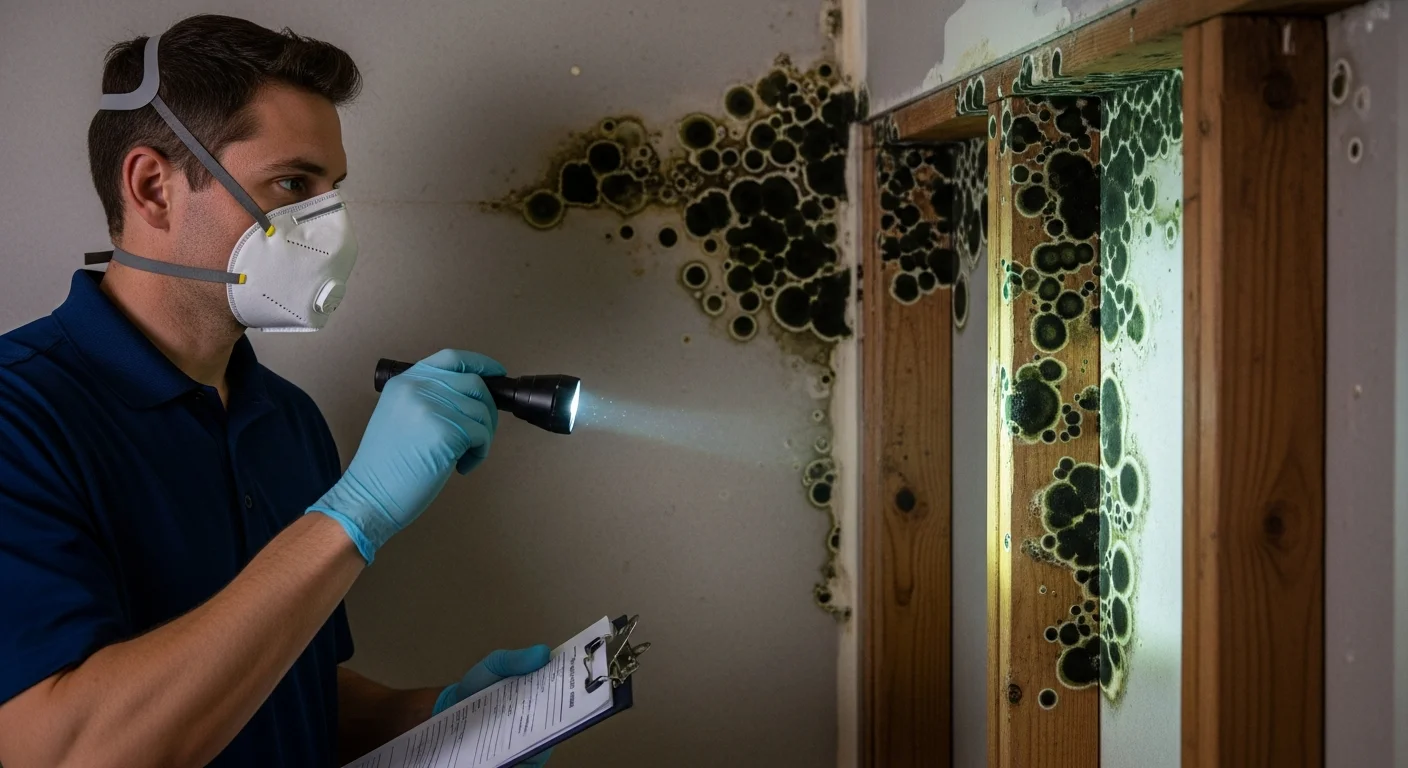
White, green, or black colonies on floor joists, sill plates, or subfloor indicate conditions have exceeded safe thresholds for months. By the time mold is visible, the problem is advanced — but the structure can still be saved with proper IICRC S520 remediation.
Pest Activity
Secondary damage
Termites, carpenter ants, and rodents are attracted to the warm, moist environment of a failing crawl space. Moisture-softened wood is easier for wood-destroying insects to colonize. If your pest control company finds repeated activity in the crawl space, moisture is the underlying attractant.
Standing Water After Rain
Critical
Belmont's clay soil holds water for days after rainfall. Any standing water visible in the crawl space — even half an inch — indicates a drainage failure that worsens with every storm. Standing water accelerates mold growth, wood rot, foundation deterioration, and pest entry.
Falling or Sagging Insulation
Moisture indicator
Fiberglass batt insulation between floor joists absorbs moisture from the crawl space below, becomes heavy, and falls away from the subfloor. Fallen insulation is one of the most visible symptoms of a failing crawl space — and once wet, it never dries properly and must be replaced.
Recognize three or more signs?
A professional crawl space inspection identifies the root cause and scope of work needed —
before damage progresses further.
Every Belmont crawl space requires an approach calibrated to its specific conditions. A
pre-1985 vented home near downtown demands different treatment than a 2000s build in
McLean. But the science follows a proven six-step sequence.
01
Inspection & Assessment
Day 1
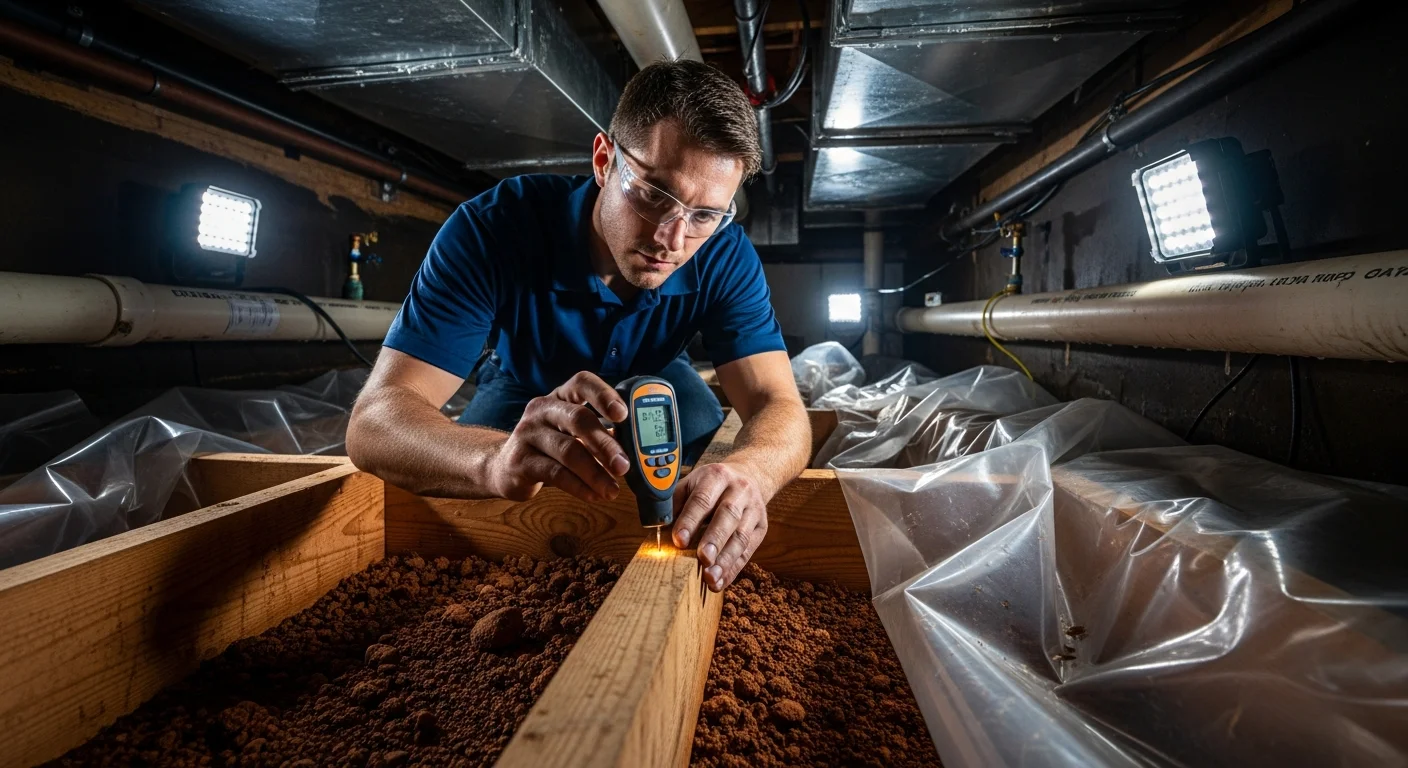
We enter the crawl space with thermal imaging cameras, pin-type moisture meters, and air quality monitors. Every structural member is tested for moisture content. Every surface is evaluated for mold. Soil moisture is measured at multiple points. Foundation walls are inspected for cracking and moisture intrusion paths. A timestamped report with photographs documents every finding.
02
Standing Water Removal
Days 1-2
If standing water is present — common after rain events on Belmont's clay soil — we extract with submersible pumps and truck-mounted units. The source is assessed: hydrostatic pressure through foundation walls, high water table from the nearby Catawba River, plumbing failure, or vent-driven rain entry. The source determines whether French drain installation is required before encapsulation.
03
Debris & Contamination Cleanup
Days 2-4
All fallen insulation, old vapor barriers, construction debris, and contaminated materials are removed from the crawl space. Structural framing is assessed: rotted sill plates are sistered or replaced, deteriorated floor joists reinforced, subfloor integrity verified. In older Belmont homes, corroded plumbing beneath the floor is identified and replaced to prevent future leaks.
04
Mold Remediation (If Needed)
Days 3-10
If active mold is present — and in vented Belmont crawl spaces over clay, it almost always is — full IICRC S520 remediation precedes any encapsulation. Negative air containment, HEPA air scrubbers, contaminated insulation removal, EPA-registered antimicrobial treatment. Heavily colonized framing is media-blasted to bare wood. Third-party lab air quality testing confirms clearance before encapsulation begins.
05
Vapor Barrier Installation
Days 5-14
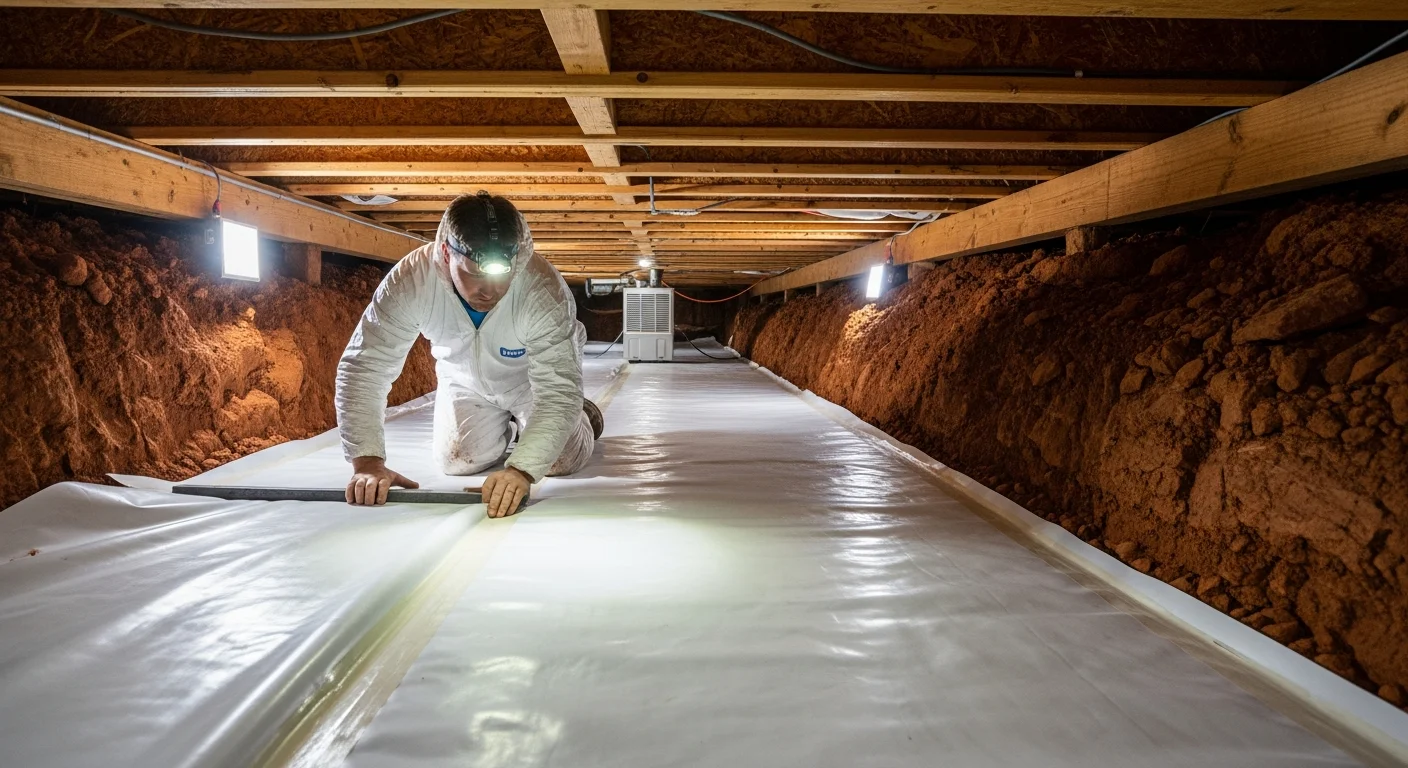
A 12-20 mil reinforced vapor barrier is installed across the entire crawl space floor, sealed to foundation walls with mechanical fasteners and waterproof tape, overlapped 12+ inches at all seams. NC State Extension recommends 6-8 mil minimum; we exceed that standard for Belmont's aggressive clay conditions. All foundation vents are permanently sealed. Support columns, plumbing penetrations, and HVAC connections are individually wrapped.
06
Dehumidification & Commissioning
Days 7-21
A commercial-grade crawl space dehumidifier is installed and set to maintain below 55% relative humidity year-round. If clay soil drainage requires it, an interior perimeter French drain with sump pump is installed. Crawl space wall insulation is applied. The 3-4 inch termite inspection gap required by NC code is maintained. Final moisture readings and a commissioning report are provided.
Reinforced vapor barrier installation in a Belmont crawl space — sealed to foundation
walls, overlapped at seams, and ready for dehumidification commissioning.
The Science Behind Belmont's Moisture Problems
How Piedmont Clay Destroys Belmont Crawl Spaces
Most crawl space companies treat symptoms — spraying mold and installing dehumidifiers —
without addressing why the moisture exists. In Belmont, the answer is beneath the
surface: Piedmont clay that acts like a sponge pressed against your foundation.
Understanding these mechanisms is the difference between a fix that lasts and one that
fails within two years.
Soil Drainage Rate Comparison — Why Belmont Is Different
Sandy coastal (FL)
6+ in/hrLow
Sandy loam (Piedmont)
2-6 in/hrLow-Moderate
Silt loam
0.5-2 in/hrModerate
Piedmont clay (Belmont)
<0.2 in/hrSevere
Hydrostatic Pressure Against Foundations
5+ hours
Saturation duration per storm
When Piedmont clay saturates after rainfall, it presses against concrete block foundation walls with measurable hydrostatic pressure. This forces moisture through the block by capillary action — water wicks from the exterior face to the interior face and evaporates into the crawl space. The block does not need to crack for this to occur. It is a continuous process delivering gallons of moisture per day through apparently intact foundation walls.
Shrink-Swell Cycles
2-8%
Volume change per cycle
Piedmont clay actively changes volume with moisture. When wet, it expands and presses tightly against foundations. When dry, it contracts and pulls away, creating gaps between soil and foundation wall. When rain returns, water rushes through these gaps directly into the crawl space before the clay swells closed again. Over years, this cycle shifts foundations, cracks mortar joints, and creates permanent water channels into Belmont crawl spaces.
Soil Evaporation Into Bare Earth Crawl Spaces
10-15 gal/day
Soil evaporation rate
The EPA identifies bare earth crawl spaces as common hidden mold sites. Bare soil in a Belmont crawl space continuously evaporates moisture — up to 10-15 gallons per day for a typical 1,200 square foot space. Because Piedmont clay retains moisture far longer than sandy soils, this evaporation rate is sustained for days after each rain. A properly installed vapor barrier is the only way to stop this moisture pathway.
NC State Extension Guidance
6-8 mil
Minimum barrier per NC State
NC State Extension recommends a minimum 6-8 mil vapor barrier for crawl spaces over clay soil. Their research documents that bare earth crawl spaces on Piedmont clay consistently exceed the 60% relative humidity threshold that triggers mold growth. The guidance is clear: vapor barrier installation is not optional for homes on clay — it is the minimum intervention needed to prevent structural damage.
Piedmont clay holds water against Belmont foundations for days — the root cause of crawl
space moisture problems across Gaston County.
Treating symptoms without addressing soil is throwing money away
A dehumidifier alone cannot overcome the moisture load that Belmont's clay delivers
through your foundation. Mold treatment without encapsulation will see regrowth within
one season. Palm Build addresses the complete chain: exterior grading, interior
drainage, vapor barrier, encapsulation, and dehumidification — in that order.
Partial Barrier vs. Full Encapsulation: What Belmont Homes Need
NC State Extension recommends a minimum 6-8 mil vapor barrier for crawl spaces. But for
Belmont's Piedmont clay conditions, a partial barrier is a half-measure that delays
failure without preventing it. Full encapsulation — heavy-duty barrier, sealed vents,
and mechanical dehumidification — is the only approach that permanently solves the
moisture equation.
Vapor Barrier Thickness Comparison
4-6 mil basic
3-7 yearsTemporary only
6-8 mil (NC State minimum)
5-10 yearsPartial barrier
12-20 mil reinforced
20-25+ yearsFull encapsulation
Partial Vapor Barrier
Vents open — moisture continues to enter
70-90% RH
Summer humidity with vents open
6-mil polyethylene sheet over bare soil
May or may not seal to foundation walls
Foundation vents remain open
No mechanical dehumidification
Degrades in 5-10 years on Piedmont clay
Does not address humidity from vents
NC State Extension minimum: 6-8 mil
Lower upfront cost — but repeated repairs
Full Encapsulation
Sealed, conditioned, controlled
<55% RH
Year-round with dehumidification
12-20 mil reinforced vapor barrier — entire floor
Sealed to foundation walls with mechanical fasteners
All foundation vents permanently closed
Commercial dehumidifier maintains <55% RH
Crawl space wall insulation installed
12+ inch seam overlaps with waterproof tape
Columns, pipes, and penetrations individually wrapped
Higher upfront cost — but decades of protection
A partial barrier on Belmont clay is a temporary fix
When Piedmont clay delivers moisture through your foundation continuously and humidity
exceeds 70% for four months, a vapor barrier with open vents cannot maintain safe
conditions. Full encapsulation with sealed vents and mechanical dehumidification is
the only permanent solution for Belmont's soil and climate combination.
Crawl Space Cleanup & Encapsulation Costs in Belmont
Crawl space remediation costs in Belmont vary based on crawl space size, moisture
severity, mold presence, structural damage, and whether drainage correction is needed.
Belmont's aggressive Piedmont clay and vented construction typically push projects
toward the higher end of these ranges.
Cleanup & Encapsulation
No mold / minor surface mold only
Crawl space inspection$0 - $300
Basic crawl space cleanup$1,500 - $5,000
Full encapsulation (vapor barrier + sealed vents)$5,000 - $15,000
Insurance note: Crawl space encapsulation is generally
classified as home improvement and is not covered by homeowners insurance. However, if crawl
space damage resulted from a sudden covered event (burst pipe, storm breach), the remediation
of that specific damage may be covered. Mold limits in NC policies are typically $5,000-$10,000.
Palm Build documents every project with cause-of-loss analysis to identify claimable portions.
Our Belmont Work
Crawl Space Remediation in Belmont Homes
From Piedmont clay, active mold, and failing vapor barriers to fully sealed,
dehumidified environments — here is what our crawl space work looks like in Belmont and
Gaston County.
Crawl space inspection reveals moisture damage on floor joists over Piedmont clay in Belmont
Full encapsulation complete — reinforced vapor barrier sealed to foundation walls with mechanical fasteners
Piedmont clay holds water against Belmont foundations for days — the root cause of crawl space moisture
Moisture meter testing on floor joists — readings above 19% confirm active decay risk in Belmont crawl spaces
The Palm Build Difference
Why Belmont Homeowners Choose Palm Build for Crawl Space Work
Crawl space companies in the Belmont area range from vapor-barrier-only installers to
mold sprayers who never address the moisture source. Palm Build is the full-service
crawl space remediation team that solves the complete problem — from clay soil to
conditioned crawl space — in a single project.
1
Piedmont Clay Soil Expertise
We do not just install vapor barriers — we understand why Belmont crawl spaces fail at the soil level. Piedmont clay requires specific grading corrections, interior drainage designs sized for sub-0.2 inch/hour infiltration rates, and encapsulation details that account for hydrostatic pressure and shrink-swell cycles. Generic crawl space companies miss these details.
2
IICRC Certified Technicians
Our crawl space teams hold IICRC certifications in Water Damage Restoration (WRT), Applied Microbial Remediation (AMRT), and Applied Structural Drying (ASD). When mold is present — which it is in the vast majority of vented Belmont crawl spaces — we follow S520 protocol with containment, HEPA scrubbing, and third-party verification.
3
Full-Service: Mold to Structure to Encapsulation
Unlike companies that only install vapor barriers or only treat mold, Palm Build handles every component as a single coordinated project: mold removal, structural joist repair, plumbing replacement, drainage correction, encapsulation, and dehumidification. One contractor, one timeline, one point of accountability.
4
Gaston County Permit Knowledge
NC requires building permits for most vented-to-closed crawl space conversions. We handle all Gaston County permit applications, ensure compliance with NC code requirements (Class I vapor barrier, mechanical dehumidification, termite inspection gap), and schedule inspections as part of our standard scope.
5
Radon-Aware Encapsulation
Gaston County is EPA Zone 2 for radon potential. Every encapsulation we design considers radon mitigation. Sealed vapor barriers inherently reduce radon entry, and if testing shows elevated levels, a sub-membrane depressurization system integrates directly into the encapsulation — no separate project needed.
6
Long-Term Monitoring Approach
Every encapsulated crawl space we commission includes a dehumidifier set to maintain below 55% RH year-round, final moisture readings on all structural wood, and a comprehensive photo report. We recommend annual crawl space inspections for Belmont homes because clay soil conditions can change — and a 15-minute check catches problems before they become projects.
Common Questions
Belmont Crawl Space FAQ
How much does crawl space encapsulation cost in Belmont NC?
Crawl space encapsulation in Belmont typically ranges from $5,000 to $15,000 depending on crawl space size, vapor barrier thickness, and whether drainage correction or dehumidification is included. Basic cleanup runs $1,500 to $5,000. If mold remediation is needed — which is common in Belmont's vented crawl spaces over clay soil — add $3,000 to $12,000. Palm Build provides detailed written estimates after a thorough inspection. Call (704) 464-0121 to schedule.
Why are Belmont crawl spaces so prone to moisture problems?
Belmont sits on Piedmont clay soil that drains at less than 0.2 inches per hour. After every rainstorm, water sits against your foundation for days, migrating through concrete block by capillary action. Combined with outdoor humidity reaching 70-90% from May through August, vented crawl spaces in Belmont become moisture traps — the vents deliver humid air that condenses on cooler crawl space surfaces. This is a geology and climate problem, not a maintenance problem.
What thickness vapor barrier do I need for a Belmont crawl space?
NC State Extension recommends a minimum of 6-8 mil vapor barrier for crawl spaces. However, for Belmont's aggressive clay soil conditions, Palm Build installs 12-20 mil reinforced vapor barriers for full encapsulation projects. Thinner barriers tear during installation and foot traffic, and they degrade faster in the acidic conditions created by Piedmont clay soil. The barrier must cover the entire floor, seal to foundation walls, and overlap 12+ inches at all seams.
Should I seal the vents in my Belmont crawl space?
Yes. Advanced Energy NC research proved that vented crawl spaces in humid climates like Belmont's are wetter than sealed crawl spaces. The vents were designed to dry the space, but in practice they deliver warm, humid air that condenses on cooler surfaces inside. Sealing vents is part of full encapsulation, which also requires a vapor barrier over the soil and mechanical dehumidification to maintain below 55% relative humidity year-round. NC building code permits closed crawl spaces when these conditions are met.
Does the EPA consider bare earth crawl spaces a mold risk?
Yes. The EPA identifies bare earth crawl spaces as common hidden mold sites. Bare soil in a crawl space continuously evaporates moisture — up to 10-15 gallons per day for a typical 1,200 square foot crawl space. This moisture feeds mold growth on floor joists, sill plates, and subfloor. In Belmont, where Piedmont clay retains moisture far longer than sandy soils, the evaporation rate is sustained for days after each rain event. A properly installed vapor barrier eliminates this moisture source.
Is radon a concern in Belmont NC crawl spaces?
Gaston County is classified as Zone 2 for radon potential by the EPA, meaning moderate levels are possible. Radon is a naturally occurring radioactive gas that enters homes through soil and can accumulate in enclosed spaces. Crawl space encapsulation with a sealed vapor barrier significantly reduces radon entry into the home. If radon testing shows elevated levels, a sub-membrane depressurization system can be integrated into the encapsulation design. Palm Build recommends radon testing as part of any crawl space project in Belmont.
How long does a crawl space cleanup and encapsulation take in Belmont?
A basic cleanup and encapsulation takes 3-5 days for a typical Belmont home. If mold remediation is required, add 3-7 days for containment, treatment, and clearance testing. Projects requiring French drain installation or structural joist repair may take 2-3 weeks total. Palm Build provides a detailed timeline during the inspection phase so you know exactly what to expect. Emergency crawl space issues — standing water, sewage backup — receive same-day response from our Charlotte team.
Moisture Under Your Belmont Home? Every Day Makes It Worse.
Piedmont clay does not stop pushing moisture against your foundation. Mold does not stop growing when humidity exceeds 60%. Palm Build's Charlotte-based team provides complete crawl space remediation — from inspection through encapsulation — engineered specifically for Gaston County soil and climate conditions.