(888) 245-5155
Call Now 24/7
Storm damage to a residential home in Belmont NC with fallen tree limbs and damaged roofing after severe weather in Gaston County
BELMONT NC — 24/7 STORM DAMAGE RESPONSE

Storm & Wind Damage Restoration in Belmont, North Carolina

From the May 2024 tornado's 110 mph winds to Hurricane Helene's catastrophic inland flooding, Belmont faces escalating severe weather on its Catawba River peninsula. Palm Build's Charlotte-based team provides emergency tarping, water extraction, structural repair, and full reconstruction — with insurance coordination from the first call.

15 miles from Belmont 30-45 min Response IICRC Certified

30-45 min

Emergency Response

24/7

Dispatch Available

IICRC

Certified Technicians

Why Belmont Is at Risk

Belmont's Unique Storm Vulnerability

Belmont's peninsula setting between the Catawba River and Lake Wylie creates a storm risk profile unlike any other town in the Charlotte metro. River flooding, tornado-strength winds, and severe thunderstorms converge on a community whose geography amplifies every weather event.

Peninsula Geography

Belmont sits on a peninsula surrounded by the Catawba River, South Fork Catawba River, and Lake Wylie. During major storm events, water converges from three directions — upstream river surge, tributary backflow, and lake-level rise — creating flood conditions that most inland towns never experience. This geography amplifies flood risk far beyond what elevation alone would suggest.
Hurricane Helene Inland Flooding

Hurricane Helene struck September 27, 2024, pushing the Catawba River and its tributaries well beyond flood stage across Gaston County. Properties along the river corridor experienced catastrophic flooding that no one had seen in living memory. The federal disaster declaration covered Gaston County, and the event exposed how vulnerable Belmont's riverside and lakefront properties are to inland hurricane impacts.

May 2024 Tornado — 110 mph Winds

In May 2024, a tornado produced wind gusts up to 110 mph in the Belmont area, damaging the historic Belmont Drive-In and ripping through residential neighborhoods. Trees were uprooted, power lines downed, and roofing materials were torn from homes across the path. This event proved that Belmont is not immune to tornado-strength winds — not just the severe thunderstorms that are common in the Piedmont.

Year-Round Severe Thunderstorms

Belmont's position in the Piedmont thunderstorm corridor means severe weather from March through November. Heavy clay soil saturates quickly, weakening root systems on mature trees. When 60+ mph straight-line winds hit saturated ground, trees topple onto homes, vehicles, and power lines. Extended power outages compound damage — sump pumps fail, refrigerators thaw, and humidity triggers mold growth within 48 hours.

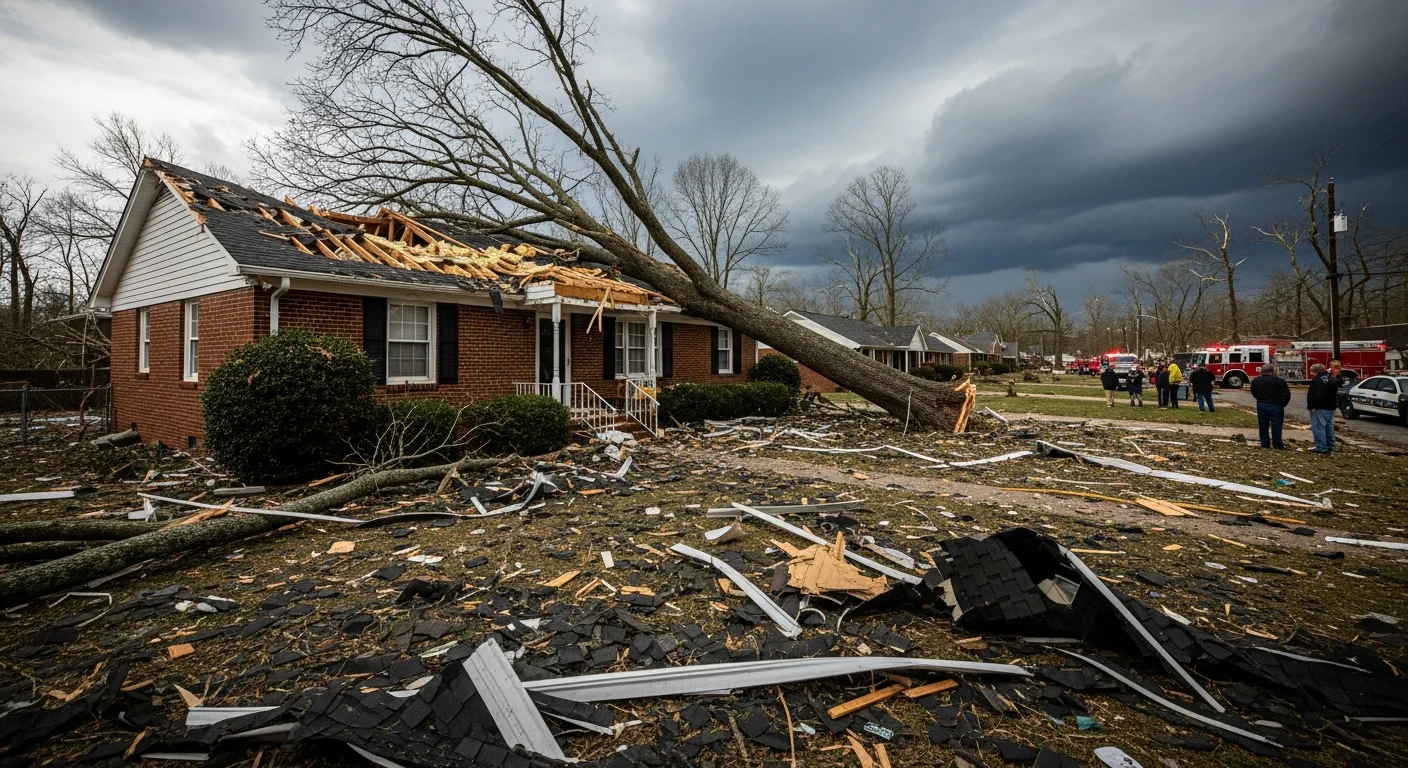
Storm damage to residential property in Belmont NC with fallen trees and debris across a Gaston County neighborhood
Belmont's peninsula geography amplifies storm damage — river flooding, wind channeling, and saturated clay soil all compound during major weather events.

Types of Storm Damage

How Storms Damage Belmont Homes

Severe weather damages Belmont homes in six distinct ways — and most major storms trigger multiple damage types simultaneously. Understanding the full scope is critical for both emergency response and insurance claims, because different damage types may be covered by different policies.

Immediate

Roof Wind Damage

High winds peel shingles, lift flashing, and crack ridge vents — creating entry points for water that may not become visible for days. Many of Belmont's homes in established neighborhoods like the Historic District and McLean have roofs approaching the end of their 20-25 year warranty, making them particularly vulnerable to wind lift. The May 2024 tornado's 110 mph gusts stripped entire roof sections from homes in its path.

Immediate

Fallen Trees & Limb Damage

Belmont's mature tree canopy — oaks, poplars, and pines — becomes a liability during severe storms. Piedmont clay soil saturates quickly, weakening root systems. A single mature oak weighing 10,000+ pounds can crush a roof, collapse walls, and sever utility lines when it topples. Established neighborhoods with dense canopy face the highest risk of tree-fall structural damage.

Within Hours

Wind-Driven Rain Intrusion

Rain driven horizontally by 60+ mph winds penetrates through damaged siding, cracked window seals, and compromised flashing. Even without obvious structural damage, wind-driven rain can push water behind exterior walls, into attic spaces, and through soffit vents. This hidden moisture leads to mold growth within 24-48 hours in Belmont's humid subtropical climate.

During Event

Flash Flooding & River Surge

Belmont's peninsula geography means flood water converges from the Catawba River, South Fork, and Lake Wylie simultaneously. Properties along the river corridor, in low-lying areas near Reflection Pointe, and downstream of tributary creeks face flash flooding during heavy rain. Hurricane Helene proved that even properties not in FEMA high-risk flood zones can experience catastrophic flooding.

Within 48 Hours

Power Outage Secondary Damage

Extended power outages from downed trees and utility damage cause cascading secondary damage. Sump pumps stop running, allowing crawl spaces and basements to flood. Refrigerators and freezers thaw, causing water damage and food contamination. Without HVAC, indoor humidity spikes above 60% — the threshold where mold colonizes drywall, carpet, and wood framing.

After Storm

Hail Damage

Hail accompanying severe thunderstorms cracks vinyl siding, dents metal roofing, fractures skylights, and pits the granule surface of asphalt shingles. Hail damage to shingles may not leak immediately but dramatically shortens roof life — the granule layer that protects against UV degradation is compromised. Insurance adjusters look specifically for hail impact patterns during claims assessment.

Recent Storm History

Belmont's Storm Timeline: Tornado, Hurricane, and Compounding Damage

In just five months during 2024, Belmont experienced a direct tornado hit and catastrophic hurricane flooding — two events that collectively caused more damage than the previous decade of storms combined. These events redefined Belmont's storm risk profile and exposed vulnerabilities in homes across every neighborhood.

Belmont Tornado — 110 mph Winds

Catastrophic

May 2024

A tornado tore through the Belmont area with wind gusts reaching 110 mph. The historic Belmont Drive-In sustained significant damage. Residential neighborhoods saw roofs stripped, trees uprooted from saturated clay soil, and power lines downed across multiple streets. Debris from shattered outbuildings and fencing was scattered across properties. This event shattered the assumption that Belmont only faces thunderstorm-level winds.

Hurricane Helene — Catastrophic Inland Flooding

Catastrophic

September 27, 2024

Hurricane Helene pushed catastrophic flooding far inland across western North Carolina and the Charlotte metro. The Catawba River and its tributaries surged well beyond their banks throughout Gaston County. Belmont's peninsula geography meant floodwaters approached from multiple directions — the Catawba to the east, the South Fork to the west, and Lake Wylie to the south. Properties along the river corridor experienced flooding not seen in modern records. Gaston County was included in the federal disaster declaration, with statewide damage totaling $59.6 billion.

Tropical Storm Debby — Pre-Saturation

Significant

August 2024

Tropical Storm Debby brought multi-day heavy rainfall to the Charlotte metro in August 2024, saturating the Piedmont water table across Gaston County. This pre-saturation proved critical — when Hurricane Helene arrived less than two months later, the ground had zero capacity to absorb additional rainfall. Belmont's clay soil, already holding maximum moisture, channeled Helene's rainfall directly into streams, rivers, and properties. Crawl spaces that survived Debby flooded during Helene.

Severe Thunderstorm Pattern

Recurring

2023-2025 (Recurring)

Gaston County has experienced an escalating pattern of severe thunderstorms producing 60-80 mph straight-line winds, damaging hail, and flash flooding. Each event topples additional trees weakened by previous storms, damages roofs already compromised by prior wind events, and further saturates clay soil that never fully dries between events. This compounding damage pattern means each storm causes more destruction than the last.

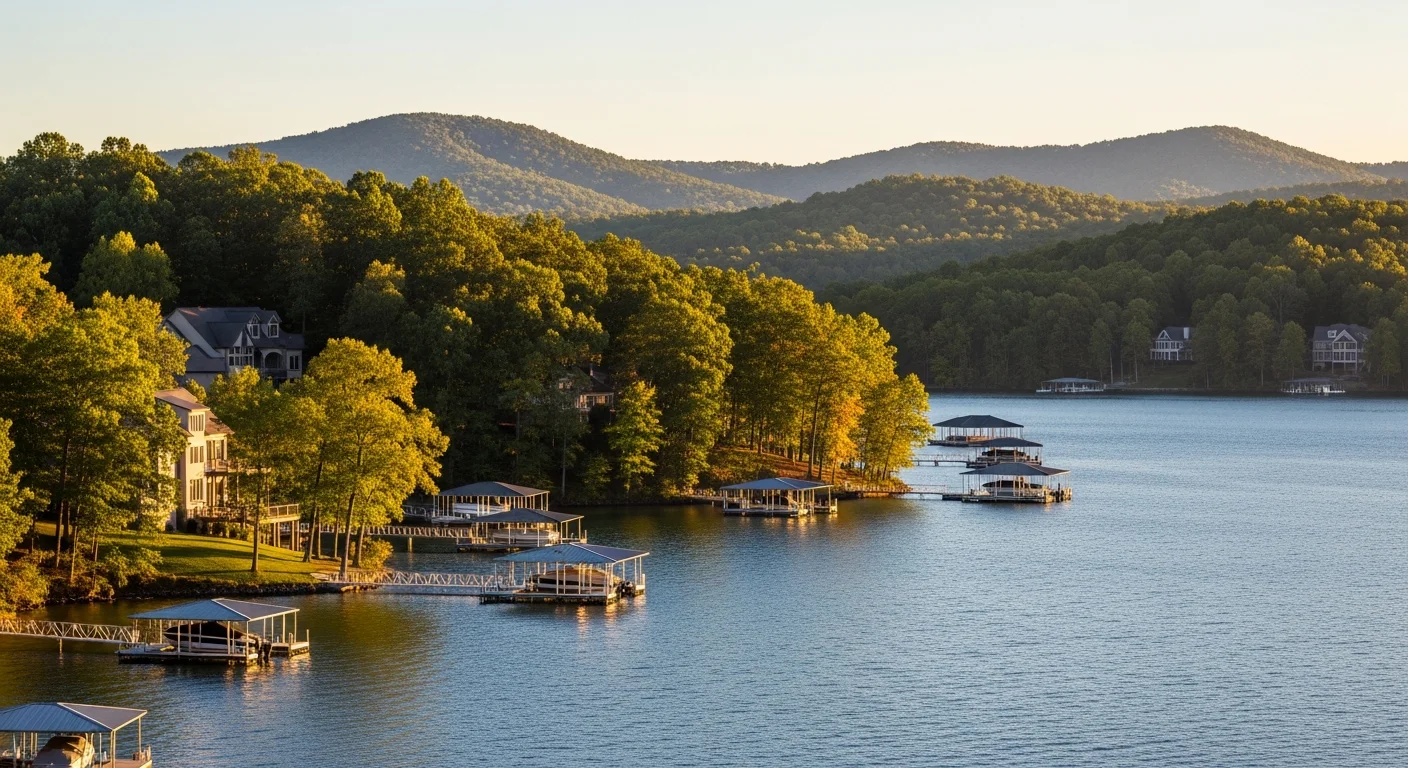
Lake Wylie shoreline near Belmont NC showing water levels after Hurricane Helene flooding in Gaston County
Belmont's peninsula between the Catawba River and Lake Wylie experienced unprecedented flooding during Hurricane Helene in September 2024.
Storm Restoration Process

How We Restore Belmont Homes After Storm Damage

Storm restoration requires coordinating emergency response, water mitigation, structural repair, and insurance claims simultaneously. Here is our proven process from the first call through final closeout.

01

Emergency Tarping & Board-Up

Hours 1-4

We secure your Belmont home against further weather damage and intrusion. Damaged roof sections are tarped with reinforced polyethylene, broken windows are boarded, and exposed openings are sealed. This is covered by your insurance policy as part of your duty to mitigate — and it's critical before Belmont's next afternoon thunderstorm compounds the original damage.

02

Damage Assessment & Documentation

Days 1-3

Comprehensive documentation of all storm damage — wind, water, fallen trees, structural, and contents. We photograph every affected area, map moisture intrusion with thermal cameras, and classify damage by cause (wind vs. flood). This cause-specific documentation is essential for filing wind and flood claims correctly with separate policies.

03

Water Extraction & Structural Drying

Days 1-7

Storm damage almost always includes water intrusion — through damaged roofs, broken windows, or flooding. We extract standing water, deploy commercial dehumidifiers and air movers, and monitor drying daily. For Belmont homes with crawl spaces over clay soil, we address sub-floor moisture simultaneously to prevent mold growth in the 24-48 hour critical window.

04

Debris Removal & Tree Clearing

Days 2-7

Fallen trees are removed from structures using cranes and rigging when necessary. We coordinate with arborists for damaged trees still standing that pose hang-back risk. Debris is cleared and hauled from the property. For Belmont's neighborhoods with dense mature canopy, this phase often involves multiple trees and significant volume of woody debris.

05

Structural Repair & Reconstruction

Weeks 2-12

Once dried, secured, and cleared, we begin full reconstruction: roof replacement, siding repair, window installation, drywall, flooring, painting, and finish work. Belmont's mix of historic craftsman bungalows and modern construction requires different approaches — we source appropriate materials and match existing architectural details for seamless restoration.

06

Full Rebuild & Final Inspection

Week 12+

Gaston County building inspections verify all structural, electrical, mechanical, and plumbing work meets current code. We perform a final walk-through with the homeowner and provide complete documentation for insurance closeout. All materials and workmanship carry our warranty.

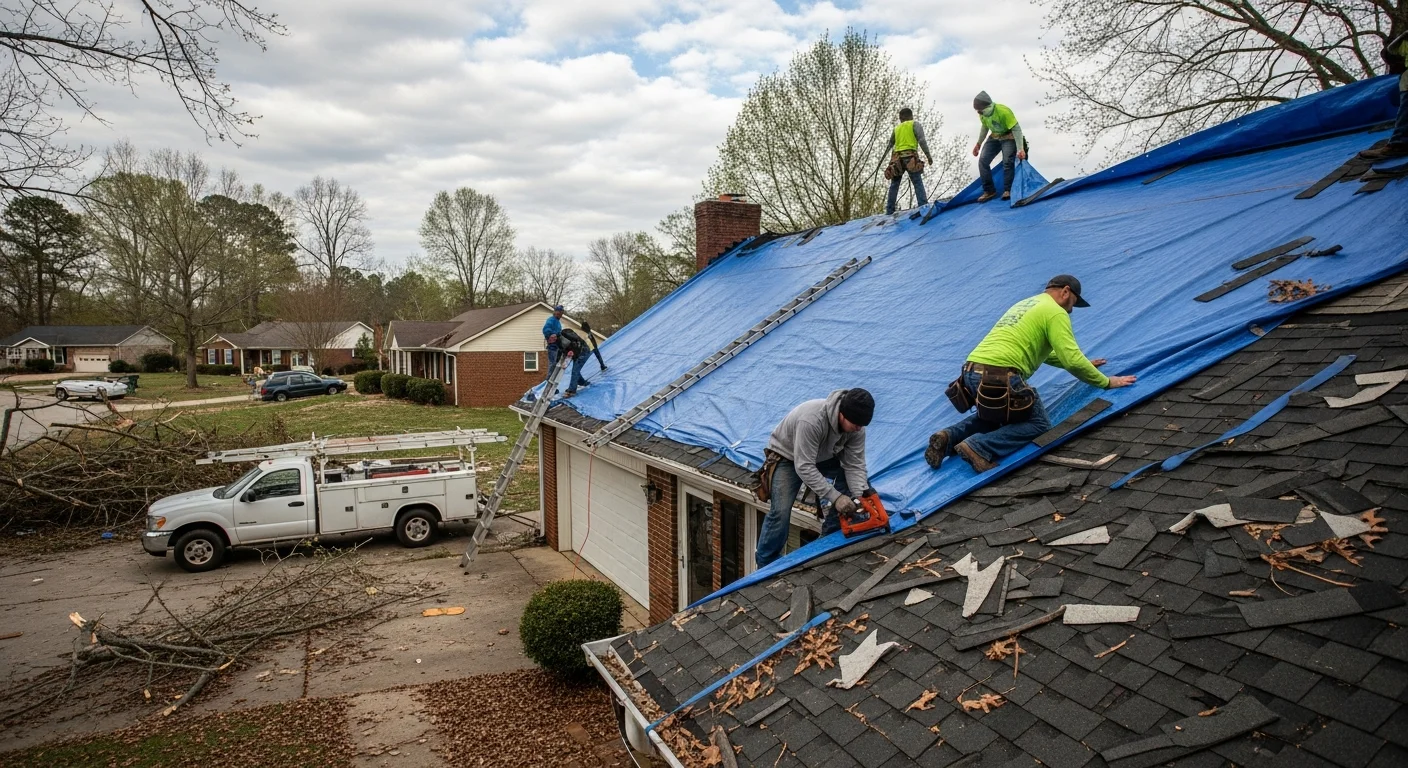
Palm Build crew performing emergency roof tarping on a storm-damaged Belmont NC home
Emergency tarping secures exposed roof sections within hours — preventing secondary water damage before the next rain event.

Belmont Pricing

Storm Damage Restoration Costs in Belmont

Storm restoration costs vary significantly based on damage severity, roof age, tree involvement, and whether flooding occurred. Wind damage is covered by standard NC homeowners insurance (HO-3). After major events affecting the entire Charlotte metro, contractor demand and material supply constraints can increase costs and extend timelines.

Minor Storm Damage

Missing shingles, siding damage, minor tree limb impact

$2,000 - $10,000

Moderate Storm Damage

Partial roof replacement, tree on structure, water intrusion

$10,000 - $50,000

Major Storm / Tornado / Hurricane

Full roof replacement, structural damage, flood restoration

$50,000 - $200,000+

Note for Belmont homeowners: After the May 2024 tornado and Hurricane Helene, roofing contractor demand across Gaston County surged significantly. Material costs fluctuate with regional demand. Palm Build provides detailed cost estimates before beginning work, and coordinates directly with your insurance adjuster to ensure your claim reflects actual restoration costs. Emergency tarping and board-up costs are covered separately under your policy's mitigation clause.

Critical Insurance Distinction

Wind Damage vs. Flood Damage: The Coverage Gap in Belmont

This is the single most important insurance concept for Belmont storm damage. Wind damage and flood damage from the same storm are covered by different policies and filed as separate claims. Belmont's peninsula geography makes this distinction especially critical — during Hurricane Helene, many homes experienced both wind damage (covered by homeowners) and river flooding (not covered without separate flood insurance).

Wind Damage (Homeowners Policy)

Roof damage from wind, fallen trees, flying debris
Siding, window, and door damage from wind pressure
Rain water entering through wind-created openings
Structural damage from wind load or fallen trees
Emergency tarping and board-up costs
Temporary living expenses if home is uninhabitable

Flood Damage (Separate Flood Policy)

Rising water from the Catawba River or South Fork
Lake Wylie surge flooding into lakefront properties
Groundwater entering through foundation or crawl space
Creek overflow into low-lying neighborhoods
Sewer backup from overwhelmed storm systems
NOT covered by standard homeowners — requires NFIP or private flood

The Belmont Overlap Problem

During Hurricane Helene, many Belmont homes experienced both wind damage (covered by homeowners) and river/lake flooding (not covered without flood insurance) from the same event. Without cause-specific documentation, insurers may attribute water damage to flooding rather than wind-driven rain entry — denying coverage that should have been approved. Palm Build's damage assessment documents which water entered through wind-created openings (covered) versus which entered as rising water (flood policy). This documentation approach recovers significantly more for Belmont homeowners.

If your Belmont property is near the Catawba River, South Fork, or Lake Wylie, we strongly recommend separate flood insurance — even if your property is not in a FEMA-designated high-risk zone. Hurricane Helene proved that moderate-risk zones flood too.

Storm Damage in Belmont

Storm Damage Restoration in Belmont, NC

Storm damage to residential property in Belmont NC with fallen trees and debris after severe weather
Severe storm damage to a Belmont home — fallen trees and wind-stripped roofing
Emergency roof tarping on a storm-damaged Belmont NC home by Palm Build restoration crew
Emergency tarping secures exposed roof sections within hours of storm damage
Water extraction equipment deployed inside a Belmont NC home after storm water intrusion
Truck-mounted extraction removes storm water before secondary damage begins
Full reconstruction of storm-damaged Belmont NC home with new framing and roofing materials
Full reconstruction restores storm-damaged Belmont homes to pre-loss condition

The Palm Build Difference

Why Belmont Homeowners Choose Palm Build After Storms

30-45 Minute Belmont Response

Our Charlotte operations hub on Crompton Street is 15 miles from Belmont. We dispatch emergency crews with tarping and extraction equipment 24/7/365. During major events affecting Gaston County, we activate catastrophe response with additional crews and equipment.

IICRC WRT & FSRT Certified

Every crew lead holds current IICRC Water Restoration Technician and Fire/Smoke Restoration Technician certifications. Storm damage crosses both specialties — wind, water, and sometimes fire from lightning strikes or downed power lines hitting structures.

Cause-Specific Documentation

Our damage assessment classifies every item by cause — wind vs. flood vs. tree impact vs. lightning. This matters enormously in Belmont, where the peninsula geography means homes can experience both wind damage and river flooding from the same event. Correct cause classification maximizes your insurance recovery.

Multi-Phase Project Management

Storm restoration involves emergency response, water mitigation, tree removal, structural repair, and reconstruction — often managed simultaneously. Palm Build coordinates all phases as a single project with one point of contact, eliminating the chaos of managing multiple contractors.

Full Reconstruction Capability

From emergency tarping through final punch list, one company handles everything. For Belmont's historic craftsman bungalows, we source period-appropriate materials and match existing architectural details. For modern homes in McLean and Reflection Pointe, we restore to current building code standards.

Insurance Coordination from Day One

We begin insurance documentation the moment we arrive on site — before tarping, during extraction, and throughout reconstruction. Our Xactimate-format estimates align with carrier expectations. We communicate directly with your adjuster to prevent claim delays and ensure full coverage for all documented damage.

Common Questions

Belmont Storm Damage FAQ

How quickly can Palm Build respond to storm damage in Belmont?
Our Charlotte-based team can reach any Belmont address in approximately 30-45 minutes. We dispatch 24/7/365 with emergency tarping and water extraction equipment. For major storm events affecting multiple Gaston County properties, we activate our catastrophe response protocol with additional crews. Call (704) 464-0121 any time.
What was the impact of the May 2024 tornado on Belmont?
The May 2024 tornado produced wind gusts up to 110 mph in the Belmont area, damaging the historic Belmont Drive-In and multiple residential properties. Trees were uprooted across neighborhoods, power lines were downed, and several homes sustained roof and structural damage. This event demonstrated that Belmont is vulnerable to tornado-strength winds, not just thunderstorms.
Does insurance cover storm damage in Belmont NC?
Yes — wind and storm damage are covered perils under standard NC homeowners policies (HO-3). However, flood damage from rising water requires separate NFIP or private flood insurance. This distinction is critical in Belmont, where homes near the Catawba River and Lake Wylie may experience both wind damage and flooding from the same storm. Palm Build documents damage by cause to ensure correct claim filing.
How did Hurricane Helene affect Belmont and Gaston County?
Hurricane Helene struck the Charlotte metro on September 27, 2024, causing catastrophic inland flooding across Gaston County. The Catawba River and its tributaries surged well beyond their banks, flooding properties along the river corridor. Power outages lasted days in some Belmont neighborhoods, leading to secondary damage from sump pump failures and refrigerant loss. Gaston County was included in the federal disaster declaration.
Why is Belmont especially vulnerable to storm flooding?
Belmont sits on a peninsula surrounded by the Catawba River, South Fork Catawba River, and Lake Wylie. This geography means water from upstream storms converges around the town from multiple directions. Combined with heavy Piedmont clay soil that drains poorly, even moderate rainfall events can cause yard flooding and crawl space water intrusion. Major events like Helene push river levels far beyond normal flood stages.
Should I get emergency tarping before filing an insurance claim?
Yes — and your insurance policy requires it. Your policy includes a duty to mitigate further damage, and emergency tarping costs are covered as part of your claim. Delaying tarping after roof damage allows rain to cause secondary water damage that complicates your claim and increases total costs. Palm Build provides emergency tarping 24/7 and documents everything for your insurance submission.
How long does storm damage restoration take in Belmont?
Emergency tarping and water extraction: 1-2 days. Structural drying: 3-5 days. Roof repair: 1-3 weeks depending on material availability and contractor demand. Full reconstruction: 4-12 weeks. After major events like Hurricane Helene, timelines extend due to increased demand across the region. Palm Build manages every phase from emergency response through final rebuild.

Storm Damage in Belmont? Don't Wait for the Next Rain.

Every hour an exposed roof or broken window goes unprotected, water damage compounds. Palm Build's Charlotte team provides emergency tarping, water extraction, and structural stabilization to Belmont homes — 24/7, with insurance documentation from the first call.

30-45 min Response IICRC Certified