Quick Answer
If a pipe bursts, shut off the main water valve immediately, then open faucets to drain remaining pressure and document everything for your insurer. Pipe repair itself typically costs $200 to $1,000, but full water damage cleanup commonly runs $1,000 to $6,000. You have 24 to 48 hours to dry materials before mold becomes likely.
Key takeaways
- Shut off the main water valve immediately, then open faucets to drain remaining pressure from the lines.
- The pipe repair itself typically costs $200 to $1,000, but total water damage restoration commonly runs $1,000 to $6,000 or more.
- You have 24 to 48 hours to dry water-damaged materials before mold growth becomes likely, according to EPA and CDC guidance.
- Homeowners insurance usually covers burst pipe damage that is sudden and accidental, but not flooding, gradual leaks, or neglect.
- Florida homeowners face a 1-year claim notice deadline under state statute — shorter than most states.
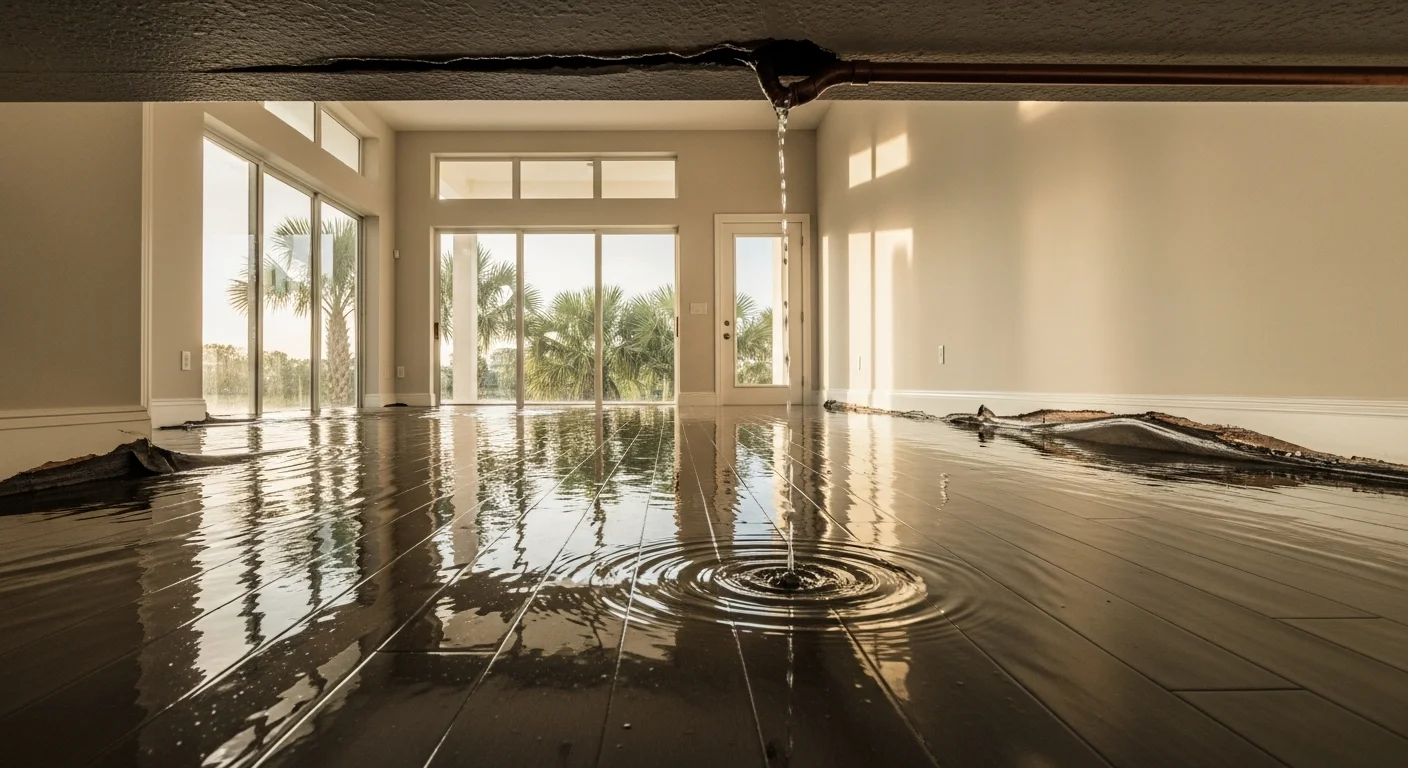
A burst pipe is a minutes-matter emergency. Shut off the main water supply immediately, then deal with electrical safety, start removing standing water, and document everything for your insurer before cleanup erases the evidence. The pipe repair itself typically costs $200 to $1,000 (about $500 on average), but once you add water extraction and structural drying, total costs commonly land between $1,000 and $6,000 depending on how much of the home was affected and how quickly drying began. The clock you are racing is mold: the EPA and CDC both recommend drying water-damaged areas within 24 to 48 hours to prevent mold growth, a complication that can add thousands more to the final bill.
Average pipe repair
~$500
Simple accessible burst, plumber repair
Total damage cost
$1K–$6K+
Extraction, drying, and material replacement
Mold starts forming
24–48 hrs
EPA and CDC drying guidance
Claim frequency
1 in 67
Homes per year with water/freeze claims
What to Do Right Now If a Pipe Bursts
If you are standing in a puddle right now, here is the short version: stop the water, make it safe, start drying, and document before you clean up. The sections below walk through each step with the detail you need to protect your home and your insurance claim. Every hour you wait increases both cost and mold risk.
Step 1: Shut Off the Water and Drain the Lines
Find your main water shutoff valve and close it immediately. In most homes, the shutoff is a brass gate valve or a quarter-turn ball valve located where the main water line enters the house — typically in the garage, basement, utility closet, or near the water heater. In Florida single-story homes, it is often on the exterior wall near the meter.
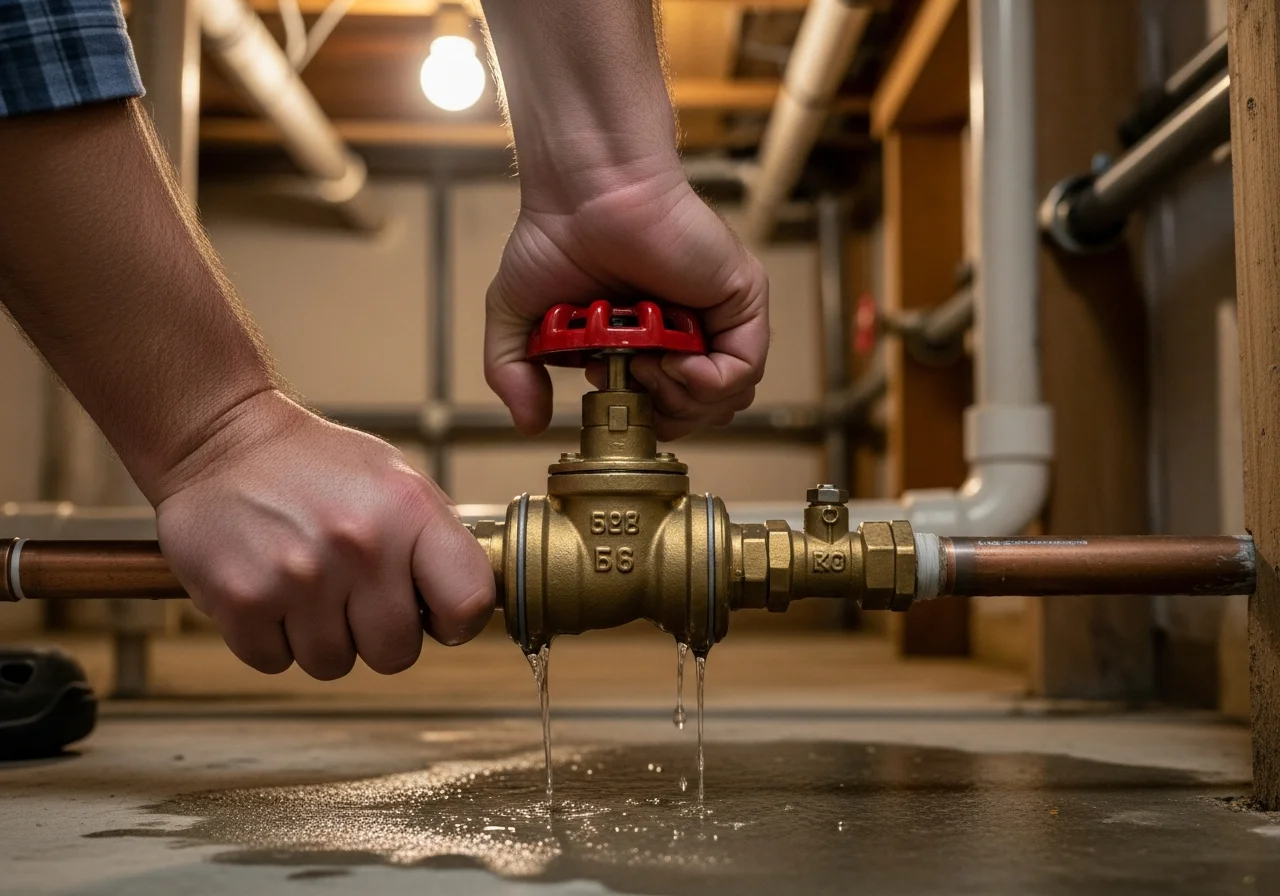
After the valve is closed, open several faucets and flush toilets throughout the house to relieve remaining pressure and drain water that is still in the lines. This stops the flow at the burst point and prevents further flooding. If you cannot find the main shutoff, call your water utility — they can shut it off at the meter.
Step 2: Make It Safe — Electricity and Ceilings
Water and electricity are a deadly combination. If standing water has reached any outlets, appliances, or electrical panels, do not walk through it. Go to your breaker panel (if it is in a dry area) and shut off power to the affected zones. Major insurer guidance recommends considering shutting off power entirely when water is near any electrical components.
Step 3: Stop the Leak Temporarily and Call a Plumber
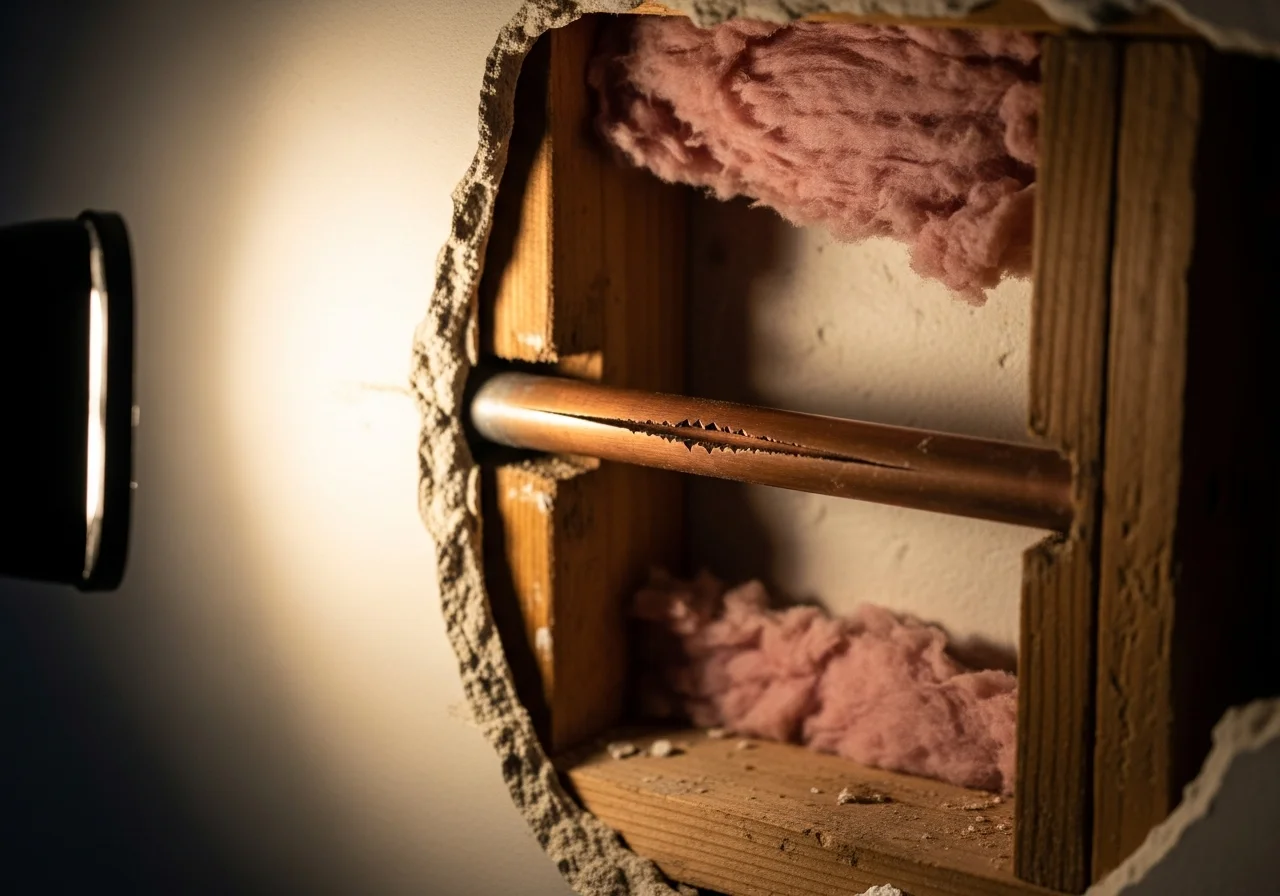
With the main water off, the burst pipe should stop flowing. If you need a temporary seal for a small split before the plumber arrives, a pipe clamp, rubber patch, or even heavy-duty tape can buy you time. These are not permanent fixes. A licensed plumber should inspect, repair, or replace the damaged section. Do not attempt permanent plumbing repairs yourself, especially if the pipe failed due to freezing — there may be additional weakened sections in the same line.
For burst pipes in a crawl space or insulation-saturated area, access is more difficult and the drying scope is larger. Let your plumber and restoration team know the pipe location so they can plan equipment staging.
Step 4: Remove Standing Water and Start Drying Immediately
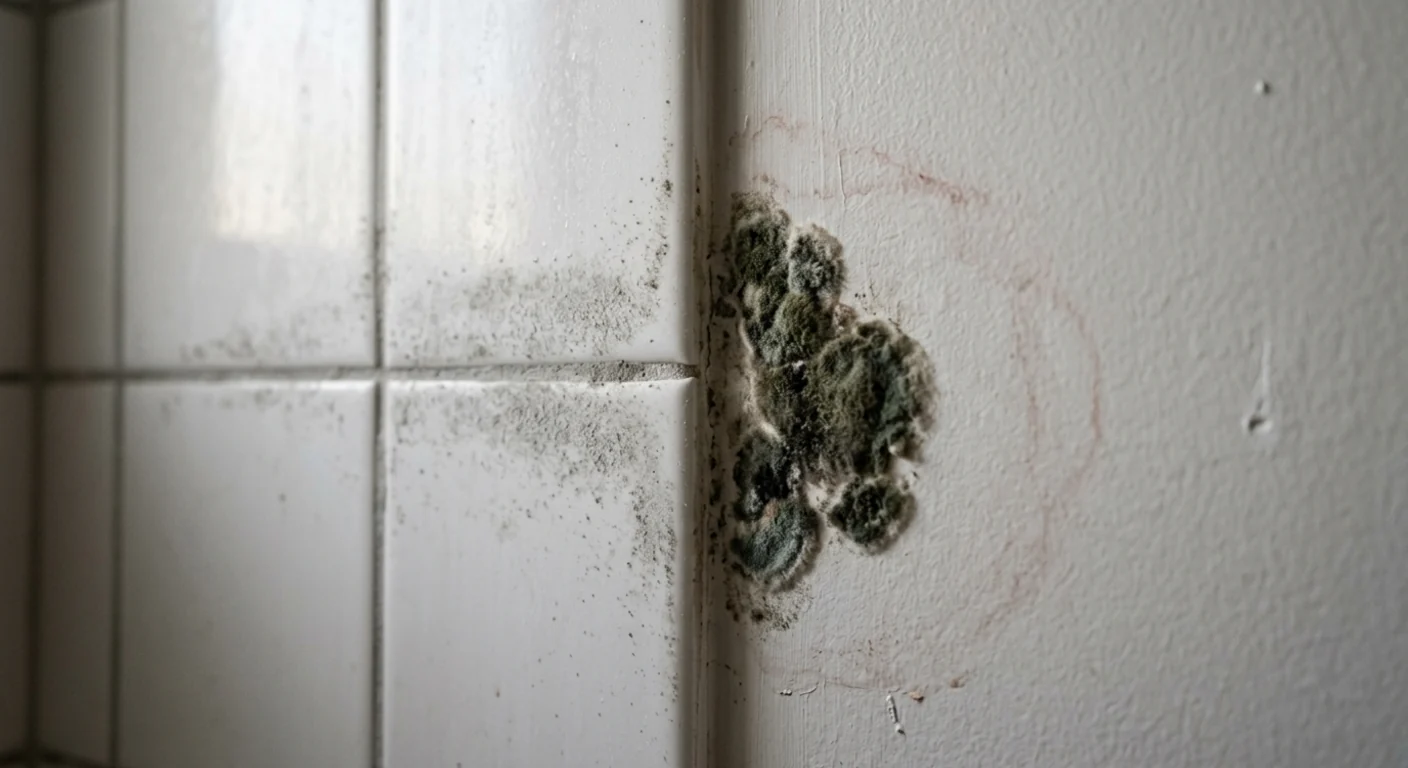
This is where the mold clock starts. The U.S. Environmental Protection Agency states it is important to dry water-damaged areas and items within 24 to 48 hours to prevent mold growth. The CDC's homeowner guide to mold cleanup advises that if you cannot dry your home and belongings within that window, you should assume mold growth has started.
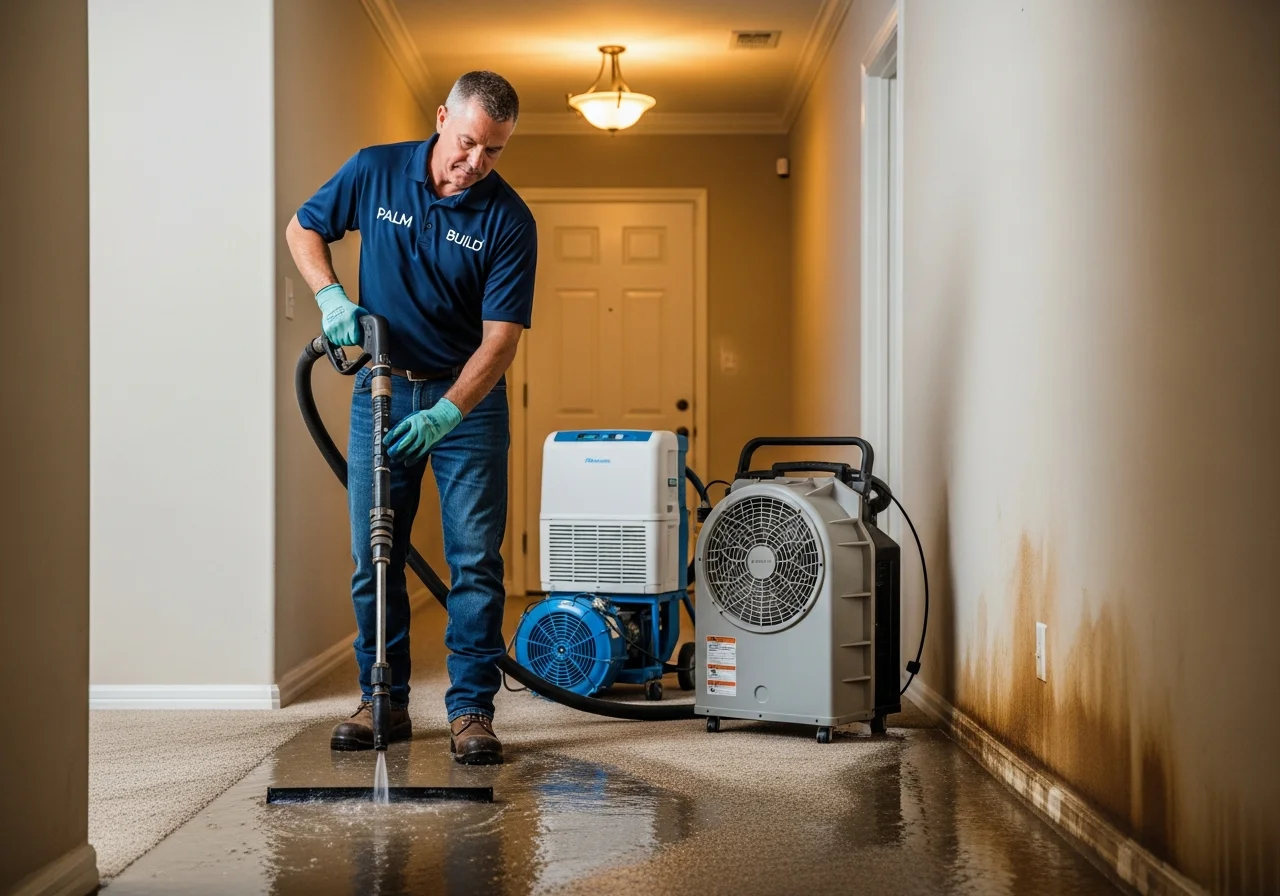
What you can do while waiting
- Move furniture and valuables out of standing water
- Mop, towel, or wet-vac as much water as you can
- Open interior doors and closets to increase airflow
- Run fans and dehumidifiers if you have them
- Remove wet rugs and lift carpet edges
What not to do
- Do not use a household vacuum on standing water (electrocution risk)
- Do not turn on the HVAC if ducts are wet — it can spread contamination
- Do not assume "surface dry" means dry behind the walls
- Do not remove damaged materials before documenting them
- Do not wait to see if it dries on its own
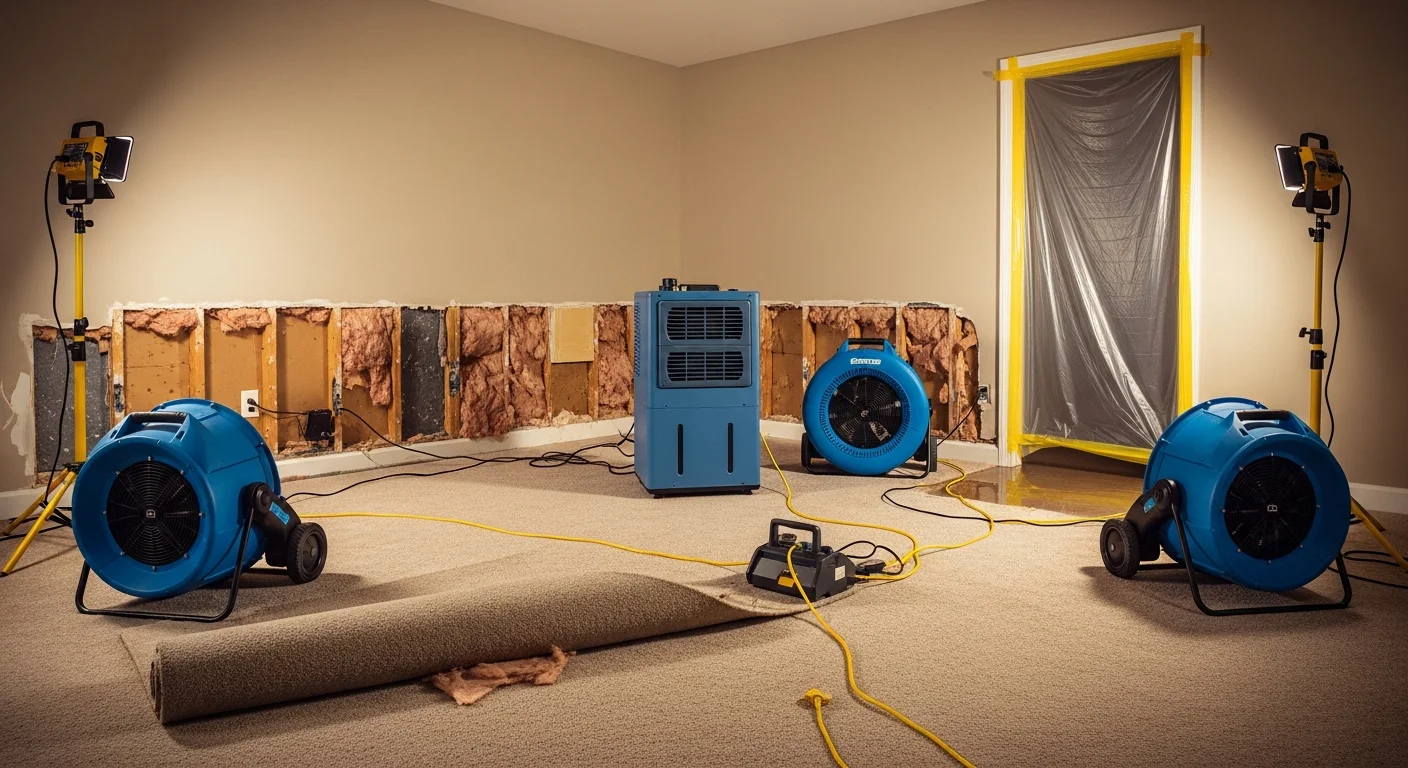
A professional restoration company brings truck-mounted extraction units, commercial dehumidifiers, and air movers that can dry a home far faster than consumer equipment. The difference between DIY drying and professional water damage restoration is often the difference between replacing baseboards and replacing entire subfloors. Professional teams also follow IICRC S500 standards for documentation and moisture monitoring, which matters when your insurer evaluates the claim.
Step 5: Document Everything for Insurance
Your insurance claim lives or dies on documentation. Before you clean up, throw away, or tear out damaged materials, photograph and video everything. State insurance department guidance consistently emphasizes documenting damage before debris removal, taking photos or video, making a detailed inventory of damaged items, and saving all receipts for temporary repairs and expenses.
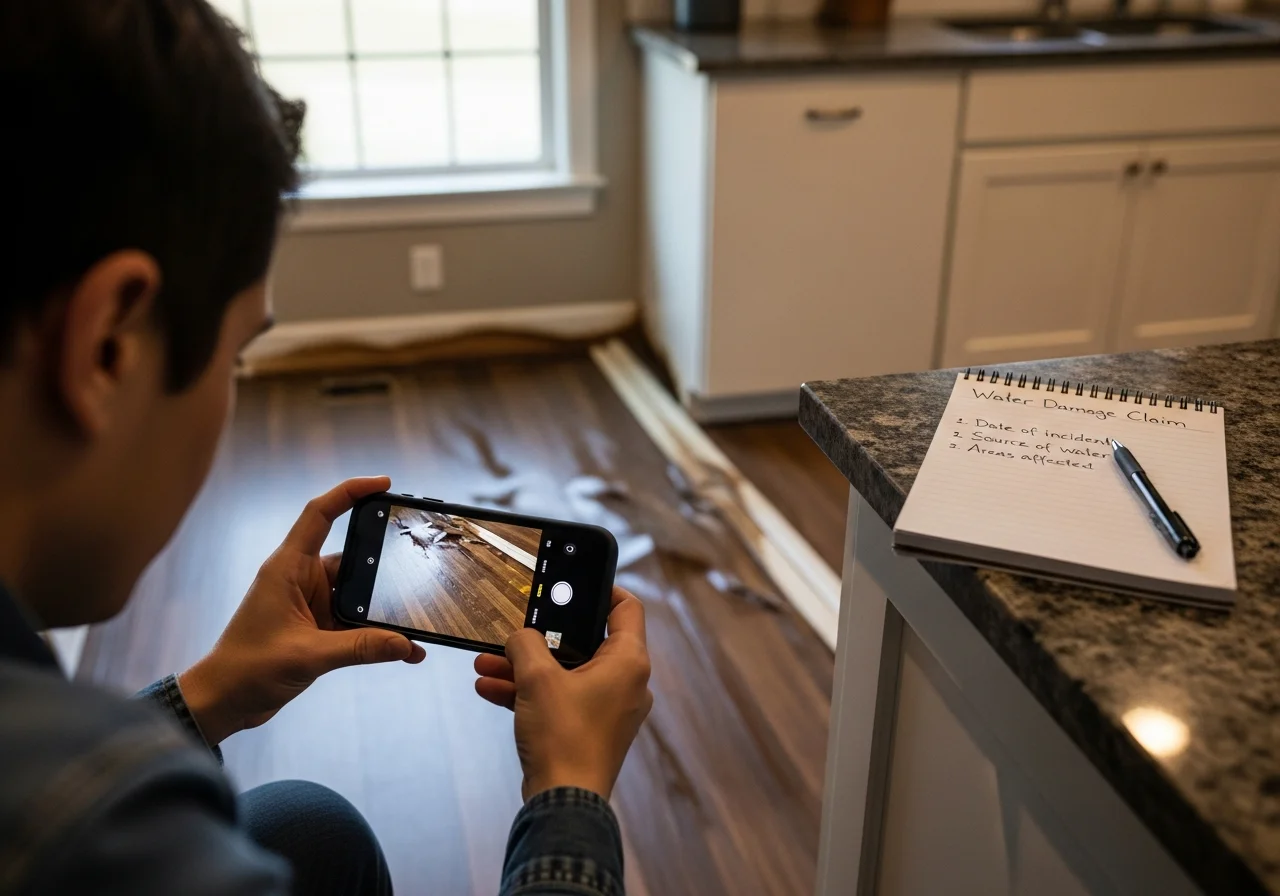
- Photograph every room affected — wide shots and close-ups of specific damage
- Take video walkthroughs showing the extent of water and how it entered
- Photograph the burst point on the pipe itself before any repair
- Make a written inventory of damaged belongings with approximate values
- Save every receipt: plumber, hotel stays, emergency supplies, meals, storage
- Keep damaged materials until the adjuster has inspected (store samples if demolition is urgent)
- Log dates and times: when you discovered the burst, when you shut off water, when you called for help
If you need help navigating the claims process, Palm Build's insurance restoration team works directly with adjusters to provide the documentation, moisture readings, and scope reports that support your claim.
Step 6: Decide If You Should File an Insurance Claim
Not every burst pipe justifies a claim. Compare the estimated repair cost to your deductible. If the damage is minor and close to your deductible amount, paying out of pocket may protect your claims history and avoid a potential premium increase. But if the damage is significant — multiple rooms, subfloor saturation, potential mold — a claim is almost always the right call.
Homeowners insurance usually covers burst pipe damage when the event was sudden and accidental. Insurers look for a clear single release event — a rupture, burst, or sudden overflow — and are more likely to deny claims where there is evidence of gradual leaking, long-term moisture, or maintenance neglect. For a deeper breakdown of what is and is not covered, see our full guide: Does homeowners insurance cover water damage?
Burst Pipe Repair Cost
The pipe repair itself — the plumber fixing the break — is usually the smaller part of the bill. Costs vary significantly based on pipe material, accessibility, and how much of the line needs replacement.
| Repair type | Typical cost range | Key cost driver |
|---|---|---|
| Simple accessible burst repair | $200–$500 | Easy-to-reach pipe, minimal demo needed |
| Average burst pipe repair | ~$500 | Standard interior wall access, single failure point |
| Complex or hard-to-access repair | $500–$2,000 | Behind finished walls, in slab, or underground |
| Per linear foot (replacement) | $150–$250/ft | Multiple failure points or full section replacement |
| Emergency/after-hours repair | $500–$5,000 | Weekend, holiday, or overnight rates apply |
Burst pipe repair costs (plumbing only, national averages)
Water Damage Cleanup Cost After a Burst Pipe
The restoration cost — extraction, drying, demolition of damaged materials, and rebuilding — is where the real expense lives. A widely cited consumer framing puts the combined burst pipe and associated damage at $1,000 to $4,000 for a common scenario, but larger events involving multiple rooms, contaminated water, or delayed drying push totals well beyond that.
| Cost benchmark | Typical range | What it includes |
|---|---|---|
| Water damage restoration (typical) | $1,384–$6,384 | Extraction, drying, monitoring; rebuild may be separate |
| Water damage restoration (average) | ~$3,867 | Varies by area size, materials, and drying speed |
| Clean water (Category 1) per sq ft | ~$3.50/sq ft | Supply line burst, tank overflow before contamination |
| Gray water (Category 2) per sq ft | ~$5.25/sq ft | Dishwasher or washer overflow with detergents |
| Black water (Category 3) per sq ft | ~$7.50/sq ft | Sewage, gross contamination, or floodwater entry |
Water damage restoration costs (national benchmarks)
Water contamination category is the single biggest cost multiplier. A clean supply-line burst in one room is a fraction of the cost of a sewage backup affecting multiple floors. For a detailed explanation of how water categories affect your restoration scope and cost, see water damage categories and classes explained.
Once the home is dry, reconstruction and repairs — replacing drywall, flooring, baseboards, cabinetry, and paint — add to the total. Reconstruction costs depend on the materials and finishes being replaced, but this phase typically represents 30 to 50 percent of the total project cost for moderate to large losses.
How Long Does Burst Pipe Water Damage Restoration Take?
Restoration is not an overnight process. Structural drying alone typically takes 3 to 5 days with commercial equipment, and the full timeline from burst to rebuild completion can stretch weeks for significant damage.
First hour
Emergency response
Shut off water, ensure electrical safety, begin water extraction, and document damage for insurance.
Hours 2–24
Extraction and equipment staging
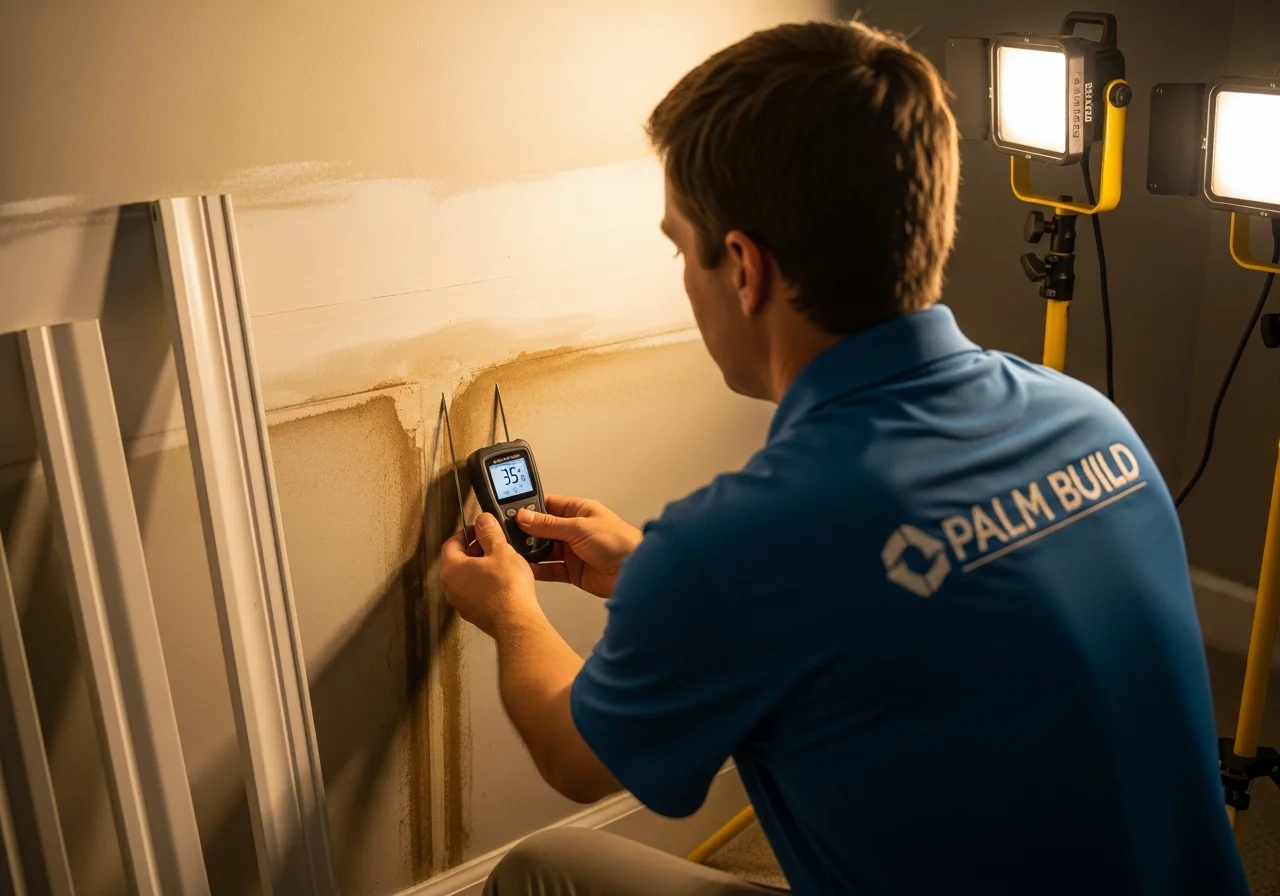
Professional crew removes standing water, sets up commercial dehumidifiers and air movers, begins moisture mapping of walls and floors.
Days 1–5
Active structural drying
Daily moisture readings guide equipment placement. Drying continues until all materials are at or below target moisture levels. This phase is critical for preventing mold growth.
Days 5–7
Clearance and demolition scope
Final moisture readings confirm drying is complete. Damaged materials that cannot be salvaged — saturated drywall, padding, insulation — are removed.
Weeks 2–4+
Reconstruction and rebuild
New drywall, flooring, baseboards, paint, and fixtures installed. Timeline depends on material availability, scope, and insurance approval.
State Notes: Florida, North Carolina, and South Carolina
Insurance rules, claim deadlines, and licensing requirements differ by state. If you are in Palm Build's service areas, here is what matters most for a burst pipe event.
Florida
Florida Statute 627.70132 establishes a 1-year notice deadline for filing a new claim or reopened claim after the date of loss, and an 18-month deadline for supplemental claims. These deadlines are shorter than many homeowners expect, especially if the burst happens during a busy hurricane season when you may be focused on other damage. Florida's consumer claim guide also notes that insurers must acknowledge a claim within 7 days and reach a payment decision on undisputed amounts within 60 days.
Florida also requires separate licensing for mold assessors and remediators. If your burst pipe leads to mold remediation, make sure the company performing mold work holds the appropriate Florida license — not just a general contractor license. And remember: Florida law requires insurers to include clear notice that standard homeowners policies do not include flood coverage without a separate flood insurance policy.
North Carolina
North Carolina regulator education materials list "accidental discharge or overflow of water or steam" and "freezing" among perils commonly covered under dwelling policies, while also listing exclusions for mold, rot, neglect, and constant or repeated seepage. This is especially relevant during NC winters when frozen pipes are a leading cause of burst pipe claims. The NC Department of Insurance claims guide advises: check safety, photograph damage, make temporary repairs, contact your insurer, and avoid permanent repairs until inspection and agreement on cost.
One important note: North Carolina has no state certification programs for mold remediation providers. That makes industry standards and third-party certifications like IICRC particularly important when choosing a restoration company in NC. Learn more about how fast mold grows after water damage and why speed matters.
South Carolina
South Carolina's insurance department guidance emphasizes documenting losses before cleanup and keeping all receipts. The state does not currently license or regulate mold inspectors or remediators — there are no state or federal standards for mold inspection in SC. Verify any contractor's general licensing through the state's labor and licensing regulator before hiring.
SC has a newly introduced bill in the 2025–2026 legislative session that would create a mold assessment and remediation certification framework. While not yet law, HOA boards and commercial property managers in South Carolina should monitor this development, as it could affect contractor requirements for multi-unit restoration projects.
How to Prevent Burst Pipes in Winter and During Vacancies
Most burst pipes are preventable. Freezing is the number one cause of residential pipe bursts in North Carolina and South Carolina, and even Florida is not immune during occasional cold snaps. The National Weather Service and major insurers consistently recommend the same preventive steps.
- 1
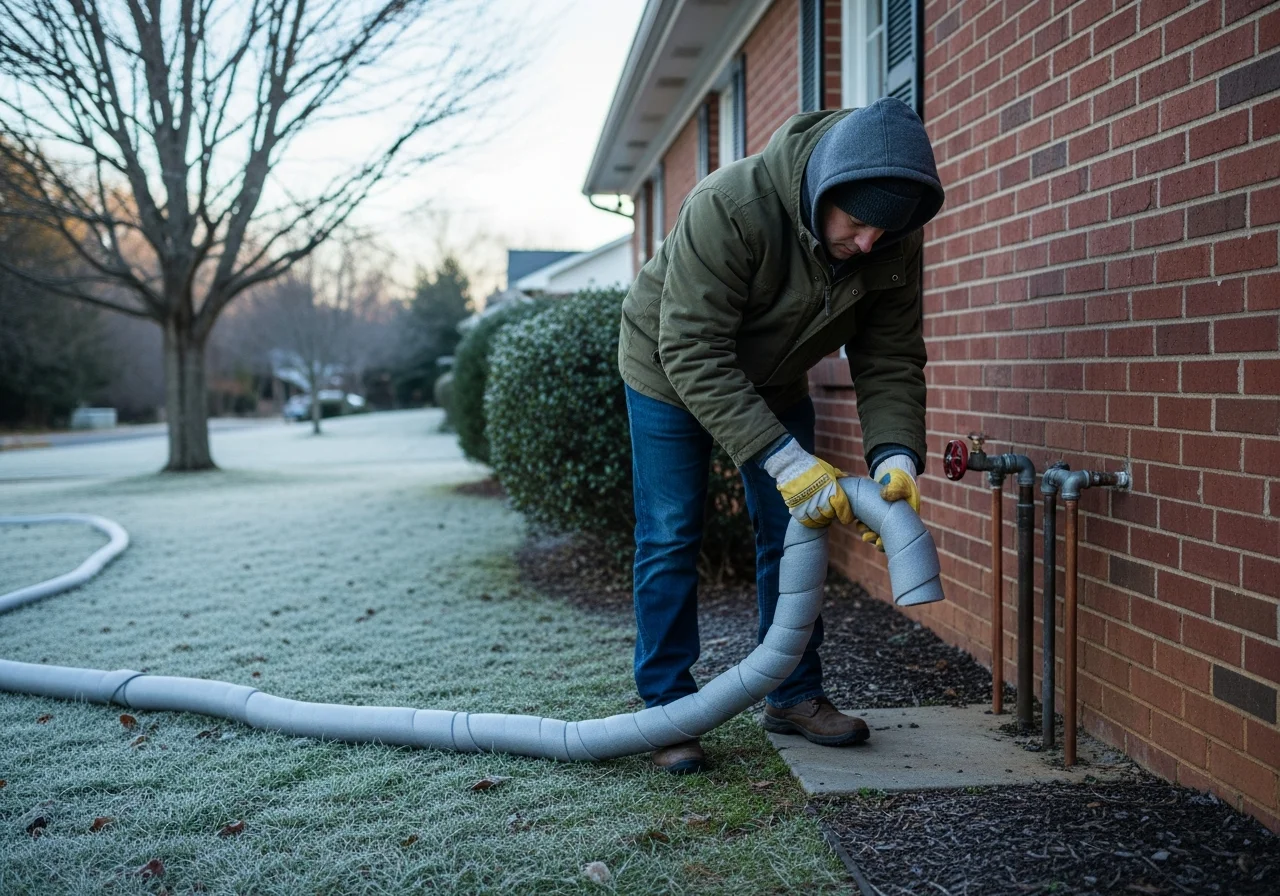
Insulate exposed pipes
Wrap pipes in unheated areas — crawl spaces, attics, garages, and exterior walls — with foam pipe insulation. This is the single most effective prevention measure and costs only a few dollars per pipe run.
- 2
Keep a minimum temperature
Never set your thermostat below 55°F (13°C), even when you are away. If the home will be vacant for an extended period, consider shutting off the water at the main and draining the lines completely.
- 3
Open cabinet doors during cold snaps
For pipes that run through kitchen and bathroom cabinets on exterior walls, open the cabinet doors to let warm air reach the pipes during freezing temperatures.
- 4
Let faucets drip during hard freezes
A slow drip relieves pressure buildup in the line and keeps water moving, which makes it harder to freeze solid. Even a trickle can prevent a burst.
- 5
Know your main shutoff location
Practice finding and turning your main shutoff valve before an emergency. A burst pipe at 2 a.m. is not the time to discover you do not know where it is. Label it if it is not obvious.
- 6
Disconnect outdoor hoses
Detach garden hoses from outdoor spigots before winter. Water trapped in a connected hose can freeze back into the spigot and pipe, causing an indoor burst.
Frequently Asked Questions
Does homeowners insurance cover burst pipes? +
Will homeowners insurance pay to repair the broken pipe itself? +
How much does it cost to repair a burst pipe? +
How much does water damage cleanup cost after a burst pipe? +
How fast can mold start after water damage? +
What should I do if water is near outlets or the breaker panel? +
Is water damage from sewer backup or a sump pump covered? +
What should I document for an insurance claim? +
Water Damage Restoration Services
24/7 emergency water extraction, structural drying, and moisture monitoring across FL, NC, and SC.
Does Homeowners Insurance Cover Water Damage?
Full breakdown of what is covered vs. excluded, plus state-specific claim deadlines.
Water Damage Categories and Classes Explained
Understanding Category 1, 2, and 3 water and how it affects your restoration scope and cost.
How Fast Does Mold Grow After Water Damage?
The 24–48 hour timeline explained, plus what accelerates mold in Florida's climate.
Burst pipe? Call now — we respond 24/7.
Palm Build's IICRC-certified crews are dispatched around the clock for burst pipe emergencies across Florida, North Carolina, and South Carolina. The faster we start drying, the less it costs to fix.
Found this helpful? Send it to someone who needs it.