INDIAN TRAIL NC — CRAWL SPACE CLEANUP & ENCAPSULATION
Crawl Space Cleanup & Encapsulation in Indian Trail, NC
Indian Trail's 2000-2015 housing boom produced thousands of homes on crawl space foundations over Piedmont clay soil — a combination that building science has since proven catastrophically problematic in humid subtropical climates. With clay soil draining at a fraction of sandy coastal soils and outdoor humidity exceeding 70% for five months of the year, vented crawl spaces beneath Indian Trail homes operate above the 60% relative humidity mold threshold for more than half the year. Palm Build provides complete crawl space remediation — moisture control, mold removal, encapsulation, structural repair, and dehumidification — addressing the root cause beneath your home.
~20 miles from Indian Trail 30-45 min Response IICRC Certified
Indian Trail's combination of clay soil, aging vapor barriers, and humid summers creates
a perfect storm for crawl space moisture problems. Understanding these risk factors
helps you identify issues before they cause structural damage or indoor air quality
problems.
Cecil Clay Soil & Drainage Issues
Primary Risk
Indian Trail sits on Cecil clay soil — the dominant soil type in Union County's Piedmont region. This dense, red clay has very low permeability, meaning rainwater sits on the surface rather than draining through the soil profile. During heavy rain events, groundwater pressure builds against crawl space walls and foundations, pushing moisture through block joints, cracks, and any gap in the vapor barrier. Homes in lower-lying areas near Crooked Creek and Stevens Mill Road are especially vulnerable to hydrostatic pressure during prolonged rain.
2000s-Era Vapor Barriers Failing
Very Common
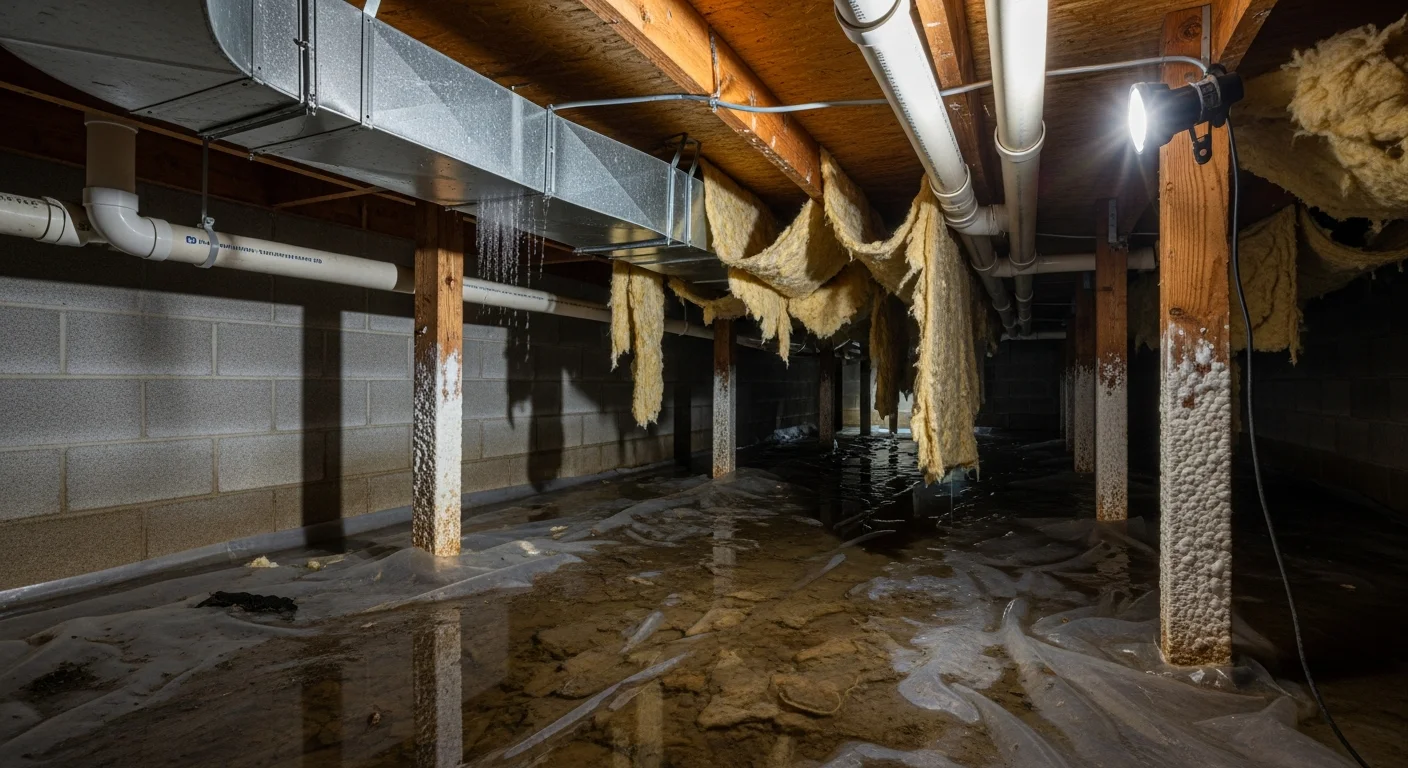
Most Indian Trail homes were built between 2000-2015 during the town's rapid growth. The vapor barriers installed in these homes — typically 6-mil polyethylene — are now 10-25 years old and degrading. UV exposure, foot traffic from HVAC technicians and plumbers, rodent damage, and simple aging have created tears, gaps, and sections where the barrier has pulled away from walls. A compromised vapor barrier is worse than no barrier at all — it traps moisture underneath while allowing evaporation into the crawl space above.
HVAC Condensation & Ductwork Issues
Seasonal
Indian Trail homes with HVAC systems in the crawl space face condensation problems from May through September. When cold air-conditioned supply ducts run through the hot, humid crawl space, condensation forms on duct surfaces and drips onto insulation, joists, and the vapor barrier below. Poorly insulated or disconnected flex ducts compound the problem. This condensation cycle creates persistent moisture conditions that support mold growth on floor joists and subfloor sheathing — even when the vapor barrier appears intact.
Our Crawl Space Process
How We Restore Indian Trail Crawl Spaces
Crawl space restoration is a systematic process — each step must be completed properly
before the next can begin. Skipping steps leads to recurring problems and wasted money.
01
Crawl Space Inspection
Day 1
Our team enters your Indian Trail crawl space to assess the full scope of conditions — moisture levels, vapor barrier integrity, insulation condition, mold presence, structural wood condition, and HVAC system status. We use moisture meters, thermal imaging, and visual inspection to create a complete picture.
02
Debris Removal & Cleaning
Days 1-2
Old insulation, degraded vapor barrier material, construction debris, and any organic matter is removed from the crawl space. This step is essential before any treatment can be effective — you cannot treat mold or install new vapor barriers over contaminated surfaces.
03
Mold Treatment & Antimicrobial
Days 2-4
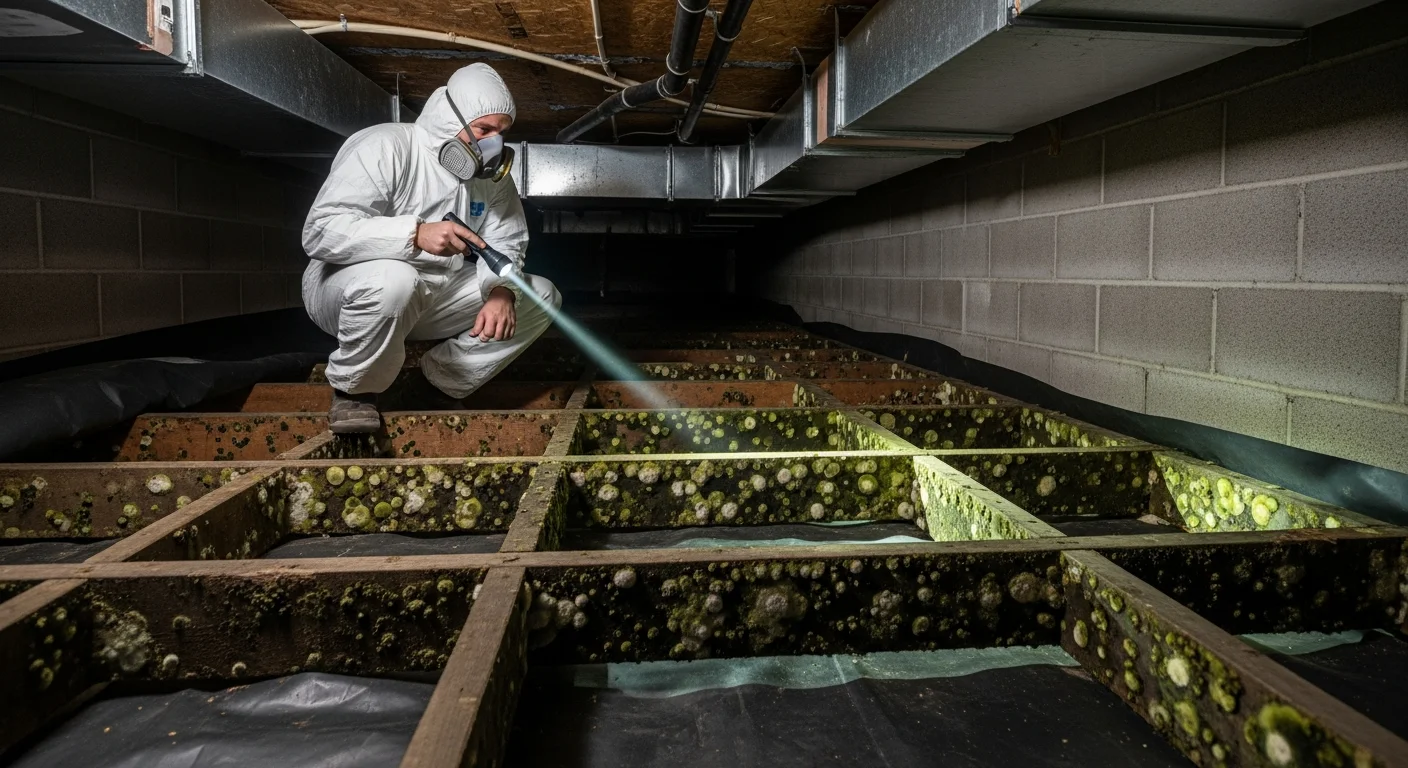
All mold-affected surfaces — floor joists, subfloor sheathing, sill plates, and block walls — are treated with professional-grade antimicrobial solutions. For heavy mold growth, we use media blasting to remove surface mold from wood members before antimicrobial application. Air scrubbers run throughout the treatment process.
04
Vapor Barrier Installation
Days 3-5
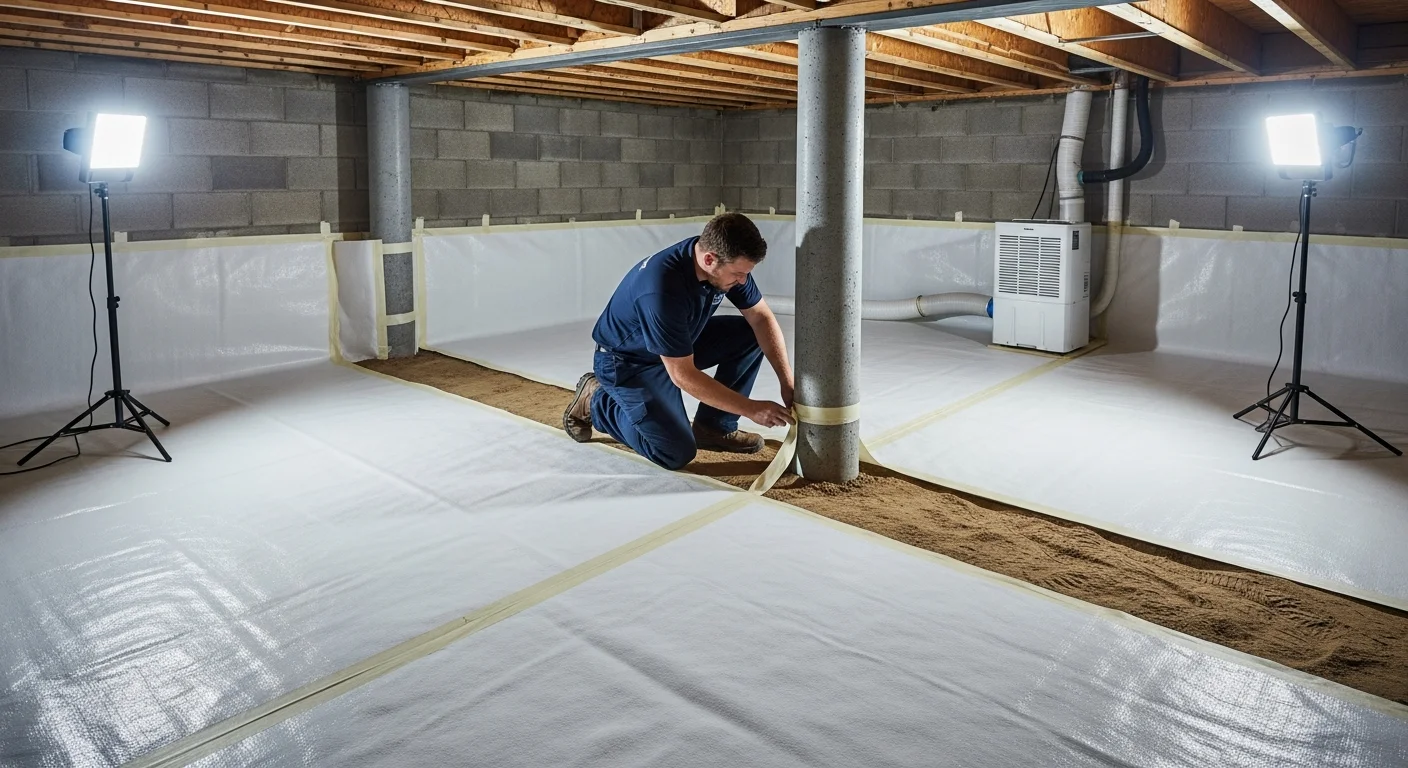
We install 20-mil reinforced vapor barrier (not the 6-mil builder-grade material) across the entire crawl space floor, sealed to walls with mechanical fasteners and mastic. All seams are overlapped and sealed. This commercial-grade barrier is puncture-resistant and rated for 25+ years — far exceeding the builder-grade material that failed in your Indian Trail home.
05
Dehumidifier Installation
Day 4-5
A commercial crawl space dehumidifier is installed to maintain relative humidity below 55% year-round. This is especially critical during Indian Trail summers when outdoor humidity can exceed 90%. The unit is connected to your existing drainage or a condensate pump, with a hygrostat for automatic operation.
06
Full Encapsulation & Verification
Days 5-7
For full encapsulation projects, walls are insulated, vents are sealed, and the space is conditioned as part of the home envelope. Final moisture readings verify the system is performing. We provide a warranty and schedule a follow-up inspection to confirm long-term performance.
Foundation Comparison
Slab vs. Crawl Space: Issues in Indian Trail Homes
Indian Trail homes use both crawl space and slab-on-grade foundations, each with
distinct moisture and maintenance challenges. Understanding your foundation type helps
you anticipate problems and choose the right solutions.
Category
Crawl Space
Slab-on-Grade
Foundation Type
Block or poured concrete perimeter walls with open or vented space below floor joists
Concrete slab poured directly on grade, typically 4-6 inches thick with rebar reinforcement
Moisture Risk
High — exposed soil surface evaporates moisture into enclosed space. Indian Trail clay soil holds water against foundation walls.
Moderate — moisture can wick through concrete without proper vapor barrier beneath slab. Expansion joints and pipe penetrations are entry points.
Mold Risk
High — dark, humid environment with organic materials (wood joists, insulation) creates ideal mold conditions year-round in Indian Trail climate.
Lower — limited organic material exposure. Mold risk increases when water intrusion occurs along slab edges or through plumbing penetrations.
Common Problems
Degraded vapor barriers, sagging insulation, standing water, wood rot on joists/sill plates, pest intrusion, HVAC condensation.
Slab cracks from clay soil movement, plumbing leaks under slab (requires tunneling or slab cutting), efflorescence on garage floors.
Repair Access
Good — direct access to plumbing, electrical, and structural elements from below. Repairs do not require breaking concrete.
Limited — plumbing repairs may require slab cutting. No access to underside of floor system without invasive work.
Indian Trail Prevalence
Dominant in pre-2010 construction and traditional home styles. Most homes in Sun Valley, Hemby Commons, and older neighborhoods.
More common in newer construction (2015+), townhomes, and some Chestnut Crossing and newer subdivision homes.
Not sure what foundation type your Indian Trail home has?
Our free crawl space inspection includes foundation assessment, moisture testing, and a
detailed report of conditions — no obligation.
Warning Signs
Signs Your Indian Trail Crawl Space Needs Attention
Crawl space problems develop gradually, but the signs are visible if you know what to
look for. Catching these symptoms early prevents costly structural damage and protects
your family's indoor air quality.
Act Soon
Musty Odors
A persistent musty smell in your Indian Trail home — especially on the first floor — is the most common sign of crawl space moisture problems. This odor comes from mold and mildew growing on floor joists, insulation, and other organic materials in the crawl space. The smell is often strongest in closets, bathrooms, and areas near HVAC vents.
Act Now
Visible Mold on Floor Joists
If you can see mold on your floor joists or subfloor sheathing when you look into the crawl space, the moisture problem is well-established. White, green, or black mold on wood surfaces indicates sustained high humidity. This mold is actively degrading the structural integrity of these members.
Monitor
Cold or Uneven Floors
Floors that feel cold in winter or have noticeable temperature variations between rooms suggest insulation has fallen or become saturated in the crawl space. Wet fiberglass insulation loses all thermal value and becomes dead weight hanging from floor joists.
Act Soon
Condensation on Windows
Excessive interior humidity from crawl space moisture rises through the floor system and condenses on cooler surfaces — particularly windows during winter. If your Indian Trail home has persistent window condensation, the crawl space may be contributing significant moisture to the indoor environment.
Act Now
Pest Activity
Termites, carpenter ants, and other wood-destroying insects are attracted to moist wood. If pest inspections have found activity in your crawl space, moisture is likely the root cause. Treating pests without addressing moisture means they will return.
Urgent
Bouncy or Sagging Floors
Floors that bounce, flex, or visibly sag indicate structural compromise in the crawl space — typically from wood rot in joists, sill plates, or support beams caused by prolonged moisture exposure. This is a structural safety concern that requires immediate professional assessment.
Indian Trail Pricing
Crawl Space Cleanup & Encapsulation Costs
Crawl space restoration costs depend on the size of the space, extent of damage, and
level of treatment needed. Indian Trail homes average 1,000-1,800 square feet of crawl
space area. Investing in proper encapsulation protects your home's structural integrity
and can reduce energy bills by 15-20%.
Professional mold treatment, insulation, structural repair
$5,000 – $8,000
Professional mold remediation on joists/subfloor
Damaged insulation replacement
Sistered joists for minor wood rot
Enhanced vapor barrier with sealed seams
Full Encapsulation
Complete crawl space encapsulation system
$8,000 – $15,000+
20-mil reinforced vapor barrier throughout
Wall insulation and vent sealing
Commercial dehumidifier with drainage
Structural repair and sill plate replacement
Crawl space issues caused by a covered water loss may be covered by insurance
If your crawl space problems resulted from a pipe burst, storm water intrusion, or other
covered peril, your homeowners insurance may cover the restoration. We help determine
coverage and manage the claim.
Our Work
Indian Trail Crawl Space Restoration: Before & After
Before: Degraded vapor barrier with standing moisture and fallen insulation
Mold inspection reveals growth on floor joists from chronic moisture
After: Full encapsulation with 20-mil reinforced vapor barrier system
Post-treatment air quality verification confirms successful remediation
Common Questions
Indian Trail Crawl Space Cleanup FAQ
Why are Indian Trail crawl spaces so problematic?
Indian Trail's crawl space problems stem from three compounding factors: Piedmont clay soil that holds water against foundations for days after every rain event, vented crawl space construction that pulls humid air into cooler spaces where it condenses on wood framing, and 43.60 inches of annual rainfall that keeps the soil moisture cycle active year-round. Advanced Energy NC research shows vented crawl spaces in North Carolina exceed 80% relative humidity in spring and summer — well above the 60% mold colonization threshold.
How much does crawl space encapsulation cost in Indian Trail?
Basic cleanup and encapsulation (vapor barrier, vent sealing, commercial dehumidifier, minor drainage) runs $4,500-$8,500 depending on crawl space size. Full remediation including mold removal, structural joist repair, drainage correction, and encapsulation ranges from $12,000-$22,000+. Indian Trail homes with active mold and deteriorated original vapor barriers typically fall in the higher range.
What is the difference between a vented and sealed crawl space?
Advanced Energy NC field research found vented crawl spaces in North Carolina exceed 80% relative humidity in spring and summer — well above the 60% mold growth threshold. Sealed (encapsulated) crawl spaces stayed below 65% year-round. In Indian Trail, where outdoor dew points exceed 65 degrees from May through October, vented crawl spaces actively pull moisture into the space through foundation vents. Encapsulation seals the space, installs a vapor barrier, and adds dehumidification to create a controlled environment.
Is crawl space encapsulation covered by insurance?
Encapsulation itself is generally classified as home improvement and is not covered. However, if crawl space damage resulted from a sudden covered event — a burst pipe or storm water intrusion — remediation of that specific damage may be covered. Mold from a covered water event may carry coverage up to your mold sublimit ($5,000-$10,000 typically). Gradual moisture damage from humidity is excluded on all standard NC policies. Palm Build documents cause-of-loss to identify claimable portions.
Does my Indian Trail home have a crawl space or a slab?
Indian Trail's 2000-2015 construction produced a mix of both. Check for a crawl space access hatch — typically in a closet, utility room, or exterior foundation wall. If you see an access point leading to a space beneath your home, you have a crawl space. Many Indian Trail subdivisions used crawl spaces on sloped lots and slabs on flat lots within the same neighborhood. If you have a crawl space, a professional inspection is the only way to know its current condition.
How long does crawl space encapsulation take?
Encapsulation only (no mold, no structural damage): 2-4 days. Mold remediation plus encapsulation: 1-2 weeks, including containment, treatment, post-remediation air testing, and then encapsulation. Full-scope projects with drainage correction, structural repair, mold remediation, and encapsulation: 2-4 weeks. Indian Trail's clay soil can extend exterior drainage work if heavy rain occurs during the installation period.
Does North Carolina require permits for crawl space encapsulation?
Yes. NC requires building permits for most vented-to-closed crawl space conversions. The encapsulated crawl space must meet NC building code requirements including a Class I vapor barrier, mechanical dehumidification or conditioned air supply, and a mandatory 3-4 inch termite inspection gap at the foundation perimeter. Palm Build handles all Union County permit applications and inspection scheduling as part of our encapsulation scope.
Does North Carolina require mold certification for crawl space work?
North Carolina has no state mold certification requirement. The industry standard is IICRC (Institute of Inspection, Cleaning and Restoration Certification) — specifically the S520 standard for mold remediation. All Palm Build mold remediation technicians are IICRC certified and follow S520 protocols including containment, HEPA filtration, antimicrobial treatment, and third-party post-remediation verification.
Indian Trail Crawl Space Problems? We Fix the Root Cause.
Palm Build's crawl space team addresses moisture, mold, and structural damage beneath Indian Trail homes at the source — clay soil, vented construction, and uncontrolled humidity. Complete remediation: mold removal, encapsulation, structural repair, and dehumidification managed as one coordinated project.