From Sunrise Lakes condos to Welleby single-family homes, Palm Build's Deerfield Beach team responds fast with truck-mounted extraction, commercial dehumidifiers, and insurance-ready documentation — protecting your property and preventing mold in central Broward's canal-networked, humidity-driven climate.
Deerfield Beach Office — ~20 minutes to Sunrise 30-60 min Response IICRC Certified
Sunrise's position in central Broward County — surrounded by flood-control canals, built
on flat limestone terrain barely above sea level, and dominated by aging multi-family
housing — creates water damage risk that most residents underestimate. When a condo
riser bursts in Sunrise Lakes or the C-12 canal overtops after a June downpour, mold can begin growing in 24 to 48 hours in South Florida's heat and humidity.
Canal Network Flood Risk
3 Canals
C-11, C-12, C-13 network
Sunrise is flanked by the C-11, C-12, and C-13 canals — engineered flood-control corridors managed by the South Florida Water Management District. These canals drain the city's flat, low-elevation terrain, but during sustained heavy rain they overtop banks and push water back into neighborhoods. When the system reaches capacity, Sunrise streets flood before residents realize the canals are the source.
Condo Plumbing Aging
~20K
Multi-family units
With roughly 19,000–20,000 multi-family housing units — many built in the 1980s — Sunrise has an outsized share of aging shared plumbing risers, galvanized supply lines, and original cast iron drains. When a riser fails on the third floor of a Sunrise Lakes building, every unit below it takes damage. These multi-unit losses are among the most expensive and contentious claims in South Florida.
61" Annual Rainfall
61 in
Annual rainfall average
Sunrise averages 61 inches of rain per year, with the wettest month — June — delivering 9.55 inches alone. The city's tropical monsoon-influenced climate produces intense afternoon thunderstorms from May through October that overwhelm storm drains, retention ponds, and canal capacity in minutes, not hours.
FEMA SFHA Reality
10%
In FEMA flood zones
Approximately 10% of Sunrise falls within FEMA Special Flood Hazard Areas — but the real risk extends far beyond mapped zones. Zone X properties flood regularly during extreme rain events because flat topography and high water tables leave nowhere for water to go. The April 2023 event dropped 25+ inches on Broward County, and June 2024 brought flash flooding to neighborhoods well outside mapped zones.
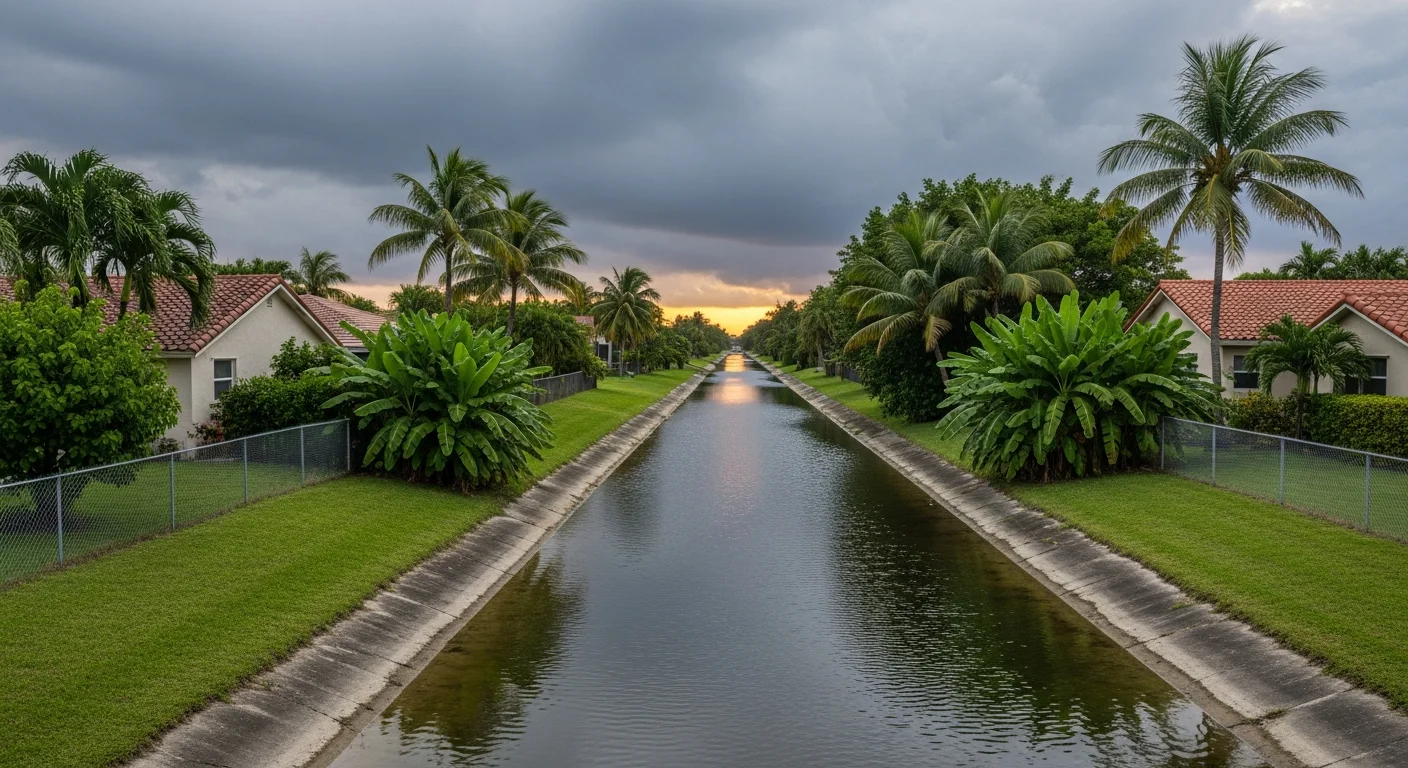
Sunrise's canal network — C-11, C-12, and C-13 — manages regional drainage but creates
flood risk for adjacent neighborhoods when capacity is exceeded during heavy rain
events.
Community-Level Intelligence
Sunrise Neighborhood Water Damage Risk Profiles
Water damage in Sunrise follows predictable patterns based on building age, construction
type, canal proximity, and elevation. From 1970s condo communities with shared plumbing
to newer mixed-use developments, here's what we see in the neighborhoods where Sunrise
residents call us most.
Common damage: Cast iron drain failures, galvanized supply line corrosion, multi-unit water migration through shared walls and ceilings, chronic mold in bathroom cores
Common damage: Roof underlayment failures during heavy rain, condensate line clogs saturating ceilings, stucco crack water intrusion into wall cavities
Sunrise Golf Village
High Risk
Built: 1960s–1970s
Primary risk: Legacy plumbing, older building envelope, original windows
Common damage: Polybutylene and galvanized pipe failures, window seal leaks during wind-driven rain, crawl space and slab moisture intrusion from high water table
Common damage: Roof leak patterns around penetrations and valleys, AC condensate overflow into ceiling cavities, mold growth in attic spaces from chronic humidity
Common damage: High-rise plumbing failures in newer systems, construction moisture trapped in walls, complex multi-party claims in mixed residential-commercial units
Common damage: North New River Canal overflow, street ponding during heavy rain, aging stormwater infrastructure backup, foundation moisture from elevated water table
Sunrise isn't on the coast, but it sits in the heart of Broward County's canal-dependent
drainage system. When the C-11, C-12, C-13, and North New River canals can't keep up
with rainfall, Sunrise floods — even in neighborhoods well outside FEMA mapped zones.
Only 10% of the city falls within Special Flood Hazard Areas, but real flood risk
extends far beyond those lines on a map.
Canal Overtopping
4 CanalsSurrounding Sunrise
The C-11 (west), C-12 (central), and C-13 (north) canals manage regional drainage for central Broward County. During sustained heavy rainfall — like the April 2023 event that dropped 25+ inches — canal stages exceed capacity and water pushes into adjacent streets, yards, and ground-floor units. The North New River Canal adds another corridor on the southern border.
Drainage Overwhelm & Street Ponding
5–9 ftTypical elevation
Sunrise's flat topography — most areas sit between 5 and 9 feet above sea level — means stormwater has almost no gravitational help reaching outfalls. When rain falls faster than the storm drain system can convey it to the canals, water ponds in streets, parking lots, and yards for hours. June 2024 flooding demonstrated this pattern across multiple Sunrise neighborhoods.
Groundwater Table Rise
2–4 ftWet-season water table depth
Broward County's water table sits close to the surface — often within 2 to 4 feet during wet season. Sustained rainfall raises the water table further, reducing the ground's ability to absorb any additional rain. This creates a compound effect: surface flooding from above and groundwater pressure from below, pushing moisture through slab foundations and into ground-floor walls.
Stormwater System Backup
BackupWhen canals run high
When the canals receiving Sunrise's stormwater outfalls are already at high stage, the system can't discharge. Water backs up through catch basins, parking lot drains, and even building floor drains. Properties adjacent to retention ponds see overflow when the ponds exceed design capacity — a common scenario during back-to-back storm events in peak wet season.
Recent Flooding Events — April 2023 & June 2024
The April 2023 storm system dropped over 25 inches on Broward County in a single
event, overwhelming every canal in the Sunrise drainage basin. In June 2024, flash
flooding struck again — this time demonstrating that even moderate-duration heavy rain
events can exceed system capacity when the water table is already elevated from wet
season saturation. Both events caused significant damage to properties outside
FEMA-mapped flood zones.
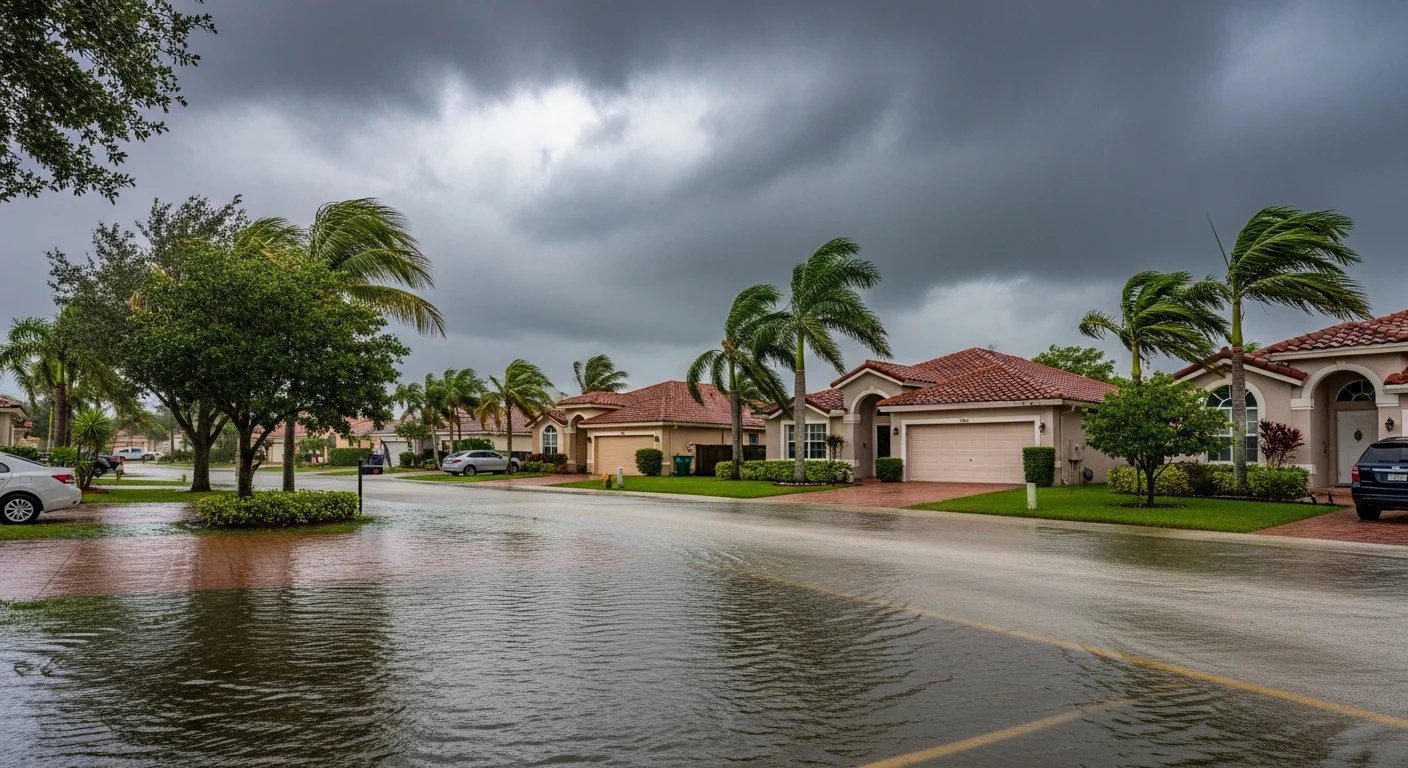
Street-level flooding in Sunrise during wet season — flat topography and canal-dependent
drainage mean water has nowhere to go when the system reaches capacity.
Our Sunrise FL Process
How We Restore Sunrise Homes After Water Damage
Every water damage event is different, but the science of restoration follows a proven
sequence. Here's exactly what happens when you call Palm Build for a Sunrise emergency.
01
Emergency Response & Assessment
30-60 Minutes
02
Water Extraction
Hours 1-4
03
Structural Drying
3-5 Days
04
Antimicrobial Treatment
During Drying
05
Moisture Verification
Days 3-5
06
Restoration & Reconstruction
1-4 Weeks
01
Emergency Response & Assessment
30-60 Minutes
Call our Florida line at (754) 600-3369 any time, day or night. Our South Florida crew deploys from our Deerfield Beach hub — arriving at your Sunrise home within 30 to 60 minutes with truck-mounted extraction, commercial dehumidifiers, and thermal imaging equipment.
02
Water Extraction
Hours 1-4
Truck-mounted extraction systems remove hundreds of gallons per hour. For Sunrise condos with shared walls, speed is critical — water migrates through concrete block and into adjacent units fast. We coordinate with building management to access affected areas immediately and limit multi-unit spread.
03
Structural Drying
3-5 Days
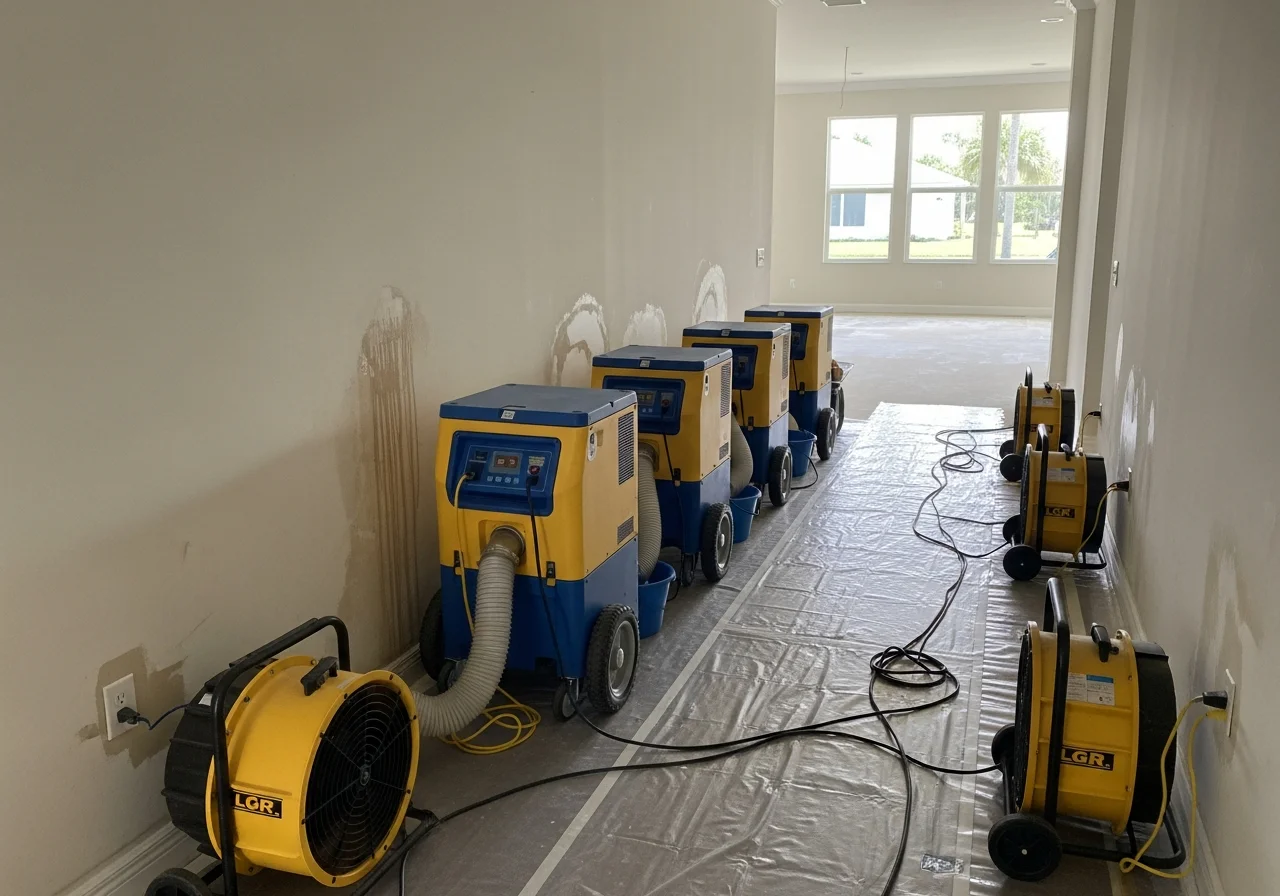
Commercial LGR dehumidifiers and high-velocity air movers positioned strategically throughout affected areas. In Sunrise's high-humidity subtropical climate, dehumidification is essential — fans alone can't overcome 70-80% ambient humidity that feeds mold growth within hours.
04
Antimicrobial Treatment
During Drying
EPA-registered antimicrobial treatments applied during the drying phase. South Florida's year-round warmth and humidity create ideal mold conditions from the moment water intrusion occurs. We treat wall cavities, subfloor areas, and HVAC systems to prevent amplification.
05
Moisture Verification
Days 3-5
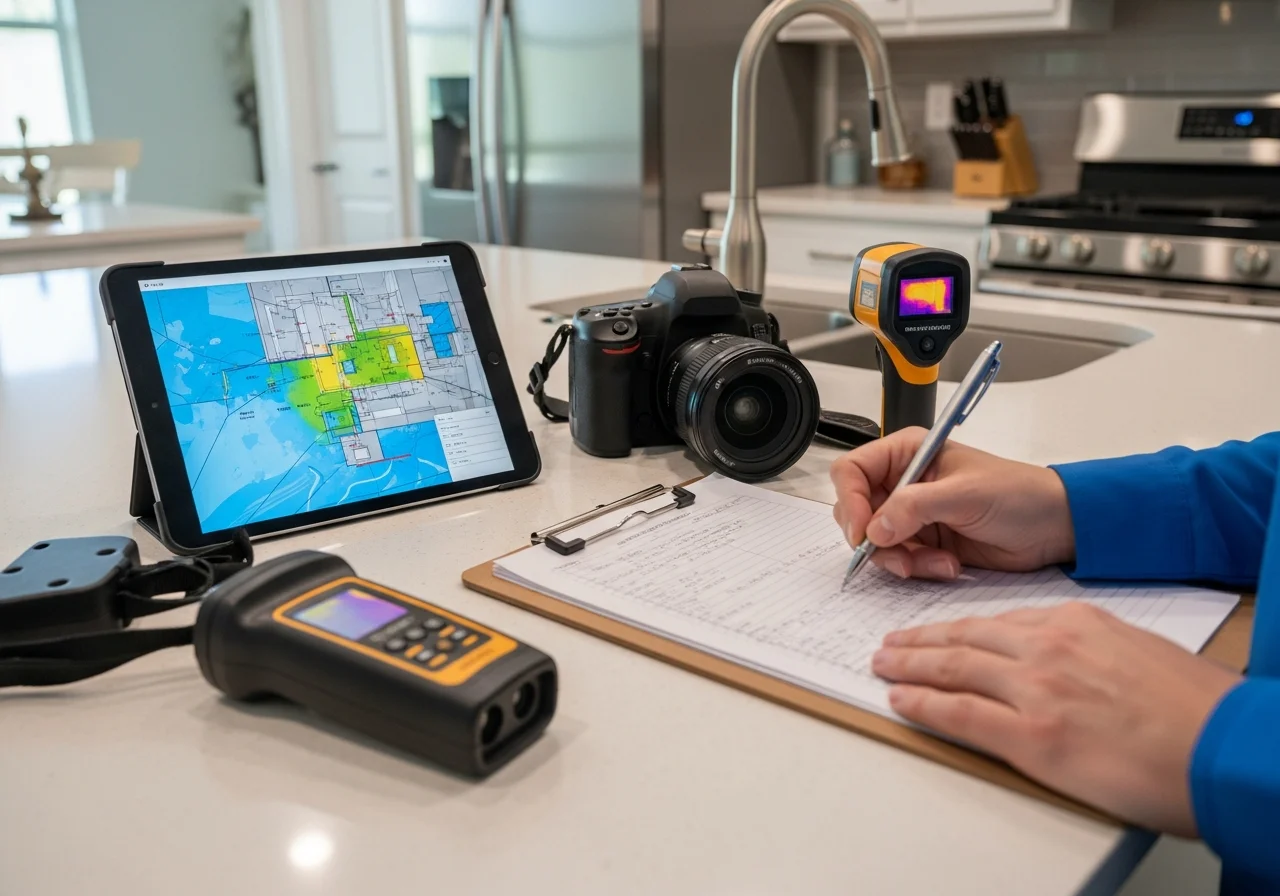
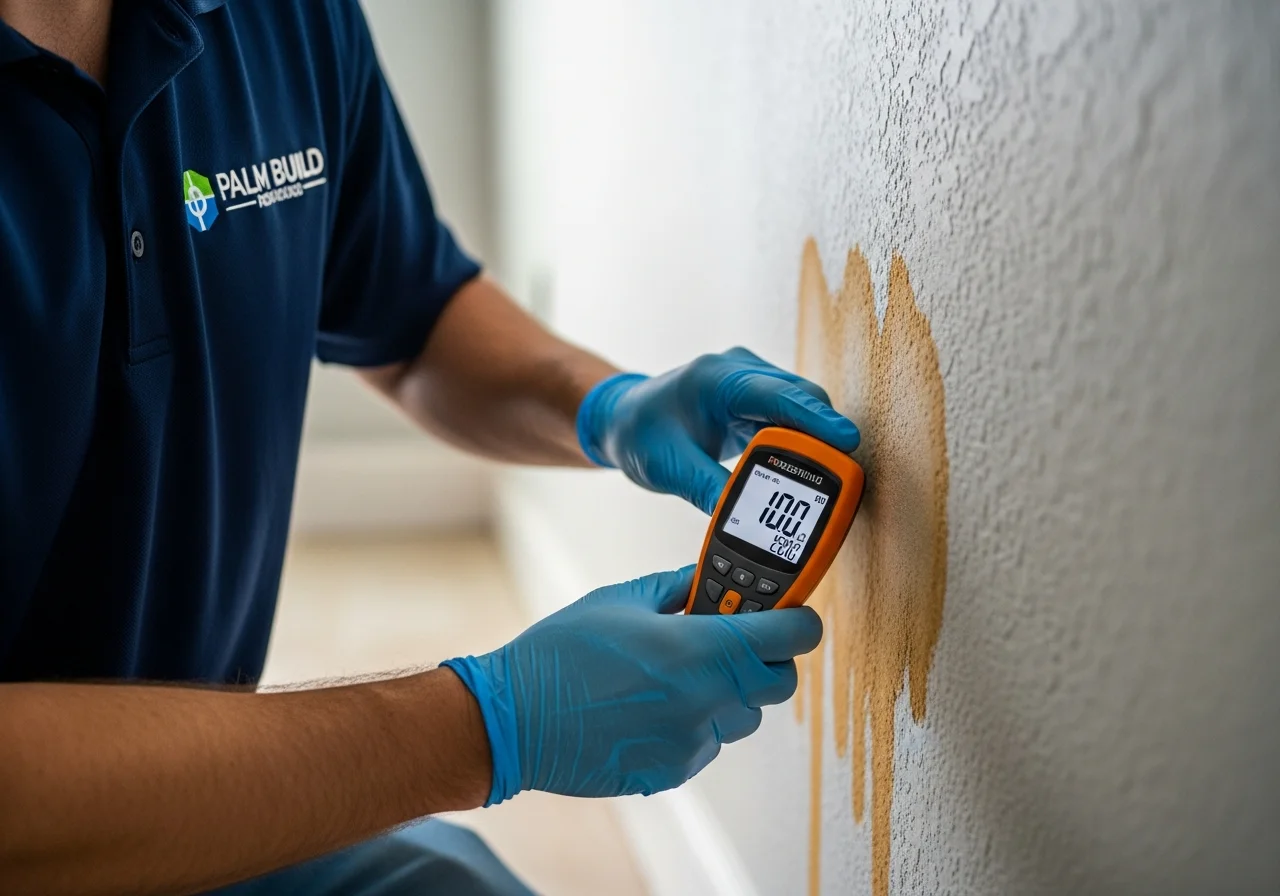
Daily moisture readings using pin-type meters and infrared thermal imaging until every material reaches verified dry standard. In Sunrise's climate, drying verification is non-negotiable — premature tear-down of equipment leads to hidden moisture and mold claims weeks later.
06
Restoration & Reconstruction
1-4 Weeks
Drywall, flooring, baseboard, trim, painting, and structural work rebuilt to current Florida Building Code. For condo units, we coordinate with HOA and building management on shared-element repairs and ensure compliance with Broward County permitting requirements.
Why Our Sunrise Process Works
1
South Florida Expertise
We know subtropical humidity, condo construction, and Broward canal flood patterns
2
Rapid Response
30-60 minute response from our Deerfield Beach hub to anywhere in Sunrise
3
Scientific Drying
Daily moisture readings until every material reaches verified dry standard
4
Insurance-Ready
Documentation formatted for your adjuster from day one
When water damage strikes your Sunrise home or condo, every minute counts. Our proven
6-step process ensures nothing is missed — from emergency extraction through final
reconstruction.
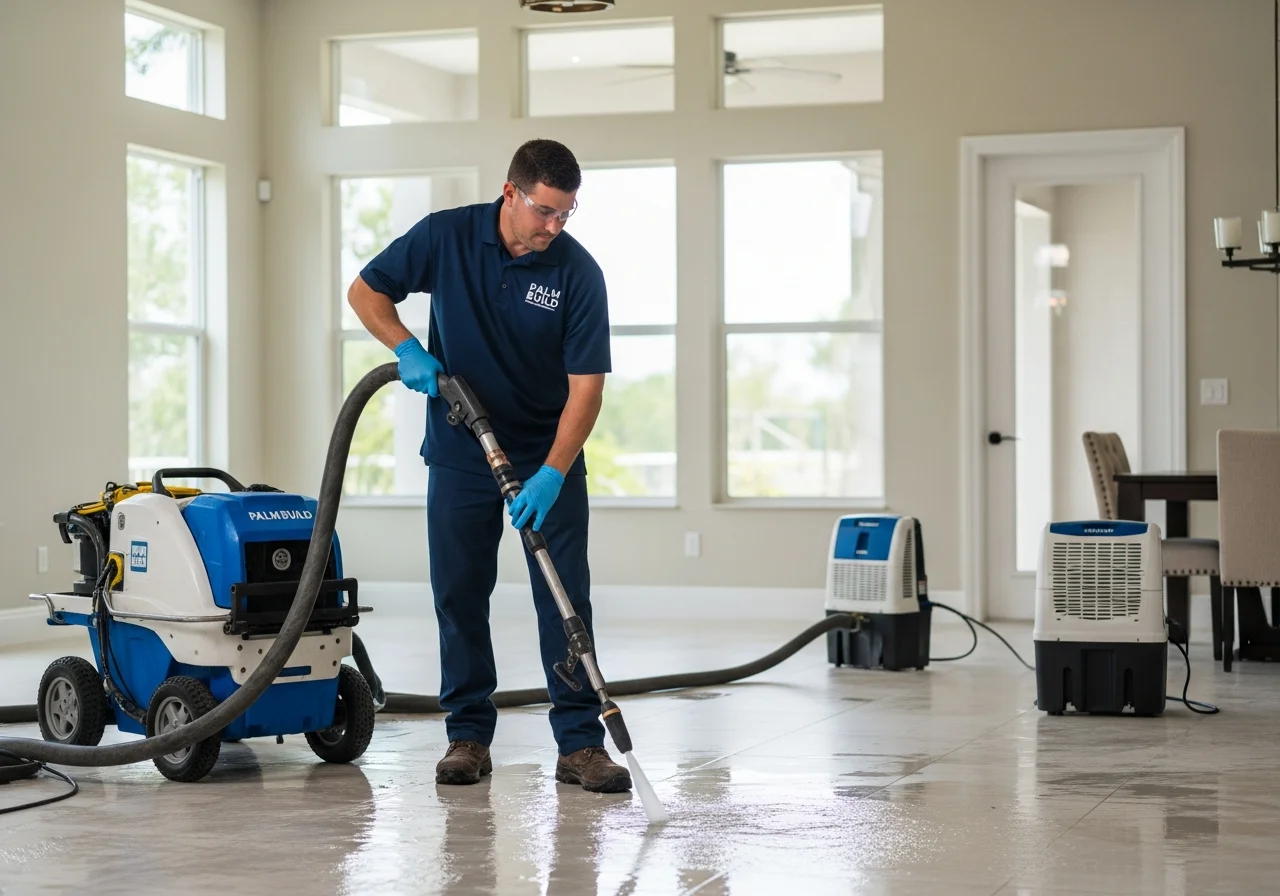
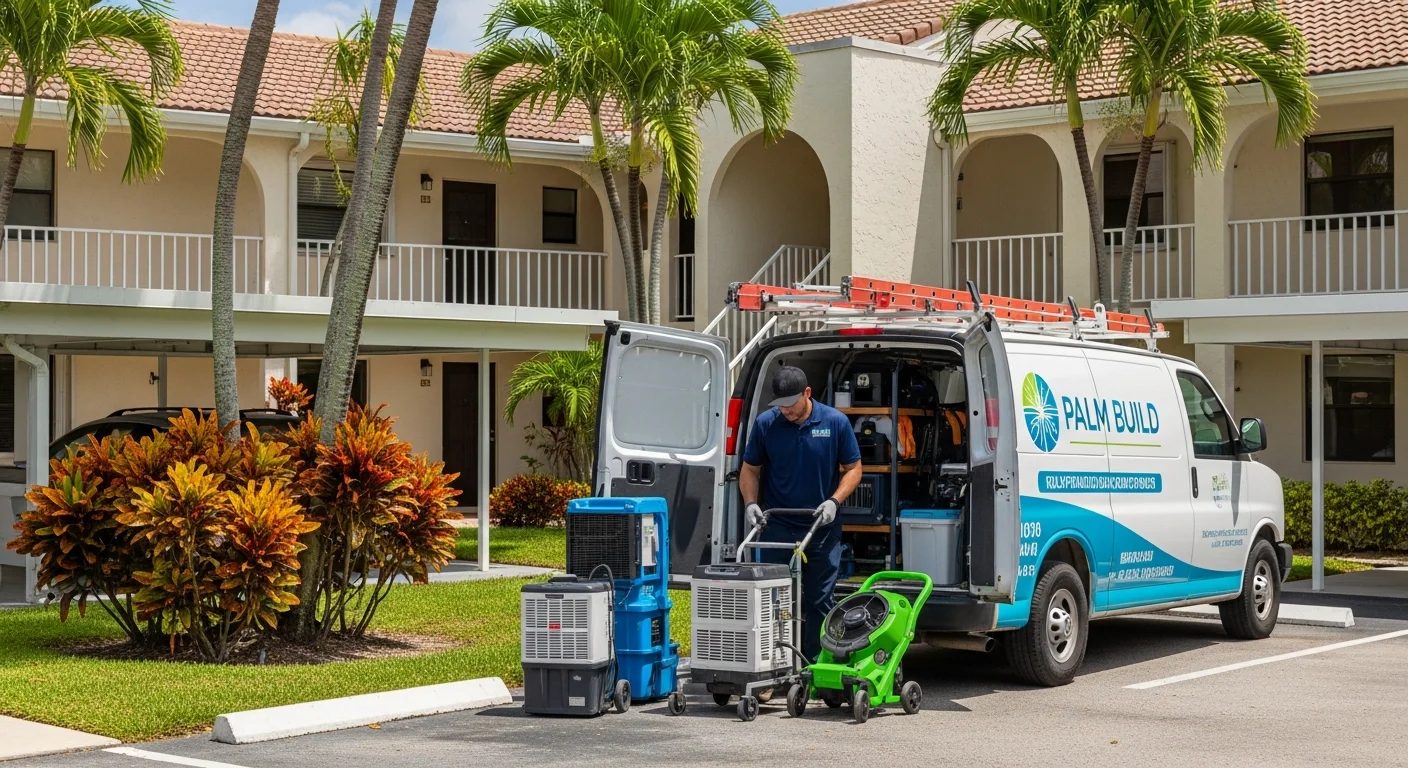
Palm Build technicians deploy truck-mounted extraction and commercial drying equipment
to Sunrise homes within 30-60 minutes of your call.
Cost Intelligence
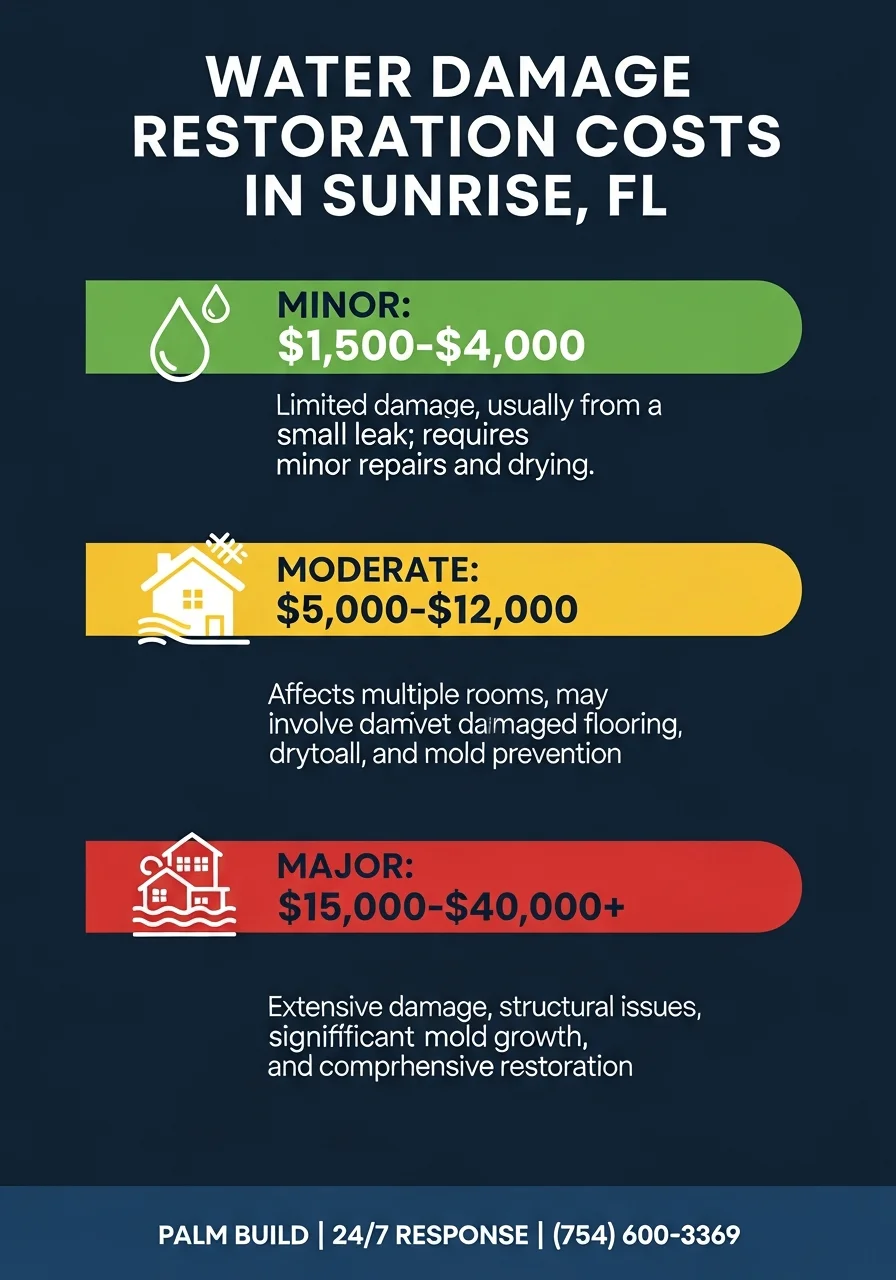
Water Damage Restoration Costs in Sunrise, FL
Sunrise costs trend above national averages due to South Florida's high humidity
extending drying times, the prevalence of multi-unit condo buildings creating
unit-to-unit water migration, and Florida's elevated insurance and material costs.
Condo-specific damage categories — like shared riser failures — don't even have a
national comparison.
Damage Level
Sunrise FL
National Avg.
Notes
Minor (Single Room)
$1,500 – $4,000
$1,300 – $3,500
Caught quickly, limited spread
Moderate (Multi-Room)
$5,000 – $12,000
$4,500 – $11,000
Structural drying required
Major (Multi-Unit)
$15,000 – $40,000+
$12,000 – $35,000+
Multi-floor condo, reconstruction
Condo Unit-to-Unit
$8,000 – $20,000
N/A
Shared riser / multi-unit spread
Emergency Board-Up
$500 – $1,500
$400 – $1,200
Immediate property protection
Year-Round Risk Awareness
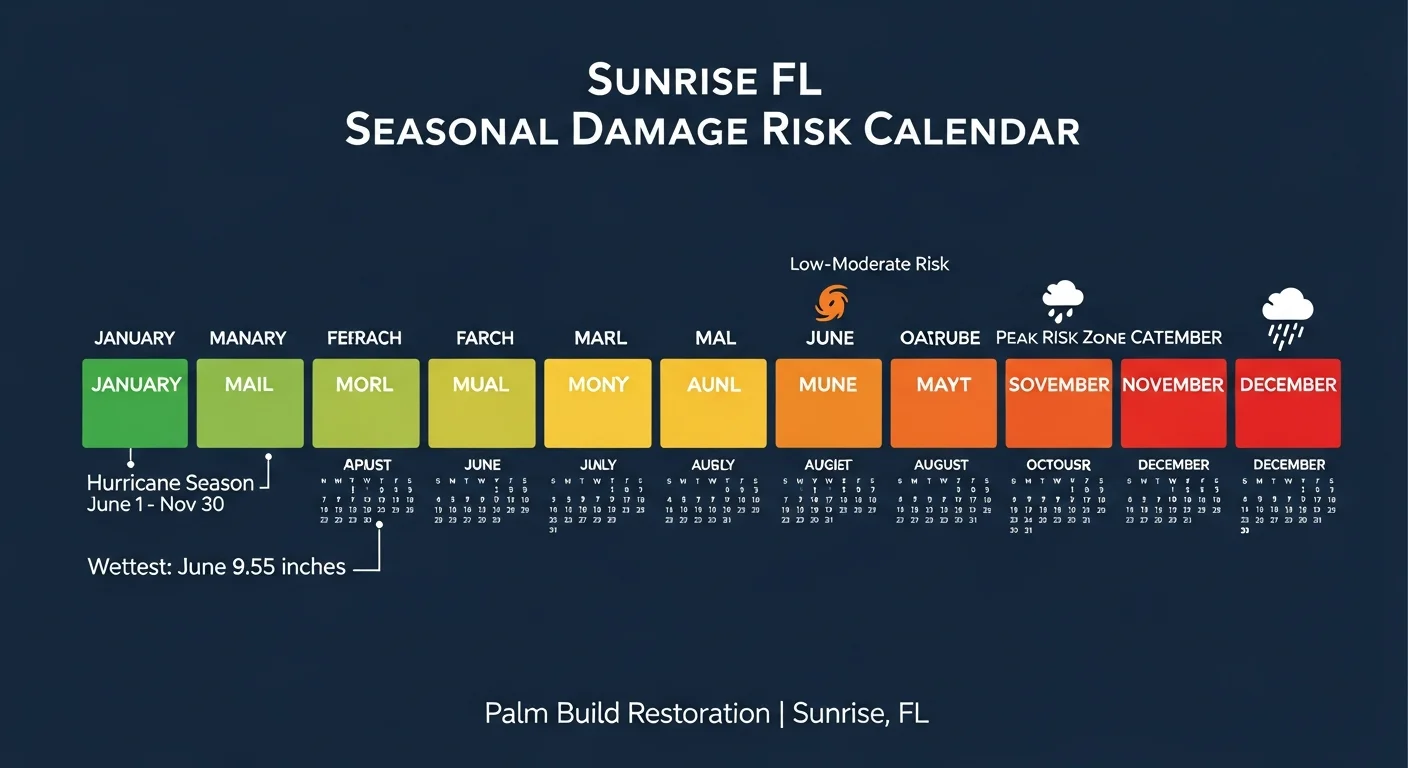
Sunrise FL Seasonal Damage Calendar
Understanding when your Sunrise home is most vulnerable helps you prepare. South
Florida's tropical climate creates distinct seasonal risk patterns — from dry-season
pipe failures to peak wet-season canal flooding.
Dry Season
December – April
Lower water table reduces but does not eliminate flood risk
Pipe failures from thermal expansion in unoccupied snowbird units
HVAC transitions between heating and cooling create condensation
King tides and coastal storm surges can elevate canal stages
Wet Season Start
May
First heavy rains test drainage systems dormant since fall
Retention ponds fill rapidly after dry season evaporation
AC systems ramp to full load — condensate line clogs surge
Roof leaks from winter wear revealed by first sustained rain
Peak Wet Season
June – September
June averages 9.55" of rain — highest single month
Daily thunderstorms overwhelm storm drains and canals
April 2023: 25+ inches caused catastrophic Broward flooding
Water table at seasonal high — reduces ground absorption
Peak mold conditions: 85°F+ temps with 80%+ humidity
Late Hurricane Season
October – November
Peak hurricane season — tropical systems bring surge and wind
June 2024 flash flooding demonstrated late-season vulnerability
Saturated ground from wet season amplifies any additional rain
Wind-driven rain enters through compromised roofs and windows
Sunrise's seasonal damage patterns follow South Florida's tropical wet/dry cycle — with
peak water damage risk during the June through September wet season.
Claims Support
Insurance Claims for Water Damage in Sunrise, FL
Filing a water damage claim in Sunrise requires meticulous documentation from the moment
damage is discovered. Whether you carry an HO-3 policy on your single-family home or an
HO-6 condo unit policy, Palm Build's project managers handle the documentation burden —
moisture maps, photo logs, drying records, and scope-of-work estimates formatted for
your carrier.
Florida Claim Deadlines
Florida law requires you to file a property insurance claim within 1 year of the date of loss. Supplemental claims must be filed within 18 months. Missing these deadlines can result in complete claim denial — regardless of damage severity.
AOB Reform (Post-January 2023)
Florida's Assignment of Benefits reform took effect January 1, 2023. Restoration contractors can no longer accept AOB for residential property claims. You retain control of your claim — and Palm Build works directly with you and your adjuster, not around you.
Carrier Volatility Warning
South Florida's insurance market is volatile — carriers are leaving, rates are rising, and claim handling timelines are extending. Document everything from day one. If your carrier becomes insolvent during your claim, Florida's Insurance Guaranty Association steps in, but the process is slower.
Documentation Checklist for Sunrise Homeowners
Photograph and video all damage before any cleanup — wide shots and close-ups
Document the water source and how far it has spread
Record the date and time you discovered the damage
File your claim with your carrier within 24 hours
Keep all damaged materials until the adjuster inspects
Save all receipts for emergency mitigation and temporary repairs
Request a copy of your full policy including endorsements
Our project managers guide Sunrise homeowners through the insurance claims process —
from first call to final payment, whether you carry HO-3 or HO-6 coverage.
Our Work in Action
Water Damage Restoration Gallery — Sunrise, FL
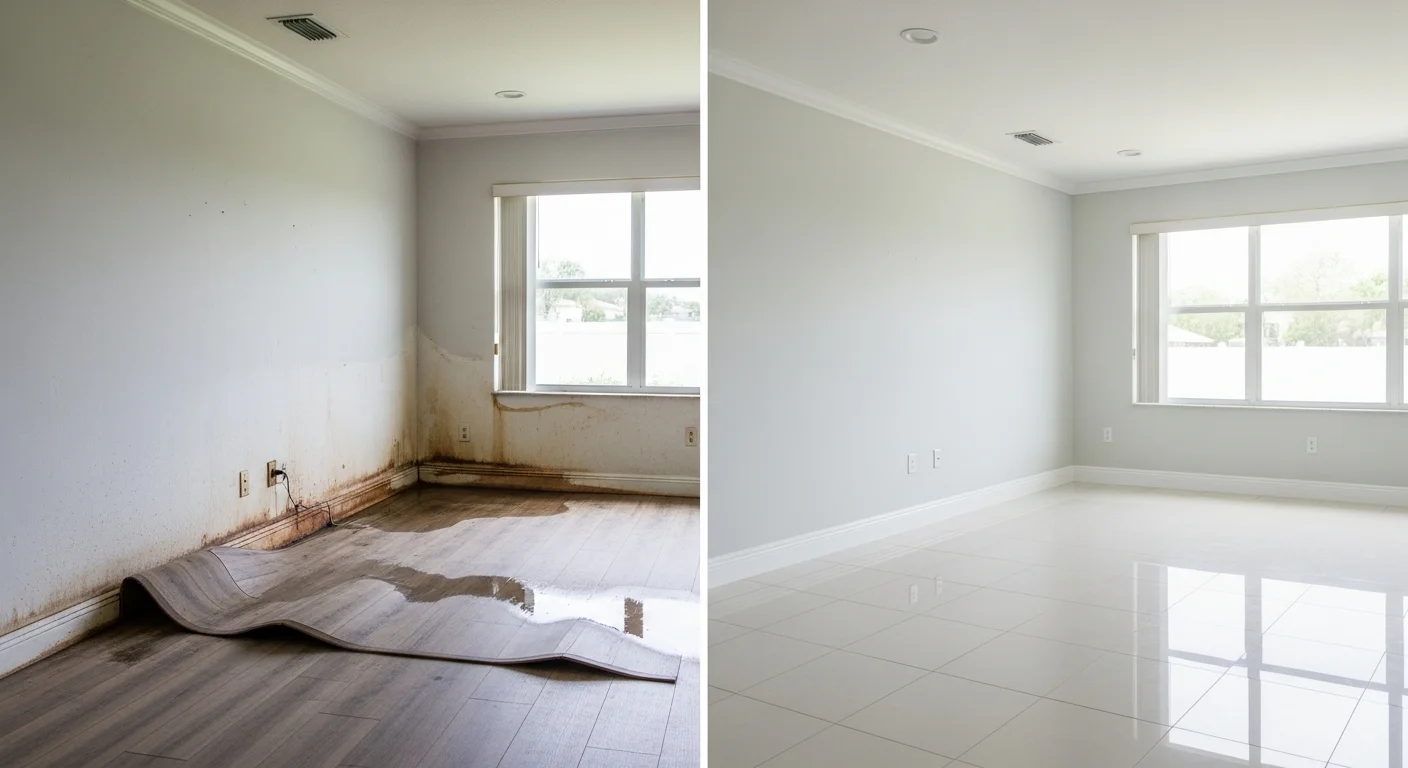
Full restoration from water damage to pre-loss condition in a Sunrise home
Pin-type moisture meters verify drying progress behind walls and under flooring
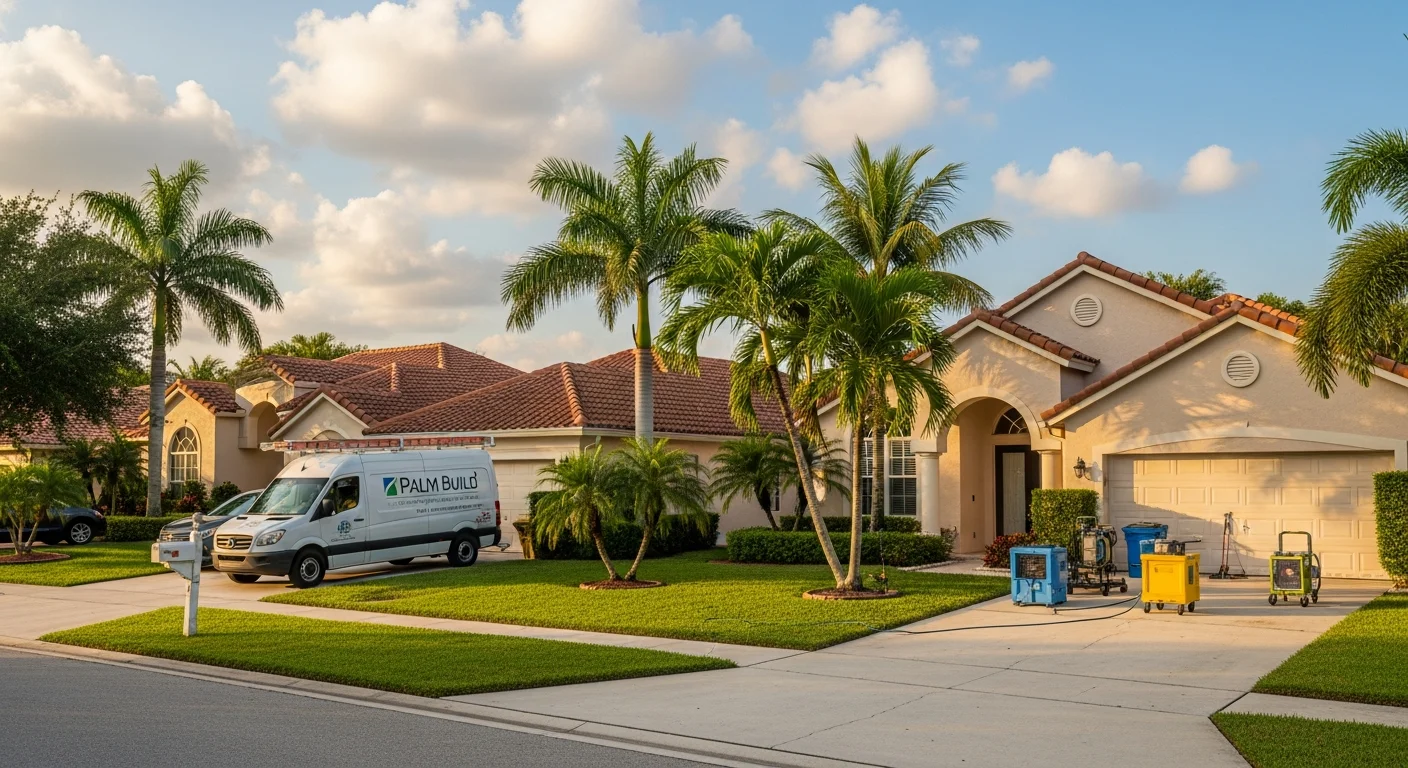
Palm Build response vehicle on-site at a Sunrise condo community
Commercial LGR dehumidifiers and air movers positioned for optimal drying
Know Your Risks
Common Types of Water Damage in Sunrise Homes
From aging condo riser failures in Sunrise Lakes to street flooding along the C-12 canal
corridor, water damage in Sunrise takes many forms. Understanding the sources helps you
respond faster and protect your property.
Year-round
Condo Plumbing Failures
Sunrise's ~20,000 multi-family units — many with original 1980s galvanized risers and cast iron drains — create the city's most common and most expensive water damage pattern. When a shared riser fails on an upper floor, every unit below takes damage through ceilings, walls, and flooring before the water can be shut off.
May – November
Storm-Driven Roof Leaks
Intense thunderstorms and tropical systems drive rain under aging roof tiles, through deteriorated underlayment, and around compromised flashing. Sunrise's older condo and townhome communities are especially vulnerable — flat and low-slope roofs accumulate standing water that finds any weak point.
Year-round, peaks summer
HVAC Condensation
Air conditioning runs nearly year-round in Sunrise, producing constant condensate that must drain properly. Clogged condensate lines, cracked drain pans, and improperly pitched lines cause overflow into ceiling cavities and wall spaces — often undetected until mold or staining appears.
June – October
Street Flooding & Canal Overflow
When heavy rain exceeds canal capacity, Sunrise's flat terrain and canal-dependent drainage create street-level flooding that enters garages, ground-floor units, and building common areas. The April 2023 and June 2024 events proved that even Zone X properties are not immune.
Year-round
Appliance Failures
Water heaters, washing machines, dishwashers, and refrigerator ice maker lines fail without warning. In Sunrise condos, a single water heater rupture in a closet can saturate drywall, flooring, and migrate into adjacent units through shared walls before the leak is discovered.
Year-round, peaks in storms
Stucco Envelope Breaches
Stucco is the dominant exterior finish in Sunrise. Over time, settlement cracks, window flashing failures, and deteriorated sealant allow wind-driven rain to penetrate wall cavities. The damage accumulates invisibly — trapped moisture feeds mold growth inside walls for months before exterior signs appear.
Why Sunrise Homeowners Choose Us
Why Palm Build for Water Damage in Sunrise
Palm Build isn't a national franchise dispatching crews from hours away. Our South
Florida operations hub in Deerfield Beach puts us minutes from Sunrise — we know your
condo communities, your canal flood patterns, and the insurance carriers serving Broward
County.
30-60 Minute Response
Our Deerfield Beach hub is minutes from Sunrise — we arrive with truck-mounted extraction, commercial dehumidifiers, and thermal imaging ready to deploy. Every hour of standing water increases damage and mold risk.
IICRC Certified
Every technician holds current IICRC certification in water damage restoration, applied structural drying, and mold remediation — the gold standard for the restoration industry.
Florida Mold-Aware
South Florida's year-round warmth and humidity create mold conditions within hours of water intrusion. Our antimicrobial protocols and aggressive dehumidification are calibrated for subtropical conditions — not generic national playbooks.
Condo-Experienced
Sunrise's 19,000+ multi-family units mean most water damage involves shared walls, ceilings, risers, and complex multi-party claims. We know how to coordinate with HOAs, building managers, and multiple unit owners simultaneously.
Insurance Documentation
Direct insurance billing and claims documentation support. Moisture logs, photo evidence, and scope-of-work formatted for your adjuster — whether you carry HO-3, HO-6, or commercial coverage.
Emergency to Rebuild
From emergency water extraction through final drywall, flooring, and painting — one contractor, one point of contact, one standard of quality. No subcontractor handoffs or communication gaps.
Common Questions
Sunrise Water Damage FAQ
How quickly can Palm Build reach Sunrise FL for a water emergency?
Our Deerfield Beach office is approximately 12 miles from Sunrise — about 20 minutes via the Sawgrass Expressway or I-95. For 24/7 emergencies, we typically arrive on-site within 30-60 minutes. We carry truck-mounted extraction, commercial dehumidifiers, and moisture mapping equipment on every response so work begins immediately upon arrival at your Sunrise home or condo.
Why does Sunrise FL have unique water damage risks?
Sunrise sits in central Broward County on flat, low-lying terrain surrounded by canals and retention lakes. About 10% of the city is in FEMA Special Flood Hazard Areas, but even Zone X properties flood during intense rainfall events — like the April 2023 storm that dropped 25+ inches on Broward in 24 hours. The city's 1980s-era housing stock, extensive condo communities with shared plumbing, and South Florida's year-round humidity all accelerate water damage and mold growth.
Does homeowners insurance cover water damage in Sunrise FL?
Most standard homeowners policies cover sudden and accidental water damage — burst pipes, appliance failures, and storm-driven roof leaks. However, flood damage from rising water requires separate NFIP coverage. Under Florida law (Fla. Stat. 627.70132), claims must be filed within 1 year of date of loss, and supplemental claims within 18 months. Palm Build documents moisture levels, photo logs, and detailed scope notes from day one to support your claim.
What is the average cost of water damage restoration in Sunrise FL?
Minor water damage in a single room typically costs $1,500-$4,000. Moderate damage across multiple rooms with structural drying averages $5,000-$12,000. Major events involving multi-unit condo flooding, mold remediation, and reconstruction can range from $15,000-$40,000+. Sunrise's high proportion of condominiums with shared plumbing stacks means unit-to-unit water events are common, often involving both the affected unit and units below.
Should I check my flood zone if I live in Sunrise FL?
Yes. FEMA updated Broward County flood maps effective July 31, 2024, and approximately 10% of Sunrise land area is in a Special Flood Hazard Area. The city describes itself as 'low and flat, surrounded by canals and lakes' with hurricanes and tropical storms posing the greatest flood potential. Even Zone X properties can experience ponding and drainage issues. Check your specific address using Broward County's FEMA flood map tool or the FEMA Flood Map Service Center.
How long does structural drying take in a Sunrise FL home?
Typical structural drying takes 3-5 days depending on saturation extent, materials, and ambient conditions. Sunrise's tropical climate with persistent humidity means we run commercial LGR dehumidifiers alongside air movers — fans alone cannot overcome South Florida's ambient moisture levels. In condo units, we must also account for concrete deck drying which can take longer. We monitor with pin-type meters and thermal imaging daily, documenting every reading for your insurance claim.
Are Sunrise condos more prone to water damage than single-family homes?
Yes. Sunrise has approximately 19,000-20,000 multi-family units, many built in the late 1970s to early 1980s with shared plumbing risers, aging shut-off valves, and original supply lines. Unit-to-unit leaks are common — a failure in one unit can damage multiple units below. Condo restorations involve more complexity: association approval, access coordination, shared versus unit-owner insurance claims, and drying through concrete decks and chases.
Trusted Vendors
Trusted local pros in Sunrise
Outside our restoration scope, these are the vetted, licensed contractors we trust
alongside our work. Personally evaluated, reference-checked, and recommended by Palm
Build.