Storm & Hurricane Damage Restoration in Sunrise, Florida
When the power goes out in Sunrise after a hurricane, the clock starts on a second disaster. In April 2023, 25+ inches of rain fell across Broward County in a single day — flooding streets from Sunrise Lakes to Welleby without a named storm. Prolonged outages in South Florida's tropical humidity push interior conditions past the mold threshold in as little as 48 hours. Sunrise's 98,000 residents live in CBS stucco homes with aging tile roofs — construction that handles wind well but hides water intrusion for weeks after the storm passes. Palm Build responds from Deerfield Beach in 30-60 minutes with emergency tarping, board-up, water extraction, and the documentation your insurance carrier requires from day one.
Deerfield Beach Office — ~20 minutes to Sunrise 30-60 min Response IICRC Certified
Why Sunrise Is Vulnerable to Hurricane & Storm Damage
Sunrise occupies a unique position in Broward County's storm risk landscape. While the
city sits inland from direct storm surge, its flat terrain, extensive canal network,
1980s-era CBS construction, and high water table create a storm damage profile dominated
by wind-driven rain intrusion, canal flooding, and the devastating secondary effects of
prolonged power outages in subtropical humidity. The combination of 61 inches of annual
rainfall, a six-month hurricane season, and aging construction makes storm damage
restoration an annual reality for Sunrise homeowners.
61"
Annual rainfall
Jun-Nov
Hurricane season
~10%
In SFHA zones
30-60 min
Emergency response
Sunrise's CBS construction and canal network create unique storm damage restoration
challenges
Hurricane Season Exposure (June 1 - November 30)
Sunrise sits 10 miles inland from the Atlantic coast in the heart of Broward County's hurricane exposure zone. While the city avoids direct storm surge, it receives the full force of hurricane winds, torrential rainfall, and tornado-spawning outer bands. Sunrise averages 61 inches of annual rainfall — concentrated heavily during hurricane season — creating compound flooding risk when tropical systems stall over the region. The June-November season means six months of elevated storm risk every year.
CBS Construction Vulnerabilities
Sunrise's housing stock is dominated by CBS (concrete block and stucco) construction from the 1980s building boom. While CBS walls withstand wind loads well, the stucco exterior develops hairline cracks over decades that allow wind-driven rain to penetrate wall cavities during hurricanes. Barrel tile roofs — standard on Sunrise homes — are durable but underlayment degrades over 20-30 years, and individual tiles can be displaced by hurricane-force winds, creating water intrusion points across the entire roof system.
Canal Network Flooding
Sunrise is bisected by the C-14 (Cypress Creek) canal and a network of lateral drainage canals designed to manage the city's flat terrain and high water table. During hurricanes, these canals receive massive rainfall volumes while simultaneously dealing with downstream backflow from the Intracoastal. When canal capacity is exceeded, water backs up into adjacent neighborhoods — particularly in lower-elevation areas near Sunrise Lakes and along the western communities. Approximately 10% of Sunrise falls within FEMA Special Flood Hazard Areas.
Post-Storm Power Outage Mold
Sunrise's most insidious post-hurricane damage is not from the storm itself — it is from the power outage that follows. Without air conditioning in 85-95 degree heat and 80%+ humidity, mold colonization begins within 24-48 hours on any moisture-compromised surface. A hurricane that causes minor roof damage and a 5-day power outage can produce $30,000-$50,000 in mold remediation costs that exceed the original storm damage. This secondary damage is Sunrise's most expensive post-storm reality.
Neighborhood Storm Risk Profiles
Storm Damage Risk by Sunrise Neighborhood
Every Sunrise neighborhood has a different storm damage risk profile based on
construction era, elevation, proximity to canals, and building type. Understanding your
neighborhood's specific vulnerabilities helps us pre-position the right equipment and
respond with targeted restoration protocols.
Sunrise Lakes
High
1970s-80s · Condo Community (4 phases)
Canal-adjacent flooding, aging roof systems
Phases border C-14 canal with lower elevation than surrounding areas. Barrel tile roofs with 30-40 year old underlayment are the primary wind damage vulnerability. Canal backup during heavy rainfall events floods ground-level units. Post-storm power outages in multi-unit buildings create rapid mold conditions across hundreds of units simultaneously.
Welleby
High
1980s · Single-Family & Townhomes
Flat grading, poor drainage away from structures
Typical 1980s South Florida grading with minimal slope away from foundations. During heavy rainfall events, water pools against slab edges and enters through weep holes and expansion joints. Townhome sections have shared roof systems where one displaced tile can allow water into multiple units. Mature tree canopy creates wind-borne debris risk to barrel tile roofs.
Sawgrass Mills Area
Moderate
1990s-2000s · Mixed Residential
Newer construction with better wind ratings but flood exposure
Built to more recent Florida Building Code standards with better wind resistance. However, the area sits in a lower elevation zone near the Sawgrass Expressway corridor where stormwater management infrastructure can be overwhelmed during major rain events. Larger homes mean more potential wind-damage surface area and higher reconstruction costs.
Large community with mid-rise condo buildings featuring flat and low-slope roof systems vulnerable to ponding water and membrane failure during hurricanes. Wind damage to common areas triggers complex HOA insurance claims. Multi-story buildings experience higher wind loads on upper floors. Aging window systems are the primary water intrusion point during wind-driven rain.
Sunrise Golf Village
Critical
1970s · 55+ Condo Community
Oldest construction, most vulnerable roof systems
Among the oldest construction in Sunrise with original 1970s roof underlayment that has exceeded its useful life. Original single-pane windows offer no impact protection. Ground-level condo units are most vulnerable to flooding from inadequate stormwater drainage in the community. Post-storm evacuation support for senior residents adds complexity to emergency response.
Jacaranda Lakes
Moderate
1980s · Single-Family CBS Homes
Barrel tile displacement, screen enclosure damage
Single-family CBS homes with pool/patio screen enclosures that become airborne debris in hurricane-force winds. Screen enclosure destruction is the most common storm damage claim in Sunrise's single-family neighborhoods. Barrel tile displacement on hip and ridge lines allows water intrusion into attic spaces. Mature landscaping creates additional debris risk.
The Colonies
High
1980s · Townhome/Condo Complex
Shared roof vulnerabilities, multi-unit water intrusion
Attached townhome construction means a single roof breach affects multiple units. Shared drainage systems can overflow and back up into ground-level units during heavy rainfall. Post-storm power outages affect the entire community simultaneously, creating mold risk across all units within 24-48 hours without generator backup.
Sunrise-Specific Risk
Post-Storm Power Outage Mold Timeline
The most expensive damage from a Sunrise hurricane often is not the storm itself — it is
the mold that grows during the power outage that follows. Without air conditioning in
85-95 degree heat and 80%+ humidity, mold colonization follows a predictable and
accelerating timeline. Understanding this timeline is the difference between a $5,000
storm repair and a $50,000 mold remediation.
The 48-Hour Window
You have approximately 48 hours after power loss to deploy dehumidification before
mold colonization begins on moisture-compromised surfaces. After 72 hours, the
remediation scope and cost increase dramatically. Call immediately after the storm
passes — do not wait for power to be restored.
Without air conditioning, interior humidity climbs from the controlled 50-55% to match outdoor levels of 75-85%. Condensation forms on cool surfaces — AC ducts, metal fixtures, tile floors, and windows. Interior temperature reaches 85-90°F. Materials begin absorbing ambient moisture. At this stage, opening windows and doors provides some air circulation, but Sunrise's outdoor humidity offers limited relief.
Action:Open windows if safe. Run generators if available. Remove standing water from any storm intrusion.
12-24 Hours
Materials Absorb Moisture, Conditions Ideal for Mold
Drywall, carpet, ceiling tiles, and wood trim have absorbed enough moisture to reach the 60%+ moisture content threshold where mold spores can germinate. Interior humidity stabilizes at 80-90% — matching Sunrise's outdoor subtropical air. Any areas with existing water intrusion from storm damage are now saturated. The environment inside your home is now identical to the conditions mold requires to colonize.
Action:Deploy portable dehumidifiers if available. Remove wet materials. Begin documenting moisture levels for insurance.
24-48 Hours
Mold Spores Activate, Early Colonization
Mold spores — always present in South Florida air — find ideal growth conditions: moisture above 60%, temperature above 77°F, and organic food sources (drywall paper, wood, dust). Microscopic hyphal growth begins on the most vulnerable surfaces first: wet drywall, carpet backing, HVAC duct interiors, and any area where storm water made contact with porous materials. Growth is not yet visible to the naked eye but is actively occurring.
Action:CRITICAL: Contact Palm Build for emergency dehumidification deployment. Every hour of delay increases remediation scope.
48-72 Hours
Visible Mold Growth Possible
In Sunrise's heat and humidity, fast-growing mold species like Aspergillus and Penicillium can produce visible colonies within 48-72 hours on heavily moisture-compromised surfaces. Musty odor becomes noticeable. HVAC ductwork that was contaminated by storm water or condensation now contains active mold growth that will distribute spores to every room when power is restored and the system runs.
Action:Professional remediation is now required. Do NOT run HVAC when power returns — it will distribute mold spores throughout the home.
72+ Hours
Extensive Colonization, Remediation Required
After 72 hours without climate control in Sunrise's subtropical environment, mold colonization is widespread on any moisture-compromised material. Remediation now requires professional containment, HEPA filtration, removal of affected materials, and antimicrobial treatment. The cost of mold remediation at this stage typically ranges from $10,000 to $50,000+ and often exceeds the original storm damage repair costs. Insurance coverage for mold resulting from a covered storm event is available but has strict documentation requirements.
Action:Full professional remediation with containment protocols. Document all mold growth with timestamps for insurance claims.
Palm Build's Post-Storm Mold Prevention
We deploy industrial dehumidifiers and air movers to Sunrise homes immediately after
the storm passes — before power is restored. Our generator-powered drying equipment
breaks the mold timeline by maintaining interior humidity below 60% even without grid
power. This preventive deployment costs a fraction of the mold remediation that would
be required after 72+ hours without climate control. For multi-unit buildings like
Sunrise Lakes and The Colonies, we coordinate community-wide drying programs with HOA
management.
Construction Vulnerability Guide
How Sunrise's CBS Construction Handles Hurricanes
Sunrise's CBS (concrete block and stucco) homes are strong against wind but vulnerable
to water intrusion through multiple pathways. Understanding where your construction type
succeeds and where it fails during hurricanes determines the restoration approach needed
after every storm.
Concrete Block Walls (CBS)
Strength
Excellent wind resistance — walls rarely fail
Vulnerability
Stucco cracks allow wind-driven rain into hollow block cavities
CBS walls are the backbone of Sunrise's housing stock and handle hurricane wind loads well. The vulnerability is the stucco exterior finish. After 30-40 years of thermal cycling, settling, and South Florida humidity exposure, hairline cracks develop throughout the stucco. During hurricanes, wind-driven rain at 100+ mph enters these cracks and fills hollow block cavities with water. This moisture becomes trapped — invisible from the interior — and creates mold conditions within the wall system. Detection requires moisture probe injection into block cavities, not surface-level moisture meters.
Restoration Approach
Moisture injection testing of CBS cavities, targeted demolition to access wet block cores, commercial drying of block cavities, stucco repair with waterproof membrane, interior refinishing.
Barrel Tile Roofs
Strength
Durable against rain and UV degradation
Vulnerability
Underlayment degrades over 20-30 years; individual tiles displaced by wind
Barrel tile roofs are standard on Sunrise's 1980s-era homes. The tiles themselves are durable, but the felt or synthetic underlayment beneath them has a 20-30 year lifespan. On homes built in the 1980s, this underlayment has long since exceeded its useful life. When hurricane winds displace or crack individual tiles, water enters directly onto degraded underlayment and into the roof deck and attic space. Hip and ridge tiles are most vulnerable to wind uplift. The result: widespread but scattered water intrusion across the entire roof system rather than a single concentrated leak.
Restoration Approach
Emergency tarping, tile removal and inspection, underlayment replacement (full re-roof often required), damaged deck repair, attic insulation replacement if wet, interior ceiling and wall repair.
Impact Windows & Doors
Strength
Rated for wind-borne debris and pressure differentials
Vulnerability
Seal failures allow water intrusion; older homes lack impact protection entirely
Homes built or renovated after 2002 may have impact-rated windows meeting Florida Building Code requirements. However, many Sunrise homes from the 1980s still have original single-pane or non-impact windows with shutters as their only protection. Even on homes with impact windows, the window seals degrade over time — allowing wind-driven rain to penetrate around the frame during sustained hurricane conditions. Failed weather-stripping around doors is another common water intrusion point during prolonged storm events.
Restoration Approach
Seal replacement on impact windows, full window replacement for non-impact originals to current code, door weather-stripping replacement, water extraction and drying of affected wall cavities around openings.
Flat Grading & Slab-on-Grade
Strength
Slab construction avoids crawl space flood damage
Vulnerability
No natural drainage away from structure; water pools against foundation
Sunrise's flat terrain and slab-on-grade construction mean there is minimal slope to direct rainwater away from structures. During hurricane rainfall — often 10-20 inches in 24-48 hours — water pools against slab edges and enters through weep holes, expansion joints, and the slab-to-wall junction. The high water table in many Sunrise neighborhoods compounds this effect. Ground saturation from prolonged rain can also cause hydrostatic pressure that pushes moisture through the slab itself, wetting flooring materials from below.
Restoration Approach
Water extraction from slab surfaces, removal of wet flooring materials, commercial dehumidification, grading correction where feasible, exterior drainage improvements to prevent recurrence.
Storm Restoration Process
How We Restore Sunrise Homes After Hurricane Damage
Hurricane restoration in Sunrise requires navigating CBS wall drying, barrel tile roof
repair, post-outage mold prevention, and dual wind/flood insurance claims
simultaneously. Here is our proven six-step process from first call through final
Broward County inspection.
01
Emergency Tarping & Board-Up
Hours 1-4
We secure your Sunrise home against further weather exposure immediately after conditions allow safe access. Displaced barrel tiles are tarped with reinforced polyethylene rated for South Florida wind loads, failed windows are boarded, and compromised doors are sealed. Emergency tarping is covered by your insurance policy as part of your duty to mitigate further damage — critical before the next rain band or afternoon thunderstorm passes through.
02
Damage Assessment & Documentation
Days 1-3
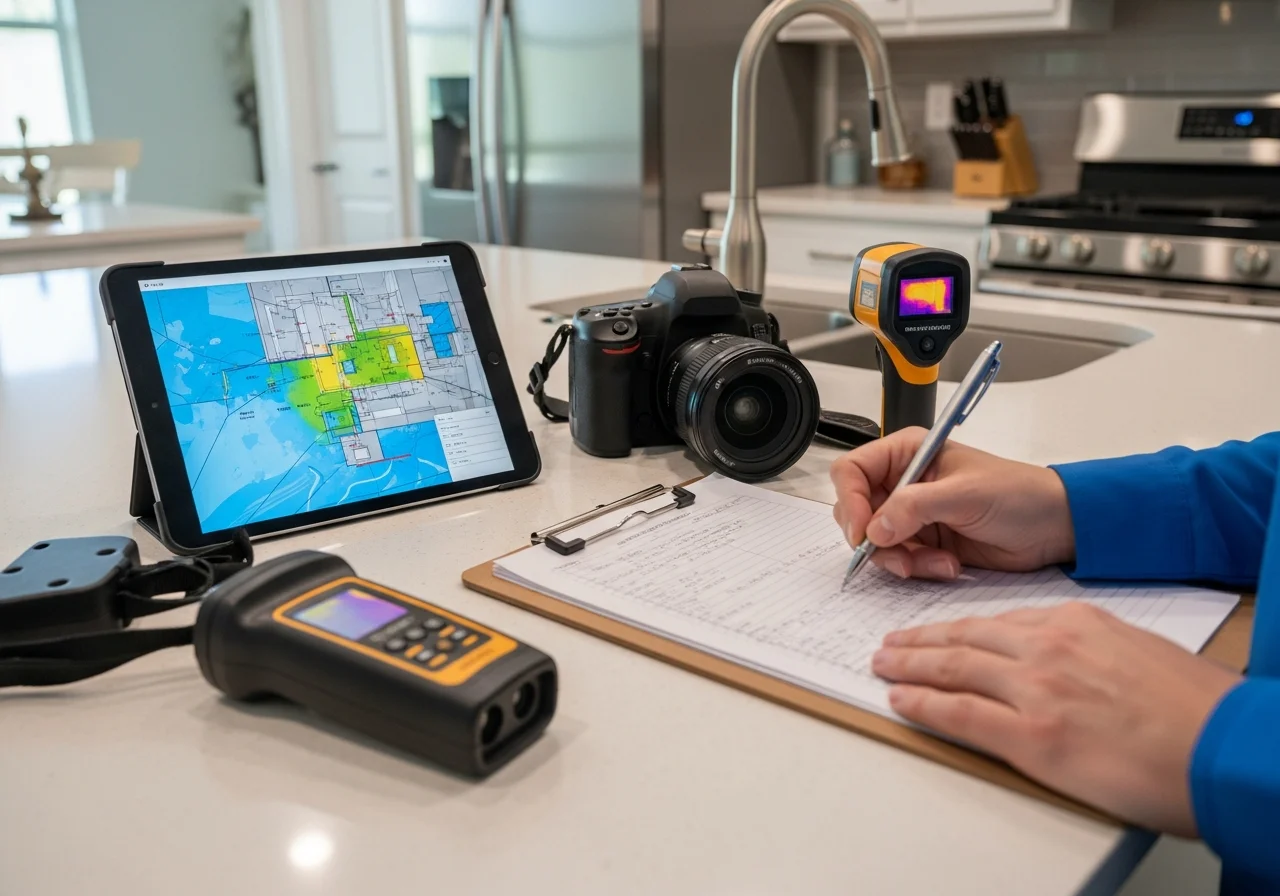
Full documentation of all storm damage classified by cause: wind damage (tiles, siding, windows, screens), rainfall intrusion through wind-created openings, and canal/surface flooding if applicable. We photograph every affected area, map moisture with thermal cameras and injection probes into CBS wall cavities, and create separate scopes for wind claims (homeowners policy) and flood claims (NFIP or private flood) when both types of damage are present.
03
Water Extraction & Decontamination
Days 1-10
Storm damage in Sunrise almost always includes water intrusion — through displaced barrel tiles, failed window seals, or surface flooding from overwhelmed drainage. We extract standing water, classify contamination category, and begin appropriate IICRC protocols. Canal overflow water (Category 2-3) requires contamination testing and may require demolition of affected porous materials. Commercial dehumidifiers bring humidity below 60% to prevent mold colonization.
04
Structural Drying & Mold Prevention
Days 3-14
Sunrise's subtropical humidity makes structural drying significantly more demanding than most of the country. Without power — common after hurricanes — we deploy generator-powered industrial desiccant dehumidifiers to maintain interior conditions below 60% humidity. CBS concrete block walls retain moisture longer than wood-frame construction, requiring injection drying techniques and 20-40% longer drying times than national averages. Twice-daily moisture monitoring ensures target moisture content is achieved.
05
Full Structural Reconstruction
Weeks 2-16
Once the property is dried and cleared, we begin reconstruction to current Florida Building Code. Barrel tile roof repair or replacement, stucco restoration on CBS walls, interior drywall and flooring replacement, electrical and plumbing repairs, and finish work. All materials and installation meet Broward County code requirements. Impact-rated windows, enhanced roof-to-wall connections, and current wind-load specifications are mandatory for all reconstruction.
06
Final Inspection & Insurance Closeout
Week 16+
Broward County Building Division inspections verify all work meets current code. We perform a final walk-through with the homeowner and provide complete documentation for insurance closeout — including all invoices, permits, inspection records, and warranty information. For hurricane claims involving both wind and flood policies, we coordinate dual-claim closeout to ensure maximum recovery from both carriers.
Sunrise Pricing Guide
Storm Damage Restoration Costs in Sunrise, FL
Storm restoration costs in Sunrise vary widely based on the severity of wind damage,
water intrusion depth, and whether post-storm power outages caused secondary mold
damage. Broward County building code requirements, CBS construction complexity, and
elevated South Florida material costs all contribute to costs above national averages.
Minor Wind Damage
Tile displacement, screen enclosure damage, minor leaks
$2,000 - $8,000
The most common storm damage in Sunrise: displaced barrel tiles on hip and ridge lines, destroyed pool/patio screen enclosures, and minor water intrusion through wind-compromised seals. Screen enclosure replacement alone runs $3,000-$6,000 in Sunrise. Tile replacement with proper underlayment repair runs $1,500-$4,000 depending on accessibility and quantity. Minor interior water damage from brief leaks requires drying and cosmetic repair.
Moderate Storm Damage
Multiple roof breaches, window failures, significant water intrusion
$10,000 - $30,000
Multiple areas of roof damage allowing sustained water intrusion, window seal failures during wind-driven rain, and resulting interior damage to drywall, flooring, and contents. CBS wall cavity moisture from stucco crack infiltration adds scope. Includes full roof repair or partial re-roof, window seal replacement, interior drying with commercial equipment, drywall and flooring replacement, and painting. Broward County code compliance adds 10-15% for any permit-required reconstruction.
Major Hurricane Damage
Structural damage, full re-roof, extensive water/mold remediation
$30,000 - $100,000+
Full structural assessment and reconstruction required. Complete re-roof to current Florida Building Code with new underlayment, tiles, and enhanced connections. Window and door replacement with impact-rated units. Extensive water extraction and structural drying of CBS walls. Post-outage mold remediation if power loss exceeded 48 hours. Full interior reconstruction including drywall, flooring, cabinetry, electrical, plumbing, and finishes. Broward County permitting and inspection process adds timeline.
Important: These ranges reflect typical Sunrise
projects. Post-storm mold remediation from extended power outages can add $10,000-$50,000+ to
any tier. Palm Build provides detailed, line-item estimates formatted for your insurance carrier
within 48 hours of initial assessment. Wind and flood damage are documented separately for dual-claim
submissions.
Critical Insurance Distinction
Wind vs. Flood Insurance: The Coverage Gap
Wind damage and flood damage from the same hurricane are covered by different policies,
carry different deductibles, and are filed as separate claims. In Sunrise — where
hurricanes can produce both wind-driven rain intrusion through damaged roofs AND canal
flooding simultaneously — proper damage classification is the difference between full
recovery and tens of thousands in uncovered losses.
Separate documentation for wind and flood claims maximizes recovery from both policies
Wind Damage (Homeowners Policy)
Barrel tile displacement from wind uplift
Window and door damage from wind pressure or debris
Rain water entering through wind-created openings
Screen enclosure destruction from wind
Stucco and structural damage from wind load
Emergency tarping and board-up (duty to mitigate)
Named Storm Deductible: 2-5% of insured value. On a $350K Sunrise home
= $7,000-$17,500 out of pocket before coverage begins.
Flood Damage (Separate NFIP or Private Policy)
Canal overflow from C-14 and lateral canals
Surface water pooling against slab-on-grade foundation
Groundwater intrusion through slab or expansion joints
Sewer backup from overwhelmed municipal systems
NFIP max dwelling coverage: $250,000
NOT covered by standard homeowners policy
NFIP 60-Day Rule: Proof of loss must be filed within 60 days of the flood
event. Missing this deadline can void your entire flood claim.
Filing Deadlines: Act Immediately After the Storm
After a hurricane in Sunrise, you may need to file two separate claims: wind damage to
your homeowners carrier and flood damage to your NFIP or private flood carrier. Each
has different deadlines, deductibles, and adjusters. The NFIP 60-day proof of loss
deadline is the most critical. Palm Build documents all damage by cause from day one,
creating separate wind and flood scopes that align with each policy's requirements.
This dual-claim documentation recovers significantly more than generic damage reports
that do not distinguish damage sources.
From emergency tarping through full reconstruction, see how Palm Build restores Sunrise
homes after hurricane and storm damage.
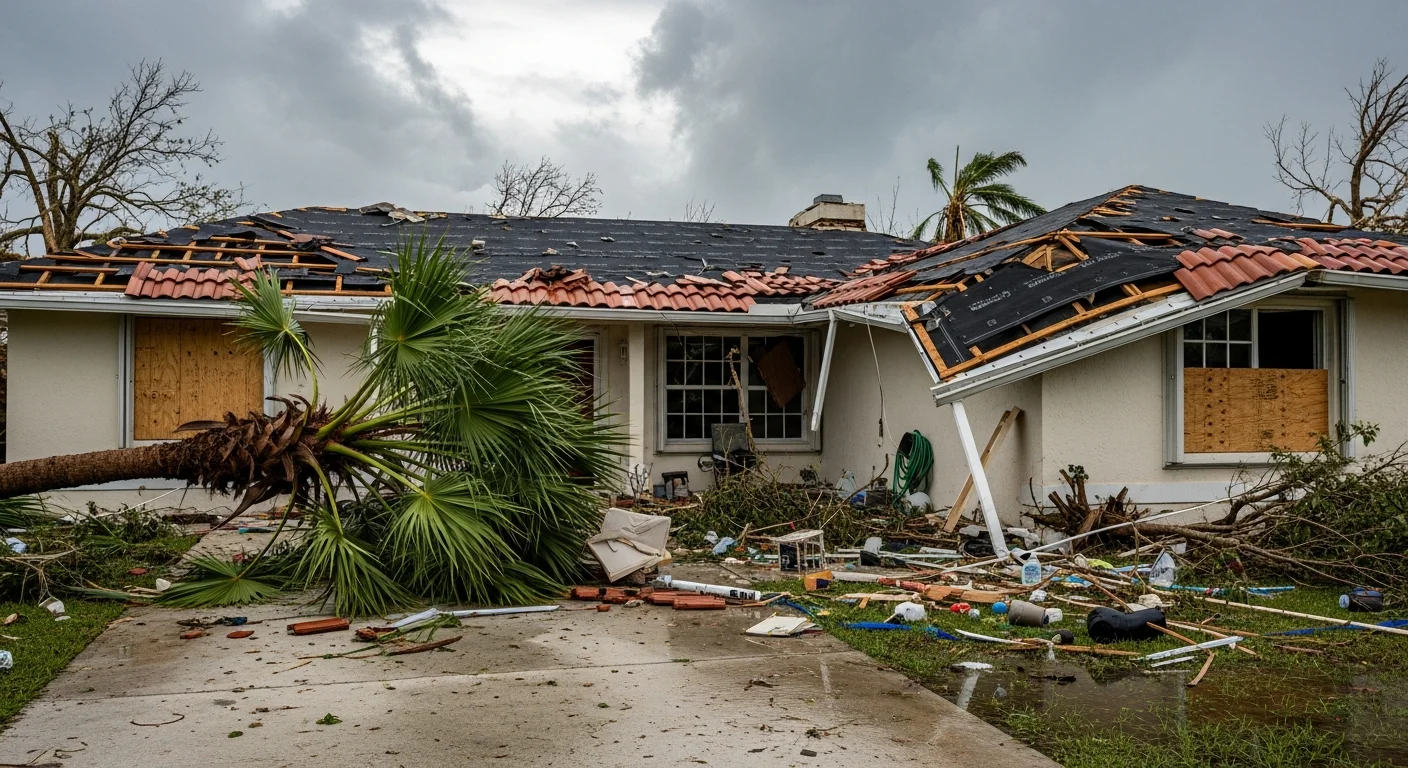
Hurricane damage assessment at a Sunrise CBS home — barrel tile displacement and wind-driven rain intrusion documented for insurance
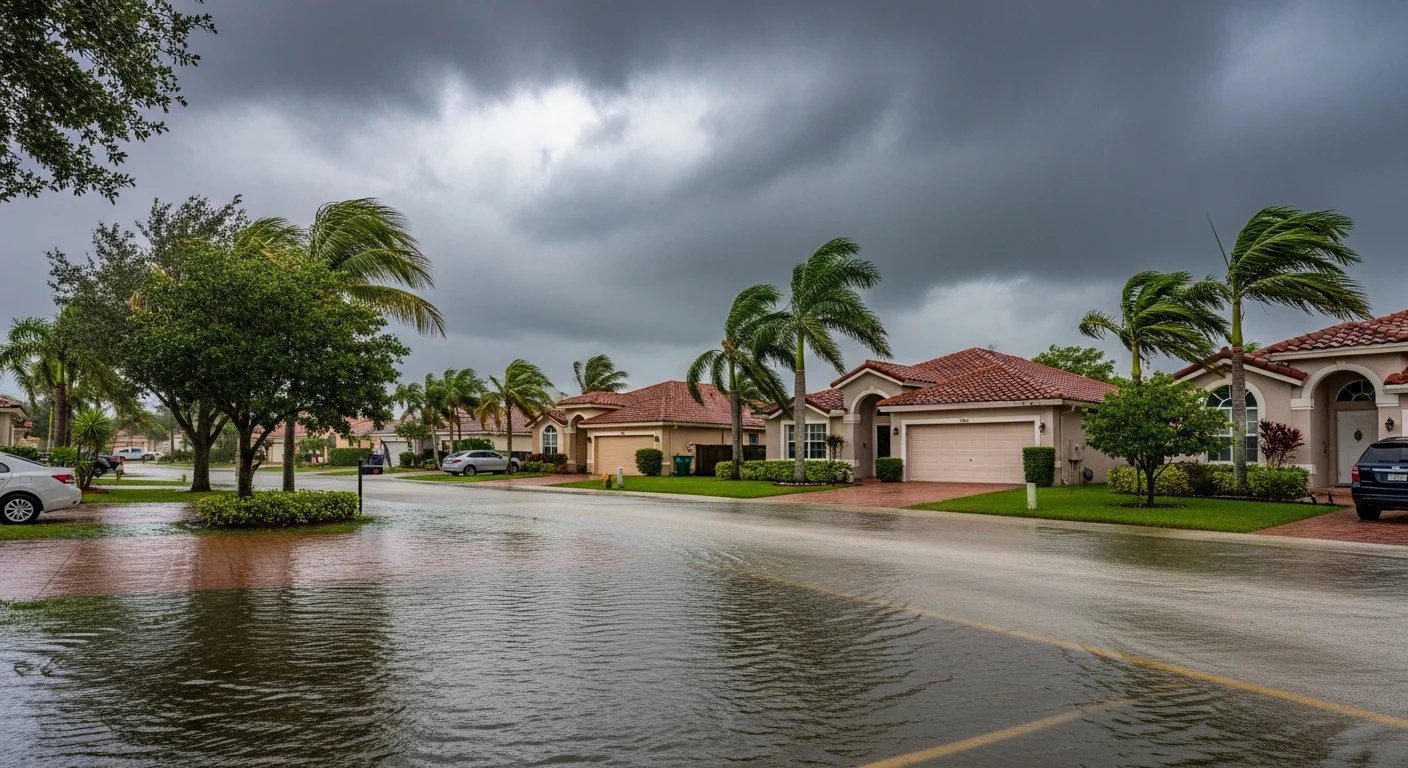
Canal network and surface flooding in a Sunrise neighborhood — water extraction begins immediately after conditions allow safe access
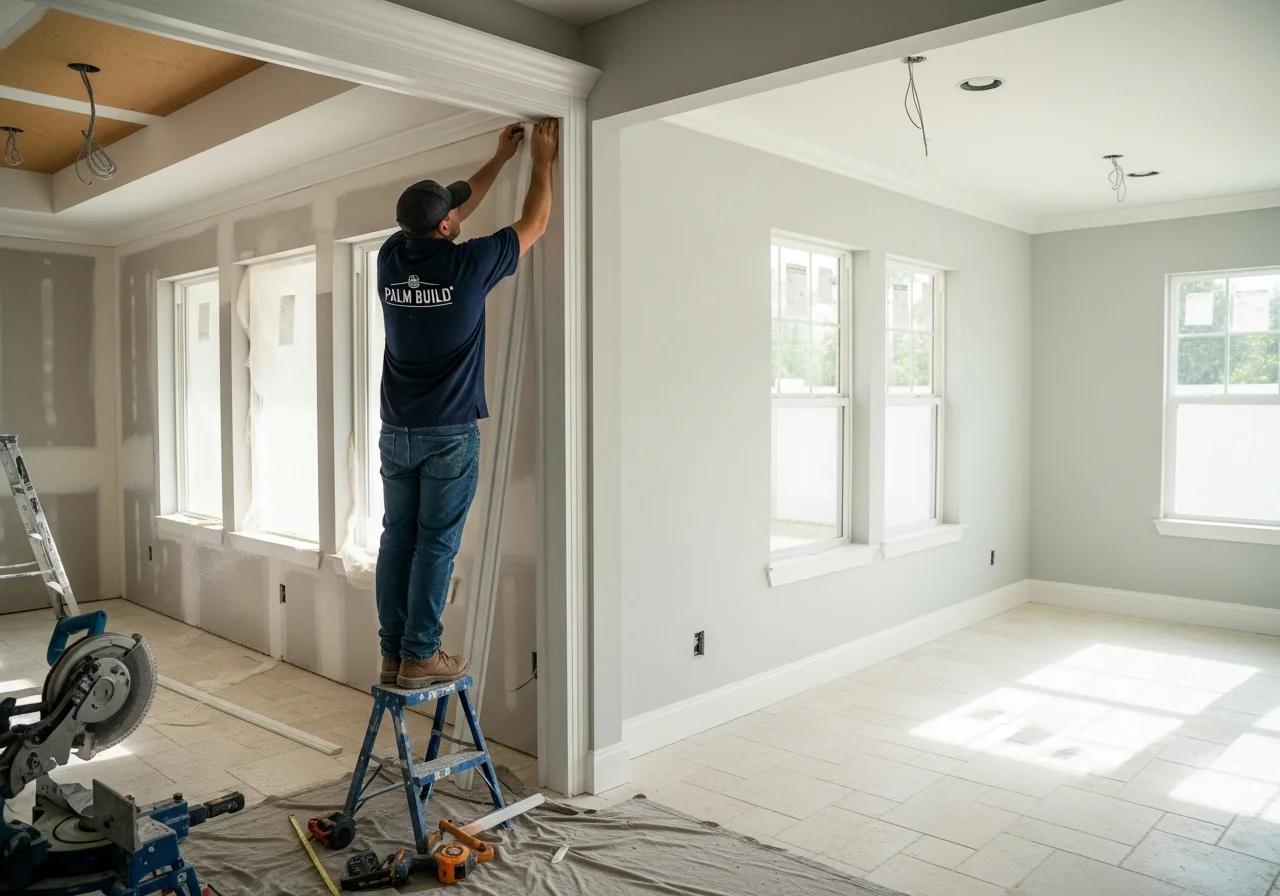
After: Fully reconstructed to current Florida Building Code with new impact-rated components and interior finishes
Palm Build on-site at a Sunrise community — coordinating multi-unit storm response with HOA management
The Palm Build Difference
Why Sunrise Homeowners Choose Palm Build for Storm Recovery
Deerfield Beach Office — 30-60 Minute Response
Our South Florida operations hub at 786 S Military Trail in Deerfield Beach puts us within 30-60 minutes of any Sunrise address. From Sunrise Lakes to Sawgrass, from Welleby to Inverrary, emergency tarping, board-up, and water extraction begin the same day you call — even during active hurricane season when demand peaks across Broward County.
IICRC Water & Storm Certified
Every crew lead holds current IICRC Water Damage Restoration Technician (WRT) and Applied Structural Drying (ASD) certifications. We follow the S500 standard for professional water damage restoration — critical for both proper remediation of storm damage and insurance documentation that Florida carriers require.
CBS Construction Specialists
Sunrise is built almost entirely from CBS (concrete block and stucco). Our team understands how wind-driven rain penetrates stucco cracks, how to inject-dry hollow block wall cavities, how barrel tile roof systems fail during hurricanes, and how to rebuild to current Broward County code standards including impact-rated components.
Post-Outage Mold Prevention Experts
We deploy generator-powered industrial dehumidifiers immediately after storms — before grid power is restored. This preventive deployment breaks the mold colonization timeline by maintaining interior humidity below 60% even without utility power. Preventing post-storm mold costs a fraction of the $10,000-$50,000+ remediation required after 72+ hours without climate control.
Dual Wind/Flood Claim Documentation
Sunrise hurricanes often produce both wind damage and flood damage simultaneously. We document all damage by cause from day one, creating separate wind (homeowners) and flood (NFIP/private) scopes formatted exactly how each carrier expects. This dual-claim approach recovers significantly more than generic documentation that fails to distinguish damage sources.
Full Reconstruction to Current Code
From emergency tarping through final Broward County inspection, Palm Build handles the entire project. Sunrise reconstruction must meet current Florida Building Code: impact-rated windows and doors, enhanced roof-to-wall connections, upgraded wind-load specifications, and current insulation requirements. We manage the full permitting and inspection process.
Common Questions
Sunrise Storm & Hurricane Damage FAQ
How quickly can Palm Build respond to storm damage in Sunrise FL?
Palm Build operates from our Deerfield Beach headquarters at 786 S Military Trail — approximately 20 minutes from Sunrise via the Sawgrass Expressway or Sample Road. Under normal conditions, we dispatch emergency crews within 30-60 minutes, 24/7/365. After major hurricane events, we activate catastrophe response protocols with pre-positioned crews and equipment across Broward County. Pre-storm clients receive priority dispatch.
Does my homeowners insurance cover hurricane damage in Sunrise FL?
Wind damage is covered under your Florida homeowners policy, but with a separate hurricane deductible — typically 2-5% of your home's insured value. On a Sunrise home insured at $350,000-$500,000, that means $7,000-$25,000 out of pocket before wind coverage activates. Flood damage from canal overflow or overwhelmed drainage requires a separate NFIP or private flood policy — standard homeowners excludes flood entirely. After a hurricane in Sunrise, you may need to file two separate claims with different carriers and different deadlines.
Why does power outage duration matter for storm damage in Sunrise?
Sunrise sits in a tropical climate where ambient humidity regularly exceeds 70-80%. When hurricane-force winds knock out power for 48+ hours — which happened across much of Broward during Irma in 2017 — air conditioning stops and interior humidity climbs rapidly. Drywall, insulation, carpet, and stored belongings absorb that moisture. Mold colonization begins within 48-72 hours on any surface above 60% relative humidity. A home that sustained minor wind damage can develop $15,000-$30,000+ in mold remediation needs simply from extended power loss in Sunrise's climate.
What happened to Sunrise during the April 2023 Broward County flooding?
In April 2023, an extreme rainfall event dropped 25+ inches of rain across Broward County in approximately 24 hours — without a named storm. Sunrise's canal-dependent drainage system was overwhelmed. Water backed up through storm drains into streets, entered homes through slab edges and garage doors, and flooded properties in Welleby, Springtree, and areas near the C-12 and C-13 canals. Many homeowners without flood insurance faced tens of thousands in uninsured losses. The event demonstrated that Sunrise's flood risk extends well beyond FEMA-designated flood zones.
How does CBS stucco construction perform in Sunrise hurricanes?
CBS (concrete block and stucco) construction — the dominant building type in Sunrise — handles wind loads well compared to wood-frame structures. The vulnerability is water intrusion: stucco develops hairline cracks over decades, and hurricane-force wind-driven rain pushes water through those cracks into wall cavities. Because the concrete block stays intact, homeowners assume no damage occurred. Meanwhile, moisture trapped inside CBS walls saturates insulation, corrodes rebar tie-wires, and feeds mold growth that remains hidden for weeks or months. Post-storm moisture mapping with thermal imaging is essential for CBS homes.
What is the most common hidden storm damage in Sunrise tile roofs?
The primary hidden damage pattern is underlayment failure beneath tile roofs. The concrete or clay tiles are rated for hurricane wind loads and rarely break. The failure point is the waterproof membrane beneath: after 15-25 years of UV exposure and thermal cycling, underlayment degrades. Hurricane winds momentarily lift tiles, rain penetrates compromised underlayment, and tiles reseat after the storm looking undamaged from ground level. This creates hidden attic insulation saturation, ceiling drywall damage, and wall cavity moisture that goes undetected without professional inspection using moisture meters and thermal imaging.
What is the deadline for filing a storm damage insurance claim in Florida?
Florida law requires you to file a property insurance claim within two years of the storm event for wind damage. However, filing within days — not weeks — significantly strengthens your claim. For flood damage covered by an NFIP policy, the proof-of-loss deadline is 60 days from the flood event — missing this deadline voids your entire flood claim. After a hurricane in Sunrise, you may need to file both a wind claim (homeowners) and a flood claim (NFIP or private flood) simultaneously, each with different deadlines, different adjusters, and different documentation requirements.
Trusted Vendors
Trusted local pros in Sunrise
Outside our restoration scope, these are the vetted, licensed contractors we trust
alongside our work. Personally evaluated, reference-checked, and recommended by Palm
Build.