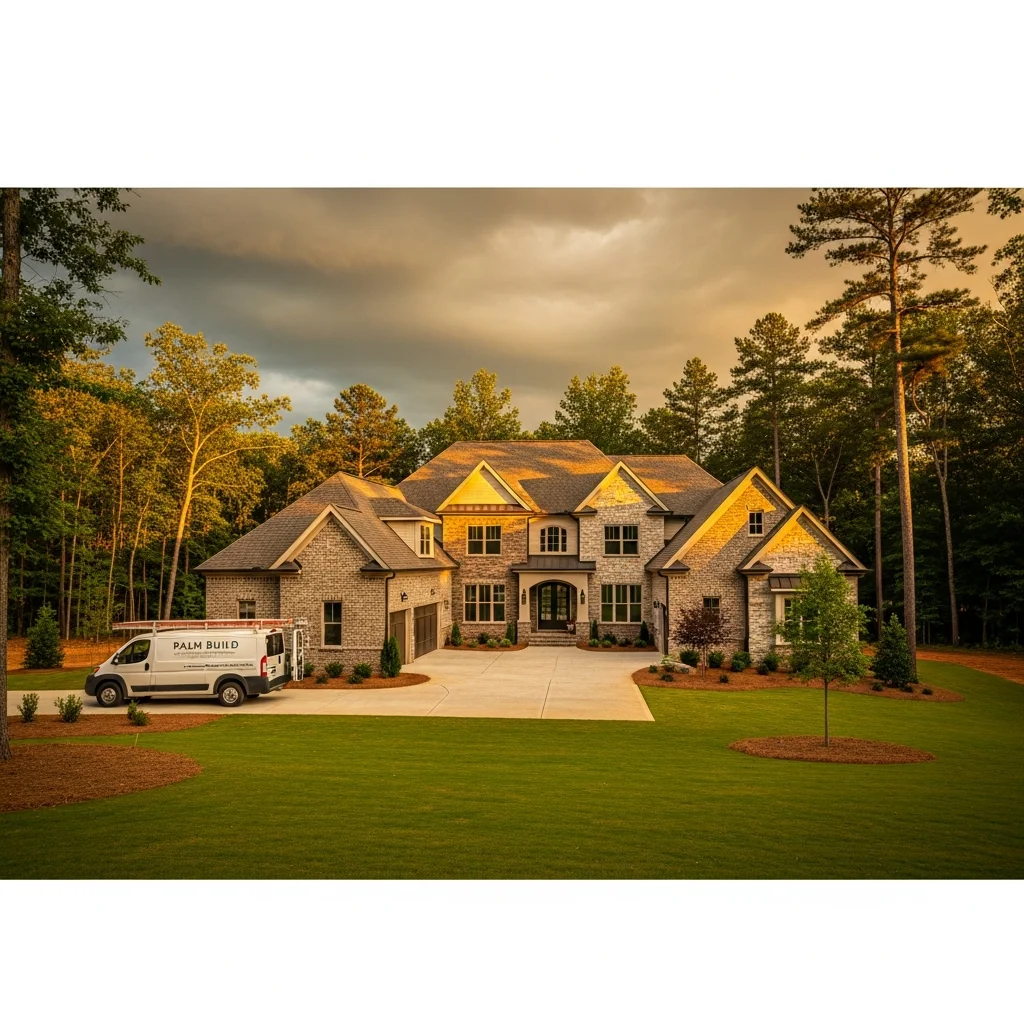
Palm Build restoration truck parked in the driveway of a newer brick and stone suburban home in Lake Wylie, South Carolina with storm clouds gathering overhead
LAKE WYLIE SC — 24/7 WATER DAMAGE RESPONSE

Water Damage Restoration in Lake Wylie, South Carolina

Lake Wylie's lakefront communities, complex newer homes, and York County clay soils create water damage conditions that demand fast, expert response. Palm Build's Charlotte operations hub is 25 miles away — 35 to 45 minutes to River Hills Plantation, Handsmill, The Landing, or anywhere in York County's lakefront corridor.

~25 miles from Lake Wylie 35-45 min Response IICRC Certified

35-45 min

Emergency Response

24/7

Dispatch Available

IICRC

Certified Technicians

Know the Warning Signs

8 Water Damage Warning Signs in Lake Wylie Homes

Lake Wylie's newer construction, lakefront humidity, and wooded lots create damage patterns that differ from other York County communities. These are the signs local homeowners miss most often — and the ones that become the costliest when ignored.

Water Stains on Tray Ceilings

High

Lake Wylie's newer homes commonly feature tray and coffered ceilings — and complex roofline geometry means more ridge cap intersections, valley flashings, and penetration points where water can enter. Yellowish or rust-colored staining on a tray ceiling is often the first visible sign of a slow roof leak that has been accumulating for weeks.
Gutter Overflow at Downspout Corners

High

Multi-gabled rooflines create multiple valley and corner drainage points. When gutters clog with oak and pine debris — common on wooded Lake Wylie lots — overflow at corners can dump water directly against the foundation or into crawl space vents. If you see consistent wet streaks down siding after rain, investigate the gutter-to-downspout connection at every corner.

Floor Buckling or Soft Spots Near Appliances

High

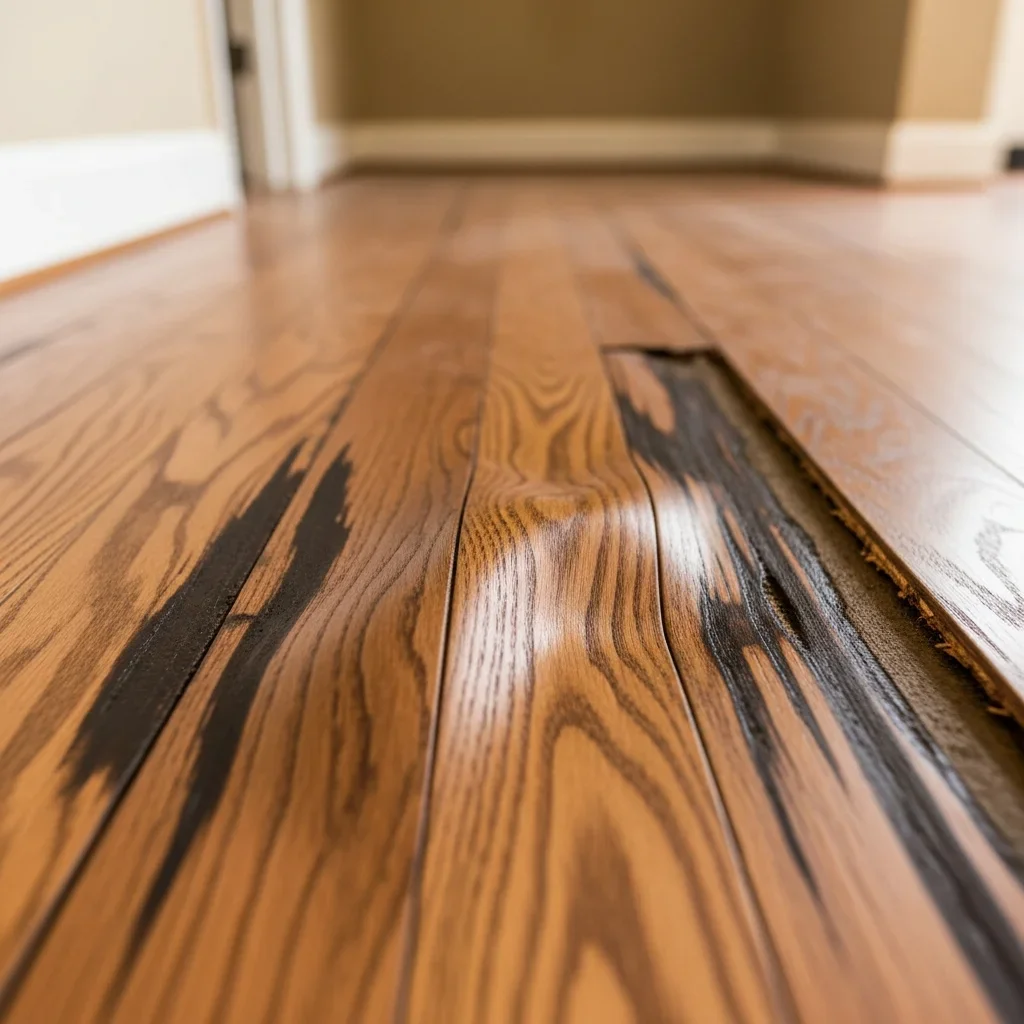
Luxury vinyl plank and hardwood floors in larger Lake Wylie homes can show buckling, cupping, or soft spots when water has been sitting beneath them. Refrigerator ice-maker lines, dishwasher connections, and HVAC condensate drains are the most common culprits. Small leaks under high-end finishes can go undetected for months.

Musty Odor from Crawl Space or HVAC Vents

Critical

A musty, earthy smell that intensifies when the HVAC runs — or when you first enter the house after being away — often indicates moisture in the crawl space or return air plenum. Lake Wylie's humidity-loading effect from the reservoir makes crawl space moisture far more persistent than in comparable inland SC communities. This smell rarely resolves on its own.

Dark Staining on Deck or Dock Framing

High

Decks, screened porches, and dock structures are elevated exposure points unique to Lake Wylie lakefront and lake-adjacent living. Dark staining or soft wood at rim joists and ledger board connections where the deck meets the home's exterior wall signals water intrusion into the primary structure. Once water enters through a ledger board connection, it can spread inside walls.

Condensation on Interior Windows in Summer

Moderate

Excessive window condensation on interior glass during summer — especially on basement or first-floor windows — indicates that indoor humidity is running higher than the HVAC can manage. In Lake Wylie homes, this often traces to an unconditioned or inadequately sealed crawl space that is importing lake-humidity-loaded outside air into the living space.

HVAC Drain Pan Overflow Staining

High

In Lake Wylie's humid climate, air handler drain pans fill faster than in drier regions. Overflow staining — typically a rust or mineral streak below the air handler cabinet in a closet or attic — indicates the primary drain line is clogged or the float switch is failing. Left unresolved, drain pan overflow can saturate drywall ceilings below within a single humid week.

Sump Pump Running Constantly After Rain

Critical

Properties in lower-elevation areas of Lake Wylie's developments — particularly those near Allison Creek or Crowders Creek inlets — may experience elevated groundwater pressure after heavy rainfall events. A sump pump cycling every few minutes during or after rain indicates groundwater intrusion under the slab or into the crawl space and warrants immediate investigation before the pump fails.

Seeing any of these signs? Lake Wylie's reservoir humidity means mold can begin growing within 24 to 48 hours of water intrusion. Call Palm Build at (704) 464-0121 — we respond 24/7.

Restoration Results

Water Damage Restoration in Lake Wylie Homes

From initial extraction to final clearance, every project gets daily moisture monitoring, full insurance documentation, and professional finish-out matching the quality Lake Wylie homeowners expect.

Water-damaged hardwood floor in a newer Lake Wylie SC home showing severe buckling, cupping, and water staining across multiple boards BEFORE
Before: Hardwood floor buckling and cupping from appliance water leak in a Lake Wylie home
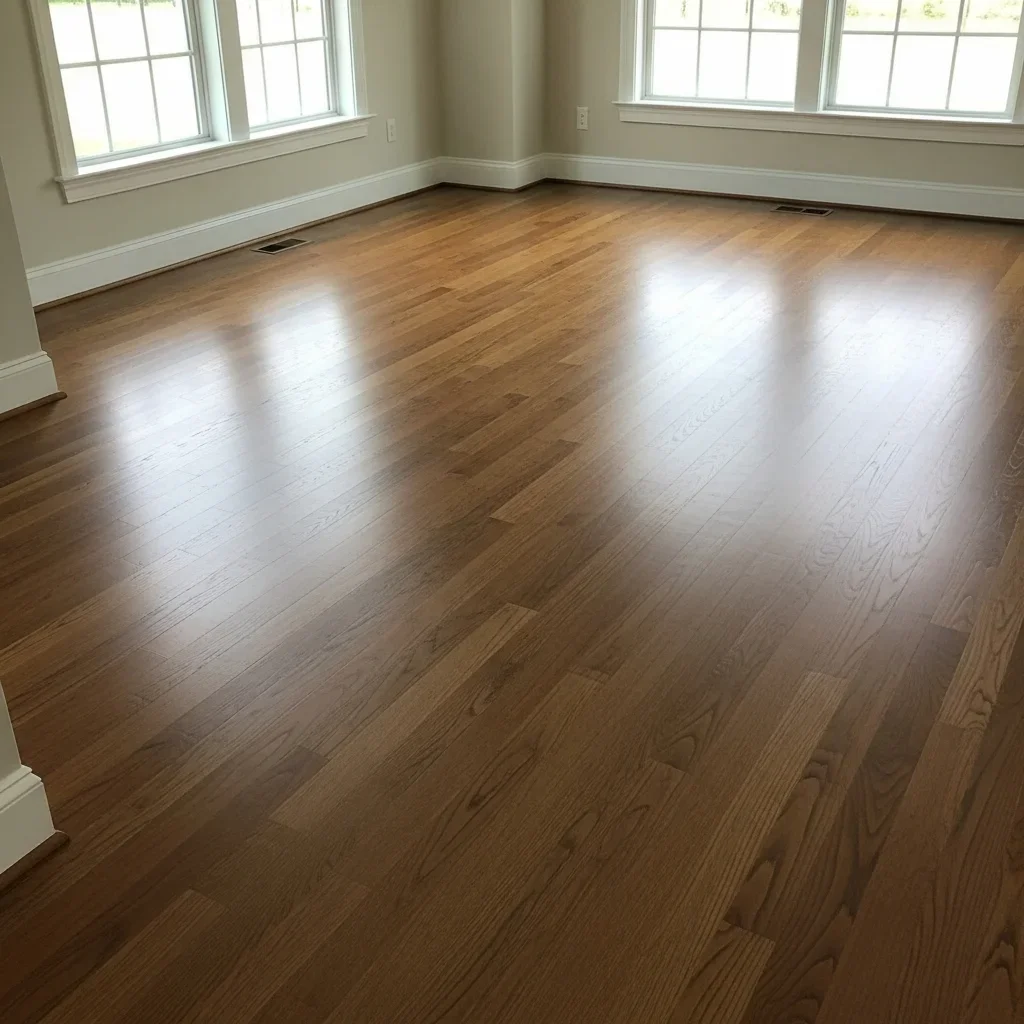
Professionally restored hardwood floor in a Lake Wylie SC home — flat, smooth, uniform finish with no signs of previous water damage AFTER
After: Fully restored hardwood floor with professional finish — no evidence of the original damage
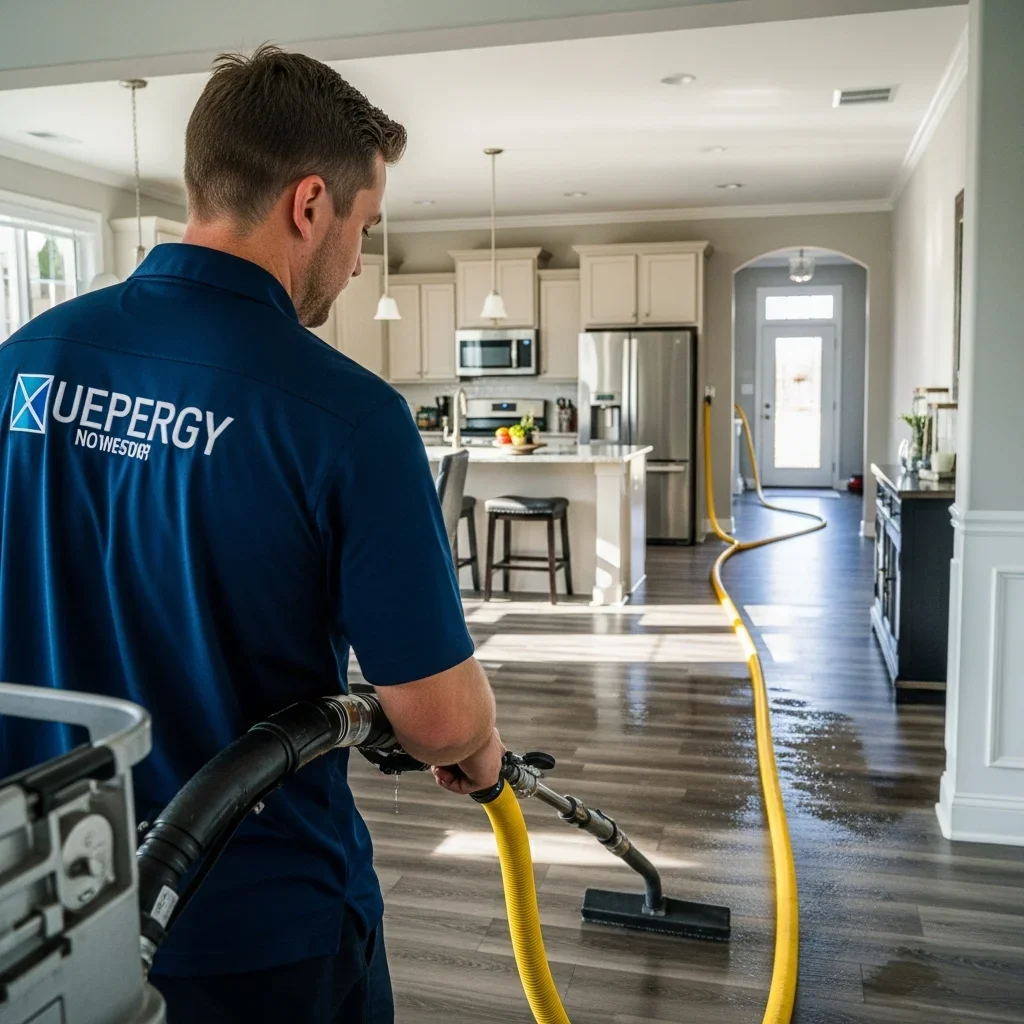
Palm Build restoration technician operating truck-mounted water extraction equipment on the luxury vinyl plank flooring of an open-concept Lake Wylie home IN PROGRESS
Water extraction in an open-plan Lake Wylie home — the scale of newer homes' floor plans means more area to dry, more drying days required
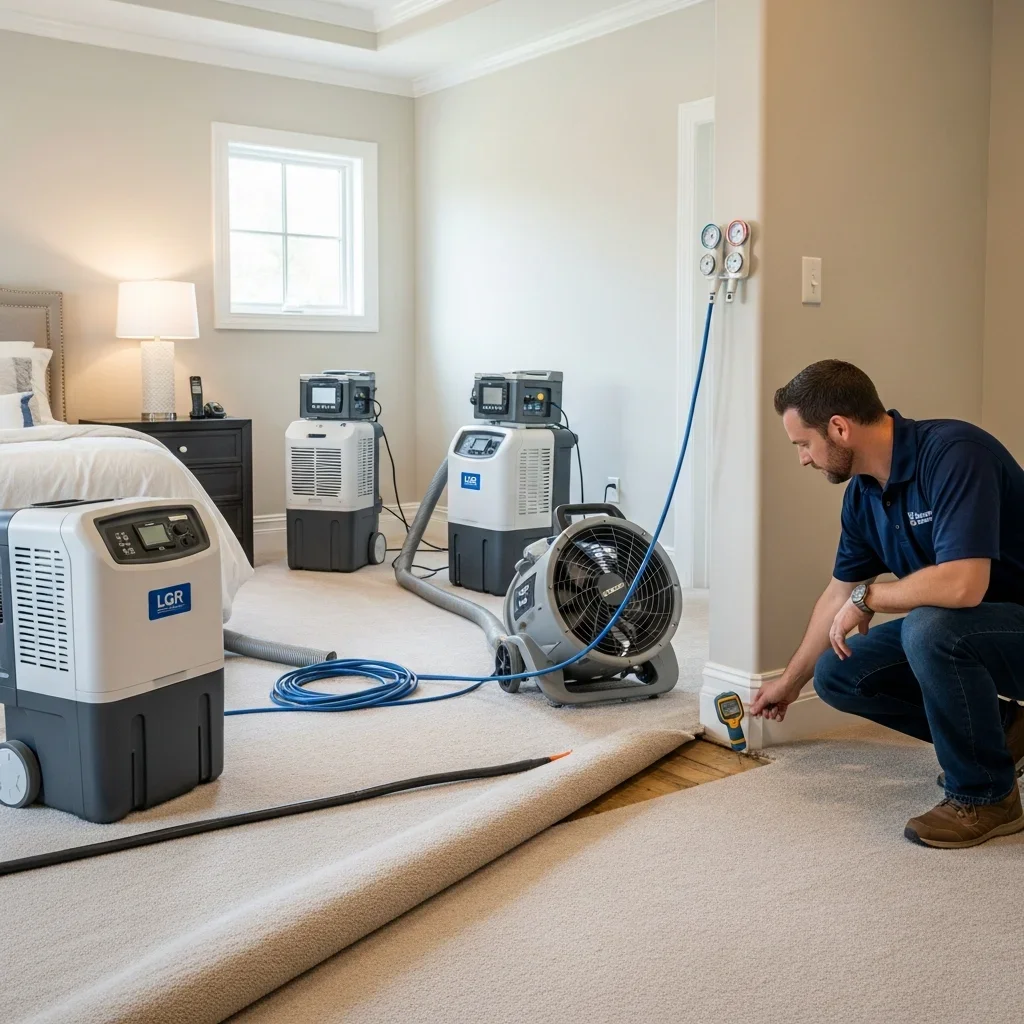
Commercial LGR dehumidifiers and high-velocity air movers professionally staged in a modern bedroom of a Lake Wylie SC home for structural drying DRYING
Structural drying setup: LGR dehumidifiers and air movers with daily moisture monitoring until all materials reach dry standard

Local Risk Factors

Why Lake Wylie Homes Face Unique Water Damage Risks

Lake Wylie's combination of newer complex construction, Catawba Reservoir humidity, outdoor living exposure, and Piedmont clay soils creates water damage conditions that differ fundamentally from most of the Charlotte Metro — and mold can begin growing within 24 to 48 hours.

High-Value Newer Homes

$485,600

Median home value

Lake Wylie's median home value of $485,600 reflects the community's newer, larger construction — homes built mostly after 2000 with complex multi-gabled rooflines, multiple HVAC zones, more bathroom wet-wall density per home, and high-end interior finishes. This isn't just a financial exposure — it's a physical one. More penetration points in the roof assembly mean more potential water entry paths. More wet walls and HVAC equipment mean more internal leak sources. When water events occur, the scope of controlled demolition and drying is inherently larger than in smaller, simpler homes.

Lakefront Humidity Loading

44-50 in

Annual rainfall + lake humidity

Lake Wylie is built on the Catawba River reservoir — and large open water bodies modify the local humidity environment in ways that comparable inland SC communities don't experience. Morning humidity regularly exceeds that of inland York County towns, and the lake's thermal mass sustains elevated relative humidity through the overnight and early morning hours when most of the area's thunderstorm activity occurs. This humidity loading accelerates mold growth after any water event and extends structural drying timelines beyond what a similar home in Charlotte's inner ring would require.

Outdoor Living Exposure

15+

Named lake communities

Lake Wylie's lake lifestyle centers on decks, screened porches, dock structures, and outdoor living areas that are elevated wood exposure points directly connected to the main structure. When water infiltrates a ledger board connection — where a deck attaches to the home's exterior wall — it can spread behind the wall assembly, into rim joists, and along floor framing without any visible interior sign for months. Deck and dock water intrusion is one of the most underdiagnosed damage pathways in lakefront communities.

York County Clay Soils

<0.2 in/hr

Clay soil drainage rate

Lake Wylie shares York County's Piedmont geology — heavy clay soil that drains at less than 0.2 inches per hour. When significant rainfall saturates the ground, that clay doesn't drain; it holds water against foundation walls, crawl space vents, and slab edges. The same Catawba-watershed clay soil issues that affect Fort Mill, Rock Hill, and Charlotte's South End neighborhoods are present throughout the Lake Wylie area, creating persistent ground moisture pressure on any below-grade or crawl space structure.

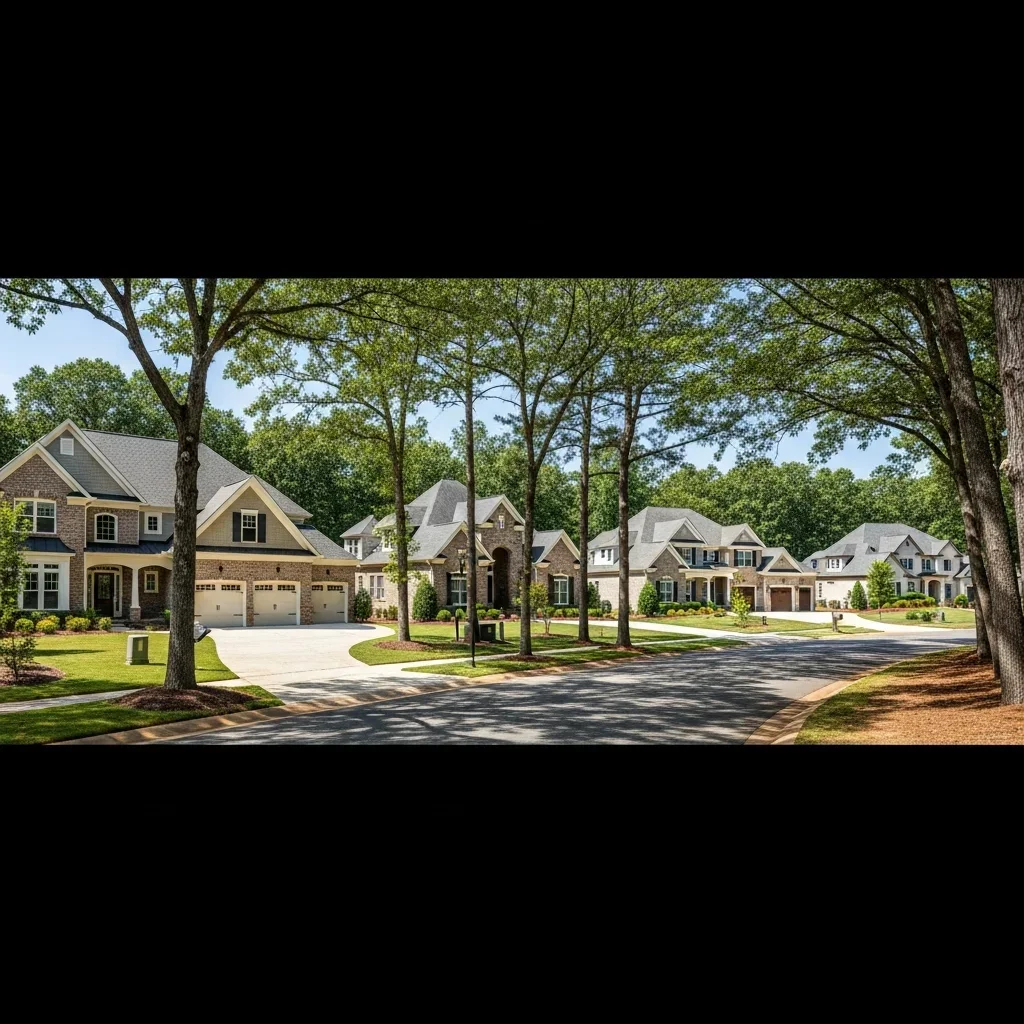
Street view of newer Lake Wylie, South Carolina subdivision with large brick and stone suburban homes on wooded lots with mature oak canopy — typical York County SC residential development
Most Lake Wylie homes were built after 2000 — newer construction with complex rooflines, multiple wet-wall penetrations, and high-end finishes that increase the scope and cost of water damage restoration.

Neighborhood Intelligence

Lake Wylie Community Water Damage Risk Guide

Water damage in Lake Wylie follows predictable patterns based on community age, construction era, proximity to the Catawba Reservoir, and foundation type. No competitor covers this level of local detail for York County's lakefront communities.

River Hills Plantation

Flood Risk

Built: 1970s–1980s (with renovations)

Primary risk: Aging crawl space foundations, older plumbing retrofits, mature tree canopy, gated community with high documentation expectations

Common damage: Crawl space moisture, musty odors, HVAC condensation on older systems, storm-driven roof punctures from mature trees

The Landing

High Risk

Built: Late 1990s–2020s

Primary risk: Larger homes with open-plan layouts, HOA expectations, complex rooflines with more valley intersections

Common damage: Multi-room water events from single roof leak, smoke and moisture migration across open attic volumes, high contents exposure per claim

The Sanctuary

High Risk

Built: Newer high-end development

Primary risk: High square footage and multiple penetrations, complex HVAC with multiple zones, tile-heavy bathrooms

Common damage: Hidden water damage behind tile, HVAC drain line clogs, ceiling tray water damage, attic mold if humidity control is not balanced

Handsmill on Lake Wylie

High Risk

Built: 2020s (active adult 55+)

Primary risk: New construction but HOA documentation standards, high amenity density, appliance-heavy homes

Common damage: Small leaks become mold quickly in humid months, appliance line failures, wind events requiring rapid mitigation

Somerset on Autumn Cove

High Risk

Built: Mixed single-family and townhomes

Primary risk: Water-adjacent community, lakefront wind-driven rain exposure, HOA managed exterior standards

Common damage: Wind-driven rain at lakefront elevations, siding and window leakage, recurring humidity issues in crawl spaces

The Coves on River Oaks

High Risk

Built: Early 2000s–2020s

Primary risk: Custom builds on large wooded lots, long-run drainage on sloped sites, cove-side humidity loading

Common damage: Storm wind-driven rain, downed-tree impacts, drainage issues on sloped lots, crawl space humidity and mold

RiverPointe

High Risk

Built: Neighborhood-scale lakefront parcels

Primary risk: Shoreline and cove-side water risks, elevated humidity load, storm debris impacts

Common damage: Flooding risk, elevated humidity, exterior wood decay without proper detailing

Heron Cove

Moderate

Built: Established suburban single-family

Primary risk: Standard suburban construction, crawl space foundations, proximity to lake humidity

Common damage: Humidity-driven mold in closets and crawl spaces, roof leaks after storms, plumbing fixture failures

The Vineyards on Lake Wylie

Moderate

Built: Mixed interior and water-adjacent lots

Primary risk: Moisture intrusion during wet months and tropical remnants

Common damage: Mold risk in enclosed spaces, water intrusion during heavy rain events

Mill Creek Falls

Moderate

Built: Established suburban construction

Primary risk: HVAC condensation, standard suburban humidity issues

Common damage: Water intrusion from storms, HVAC issues, attic or crawl space mold if moisture control is weak

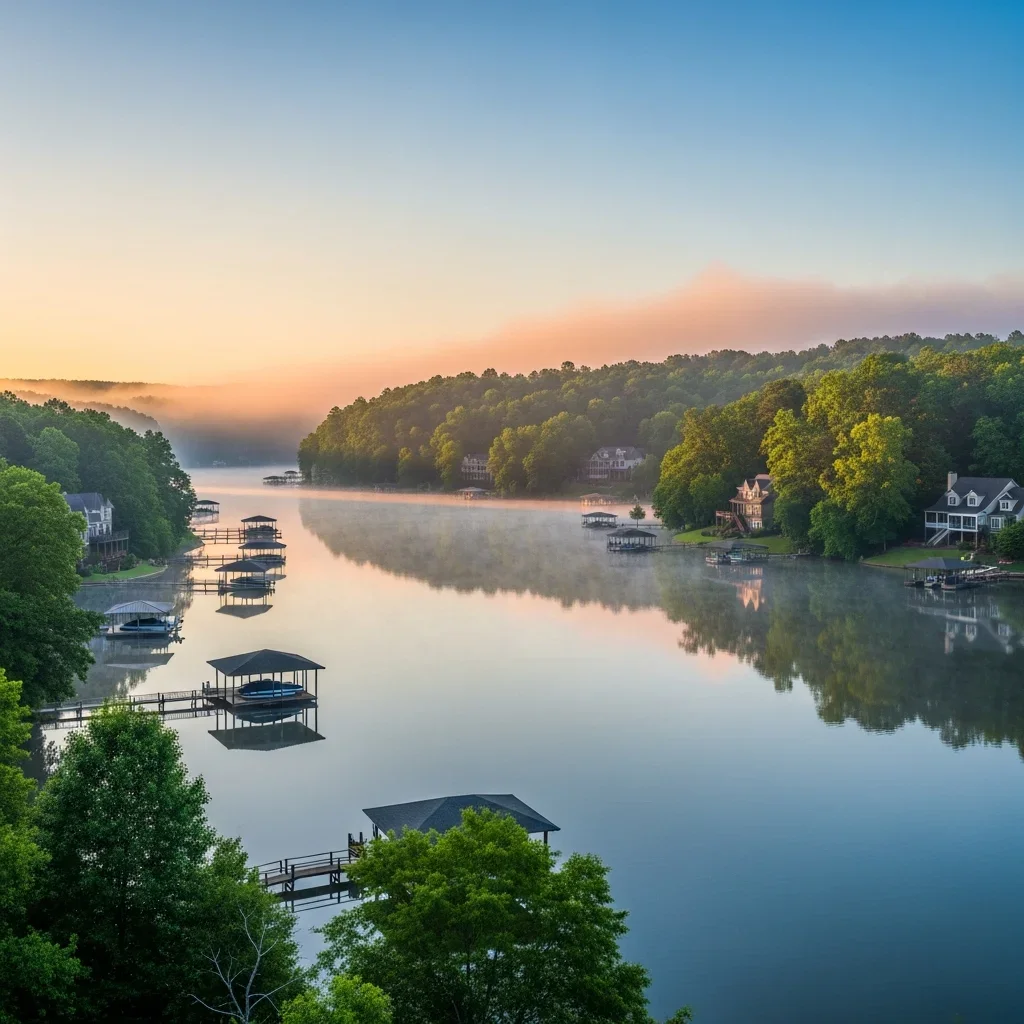
Lake Wylie reservoir shoreline with residential lakefront homes and docks visible through morning mist, Piedmont vegetation lining the banks of the Catawba River reservoir
Lake Wylie's shoreline communities face both the highest humidity loading and the most direct exposure to storm-driven wave action — factors that multiply water damage risk compared to the area's inland neighborhoods.

Local Intelligence — Unique to Lake Wylie

The Catawba Reservoir, York County Flood Zones, and Your Restoration Claim

Most restoration companies serving Lake Wylie don't understand the difference between reservoir-driven flood exposure, standard storm water damage, and York County's permitting requirements. Knowing which category applies to your event determines how your insurance claim is processed — and what work requires permits.

Lake Wylie Is a Managed Catawba Reservoir

Lake Wylie is not a natural lake — it is a Duke Energy-operated reservoir on the Catawba River, formed by Lake Wylie Dam. This means water levels are actively managed, but storm events and upstream precipitation can create rapid level changes that affect cove communities and shoreline properties. The USGS maintains monitoring stations below the Lake Wylie Dam (gauge site on the Catawba River), providing real-time data on downstream flows and conditions. When Charlotte metro and York County receive significant rainfall, that water moves through the Catawba corridor — and Lake Wylie absorbs it before it flows downstream.

Allison Creek and Crowders Creek Inlet Exposure

Many of Lake Wylie's most recognized communities — including those along Big Allison Creek and Little Allison Creek inlets — are positioned on peninsula-style lots where the coves wrap around residential properties on multiple sides. Allison Creek Park, a well-known York County park on the lake's shore, illustrates the kind of water-edge geography that defines these community sites. Properties in these inlets face localized flood exposure when the reservoir level rises or when storm runoff drains rapidly through creek channels into the coves. Crowders Creek is another named watershed feature that affects the eastern portions of the Lake Wylie service area.

FEMA Flood Zones in Lake Wylie

FEMA's National Flood Hazard Layer classifies much of the Lake Wylie area with different risk zones depending on proximity to water. Properties near the reservoir shoreline, creek inlets, and cove areas may fall within Special Flood Hazard Areas (Zone A or AE), which require flood insurance if you have a federally backed mortgage. Inland portions of Lake Wylie developments typically fall within Zone X, which indicates lower risk. York County's floodplain management program administers these maps and provides address-specific lookup. Key point: standard homeowners insurance does not cover Zone A/AE flood losses — only separate NFIP or private flood insurance does.

York County Permit Pathway for Restoration

York County adopted the 2021 International Code Set effective January 1, 2023. When your restoration involves structural repairs, alterations to the building envelope, or reconstruction work exceeding 50% of a structure's assessed value, York County Building and Codes requires permits, plan review, and inspections. York County's online residential permit portal handles scheduling. This matters because: restoration work that is completed without required permits can create title and disclosure issues at resale, and insurance carriers increasingly require documentation of code compliance for full payment. Palm Build identifies permit-required scope early, manages the submission process with York County, and ensures all reconstruction meets current adopted code.

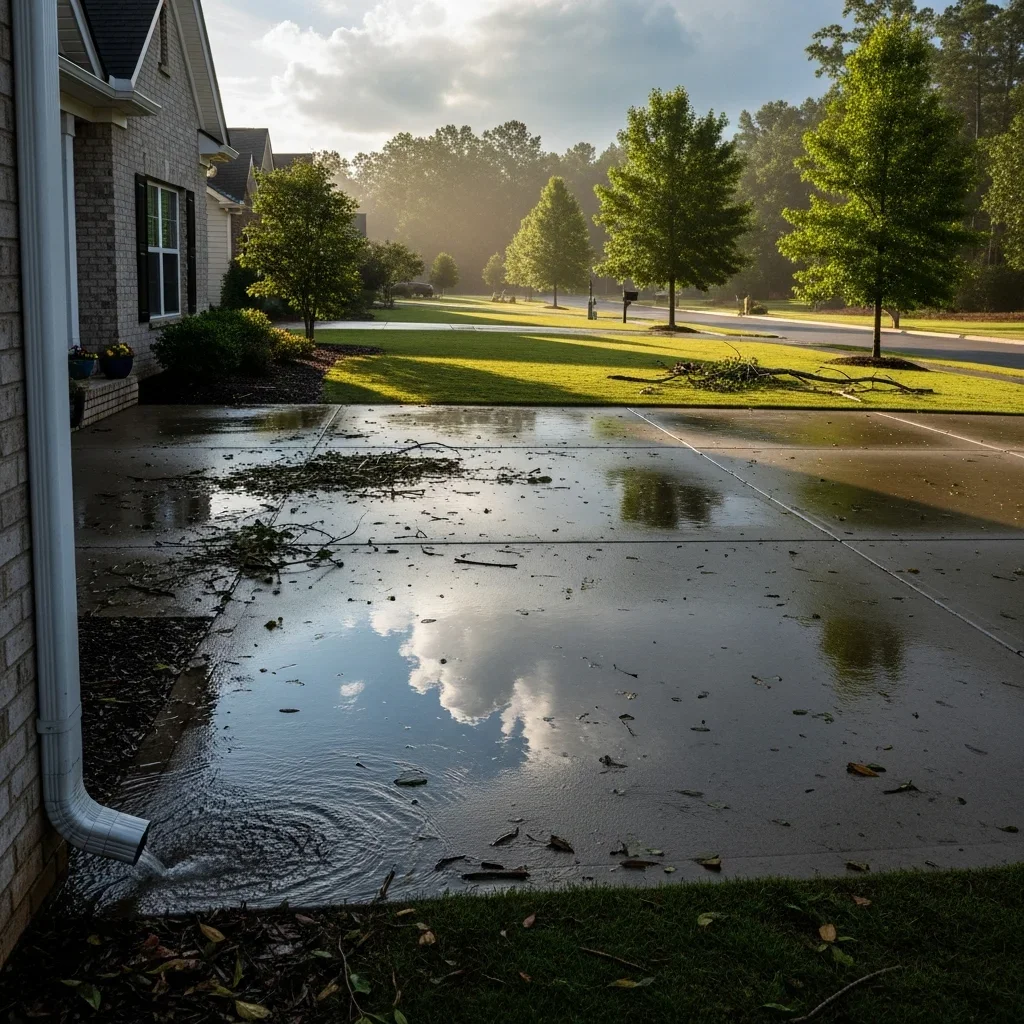
Suburban driveway in a Lake Wylie, South Carolina neighborhood immediately after a summer thunderstorm, showing gutter overflow, pooling water, and storm debris typical of York County heavy rain events
Summer thunderstorms are the most common trigger for Lake Wylie water damage calls — York County's clay soil can't absorb fast-moving rainfall, and reservoir levels rise quickly after significant events.

Our Process

How Palm Build Restores Lake Wylie Homes

A six-step process built around IICRC standards, Lake Wylie's unique climate conditions, and the high-finish expectations of York County's lakefront communities.

01

Emergency Dispatch — 24/7

Call (704) 464-0121 any time. Our Charlotte-based team dispatches immediately — 35 to 45 minutes to any Lake Wylie address. We bring truck-mounted extraction equipment, LGR dehumidifiers, air movers, and moisture mapping tools on every emergency run.

02

Damage Assessment and Moisture Mapping

We map all affected areas with calibrated moisture meters and thermal imaging. For Lake Wylie's newer homes, this includes checking behind tile work, inside tray ceiling assemblies, and along deck ledger board connections — pathways competitors often miss. We document everything in insurance-ready format from the first visit.

03

Water Extraction

Truck-mounted extraction removes standing water and begins pulling moisture from flooring, carpet, and subfloor materials. For luxury vinyl plank, tile, and hardwood floors common in Lake Wylie homes, extraction protocols vary by material — we use appropriate methods for each surface type to maximize material salvage.

Water Extraction
04

Structural Drying

LGR dehumidifiers and high-velocity air movers are placed according to IICRC S500 drying science. Given Lake Wylie's lake-humidity environment, drying timelines often run 20-30% longer than comparable inland SC homes — we account for this with additional equipment placement and daily moisture monitoring. We don't pull equipment until every monitored material reaches dry standard.

Structural Drying
05

Mold Prevention Treatment

Following IICRC guidelines, we apply EPA-registered antimicrobial agents to all affected surfaces after drying. In Lake Wylie's humid climate, this step is non-negotiable — the lake humidity loading means mold colonization risk is higher than in comparable inland environments. We document all treatments and products used.

06

Restoration and Insurance Documentation

We coordinate reconstruction work — drywall, flooring, trim, and paint — matching the quality finish Lake Wylie homeowners expect. All work is documented with moisture logs, photo evidence, and scope reports in the format required by major SC insurance carriers including State Farm, USAA, Allstate, and Travelers. When reconstruction crosses York County permit thresholds, we manage the permit process.

Know Your Risk Window

Lake Wylie's Seasonal Water Damage Calendar

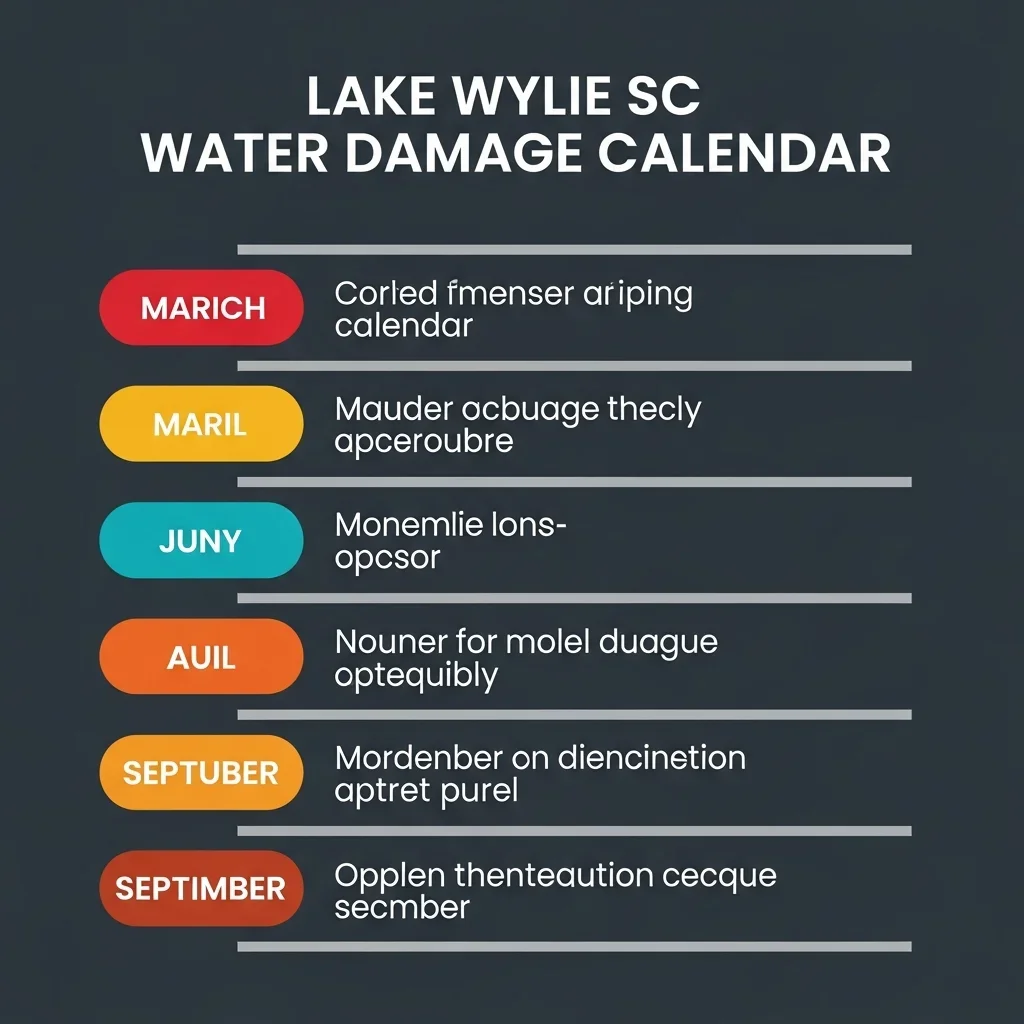
Lake Wylie doesn't have a single "water damage season" — different damage types peak at different times of year. Understanding this calendar helps you recognize problems early and respond faster when something goes wrong.

January – February

Pipe Freeze Season

While Lake Wylie's winters are generally milder than inland northern climates, York County does experience hard freezes that stress plumbing systems. Pipes running through vented crawl spaces — particularly in River Hills Plantation and other older communities with uninsulated crawl spaces — are the highest-risk failure points. The December 2022 deep-freeze event caused widespread burst pipes across South Carolina, including York County. Exposed exterior hose bibs and uninsulated supply lines in unheated spaces are the first to fail.

March – May

Spring Storm Peak — Heaviest Rainfall

South Carolina climatology identifies March as one of the two annual precipitation maxima for the Piedmont region, with monthly totals regularly reaching 4 to 5 inches. Spring severe weather brings thunderstorms, strong winds, large hail, and heavy rain — all capable of driving water through roof penetrations, window assemblies, and foundation edges. This window generates the largest single-month volume of emergency water restoration calls across York County.

June – August

Humidity and Mold Season

Hot, humid summers push relative humidity well above 70% for extended periods. Lake Wylie's reservoir effect amplifies this — the large open water surface contributes additional moisture loading beyond what comparable inland SC communities experience. Any unresolved water event from spring becomes a visible mold problem by mid-summer. HVAC condensate failures peak during this period as systems work at maximum capacity. Crawl space conditions in older homes are at their worst from June through August.

September – October

Tropical Remnants Season

South Carolina's inland communities aren't spared during Atlantic hurricane season. Tropical Storm Idalia (2023) and Tropical Storm Helene (2024) both impacted South Carolina's Piedmont region with significant rainfall and flooding. Even as degraded inland remnants, tropical systems can dump multiple inches of rain in 24 to 48 hours — exceeding York County's clay soil absorption capacity and pushing lake levels. Post-storm mold typically appears 2 to 4 weeks after these events.

November – December

Winter Heating Season

Increased heating system use, holiday cooking, and closed-up homes create conditions for undetected slow leaks and water heater failures. Many Lake Wylie homeowners discover spring or summer crawl space moisture issues during winterization when they enter crawl spaces for the first time since warm weather. Early winter freeze events can affect exposed pipes in crawl spaces — especially in River Hills Plantation homes with older heating system routing.

Lake Wylie SC seasonal water damage calendar infographic showing 5 risk windows: pipe freeze season, spring storm peak, humidity and mold season, tropical remnants, and winter heating season

Insurance Guidance

Navigating Water Damage Insurance Claims in Lake Wylie SC

The distinction between flood damage and water damage determines everything about your claim. Here's what Lake Wylie homeowners need to know — and what Palm Build documents from the first hour on-site.

What Standard HO-3 Policies Cover

Sudden and accidental water damage from internal sources — burst pipes, appliance failures, ice-maker line breaks, roof leaks from wind events, overflow from a tub or sink. These are the most common Lake Wylie water events and are generally covered subject to your deductible. Notify your carrier promptly and document the source and timeline from the first moment.

The Flood Gap — Critical for Lake Wylie Homeowners

Standard HO-3 homeowners policies do not cover flood damage — water that enters your home from outside due to rising water, storm surge, or stormwater runoff. York County explicitly communicates this gap in its floodplain management materials. Lake Wylie properties in FEMA Zone A or AE near the reservoir shoreline, Allison Creek, or Crowders Creek inlets should carry separate National Flood Insurance Program (NFIP) or private flood coverage. If you're unsure of your flood zone, check FEMA's Flood Map Service Center with your address.

Water Backup and Sewer Backup Endorsement

Many HO-3 policies require a separate endorsement to cover water backup from a drain, sump pump overflow, or sewer line. This is especially relevant for Lake Wylie properties in lower elevations near creek inlets where groundwater pressure can overwhelm sump systems during heavy rainfall. Ask your agent specifically about water backup coverage — it's typically inexpensive to add and can cover scenarios that standard policies exclude.

High Home Values Change the Math

Lake Wylie's median home value of $485,600 means standard deductibles and sublimits hit differently than in lower-cost SC markets. A $10,000 water damage deductible on a $500,000 home is a different decision than the same deductible on a $150,000 home. Mold coverage sublimits typically capped at $5,000 to $10,000 can fall well short of full crawl space remediation on a larger lakefront property. Palm Build works with you and your adjuster to maximize covered scope through accurate documentation of damage extent and cause.

Common Insurance Carriers in Lake Wylie / York County SC

State Farm

Largest SC market share — standard HO-3 documentation requirements

USAA

Military/veteran-heavy York County area — expedited processes common

Allstate

Large SC presence — may use preferred contractor networks

Travelers

Common in higher-value Lake Wylie homes — detailed scope review

Liberty Mutual

Standard carrier processes — photo documentation essential

SC Farm Bureau

Strong South Carolina presence — local claims adjustment

Palm Build provides insurance-ready documentation from Day 1 — moisture logs, photo evidence, scope reports, and moisture mapping compatible with all major carrier claim formats.

Cost Guide

Water Damage Restoration Costs in Lake Wylie SC

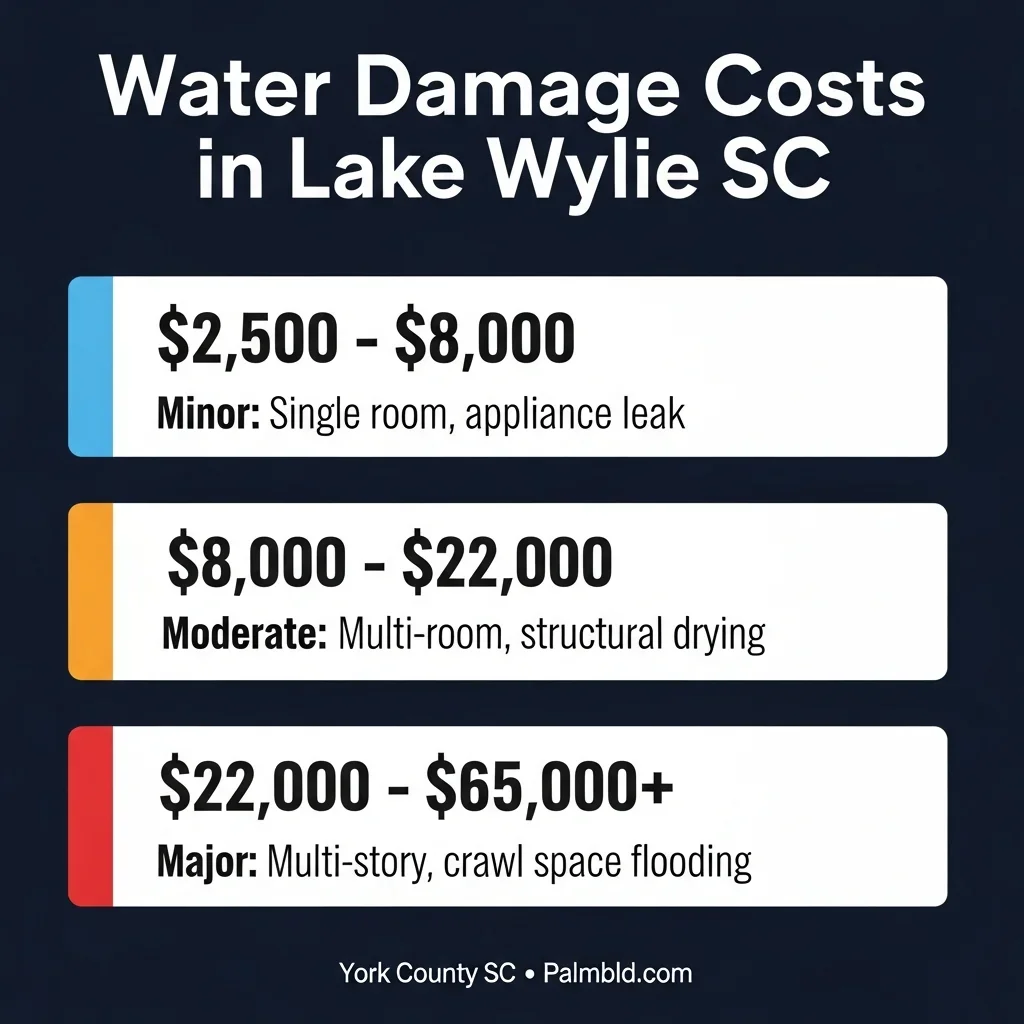
Costs vary significantly based on extent, material type, and how quickly the event is addressed. Lake Wylie's newer homes with premium finishes typically land in the upper range of each tier — but fast response can prevent a moderate event from becoming a major one.

Minor Damage

$2,500 – $8,000

  • Single room affected
  • Appliance leak or small pipe failure
  • Fast extraction — 1-2 day drying
  • Limited flooring or drywall replacement
  • No structural involvement

Most common claim type in newer Lake Wylie homes — appliance line failures, ice-maker leaks, dishwasher overflows

Moderate Damage

$8,000 – $22,000

  • Multiple rooms or floors affected
  • Structural drying required (3-7 days)
  • Flooring replacement across affected area
  • Drywall demolition and replacement
  • Potential HVAC/cabinetry involvement

Roof leaks with interior spread, HVAC failures in larger homes, or bathroom/laundry room events that spread across open floor plans

Major Damage

$22,000 – $65,000+

  • Multi-story water spread
  • Crawl space flooding
  • Structural framing damage
  • Extensive flooring and finish replacement
  • Potential York County permit required

Storm-driven events, burst mains, or prolonged undetected leaks in Lake Wylie's larger newer homes — high-end finishes push costs to upper end

Water damage restoration cost guide for Lake Wylie SC showing three tiers: minor $2,500-$8,000, moderate $8,000-$22,000, and major $22,000-$65,000+

The Lake Wylie Premium

Lake Wylie's newer larger homes have more premium finish materials that cost more to match and replace. Open floor plans mean water spreads farther before detection. Complex rooflines mean more potential entry points.

These factors consistently push Lake Wylie restoration costs toward the upper range of each tier compared to similar events in simpler, older homes in the Charlotte Metro area.

Get a Free Assessment — (704) 464-0121

Why Palm Build

The Standard Lake Wylie Homeowners Deserve

In a state with no mandatory restoration licensing, the difference between contractors comes down to credentials, documentation, and local knowledge. Here's what we bring to every Lake Wylie project.

IICRC Certified

South Carolina has no mandatory mold or water restoration license — which means anyone can show up with a shop vac and call themselves a restoration company. Palm Build follows ANSI/IICRC S500 (water) and S520 (mold) standards on every project. When your adjuster or attorney asks for credentials, we have them.

35–45 Minute Response to Lake Wylie

Our Charlotte operations hub at 378 Crompton Street is approximately 25 miles from Lake Wylie's core communities. In Lake Wylie's humid climate, the first 4 hours after a water event are the most critical for preventing mold. We dispatch 24/7 — including holidays and winter storms.

Insurance-Ready Documentation

We produce moisture mapping, daily drying logs, photo documentation, and scope reports in the format your carrier requires — from the first hour on site. Every moisture reading is recorded with a calibrated meter. Documentation that supports your claim starts from our very first visit, not after the fact.

York County Permit Navigation

Most restoration contractors avoid the permit conversation. We don't. When reconstruction scope crosses York County's 2021 IBC threshold — structural repairs, significant modifications, substantial improvements — we identify it early, manage the permit portal submission, and coordinate inspections. Your restoration is code-compliant when we finish.

Call 24/7 — (704) 464-0121

Serving Lake Wylie, York County, and all of the Catawba lakefront corridor

Common Questions

Water Damage Questions from Lake Wylie Homeowners

Water Damage in Lake Wylie? Every Minute Counts.

Lake Wylie's lakefront humidity and York County clay soils accelerate damage the longer water sits. Call Palm Build now for 24/7 emergency extraction, structural drying, and full restoration with insurance-ready documentation.

35-45 min Response IICRC Certified