Water Damage Restoration in Indian Land, South Carolina
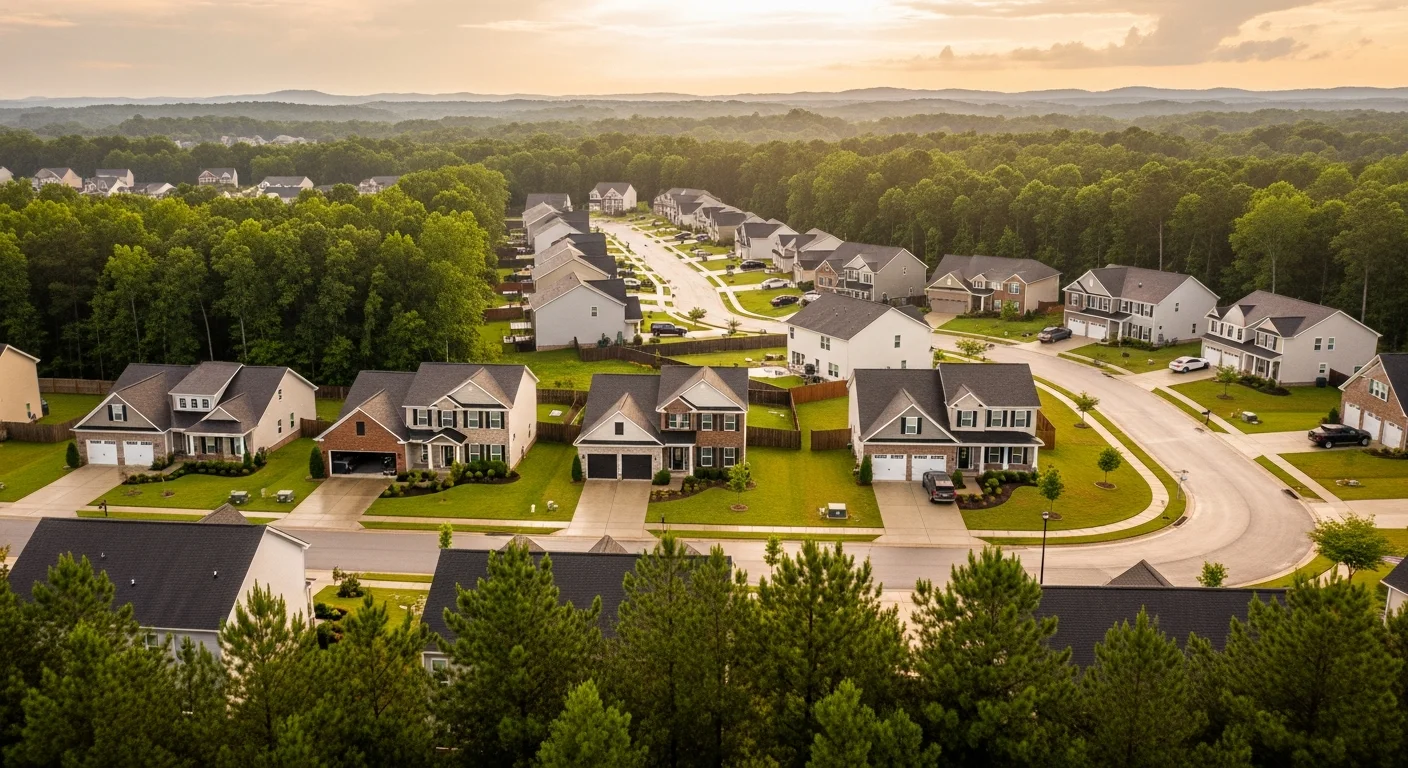
From Sun City Carolina Lakes crawl spaces to Riverchase Estates custom homes, Palm Build's Charlotte-based team responds fast with truck-mounted extraction, structural drying, and insurance-ready documentation — protecting your high-value finishes and preventing mold before it starts.
Charlotte Office — ~20 minutes to Indian Land 45-60 min Response IICRC Certified
Why Indian Land Homes Face Unique Water Damage Risks
Indian Land's position in the SC Piedmont — where Charlotte's suburban growth corridor
meets clay soil, year-round humidity, and the Catawba River watershed — creates
persistent water damage risk that most homeowners don't recognize until it's too late.
When a supply line bursts in your Walnut Creek kitchen or a summer storm overwhelms your
Riverchase drainage, mold can begin growing in 24 to 48 hours.
Piedmont Clay Soil
<0.2 in/hr
Clay drainage rate
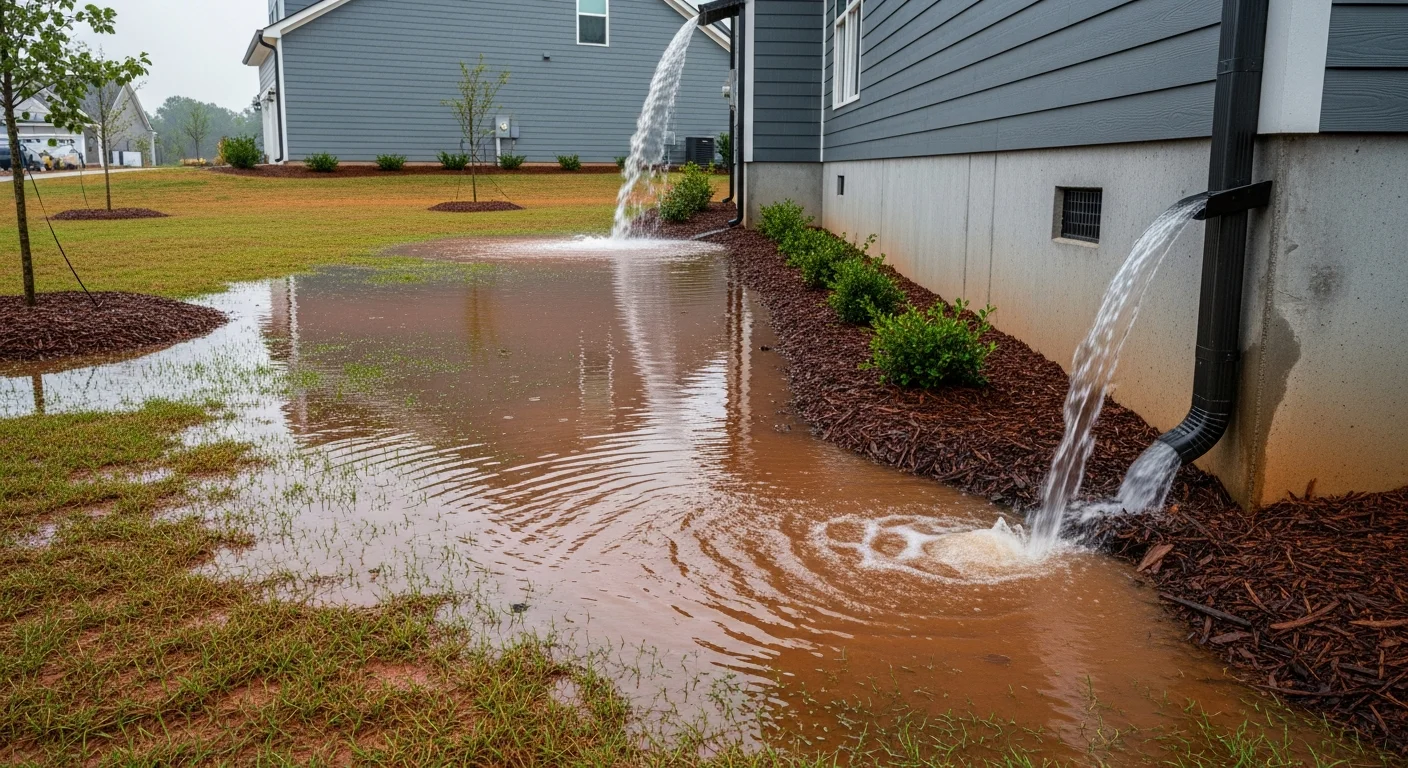
Indian Land sits atop Cecil and Pacolet series clay with infiltration rates below 0.2 inches per hour. After a storm, water pools against your foundation for days — feeding moisture into crawl spaces and wicking through slab foundations across Lancaster County's booming subdivisions.
Year-Round Humidity
45.4 in
Annual rainfall
With 45+ inches of annual rainfall and a humid subtropical climate, Indian Land's moisture concerns aren't seasonal — they're constant. Warm humid air enters vented crawl spaces, contacts cooler surfaces, and condenses on floor joists, ductwork, and insulation year-round.
Catawba River Corridor
37,000+
Residents at risk
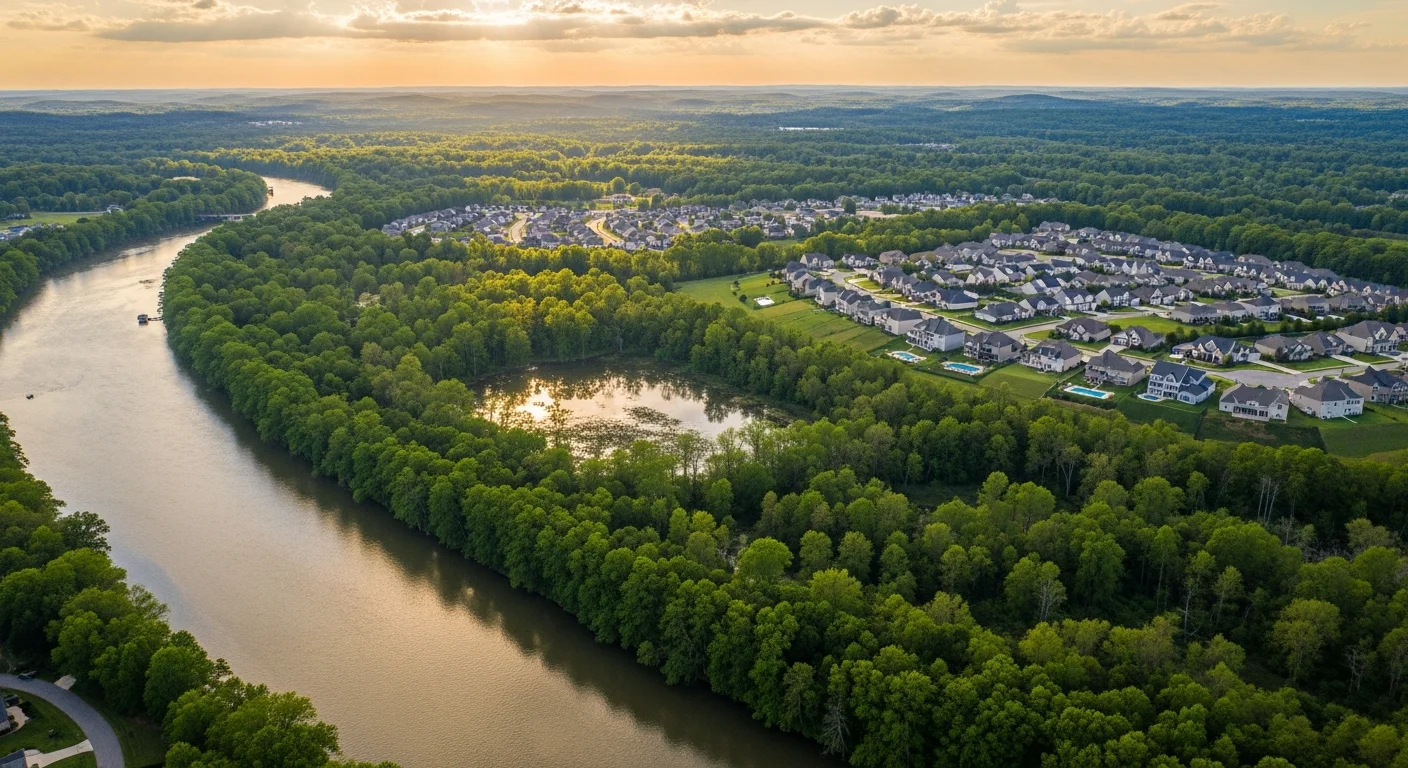
Riverchase Estates and other communities market proximity to the Catawba River as an amenity — but the river corridor and tributaries like Bowers Pond and Long Branch create real flood exposure during tropical remnants and training storms that reach the inland Carolinas.
Modern Homes, Hidden Risks
85%+
Population growth since 2010
Nearly 13,000 homes built since 2000 means Indian Land's inventory is overwhelmingly modern. But newer doesn't mean safer — flexible supply lines, water heater connections, and ice maker lines fail regardless of home age, releasing hundreds of gallons before anyone notices.
Indian Land's Piedmont clay soils hold water against foundations for days after storms —
a primary driver of crawl space moisture and foundation seepage in Lancaster County.
Community-Level Intelligence
Indian Land Community Water Damage Risk Profiles
Water damage in Indian Land follows predictable patterns based on community design,
foundation type, proximity to drainage features, and HOA density. Here's what we see in
the neighborhoods where Lancaster County homeowners call us most.
Sun City Carolina Lakes
Moderate
Built: 2000s–2010s
Primary risk: Lake proximity humidity, slab moisture, HVAC condensate
Common damage: Interior humidity damage, crawl space issues from community lake proximity, HVAC condensate overflows in active adult homes
Walnut Creek
Moderate
Built: 2005–2015
Primary risk: HOA stormwater drainage, grading at low points
Common damage: Crawl space moisture from common area drainage, foundation seepage during heavy rain events
The Retreat at Rayfield
Moderate
Built: 2010s
Primary risk: Supply line failures, appliance leaks in high-finish homes
Common damage: Water damage from interior plumbing failures, ceiling and engineered hardwood floor damage
Riverchase Estates
High Risk
Built: 2005–2018
Primary risk: Catawba River proximity, tree canopy, wind-driven rain
Common damage: Storm runoff damage, roof impacts from downed limbs, extended power outage sump pump failures
Townhome / Multi-Family Communities
High Risk
Built: 2010s–2020s
Primary risk: Shared plumbing chases, water migration between units
Common damage: Cross-unit leak spread, ceiling saturation from upstairs units, shared wall hidden moisture and mold
Common damage: Yard drainage failures at lot lines, foundation settlement cracks, garage flooding from inadequate grading
Flood Risk Awareness
The Catawba River Corridor and Flood Risk in Indian Land
Indian Land is not coastal, but flood risk is real. Tropical remnants regularly produce
4-8 inches of rain in 24 hours across the inland Carolinas — enough to push the Catawba
and its tributaries well beyond their banks and overwhelm municipal storm systems
throughout Lancaster County.
Catawba River Watershed
Indian Land sits near the Catawba River corridor, with tributaries including Bowers Pond and Long Branch creating drainage corridors that can overwhelm during heavy rain events — even though the area is inland, not coastal.
Lancaster County Floodplain Reality
Lancaster County's floodplain management explicitly notes that "numerous areas are subject to flooding." FEMA flood maps for newer Indian Land developments may not reflect current risk — check your specific address through FEMA's Flood Map Service Center.
Flood vs. Homeowners Insurance
Standard homeowners insurance covers sudden water events (burst pipes, roof leaks). Flood insurance (separate NFIP or private policy) covers rising water. Many Indian Land homeowners near the Catawba corridor need both — ask your agent before you need it.
Beyond River Overflow
Flooding in Indian Land isn't just river overflow. Heavy rain can overwhelm roadside ditches, neighborhood storm drains, and low points behind retaining walls in newer subdivisions. We always assess water category and contamination risk for flood events.
The Catawba River corridor runs near several Indian Land communities — tropical remnants
and training storms can push tributaries beyond their banks, flooding creek-adjacent
properties in Lancaster County.
Our Indian Land Process
How We Restore Indian Land Homes After Water Damage
Every water damage event is different, but the science of restoration follows a proven
sequence. Here's exactly what happens when you call Palm Build for a Lancaster County
emergency.
01
Emergency Dispatch
45-60 Minutes
02
Damage Assessment
First 2 Hours
03
Water Extraction
Hours 2-6
04
Structural Drying
3-5 Days
05
Mold Prevention
During Drying
06
Full Restoration
1-4 Weeks
01
Emergency Dispatch
45-60 Minutes
Call our NC line at (704) 464-0121 any time, day or night. Our dispatcher sends a crew from our Charlotte hub — about 20 minutes to Indian Land via I-77 South. We arrive with truck-mounted extraction equipment, commercial dehumidifiers, and air movers ready to deploy.
02
Damage Assessment
First 2 Hours
IICRC-certified technicians use infrared thermal imaging and pin-type moisture meters to map exactly where water has traveled — behind walls, under flooring, into crawl spaces. For Indian Land's high-value homes, this documentation becomes critical for your insurance claim.
03
Water Extraction
Hours 2-6
Truck-mounted extraction systems pull hundreds of gallons per hour. For Indian Land's modern homes with engineered hardwood and open floor plans, speed here is critical — water travels fast through open-concept layouts and can affect multiple rooms before you realize the extent.
04
Structural Drying
3-5 Days
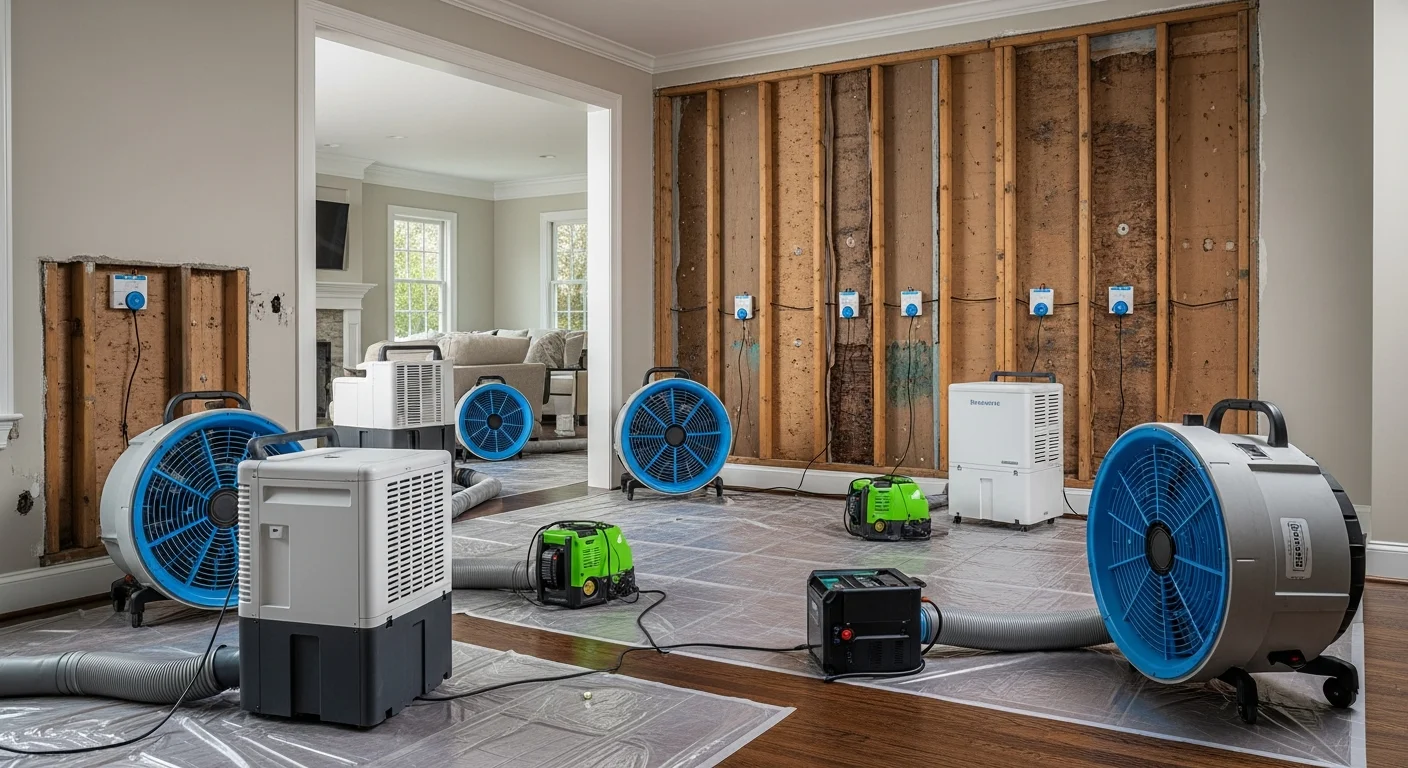
Commercial LGR dehumidifiers pulling 15-30 gallons per day and high-velocity air movers positioned strategically throughout affected areas. In Indian Land's humid subtropical climate, dehumidification is essential — fans alone can't overcome ambient humidity.
05
Mold Prevention
During Drying
EPA-registered antimicrobial treatments applied during drying. Indian Land's year-round humidity means mold risk is elevated from the moment water intrusion occurs. For homes with crawl spaces, we inspect and treat the crawl space directly to prevent mold amplification below the living space.
06
Full Restoration
1-4 Weeks
Drywall, flooring, baseboard, trim, painting, and structural work rebuilt to current Lancaster County building code. We match Indian Land's premium finishes — engineered hardwood, custom cabinetry, designer fixtures — so the restoration is invisible.
Why Our Indian Land Process Works
1
Piedmont Knowledge
We know clay soil, Lancaster County crawl spaces, and Catawba River flood patterns
2
Rapid Response
45-60 minute response from our Charlotte hub via I-77
3
Scientific Drying
Daily moisture readings until every material reaches dry standard
4
Insurance-Ready
Documentation formatted for your adjuster from day one
When water damage strikes your Indian Land home, every minute counts. Our proven
6-step process ensures nothing is missed — from emergency extraction through final
reconstruction.
Indian Land doesn't have a single "water damage season" — different types of damage peak
at different times of year. The Piedmont location means year-round humidity concerns,
and clay soil saturation extends risk windows throughout the calendar.
January – March
Supply Line Failures & Saturated Clay
Freeze-thaw cycles stress supply lines in crawl spaces and exterior walls. Piedmont clay saturates from winter rain, pushing water against foundations for weeks. Indian Land's 2000s-era homes have flexible supply lines that are vulnerable to freeze-related burst failures — even brief cold snaps can cause catastrophic leaks.
April – June
Severe Storms & Early Mold Growth
Heavy thunderstorms drive roof leaks, window intrusion, and yard drainage overload across Lancaster County. Rising temperatures activate mold growth in crawl spaces that stayed damp through winter. Many Indian Land homeowners first notice musty odors during this transition — the smell means mold is already growing.
July – September
Peak Humidity, Tropical Remnants & Mold Season
Peak humidity of 70-90% makes this the worst mold season in Lancaster County. HVAC condensate drain failures spike. Tropical remnants reaching the inland Carolinas dump 4-8 inches of rain in 24 hours — the Catawba River and local tributaries can overflow, and municipal storm systems back up in Indian Land's lower-lying communities.
October – December
Late Storms, First Freezes & Year-End Leaks
Late-season tropical systems can still impact the Piedmont through November. First freezes catch homeowners off guard — pipes in uninsulated crawl spaces and exterior walls are vulnerable. Holiday hosting increases kitchen and bathroom plumbing stress. Many Indian Land homeowners discover lingering water damage during fall winterization.
What We See Most
Common Water Damage Types in Indian Land Homes
Most Common
Supply Line Burst
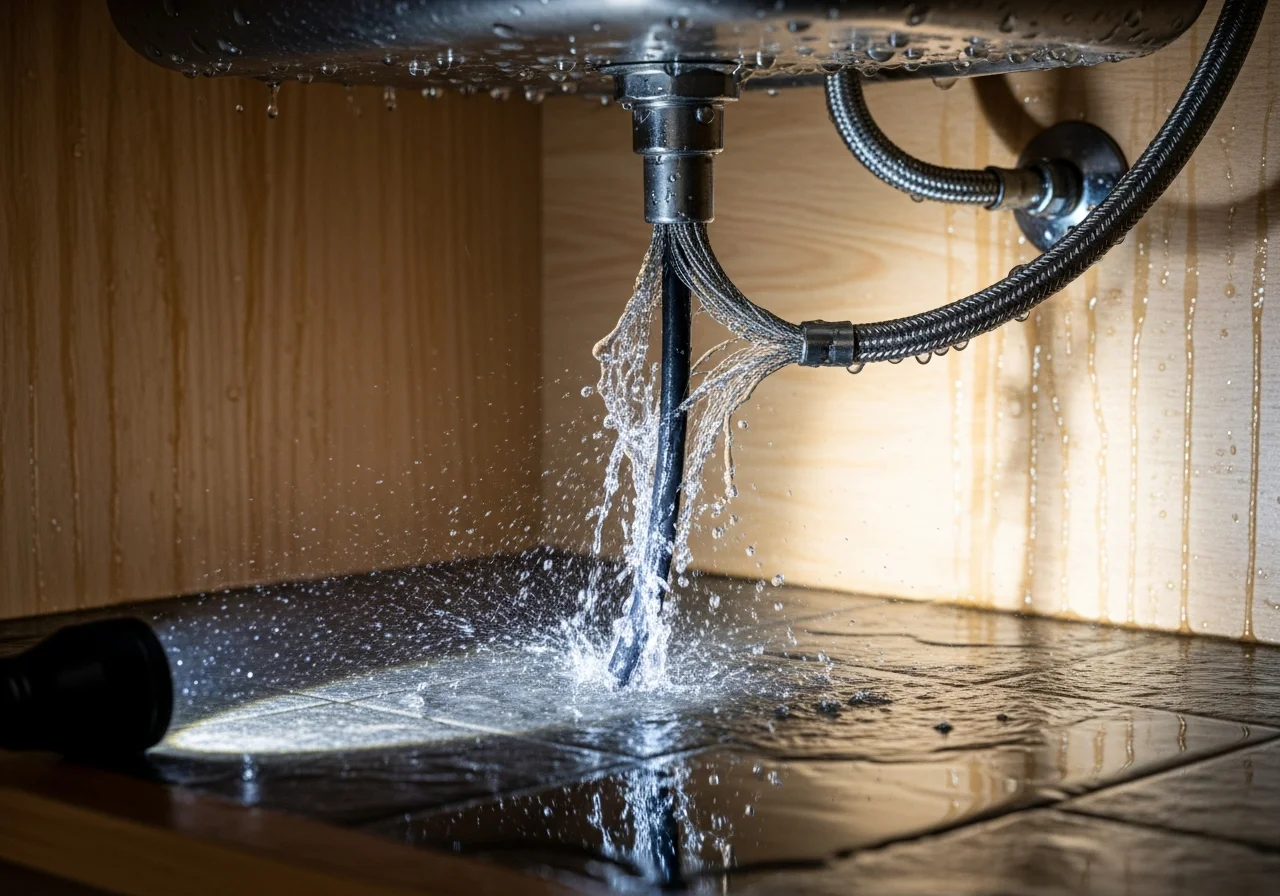
Flexible braided lines under sinks, behind toilets, and at washing machines are the #1 failure point in homes under 25 years old — Indian Land's primary housing stock.
Very Common
Appliance Leak
Dishwashers, refrigerator ice makers, and water heaters can release hundreds of gallons unnoticed — especially when homeowners are away.
Common
Crawl Space Moisture
Piedmont clay soil plus year-round humidity drives persistent crawl space wetness even without active leaks. Condensation on floor joists and ductwork creates mold-favorable conditions.
Seasonal
Storm-Driven Roof Leak
Wind lifts asphalt shingles or drives rain under flashing at valleys and penetrations. Training storms can overwhelm even well-maintained roofs.
Summer Peak
HVAC Condensate Overflow
Clogged condensate drain lines back up into ceiling cavities and closet spaces. Especially common during peak cooling season (June-September).
Year-Round
Multi-Unit Water Migration
Townhome and condo shared walls allow water to travel between units through plumbing chases and ceiling cavities — critical for Indian Land's 9% multi-family segment.
Flexible supply line failures are the most common source of sudden water damage in
Indian Land's newer homes — a single burst line can release hundreds of gallons in
hours.
Our Work
Water Damage Restoration in Indian Land Homes
From emergency extraction through final reconstruction — here's what our restoration
process looks like in Lancaster County homes.
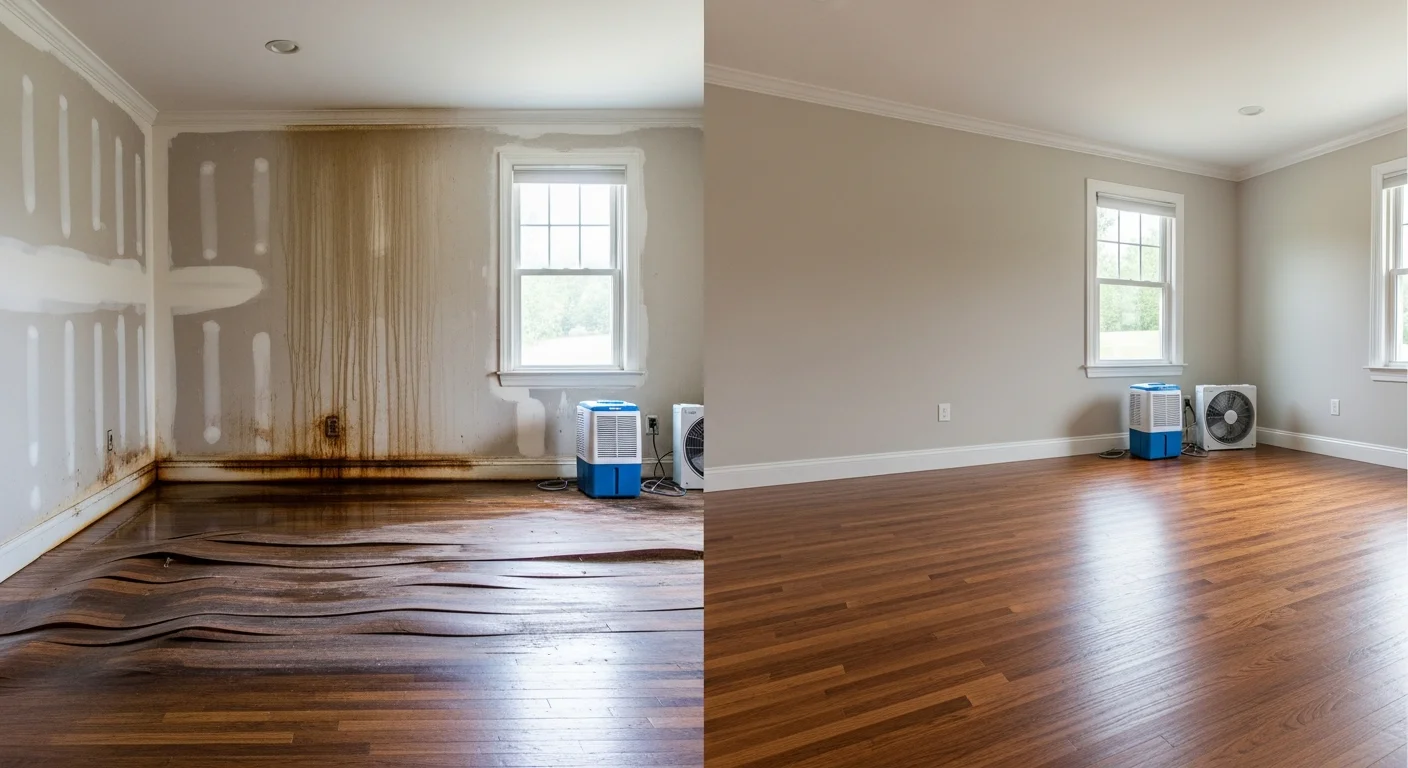
Hardwood floor restoration — water-buckled flooring dried and refinished to pre-loss condition
Structural drying in progress — commercial dehumidifiers and air movers positioned for optimal airflow
Thermal imaging reveals hidden moisture that visual inspection misses
Full reconstruction complete — new flooring, fresh paint, and restored finishes
Indian Land Pricing
Water Damage Restoration Costs in Indian Land
These ranges reflect real-world project costs in Lancaster County. Indian Land's higher
home values and premium finishes — engineered hardwood, custom cabinetry, designer
fixtures — typically push restoration costs above Charlotte metro averages because
materials cost more to match and replace.
Indian Land's premium finishes affect restoration costs
With a median home value of $470,600, Indian Land homes typically feature materials
that cost more to restore or replace than standard finishes. Thorough moisture mapping
and precise drying prevent unnecessary demolition — protecting your investment and
keeping costs lower than full replacement.
Insurance Support
Insurance Claims for Water Damage in Indian Land
South Carolina homeowners insurance averages approximately $3,205 per year — and
premiums are rising. Indian Land homeowners with high-value properties need restoration
documentation that matches the quality of their coverage.
Documentation We Collect
Calibrated moisture meter readings with timestamps
Timestamped photo documentation of all affected areas
Detailed scope notes for every damaged material and surface
Daily progress reports with moisture level trends
Thermal imaging records showing hidden moisture patterns
Flood vs. Homeowners Coverage
Standard homeowners: covers sudden, accidental water events (burst pipes, appliance failures)
Flood insurance: separate policy for rising water (river overflow, storm surge)
Sewer backup: often requires specific endorsement — ask your agent
Properties near Catawba River may be in FEMA flood zones requiring flood insurance
Common Coverage Gaps
Gradual leaks and maintenance-related damage typically excluded
Mold coverage often limited — requires prompt mitigation proof
"Wear and tear" vs. "sudden and accidental" is where most claim disputes live
Exterior flooding from yard drainage usually not covered without flood policy
How Palm Build Supports Your Claim
Direct communication with your insurance adjuster
Xactimate-compatible scope and pricing documentation
Coordination on scope changes and supplemental claims
Our project managers coordinate directly with your insurance adjuster — providing the
documentation, photos, and moisture readings needed for full claim approval.
Why Us
Why Indian Land Homeowners Choose Palm Build
IICRC Certified Technicians
Trained to the Institute of Inspection, Cleaning and Restoration Certification standards for water damage, mold, and fire restoration.
45-60 Minute Emergency Response
From our Charlotte operations hub to anywhere in the Indian Land 29707 corridor — 24/7, 365 days a year.
HOA-Aware Operations
We understand community rules on dumpsters, staging, noise, and exterior work windows that matter in Indian Land's master-planned communities.
Insurance Coordination from Day One
Documentation, photo logs, moisture readings, and direct adjuster communication — supporting your claim from the first hour.
Premium Finish Protection
Specialized drying techniques that protect engineered hardwood, custom cabinetry, and high-value contents typical of Indian Land homes.
Cross-Border Service
Licensed and insured in both South Carolina and North Carolina, serving the entire Charlotte metro without jurisdictional complications.
Our team serves Indian Land and the entire Lancaster County corridor from our Charlotte
operations hub — 24/7, 365 days a year.
Common Questions
Indian Land Water Damage FAQ
How quickly can Palm Build reach Indian Land for a water emergency?
Our Charlotte operations hub is approximately 20 minutes from Indian Land. For 24/7 emergencies, we typically arrive on-site within 45-60 minutes. We carry truck-mounted extraction, commercial dehumidifiers, and moisture mapping equipment on every response — so work begins the moment we arrive at your Indian Land home.
Why are Indian Land homes vulnerable to water damage despite being newer construction?
Most Indian Land homes were built between 2000 and 2019, but newer construction doesn't mean lower risk. Supply line failures, appliance leaks, and HVAC condensate overflows are common in homes of any age. Additionally, Indian Land sits on Piedmont clay soil with poor drainage — water pools against foundations after storms and can enter crawl spaces or wick through slabs. The high-value finishes in Indian Land homes (engineered hardwood, custom cabinetry) make fast response critical to prevent costly replacements.
Does homeowners insurance cover water damage in Indian Land?
Most standard homeowners policies in Lancaster County cover sudden and accidental water damage — burst pipes, appliance failures, and storm-driven roof leaks. However, flood damage from rising water requires separate flood insurance. Gradual leaks and maintenance-related damage are typically excluded. Palm Build documents moisture levels, photo logs, and detailed scope notes from day one to support your claim.
What is the average cost of water damage restoration in Indian Land SC?
Minor water damage (single room, caught quickly) typically costs $1,500-$4,000. Moderate damage affecting multiple rooms with structural drying averages $5,000-$12,000. Major events involving multiple floors, mold remediation, and reconstruction can range from $15,000-$40,000+. Indian Land's higher home values and premium finishes can push costs higher than regional averages because engineered hardwood, custom cabinetry, and premium fixtures cost more to restore or replace.
Do I need flood insurance in Indian Land SC?
It depends on your property's location relative to the Catawba River corridor and local drainage features like Bowers Pond and Long Branch. FEMA flood maps for Lancaster County show numerous areas subject to flooding, and your mortgage lender may require flood insurance if your property falls within a Special Flood Hazard Area. Even outside designated flood zones, heavy rain can overwhelm roadside ditches and neighborhood storm drains. We recommend checking your specific address using FEMA's Flood Map Service Center.
What ZIP codes does Palm Build serve in the Indian Land area?
Our primary service area covers ZIP 29707 (Indian Land) and extends to surrounding communities including 29715 (Fort Mill), 29708 (Fort Mill/Tega Cay), 29734 (Lancaster), and Charlotte metro ZIPs 28277 and 28134. We provide 24/7 emergency water damage restoration throughout Lancaster County.
How long does structural drying take in an Indian Land home?
Typical structural drying takes 3-5 days depending on the extent of saturation, construction materials, and ambient conditions. Indian Land's humid subtropical climate means we must run commercial dehumidifiers alongside air movers — fans alone cannot overcome the ambient humidity. We monitor moisture levels daily with meters and thermal imaging, documenting readings for your insurance claim, and only remove equipment when materials reach verified dry standards.