Fire & Smoke Damage Cleanup in Indian Land, South Carolina
From Sun City Carolina Lakes' active-adult residences to Walnut Creek's open-concept family homes, Palm Build's IICRC-certified team delivers structural fire repair, professional soot removal, deep smoke odor elimination, and full reconstruction — with insurance coordination and Lancaster County permitting handled from the first call.
Charlotte Office — ~20 minutes to Indian Land 45-60 min Response IICRC Certified
Indian Land's newer construction — master-planned communities built from the early 2000s
onward throughout Lancaster County — creates distinct fire risk profiles. Open floor
plans, attached garages, and modern electrical loads all factor into how fires start and
spread in 29707 homes. Understanding these risks ensures your restoration company knows
exactly what they're dealing with from the first call.
Attached Garage Fires
High
Indian Land's master-planned communities — Sun City Carolina Lakes, Bridgewater, Chesnut Preserve — feature attached two- and three-car garages on nearly every home. Garages are one of the most common fire origin points in residential construction: stored chemicals, gasoline, paint, and lithium-ion batteries from power tools and electric vehicles all create ignition risk. When a garage fire starts, the shared wall and HVAC penetrations allow smoke and heat to enter the living space rapidly. Homes with bonus rooms or bedrooms above the garage face elevated structural risk because fire travels upward through the floor assembly.
Peak season: Year-round
Open Floor Plans Accelerate Smoke Spread
Most Common
Most Indian Land homes were built after 2000 with modern open-concept layouts — combined kitchen, living, and dining areas with vaulted or two-story ceilings. While great for daily living, these designs allow smoke to travel through the entire main living area within minutes of a fire starting. A kitchen grease fire that would be contained to one room in an older compartmentalized home can coat every surface of an Indian Land open-concept main floor in heavy soot. The two-story foyers and great rooms common in Lancaster County subdivisions create a chimney effect, drawing smoke upward and contaminating second-floor bedrooms and hallways.
Peak season: Year-round
Electrical Systems in Newer Construction
High
Indian Land's rapid growth means many homes were built during the 2003-2015 construction boom when demand outpaced skilled labor supply. Electrical installations from this period sometimes feature overloaded circuits, improperly rated breakers, or arc-fault issues that may not present problems for years. As these homes age and electrical loads increase — home offices, EV chargers, smart home systems — the risk of electrical fires grows. Electrical fires often start behind walls, smoldering inside insulation and framing before detection, which means smoke damage is extensive before flames are visible.
Peak season: Year-round
Cooking Fires in Indian Land Kitchens
Most Common
Cooking fires remain the leading cause of residential fires nationwide, and Indian Land is no exception. The large, well-appointed kitchens in communities like Regent Park, Panther Walk, and Lancaster Crossings often feature gas ranges, deep fryers, and commercial-style cooktops that produce intense heat. The protein soot from cooking fires creates an invisible, bonding residue that standard cleaning cannot remove. In Indian Land's open-concept homes, kitchen fire smoke travels immediately through the great room, dining area, and into HVAC returns — distributing soot throughout the entire house within hours.
Peak season: Year-round
Why Speed Matters
After a Fire in Indian Land, Every Hour of Delay Costs You
The fire department puts out the flames — but that's when the real damage clock starts.
Soot, smoke residue, and fire-suppression water are all actively damaging your Indian
Land home right now. The difference between a $15,000 restoration and a $60,000 rebuild
often comes down to how fast professional mitigation begins. Here's what's happening
inside your home while you wait.
CRITICAL FACTOR 1
Soot Becomes Permanent in Hours
Acidic soot residue begins etching into metal, glass, and stone surfaces within hours of a fire. The stainless steel appliances, granite countertops, and chrome fixtures standard in Indian Land's newer kitchens are especially vulnerable. The chemical reaction accelerates in South Carolina's humid subtropical climate, where moisture in the air reacts with soot compounds to form sulfuric and hydrochloric acid on surfaces. Every hour without professional neutralization means more permanent damage to your finishes.
CRITICAL FACTOR 2
Smoke Penetrates Deeper Every Day
Smoke odor molecules are measured in microns and continue migrating into porous materials for days after the fire is out. In Indian Land's modern homes with engineered hardwood flooring, spray-foam insulation, and textured drywall, smoke penetrates into materials that are difficult to treat once deeply contaminated. The HVAC systems running through attic spaces and interior wall cavities — standard in Indian Land construction — distribute smoke residue into every room of the house, even those far from the fire origin.
CRITICAL FACTOR 3
Fire Suppression Water Starts Mold
Fire suppression — sprinklers, fire hoses, or extinguishers — saturates your home with water. A single fire hose delivers 150 to 250 gallons per minute. In Lancaster County's warm, humid climate, that water begins feeding mold growth within 24 to 48 hours if not extracted and dried professionally. Indian Land homes with finished basements, first-floor bonus rooms, and carpet-over-slab construction are particularly vulnerable to secondary mold damage from fire suppression water.
Emergency Fire Restoration
Palm Build responds to Indian Land fire emergencies from our Charlotte operations hub,
arriving within 45-60 minutes. We begin emergency board-up, soot stabilization, and
water extraction simultaneously — stopping all three damage clocks at once. Call now
for immediate response.
Emergency fire damage assessment and board-up secures your Indian Land home within
hours of the fire
Our Fire Restoration Process
How We Restore Indian Land Homes After Fire Damage
Fire restoration is more complex than water or mold because it involves multiple damage
types simultaneously — structural fire damage, soot contamination, smoke odor, and water
from fire suppression. Our six-step process addresses all four in a coordinated sequence
tailored to Indian Land's modern construction.
01
Emergency Response & Board-Up
Hours 1-4
We secure your Indian Land home against weather, theft, and further damage. This includes boarding windows, tarping damaged roof sections, and securing doors and garage openings. With Lancaster County's afternoon thunderstorms common from April through October, an unsecured fire-damaged home can sustain thousands in additional water damage from a single storm. Our crew arrives within 45-60 minutes of your call.
02
Board-Up & Tarping
Hours 2-8
Full structural securing goes beyond the initial emergency response. We install commercial-grade board-up materials on all compromised openings and apply heavy-duty tarps to any roof damage. For Indian Land's HOA communities, we coordinate with property management to ensure securing methods meet community standards while still providing complete protection. We also establish perimeter security to prevent unauthorized entry.
03
Soot & Smoke Removal
Days 2-8
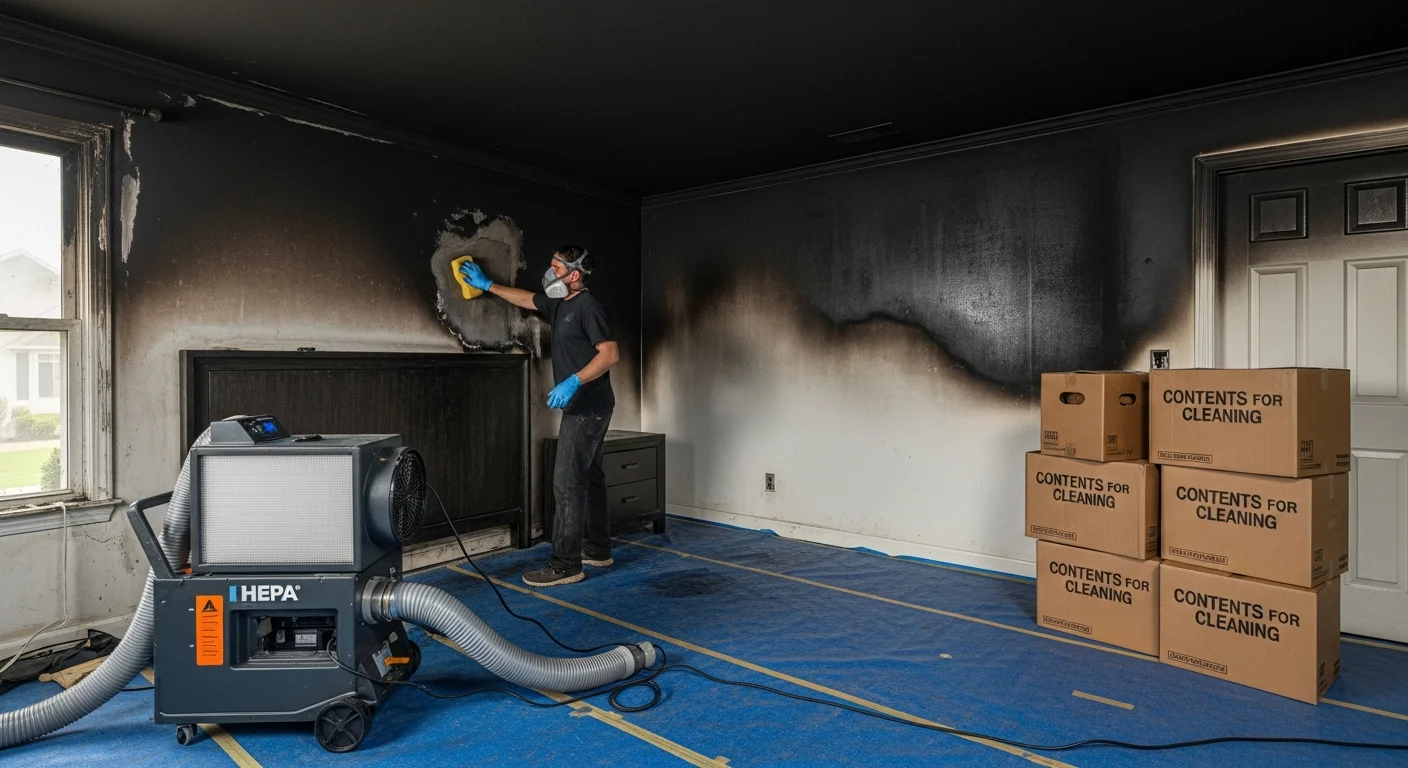
Professional soot removal uses chemistry matched to the specific soot type found in your home. HEPA vacuuming removes loose particulate, chemical sponges lift embedded residue, and wet cleaning with specialized detergents addresses remaining contamination. In Indian Land's modern homes with engineered hardwood, granite countertops, and stainless steel appliances, we match cleaning agents to each surface type to prevent permanent etching or discoloration.
04
Odor Elimination
Days 5-14
Smoke odor elimination treats the source at the molecular level — not masking the smell. We use thermal fogging to penetrate materials the way smoke did, ozone treatment for sealed spaces, and hydroxyl generators for occupied areas. Indian Land's modern construction with spray-foam insulation, engineered materials, and tight building envelopes can trap odor molecules in ways that require multiple treatment cycles for complete elimination.
05
Contents Cleaning & Restoration
Days 3-21
We inventory, document, and restore salvageable contents including furniture, electronics, clothing, documents, and personal items. Our pack-out process catalogs every item with photos for insurance documentation. Contents are cleaned using ultrasonic cleaning for hard goods, ozone chambers for soft goods, and specialized treatments for electronics and documents. Items that cannot be restored are documented for insurance replacement claims.
06
Reconstruction & Restoration
Weeks 2-8+
Once cleaning and odor treatment are verified complete, we handle full reconstruction: drywall, flooring, cabinetry, painting, electrical, plumbing, and finish work. For Indian Land homes, we source materials that match your community's construction standards and coordinate with HOA architectural review boards when exterior modifications are involved. Our goal is restoring your home to pre-loss condition — or better.
Odor Elimination
How We Permanently Eliminate Smoke Odor in Indian Land Homes
Indian Land's modern homes present unique smoke odor challenges. Open floor plans allow
smoke to permeate every room simultaneously. HVAC systems distribute soot and odor
molecules through ductwork into spaces far from the fire origin. Tight building
envelopes with spray-foam insulation trap smoke inside wall and ceiling cavities where
consumer products cannot reach. Professional odor elimination requires treating the
source at the molecular level using methods matched to your home's specific
construction.
Thermal Fogging
Heated deodorizing agents are converted into a fog that penetrates materials the same way smoke did — through microscopic pores, cracks, and cavities. In Indian Land's modern homes, thermal fogging is particularly effective for reaching smoke trapped in spray-foam insulation, behind engineered hardwood flooring underlayment, and within the textured drywall finishes common in Lancaster County construction. The fogging agent chemically neutralizes odor molecules rather than masking them. Multiple applications are often needed for deep-penetrating smoke in tightly sealed modern homes.
Best for: Modern insulation, engineered materials, tight building envelopes
Hydroxyl Generators
Hydroxyl generators produce hydroxyl radicals — the same molecules that naturally purify outdoor air via sunlight — to break down odor compounds. Unlike ozone, hydroxyl treatment is safe for occupied spaces. We use this method throughout Indian Land restoration projects as continuous treatment during the multi-day cleaning process. In open-concept homes where smoke has permeated the entire main floor, hydroxyl generators run continuously to keep air quality manageable while our team works on soot removal and surface cleaning.
Best for: Open floor plans, occupied spaces, ongoing treatment during restoration
Ozone Treatment
Ozone generators create O3 — a highly reactive oxygen molecule that breaks down odor compounds at the molecular level. Ozone treatment is extremely effective but requires the space to be completely unoccupied (including plants and pets) during treatment. We use ozone for sealed, evacuated spaces in Indian Land homes — master closets, bonus rooms, sealed attic spaces, and garages — where concentrated treatment can reach maximum effectiveness. For homes with HVAC systems that distributed smoke through ductwork, we seal and ozone-treat the duct system separately.
Best for: Sealed spaces, HVAC ductwork, heavy odor concentration
Understanding the Damage
The Science of Soot: Why Fire Type Determines the Restoration Approach
Not all fire damage is the same. The type of materials that burned determines what kind
of soot your Indian Land home is coated with — and that determines the cleaning
chemistry, equipment, and timeline required. Using the wrong approach doesn't just fail
to clean the surface — it can permanently set stains and drive odors deeper into your
engineered hardwood, granite, and stainless steel finishes.
Protein Residue (Kitchen Fires)
The most common fire type in Indian Land homes. Protein fires from cooking produce an almost invisible, yellowish residue with an extremely pungent odor that penetrates every surface. In Indian Land's open-concept kitchens with granite countertops, stainless steel appliances, and engineered hardwood floors, protein soot bonds chemically to each surface differently. Granite's porous surface absorbs the residue, stainless steel shows etching within hours, and engineered hardwood's polyurethane finish can yellow permanently if not treated quickly. Standard cleaning products will spread the residue and set the stain permanently.
Professional Cleaning Approach
Requires enzymatic cleaners and specialized degreasing agents matched to each surface type. Thermal fogging with protein-specific solutions is typically needed for odor elimination in open-concept layouts.
Dry Soot (Wood, Paper, Cotton)
When natural materials burn — wood framing, paper, cotton fabrics, cardboard — they produce dry, powdery, gray-black soot. This type is lighter and easily disturbed by air movement. In Indian Land homes with forced-air HVAC systems (which is virtually all of them), dry soot from a fire in one room enters ductwork and distributes residue throughout the entire house within hours. The engineered hardwood and LVP flooring common in Indian Land subdivisions can be cleaned effectively if treatment begins quickly, but the porous grout lines between tile floors in bathrooms and kitchens require specialized attention.
Professional Cleaning Approach
HEPA vacuuming first (never wipe dry soot — it smears), followed by chemical sponge treatment, then wet cleaning with appropriate detergents. Ductwork must be professionally cleaned.
Synthetic Soot (Plastics, Polymers)
Indian Land's modern homes contain significant amounts of synthetic materials: engineered wood flooring, foam insulation, PVC trim, synthetic carpeting, vinyl plank, and plastic fixtures. When these materials burn, they produce thick, black, sticky soot that is extremely difficult to remove. Synthetic soot smears easily when touched, adheres aggressively to all surfaces, and contains toxic compounds including hydrogen cyanide and dioxins. This is the most hazardous soot type for both occupants and restoration technicians, and it is increasingly common in newer construction like Indian Land's.
Professional Cleaning Approach
Requires solvent-based cleaners specifically formulated for petroleum-based residues. Multiple cleaning passes are standard. Full PPE is critical due to toxic compounds in synthetic soot.
Indian Land Pricing
Fire Damage Restoration Costs in Indian Land
Fire restoration costs vary dramatically based on severity, affected area, and
construction type. Indian Land's newer construction with modern materials — engineered
hardwood, granite, stainless steel — typically falls on the higher end of material
replacement costs compared to older, simpler finishes. The good news: fire is one of the
most comprehensively covered perils under South Carolina homeowners insurance policies,
and Indian Land's newer homes typically carry adequate coverage.
Minor Smoke Damage
Smoke and soot cleanup, minor repairs, odor treatment
Fire Insurance Claims in Indian Land: What's Covered
Fire is one of the most comprehensively covered perils under South Carolina homeowners
insurance policies. Unlike water or mold damage, fire claims rarely face coverage
disputes — your policy is designed for exactly this situation. Indian Land homeowners in
Lancaster County carry policies that typically provide full restoration coverage. Here's
what a standard HO-3 policy covers for fire damage.
Structural repair and reconstruction to pre-loss condition
Professional soot and smoke cleaning of all affected surfaces
Water damage from fire suppression (extraction and drying)
Contents restoration or replacement (furniture, electronics, clothing)
Additional Living Expenses (ALE) for temporary housing during restoration
Debris removal and hazardous material disposal
Building code upgrades required during reconstruction (with ordinance-and-law endorsement)
Replacement Cost vs. ACV
Most Indian Land homeowners carry Replacement Cost Value (RCV) policies that pay to replace damaged items at current market prices — not depreciated values. This is critical for newer homes where finishes like granite, engineered hardwood, and stainless steel appliances are expensive to replace. Verify your policy says 'replacement cost' rather than 'actual cash value' (ACV), which deducts depreciation.
Additional Living Expenses (ALE)
When your Indian Land home is uninhabitable during fire restoration — which is common for moderate to major fires — your policy's ALE coverage pays for temporary housing, meals, and related expenses. South Carolina policies typically provide ALE for 12-24 months or a percentage of your dwelling coverage. With Indian Land's housing costs, ensure your ALE limit is adequate for rental housing in the area.
Contents Coverage
Your personal property coverage typically equals 50-70% of your dwelling coverage amount. For fire damage, every item in the affected area needs to be inventoried: furniture, electronics, clothing, kitchenware, decorations, and personal items. Palm Build's contents team documents everything with photos and detailed descriptions formatted for insurance submission, maximizing your recovery.
Palm Build Manages Your Fire Claim
We work directly with your insurance adjuster from the first inspection. Our fire damage
documentation — structural assessments, soot type classification, moisture readings,
photo evidence, and detailed scopes of work — is formatted exactly how South Carolina
adjusters and carriers expect to receive it. This reduces back-and-forth and gets your
claim approved faster.
Indian Land Fire Restoration: The Process in Action
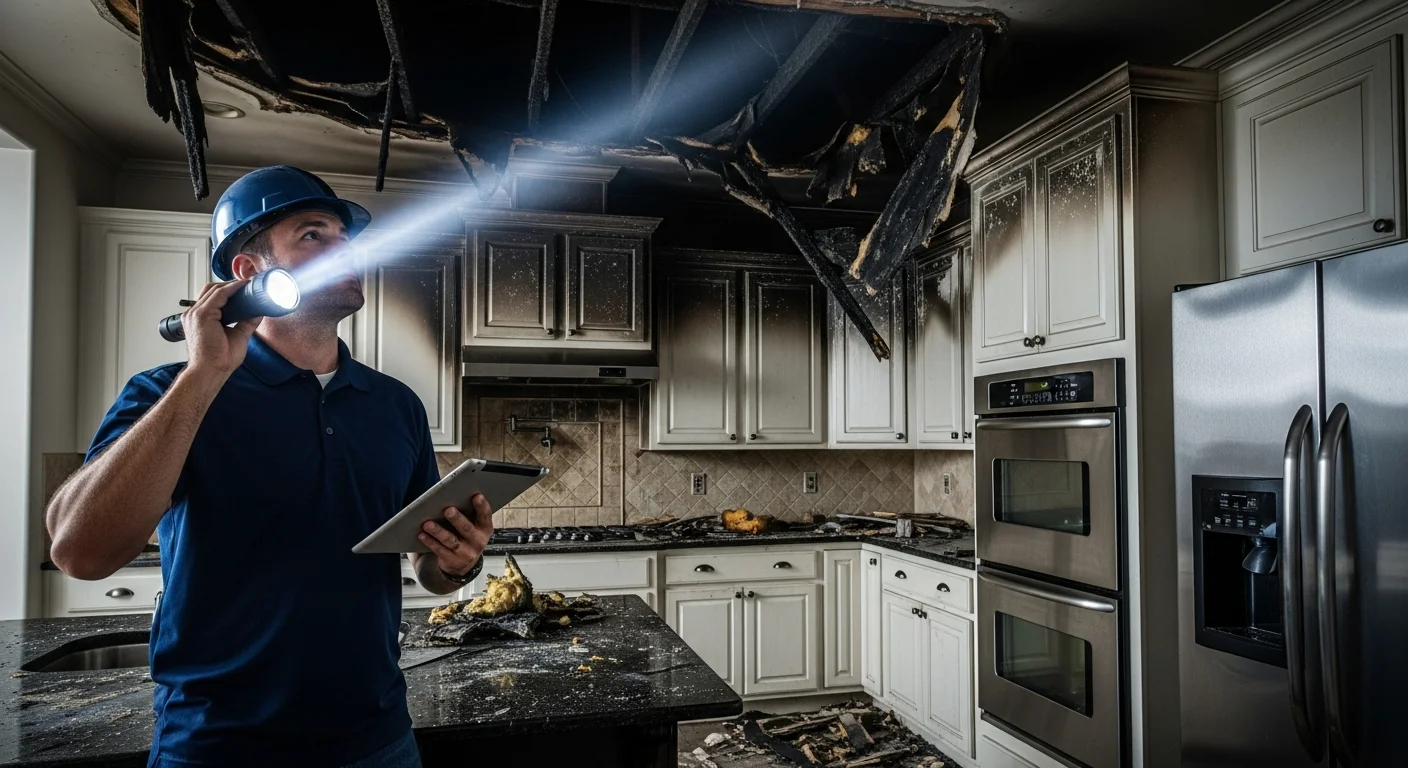
Professional fire damage assessment documenting soot type and affected areas
Professional smoke and soot removal using specialized cleaning agents
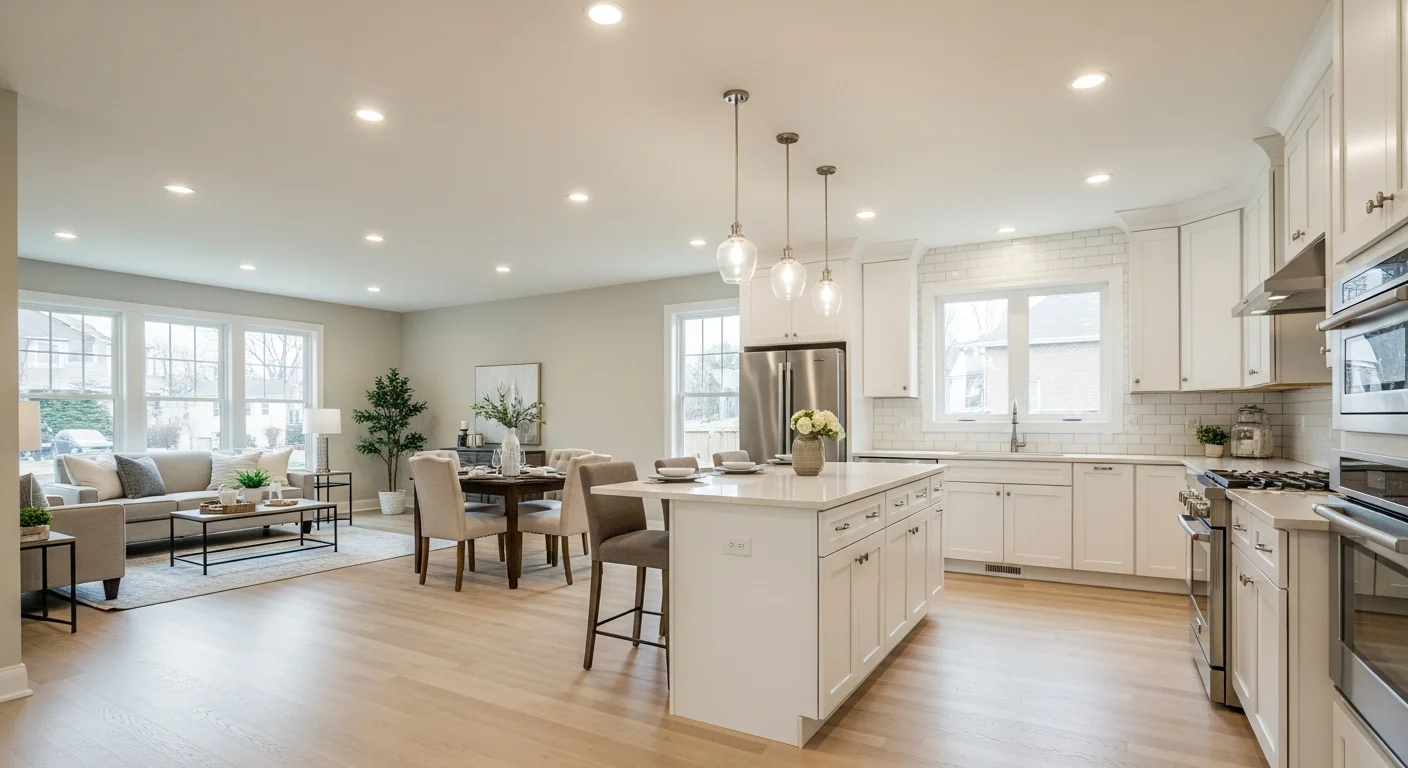
After: Fully restored interior with new finishes matching original construction
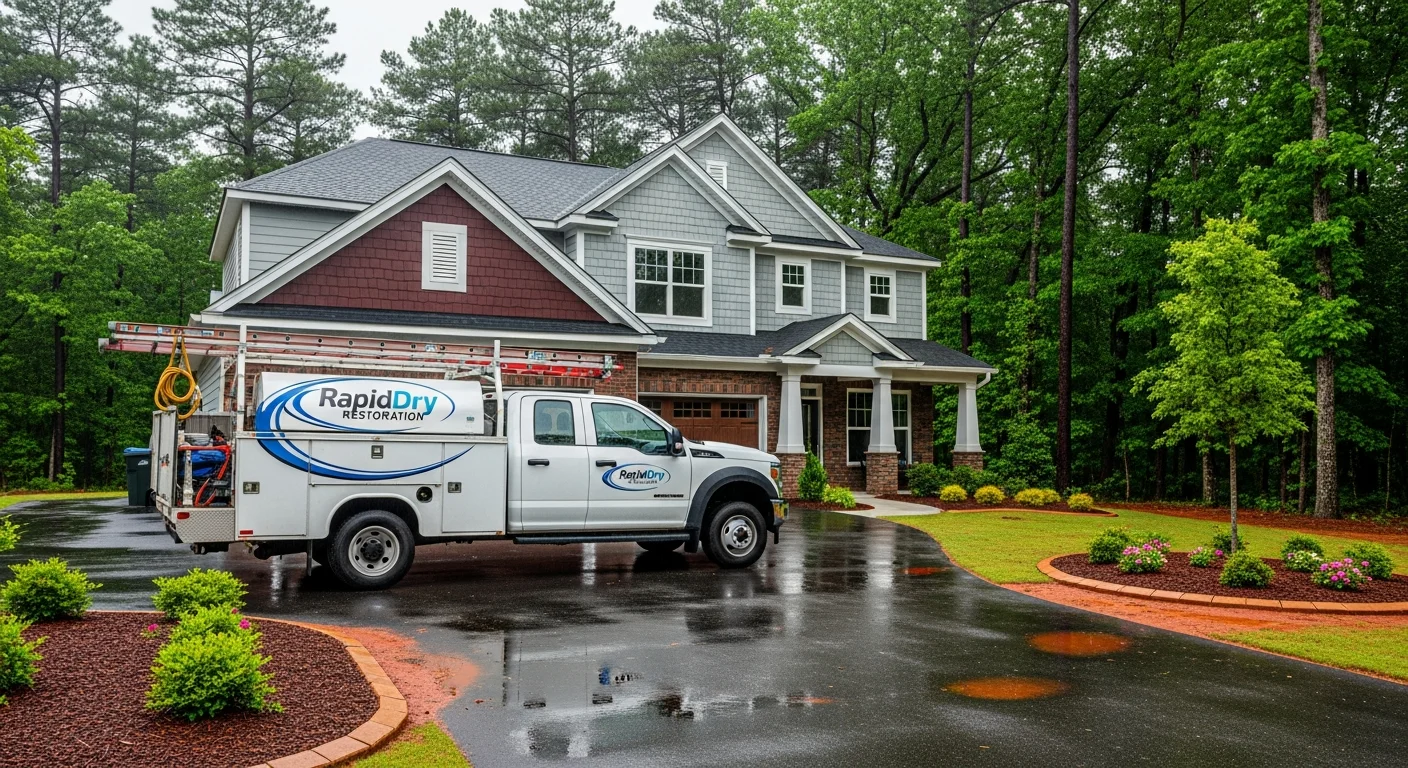
Palm Build responds to Indian Land fire emergencies within 45-60 minutes
The Palm Build Difference
Why Indian Land Homeowners Choose Palm Build After a Fire
IICRC Fire & Smoke Certified
Every crew lead holds current IICRC Fire and Smoke Restoration Technician (FSRT) certification. We follow the S540 standard for professional fire and smoke damage restoration procedures — the industry benchmark for safe, effective fire restoration work.
24/7 Emergency Response
Fires don't wait for business hours. Palm Build dispatches to Indian Land fire emergencies 24 hours a day, 7 days a week, arriving within 45-60 minutes from our Charlotte operations hub. Emergency board-up, soot stabilization, and water extraction begin the same night.
Soot Chemistry Expertise
We classify soot type on arrival — protein, natural, synthetic, or combination — and match cleaning chemistry to each surface in your home. Indian Land's modern finishes (engineered hardwood, granite, stainless steel, LVP) each require specific cleaning agents. Wrong chemistry permanently sets stains.
Advanced Odor Elimination
We deploy thermal fogging, hydroxyl generators, and ozone treatment matched to your home's construction type. Indian Land's tight building envelopes and open floor plans require a multi-method approach that consumer products and general contractors simply cannot replicate.
Contents Restoration
Our contents team inventories, documents, and restores salvageable personal property — furniture, electronics, clothing, documents, and irreplaceable items. Full pack-out services with detailed insurance documentation maximize your claim recovery.
Full Reconstruction Capability
From emergency board-up through final paint and punch list, Palm Build handles the entire project. For Indian Land's HOA communities, we coordinate with architectural review boards and source materials that match your neighborhood's construction standards.
Common Questions
Indian Land Fire & Smoke Damage FAQ
How quickly can Palm Build respond to a fire emergency in Indian Land?
Our Charlotte-based fire restoration team typically arrives in Indian Land within 45 to 60 minutes from our Crompton Street operations hub — approximately 20 minutes south via I-77 and SC-160. We dispatch 24/7/365 for fire and smoke emergencies. Call (704) 464-0121 any time, day or night. Early response is critical because soot becomes increasingly acidic within hours and begins permanently etching the engineered hardwood, quartz countertops, and premium finishes common in Indian Land's high-value homes.
Why do open floor plans make fire damage worse in Indian Land homes?
Indian Land's 2000s and 2010s construction features open-concept layouts where kitchens, living rooms, and dining areas share a single connected space — often with vaulted or two-story ceilings. When a fire occurs, smoke travels through this entire volume in minutes rather than being confined to one room by interior doors and walls. A kitchen grease fire that would contaminate one room in a traditional home can spread soot and smoke odor through 2,500 to 4,000 square feet of living space in under ten minutes, dramatically increasing restoration scope and cost.
Does homeowners insurance cover fire damage in Indian Land SC?
Yes — fire damage is one of the most comprehensively covered perils under standard South Carolina homeowners policies (HO-3). Coverage typically includes structural repair, contents replacement, soot and smoke cleanup, temporary living expenses (ALE), and debris removal. With Indian Land's median home value at $470,600, maximizing your claim settlement is critical. Palm Build provides detailed documentation from the first emergency call — categorized photos, smoke residue classification, moisture readings, and thermal imaging — to support the full restoration scope.
Are attached garages a significant fire risk in Indian Land?
Yes. Attached garages are the most statistically significant fire origin point in Indian Land's housing stock. The NFPA identifies garages as the source of roughly 6,600 home structure fires annually — caused by electrical malfunctions, stored flammable liquids, dryer units, and charging equipment. Indian Land's attached garages share walls and often attic spaces with the main living area. When a garage fire penetrates the firewall, it enters the home's open floor plan with access to every room on the main level. Verify your garage-to-house door is fire-rated and self-closing, and never store flammable liquids against the shared wall.
How does Palm Build handle HOA requirements during fire restoration in Indian Land?
Indian Land's major communities — Sun City Carolina Lakes, Walnut Creek, The Retreat at Rayfield, and Riverchase Estates — all have HOA architectural standards that govern exterior materials, colors, and design details. Palm Build photographs existing conditions before emergency board-up, prepares all required HOA documentation, submits plans to the architectural review committee, and ensures all replacement materials match community standards before ordering. This prevents costly re-work and delays that occur when contractors begin reconstruction without HOA pre-approval.
How long does fire damage restoration take in Indian Land?
Timeline depends on severity and property type. A contained kitchen fire in an Indian Land home may take 2 to 4 weeks given the premium finish matching required. Moderate residential fires with smoke spread through the open floor plan typically require 6 to 10 weeks. Major structural fires — especially in Riverchase Estates custom homes where material sourcing and finish matching add complexity — can take 3 to 6 months including full reconstruction. HOA approval timelines are factored into project scheduling from day one.
What about water damage from firefighting in Indian Land homes?
Fire suppression water is the leading cause of secondary damage after a house fire — a single fire hose delivers 150 to 250 gallons per minute. In Indian Land's slab-on-grade homes (common in Sun City Carolina Lakes), suppression water pools across hardwood and tile floors with no drainage path. In crawl-space homes, water collects beneath the structure and drives mold growth within 24 to 48 hours. Palm Build handles fire and water damage simultaneously, beginning extraction and structural drying while performing soot stabilization to prevent both types of secondary damage from compounding the loss.
What areas of Indian Land does Palm Build serve for fire restoration?
We serve all of Indian Land and Lancaster County including Sun City Carolina Lakes, Walnut Creek, The Retreat at Rayfield, Riverchase Estates, Pleasant Plains, and all communities along the SC-160 and US-521 corridors. We also serve nearby Fort Mill, Tega Cay, and surrounding unincorporated Lancaster County areas. Our Charlotte team reaches all Indian Land neighborhoods within 45 to 60 minutes. Call (704) 464-0121 for 24/7 emergency fire response.
Fire Damage in Indian Land? Every Hour Counts.
Soot becomes permanently damaging within hours — and Indian Land's open floor plans mean smoke spreads farther and faster than in traditional homes. Palm Build's Charlotte team responds in 45-60 minutes with emergency board-up, soot stabilization, and water extraction, plus HOA coordination and insurance documentation from the first call.