INDIAN LAND SC — 24/7 STORM & WIND DAMAGE RESPONSE
Storm & Wind Damage Restoration in Indian Land, South Carolina
Indian Land sits 200 miles inland, but tropical remnants, severe thunderstorms, and Piedmont wind events hit this Lancaster County corridor hard every year. With 45+ inches of annual rainfall, the Catawba River flood corridor, and a housing stock dominated by wind-vulnerable asphalt shingles and vinyl siding, storm damage is an annual reality across Sun City Carolina Lakes, Riverchase Estates, and Walnut Creek. Palm Build responds from Charlotte in 45 to 60 minutes with emergency tarping, water extraction, structural stabilization, and insurance documentation from the first call.
Charlotte Office — ~20 minutes to Indian Land 45-60 min Response IICRC Certified
Indian Land is not a coastal community, but the Piedmont is far from storm-safe.
Tropical remnants that weaken over the Appalachians still deliver damaging winds and
sustained heavy rain to Lancaster County. Severe thunderstorms with straight-line winds,
hail, and occasional tornado warnings are a recurring threat from spring through fall.
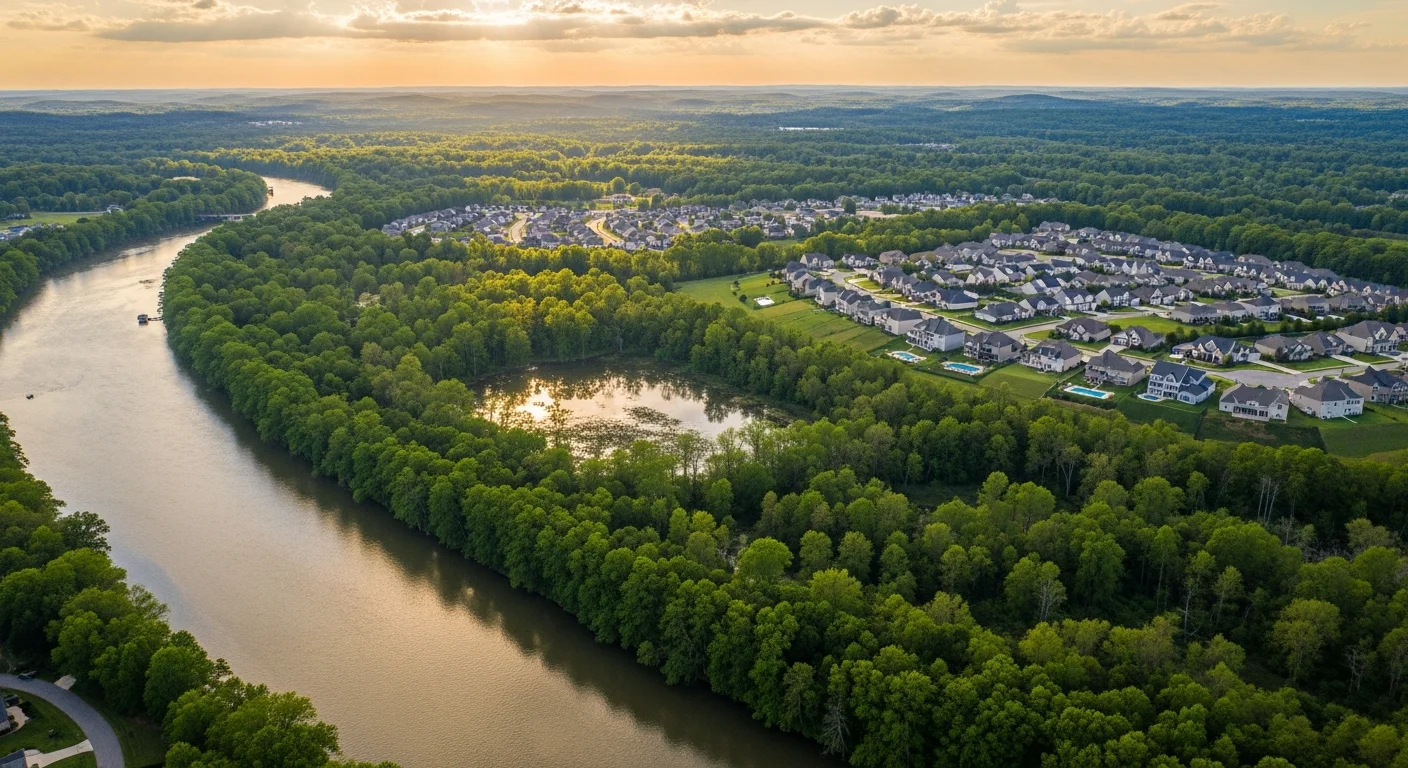
The Catawba River corridor along Indian Land's western boundary adds wind channeling and
flood exposure that pure inland communities do not face.
Hurricane Helene Remnants
Severe
September 27, 2024
While Indian Land sits 200+ miles inland from the coast, Hurricane Helene's remnants delivered sustained winds of 40-55 mph with gusts exceeding 60 mph across Lancaster County. The Catawba River corridor that borders Indian Land to the west amplified wind channeling effects, downing mature hardwoods across Riverchase Estates and Sun City Carolina Lakes. Duke Energy reported over 12,000 outages in the Indian Land/Fort Mill area. Saturated Piedmont clay soil — already waterlogged from weeks of prior rain — caused root-ball failures in century-old oaks that had survived decades of storms.
Tropical Storm Debby
Significant
August 5-9, 2024
Debby stalled over the Carolinas and delivered 4-6 inches of rain to Indian Land over four days, saturating the water table weeks before Helene arrived. Wind-driven rain penetrated through aging roof flashings and vinyl siding joints in developments built during Indian Land's 2005-2015 building boom. Subdivisions along Highway 521 and Doby's Bridge Road experienced widespread crawl space water intrusion as drainage systems designed for moderate rainfall were overwhelmed by sustained downpours.
Severe Thunderstorm Complex
Moderate
April 2024
A line of severe thunderstorms with embedded rotation moved through Lancaster County, producing straight-line winds of 60-70 mph across Indian Land. The National Weather Service issued tornado warnings for the area. Multiple homes in newer subdivisions off Harrisburg Road sustained roof shingle damage, and wind-driven debris struck vinyl siding across neighborhoods near Indian Land Middle School. Several mature pines snapped at mid-trunk, landing on homes and vehicles.
Severe Thunderstorm Season Pattern
Recurring
2022-2025 (Recurring)
Indian Land's position in the Piedmont storm corridor means May through October brings repeated severe thunderstorm events. The area's rapid residential growth — Lancaster County has been one of the fastest-growing counties in South Carolina — has replaced forest canopy with impervious surfaces, accelerating runoff during heavy rain events. Neighborhoods built on former farmland along Pleasant Road and Van Wyck Road experience drainage issues that the original site grading did not anticipate for current storm intensity levels.
The Catawba River corridor along Indian Land's western boundary channels storm winds and
creates flood exposure for nearby neighborhoods.
Types of Storm Damage
How Storms Damage Indian Land Homes
Severe weather damages Indian Land homes through six distinct mechanisms — and most
major storms trigger multiple damage types simultaneously. Understanding each type is
critical for emergency response and insurance claims, because different causes may be
covered under different policy provisions.
Wind-Ripped Shingles
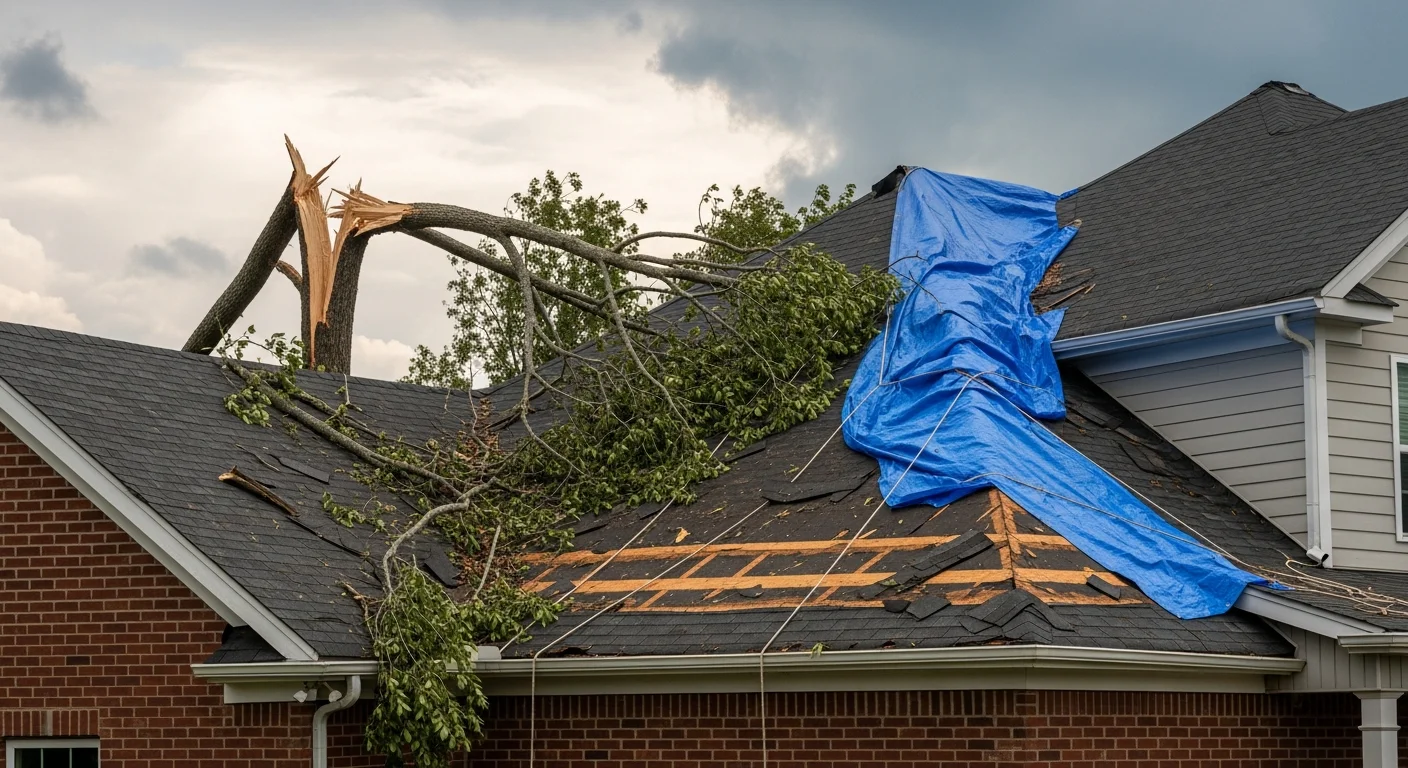
Indian Land's rapid growth from 2005-2020 means thousands of roofs are now 10-20 years old — approaching the end of their architectural shingle warranty period. Tropical remnant winds of 50-65 mph exploit aging shingle adhesive strips, peeling shingles from ridgelines, valleys, and edges. Once shingles lift, the underlayment and decking beneath are exposed to wind-driven rain that can saturate attic insulation and ceiling drywall within hours of the initial wind event.
Vinyl Siding Damage
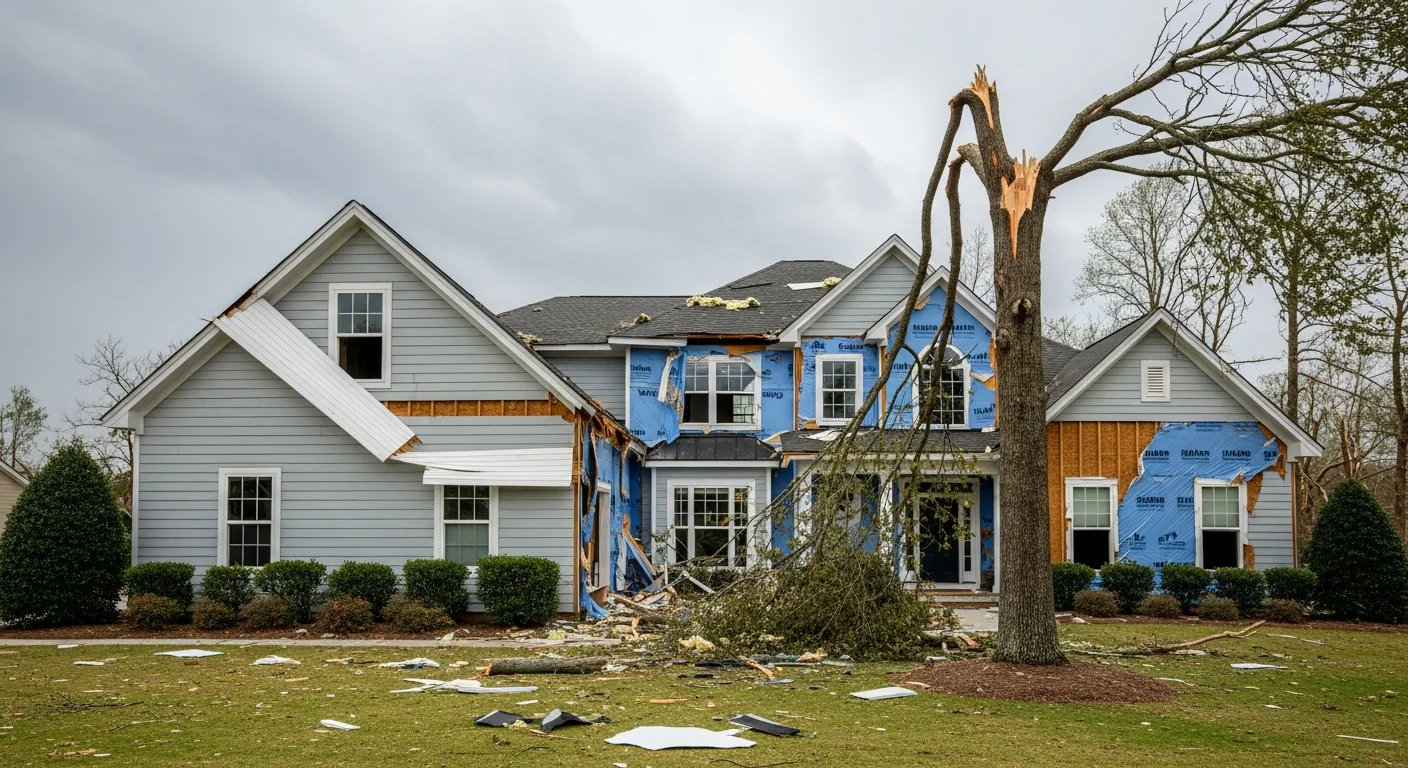
Most Indian Land homes built during the subdivision boom feature vinyl siding — lightweight, affordable, and vulnerable to high winds. Straight-line winds of 60+ mph catch siding panels from below, bowing and peeling entire sections away from the house wrap. Exposed house wrap degrades quickly under UV and rain exposure. Wind-driven debris — branches, loose fence boards, patio furniture — punctures vinyl on impact, creating water entry points that may not be obvious during a quick post-storm inspection.
Tree Impacts
Indian Land's mature hardwood and pine canopy is its defining residential feature — and its greatest storm liability. Loblolly pines are particularly prone to mid-trunk snapping in sustained high winds, while hardwoods with compromised root systems topple entirely when Piedmont clay soil becomes saturated. Neighborhoods with 30+ year-old tree canopy face the highest risk. A single large pine or oak landing on a roof can cause $30,000-$80,000 in structural damage.
Wind-Driven Rain Intrusion
During tropical remnants and severe thunderstorms, horizontal rain driven by 40-60 mph winds penetrates through gaps that would never leak in normal rainfall. Common entry points include soffit-to-fascia joints, window flashing gaps, chimney cap deterioration, and siding J-channel connections. The damage often appears days or weeks after the storm as water migrates through wall cavities, staining drywall or causing musty odors from hidden moisture trapped behind exterior walls.
Power Outage Secondary Damage
When storms knock out power — sometimes for 24-72 hours in Indian Land subdivisions served by above-ground lines — secondary damage compounds. Sump pumps stop running, allowing crawl space flooding. Refrigerators and freezers lose contents. HVAC systems shut down in summer heat, spiking indoor humidity into mold-growth territory within 24-48 hours. Homes with well water systems lose water pressure entirely, preventing even basic cleanup until power returns.
Hail and Mixed Precipitation
Severe thunderstorms crossing Indian Land frequently produce hail ranging from pea-sized to quarter-sized. While rarely large enough for catastrophic damage, repeated hail impacts degrade shingle granules over time, reducing roof lifespan and creating vulnerability points for subsequent wind events. Larger hail events crack skylights, dent metal flashing, and damage exterior HVAC condensers — damage that may not be noticed until the next system failure.
Wind-ripped shingles are the most common storm damage in Indian Land — and the entry
point for water intrusion that compounds the original loss.
Storm Vulnerability Map
Indian Land's Most Storm-Vulnerable Communities
Storm damage in Indian Land concentrates in predictable areas based on Catawba River
proximity, tree canopy density, construction age, and drainage infrastructure capacity.
Knowing your neighborhood's specific vulnerability helps you prepare before storm season
and respond faster when damage occurs.
Riverchase Estates
Critical
Catawba River proximity creates flood exposure and wind channeling through river corridor, mature hardwood canopy with root systems in saturated clay
Sun City Carolina Lakes
High Risk
Large 55+ community with lake-adjacent homes, aging roof systems on original 2007-2012 construction, limited tree buffer on lake-facing lots
Massey / Massey Preserve
High Risk
Dense mature tree canopy throughout community, narrow lot setbacks increase tree-on-structure risk, homes built 2005-2015 approaching shingle warranty end
Doby's Bridge Road Corridor
High Risk
Mix of established homes and newer construction, drainage infrastructure lagging behind development density, repeated flash flooding during heavy rain events
Harrisburg Road Subdivisions
Moderate
Rapid development on former farmland with marginal drainage grading, younger tree plantings with shallow root systems prone to wind throw
Pleasant Road / Van Wyck Area
Moderate
Rural-to-suburban transition zone with mixed-age construction, above-ground power lines vulnerable to tree contact, longer power restoration times
Highway 521 Commercial Corridor
Moderate
Commercial structures with flat roofing systems vulnerable to wind uplift, large parking lot runoff overwhelming adjacent residential drainage
Panther Walk / Belair Subdivisions
Moderate
Established neighborhoods with 20+ year-old roofs, mature loblolly pines prone to mid-trunk snap in sustained winds
Storm Restoration Process
How We Restore Indian Land Homes After Storm Damage
Storm restoration requires coordinating emergency response, water mitigation, structural
repair, and insurance claims simultaneously. Here's our proven six-step process from the
first call through final closeout.
01
Emergency Tarping & Securing
Hours 1-4
We secure your Indian Land home against further weather damage immediately. Damaged roof sections are tarped with reinforced polyethylene, broken windows are boarded, and exposed openings are sealed. South Carolina's afternoon thunderstorm pattern means a damaged roof left untarped can sustain significant secondary water damage within 24 hours. Emergency tarping is covered by your insurance policy as part of your duty to mitigate further loss.
02
Damage Assessment & Documentation
Days 1-3
Comprehensive documentation of all storm damage — wind, water, tree impact, and secondary effects. We photograph every affected area, map moisture intrusion with thermal imaging cameras, and classify damage by cause. For Indian Land homes near the Catawba River, we specifically document wind damage separately from any water intrusion to ensure correct claim filing under your homeowners policy versus flood coverage.
03
Water Intrusion Mitigation
Days 1-7
Storm damage in Indian Land almost always includes water intrusion — through damaged roofs, compromised siding, or wind-driven rain penetration. We extract standing water, deploy commercial dehumidifiers and air movers, and monitor moisture levels daily. For homes with crawl spaces — common in Indian Land's Piedmont construction — we address sub-floor moisture simultaneously to prevent secondary mold growth within the critical 24-48 hour window.
04
Debris Removal & Tree Clearing
Days 2-7
Fallen trees are removed from structures using cranes and rigging when necessary. We coordinate with certified arborists for trees that are damaged but still standing — leaning trees that haven't yet fallen pose ongoing risk to your home and neighbors. Debris is cleared, hauled, and properly disposed of. For Indian Land subdivisions with HOA requirements, we coordinate debris staging and removal to meet community standards.
05
Structural Repair & Reconstruction
Weeks 2-12
Once the property is dried, secured, and cleared, we begin full reconstruction: roof replacement, siding repair, window installation, drywall, flooring, painting, and finish work. Indian Land's building material costs average $160-$220 per square foot for reconstruction. All work meets Lancaster County building code requirements and passes required inspections before closeout.
06
Final Inspection & Closeout
Week 12+
Lancaster County building inspections verify all structural, electrical, mechanical, and plumbing work meets current code. We perform a final walk-through with the homeowner and provide complete documentation for insurance closeout. Warranty information for all materials and workmanship is provided, along with a maintenance guide to protect your investment against future storm events.
Critical Insurance Distinction
Wind Damage vs. Flood Damage: The Coverage Gap
This is the most important insurance concept for Indian Land storm damage. Wind damage
and flood damage from the same storm are covered by different policies, filed as
separate claims, and adjusted independently. For properties near the Catawba River —
including Riverchase Estates and neighborhoods along the river corridor — understanding
this distinction can mean the difference between full recovery and devastating
out-of-pocket costs.
Wind Damage (Homeowners Policy)
Roof damage from wind, fallen trees, flying debris
Siding, window, and door damage from wind pressure
Rain water entering through wind-created openings
Structural damage from wind load or fallen trees
Emergency tarping and board-up costs
Temporary living expenses if home is uninhabitable
Flood Damage (Separate Flood Policy)
Rising water from Catawba River or tributary creeks
Groundwater entering through foundation or crawl space
Storm surge backflow through drainage systems
Sewer backup from overwhelmed municipal systems
Saturated soil pressure causing foundation water entry
NOT covered by standard homeowners — requires NFIP or private flood policy
The Catawba River Coverage Gap
Indian Land properties near the Catawba River face a unique dual risk: wind damage
from storms is covered by homeowners insurance, but rising river water during the same
event requires separate flood coverage. During Hurricane Helene, homes along the
Catawba corridor experienced both wind damage and river-level flooding simultaneously.
Without cause-specific documentation, insurers may attribute water damage to flooding
rather than wind-driven rain entry — denying coverage under your homeowners policy.
Palm Build's damage assessment specifically documents which water entered through
wind-created openings (covered) versus which entered as rising water (flood policy
required). This documentation approach protects Indian Land homeowners from coverage
gaps.
Storm restoration costs vary based on damage severity, roof age, tree involvement, and
whether flooding is included. Wind damage is well-covered by standard homeowners
insurance in South Carolina. After major events, contractor demand and material supply
constraints across the Charlotte metro can increase costs and extend timelines for
Indian Land homeowners.
Minor Wind Damage
Missing shingles, siding panels, minor debris impact
$2,000 – $8,000
Moderate Storm Damage
Partial roof replacement, tree on structure, water intrusion
$10,000 – $30,000
Major Storm / Tree Impact
Full roof replacement, structural damage, extensive water mitigation
$30,000 – $100,000+
Palm Build works directly with your insurance company to maximize your storm damage
claim recovery in Indian Land.
Before the Storm
Storm Preparedness Checklist for Indian Land Homeowners
The most expensive storm damage is the damage you could have prevented or documented
before it happened. These six steps, taken before storm season begins in May, can save
Indian Land homeowners thousands in unrecovered losses and weeks of extended
displacement.
Document Your Home Before Storm Season
Walk through your entire property — inside and out — and photograph every room, the roof, siding, crawl space, and landscaping. Include timestamps. This pre-loss documentation is your strongest asset when filing an insurance claim. Without it, you're relying on the adjuster's estimate of your home's pre-storm condition, which almost always works against you.
Review Your Insurance Coverage
Confirm your homeowners policy limits, deductible structure, and whether you have an ordinance-and-law endorsement for building code upgrades during reconstruction. South Carolina policies may have separate wind/hail deductibles — typically 2-5% of dwelling coverage. If you live near the Catawba River or in any drainage corridor, get a private flood insurance quote. Standard homeowners does not cover rising water.
Address Tree Risk Proactively
Have a certified arborist assess mature trees within striking distance of your home. Look for structural defects, dead wood, root damage, and lean. Indian Land's Piedmont clay soil becomes saturated during prolonged rain, weakening root anchoring in hardwoods. Loblolly pines are prone to mid-trunk snap in sustained winds. A proactive removal costs $800-$3,000. An emergency removal after it falls on your home costs $5,000-$15,000 plus structural damage.
Inspect and Secure Vulnerable Entry Points
Check roof flashing, valley seams, and ridge vents for deterioration. Replace cracked or missing caulk around windows and door frames. Inspect vinyl siding fastener points for loosening — this is the most common wind entry point in Indian Land homes. Ensure your garage door can withstand wind pressure. Secure outdoor furniture, grills, and decorations that become wind-driven projectiles during storms.
Test Backup Systems and Drainage
Verify your sump pump works and consider a battery backup system — when storms knock out power, your sump pump fails at exactly the moment you need it most. Clear gutters and downspout extensions. Check that grading around your foundation directs water away from the home. For crawl space homes, verify vapor barriers are intact and drainage pathways are clear before the rainy season.
Establish a Restoration Relationship
After a major storm, every restoration company serving Indian Land is overwhelmed simultaneously. Response times that are normally 30-60 minutes can stretch to days. Homeowners who have an existing relationship with a restoration company get prioritized. Contact Palm Build before storm season to establish your account and ensure rapid response when severe weather hits.
Storm Damage in Indian Land
What Storm Damage Looks Like in Indian Land
Wind-ripped shingles expose underlayment to rain within hours of the storm
Straight-line winds peel vinyl siding panels, exposing house wrap to the elements
The Catawba River corridor channels storm winds and creates flood risk for nearby homes
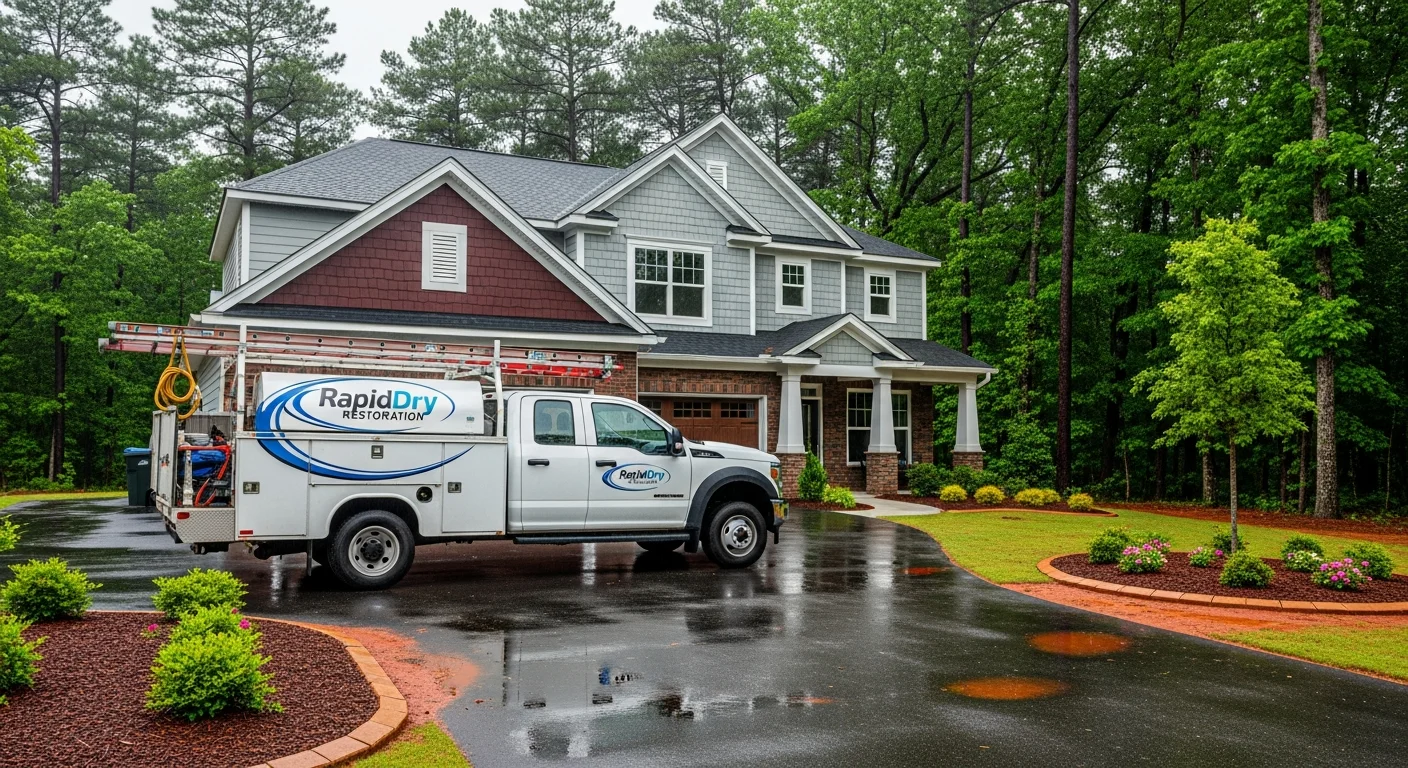
Palm Build emergency crews deploy to Indian Land neighborhoods within 60 minutes
The Palm Build Difference
Why Indian Land Homeowners Choose Palm Build After Storms
60-Minute Indian Land Response
Our Charlotte operations hub dispatches emergency crews to Indian Land within an hour via I-77 and Highway 521. During major storm events, we activate catastrophe response with additional crews to handle surge demand across the south Charlotte metro. Pre-storm clients get priority dispatch — critical when every restoration company in Lancaster County is overwhelmed simultaneously.
IICRC WRT & FSRT Certified
Every crew lead holds current IICRC Water Restoration Technician and Fire/Smoke Restoration Technician certifications. Storm damage crosses both specialties — wind tears open the structure, water intrusion follows, and lightning strikes can cause fire. Our dual-certified teams handle the full scope without waiting for specialized subcontractors.
Cause-Specific Damage Documentation
Our damage assessment classifies every item by cause — wind vs. flood vs. tree impact vs. hail — ensuring each claim is filed correctly with the appropriate policy. For Indian Land homes near the Catawba River, this wind-vs-flood distinction is critical for maximizing coverage under your homeowners policy rather than having claims denied as flood damage.
Multi-Phase Project Management
Storm restoration involves emergency response, water mitigation, tree removal, structural repair, and full reconstruction — often managed simultaneously. Palm Build coordinates all phases as a single project with one dedicated project manager. You deal with one company, one point of contact, one timeline.
Full Reconstruction In-House
From emergency tarping through final punch list, one company handles everything. We don't subcontract the difficult parts. Roof replacement, siding repair, drywall, flooring, painting, and finish work are all performed by Palm Build crews who know the project from day one.
Lancaster County Building Code Expertise
We navigate Lancaster County's permitting and inspection requirements daily. Storm reconstruction often triggers code upgrade requirements — particularly for homes built during Indian Land's 2005-2015 building boom that may not meet current standards. We handle all permitting, inspections, and code compliance as part of our standard restoration process.
The Palm Build team serves Indian Land with 60-minute emergency response from our
Charlotte metro operations center.
Common Questions
Indian Land Storm Damage FAQ
How quickly can Palm Build respond to storm damage in Indian Land?
Our Charlotte-based team typically arrives in Indian Land within 45 to 60 minutes from our Crompton Street operations hub — approximately 20 miles south via I-77 and SC-160. We dispatch 24/7/365, including during active storm events. During major weather events with widespread damage across the Charlotte metro, we activate our catastrophe response protocol with additional crews. Call (704) 464-0121 any time.
Does homeowners insurance cover storm damage in Indian Land SC?
Wind and storm damage are covered perils under standard South Carolina homeowners policies (HO-3 form). However, flood damage from rising water requires separate NFIP or private flood insurance. This distinction is critical in Indian Land — wind-driven rain entering through a roof breach is covered under your wind claim, but ground-level water intrusion from Catawba River corridor flooding, retention pond overflow, or saturated clay drainage failure requires separate flood coverage. Palm Build documents damage by source and entry point to ensure each claim is filed under the correct policy.
Is Indian Land at risk for tropical storm and hurricane damage?
Yes. Indian Land sits 200 miles inland, but tropical remnants regularly reach the Piedmont with enough energy to cause significant damage. Hurricane Helene in September 2024 produced extended power outages, roof damage, downed trees, and flooding across Lancaster County — despite making landfall hundreds of miles away. Hugo in 1989 brought 85+ mph inland winds through the Charlotte corridor. Florence in 2018 dropped heavy rainfall with damaging gusts. The late summer and fall tropical remnant season is Indian Land's highest-consequence storm window.
Which Indian Land neighborhoods are most vulnerable to storm damage?
Riverchase Estates has the highest combined exposure due to Catawba River proximity and dual wind/flood risk — claims can reach $45,000+. Sun City Carolina Lakes' large single-story footprints create expansive roof surfaces vulnerable to shingle blow-off. Walnut Creek's mature tree canopy amplifies limb-strike and tree-fall risk. Older sections along Beulah Church Road have aging roof and siding systems past their adhesion prime. The Retreat at Rayfield is newer but uses production-grade materials susceptible to high-wind tab blow-off.
Should I get emergency tarping before filing an insurance claim?
Yes — and you should do it immediately. Your insurance policy contractually requires you to mitigate further damage after a loss event (this is called the mitigation clause). Delaying tarping after roof damage allows wind-driven rain to enter the structure, causing secondary water damage to ceilings, walls, insulation, and flooring that dramatically increases total claim cost. Emergency tarping and board-up expenses are covered as part of your standard claim. Call Palm Build at (704) 464-0121 for 24/7 emergency tarping.
Does Indian Land's proximity to the Catawba River increase flood risk?
Yes. Indian Land's western boundary follows the Catawba River corridor, and properties in the western portion of the community — particularly Riverchase Estates — carry elevated flood exposure during prolonged rainfall events. Beyond the river itself, Indian Land's rapid development has increased impervious surface coverage, accelerating runoff into streams and retention ponds. FEMA flood maps for Lancaster County identify specific flood hazard areas. Even outside designated zones, the red clay soil underlying Indian Land drains at less than 0.2 inches per hour, creating ground-level flooding during intense storms.
What types of storm damage are most common in Indian Land?
The four most common damage categories are: (1) roof shingle blow-off and lifting from thunderstorm downbursts and tropical remnant winds — the production-grade asphalt shingles used across Indian Land subdivisions are the first point of failure; (2) vinyl siding separation and failure, which exposes wall cavities to rain intrusion; (3) tree limb strikes on rooflines and siding, particularly in canopy-heavy neighborhoods like Walnut Creek; and (4) ground-level water intrusion through crawl spaces and against foundations when intense rainfall overwhelms the red clay drainage capacity.
How long does storm damage restoration take for an Indian Land home?
Emergency tarping and board-up: same day. Water extraction from storm intrusion: 1-2 days. Structural drying to IICRC standards: 3-5 days with monitoring. Partial roof repair: 1-3 weeks depending on material and crew availability. Full roof replacement: 2-4 weeks. Interior reconstruction after major storm damage: 4-12 weeks. Indian Land's premium finishes — engineered hardwood, custom cabinetry — may extend timelines for material matching. After widespread events, timelines extend further due to regional contractor demand.
Storm Damage in Indian Land? Every Hour of Exposure Compounds the Cost.
An exposed roof or compromised siding turns wind damage into water damage — and water damage into mold damage within 48-72 hours. Palm Build's Charlotte team responds to Indian Land in 45-60 minutes with emergency tarping, water extraction, and structural stabilization. Insurance documentation starts from our first call.