Key takeaways
- Raleigh has more than 23 square miles of floodplain across three major watersheds — Neuse River, Crabtree Creek, and Walnut Creek.
- New FEMA flood maps became effective July 19, 2022 in Wake County. Some properties changed flood zone classification — check yours.
- Clay soil throughout the Piedmont slows drainage and keeps water near foundations longer, extending mold risk windows significantly.
- Standard homeowners insurance does NOT cover flood damage. A separate NFIP or private flood policy is required.
- Raleigh/Durham base insurance rates are rising approximately 7.5% in 2025 and again in mid-2026 — documentation quality has never mattered more for claims.
Raleigh floods fast. When a slow-moving thunderstorm stalls over Wake County and drops three inches of rain in two hours, Crabtree Creek can go from a gentle greenway waterway to a dangerous surge in less time than it takes to make dinner. Raleigh's terrain, clay-heavy soils, and three major creek watersheds create flooding conditions that catch homeowners off guard — especially those who moved here from drier states or checked their FEMA flood map once and never looked again. This guide breaks down exactly which Raleigh neighborhoods carry the highest flood and water damage risk, what the July 2022 FEMA map update changed for Wake County homeowners, how to read the difference between creek flooding and a water damage claim, and what to do in the critical 24 to 48 hours after water enters your home.
Raleigh floodplain
23+ sq mi
Of floodplain within Raleigh's jurisdiction across 3 watersheds
Annual rainfall
46.1 inches
Wettest months are September (5.15") and July (5.02")
FEMA map update
July 2022
New Wake County flood maps effective July 19, 2022
Mold risk window
24–48 hrs
NC State guidance for drying wet materials before mold amplification
Why Raleigh Floods: The Creek Corridor Problem
Raleigh is not a coastal city, but it floods like one. The reason comes down to geography: the city sits across three major drainage basins — the Neuse River, Crabtree Creek, and Walnut Creek — and all three respond aggressively to intense short-duration rainfall. The City of Raleigh's Stormwater Design Manual identifies more than 23 square miles of floodplain within its jurisdictional area, most of it clustered along these creek corridors. Unlike coastal flooding that builds slowly with storm surge, Raleigh's creek flooding is fast and violent. NOAA's gauge records for Crabtree Creek describe roadway inundation and widespread flooding along adjacent roads at higher water stages near Anderson Drive — a description that will feel familiar to anyone who has driven through Northwest Raleigh during a storm.
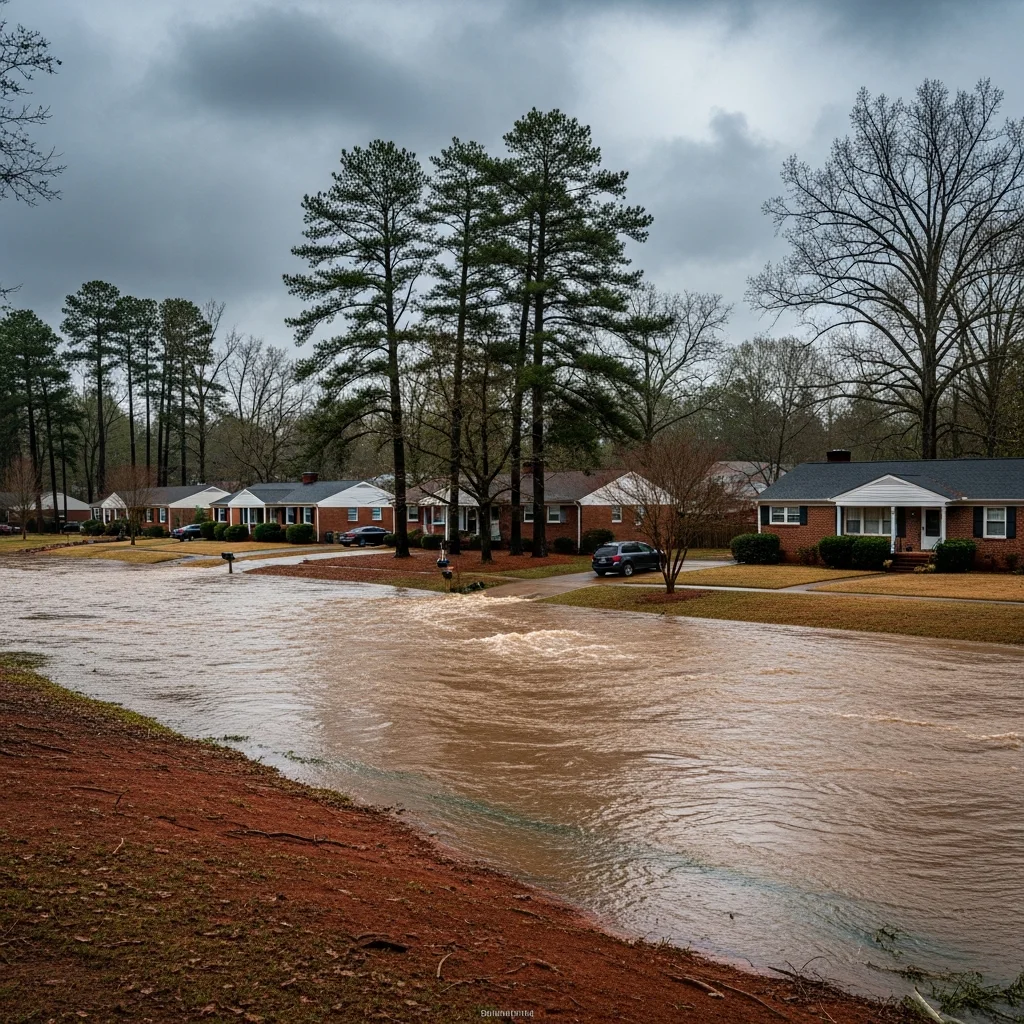
Clay soil makes the flooding problem significantly worse. Much of Wake County sits on Piedmont clay that does not absorb water quickly. During a heavy rain event, the soil surface saturates rapidly and runoff heads directly for the nearest drainage channel at high velocity. The City of Raleigh explicitly warns that intense rainfall in short durations causes rapid rises in creek levels and streambank flooding — and notes that some areas susceptible to flooding may not even appear on FEMA maps. That last point is important: if your neighborhood is not on a FEMA flood map, it does not mean you cannot flood. It means no study has formally mapped your risk.
Raleigh's Most Flood-Prone Neighborhoods
Not all of Raleigh floods equally. The highest-risk properties share common traits: proximity to a creek corridor, lower-lying topography, clay soil with poor surface drainage, and in many older neighborhoods, crawl space foundations that stay damp long after floodwater recedes. Below is a breakdown of the neighborhoods and districts that appear most frequently in flood risk discussions and local reporting.
| Neighborhood | Primary Risk | Foundation Type | Typical Water Damage Pattern |
|---|---|---|---|
| Biltmore Hills | Walnut Creek corridor flooding | Crawl space or slab | Creek overflow, yard saturation, crawl space moisture intrusion after heavy rain |
| Rochester Heights | Walnut Creek nuisance flooding | Slab and crawl space mix | South Raleigh drainage basin ponding, repeated minor flood events |
| Hedingham (East Raleigh) | Rapid creek rise during storms | Slab | Creek-adjacent property flooding, street-level ponding in low areas after storms |
| Boylan Heights | Older plumbing, crawl space moisture | Crawl space (1907–1932 homes) | Pipe failures in aging systems, hidden moisture in crawl space from clay soil, musty wood floors |
| Cameron Park | Crawl space moisture, aging supply lines | Crawl space (early 1900s) | Slow hidden water intrusion from plumbing retrofits, mold in floor cavity from prolonged dampness |
| North Hills | Multi-unit propagation, appliance leaks | Slab (condos and townhomes) | Stacked plumbing failures spreading between units, fast mold onset in shared wall cavities |
| Brier Creek (NW Raleigh) | Appliance and HVAC supply line failure | Slab (newer construction) | Supply line and condensate failures, fast damage in open-plan layouts without drainage corridors |
Raleigh neighborhoods by flood and water damage risk profile
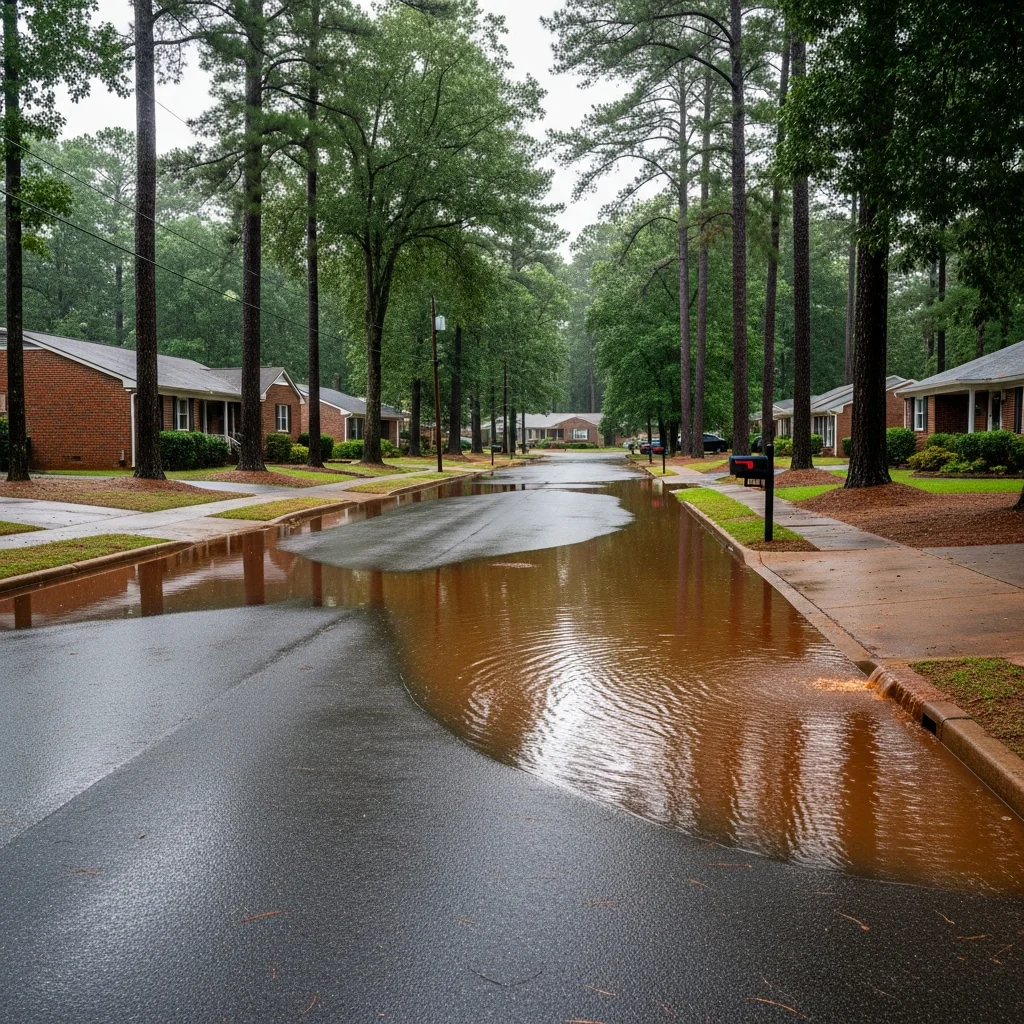
South Raleigh bears a disproportionate share of the city's flood risk. The Walnut Creek corridor runs through communities like Rochester Heights and Biltmore Hills, and academic and local media summaries of nuisance flooding consistently name this area. After Hurricane Isaias moved inland through North Carolina in August 2020 — making landfall on the coast but delivering damaging winds and heavy rain well inland — South Raleigh neighborhoods saw the kind of creek flooding that reminds homeowners that even a storm that misses Raleigh directly can still cause significant damage.
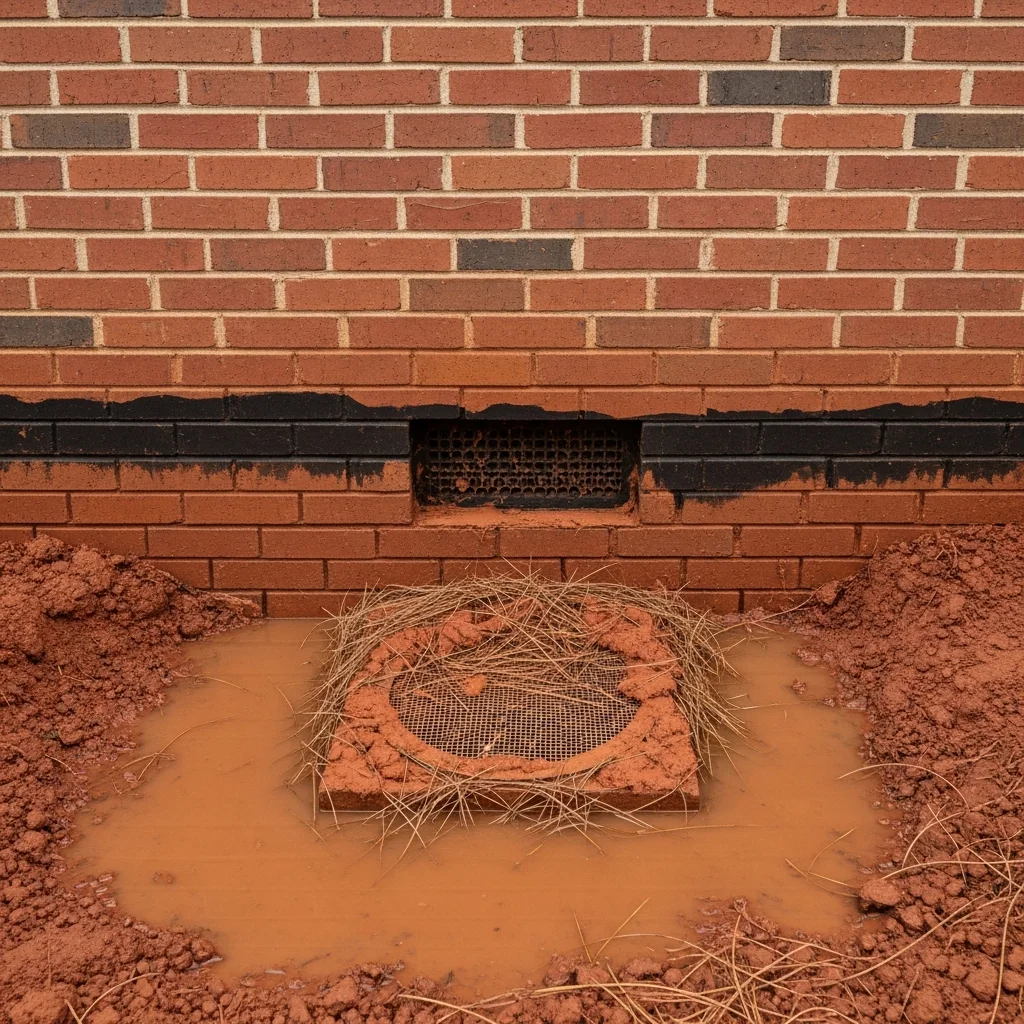
Historic neighborhoods carry a different but equally serious water damage profile. In Boylan Heights, Cameron Park, and Glenwood — areas where a large share of homes were built between 1907 and the 1930s — the risk is less about creek flooding and more about what years of deferred plumbing maintenance, layered renovations, and vented crawl space foundations do to a home in a humid climate. These properties have older galvanized steel or early copper supply lines that were replaced at different times over the decades, creating inconsistent pressure and hidden leak points. The crawl spaces under these homes were built with perimeter vents — a code-compliant standard for decades that building science research now recognizes as a significant moisture problem in humid climates like Raleigh's. When warm humid outside air enters a vented crawl space in summer, it condenses on the cooler soil and floor joists, feeding mold that homeowners often don't discover until they see cupped hardwood floors or smell must in a bedroom corner.
The July 2022 FEMA Flood Map Update: What Changed for Wake County Homeowners
On July 19, 2022, new FEMA flood maps became effective in Wake County. These maps are not cosmetic updates — some properties changed flood zone classification entirely, which means their flood insurance requirements, property values, and rebuild scopes changed with them. If you purchased your home before July 2022 and have not checked your current flood zone designation, you may be operating on outdated assumptions about your risk and your coverage obligations.
- 1
Go to FEMA Flood Map Service Center
Visit msc.fema.gov and enter your property address. The system will return your current flood zone designation based on the July 2022 maps.
- 2
Check the City of Raleigh flood portal
Raleigh's GIS and planning tools at raleighnc.gov include stormwater and floodplain mapping layers. The City's maps may include drainage basin study areas and flood hazard soils not shown on FEMA maps.
- 3
Understand your zone designation
Zone AE means you are in the 100-year floodplain with base flood elevations determined. Zone X (shaded) is a moderate-risk zone. Zone X (unshaded) is minimal risk but may still flood — remember that some flood-prone Raleigh areas are not mapped at all.
- 4
Check your mortgage documents
If you have a federally backed mortgage and are in a SFHA, flood insurance may be legally required. Review your loan documents and contact your lender if you are unsure whether a flood insurance mandate applies to you.
- 5
Review your homeowners policy
Call your agent and confirm explicitly: does your current policy cover flood damage? In almost every case, the answer is no. Flood coverage requires a separate policy through the National Flood Insurance Program (NFIP) or a private flood insurer.
Historic Neighborhoods vs. New Subdivisions: Two Very Different Risk Profiles
One of the things that makes Raleigh's water damage landscape distinct from a city like Charlotte or Greensboro is the extreme range in housing ages within close proximity. You can drive three miles and go from a 1910 Boylan Heights craftsman bungalow on a vented crawl space to a 2018 Brier Creek townhome on a slab. These homes fail in entirely different ways, and a restoration company that treats them identically will make mistakes in both directions.
In historic districts — Boylan Heights, Glenwood, Cameron Park, Hayes Barton — the water damage risk is slow and hidden. These homes have been renovated at different stages by different owners. The plumbing has been patched, extended, and re-routed multiple times. The crawl space vents may be partially blocked by insulation that was blown in decades ago. The hardwood floors were beautiful in 1955 and are still beautiful today, which means the first sign of a moisture problem is often subtle cupping of individual boards rather than a dramatic wet floor. By the time a homeowner in a historic Raleigh neighborhood notices a mold smell, the problem has often been developing for months. Hayes Barton homes deserve particular attention for contents handling — fine original millwork, plaster walls, and preserved historic trim require careful moisture control and documentation, and any exterior repairs in local historic overlay districts may require review by the Raleigh Historic Development Commission before work begins.
Water damage patterns by Raleigh housing era
Historic districts (1900s–1940s)
Common risk factors
- Vented crawl space foundations — humid summer air enters and condenses
- Aging galvanized and early copper supply lines at end of lifespan
- Hidden moisture paths through multiple renovation layers
- Historic overlay requirements may slow exterior repair approvals
- Floor cavity mold often discovered late due to slow onset
What to watch for
- Cupping, buckling, or springiness in hardwood floors
- Musty odor in bedrooms or lower floors in spring/summer
- Visible white mineral deposits on foundation brick (efflorescence)
- Unexplained spike in water bill suggesting slow hidden leak
- Discoloration or soft spots in baseboard trim near plumbing walls
Newer subdivisions (1980s–present)
Common risk factors
- Appliance supply line failures — washing machine and refrigerator lines degrade after 5-10 years
- HVAC condensate line clogs releasing water into ceiling/wall cavities
- Open-plan layouts allow water to spread rapidly before detection
- Multi-unit and townhome construction means a neighbor's leak becomes your problem
- PEX plumbing with improperly installed fittings can fail at connections
What to watch for
- Ceiling stains below a second-floor bathroom or laundry
- Water pooling near the HVAC air handler in utility closet
- Wet drywall at the base of an exterior wall (drainage plane failure)
- Bubbling or peeling paint on walls adjacent to appliances
- Musty smell inside HVAC supply vents during summer cooling season

What Happens When Your Raleigh Home Floods: The 24–48 Hour Window
Raleigh's climate makes the post-flood timeline unusually unforgiving. The city averages summer relative humidity between 70 and 90 percent. NC State Extension guidance sets a clear threshold: keep indoor humidity below 60 percent, and dry wet materials within 24 to 48 hours to prevent mold amplification. In practice, this means the window between water intrusion and the beginning of mold growth in a Raleigh home in July is shorter than it would be in a drier climate. It is not a comfortable window. A homeowner who tries to dry a flooded room with household fans over a long weekend while the family stays with relatives is almost certainly returning to a mold problem.
- If safe to do so, shut off electricity to the affected areas at the breaker panel before entering standing water
- Call a professional water damage restoration company — do not wait to see if it dries on its own
- Document everything with photos and video before any cleanup begins — your insurance claim depends on pre-remediation documentation
- Do not run your HVAC system to dry the space — it will spread moisture and potential contaminants through your ductwork
- Move valuables and contents to dry areas or a staging area outside, photographing what you move
- If flood water (not a burst pipe) entered your home, treat all affected materials as potentially contaminated — do not walk through it without waterproof boots
- Call your homeowners insurance company to report the loss — note the date and time, weather event, and entry point
- If the loss involves a creek overflow or surface flooding from rain (not a burst pipe inside the home), notify your flood insurance carrier as well — these are separate policies
Flood Insurance vs. Homeowners Insurance: The Raleigh Coverage Gap
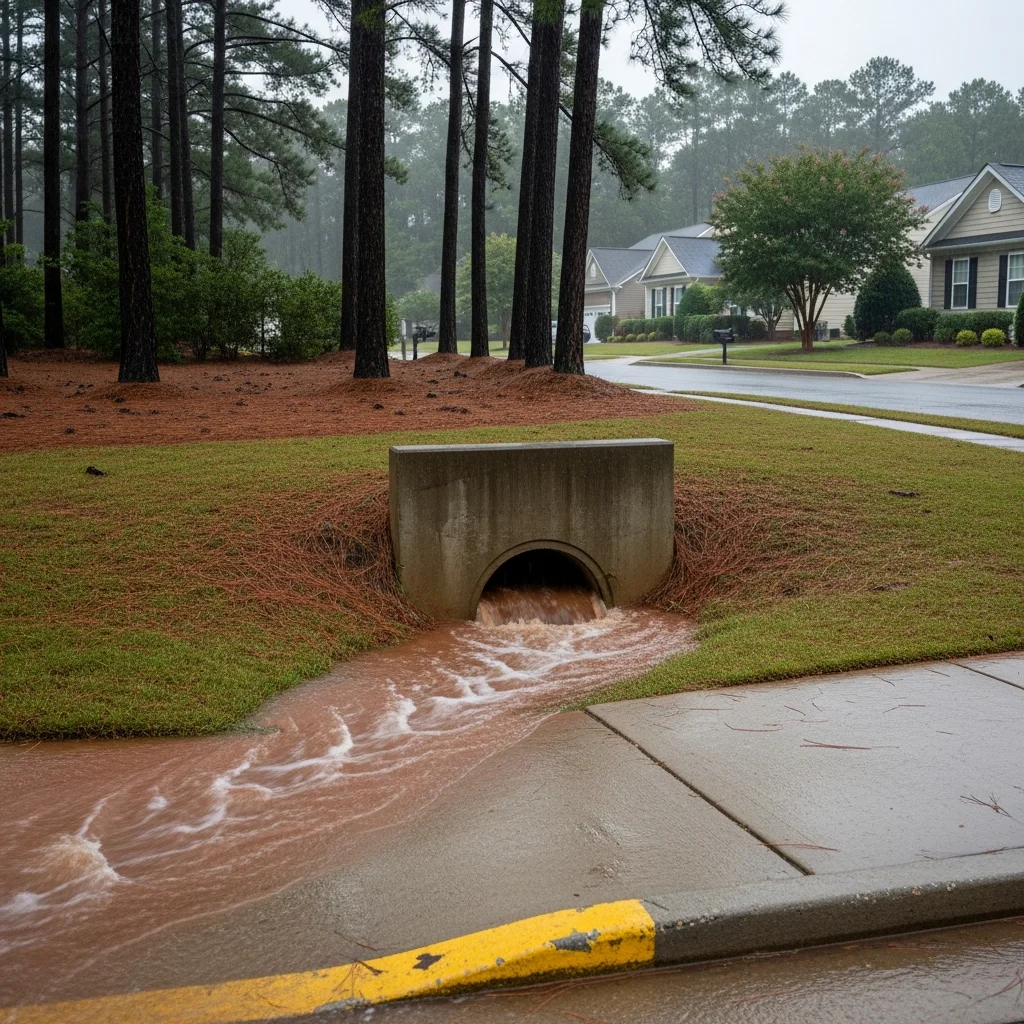
This is the coverage conversation that Raleigh homeowners most frequently wish they had before a flood event, not after. Standard homeowners insurance covers "sudden and accidental" water damage — a burst pipe, a failed appliance supply line, an overflowing bathtub. It does not cover flood damage, defined as water that originates from outside the structure and enters due to surface flooding, storm surge, or overflow from a body of water. In Raleigh terms: Crabtree Creek overflowing its banks is a flood. A burst supply line is covered water damage. The first requires a separate NFIP or private flood policy. The second is your homeowners policy's domain.
| Loss Type | Standard HO Policy | NFIP Flood Policy | Notes |
|---|---|---|---|
| Burst pipe (supply line) | Covered | Not applicable | Sudden and accidental — standard HO coverage |
| Appliance supply line failure | Covered | Not applicable | Same as burst pipe treatment |
| HVAC condensate overflow | Often covered | Not applicable | Verify with your carrier — some exclude slow leaks |
| Creek overflow flooding | Not covered | Covered | Classic flood peril — requires separate NFIP or private policy |
| Rainwater entry through roof damage | Often covered as wind/storm | Not applicable | Depends on cause — consult your adjuster |
| Surface water runoff entering home | Not covered | Covered | Classified as flood even without a nearby creek |
| Sewer or drain backup | Not covered (base policy) | Not covered (base policy) | Requires endorsement on HO policy — add if not already present |
| Mold from flood water | Often excluded or limited | Limited coverage available | Document aggressively — mold limits vary significantly by carrier |
Coverage comparison: homeowners insurance vs. flood insurance in North Carolina
The financial stakes of getting this wrong are significant, and they are growing. Raleigh is part of Wake County, and local reporting on North Carolina's insurance market indicates that base homeowners rates in the Raleigh and Durham area are increasing approximately 7.5% in 2025 and another 7.5% by mid-2026 as part of a statewide rate settlement. This is not a reason to drop coverage — it is a reason to document every loss more carefully, understand exactly what your policy covers, and maintain the kind of organized records that support a fast, defensible claim. Homeowners who arrive at an adjuster meeting with time-stamped photos, a detailed scope of damage, and professional moisture readings will consistently receive better outcomes than those who describe damage from memory.
Frequently Asked Questions: Flooding in Raleigh, NC
Is Raleigh in a flood zone? +
Did Raleigh flood maps change recently? +
Does homeowners insurance cover flooding in Raleigh? +
What causes mold to grow so fast after flooding in Raleigh? +
Which Raleigh neighborhoods flood most often? +
Do I need a permit for water damage repairs in Raleigh? +
Water Damage Restoration Services
Palm Build's full water extraction, drying, and restoration services for Raleigh and Wake County.
Does Homeowners Insurance Cover Water Damage?
A complete breakdown of what North Carolina homeowners insurance covers — and the specific exclusions that catch people off guard.
How Fast Does Mold Grow After Water Damage?
The 24–48 hour mold growth timeline explained, with what it means for your response decisions.
North Carolina Crawl Space Problems: Homeowner Guide
NC-specific crawl space moisture, mold, and encapsulation guidance for piedmont homeowners.
Water damage in your Raleigh home?
Palm Build serves Raleigh, Wake County, and the greater Research Triangle with 24/7 emergency water extraction, drying, and professional water damage restoration. We document every loss to IICRC standards so your insurance claim is supported from day one. Call our North Carolina team now.
Found this helpful? Send it to someone who needs it.