Quick Answer
In most condo-style HOAs, the association pays to repair common elements (roof, exterior walls, shared plumbing), while the homeowner pays for 'walls-in' items — flooring, cabinets, paint, and personal property — through their HO-6 policy. The exact split depends on the governing documents, the master and HO-6 policies, and whether negligence is involved.
Key takeaways
- The HOA typically pays to repair common elements (roof, exterior walls, shared plumbing), while the homeowner pays for 'walls-in' items (flooring, cabinets, paint, personal property) through their HO-6 policy.
- Responsibility depends on three separate questions: maintenance duty (set by governing documents), insurance coverage (set by policies), and legal liability (usually about negligence).
- Mold can begin growing within 24 to 48 hours after a leak. Start mitigation immediately, even while the payer is being decided.
- Florida Statute 718, North Carolina's Condo Act (47C), and South Carolina's Horizontal Property Act each set different default rules for how repair costs are allocated.
- High master-policy deductibles are a common source of HOA water damage disputes. Check your declaration for deductible chargeback language.
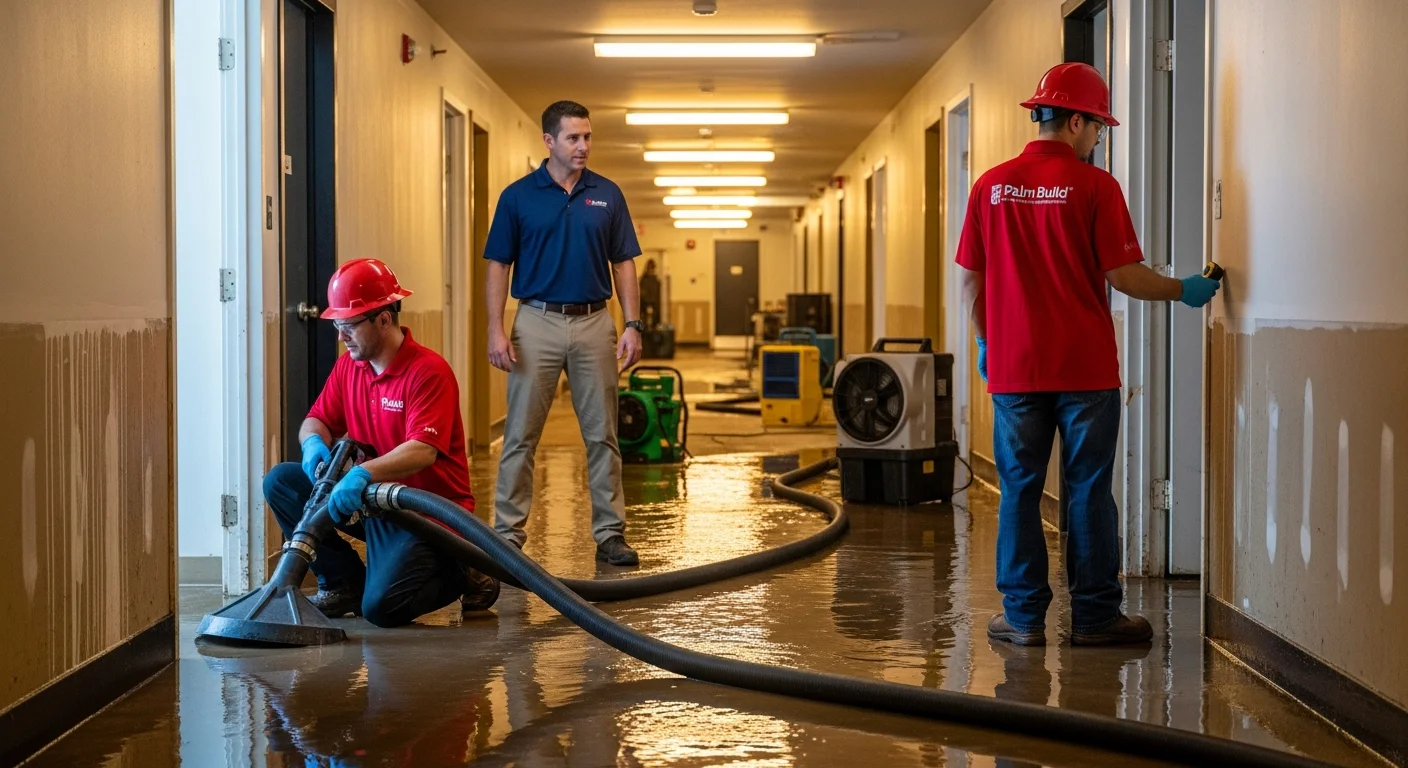
In most condo-style HOAs, who pays for water damage comes down to who owns and must maintain the damaged component, plus what the HOA master policy and your HO-6 policy actually cover. As a rule: the association pays to repair common elements (roof, exterior walls, shared plumbing, structural components), while the homeowner pays for "walls-in" items (flooring, cabinets, paint, personal property) through their HO-6 policy. State law matters too. Florida and North Carolina statutes require condo associations to carry property insurance and to repair insured property after a covered loss, although declarations can shift some costs. Act fast either way: if materials stay wet, mold can start growing within 24 to 48 hours, which raises costs and complicates liability. If you need help right now, our 24/7 emergency water damage restoration team responds across Florida, North Carolina, and South Carolina, coordinating directly with boards and property managers through our HOA and multi-family restoration services.
of insured homes
1.5%
had water damage or freezing claims between 2019 and 2023 (Insurance Information Institute)
mold growth window
24-48 hrs
EPA and FEMA warn mold colonies can start on damp surfaces within this timeframe
average restoration cost
$3,800
National average for water damage restoration, with high-end projects exceeding $16,000 (Angi)
The Short Answer on Who Pays for HOA Water Damage
The one-sentence rule
The association is responsible for common elements, and the unit owner is responsible for everything inside the unit boundaries. That one-sentence rule handles about 70% of HOA water damage disputes. The remaining 30% get complicated because of how your specific declaration defines boundaries, how your policies split coverage, and whether negligence is involved.
Why the same leak can have two payers
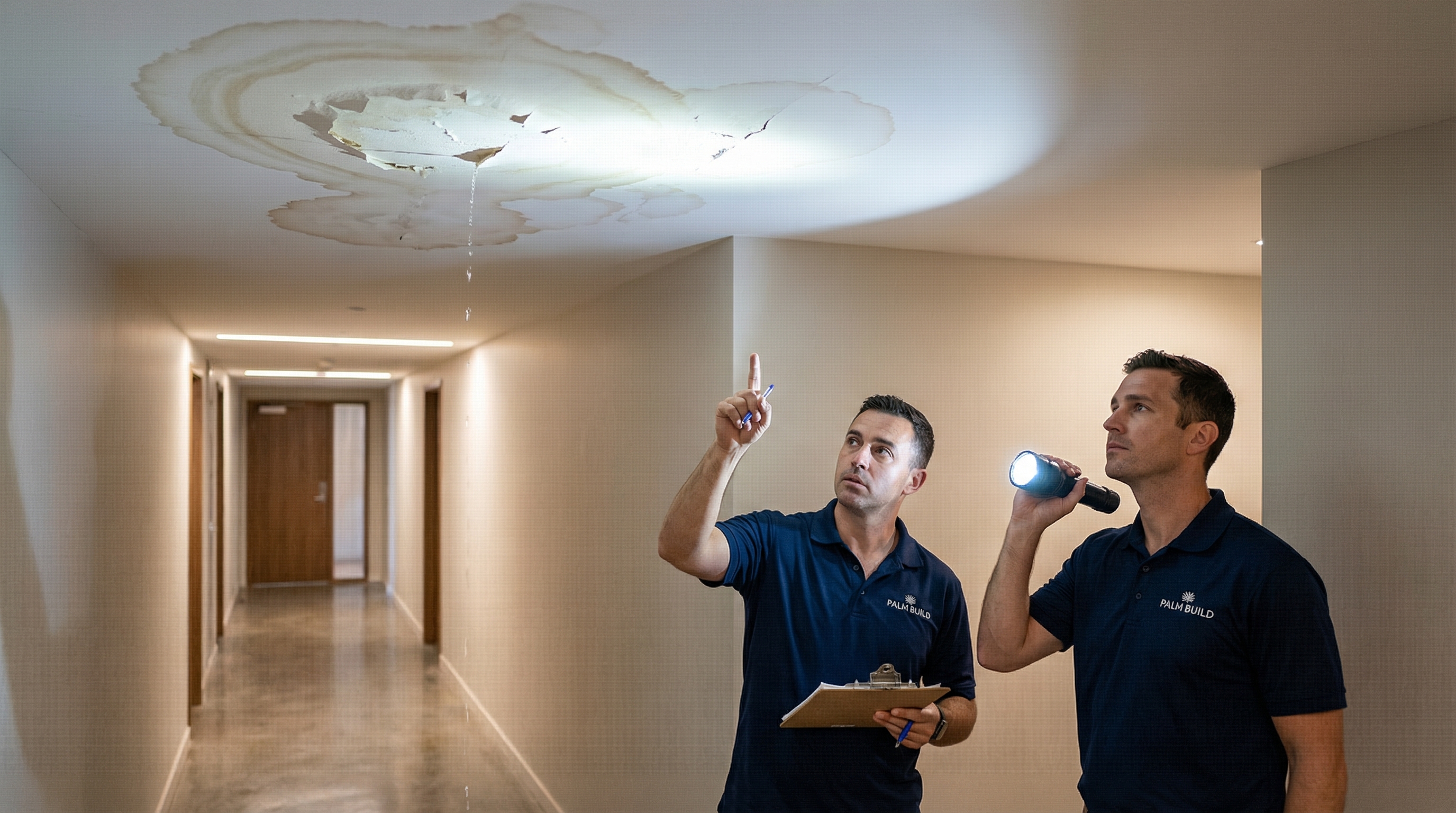
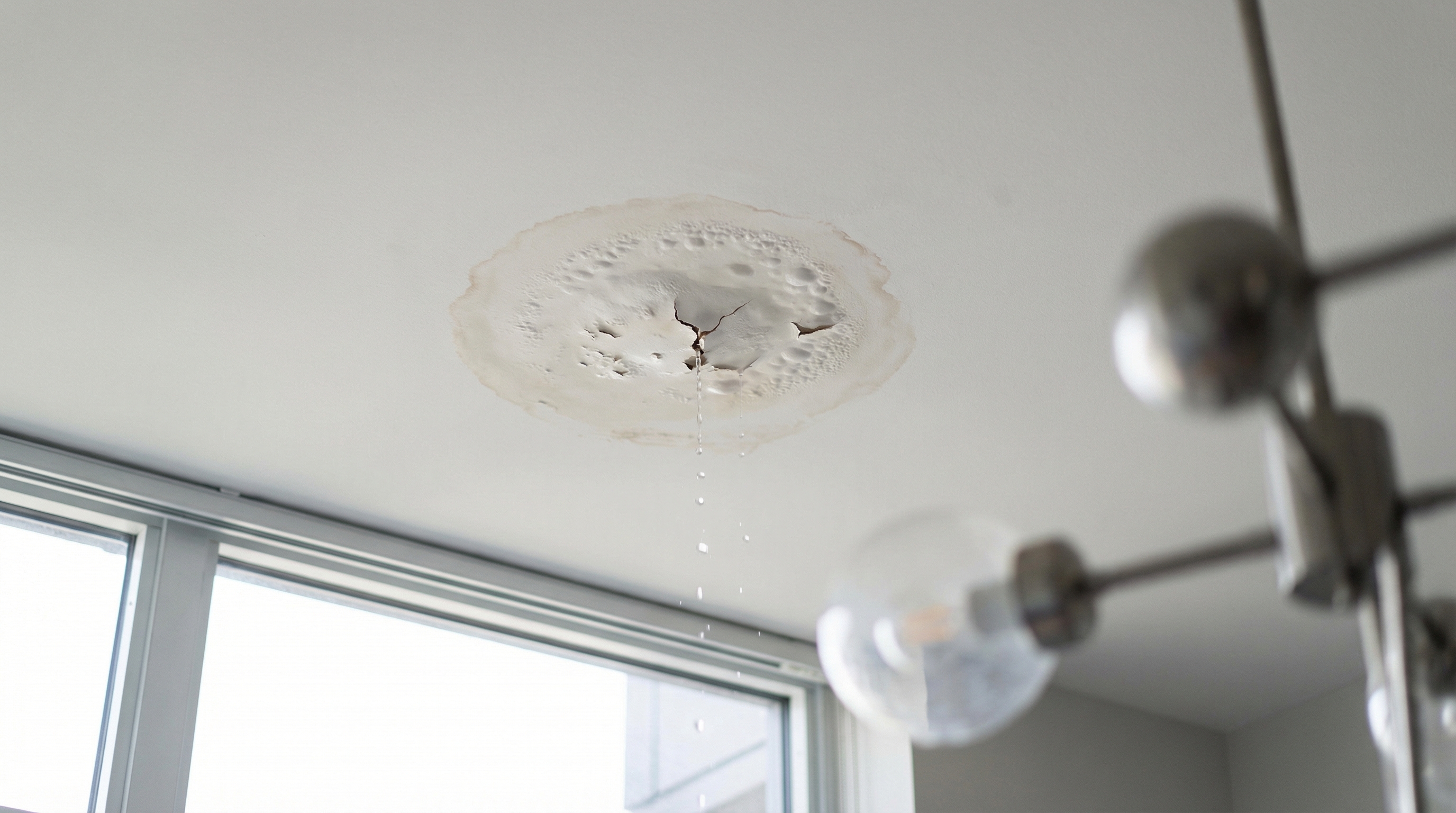
A single water event often damages both common property and unit interiors. A roof leak, for example, originates at a common element (the roof), but the water travels through common structure and ends up on your unit's ceiling, walls, and flooring. The HOA's master policy typically covers the structural repair. Your HO-6 policy covers your interior finishes and personal property. Two payers, one leak.

The HOA Water Damage Responsibility Checklist
The biggest reason homeowners and property managers get stuck is that they mix up three different questions: maintenance duty, insurance coverage, and legal liability. Most disputes clear up when you separate them and follow a consistent order.
1. Check the governing documents first
Your declaration (also called CC&Rs), bylaws, and community rules define what is a unit, a common element, and a limited common element (like balconies or patios). They also define who must maintain each category. This is the foundation of every "who pays" question. HOA structures vary widely, which is why management companies and insurers always say "check the documents first."
2. Identify what failed versus what is damaged
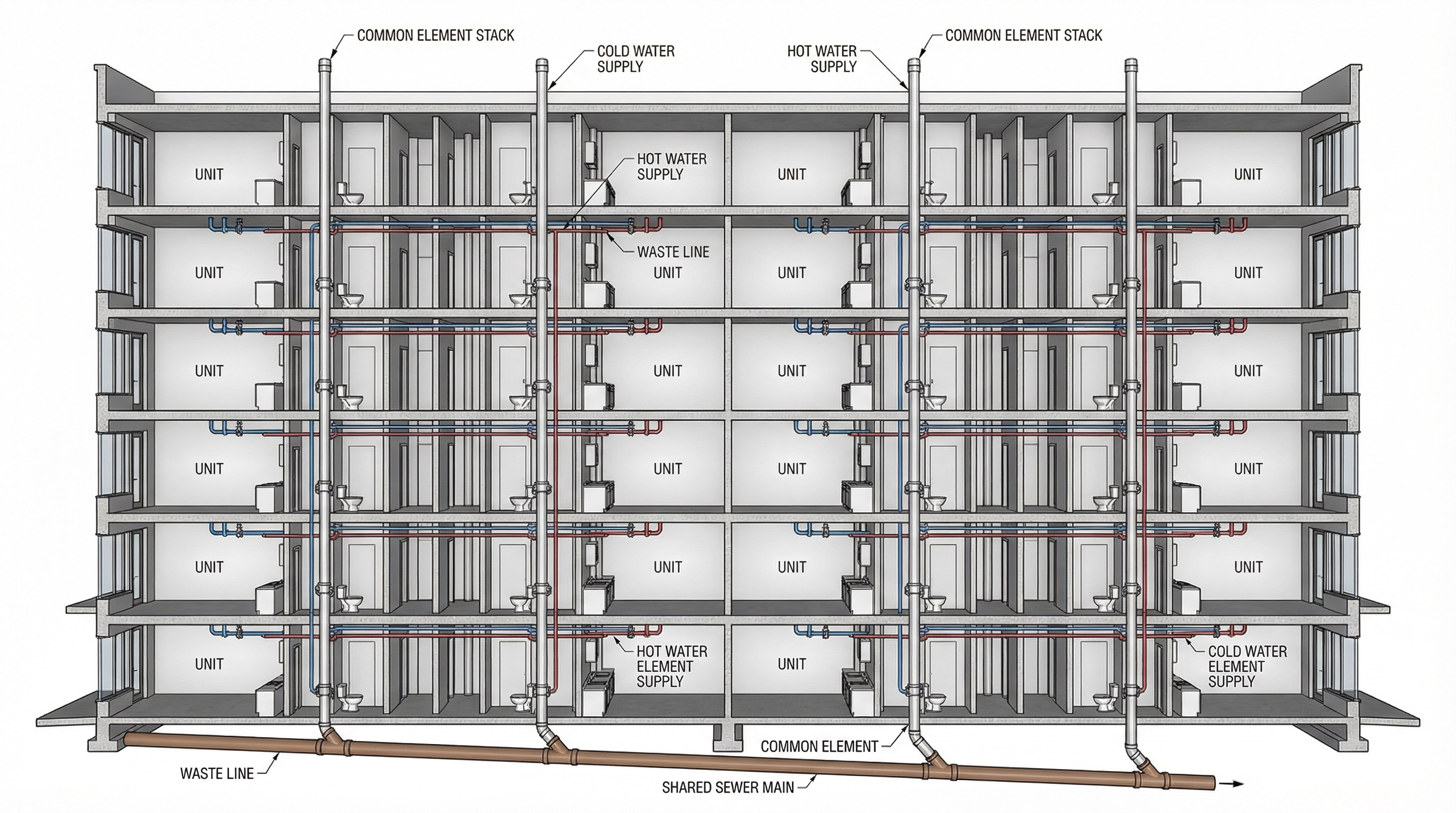
The component that failed (the source) and the components that got damaged (the result) often have different owners. A shared plumbing stack burst is an HOA maintenance issue. The water-damaged hardwood floor in your unit is your responsibility to restore. Separating source from result is essential for getting reimbursement sorted out.
3. Understand master policy versus HO-6 coverage
The HOA's master policy covers the building structure and common areas. Your HO-6 (condo insurance) policy covers your interior finishes, upgrades, personal property, and liability. A frequent misconception is "water came from a common area, so the HOA pays everything." In practice, coverage splits: the master policy handles the building portion, while your HO-6 handles your interior. Understanding what your insurance actually covers prevents surprises during claims.
4. Consider negligence and delayed reporting
Even if an owner's unit is the source, that does not automatically mean the owner is legally responsible for every downstream cost. Liability often turns on whether someone failed to maintain something they controlled or ignored warnings. Conversely, if the HOA knew about a roof issue for months and did nothing, negligence could shift liability beyond the normal "common element" framework.
Common Condo Water Damage Scenarios and Who Pays
The table below answers the real question behind "HOA water damage responsibility": not just who pays, but who should act now, who fixes the source, and which policy is typically involved. Use it as a starting point, then confirm with your declaration and policies.
| Scenario | Who stops the water? | Who repairs the source? | Who pays for structure? | Who pays for interior finishes? | Key variable |
|---|---|---|---|---|---|
| Roof leak into unit | HOA + owner both | HOA (common element) | HOA | Owner (HO-6) | Negligence or delayed maintenance can shift liability |
| Burst shared plumbing stack | HOA + owner both | HOA | HOA | Owner (HO-6) | Declarations may define pipe ownership differently (stack vs branch) |
| Burst pipe inside unit wall | Owner | Owner | Usually owner | Owner (HO-6) | If leak damages common areas, HOA repairs those and may seek reimbursement |
| Upstairs unit appliance leak | Source owner stops; affected owner mitigates | Source owner | HOA if structural; otherwise owners | Each owner's HO-6 | Negligence or failure to maintain appliance drives liability |
| HVAC condensate overflow | Unit owner or HOA (depends on system ownership) | Depends on HVAC ownership | Depends on boundary | Owner for unit finishes | Very common in humid coastal areas; can lead to mold fast |
| Sewer backup into unit | Owner mitigates; HOA if shared lines | Depends: private lateral vs shared line | Depends | Depends | Standard policies often exclude sewer backup unless endorsed |
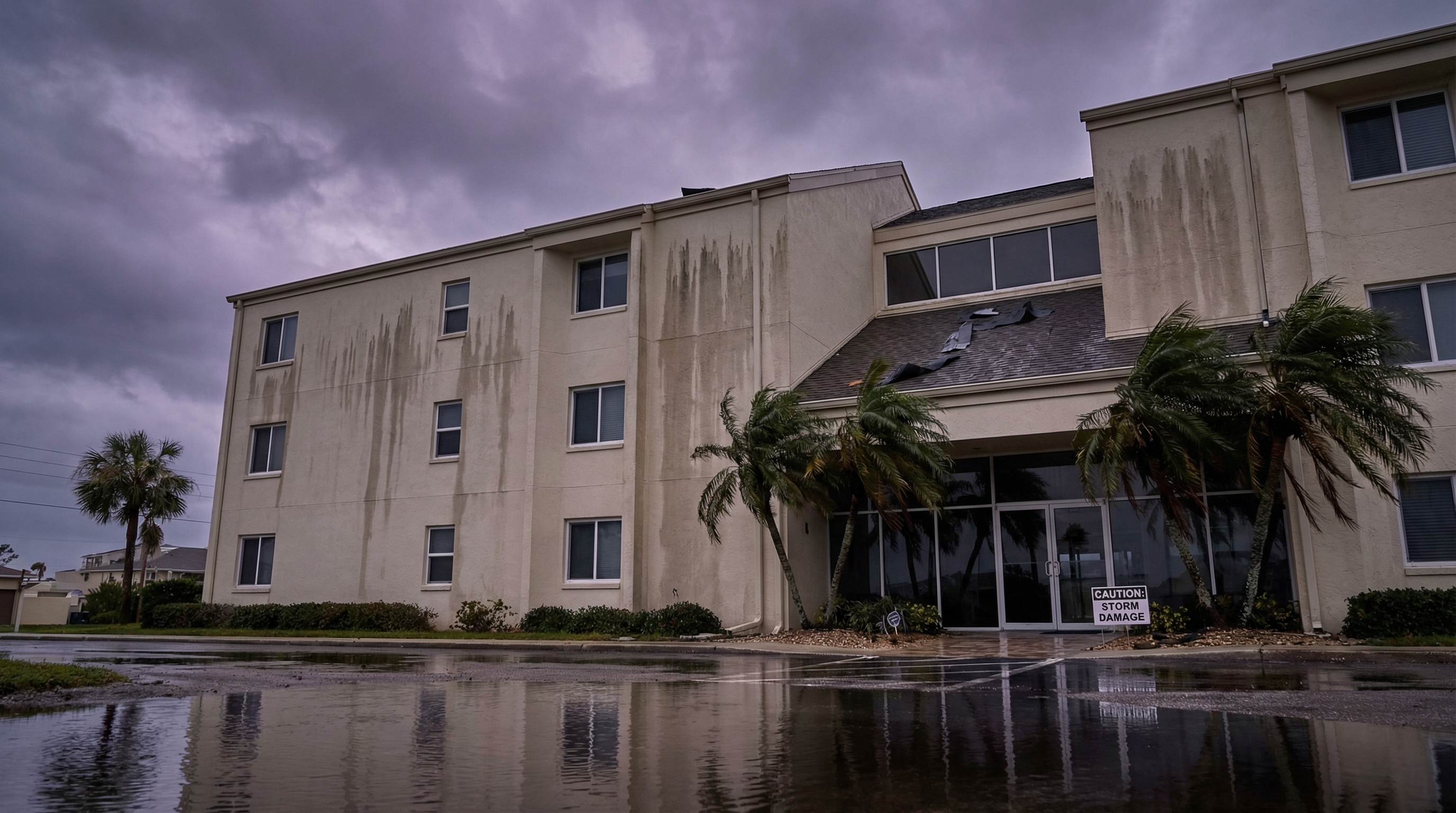
| Storm-driven rain through exterior | HOA + owner both | HOA (if exterior is common) | HOA | Owner for finishes | Hurricanes increase disputes around envelope vs opening damage |
| Sprinkler system leak | HOA + owner both | HOA (if system is common) | HOA | Owner for interior | Immediate restoration needed regardless of claim position |
HOA water damage responsibility by scenario
Step 1: Stop the Water and Make It Safe
Regardless of who is ultimately responsible, the first priority is stopping the water and preventing further damage. Waiting for the HOA to decide who pays before acting is the single most expensive mistake we see in multi-unit buildings.
- 1
Shut off the water source
If the leak is from a pipe or appliance in your unit, turn off the supply valve immediately. For shared plumbing, call your HOA management company's emergency line to shut off the building supply.
- 2
Address electrical hazards
If water is near electrical outlets, breaker panels, or appliances, turn off power from a dry location. If you cannot reach the panel safely, leave the unit and call an electrician.
- 3
Notify HOA management immediately
Call your property manager or HOA emergency line. Follow up with a written notice (email or text) to create a documentation trail. Note the time, what you observed, and what you did.
- 4
Protect your belongings
Move furniture and valuables away from wet areas. Place aluminum foil under furniture legs on wet carpet. Lift curtains off the floor.
Step 2: Document and Notify the Right Parties
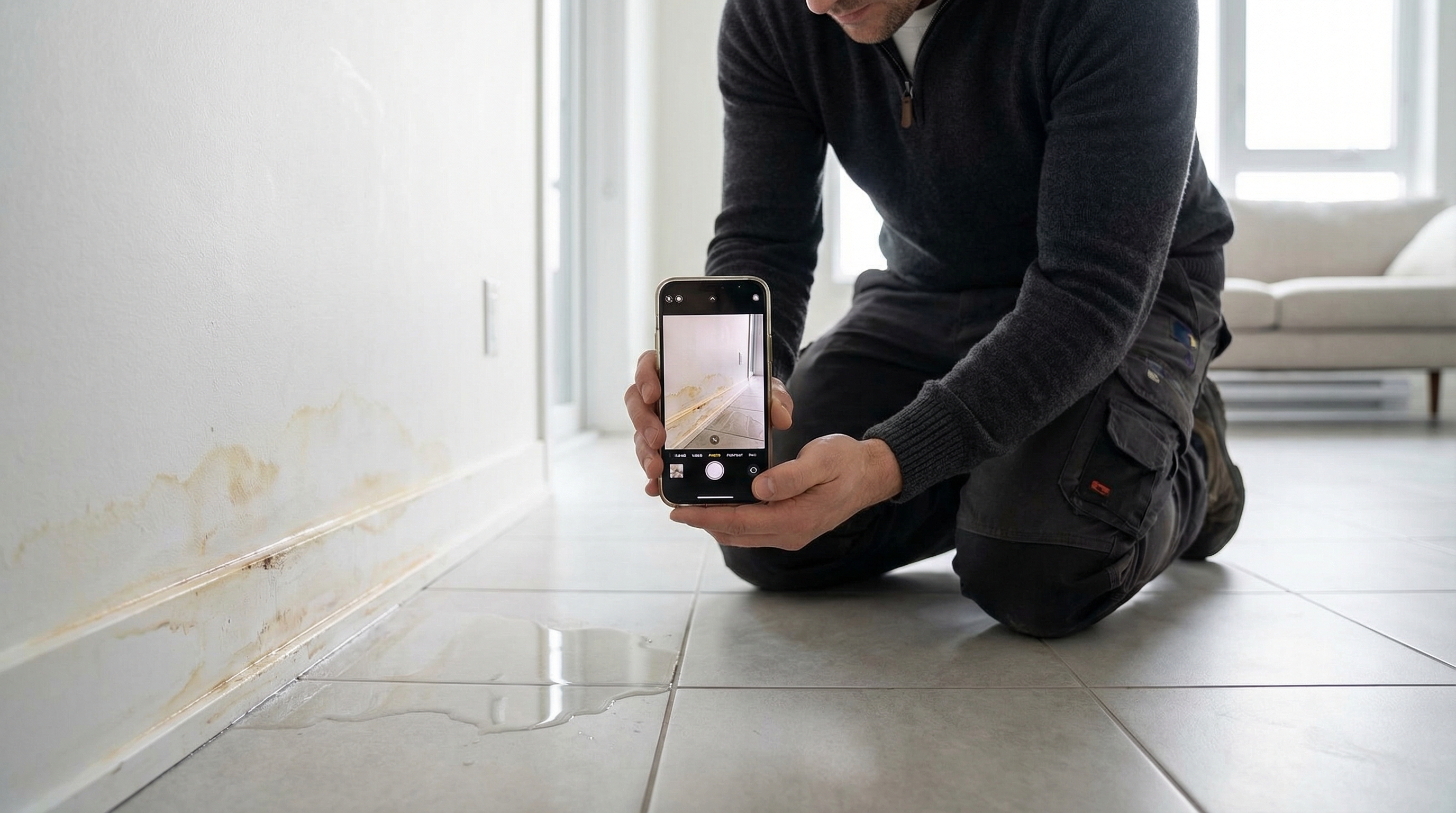
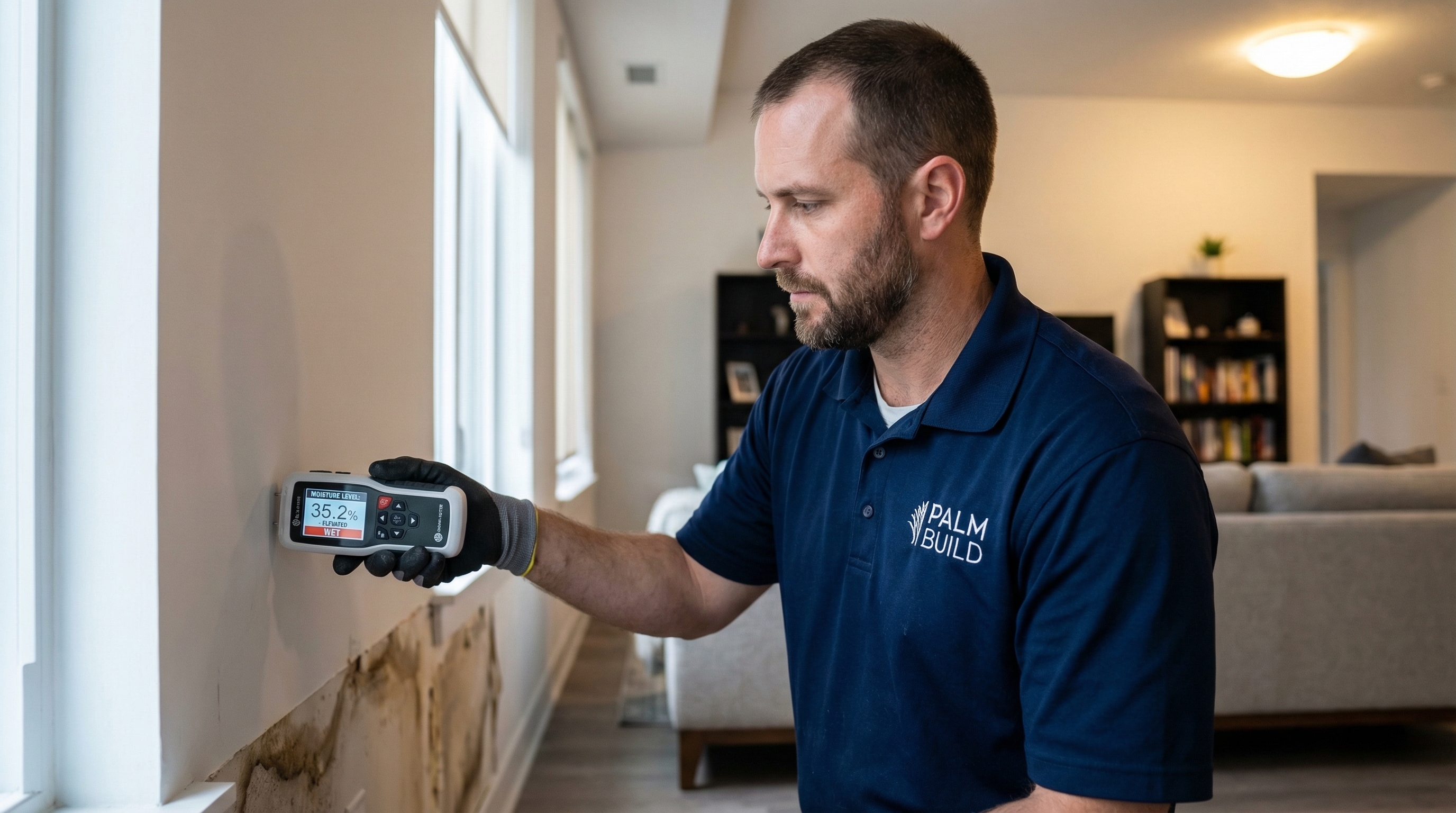
After stopping the water, thorough documentation protects you whether the HOA ends up paying, your HO-6 pays, or both. Take wide-angle photos of every affected room, close-up photos of damaged materials, and video showing the extent of water spread. Professional moisture mapping with meters and thermal cameras creates objective evidence of how far water has traveled behind walls and under floors.
Notify your insurance company promptly. If you believe the HOA may be responsible, send written notice to the HOA board and management company. Keep copies of everything. Your insurance claim documentation should include the date and time of discovery, the apparent source, all photos and videos, a list of damaged items, and any communication with the HOA.
How to File a Water Damage Insurance Claim
Step-by-step guide to documenting and filing your water damage claim for faster approval.
Insurance Restoration Process
Understand how restoration companies work with insurance to streamline your claim.
Step 3: Dry Fast to Prevent Mold and Secondary Damage
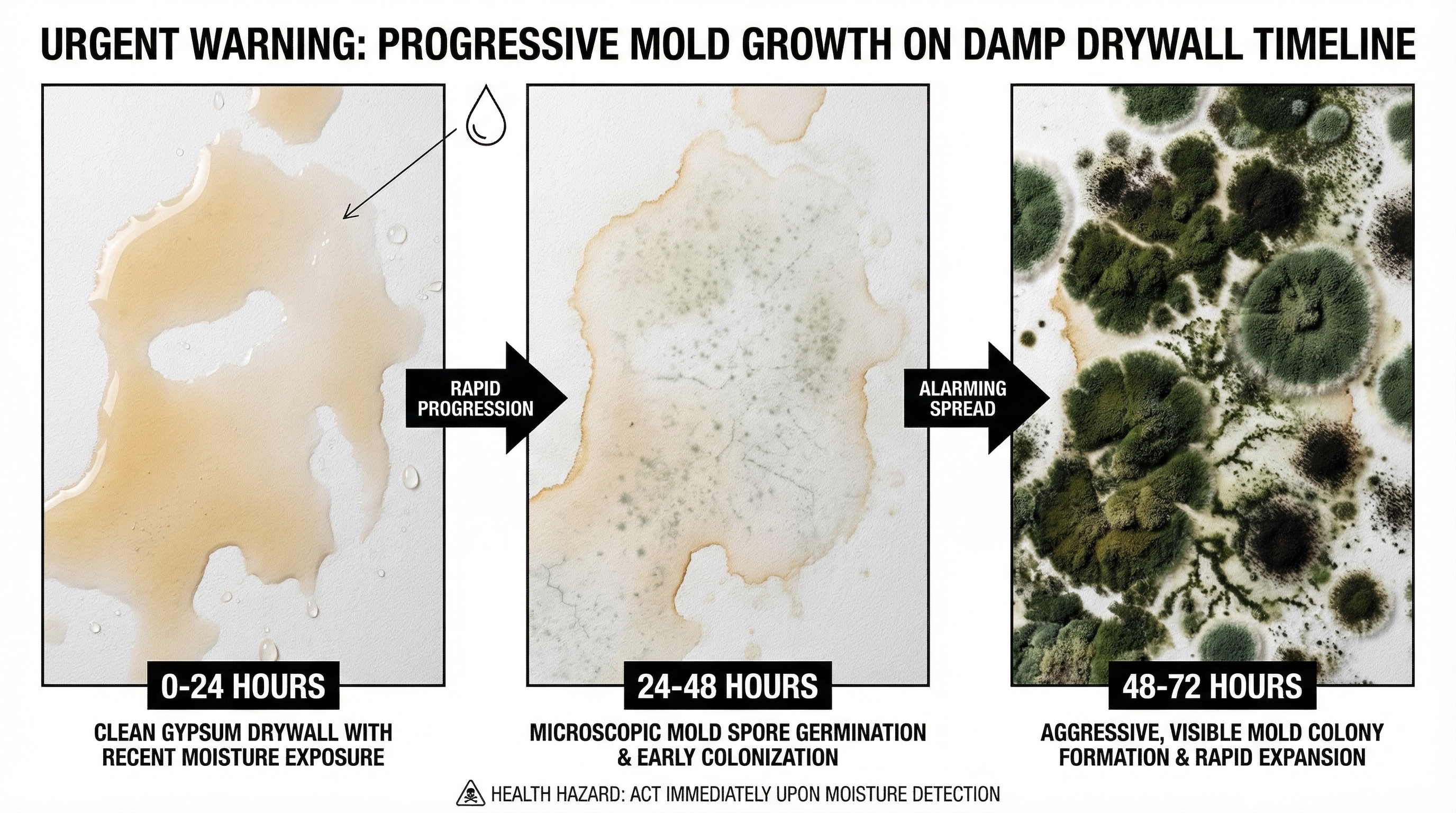
The EPA states that if wet or damp materials are dried within 24 to 48 hours after a leak, mold will not grow in most cases. FEMA confirms the same urgency: mold colonies can start growing on a damp surface within 24 to 48 hours. This is why professional emergency drying work is "necessary regardless of who pays." If you wait for the HOA board to meet, or for adjusters to schedule an inspection, you can turn a contained ceiling stain into a multi-room mold remediation project.
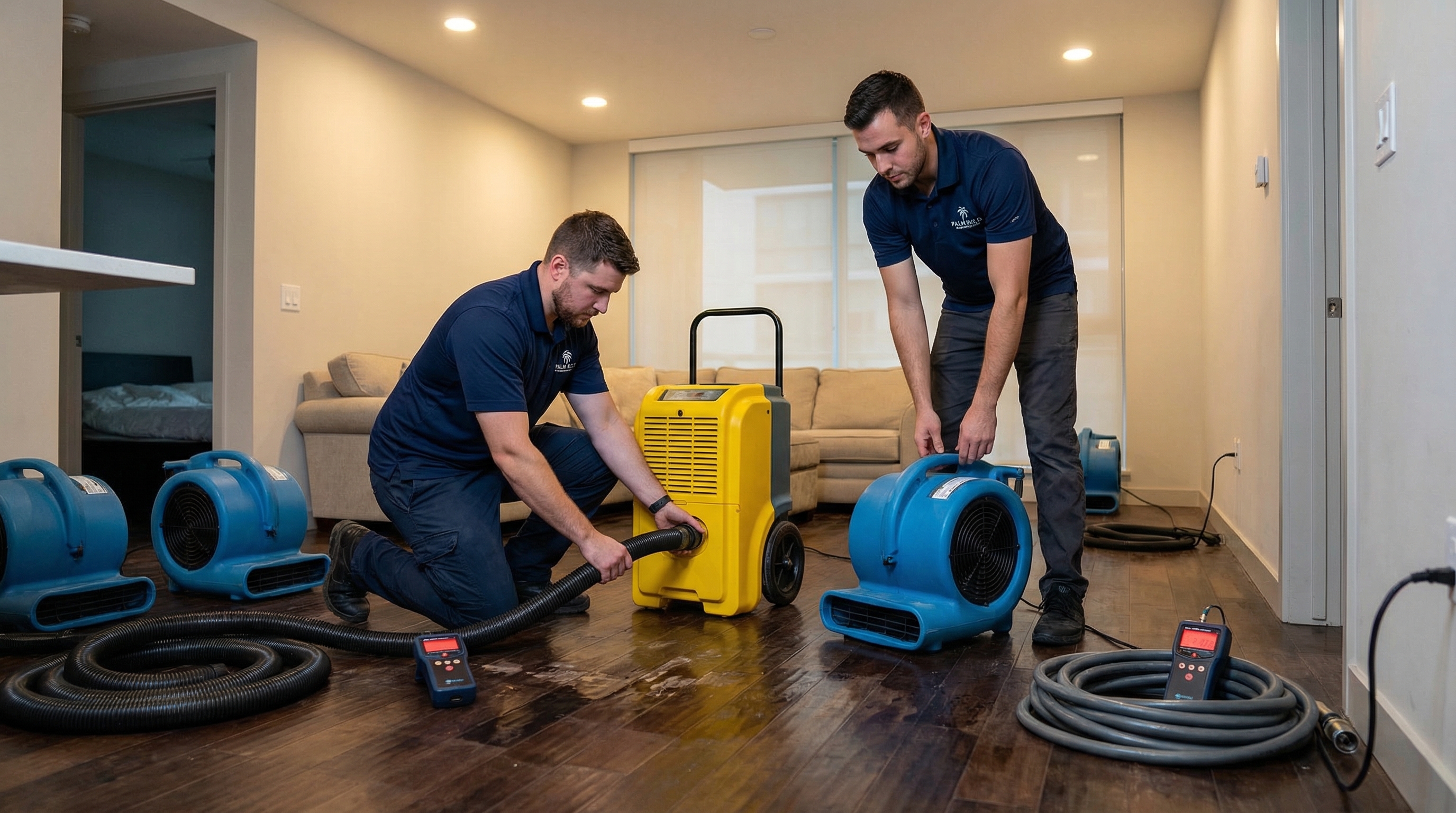
Commercial dehumidifiers and air movers should be placed within the first few hours. In condo buildings, water often migrates vertically through multiple floors, which means drying needs to happen in units above and below the visible damage. A certified restoration contractor will document daily moisture readings, which protects your claim and proves the drying protocol followed IICRC S500 standards.
Mold Remediation Services
If drying is delayed and mold has started, our IICRC-certified team handles containment, removal, and post-remediation verification.
What to Do in the First 24 Hours After Water Damage
Complete first-24-hours checklist covering safety, shutoffs, documentation, extraction, and drying.
Florida vs North Carolina vs South Carolina: State Differences That Matter
State law sets the baseline for how condo associations must insure property and allocate repair costs. These are the highest-impact differences that can genuinely change who pays, how fast you must act, and what your documents are allowed to do. This is not legal advice; it is an orientation so homeowners and property managers can ask better questions.
Florida condos and Statute 718
Florida's condo statute (718.111) is unusually explicit about what the association's property insurance must cover and exclude. The master policy must cover the building and "standard" components but must exclude personal property and many interior finish items (floor, wall, and ceiling coverings, cabinets, and fixtures). The statute also provides a default framework for allocating repair costs after an insurable event, with opt-out mechanisms. Associations are generally not obligated to pay for unit owner improvements that benefit only that unit.
Florida also has strict claim notice deadlines: one year from the date of loss to file notice, and 18 months for supplemental claims under Statute 627.70132. Florida's hurricane exposure makes envelope and roof water intrusion disputes especially common. NOAA data confirms Florida is one of the most frequently impacted states in long-run hurricane records.
North Carolina Condo Act insurance and repair rules
North Carolina's Condominium Act (Chapter 47C) requires associations to maintain property insurance on common elements at no less than 80% of replacement cost. In buildings with horizontal unit boundaries (typical stacked condos), the insurance must include the units but need not include unit owner improvements and betterments. The association's policy is primary if other insurance exists in a unit owner's name covering the same risk.
Damaged portions that are required to be insured must be repaired or replaced promptly by the association, unless specific exceptions apply. Costs beyond insurance proceeds and reserves become a common expense assessed to all owners. The NC Department of Insurance emphasizes that homeowners should give prompt notice to their insurer and protect property from further damage, even when liability is disputed.
South Carolina Horizontal Property Act
South Carolina's condo framework is governed through the Horizontal Property Act. Sections 27-31-240 and 27-31-250 address insurance procurement by the council of co-owners and how repair or reconstruction proceeds after damage. As in other states, the practical "who pays" answer depends heavily on whether the property is a horizontal property regime versus a planned community with detached homes, but the statute provides a statewide baseline for insurable-loss allocation.
Both North Carolina and South Carolina have substantial hurricane exposure over long time periods (per NOAA historical data), which means HOA roof and exterior envelope water intrusion disputes are common along the coast, even when the legal framework still turns on documents and insurance.
Costs You May See While the Payer Is Being Decided
Even though the headline question is "who pays," the outcome is often determined by who acts fast, who documents properly, and whether secondary damage like mold is prevented. These national cost ranges help you budget and set expectations while the responsibility question is being resolved.
| Cost item | Typical range | Notes |
|---|---|---|
| Water damage restoration (per sq ft) | $3 to $7.50 per sq ft | Varies by water category, extent, and cause (Angi) |
| Overall water damage project | $450 to $16,000+ (avg $3,800) | Severity and secondary damages like mold drive the range |
| Mold remediation | $1,223 to $3,749 (avg $2,364) | Also cited as $10 to $25 per sq ft in many cases |
| Mold inspection | $300 to $1,000 (avg $657) | Testing add-ons increase cost, especially with multiple samples |
| Drywall repair | $50 to $80 per sq ft | Repair benchmark, not mitigation pricing |
Typical water damage and mold costs (national averages)
Water Damage Restoration Cost in 2026
Detailed cost breakdown by damage type, severity, and region.
Mold Remediation Cost in 2026
What you will actually pay for mold testing and remediation by project size.
Frequently Asked Questions
Is an HOA responsible for water damage to your condo? +
Who pays for water damage from a roof leak in a condo? +
Do HOAs cover plumbing leaks and pipe bursts? +
Who pays for water damage from the unit above you? +
Can the HOA charge you for the master policy deductible? +
Does condo insurance (HO-6) cover water damage? +
How fast can mold grow after a leak or flood? +
What should you do first when water damages your condo unit? +
When Your HOA Is Sorting Out Who Pays, the Damage Keeps Getting Worse
The responsibility question matters, but the water does not wait for an answer. Every hour of delay after a leak increases the scope of demolition, the likelihood of mold, and the final cost for whoever ends up paying. Our team works with HOA boards, property managers, and individual unit owners across Florida, North Carolina, and South Carolina to start mitigation immediately while insurance claims are being coordinated. We document everything to IICRC standards, which protects your claim regardless of how the payer question is resolved.

HOA and Multi-Family Restoration Services
Dedicated multi-unit restoration with HOA board coordination, insurance liaison, and unit-by-unit documentation.
What to Do in the First 24 Hours After Water Damage
Complete emergency checklist for the critical first day after water damage.
How to File a Water Damage Insurance Claim
Step-by-step process for filing and documenting your claim for faster approval.
Florida Mold Problems: Why Homes Get Mold and How to Stop It
Florida-specific mold risks, prevention, and when professional remediation is needed.
Water damage in your condo or HOA community?
Our team responds 24/7 across Florida, North Carolina, and South Carolina. We coordinate with HOA boards, property managers, and insurance companies so you can focus on getting back to normal.
Found this helpful? Send it to someone who needs it.