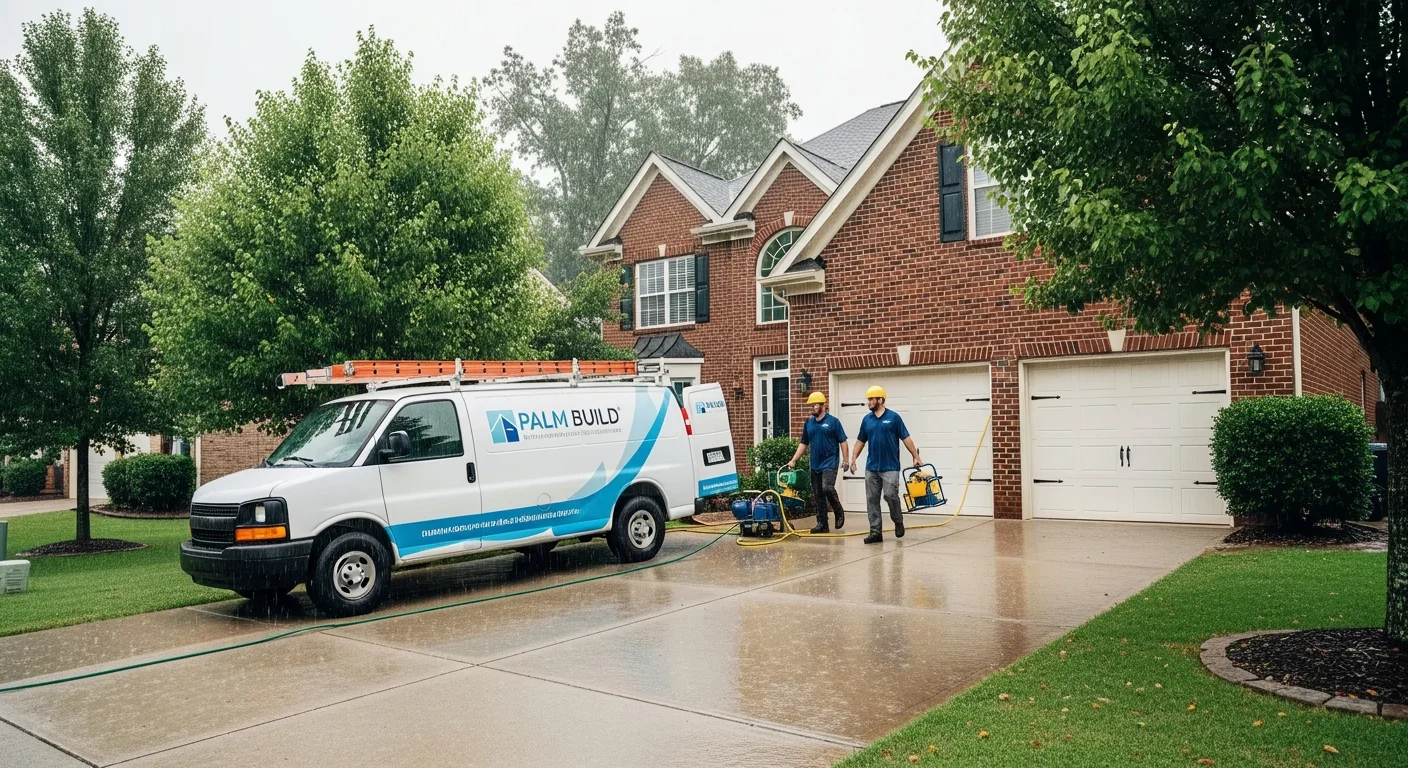
Palm Build branded work van parked at a 2000s brick suburban home in Pineville, NC during heavy rain with restoration technicians approaching
PINEVILLE NC — 24/7 WATER DAMAGE RESPONSE

Water Damage Restoration in Pineville, North Carolina

When Little Sugar Creek rises or Pineville's heavy clay soil traps stormwater around your foundation, water moves fast. Palm Build responds from our Charlotte hub — roughly 12 miles away — with truck-mounted extraction, commercial drying equipment, and insurance-ready documentation.

~12 miles via US-521 20-30 min Response IICRC Certified

20-30 min

Emergency Response

24/7

Dispatch Available

IICRC

Certified Technicians

Pineville, NC — Local Risk Factors

Why Pineville, NC Homes Face Unique Water Damage Risks

Pineville's combination of Piedmont clay soils, Little Sugar Creek's active flood corridor, aging housing stock, and a growing multi-family sector creates water damage conditions that demand local expertise. When water enters a Pineville home, mold can begin growing within 24 to 48 hours.

Piedmont Clay Soil — Water Stays Near Your Foundation

Slow

Clay soil drainage rate

Pineville sits squarely in the NC Piedmont belt where heavy clay subsoils dramatically slow stormwater infiltration. NC State Extension notes these high-clay soils can remain wet for extended periods after rain, and construction compaction makes it worse. When water can't drain down through the soil, it sits against your foundation, enters through slab edges and crawl space vents, and keeps humidity elevated for days after the storm passes. This single fact drives the majority of water damage and mold calls we receive from Pineville homeowners.
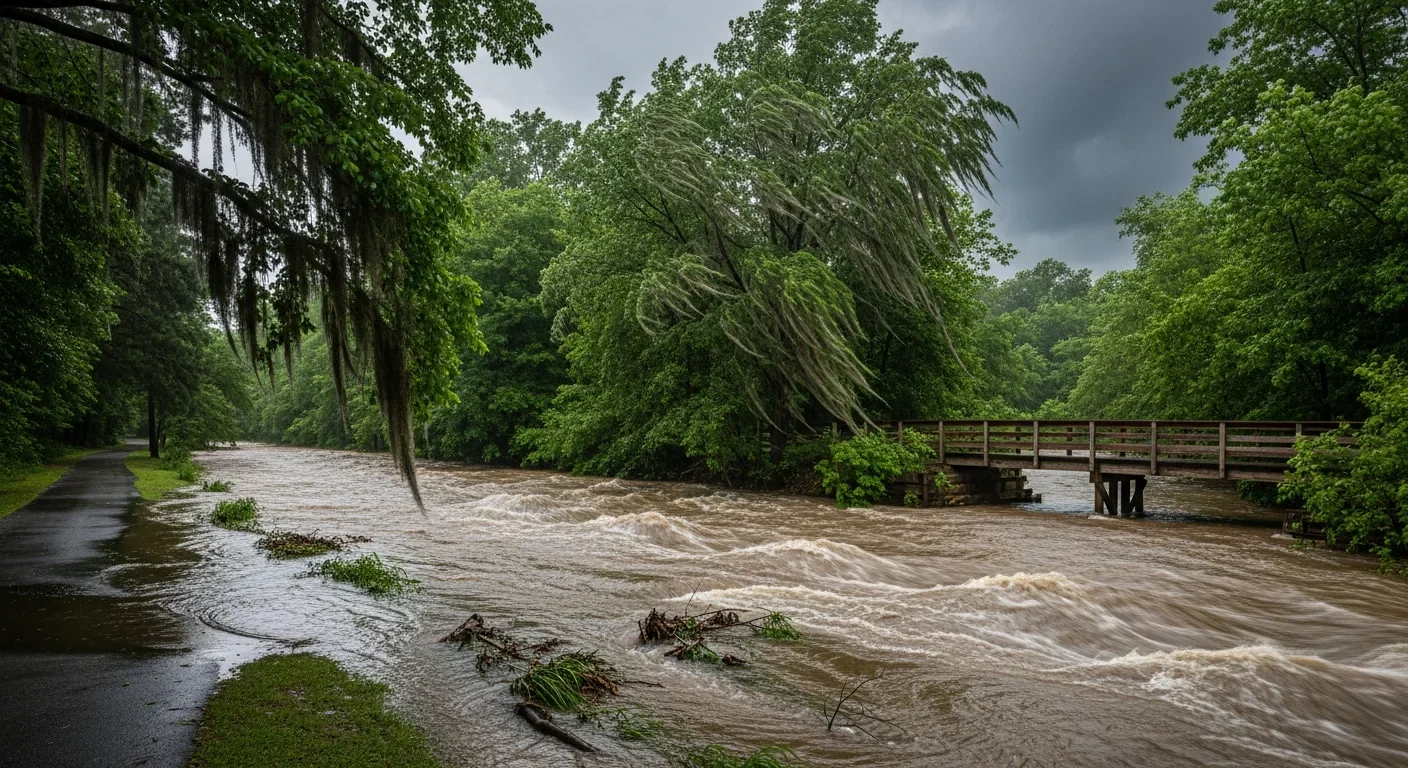
Little Sugar Creek — Active Flood Corridor Through Pineville

Active

NOAA flood monitoring

Little Sugar Creek runs directly through Pineville with an active NOAA monitoring gauge. NOAA flood-impact guidance for the creek's NC-51 gauge specifically names Leitner Drive as a road impacted during high-flow events. On September 27, 2024, Mecklenburg County experienced a documented flash flood event tied to the same storm system that produced Hurricane Helene's regional impacts. This isn't ancient history — it's the current baseline for what creek-adjacent properties in Pineville face during major rain.

1990s–2010s Construction — The Age of Appliance Failures

~1999

Median construction year

With a median construction year near 1999, most Pineville homes are now 15–25+ years old — precisely the window when appliances, water heaters, and plumbing components enter their highest-failure years. Dishwashers fail at their inlet lines. Washing machine supply hoses crack. Refrigerator ice maker lines develop slow leaks behind cabinets for months before discovery. HVAC condensate lines back up and overflow into ceilings. These are the leading causes of water damage in Pineville's housing stock — not flooding.

Growing Multi-Family Sector — Shared Infrastructure Risks

48.9%

Owner-occupied rate — large rental market

Pineville's housing market includes a growing inventory of townhomes, apartments, and build-to-rent communities — Coventry townhouses, Livano Pineville, Blu South, and more. These properties share plumbing stacks, HVAC systems, and drainage infrastructure. A water event in one unit can migrate through shared walls into neighboring units. Sprinkler system incidents and standpipe overflows become multi-unit events. Palm Build has a fast-track protocol for Pineville property managers and HOA boards dealing with shared-infrastructure water losses.

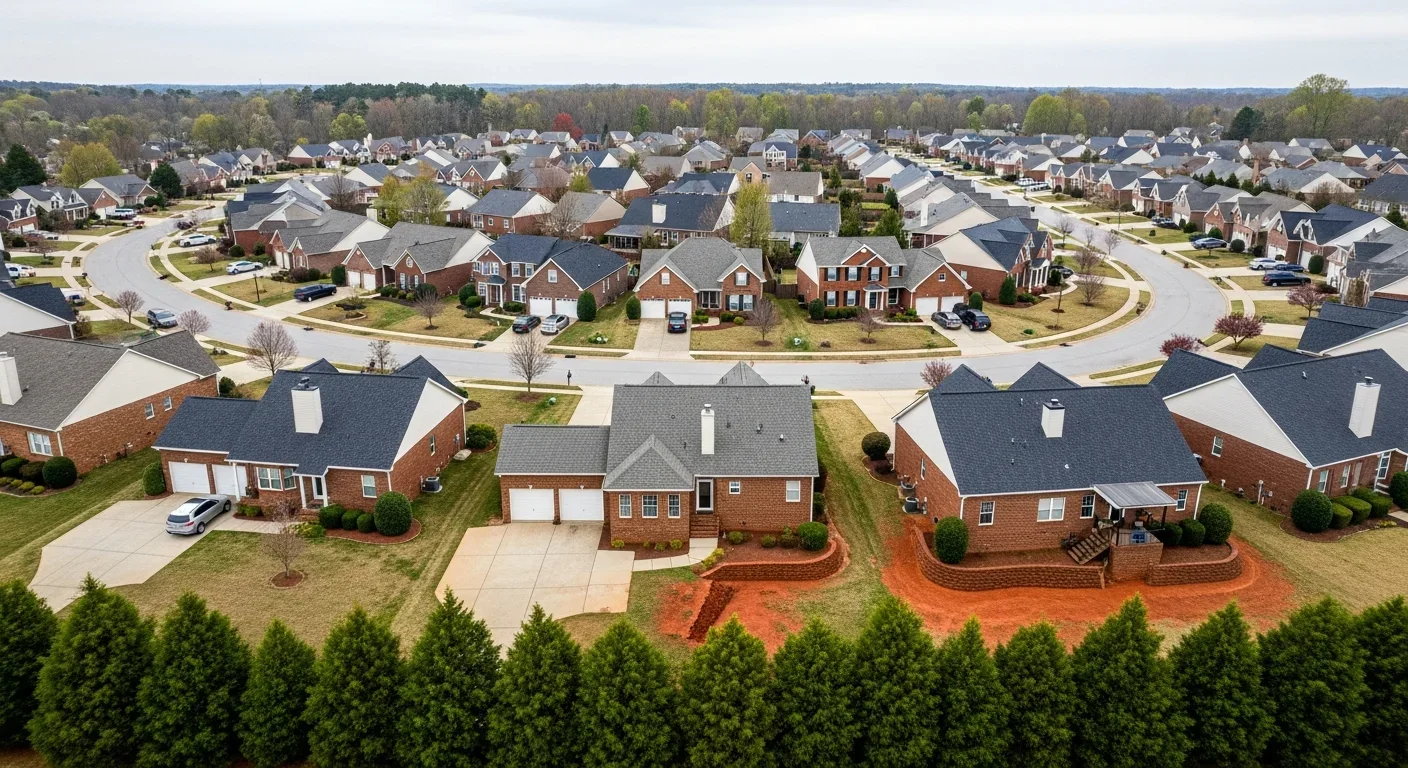
Suburban residential neighborhood in Pineville, NC with late-1990s and 2000s era brick veneer homes on curved streets with red clay soil visible near foundations
Pineville's residential neighborhoods — dominated by 1990s–2010s construction — face water damage risks driven by aging appliances, clay-soil drainage issues, and proximity to Little Sugar Creek's active flood corridor.

Know Your Risk Before Damage Strikes

Pineville Neighborhood Water Damage Risk Profiles

Water damage in Pineville follows patterns tied to construction era, housing type, and proximity to Little Sugar Creek. Here's what we observe across the addresses we serve most frequently.

Preston Park

Moderate

2000s single-family

Appliance failures, plumbing overflows

Water under hardwood floors, subfloor saturation, drywall wicking

Miller Farm

Moderate

2000s–2010s single-family

Slab edge seepage, HVAC condensate failures

Moisture at slab level, finished area flooding, attic condensate overflow

Coventry Townhomes

Elevated

2010s attached townhomes

Shared plumbing stacks, unit-to-unit water migration

Multi-unit losses, shared-wall cavity moisture, party-wall drying challenges

Livano Pineville

Elevated

2010s multi-family apartments

Sprinkler incidents, HVAC condensate system failures

Multi-unit water losses requiring large-scale drying logistics

Blu South (build-to-rent)

Standard

2020s single-family rentals

High-occupancy appliance use, HVAC condensate

Appliance failures, HVAC overflows from heavy use

NC-51 / Leitner Dr Corridor

High

Mixed eras

Little Sugar Creek flash flooding, overland clay-soil flow

Foundation water entry, crawl space inundation, road-adjacent flooding

Cranford Mixed-Use

Moderate

2010s–2020s

Ground-floor commercial flooding, shared drainage systems

Storm drain backflow, plumbing stack overflows in mixed-use floors

Pineville's Flood Corridor — What You Need to Know

Little Sugar Creek and Pineville Flood Risk

Little Sugar Creek runs through Pineville with an active NOAA monitoring gauge at NC-51. During major rain events — including the September 27, 2024 Mecklenburg County flash flood — the creek rises rapidly, road flooding impacts documented areas like Leitner Drive, and clay soil saturation pushes water toward foundations throughout the corridor.

Little Sugar Creek running high and fast near Pineville NC during a heavy storm event with greenway trail and bridge visible along the bank
Little Sugar Creek at Pineville — the active NOAA gauge at NC-51 monitors this corridor that has documented road flooding impacts along Leitner Drive during major rain events. The September 27, 2024 Mecklenburg County flash flood event is the most recent documented example.

High Risk

  • Properties on or adjacent to Leitner Drive
  • Low-lying crossings near NC-51 / Little Sugar Creek intersection
  • Creek-adjacent parcels in the greenway corridor

NOAA flood-impact guidance for the Little Sugar Creek at NC-51 gauge specifically references Leitner Drive road impacts. Properties in this corridor are closest to documented flash flood impacts.

Elevated Risk

  • Homes within 500 feet of Little Sugar Creek
  • Low-grade properties near Pineville Lake Park
  • Areas with slow-draining clay soils and minimal grade

Even outside the mapped Special Flood Hazard Area, clay soil saturation concentrates overland flow toward low-grade properties during sustained heavy rain events.

Standard Risk

  • Preston Park and Miller Farm subdivisions
  • Coventry, Cranford, and inland residential areas
  • Newer multi-family communities (Livano Pineville, Blu South)

Most Pineville residential areas face standard water damage risk from plumbing failures, appliance overflows, and HVAC condensate issues — not creek flooding.

Outside a FEMA Flood Zone Doesn't Mean Your Pineville Property Is Safe From Flooding

Pineville's floodplain ordinance governs development in mapped Special Flood Hazard Areas — but flash flooding, clay soil overland flow, and drainage failures regularly affect properties outside those zones. Charlotte-Mecklenburg Storm Water Services (CMSS) explicitly includes Pineville among its participating jurisdictions and manages flood risk reduction for the entire area. If your Pineville home flooded and you're not in a FEMA zone, call Palm Build at (704) 464-0121 — your loss is real regardless of flood zone designation.

IICRC S500 Standard Process

How Palm Build Restores Water-Damaged Pineville Homes

Every water damage job in Pineville follows our six-step IICRC-aligned process — adapted for the specific materials and risk factors we see most often in Mecklenburg County homes.

01

Emergency Contact & Dispatch

Call (704) 464-0121. We answer 24/7 and dispatch from our Charlotte hub. Most Pineville addresses receive arrival within 20–30 minutes — one of our fastest response zones.

02

Assessment & Moisture Mapping

We arrive with thermal imaging cameras and calibrated moisture meters, mapping all affected areas including crawl spaces, wall cavities, and subfloor systems. Pineville homes with clay-soil crawl spaces get extra scrutiny.

03

Water Extraction

Truck-mounted extraction removes standing water from all affected surfaces — floors, crawl spaces, saturated carpet and padding. Every hour of standing water accelerates structural damage and mold risk.

04

Structural Drying

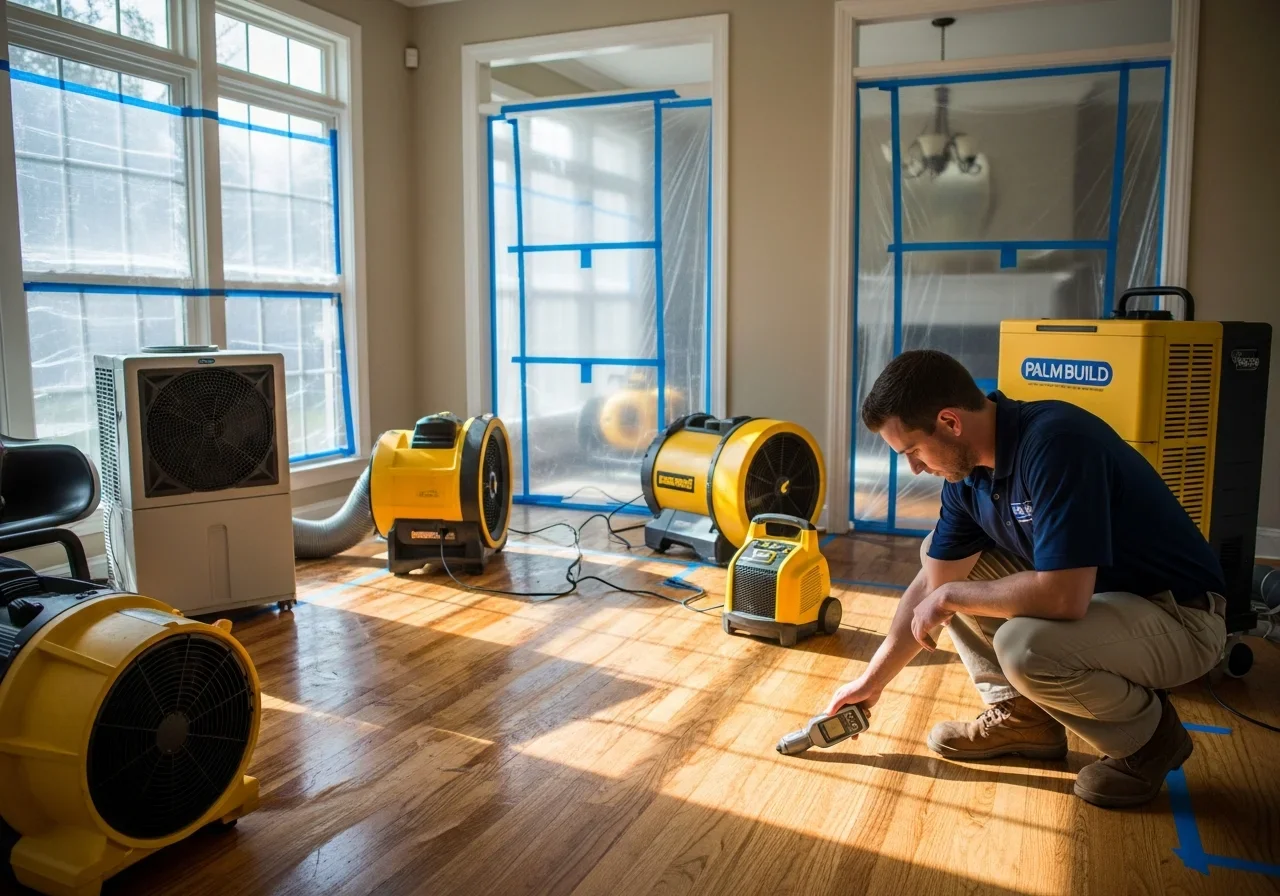
Commercial air movers and dehumidifiers are placed based on your specific moisture map. We return daily with equipment readings and adjust placement as drying progresses. All readings are documented for your insurance claim.

05

Antimicrobial Treatment

Applied to all affected surfaces after extraction. This step is critical in Pineville's humid subtropical climate — without it, mold colonization can begin within 24–48 hours even after apparent drying.

06

Clearance & Documentation

Final moisture readings confirm all materials have reached their dry standard. We deliver a complete insurance-ready package: photos, moisture maps, daily drying logs, and scope of loss. Ready for your adjuster.

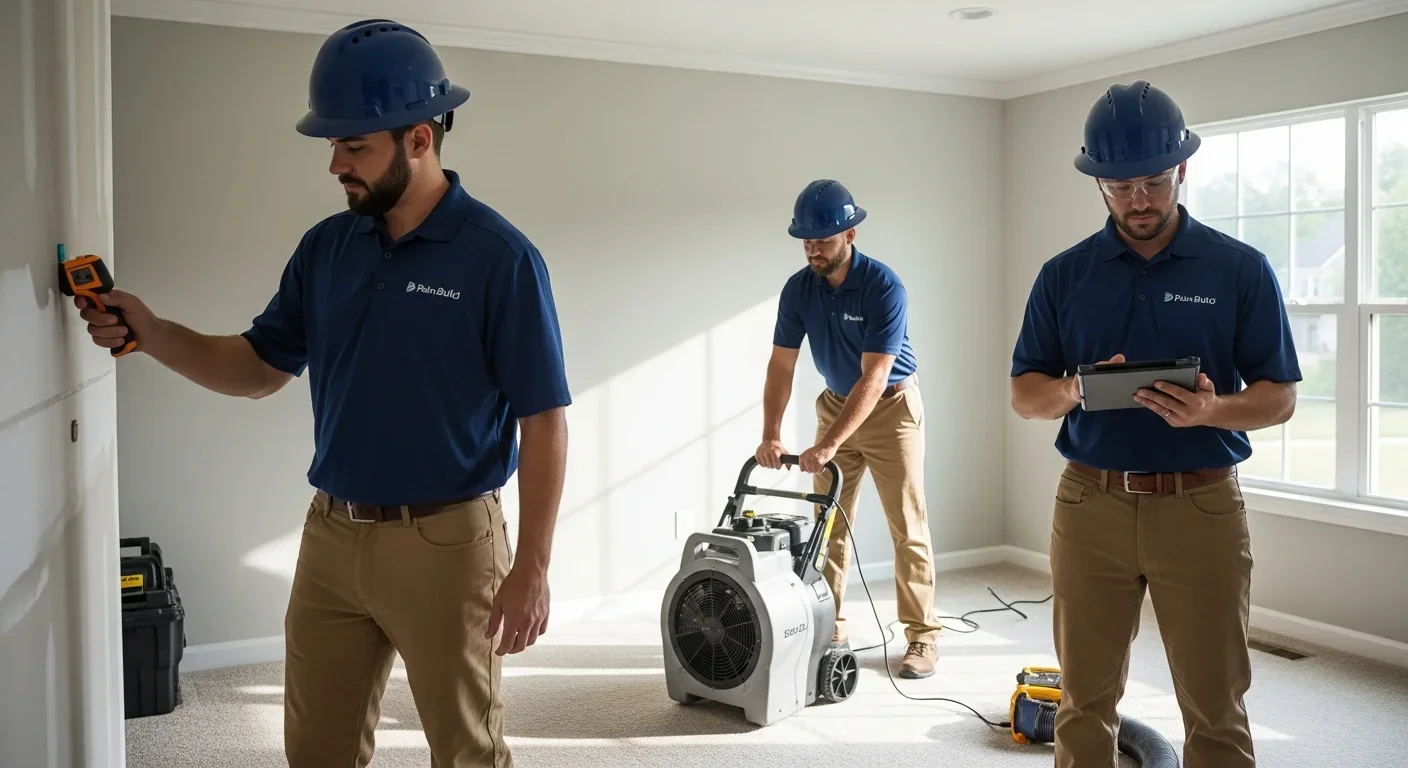
Commercial air movers and dehumidifiers set up in a Pineville NC home during the structural drying phase of water damage restoration

Why Pineville Homes Need Monitored Drying

In Pineville's humid subtropical climate, "looks dry" is not dry. Wall cavities, crawl spaces, and engineered wood products retain moisture long after surface evaporation. Our daily monitoring with calibrated instruments — not eyeball assessment — ensures structural materials reach their actual dry standard before we close a job. This prevents mold callbacks and protects your home long-term.

Call (704) 464-0121 — 24/7 Response

Transparent Pricing — Pineville, NC

Water Damage Restoration Costs in Pineville

Restoration costs in Pineville track with Charlotte metro pricing given the proximity. Here are the ranges we typically see across different loss categories — and what each includes.

Minor Water Loss

$1,200 – $2,800

Single room, appliance overflow

Common in Pineville:

  • Dishwasher overflow into kitchen floor
  • Bathroom fixture overflow
  • HVAC condensate line drip into ceiling

Includes: Extraction, containment drying, antimicrobial treatment, insurance documentation

Moderate Water Loss

$3,500 – $7,000

Multiple rooms, pipe burst

Common in Pineville:

  • Burst supply line reaching multiple rooms
  • Washing machine failure with soaked subfloor
  • Water heater failure in closet spreading to adjacent rooms

Includes: Multi-room extraction, structural drying, subfloor assessment, full documentation

Major Water Event

$8,000 – $18,000

Crawl space, multi-floor, or storm entry

Common in Pineville:

  • Little Sugar Creek-related foundation entry
  • Whole-house plumbing failure
  • Crawl space flood with subfloor saturation

Includes: Full extraction, crawl space drying, vapor barrier assessment, extended monitoring

Structural Rebuild

$20,000 – $45,000+

After major water damage

Common in Pineville:

  • Flooring replacement after prolonged exposure
  • Drywall removal and reinstallation
  • Framing repair after structural saturation

Includes: Restoration work plus full reconstruction — Mecklenburg County permit-ready scope

Most Pineville Homeowners Pay $0 Out of Pocket for Covered Losses

If your water damage resulted from a sudden event — burst pipe, appliance failure, HVAC overflow — your homeowners insurance likely covers restoration costs. Palm Build's documentation is built for insurance claims. We work directly with your adjuster to maximize your covered recovery. Get an estimate: call (704) 464-0121.

Seasonal Damage Patterns — Pineville, NC

When Pineville Homes Are Most at Risk

Water damage in Pineville, NC isn't random. Understanding the seasonal risk calendar helps you protect your home before damage happens — and know when to call fast if it does.

Jan – Feb

Winter

Pipe Burst Risk

NC winters bring occasional hard freezes. Supply line failures and burst pipes — especially in garages, crawl spaces, and uninsulated exterior walls — spike during cold snaps. Pineville homes are not immune to winter pipe damage.

Mar – May

Spring

Storm Season Begins

Spring thunderstorm season in the Piedmont brings intense cell storms that can dump 2–3 inches of rain in an hour — far more than Pineville's clay soils can absorb. Crawl space moisture, basement water entry, and surface flooding begin to increase.

Jun – Aug

Summer

Humidity & Storm Peak

Summer brings 70–90% relative humidity, peak storm activity, and HVAC systems running continuously. Condensate lines clog and overflow. Crawl space humidity hits its annual high. Any unresolved water intrusion from spring becomes a mold event by August.

Sep – Oct

Fall

Flash Flood Season — HIGHEST RISK

Tropical remnants and late-season storms make September and October Pineville's highest-risk months. The September 27, 2024 Mecklenburg County flash flood — linked to Hurricane Helene's inland impacts — is the most recent documented example. Little Sugar Creek rises rapidly during these events.

Nov – Dec

Fall / Winter

Transition Risk

Decreasing storm activity, but the first hard freezes arrive in November–December. Homes with inadequate crawl space insulation and exterior hose bibs are most vulnerable. End-of-year HVAC maintenance overlooked during busy fall season becomes a winter failure point.

Year-Round

24/7 Emergency Response — Every Season

Water damage doesn't respect business hours. Palm Build dispatches from our Charlotte hub to Pineville 24 hours a day, 7 days a week, 365 days a year — including holidays. When Little Sugar Creek rises at 2 AM on a Sunday in September, we're ready.

Call (704) 464-0121 — Available Now

Insurance Coverage — Pineville, NC

How Insurance Works for Water Damage in Pineville

North Carolina homeowners insurance follows standard market rules. Understanding what's covered — and what isn't — before damage happens can save thousands and avoid coverage disputes.

Typically Covered

  • Burst supply lines and pipes
  • Appliance overflow (dishwasher, washing machine, refrigerator)
  • HVAC condensate line failures
  • Accidental discharge from plumbing fixtures
  • Water damage from extinguishing a covered fire

Typically NOT Covered

  • Groundwater flooding (creek overflow, stormwater) — requires separate NFIP flood policy
  • Long-term seepage through foundation walls
  • Gradual crawl space moisture accumulation
  • Mold from neglected or deferred maintenance
  • Sewer backup (may require separate endorsement)

Pineville Creek Flooding and the NFIP Flood Policy Distinction

If Little Sugar Creek overflowed into your property, or stormwater entered through the ground during a major rain event, your standard homeowners policy will not cover that loss. You need a National Flood Insurance Program (NFIP) policy or private flood coverage. Palm Build can help you document exactly how your loss occurred so you file under the right policy and maximize your recovery.

Palm Build's Insurance Documentation Package

Every job we complete in Pineville comes with a full insurance-ready documentation package: pre-work photos documenting all damage, calibrated moisture readings at every measurement point, daily drying logs with equipment placement records, and a complete written scope-of-loss narrative. Your adjuster can use this directly — reducing back-and-forth and accelerating claim resolution.

Common Water Damage Causes — Pineville, NC

Water Damage Types We Restore in Pineville

Understanding what causes water damage in Pineville helps homeowners catch problems earlier and respond faster when they happen.

Most common

Appliance Failures

In Pineville's 15–25 year old housing stock, appliances are entering their highest-failure window. Dishwashers leak at inlet lines. Washing machine supply hoses crack. Refrigerator ice maker lines develop slow pinhole leaks behind cabinets. These losses can run for days before discovery.

Very common

Crawl Space Intrusion

Clay soil drainage keeps moisture near Pineville foundations, and vented crawl spaces allow humid air to condense on cooler wood surfaces. Standing water in a crawl space after a storm is a frequent Palm Build call — and it drives mold growth within 24–48 hours if not extracted.

Seasonal high risk

Storm & Flash Flood Entry

During major rain events — especially fall tropical remnants like the September 2024 Mecklenburg event — water enters through slab edges, foundation gaps, window wells, and any openings near grade. Creek-adjacent properties near Little Sugar Creek face overbank flooding risk.

Common

Plumbing Failures

Pineville's growing multi-family sector — Coventry townhomes, Livano Pineville, Blu South — faces shared plumbing stack failures that affect multiple units simultaneously. Burst supply lines behind walls in 25-year-old single-family homes are an increasing call pattern.

Common, summer peak

HVAC Condensate Overflow

In Pineville's summer humidity, HVAC systems run near-continuously from May through October. Condensate drain lines clog with algae growth, overflow into attic spaces or ceiling plenums, and can saturate insulation, drywall, and framing before detection.

Seasonal

Winter Pipe Bursts

NC winters occasionally deliver hard freezes that rupture uninsulated supply lines in crawl spaces, garages, and exterior walls. Pineville homes built without adequate crawl space insulation are particularly vulnerable during extended cold snaps below 20°F.

Real Pineville Restoration Work

Before & After — Pineville, NC Water Damage Restoration

Palm Build restores Pineville homes to pre-loss condition — from emergency extraction through final clearance testing.

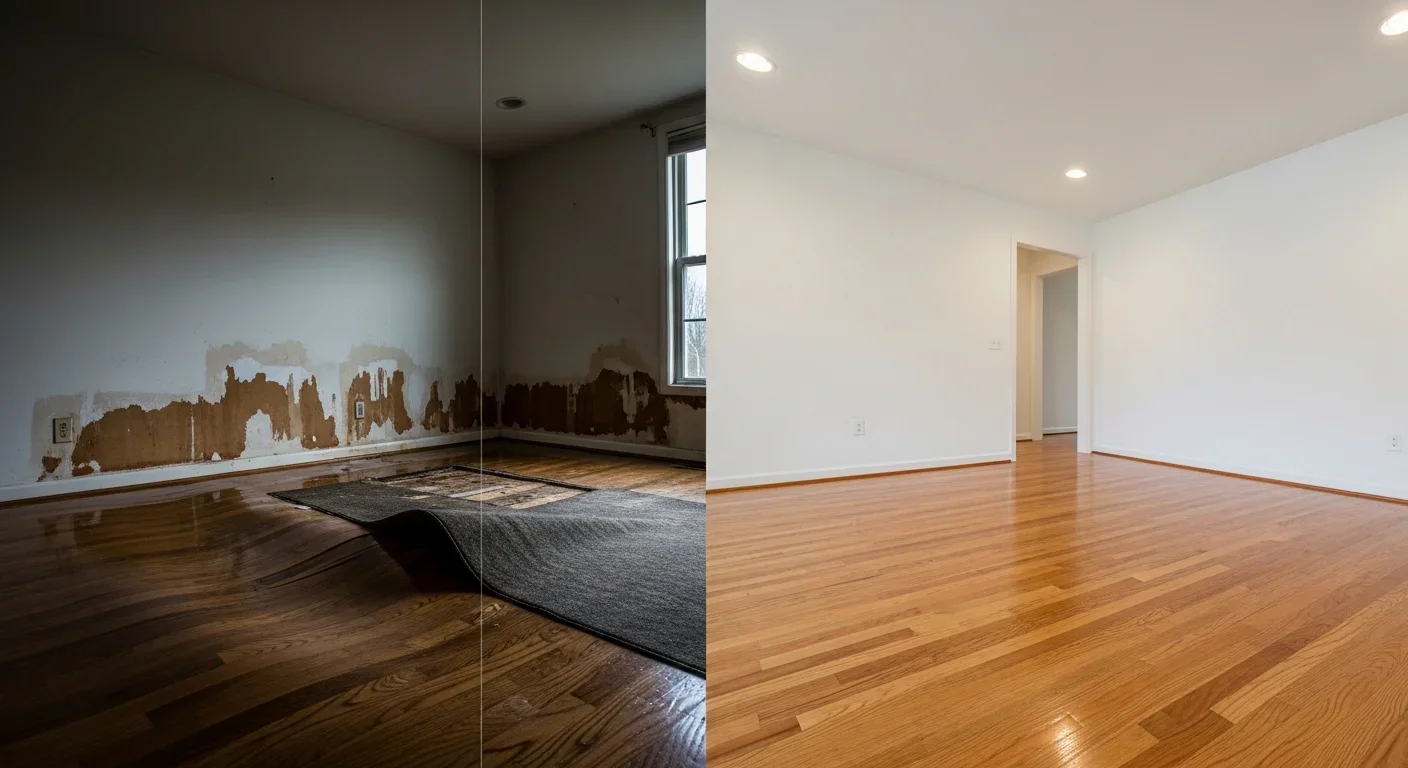
Before and after water damage restoration in a Pineville NC home — buckled water-damaged flooring restored to clean hardwood
Water-damaged hardwood flooring — fully extracted, dried, and restored in a Pineville, NC home after an appliance overflow
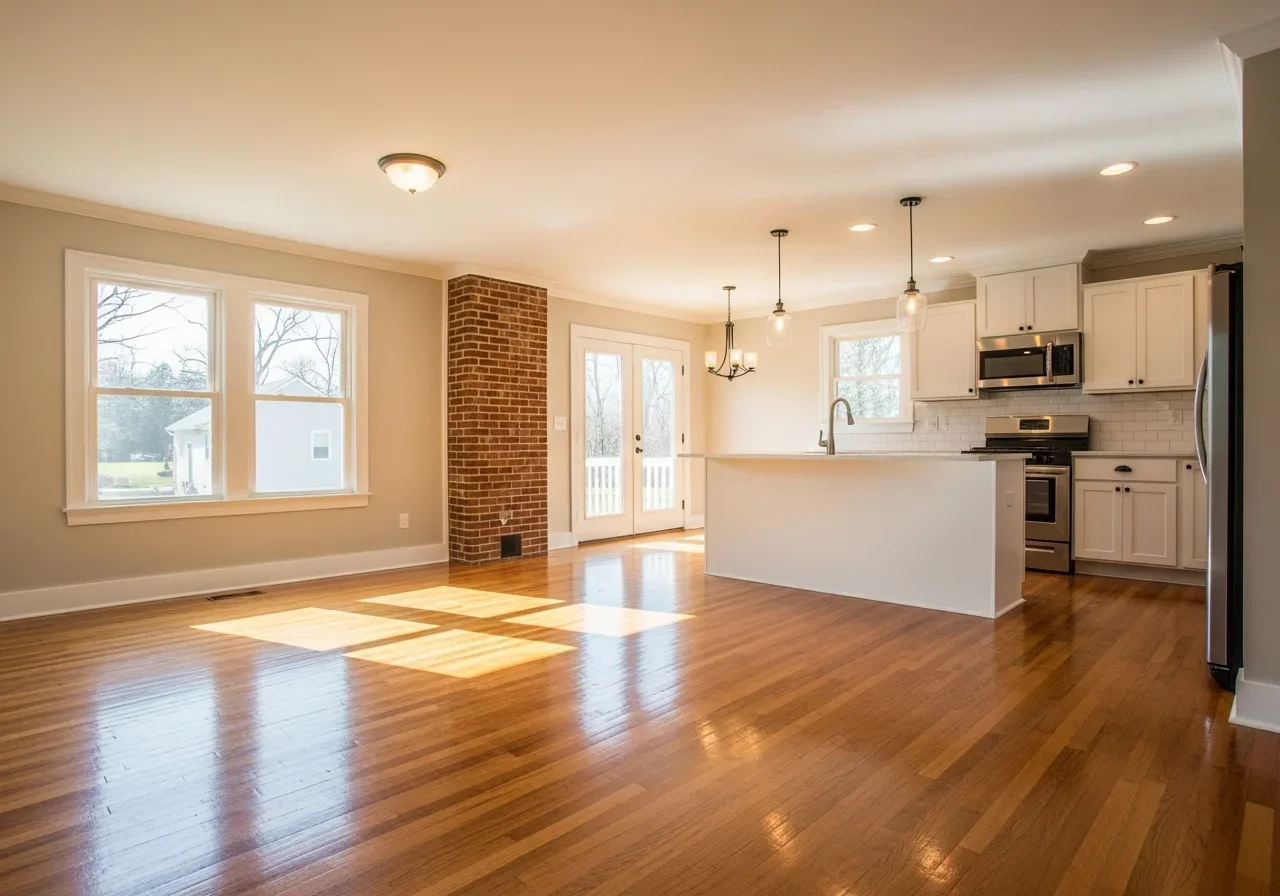
Beautifully restored living area and kitchen in a Pineville NC home after professional water damage restoration by Palm Build
Complete restoration — fresh flooring, clean walls, and full structural drying clearance in a Pineville home
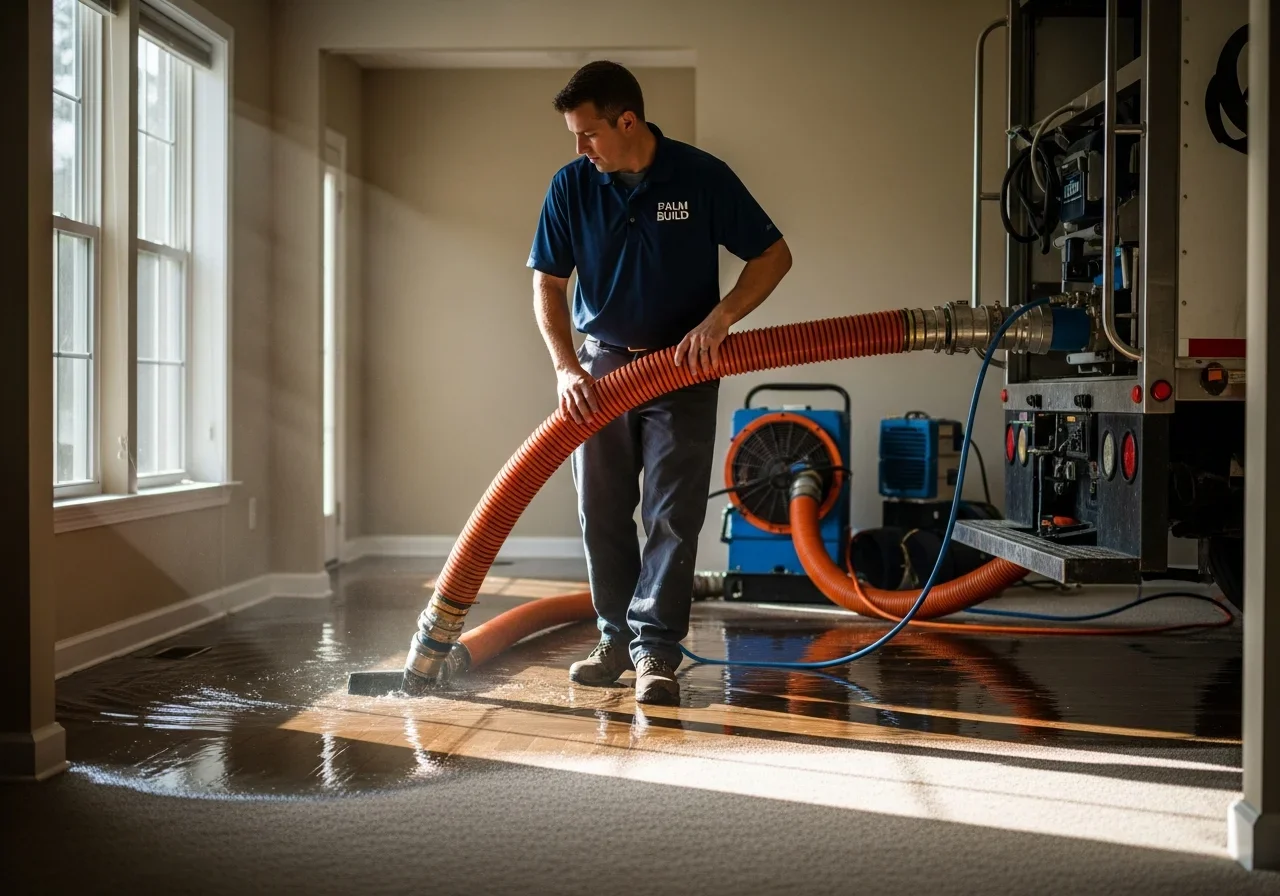
Palm Build technician using truck-mounted water extraction equipment on flooded floors in a Pineville NC home
Truck-mounted extraction — the first step in stopping damage from spreading in a Pineville, NC water loss event
Palm Build water restoration team working inside a Pineville NC home with equipment and moisture meters
The Palm Build team at work in Pineville — moisture mapping, equipment placement, and daily monitoring until your home is truly dry

Why Pineville Homeowners Choose Palm Build

The Water Damage Specialists Serving Pineville, NC

Palm Build combines Charlotte metro proximity, IICRC-certified expertise, and a documentation process built for insurance claims — everything Pineville homeowners need after a water damage event.

12 Miles Away — 20–30 Minutes to Your Door

Our Charlotte hub at 378 Crompton Street puts us closer to Pineville than most local competitors. When water damage happens at 2 AM on a Sunday, proximity matters — we arrive before the damage spreads.

IICRC Certified — Verifiable Credentials

Every Palm Build technician holds current IICRC Water Damage Restoration Technician (WRT) certification. In North Carolina, where there is no state licensing requirement for restoration, verified IICRC credentials are the only way to confirm a contractor has real training.

24/7 Dispatch — No Answering Service

When you call (704) 464-0121, you reach someone who can dispatch a crew — not a call center that takes a message. Every hour of standing water increases structural damage and mold risk. We move fast.

Insurance-Ready Documentation

We photograph all damage before touching anything, produce calibrated moisture maps, maintain daily drying logs, and deliver a complete scope-of-loss package your adjuster can use directly. No extra back-and-forth, faster claim resolution.

HOA and Property Manager Protocol

Pineville's growing townhome and multi-family sector means many losses involve shared infrastructure. We have a dedicated protocol for HOA boards and property managers: fast response, clear responsibility delineation, and board-friendly documentation formats.

Mold Prevention Built Into Every Job

In Pineville's humid climate, antimicrobial treatment after extraction isn't optional — it's standard. We treat all affected surfaces and monitor moisture to dry standard before closing any job, so mold doesn't follow water damage as a second event.

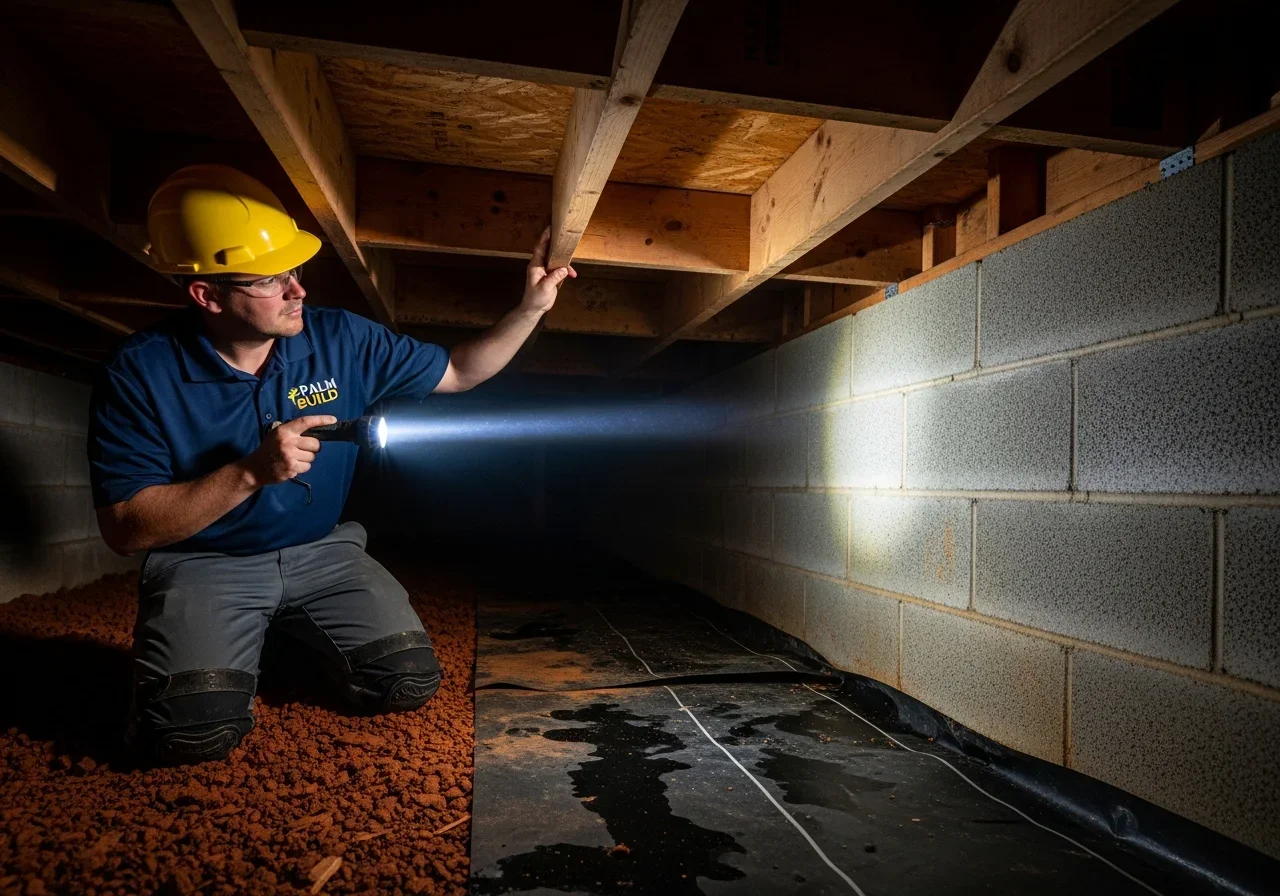
Palm Build technician with flashlight inspecting crawl space under a Pineville NC home — showing the detail-level inspection Palm Build provides

Ready to Restore Your Pineville Home?

From first call to final clearance, Palm Build handles your Pineville water damage restoration with IICRC-certified expertise and insurance-ready documentation.

Common Questions — Pineville, NC

Water Damage FAQ — Pineville Homeowners

Still have questions? Our Pineville team is available 24/7.

Call (704) 464-0121 — 24/7 Dispatch

Water Damage in Pineville, NC? We're 20–30 Minutes Away.

Palm Build's Charlotte-based team serves all of Pineville and Mecklenburg County. IICRC certified, 24/7 dispatch, insurance documentation included.

20-30 min Response IICRC Certified

More in Pineville

Other Palm Build Services in Pineville, NC