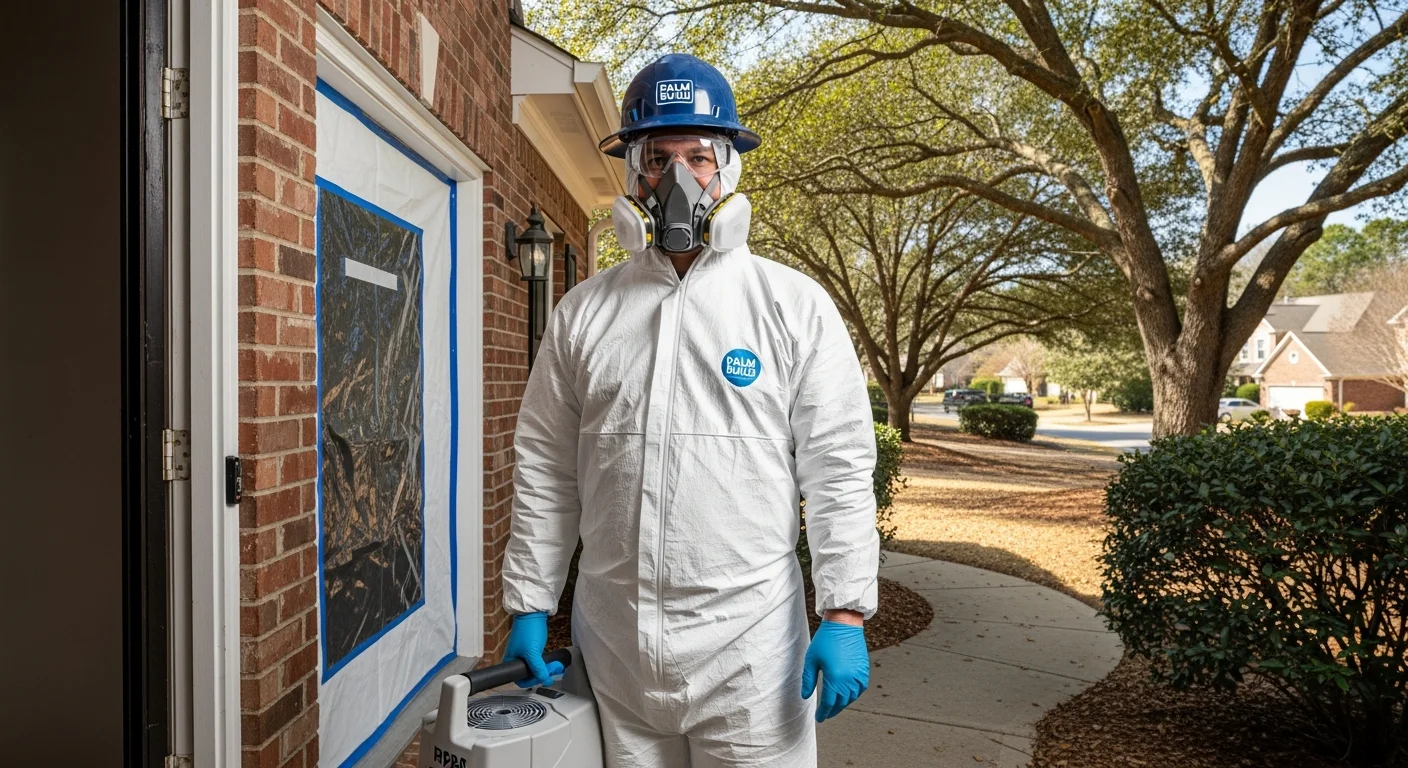
Palm Build mold remediation technician in full protective suit and respirator standing outside a suburban Pineville NC home with HEPA air scrubber equipment
PINEVILLE NC — IICRC S520 MOLD REMEDIATION

Mold Remediation in Pineville, North Carolina

Pineville's humid subtropical climate, clay soil moisture retention, and growing crawl space inventory create ideal conditions for mold amplification after any water event. Palm Build's IICRC-certified team serves all of Pineville from our Charlotte hub — 12 miles away, 20–30 minutes to your door.

~12 miles via US-521 20-30 min Response IICRC Certified

20-30 min

Emergency Response

24/7

Dispatch Available

IICRC

Certified Technicians

Pineville, NC — Mold Risk Factors

Why Mold Thrives in Pineville, NC Homes

Pineville's humid subtropical climate, clay-soil moisture retention, and modern construction materials create conditions where mold amplification after any water event is nearly certain without fast, professional response. NC has no state mold licensing — making IICRC S520 certification the only verifiable quality benchmark.

Humid Subtropical Climate — Mold Conditions Year-Round

70–90%

Summer relative humidity

Pineville's climate is classified humid subtropical. Summer relative humidity runs 70–90% and the growing season keeps temperatures above mold's 40°F threshold for 8–9 months. This means any moisture that enters a Pineville home — from any source — carries a high probability of mold amplification if not professionally dried within 24–48 hours. It's not a coastal problem or a mountain problem; it's a Piedmont NC reality.
Clay Soil Moisture — Crawl Spaces Stay Damp

Persistent

Crawl space moisture risk

Pineville's heavy Piedmont clay soil retains moisture near foundations year-round, creating a persistent elevated humidity environment for vented crawl spaces. Even without a specific water event, the combination of clay soil below and humid summer air entering through vents creates ongoing condensation on wooden floor joists and subflooring. Palm Build regularly finds crawl space mold that developed slowly over 2–5 years in homes with no history of visible water damage.

1990s–2010s Construction — Materials Mold Loves

~1999

Median construction year

Pineville's residential inventory is dominated by 1990s–2010s construction using materials that are highly susceptible to mold colonization: paper-faced drywall, OSB subfloor panels, and engineered lumber all provide abundant organic material for mold growth. Unlike older solid wood construction, these materials support rapid mold colonization once moisture penetrates the surface layer. A Pineville home built in 2002 is not old — but its materials respond to moisture in ways that demand professional remediation, not DIY treatment.

Multi-Family Growth — Shared Moisture Pathways

Growing

Multi-family housing inventory

Pineville's expanding townhome and multi-family sector — Coventry, Livano Pineville, Blu South — introduces shared moisture pathways that standalone homes don't have. A water event in a neighboring unit can push moisture through shared wall cavities without triggering visible damage in your unit. HVAC systems in multi-unit buildings share condensate drainage that can back up into multiple units simultaneously. Palm Build sees this pattern regularly in Pineville's newer attached housing.

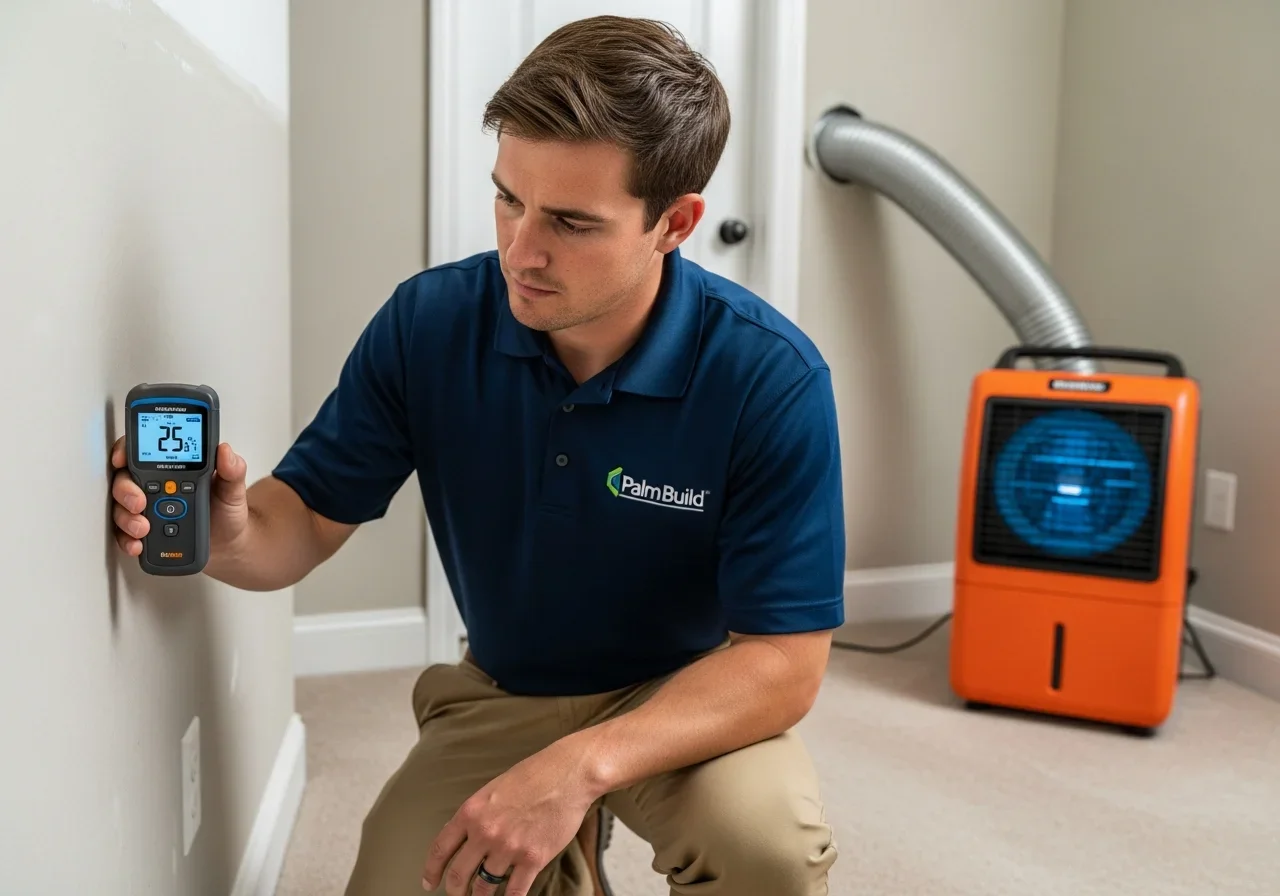
Palm Build technician using a calibrated moisture meter on a wall in a Pineville NC home showing elevated humidity readings
Professional moisture mapping is the only reliable way to identify hidden mold risk in Pineville homes — visual inspection alone misses moisture inside walls, under floors, and in crawl spaces where Pineville's mold problems most often begin.

Early Detection — Pineville, NC

Warning Signs of Mold in Pineville Homes

In Pineville's humid subtropical climate, mold rarely announces itself clearly. Most infestations begin in crawl spaces, wall cavities, or HVAC systems — invisible until the problem is already significant. Knowing the indicators early prevents a minor remediation from becoming a major reconstruction.

Visible Signs

  • Dark spots or discoloration on drywall, ceilings, or wood framing
  • Fuzzy or powdery growth in corners, on grout lines, or under sinks
  • Peeling, bubbling, or staining on painted walls or wallpaper
  • Black or green growth on crawl space joists or subfloor panels

Odor Indicators

  • Persistent musty or earthy smell that worsens in humid weather
  • Odor that intensifies when HVAC system runs (ductwork colonization)
  • Basement or crawl space smell that migrates to living areas
  • Smell that returns after cleaning — indicating hidden source

Health Symptoms

  • Unexplained respiratory symptoms that improve when away from home
  • Persistent cough, congestion, or watery eyes indoors
  • Recurring headaches correlated with time spent in specific rooms
  • Allergy-like reactions with no identified allergen source

Structural Clues

  • Soft spots in wood floors or subfloor that flex underfoot
  • Warped or cupped hardwood flooring over a crawl space
  • Unexplained condensation on interior windows or cold water pipes
  • Efflorescence (white mineral deposits) on concrete block walls

Moisture History

  • Past water damage that was dried but never professionally assessed
  • Previous flooding, even minor appliance overflow
  • Vented crawl space in a Pineville home (elevated risk year-round)
  • History of slow plumbing leaks behind walls or under slab

Construction-Era Flags

  • Home built 1992–2012 using paper-faced drywall and OSB panels
  • Engineered lumber (LVL beams, I-joists) in crawl or basement
  • Townhome or attached unit with shared wall cavity
  • Flat or low-slope roof with history of ponding or slow drainage

The 48-Hour Rule in Pineville's Climate

Mold can begin colonizing wet materials within 24–48 hours. In Pineville's summer humidity — where relative humidity regularly exceeds 80% — that window is on the shorter end. A water event in any form (appliance overflow, plumbing leak, storm intrusion) requires professional moisture assessment within 24 hours to prevent mold amplification. Waiting to see if it dries on its own is not a viable strategy in Piedmont NC.

ANSI/IICRC S520 Protocol — Pineville, NC

How Mold Remediation Actually Works

Every Palm Build mold remediation in Pineville follows the ANSI/IICRC S520 Standard for Professional Mold Remediation — the industry's definitive technical protocol. In North Carolina, where no state license is required to do mold work, adherence to S520 is the only verifiable mark of quality.

Mold Assessment & Moisture Mapping

Day 1

IICRC S520 remediation begins with a thorough visual inspection and calibrated moisture mapping of the entire affected area. We use thermal imaging to detect moisture behind walls and under floors without destructive opening, and take air samples if testing is indicated. This assessment defines the contamination boundary — the critical first step that determines everything else.

ANSI/IICRC S520 §7.1 — Initial Assessment Protocol

Containment & Negative Air Pressure

Day 1

We isolate the mold-affected area using 6-mil poly sheeting, zip walls, and negative air pressure created by HEPA-filtered air scrubbers. This prevents cross-contamination to unaffected areas of your Pineville home. In townhomes and multi-unit properties, containment protocols are expanded to prevent spore transfer through shared wall cavities — a step many contractors skip.

ANSI/IICRC S520 §8 — Containment Requirements

Removal of Affected Materials

Days 1–3

Porous materials that cannot be cleaned to a verified mold-free condition — paper-faced drywall, insulation, carpet, and compromised OSB — are removed and double-bagged in sealed poly before disposal. Structural wood in crawl spaces is evaluated: surface mold on sound wood can be HEPA-vacuumed and treated; structurally compromised members require replacement in coordination with our reconstruction division.

ANSI/IICRC S520 §9 — Materials Removal Protocol

HEPA Vacuuming & Antimicrobial Treatment

Days 2–4

After material removal, all remaining surfaces are HEPA-vacuumed to remove settled spores, then treated with EPA-registered antimicrobial agents. In Pineville's humid climate, we apply encapsulants to crawl space framing — a vapor-blocking treatment that seals cleaned surfaces from future moisture-driven colonization. This is not optional in our standard scope; it's the difference between remediation and remediation that lasts.

ANSI/IICRC S520 §10 — Cleaning and Disinfection

Drying to Mold-Safe Moisture Levels

Days 3–7

Mold cannot be successfully remediated without first drying the structure to moisture levels that will not support re-growth. We monitor daily with calibrated moisture meters and psychrometric readings. In Pineville's humid climate, this step frequently takes longer than in drier climates — we do not close a job until readings confirm the structure is at or below the wood equilibrium moisture content benchmark for NC.

ANSI/IICRC S520 §11 — Structural Drying Verification

Post-Remediation Verification

Day 7–10

Final clearance involves a visual inspection and air quality sampling by our IICRC Mold Remediation Specialist. We provide a written clearance report documenting pre- and post-remediation conditions. This documentation package is delivered in a format accepted by home inspectors, insurance adjusters, and future real estate transactions — because Pineville homeowners sometimes need to prove remediation was properly completed.

ANSI/IICRC S520 §12 — Post-Remediation Verification

Pineville's #1 Mold Problem

Crawl Space Mold in Pineville, NC Homes

The most common mold call Palm Build receives from Pineville homeowners isn't from a flood — it's from a crawl space that's been silently accumulating moisture for years. Pineville's heavy clay soils and vented-crawl construction make crawl space mold almost inevitable without active moisture management.

Why Pineville Crawl Spaces Develop Mold

Clay Soil Moisture Retention

Pineville's heavy Piedmont clay doesn't drain — it holds moisture near foundations. Even during dry periods, soil moisture elevation keeps crawl space relative humidity above the 60% mold-growth threshold.

Vented Crawl Spaces

Most Pineville homes built before 2012 have vented crawl spaces. During summer, warm humid outdoor air enters through foundation vents, hits cooler surfaces, and condenses — creating standing moisture without any plumbing failure.

Paper-Faced OSB and Engineered Lumber

The dominant framing materials in 1995–2010 Pineville construction — OSB panels and engineered I-joists — provide ideal organic substrate for mold. Unlike solid-sawn lumber, these materials support mold colonization faster once moisture penetrates.

Inadequate Vapor Barriers

Builder-grade 6-mil poly vapor barriers degrade over time and are rarely lapped or sealed to walls correctly. A compromised barrier allows direct soil moisture contact with wood framing — the most common cause of crawl space mold in older Pineville homes.

Palm Build's Crawl Space Mold Protocol

1

Full Crawl Assessment

Moisture mapping, wood moisture content readings at 12-18 inch intervals across all framing members, and visual documentation of all visible mold, staining, and structural deterioration.

2

HEPA Vacuuming & Antimicrobial Treatment

IICRC S520-compliant surface cleaning of all affected framing. EPA-registered antimicrobial applied to all wood surfaces within the remediation boundary — not just the visibly affected areas.

3

Encapsulant Application

White vapor-blocking encapsulant applied to all treated framing and subfloor panels. Encapsulant seals cleaned surfaces from future moisture penetration and provides a visual baseline for future inspections.

4

Vapor Barrier Upgrade

20-mil reinforced poly vapor barrier installed on soil floor, lapped 12 inches at seams and sealed with butyl tape, run up and sealed to the stem wall. This eliminates the soil-to-wood moisture pathway that drives most Pineville crawl space mold.

5

Drainage and Ventilation Assessment

Grade and drainage evaluation around the foundation perimeter. Recommendation for crawl space encapsulation with conditioned air or dehumidifier if vented-crawl moisture levels are persistently elevated — an investment that prevents recurrence.

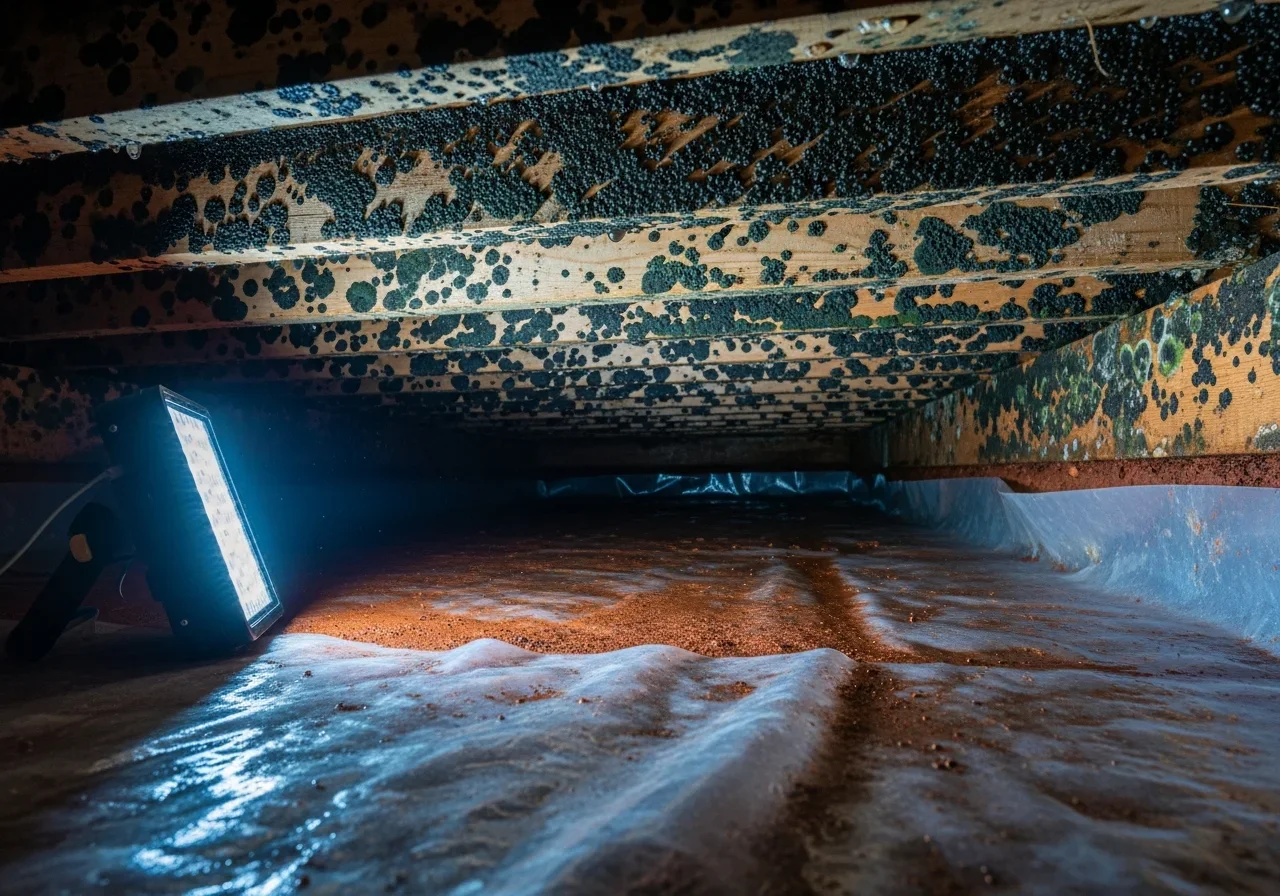
Mold growth on floor joists in a Pineville NC crawl space — white fuzzy surface mold on OSB subfloor panels caused by persistent soil moisture

This crawl space in a 2003 Pineville home showed no visible mold at floor level — the growth was discovered during a routine moisture assessment triggered by a musty smell in the first floor. Palm Build remediated 1,200 sq ft of affected framing, installed a 20-mil vapor barrier, and provided written clearance documentation within 9 days.

Mold Remediation Cost Guide — Pineville, NC

What Mold Remediation Costs in Pineville

Mold remediation cost depends on contamination area, affected materials, and how long moisture was present before discovery. These are realistic ranges for Pineville homes — based on actual jobs, not national averages that rarely reflect the Piedmont NC market.

$500–$1,500

Surface / Spot Treatment

Limited visible mold in one location — bathroom tile grout, small drywall section, or HVAC drip pan.

Typical Scenario

Isolated bathroom or utility room with contained moisture source, no hidden spread.

Only appropriate when moisture mapping confirms contamination is truly isolated. Never accept a surface treatment estimate without documented moisture assessment.

$1,500–$5,000

Moderate Remediation

1–2 rooms affected, some drywall removal required, crawl space surface mold on joists.

Typical Scenario

Slow plumbing leak behind a wall discovered within 60–90 days; mild crawl space surface mold on sound framing.

The most common scope Palm Build performs in Pineville — vented crawl space homes with 200–600 sq ft of joist surface mold.

$5,000–$15,000

Extensive Remediation

Multiple rooms, significant drywall removal, full crawl space remediation with vapor barrier, HVAC involvement.

Typical Scenario

Undiscovered water damage left untreated for 3–12 months; full crawl space with compromised vapor barrier and colonized joists.

Crawl space mold discovered after years of slow moisture buildup often reaches this tier when encapsulation and structural assessment are included.

$15,000–$40,000+

Structural Mold + Reconstruction

Structurally compromised framing requiring replacement, full room rebuilds after gutting, large-loss multi-room events.

Typical Scenario

Long-term undetected leaks in a 2000s-era Pineville home with OSB framing; multi-unit loss with spread through shared wall cavities.

Palm Build's reconstruction division integrates directly with remediation at this tier — one contractor from gut-out to rebuild, which is faster and reduces insurance claim complexity.

What Drives Cost Up in Pineville Specifically

Crawl space access difficulty — low clearance adds labor time

OSB subfloor that's colonized but structurally sound — clean or replace decision

Multi-unit properties requiring expanded containment protocols

Post-remediation vapor barrier upgrade — almost always recommended in Pineville

HVAC duct cleaning if spores have entered the air handler

Documentation package for real estate transactions or insurance

NC Licensing Reality — Pineville, NC

Mold Credentials in North Carolina — What You Need to Know

North Carolina does not license mold remediation contractors. There is no NC state exam, no NC mold contractor registration, and no NC agency that oversees mold remediation companies. Anyone can legally perform mold work in Pineville. This makes verifying IICRC credentials — not just claiming them — the only meaningful quality check available to homeowners.

Palm Build's Verified Credentials

IICRC Mold Remediation Specialist (MRS)

Individual technician-level certification requiring hands-on training and written examination under ANSI/IICRC S520. Palm Build technicians hold current MRS credentials.

ANSI/IICRC S520 Standard Adherence

The S520 Standard for Professional Mold Remediation is the published technical protocol governing assessment, containment, removal, and clearance. We follow it on every Pineville job.

IICRC Firm Certification

Palm Build holds IICRC Firm Certification — a company-level credential requiring that a minimum percentage of field technicians hold individual IICRC certifications.

Written Clearance Documentation

Every remediation includes written pre- and post-remediation documentation with moisture readings, air sample results, and scope-of-work narrative acceptable for insurance, real estate, and legal purposes.

Red Flags When Vetting Pineville Mold Companies

Offers mold "cleaning" without moisture assessment or mapping

Cannot provide verifiable IICRC credentials for individual technicians

Quotes a flat price without a site visit

Does not mention containment or air pressure differential

Offers to "kill mold" with bleach or fogger only — no physical removal

Cannot explain post-remediation clearance verification process

Does not carry general liability and workers' comp insurance in NC

How to Verify IICRC Credentials Before Hiring

IICRC credentials are searchable. Use the Global Locator at iicrc.org and search by company name or technician name. Palm Build's firm certification and individual technician credentials are verifiable there. If a company claims IICRC certification but doesn't appear in the registry, treat that as a disqualifying red flag — especially in a state like North Carolina where no other quality mechanism exists for mold remediation contractors.

Insurance Coverage — Pineville, NC

Does Insurance Cover Mold Remediation in Pineville?

Mold insurance coverage in North Carolina is nuanced — the same policy that covers water damage often covers resulting mold, but with important limitations. Understanding the coverage/exclusion boundary before starting work is critical to claim success.

Typically Covered

Mold resulting from a covered water loss

If your homeowner's policy covered the water event (burst pipe, appliance overflow, sudden leak) and mold develops as a result, most policies will cover mold remediation up to the policy limit — but this often has a sub-limit separate from your main dwelling coverage.

Emergency water extraction costs

The extraction and drying work that prevents mold from developing is typically covered under the water damage portion of your claim — not a separate mold line item. This is why fast response matters.

Contents cleaning or replacement

Mold-contaminated personal property may be covered under your contents coverage if the mold resulted from a covered water event. Documentation of the water event timeline is critical.

Typically Not Covered

Mold from long-term neglect or maintenance failure

Slow leaks that were visible and unaddressed, persistent humidity from lack of ventilation, or mold discovered during a sale inspection are typically excluded — the standard policy language is "gradual or repeated seepage."

Mold in crawl spaces from normal humidity

Most standard HO-3 policies exclude mold that develops from the home's normal humidity environment — even if that humidity is elevated by design (vented crawl space in a humid climate). This is the most common exclusion Palm Build encounters in Pineville crawl space cases.

Flood-related mold

Homeowner's insurance doesn't cover flooding. If mold follows stormwater intrusion or a flood event, it falls under NFIP (National Flood Insurance Program) or a separate flood policy — with separate mold sub-limits.

Pre-existing mold discovered during renovation

If mold is found during unrelated renovation work, it's typically excluded as a pre-existing condition. Documentation of when and how the mold was discovered matters significantly for coverage outcomes.

The Documentation Package That Wins Claims

Palm Build provides every Pineville mold client with a complete documentation package. These items are what adjusters need to approve a mold remediation claim:

Time-stamped photos of all mold and moisture damage before any work begins
Calibrated moisture meter readings at all measurement points
Air sample lab results (pre-remediation baseline)
Written scope of work with line-item breakdown
Daily drying logs if concurrent drying work is underway
Air sample lab results (post-remediation clearance)
Written clearance letter from IICRC-certified professional

Pineville townhome note: If your mold event involves a neighboring unit (shared wall moisture, shared HVAC drainage), documentation must capture the boundary between your unit's damage and shared infrastructure. Palm Build's protocol specifically addresses this for multi-unit properties — a detail that's easy to miss and hard to fix after the fact.

Real Pineville Mold Work

Mold Remediation Results — Pineville, NC

Every job Palm Build performs in Pineville follows ANSI/IICRC S520 — from initial assessment through final clearance documentation.

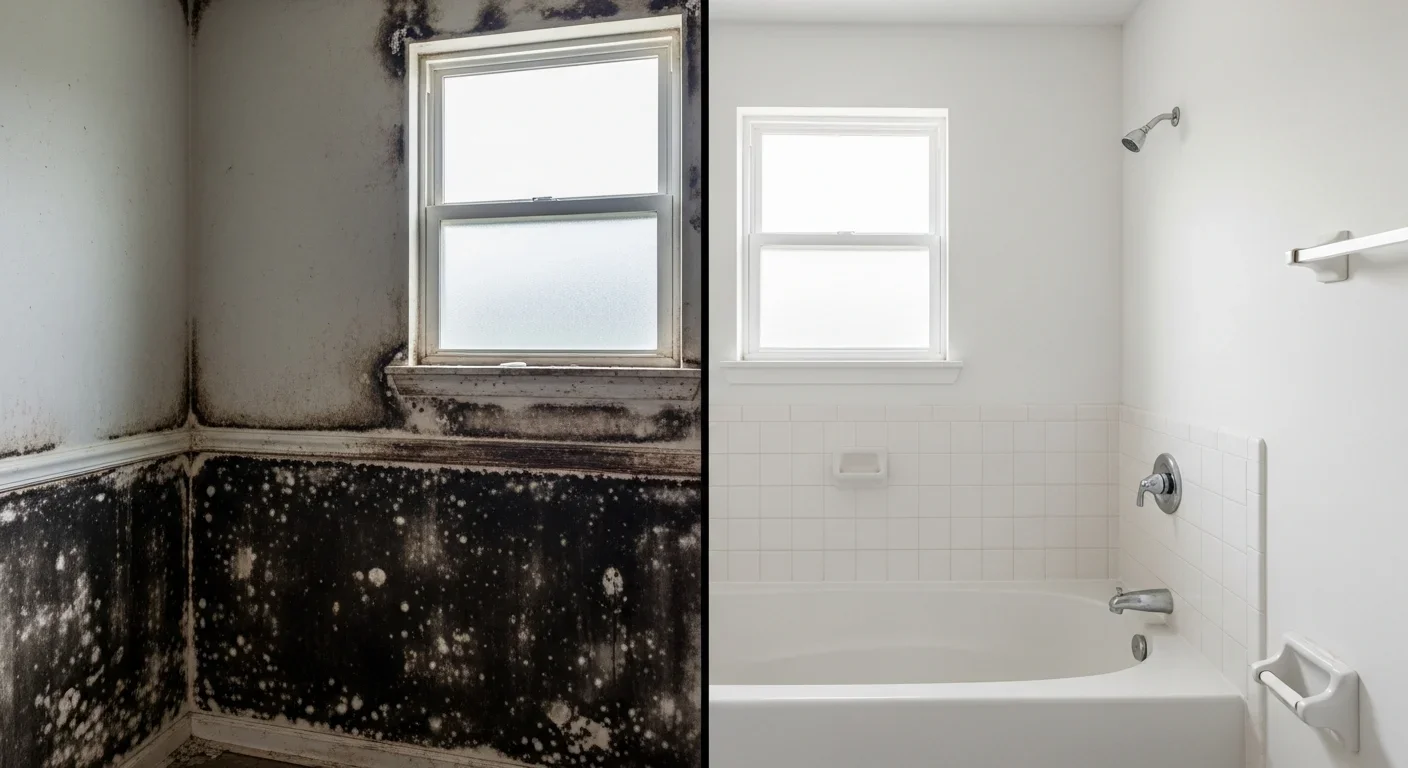
Before and after mold remediation in a Pineville NC crawl space — heavily colonized floor joists cleaned and encapsulated to clear wood
Crawl space mold remediation in a 2004 Pineville home — floor joists treated, encapsulated, and 20-mil vapor barrier installed
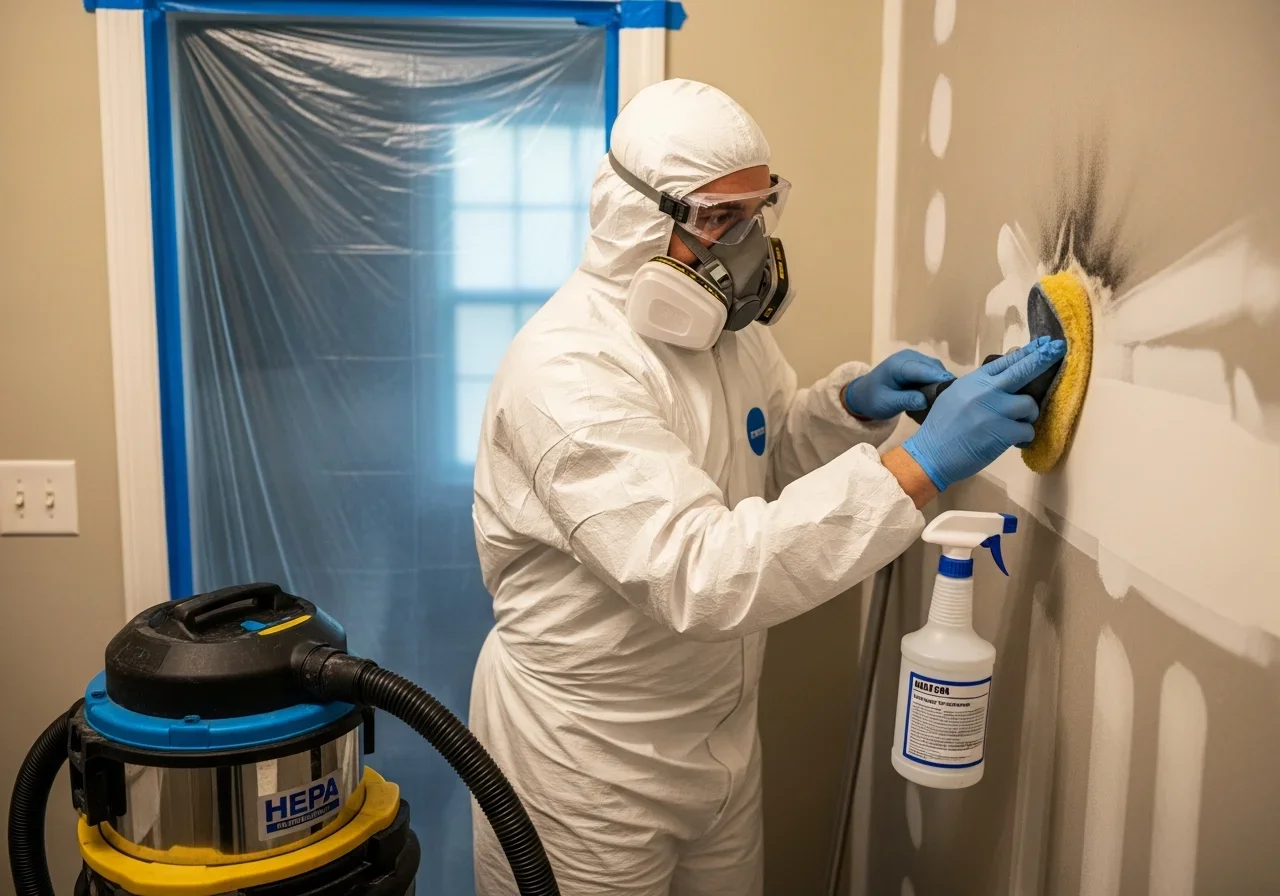
Palm Build mold remediation technician in full PPE applying antimicrobial treatment to a Pineville NC crawl space
Full-containment protocol in a Pineville townhome — HEPA-filtered air scrubbers maintain negative pressure throughout remediation
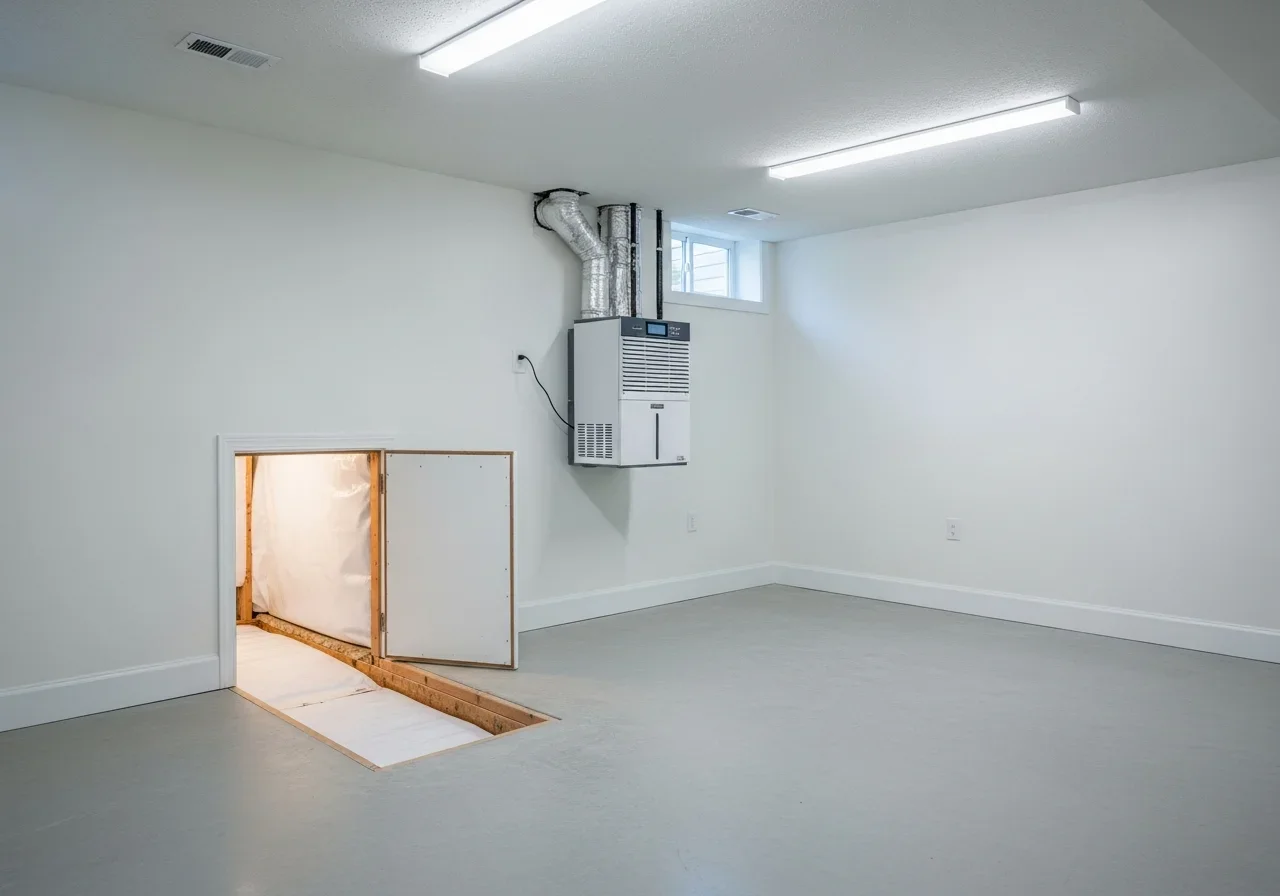
Fully remediated Pineville NC crawl space with white encapsulant on joists and new 20-mil vapor barrier on soil floor
Post-remediation crawl space — encapsulated joists, sealed vapor barrier, and IICRC S520 clearance documentation provided
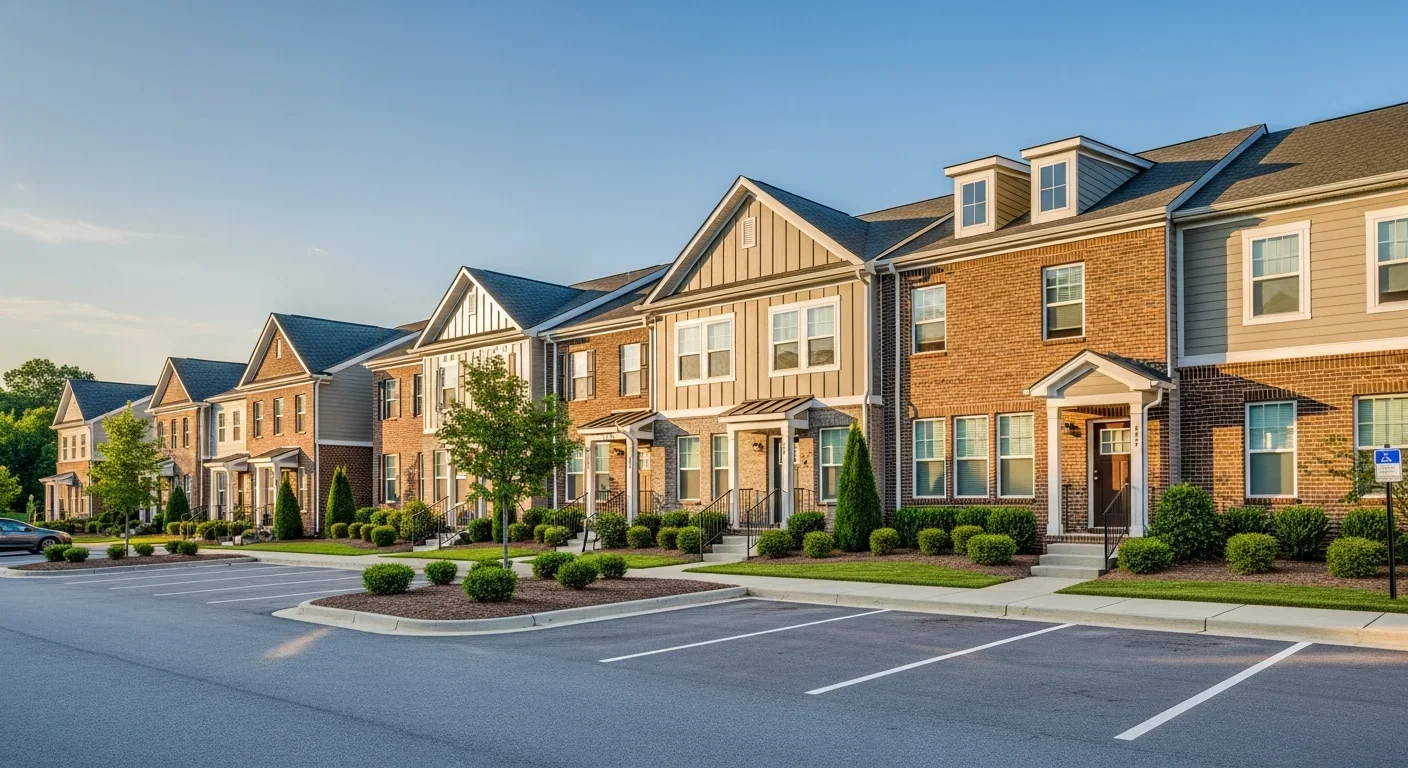
Multi-family townhome community in Pineville NC where Palm Build performed mold remediation following shared-wall moisture event
Multi-unit mold remediation in Pineville — Palm Build's HOA protocol covers shared infrastructure documentation for boards and insurers

Why Pineville Homeowners Choose Palm Build

The Mold Remediation Specialists Serving Pineville, NC

Palm Build combines IICRC S520 expertise, Charlotte metro proximity, and documentation built for North Carolina's unregulated mold remediation market — everything Pineville homeowners need when mold is found.

12 Miles Away — Charlotte Hub Response

378 Crompton Street, Charlotte puts Palm Build within 20–30 minutes of any Pineville address. Mold assessment the same day you call — not a 3-day wait while spore counts climb.

IICRC S520 — Verifiable, Not Just Claimed

Every Palm Build technician holds current IICRC Mold Remediation Specialist credentials, searchable via the IICRC Global Locator at iicrc.org. In North Carolina where no state license exists, this is the only independent verification of actual training.

Crawl Space Expertise Built Into Every Job

Pineville's clay soil and vented crawl space inventory mean most mold jobs involve crawl access. Palm Build carries all crawl space equipment as standard kit — not as an upsell. Low clearance, compromised vapor barriers, and joist-level mold are our standard operating environment here.

Clearance Documentation That Actually Works

We provide written pre- and post-remediation documentation with air sample lab results, calibrated moisture readings, and a scope-of-work narrative. This package satisfies home inspectors, insurance adjusters, and real estate attorneys — important in a market where Pineville homes turn over frequently.

Multi-Unit and HOA Protocol

Pineville's growing townhome and multi-family sector introduces mold scenarios that standalone home contractors aren't built for. Palm Build has a dedicated protocol for HOA boards: clear scope delineation between unit and common area, documentation formatted for board meetings, and experience working with HOA insurance carriers.

Remediation + Reconstruction — One Contractor

When mold remediation exposes structural damage requiring rebuild — drywall, framing, insulation — Palm Build handles both phases. No handoff gap, no delay while you find a second contractor, and insurance documentation covering both scopes in one package.

Palm Build technician using a calibrated moisture meter on a wall in a Pineville NC home showing elevated humidity readings

Ready to Remediate Your Pineville Home?

From first assessment through post-remediation clearance, Palm Build handles your Pineville mold remediation with IICRC S520 protocol and documentation that protects your home's value.

Common Questions — Pineville, NC

Mold Remediation FAQ — Pineville Homeowners

Still have questions? Our Pineville team is available 24/7.

Call (704) 464-0121 — 24/7 Dispatch

Mold in Your Pineville, NC Home? Get IICRC-Certified Remediation.

Palm Build's Charlotte team serves all of Pineville with IICRC S520 mold remediation. Crawl spaces, multi-family units, and whole-home projects — 24/7 response, insurance documentation included.

20-30 min Response IICRC Certified

More in Pineville

Other Palm Build Services in Pineville, NC