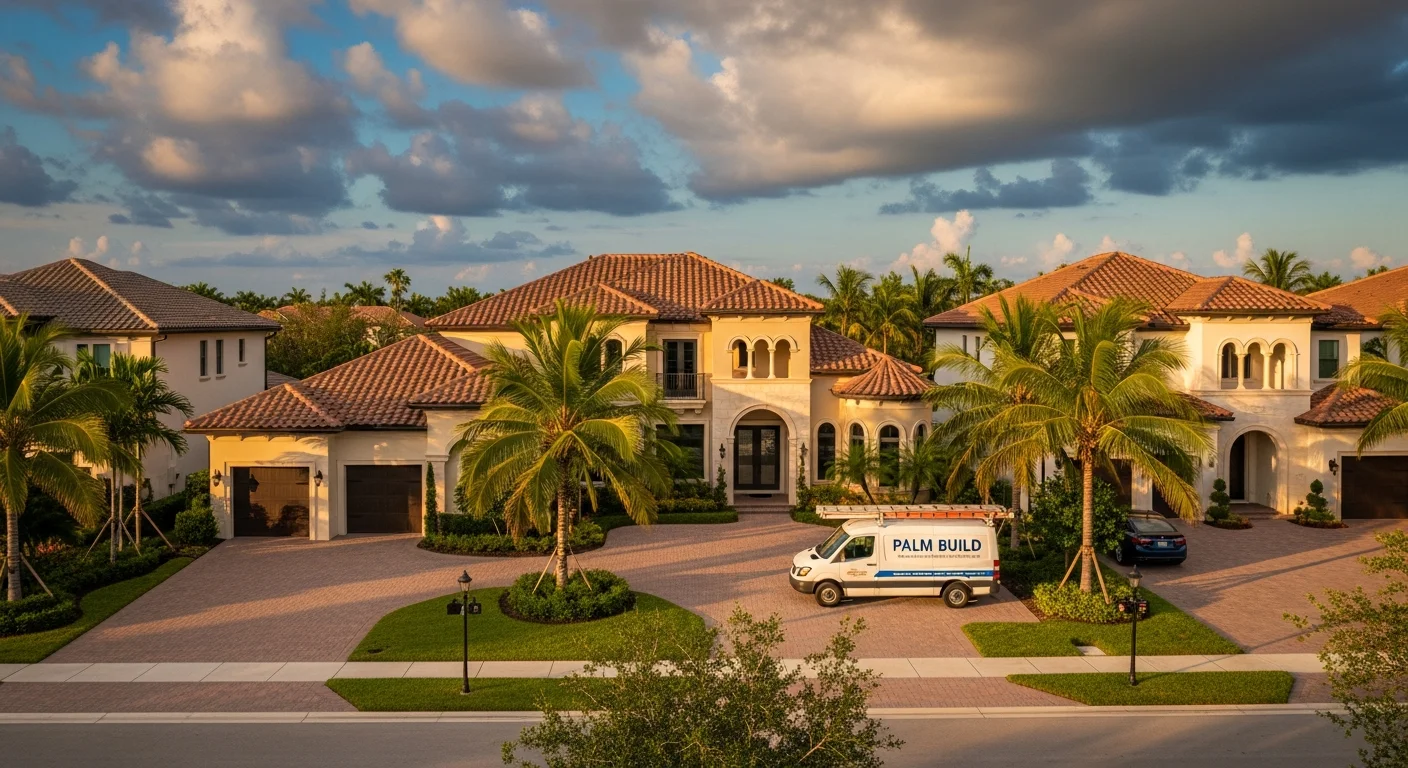
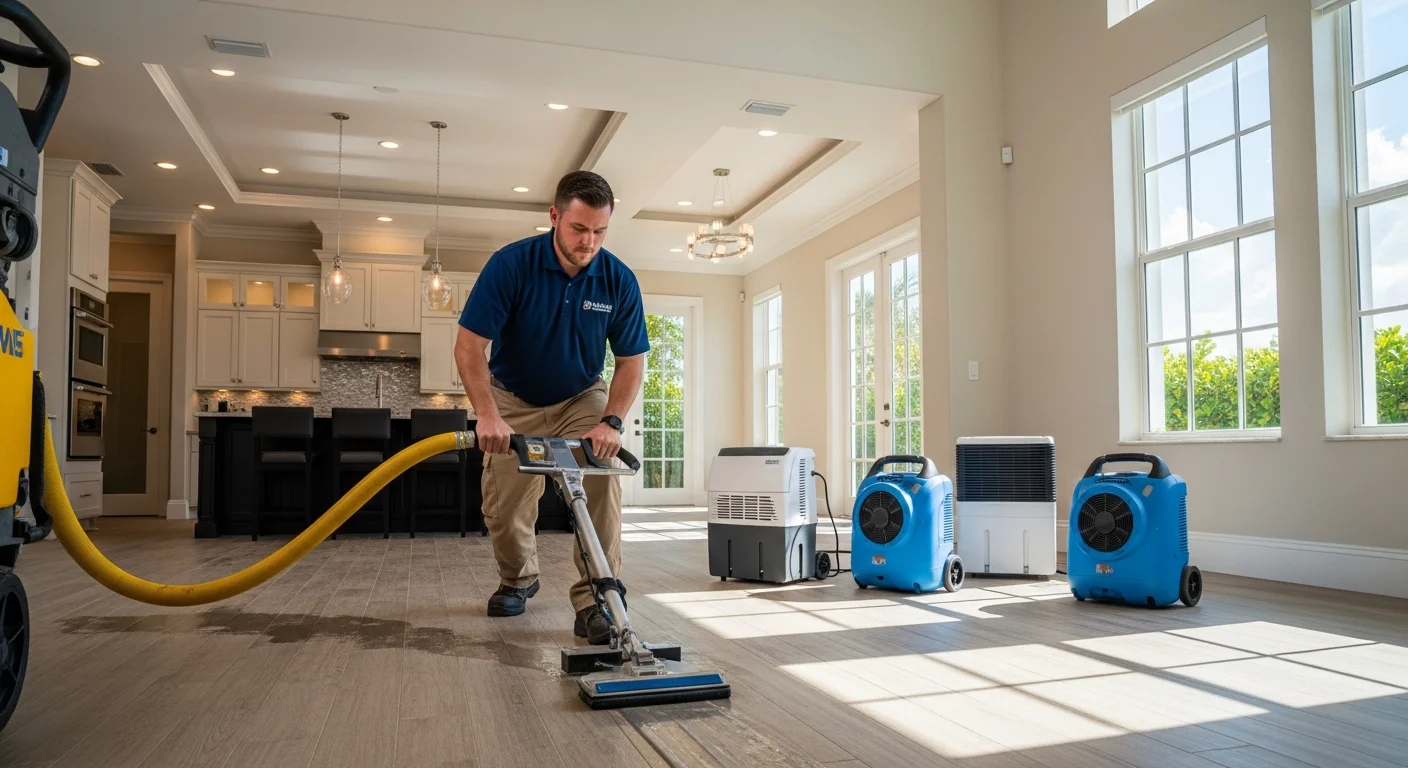
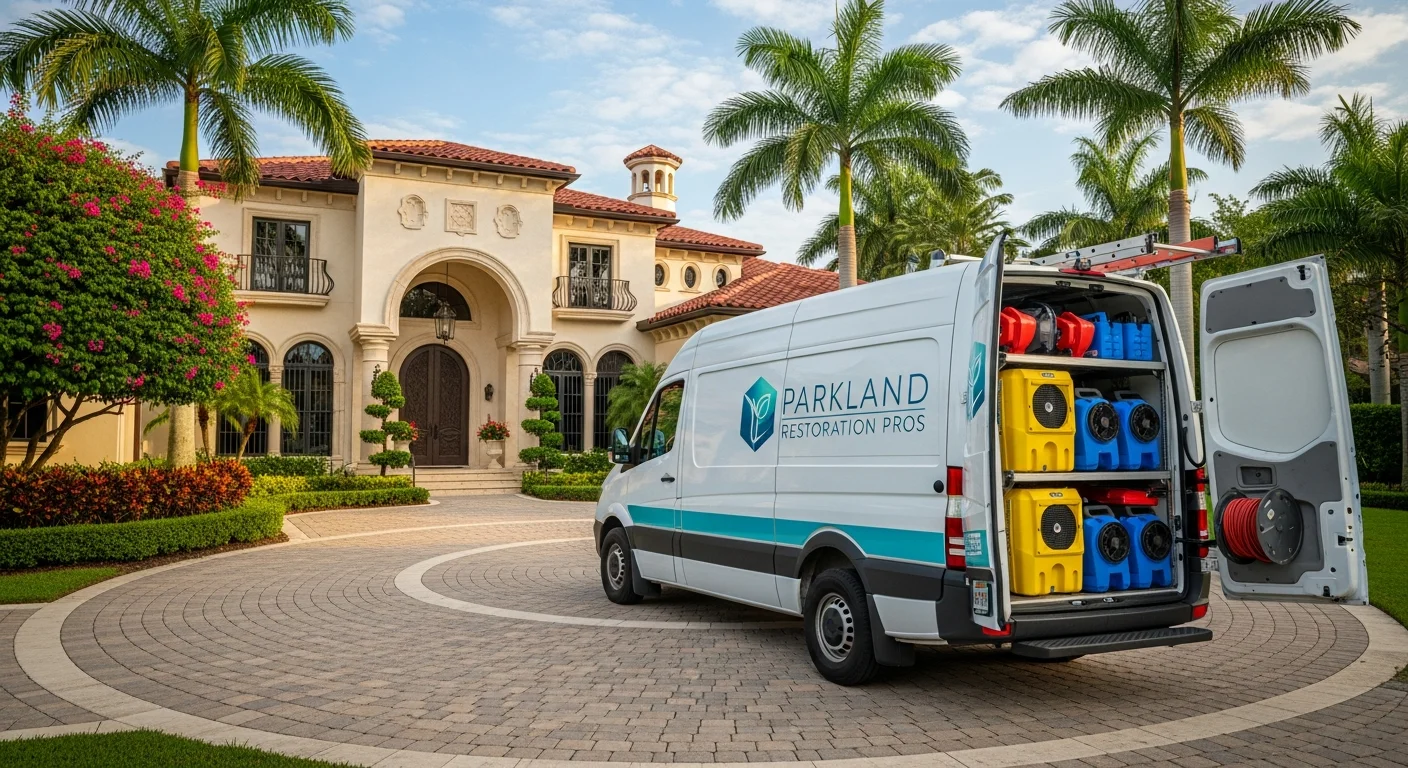
From Heron Bay's lakefront estates to MiraLago's modern luxury homes, Palm Build's Deerfield Beach team responds in 15-25 minutes with truck-mounted extraction, commercial dehumidifiers, and insurance-ready documentation — protecting your high-value finishes and preventing mold in Broward County's relentless humidity.
Deerfield Beach Office — ~15-25 minutes to Parkland 15-25 min Response IICRC Certified
Parkland is one of South Florida's most affluent planned communities — but luxury homes
built on slab-on-grade CBS construction, surrounded by canal networks, and exposed to
60+ inches of annual rainfall face serious water damage exposure. When water intrudes, mold can begin growing in 24 to 48 hours.
Premium Finishes at Scale
$983K
Median home value
Parkland homes average $983,000 with engineered wood floors, custom cabinetry, stone surfaces, and smart-home systems. Large open floorplans — common in MiraLago, Parkland Bay, and Watercrest — mean water from a single supply line failure spreads across thousands of square feet of continuous flooring before homeowners notice.
Year-Round Humidity Assault
60+ in
Annual rainfall
Broward County receives 60+ inches of annual rainfall with persistent high humidity year-round. Tighter building envelopes on 2000s-era construction trap moisture when HVAC drainage fails. CBS block cores hold water for weeks after intrusion — surface drying alone leaves hidden moisture that feeds mold growth behind walls.
Dual Drainage District Complexity
2
Drainage districts
Parkland is split between the North Springs Improvement District and the Pine Tree Water Control District, each managing different canal and swale networks. When heavy rain overwhelms these systems, water backs up through storm drains into yards, garages, and slab edges. The Ranches neighborhood has documented city-level flooding issues.
HVHZ Wind-Driven Rain
HVHZ
Hurricane zone
Broward County falls under the Florida Building Code's High-Velocity Hurricane Zone provisions. Most Parkland homes have impact-rated glazing or shutter systems, but wind-driven rain still finds weak points at roof transitions, stucco penetrations, garage doors, and soffit vents — especially as 2000s-era sealants age.
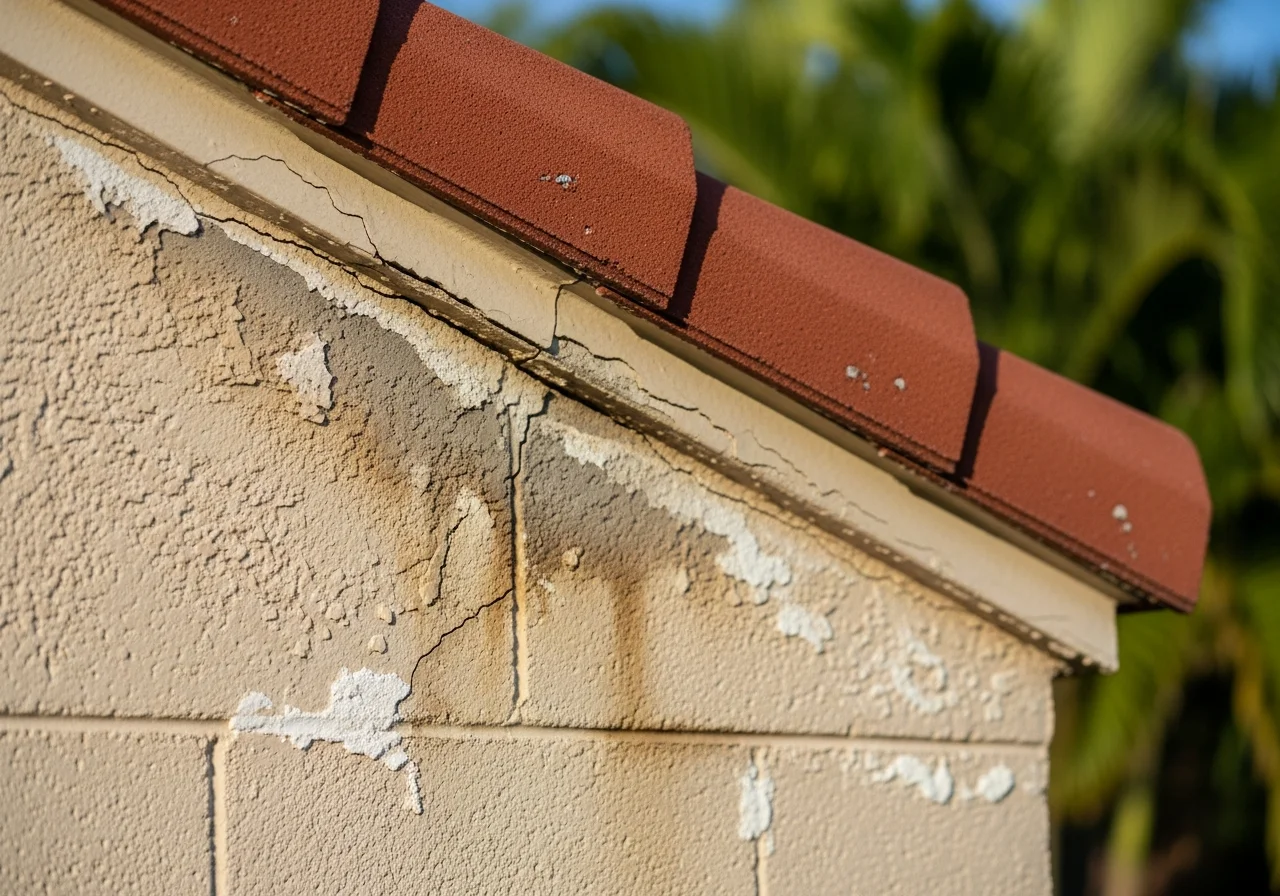
Even newer Parkland homes develop stucco cracks at window transitions and penetrations —
wind-driven rain enters these pathways during storms, allowing water into CBS block
cores where it can remain hidden for weeks.
Neighborhood Risk Profiles
Parkland Neighborhood Water Damage Risk Profiles
From city-documented flooding in The Ranches to construction moisture in MiraLago, every
Parkland neighborhood carries a distinct water damage signature shaped by construction
era, drainage district, and proximity to the canal network.
The Ranches has documented city-level flooding issues. During heavy rain events, swale overflow and canal backflow push standing water into yards, garages, and through slab edges. Older construction mixes with renovated homes, creating inconsistent drainage grading across the neighborhood. Residents report recurring garage flooding during wet season storms.
Heron Bay
Moderate-High
Built: 1990s - presentType: Multi-phase gated SFH
Stucco aging on earliest phases, canal-adjacent ponding
One of Parkland's largest master-planned communities with phases spanning three decades. Earliest homes from the 1990s show stucco thermal cracking and sealant deterioration. Canal-adjacent lots experience ponding during sustained rain events. Multi-phase construction means varying building codes and plumbing standards across the community.
Pine Tree Estates
Moderate-High
Built: Older large-lotType: SFH acreage
Canal/swale governance, Pine Tree Water Control District
Large-lot equestrian-style properties served by the Pine Tree Water Control District. Canal and swale maintenance falls under the district rather than the city, creating governance complexity during flood events. Older construction with original plumbing systems and septic-to-sewer transitions on some parcels add water intrusion risk vectors.
Watercrest
Moderate-High
Built: 2010sType: Gated SFH community
Lake-centered design, elevated water table near amenity lakes
Lake-centered community where homes sit adjacent to amenity lakes that connect to the broader canal network. Elevated water table near these lakes means saturated soil under slabs during wet season. Newer CBS construction with impact glass, but HVAC condensate and supply line failures remain the top interior water damage sources.
Parkland Golf & Country Club
Moderate
Built: Mid-2000s+Type: Gated luxury SFH
S-tile roof aging, HVAC condensate on complex zoning systems
Luxury homes with complex multi-zone HVAC systems that produce significant condensate volume. S-tile concrete roofs from the mid-2000s are approaching their first major maintenance cycle. Complex roof-to-wall transitions and decorative stucco features create additional wind-driven rain entry points during storms.
MiraLago / Cascata
Moderate
Built: 2014 - 2021Type: Newer gated luxury
Tight building envelope, construction moisture, lake-view drainage
Among Parkland's newest communities with tight building envelopes and modern impact glass. Construction moisture in CBS block cores can persist for months after completion. Lake-view lots have grading that channels surface water toward foundations. Engineered wood flooring throughout these homes is highly susceptible to moisture damage.
Parkland Bay
Moderate
Built: Late 2010s - 2020sType: New construction CBS
Supply line failures in new plumbing, first-storm testing
Parkland's newest community with impact glass and modern CBS construction. New plumbing connections and appliance supply lines can fail during the first years of use. These homes have not yet been tested by a major hurricane, and first-storm events often reveal envelope weaknesses at roof transitions, garage doors, and penetrations.
Terramar
Moderate
Built: EstablishedType: Gated SFH community
Canal network identity, district-maintained swale system
Established community defined by its canal network and mature landscaping. District-maintained swales handle surface drainage but can overwhelm during sustained heavy rainfall. Aging HVAC systems and original water heaters in established homes create interior water damage risk. HOA architectural standards require matched finishes during restoration.
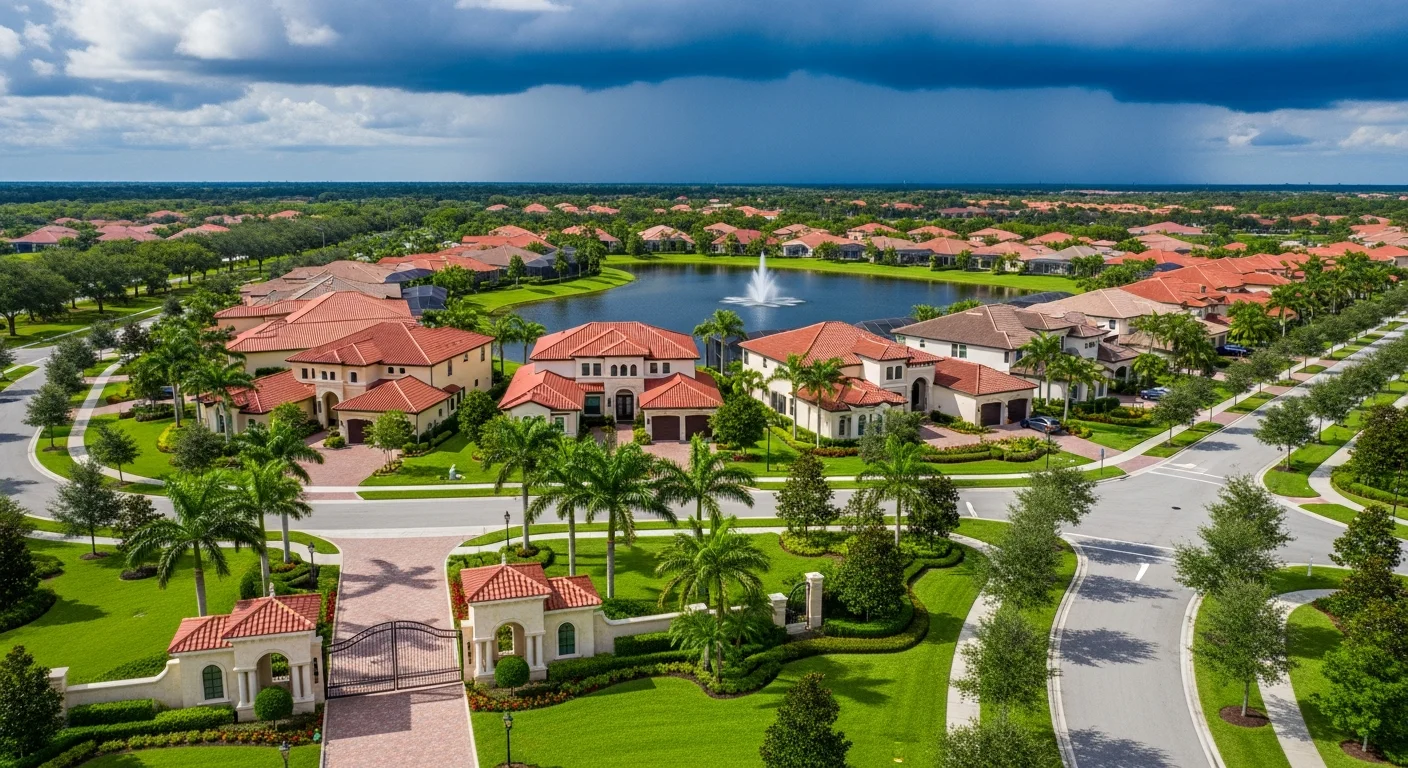
Parkland's lake-centered communities sit adjacent to retention lakes and canal networks
managed by two separate drainage districts — when these systems overwhelm, water backs
up into yards and through slab edges.
Parkland Drainage Infrastructure
Two Drainage Districts, One City — Know Who Controls Your Water
Parkland is split between two independent water control districts. When your street
floods, knowing which district maintains your canal network determines who to call — and
what you should do inside your home in the first 24 hours.
NSID
North Springs Improvement District
Manages the canal, lake, and stormwater infrastructure for the newer, eastern portions of Parkland. Controls water levels in the retention lake network that surrounds most gated communities. During sustained heavy rainfall, NSID canal capacity determines how quickly water recedes from streets and yards.
Neighborhoods Served
Heron Bay Parkland Golf & Country Club MiraLago / Cascata Watercrest Parkland Bay Parkland Isles
Managed by Inframark
PTWCD
Pine Tree Water Control District
Governs the western and older portions of Parkland, including large-lot equestrian communities. Maintains canal and swale systems that predate many of the newer developments. The Ranches — which falls under PTWCD jurisdiction — has city-documented flooding issues linked to swale overflow and canal backflow during wet season storms.
Neighborhoods Served
Pine Tree Estates The Ranches Terramar Tall Pines Parkland Acres
Independent special district
If Your Street Floods — Your First 24 Hours
0 - 30 min
Stop the source if possible. Shut off main water supply for pipe failures. Move valuables above water line.
30 min - 2 hrs
Call Palm Build at (754) 600-3369. Document everything with photos and video for insurance. Do NOT use electrical outlets in standing water.
2 - 12 hrs
Our crew arrives, sets containment, begins truck-mounted extraction. We coordinate gate access and HOA notification simultaneously.
12 - 24 hrs
Full extraction complete. Structural drying equipment deployed. HVAC isolated to prevent spore distribution. Antimicrobial treatment applied to beat the mold clock.
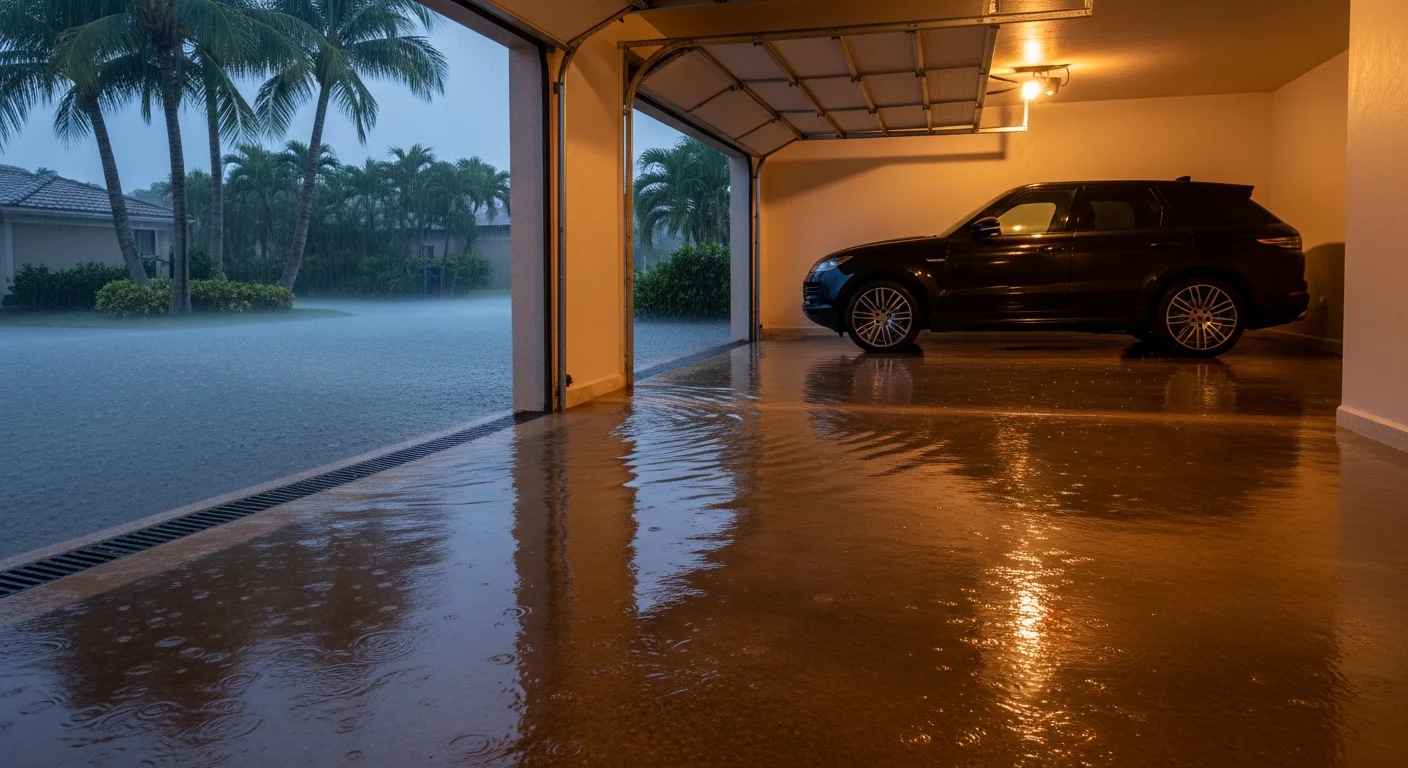
When canal systems overwhelm during sustained rainfall, water backs up through storm
drains into Parkland yards and garages — knowing your drainage district is the first
step to understanding your flood risk.
Our Parkland Process
How We Restore Parkland Homes After Water Damage
Every water damage event is different, but the science of restoration follows a proven
sequence. Here's exactly what happens when you call Palm Build's South Florida team.
01
Emergency Dispatch
15-25 Minutes
02
Damage Assessment
First 2 Hours
03
Water Extraction
Hours 2-6
04
Structural Drying
3-5 Days
05
Mold Prevention
During Drying
06
Full Restoration
1-4 Weeks
01
Emergency Dispatch
15-25 Minutes
Call our Florida line at (754) 600-3369 any time, day or night. Our crew deploys from our Deerfield Beach office with truck-mounted extraction equipment, commercial dehumidifiers, and air movers. We coordinate HOA gate access en route and arrive anywhere in Parkland in 15 to 25 minutes.
02
Damage Assessment
First 2 Hours
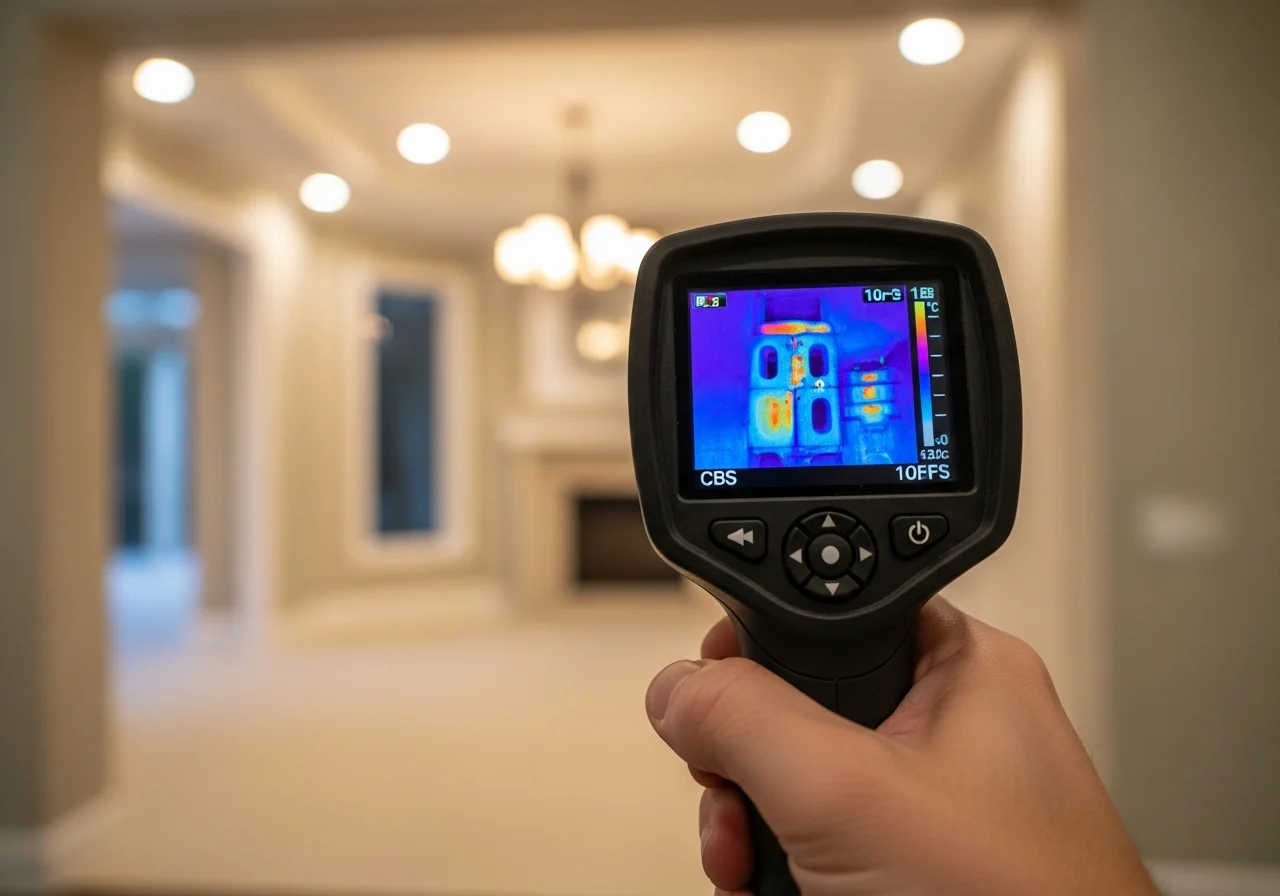
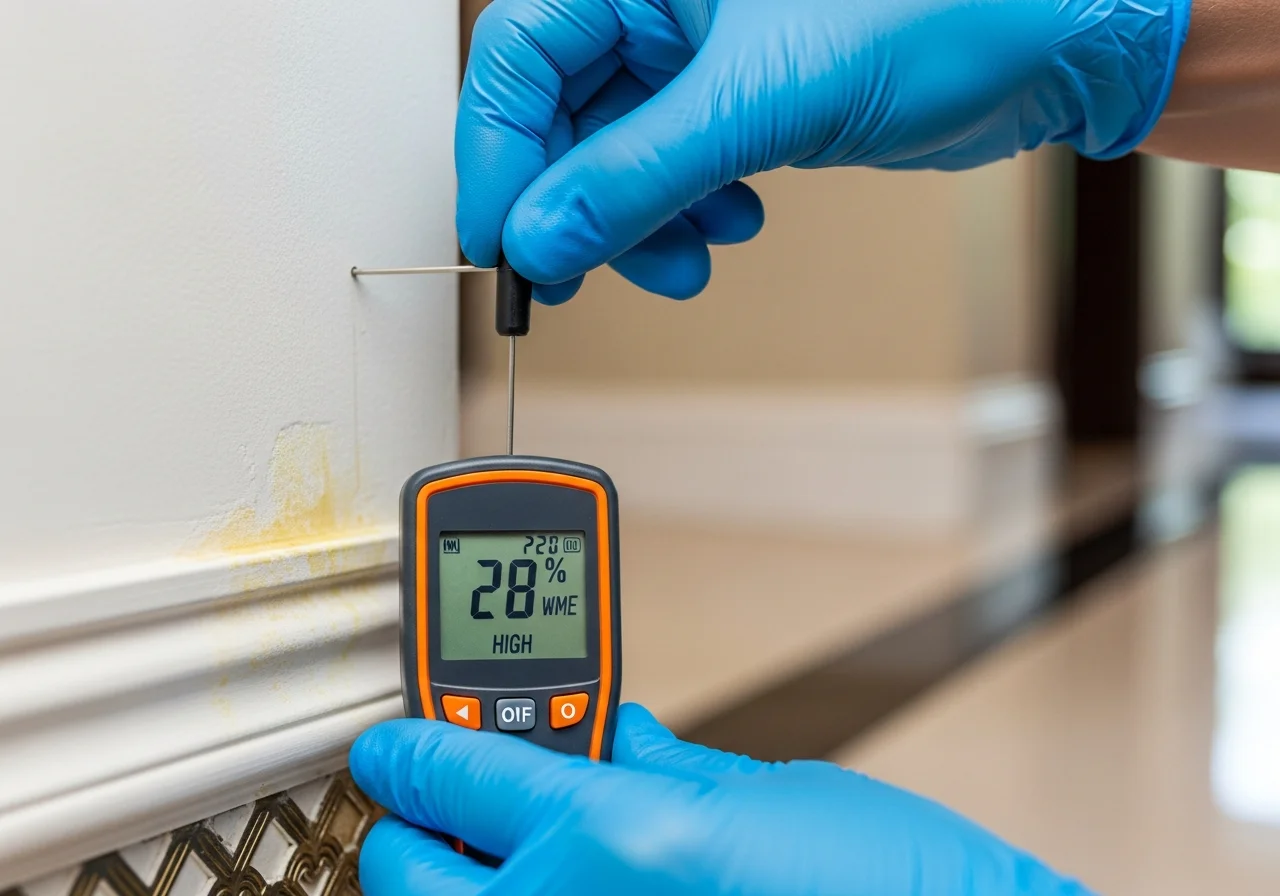
IICRC-certified technicians use infrared thermal imaging and pin-type moisture meters to map exactly where water has traveled — through CBS block cores, under engineered wood flooring, into HVAC plenums. Multi-room mapping covers the large open floorplans common in Parkland luxury homes.
03
Water Extraction
Hours 2-6
Truck-mounted extraction systems pulling 25+ GPM remove standing water rapidly. Weighted extraction tools protect engineered wood flooring. Slab-on-grade focus targets water that concentrates at floor level and under floating floors — critical in Parkland homes where a single supply line failure can spread across thousands of square feet of continuous flooring.
04
Structural Drying
3-5 Days
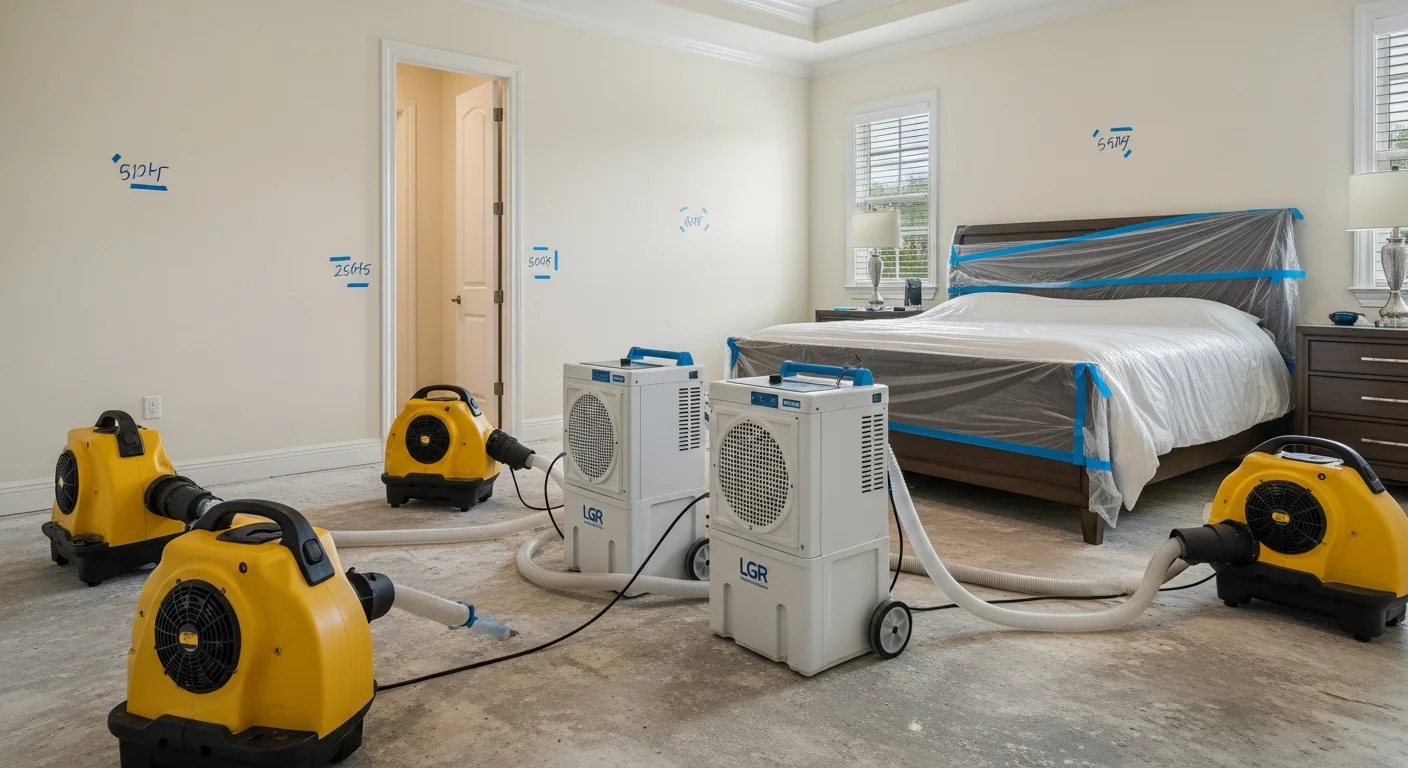
LGR dehumidifiers pulling 15-30 gallons per day combat persistent South Florida humidity. CBS block-core injection drying targets moisture trapped inside concrete block construction that surface drying alone cannot reach. Daily moisture readings until every material reaches dry standard.
05
Mold Prevention
During Drying
EPA-registered antimicrobial treatments are applied during drying to beat the 24-48 hour mold window. HVAC systems are isolated immediately to prevent spore distribution through ductwork. In Parkland's year-round humidity, mold risk begins the moment water intrusion occurs — antimicrobial treatment is not optional.
06
Full Restoration
1-4 Weeks
CBS wall repair, drywall replacement, engineered wood flooring, custom cabinetry, stone surfaces, and premium finishes matched to pre-loss condition. We coordinate HOA architectural approval for any exterior work, reconnect smart-home systems, and ensure every detail meets Parkland's luxury home standards.
Why Our Parkland Process Works
1
Proximity Advantage
Just 15-25 minutes from our Deerfield Beach office — with HOA gate coordination handled en route
2
CBS Block-Core Expertise
Injection drying engineered for the CBS stucco construction found in every Parkland community
3
Premium Finish Matching
Engineered wood, custom cabinetry, stone surfaces — restored to pre-loss condition, not builder grade
4
Insurance-Ready Documentation
Photo and moisture documentation formatted for your adjuster from day one — critical under Florida's 1-year claim deadline
Parkland's luxury homes face four primary water damage vectors — each requiring
different extraction approaches, drying strategies, and restoration techniques.
HVAC Condensate Overflow
Most Common
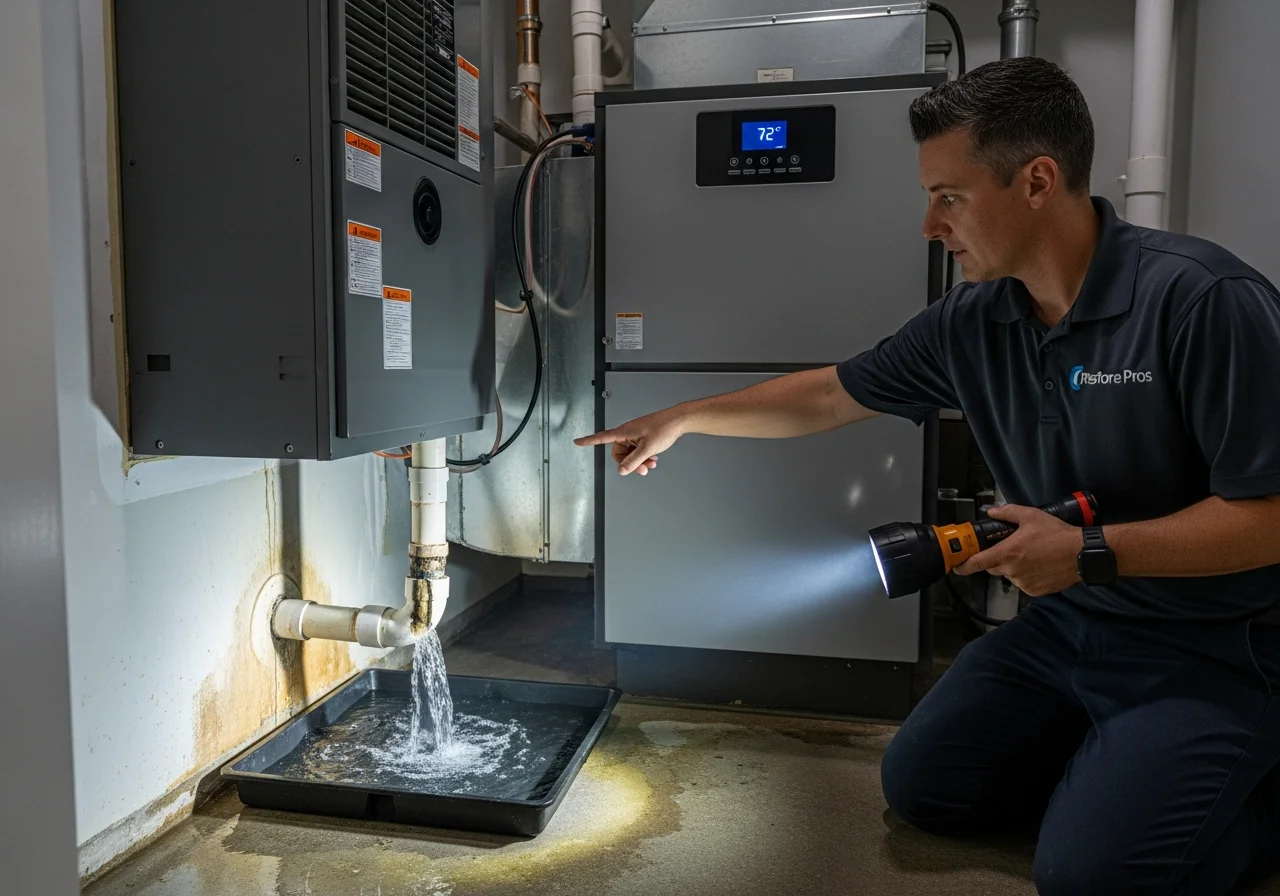
Parkland homes with complex multi-zone HVAC systems produce significant condensate volume. Clogged condensate drain lines, cracked drain pans, and overflow from multiple air handlers create slow leaks that can saturate entire rooms before detection.
Multi-zone systems with 2-4 air handlers multiply condensate failure points
Horizontal drain runs in attic spaces clog with algae and debris
Parkland Golf & Country Club and Heron Bay homes frequently affected
Damage often spreads through ceilings and into wall cavities
Supply Line Failures
Very Common
Newer Parkland homes use braided stainless or PEX supply lines that can fail at connection points. Appliance supply lines (refrigerators, dishwashers, washing machines) are the most frequent source of sudden interior flooding.
Refrigerator ice maker lines fail at compression fittings
Dishwasher supply lines crack under repeated thermal cycling
Newer construction in Parkland Bay and MiraLago still in early failure window
Open floorplans allow water to spread rapidly across continuous flooring
Wind-Driven Rain Intrusion
Seasonal
Despite HVHZ-rated construction, wind-driven rain finds entry points at aging stucco cracks, roof-to-wall transitions, garage door seals, and soffit vents. Tropical storms and hurricanes push water horizontally into building envelopes.
Stucco thermal cracks develop on 2000s-era homes as sealants age
Roof transitions and decorative features create water entry points
Garage doors — even wind-rated — allow water intrusion at bottom seals
Post-storm CBS block-core saturation may not appear for days
Canal / Drainage Backup
Wet Season
When heavy rainfall overwhelms the North Springs or Pine Tree Water Control District canal systems, water backs up through storm drains into streets, yards, and eventually into garages and through slab edges.
The Ranches has city-documented flooding from swale overflow
Canal-adjacent lots in Heron Bay and Pine Tree Estates at highest risk
Slab-on-grade construction provides zero buffer from saturated ground
Lake-centered communities (Watercrest) see elevated water table during sustained rain
Seasonal Risk Calendar
Parkland Water Damage Risks by Season
Broward County's climate creates year-round water damage exposure — from flash flooding
in wet season to undetected pipe failures in vacant snowbird homes. Understanding
seasonal risk patterns helps Parkland homeowners protect their properties.
Wet Season
June - October
Highest Risk
June: 8.6" rainfall — peak month for flash flooding
August: 7.89" — sustained storms saturate canal systems
September: 8.37" — hurricane season peak + tropical moisture
June 2024 flash flooding overwhelmed Broward drainage systems
April 2023 Fort Lauderdale flooding event (25+ inches in 24 hours) demonstrated regional vulnerability
Canal backflow risk highest in The Ranches and Pine Tree Estates
HVAC systems run continuously — condensate overflow risk peaks
Hurricane Season
August - November
High Risk
Wind-driven rain at roof transitions, stucco penetrations, and garage doors
Impact glass and shutters protect glazing — but sealants age on 2000s-era homes
2% hurricane deductible on $983K median = $19,660+ out of pocket
Post-storm damage often hidden in CBS block cores for weeks
Power outages disable sump pumps and HVAC dehumidification
First major storm tests newer communities (Parkland Bay, MiraLago)
Dry Season
November - May
Moderate Risk
Interior pipe failures become primary water damage source
Supply line breaks, water heater failures, appliance malfunctions
Reduced ambient humidity aids faster structural drying
Ideal window for preventive plumbing inspections
HOA exterior work approvals process faster in dry months
Insurance renewals — review coverage before wet season returns
Snowbird Season
December - April
Moderate-High Risk
Vacant homes during owner travel increase detection delay
Slow leaks from supply lines or HVAC run undetected for days or weeks
Water damage compounds exponentially — mold colonizes in 24-48 hours
Smart leak detectors and auto-shutoff valves provide critical early warning
Neighbor notification agreements help catch visible exterior signs
Full-time residents may notice water intrusion signs from adjacent vacant homes
Broward County monthly rainfall peaks: June (8.6"),
September (8.37"), August (7.89"). The April 2023 Fort Lauderdale flooding event — which dropped
25+ inches in 24 hours — demonstrated that Parkland's canal-dependent drainage infrastructure
can be overwhelmed by extreme events at any time during wet season.
Cost Guide
Water Damage Restoration Costs in Parkland
Parkland restoration costs run 20-30% above national averages due to premium finishes, large floorplans, and luxury material matching. Broward County homeowners
pay an average of $5,164/year for insurance — among the
highest in the nation.
Emergency Extraction
$2,500 - $5,000
Immediate water removal
Common Scenarios
Supply line failure under kitchen island
HVAC condensate overflow caught within hours
Water heater failure in garage
Single-room appliance supply line break
Structural Drying
$3,500 - $8,000
Multi-day drying with equipment
Common Scenarios
CBS block-core injection drying after pipe failure
Multi-room dehumidification across open floorplan
Slab-on-grade moisture extraction under engineered wood
HVAC isolation and duct drying in multi-zone system
Full Restoration
$8,000 - $25,000+
Complete rebuild with premium finishes
Common Scenarios
Engineered wood flooring replacement across open plan
Custom cabinetry and stone countertop replacement
Multi-room CBS wall repair with matched stucco
Storm-driven intrusion with full interior rebuild
Additional Service Costs (often bundled):
Mold Prevention Treatment$750 - $2,500
Smart-Home System Reconnection$500 - $2,000
Parkland homes with premium engineered wood flooring, custom cabinetry, and stone surfaces
cost 20-30% more than standard-finish restorations. Large open floorplans (3,000 - 6,000+
sq ft) increase both extraction scope and drying equipment requirements.
Hurricane Deductible Reality in Parkland
Most Parkland policies carry a 2% hurricane deductible. On a median home value of $983,000, that's $19,660+ out of pocket before insurance pays a dollar on wind/rain damage. Standard policies cover sudden water
damage (burst pipes, appliance failures) with a lower deductible, but do NOT cover flood damage — a separate NFIP or
private flood policy is required. Under Florida's 2022 reform, you have only 1 year to file an initial claim. Palm Build provides
free on-site estimates and works with all major Florida carriers including Citizens Property
Insurance.
Florida Insurance Guide
Navigating Water Damage Insurance Claims in Parkland
Florida's insurance landscape is among the most complex in the nation. Broward County
homeowners pay an average of $5,164/year and face strict filing deadlines, high
hurricane deductibles, and a rapidly changing carrier market.
$5,164/yr
Broward Avg Premium
$19,660+
Hurricane Deductible (2%)
1 Year
Claim Filing Deadline
Growing
Citizens Market Share
Initial Claim Filing
1 Year
Under FL Statute 627.70132, you must file your initial claim within 1 year of the date of loss. Miss this window and your carrier can deny the claim entirely — regardless of coverage.
Supplemental Claims
18 Months
Supplemental claims for additional discovered damage must be filed within 18 months of the original date of loss. Hidden CBS block-core moisture often requires supplementals when damage scope expands during drying.
AOB Reform Impact
Post-2022
Florida's 2022 insurance reform eliminated one-way attorney fees and restricted Assignment of Benefits. This means your policy works directly between you and your carrier — Palm Build coordinates as your restoration contractor, not as an assignee.
What We Hand Your Adjuster
Every Palm Build restoration generates a complete claim-ready documentation package. This
is what your insurance adjuster receives:
Timestamped photo documentation of all affected areas
Daily moisture readings with mapped dry-down progress
Equipment inventory and placement documentation
Material and labor scope formatted for Xactimate
IICRC-compliant drying logs with psychrometric data
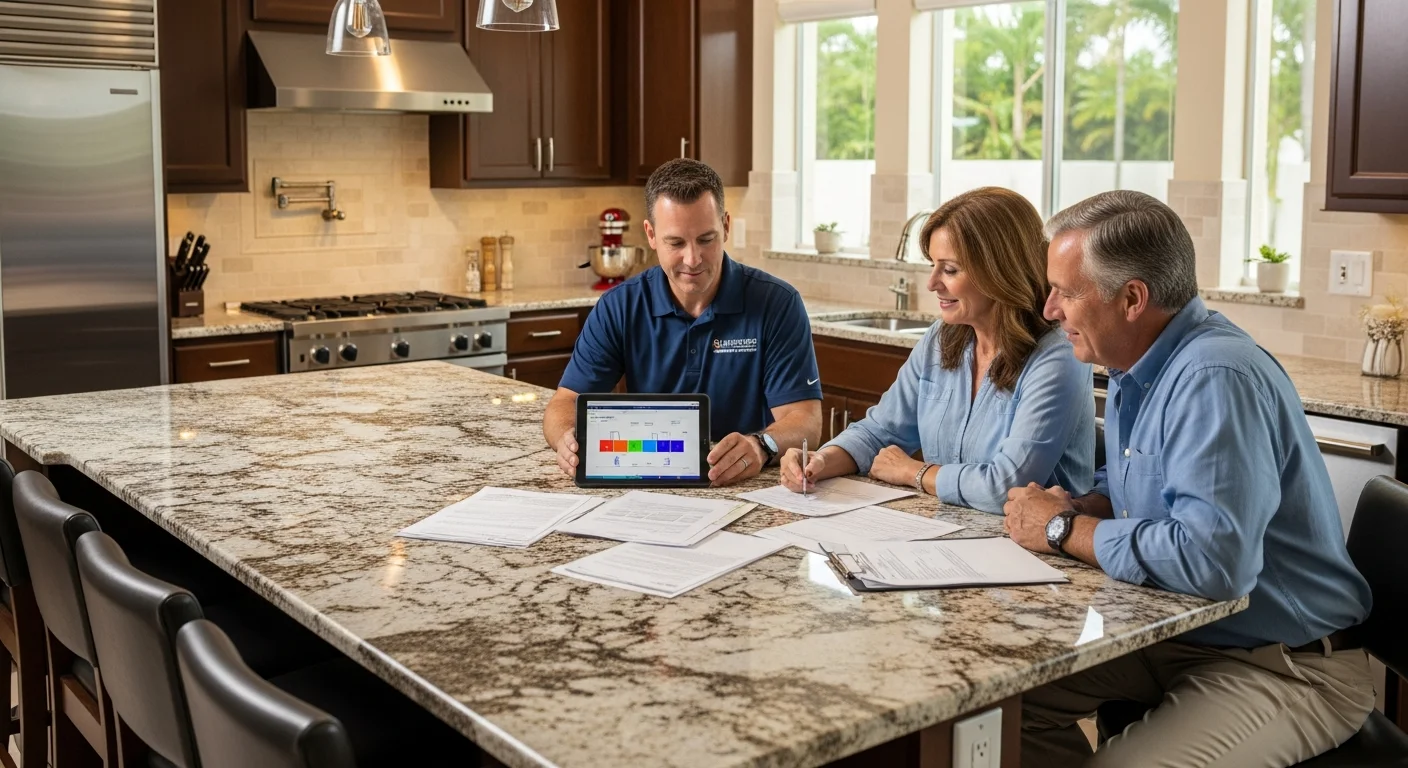
Palm Build provides free on-site estimates and works with all major Florida carriers —
including Citizens Property Insurance — to ensure your claim documentation meets
adjuster requirements from day one.
Our Work in Parkland
Water Damage Assessment and Restoration
From thermal imaging detection through final restoration — every step is documented for
your insurance claim and quality assurance.
Thermal imaging detects hidden moisture in CBS block cores
Pin-type moisture meters verify saturation levels
HVAC condensate failures — #1 water damage source in Parkland
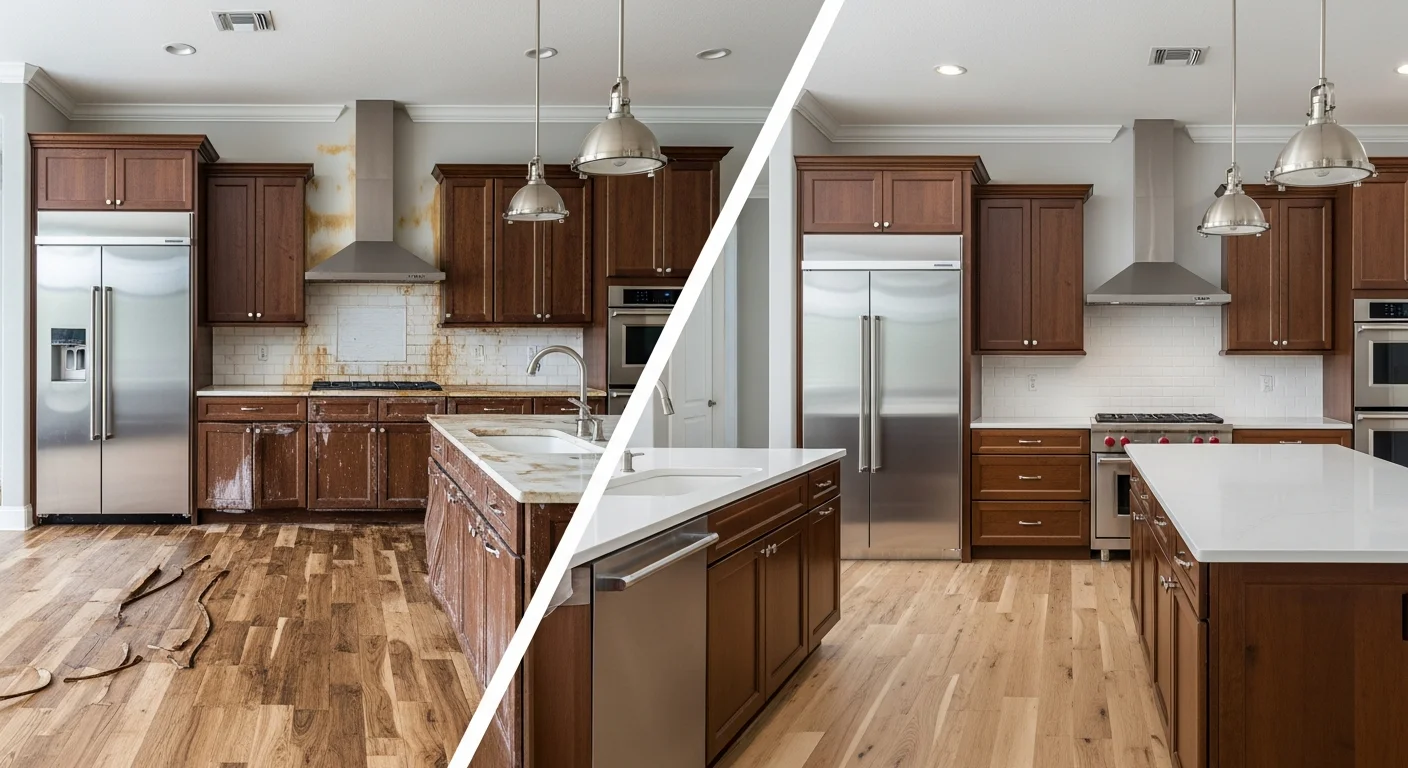
Kitchen restoration — from damage to pre-loss condition
Why Palm Build
Why Parkland Homeowners Choose Palm Build
Luxury homes demand a restoration partner who understands premium materials,
HOA-governed communities, and the urgency of protecting high-value properties from water
damage.
15-25 Minute Response
Our Deerfield Beach office is just minutes from Parkland. We coordinate HOA gate access en route so equipment is on-site fast — not waiting at the guardhouse while water spreads.
IICRC Certified Technicians
Every technician holds current IICRC Water Restoration Technician (WRT) certification. We follow S500 water damage and S520 mold remediation standards on every project.
CBS Block-Core Injection Drying
Parkland homes are CBS stucco construction. Surface drying alone leaves hidden moisture inside block cores that feeds mold for weeks. Our injection drying reaches moisture that competitors miss.
HOA-Experienced Operations
Gate access coordination, restricted work hours, COI documentation, architectural review submissions — we handle every layer of HOA complexity that Parkland communities require.
Direct Insurance Billing
Claim-ready documentation from day one, formatted for your adjuster. We work with all major Florida carriers including Citizens Property Insurance — critical under Florida's 1-year filing deadline.
Premium Finish Matching
Engineered wood flooring, custom cabinetry, stone countertops, designer paint — restored to pre-loss condition with materials that match your home's luxury finishes, not builder-grade replacements.
Ready to Respond — 24/7, Every Day of the Year
Water damage doesn't wait for business hours. Our South Florida team deploys from
Deerfield Beach with truck-mounted extraction equipment, commercial dehumidifiers, and
the expertise to handle Parkland's luxury homes — from Heron Bay to Parkland Bay and
every gated community in between.
How quickly can Palm Build reach Parkland FL for a water emergency?
Our Deerfield Beach office is approximately 12 miles from Parkland — about 15-25 minutes via Sample Road and University Drive. For 24/7 emergencies, we arrive with truck-mounted extraction, commercial dehumidifiers, and moisture mapping equipment ready to begin work immediately.
Why are Parkland homes at unique risk for water damage?
Parkland receives over 60 inches of annual rainfall, sits atop two separate drainage districts (North Springs Improvement District and Pine Tree Water Control District), and is built almost entirely on slab-on-grade CBS construction. The city's network of lakes, canals, and swales creates constant moisture pressure during wet season. Large open floorplans in homes averaging $983,000 mean water spreads rapidly across continuous flooring.
Does homeowners insurance cover water damage in Parkland FL?
Most standard homeowners policies in Parkland cover sudden and accidental water damage — burst pipes, appliance failures, and HVAC condensate overflow. However, flood damage from rising water requires separate flood insurance through the NFIP. Under Florida Statute 627.70132, you must file claims within 1 year of the date of loss. Palm Build documents moisture levels, photo logs, and detailed scope notes from day one to support your claim.
What is the average cost of water damage restoration in Parkland?
Minor water damage affecting a single room typically costs $2,500-$5,000 in Parkland — higher than national averages due to premium finishes like engineered wood floors, custom cabinetry, and smart-home systems. Moderate multi-room damage averages $7,500-$15,000. Major events involving multiple rooms with structural drying and reconstruction can range from $20,000-$50,000+. Parkland's high-value interiors require careful contents protection and documentation.
What drainage districts serve Parkland and why does it matter?
Parkland is split between two drainage districts: the North Springs Improvement District (northern communities) and the Pine Tree Water Control District (Pine Tree Estates, Ternbridge, Mayfair, Sable Pass, Terramar, and others). Each district manages different canals, swales, and stormwater infrastructure. When flooding occurs, knowing your district determines who maintains the drainage near your home and who to contact about recurring ponding or swale overflow.
How long does structural drying take in a Parkland home?
Typical structural drying takes 3-5 days depending on saturation extent and materials involved. Parkland's persistent high humidity (Broward County averages 60+ inches of annual rainfall) means we run commercial LGR dehumidifiers alongside air movers — fans alone cannot overcome ambient moisture levels. We monitor readings daily with pin-type meters and thermal imaging, documenting every measurement for your insurance claim.
Are newer Parkland homes like MiraLago and Parkland Bay at risk for water damage?
Absolutely. Newer construction homes have tighter building envelopes that can trap moisture if HVAC drainage fails. Large open floorplans mean water spreads quickly across continuous flooring. Complex mechanical systems, smart home integration, and premium finishes increase both vulnerability and restoration costs. Supply line failures, HVAC condensate clogs, and appliance connections can fail in homes of any age.
Trusted Vendors
Trusted local pros in Parkland
Outside our restoration scope, these are the vetted, licensed contractors we trust
alongside our work. Personally evaluated, reference-checked, and recommended by Palm
Build.
Don't wait — every hour of standing water increases damage and mold risk in Broward County's humidity. Palm Build's Deerfield Beach team responds 24/7 with full extraction and drying equipment. Call now or request a free damage assessment.