Storm, Wind & Hurricane Damage Restoration in Parkland, Florida
Parkland sits in the heart of Florida's High-Velocity Hurricane Zone — where 150+ mph design wind speeds are code, S-tile roofs line every street, and a 2% hurricane deductible on a $983,000 home means $19,660 out of pocket before coverage kicks in. When sustained winds peel tiles, drive rain through stucco cracks, and overwhelm drainage district capacity, Palm Build's Deerfield Beach team responds in 15-25 minutes with emergency tarping, water extraction, structural stabilization, and insurance-grade documentation from the first call.
Deerfield Beach Office — ~15-25 minutes to Parkland 15-25 min Response IICRC Certified
Why Parkland, FL Takes Catastrophic Storm Damage Despite HVHZ Construction
Parkland is not just another South Florida suburb — it is a city built to withstand
hurricanes, and it still takes catastrophic damage when major storms arrive. Every home
in Broward County's High-Velocity Hurricane Zone is engineered to Florida Building
Code's most demanding wind resistance standards: impact-rated glazing, CBS construction,
and S-tile roof systems rated for 150+ mph design winds. But code-compliant does not
mean damage-proof.
Hurricane season runs June through November, with peak risk August through October. When
sustained winds peel tiles, drive rain through stucco cracks, and overwhelm drainage
district capacity, Palm Build's Deerfield Beach team responds in 15-25 minutes with
emergency tarping, water extraction, structural drying, and insurance documentation from
the first call.
150+ mph
HVHZ Design Wind Speed
$983K
Median Home Value
15-25 min
Response Time
Jun–Nov
Hurricane Season
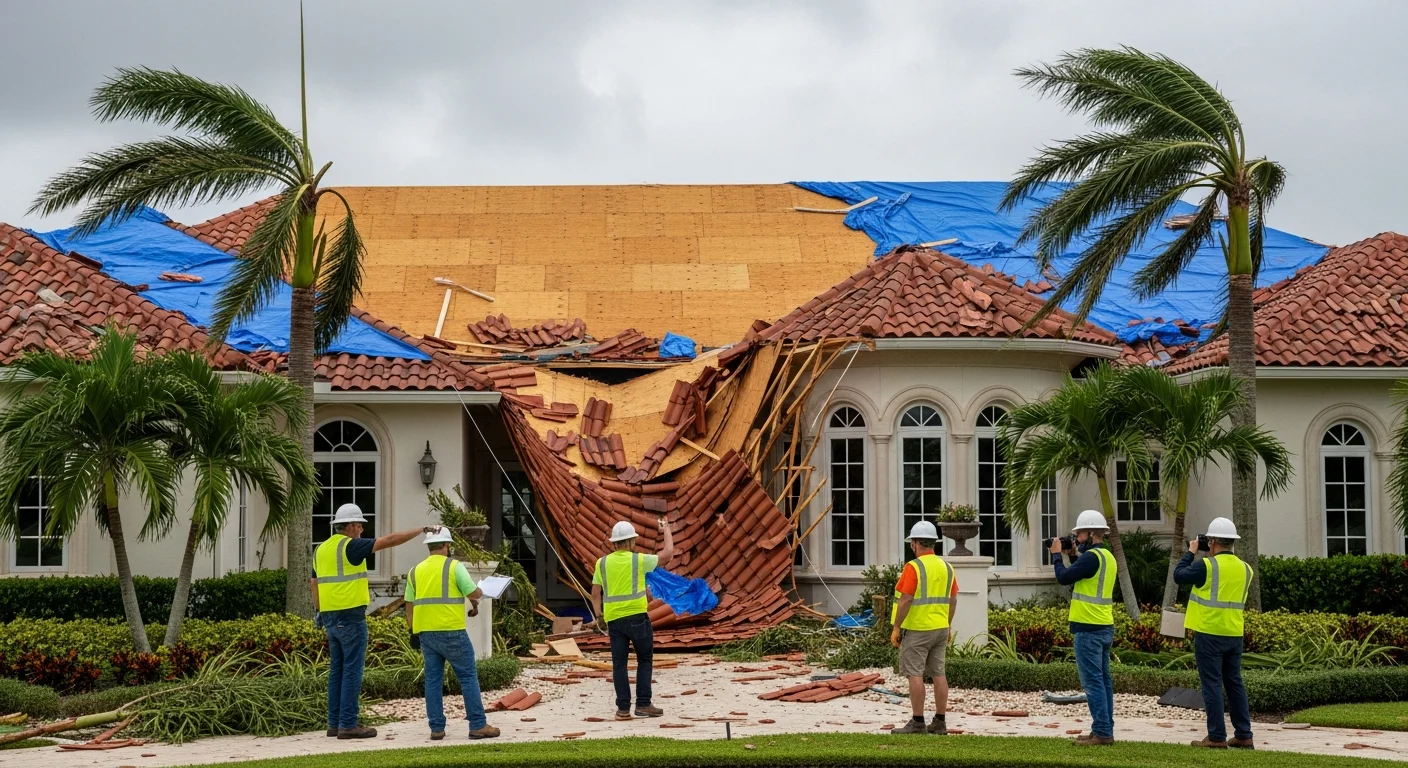
Storm damage assessment on an S-tile roof in Parkland — displaced tiles expose the
underlayment, allowing wind-driven rain into the roof deck within hours
HVHZ Zone — 150+ mph Design Winds
Every home in Parkland falls within Broward County's High-Velocity Hurricane Zone — the most stringent wind-resistance construction standard in the continental United States. Impact-rated glazing, CBS wall systems, and S-tile roofs rated for 150+ mph design winds are code minimum, not upgrades. Yet HVHZ compliance does not mean damage-proof. Hurricane-force winds turn displaced S-tiles into 8-12 pound projectiles, drive rain horizontally through hairline stucco cracks at every penetration and transition, and exploit soffit and garage door seals as primary intrusion pathways. The damage pattern in Parkland is not catastrophic structural failure — it is insidious water intrusion through dozens of small breach points that saturate CBS block cores and feed hidden mold growth.
S-Tile Roof Vulnerability Under Wind Load
S-tile concrete roofing dominates Parkland's gated communities from Heron Bay through MiraLago, Parkland Golf & Country Club, and Parkland Bay. These heavy tiles are rated for extreme winds when properly installed, but thermal cycling, settlement, and foot traffic shift individual tiles from their designed overlap. A tile displaced even one-quarter inch creates a gap that sustained gusts exploit — lifting the tile free and exposing the underlayment beneath. Older underlayment installed before 2007 code revisions can fail rapidly under direct wind-driven rain, allowing water into the roof deck and attic within hours of a breach.
Wind-Driven Rain Through CBS Construction
Impact windows prevent catastrophic window failure and interior pressurization, but they cannot stop water intrusion through the stucco building envelope. Stucco develops hairline cracks at window transitions, roof-to-wall junctions, electrical penetrations, and control joints over time. During hurricanes, sustained 80-150 mph winds force rain through every gap under enormous pressure. Water enters CBS block cores and saturates the wall assembly from inside — surfaces may appear dry while the block interior is fully wet. This hidden saturation is why post-hurricane mold in Parkland homes often appears weeks after homeowners believe the damage has been addressed.
Drainage District Overwhelm & Flooding
Parkland's stormwater is managed by two special districts — North Springs Improvement District and Pine Tree Water Control District — each maintaining canals, swales, lakes, and pump stations. The April 2023 Fort Lauderdale historic rainfall (25+ inches across parts of Broward) and June 2024 flash flooding demonstrated how quickly the regional drainage network is overwhelmed. When a hurricane delivers 8-15 inches over 12-24 hours while storm surge blocks coastal outfall, water backs into Parkland's canal systems, overtops swales, enters garages through slab seals, and saturates ground around foundations — creating immediate flooding and long-term CBS moisture intrusion.
HVHZ Building Code
How Broward County's High-Velocity Hurricane Zone Shapes Storm Damage in Parkland
Parkland's HVHZ construction prevents catastrophic structural failure during hurricanes.
But it does not eliminate damage — it shifts the damage pattern from structural collapse
to insidious water intrusion through dozens of small breach points in an otherwise
hardened building envelope.
Impact-Rated Glazing Requirements
Every window, sliding glass door, and skylight in Parkland must be impact-rated or protected by approved shutter systems. Impact glass prevents catastrophic window failure and interior pressurization — the leading cause of roof loss in non-HVHZ homes during hurricanes. But impact glazing does not prevent water intrusion through frame seals and weatherstripping degraded by South Florida UV exposure.
CBS Wall Construction with Continuous Tie-Downs
Concrete block and stucco walls with continuous tie-down systems from foundation to roof provide exceptional structural strength under wind loading. CBS walls rarely suffer structural failure even in Category 3+ winds. However, stucco develops hairline cracks at every penetration, control joint, and transition over time — and hurricane-force winds drive rain through each one.
Reinforced Garage Doors & Shutter Systems
HVHZ garage doors are tested to missile-impact standards and rated for extreme wind pressures. Approved shutter systems protect any openings without impact-rated glazing. Despite this, garage door slab seals remain the weakest point in most Parkland homes — horizontal rain forces water under the seal, across the garage floor, and into the home through interior thresholds.
S-Tile Roof Systems Rated for 150+ mph
Roof assemblies in the HVHZ are engineered for 150+ mph design wind speeds with mechanical fasteners, adhesive attachment, and HVHZ-rated underlayment. Post-2007 code revisions tightened secondary water barrier requirements. Yet individual tiles shift from thermal cycling and foot traffic, and once displaced, the underlayment is directly exposed to wind-driven rain.
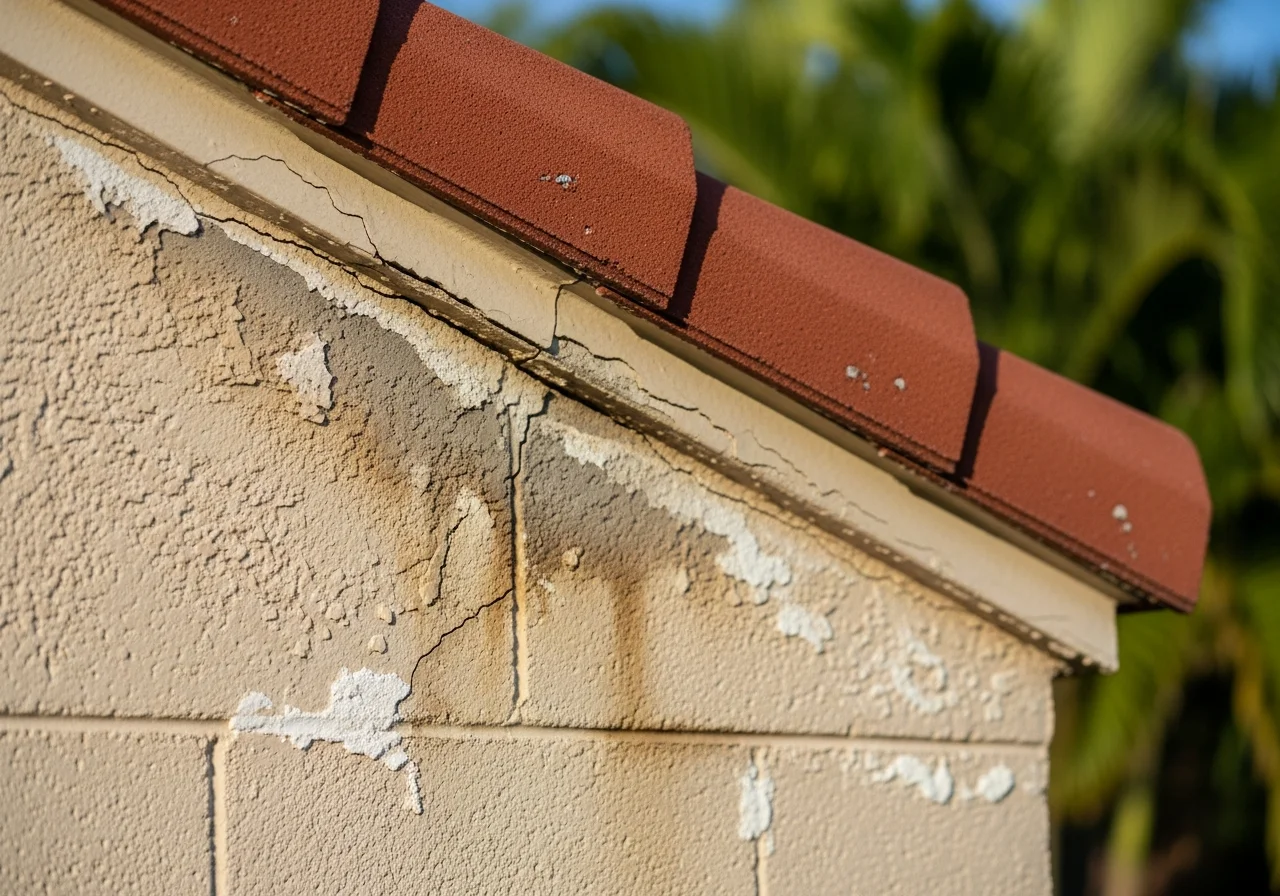
Even code-compliant CBS construction develops hairline stucco cracks at window
transitions — wind-driven rain during hurricanes forces water through these gaps into
block cores where it remains hidden for weeks
Where Wind-Driven Rain Still Penetrates HVHZ Homes
Roof Transitions
Hip-to-valley and roof-to-wall junctions where S-tile geometry creates gaps under wind uplift
Stucco Penetrations
Window frames, door frames, electrical boxes, hose bibs, and plumbing vents where sealant degrades
Garage Door Seals
Bottom and side weatherstripping that allows horizontal rain entry during sustained wind events
Soffit Vents & Panels
Aluminum soffit panels are among the first components to fail, allowing wind and rain directly into attic space
HVHZ Damage Pattern vs. Non-HVHZ
In non-HVHZ homes, hurricanes cause catastrophic window failure, interior
pressurization, and roof loss. In Parkland's HVHZ homes, the envelope holds — but
water finds its way in through stucco cracks, displaced tiles, compromised soffits,
and garage door seals. The damage is less dramatic but equally destructive: CBS block
cores saturate silently, drywall absorbs moisture from inside the wall, and mold
begins growing in hidden cavities within 24-48 hours. Surface-level inspection misses
this damage entirely. Thermal imaging and pin-type moisture meters through test holes
are the only reliable detection methods.
Types of Storm Damage
How Storms Damage Parkland, FL Homes
Storm damage in Parkland follows patterns dictated by HVHZ construction, S-tile roof
systems, CBS wall assemblies, and the city's drainage infrastructure. Each damage type
triggers a specific response protocol and produces distinct insurance claim pathways —
because wind damage and flood damage from the same storm are covered by different
policies.
S-tile concrete roofing dominates Parkland's gated communities. Individual tiles weigh 8-12 pounds and can travel 50+ feet in 100 mph winds when displaced — shattering impact windows, denting garage doors, and damaging neighboring roofs. Once tiles are gone, the underlayment is directly exposed to wind-driven rain. Older underlayment installed before 2007 code revisions fails rapidly under direct exposure, allowing water into the roof deck and attic within hours. Tiles shift from thermal cycling, settlement, and HVAC foot traffic long before any storm arrives — a quarter-inch displacement is all sustained winds need to pry a tile free.
Wind-Driven Rain Through Stucco & Penetrations
Parkland's CBS construction provides exceptional structural strength, but stucco is porous and cracks at every penetration and transition over time. During hurricanes, sustained 80-150 mph winds force rain through hairline cracks around window frames, door frames, electrical boxes, hose bibs, roof-to-wall junctions, and control joints. Water enters hollow CBS block cores and saturates the wall from inside — surfaces may appear dry while the block interior is fully wet. This hidden saturation drives post-hurricane mold growth that appears weeks after homeowners believe the damage has been addressed.
Drainage District Overwhelm & Flooding
The North Springs Improvement District and Pine Tree Water Control District manage Parkland's lakes, canals, swales, and pump stations. During major events — like the April 2023 Fort Lauderdale historic rainfall and June 2024 flash flooding — the regional network is overwhelmed. When a hurricane delivers 8-15 inches over 12-24 hours while storm surge blocks coastal outfall, water backs into canal systems, overtops swales, enters garages through slab seals, and saturates ground around slab-on-grade foundations. The Ranches has city-documented drainage issues that compound during every major rain event.
Landscape Debris & Secondary Impact
Parkland's manicured landscapes become debris fields during hurricanes. Displaced S-tiles, broken tree limbs, patio furniture, pool cage components, and fence sections become wind-borne projectiles. These impacts crack impact-rated windows (which resist penetration but can crack), dent garage doors beyond their rated performance, and puncture stucco walls. In mature communities like Pine Tree Estates and Heron Bay, large trees within fall radius of structures pose compounding risk — root systems saturated by pre-storm rainfall lose grip and topple, crushing roof sections and creating immediate water intrusion exposure.
Emergency Response Process
How We Restore Parkland Homes After Storm & Hurricane Damage
When severe weather strikes Parkland, the damage timeline accelerates rapidly in South
Florida's heat and humidity. Exposed roof decking absorbs water within hours. Moisture
trapped in CBS block cores begins feeding mold within 24-48 hours. Here is our proven
process from the first call through final closeout.
01
Emergency Dispatch to Parkland
15-25 min
Call (754) 600-3369 — answered 24/7/365, including during active hurricane events. Our Deerfield Beach operations hub dispatches crews with tarping materials, extraction equipment, commercial dehumidifiers, and board-up supplies. We reach Parkland in 15-25 minutes via Sample Road and University Drive. For gated communities — Heron Bay, MiraLago, Parkland Golf & Country Club, Watercrest, Parkland Bay — we coordinate gate access with HOA management and security. During major hurricane events with widespread damage, we activate our catastrophe response protocol with additional crews from our multi-state network.
02
Safety Assessment & Damage Documentation
Hours 1-4
Before any work begins, our IICRC-certified team leader assesses structural safety — checking for compromised roof connections, downed power lines, standing water with potential electrical hazards, and unstable trees. Simultaneously, we begin comprehensive photo and video documentation with GPS-tagged images formatted for Broward County insurance adjusters. For Parkland's high-value homes averaging $983,000, we document pre-existing conditions alongside storm damage to prevent adjuster disputes about what the storm caused versus prior deterioration.
03
Emergency Tarping & Envelope Sealing
Hours 2-8
Exposed roof areas get heavy-gauge commercial tarps secured with battens and screws — engineered to withstand subsequent storm bands and afternoon thunderstorms, not the blue poly sheeting that fails in the next wind event. For S-tile roofs, we tarp over displaced tile areas without disturbing surrounding tiles. Failed soffit sections receive temporary barriers to prevent continued attic intrusion. Broken impact windows and compromised garage doors receive plywood board-up. HOA coordination for any exterior work ensures compliance with community architectural standards even during emergency response.
04
Water Extraction & Structural Drying
Hours 4-168
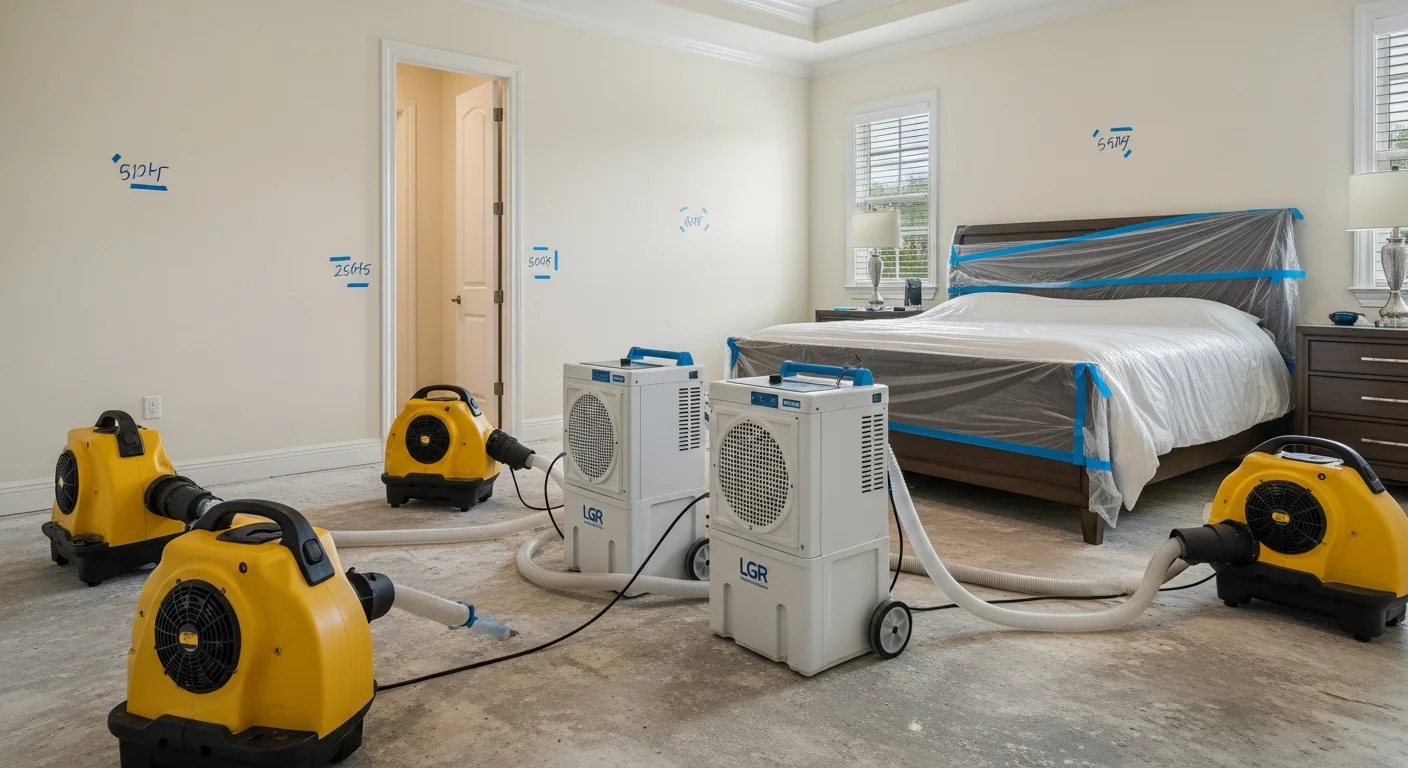
Wind-driven rain, roof leaks, and garage flooding introduce water into CBS block cores, attic insulation, ceiling assemblies, and flooring systems. Truck-mounted extractors remove standing water at 25+ gallons per minute. For CBS block core saturation — the dominant hidden damage pattern in Parkland — we deploy injection drying systems alongside commercial LGR dehumidifiers and air movers. Thermal imaging and pin-type moisture meters through test holes map the full extent of hidden moisture behind walls and inside block cores. CBS core drying takes 5-7 days in heavily saturated walls.
05
Antimicrobial Treatment & Mold Prevention
Days 5-10
After drying is verified at every measurement point, we apply EPA-registered antimicrobial treatments to prevent mold colonization. In Parkland's subtropical climate, mold begins growing within 24-48 hours of water exposure — and CBS block cores provide an ideal hidden environment for mold growth that remains invisible on surface inspection. HVAC systems are isolated early to prevent spore distribution through ductwork. For homes with extended moisture exposure, air quality testing verifies the environment is safe before occupants return.
06
HVHZ-Compliant Reconstruction
Weeks 2-12
From S-tile roof replacement to stucco repair to interior restoration, we rebuild storm-damaged Parkland homes to pre-loss condition. All structural work meets current Florida Building Code HVHZ requirements — including updated standards that may apply when repair scope triggers code compliance thresholds. We match original finishes: custom cabinetry, engineered wood flooring, stone surfaces, and smart-home systems. HOA architectural approvals are coordinated for any exterior work. Insurance adjuster coordination continues through final closeout to ensure the approved scope covers the full extent of needed repairs.
Emergency roof assessment and tarping on a Parkland home — heavy-gauge commercial tarps
secured with battens and screws protect the exposed underlayment from subsequent storm
bands
Storm Damage in Parkland
Storm Damage & Restoration in Parkland, FL
Storm damage assessment on S-tile roof — displaced tiles expose the underlayment to wind-driven rain, requiring immediate tarping to prevent water intrusion into the roof deck and attic
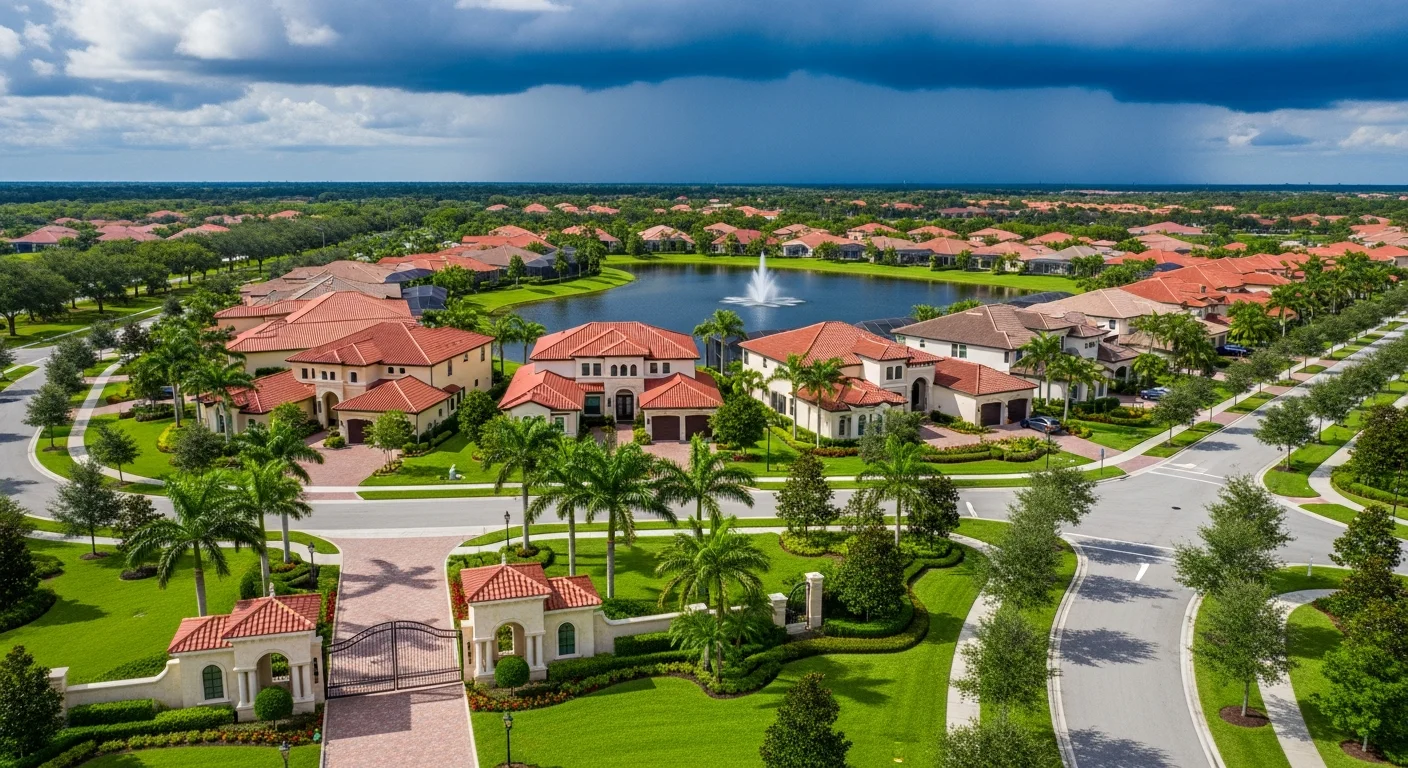
Storm clouds over Parkland gated community — the lake-centered design relies on drainage district canal systems that reach capacity during major hurricanes, backing water into residential areas
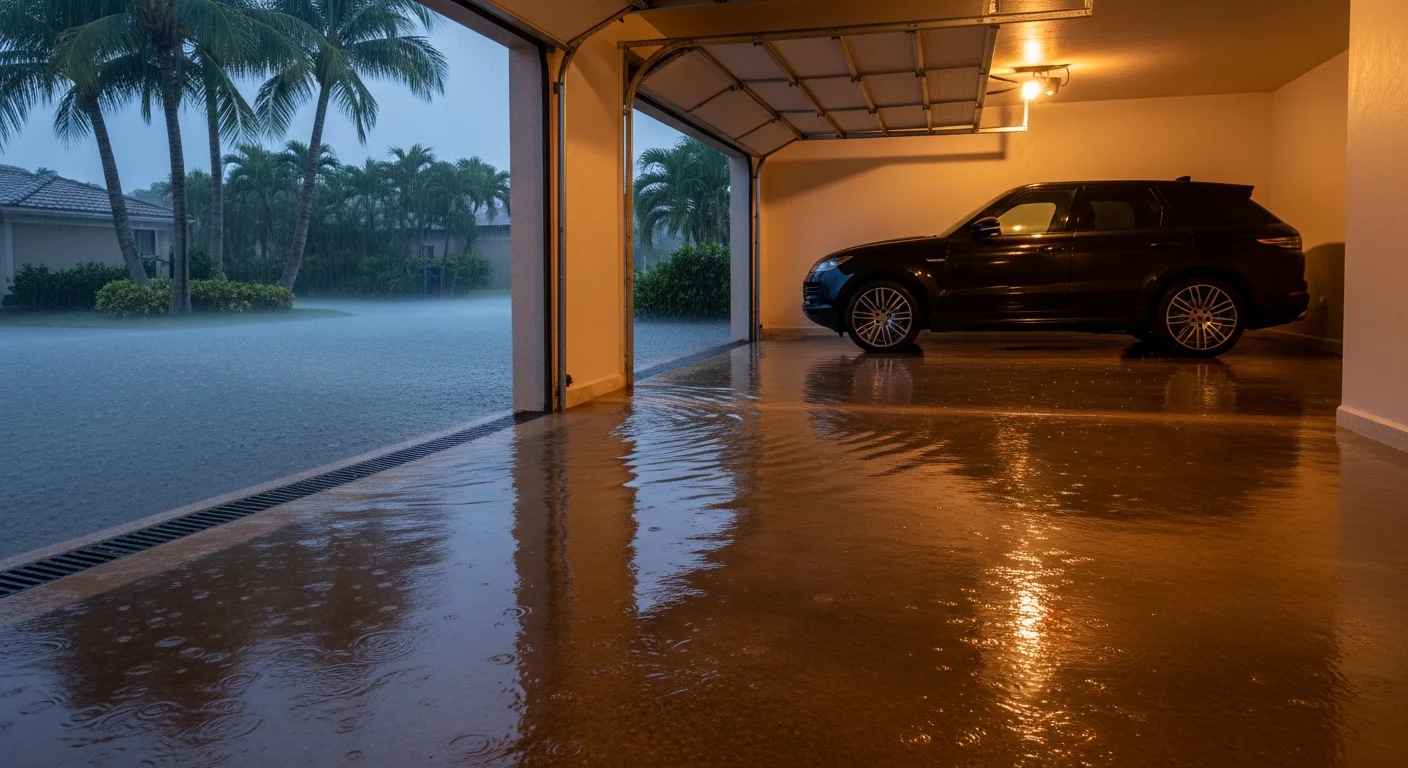
Garage flooding after storm event — even HVHZ-rated garage doors allow water entry at the slab seal during sustained hurricane-force winds, spreading to interior spaces through door thresholds
Drying equipment deployed after storm water intrusion — commercial LGR dehumidifiers and CBS block-core injection drying target moisture trapped inside concrete block walls
Storm Damage Insurance Claims
Navigating Hurricane Damage Claims in Parkland, FL
Filing storm and hurricane damage claims in Parkland requires meticulous documentation
and a clear understanding of Florida's insurance landscape. The distinction between
hurricane deductible triggers and standard deductible triggers, between wind-driven rain
and rising water, and between storm-caused damage and pre-existing deterioration
determines whether your claim is paid in full, partially, or denied.
Wind Damage (Homeowners Policy)
Roof tile displacement, underlayment failure, and attic water intrusion
Wind-driven rain entering through stucco cracks and penetrations
Soffit and fascia wind damage exposing attic space
Debris impact damage to windows, garage doors, and stucco
Emergency tarping and board-up mitigation costs
Temporary living expenses if home is uninhabitable
Flood Damage (Separate Flood Policy Required)
Rising water from drainage district canal overflow
Surface water accumulation from overwhelmed swales and streets
Groundwater entering through slab-on-grade foundations
Standing water from garage door slab seal breach during storm surge
NOT covered by standard homeowners — requires NFIP or private flood
Citizens Property Insurance does NOT include flood coverage
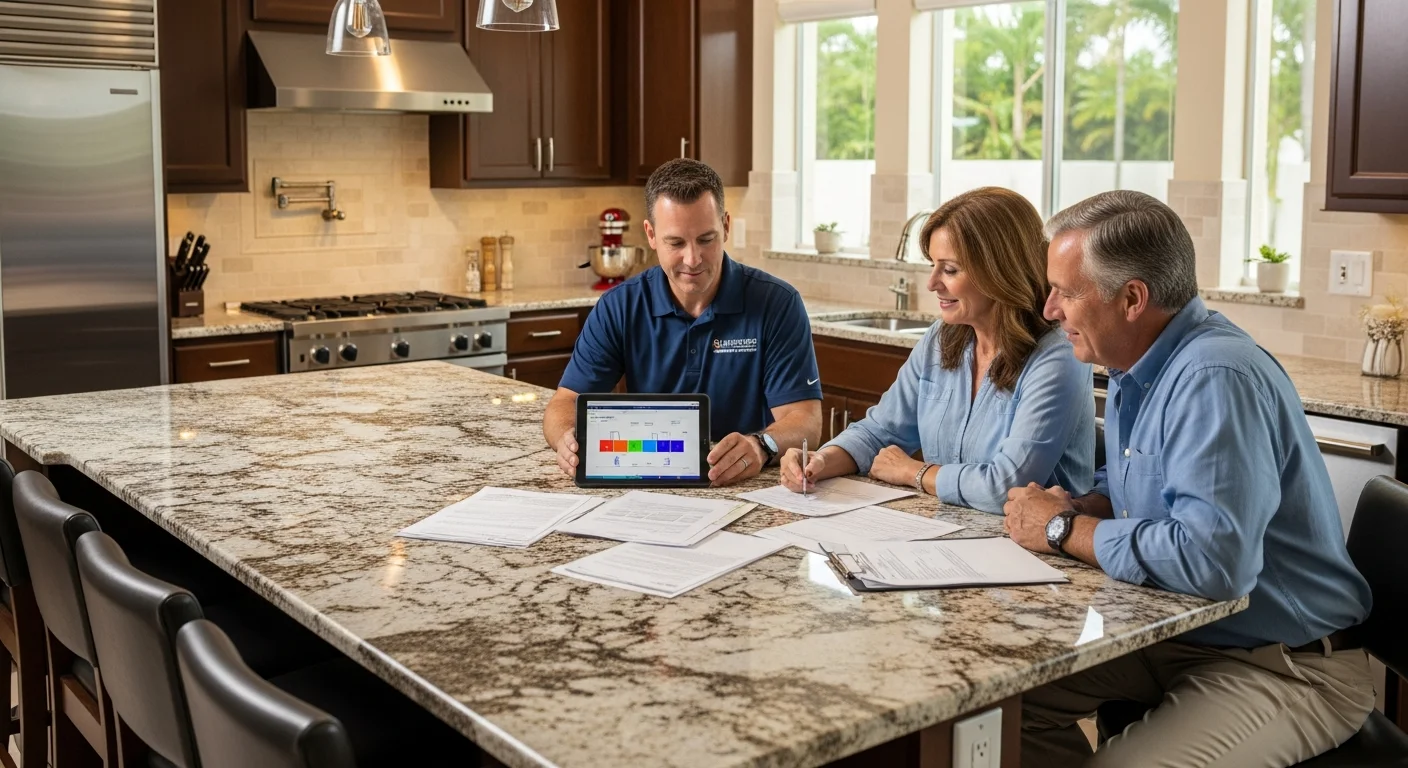
Palm Build's project managers guide Parkland homeowners through hurricane damage
claims — documenting every damage source, moisture reading, and material specification
for your adjuster
Hurricane Deductible Impact by Home Value
2% Deductible
$750K home: $15,000
$983K (median): $19,660
$1.2M home: $24,000
$1.5M home: $30,000
$2M+ home: $40,000+
5% Deductible
$750K home: $37,500
$983K (median): $49,150
$1.2M home: $60,000
$1.5M home: $75,000
$2M+ home: $100,000+
FL Statute 627.70132 Deadlines
Florida Statute 627.70132 requires notice to your insurer within 1 year of the date of
loss. Earlier filing significantly improves outcomes. Your carrier's 24/7 claims line
should be contacted immediately to open a claim — then call Palm Build at (754)
600-3369 for emergency mitigation. Carriers require prompt action to prevent further
damage, and mitigation costs are typically covered under your standard deductible even
when total damage falls below your hurricane deductible.
Hurricane vs. Named Storm vs. Windstorm Deductible
Florida policies may trigger hurricane deductibles only when the National Hurricane
Center declares a hurricane watch or warning for Broward County. Tropical storms and
unnamed wind events typically fall under your standard deductible ($1,000-$2,500) — a
dramatically different financial exposure than the 2% hurricane deductible. Some
Broward County policies use "named storm" triggers that activate percentage
deductibles for any named tropical system, not just hurricanes. Check your
declarations page carefully — on Parkland's median $983,000 home, the difference
between a $2,500 standard deductible and a $19,660 hurricane deductible is
life-changing.
How quickly can Palm Build respond to hurricane damage in Parkland FL?
Our Deerfield Beach office is approximately 12 miles from Parkland — about 15-25 minutes via Sample Road and University Drive. We dispatch 24/7/365, including during active hurricane events. During major storms with widespread Broward County damage, we activate our catastrophe response protocol with additional crews from our multi-state network. Call (754) 600-3369 any time.
Does homeowners insurance cover hurricane damage in Parkland?
Wind and storm damage are covered perils under standard Florida homeowners policies. However, hurricane deductibles in Parkland are percentage-based — typically 2% of insured dwelling value, which means $19,660 on the median $983,000 home. This deductible activates only when the National Hurricane Center declares a hurricane watch or warning for Broward County. Tropical storms and unnamed wind events typically fall under your standard deductible of $1,000-$2,500. Flood damage from rising water requires separate NFIP or private flood insurance. Palm Build documents damage by source to ensure proper claim classification under each applicable policy.
What makes storm damage different in HVHZ communities like Parkland?
Parkland's HVHZ construction — impact windows, CBS walls, reinforced garage doors, S-tile roofs rated for 150+ mph — prevents catastrophic structural failure. But the damage pattern shifts to insidious water intrusion through dozens of small breach points: hairline stucco cracks, displaced roof tiles, compromised soffit panels, and garage door seals. This moisture enters CBS block cores where it remains hidden, feeding mold growth for weeks while surfaces appear dry. Specialized detection equipment — thermal imaging and pin-type moisture meters through test holes — is required to map the full extent of HVHZ storm damage.
Why are S-tile roofs vulnerable to hurricane damage if they are rated for 150+ mph winds?
S-tile roofing systems are rated for extreme winds when properly installed, but individual tiles crack and shift over time from thermal cycling, settlement, and foot traffic. A tile shifted even one-quarter inch from its designed overlap creates a gap that sustained winds exploit. Displaced S-tiles weigh 8-12 pounds and become projectiles in hurricane-force winds. Once tiles are displaced, the underlayment — the true waterproofing layer — is directly exposed to wind-driven rain. Older underlayment installed before 2007 code revisions can fail rapidly, allowing water into the roof deck and attic.
How does wind-driven rain get into Parkland's CBS homes during hurricanes?
Stucco is porous and develops hairline cracks at predictable locations over time: around windows, at roof-to-wall transitions, at electrical penetrations, and at control joints. During normal rain, these cracks admit minimal moisture. During a hurricane, sustained 80-150 mph winds drive rain through every crack under enormous pressure. Water enters CBS block cores, saturating the wall from inside. Surface inspection often shows dry walls while the block interior is fully saturated — which is why post-hurricane mold in Parkland homes often appears weeks later. Thermal imaging and test-hole moisture readings are required for accurate assessment.
What is the 2% hurricane deductible and how does it affect Parkland homeowners?
Florida's hurricane deductible is calculated as a percentage of your insured dwelling value, not a fixed dollar amount. At Parkland's median home value of $983,000, a 2% deductible means $19,660 out of pocket before hurricane coverage activates. Some policies carry 5% ($49,150) or even 10% ($98,300) deductibles. This means minor to moderate storm damage may fall entirely below your deductible. The hurricane deductible activates only when the NHC declares a hurricane watch or warning — tropical storms typically trigger the much lower standard deductible. Check your declarations page before hurricane season.
Which Parkland neighborhoods have the highest storm damage risk?
Heron Bay's earliest phases have the oldest S-tile roofs in Parkland — 25+ years old and approaching failure age under storm stress. The Ranches has city-documented drainage issues that compound during major rain events. Pine Tree Estates features mature trees within fall radius of structures and older roof systems served by the Pine Tree Water Control District. Lake-centered communities like Watercrest and MiraLago face stormwater overwhelm when amenity lakes receive excess runoff during major events. Newer communities like Parkland Bay have the best code compliance but untested performance in a major hurricane.
Trusted Vendors
Trusted local pros in Parkland
Outside our restoration scope, these are the vetted, licensed contractors we trust
alongside our work. Personally evaluated, reference-checked, and recommended by Palm
Build.
Every hour of exposure after a roof breach or envelope failure compounds damage in South Florida's heat and humidity. Palm Build's Deerfield Beach team responds 24/7 in 15-25 minutes with emergency tarping, water extraction, CBS block-core drying, and insurance documentation — protecting your home and your claim from the first call.