Florida requires specific state licensing for mold assessors and remediators — and in Parkland's $983K-median-home market, you need a team that holds those credentials. Palm Build's Deerfield Beach crew responds in 15-25 minutes with containment equipment, HEPA filtration, and deep understanding of CBS block-core hidden mold, HVAC-driven humidity in oversized luxury homes, and the snowbird vacancy mold scenario that plagues Heron Bay, MiraLago, and Parkland Golf & Country Club.
Deerfield Beach Office — ~15-25 minutes to Parkland 15-25 min Response IICRC Certified
Parkland's combination of relentless subtropical humidity, CBS block construction,
oversized HVAC systems in luxury homes, seasonal vacancy patterns, and slab-on-grade
foundations creates some of the highest residential mold risk in Broward County.
Understanding these local factors is the first step toward lasting remediation.
Year-Round Humidity & 60+ Inches of Rain
60+"
Annual rainfall
Parkland averages over 60 inches of annual rainfall — 30% more than the national average — with tropical downpours concentrated from June through October. Combined with year-round humidity rarely dipping below 65%, every surface in your home is perpetually exposed to moisture conditions that sustain mold growth within 24-48 hours.
CBS Block Core: Hidden Mold Incubator
90%+
CBS construction
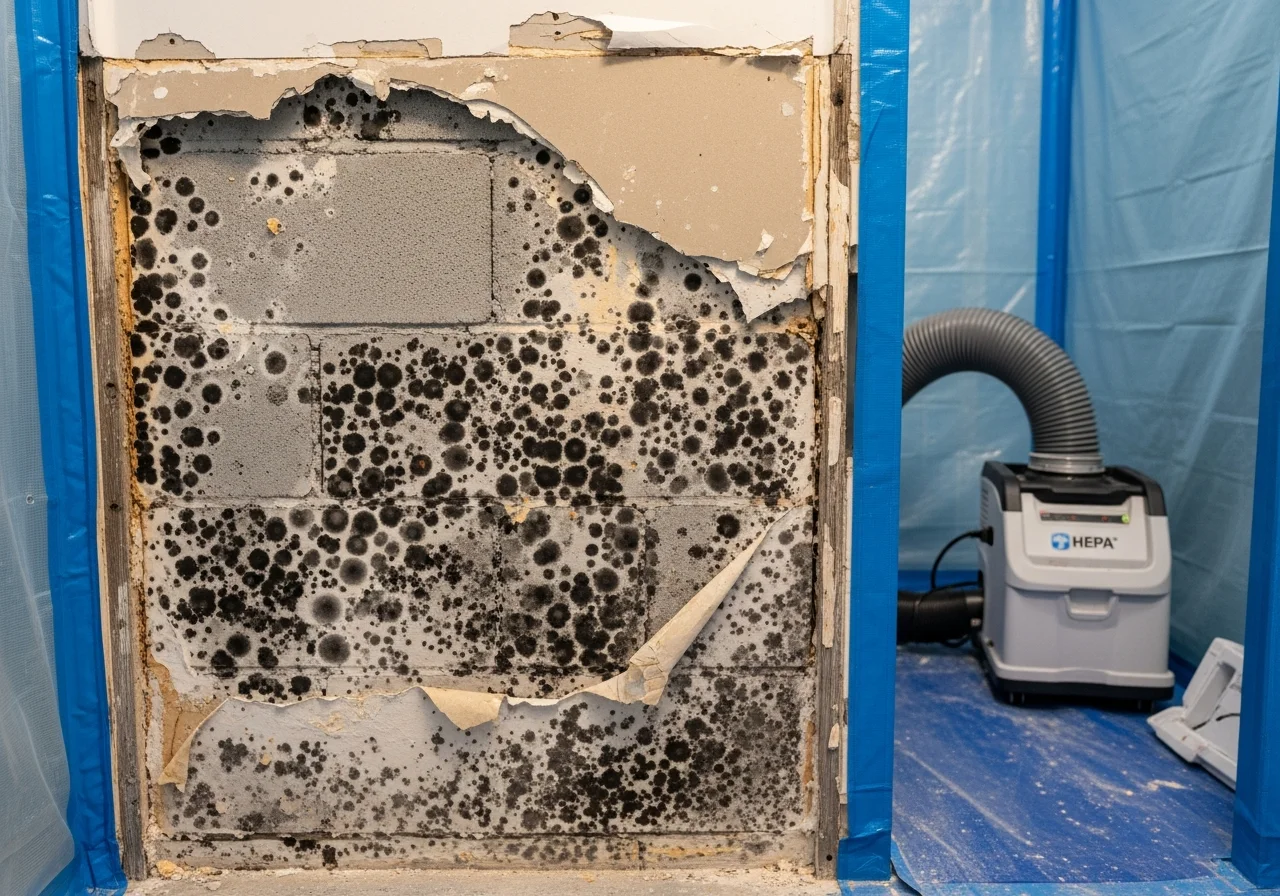
Parkland's luxury homes are built with CBS (concrete block and stucco) construction. While structurally strong, CBS block cores trap moisture that wicks through porous concrete and condenses behind drywall. Mold colonizes the paper facing of drywall long before any visible signs appear — turning wall cavities into hidden incubators invisible to homeowners.
HVAC Condensation in Large Luxury Homes
140°F+
Attic temps in summer
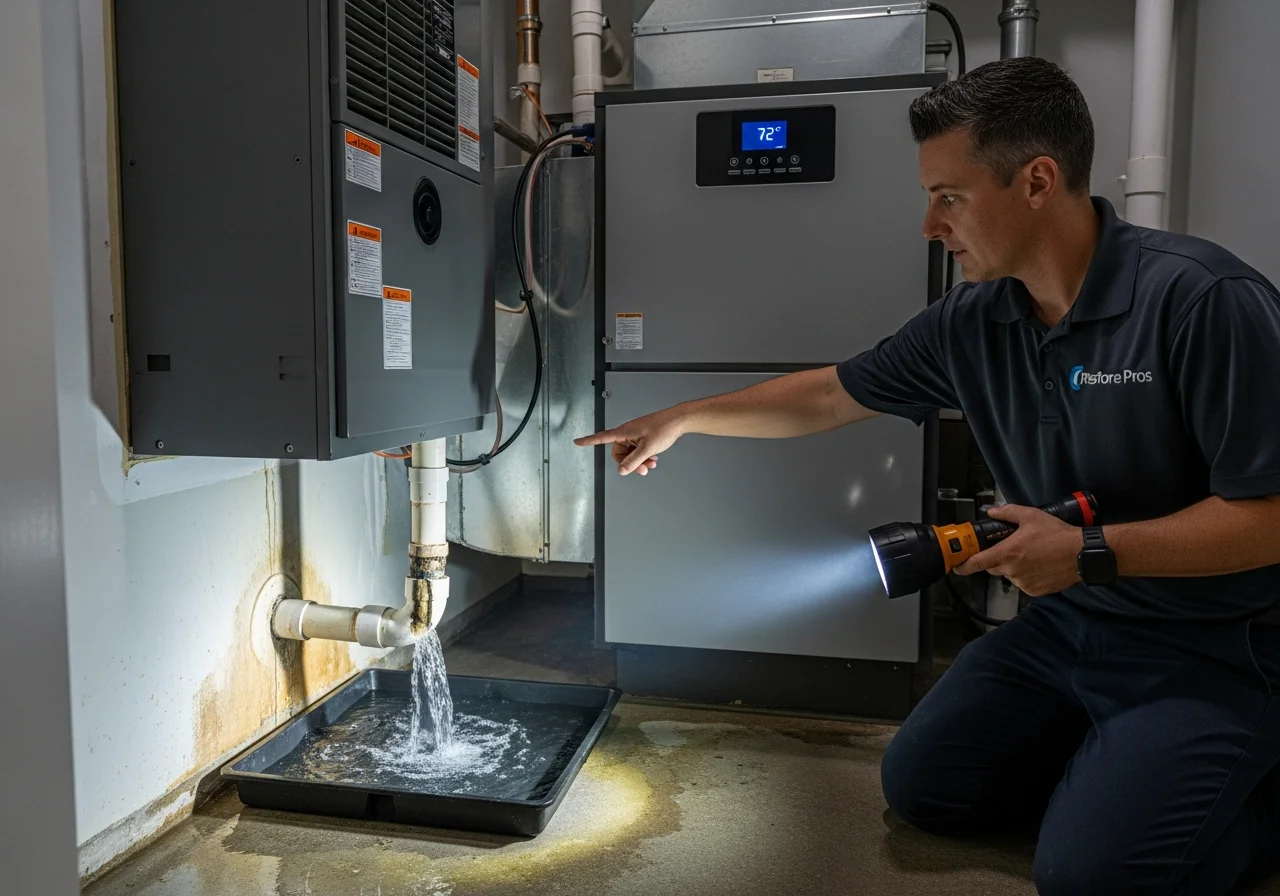
Parkland's 3,000-6,000 sq ft luxury homes run oversized HVAC systems that cycle constantly in South Florida heat. Temperature differentials between cooled interior air and humid exterior air create condensation on ductwork, air handlers, and supply registers — especially in second-floor attic-mounted systems where summer attic temperatures exceed 140°F.
Snowbird Homes & Slab-on-Grade Risk
4-6 mo
Seasonal vacancy
Many Parkland homes sit vacant for months during snowbird season with HVAC set to energy-saving temperatures. Reduced air circulation allows humidity to climb above 70% throughout the home. Parkland's slab-on-grade construction offers no crawl space ventilation — moisture migrating through the slab has nowhere to go except into flooring, baseboards, and wall cavities.
Mold colonization behind drywall on CBS block wall in a Parkland home — invisible to
homeowners until professional inspection reveals the extent of hidden growth.
Neighborhood Risk Map
Parkland Communities Most Vulnerable to Mold
Mold risk varies across Parkland based on construction era, stucco condition, proximity
to canals and lakes, and drainage infrastructure. Find your community below.
High
Heron Bay
1998-2010 · CBS/Stucco
Aging stucco systems prone to hairline cracking allow moisture intrusion into CBS wall cores. Canal-adjacent lots experience elevated ambient humidity that accelerates mold behind exterior walls.
High
MiraLago
2003-2012 · CBS/Impact glass
Tight building envelope with impact windows and sealed construction traps interior moisture when HVAC underperforms. Oversized homes with multiple zones create pressure imbalances that drive condensation.
High
The Ranches / Parkland Isles
2005-2015 · CBS/Slab
Drainage issues in low-lying lots lead to persistent dampness around slab perimeters. Water intrusion through expansion joints and slab cracks feeds mold at baseboards and under flooring.
Moderate-High
Watercrest at Parkland
2006-2014 · CBS/Stucco
Lake-centered community experiences elevated ambient humidity from surrounding water features. Morning fog and condensation on exterior walls contribute to moisture cycling through stucco into wall cavities.
Critical
Pine Tree Estates
1980s-2000 · CBS/Mixed
Older CBS construction with original stucco and limited waterproofing. Canal governance complications and swale overflow create persistent dampness. Some homes have original HVAC ductwork harboring decades of microbial growth.
FL Regulatory Compliance
Florida Mold Licensing: Protect Your Parkland Investment
Florida maintains one of the strictest mold regulatory frameworks in the country. Under Chapter 468, Part XVI of the Florida Statutes, the Department of Business and
Professional Regulation (DBPR) requires separate licenses for mold assessment and mold
remediation — and explicitly prohibits the same company from performing both on the
same project within 12 months.
For Parkland homeowners protecting properties valued at $500K-$2M+, working with a
properly licensed and insured remediation company is non-negotiable. Florida DOH
guidance emphasizes that water-damaged materials must be dried within 24-48 hours to
prevent mold colonization — delays in response turn minor water events into major
remediation projects.
Homeowner Due Diligence Checklist
Ask for DBPR mold remediator license number and verify at myfloridalicense.com
Confirm the assessor and remediator are separate licensed entities (required by FL law)
Ask whether containment and HEPA filtration are standard on every project
Request proof of general liability insurance ($1M minimum) and workers’ comp
Ask about post-remediation verification by an independent licensed assessor
Confirm they follow IICRC S520 standards and EPA guidelines for mold remediation
Palm Build Credentials
DBPR-licensed mold remediator — Florida compliant
IICRC S520 certified remediation protocols
CBS construction and HVAC mold expertise
Full liability insurance and workers' comp coverage
Works with independent FL-licensed assessors for clearance
FL DOH 24-48 Hour Rule
Florida Department of Health guidance requires water-damaged materials to be dried
within 24-48 hours to prevent mold growth. After 48 hours, professional
remediation is typically required.
In Parkland's subtropical humidity, mold colonization can begin in as little as 12
hours on wet drywall and organic materials.
Red Flags to Watch For
No DBPR mold license or refuses to provide license number
Same company offers to assess AND remediate your mold
Offers to "spray and seal" without removing contaminated materials
Won't set up containment barriers or HEPA filtration
Claims "no license needed" in Florida (false)
IICRC S520 Protocol
Our Parkland, FL Mold Remediation Process
Professional mold remediation follows a strict sequence defined by the IICRC S520
standard. Here is exactly what happens when Palm Build's certified team arrives at your
Parkland home.
01
Assessment & Testing
Day 1
02
Containment Setup
Day 1-2
03
HEPA Air Filtration
Continuous
04
Mold Removal
Days 2-4
05
Antimicrobial Treatment
Days 4-5
06
Clearance Testing
Day 5-6
01
Assessment & Testing
Day 1
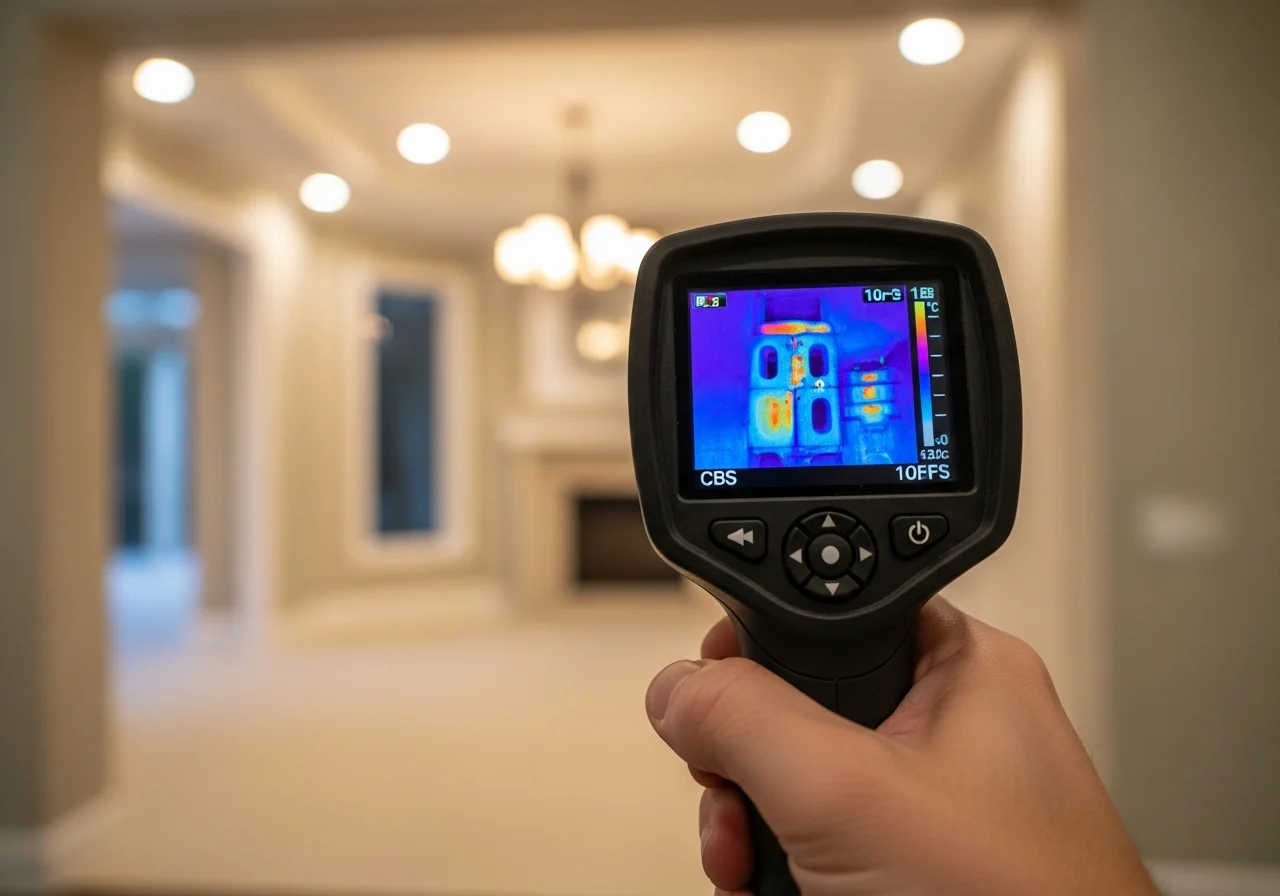
Comprehensive visual inspection of your Parkland home including wall cavities, HVAC systems, and slab perimeter. Infrared thermal imaging identifies hidden moisture behind CBS block walls and stucco. Air quality sampling establishes baseline spore counts. We classify contamination level per IICRC S520 standards and coordinate gated community access for equipment staging.
02
Containment Setup
Day 1-2
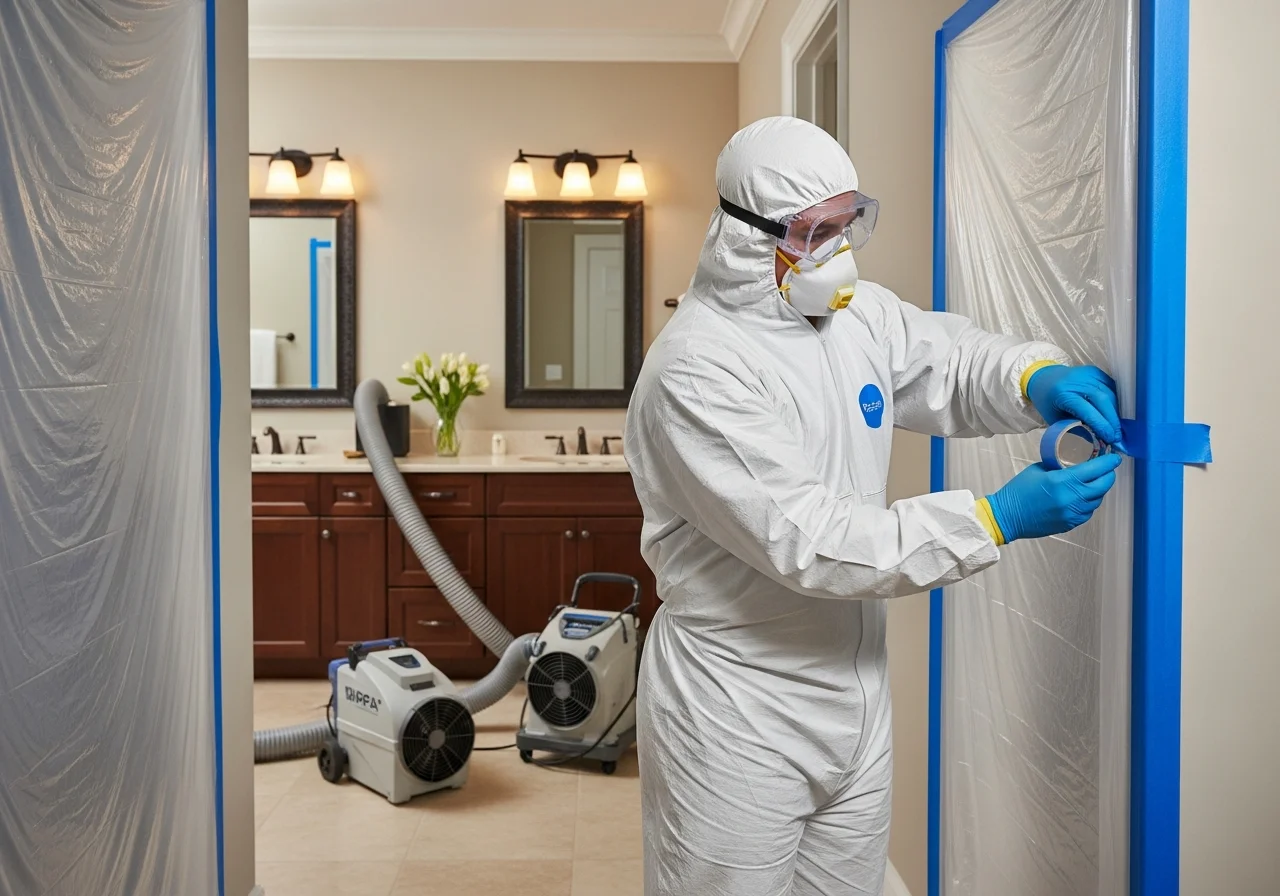
Sealed polyethylene containment barriers isolate affected areas from the rest of your home. HEPA air scrubbers create negative air pressure inside the containment zone to prevent cross-contamination. For Parkland luxury homes with open floor plans, containment engineering prevents spore migration to unaffected living areas. Gated community HOA access is pre-coordinated for crew and equipment.
03
HEPA Air Filtration
Continuous
HEPA filtration runs throughout the entire project, capturing airborne spores down to 0.3 microns. In Parkland homes with central air, HVAC ducts are sealed at registers to prevent contaminated air from circulating through the system. This protects both your home and our technicians while maintaining clean air quality during remediation.
04
Mold Removal
Days 2-4
Contaminated materials are removed using controlled demolition techniques. CBS block-core remediation requires specialized treatment — concrete block faces are HEPA vacuumed, wire brushed, and treated in place since the structural block cannot be removed. Contaminated drywall, insulation, and baseboards are double-bagged for disposal. HVAC duct cleaning addresses supply and return contamination.
05
Antimicrobial Treatment
Days 4-5
EPA-registered antimicrobial agents are applied to all treated surfaces including CBS block faces, slab edges, and HVAC components. For Parkland slab-on-grade construction, perimeter treatment addresses moisture migration pathways. The antimicrobial barrier prevents regrowth during reconstruction and provides lasting protection.
06
Clearance Testing
Day 5-6
An independent Florida-licensed mold assessor conducts post-remediation air quality testing confirming spore counts have returned to acceptable levels. Visual inspection verifies all contamination has been addressed. Clearance documentation is provided for your records, insurance claim, and future real estate transactions — critical for Parkland property values.
Why Containment Matters in Parkland Homes
Disturbing mold without proper containment sends billions of spores airborne —
potentially contaminating previously clean areas throughout your home. In Parkland's
large luxury homes with open floor plans, cathedral ceilings, and central HVAC
systems, cross-contamination spreads faster and further than in compartmentalized
construction. Our containment protocol ensures mold stays isolated.
1
Sealed Barriers
Polyethylene sheeting floor-to-ceiling around affected zones
2
Negative Pressure
HEPA scrubbers pull air through containment
3
HVAC Isolation
Supply and return registers sealed to prevent duct contamination
HVAC condensate failures create mold-friendly conditions in luxury homes
Insurance Navigation
Mold Insurance Claims in Parkland, FL
Many Florida homeowner policies limit or exclude mold coverage. Mold is typically
covered only when resulting from a covered water damage event — sudden and accidental,
not gradual. Understanding your coverage and FL filing deadlines can save thousands on
your Parkland remediation.
Mold resulting from a covered sudden water event (burst pipe, appliance failure, storm damage) is typically covered up to policy mold sublimits
Florida policies typically cap mold coverage at $10,000-$25,000 — CBS wall remediation and HVAC decontamination in Parkland luxury homes frequently exceed these limits
Mold from gradual moisture, humidity, HVAC condensation, or long-term stucco intrusion is almost always excluded as a maintenance issue
Proper documentation connecting mold to the original covered water event is critical — moisture maps, timeline photos, and lab results strengthen your claim
Some Florida carriers offer mold endorsements for additional premium — ask your agent about expanded coverage before you need it
Palm Build's Approach to Florida Mold Claims
When mold results from a covered water event, our documentation connects the mold to
the original loss — moisture maps, timeline photos, and remediation scope all
formatted for the adjuster. We understand post-AOB reform requirements and Florida's
strict filing deadlines. For non-covered mold, we provide transparent pricing and
financing options for Parkland homeowners.
Does Florida require a license for mold remediation in Parkland?
Yes. Florida is one of the few states that mandates specific licensing for mold-related work under Chapter 468, Part XVI of the Florida Statutes, regulated by the Department of Business and Professional Regulation (DBPR). Mold assessors and mold remediators must hold separate licenses — the same company cannot legally perform both assessment and remediation on the same project. Palm Build holds the required mold remediation license and coordinates with independently licensed mold assessors for pre- and post-remediation testing.
How quickly can Palm Build reach Parkland FL for a mold emergency?
Our Deerfield Beach office is approximately 12 miles from Parkland — about 15-25 minutes via Sample Road and University Drive. For emergency mold containment (such as a large colony discovered during renovation or after a water event), we arrive with full containment materials, HEPA filtration, and antimicrobials. For scheduled assessments, we offer same-day or next-business-day inspections.
Why do Parkland homes have such high mold risk?
Three factors converge: Parkland receives over 60 inches of annual rainfall with year-round high humidity (UF IFAS confirms mold grows best when relative humidity exceeds 60%), the city's CBS concrete block construction traps moisture inside block cores where it feeds hidden colonies for months, and large luxury homes — often 3,000-6,000+ square feet — have complex multi-zone HVAC systems that generate massive condensate loads. Add snowbird vacancy patterns where homes sit closed up for weeks or months with inadequate HVAC cycling, and Parkland becomes one of Broward County's highest mold-risk communities.
Does homeowners insurance cover mold remediation in Parkland FL?
Mold resulting from a covered sudden water event (burst pipe, appliance failure, HVAC condensate overflow) is typically covered, but many Florida policies limit mold coverage to $10,000-$25,000 or require proof the underlying loss was sudden and accidental. Mold from chronic humidity, gradual moisture, or deferred maintenance is almost always excluded. Under Florida Statute 627.70132, you must file claims within 1 year of the date of loss. With Broward County's average homeowners insurance premium exceeding $5,164, documentation quality directly impacts claim outcomes.
How much does mold remediation cost in Parkland FL?
Small contained areas (single bathroom, utility closet) typically run $2,000-$5,000. HVAC-related mold affecting ductwork and air handlers costs $4,000-$12,000. CBS block-core remediation with wall opening and reconstruction ranges from $8,000-$20,000. Whole-home remediation in Parkland's large luxury homes can reach $15,000-$40,000+. Parkland's premium interior finishes, complex HVAC systems, and oversized floorplans drive costs above Broward County averages.
What is the 'snowbird mold problem' in Parkland?
Many Parkland homeowners travel for weeks or months during summer — or leave homes vacant year-round as investment properties. When HVAC systems are set to energy-saving temperatures (78-82°F) or turned off entirely, indoor relative humidity can climb above 70% within days in Broward County's climate. At that humidity level, mold begins colonizing organic materials — drywall paper, wood trim, furniture, leather, and closet contents — within 24-48 hours. Homeowners return to find widespread mold growth that accumulated over their entire absence. Prevention requires maintaining HVAC at 76°F or below and installing a standalone dehumidifier with a drain line.
Can mold grow inside CBS concrete block walls?
Yes, and this is one of Parkland's most insidious mold problems. CBS (concrete block and stucco) construction has hollow cores that can trap moisture from rain intrusion through stucco cracks, window transitions, or roof-to-wall junctions. The moisture feeds mold growth on the interior face of the block, on drywall paper backing, and on any organic material inside the wall cavity — all completely invisible from the living space. Detection requires thermal imaging and moisture meters; remediation requires opening the wall to access the block core.
Trusted Vendors
Trusted local pros in Parkland
Outside our restoration scope, these are the vetted, licensed contractors we trust
alongside our work. Personally evaluated, reference-checked, and recommended by Palm
Build.
Florida law requires licensed mold professionals — and in Parkland's luxury home market, you need a team that understands CBS block-core mold, HVAC-driven humidity, and the snowbird vacancy scenario. Palm Build's licensed, IICRC-certified specialists respond from Deerfield Beach in 15-25 minutes. Call now or request a free assessment.