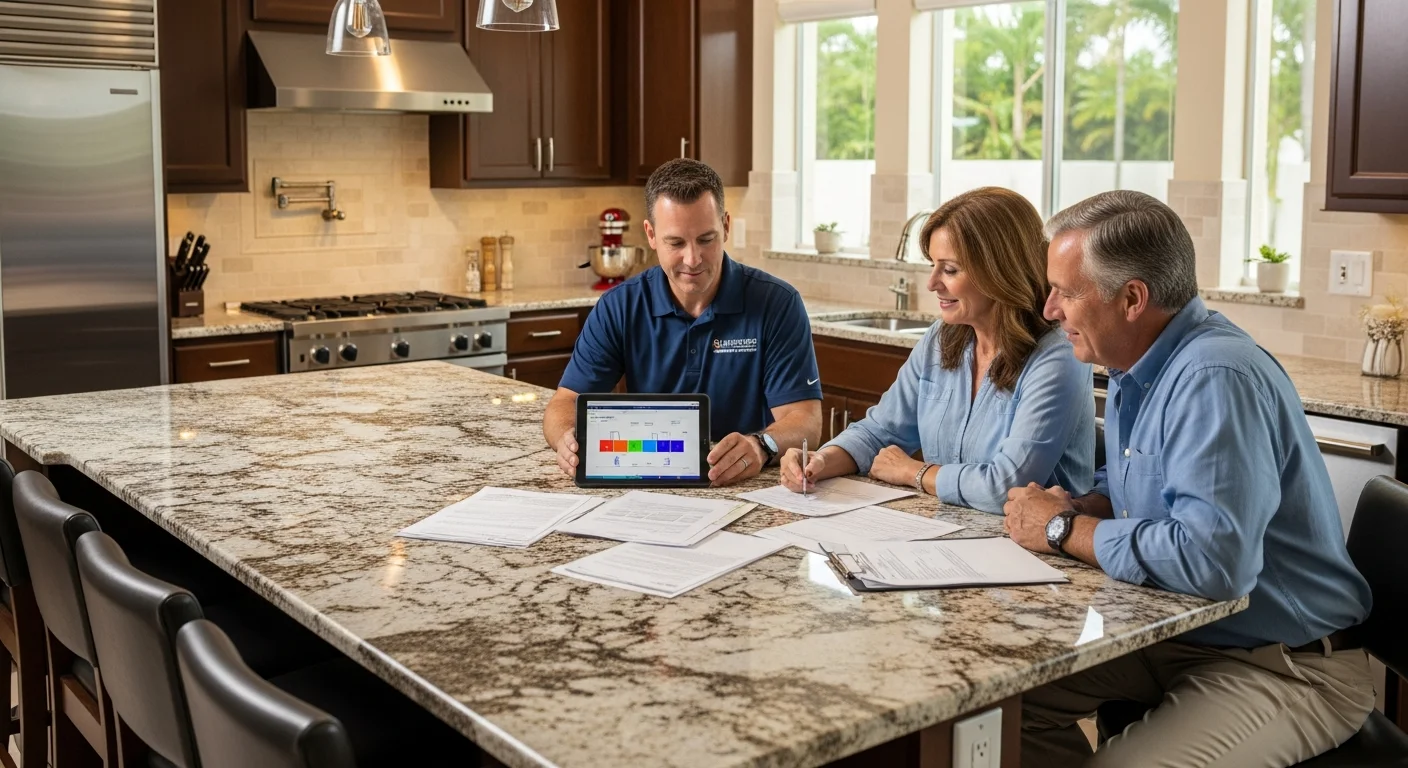
From Heron Bay's expansive estates to MiraLago's modern luxury residences, Palm Build's IICRC-certified fire restoration team responds from Deerfield Beach in 15-25 minutes with emergency board-up, air scrubbers, soot stabilization, and professional smoke odor elimination — protecting your premium finishes, decontaminating HVAC ductwork, and documenting every detail for your insurance carrier from the first hour on-site.
Deerfield Beach Office — ~15-25 minutes to Parkland 15-25 min Response IICRC Certified
Why Parkland, FL Faces Elevated Fire & Smoke Risks
Parkland's affluent Broward County communities combine South Florida's extreme lightning
exposure, open-concept luxury floorplans that accelerate smoke migration, aging
1990s-era electrical systems in early Heron Bay phases, and multi-zone HVAC networks
that distribute smoke contamination to every room in minutes. These factors demand fire
restoration expertise calibrated to the premium materials and complex building systems
found in Parkland homes.
Parkland's luxury homes require specialized fire restoration — premium finishes, complex
HVAC systems, and CBS construction create unique smoke migration challenges
Lightning Strikes During Summer Thunderstorms
High
Broward County averages over 80 thunderstorm days per year, with the heaviest concentration from June through September. Lightning strikes directly ignite S-tile roofing and underlayment, travel through electrical wiring to start fires at junction boxes and outlets inside CBS wall cores, and surge through utility lines to damage appliances that can overheat and ignite hours or days later. Parkland's gated communities — built across open terrain west of the Turnpike — have significant lightning exposure on every lot. A direct strike delivers up to 300 million volts, enough to start fires that smolder inside the attic and block core voids for hours before visible flames appear.
Peak season: Jun – Sep
Kitchen Fires in Luxury Homes with Gas Ranges
High
Parkland's gourmet kitchens — featuring commercial-grade gas ranges, built-in griddles, and high-BTU burners — are designed for serious cooking but create elevated grease fire risk. Open-concept floorplans connecting kitchen, great room, and dining area mean a single stovetop grease fire fills 2,000-3,000 square feet with smoke in under three minutes. Protein residue from kitchen fires is nearly invisible but intensely odorous, coating every surface including tray ceiling details, crown molding, recessed lighting, and cabinet interiors. Multi-zone HVAC systems pull smoke into ductwork within a single air handler cycle, contaminating bedrooms and closets on the opposite side of the house.
Peak season: Year-round
Electrical Fires in Older 1990s Heron Bay Wiring
High
Heron Bay — Parkland's largest and oldest major community — includes phases built from the mid-1990s onward. These earlier sections have electrical systems that have endured nearly three decades of South Florida's heat, humidity, and storm cycles. Circuit breakers that have tripped hundreds of times may fail to trip when it matters most. Original wiring insulation degrades in attic temperatures that regularly exceed 140 degrees F, and panels sized for 1990s electrical loads now power smart-home systems, EV chargers, and upgraded HVAC equipment they were never designed to handle. Electrical fires in CBS wall cores smolder undetected for hours, producing wet smoke residue that is the most difficult soot type to clean from porous surfaces.
Peak season: Year-round
HVAC Electrical Failures in Complex Zoning Systems
Moderate
Parkland's 4,000-7,000 square foot homes run multi-zone HVAC systems with two, three, or even four air handlers operating continuously in South Florida's climate. Compressor failures, capacitor burnouts, and contactor arcing in aging outdoor condensers create ignition risk — particularly in units installed during original construction that have been running 10-12 hours a day for 15 to 25 years. Electrical connections in air handler plenums located in attic spaces can arc and ignite surrounding insulation. These fires start in the most concealed, hardest-to-detect location in the home and can saturate the entire duct system with smoke before any visible sign appears in the living space below.
Peak season: Year-round
Types of Fire & Smoke Damage
Fire & Smoke Damage Types in Parkland, FL Homes
Every fire produces different damage depending on what burned, how hot it burned, and
how smoke migrated through your home. Parkland's luxury construction — CBS walls with
premium finishes, multi-zone HVAC, and open-concept floorplans — means restoration crews
must identify the exact soot types and migration pathways before any cleaning begins.
Using the wrong approach permanently sets stains and compounds contamination on surfaces
that cost thousands to replace.
Kitchen Fires — Luxury Appliances & Gas Ranges
Parkland's gourmet kitchens feature commercial-grade gas ranges, built-in griddles, and high-BTU burners that generate grease fires with intense heat. Open-concept floorplans connecting kitchen, great room, and dining area allow smoke to fill 2,000-3,000 square feet in under three minutes. Protein residue from cooking fires coats every surface with a nearly invisible, intensely odorous film that bonds to custom cabinetry finishes, stone countertops, and tray ceiling details. HVAC systems pull smoke into ductwork within a single air handler cycle, contaminating bedrooms and closets throughout the home.
Soot Profile
Protein residue — invisible, greasy film with pungent odor
Electrical Fires — Aging 1990s Wiring in Heron Bay
Heron Bay's earliest phases were built in the mid-1990s with electrical systems now approaching 30 years of service in South Florida's demanding climate. Original wiring insulation degrades in attic temperatures exceeding 140 degrees F. Panels sized for 1990s loads now power smart-home systems, EV chargers, and upgraded HVAC equipment. Electrical fires start inside CBS wall cores and smolder undetected for hours, producing wet smoke residue — the most difficult soot type to clean — that penetrates structural materials before flames become visible. Restoration requires opening walls to assess hidden char damage throughout the electrical run.
Soot Profile
Wet smoke — thick, sticky residue with chemical odor
Lightning Strike Fires — Summer Thunderstorms
South Florida is the lightning capital of the United States, with Broward County averaging over 80 thunderstorm days per year between June and September. Direct strikes shatter S-tile roofing and ignite underlayment and attic insulation. Lightning entering through electrical service travels the entire wiring network, generating extreme heat at junction boxes, outlets, and switches — starting fires at multiple points simultaneously inside CBS wall cores. Power surges damage appliance electronics that can overheat and ignite hours or days after the storm, disconnecting the fire from the lightning event in the homeowner's mind.
Soot Profile
Mixed — dry soot from insulation, wet smoke from wiring
HVAC Fires — Complex Multi-Zone Systems
Parkland's 4,000-7,000 square foot homes run multi-zone HVAC systems with two to four air handlers operating continuously in South Florida's climate. Compressor failures, capacitor burnouts, and contactor arcing in aging outdoor condensers create ignition risk — particularly units running 10-12 hours daily for 15 to 25 years. Air handler electrical connections in attic-mounted plenums can arc and ignite surrounding insulation. These fires start in the most concealed location in the home and saturate the entire duct system with smoke before any visible sign appears in the living space below.
Soot Profile
Synthetic soot — from insulation and electrical components
Understanding the Damage
How Smoke & Soot Travel Through Parkland Luxury Homes
Understanding smoke behavior in Parkland's luxury homes is critical to effective
restoration — and explains why visible fire damage in one room often means invisible
contamination throughout the entire house. Smoke follows three primary migration
pathways in CBS open-plan construction, all operating simultaneously during any fire
event. Each pathway requires specialized cleaning calibrated to the premium materials
involved.
Premium finishes in Parkland homes — engineered wood, stone, custom cabinetry — each require
different soot chemistry and cleaning techniques to avoid permanent damage
Open-Plan Thermal Smoke Migration
Kitchen, great room, dining — continuous airspace in luxury floorplans
In Parkland's open-concept floorplans — where kitchen, great room, dining area, and often a study or lanai share continuous airspace — hot smoke rises to the ceiling and spreads laterally at 3 to 5 feet per second. A kitchen fire in a typical Heron Bay estate fills 3,000+ square feet of connected living space with visible smoke in under two minutes. The smoke layer descends as more hot gas accumulates at ceiling level, coating crown molding, tray ceiling details, recessed lighting fixtures, and upper wall surfaces with a soot gradient that thins further from the fire source. Even brief 5 to 10 minute exposure deposits enough acidic residue on engineered hardwood, natural stone, and painted drywall to cause permanent etching within 48 to 72 hours.
Professional Cleaning Approach
Immediate HVAC shutdown to prevent system-wide distribution
HEPA air scrubbers deployed throughout open living areas
Dry chemical sponges for painted drywall and crown molding details
pH-matched solvents for engineered hardwood floors — never water-based on wood
Specialized stone cleaning protocols for marble and granite surfaces
HVAC Ductwork Distribution Contamination
Multi-zone systems spread smoke to every room in a single cycle
This pathway causes the most unexpected damage and highest restoration costs in Parkland homes. Multi-zone HVAC systems cycle air continuously — return vents pull smoke-laden air into ductwork, through the air handler, and redistribute it to every connected room including bedrooms, closets, and bathrooms far from the fire. A single HVAC cycle can contaminate an entire 5,000-square-foot home's ductwork with smoke particulate and protein residue. Even after visible smoke clears, every time the system runs it recirculates microscopic soot particles and embedded odor compounds. Turning off HVAC immediately during a fire event is one of the most important steps a Parkland homeowner can take.
Professional Cleaning Approach
Complete duct cleaning of every supply and return run per zone
Air handler coil decontamination, blower assembly cleaning, filter replacement
Each zone decontaminated independently — Parkland homes typically have 2-4 zones
Post-cleaning particulate monitoring to verify system is safe to operate
Odor-blocking sealant applied to duct interiors if soot saturation is heavy
CBS Wall Core & Attic Concealed Migration
Concrete block voids and attic spaces — invisible contamination pathways
Parkland's CBS (concrete block and stucco) construction creates concealed pathways most homeowners never consider. Electrical conduit penetrations, plumbing chases, and HVAC supply plenums create direct channels from the fire area into block core voids and attic space. Smoke entering these concealed spaces deposits soot on surfaces that are invisible and inaccessible without deliberate investigation. In lightning strike fires that originate in attic wiring or the block core itself, smoke can permeate the entire concealed envelope of the home before any visible smoke enters the living space. Surface-only cleanup leaves embedded soot that produces chronic odor for months.
Professional Cleaning Approach
Thermal imaging to map every smoke migration pathway through CBS assembly
Block core fogging with specialized deodorizing agents
Attic insulation assessment — removal and replacement when saturated
Electrical and plumbing chase inspection and decontamination
Odor-blocking primers on all concealed surfaces before reconstruction
Our Fire Restoration Process
How We Restore Parkland, FL Homes After Fire & Smoke Damage
Fire restoration in Parkland involves simultaneous damage types — structural fire
damage, soot contamination on premium finishes, HVAC system-wide smoke distribution, and
water from fire suppression. Our 6-step process addresses all of these in a coordinated
sequence designed to protect your home's luxury materials, decontaminate complex
multi-zone HVAC systems, and minimize your total restoration timeline.
01
Emergency Response & Property Securing
15-25 min
Call (754) 600-3369 any time — day or night. Our fire restoration crew departs our Deerfield Beach operations hub, arriving in Parkland within 15 to 25 minutes. We assess structural integrity using thermal imaging, then secure the property with emergency board-up for compromised windows, doors, and roof sections. For Parkland's gated communities, we coordinate gate access with HOA management and security. S-tile roofs damaged by fire or firefighter access are tarped immediately to prevent rain intrusion — critical during summer thunderstorm season when afternoon storms can cause thousands in additional water damage to an unsecured fire-damaged home overnight.
02
Smoke Assessment & HVAC Isolation
Hours 1-6
Before any cleanup begins, we shut down and isolate the HVAC system to prevent further smoke distribution through ductwork. HEPA air scrubbers deploy throughout the home to capture airborne particulate. Our IICRC-certified technicians perform thermal imaging to map hidden smoke migration through CBS wall cores and attic spaces, air quality monitoring to quantify particulate levels in every room, and surface-by-surface photography cataloging every affected finish. For Parkland's high-value interiors, we inventory custom cabinetry, stone surfaces, specialty lighting, and smart-home components with replacement cost estimates for your insurance carrier.
03
Soot Removal & Surface Decontamination
Days 1-7
Smoke residue chemistry determines the cleaning approach — and Parkland's premium materials demand precision. Kitchen grease fires produce protein residue that is nearly invisible but intensely odorous. Electrical fires produce wet smoke that smears and bonds to porous surfaces. Our technicians use dry chemical sponges, HEPA vacuums, and professional solvents matched to both the residue type and the substrate — different chemistry for engineered hardwood than for natural stone, different protocols for painted drywall than for custom wood millwork. Every surface in the smoke path is addressed: walls, ceilings, crown molding, tray ceiling details, light fixtures, cabinet interiors, and closet contents.
04
HVAC Duct Cleaning & Decontamination
Days 3-10
Complete duct cleaning and air handler decontamination is mandatory after any fire in a Parkland home. Our technicians access and clean every supply and return duct run, air handler coils, blower assemblies, and filter housings. For homes with multiple zones — standard in Parkland's 4,000-7,000 sq ft residences — each system is decontaminated independently. We verify air quality with particulate monitoring after cleaning to confirm the system is safe to resume operation. Skipping this step guarantees chronic smoke odor — the ductwork recirculates embedded particulate every time the system cycles.
05
Odor Elimination
Days 5-14
Surface cleaning removes visible soot but does not eliminate embedded odor at the molecular level. Palm Build uses a multi-layer approach: thermal fogging penetrates the same pathways smoke traveled, reaching inside CBS wall cores and HVAC plenums. Hydroxyl generators break down odor compounds chemically and are safe for occupied areas. Ozone shock treatment handles deep saturation in unoccupied spaces. For Parkland homes where smoke has penetrated through wall assemblies and attic insulation, we seal affected surfaces with odor-blocking primers before reconstruction begins. Smart-home sensors and control systems are tested and recalibrated after treatment.
06
Reconstruction & Premium Finish Matching
Weeks 2-8+
Once smoke contamination is eliminated and the structure is verified clean, we handle the complete rebuild: drywall replacement, flooring repair, painting, cabinet replacement, trim matching, and all finish work. For Parkland's luxury homes, we match original finishes — custom cabinetry profiles, stone countertop species, engineered flooring brands, and specialty hardware. Broward County building permits for structural fire repairs are managed from application through final inspection. HOA architectural review approvals for any exterior work are coordinated in parallel. Call (754) 600-3369 to schedule your assessment.
Our Work
Parkland Fire Restoration: The Process in Action
From initial smoke damage assessment through complete reconstruction — see how Palm
Build restores Parkland luxury homes after fire and smoke damage.
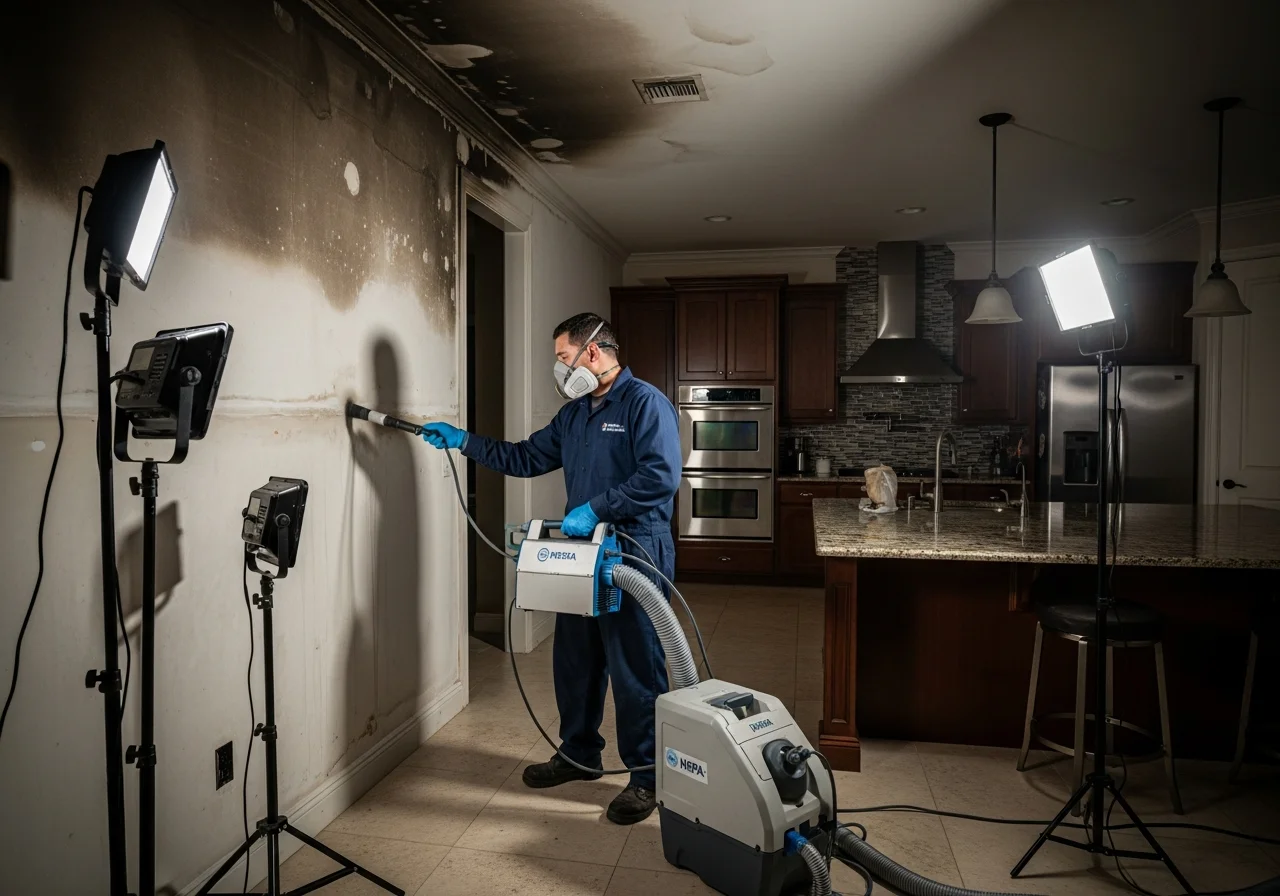
Smoke damage remediation in progress — soot stabilization and surface decontamination in a Parkland home
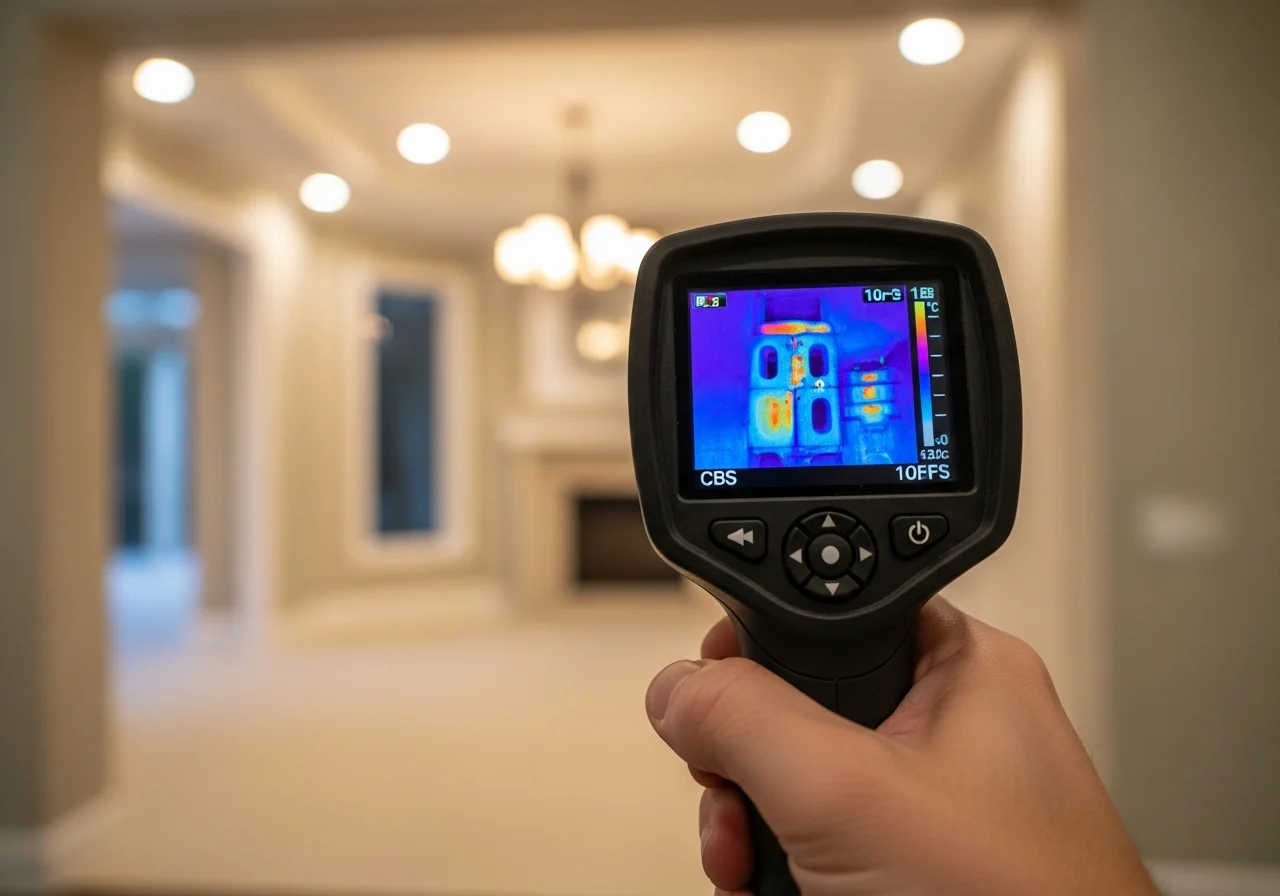
Thermal cameras detect hidden hot spots and moisture in CBS wall cores and attic assemblies
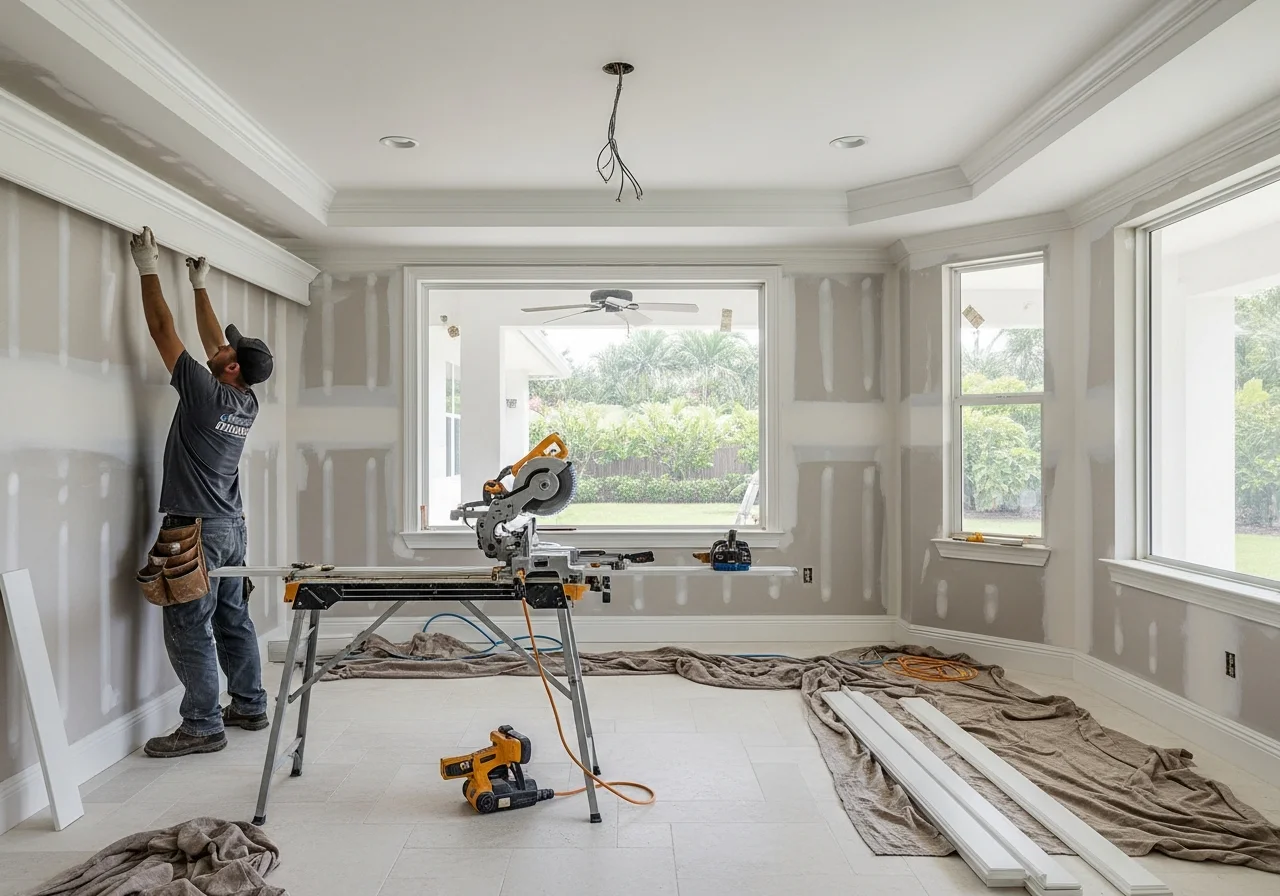
Reconstruction restores fire-damaged interiors with matched premium finishes and custom carpentry
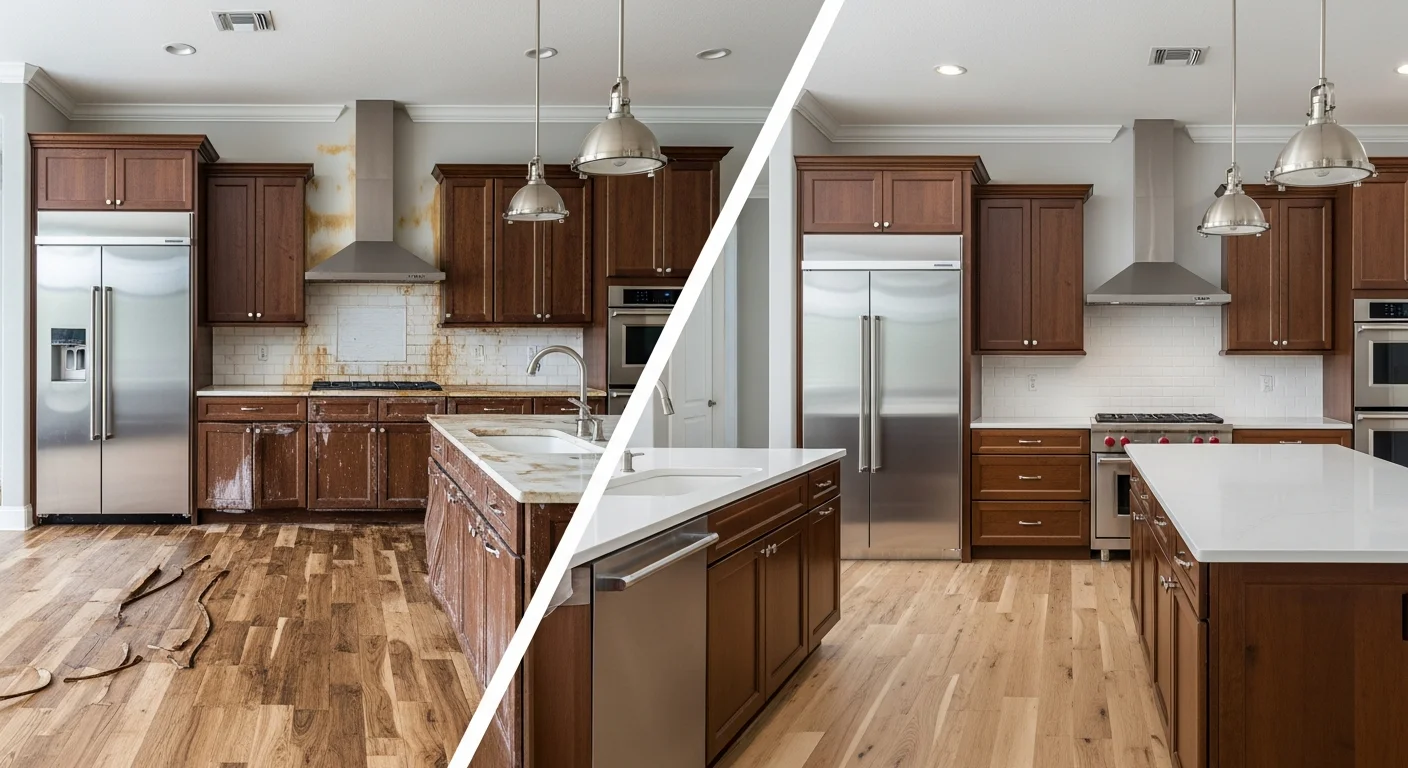
Kitchen restoration after fire damage — from soot-covered surfaces to premium finish reconstruction
Insurance Claims
Fire Damage Insurance Claims in Parkland, FL
Fire damage is one of the most comprehensively covered perils under standard Florida
homeowners policies (HO-3). However, with Parkland's median home value approaching
$983,000 and many homes valued well above $1.5 million, the stakes of proper
documentation are significantly higher. Underdocumented claims leave tens of thousands
on the table — particularly for custom finishes, specialty contents, and the HVAC
decontamination scope that adjusters may not automatically include.
Insurance coordination from the first call — detailed documentation of smoke migration,
HVAC contamination, and premium material replacement costs supports maximum settlement
What Your FL Policy Covers for Fire Damage
Structural fire damage repair and full reconstruction to pre-loss condition
Professional soot and smoke cleaning of all affected premium surfaces
Water damage from fire suppression — not subject to separate water sublimits
Complete HVAC duct decontamination and air handler cleaning
Contents restoration or replacement — individual documentation for high-value items
Additional Living Expenses (ALE) for temporary housing during restoration
Broward County building permits and code upgrades required during reconstruction
Your Parkland Fire Claim: Step by Step
1
Contact Your Insurance Company Immediately
File your claim as soon as the fire department clears the scene. Florida Statute 627.70132 sets a 1-year deadline for filing claims, but beginning the process immediately protects your rights and starts the documentation timeline. Note your claim number, adjuster's name, and direct contact information. With Parkland's median home value approaching $983,000 and many homes valued well above $1.5 million, the stakes of proper documentation are significantly higher than in average markets.
2
Document Everything Before Cleanup Begins
Before any cleanup begins, photograph and video every affected area — fire damage, smoke staining, soot deposits, water from suppression, and damaged personal property. Palm Build's assessment team documents your property using thermal imaging to map concealed smoke migration through CBS wall cores and attic spaces, air quality monitoring to quantify particulate levels in every room, and surface-by-surface photography cataloging every affected premium finish. For high-value contents — artwork, electronics, wine collections — we create individual documentation with replacement cost evidence.
3
Professional Scope of Work with Material Specifications
Our IICRC-certified team creates a detailed scope covering every restoration task — from emergency board-up through final reconstruction. For Parkland's luxury homes, we document custom cabinetry profiles, stone countertop species, engineered flooring brands, and specialty hardware with replacement costs. Standard per-linear-foot estimates undervalue Parkland interiors by 30-50%. We include the full HVAC decontamination scope — documented as fire-related to ensure it is not classified under lower-limit categories. We use Xactimate estimating software — the same platform your adjuster uses.
4
Adjuster Coordination & Claim Approval
Palm Build works directly with your insurance adjuster throughout the claims process. We attend the on-site inspection, walk the adjuster through our thermal imaging reports, air quality readings, and detailed material specifications. For Parkland's high-value claims, we negotiate disputed line items — particularly around premium material replacement costs and HVAC decontamination scope that adjusters may not automatically include. Broward County building permits for structural fire repairs are included in the initial scope to avoid costly supplements.
5
Restoration & Payment Coordination
Once the scope is approved, restoration begins immediately. Insurance typically issues payment in two phases: an initial payment minus your deductible when work begins, and a recoverable depreciation payment when restoration is complete. We coordinate payment timing with your carrier so there are no out-of-pocket gaps during the project. Your Additional Living Expenses (ALE) coverage pays for temporary housing while your Parkland home is being restored — we document the timeline to support your ALE claim.
Palm Build Manages Your Parkland Fire Claim
We work directly with your insurance adjuster from the first inspection. Our fire damage
documentation — thermal imaging reports showing concealed smoke migration, air quality
readings proving contamination in distant rooms, HVAC particulate analysis supporting
full duct decontamination scope, and detailed material specifications with replacement
costs for every premium finish — is formatted exactly how Broward County adjusters
expect to receive it. This reduces back-and-forth and gets your Parkland claim approved
faster.
Answers to the most common questions Parkland homeowners ask after a fire — covering
response time, insurance claims, smoke migration in luxury homes, lightning fire risk,
HVAC decontamination, and restoration timelines.
How quickly can Palm Build respond to a fire in Parkland, FL?
Our Deerfield Beach office is approximately 12 miles from Parkland — about 15-25 minutes via Sample Road and University Drive. We dispatch 24/7/365 with board-up materials, HEPA air scrubbers, soot stabilization supplies, and full PPE. Call (754) 600-3369 any time.
Is fire damage covered by homeowners insurance in Parkland?
Yes — fire damage is one of the most comprehensively covered perils under standard Florida homeowners policies (HO-3). Coverage typically includes structural repair, contents replacement, smoke damage cleanup, suppression water damage, HVAC decontamination, and Additional Living Expenses for temporary housing. Palm Build provides detailed documentation from the first call to maximize your settlement, including thermal imaging reports and premium material replacement specifications.
Why does smoke spread so quickly in Parkland luxury homes?
Parkland's open-concept floorplans allow hot smoke to fill 2,000-3,000+ square feet of continuous living space in under three minutes. Simultaneously, multi-zone HVAC systems pull smoke into ductwork and redistribute it to every room in the house within a single air handler cycle. CBS wall core voids and electrical conduit penetrations create additional concealed pathways. This is why HVAC isolation is our first priority after securing the structure — and why duct decontamination is mandatory after any fire.
Are Parkland homes at risk for lightning-caused fires?
Significantly. Broward County averages over 80 thunderstorm days per year, concentrated between June and September. Lightning strikes directly ignite roofing materials, start fires inside wall cavities via electrical wiring, and damage appliances that can overheat and ignite hours later. Heron Bay's 1990s-era sections with aging wiring are particularly vulnerable. If your home takes a lightning strike, call an electrician and a fire restoration company immediately — even if you see no visible damage.
How long does fire restoration take in a Parkland home?
A contained kitchen fire with smoke damage typically takes 3 to 6 weeks from cleanup through reconstruction, depending on HVAC decontamination scope and premium material lead times. Significant structural fires can take 3 to 8 months. Custom cabinetry, specialty stone, and matched engineered flooring often require additional lead time for fabrication and sourcing. Palm Build manages the timeline from emergency response through final walkthrough.
Can smoke odor be completely eliminated from a Parkland home?
Yes, but only with professional equipment and techniques that address all contamination pathways. Surface cleaning alone will not eliminate odor — smoke compounds embedded in CBS wall cores, attic insulation, and HVAC ductwork must be treated. Palm Build uses thermal fogging, hydroxyl generators, ozone treatment, complete duct decontamination, and odor-blocking sealers to eliminate smoke odor at the molecular level.
What about water damage from firefighting suppression?
Fire suppression water is a significant secondary damage source. A single fire hose delivers 150 to 250 gallons per minute. In Parkland's slab-on-grade CBS homes, suppression water spreads across continuous flooring, saturating engineered hardwood and wicking into drywall from the bottom up. Mold can begin growing within 24 to 48 hours in Broward County's humidity. Palm Build handles fire and water damage simultaneously, beginning extraction and drying while performing soot stabilization.
Trusted Vendors
Trusted local pros in Parkland
Outside our restoration scope, these are the vetted, licensed contractors we trust
alongside our work. Personally evaluated, reference-checked, and recommended by Palm
Build.
Soot etching becomes permanent within 48-72 hours. Every HVAC cycle spreads contamination deeper into your ductwork. Every hour of delay increases restoration scope and cost. Palm Build responds to Parkland fire emergencies in 15-25 minutes from Deerfield Beach with the equipment, certifications, and high-value insurance documentation expertise to restore your home from fire to finish.