Water Damage Restoration in Denver, North Carolina
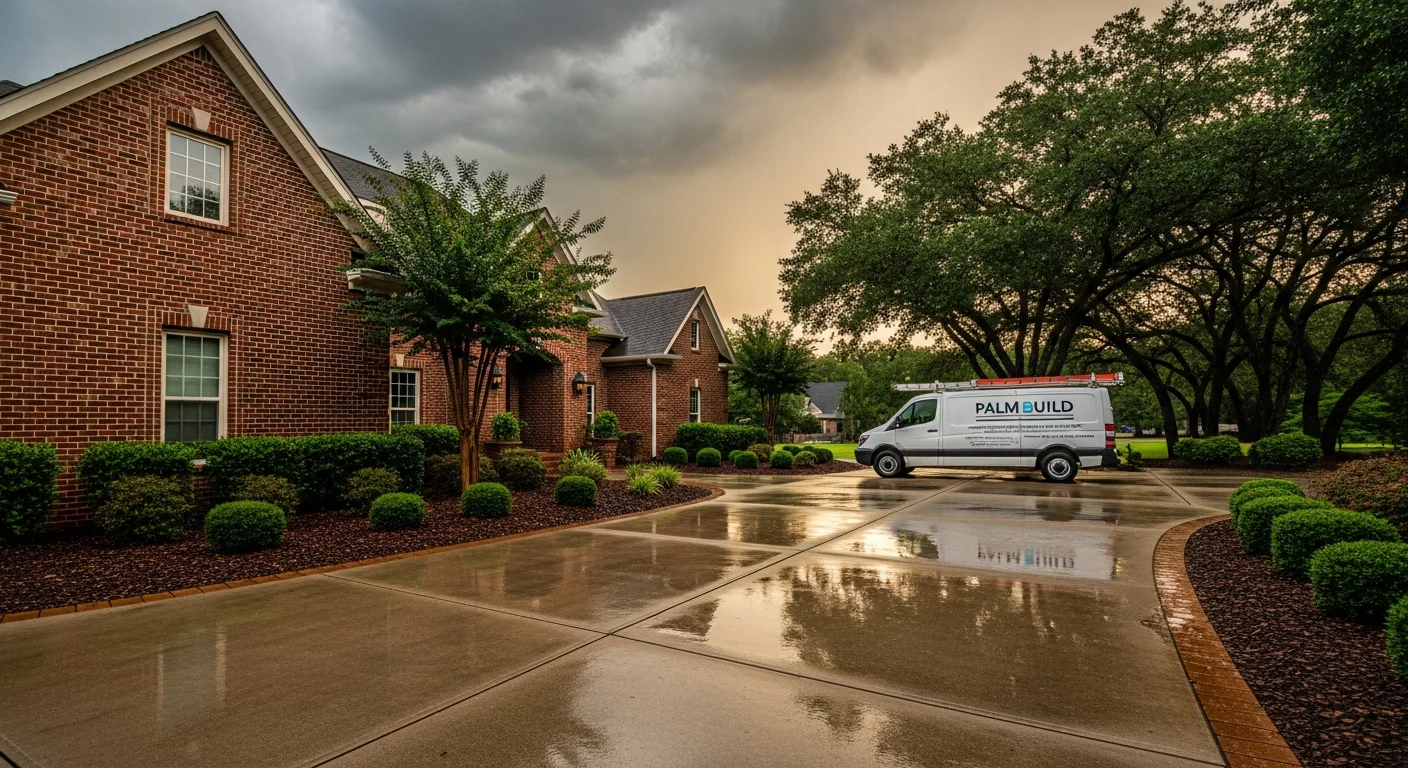
From Trilogy Lake Norman crawl spaces to Westport flood corridors, Palm Build's Charlotte-based emergency team reaches Denver in 35-45 minutes with truck-mounted extraction, structural drying, and full insurance documentation — day or night. ZIP 28037's premium HOA communities and $492K median home values demand white-glove restoration. That's exactly what we deliver.
~25 miles from Denver 35-45 min Response IICRC Certified
Denver's ZIP 28037 experiences year-round moisture pressure from Lake Norman's shoreline
humidity, with peak risk from June through September. Tropical Cyclone Helene remnants
caused ~$1M in Lincoln County property damage in September
2024 — a reminder that this risk is real and recurring.
Peak RiskHigh RiskModerate
Click any month bar for details
September 27, 2024
Tropical Cyclone Helene remnants struck Lincoln
County, causing approximately $1 million in property damage. Clay soil saturation
drove widespread crawl space flooding events across Denver neighborhoods including those
along the Lake Norman western shore.
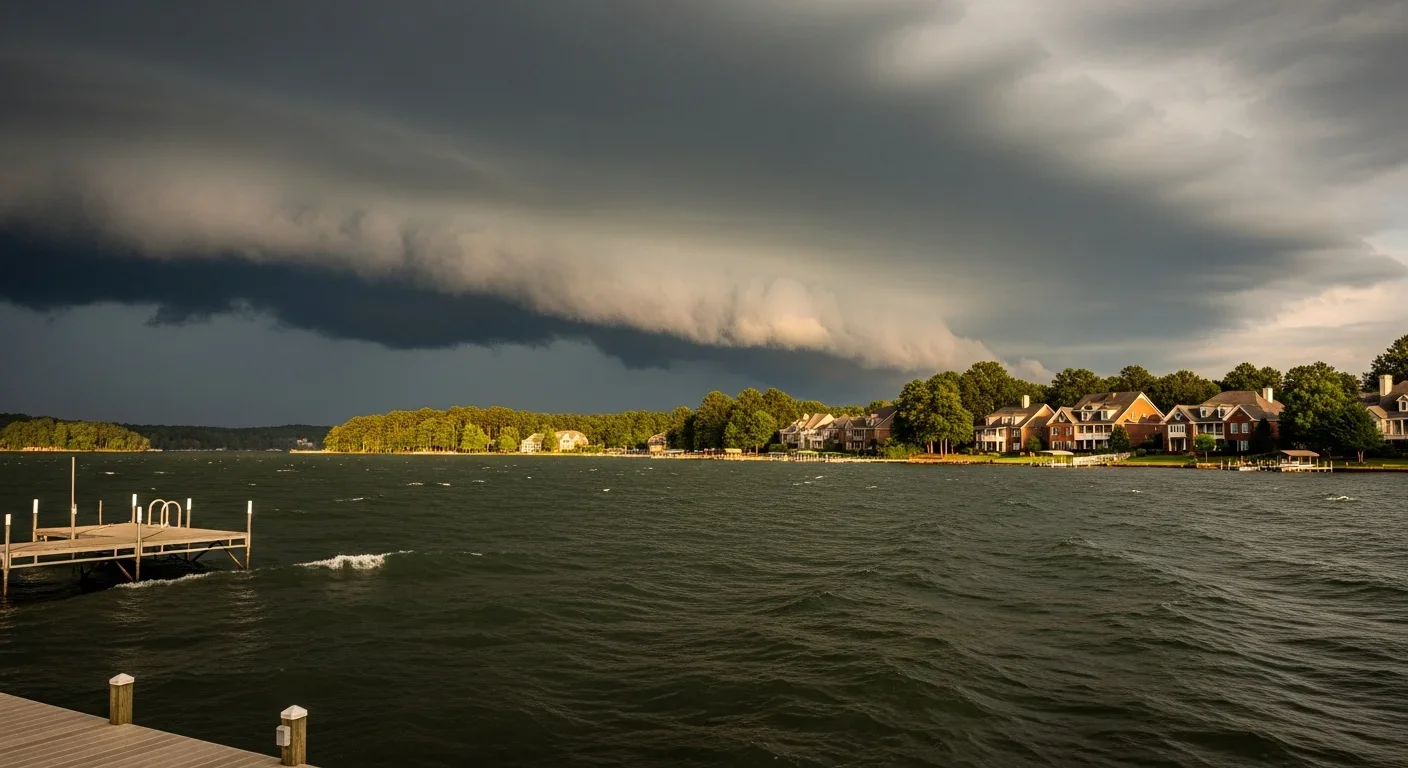
Lake Norman Wind Factor
Lake Norman's open water creates a local wind amplification effect — storms tracking across the reservoir pick up speed over the water surface before hitting
shoreline communities in Westport, Sailview, and Westport Peninsula. Wind-driven rain enters
roof assemblies, flashing joints, and siding gaps at angles that standard construction doesn't
fully address.
Lake Norman's open water surface accelerates storm cells and creates wind-driven rain
exposure for Denver's shoreline communities — a risk that doesn't appear on standard
flood maps but shows up in restoration claims year after year.
Local Risk Factors
Why Denver NC Homes Face Unique Water Damage Risks
Denver's ZIP 28037 isn't just another Charlotte suburb. Lake Norman's shoreline
humidity, Lincoln County clay soil, and the area's HOA-heavy premium housing stock
create a water damage environment that demands faster response and more thorough
documentation than most homeowners expect. When a storm hits, mold can begin growing in 24 to 48 hours.
Piedmont Clay Soil
<0.2 in/hr
Clay drainage rate
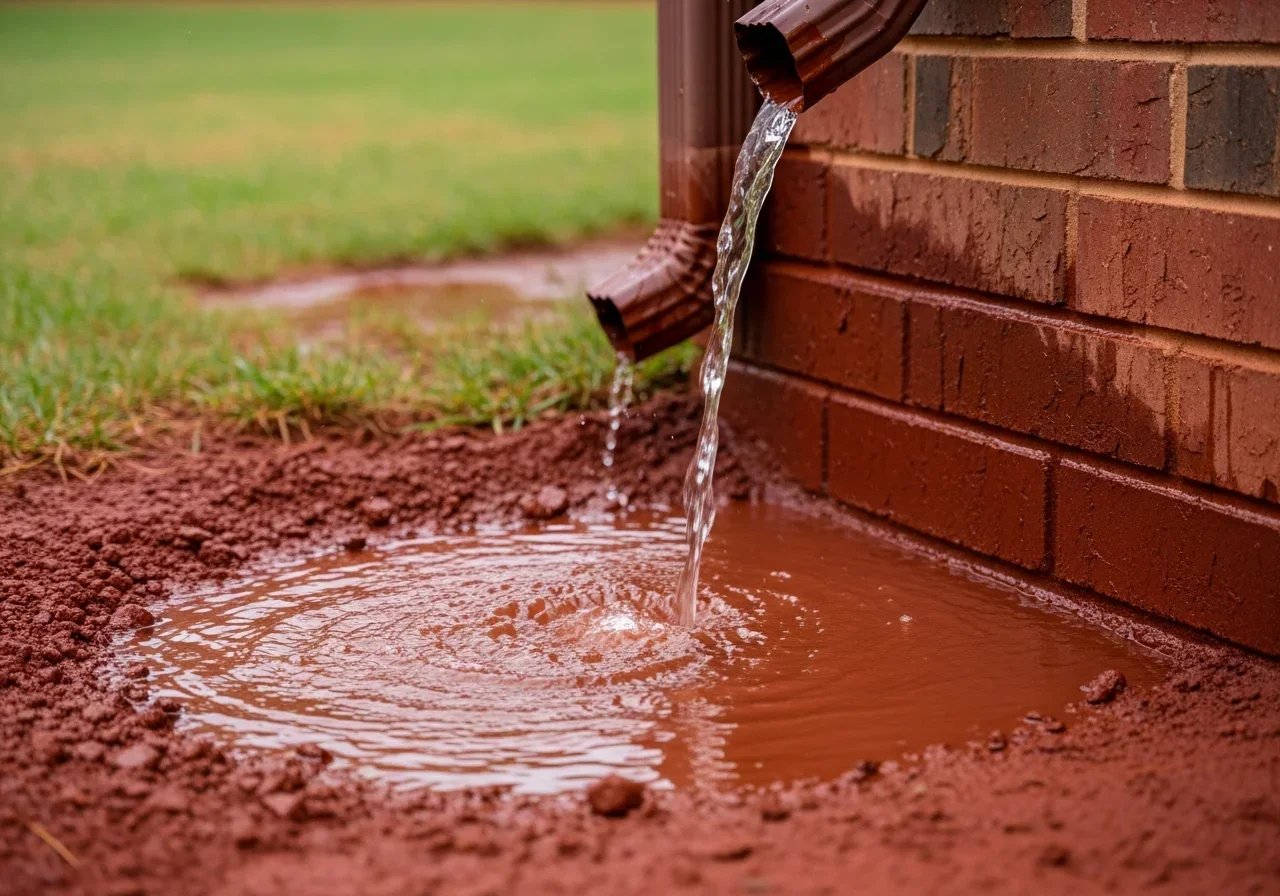
Lincoln County sits on the Cecil clay soil series — heavy red clay that drains at less than 0.2 inches per hour. After any significant rain, water pools against foundations and wicks upward into crawl spaces for days. Denver's upscale HOA lots with extensive landscaping and hardscaping can actually concentrate runoff toward foundations rather than away from them.
Lake Norman Humidity
32,510 ac
Lake Norman surface area
Denver is on the western shore of Lake Norman — a 32,510-acre reservoir created by Duke Energy's Cowans Ford Dam on the Catawba River. The reservoir's open water surface elevates ambient humidity year-round, particularly for shoreline neighborhoods like Westport Peninsula and Sailview. Even inland 28037 neighborhoods experience measurably higher moisture levels than comparable Charlotte suburbs without a nearby reservoir.
70–90% Summer Humidity
24–48 hrs
Mold onset time
Denver's humid subtropical climate drives summer relative humidity to 70–90%. Any moisture intrusion — a crawl space puddle, a slow supply line leak, HVAC condensate overflow — encounters ideal mold germination conditions within 24-48 hours. Homes in Trilogy Lake Norman and The Springs at Westport Club with multiple HVAC zones are especially vulnerable to condensate line clogs in summer.
HOA Premium Complexity
$492K
Median home value (ZIP 28037)
ZIP 28037's median home value of $492K and median household income of $112K means restoration scopes are larger and more complex. HOA-governed communities like Verdict Ridge and Westport add insurance complexity — a single water event can trigger both an individual homeowner policy and an association master policy depending on where damage originated and what assemblies were affected.
Lincoln County's Cecil-series clay soil drains at less than 0.2 inches per hour —
meaning foundation wetting continues for days after rain ends, even in Denver's premium
HOA communities with professional landscaping.
Neighborhood Intelligence
Denver NC Neighborhood Water Damage Risk Guide
Water damage in Denver's ZIP 28037 follows predictable patterns based on proximity to
Lake Norman, foundation type, construction era, and HOA governance. Most restoration
companies serve Denver generically. We know every neighborhood by name.
Common damage: Roof and siding intrusion, window flashing leaks, crawl space vapor from lake proximity
Sailview
High Risk
Build era: Established, custom homes
Primary risk: Multi-zone HVAC systems mask humidity-driven moisture; larger homes hide slow crawl space mold buildup
Common damage: HVAC condensate overflow, musty odors from undetected crawl space moisture, deck ledger rot
Villas at Westport
Flood Risk
Build era: Townhome format, 31 units
Primary risk: Shared walls increase cross-unit water migration; HO-6 vs master policy complexity on shared assemblies
Common damage: Inter-unit water damage, rapid extraction critical to prevent claims across multiple units
Verdict Ridge
High Risk
Build era: Established, ongoing resale
Primary risk: Remodel-driven supply line and fixture failures; crawl space humidity from clay soil drainage
Common damage: Kitchen and bath supply line leaks, crawl space vapor barrier failure, hardwood buckling
Westport
High Risk
Build era: Multiple phases, well-established
Primary risk: Aging plumbing in older phases; treefall and shingle damage after thunderstorms; HOA exterior uniformity urgency
Common damage: Storm-driven roof leaks, slab and crawl space moisture, HOA-driven rapid board-up needs
Trilogy Lake Norman
Moderate
Build era: Newer, 55+ gated community
Primary risk: HOA expectations amplify demand for clean containment; storm roof underlayment and window flashing failures
Common damage: Roof leak–driven ceiling staining, HVAC condensate clogs, contents manipulation in premium interiors
The Springs at Westport Club
Moderate
Build era: Newer phase of Westport
Primary risk: Roof underlayment stress after storms, window/door flashing leaks, crawl space if grading inadequate
Common damage: Ceiling water staining, perimeter foundation seepage, minor crawl space moisture
Smithstone
Moderate
Build era: Established lake-area subdivision
Primary risk: Lake humidity plus interior moisture events accelerate microbial growth; deck ledger and exterior rot risk
Common damage: Crawl space mold from sustained humidity, slow external leak failure, deck water entry
Killians Pointe
Moderate
Build era: Established
Primary risk: Storm wind and tree impacts; sump and drain line backups after heavy rainfall events
Common damage: Wind-driven roof damage, crawl space flooding from drain overflow, basement moisture
Lowesville
Moderate
Build era: Mixed rural and subdivision
Primary risk: Septic and well prevalence in rural pockets; groundwater table elevation issues, outbuilding crawl spaces
Common damage: Groundwater-driven crawl space flooding, grading failures near foundations, outbuilding mold
Palm Build responds to water damage emergencies throughout Denver's HOA communities —
Trilogy Lake Norman, Verdict Ridge, Westport, Sailview, and Smithstone — with the
white-glove documentation and minimal disruption that premium properties require.
Flood Zones & Water Bodies
Lake Norman, Lincoln County Flood Maps & Your Property
Not all flood risk in Denver comes from named flood zones. Lake Norman's reservoir
dynamics, the Catawba River basin, and clay soil drainage behavior affect properties
throughout 28037 — well beyond the FEMA-mapped floodplain. Here's what Denver homeowners
need to know before restoration work begins.
Lake Norman & Cowans Ford Dam
Reservoir / Primary Water Body
Lake Norman is a 32,510-acre man-made reservoir created by Duke Energy's Cowans Ford Dam impounding the Catawba River between 1959 and 1963. The reservoir's managed water levels, combined with NOAA monitoring of the Catawba River gauge at the dam site, affect shoreline behavior and drainage patterns throughout Denver. Homes near the shore are exposed to both flood zone designations and wind-driven wave action during storm events.
Flood Risk
Highest
Catawba River Basin
Major Watershed
Denver sits within the Catawba River basin managed by Duke Energy and regulated by NOAA's river gauge network. The broader basin's hydrology influences ground saturation levels across Lincoln County. Heavy upstream rainfall can raise reservoir levels and affect shoreline drainage even without local storm activity. Properties in Special Flood Hazard Areas along drainage corridors may require Lincoln County floodplain development permits for any restoration reconstruction work.
Flood Risk
High
Piedmont Clay Drainage Zones
Diffuse / Non-channeled Flooding
Lincoln County's Cecil-series clay soil limits surface infiltration across all of ZIP 28037 — not just in mapped flood zones. After 2+ inches of rain, surface runoff increases sharply, drainage swales overflow, and sub-foundation moisture pressure rises. This is why crawl space flooding is reported across Denver's upland HOA neighborhoods far from the lake shore, including Verdict Ridge and Stratford, after major rain events.
Flood Risk
Moderate–High
Lincoln County Floodplain Permits & Reconstruction
Lincoln County requires a floodplain development permit prior to any development activity within Special Flood Hazard Areas — including reconstruction
after water damage. If your Denver property is in a SFHA, your restoration and rebuild scope
may need to comply with elevation requirements and county-specific materials standards.
Palm Build navigates these permit requirements on your behalf. Check your property's flood
zone classification before any work begins.
Lake Norman — created by Duke Energy's Cowans Ford Dam on the Catawba River — is the
defining water body for Denver's flood risk profile. Duke Energy operates NOAA-monitored
gauges tracking reservoir levels and dam management data that affect shoreline property
risk.
Our Process
Water Damage Restoration — Denver NC, Step by Step
Every restoration follows the same IICRC-aligned process from first call to final
walkthrough. No surprises, no shortcuts, no contractors you've never met showing up
unannounced.
01
24/7 Emergency Dispatch
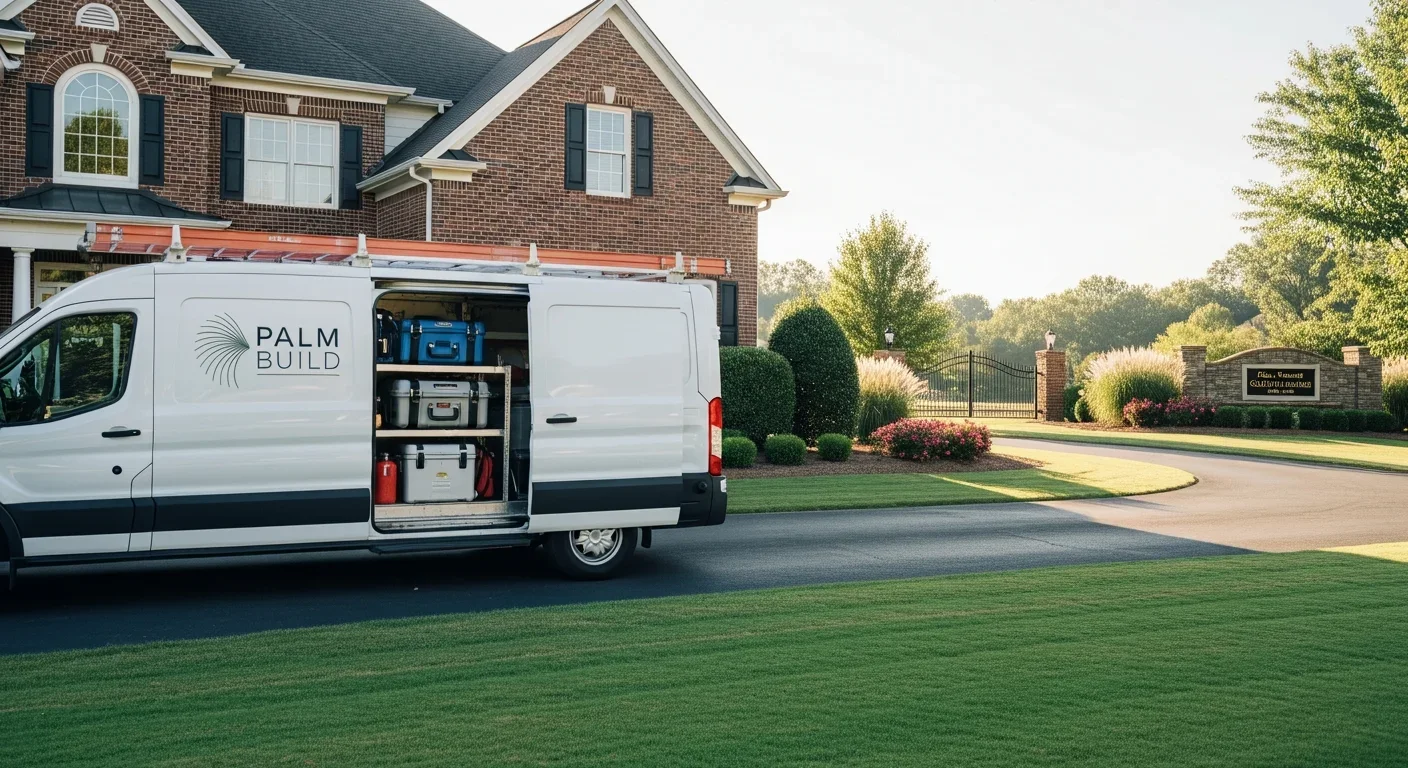
Call (704) 464-0121 any hour. Our Charlotte-based team dispatches immediately to Denver addresses — 35-45 minutes from our operations hub at 378 Crompton Street. We don't charge premium rates for nights, weekends, or holidays. Every minute water sits in your home increases structural damage and mold risk.
02
Moisture Mapping & Assessment
On arrival, we perform a full moisture assessment using calibrated thermal imaging cameras and penetrating moisture meters. We map every affected area — walls, subfloors, crawl space, insulation — and document findings with photos and readings. This insurance-ready documentation starts at first contact, not after the job.
03
Truck-Mounted Water Extraction
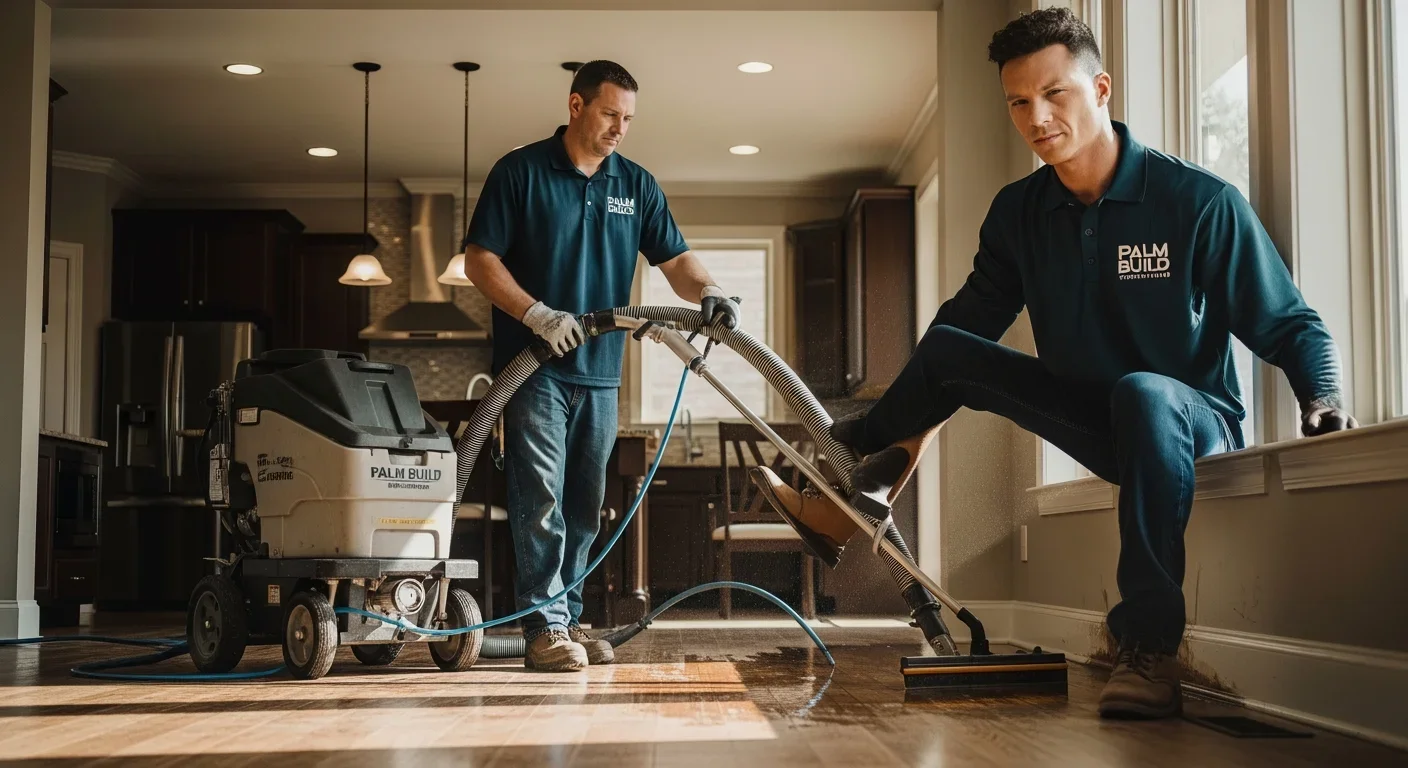
We deploy truck-mounted extraction units capable of removing hundreds of gallons per hour from flooded living spaces, crawl spaces, and basements. For Denver HOA homes with finished basements and hardwood floors, we use appropriate extraction methods that minimize secondary damage to high-value finishes during the extraction phase.
04
Structural Drying — IICRC Protocol
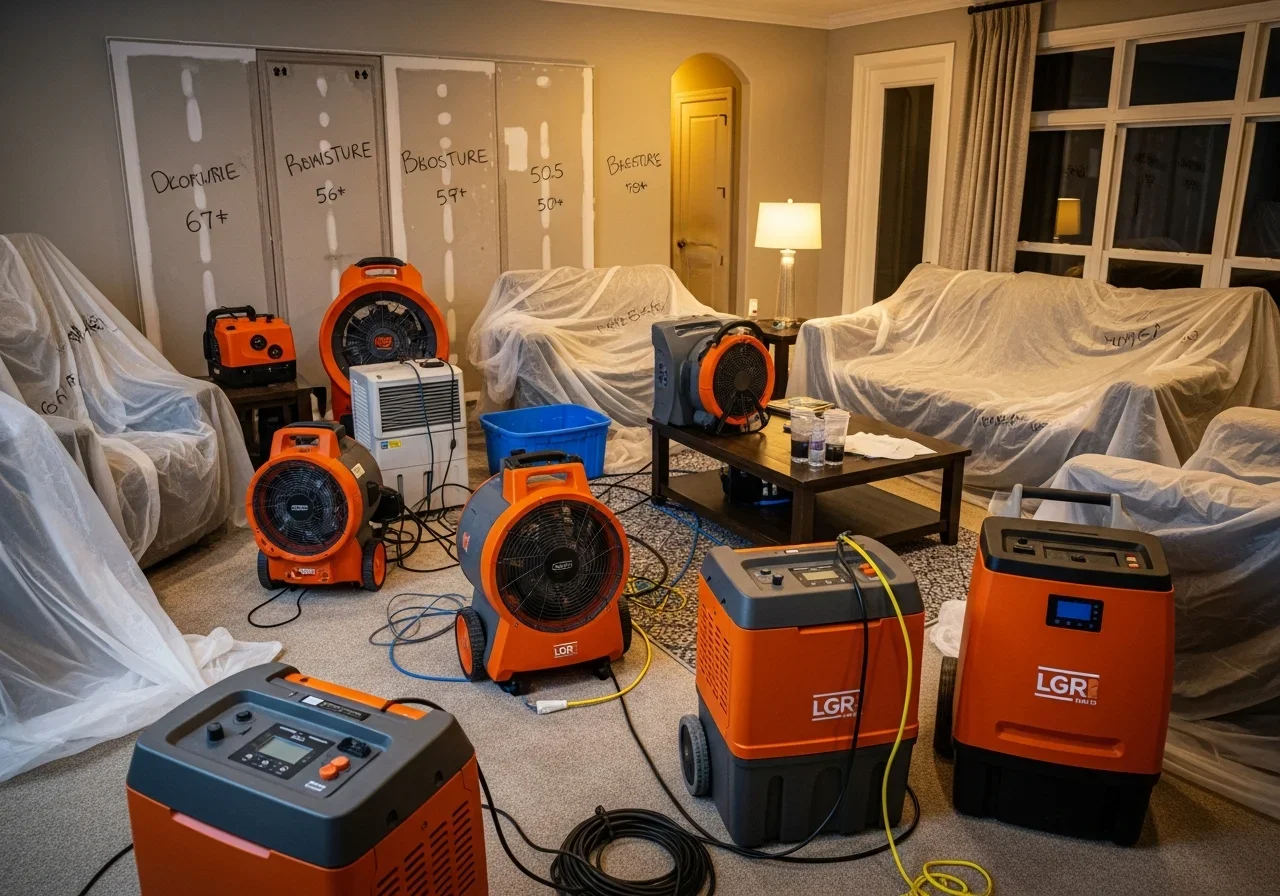
High-capacity LGR dehumidifiers and commercial air movers are staged throughout affected areas. Drying typically takes 3-5 days for above-grade spaces and 5-7 days for crawl spaces on clay soil — because Lincoln County clay continuously wicks moisture back up from the ground. Daily moisture readings track progress toward IICRC dry standard.
05
Insurance Documentation & Coordination
We provide complete insurance-grade documentation: cause-of-loss narrative, moisture readings, photo log, affected materials inventory, and drying logs. For HOA community homeowners in Verdict Ridge, Westport, and Trilogy Lake Norman, we help clarify individual policy vs. master policy scope — a common source of claim delays in governed communities.
06
Full Restoration & Rebuild
After structural drying is confirmed, our construction team handles complete rebuild — drywall, insulation, flooring, trim, and paint — to match your existing finishes. For Denver's premium HOA homes, finish-level matching is non-negotiable. We coordinate directly with your adjuster throughout to keep the claim on track.
Structural drying equipment staged properly in a Denver NC home — the number and
placement of air movers and dehumidifiers is calculated per IICRC S500 psychrometric
standards, not guesswork.
Cost Guide
Water Damage Restoration Costs in Denver NC
Costs vary significantly by scenario, finish level, and response time. Denver's premium
28037 housing stock means material replacement costs are typically higher than regional
averages. These ranges reflect local market conditions.
Crawl Space Flooding
$3,500 – $9,000
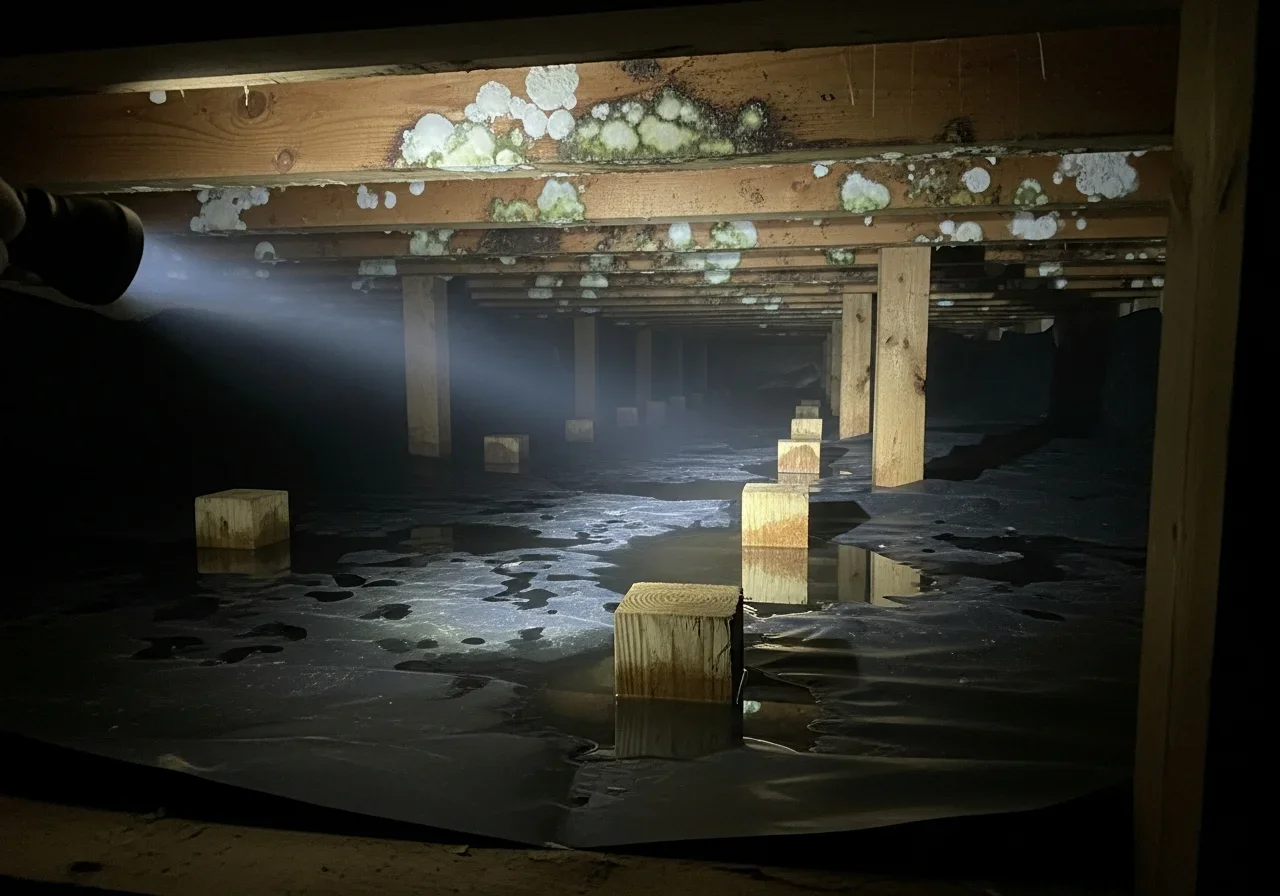
Denver's most common water damage scenario. Clay soil keeps the ground wet, crawl space moisture accumulates, and vapor barriers fail. Cost depends on square footage, standing water depth, insulation replacement, and whether encapsulation is added.
Key cost drivers
Crawl space sizeStanding water depthVapor barrier conditionMold scope
Burst Pipe / Supply Line Failure
$4,000 – $15,000
Supply line failures in 28037's premium HOA homes often affect high-value finishes: hardwood floors, custom cabinetry, tile work. Extraction and drying cost is similar to other areas, but material replacement cost is higher due to finish level.
Key cost drivers
Finish levelFloors affectedCabinet exposureResponse time
Storm-Driven Roof Leak
$2,000 – $7,000
Wind-driven rain through damaged shingles, flashing, or dormers. Lake Norman storms hit shoreline homes at aggressive angles. Scope depends on how long the leak went undetected — 24 hours vs. 2 weeks changes costs dramatically.
Key cost drivers
Detection delayAttic exposureCeiling extentMold development
HOA Shared-Wall Water Damage
$5,000 – $20,000+
Water migration through shared walls in attached units like the Villas at Westport can create multi-unit claims. Insurance scope — individual HO-6 vs. HOA master policy — determines who pays what. Multiple affected units multiply restoration costs.
Key cost drivers
Units affectedPolicy splitShared assembly typeAssociation response time
The Cost of Waiting in Denver NC
Every hour of delay in Denver's humid climate increases restoration scope. Lake
Norman's humidity means ambient moisture levels rarely drop enough to naturally slow
mold onset after a water event. The first 24 hours are critical — the difference between a $4,000 drying job and a $12,000 demo-and-rebuild often comes
down to response speed.
Insurance Navigation
Water Damage Insurance in Denver NC: What Your Policy Actually Covers
Most water damage disputes aren't about whether damage occurred — they're about how it's
categorized. Denver's HOA communities add another layer of complexity most restoration
companies aren't equipped to navigate.
Flood Exclusion: The Most Common Claim Denial
NC Department of Insurance consumer guidance confirms that flood damage is frequently excluded from standard homeowners policies and requires separate NFIP or private flood coverage. Denver homeowners near Lake Norman's shoreline and drainage corridors are especially exposed to this gap. 'Water damage' and 'flood damage' are legally distinct — rising water outside the home is flood; sudden discharge inside the home is covered water damage. Know which you have.
Sudden vs. Gradual: Why Timing Documentation Matters
NC homeowner policies typically cover sudden and accidental discharge — a burst pipe, storm roof leak, appliance failure. They commonly exclude long-term seepage, gradual leaks, and maintenance-related moisture. In Denver's crawl spaces, where moisture builds slowly, insurers may dispute 'date of loss.' Palm Build's documentation establishes the cause-of-loss narrative from the first call to prevent this dispute.
HOA Insurance Complexity in Denver Communities
Denver's governed communities — Verdict Ridge, Westport, the Villas at Westport, Trilogy Lake Norman — create insurance scenarios most adjusters handle only rarely. When water originates in a shared assembly (roof, exterior wall, common pipe), the HOA master policy may be primary. When damage is interior to a unit, the individual HO or HO-6 policy typically applies. Misidentifying the responsible policy delays claims for weeks. We clarify scope boundaries early.
What Your Adjuster Needs — From Day One
NC has no specific post-loss claim filing deadline like some states, but prompt documentation is still critical. We provide: initial moisture mapping with readings, photo log with timestamps, affected materials inventory with finish specifications, and a cause-of-loss narrative. For HOA claims, we add a scope memo clarifying the policy boundary. This package is designed to get approvals faster, not just file a claim and wait.
Insurance-grade documentation starts at first contact — not after the job. Every
moisture reading, photo, and material note is captured in a format your adjuster can act
on immediately.
Our Work
Water Damage Restoration in Denver NC Homes
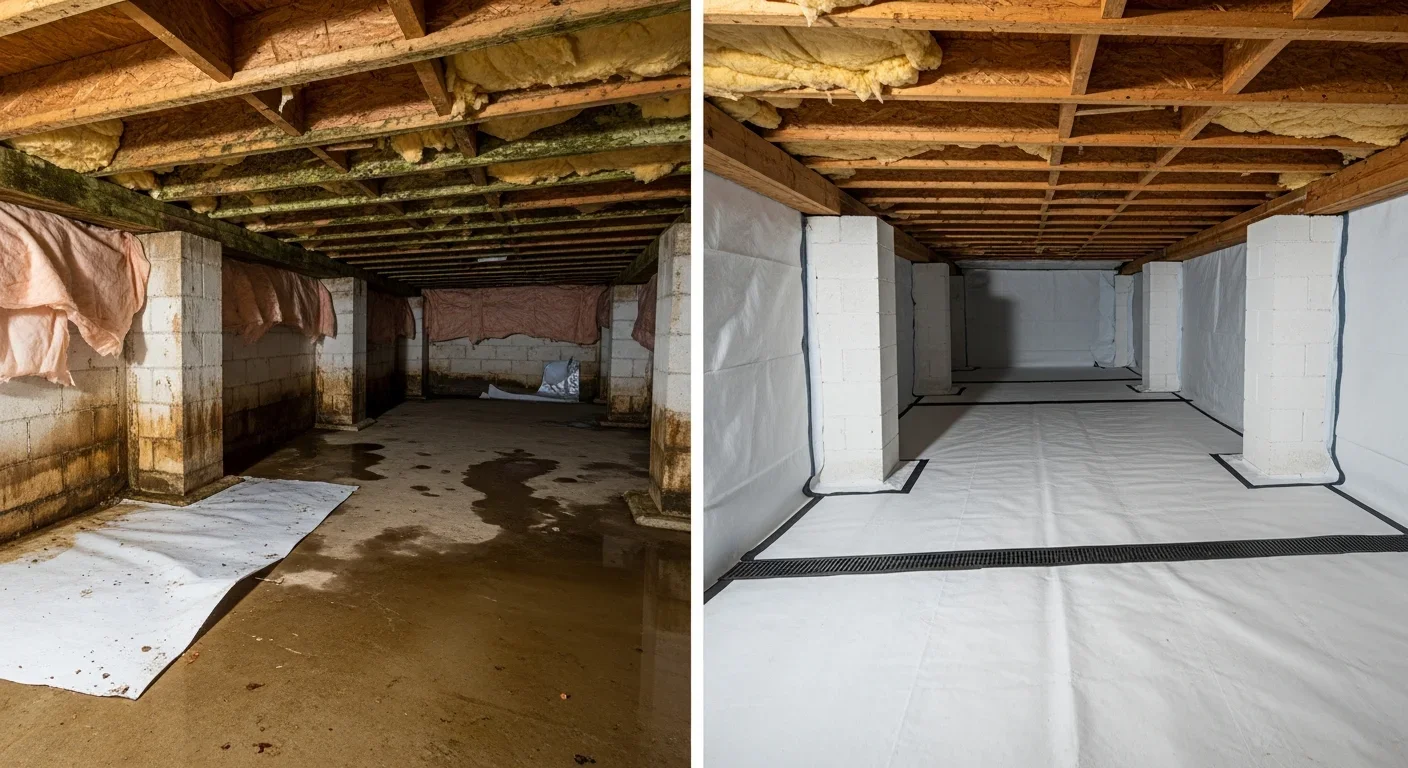
From active water extraction to completed structural drying and crawl space restoration
— this is what professional-grade restoration looks like in 28037.
Crawl Space — Water Damage vs. After Restoration
Before / During
After
Water Extraction — During Active Drying
Before / During
After
Common Damage Types
Types of Water Damage We Restore in Denver NC
Water damage in Denver's ZIP 28037 has four dominant patterns — each driven by the
area's specific geography, climate, and housing stock. Every type requires a different
approach.
Emergency
Crawl Space Flooding
Denver's most common water damage type. Clay soil routes surface water toward crawl space foundations, vapor barriers fail, and standing water accumulates under the home. Left unaddressed, this becomes a mold problem within 24-48 hours in Lake Norman's humid climate.
Emergency
Burst Pipes & Supply Line Failures
Freeze events in winter or sudden pressure changes can burst pipes in crawl spaces, walls, or utility rooms. In Denver's premium HOA homes, a single burst supply line can affect hardwood floors, custom cabinetry, and multiple stories before it's detected. Early morning discoveries are most common.
Urgent
Storm-Driven Water Intrusion
Lake Norman's open water accelerates storm winds and drives rain horizontally into siding, roof assemblies, and window flashing. Shoreline neighborhoods like Westport Peninsula and Sailview see storm-angle water intrusion that standard construction doesn't fully resist. Post-storm interior staining is often the first visible sign.
Urgent
Foundation Seepage & Perimeter Drainage
After heavy rain, Lincoln County's clay soil builds up hydrostatic pressure against foundation walls and slabs. Water seeps through block joints, concrete cracks, and window wells. HOA landscaping that directs water toward homes — a common grading issue in master-planned communities — amplifies this risk.
Why Palm Build
Denver NC Deserves More Than a Franchise Template
National franchise pages cover Denver with the same copy they use for every ZIP code. We
built our Denver service around what actually drives water damage in 28037 — the lake,
the clay, and the HOA.
35–45 Minute Response to Denver
Charlotte-based team dispatched immediately. 378 Crompton Street puts us closer to Denver's 28037 ZIP than any Lake Norman-side restoration company. Day or night, 365 days a year.
IICRC S500 & S520 Certified
Water restoration and mold remediation both follow IICRC standards — the only industry-recognized benchmark. Not certifications we mention once on a brochure. They govern every job.
Insurance-Ready Documentation
Moisture maps, photo logs, material inventories, cause-of-loss narratives — produced from day one. For HOA community claims in Verdict Ridge and Westport, we clarify individual vs. master policy scope before work begins.
Denver Neighborhood Knowledge
We know the difference between a Trilogy Lake Norman claim and a Villas at Westport claim. HOA governance, finish levels, insurance complexity — we've navigated these scenarios across every major community in 28037.
How fast can Palm Build respond to a water emergency in Denver NC?
Our Charlotte-based team can reach any Denver, NC address in approximately 35-45 minutes. We dispatch 24 hours a day, 7 days a week, 365 days a year with truck-mounted extraction equipment and full structural drying systems. Call (704) 464-0121 any time — day or night.
Why are Denver, NC crawl spaces especially vulnerable to water damage?
Denver sits on Lincoln County's clay-influenced Piedmont soils — including the Cecil series — that slow drainage to a crawl after heavy rain. Combined with Lake Norman's proximity (which elevates ambient humidity year-round) and summer humidity regularly hitting 70-90%, vented crawl spaces beneath Denver homes become chronic moisture traps. Ground vapor migrates upward into wood floor joists and insulation, and visible mold can establish within 24-48 hours of a water event.
Does homeowners insurance cover water damage in Denver NC?
Most standard NC homeowner policies cover sudden and accidental water damage — burst pipes, appliance failures, and storm-driven roof leaks. Gradual leaks, long-term seepage, and flood damage from rising water typically require separate flood insurance. HOA community homeowners in Denver should also clarify whether their loss falls under the individual HO policy or the HOA master policy, particularly for shared assemblies like party walls and common roofs. Palm Build provides insurance-ready documentation from day one.
Did recent storms cause water damage in Denver NC?
Yes. Remnants of Tropical Cyclone Helene impacted Lincoln County on September 27, 2024, causing approximately $1.0 million in property damage across the county. Denver's clay soil and Lake Norman shoreline topography amplified surface runoff, leading to crawl space flooding and water intrusion across multiple neighborhoods. Severe thunderstorms are also a regular summer risk — the Lake Norman basin's open water accelerates wind-driven rain that can penetrate roof and siding assemblies at any angle.
How long does water damage restoration take in a Denver NC home?
Structural drying typically takes 3-5 days for contained damage. Crawl space flooding in Denver homes can extend to 5-7 days because clay soil continuously wicks moisture back up from below even after surface water is removed. Full restoration including flooring, drywall, and trim typically takes 1-4 weeks depending on scope. We monitor moisture levels with calibrated meters daily until every affected material reaches dry standard.
Is mold a concern after water damage in Denver NC homes?
Yes — especially given Lake Norman's humidity profile. Mold can begin colonizing within 24-48 hours of water intrusion on porous materials like drywall, insulation, and wood joists. Denver's warm, humid summers mean ambient moisture levels rarely drop enough to stop mold growth naturally once it starts. We apply EPA-registered antimicrobial treatments during drying and document moisture readings throughout the process. If pre-existing crawl space mold is found, we scope a separate remediation project at the same time.
Which Denver NC neighborhoods are most at risk for water damage?
Lake-adjacent neighborhoods like Westport Peninsula and Sailview face higher wind-driven rain exposure from open water, which increases roof and siding leak risk. HOA communities with attached housing — like the Villas at Westport townhomes — face shared-wall water migration that makes documentation and rapid response critical. Neighborhoods with older construction phases in Verdict Ridge and Smithstone carry crawl space moisture risk tied to clay soil drainage. Trilogy Lake Norman's newer build quality reduces some risks but storm-driven roof leaks and HVAC condensate failures still occur.
What areas does Palm Build serve around Denver NC?
We serve all of Denver, NC and the ZIP 28037 service area including Trilogy Lake Norman, Verdict Ridge, Westport, Westport Peninsula, The Springs at Westport Club, Villas at Westport, Sailview, Smithstone, Killians Pointe, Sylvan Creek, Stratford, and Lowesville. We also serve neighboring Lincoln County and Catawba County communities. Call (704) 464-0121 to confirm coverage for your address.
Water Damage in Your Denver NC Home? Every Minute Counts.
Denver's clay soil, Lake Norman humidity, and HOA-governed communities make fast, professional response essential. Call Palm Build now for 24/7 emergency extraction, structural drying, and full restoration with insurance-ready documentation.