Denver's ZIP 28037 sits at the intersection of three mold-driving forces: Lake Norman's year-round shoreline humidity, clay-influenced Piedmont soils that keep foundations wet, and widespread crawl space construction throughout neighborhoods like Verdict Ridge, Westport, and Sailview. North Carolina has no state mold remediation licensing — Palm Build's IICRC S520-certified team provides the professional containment, full remediation, and documentation your insurance carrier accepts.
~25 miles from Denver 35-45 min Response IICRC Certified
Denver's ZIP 28037 sits at the intersection of three compounding mold drivers: a
reservoir lake that elevates ambient humidity year-round, clay soil that keeps
foundations wet, and widespread crawl space construction in premium HOA communities.
Most homeowners don't find out until structural wood is already compromised.
Lake Norman Shoreline Humidity
32,510 ac
Lake Norman surface area
Denver's ZIP 28037 borders Lake Norman — a 32,510-acre man-made reservoir. Open water continuously evaporates into the surrounding air, keeping ambient relative humidity elevated year-round. Shoreline communities like Westport Peninsula and Sailview experience sustained humidity levels that maintain wood at elevated moisture content even between rain events. At this moisture content, mold colonies grow without any leak event at all.
Clay Soil Ground Moisture
<0.2 in/hr
Clay soil drainage rate
Lincoln County's Cecil-series clay soil drains slowly, keeping foundations and soils near crawl spaces wet for days after rain ends. Ground vapor continuously migrates upward through vented crawl space foundations into the structure. This passive vapor drive is constant and invisible — most homeowners never know it's happening until mold is already visible on floor joists.
70–90% Summer Humidity
70–90%
Summer humidity range
Denver's humid subtropical climate drives summer relative humidity to 70–90%. Vented crawl spaces — still common in 28037's established neighborhoods — track outdoor humidity closely, meaning the space under your home reaches and sustains mold-permissive conditions from May through October without any water intrusion event. At 70%+ sustained humidity, dormant spores reactivate and existing colonies expand.
Crawl Space Prevalence in HOA Communities
1990s–2000s
HOA build era
A substantial share of Denver's established HOA communities — Verdict Ridge, Westport, Sailview, Smithstone, Killians Pointe — were built with vented crawl space foundations. Building science now recognizes this design as incompatible with humid southeastern climates. Many of these homes have never had a professional moisture assessment, and mold has developed silently in crawl spaces for years. Larger HOA homes with multi-zone HVAC further mask the musty odors that would otherwise prompt investigation.
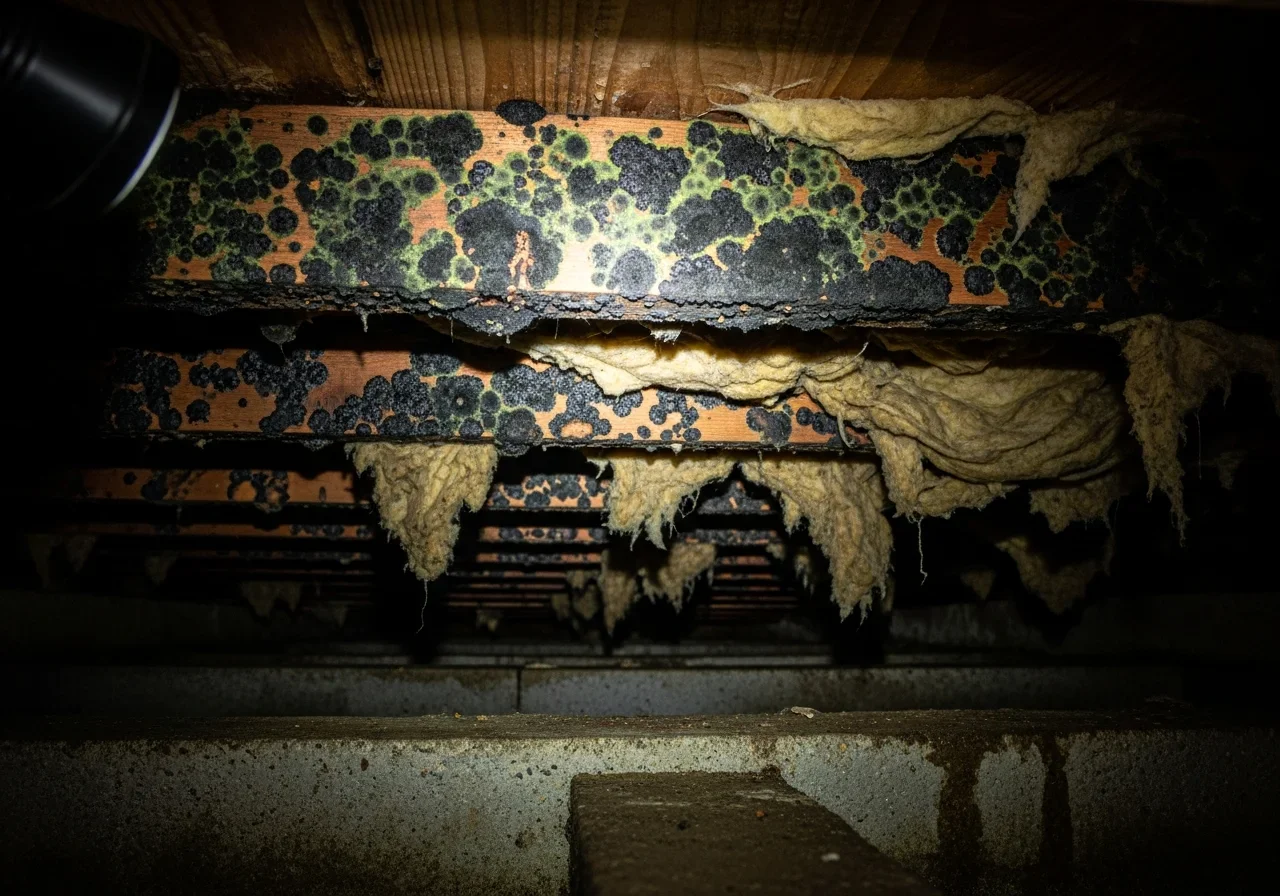
Mold colonies growing on floor joists beneath a Denver NC home — the result of sustained
humidity from Lake Norman proximity and clay soil ground vapor in a vented crawl space.
This pattern is common and underdiagnosed in 28037's established HOA communities.
Warning Signs
Signs of Mold in Denver NC Homes
Denver's mold problems often develop slowly and silently — especially in crawl spaces
under HOA homes where access is infrequent. Know what to look for before the damage
becomes structural.
Musty Odor After Rain
A musty, earthy smell that intensifies after rain or during humid weather is the most common first sign. In Lake Norman-area homes, many homeowners notice this seasonally in late spring as humidity spikes. The smell often disappears in winter, leading homeowners to dismiss it — but the mold colony remains.
Visible Dark Staining on Joists
Dark gray, green, or black discoloration on wooden floor joists, subflooring, or crawl space insulation. New mold is often gray-green and fuzzy; older established colonies appear darker and denser. In Denver crawl spaces, staining often covers large areas before it's noticed because access is infrequent.
Indoor Allergy or Respiratory Symptoms
Unexplained sneezing, congestion, eye irritation, or coughing that improves when you leave the house and worsens on return is a classic mold exposure signal. In Denver's larger HOA homes, these symptoms are often attributed to seasonal allergies — but mold-related symptoms are consistent year-round and concentrated in certain rooms.
Warping or Buckled Hardwood Floors
Hardwood floors that cup, buckle, or show gaps between boards indicate elevated moisture from below — often crawl space mold-adjacent humidity migrating upward. In Denver's premium 28037 homes, floor replacement is one of the most expensive secondary effects of untreated crawl space mold.
Condensation on Interior Windows
Persistent condensation on interior window glass during summer indicates indoor humidity is too high — often driven by an unsealed, mold-permissive crawl space exhausting vapor into the living space. This pattern is common in Denver homes near the Lake Norman shoreline from May through September.
HVAC Odor When System Runs
A musty smell when the HVAC runs indicates mold spores are present in the ductwork or in areas the system draws air from — often a vented crawl space. In Denver's HOA homes with multi-zone systems, this symptom can be intermittent and is frequently misdiagnosed as a dirty filter.
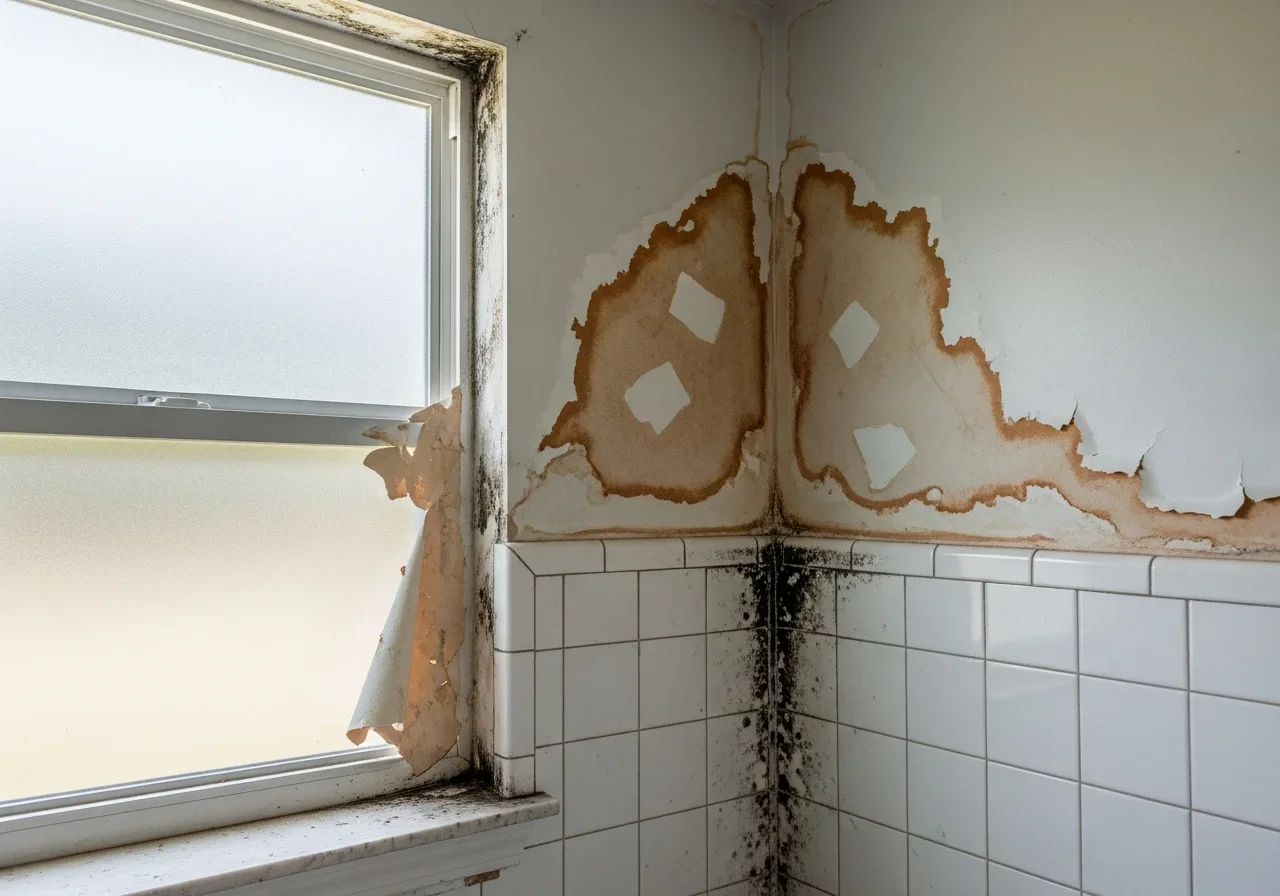
Bathroom mold from humidity damage — a visible indicator of broader moisture management
issues. In Denver NC homes, bathroom mold is often a symptom of crawl space moisture
migrating into living spaces.
Crawl Space Mold
How Mold Takes Hold in Denver NC Crawl Spaces
Crawl space mold in Denver's 28037 follows a predictable pathway driven by clay soil,
lake humidity, and vented construction. Understanding the mechanism helps you see why
standard cleaning doesn't work — and why IICRC S520 remediation does.
1
Clay Soil Stays Wet After Rain
Lincoln County's clay soil absorbs water slowly and releases it slowly. After a rain event, the ground beneath a Denver crawl space remains saturated for days — continuously evaporating moisture upward.
2
Vapor Migrates Into Vented Crawl Space
Vents allow outdoor air — and its humidity — into the crawl space. In summer, this warm humid air contacts cooler surfaces (vapor barrier, joists, piers) and deposits moisture. In winter, cold air creates condensation. Either way, the space stays damp.
3
Wood Reaches Mold-Permissive Moisture Content
At 19%+ wood moisture content, mold can establish and grow. Lake Norman's ambient humidity keeps Denver crawl space wood at or near this threshold for months at a time, particularly in communities like Westport and Sailview within 500 feet of open water.
4
Mold Colonizes Joists and Subfloor
Mold spores are everywhere — they need only moisture and an organic substrate. Joists, OSB subfloor, and paper-faced insulation are ideal. A single affected zone spreads via air circulation. Within one or two seasons, a localized problem becomes a full crawl space remediation scope.
5
Vapor Carries Spores Into Living Space
A vented crawl space acts as a moisture and spore source for the living space above. Stack effect drives this air upward through penetrations in the floor assembly. Indoor air quality deteriorates, and occupants experience allergy-like symptoms often dismissed as seasonal.
The Right Solution for Denver NC Crawl Space Mold
Full mold remediation per IICRC S520 — containment, HEPA air scrubbing, removal, treatment
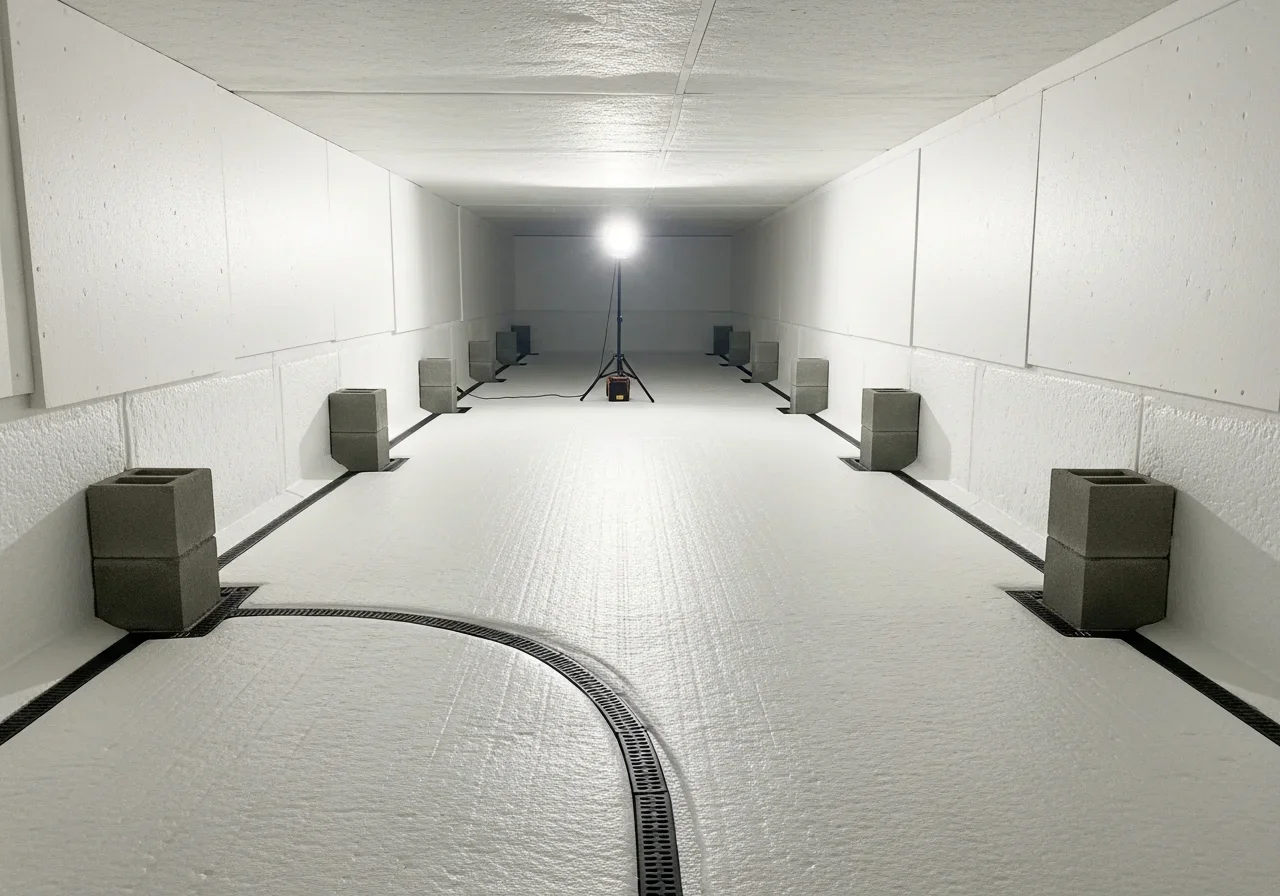
Vapor barrier replacement or full encapsulation with 20-mil reinforced liner
Drainage matting and perimeter drain system if groundwater intrusion is present
Crawl space dehumidifier installation with condensate drain management
Post-remediation clearance testing to verify spore counts meet IICRC standard
Before — mold on floor joists, Denver NC crawl spaceAfter — encapsulated and cleared, Denver NC crawl space
IICRC S520 Process
Mold Remediation in Denver NC — Step by Step
Every mold remediation follows the IICRC S520 Standard for Professional Mold Remediation
— the industry benchmark that NC DHHS references as the accepted protocol in the absence
of state licensing requirements.
01
Assessment & Moisture Mapping
We begin with a complete mold assessment: air sampling, surface sampling, moisture mapping with calibrated meters, and thermal imaging. This scope establishes the full extent of contamination — including hidden mold behind walls and in crawl spaces — and produces the baseline data that drives the remediation plan and insurance documentation.
02
Containment Barriers
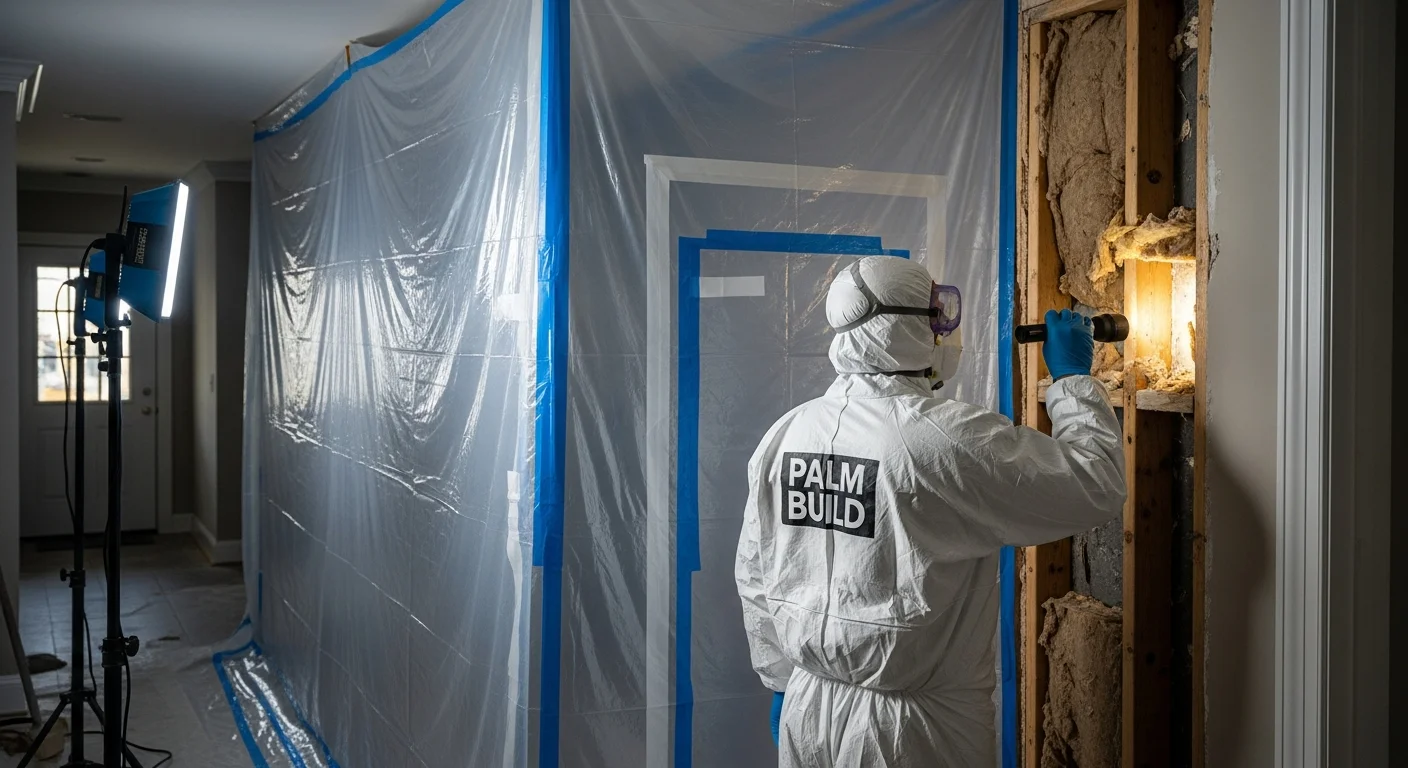
Per IICRC S520 protocol, we install negative air pressure containment barriers using 6-mil poly sheeting and critical barriers at doorways. This prevents mold spores disturbed during removal from spreading to unaffected areas. In Denver's premium HOA homes, containment also protects high-value contents and finishes from cross-contamination.
03
HEPA Air Filtration
Commercial HEPA air scrubbers and negative air machines run continuously throughout the remediation. These units capture particles down to 0.3 microns — including mold spores — and exhaust filtered air outside the containment zone. Air change rates are calculated per the square footage and contamination level per S520 guidelines.
04
Mold Removal & Material Disposal
Affected porous materials — insulation, drywall, wood trim, degraded vapor barriers — are double-bagged and removed from the structure following regulated disposal protocols. Structural wood with surface mold is mechanically abraded and treated rather than removed when structurally sound. All removal is documented with before/during photos.
05
EPA-Registered Antimicrobial Treatment
After physical removal, all treated surfaces receive EPA-registered antimicrobial application. We use borate-based treatments on structural wood where appropriate for long-term protection against re-colonization. For Denver crawl spaces with persistent humidity from the lake or clay soil, we also address the moisture source — not just the visible mold.
06
Post-Remediation Clearance Testing
Clearance testing by an independent industrial hygienist verifies that spore counts in treated areas meet the IICRC S520 clearance criteria before containment is removed. You receive a written clearance report — the documentation your insurance carrier and any future buyer's inspector will want to see.
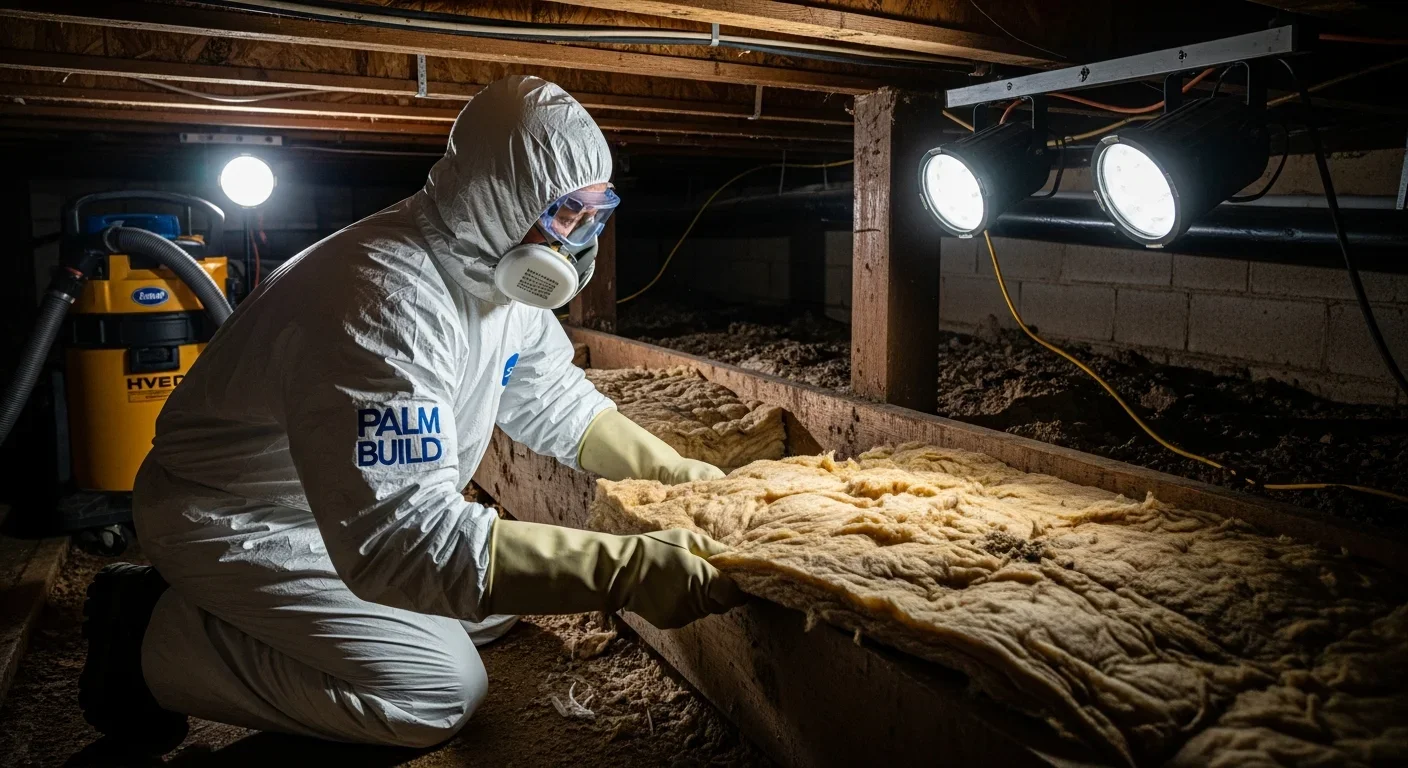
Full PPE during crawl space mold removal — Tyvek suit, N95 respirator, safety goggles,
and nitrile gloves are required by IICRC S520 protocol during active mold disturbing
work.
Cost Guide
Mold Remediation Costs in Denver NC
Costs in Denver's 28037 ZIP are typically at the higher end of NC regional ranges due to
the premium finish levels in HOA communities and the prevalence of full crawl space
scopes driven by lake humidity and clay soil moisture.
Small Localized Area (Bathroom / Closet)
$1,500 – $4,000
Contained mold in a single room — grout, ceiling drywall, or isolated wall cavity. Standard containment, HEPA filtration, removal, and treatment.
Multiple affected areas or a partial crawl space with joist and insulation mold. Includes more extensive containment, air scrubbing, insulation removal, and antimicrobial treatment.
Key cost drivers
Number of zonesInsulation typeCrawl space accessHOA finish level
Full Crawl Space Remediation + Encapsulation
$8,000 – $20,000
The most common major scope in Denver's 28037 ZIP. Full crawl space mold remediation plus encapsulation with drainage matting, 20-mil vapor barrier, and dehumidifier installation to address the moisture source.
Key cost drivers
Crawl space sq ftSoil drainage issuesStructural wood damageDrainage system needs
Why costs vary widely: Access difficulty (low-clearance
crawl spaces), structural wood damage extent, the presence of active groundwater drainage
issues, and HOA finish level requirements all affect scope. We provide a detailed written
estimate after assessment — never a flat-rate quote before we've seen the space.
NC Mold Standards
What "IICRC Certified" Actually Means in North Carolina
North Carolina has no state mold remediation licensing. NC DHHS explicitly states there
is no state oversight of certified mold inspectors or remediation contractors. That
means any company can claim to do mold remediation — and many do. Here's how to evaluate
who you hire.
No State License = No State Floor for Quality
Because NC has no mold contractor licensing, there is no minimum competency
requirement and no state enforcement mechanism. NC DHHS guidance warns homeowners to interview and verify experience independently and to treat third-party certifications as the primary quality indicator.
IICRC S520 Standard
The ANSI/IICRC S520 Standard for Professional Mold Remediation is the accepted industry benchmark. It governs assessment methodology, containment requirements, work practices, and clearance criteria. Ask any mold contractor to cite which standard their process follows.
Mold Remediation Specialist (MRS)
The IICRC's Mold Remediation Specialist certification verifies that the technician has completed formal training in S520 protocols. It is not a state license — but it is the most credible professional credential available in the mold industry.
Verify Before You Hire
Ask every contractor to provide their IICRC certificate number. You can verify it directly at the IICRC website. Be skeptical of any company that uses the word "certified" without being able to show current documentation — especially in a state with no licensing oversight.
Questions to Ask Any Denver NC Mold Contractor
1 What specific standard do you follow for remediation? (Answer should be: IICRC S520)
2 Are you IICRC MRS certified? Can you show the certificate?
3 Do you test before and after remediation? Who does the post-clearance test?
4 Who performs the clearance test — your company or an independent party?
5 Have you worked in HOA-governed communities with shared-wall assemblies?
Insurance Guide
Does Homeowners Insurance Cover Mold in Denver NC?
Mold coverage is one of the most misunderstood parts of a homeowner policy. In Denver's
HOA communities, the answer is complicated by the intersection of individual and
association policies.
Mold Coverage Sublimits Are Common
NC standard homeowner policies typically include mold coverage with sublimits of $5,000 to $10,000 — well below the cost of full crawl space remediation in Denver's 28037 homes ($8,000–$20,000+). Understanding your sublimit before work begins helps set realistic expectations about what your carrier will pay.
Mold Must Connect to a Covered Water Event
Coverage prospects are best when mold is directly traceable to a sudden covered water event — burst pipe, storm roof leak, appliance failure. Mold from gradual crawl space moisture or chronic humidity often falls under the 'maintenance issue' exclusion. Palm Build documents the cause-of-loss chain from the original water event through mold development wherever the history supports it.
Prompt Mitigation Preserves Coverage
NC policies typically require 'prompt' mitigation after a covered loss. Delay between discovering water damage and beginning drying/remediation can give carriers grounds to reduce or deny mold-related coverage. Our documentation shows mitigation date relative to loss date — an important coverage defense.
HOA Mold Claims: Individual vs. Master Policy
In Denver's HOA communities, mold that originates in a shared assembly (common roof, exterior wall, shared pipe) may be covered under the HOA master policy rather than the individual homeowner policy. This distinction affects who files the claim, who selects the contractor, and who gets paid. We help navigate this question before any work order is signed.
Our Work
Mold Remediation in Denver NC Homes
From containment setup to crawl space encapsulation — IICRC S520-certified mold
remediation in 28037 HOA communities.
In a state with no mold licensing, the only protection you have is choosing a contractor
with verifiable credentials, documented process, and real experience in your specific
community type.
IICRC S520 Certified Process
NC has no mold licensing. That makes your contractor's voluntary credentials the only quality signal you have. Our IICRC S520 certification means every scope follows the standard NC DHHS references — not a YouTube tutorial or a bleach-and-paint approach.
Same-Day Assessments in Denver
35-45 minutes from Charlotte. We assess the same day you call for urgent situations and schedule within 24 hours for non-emergency inspections. Lake Norman humidity means every day of delay expands the mold scope — we take response time seriously.
Independent Post-Clearance Testing
We test after remediation using an independent industrial hygienist — not our own in-house testing. This independent clearance report is the document your insurance carrier accepts and that any future buyer will ask for.
Denver HOA Community Knowledge
We understand the insurance complexity of Verdict Ridge, Westport, Villas at Westport, and Trilogy Lake Norman — HO-6 vs. master policy scope, finish-level documentation, HOA board notification requirements. We navigate this so you don't have to.
Does North Carolina require a mold remediation license?
No. North Carolina has no state-specific mold remediation licensing requirement. NC DHHS Occupational and Environmental Epidemiology explicitly states there is no state oversight of certified mold inspectors or certified mold remediation contractors, and that no federal certification programs exist in this field. The IICRC S520 Standard for Professional Mold Remediation is the accepted industry benchmark. Always ask your contractor to demonstrate current IICRC credentials — and be cautious of any company that cannot.
Why is mold so common in Denver NC homes?
Three factors converge in Denver's ZIP 28037 to create one of the highest mold-risk profiles in the Charlotte Metro area. First, Lake Norman's reservoir surface elevates ambient humidity year-round — shoreline neighborhoods experience sustained relative humidity that keeps wood at elevated moisture content even between rain events. Second, Lincoln County's Cecil-series clay soil drains slowly, meaning foundations stay wet after storms and ground vapor migrates upward into crawl spaces. Third, a large share of Denver's housing stock sits on vented crawl space foundations — an older design now understood to invite moisture from below. These factors combine to make crawl space mold one of the most underdiagnosed problems in 28037.
How much does mold remediation cost in Denver NC?
Denver mold remediation typically ranges from $1,500 to $4,000 for small localized areas like bathrooms or closets. Moderate contamination affecting multiple rooms or a partial crawl space runs $4,000 to $8,000. Full crawl space remediation with vapor barrier installation and moisture management ranges from $8,000 to $20,000 depending on square footage, access conditions, and structural damage extent. Denver-specific factors that can increase costs include high-finish HOA interiors that require careful contents manipulation, low-clearance crawl spaces, and persistent clay soil moisture that may require supplemental drainage.
How fast can Palm Build respond to a mold issue in Denver NC?
Our Charlotte-based team can reach any Denver, NC address in approximately 35-45 minutes. We provide same-day mold assessments with moisture mapping, air quality evaluation, and a detailed remediation scope. Call (704) 464-0121 to schedule — we respond to urgent situations immediately and can typically schedule non-emergency inspections within 24 hours.
Does homeowners insurance cover mold remediation in Denver NC?
NC standard homeowner policies typically include mold coverage sublimits of $5,000 to $10,000. Mold resulting from a covered sudden water event — like a burst pipe or storm-driven roof leak — has better coverage prospects than mold traced to gradual crawl space moisture or chronic humidity. HOA community homeowners should also check whether their association's master policy covers shared assemblies where mold originated. Palm Build connects mold damage to the original water loss event in our documentation wherever the claim history supports it.
How do I know if my Denver NC crawl space has mold?
The most common first sign is a musty odor that intensifies after rain or during humid weather — Lake Norman-area homes often notice this seasonally as humidity spikes in late spring and summer. Other indicators include visible dark staining on floor joists (dark gray, green, or black), unexplained allergy or respiratory symptoms indoors, warping hardwood floors, and condensation on interior windows during summer. HOA homes in communities like Sailview and Verdict Ridge with older construction phases should be inspected professionally every 2-3 years regardless of visible symptoms — crawl space mold often builds slowly and goes undetected until structural wood is compromised.
What is the difference between mold testing and mold remediation?
Mold testing quantifies the type and concentration of mold spores present through air or surface sampling, establishing baseline and post-remediation documentation. Mold remediation is the physical removal, containment, and treatment of mold growth per IICRC S520 protocol — including containment barriers, HEPA air filtration, antimicrobial treatment, and disposal of affected materials. Palm Build performs both: we test to scope the problem accurately, remediate to eliminate it, and test again after completion to verify clearance criteria are met.
What areas of Denver NC and Lincoln County does Palm Build serve for mold remediation?
We serve all of Denver, NC and the ZIP 28037 area including Trilogy Lake Norman, Verdict Ridge, Westport, Westport Peninsula, The Springs at Westport Club, Villas at Westport, Sailview, Smithstone, Killians Pointe, Sylvan Creek, Stratford, Lowesville, and surrounding Lincoln County and Catawba County communities. Call (704) 464-0121 to confirm coverage for your address.
Mold Problem in Your Denver NC Home? Get a Professional Assessment.
Denver's Lake Norman humidity, clay soils, and crawl space foundations create year-round mold risk. Palm Build's IICRC S520-certified team provides same-day inspections, professional containment, and complete remediation with documentation your insurance carrier accepts.