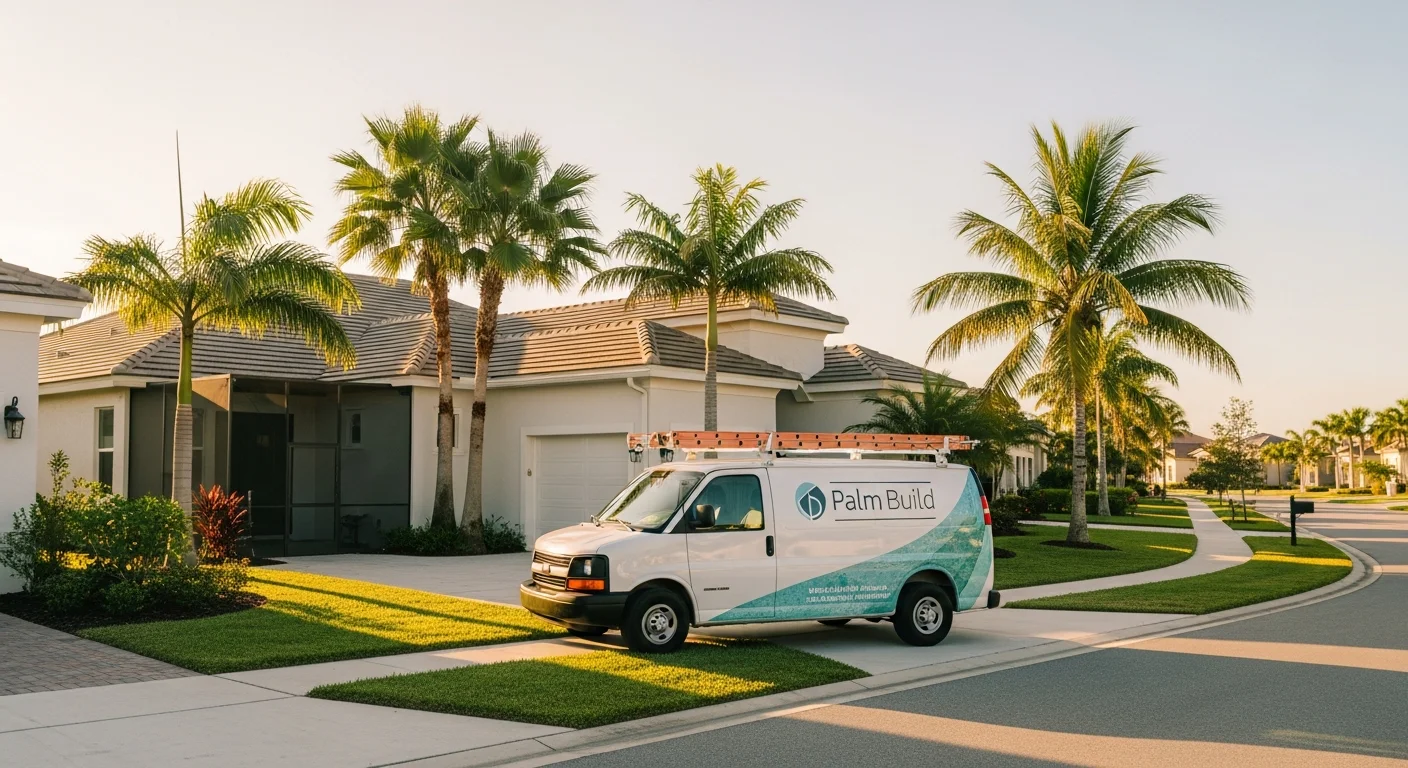
Palm Build restoration truck in the driveway of a Port St. Lucie Florida stucco home with palm trees and tile roof after water damage emergency
PORT ST. LUCIE FL — 24/7 WATER DAMAGE RESPONSE

Water Damage Restoration in Port St. Lucie, Florida

From Tradition's planned communities to St. Lucie West's established neighborhoods, Palm Build's Treasure Coast team responds with truck-mounted extraction, commercial dehumidifiers, and the insurance documentation you need — before mold takes hold in Florida's relentless humidity.

Serving Port St. Lucie from Deerfield Beach, FL 60-90 min Response IICRC Certified

60-90 min

Emergency Response

24/7

Dispatch Available

IICRC

Certified Technicians

Local Risk Factors

Why Port St. Lucie Homes Face Unique Water Damage Risks

Port St. Lucie isn't a coastal surge city — but it's absolutely a water city. The St. Lucie River, hundreds of miles of canals, and flat terrain that struggles to shed multi-day rainfall create a damage profile many homeowners don't appreciate until water is pooling against their slab. The city itself identifies repetitive loss areas near the river and west of I-95 between Becker Road and Tradition.

Canal-Laced Coastal Plain

55.89 in

Annual rainfall

Port St. Lucie sits on a flat terrain drained by the C-23, C-24, and C-25 canal systems emptying into the St. Lucie River. When multi-day rainfall overwhelms canal capacity, water lingers in neighborhoods for days — even outside FEMA flood zones.
2000s-Era CBS Housing Boom

42.8%

Built 2000–2009

42.8% of Port St. Lucie homes were built between 2000 and 2009 — concrete block, stucco, slab-on-grade. These similar assemblies produce repeatable failure points: water heater closets, HVAC condensate lines, sliding door tracks, and garage-to-living thresholds.

Wet Season Intensity

8.21 in

September rainfall

The wet season (May 25 – Oct 20 median) brings 70% of annual rainfall. September alone averages 8.21 inches. Hurricane season overlaps, and Hurricane Milton (2024) produced deadly tornadoes in St. Lucie County that ripped open building envelopes.

Relentless Subtropical Humidity

75-90%

Ambient humidity

Outdoor humidity regularly exceeds 80% year-round on the Treasure Coast. After any water event, the ambient moisture fights your drying effort — standing water becomes mold within 24 to 48 hours without professional dehumidification.

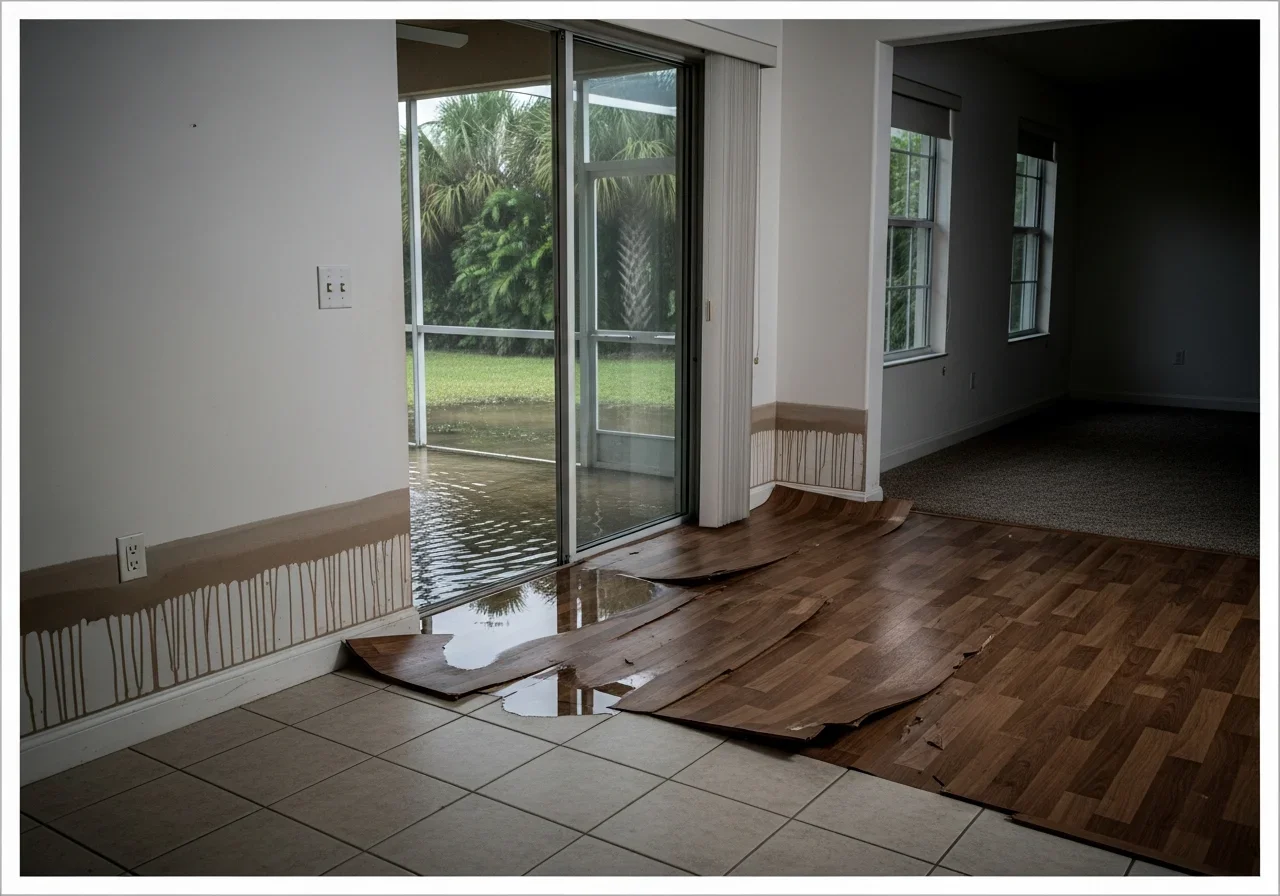
Water damage visible inside a Port St. Lucie Florida home showing waterlogged flooring and water stains on walls
Wind-driven rain and sliding door intrusion are among the most common water damage sources in Port St. Lucie's stucco homes.

Neighborhood-Level Intelligence

Port St. Lucie Neighborhood Water Damage Risk Profiles

Water damage in Port St. Lucie follows predictable patterns tied to building era, construction type, proximity to canals and the St. Lucie River, and lot grading. Here are the neighborhoods where we respond most frequently and the damage patterns we see.

Tradition

High

Built: 2000s–2020s

Primary risk: Wind-driven rain, HVAC condensate, fast mold bloom

Common damage: Stucco crack intrusion during storms, condensate overflow in attic spaces, mold colonization within 24-48 hours in sealed interiors

St. Lucie West

High

Built: Late 1980s–2000s

Primary risk: Aging roof coverings, aging mechanicals

Common damage: Roof underlayment failure after 20+ years, water heater and supply line leaks in original plumbing, slow leaks behind walls

PGA Village

Moderate

Built: 2000s

Primary risk: Supply line leaks, water heater failures, screen enclosure damage

Common damage: Flex connector failures at appliances, water heater tank corrosion, wind-driven rain through damaged pool cage connections

Tesoro Club

Elevated

Built: Gated, river-adjacent

Primary risk: Wind-driven rain, downed trees, flood/drainage complexity

Common damage: Tree impact on roofing, St. Lucie River drainage backup, complex grading issues on estate lots

Ballantrae

Moderate

Built: Gated community

Primary risk: Storm damage to roof/soffit, water intrusion at transitions

Common damage: Soffit blow-off exposing attic space, water entry at roof-to-wall transitions, lanai flooding during heavy rain

Lake Charles

Moderate

Built: Gated, 1990s–2000s

Primary risk: Roof lifecycle, plumbing leaks, slow leaks behind cabinets

Common damage: Original roofing nearing end of life, pinhole leaks in copper supply lines, cabinet kick-space mold from undetected drips

Valencia Cay / Riverland

Moderate

Built: Newer construction

Primary risk: Stormwater drainage concerns, water pooling after heavy rain

Common damage: Grading settlement on new lots, water pooling against slabs, garage threshold intrusion during downpours

Southbend / Becker Road

High

Built: Repetitive loss area

Primary risk: Repeated heavy-rain flooding, wet drywall/flooring

Common damage: City-identified repetitive loss zone, chronic flooding during multi-day rain, recurring drywall and flooring replacement

Sandpiper Bay

Elevated

Built: East side, river influence

Primary risk: Localized flooding, salt/moisture corrosion

Common damage: St. Lucie River proximity creates elevated water table, salt air accelerates mechanical corrosion, condensation issues

TownPark at Tradition

Elevated

Built: Condo/townhome

Primary risk: Multi-unit water migration, shared plumbing

Common damage: Unit-to-unit water migration through shared walls, upstairs leak flooding downstairs units, complex liability and insurance coordination

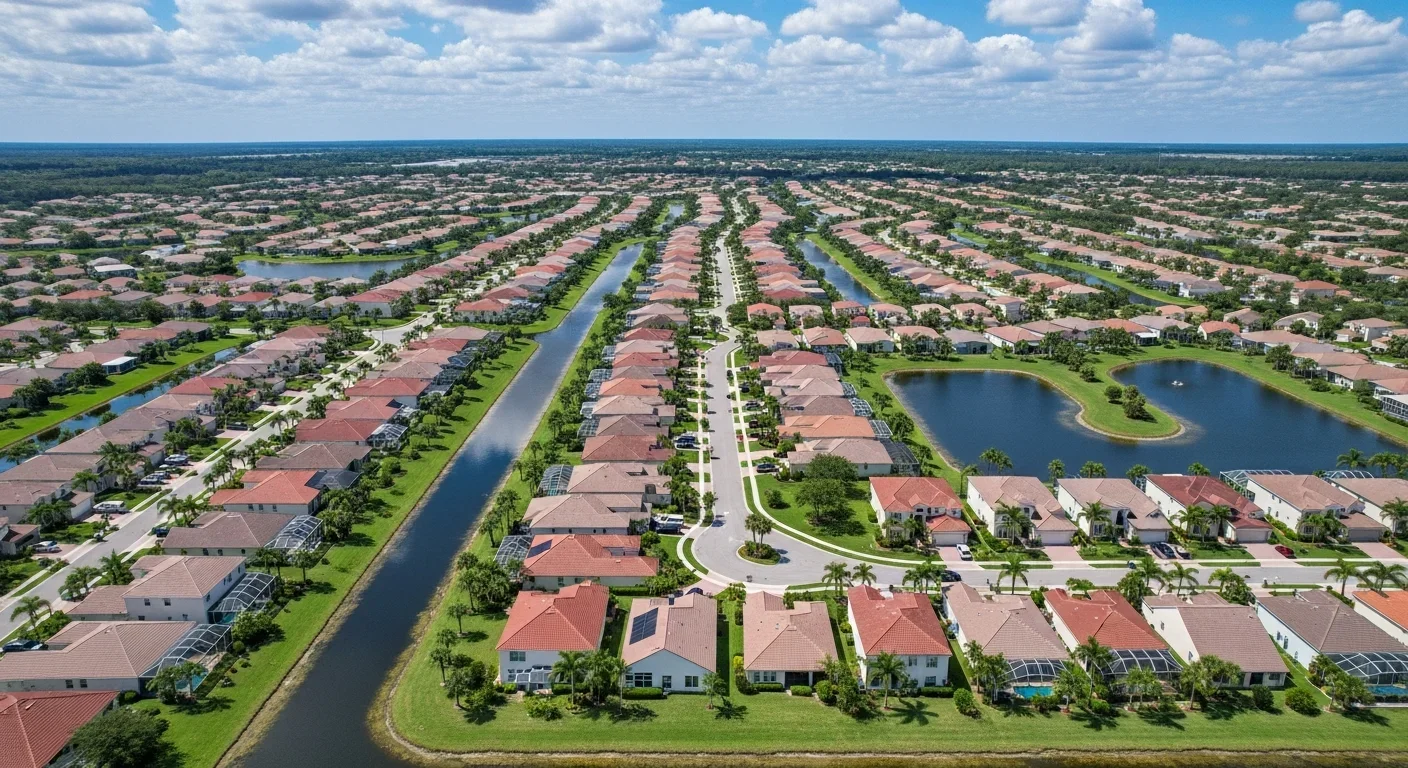
Aerial view of Port St. Lucie Florida subdivision showing canal system running between residential neighborhoods
Port St. Lucie's canal-laced subdivisions create drainage challenges unique to the Treasure Coast — water has nowhere to go during multi-day rain events.
Our Port St. Lucie Process

How We Restore Port St. Lucie Homes After Water Damage

Every water damage event is different, but the science of restoration follows a proven sequence. Here's exactly what happens when you call Palm Build's Treasure Coast team.

01

Emergency Response & Dispatch

60-90 Minutes

Call our Florida line at (754) 600-3369 any time, day or night. Our dispatcher sends a crew to Port St. Lucie with truck-mounted extraction equipment, commercial dehumidifiers, and air movers — 60 to 90 minutes to your door.

02

Damage Assessment & Moisture Mapping

First 2 Hours

IICRC-certified technicians use FLIR thermal cameras and pin/pinless moisture meters to map exactly where water has traveled — behind stucco walls, under tile on slab, into HVAC closets. This documentation becomes the foundation of your insurance claim.

03

Water Extraction

Hours 2-8

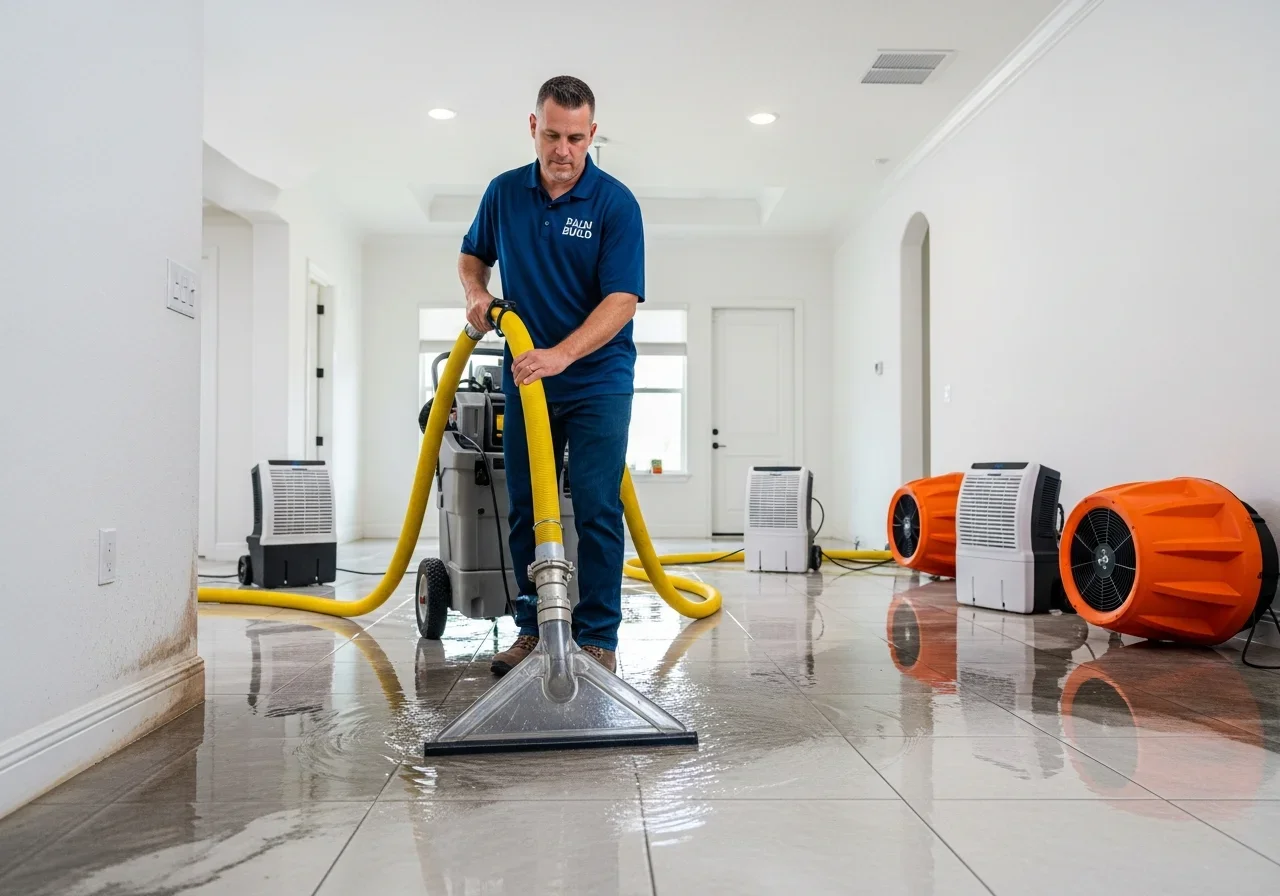
Truck-mounted extraction systems pull hundreds of gallons per hour. For Port St. Lucie slab-on-grade homes with tile or luxury vinyl, extraction targets water trapped in tack strips, baseboards, and cabinet kick spaces where moisture hides.

04

Structural Drying & Dehumidification

3-7 Days

Commercial LGR dehumidifiers and high-velocity air movers are positioned strategically. In Port St. Lucie's 75-90% ambient humidity, drying takes longer than drier climates — daily moisture readings ensure progress toward IICRC dry standards.

05

Cleaning, Sanitization & Antimicrobial

During Drying

EPA-registered antimicrobial treatments are applied during the drying process. In subtropical Port St. Lucie, mold can colonize within 24 to 48 hours — pre-emptive antimicrobial application is standard protocol, not optional.

06

Restoration & Reconstruction

1-4 Weeks

Drywall, flooring, baseboard, trim, painting, stucco repair, and any structural work. For CBS construction homes, we match existing stucco texture, re-seal penetrations, and verify the building envelope is restored to pre-loss condition.

Palm Build restoration team performing water extraction in a Port St. Lucie Florida home

Why Our Port St. Lucie Process Works

1

Local Knowledge

We know CBS construction, slab-on-grade drying, and canal flood patterns

2

Speed

60-90 minute response to Port St. Lucie from our Florida operations

3

Scientific Drying

Daily moisture readings calibrated for subtropical humidity conditions

4

Insurance-Ready

Documentation formatted for your adjuster from day one

Schedule an Assessment

Port St. Lucie Pricing

Water Damage Restoration Costs in Port St. Lucie

These ranges reflect real-world project costs on the Treasure Coast — not national averages. Port St. Lucie's subtropical humidity extends drying timelines and increases equipment deployment compared to drier climates, directly impacting total project costs.

Minor Water Damage

Small leaks, single room, Category 1 (clean water)

Emergency water extraction $500 – $1,500
Single-room structural drying $500 – $1,200
Antimicrobial treatment $200 – $500
Minor drywall/baseboard repair $300 – $800
Total minor project $1,500 – $4,000

Moderate Water Damage

Multi-room flooding, structural drying, Category 2 (gray water)

Multi-room extraction $1,500 – $4,000
Structural drying (5-7 days) $2,500 – $6,000
Sanitization & antimicrobial $500 – $1,500
Drywall, flooring, trim repair $2,000 – $5,000
Total moderate project $5,000 – $15,000

Major Water Damage

Whole-home flooding, full reconstruction, Category 3 (black water)

Whole-home extraction $3,000 – $8,000
Extended drying (7-10+ days) $5,000 – $12,000
Mold remediation (if present) $3,000 – $15,000
Full reconstruction $10,000 – $30,000+
Total major project $15,000 – $50,000+

Port St. Lucie Humidity Factor

Port St. Lucie's ambient humidity of 75-90% means drying times run 20-40% longer than the same damage scope in a dry climate. Every additional day of dehumidifier and air mover deployment adds to the total cost. This is why rapid response and proper equipment staging from day one is critical to controlling project costs on the Treasure Coast.

St. Lucie County Insurance Context

The average homeowners insurance premium in St. Lucie County is $3,522/year including wind coverage and $1,589/year excluding wind. Understanding your policy's water damage vs. flood damage distinction, deductible structure, and any assignment of benefits limitations is essential before a loss occurs.

Know Your Risk Window

Port St. Lucie's Seasonal Water Damage Calendar

Port St. Lucie's water damage risk follows a clear seasonal pattern driven by the wet season (May 25 to October 20) and hurricane season (June 1 to November 30). Understanding this calendar helps you prepare before the peak.

Jan LOW

Avg rainfall: 2.68"

Dry season, occasional cold front rain

Feb LOW

Avg rainfall: 2.52"

Driest period, minimal water damage risk

Mar LOW

Avg rainfall: 3.31"

Dry season continues, isolated showers

Apr LOW

Avg rainfall: 3.07"

Transition month, building humidity

May MODERATE

Avg rainfall: 5.12"

Wet season onset (~May 25 median start)

Jun HIGH

Avg rainfall: 6.20"

Heavy rainfall, hurricane season begins Jun 1

Jul HIGH

Avg rainfall: 6.18"

Daily thunderstorms, sustained heavy rain

Aug CRITICAL

Avg rainfall: 7.25"

Peak rainfall, peak hurricane exposure

Sep CRITICAL

Avg rainfall: 8.21"

Wettest month, peak hurricane season

Oct MODERATE

Avg rainfall: 5.64"

Wet season ends ~Oct 20, hurricane season continues

Nov LOW-MOD

Avg rainfall: 3.29"

Hurricane season ends Nov 30, drying out

Dec LOW

Avg rainfall: 2.42"

Dry season returns, lowest risk period

Hurricane Milton (2024) — St. Lucie County Impact

Hurricane Milton in October 2024 spawned deadly tornadoes across St. Lucie County that ripped open building envelopes, shattered windows, and exposed home interiors to wind-driven rain. Tornado damage in Port St. Lucie is unlike typical wind damage — it creates sudden, total water intrusion across multiple rooms simultaneously. The combination of structural damage and immediate water exposure requires emergency response within hours to prevent secondary mold contamination.

Unique Local Risk

Port St. Lucie's Canal & Drainage Flood Risk

Port St. Lucie sits on a flat coastal plain drained by the C-23, C-24, and C-25 canal systems — engineered waterways managed by the South Florida Water Management District (SFWMD) that ultimately empty into the St. Lucie River and Indian River Lagoon. When multi-day rainfall events overwhelm canal capacity, water lingers in neighborhoods for days.

SFWMD has conducted shoal removal operations to improve flow capacity, but the fundamental geometry remains: flat terrain, high water tables, and canal-dependent drainage mean that homes outside Special Flood Hazard Areas (SFHAs) still flood during flash flooding, areal flooding, and sustained multi-day rain events.

The city has identified repetitive loss areas in two primary zones: properties near the St. Lucie River, and areas west of I-95 from Becker Road south to Tradition. These neighborhoods experience repeated flooding during heavy rainfall seasons.

C-23, C-24, and C-25 canals drain the city into the St. Lucie River — capacity limits cause backup during heavy rain
Repetitive loss areas identified near St. Lucie River AND west of I-95 from Becker Road to Tradition
Homes outside FEMA SFHAs still flood from flash flooding, areal flooding, and multi-day rain events
Port St. Lucie holds a CRS Class 5 rating — qualifying SFHA homeowners for 25% NFIP flood insurance discounts

Substantial Damage Regulations

If your Port St. Lucie home sustains damage exceeding 50% of its market value, the city's Building Department may classify it as "substantially damaged" under FEMA guidelines. This triggers requirements to bring the entire structure into compliance with current Florida Building Code and flood elevation standards — potentially adding tens of thousands to reconstruction costs. Palm Build documents damage scope meticulously to help you and your insurer navigate these regulations accurately.

CRS Class 5 Benefits

  • 25% discount on NFIP flood insurance for SFHA properties
  • 10% discount for non-SFHA properties with flood policies
  • Consider private flood insurance regardless of your FEMA zone designation
  • Document pre-storm property condition for faster claims processing
  • Have a restoration company on call before wet season begins in late May
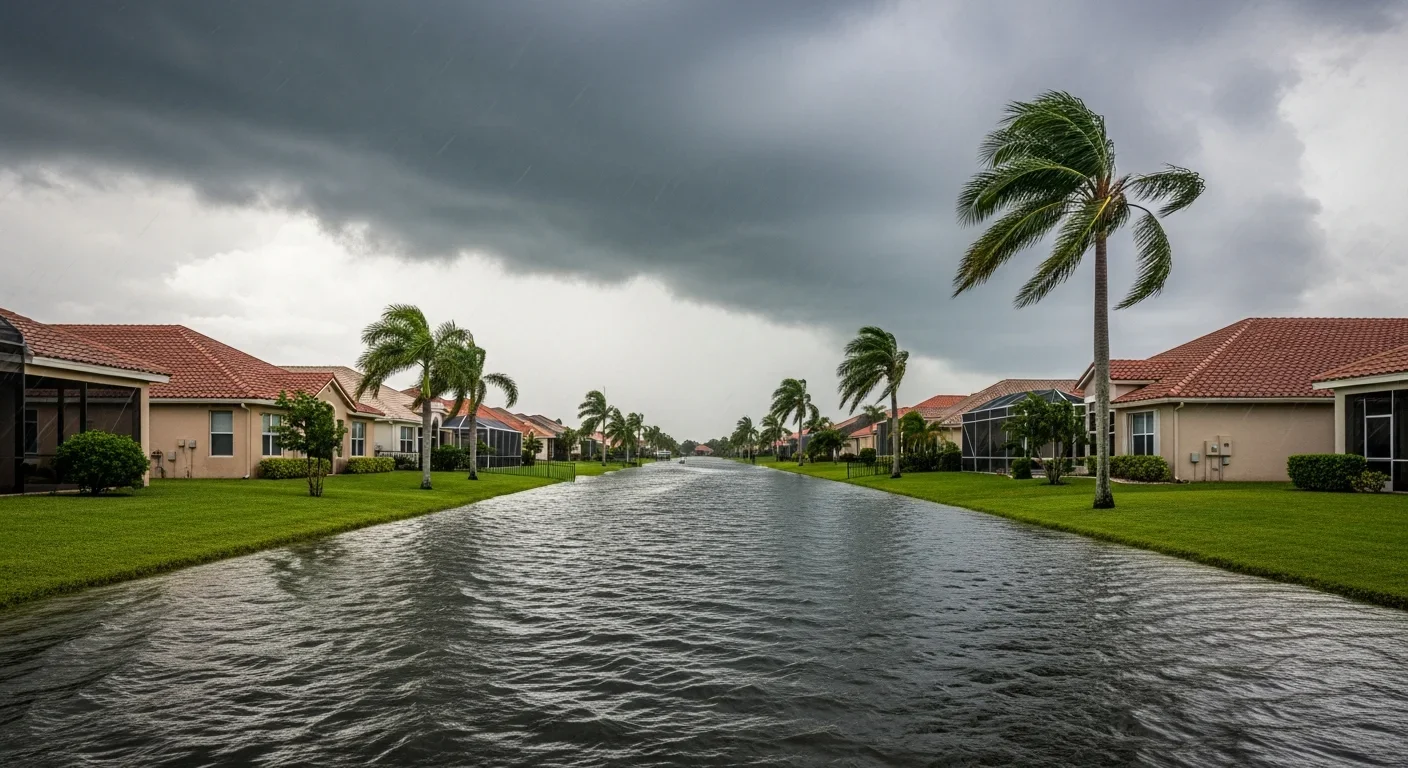
Port St. Lucie canal system during heavy storm showing rising water levels near residential properties
Port St. Lucie's canal system during heavy rainfall — when capacity is overwhelmed, water backs into adjacent neighborhoods.

Insurance Navigation

Insurance Claims for Water Damage in Port St. Lucie

Florida's insurance landscape is complex and changing. Understanding claim deadlines, coverage distinctions, and documentation requirements before a loss occurs can mean the difference between a fully covered restoration and tens of thousands out of pocket.

Palm Build Handles the Documentation

We work directly with your insurance adjuster from the first inspection. Our moisture maps, thermal images, daily drying logs, and photo documentation are formatted for the adjuster workflow — reducing delays and disputes. We're experienced with Citizens Property Insurance, Heritage, Universal, and other carriers common in St. Lucie County.

Insurance Claims Guide
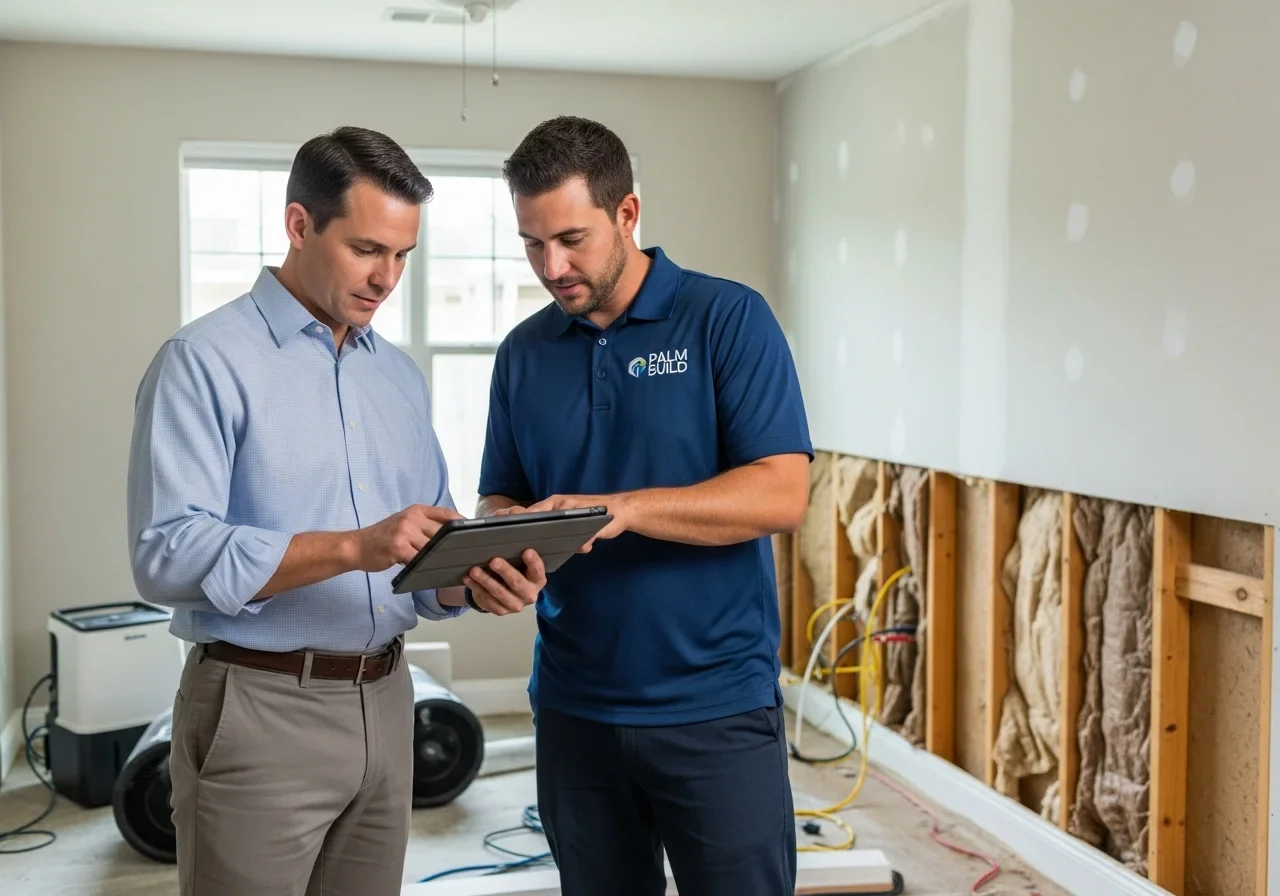
Professional insurance documentation and moisture mapping for a water damage claim in Port St. Lucie Florida
Detailed documentation from day one gives your adjuster the evidence needed to process your claim efficiently.

Our Work

Port St. Lucie Water Damage: Before and After

From slider door intrusions to post-storm neighborhood flooding, here is a sample of the water damage scenarios we handle in Port St. Lucie and across the Treasure Coast.

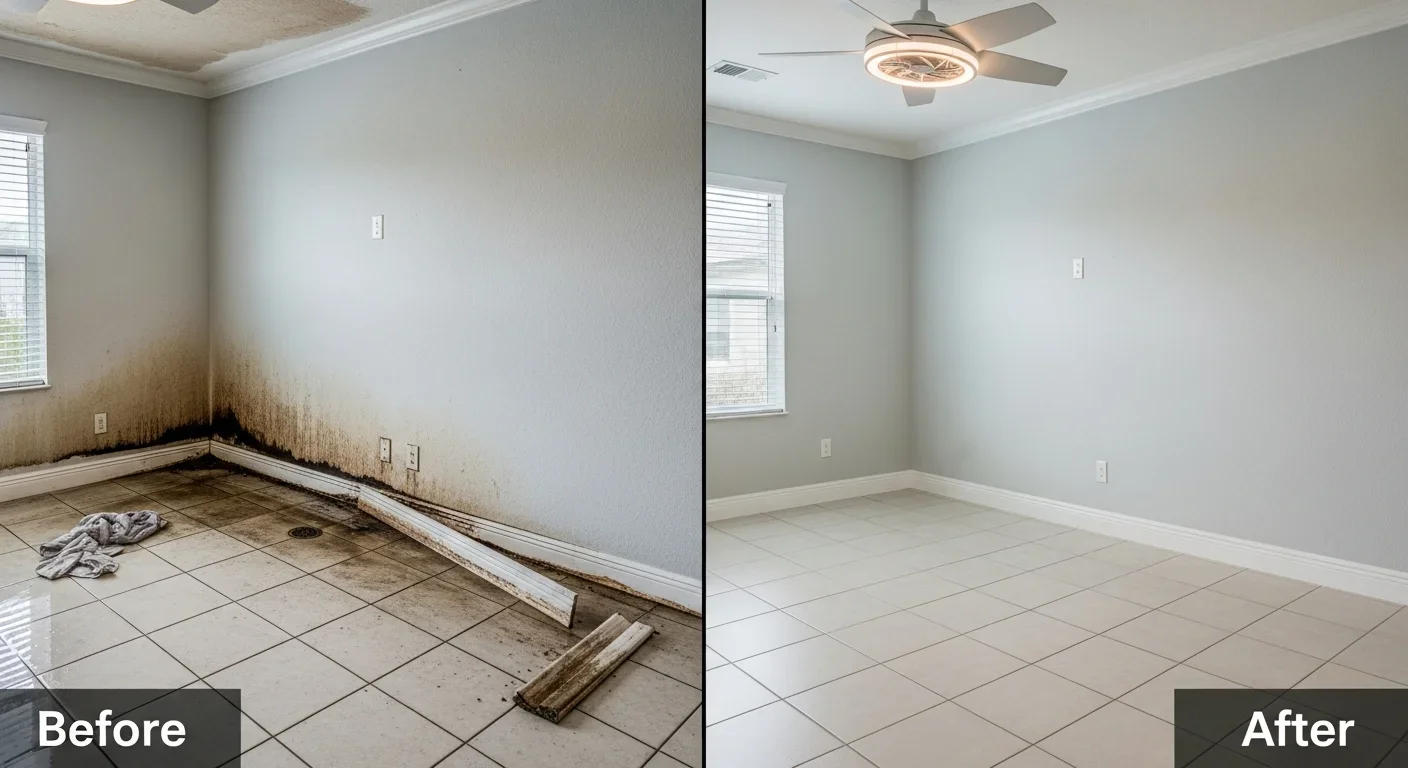
Before and after water restoration of a slider door water intrusion in a Port St. Lucie Florida home
Slider door water intrusion — before and after full restoration
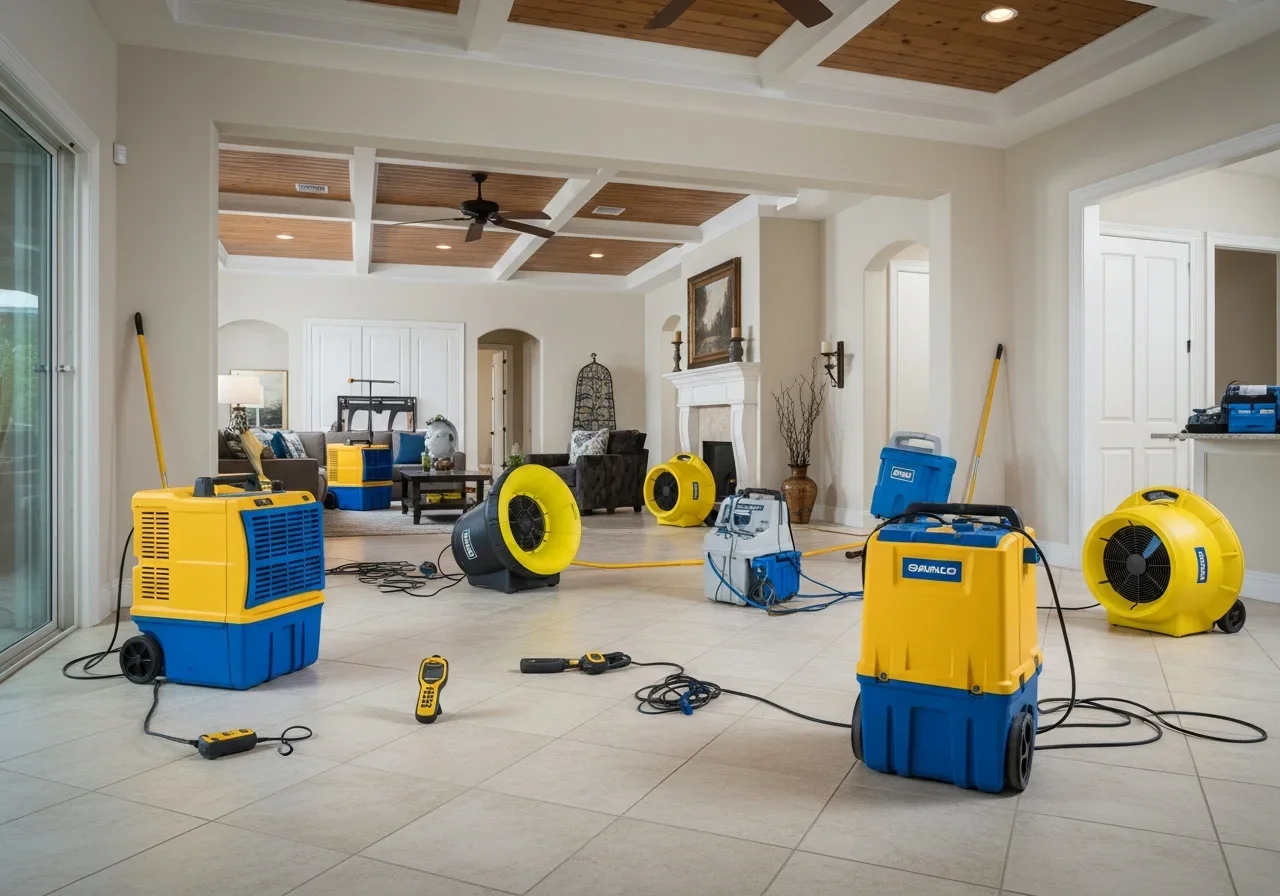
Structural drying equipment setup in an open-plan living room of a Port St. Lucie home during water damage restoration
Structural drying setup with commercial dehumidifiers and air movers in an open-plan living room
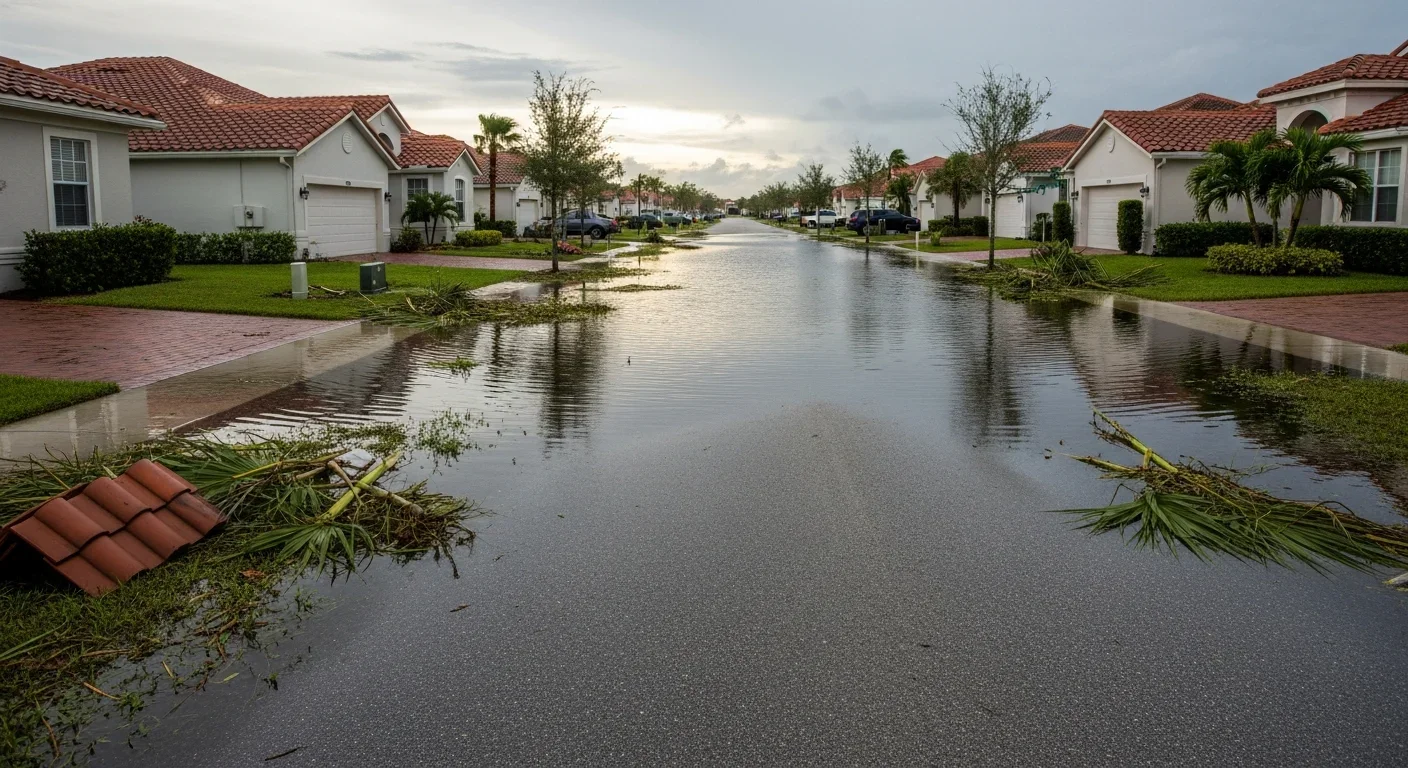
Post-storm neighborhood flooding in a Port St. Lucie Florida residential area with standing water on streets
Post-storm neighborhood flooding — standing water overwhelms drainage in low-lying areas
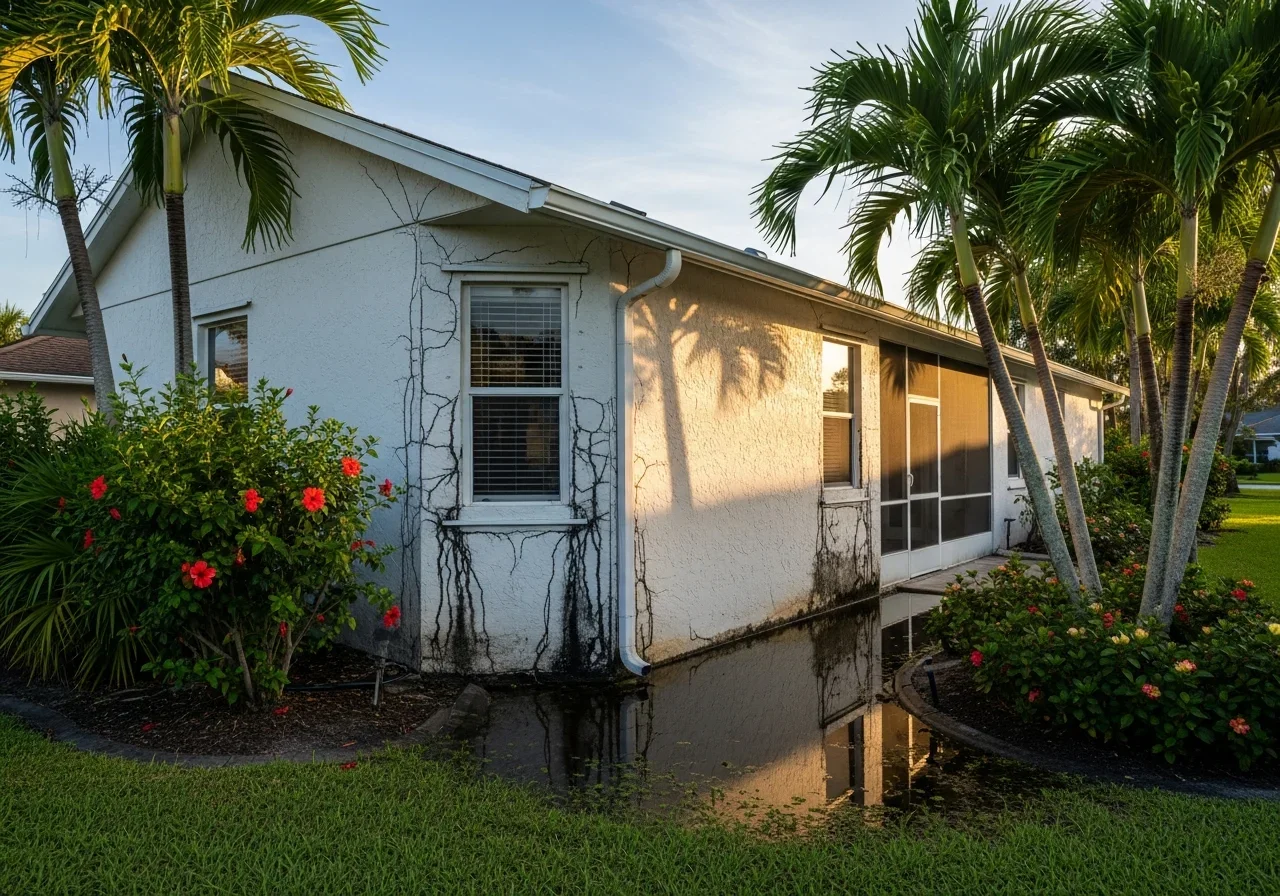
Stucco exterior water damage on a Port St. Lucie Florida home showing cracking and water staining
Stucco exterior water damage — cracks and failed sealant allow wind-driven rain intrusion

What We See Most

Common Types of Water Damage in Port St. Lucie Homes

Port St. Lucie's CBS/stucco construction, slab-on-grade foundations, and subtropical climate create a distinct damage profile. These are the scenarios our crews respond to most frequently.

Supply Line & Appliance Failures

Water heaters, dishwashers, washing machines, and refrigerator ice maker lines are the most common emergency calls in Port St. Lucie. In the city's 2000s-era homes, water heater tanks and flex connectors are reaching their 15-20 year replacement window simultaneously across entire neighborhoods.

Wind-Driven Rain Intrusion

Hurricane-force and tropical storm winds drive rain through stucco cracks, failed window sealant, soffit and fascia gaps, and roof-to-wall transitions. CBS/stucco construction is durable but not waterproof — hairline stucco cracks act as direct water channels during storms.

HVAC Condensate Overflow

Air conditioning systems in Port St. Lucie run 10 or more months per year, generating gallons of condensate daily. When drain lines clog, float switches fail, or drain pans corrode, water floods into attic spaces, interior closets, and ceiling cavities — often undetected for days.

Sliding Door & Lanai Water Entry

Screened porch homes are ubiquitous in Port St. Lucie. Sliding door tracks, threshold seals, and screen enclosure connections are common water entry points during heavy rain. Wind-driven rain overwhelms door track drainage and floods interior living spaces.

Roof Leak & Underlayment Failure

Florida's intense UV exposure and storm cycling degrade roofing materials faster than in northern climates. Underlayment failure, lifted shingles or tiles, and compromised flashing create slow leaks that may not become visible until significant deck damage has occurred.

Canal & Stormwater Backup

During multi-day rain events, Port St. Lucie's canal system can reach capacity, causing stormwater to back up into neighborhoods. Homes in the city's repetitive loss areas along Becker Road and near the St. Lucie River are most vulnerable to this type of damage.

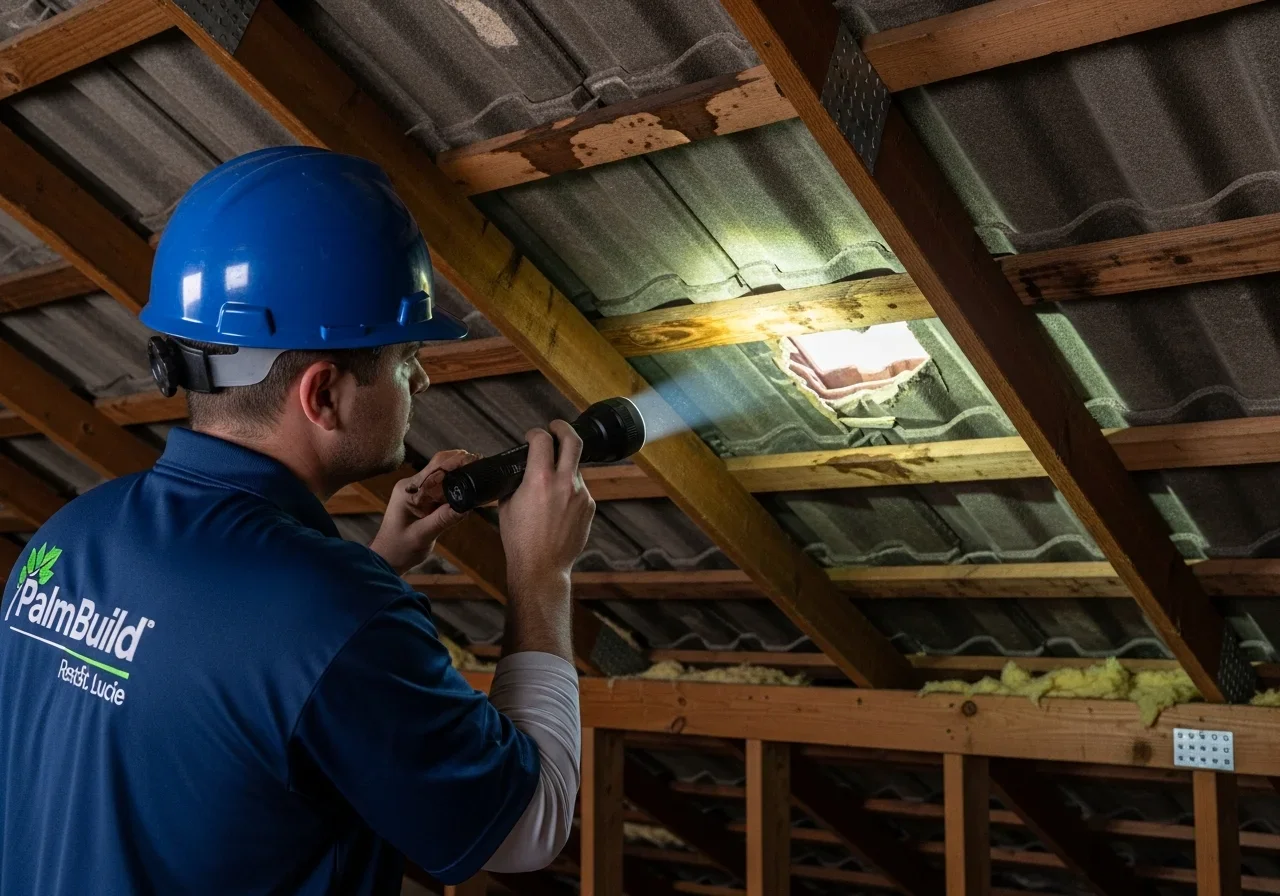
Professional roof damage inspection on a Port St. Lucie Florida home after storm damage
Florida's UV exposure and storm cycling degrade roofing materials faster than northern climates — regular inspection catches problems before they become interior water damage.

The Palm Build Difference

Why Port St. Lucie Homeowners Choose Palm Build

National franchises serve the Treasure Coast by volume. But they run the same playbook in Port St. Lucie that they run in Phoenix — ignoring CBS construction details, subtropical humidity drying curves, and the canal flood dynamics that define water damage here. We build our operations around local knowledge.

IICRC-Certified CBS & Slab Experts

Every crew lead holds current IICRC Water Restoration Technician (WRT) certification and understands the specific drying science for concrete block/stucco construction and slab-on-grade foundations — the dominant building type in Port St. Lucie.

Insurance Documentation From Day One

Thermal images, calibrated moisture meter readings, daily psychrometric drying logs, and photo documentation are captured from the first hour. Our documentation packages are formatted for adjuster review — reducing delays and disputes with your carrier.

24/7 Emergency Dispatch — 60-90 Minutes

Call (754) 600-3369 any time, day or night. Our Florida operations dispatch a fully equipped crew to Port St. Lucie within 60 to 90 minutes — with truck-mounted extraction, commercial dehumidifiers, and air movers ready to deploy.

St. Lucie County Insurance Knowledge

We work with Citizens Property Insurance, Heritage, Universal, and other carriers common in St. Lucie County. We understand Florida-specific claim deadlines, AOB regulations, and the flood vs. water damage coverage distinction that catches many homeowners off guard.

Full-Service: Extraction Through Reconstruction

One company manages the entire project — emergency extraction, structural drying, antimicrobial treatment, drywall, flooring, painting, stucco repair, and any structural work. No handoffs between contractors, no gaps in accountability, no delays.

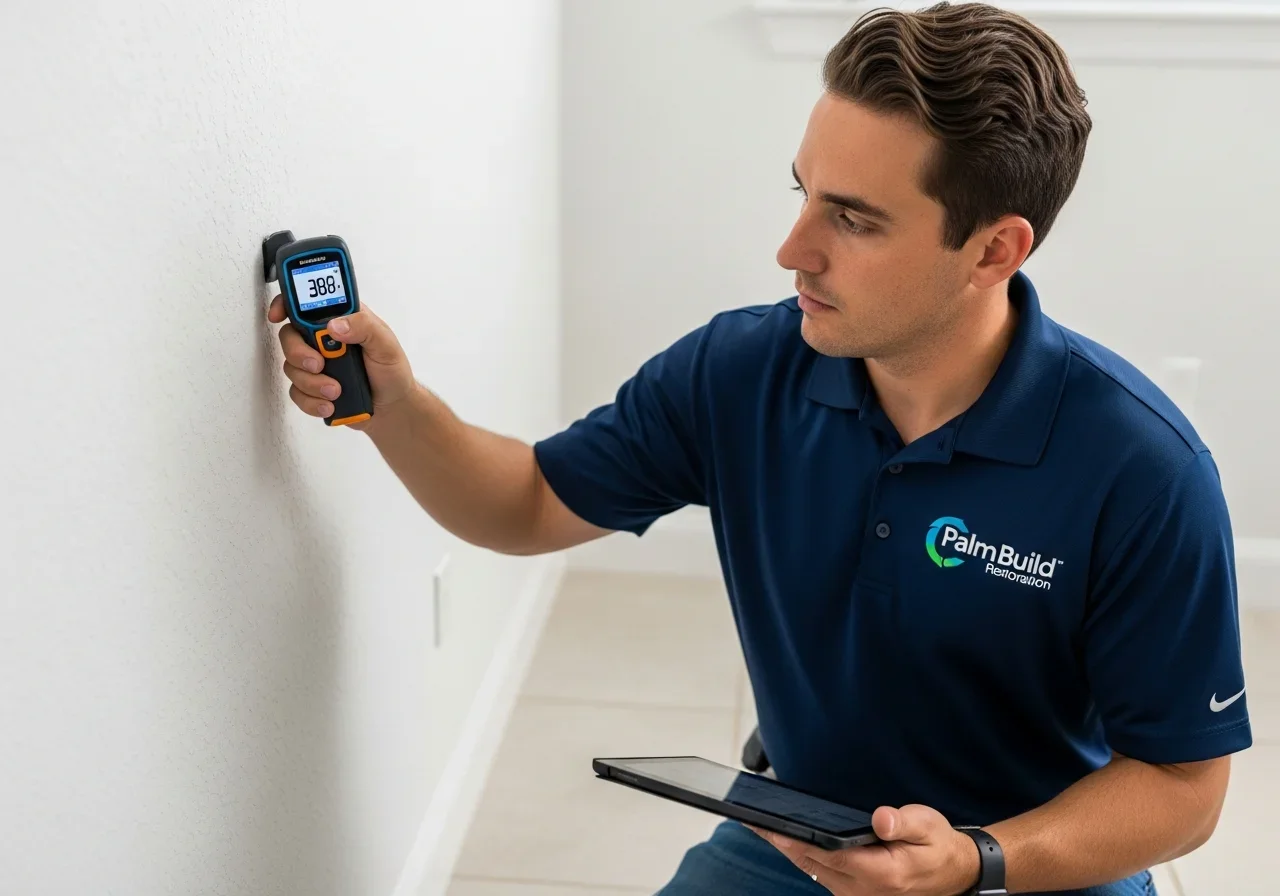
Palm Build technician using a professional moisture meter during a water damage inspection in a Port St. Lucie Florida home
Calibrated moisture meter readings at every stage give your adjuster the precise data needed to support your claim.

Common Questions

Port St. Lucie Water Damage FAQ

How quickly can Palm Build respond to water damage in Port St. Lucie?
Our emergency dispatch is available 24/7, and we typically arrive in Port St. Lucie within 60 to 90 minutes of your call. We bring truck-mounted extraction equipment and industrial dehumidifiers so mitigation begins immediately.
Does my homeowners insurance cover water damage in Port St. Lucie?
Most homeowners policies cover sudden and accidental water damage like burst pipes or appliance failures. However, flood damage from rising water requires separate flood insurance. Under Florida law (Fla. Stat. § 627.70132), you must report claims within the required timeframe. Palm Build documents everything from day one to support your claim.
How long does water damage restoration take in Port St. Lucie?
Most water damage restorations in Port St. Lucie take 3 to 7 days for the drying phase, depending on the extent of damage and water category. Port St. Lucie's high humidity can extend drying times compared to drier climates. Full reconstruction, if needed, may add 2 to 6 weeks.
What areas in Port St. Lucie are most at risk for flooding?
The city identifies repetitive loss areas near the St. Lucie River and west of I-95 from Becker Road to Tradition. However, any area can flood from flash flooding, areal flooding, or multi-day rain events. Neighborhoods near canals and retention ponds also face elevated risk during the wet season.
Should I file a water damage claim or pay out of pocket in Port St. Lucie?
This depends on the extent of damage relative to your deductible. St. Lucie County homeowners pay an average of $3,522 per year for insurance including wind. For damage exceeding your deductible, filing a claim is usually advisable. Palm Build provides detailed documentation and scope estimates to help you make an informed decision.
How do I prevent mold after water damage in Port St. Lucie's humidity?
Speed is everything. In Port St. Lucie's subtropical climate, mold can begin growing on wet materials within 24 to 48 hours. Professional extraction and dehumidification are critical — simply running fans is not sufficient in Florida's ambient humidity. We verify drying completion with moisture meters before closing walls.
What is the difference between flood damage and water damage for insurance?
Water damage from internal sources — burst pipes, appliance failures, HVAC condensate leaks — is typically covered by homeowners insurance. Flood damage from rising water, storm surge, or overflowing canals requires separate NFIP or private flood insurance. Port St. Lucie's CRS Class 5 rating provides discounts on flood policies for SFHA properties.

Water Damage in Port St. Lucie? Every Minute Matters.

In Port St. Lucie's humidity, water damage becomes mold damage fast. Call Palm Build now for 24/7 emergency extraction, structural drying, and insurance-ready documentation.

60-90 min Response IICRC Certified

More in Port St. Lucie

Other Palm Build Services in Port St. Lucie, FL