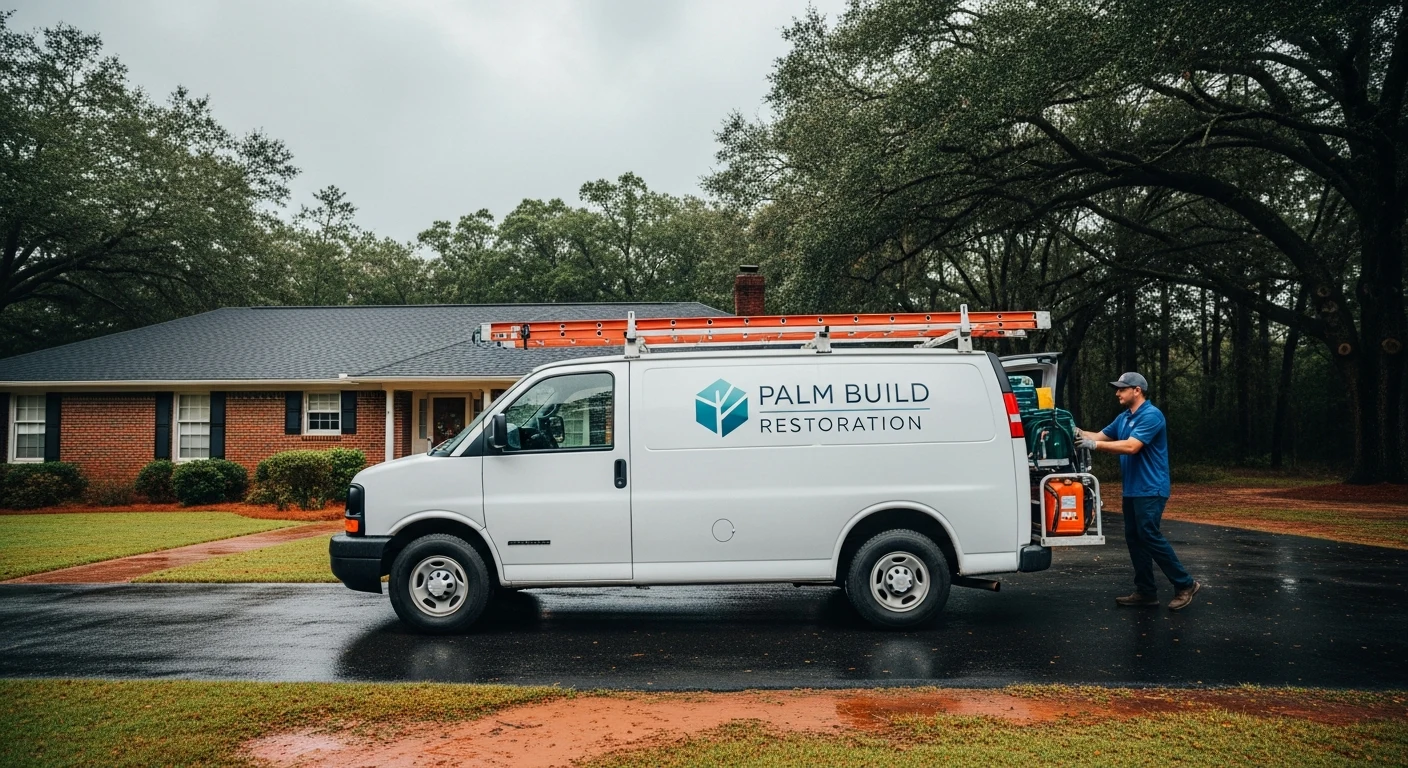
Water Damage Restoration in Marshville, North Carolina
Marshville's housing stock is overwhelmingly older single-family homes on Piedmont clay soil — a combination that concentrates water at foundations, saturates crawl spaces, and turns a routine plumbing failure into a structural drying project. Palm Build's Charlotte team responds 24/7 with the crawl space expertise, IICRC-certified drying protocols, and insurance documentation that Union County homeowners need.
45-60 min
Emergency Response
24/7
Dispatch Available
IICRC
Certified Technicians
Seasonal Risk
When Marshville Homes Are Most at Risk
43.6 inches of annual rainfall across all four seasons — but risk is not evenly distributed. Here is Marshville's damage calendar tied to Union County's actual precipitation pattern and housing vulnerabilities.
Tap a month for details
Jun–Aug: Peak Storm Season
Severe thunderstorms, AC condensate failures, and clay-soil saturation combine for the highest-volume water damage period of the year.
Year-Round: Plumbing Failures
Marshville's older housing stock means supply line and water heater failures can occur in any month. No season is truly "safe" in a 1972 ranch house.
Jan–Feb: Freeze Risk
Cold snaps in Union County can freeze supply lines in uninsulated crawl spaces and exterior walls of older homes. Know where your main shutoff is before winter.
Unique to Marshville
Why Marshville Homes Stay Wet — Cecil Clay and the Crawl Space Problem
Most water damage companies describe the damage. Few explain why it keeps happening. Here is the soil and construction science behind Marshville's most common restoration scenario — and why fixing the drainage matters as much as the drying.
Heavy Rainfall on Clay Soil
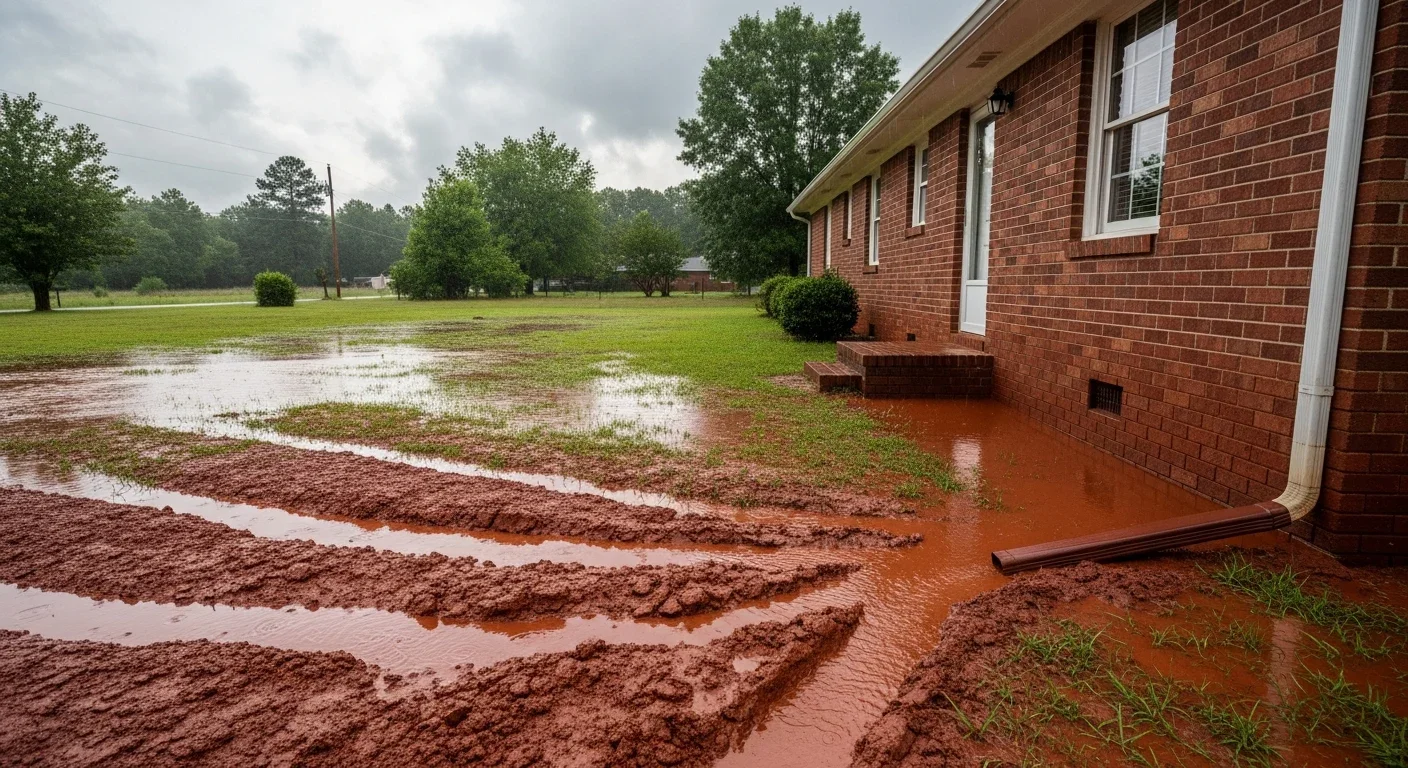
Cecil clay — the official state soil of North Carolina — covers most of Union County's Piedmont. Unlike sandy or loamy soils, Cecil sheds water rather than absorbing it. A heavy summer storm can deposit 1–2 inches of rain in an hour, and most of it runs off rather than soaking in.
Runoff Concentrates at Foundation Perimeter
Surface water follows grade and concentrates at the lowest point of the yard — which is typically the foundation wall. On poorly graded lots (common in Marshville's older stock), downspout discharge and yard slope can direct hundreds of gallons directly toward the foundation edge within minutes of a storm.
Water Enters the Crawl Space
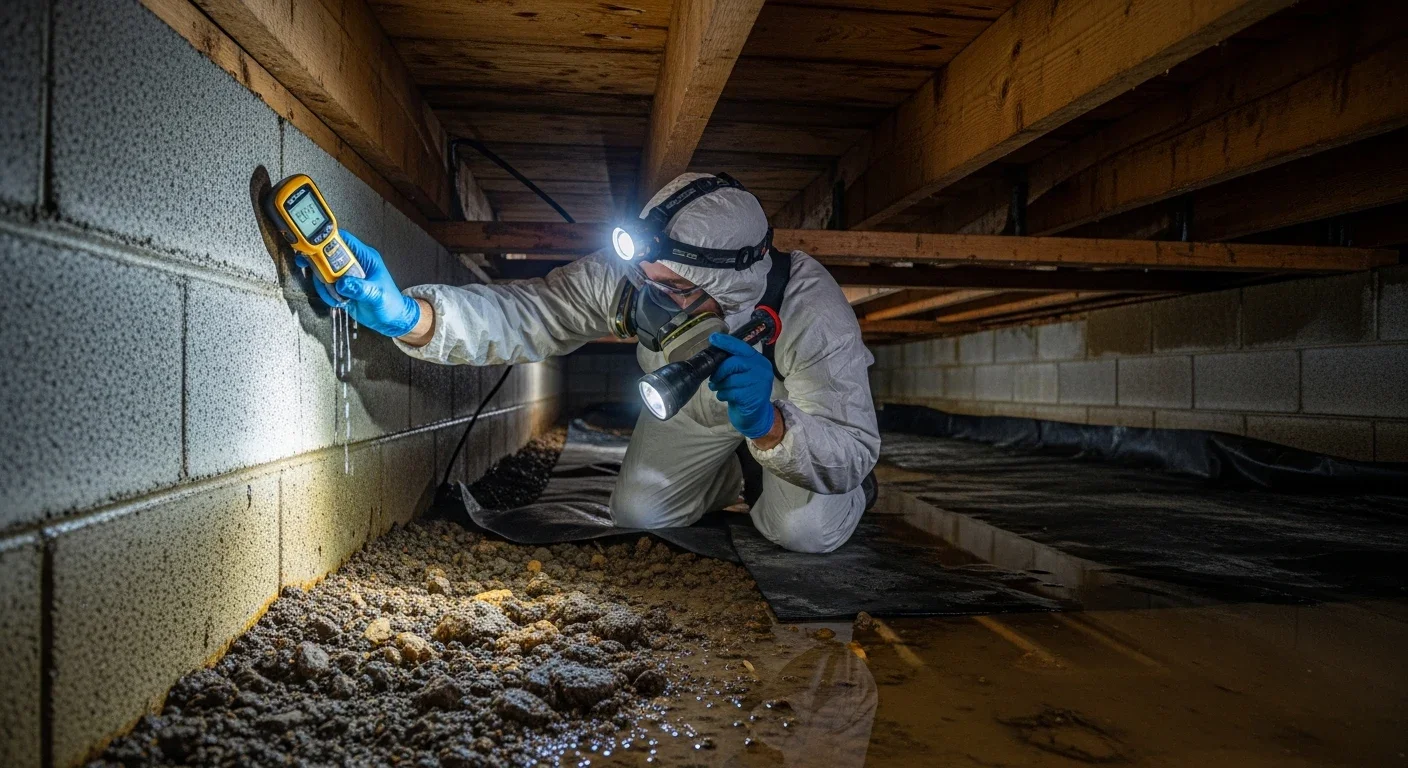
Foundation vents, cracks in the crawl space perimeter wall, and inadequate vapor barriers allow water to enter the enclosed subfloor space. Pre-1990 homes in this area were often built without the sealed crawl space design that modern building science recommends. Once water is inside, it has nowhere to go except into the soil and up through evaporation into wood assemblies.
Trapped Moisture Feeds Mold and Rot
Wood floor joists and subfloor sheathing in direct contact with soil moisture — either liquid water or vapor — begin absorbing that moisture. At 19% wood moisture content, mold risk begins. Above 28%, structural wood rot accelerates. North Carolina's summer humidity prolongs this exposure window because the outdoor dew point is high enough that even ventilated crawl spaces receive more moisture from outside air than they exhaust.
Cecil
North Carolina state soil since 1969
Low
Hydraulic conductivity — sheds water vs. absorbing it
70–90%
Summer outdoor relative humidity in Union County
36%
Marshville homes over 50 years old — pre-modern vapor barrier era
What this means for your restoration
When Palm Build responds to a Marshville water loss, we do not just dry the affected materials and leave. We document whether the root cause is a one-time plumbing event (which drying resolves) or an ongoing drainage condition (which will cause a repeat loss if not corrected). Our final report identifies both the immediate remediation scope and the underlying drainage or vapor barrier improvements that will prevent the next event — information your insurer and your contractor need to make the right decisions.
Know Your Area
Marshville Water Damage Patterns by Neighborhood
Marshville's service micro-areas each have different construction eras and risk profiles. Here is what we see in the areas we serve most often across ZIP 28103.
Main Street and Town Core
Mixed — pre-1940s to 1970s · Older commercial-adjacent residential, smaller lots
- Oldest housing stock in town — some structures predate 1940
- Mixed-era plumbing with supply lines from multiple decades
- Limited setback from street: minimal yard drainage distance from impervious surface
- Historic buildings may have original cast iron or galvanized water supply
Marshville Boulevard Corridor
1960s–1980s · Single-family ranch and traditional-style homes
- Classic Union County ranch-era construction — brick veneer, crawl space foundations
- Plumbing approaching or past typical service life for supply lines and water heaters
- Yard grades on many lots slope toward foundation rather than away
- Crawl spaces from this era typically have passive vents and minimal vapor barriers
Municipal Park Neighborhood
1960s–1990s · Established residential near town civic center
- Lower-lying areas near park may collect surface runoff during heavy rain
- Tree canopy can contribute to roof leaf accumulation and gutter blockage
- Mixed construction eras mean varied foundation types and plumbing vintages
Community Center Area
1970s–1990s · Typical Union County single-family
- Standard Piedmont ranch construction — brick veneer, crawl spaces, wood-frame
- Homes in this era commonly have polybutylene supply lines (recall-era plumbing)
- HVAC condensate drain lines commonly clog in summer — common water damage source
Outer Rural Ring (ZIP 28103)
Mixed — pre-1940 farmhouses through 2000s · Rural lots, some large-acreage, varied construction
- Pre-1940 farmhouse inventory — oldest construction with highest plumbing failure risk
- Longer distance from Charlotte may affect emergency response time during peak demand
- Well and septic systems common — different water intrusion failure modes
- Remote locations mean slower discovery of slow leaks in unoccupied structures
Palm Build serves all of Marshville and the broader ZIP 28103 area. Call (704) 464-0121 for 24/7 emergency response from our Charlotte operations hub.
Our Process
Water Damage Restoration in Marshville — Step by Step
From your first call to the final clearance report, our process is designed for Marshville's older single-family homes: crawl space access, clay-soil drying science, and insurance documentation that closes cleanly.
24/7 Emergency Dispatch
ImmediateCall (704) 464-0121 — we dispatch from Charlotte immediately. We ask the right questions on the call: what failed, where is water now, is the supply shut off? That 5-minute conversation lets us load the right equipment and arrive ready to work, not ready to assess.
Moisture Mapping and Documentation
On arrivalWe photograph every affected surface and take moisture readings at every wall, floor, and ceiling point before extraction begins. In older Marshville homes, we pay particular attention to the crawl space, subfloor, and any wall assemblies adjacent to the water source — moisture travels farther in pre-1990 construction than in modern homes.
Water Extraction
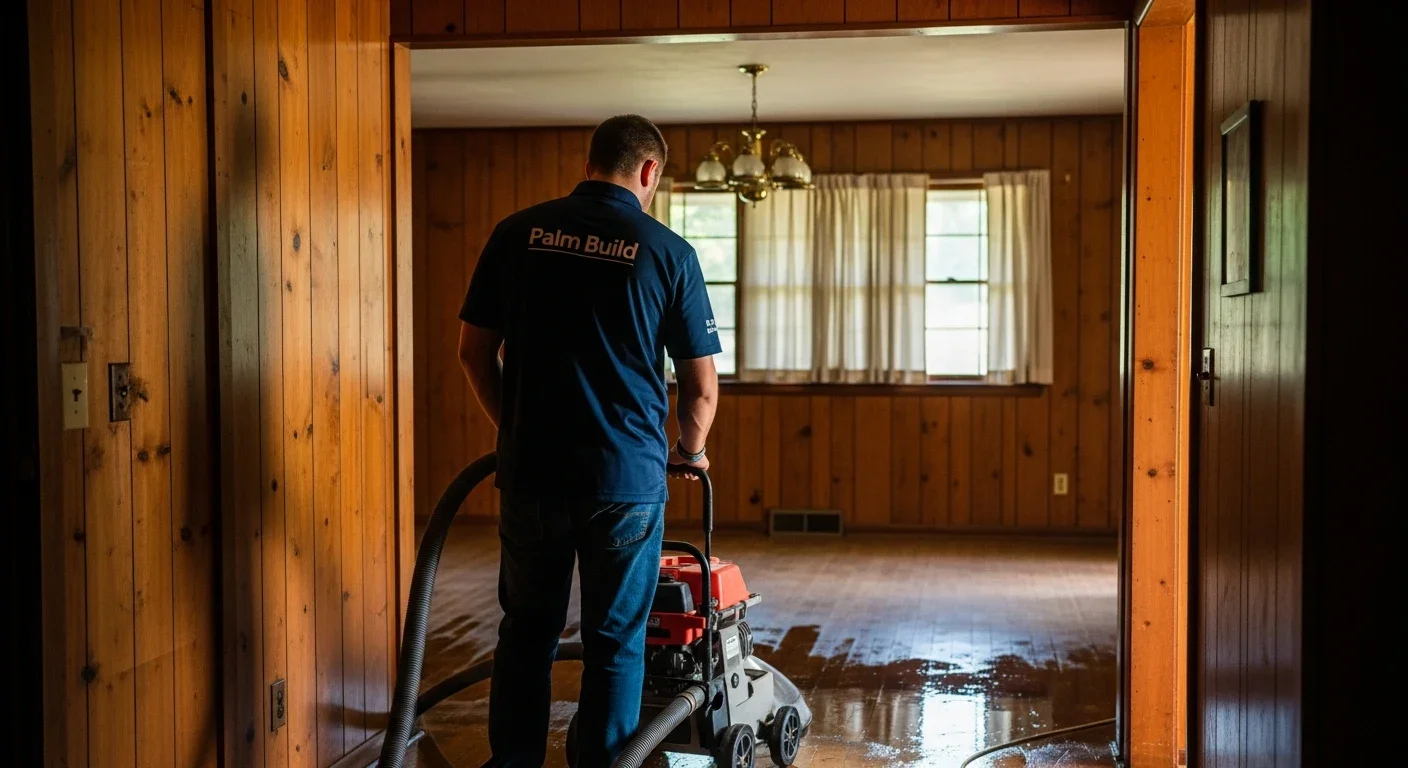
Hours 1–3Truck-mounted extraction removes standing water from floors, carpets, and subfloor surfaces. For crawl space flooding, we use specialized submersible pumps and extraction wands sized for confined spaces. We also assess and open wall cavities when moisture readings indicate hidden water — leaving trapped moisture in walls creates mold within 24–48 hours.
Structural Drying Setup
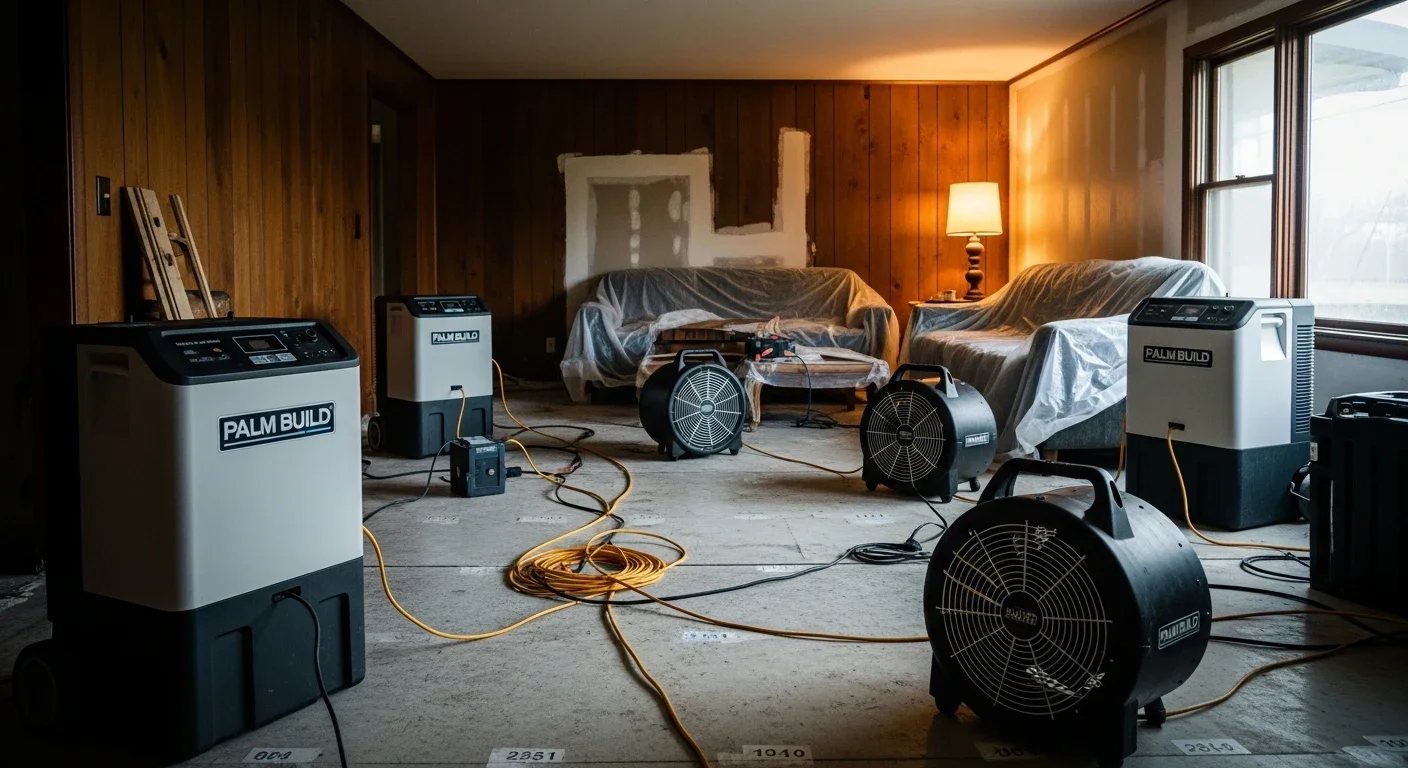
Day 1–2LGR dehumidifiers and air movers are placed per IICRC S500 drying science. For crawl spaces, we use directional drying equipment positioned to move air across joists and subfloor sheathing. We account for outdoor dew point conditions — Marshville's summer humidity means we set more aggressive drying targets than a typical winter loss would require.
Daily Monitoring and Adjuster Updates
3–5 daysWe return daily, take moisture readings at every monitoring point, and document drying progress. Equipment is adjusted as materials dry at different rates. We communicate directly with your adjuster on their schedule and provide daily progress documentation that supports a smooth claim close.
Root Cause Identification
During dryingBefore we leave the job, we document what caused the loss. Was it a one-time plumbing failure (resolved by repair)? Or an ongoing drainage condition that will repeat? For clay-soil drainage issues, we flag the specific yard grading, downspout, or vapor barrier problems your contractor needs to fix. Your insurer and your home warrant it.
Clearance Report and Reconstruction
Project closeFinal moisture readings at or below baseline are documented in a written clearance report. When reconstruction is needed, Palm Build handles it in-house — drywall, insulation, vapor barrier, flooring. All permits through the Union County and/or Marshville building process. One team from extraction to final walkthrough.
Water in your home right now?
Every hour in NC summer humidity increases mold risk.
(704) 464-0121 — 24/7 EmergencyCost Guide
Water Damage Restoration Costs in Marshville, NC
Older homes, clay-soil drying challenges, and crawl space complexity push Union County restoration costs above national averages. Here is what drives the numbers.
| Service Type | Typical Range | Key Variables |
|---|---|---|
| Water Extraction & Emergency Drying | $1,500 – $6,000 | Area affected, category of water, access conditions |
| Crawl Space Water Removal & Drying | $2,000 – $7,500 | Crawl space sq ft, depth of water, vapor barrier condition |
| Structural Drying Only | $2,500 – $8,000 | Building assembly type, moisture penetration depth |
| Wall Cavity Opening & Drying | $1,000 – $4,500 | Number of walls affected, material type |
| Full Home Restoration | $6,000 – $25,000+ | Extent of damage, reconstruction scope, finishes |
| Crawl Space Vapor Barrier & Drainage | $1,500 – $5,000 | Square footage, drainage system needed, encapsulation type |
Why Marshville Restoration Costs Vary
- Older homes require more demolition to access hidden moisture in wall and floor cavities
- Clay soil drying requires longer equipment run times — outdoor dew point affects indoor drying rate
- Crawl space access adds mobilization time vs. above-grade basement or slab
- NC premium rate increases (~15% through mid-2026) put more scrutiny on documentation
- Reconstruction costs vary with material availability and scope in Union County
Estimates based on Union County market conditions 2026. Written estimates provided before work begins.
Insurance Guide
Navigating Your Water Damage Claim in Marshville
NC homeowners insurance rates are rising, adjusters are scrutinizing claims more closely, and Marshville's older housing stock creates specific coverage questions. Here is what you need to know before you call your insurer.
What Standard NC Policies Cover
North Carolina homeowners policies typically cover sudden and accidental water damage: burst pipes, failed appliances, water heater ruptures, storm-driven roof intrusion. Coverage is triggered by a specific, identifiable event — not by accumulated moisture or ongoing drainage problems.
Common Coverage Gaps in Marshville
Gradual leaks ("long-term damage" exclusion) are the most frequent denial reason in Marshville's older housing stock. Crawl space flooding from stormwater or soil saturation is typically excluded from standard policies — it requires flood insurance. Well and septic system failures are generally excluded unless a separate endorsement is purchased.
Rate Increases — What to Know
A settlement established roughly 15% in total NC homeowners insurance rate increases through mid-2026 (two 7.5% phases). This means adjusters are reviewing claims more carefully, and documentation quality directly affects claim outcomes. A loss documented with moisture logs, photos, and a clear source narrative closes faster and with less pushback.
How Palm Build Supports Your Claim
We document the loss with the specificity your adjuster needs: photos, moisture readings, water source identification, affected materials inventory, and drying logs. We identify whether the source is a covered event (plumbing failure) or a non-covered event (drainage/stormwater). We communicate directly with your adjuster on their schedule.
Carriers we regularly work with in Union County:
We work with all major NC carriers. Our documentation has been accepted by every carrier operating in Union County.
Our Work
Water Damage Restoration in Marshville — Before & After
From crawl space flooding to interior plumbing losses, every Marshville job is documented from first moisture reading to final clearance report.
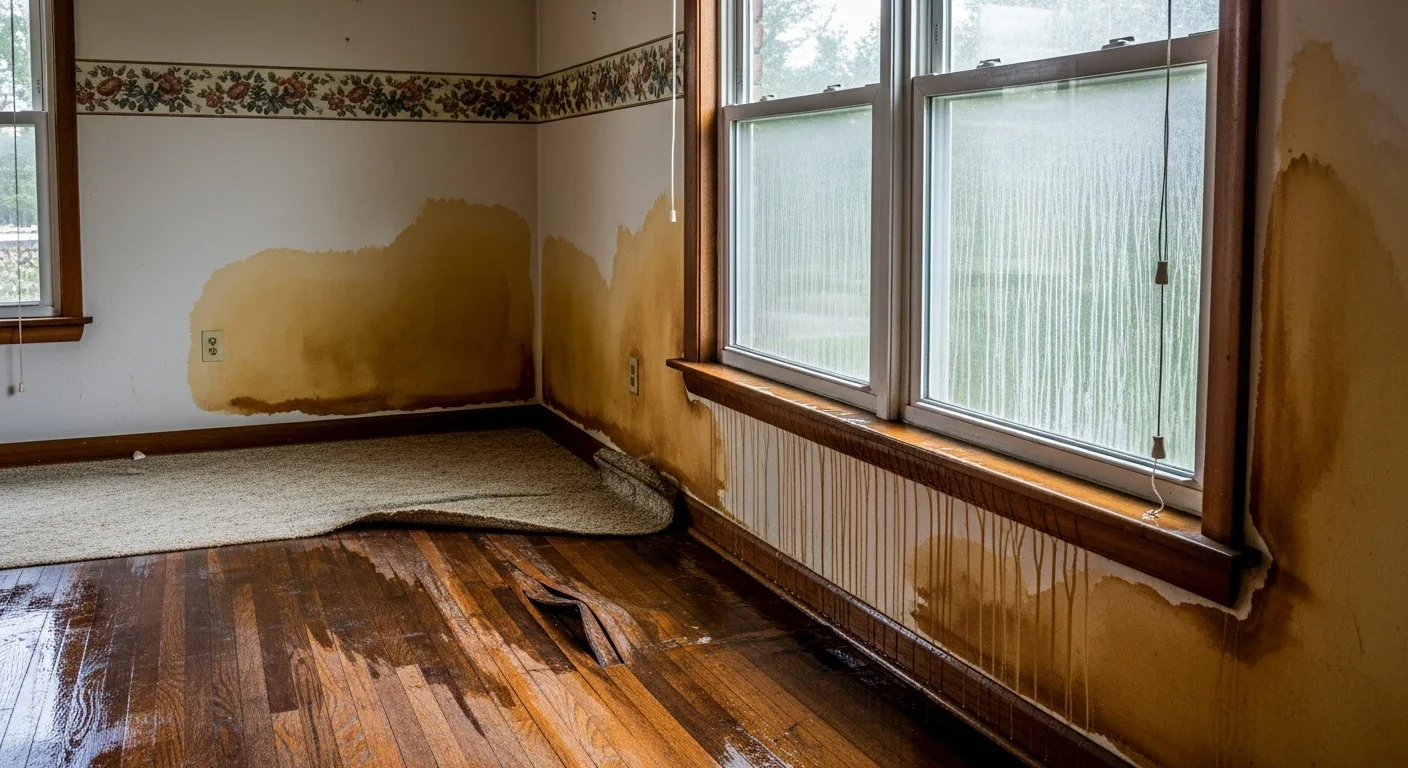
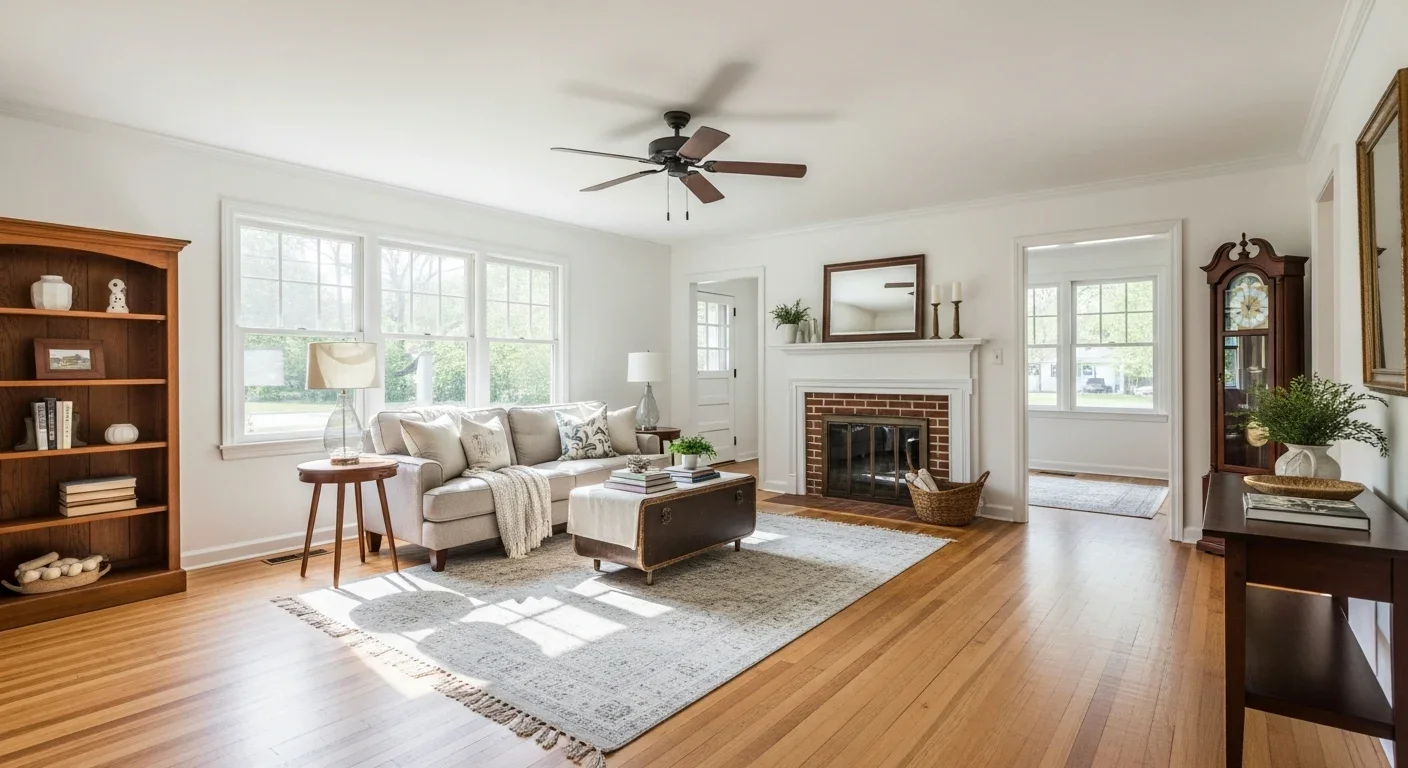
Plumbing failure in a Union County ranch home — extraction, structural drying, and full interior restoration.
Why Palm Build
Why Marshville Homeowners Choose Palm Build
Older homes, clay-soil drainage, crawl space access, and NC insurance complexity — we are built for exactly this market.
45–60 Min Response via US-74
Our Charlotte hub at 378 Crompton Street puts Marshville within a reliable dispatch window. We answer calls, not menus — 24 hours, 7 days a week.
Crawl Space Expertise
We carry the specialized equipment and protocols for confined-space water removal and drying. Crawl space flooding is not a side job for us — it is one of the most common loss types we handle in Union County.
Root Cause Documentation
We identify whether your loss is a one-time plumbing event or an ongoing drainage condition — and we document both. Knowing the root cause determines whether your claim is covered, and what work needs to be done to prevent the next loss.
IICRC S500 Certified Drying
We dry to science. Daily moisture readings at every monitoring point, equipment adjusted as materials reach their target moisture content. Drying is not complete until the numbers say so.
Documentation That Closes Claims
NC homeowners insurance rates are rising and claims face more scrutiny. Our photo and moisture documentation package has been accepted by every major carrier operating in Union County.
One Team, Start to Finish
Palm Build handles emergency mitigation and reconstruction under one project manager. No handoff to an unknown contractor for the rebuild — same team, same accountability, all permits handled.
FAQ
Water Damage Questions from Marshville Homeowners
Answers specific to Union County's older housing, clay soil, and NC insurance landscape.
More questions? Call (704) 464-0121 — 24/7, we answer calls directly.
Related Resources
More from Palm Build in Marshville & Union County
Mold Remediation in Marshville, NC
Water damage and mold are inseparable in Union County's humidity. IICRC S520-certified crawl space mold remediation.
Fire & Smoke Cleanup
Professional fire and smoke damage restoration for Union County homes. Odor elimination, soot removal, and reconstruction.
Full Reconstruction Services
Post-water damage reconstruction in-house. Drywall, flooring, vapor barriers, crawl space encapsulation. All permits handled.
Nearby Charlotte Metro Service Areas
- Water Damage Restoration — Monroe, NC →
- Water Damage Restoration — Waxhaw, NC →
- Water Damage Restoration — Indian Trail, NC →
- Water Damage Restoration — Charlotte, NC →
Helpful Articles
- Washer, Dishwasher & Water Heater Leaks → 12 min read
- DIY vs. Pro Water Damage Cleanup → 16 min read
- How Long Does Water Damage Restoration Take? → 11 min read