Mold Remediation in Marshville, North Carolina
Marshville's combination of Piedmont clay soil, older single-family housing with crawl spaces, and North Carolina's humid summers creates persistent mold pressure in floor assemblies, wall cavities, and attic spaces that generic contractors are not equipped to address. Palm Build's IICRC S520-certified team provides crawl space mold remediation, whole-home mold removal, and post-clearance verification — with written documentation that would satisfy any NC insurance adjuster.
Same day
Emergency Response
24/7
Dispatch Available
IICRC
Certified Technicians
Unique to Marshville
The Marshville Crawl Space Mold Guide
Over 85% of Marshville homes are single-family — and most older ones have crawl space foundations. Union County's clay soil and summer humidity make crawl space mold the single most common remediation scenario we handle here. Here is everything you need to know to identify it and address it correctly.
Signs You May Have Crawl Space Mold
Visible Signs From Inside the House
- Musty or earthy odor on the main floor — strongest in early morning or after rain
- Soft or spongy spots in the floor over crawl space areas
- Visible mold at the base of interior walls near the home perimeter
- Buckling or cupping hardwood floors (moisture migrating from below)
- Dark staining on the bottom of baseboards or floor trim
Climate and Seasonal Triggers
- Persistent high indoor humidity (55%+ in winter, 65%+ in summer) despite AC operation
- Symptoms that worsen in humid months (May–September) and improve in winter
- Any recent water event near the crawl space: heavy rain, plumbing leak, flooding
- History of standing water in the crawl space — even if "dried out" long ago
Structural Warning Signs
- Floor joists visible from inside crawl space with black, green, or white fuzzy growth
- Insulation that appears wet, sagging, or has fallen from joist bays
- Vapor barrier that is torn, absent, or covered in visible growth
- Wood framing that appears stained, grey, or punky (beginning to deteriorate)
Why Crawl Space Mold Keeps Coming Back in NC
Exposed Soil = Constant Moisture Source
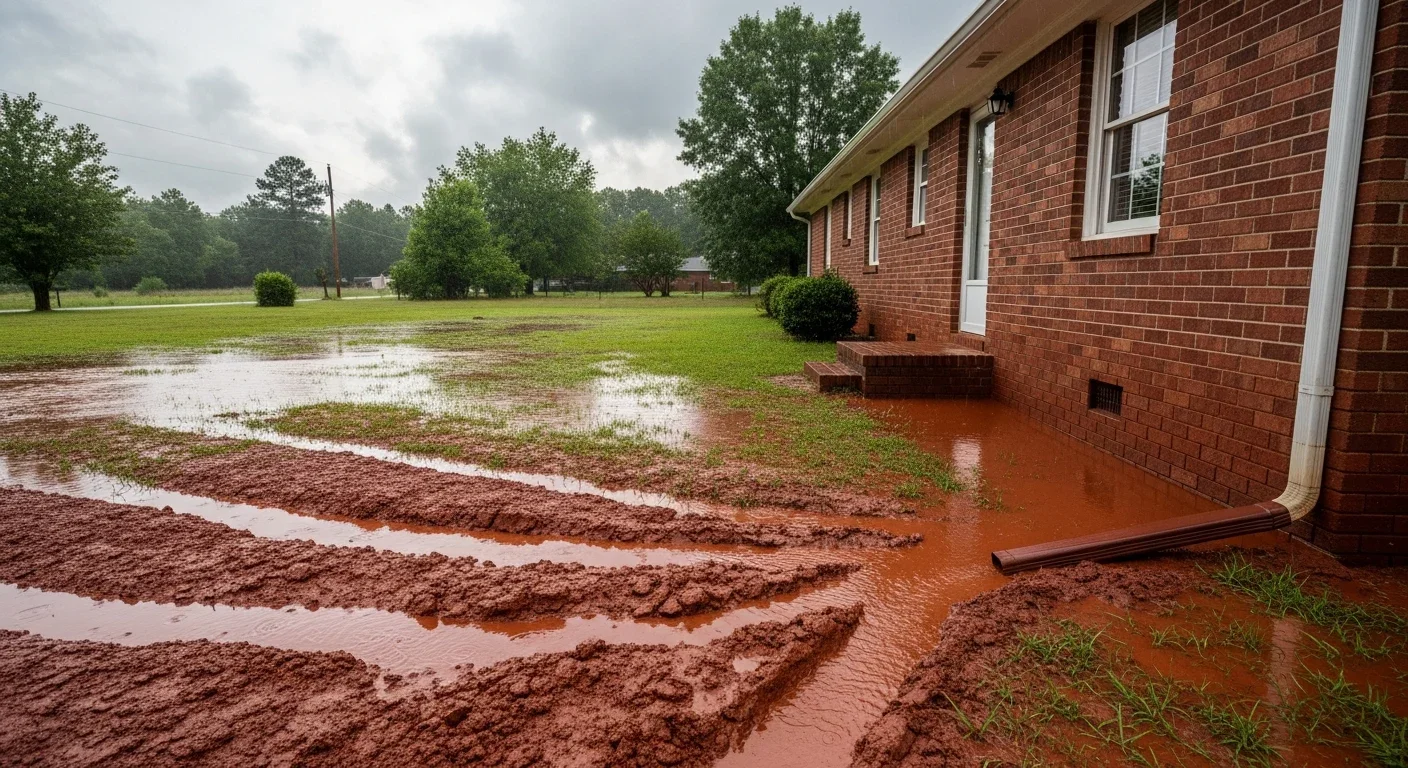
Without a complete vapor barrier, the clay soil beneath the crawl space continuously exhausts moisture vapor upward. This is not seasonal — it happens 365 days a year, but peaks in summer when soil moisture is highest after wet-season rainfall.
Passive Vents Bring In Humid Air
Traditional crawl space venting was designed for a drier climate. In North Carolina's humid summers, opening vents to "ventilate" the crawl space actually introduces warm humid outdoor air that condenses on cooler wood surfaces — depositing moisture directly onto joists. Modern building science recommends sealed, conditioned crawl spaces in this climate.
Batt Insulation Between Joists Holds Moisture
Fiberglass batts between floor joists absorb and hold moisture from below. Once wet, they become a sustained mold growth medium that keeps wood joists in contact with organic material and humidity — the classic "crawl space mold sandwich."
The bottom line: Crawl space mold in Marshville is almost always a drainage + vapor barrier + ventilation problem, not just a cleaning problem. Palm Build addresses the remediation scope completely — and documents the root cause conditions so you or your contractor can fix the underlying moisture source. A remediation without a root-cause fix will see mold return within 12–24 months.
NC Mold Credentials
NC Has No Mold License — Here Is What to Verify Instead
North Carolina does not have a statewide mold remediation license. Any contractor can claim they do mold work. Here is the credential checklist that separates qualified operators from those who are not.
IICRC Certification — Ask for the ID Number
The Institute of Inspection, Cleaning and Restoration Certification S520 standard is the accepted industry benchmark for mold remediation in NC. Ask any contractor for their current IICRC certification ID — legitimate certifications include a verifiable ID number. Palm Build technicians hold current IICRC credentials.
Written Remediation Protocol Before Work Begins
A credible contractor provides a written remediation scope before any work starts: what gets removed, what gets treated, what testing or verification will confirm completion. Verbal scopes are not acceptable — they leave you with no recourse if the job is not done correctly.
Post-Remediation Verification Plan
Ask specifically: "How will you verify the mold is gone?" The answer should include moisture readings at all affected assemblies and, where indicated by scope or client preference, independent air quality sampling. A contractor who cannot answer this question clearly should not be hired.
NC General Contractor License for Reconstruction
If the mold job includes structural repairs, drywall replacement, or any work that constitutes construction, a North Carolina general contractor license is required. Ask to see the license number and verify it at the NC Licensing Board for General Contractors website. Palm Build carries current NC GC licensing.
Red Flags — Walk Away From Any Contractor Who:
- Offers to do both assessment and remediation for the same project — ethical conflict of interest
- Cannot provide a written scope before work begins
- Cannot name their IICRC certification ID when asked
- Recommends air testing without explaining why it is needed for your specific situation
- Does not include post-remediation clearance verification in their scope
- Uses high-pressure sales tactics around "immediate health emergency" framing
Palm Build's credentials: Current IICRC S520 mold remediator certifications, NC general contractor license, written scope on every job, post-clearance verification standard on every mold remediation project. Call (704) 464-0121 — we will answer every question on this checklist before you hire us.
Seasonal Risk
Mold Risk in Marshville by Month
Mold is a four-season threat in Union County — but peak growth is concentrated in the summer humidity window. Here is when to be most vigilant.
Tap a month for details
Jun–Aug: Peak Mold Season
70–90% outdoor RH + clay soil moisture = mold growth in any unprotected crawl space assembly. Every water event in these months is a potential mold event.
Nov–Feb: Best Remediation Window
Lower humidity means lower re-contamination risk during open-assembly remediation. If you discover mold in fall, remediating before spring is ideal.
Year-Round: Crawl Space Risk
Clay soil never fully dries out. Even in dry winter months, subfloor moisture in an unsealed crawl space remains above mold-favorable thresholds in warm microclimates near the structure.
Our Process
How Palm Build Remediates Mold in Marshville Homes
Every step follows IICRC S520 protocols — written scope before work, proper containment, post-clearance verification, and root cause documentation.
Same-Day Assessment
Day 1We assess the affected areas, document visible mold, take moisture readings at all structural surfaces, and identify the moisture source. Our written assessment report defines scope before any work begins — you see exactly what will be done and why.
Containment Setup
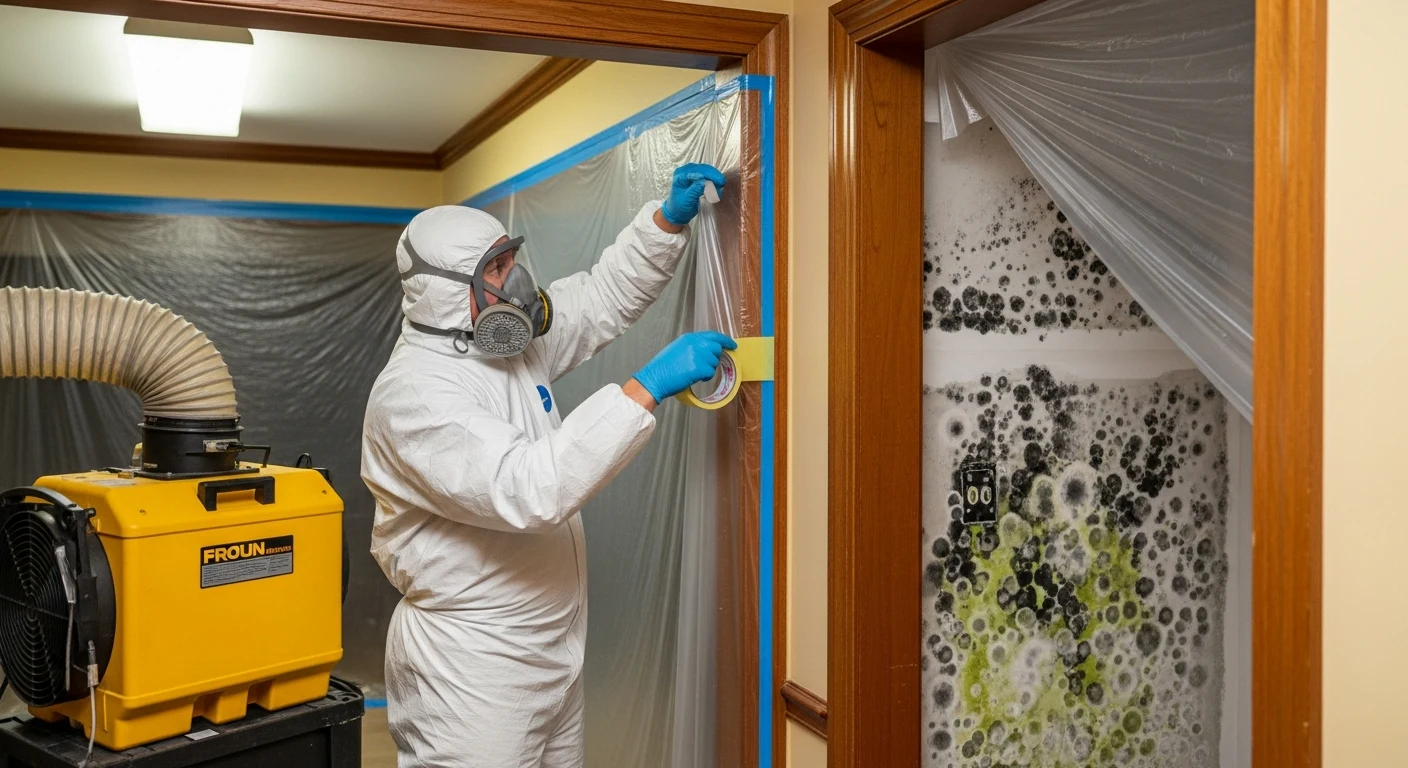
Day 1–2Poly barriers and negative pressure (HEPA air machine) contain the work zone. For crawl space work, we establish barriers at access points and use directional airflow to prevent spore migration into the living space above. For interior rooms, full containment is established before any demolition.
Material Removal
Day 2–3Mold-affected drywall, insulation, vapor barrier, and other porous materials are removed per the written scope. All material is HEPA-vacuumed, bagged, and transported out of the building sealed. In crawl spaces, we remove affected insulation from all joist bays and inspect for structural wood rot at the same time.
Surface Treatment and Air Scrubbing
Day 3–4Structural surfaces — wood joists, framing, CMU block — are HEPA-vacuumed and treated with EPA-registered antimicrobials. HEPA air scrubbers run continuously throughout remediation to reduce airborne spore counts. For crawl spaces, we apply a borate-based or encapsulating treatment to all accessible wood surfaces.
Clearance Verification
Post-remediationFinal moisture readings confirm all surfaces are below mold-favorable thresholds. Where air sampling was included in scope (client request or inspector requirement), we coordinate with an independent industrial hygienist. No job is complete until clearance is confirmed in writing.
Documentation and Recommendations
Project closeComplete written documentation: scope summary, material removal inventory, photos, moisture logs, clearance readings, and specific recommendations for drainage and vapor barrier improvements to prevent recurrence. This is the package your insurer and your contractor need.
Musty smell? Soft floors? Same-day assessment.
(704) 464-0121Cost Guide
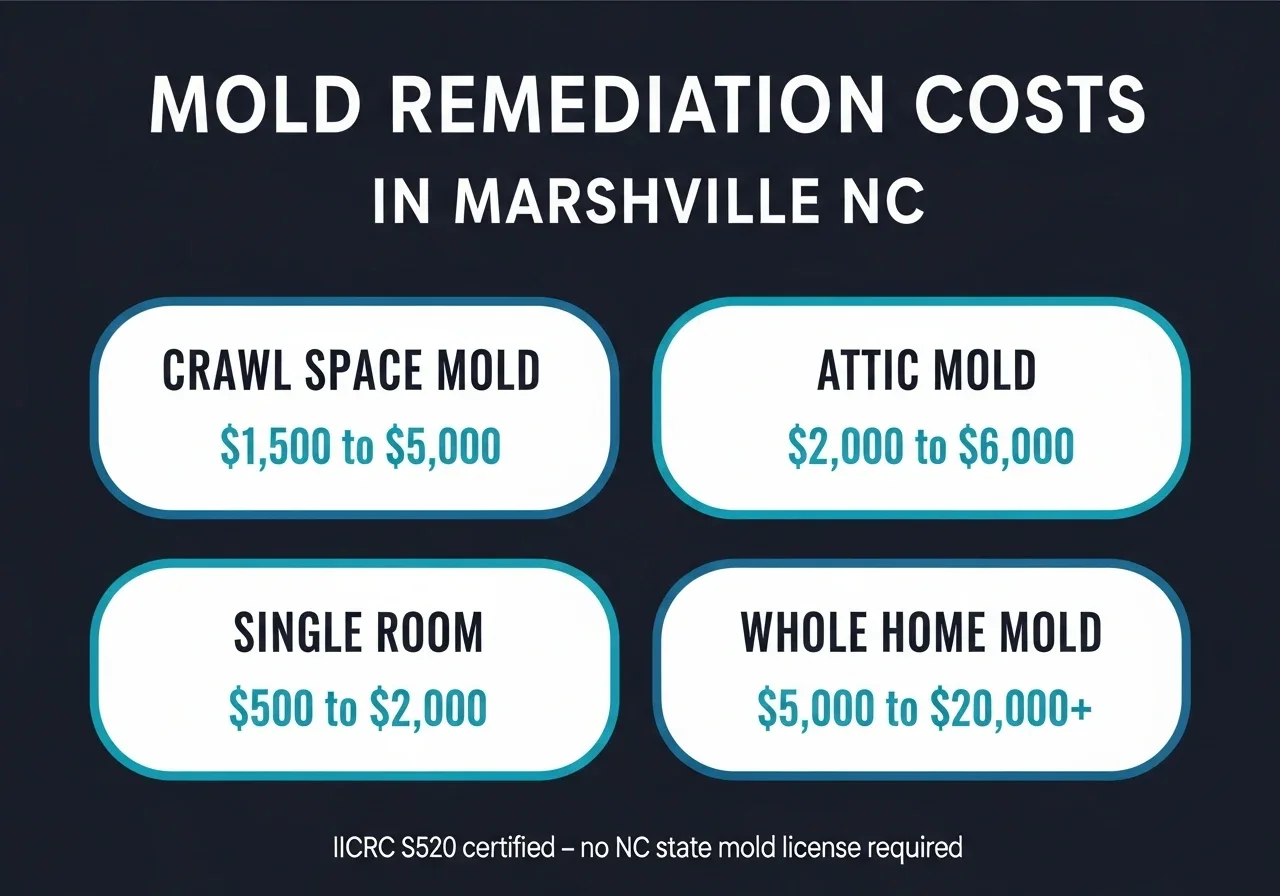
Mold Remediation Costs in Marshville, NC
Crawl space access, clay-soil drying complexity, and the scope of older homes drive Union County mold remediation costs. Here is what to expect.
| Scope | Typical Range | Notes |
|---|---|---|
| Single Room (bathroom, laundry, closet) | $500 – $2,000 | Contained surface mold, limited structural involvement |
| Crawl Space — Insulation Removal & Treatment | $1,500 – $5,000 | Insulation removal, HEPA vacuuming, antimicrobial treatment, vapor barrier |
| Attic Mold Remediation | $2,000 – $6,000 | Roof deck and rafter treatment, ventilation assessment |
| Whole-Home Mold (multiple areas) | $5,000 – $20,000+ | Multiple assemblies, crawl space + interior combined scope |
| Post-Remediation Clearance Testing | $300 – $600 | Independent industrial hygienist air quality sampling — recommended when scope is extensive |
| Crawl Space Vapor Barrier (post-remediation) | $1,500 – $4,500 | Full encapsulation to prevent recurrence — separate from remediation scope |
Note on clearance testing: In NC, there is no mandatory post-remediation air quality test required by law. However, for extensive scopes, multi-room events, or any job where a homeowner wants independent verification, we recommend and coordinate independent air quality sampling through a licensed industrial hygienist. Written estimates provided before work begins. Ranges are Union County market rates for 2026.
Our Work
Mold Remediation in Marshville, NC
From crawl space joist mold to attic colonization, every Marshville mold job follows IICRC S520 protocols from written scope to post-clearance verification.
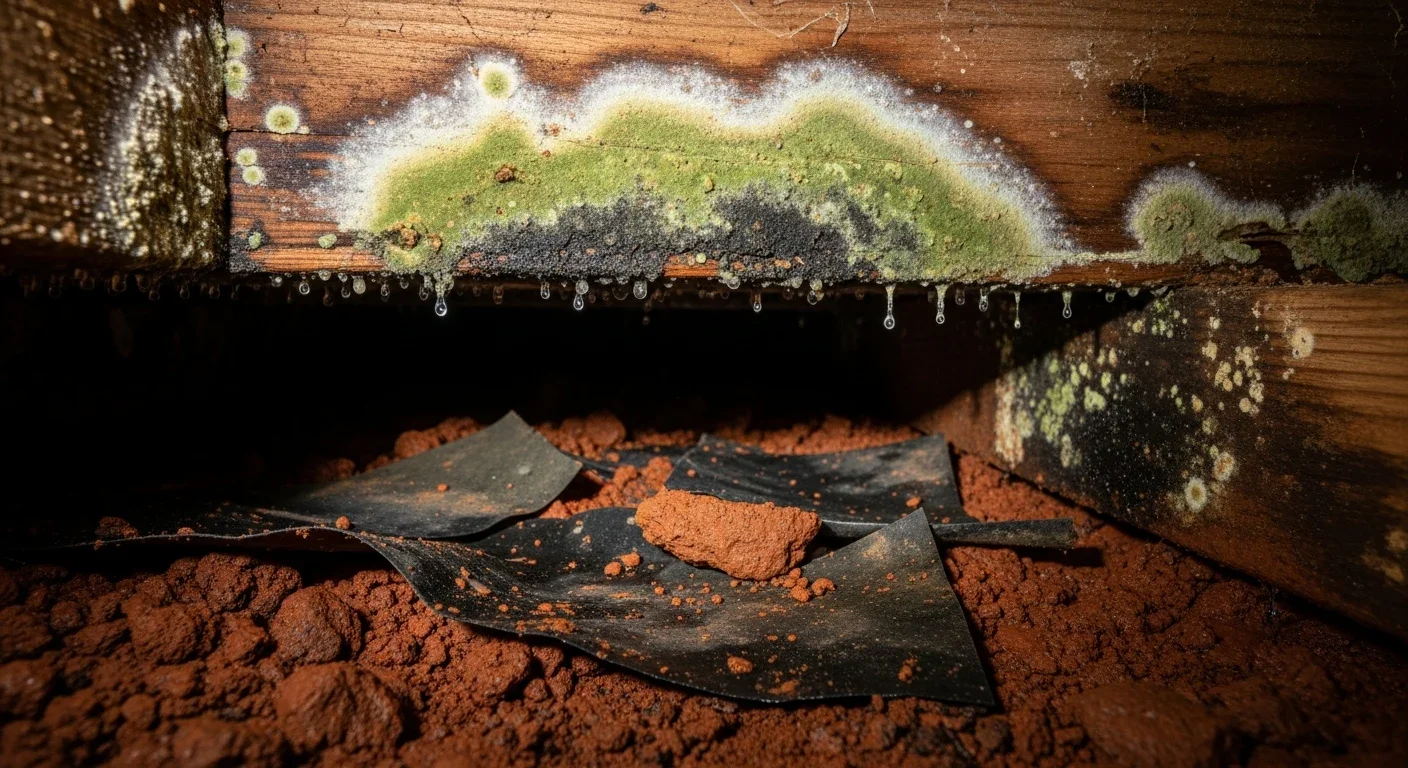
Crawl space joist mold — the most common scenario in Union County
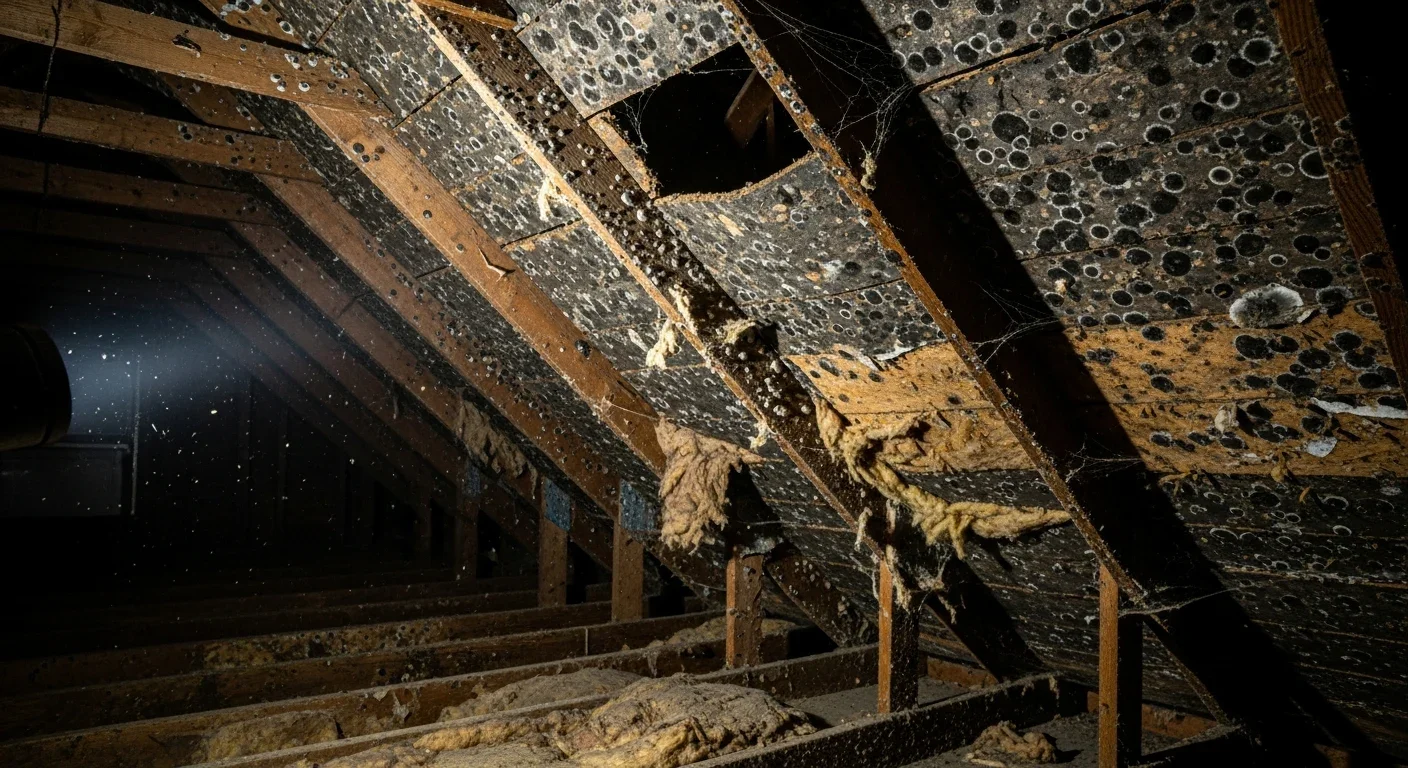
Attic mold from inadequate ventilation in older homes
Professional containment before remediation begins
Why Palm Build
Why Marshville Chooses Palm Build for Mold Remediation
IICRC certified. Crawl space experienced. Written protocols. Root cause documentation. The standard every Union County mold job should be held to.
IICRC S520 Certified
NC has no mold license — which means credentials matter more here than in licensed states. Our IICRC certifications are current, verifiable by ID number, and backed by written protocols on every job.
Crawl Space Specialists
The most common mold scenario in Marshville is crawl space joist mold from Cecil clay soil drainage. We carry the confined-space equipment and protocols this work requires — not repurposed residential cleaning gear.
Root Cause Documentation
We document not just the mold but the moisture source driving it. Our reports flag the drainage, vapor barrier, or ventilation conditions your contractor needs to fix so mold does not return in 18 months.
Written Scope Before Work Begins
Every Palm Build mold job starts with a written scope that defines what gets removed, what gets treated, and how clearance will be verified. No verbal estimates, no scope creep surprises.
Same-Day Assessment Availability
We schedule assessments same-day from our Charlotte hub for Marshville and all of ZIP 28103. If you smell mold this morning, we can assess this afternoon.
Remediation and Rebuild — One Team
When clearance passes, Palm Build handles all reconstruction: drywall, insulation, vapor barrier, flooring. NC GC licensed, all permits handled, same project manager from day one to final walkthrough.
FAQ
Mold Questions from Marshville Homeowners
Answers specific to Union County's crawl spaces, NC credentials landscape, and Piedmont clay soil conditions.
More questions about mold in your Marshville home? Call (704) 464-0121 — same-day assessment available.
Related Resources
More from Palm Build in Marshville & Union County
Water Damage Restoration in Marshville, NC
Mold always follows water. 24/7 emergency water extraction and crawl space drying for Union County homes.
Fire & Smoke Cleanup
Professional fire and smoke damage restoration. Odor elimination, soot removal, and full reconstruction for NC homes.
Full Reconstruction Services
Post-remediation in-house reconstruction. Drywall, insulation, vapor barriers, flooring. NC GC licensed, all permits handled.
Nearby Union County Mold Service Areas
- Mold Remediation — Monroe, NC →
- Mold Remediation — Waxhaw, NC →
- Mold Remediation — Indian Trail, NC →
- Mold Remediation — Charlotte, NC →
Helpful Articles
- Mold Remediation vs. Mold Removal → 11 min read
- Mold Remediation Cost 2026: $1,200–$3,750 → 12 min read
- What Does Mold Remediation Look Like? Step-by-Step → 12 min read