(888) 245-5155
Call Now 24/7
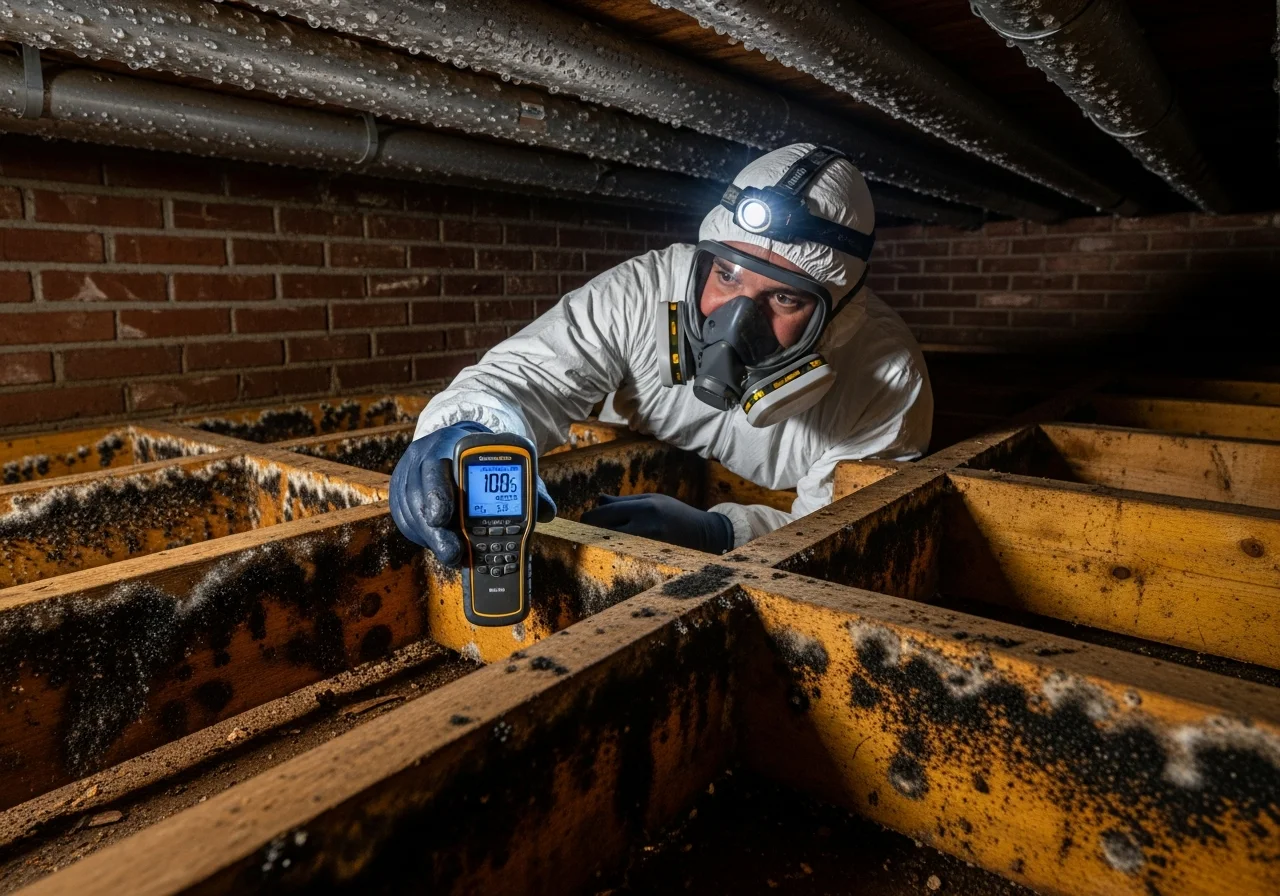
IICRC-certified mold remediation technician inspecting crawl space mold growth beneath a Monroe NC brick ranch home on Piedmont clay soil
MONROE NC — IICRC CERTIFIED MOLD REMEDIATION

Mold Remediation in Monroe, North Carolina

Monroe's Piedmont clay soil, vented crawl spaces, and 47.79 inches of annual rainfall create chronic moisture conditions where mold can begin growing within 2 to 3 days per NC State Extension guidance. Palm Build's IICRC S520-certified team responds from our Charlotte hub in 45-60 minutes with professional containment, remediation, and documentation your insurance carrier accepts.

28 miles from Monroe — Union County 45-60 min Response IICRC Certified

45-60 min

Emergency Response

24/7

Dispatch Available

IICRC

Certified Technicians

Why Mold Thrives Here

Why Monroe Homes Are Prone to Mold

Monroe's combination of Piedmont clay soil, aging crawl space foundations, and a humid subtropical climate creates one of the highest baseline mold risk profiles in the Charlotte metro. NC State Extension confirms mold can begin growing within 2 to 3 days on wet materials — and Monroe's conditions sustain that moisture indefinitely.

Piedmont Clay Soil

Very Slow

Clay drainage rate

Monroe and all of Union County sit atop high-clay subsoils that drain at a fraction of the rate of sandy or loam soils. After a storm, water pools against your foundation for days — sometimes weeks — feeding moisture directly into crawl spaces and creating the sustained dampness mold needs to colonize.
70-90% Summer Humidity

2-3 days

To mold growth

Monroe's humid subtropical climate sustains crawl space moisture well beyond safe thresholds from April through October. NC State Extension confirms mold can begin growing within 2 to 3 days on wet materials — and Monroe's muggy summers compress that timeline further.

71.2% Detached Homes on Crawl Spaces

1987

Median home build year

With a median construction year of 1987 and the largest share of homes built during the 1990s, Monroe's housing stock is dominated by brick ranch homes on vented crawl spaces over clay. These foundations act as chronic moisture factories — warm humid air enters vents, condenses on cooler surfaces, and feeds mold colonies on wood framing.

47.79 Inches Annual Rainfall

47.8 in

Annual rainfall

Monroe receives nearly 48 inches of rain annually, with the heaviest months falling during the hottest period — June through September. Tropical Storm Ian (2022), Tropical Storm Debby (2024), and Winter Storm Fern (2026) all brought flooding that saturated crawl spaces across Union County, triggering mold growth in thousands of homes.

Monroe's Moisture-to-Mold Timeline

Here's what happens after a water event in a Monroe home during summer: Day 1 — moisture saturates building materials. Days 2-3 — mold spores begin germinating on wet surfaces (per NC State Extension). Days 4-7 — visible colonies appear on wood, drywall, and insulation. Week 2+ — structural damage begins as mold digests organic materials. In Monroe's 70-90% summer humidity, the crawl space never dries on its own — making every water event a potential mold event.

Know The Signs

Warning Signs of Mold in Monroe Homes

Mold problems in Monroe rarely announce themselves with dramatic visible colonies first. Instead, they creep into your living space as subtle signs that are easy to dismiss for months — until remediation costs multiply.

Musty Smell or "Basement Odor"

Most Reported

The number-one complaint from Monroe homeowners. Roughly 40% of indoor air in tested homes entered from a vented crawl space. If that air carries mold spores and damp soil odor from Piedmont clay, your living room will smell it too — especially during humid summer months.

Allergy Flare-Ups and Respiratory Issues

Health Risk

When crawl space humidity feeds mold growth, airborne spore counts rise inside your Monroe home. The CDC notes mold exposure can cause nasal stuffiness, throat irritation, coughing, and eye irritation. If symptoms worsen at home but improve when you leave, investigate mold.

Sagging Floors or Bouncy Spots

Structural

When wood moisture content exceeds 19%, it supports mold and decay organisms. In Monroe homes built in the 1980s-1990s, sagging floors often indicate crawl space joist damage from chronic moisture — structural softening means damage is already advanced.

Visible Mold or Discoloration

Advanced

Dark patches on walls, ceilings, or near windows. In Monroe crawl spaces: black or green colonies on floor joists, subfloor panels, and ductwork. If you can see mold, it's advanced — what's visible is often a fraction of the total contamination.

Condensation on Ducts or Pipes

Early Warning

Warm humid air contacting cooler crawl space surfaces hits the dew point. Visible condensation on HVAC ductwork or plumbing means relative humidity is already high enough to actively support mold growth — this is an early warning before colonies become visible.

When to Call Immediately

If you see widespread mold covering more than 10 square feet, structural damage like rotted joists, or standing water in your crawl space — do not attempt DIY cleanup. Contact a certified mold remediation professional at (704) 464-0121 and document everything for your insurance claim.

Monroe's #1 Mold Problem

Crawl Space Mold: The Hidden Crisis Under Monroe Homes

With 71.2% of Monroe homes being detached single-family and a median construction year of 1987, a significant proportion sit on vented crawl spaces directly over Piedmont clay. This creates a chronic moisture factory: during Monroe's humid summers, warm outdoor air enters through foundation vents, contacts cooler crawl space surfaces, and condenses on floor joists, ductwork, and insulation.

North Carolina's building codes now explicitly allow closed (encapsulated) crawl spaces as an alternative, requiring a Class I vapor barrier, mechanical dehumidification, and a mandatory 3-4 inch termite inspection gap. For Monroe homes built in the 1980s and 1990s — Bearskin Place, Benton Acres, Bethany Estates, and the hundreds of brick ranches throughout Union County — encapsulation is often the only permanent solution to chronic crawl space mold.

Crawl space humidity (vented) 70-90% RH
Safe humidity threshold <60% RH
After encapsulation 45-55% RH
Mold growth begins at >60% RH sustained
Monroe Crawl Space Services
Technician inspecting mold growth on floor joists in vented crawl space beneath Monroe NC brick ranch home
Before: Active mold colonies on floor joists and sagging insulation in a vented Monroe crawl space over Piedmont clay
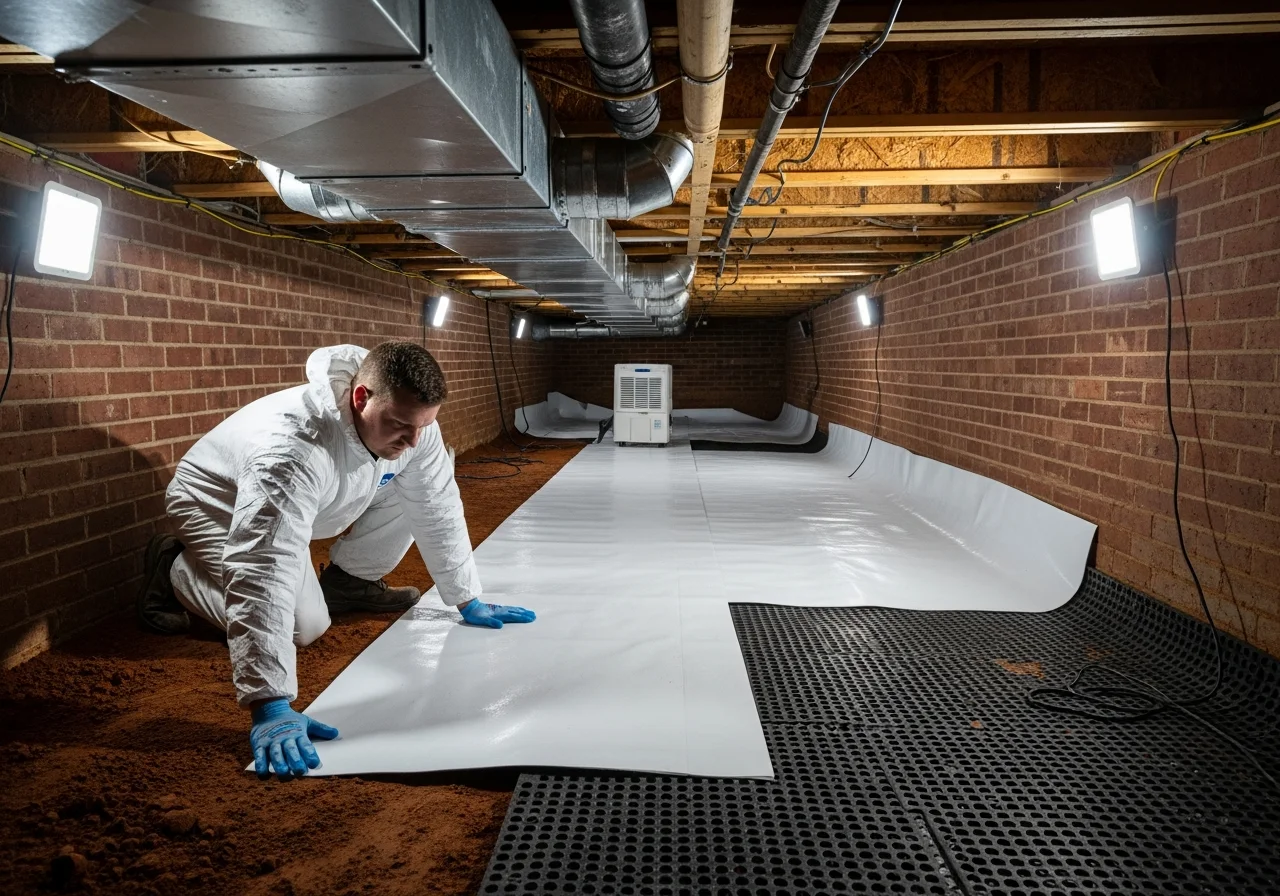
Completed crawl space encapsulation with white vapor barrier and dehumidifier in Monroe NC home
After: Encapsulated crawl space with Class I vapor barrier and mechanical dehumidification — dropping humidity from 70-90% to 45-55% RH
IICRC S520 Protocol

Our Monroe Mold Remediation Process

Professional mold remediation follows a strict sequence defined by the IICRC S520 standard. Here's exactly what happens when Palm Build's certified team arrives at your Monroe home.

01

Assessment & Moisture Mapping

Day 1

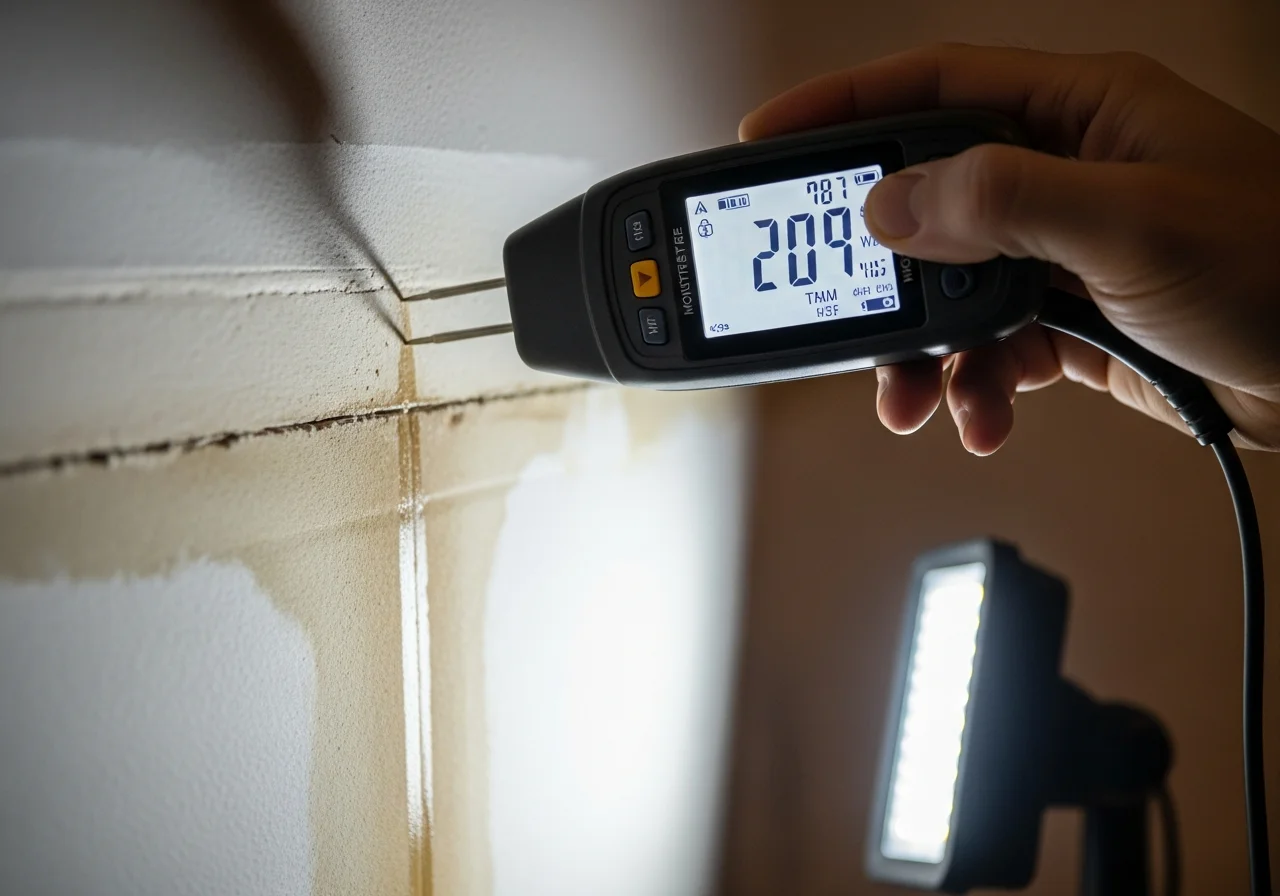
Comprehensive visual inspection, infrared thermal imaging, and pin-type moisture meter readings map exactly where moisture and mold have traveled — behind walls, under flooring, into crawl spaces. We identify the moisture source, not just visible mold, and classify contamination per IICRC S520.

02

Containment Setup

Day 1-2

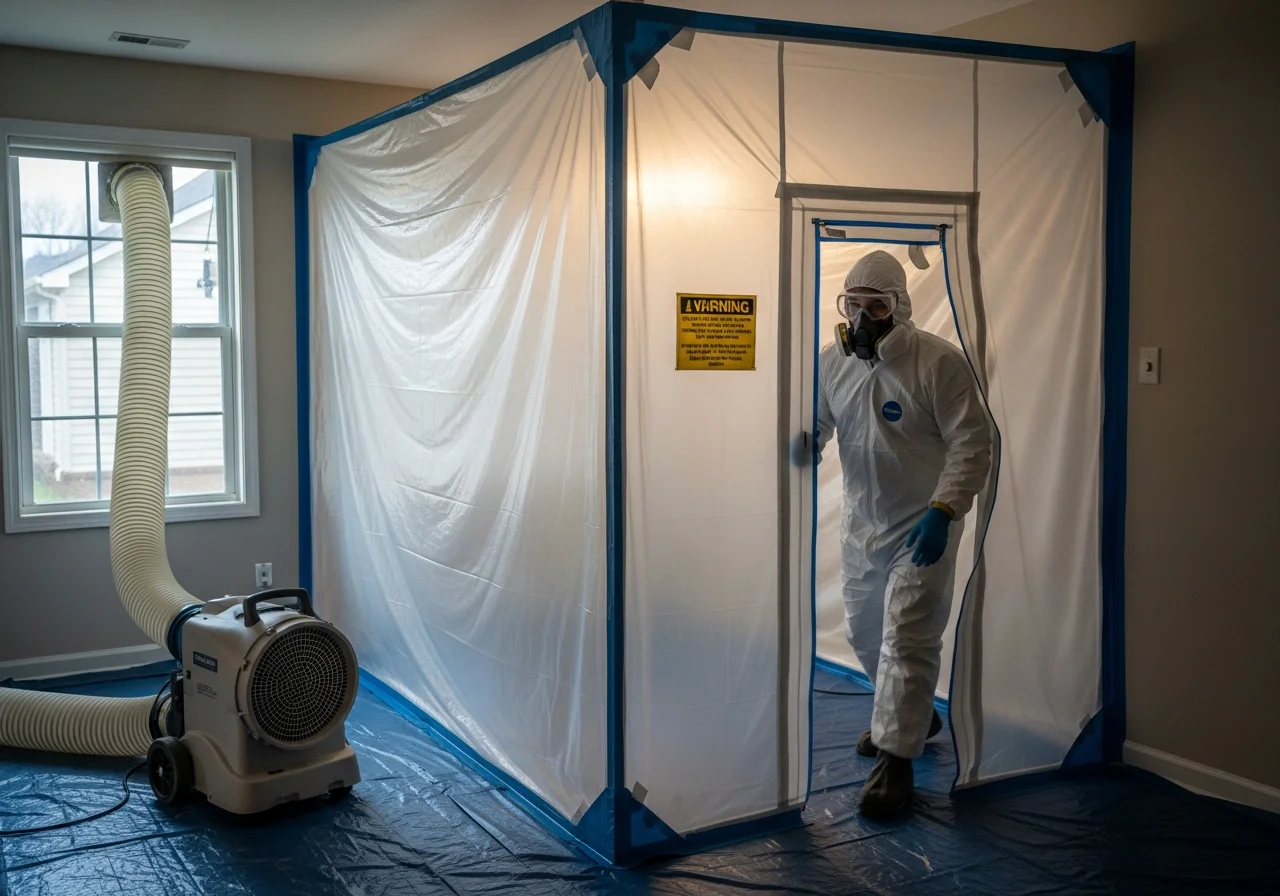
Sealed polyethylene containment barriers isolate affected areas from the rest of your Monroe home. HEPA air scrubbers create negative air pressure to prevent cross-contamination. Critical path materials are protected or relocated.

03

HEPA Air Filtration

Continuous

HEPA filtration runs throughout the entire project, capturing airborne mold spores down to 0.3 microns. This protects both your home and our technicians while maintaining clean air in unaffected areas of your Monroe home.

04

Removal & Cleaning

Days 2-4

Contaminated materials are removed using controlled demolition techniques. Salvageable surfaces are cleaned with HEPA vacuuming, wire brushing, and media blasting as appropriate. Non-salvageable materials are double-bagged for disposal per S520 protocols.

05

Antimicrobial Treatment

Days 4-5

EPA-registered antimicrobial agents are applied to all treated surfaces. For Monroe crawl spaces, this includes joist faces, subfloor panels, and foundation walls. Treatment prevents regrowth during reconstruction.

06

Clearance Verification

Day 5-6

Post-remediation air quality testing confirms spore counts have returned to acceptable levels. We recommend independent third-party clearance testing — not self-verification — to eliminate conflicts of interest. Documentation is provided for your records and insurance.

Professional mold remediation containment barrier with HEPA air scrubber setup in Monroe NC home

Why Containment Matters

Disturbing mold without proper containment sends billions of spores airborne — potentially contaminating previously clean areas of your Monroe home. Our containment protocol ensures mold stays isolated during removal.

1

Sealed Barriers

Polyethylene sheeting floor-to-ceiling

2

Negative Pressure

HEPA scrubbers pull air through containment

3

PPE Protocol

Full Tyvek, respirators, goggles for all crew

4

Decontamination

Air lock entry/exit with HEPA decon chamber

Schedule Mold Assessment

Monroe Pricing

Mold Remediation Costs in Monroe

Costs vary by contamination size, materials affected, and whether crawl space work is needed. NC standard insurance policies often cap mold coverage at $5,000-$10,000 — Monroe crawl space projects frequently exceed this.

Small Area (Under 50 sq ft)

Bathroom, closet, window frame

$1,500 – $5,000

Surface mold with identifiable moisture source. Common around Monroe bathrooms, windows, and utility closets.

Medium Area (50-200 sq ft)

Bedroom wall, utility room, HVAC ductwork

$5,000 – $15,000

Requires containment and material removal. Common from HVAC condensate backups in 1990s-era Monroe homes.

Crawl Space Remediation

Full crawl space, joist treatment, antimicrobial

$8,000 – $20,000

The most common scope in Monroe. Remediation plus encapsulation for permanent moisture control over Piedmont clay.

Whole Home / Structural

Multiple rooms, crawl space, structural repair

$15,000 – $50,000+

Full remediation with reconstruction. Includes encapsulation, joist sistering, drywall replacement, and long-term moisture control.

Insurance Coverage Gap Warning

NC standard homeowner's policies typically cap mold coverage at $5,000-$10,000. The most common mold scope in Monroe — crawl space remediation with encapsulation — starts at $8,000 and frequently exceeds $15,000. Review your policy's mold sublimits before you need them and ask your agent about mold endorsements for expanded coverage.

Our Work

Monroe Mold Remediation: Our Process in Action

Professional mold remediation containment barrier with HEPA air scrubber during remediation in Monroe NC home
Sealed containment with negative air pressure prevents cross-contamination during Monroe mold remediation
Technician inspecting mold growth on floor joists in crawl space beneath Monroe NC brick ranch home
Crawl space inspection reveals mold colonies on joists — common under Monroe homes on Piedmont clay
Completed crawl space encapsulation with white vapor barrier and dehumidifier in Monroe NC home
After: Encapsulated crawl space with permanent moisture control — humidity dropped from 70-90% to 45-55% RH
Moisture meter being used on drywall inside Monroe NC home showing elevated moisture readings indicating hidden mold
Moisture mapping identifies hidden mold behind walls and under flooring before remediation begins

NC Regulatory Landscape

Mold Licensing in North Carolina: What Monroe Homeowners Need to Know

North Carolina has no state-specific mold remediation license requirement. The NC State University Extension Healthy Homes program confirms: "No federal or state certification programs exist for companies or individuals providing mold remediation services."

This means anyone can legally offer mold remediation in Monroe. The accepted industry benchmark is IICRC certification — specifically the BSR-IICRC S520 standard for professional mold remediation procedures and the Mold Remediation Specialist (MRS) certification, which requires verifiable field experience and a proctored examination.

In a market with no state oversight, your only protection is hiring a company with verifiable third-party credentials. Here's exactly what to look for — and what should raise red flags — when hiring a mold remediation company in Monroe.

Verify IICRC S520 certification for any mold company you hire
Ask for MRS (Mold Remediation Specialist) credentials by name
Confirm the company carries full liability insurance and workers' comp
Structural repair after mold removal requires separate NC contractor licensing
Avoid companies that perform both testing AND remediation (conflict of interest)
Get written scope of work before remediation begins — compare to S520 requirements

Palm Build Credentials

  • IICRC S520 certified remediation protocols
  • Mold Remediation Specialist (MRS) certified crew leads
  • Licensed NC general contractor for structural repairs
  • Full liability insurance and workers' comp coverage
  • Independent third-party clearance testing recommended

Red Flags to Watch For

  • No IICRC certification or won't provide proof
  • Offers to "spray and seal" without removing contamination
  • Won't set up containment barriers or HEPA filtration
  • Same company does testing AND remediation (conflict)
  • No written scope of work or refuses to reference S520

Insurance Navigation

Mold Insurance Claims in Monroe

Mold coverage in North Carolina is limited and varies significantly by carrier and policy. With NC insurance premiums increasing in 2025 and 2026, understanding your coverage before you need it can save thousands.

Mold resulting from a covered sudden water event (burst pipe, appliance failure) is typically covered up to policy sublimits

NC standard policies often cap mold coverage at $5,000-$10,000 — Monroe crawl space remediation frequently exceeds this threshold

Mold from gradual moisture, long-term humidity, or chronic crawl space conditions is almost always excluded from standard policies

Pre-existing mold discovered during a renovation, home inspection, or real estate transaction is not covered

Some carriers offer mold endorsements for additional premium — ask your agent about expanded coverage before you need it

When mold results from a covered water loss, our documentation connects mold to the original event for your adjuster

Palm Build's Approach to Mold Claims in Monroe

When mold results from a covered water event, our documentation connects the mold to the original loss — moisture maps, timeline photos, and remediation scope all formatted for the adjuster. Common carriers in the Monroe market include State Farm, NC Farm Bureau, USAA, Allstate, Erie, Nationwide, and Travelers. For non-covered mold, we provide transparent pricing and financing options.

Monroe Insurance Claims Guide

The Palm Build Difference

Why Monroe Homeowners Choose Palm Build for Mold

IICRC S520 Certified

Every crew lead holds current Mold Remediation Specialist (MRS) certification. We follow the S520 standard for containment, removal, and verification — the accepted industry benchmark in a state with no mold licensing requirement.

Monroe Crawl Space Experts

We've remediated crawl spaces across Union County. We understand Piedmont clay, vented vs. encapsulated designs, and the specific mold species common in Monroe's humid subtropical climate.

Root Cause, Not Just Symptoms

We identify and fix the moisture source — not just scrub visible mold. Without addressing the root cause, mold returns within months. This is where most companies fail Monroe homeowners.

Third-Party Clearance Testing

We recommend independent post-remediation verification — not self-testing. This eliminates conflicts of interest and gives you unbiased proof the job was done right.

Full Insurance Documentation

When mold results from a covered water event, our documentation connects the mold to the original loss — moisture maps, timeline photos, and remediation scope all formatted for your adjuster.

Charlotte-Based, Monroe-Ready

We respond to Monroe from our Crompton Street operations hub in 45-60 minutes. Our crews know Union County neighborhoods, soil conditions, and building types — not a franchise running a generic playbook.

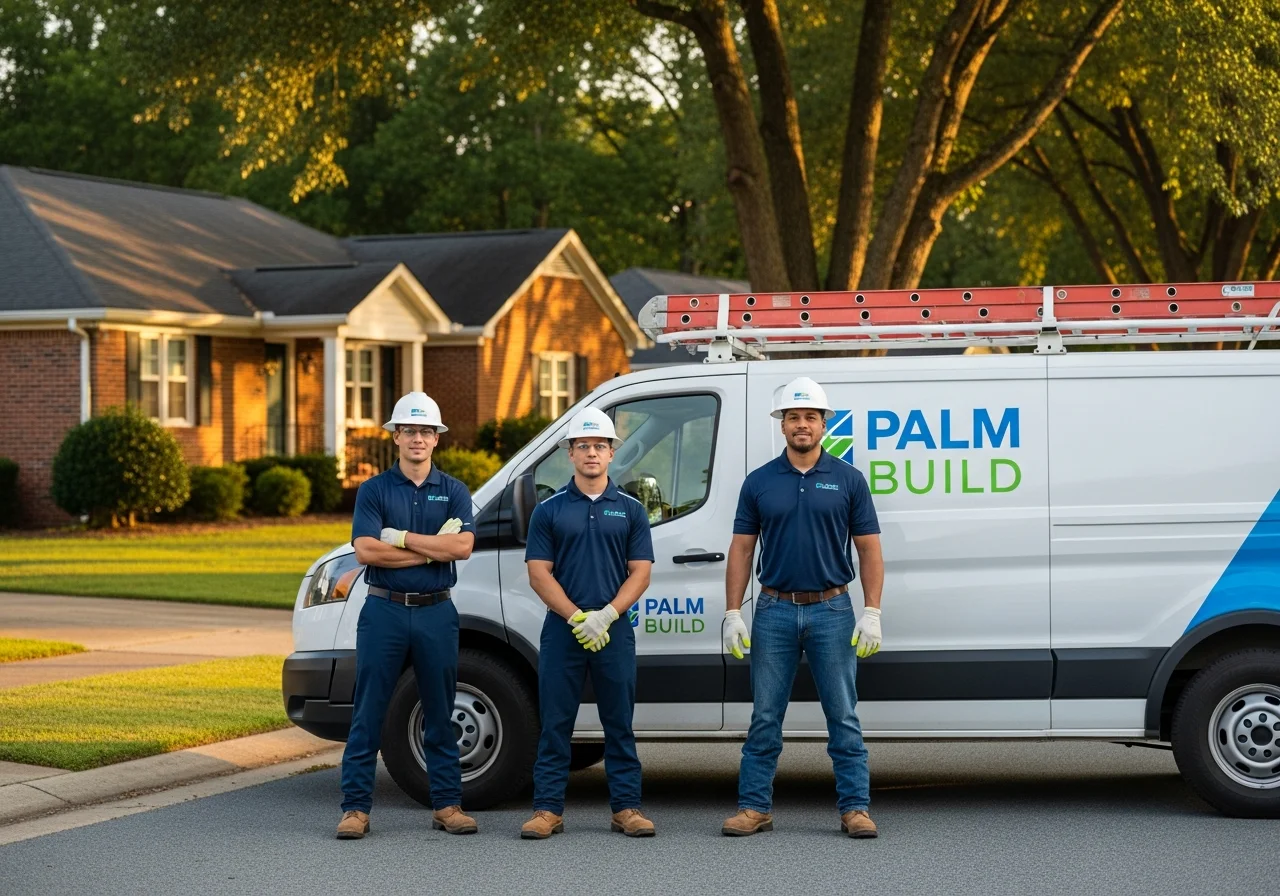
Palm Build restoration team with equipment ready for mold remediation in Monroe North Carolina
Palm Build's IICRC-certified team responds to Monroe from our Charlotte operations hub with professional containment equipment, HEPA filtration, and antimicrobial treatment systems.

Common Questions

Monroe Mold Remediation FAQ

Mold Problem in Your Monroe Home? Get a Professional Assessment.

Don't wait for mold to spread. Palm Build's IICRC S520-certified team responds to Monroe in 45-60 minutes with professional containment, remediation, and documentation your insurance carrier accepts.

45-60 min Response IICRC Certified