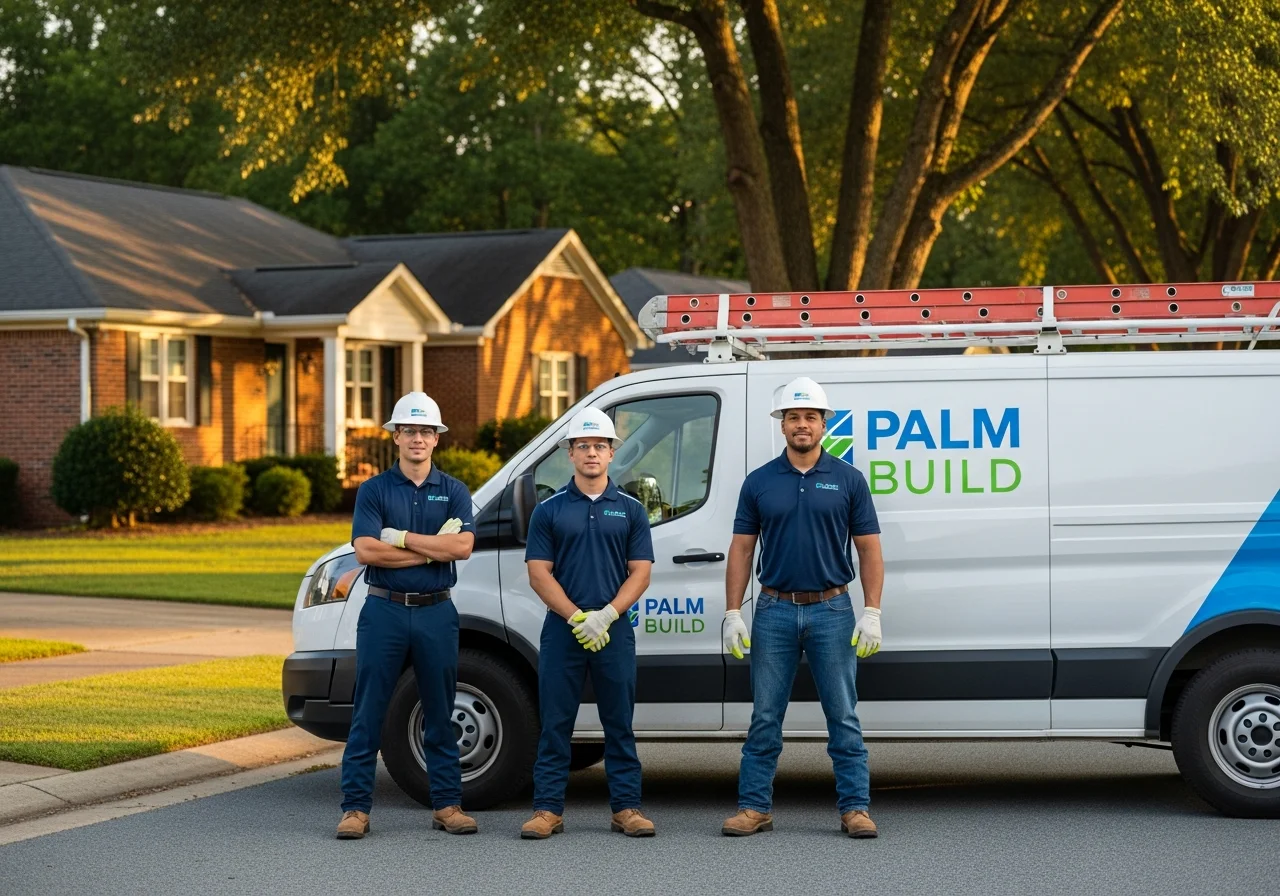
From Monroe's downtown commercial district and Union County government complex to Redwood Monroe's 46-unit multifamily development and the HOA communities lining Highway 74, Palm Build delivers 24/7 commercial restoration with industrial-scale equipment, phased occupancy planning, and insurance documentation — dispatched from our Charlotte operations hub within 45 to 60 minutes.
28 miles from Monroe — Union County 45-60 min Response IICRC Certified
Why Monroe's Commercial Properties Need Specialized Restoration
Monroe is not just a small town south of Charlotte — it is the seat of Union County,
home to a revitalizing downtown district, a growing multifamily market, and the kind of
government infrastructure that demands restoration expertise beyond what residential
contractors can deliver. When water, fire, or storm damage strikes a Monroe commercial
property, revenue loss and public service disruption begin immediately.
Union County Seat & Government District
Est. 1844
County seat
Monroe is the seat of Union County — one of North Carolina's fastest-growing counties with 248,000+ residents. The Union County Courthouse, County Administrative Building, Monroe City Hall, and surrounding government offices represent irreplaceable public infrastructure. When water, fire, or storm damage strikes these buildings, restoration must work around court schedules, preserve critical records, maintain security systems, and navigate government procurement processes that differ from private insurance claims.
Downtown Monroe Commercial District
100+ yrs
Historic building stock
Downtown Monroe's Main Street corridor features early 1900s brick storefronts housing professional offices, restaurants, boutique retail, and service businesses. These shared-wall masonry buildings present unique restoration challenges: water migrates through century-old mortar joints into adjacent tenant spaces, original plumbing runs through shared chases, and flat roof drainage systems serve multiple businesses. A single water event can trigger claims across 3 to 5 connected tenants.
Charlotte-Monroe Executive Airport (EQY)
EQY
Executive airport
Charlotte-Monroe Executive Airport serves corporate and charter aviation with runway operations, FBO facilities, hangars, and surrounding industrial properties. The annual Warbirds Over Monroe event draws significant regional traffic. Airport-adjacent commercial properties along the EQY corridor include industrial flex space, warehouses, and office buildings requiring restoration approaches that account for aviation fuel proximity, FAA compliance zones, and 24/7 operational demands.
Multifamily & HOA Growth Corridor
46 units
Redwood Monroe
Monroe's residential growth has brought significant multifamily and HOA commercial development. Redwood Monroe's 46-unit apartment complex, plus established HOA communities like St Johns Forest, Stonebridge, Crooked Creek Estates, and Cresswind, all have clubhouses, amenity centers, and common structures that require commercial-grade restoration. Water damage in multifamily buildings cascades unit-to-unit through shared walls and floor assemblies.
Monroe's commercial landscape spans Union County government buildings, a historic
downtown district, growing multifamily developments, and established HOA communities —
all requiring specialized commercial restoration expertise.
Downtown Monroe Focus
Downtown Monroe & Union County Government District
Monroe's downtown commercial district is anchored by the Union County Courthouse and
government complex — buildings that serve the public every business day and cannot
simply shut down for restoration. The surrounding Main Street storefronts add
multi-tenant complexity to every commercial loss in this district.
Union County Courthouse Complex
140+ yrs
Courthouse history
The Union County Courthouse has served as the county's judicial center since the 1880s. Restoration in this facility requires working around active court schedules — courtrooms cannot be closed indefinitely without triggering case continuance cascades. We coordinate with county administration to schedule disruptive work during court recesses and weekends while maintaining building security, metal detectors, and controlled access throughout the restoration process.
Government Records Preservation
Priority
Records salvage protocol
Union County government buildings house irreplaceable records — deeds, court filings, tax records, vital statistics — that require specialized document salvage when water damage occurs. Our document recovery protocols include immediate stabilization of wet paper records, freeze-drying for large-volume losses, and digital documentation of damaged items for insurance purposes. Server rooms with digital records require priority drying to prevent data loss.
Downtown Multi-Tenant Restoration
3-5
Tenants typically affected
Main Street's connected storefronts share masonry walls, roof drainage systems, and sometimes HVAC infrastructure. A water event in one tenant space migrates through century-old mortar joints, shared ceiling cavities, and plumbing chases into adjacent businesses. We manage separate documentation for each tenant's insurance carrier while coordinating a unified restoration approach across all affected spaces — keeping unaffected tenants operational.
Historic Building Code Compliance
O&L
Coverage often triggered
Downtown Monroe's pre-code commercial buildings frequently trigger ordinance-and-law requirements when restoration work exposes non-compliant systems. Electrical upgrades, fire suppression additions, ADA accessibility improvements, and structural reinforcement may be required by current NC Building Code even though the original construction predated these standards. We coordinate with Union County building inspections for proper permitting and compliance.
Multifamily & HOA Expertise
Multifamily & HOA Restoration in Monroe
Monroe's growing multifamily market — from Redwood Monroe's 46-unit apartment
development to the clubhouses and amenity centers serving St Johns Forest, Stonebridge,
Crooked Creek Estates, and Cresswind — demands commercial restoration protocols that
prevent unit-to-unit damage spread and manage the multi-policy insurance complexity
unique to these properties.
Unit-to-Unit Cascade Prevention
6-12 units
Typical cascade range
When a burst supply line floods a third-floor apartment, gravity pulls water through floor assemblies, wall cavities, and utility chases into every unit below. Within hours, 6 to 12 units can be affected from a single source event. Our first-response protocol establishes physical containment barriers — polyethylene sheeting, dehumidification zones, and negative air pressure — between affected and unaffected units to stop the cascade before it compounds the loss.
Mass Tenant Coordination
Per-unit
Documentation standard
Multifamily water events displace tenants from their homes — a fundamentally different challenge from restoring an empty commercial space. Each displaced tenant has personal property, pets, medication, and daily schedules that must be accommodated. We coordinate with property management for temporary housing placement, provide individual tenants with their unit's damage documentation for renter's insurance (HO-4) claims, and maintain a communication timeline so residents know when they can return.
Multi-Policy Insurance Complexity
10+
Simultaneous claims possible
A single multifamily water event triggers multiple simultaneous insurance claims: the property owner's master commercial policy covers the structure and common areas, individual unit owners may carry HO-6 condo policies, renters carry HO-4 policies for personal property, and the property management company may have its own errors and omissions coverage. Palm Build creates separate documentation packages for each carrier from day one — different adjusters, different coverage limits, different documentation standards.
HOA Community Structures
4+ HOAs
Monroe communities served
St Johns Forest, Stonebridge, Crooked Creek Estates, and Cresswind each have clubhouses, pool buildings, fitness centers, and common structures that qualify as commercial property. HOA restoration involves unique governance requirements: board approval for work exceeding maintenance thresholds, reserve fund authorization, competitive bid requirements in some governing documents, and member communication obligations. We present scope and documentation in formats designed for board review and homeowner meetings.
Redwood Monroe — 46-Unit Case Study: A burst supply line on an upper floor of a 46-unit apartment building can affect a quarter
of the building within hours. Our multifamily response protocol deploys simultaneous containment
and drying across all affected units while establishing individual documentation trails
per unit — because the property owner's master policy, each renter's HO-4 policy, and the
management company's coverage all have different adjusters, different deductibles, and different
documentation requirements.
Damage Categories
Types of Commercial Damage in Monroe
Monroe's commercial properties face four primary damage categories — each with specific
scenarios tied to the city's government district, historic downtown, multifamily growth,
and Piedmont storm exposure. Palm Build handles all four with IICRC-certified protocols
and commercial-scale equipment.
Commercial Water Damage
Multifamily Unit-to-Unit Flooding
A burst supply line on an upper floor of Redwood Monroe or any multifamily building cascades through shared wall assemblies, floor systems, and utility chases into 6 to 12 adjacent units within hours. Each unit requires individual documentation for separate insurance claims while drying must be coordinated across all affected spaces simultaneously.
Government Building Water Events
Aging plumbing in Union County government buildings — some with original infrastructure from the mid-1900s — creates burst pipe and HVAC condensate risks that threaten courtroom records, server rooms, and security systems. Government building restoration requires working around court schedules and maintaining public access to services.
Downtown Flat Roof Failures
Monroe's downtown Main Street storefronts share flat roof drainage systems that pond water at low spots. Over decades, membranes degrade until leaks develop and water migrates laterally through shared ceiling cavities across multiple tenant bays before detection — requiring multi-tenant coordination.
HOA Common Area Flooding
Clubhouse HVAC systems, pool equipment failures, and stormwater drainage issues at St Johns Forest, Stonebridge, and Crooked Creek Estates create water damage in amenity centers that serves the entire community. HOA restoration involves board approval processes and reserve fund coordination.
Commercial Fire & Smoke Damage
Restaurant Kitchen Fires
Downtown Monroe and Highway 74 corridor restaurants face elevated grease fire risk. Fire suppression activation causes secondary water damage throughout the kitchen and into adjacent spaces. Union County health department reinspection is required before food service can resume.
Electrical Panel Fires in Older Buildings
Downtown Monroe's early 1900s commercial buildings often have electrical systems that have been upgraded in stages over decades. Overloaded panels and aging wiring create fire risk. Electrical fires produce toxic synthetic smoke that penetrates every surface through shared HVAC ductwork.
Multi-Tenant Smoke Migration
Smoke from a fire in one downtown Monroe storefront migrates through shared ceiling plenums, HVAC returns, and wall penetrations into every connected space. Adjacent businesses may suffer smoke damage exceeding the fire-origin tenant — each requiring separate insurance documentation.
Commercial Mold Damage
Chronic Moisture in Historic Buildings
Downtown Monroe's masonry buildings trap moisture in wall cavities where it feeds mold growth for months before visible signs appear. Monroe's Piedmont clay soil compounds the problem by holding moisture against foundations, creating chronic crawl space conditions that push humidity upward into commercial spaces.
Post-Water-Event Mold Growth
Any commercial water event not dried within 48 to 72 hours produces mold growth in North Carolina's humid climate. Incomplete drying in multifamily wall cavities and above commercial ceiling tiles creates hidden mold colonies that manifest weeks later as a much larger remediation project.
HVAC System Mold Contamination
Commercial HVAC systems running 8 to 10 months per year create persistent moisture in air handlers, ductwork, and supply registers. Mold in HVAC systems distributes spores to every occupied room — remediation must include full ductwork decontamination and often replacement of insulated flex duct.
Commercial Storm & Wind Damage
Severe Thunderstorm Damage
Monroe receives 47.8 inches of annual rainfall with the heaviest storms in August and September. Severe thunderstorms bring hail that damages commercial roofing, wind that compromises storefronts and signage, and torrential rain that overwhelms flat roof drainage systems on downtown buildings and Highway 74 strip centers.
Tropical Storm Remnants
Union County has declared states of emergency for tropical storm remnants including Tropical Storm Debby (August 2024). Richardson Creek and area drainage corridors flood, and wind-driven rain penetrates commercial building envelopes that withstood routine storms. Extended power outages damage refrigerated inventory and disrupt security systems.
HOA Community Storm Damage
HOA communities like Crooked Creek Estates sit near drainage corridors with elevated flood exposure. Storm damage to clubhouses, pool structures, and common areas requires coordinated restoration through HOA governance processes — board votes, reserve fund authorization, and member communication.
Monroe Commercial Process
Our Monroe Commercial Restoration Process
Commercial restoration in Monroe requires larger equipment, faster timelines, and
multi-stakeholder coordination — from Union County government buildings to multifamily
complexes to downtown retail.
01
Rapid Emergency Response
Hours 1-4
Call (704) 464-0121 any time — day, night, weekend, or holiday. Our commercial team dispatches from the Charlotte hub and reaches Monroe within 45 to 60 minutes via Highway 74 or I-485 to US-601. Truck-mounted extractors, industrial dehumidifiers, and large-format air scrubbers arrive ready to deploy. For multifamily properties, we immediately establish containment barriers between affected and unaffected units to prevent cascade damage.
02
Commercial Damage Assessment
Days 1-3
Comprehensive documentation using thermal imaging, moisture mapping, and space-by-space photography. For downtown Monroe's older buildings, we map moisture migration through shared masonry walls and aged plumbing chases. For multifamily complexes, we assess unit-by-unit damage with separate documentation per unit for individual insurance claims. For government buildings, we prioritize records rooms and server infrastructure.
03
Mitigation & Active Restoration
Days 1-14
Industrial-scale water extraction, structural drying, soot removal, mold containment, or debris clearing depending on loss type. For Monroe commercial properties, we deploy during off-hours when possible — nights and weekends for retail and restaurant tenants, non-court hours for government buildings. Daily progress reports to property managers, owners, and insurance adjusters.
04
Stakeholder Coordination
Weeks 1-4
Commercial projects involve property owners, tenants, property managers, commercial insurers, HOA boards, and Union County inspectors. We manage all stakeholder communication, provide separate documentation packages per carrier, and coordinate restoration scheduling across all parties. For multifamily properties, we coordinate tenant relocation and personal property documentation with property management.
05
Code-Compliant Reconstruction
Weeks 2-12
Full commercial reconstruction including tenant improvements, ADA compliance, fire code compliance, and building code upgrades. We handle Union County building permits and City of Monroe inspections in-house. For downtown historic buildings, we manage ordinance-and-law upgrades required when restoration work on pre-code buildings triggers current NC Building Code standards.
06
Final Inspection & Reopening
Project Completion
All regulatory inspections completed through Union County. Certificate of occupancy confirmed. Business reopening coordination with tenants and property management. For government buildings, final acceptance through county facilities management. Complete documentation package provided for claim closeout including business interruption timeline evidence and extra expense documentation.
Minimizing Downtime
How Palm Build Keeps Monroe Businesses Running During Restoration
Every hour of commercial downtime costs money — and for Monroe's government buildings,
downtown businesses, and multifamily properties, extended closure means lost revenue,
displaced residents, and disrupted public services. Our business continuity approach is
designed to keep your doors open while we restore.
Phased Restoration
60-80%
Operations maintained
We divide commercial spaces into restoration zones, completing one area while others remain operational. For multi-tenant downtown Monroe properties, this means unaffected tenants stay open while we restore damaged sections. For multifamily complexes, we phase unit restoration to minimize the number of displaced residents at any given time — rotating families back into restored units as new units enter the drying phase.
After-Hours & Weekend Work
18+ hrs/day
Available work window
Downtown Monroe restaurants and retailers cannot afford daytime disruption. Union County government offices require public access during business hours. We routinely perform demolition, drying, and reconstruction during overnight hours, weekends, and court recesses. Our crews are equipped for self-contained night operations — generator power, portable lighting, and quiet-mode equipment for adjacent occupied spaces.
Temporary Systems
24-48 hrs
Temporary system deployment
When permanent HVAC, plumbing, or electrical systems are compromised, we deploy temporary solutions that keep businesses operational during restoration. Portable HVAC for climate control in government offices, temporary water supply for restaurant kitchens, backup power for server rooms, and temporary barriers that maintain customer-facing appearance while concealing active restoration work behind the scenes.
Priority Scheduling
Revenue-first
Scheduling priority
Not all commercial spaces lose revenue equally. A downtown Monroe restaurant that closes on a Friday evening loses its highest-revenue service of the week. A Union County courtroom that cannot open Monday morning triggers case continuances with cascading legal consequences. We build restoration schedules around your revenue calendar and operational requirements — prioritizing the spaces that cost you the most per hour of downtime.
Commercial property insurance operates differently than residential coverage. Monroe's
mix of government properties, downtown storefronts, multifamily complexes, and HOA
structures each involve different policy types and claims processes. Palm Build's
commercial team understands these differences and builds Xactimate documentation around
proper separation of building, BPP, and BI components for every Union County commercial
carrier.
Building coverage vs. Business Personal Property (BPP) — commercial policies split these into separate coverages with separate limits and deductibles
Business Interruption (BI) / Loss of Income — covers lost revenue during the restoration period, but requires detailed documentation of the interruption timeline and financial impact
Extra Expense coverage — pays for temporary relocation, expedited restoration, and other costs incurred to minimize the interruption period
Ordinance or Law coverage — critical for downtown Monroe's pre-code commercial buildings where restoration triggers electrical, fire suppression, or ADA upgrades to current NC Building Code
Equipment Breakdown — covers mechanical, electrical, and pressure equipment failure that causes property damage (separate from standard property coverage)
Multifamily master policy vs. unit policies — property owner's commercial policy covers structure and common areas, while individual HO-6 or HO-4 policies cover unit contents and personal property
Flood exclusion — standard commercial property policies exclude flood damage from rising water, including Richardson Creek flooding — separate flood policy required
Coinsurance penalties — commercial policies with coinsurance clauses can reduce claim payments if the property is underinsured at the time of loss
Palm Build prepares commercial damage documentation in Xactimate format — the industry
standard for commercial claims processing. Our scopes separate building damage from
contents damage, document business interruption timelines, and include the photographic
and moisture-mapping evidence that commercial adjusters require. For multifamily
properties, we create separate documentation packages per unit and per carrier from day
one. We work directly with your carrier's commercial adjuster from the first inspection
through final settlement.
Our Work in Monroe
Monroe Commercial Restoration Gallery
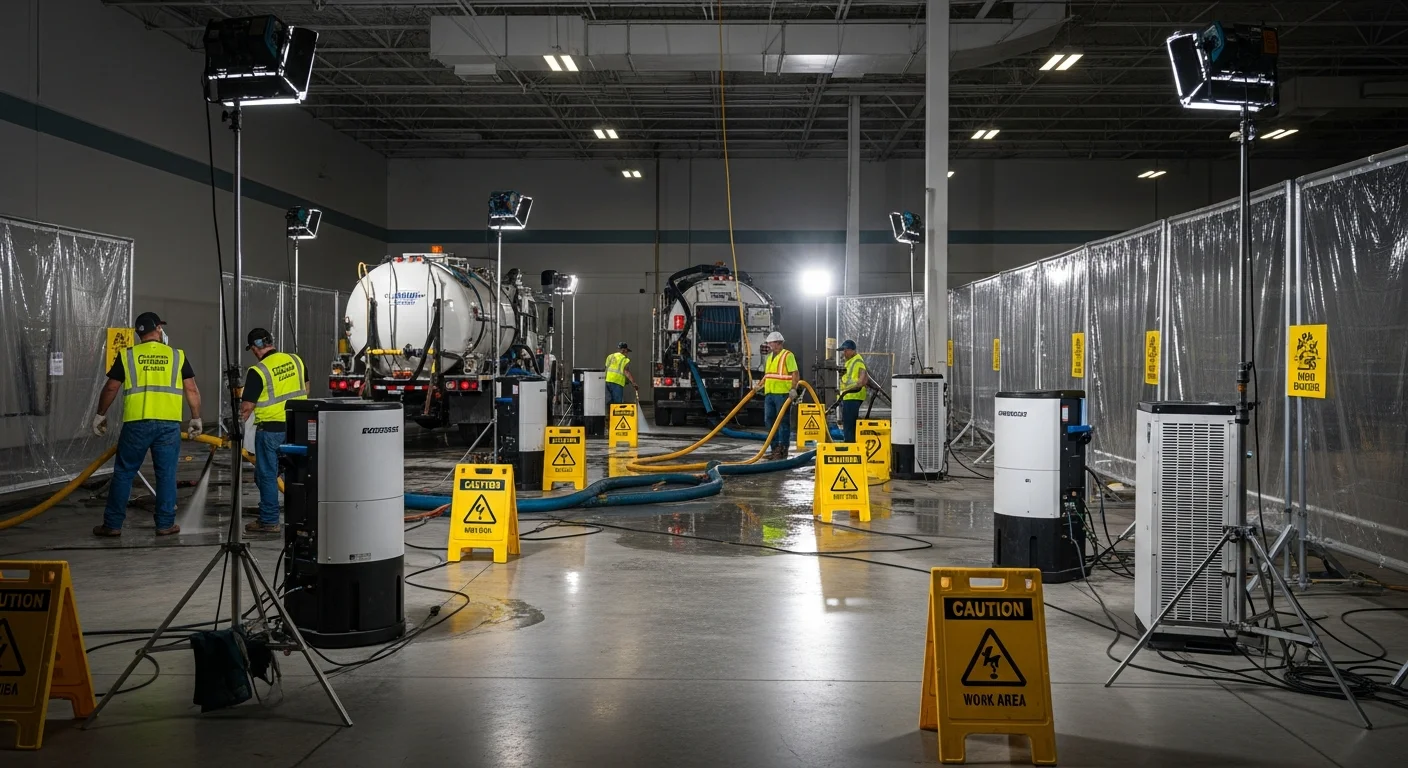
Commercial restoration deployment in Monroe — industrial-scale equipment and NC-licensed crews ready for any commercial property type in Union County.
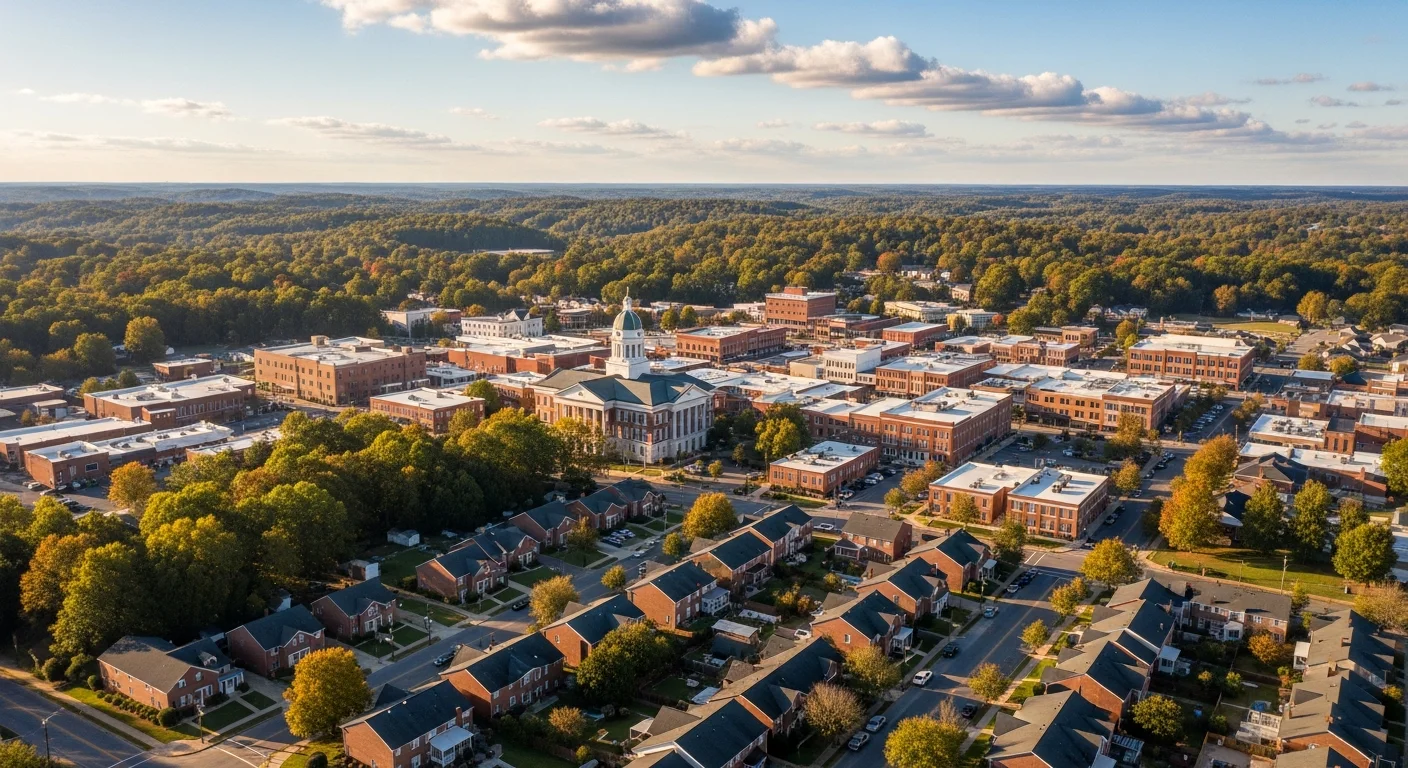
Downtown Monroe's commercial district — the Union County seat with government buildings, historic storefronts, and professional offices requiring specialized restoration.
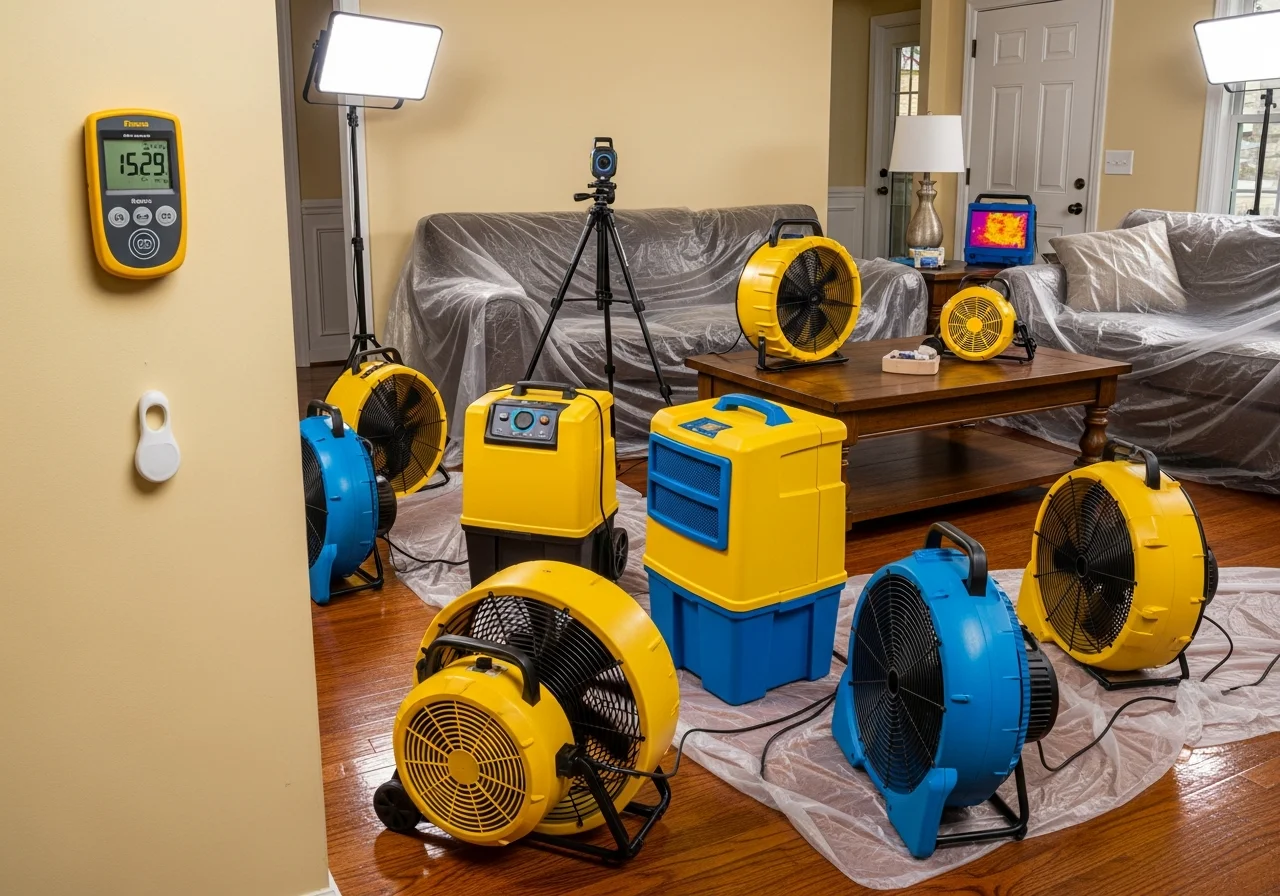
Industrial drying equipment matched to your commercial building's volume and construction type — from downtown masonry to modern multifamily construction.
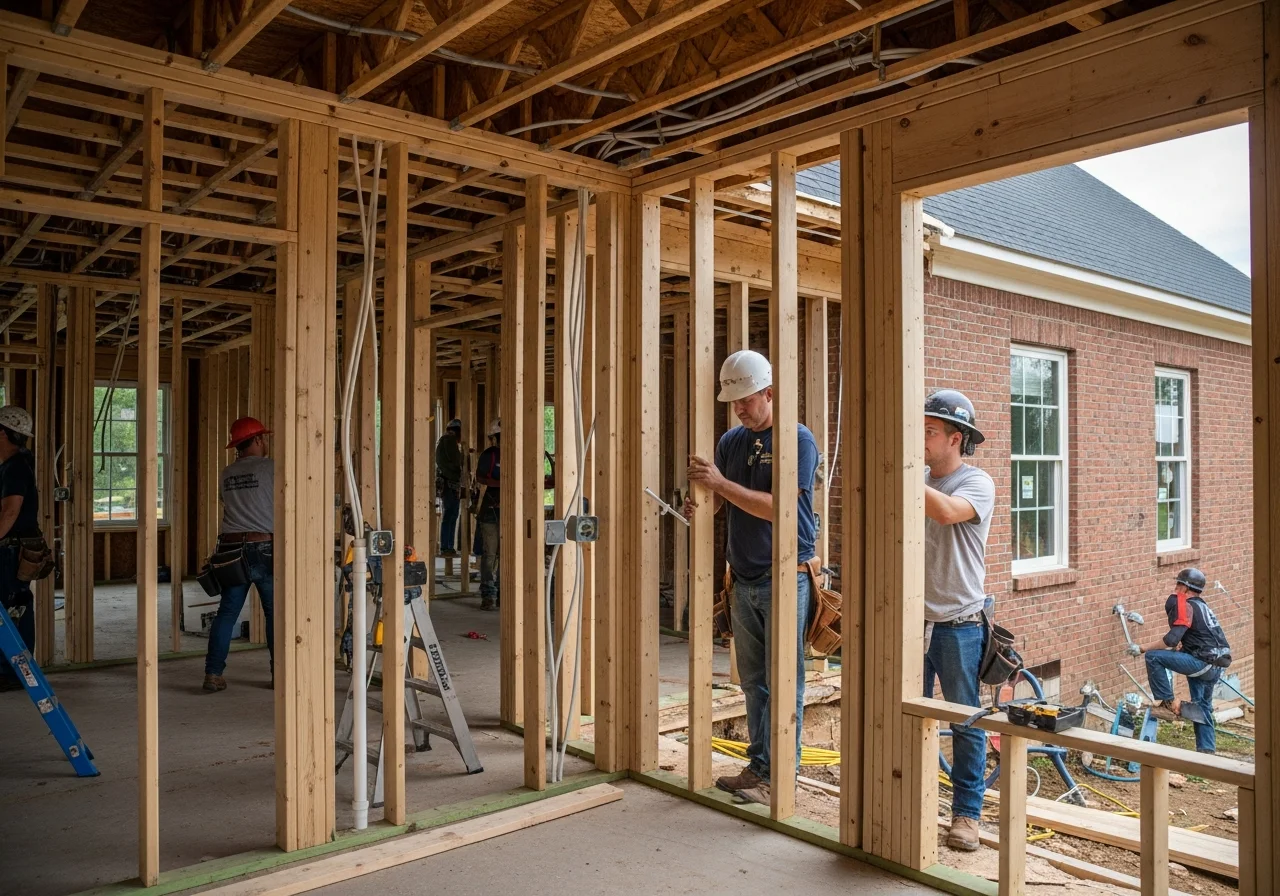
Commercial reconstruction and build-back — NC general contractor licensed for projects exceeding $30,000 with Union County permitting expertise.
The Palm Build Difference
Why Monroe Businesses Choose Palm Build
National franchises treat commercial restoration as residential work at a bigger scale.
It is not. Monroe commercial projects require Union County permit navigation, government
building protocols, multifamily cascade prevention, and multi-carrier insurance
coordination that only specialized commercial experience can deliver.
1
24/7 Commercial Emergency Response
Our Charlotte hub dispatches commercial-scale equipment to any Monroe address within 45 to 60 minutes — day or night, weekends and holidays. For major commercial losses, we activate additional crews from our Florida operations center. When a multifamily complex has a burst supply line at 2 AM or a downtown storefront floods overnight, we are on-site before dawn with truck-mounted extractors and industrial dehumidifiers.
2
Large-Scale Commercial Capability
We maintain equipment inventory for simultaneous large commercial projects — not just one truck and a handful of residential dehumidifiers. Industrial extractors, commercial air scrubbers, large-format containment systems, and crews trained for multi-story commercial buildings and multifamily complexes. From a single Monroe office suite to a 46-unit apartment building, we scale to match the scope.
3
Union County Permit Expertise
Commercial restoration in Monroe requires navigating Union County building permits and City of Monroe inspections. We handle permit applications, inspections, and compliance documentation in-house, keeping your project on schedule without administrative bottlenecks. For downtown historic buildings, we manage the additional ordinance-and-law requirements triggered when restoration exposes pre-code systems.
4
Multi-Carrier Insurance Coordination
Commercial properties often involve multiple insurance policies — building policy, tenant policies, business interruption, equipment breakdown, and umbrella coverage. For multifamily properties, add master policies, HO-6 unit owner policies, and HO-4 renter policies to the mix. We format documentation for commercial adjusters, provide separate scope packages per carrier, and coordinate supplement approvals across all parties.
5
Business Interruption Documentation
Your commercial policy likely includes BI coverage that pays for lost revenue during restoration — but only what you can prove. Our daily progress reports, milestone documentation, and phased occupancy tracking create the evidence trail commercial adjusters need. We also document extra expense items — temporary relocation, expedited equipment, overtime labor — that are covered but often go unclaimed.
6
Multifamily & HOA Specialization
Monroe's growing multifamily market and established HOA communities require restoration protocols specific to shared-structure properties. Unit-to-unit containment, mass tenant displacement coordination, per-unit documentation, HOA board presentation packages, and reserve fund accounting formats. We understand that multifamily and HOA restoration involves governance processes that standard commercial contractors do not navigate.
Common Questions
Monroe Commercial Restoration FAQ
How quickly can Palm Build respond to a commercial emergency in Monroe?
Our Charlotte operations hub on Crompton Street is approximately 28 miles from Monroe, putting our commercial team on-site within 45 to 60 minutes via Highway 74 or I-485 to US-601 for most emergencies. For large-scale losses — a water event at a multifamily complex, storm damage to downtown buildings, or a fire at a Highway 74 retail center — we activate our catastrophic response protocol with additional crews and industrial-scale equipment. Commercial damage costs revenue by the hour, and our response time reflects that urgency.
Can you handle restoration at multifamily apartment complexes like Redwood Monroe?
Yes. Multifamily restoration is among our core commercial capabilities. A water event in one unit can cascade through shared walls, floor assemblies, and utility chases into 6 to 12 adjacent units within hours. Our multifamily protocols include unit-to-unit containment barriers, simultaneous drying across multiple units, individual documentation per unit for separate insurance claims, and tenant relocation coordination with property management. We work with the property owner's master policy, individual unit policies, and renter's insurance simultaneously.
How do you handle government building restoration in Monroe?
Government buildings in Monroe's courthouse district require restoration approaches that account for public safety requirements, records preservation, security protocols, and procurement processes. Courtrooms cannot close indefinitely without triggering case continuances. Records rooms contain irreplaceable documents. We coordinate with Union County facilities management, work around court schedules, deploy document salvage teams for critical records, and maintain security infrastructure throughout the restoration process.
What types of commercial properties does Palm Build restore in Monroe?
We restore all commercial property types in Monroe including Union County government buildings, downtown retail and office spaces, multifamily apartment complexes, HOA clubhouses and amenity centers, Highway 74 corridor retail and restaurants, medical and dental offices, churches and houses of worship, Charlotte-Monroe Executive Airport properties, and industrial and warehouse facilities. Each property type has specific regulatory, safety, and operational requirements that inform our restoration approach.
Can you work around business hours and court schedules?
Yes. We routinely perform commercial restoration during off-hours — nights, weekends, and holidays — to minimize disruption to business operations. For downtown Monroe courthouse district properties, we coordinate with county administration and court schedules to perform noisy or disruptive work during non-court hours. For retail and restaurant tenants, we phase work to keep portions of the space operational during business hours. Our scheduling flexibility is a core part of minimizing your business interruption.
Do you handle HOA clubhouse and amenity center restoration?
Yes. Monroe's HOA communities — St Johns Forest, Stonebridge, Crooked Creek Estates, Cresswind — have clubhouses, pools, fitness centers, and common structures that qualify as commercial property. HOA restoration involves board approval processes, reserve fund considerations, and member communication requirements that differ from standard commercial work. We work directly with HOA boards and property management companies, providing documentation formatted for board presentations and reserve fund accounting.
Do you work with commercial insurance policies?
Yes. Commercial property policies — BOP, CP, specialty forms — have different coverage structures than residential homeowners policies. We understand commercial coverage including building vs. contents, business personal property, business interruption, extra expense, ordinance-and-law, and equipment breakdown coverage. For multifamily properties, we manage documentation across master policies, individual unit policies, and renter's insurance simultaneously. Our Xactimate estimates are formatted for commercial claims processing.
What about restoring Monroe's historic downtown buildings?
Downtown Monroe's commercial buildings — many dating from the early 1900s through the 1960s — present restoration challenges similar to adaptive-reuse buildings in other historic districts. Shared masonry walls require controlled drying to protect century-old mortar joints. Original plumbing and electrical integrated with modern upgrades create complex restoration scopes. Ordinance-and-law coverage is frequently triggered when restoration work on these pre-code buildings requires upgrades to current NC Building Code standards. Our teams are experienced with historic commercial buildings where original materials and modern systems coexist.
Commercial Damage in Monroe? Every Hour Closed Costs Revenue.
Palm Build's commercial restoration team dispatches from Charlotte in 45-60 minutes with industrial-scale equipment, NC-licensed crews, and a phased restoration plan built to minimize business interruption. From Union County government buildings to downtown retail to multifamily complexes — we restore it all. Nights, weekends, holidays.