Quick Answer
A "large loss" is defined primarily by scope, not just a dollar amount — though many carriers and restoration firms treat losses around $500K or more as large-loss territory. What actually triggers the designation is multi-building or multi-unit impact, a volume of damage that exceeds what a standard crew can manage, or a claim requiring dedicated program management, TPA (Third Party Administrator) coordination, and catastrophe-rated equipment. In South Florida, hurricane events, storm surge, and large commercial or multifamily building fires are the most common triggers. Once a claim reaches that threshold, the response model changes entirely: CAT crews, project managers, and adjuster-aligned documentation protocols replace the standard one-crew, one-job approach.
Key takeaways
- Large loss is defined by scope — multi-building impact, CAT-crew requirements, and TPA coordination — not by a single hard dollar cutoff, though losses around $500K+ often cross the threshold.
- South Florida's HVHZ designation (Broward + Miami-Dade, design wind speeds ~170–175 mph) means hurricane-driven large losses here are among the most complex in the country.
- The response model for a large loss is fundamentally different: CAT-rated equipment fleets, dedicated project managers, TPA liaison roles, and Xactimate supplement documentation replace the standard single-crew approach.
- Multi-unit residential properties — HOA communities, condos, and apartment complexes — are one of the most common large-loss scenarios in Broward County because a single storm event can simultaneously damage dozens of units.
- Speed of activation matters: carriers and TPAs recognize restoration firms that can pre-stage equipment and mobilize within hours, which is why large-loss networks and CAT programs exist separately from routine residential work.
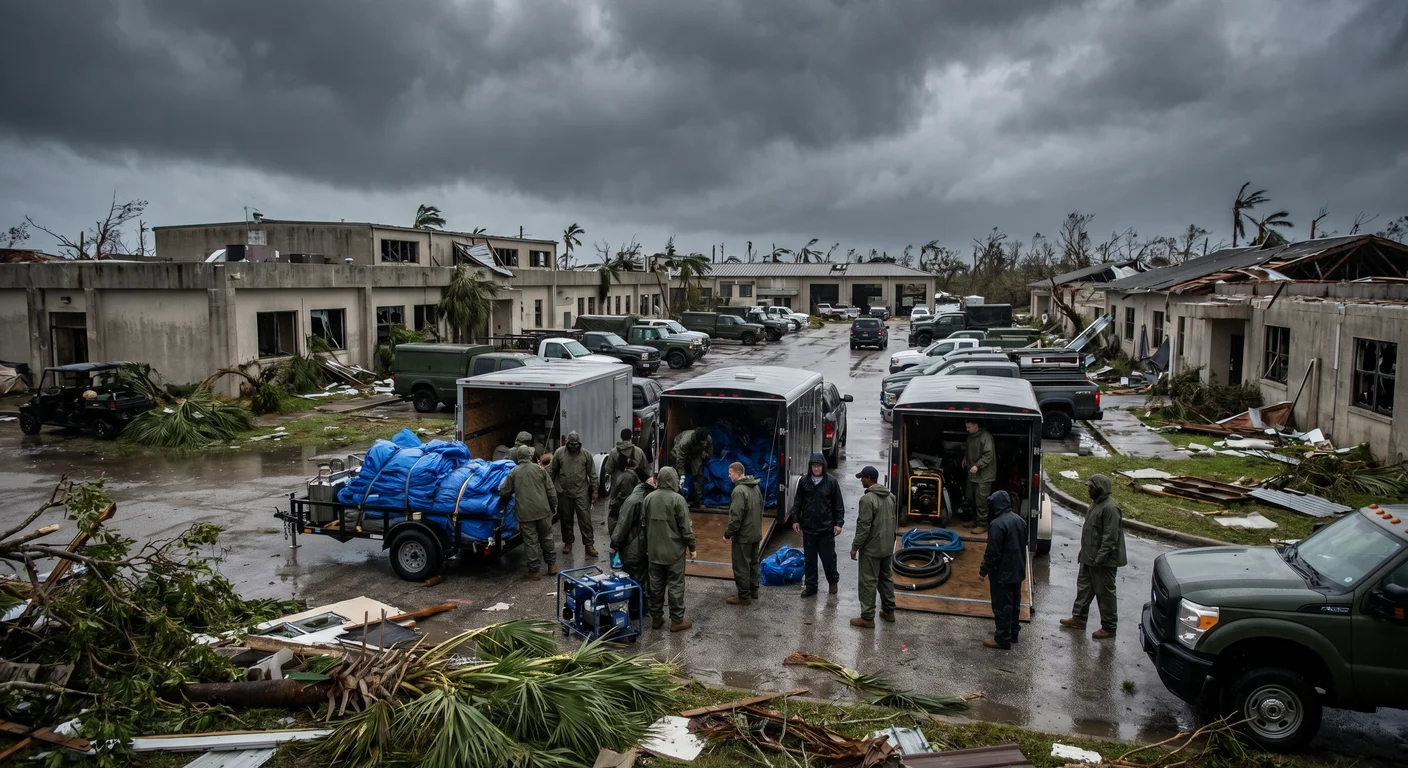
When a hurricane makes landfall south of Fort Lauderdale, the damage it leaves behind does not look like a residential water damage job. Neither does a fire that spreads through a Broward HOA complex, a pipe break that cascades through thirty floors of a Hallandale Beach high-rise, or a commercial flood that puts an industrial park under two feet of water. Each of those events qualifies as a large loss — not because someone decided a round number was crossed, but because the scale of damage outpaces what a standard restoration crew can address and demands a different response model entirely. This guide explains exactly what makes a loss "large" in the industry sense, why South Florida produces a disproportionate share of them, and what the operational difference looks like from dispatch to final documentation.
Industry convention for the dollar threshold many carriers and firms use to trigger large-loss protocols
~$500K+
HVHZ design wind speeds for Broward + Miami-Dade under the Florida Building Code
170–175 mph
Target window for CAT crew mobilization and pre-staging before or after a named storm
24–48 hrs
A single storm event can damage dozens of units simultaneously — the defining large-loss trigger in Broward multifamily
Multi-unit
Defining "Large Loss": Scope Before Dollars
In the restoration industry, "large loss" is a program category as much as a dollar band. Many carriers and restoration firms do use a rough threshold — losses around $500,000 or more are often automatically routed to a large-loss desk — but the real definition is operational: a large loss is any event where the scope of damage requires a dedicated CAT (catastrophe) response team, program-level management, and coordination with a Third Party Administrator (TPA) rather than a direct dispatch to a standard crew. A fire that destroys a 40,000-square-foot commercial warehouse might be a large loss at $300K. A residential burst pipe might not be a large loss at $600K if the damage is contained to one unit and manageable by a standard crew. Scale, complexity, and the need for parallel work streams define the category.
The large-loss handling response model exists because standard workflows — one crew, one job, one adjuster call — break down when you are coordinating simultaneous extraction in multiple buildings, managing dozens of active drying systems, running parallel scope documentation across twenty units, and interfacing with a TPA who is tracking every line item against a program rate sheet. Those are not skills most restoration crews carry; they require a different organizational layer. Reconstruction services typically begin only after this stabilization phase is complete and a full damage scope has been documented.
Why South Florida Produces More Large Losses
South Florida — specifically Broward and Miami-Dade counties — is designated as a High-Velocity Hurricane Zone (HVHZ) under the Florida Building Code. Design wind speeds in this region reach approximately 170–175 mph, and buildings must meet significantly higher structural standards than the rest of the country. Even so, when a major hurricane does make landfall here, the combination of wind, rain, and storm surge produces damage at a scale that routinely exceeds standard restoration capacity. A single named storm can produce dozens of simultaneous large-loss events across a metro area. FEMA's disaster declarations after major Florida hurricanes have involved billions in residential and commercial damage claims across just a few counties — you can explore the scale at fema.gov.
Beyond hurricanes, South Florida's density creates a second large-loss category: multifamily residential cascades. Broward County has a high concentration of HOA communities, condominiums, and age-restricted properties. When a plumbing failure, roof breach, or mechanical system failure occurs in a building with shared infrastructure, the damage does not stop at unit lines. Water travels. A single event in a Davie apartment complex or a Weston master-planned HOA can produce simultaneous damage claims across thirty, fifty, or eighty individual units — and coordinating simultaneous extraction, pack-out, and drying across all of them requires exactly the kind of program management that distinguishes a large-loss response.
The Five Triggers That Define a Large Loss
While every loss has unique circumstances, five factors most reliably push a claim into the large-loss category. Understanding these helps property owners, HOA managers, and commercial risk managers know when to escalate immediately rather than routing through a standard dispatch.
- 1
Multi-building or multi-unit impact
Damage that crosses property lines or unit boundaries — whether from storm surge, rising groundwater, a shared mechanical system failure, or fire spread — immediately suggests a large-loss scope. A single-event claim with ten or more affected units is almost always flagged for large-loss routing.
- 2
Dollar magnitude around $500K or greater
While not a hard rule, losses in this range consistently trigger carrier-side TPA assignment and require Xactimate documentation at a level of detail that demands a dedicated estimating team rather than a crew chief with a tablet.
- 3
CAT-rated equipment requirements
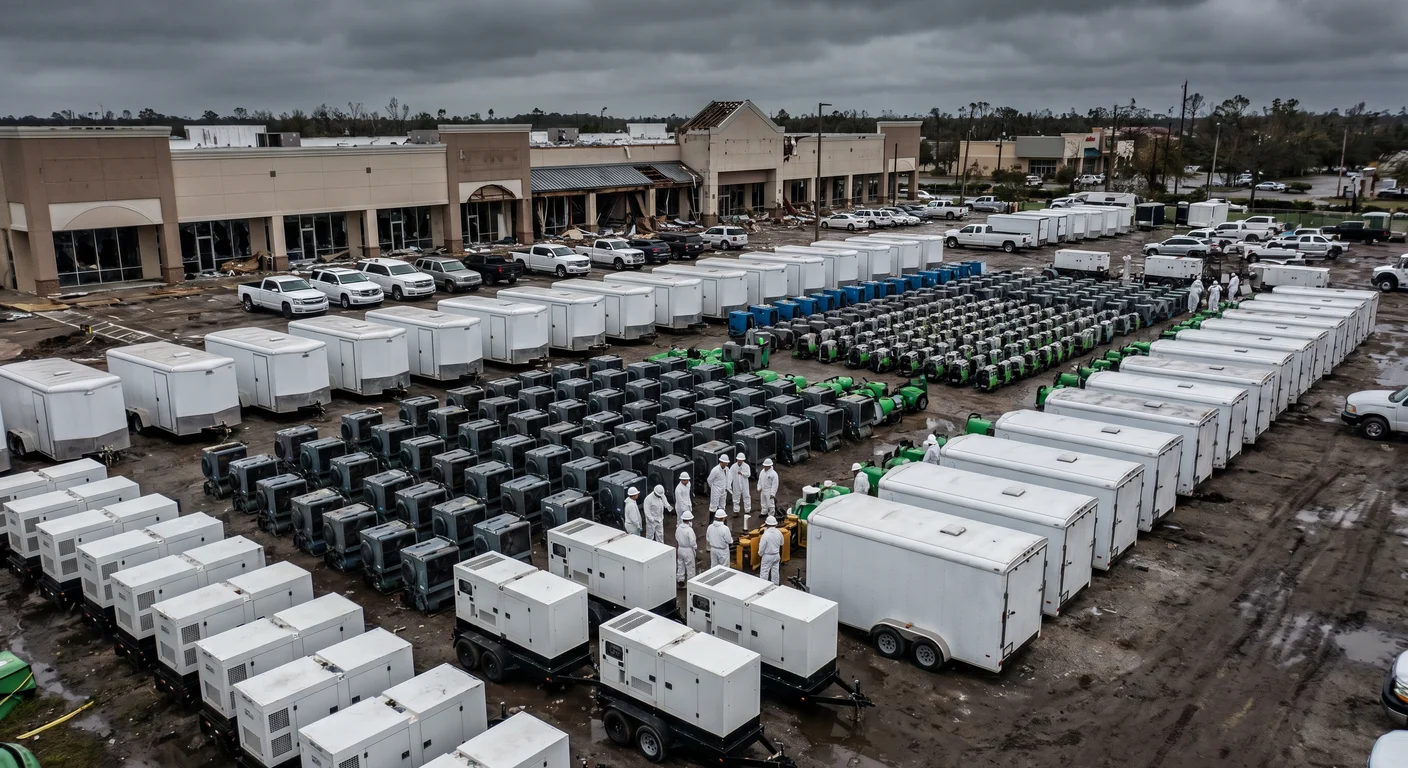
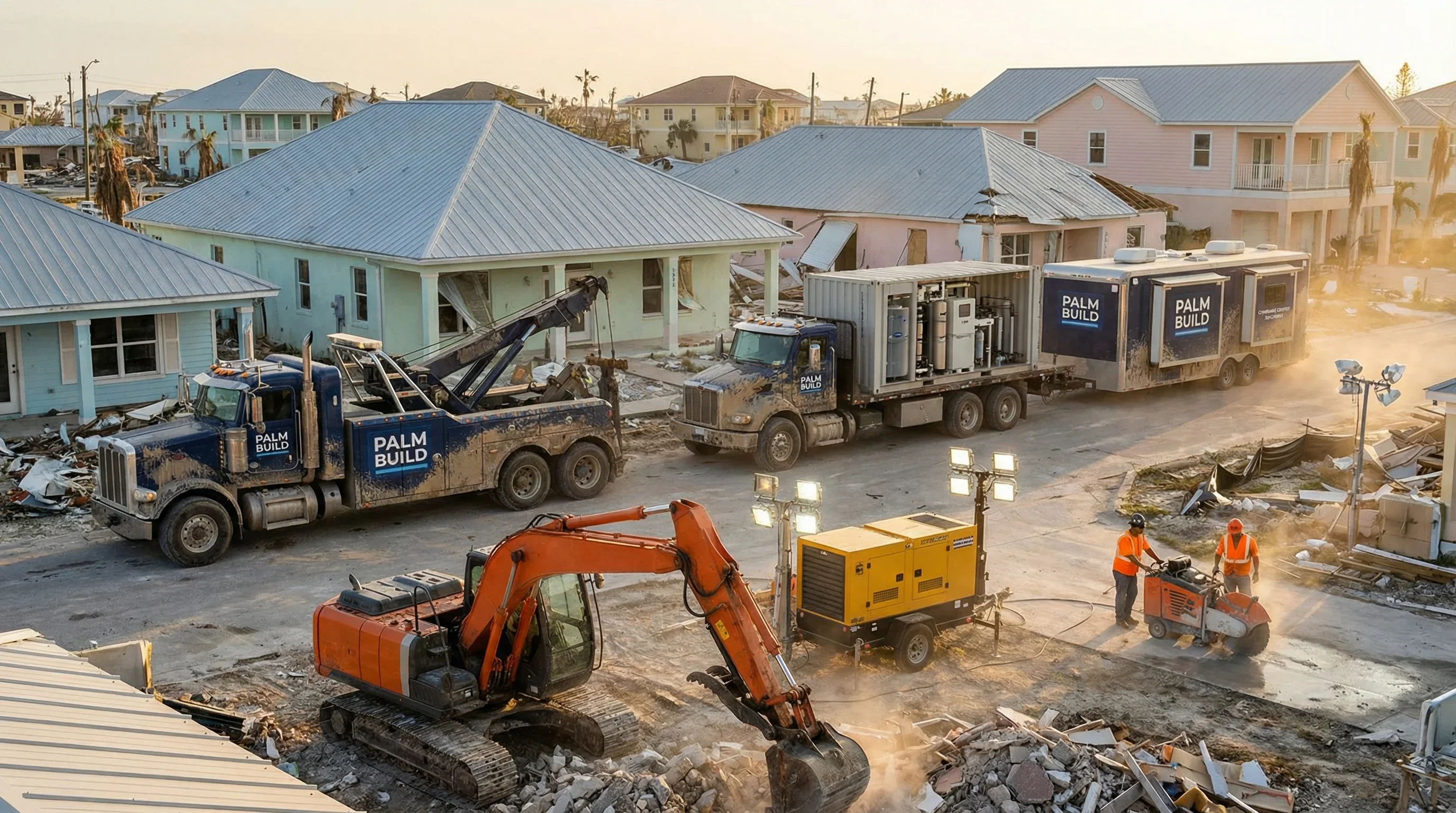
A large loss often requires equipment that standard crews do not carry: industrial-capacity trailer-mounted drying systems, generator fleets for power-out structures, mass extraction equipment, and diesel-powered dehumidification systems. If the job requires mobilizing an equipment convoy, it's a large loss.
- 4
TPA or program carrier involvement
Many national and regional carriers route large commercial and multifamily claims through a TPA — a third-party program administrator that manages the claim, sets approved rates, and coordinates the restoration vendor. Being recognized and approved within these TPA networks is a prerequisite for large-loss work.
- 5
Simultaneous work streams and program management
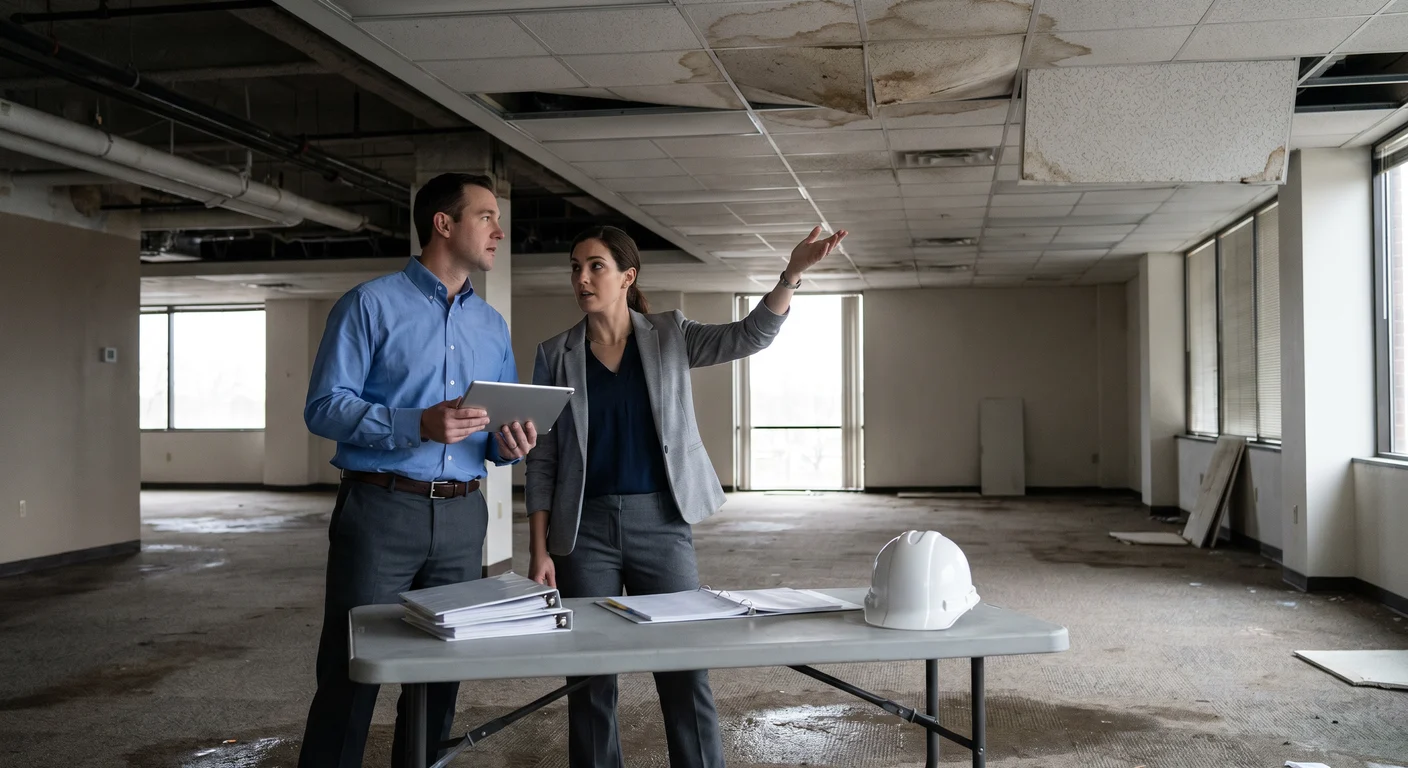
When mitigation, documentation, pack-out, and adjuster coordination must all run in parallel across multiple units or buildings, a dedicated project manager — separate from the field crew supervisor — is required to keep the job from losing days to coordination failures.
How CAT Crews and Program Management Work
The term "CAT crew" — short for catastrophe response — describes a pre-assembled team that can be deployed rapidly to a large-scale event, often pre-staging before a named storm makes landfall. Unlike a standard dispatch where a crew responds to a single address, a CAT deployment involves establishing a field staging area, running a daily dispatch system to multiple addresses, and coordinating with a remote project manager who is processing documentation, interfacing with the TPA, and managing equipment logistics simultaneously.
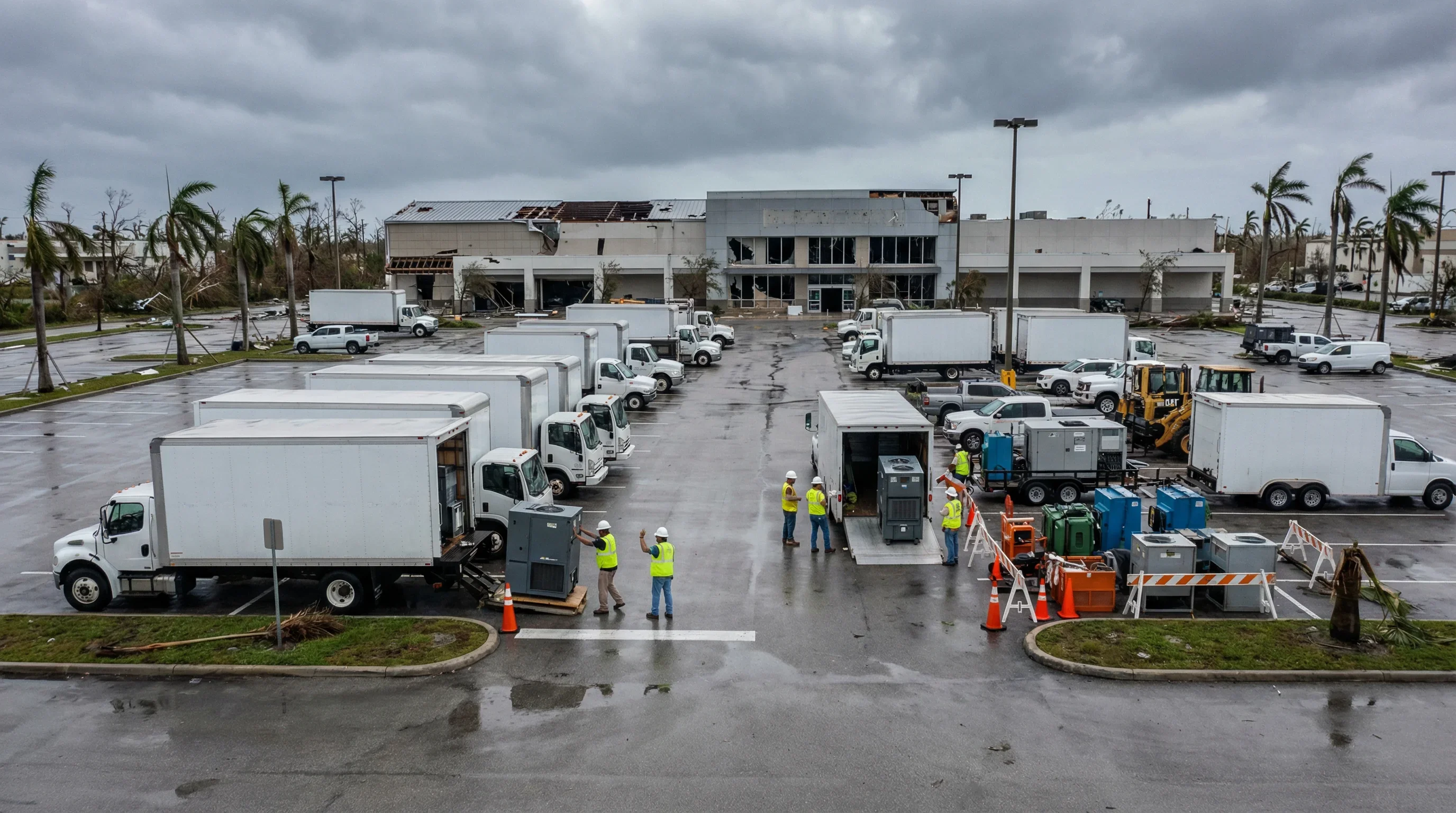
Program management on a large loss means that the restoration firm is not just doing the physical work — it is also producing a documentation package that meets the carrier's program standards. That includes daily moisture logs, photo documentation at each unit, Xactimate-line-level scope updates as damage is discovered, and supplement requests when the initial scope changes. Carriers and TPAs route large losses to firms that have this infrastructure because underdocumented large losses generate supplement disputes that slow claim settlement by weeks or months.
Large-Loss Scenarios Common in Broward County
Across the inland Broward communities, some of the most consistent large-loss patterns involve planned communities and multifamily residential stock. Cities like Margate, Tamarac, and Oakland Park have a high density of HOA communities, age-restricted complexes, and mid-century multifamily housing that was built before modern wind-and-water standards. When a storm event or infrastructure failure hits these areas, cascading claims across many units are common.
Along the coastal corridor, the large-loss profile shifts toward commercial and high-rise residential. Hallandale Beach's mix of oceanfront condominiums and commercial corridors means storm surge and wind-driven rain events can simultaneously affect dozens of floors across multiple buildings. In Aventura — a Miami-Dade city with a high concentration of luxury high-rises — a single pipe failure can generate a claim scope that rivals many hurricane losses in raw square footage affected. For both communities, the combination of property density and building age creates a high-frequency large-loss environment that rewards having a pre-established relationship with a CAT-capable restoration firm rather than searching for one after the event.
Commercial and Hospitality Large Losses in South Florida
South Florida's commercial real estate profile — hotels, medical office buildings, retail centers, industrial warehouses, and mixed-use developments — produces a different large-loss pattern than residential. Commercial large losses often involve business interruption as a parallel claim: every day a hotel floor is out of service, a medical office is inaccessible, or a warehouse cannot receive inventory is a documented cost. That creates pressure for faster restoration timelines and higher documentation standards than a comparable residential claim.
On commercial large losses, the adjuster-restoration firm interface is more intensive. The TPA may require daily progress reports, third-party monitoring, and sign-off at each phase gate (emergency mitigation, rough drying, scope finalization, demolition authorization) before the next phase begins. Firms that are not set up for this level of documented project management typically cannot perform commercial large-loss work regardless of their field crew quality. The program management infrastructure is the differentiator.
The Insurance Mechanics: TPA Assignment and Supplement Process
Understanding the insurance side of a large loss matters because it directly affects how quickly the work can proceed and how disputes are resolved. On a standard residential claim, the property owner contacts their carrier, an adjuster is assigned, and the restoration firm works with that adjuster directly. On a large loss, the workflow is often intermediated by a TPA.
| Step | Standard Claim | Large-Loss Claim |
|---|---|---|
| First contact | Owner calls carrier | Owner or PM calls carrier; TPA assigned within hours |
| Scope development | On-site adjuster + contractor | Program manager + TPA + carrier adjuster; scope built in Xactimate against program rate sheet |
| Documentation | Photos + basic line items | Daily moisture logs, photo documentation per unit, written progress reports, phase-gate sign-offs |
| Supplements | Submitted by contractor, reviewed by adjuster | Submitted to TPA; reviewed against program rates; may require third-party review for large deviations |
| Timeline | Days to weeks | Weeks to months for full close; emergency mitigation phase may be faster |
Standard claim vs. large-loss claim: key workflow differences.
The supplement process — adding to the original scope as damage is discovered — is one of the most friction-heavy parts of a large loss. Walls opened during mitigation reveal damage not visible at initial inspection; moisture mapping identifies wet cavities that expand the drying scope; demolition exposes structural damage that requires engineering review. A firm that cannot document and justify supplements efficiently loses those claim dollars, which means the property owner or the carrier absorbs costs that should be covered.
Frequently Asked Questions
What dollar amount defines a large loss? +
What is a CAT crew and how is it different from a regular restoration team? +
What is a TPA and why does it matter for large-loss claims? +
Why does South Florida have so many large-loss events? +
How does large-loss reconstruction differ from standard repair? +
Related Guides & Next Steps
Large-Loss Handling
Palm Build's CAT-crew response and program management for multi-building and large commercial claims across South Florida.
Large-Loss Response in Davie, FL
CAT-capable large-loss restoration for Davie's commercial corridors and multifamily residential communities.
Large-Loss Response in Weston, FL
Serving Weston's master-planned HOA communities and commercial properties with program-ready large-loss response.
Large-Loss Response in Hallandale Beach, FL
High-rise and coastal commercial large-loss restoration along the Hallandale Beach corridor.
Large-Loss Response in Aventura, FL
Large-loss and CAT response for Aventura's luxury high-rise and commercial properties in Miami-Dade.
FEMA Disaster Response Resources
Federal disaster declarations, recovery programs, and guidance for property owners and managers after large-scale events.
Large loss? Get a CAT-capable team on the phone now.
Palm Build's large-loss division handles multi-building CAT response, TPA documentation, and program management across South Florida — with 24/7 mobilization and pre-established carrier relationships. When scale and speed matter, start with our large-loss handling team.
Found this helpful? Send it to someone who needs it.