Storm & Wind Damage Restoration in Monroe, North Carolina
Union County has declared four states of emergency for severe weather since September 2022 — Tropical Storm Ian, a January 2024 severe weather outbreak, Tropical Storm Debby, and Winter Storm Fern. Monroe's 1987-median brick ranch homes with aging asphalt shingle roofs sit directly in the path of Piedmont severe thunderstorms, tropical remnants, and hail corridors. Palm Build responds from Charlotte in 45 to 60 minutes with emergency tarping, hail damage assessment, water extraction, and the insurance documentation Union County homeowners need from day one.
28 miles from Monroe — Union County 45-60 min Response IICRC Certified
Monroe sits in the eastern Piedmont corridor where Gulf moisture, Atlantic tropical
systems, and Blue Ridge downslope winds collide. The city's 1987-median housing stock —
brick ranch homes with aging asphalt shingle roofs over crawl space foundations on
Piedmont clay — creates one of the highest storm-damage risk profiles in the Charlotte
metro. Four Union County emergency declarations since 2022 confirm what the geography
predicts.
4 Emergency Declarations in Under 4 Years
4
Declarations since 2022
Union County declared states of emergency for Tropical Storm Ian (September 2022), a severe weather outbreak (January 2024), Tropical Storm Debby (August 2024), and Winter Storm Fern (January 2026). No other county in the Charlotte metro has matched this frequency — Monroe faces tropical remnants, severe thunderstorms, and winter ice events in a compressed year-round cycle.
Piedmont Severe Thunderstorm Corridor
50+
Annual severe storms
The Charlotte metro averages more than 50 severe thunderstorm events annually. Monroe — positioned 28 miles southeast along the US-74 corridor — catches storm systems tracking from southwest to northeast across the urban heat island. Summer supercells, spring hail events, and winter straight-line winds deliver year-round punishment to Union County rooftops. August peaks at 4.89 inches of rainfall, overwhelming stormwater infrastructure.
Mature Tree Canopy Over Aging Rooflines
$40K+
Potential tree-strike claim
The oaks, pines, and sweetgums planted when Monroe neighborhoods were developed 30-40 years ago now tower over single-story brick ranch homes. Root systems in Piedmont clay lose anchoring during saturated soil conditions — and every Union County emergency declaration has included significant tree-fall damage. A single tree strike on a Monroe brick ranch can exceed $40,000 when you factor in roof replacement, water damage, and interior restoration.
1987 Median Build — Aging Shingle Vulnerability
35-40 yrs
Dominant roof age
Monroe's dominant construction type is the single-story brick ranch with asphalt shingle roofing, and the median build year of 1987 means most homes carry 35-to-40-year-old roofs well past their rated 20-to-30-year service life. These aging systems have lost the granulation and flexibility that deflects hail impact, making them progressively more vulnerable with each passing storm season. Neighborhoods like Bearskin Place, Benton Acres, and St Johns Forest all share this risk profile.
Monroe's mature tree canopy and 1980s-era asphalt shingle roofs make the city uniquely
vulnerable to wind and hail damage — four Union County emergency declarations since 2022
confirm the pattern.
Damage Categories
Storm Damage Types We Restore in Monroe
Storm damage in Monroe manifests in six primary categories, each requiring specific
assessment techniques, restoration methods, and insurance documentation. Understanding
the type of damage determines response protocol, timeline, and cost.
Wind Damage
Shingle blow-off, ridge cap failure, soffit and fascia separation, vinyl siding displacement. Monroe's brick ranch homes resist wind pressure on walls but the aging asphalt shingle roof systems are the first point of failure during 60+ mph gusts from severe thunderstorms and tropical remnants.
Typical claim range
$3,000-$35,000
Hail Damage
Granulation loss, shingle fracturing, gutter denting, soft metal damage. Monroe sits in the Piedmont hail corridor where spring and summer supercells produce quarter-inch to golf-ball-sized hail. Damage is often invisible from ground level but degrades roof life by 5-15 years per significant event.
Typical claim range
$5,000-$25,000
Fallen Tree Damage
Structure impact, roof penetration, wall collapse, secondary water intrusion. Monroe's mature tree canopy planted 30-40 years ago towers over single-story brick ranches, and root systems in Piedmont clay lose anchoring during saturated soil conditions — a factor in all four Union County emergency declarations.
Typical claim range
$8,000-$65,000
Roof Breach & Water Intrusion
Wind-driven rain entering through compromised shingles, damaged flashing, or failed ridge vents. The secondary water damage from an untarped roof breach compounds daily — ceiling drywall, insulation, wall cavities, and flooring absorb moisture within hours, turning a roof claim into a full interior restoration.
Typical claim range
$10,000-$40,000
Storm Flooding
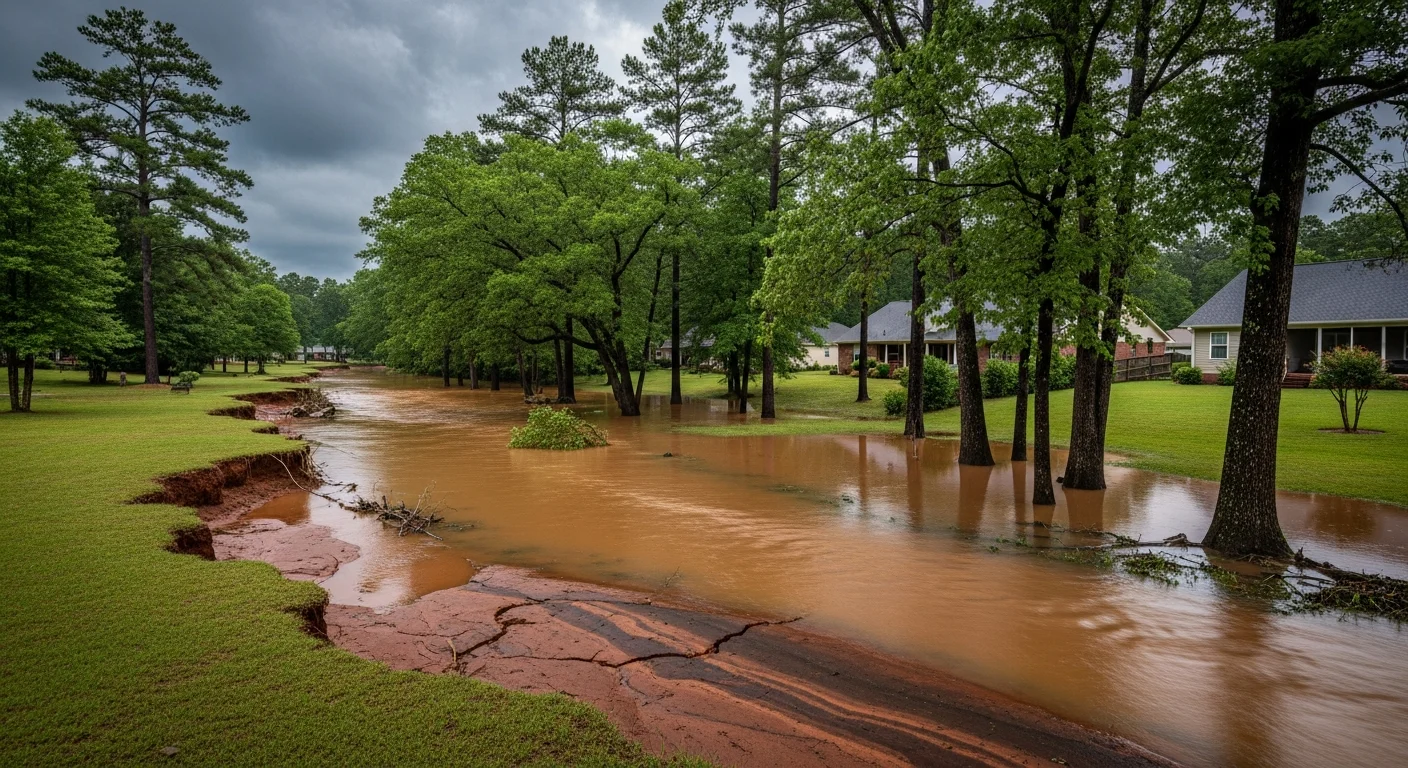
Richardson Creek, Rocky River basin tributaries, and Lake Lee overflow during prolonged rainfall events like Tropical Storm Debby. Properties along Monroe's drainage corridors face rising water risk that standard homeowners insurance does not cover — a gap exposed during the August 2024 emergency declaration.
Typical claim range
$15,000-$80,000
Siding & Exterior Damage
Vinyl siding separation, brick mortar joint failure, window seal compromise, gutter and downspout damage. Even cosmetic-appearing damage creates entry points for wind-driven rain in subsequent storms — and Monroe averages 47.79 inches of rainfall annually to exploit every gap.
Typical claim range
$2,000-$15,000
Hail Damage Expertise
Hail Damage and Monroe's Aging Asphalt Shingle Roofs
Hail is the silent accelerator of roof failure in Monroe. Unlike wind damage that strips
shingles visibly, hail impacts fracture the fiberglass mat beneath the granule surface,
crack the asphalt binder layer, and dislodge the mineral granulation that protects
shingles from UV degradation. Monroe's 1987-median housing stock has absorbed decades of
cumulative hail damage.
Piedmont Hail Corridor
Union County sits in the Piedmont hail corridor where spring and summer supercells regularly produce quarter-inch to golf-ball-sized hail. Peak hail activity occurs in April and May when Gulf moisture collides with lingering cold air masses, but damaging hail events have been documented in Monroe from March through August.
Invisible From Ground Level
Most Monroe homeowners discover hail damage only when a subsequent wind event strips weakened shingles or when a professional roof inspection reveals accumulated impact marks. Hail fractures the fiberglass mat beneath shingle granules and dislodges the mineral coating that protects against UV degradation — damage invisible from your driveway.
5-15 Years of Roof Life Lost Per Event
A single significant hail event can reduce remaining roof life by 5 to 15 years. For Monroe homes with 35-to-40-year-old asphalt shingle roofs already past their rated service life, even moderate hail further degrades systems that have absorbed multiple events over their lifespan.
Cumulative Damage Compounds
Each hail event compounds damage from prior events. Granulation loss accelerates UV degradation, micro-cracks allow moisture penetration into the shingle mat, and the entire system becomes progressively more vulnerable to wind uplift. For Monroe's 1987-median housing stock, the cumulative effect of decades of hail exposure is reaching critical mass.
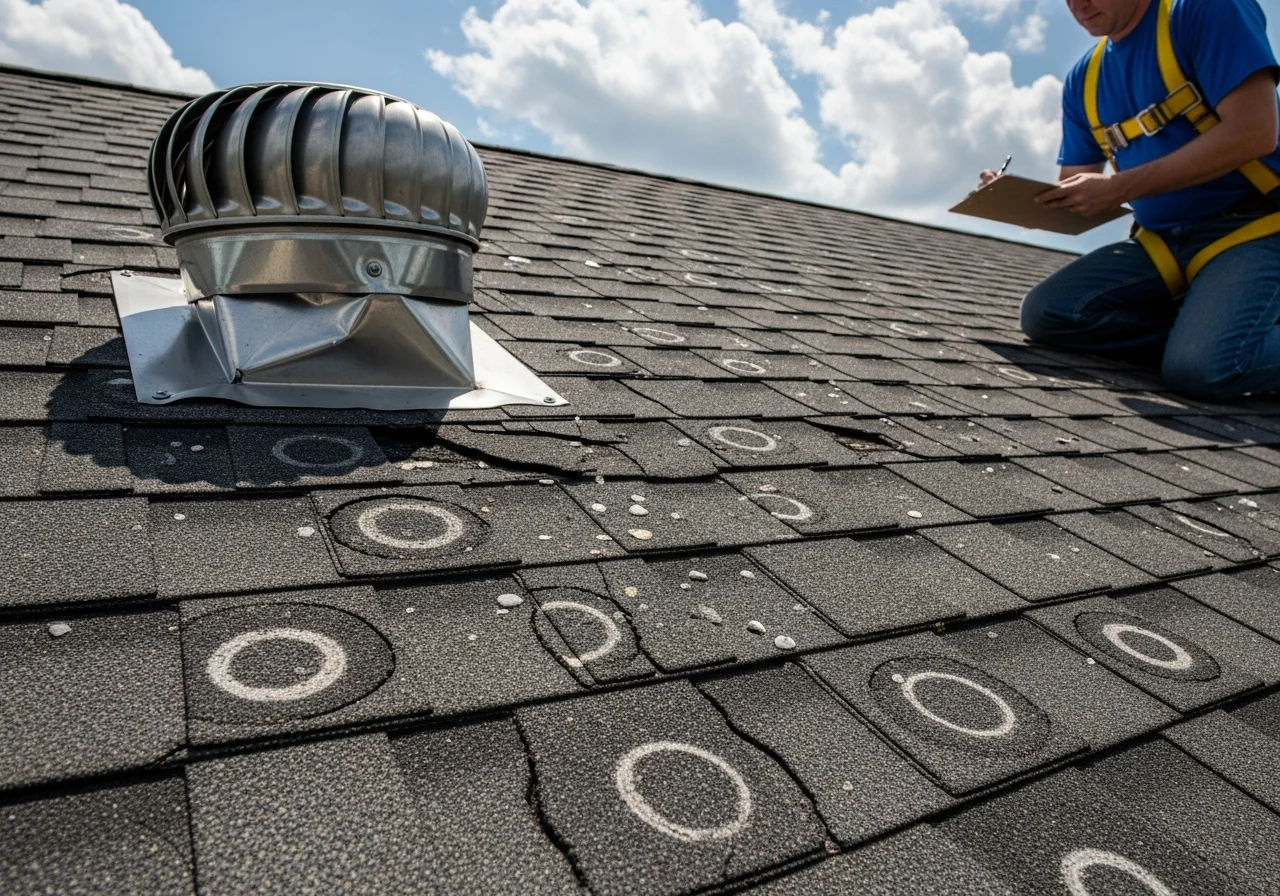
Hail damage inspection on a Monroe brick ranch — impact marks invisible from ground
level reveal granulation loss and shingle mat fracturing that reduces remaining roof
life by years.
Free hail damage assessment
If your Monroe home has not had a professional roof inspection after a documented
hail event, call Palm Build at (704) 464-0121 for a
free assessment. We document damage with the precision your insurance adjuster requires.
Storm Restoration Process
How We Restore Monroe Homes After Storm Damage
When severe weather strikes Monroe, the damage clock starts immediately. Exposed roof
decking absorbs water within hours, and every storm that passes over an untarped roof
compounds the original damage exponentially. Here is exactly what happens when you call
Palm Build.
01
Emergency Tarping & Board-Up
Hours 1-4
Exposed rooflines receive heavy-gauge tarps secured with battens and screws — not the blue poly sheeting that blows off in the next storm. For Monroe's brick ranch homes with low-slope roof sections, we use additional sealing techniques at wall-to-roof transitions. Broken windows and compromised doors receive plywood board-up. Your insurance policy requires you to mitigate further damage, and emergency tarping costs are covered as part of your claim.
02
Damage Assessment & Documentation
Days 1-3
Before any restoration work begins, our IICRC-certified team leader assesses structural safety — checking for compromised roof trusses, energized electrical hazards, hanging limbs, and gas leaks. Simultaneously, we create insurance-grade photo and video documentation, classifying every item of damage by cause (wind vs. hail vs. tree strike vs. flooding) to ensure correct claim filing under each applicable policy.
03
Water Extraction (Storm Water)
Days 1-3
Wind-driven rain and roof leaks introduce water into wall cavities, attic insulation, ceiling assemblies, and flooring systems. We deploy truck-mounted extractors for standing water and use moisture meters and thermal imaging to identify hidden water behind walls and under flooring. For Monroe homes with crawl space foundations, we address sub-floor water simultaneously to prevent secondary mold growth.
04
Structural Drying
Days 3-7
Commercial dehumidifiers and air movers target every moisture pocket identified during assessment. Daily moisture readings track drying progress in wall cavities, subfloor assemblies, and attic spaces. Monroe's Piedmont clay holds moisture against foundations for weeks after a storm, making crawl space monitoring critical throughout the drying cycle.
05
Tree & Debris Removal
Days 1-14
Fallen trees on structures require careful removal to avoid compounding damage — critical for Monroe's single-story brick ranches where a tree strike can compromise the entire roof structure. We coordinate with licensed arborists for complex removals. All tree-related structural damage is documented separately, as tree removal and structural repair often fall under different policy provisions.
06
Structural Repair & Reconstruction
Weeks 2-12
From partial shingle replacement to full roof tear-off, from framing repair to interior finish work, we rebuild storm-damaged Monroe homes to pre-loss condition or better. All structural work is fully permitted through Union County Building Inspections. We match existing materials — brick veneer, hardwood flooring, trim profiles — to maintain property value and neighborhood consistency.
Documented Emergency History
4 Union County Emergency Declarations Since 2022
No other county in the Charlotte metro has declared four separate weather emergencies in
fewer than four years. Each declaration was triggered by a different severe weather type
— tropical remnants, severe thunderstorms, and winter ice — proving Monroe faces a
year-round, multi-threat storm risk profile that competitors fail to localize.
Tropical Storm Ian — State of Emergency
Catastrophic
September 2022
Tropical Storm Ian tracked through the Carolinas after devastating Florida, bringing sustained winds, heavy rainfall, and widespread power outages to Union County. Trees fell across residential streets, roofing systems failed under sustained wind load, and stormwater systems overflowed along Richardson Creek and Rocky River basin tributaries. The declaration activated emergency management resources and highlighted Monroe's vulnerability to tropical remnants that maintain destructive force 500 miles inland.
Cat 4 Ian
Storm origin
Wind + Trees
Primary damage
Severe Weather Outbreak — State of Emergency
Severe
January 2024
A January severe weather event brought damaging straight-line winds and isolated tornadoes through the Charlotte metro, prompting Union County to declare a state of emergency. The winter timing caught Monroe homeowners off guard — severe thunderstorms in January violate the mental model of "storm season" and struck homes that had not been inspected since the previous fall. Downed trees, widespread roof damage, and extended power outages affected neighborhoods across the county.
January
Timing
Straight-line
Wind type
Tropical Storm Debby — State of Emergency
Catastrophic
August 2024
Tropical Storm Debby tracked inland through North Carolina, spawning 10 tornadoes statewide and dumping prolonged torrential rainfall on the Piedmont. Union County declared a state of emergency as flooding impacted low-lying areas along Richardson Creek and Rocky River basin corridors. Monroe recorded multi-day rainfall totals that overwhelmed stormwater infrastructure in subdivisions like St Johns Forest and Crooked Creek Estates, exposing the flood vulnerability of homes built near drainage corridors.
10
Tornadoes spawned
3+
Flood corridors hit
Winter Storm Fern — State of Emergency
Severe
January 2026
Winter Storm Fern brought significant ice accumulation and freezing rain to Union County, loading tree limbs beyond structural limits and sending them crashing onto rooflines, power lines, and vehicles across Monroe. The ice weight caused branch failures in mature oaks and pines throughout Historic District, Bearskin Place, and Benton Acres. Roof damage from ice-loaded limbs and subsequent meltwater intrusion created a restoration backlog across the county.
Ice + Trees
Damage type
Historic Dist.
Worst-hit areas
Four different storm types. Four emergency declarations. One conclusion.
Monroe homeowners cannot prepare for just one type of severe weather. The 2022-2026
declaration history proves Union County faces tropical remnants, severe thunderstorm
outbreaks, and winter ice events — all within a compressed annual cycle. If your home has
an aging shingle roof, the question is not whether storm damage will occur. It is whether
you have emergency response, documentation, and insurance support ready when it does.
Seasonal Risk
Monroe Seasonal Storm Damage Calendar
Monroe's storm exposure is year-round — four Union County emergency declarations across
four different seasons since 2022 prove there is no safe month. Severe thunderstorms
peak April through August, tropical remnants threaten through October, and winter ice
and wind events strike from November through March.
Jan - Mar
Winter Storms & Ice Events
Fast-moving cold fronts produce straight-line winds exceeding 60 mph across the Piedmont. Ice storms like Winter Storm Fern (January 2026) load mature tree limbs beyond structural limits, sending them onto rooflines and power lines across Monroe's oldest neighborhoods. Freeze-thaw cycles damage flashing and caulk joints on aging roofs, creating entry points for wind-driven rain in subsequent storms.
Apr - May
Peak Hail & Severe Thunderstorms
The most dangerous window for Monroe's aging asphalt shingle roofs. Gulf moisture collides with Piedmont cold fronts, producing supercell thunderstorms with large hail, 60+ mph straight-line winds, and isolated tornadoes. The January 2024 Union County emergency declaration originated from this type of severe weather pattern arriving earlier than expected.
Jun - Aug
Summer Convective Storm Peak
Monroe's wettest months — August averages 4.89 inches of rainfall. Daily convective thunderstorms form rapidly along the US-74 corridor, producing intense but localized wind and hail events with minimal warning. Microbursts delivering 60-80 mph downdrafts are particularly dangerous for Monroe's single-story brick ranches with wide-span roof systems. Stormwater infrastructure in subdivisions struggles under sustained summer rainfall.
Sep - Oct
Tropical Remnants & Flooding
The window that produced Tropical Storm Ian (September 2022) and Tropical Storm Debby (August 2024) — both triggering Union County emergency declarations. Tropical systems tracking inland deliver sustained winds, prolonged rainfall, and flooding along Richardson Creek and Rocky River tributaries. This is when the wind-vs-flood insurance gap becomes painfully apparent for Monroe homeowners.
Nov - Dec
Late-Season Transition Storms
Strong cold fronts produce damaging wind events with limited warning. Saturated fall soil conditions make mature trees more susceptible to wind-throw — root systems in Monroe's Piedmont clay lose anchoring as the water table rises. This is the last window to inspect and repair storm damage before winter seals moisture problems inside the building envelope.
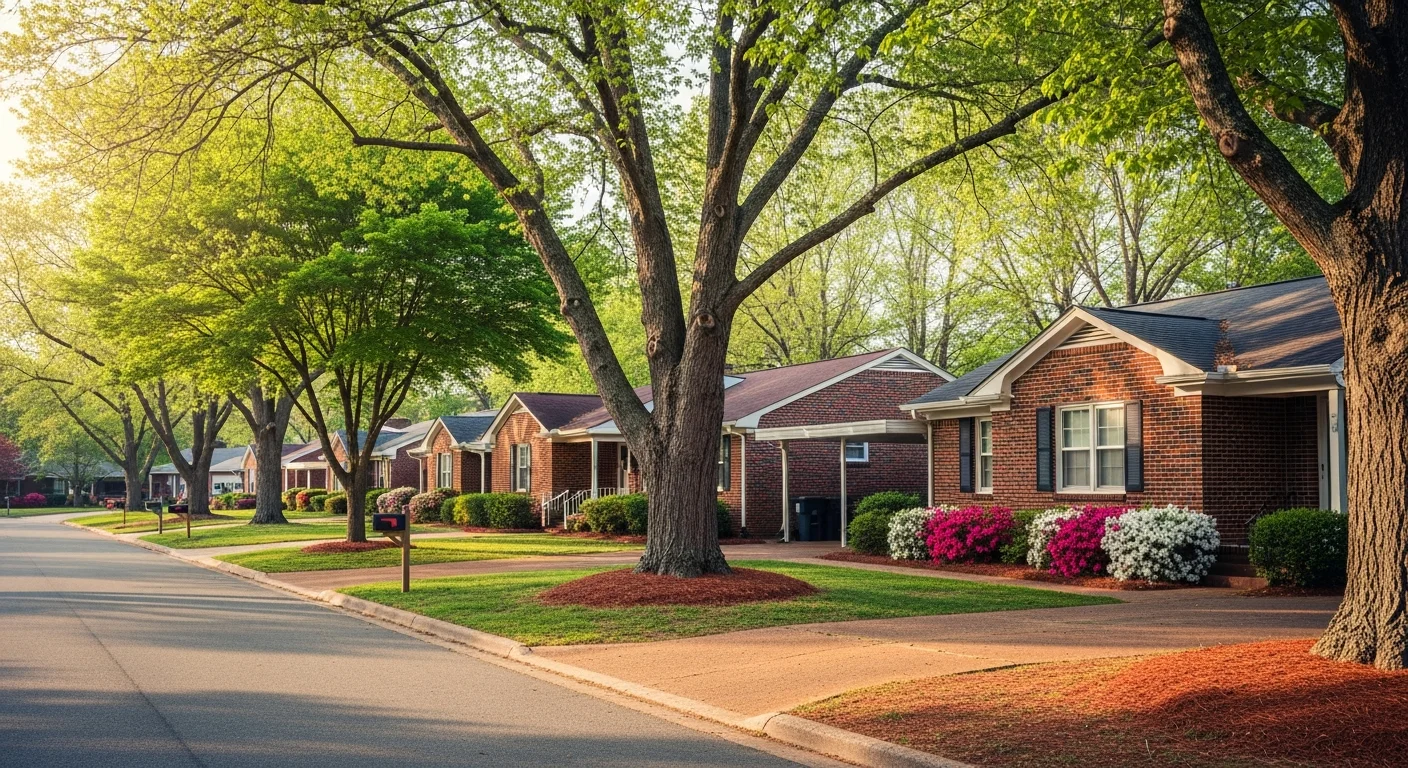
Monroe's brick ranch neighborhoods with 30-40 year old tree canopy face storm damage
risk in every season — from winter ice loading to summer microbursts to fall tropical
remnants.
Critical Insurance Distinction
Storm Damage Insurance in Monroe — Wind, Hail & the Flood Gap
Wind and hail damage are covered perils under standard NC homeowners policies (HO-3).
However, many NC policies now carry separate wind/hail deductibles, and flood damage
requires entirely separate coverage. Palm Build documents each damage cause separately
to ensure your claims are filed correctly under each applicable policy.
Wind & Hail Damage (Homeowners Policy)
Roof damage from wind, fallen trees, flying debris
Siding, window, and door damage from wind pressure
Rain water entering through wind-created openings
Structural damage from wind load or tree strikes
Emergency tarping and board-up costs
Temporary living expenses if home is uninhabitable
Flood Damage (Separate Flood Policy)
Rising water from Richardson Creek or Rocky River tributaries
Groundwater entering through foundation or crawl space
Stormwater overflow from overwhelmed drainage systems
Sewer backup during flash flooding events
NOT covered by standard homeowners policy
Requires separate NFIP or private flood insurance
Monroe Storm Insurance Checklist
Review your policy for a separate wind/hail deductible (typically 1-2% of dwelling coverage)
On a $250,000 Monroe home, a 2% wind/hail deductible = $5,000 out of pocket
Your standard deductible may NOT apply to wind/hail claims — check before the storm
Document all damage by cause (wind vs. hail vs. tree vs. flood) for correct filing
Emergency tarping costs are reimbursable — do not delay mitigation waiting for an adjuster
Keep receipts for temporary housing, emergency supplies, and out-of-pocket expenses
The Overlap Problem — Wind vs. Flood in Monroe
During Tropical Storm Debby in August 2024, Monroe homes along drainage corridors
experienced both wind damage (covered by homeowners) and flood damage (not covered
without separate flood insurance) from the same storm event. Without cause-specific
documentation, insurers may attribute water damage to flooding rather than wind-driven
rain entry — denying coverage that should have been approved. Palm Build's assessment
specifically documents which water entered through wind-created openings (covered)
versus which entered as rising water (flood policy).
Every storm damage project begins with thorough documentation and ends with full
restoration. Here is what our work looks like across Monroe and Union County.
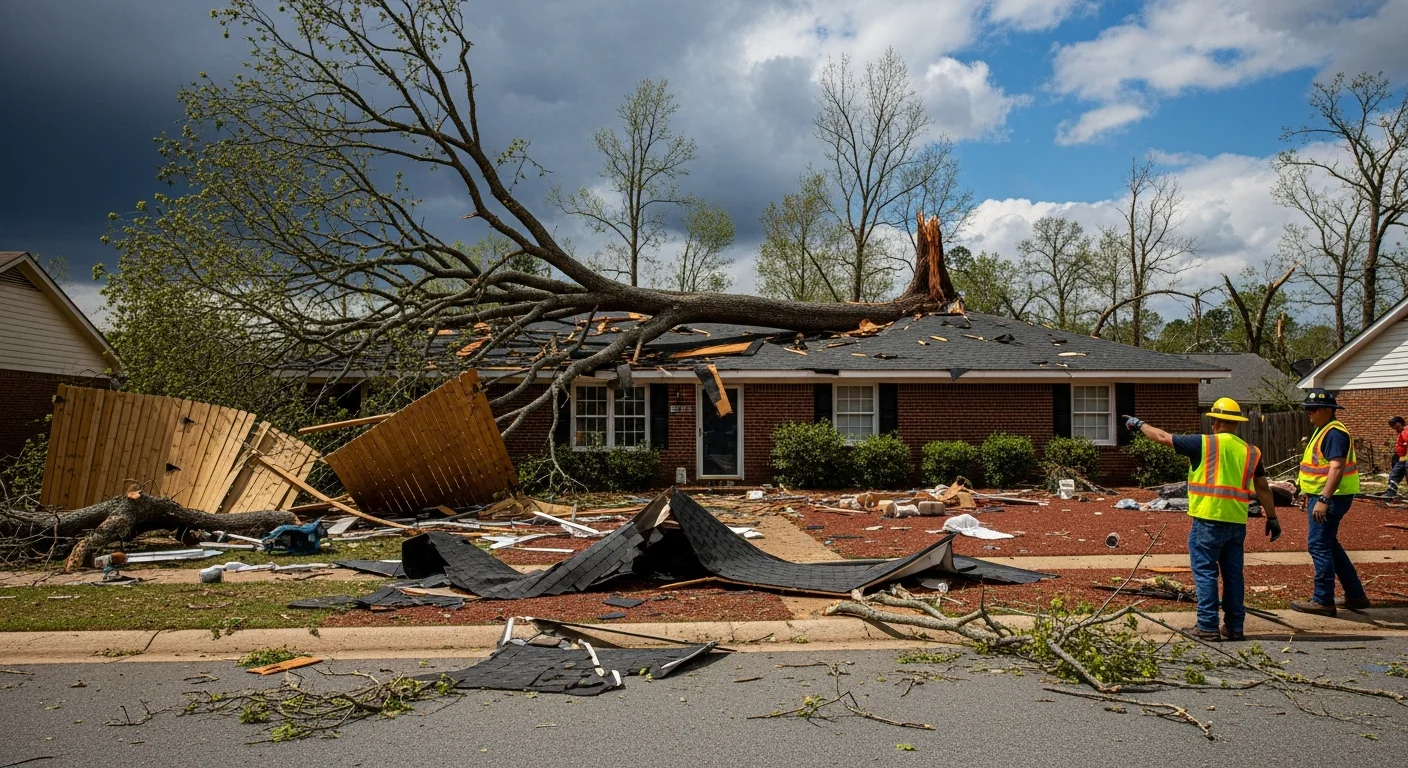
Wind and debris damage across a Monroe neighborhood — documenting damage patterns before emergency tarping begins
Hail damage inspection — hidden impact marks invisible from ground level reveal granulation loss and shingle mat fracturing
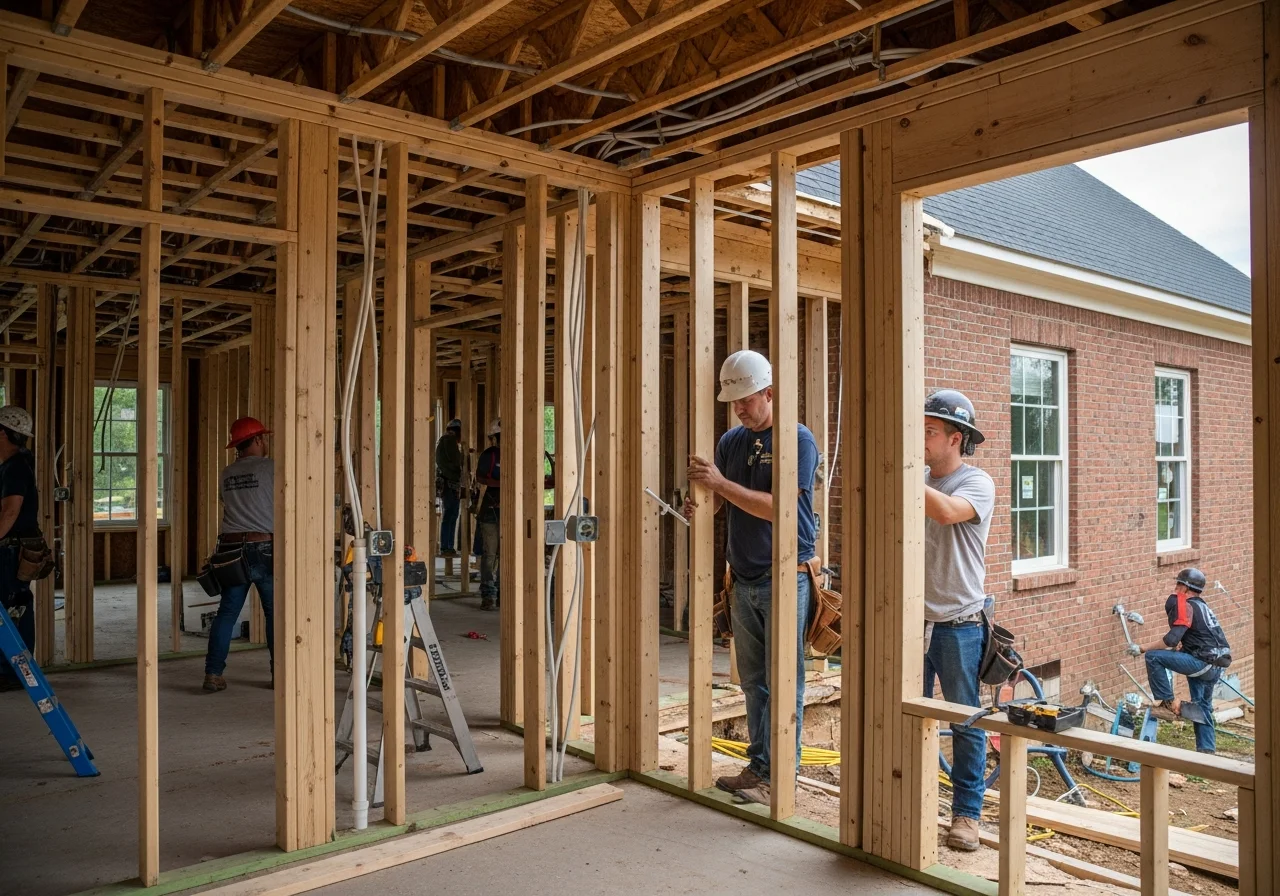
Structural reconstruction — new framing replaces storm-damaged sections, fully permitted through Union County Building Inspections
Richardson Creek during elevated water levels — Monroe's drainage corridors face flood risk not covered by standard homeowners insurance
The Palm Build Difference
Why Monroe Homeowners Choose Palm Build After Storms
When a severe thunderstorm sends hail across your Stonebridge roofline or tropical
remnants topple a pine onto your Crooked Creek Estates home, every hour of exposure
compounds the water damage that follows. Here is why Monroe homeowners trust Palm Build
to respond first and restore right.
45-60 Minute Response to Monroe
Our Crompton Street hub is 28 miles from Monroe via US-74. We dispatch 24/7/365, including during active storm events. During the four Union County emergency declarations since 2022, we mobilized crews to Monroe-area homes within the response window every time.
Commercial-Grade Emergency Tarping
We secure exposed rooflines with heavy-gauge tarps fastened with battens and screws — engineered for Monroe's brick ranch roof geometries and low-slope transitions. Not the blue poly sheeting that blows off in the next storm.
Hail Damage Documentation Expertise
Professional roof inspection, impact documentation, and insurance-grade reporting for the hidden hail damage that degrades Monroe's aging shingle roofs. We identify granulation loss, mat fracturing, and binder-layer cracking that is invisible from ground level but clearly affects remaining roof life.
Union County Flood Corridor Knowledge
We've responded to storm damage calls along Richardson Creek, Rocky River basin tributaries, and Lake Lee during multiple Union County emergency events. We know which Monroe neighborhoods flood first, which roads become impassable, and how to route crews for fastest response during active weather.
Cause-Specific Insurance Documentation
We photograph, moisture-map, and classify damage by cause (wind vs. hail vs. tree strike vs. flood) using the same standards your adjuster applies. Critical when separate wind/hail deductibles apply and when both wind and flood damage occur during the same event.
Four-Declaration Storm Experience
We responded to storm damage calls across the Charlotte metro during all four Union County emergency declarations since 2022 — Tropical Storm Ian, the January 2024 severe weather outbreak, Tropical Storm Debby, and Winter Storm Fern. We understand the specific damage patterns Monroe homes experience across all storm types.
Palm Build's Charlotte-based team responds to Monroe storm emergencies in 45-60 minutes
— bringing tarping materials, extraction equipment, and documentation expertise from our
first arrival.
Common Questions
Monroe Storm Damage FAQ
How quickly can Palm Build respond to storm damage in Monroe?
Our Charlotte-based team typically arrives in Monroe within 45 to 60 minutes from our Crompton Street operations hub — approximately 28 miles via US-74. We dispatch 24/7/365, including during active storm events. During major weather events with widespread damage across Union County, we activate our catastrophe response protocol with additional crews. Call (704) 464-0121 any time.
Has Union County really declared four weather emergencies since 2022?
Yes. Union County declared states of emergency for Tropical Storm Ian (September 2022), a severe weather outbreak (January 2024), Tropical Storm Debby (August 2024), and Winter Storm Fern (January 2026). This frequency — four declarations in fewer than four years covering tropical remnants, severe thunderstorms, and winter ice — demonstrates that Monroe faces a multi-threat storm risk profile year-round.
Does my Monroe homeowners insurance cover hail damage?
Hail damage is a covered peril under standard NC homeowners policies (HO-3). However, many North Carolina policies now carry separate wind/hail deductibles — typically 1% to 2% of your dwelling coverage amount rather than your standard deductible. On a Monroe home insured for $250,000, a 2% wind/hail deductible means $5,000 out of pocket before coverage applies. Palm Build documents hail damage with the precision your adjuster requires to process the claim efficiently.
Is my Monroe home in a flood zone?
Properties along Richardson Creek, Rocky River basin tributaries, and the Lake Lee watershed carry the highest flood risk in Monroe. Even if your property is not in a mapped FEMA flood zone, proximity to these waterways creates flood risk during prolonged rainfall events like Tropical Storm Debby. Standard homeowners insurance does not cover flood damage — separate NFIP or private flood insurance is required. Check your flood zone status through FEMA's Flood Map Service Center or the Union County GIS portal.
Should I get emergency tarping before filing an insurance claim?
Yes — immediately. Your insurance policy contractually requires you to mitigate further damage after a loss event. Delaying tarping after roof damage allows wind-driven rain to enter the structure, causing secondary water damage to ceilings, walls, insulation, and flooring that dramatically increases the total claim cost. Emergency tarping and board-up expenses are covered as part of your claim. Call Palm Build at (704) 464-0121 for emergency tarping 24/7.
What areas of Monroe are most vulnerable to storm damage?
Historic District and Bearskin Place have the oldest housing stock and most mature tree canopy, creating the highest tree-fall risk. St Johns Forest and Crooked Creek Estates face drainage corridor flooding during prolonged rainfall. Benton Acres and Stonebridge homes built in the 1990s-2000s carry aging shingle roofs approaching failure age. All Monroe neighborhoods with homes built before 2000 share the common vulnerability of asphalt shingle roofs past or approaching their rated service life.
How long does storm damage restoration take in Monroe?
Emergency tarping and board-up: same day. Water extraction from storm intrusion: 1-2 days. Structural drying: 3-5 days. Partial roof repair: 1-3 weeks depending on material availability. Full roof replacement: 2-4 weeks. Complete reconstruction of major storm damage: 4-12 weeks. After widespread events like Union County emergency declarations, timelines can extend due to regional contractor and material demand.
Can hail damage to my Monroe roof be invisible from the ground?
Yes — and this is one of the most common issues we see in Monroe. Hail fractures the fiberglass mat beneath shingle granules and dislodges the mineral coating that protects against UV degradation. The damage is invisible from ground level but clearly visible during a professional roof inspection. A single significant hail event can reduce remaining roof life by 5-15 years. If your Monroe home has not had a professional inspection after a documented hail event, call (704) 464-0121 for a free assessment.
Storm Damage in Monroe? Every Hour of Exposure Compounds the Cost.
An exposed roof or broken window turns wind damage into water damage — and water damage into mold damage. Palm Build's Charlotte team responds to Monroe in 45-60 minutes with emergency tarping, water extraction, and structural stabilization. Insurance documentation starts from our first call.