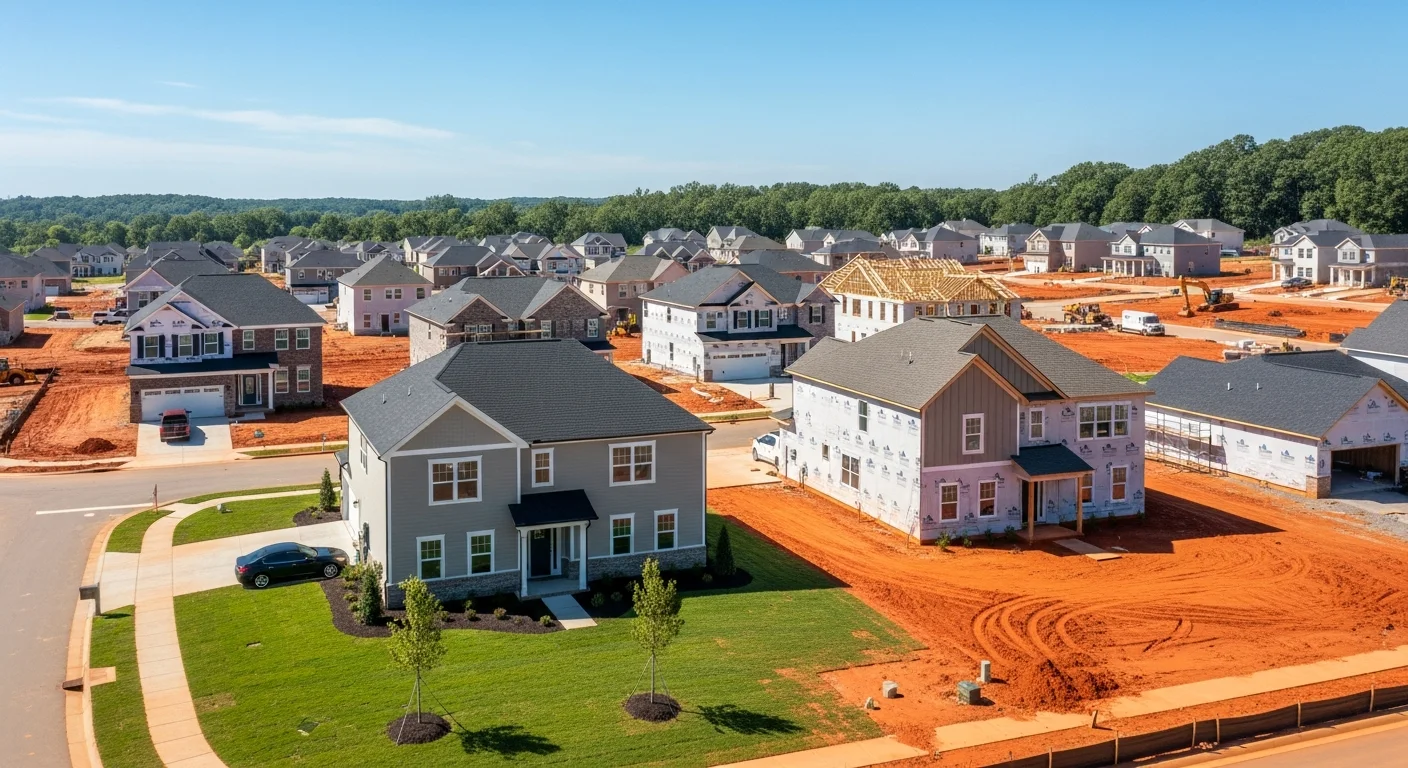
From rebuilding fire-damaged Historic District homes with period-appropriate Italianate details to replacing water-warped OSB subfloors in 1990s brick ranches, Palm Build manages every phase of reconstruction in Monroe — Union County permits, insurance coordination, and a single team from demolition through final walkthrough.
28 miles from Monroe — Union County 45-60 min Response IICRC Certified
Why Monroe Reconstruction Requires Local Housing Knowledge
Monroe's housing stock spans 150 years — from 1870s Italianate homes in the Historic
District to 2020s active-adult communities. A fire-damaged Victorian on South Hayne
Street faces completely different reconstruction challenges than a water-damaged brick
ranch in Benton Acres or a storm-damaged home in Stonebridge. Each era breaks
differently, each era rebuilds differently.
Historic District (1874-1940s)
1874+
Oldest documented homes
Monroe's documented Historic Residential District contains Italianate, Queen Anne, and Classical Revival homes with plaster-over-lath walls, balloon framing, original-growth hardwood floors, and hand-milled trim. Reconstruction requires period-appropriate materials, architectural sensitivity, and craftsmen who understand these construction methods. Code-required upgrades during reconstruction can add 15-25% to project costs.
1980s-1990s Brick Ranch Dominant
1987
Median home build year
The largest share of Monroe's housing stock — brick ranch homes on vented crawl space foundations over Piedmont clay. These homes used OSB subfloors starting in the late 1980s, a material that swells irreversibly when wet. After any water event, the subfloor cannot be dried — it must be replaced. First-generation plumbing, water heaters, and HVAC systems are now reaching simultaneous failure age across these neighborhoods.
2000s Subdivision Growth
2000-2019
Rapid growth era
Stonebridge, Crooked Creek Estates, St Johns Forest, and Bethany Estates brought mixed foundation types with engineered wood products throughout. These homes reconstruct more predictably, though matching discontinued trim profiles, siding patterns, and flooring can extend timelines. HOA architectural requirements add another coordination layer.
2020s New Construction (Cresswind)
2022+
Active adult community
Monroe's newest homes — including the Cresswind active-adult community — feature slab-on-grade foundations, engineered systems, and modern building standards. Reconstruction after damage in these homes centers on appliance-related failures, new-construction settling, and builder-grade material upgrades. Insurance claims on new homes often involve warranty coordination alongside restoration.
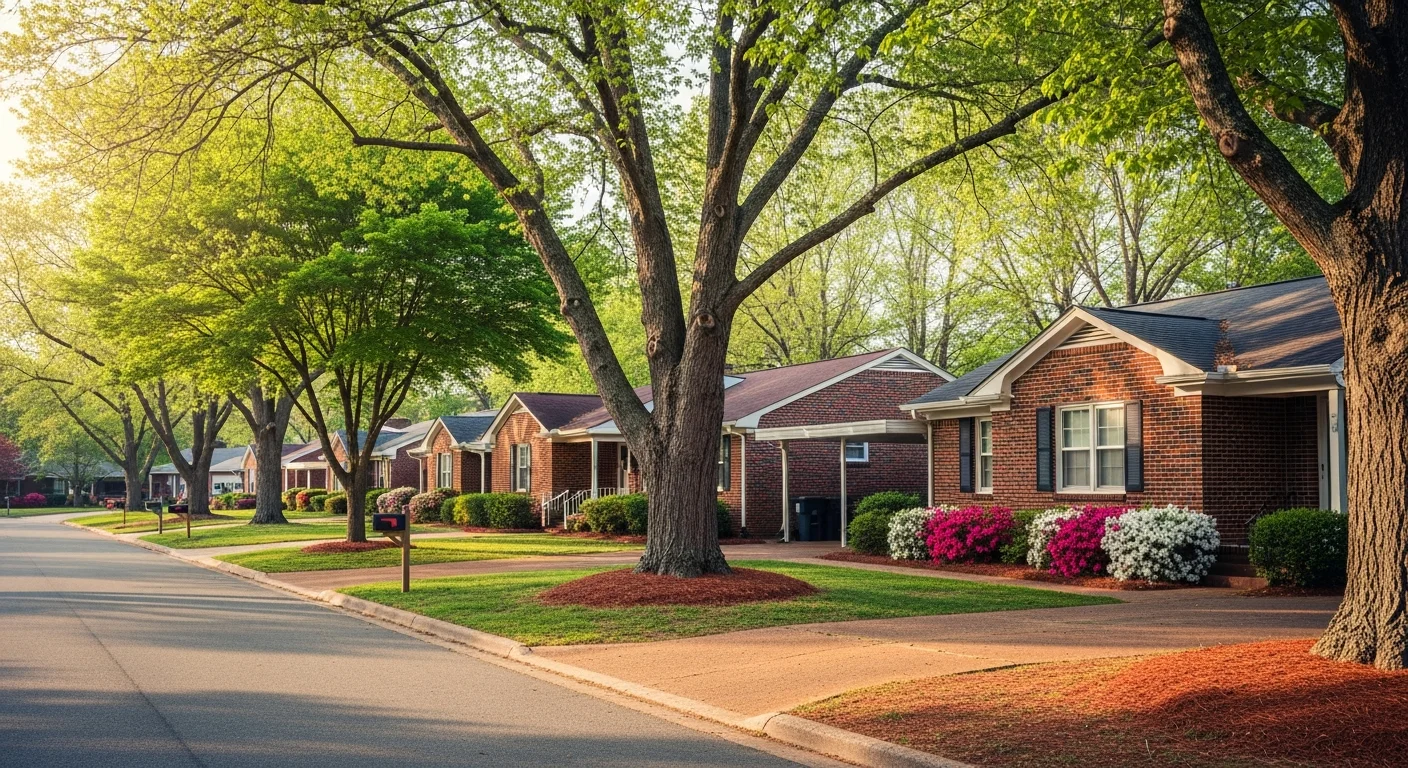
Monroe's dominant housing type — 1980s-1990s brick ranch homes with crawl space
foundations over Piedmont clay — represents the most common reconstruction profile in
Union County.
Reconstruction Scope
Types of Reconstruction We Handle in Monroe
Every damage type leaves a different reconstruction footprint. Here's what Monroe
homeowners typically face based on the original loss event.
Water Damage Rebuild
1-4 weeks
Drywall, flooring, subfloor, cabinets, trim
Monroe's most common reconstruction type. Burst pipes, crawl space flooding, and appliance failures damage drywall, flooring, and subfloor materials. For 1990s-era homes with OSB subfloors, water damage almost always means full subfloor replacement — OSB swells irreversibly and cannot be dried back to structural integrity.
Fire Reconstruction
4-16 weeks
Framing, electrical, HVAC, drywall, all finishes
Fire damage reconstruction ranges from single-room rebuilds to complete structural overhauls. Even contained fires require electrical rewiring and HVAC replacement in affected zones — smoke and heat compromise wire insulation and coil integrity. Structural fire damage demands full framing replacement, new roofing, and complete mechanical system installation.
Storm Damage Repair
4-12 weeks
Roof, siding, windows, water damage repairs
Hurricane remnants, severe thunderstorms, and straight-line wind events damage Monroe roofs, siding, and windows — creating secondary water intrusion that compounds the original damage. Storm reconstruction often involves roof replacement, siding repair, window installation, and interior water damage repairs from the breach.
Structural Reconstruction
6-16 weeks
Foundation, framing, load-bearing walls, subfloor
Structural damage from termites, long-term moisture exposure, or foundation settlement requires engineering assessment and load-path reconstruction. Monroe's crawl space homes on Piedmont clay are particularly susceptible to joist deterioration, pier settling, and subfloor failure from chronic moisture exposure.
Cosmetic Reconstruction
1-2 weeks
Paint, flooring, trim, fixtures, cabinets
Surface-level reconstruction after minor damage or as the final phase of a larger project. Includes paint, flooring replacement, trim and baseboard installation, fixture upgrades, and cabinet refinishing or replacement. No structural work involved — ideal for completing insurance claims after mitigation dries the structure.
Reconstruction Timeline
Monroe's 6-Step Reconstruction Process
From damage assessment through final Union County inspection, here's how Palm Build
manages the reconstruction of your Monroe home — click each step to learn more.
01
Days 1-5
Damage Assessment & Scope Development
Our project manager documents every affected area with photos, moisture readings, and structural notes. We develop a detailed scope using Xactimate — the same estimating platform your insurance carrier uses — ensuring alignment from day one. For Monroe properties, we identify construction era, original materials, and any Historic District requirements during this phase.
Monroe Housing Intelligence
What Breaks First by Build Decade
Monroe's median home was built in 1987 with the peak construction decade in the 1990s.
Each build era has predictable failure patterns that drive reconstruction needs.
Understanding your home's era helps you prepare insurance coverage and anticipate costs.
1980s-1990s: Peak Build Era (Dominant)
Benton Acres, Bearskin Place, Benton Heights, Bethany Estates
OSB swells irreversibly when wet. After any water event — crawl space flood, pipe burst, appliance leak — affected panels must be cut out and replaced. This is the #1 reconstruction cost driver in Monroe.
Polybutylene supply linescritical
PB pipe (gray flexible plastic) degrades internally from chlorinated water. Failures are sudden and catastrophic — full supply line replacement is standard during reconstruction.
HVAC (original)high
First-generation systems reaching 30-35 years. Condensate lines clog and overflow, causing ceiling and wall damage. Replacement is often included in reconstruction scope.
Reconstruction note: Monroe's highest-volume reconstruction era. OSB subfloor replacement drives the majority of water damage rebuild costs.
Historic Preservation Expertise
Monroe's Historic Residential District: Reconstruction with Preservation Sensitivity
Monroe's documented Historic Residential District contains some of Union County's most
architecturally significant homes — Italianate mansions, Queen Anne Victorians, and
Classical Revival residences dating from 1874 through the 1940s. When fire, water, or
storm damage strikes these homes, reconstruction is not just about rebuilding — it's
about preserving the architectural heritage that defines Monroe's identity.
For restoration contractors unfamiliar with historic preservation requirements, these
projects become costly learning experiences. Materials get rejected, plans get revised,
and timelines extend while the contractor discovers what period-appropriate actually
means in practice. Palm Build sources correct materials before demolition begins.
Preservation Review for Exterior Work
Exterior reconstruction in Monroe's Historic Residential District may require review to ensure materials, window styles, porch details, and roofing maintain the district's architectural character. Submitting non-compliant plans triggers revision cycles that can add 3-6 weeks to your timeline. Palm Build understands what satisfies review requirements.
Pre-1940s Construction Methods
These homes feature balloon framing, plaster-over-lath walls, original-growth hardwood floors, and hand-milled trim profiles that cannot be matched with modern stock lumber. Reconstruction requires sourcing specialty materials from regional architectural salvage and millwork suppliers — lead times of 3-8 weeks are common.
Period-Appropriate Material Matching
Original clapboard siding profiles, wood window configurations, brick mortar color matching, standing-seam metal roofing, and historically accurate paint colors all factor into reconstruction scope. Insurance policies cover reconstruction to pre-loss condition — for historic homes, that means period-appropriate materials, which cost more than modern equivalents.
Architectural Styles in Monroe's Historic District
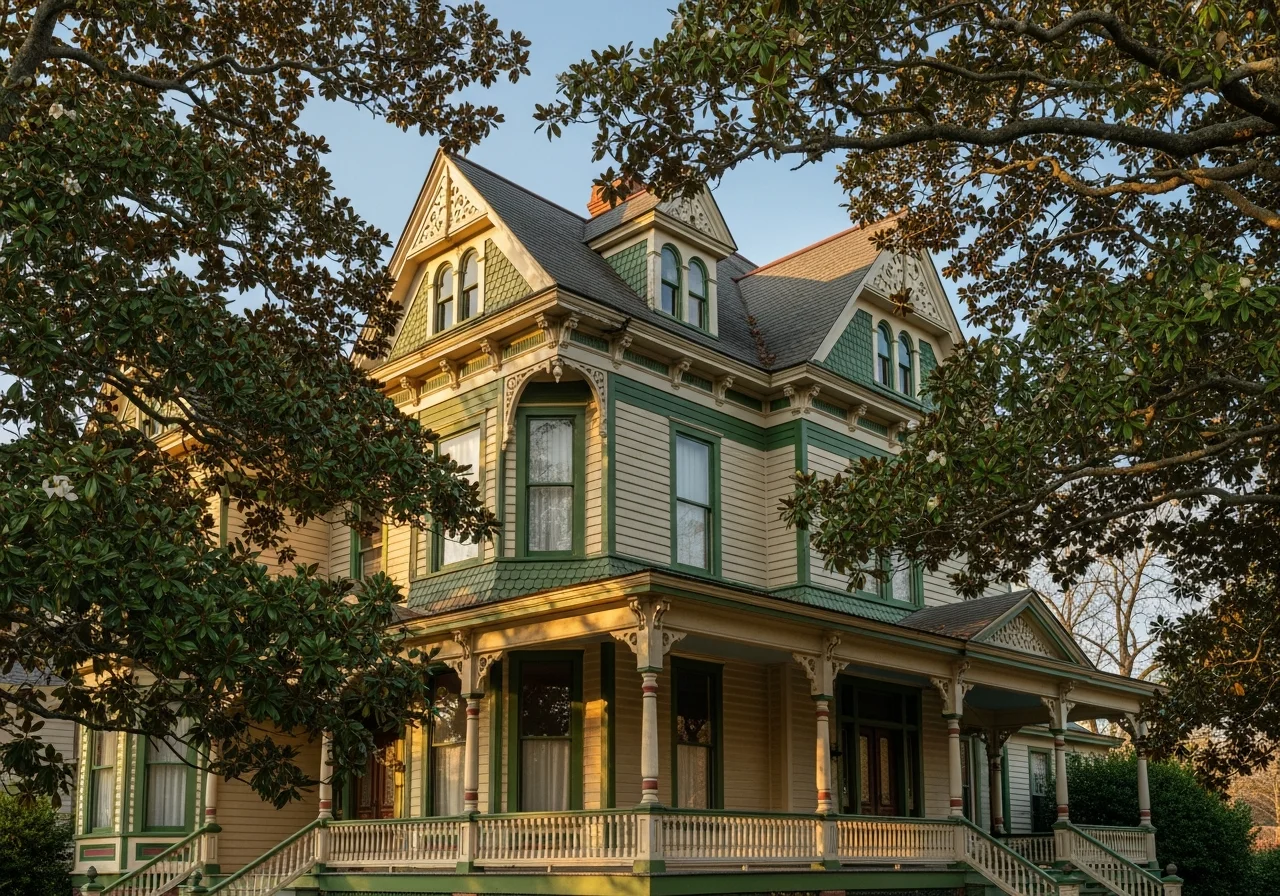
Monroe's Historic District homes require period-appropriate materials and
preservation-sensitive reconstruction to maintain original architectural character
Important for homeowners:
Insurance policies cover reconstruction to pre-loss condition. For historic homes,
"pre-loss condition" includes period-appropriate materials — which cost 15-25% more
than modern equivalents. Make sure your policy includes replacement cost coverage and
an ordinance-and-law endorsement to cover the difference.
Monroe Pricing
Reconstruction Costs in Monroe
These ranges reflect actual Monroe and Union County project costs for insurance-funded
reconstruction. Monroe's mix of Historic District properties, 1980s-1990s brick ranches,
and newer subdivisions means material costs and complexity vary widely. Current
residential reconstruction in the Monroe area averages $140-$200 per square foot
depending on scope and finish level.
Minor Reconstruction
1-2 rooms, surface-level repairs
Drywall replacement (1-2 rooms)$2,500 - $7,000
Flooring repair/replacement$1,500 - $8,000
Paint & finish work$800 - $3,500
Minor electrical/plumbing$500 - $2,000
Total minor project$5,000 - $20,000
Major Reconstruction
Multi-room, structural involvement
Kitchen or bathroom rebuild$12,000 - $35,000
Structural framing repair$5,000 - $22,000
Electrical/plumbing rough-in$3,000 - $12,000
OSB subfloor replacement$2,000 - $5,500/room
Total major project$20,000 - $80,000+
Full Rebuild
Structural rebuild, whole house
Complete structural rebuild$50,000 - $120,000
Full mechanical systems$12,000 - $40,000
Interior finish (all rooms)$18,000 - $55,000
Historic District premium+15-25%
Total full rebuild$80,000 - $250,000+
All estimates based on Monroe-area material and labor costs. Insurance-funded projects use
Xactimate pricing. Historic District homes with period-appropriate materials typically add
15-25% to standard reconstruction costs.
Insurance Guidance
Insurance Coverage for Reconstruction in Monroe
Most Monroe reconstruction projects are insurance-funded. Understanding your coverage
before a loss event saves weeks of negotiation and thousands in out-of-pocket costs. NC
homeowners face premium increases in 2025 and 2026 — review your policy now.
Replacement Cost Value (RCV)
Essential
Confirm your policy pays RCV, not ACV (actual cash value). ACV deducts depreciation — on a 1987 Monroe home with 35-year-old cabinets, that deduction can be substantial. RCV pays to replace with equivalent new materials.
Ordinance-and-Law Endorsement
Essential
When reconstruction triggers code-required upgrades — updated electrical panels, GFCI protection, arc-fault breakers, modern smoke detectors — standard coverage only pays to rebuild to original spec. This endorsement covers the gap, which can be $5,000-$30,000 for pre-1990 Monroe homes.
Mold Coverage Limits
Important
Many NC carriers cap mold at $5,000-$10,000 — often insufficient when mold is discovered behind walls during reconstruction. Monroe's humid climate and crawl space homes make mold a common secondary issue. Check your limit and consider increasing it.
Flood Insurance (Richardson Creek Area)
Important
Standard homeowner's policies exclude flood damage. If you live near Richardson Creek, Crooked Creek, or any Union County drainage corridor, you may need separate flood insurance. FEMA flood maps for Union County were updated in 2023 and 2025 — check your current designation.
Wind/Hail Deductible Structure
Recommended
NC wind and hail deductibles may be percentage-based (1-5% of dwelling coverage) rather than flat dollar amounts. On a $250,000 policy, a 2% wind deductible is $5,000 out of pocket. Understand your deductible before a storm hits.
Pre-Loss Documentation
Recommended
Photograph and video your home room by room — walls, floors, ceilings, cabinets, appliances. Store copies off-site or in the cloud. Pre-loss documentation dramatically speeds claims by establishing baseline condition.
Palm Build works with all major carriers serving Monroe: State Farm, NC Farm
Bureau, USAA, Allstate, Erie, Nationwide, and Travelers. Our Xactimate-based documentation is
formatted to match exactly what adjusters need — reducing back-and-forth and accelerating claim
approval.
Our Work
Monroe Reconstruction Gallery
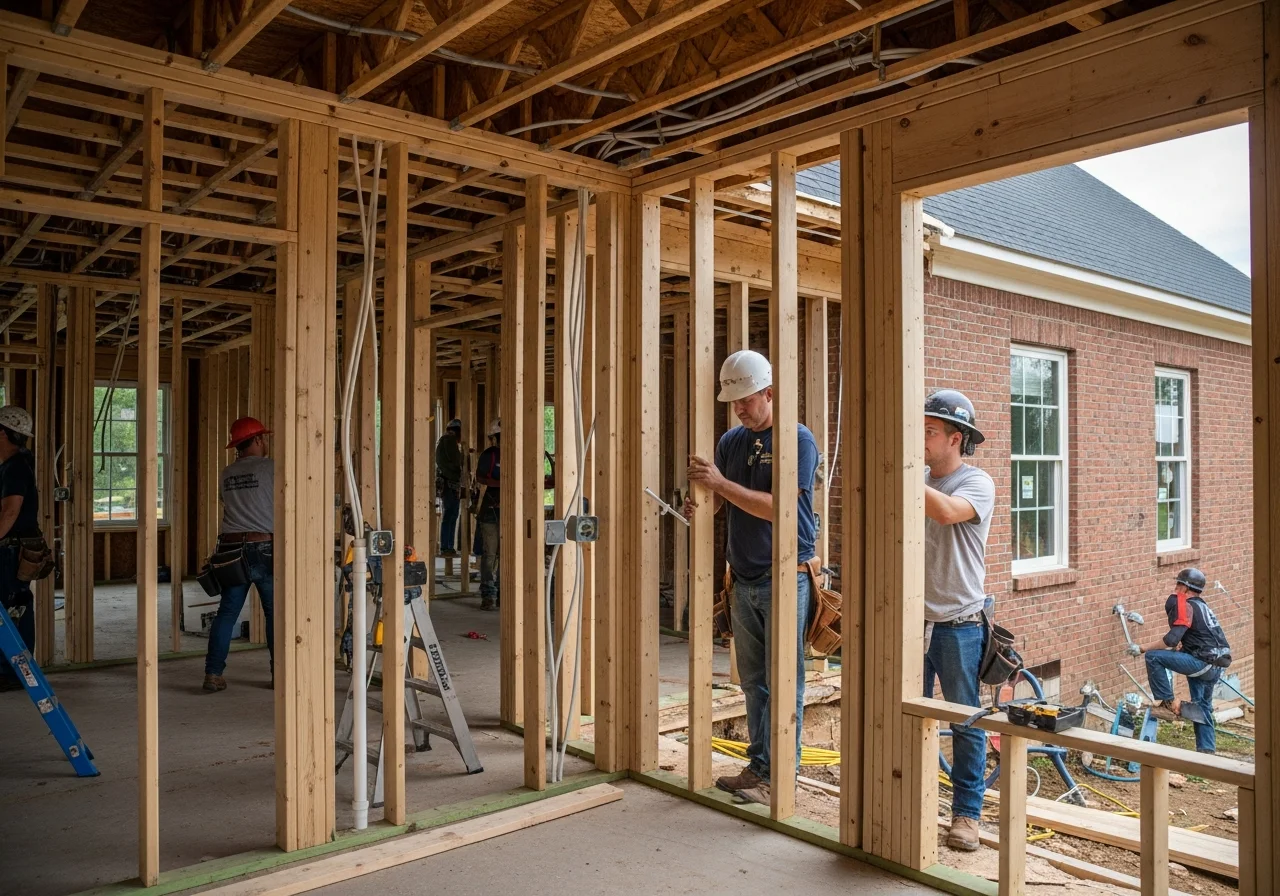
Structural framing: rebuilding from the studs up after fire damage in a Monroe home
Historic District: preservation-sensitive reconstruction maintains original character
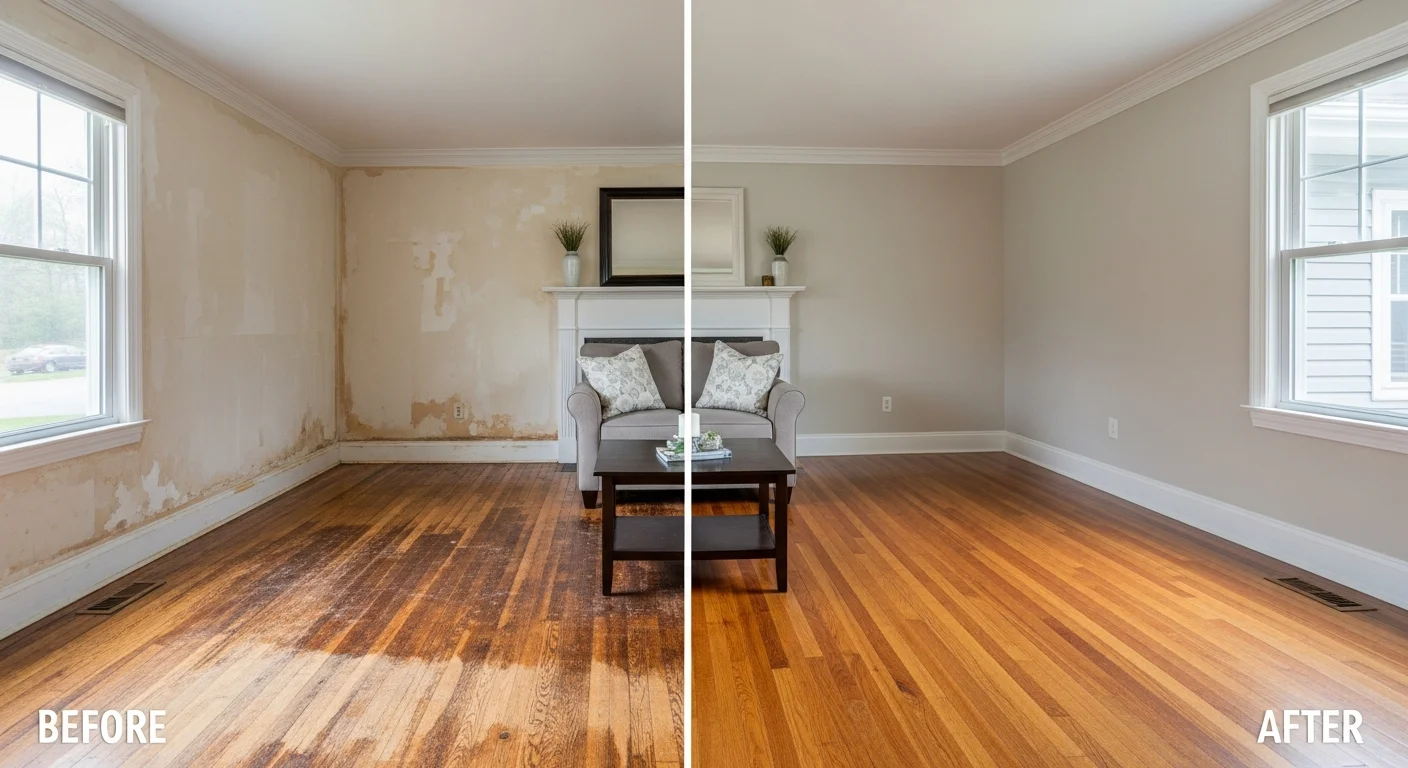
Water damage to complete rebuild: hardwood floors, drywall, and trim fully restored
Modern subdivision reconstruction: matching current building standards and materials
The Palm Build Difference
Why Monroe Homeowners Choose Palm Build for Reconstruction
NC General Contractor License
Palm Build holds full North Carolina general contractor licensing. We pull our own Union County permits, manage all trade inspections, and ensure code compliance throughout the reconstruction. No subcontracting the license, no unlicensed work, no inspection surprises.
Charlotte-Based, Monroe-Focused
Our Crompton Street operations hub is 28 miles from Monroe. Our crews know Union County's neighborhoods, Piedmont clay conditions, crawl space challenges, and the specific building types in every Monroe subdivision — from Benton Acres to Stonebridge to the Historic District.
Insurance Coordination & Xactimate
Our estimates use the same Xactimate software and pricing database your insurance carrier uses. This eliminates format-based disputes, reduces supplement negotiation cycles, and ensures your claim is funded at the correct amount for Monroe-area material and labor costs.
Single-Source Responsibility
Mitigation and reconstruction under one roof. Our mitigation team's documentation feeds directly into the reconstruction scope — no information lost in the handoff between companies. Reconstruction planning begins during the drying phase, saving Monroe homeowners 2-4 weeks of displacement.
Historic District Experience
We understand Monroe's Historic Residential District preservation requirements. Period-appropriate materials, architectural details, and finishes are built into our initial scope — not discovered during a rejection cycle. We source specialty materials before demolition begins.
Every Build Decade Covered
From 1870s balloon framing with plaster walls to 2020s engineered systems with smart home integration, we know what's behind Monroe's walls. Construction-era-specific knowledge means accurate scoping, fewer surprises during demolition, and reconstruction that matches the building's original quality.
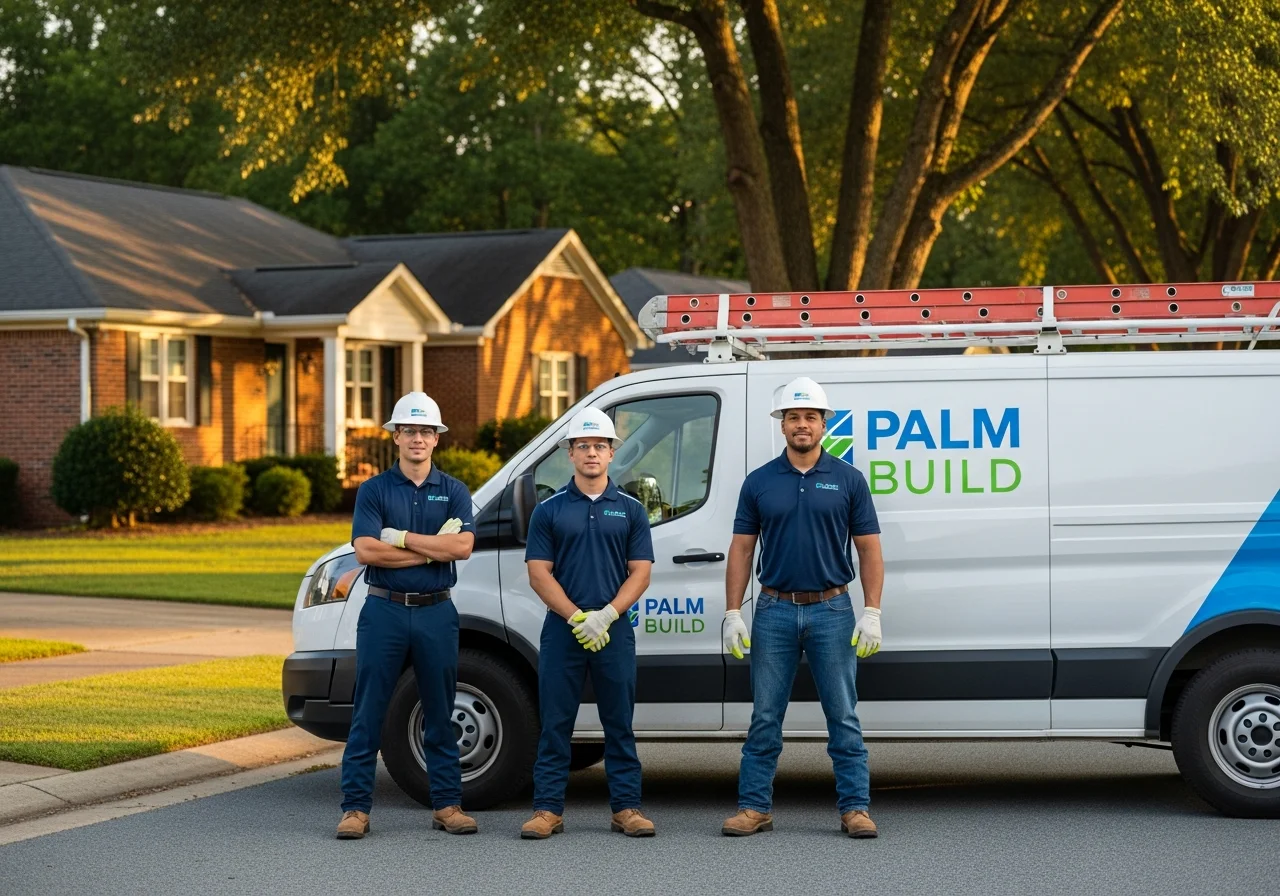
Palm Build's Charlotte-based team serves Monroe with full reconstruction capabilities
— from structural framing through finish carpentry
Common Questions
Monroe Reconstruction FAQ
How long does reconstruction take after damage in Monroe?
Minor reconstruction such as single-room drywall and flooring replacement takes 1-3 weeks. Moderate projects involving multiple rooms, a kitchen, or bathroom run 4-8 weeks. Major structural rebuilds after fire or extensive storm damage take 8-16 weeks. Historic District homes with period-appropriate material sourcing may extend timelines by 2-4 weeks for specialty materials.
What permits are required for reconstruction in Monroe?
Union County issues building permits for structural, electrical, mechanical, and plumbing work. The City of Monroe Planning Department handles zoning compliance. Properties in the Historic Residential District may require additional review for exterior reconstruction to ensure architectural character is preserved. Palm Build manages all permit applications and inspection scheduling.
Does insurance cover reconstruction after damage in Monroe?
Yes — if the original damage was caused by a covered peril such as fire, sudden water damage, or wind, your homeowners insurance covers reconstruction to pre-loss condition. When reconstruction triggers code-required upgrades, an ordinance-and-law endorsement covers the gap, which can be $5,000-$30,000 for pre-1990 Monroe homes. Palm Build coordinates directly with your adjuster and submits supplements when hidden damage or code requirements expand the original scope.
Why do 1990s Monroe homes need subfloor replacement after water damage?
Many Monroe homes built from the late 1980s through the 1990s used OSB (oriented strand board) subflooring. OSB swells irreversibly when exposed to water — unlike plywood, it cannot be dried and salvaged. After a crawl space flood, pipe burst, or sustained water exposure, affected OSB panels must be cut out and replaced. This is the single largest driver of water damage reconstruction costs in Monroe's dominant housing era.
Can Palm Build reconstruct Historic District homes in Monroe?
Yes. Monroe's Historic Residential District (1874-1940s) includes Italianate, Queen Anne, and Classical Revival homes with original millwork, plaster walls, and period-specific materials. We source period-appropriate materials, replicate original trim profiles, and use historically accurate finishes. For these homes, reconstruction is about preserving architectural character while meeting current safety codes.
What does reconstruction cost in Monroe?
Costs vary by damage type and scope: single-room drywall and flooring runs $2,500-$7,000, kitchen rebuilds run $12,000-$35,000, full-floor fire rebuilds run $35,000-$100,000, and whole-house reconstruction ranges from $80,000 to $250,000+. Monroe-area residential reconstruction currently averages $140-$200 per square foot depending on finish level. Historic District homes with period-appropriate materials cost 15-25% more than standard reconstruction.
How quickly can Palm Build start reconstruction in Monroe?
Reconstruction planning begins during the mitigation phase — while drying equipment is still running, our project manager is developing the scope, ordering materials, and initiating permits. Once mitigation is verified complete, reconstruction can begin within 5-10 business days depending on permit processing and material availability. Our Charlotte hub is 28 miles from Monroe with a 45-60 minute response time.
What happens if hidden damage is found during reconstruction?
Hidden damage is common in Monroe reconstruction — mold behind walls after water damage, compromised wiring after fire, structural deterioration under flooring. When discovered, we document the additional damage with photos and moisture readings, prepare a supplement request for your insurance carrier, and adjust the reconstruction scope. Work on unaffected areas continues while the supplement is processed to minimize timeline delays.
Need Reconstruction After Damage in Monroe?
Palm Build handles the full rebuild — from demolition through final walkthrough — with one team, one point of contact, and full permit coordination through Union County. No handoffs to separate contractors, no gaps in your timeline.