Fire & Smoke Damage Cleanup in Monroe, North Carolina
From Historic District homes built as early as 1874 with aging knob-and-tube wiring to ranch-style brick homes across Benton Heights and Stonebridge with outdated electrical panels, Palm Build's IICRC-certified team delivers emergency board-up, professional soot removal, deep smoke odor elimination, and full reconstruction for Union County homeowners — responding from our Charlotte hub in 45 to 60 minutes.
28 miles from Monroe — Union County 45-60 min Response IICRC Certified
Why Monroe Homes Face Elevated Fire and Smoke Damage Risks
Monroe's fire risk profile spans two eras: a historic core built long before modern
electrical codes, and a suburban boom that has filled Union County with ranch-style
and split-level homes now approaching 35-50 years old. When fire strikes your Monroe
home, smoke damage penetrates every surface within hours.
Historic District: Knob-and-Tube Wiring from the 1870s-1940s
150 yrs
Oldest homes in Historic District
Monroe's Historic District surrounding the Union County Courthouse contains Queen Anne and Italianate homes dating to 1874. Some still carry original knob-and-tube wiring behind plaster-and-lath walls — electrical systems designed for gas-to-electric conversions a century ago. Decades of added appliances, window AC units, and modern kitchens pile demand onto circuits never designed to carry it, creating arc fault conditions invisible until fire starts inside a wall cavity.
Heating Season: Space Heaters in Older Homes
30°F
Avg January low temp
January lows in Monroe average 30 degrees F — cold enough that portable space heaters become a nightly necessity in older homes with single-pane windows and minimal insulation. Ranch-style brick homes across Benton Acres and Bearskin Place rely heavily on aging HVAC systems and supplemental heating. The NFPA identifies space heaters as the leading cause of home heating fires nationwide, and Monroe's older housing stock is especially vulnerable during December through February.
Aging Electrical Panels in 1970s-1990s Homes
1987
Median home construction year
Benton Heights, Bethany Estates, and other 1970s-1990s Monroe neighborhoods carry outdated electrical panels — some with recalled Federal Pacific and Zinsco breakers known for failure to trip during overload. These homes were built during Monroe's suburban growth period when cost-cutting on electrical components was common. Modern appliance loads push these 30-50 year old systems beyond their design capacity.
St Johns Forest & Cresswind: Premium Properties at Risk
$350K+
Newer subdivision home values
Newer subdivisions like St Johns Forest, Cresswind, and Crooked Creek Estates contain homes with open floor plans, premium hardwood floors, custom cabinetry, and high-end finishes. A kitchen grease fire in an open-plan home generates smoke and soot that travel farther and faster than in compartmentalized older construction. High-value contents and custom materials can extend restoration timelines and costs dramatically.
Monroe's Historic District homes date to the 1870s-1940s — beautiful architecture with
aging electrical systems that represent the city's highest fire risk category.
Monroe Fire Risk at a Glance
Historic District homes with knob-and-tube wiring behind plaster walls
Space heater fires spike November through February (30 degrees F avg low)
Federal Pacific and Zinsco panels in 1970s-1990s ranch homes
71.2% detached homes — most with crawl space foundations on clay soil
Open floor plans in newer subdivisions allow rapid smoke spread
Understanding the Damage
How Smoke Penetrates Monroe's Common Building Materials
After a fire in a Monroe home, visible soot is only the beginning. Smoke particles as
small as 0.1 microns penetrate brick, hardwood, plaster, and HVAC ductwork — reaching
areas that show no visible fire damage. Each material type requires a different
restoration approach.
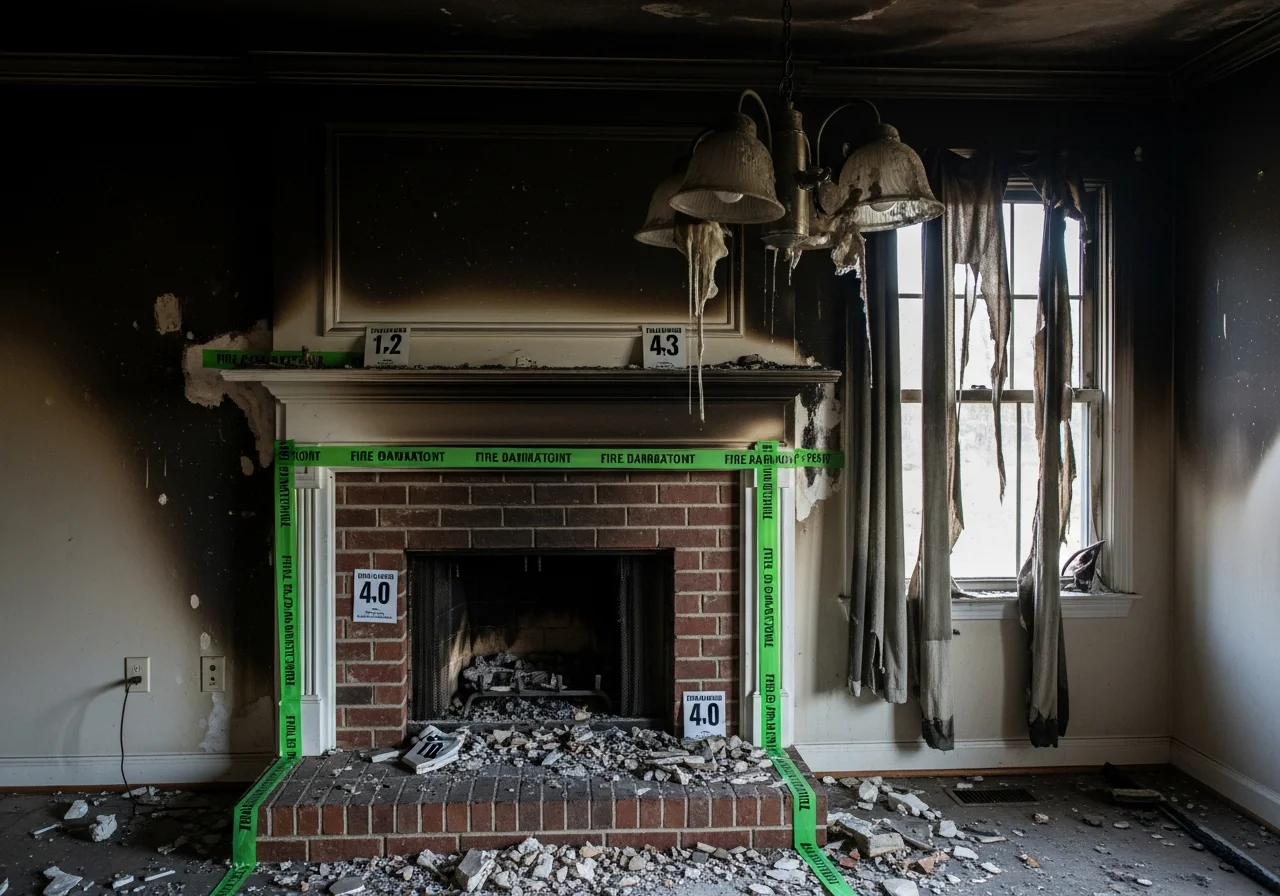
Smoke penetration in a Monroe home — soot contamination extends well beyond the
visible burn area into walls, HVAC systems, and crawl spaces.
Every Hour Matters
Acidic soot residue chemically etches surfaces progressively. What could be
professionally cleaned at hour 4 may require full replacement by hour 48. If you've
had a fire of any size, call (704) 464-0121 for professional assessment before attempting any cleanup.
Brick Veneer & Mortar
Monroe's dominant exterior material — brick veneer over wood framing — creates a double problem after fire. Smoke particles penetrate the porous mortar joints and embed in the brick surface, while the air gap between brick and wood framing acts as a chimney, drawing smoke upward through the wall cavity. Exterior brick cleaning is insufficient; the wall cavity behind the brick must be assessed and treated separately.
Penetration Level
Deep — mortar joints and wall cavities
Treatment
Pressure washing exterior, cavity treatment via access points, sealant application
Hardwood Floors
Original hardwood floors in Monroe's Historic District homes and newer engineered hardwood in Stonebridge and Cresswind absorb smoke through the grain, between boards, and through the finish layer. Acidic soot etches the polyurethane finish within hours. If treated within 4 to 8 hours, professional cleaning can save the floor. After 24 to 48 hours, sanding and refinishing — or full replacement — becomes necessary.
Penetration Level
Moderate to deep — through grain and board gaps
Treatment
Immediate neutralization, chemical sponge cleaning, refinish or replace based on timing
Plaster Walls (Historic Homes)
The lime-based plaster walls in Monroe's Historic District homes are significantly more porous than modern drywall. Smoke particles penetrate deep into the plaster matrix — far beyond what surface cleaning can reach. The wood lath behind plaster also absorbs and retains smoke odor. Homes built before 1940 may also contain lead paint, requiring certified abatement before any restoration work begins.
Penetration Level
Very deep — through full plaster thickness into lath
Treatment
Odor-sealing primer after cleaning, possible plaster repair, lead testing for pre-1940 homes
HVAC Ductwork in Crawl Spaces
In Monroe's crawl space homes — the dominant foundation type across Benton Acres, Bearskin Place, and older neighborhoods — HVAC ductwork running through the crawl space acts as a smoke distribution highway. Smoke particles coat the interior of every duct run, become trapped in filter media and insulation, and recirculate through the home every time the system cycles. Even after visible soot is cleaned, contaminated HVAC systems push smoke particles into every room.
Penetration Level
Complete system contamination — every duct, coil, and register
Treatment
Full duct cleaning, coil treatment, blower wheel cleaning, filter replacement, possible duct replacement
Fire Damage Categories
Types of Fire and Smoke Damage in Monroe Properties
From kitchen grease fires in Stonebridge's open-plan homes to electrical fires in
Historic District properties, the type of fire determines the cleanup approach. Using
the wrong cleaning method on the wrong soot type doesn't just fail — it sets stains
permanently and drives odor deeper into materials.
Kitchen Fires (Protein Soot)
The most common fire type in Monroe homes. Cooking fires produce an almost invisible, yellowish protein residue with an extremely pungent odor that penetrates every surface — often far beyond the kitchen. In Monroe's open-plan Stonebridge and Cresswind homes, protein soot from a kitchen grease fire can contaminate the entire main level within minutes. The residue bonds chemically to surfaces rather than sitting on top of them, and standard cleaning products spread the residue and set the stain permanently.
Professional Cleaning Approach
Requires enzymatic cleaners and specialized degreasing agents. Thermal fogging with protein-specific solutions is needed for odor elimination.
Electrical Fires (Hidden Ignition)
Electrical fires are Monroe's most dangerous fire type because they often start inside wall cavities — invisible until they break through. The Historic District's knob-and-tube wiring, aging HVAC connections in Benton Acres ranch homes, and overloaded Federal Pacific panels in 1980s Bethany Estates homes all create arc-fault conditions that ignite surrounding wood framing and insulation. By the time smoke is visible, the fire has often been burning behind walls for minutes to hours.
Professional Cleaning Approach
Requires comprehensive wall cavity inspection with thermal imaging. Affected wiring must be fully replaced, not repaired. Smoke testing maps contamination extent beyond visible damage.
HVAC and Chimney Fires
Aging forced-air furnaces in Monroe's crawl space homes can ignite dust buildup, cracked heat exchangers, and deteriorated ductwork. Chimney fires from creosote buildup affect homes with wood stoves and fireplaces — common in Historic District properties and older neighborhoods. HVAC fires are particularly destructive because the ductwork acts as a smoke distribution highway, pushing contaminated air into every room of the home simultaneously.
Professional Cleaning Approach
Complete HVAC system decontamination including duct cleaning, coil treatment, blower wheel cleaning, and filter replacement. Chimney repairs or relining after inspection.
Wet Smoke vs Dry Smoke Residue
Dry soot from fast-burning fires (wood, paper, natural materials) produces powdery gray-black residue that spreads extensively through HVAC systems. Wet smoke from slow-burning synthetic materials — carpet padding, foam insulation, plastics — produces thick, sticky, black soot that smears when touched and adheres aggressively to every surface. Monroe's older homes with original hardwood framing produce dry soot, while newer homes with synthetic materials generate the more damaging wet smoke residue.
Professional Cleaning Approach
Dry soot: HEPA vacuuming first (never wipe), then chemical sponge treatment. Wet smoke: solvent-based cleaners formulated for petroleum-based residues, multiple passes required.
Our Fire Restoration Process
6-Step Fire and Smoke Restoration for Monroe Homes
Fire restoration is not a single trade — it's a coordinated sequence of emergency
response, hazardous materials handling, precision cleaning, odor science, and full
reconstruction. Here's exactly what happens when you call Palm Build after a fire in
your Monroe home.
01
Emergency Response & Board-Up
45-60 min
Call (704) 464-0121 any time — day or night. Our fire restoration crew dispatches from our Charlotte operations hub and arrives in Monroe within 45 to 60 minutes via US-74. We assess structural integrity, board up windows and doors to prevent weather exposure and unauthorized entry, and tarp compromised roof sections. For Monroe's older homes in the Historic District, we watch for hazards specific to balloon-frame construction — fire can travel through wall cavities in ways modern construction prevents.
02
Fire Damage Assessment
Day 1-2
Before any cleanup begins, our IICRC-certified technicians perform comprehensive documentation using thermal imaging, moisture meters, and air quality monitoring. We photograph every affected room, catalog damaged contents, and classify the fire damage type — protein (kitchen fires), complex (mixed fuels), or natural substance (wood-burning). This classification determines the cleaning chemistry required and becomes the foundation of your insurance claim. For Monroe's Historic District properties, we document original architectural details for preservation-appropriate restoration.
03
Water Removal from Fire Suppression
Days 1-5
A single fire hose delivers 150 to 250 gallons per minute — firefighting suppression water is the leading cause of secondary damage after a house fire. In Monroe's crawl space homes throughout Benton Acres, Bearskin Place, and the Historic District, suppression water pools beneath the structure on Piedmont clay soil that drains extremely slowly, triggering mold growth within 24 to 48 hours. We deploy truck-mounted extractors, submersible pumps for crawl spaces, and commercial dehumidifiers simultaneously with soot stabilization.
04
Smoke & Soot Cleanup
Days 3-10
Soot removal requires different techniques based on fire type and affected surfaces. Dry soot from fast-burning fires responds to dry chemical sponges and HEPA vacuuming. Wet, sticky protein soot from kitchen fires requires solvent-based cleaning. In Monroe's older homes with original plaster walls, hardwood floors, and wood trim, we use techniques that remove soot contamination without damaging underlying surfaces — every surface in the smoke path is addressed: walls, ceilings, trim, light fixtures, switch plates, window tracks, cabinet interiors, and HVAC components.
05
Odor Elimination
Days 5-14+
Smoke odor is the most persistent element of fire damage. Palm Build uses a three-layer approach: thermal fogging to reach smoke particles inside wall cavities and HVAC systems, hydroxyl generator treatment to break down odor molecules at the chemical level, and ozone shock treatment for unoccupied spaces with deep penetration. For Monroe's older plaster-wall homes where smoke penetrates the porous lime-based plaster, we apply odor-sealing primer to affected surfaces before repainting.
06
Structural Reconstruction
Weeks 2-8+
From drywall replacement to custom trim matching, we restore your Monroe home to pre-fire condition — or better. All structural work is fully permitted through the City of Monroe and Union County. For Historic District properties, we coordinate with preservation guidelines to maintain architectural character. For Cresswind and St Johns Forest homes with premium finishes, we source matching materials to ensure seamless restoration.
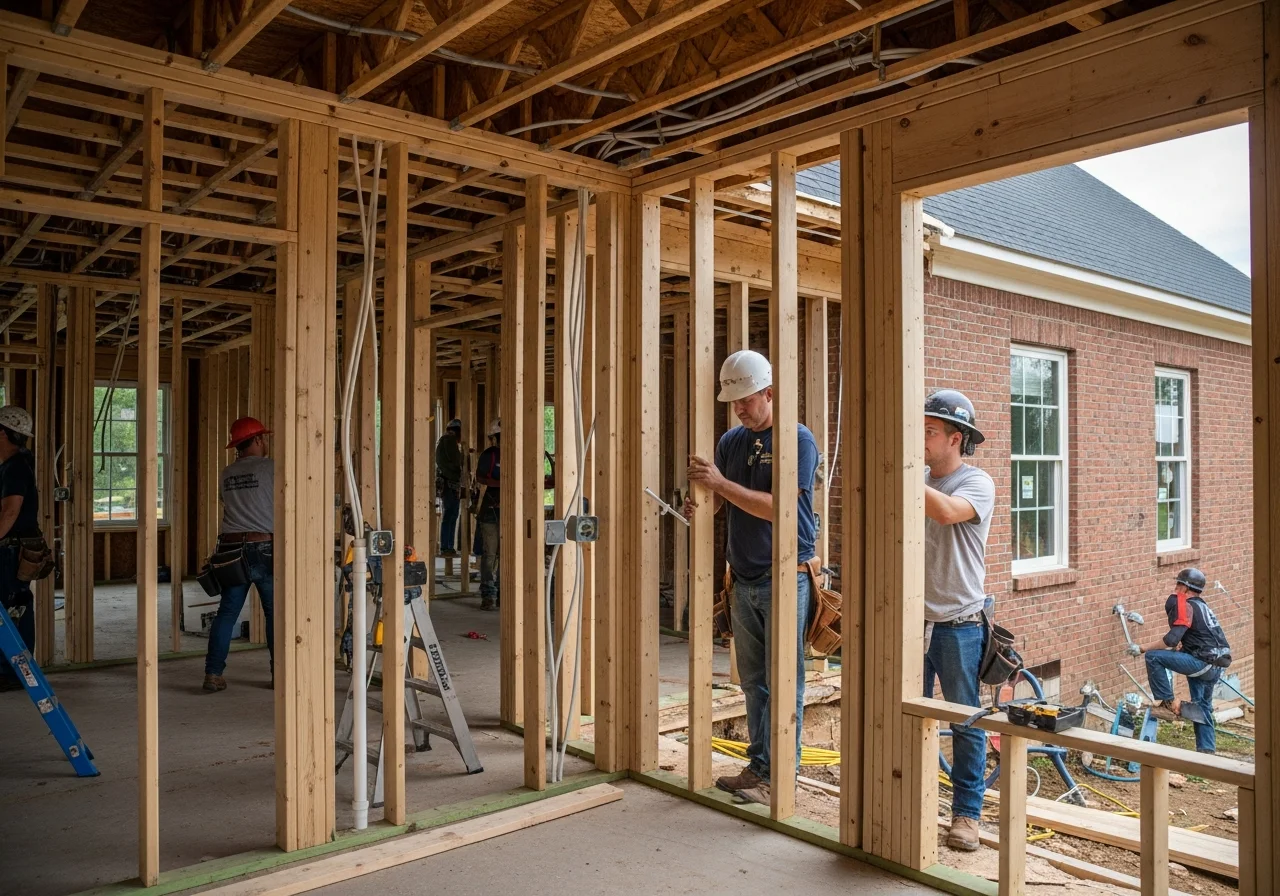
Structural reconstruction framing in a Monroe home after fire damage — fully permitted
through City of Monroe and Union County.
24/7 Emergency Service
Emergency Board-Up & Tarping for Monroe Homes After Fire
After fire departments clear the scene, your Monroe home is vulnerable. Every hour of
exposure to weather, debris, and potential intrusion compounds the damage and
complicates your insurance claim. Palm Build dispatches emergency board-up crews to
Monroe 24/7 — securing your property while the full restoration scope is developed.
Structural Securing
Board up all compromised window and door openings to prevent unauthorized entry and further structural deterioration. Fire-weakened framing, exposed wiring, and unstable floors create hazards that must be physically secured before any restoration work begins.
Weather Protection
Tarp compromised roof sections and seal any openings where rain, wind, or debris can enter. Monroe's Piedmont climate delivers an average of 47.8 inches of rainfall annually — water entering a fire-damaged structure through a compromised roof compounds the damage exponentially, saturating already weakened framing and triggering mold growth within days.
Vandalism & Theft Prevention
Fire-damaged homes are targets for theft and vandalism. Exposed copper wiring, HVAC equipment, and appliances attract opportunistic theft. Professional board-up with security-grade materials — not just plywood sheets — protects your property and your insurance claim integrity until restoration begins.
Palm Build dispatches emergency board-up crews to Monroe 24/7 — securing fire-damaged
properties within 45-60 minutes of your call.
Why Immediate Board-Up Matters
Rain entering through a compromised roof can cause more damage than the original fire
Insurance carriers expect prompt mitigation — delays can reduce your claim payout
Unsecured properties face vandalism, theft of copper, and liability exposure
Board-up costs are covered under standard NC homeowners fire insurance policies
Monroe Pricing
Fire and Smoke Damage Restoration Costs in Monroe
Fire restoration costs in Monroe vary based on fire severity, smoke spread, property
type, and whether structural reconstruction is needed. Historic District homes typically
cost more due to material matching and preservation requirements. Cresswind and St Johns
Forest homes with premium finishes incur higher costs driven by custom material
sourcing.
Standard Fire & Smoke Damage
$3,000 - $25,000
Contained kitchen fire cleanup: $3,000-$8,500
Single room soot and smoke cleaning: $2,500-$6,000
Historic District home fire restoration: $50,000-$150,000
St Johns Forest / Cresswind estate fire + smoke + contents: $60,000-$200,000+
Full reconstruction after total loss: $150,000-$500,000+
Fire is fully covered under standard North
Carolina HO-3 homeowners policies. Monroe homeowners pay approximately $1,800-$2,200 per year
for coverage. Palm Build provides detailed documentation from the first call to maximize your
claim settlement.
Insurance Coverage
Fire Insurance Claims in Monroe: What's Covered
Fire is one of the most comprehensively covered perils under North Carolina homeowners
insurance policies (HO-3). Unlike water or mold damage, fire claims rarely face coverage
disputes — your policy is designed for exactly this situation. Monroe homeowners pay
approximately $1,800-$2,200 annually for this coverage.
Structural repair and reconstruction to pre-loss condition
Professional soot and smoke cleaning of all affected surfaces
Water damage from fire suppression (extraction and drying)
Contents restoration or replacement (furniture, electronics, clothing)
Additional Living Expenses (ALE) for temporary housing during restoration
Debris removal and hazardous material disposal
Building code upgrades required during reconstruction (with ordinance-and-law endorsement)
Key Documentation Considerations
Smoke Damage Sublimits
Some NC policies contain sublimits on smoke-only claims where no visible fire occurred. If your Monroe home sustained smoke damage from a neighbor's fire or a small contained event, check your policy language carefully. Palm Build documents smoke damage to meet the highest evidentiary standard.
Contents Documentation for Premium Homes
High-value contents in St Johns Forest and Cresswind homes — custom furniture, electronics, art, designer fixtures — require detailed inventory with pre-loss valuation. Standard contents limits may not cover premium items without a scheduled personal property endorsement. We photograph and catalog every affected item from day one.
ALE (Additional Living Expense) Coverage
ALE covers temporary housing, meals, and increased living expenses while your Monroe home is uninhabitable. Most NC HO-3 policies provide ALE at 20-30% of dwelling coverage. For a $300,000 Monroe home, that's $60,000-$90,000 in temporary living support. Palm Build provides timeline documentation to support ALE claims throughout the restoration process.
Palm Build Manages Your Fire Claim
We work directly with your insurance adjuster from the first inspection. Our fire damage
documentation — structural assessments, soot type classification, moisture readings,
photo evidence, and detailed scopes of work — is formatted exactly how carriers like
State Farm, Travelers, Safeco, and NC Farm Bureau expect to receive it. This reduces
back-and-forth and gets your claim approved faster.
Fire damage inside a Monroe home — soot contamination extends well beyond the visible burn area into walls and HVAC systems
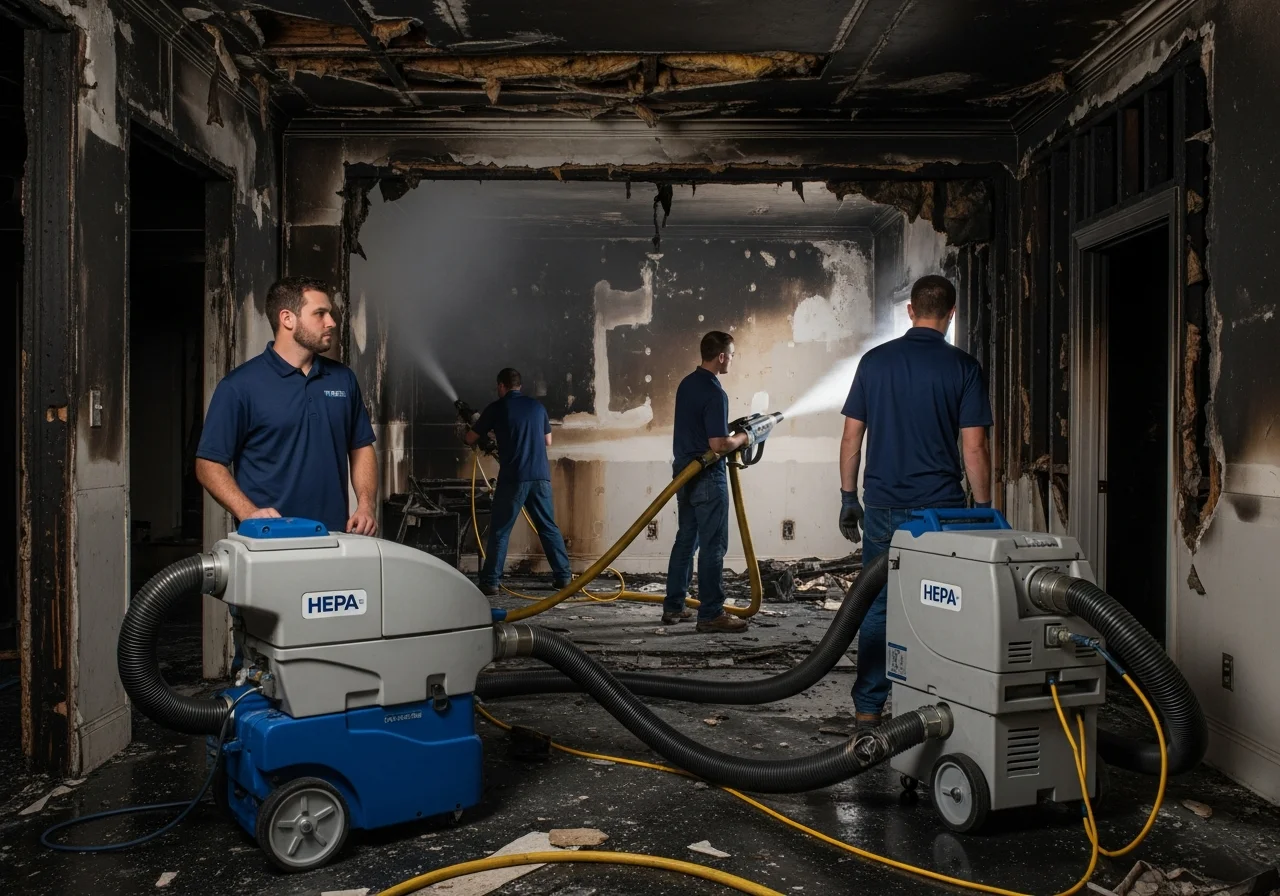
IICRC-certified fire restoration team on-site with specialized soot removal and deodorization equipment
Full reconstruction framing after structural fire damage — permitted through City of Monroe and Union County
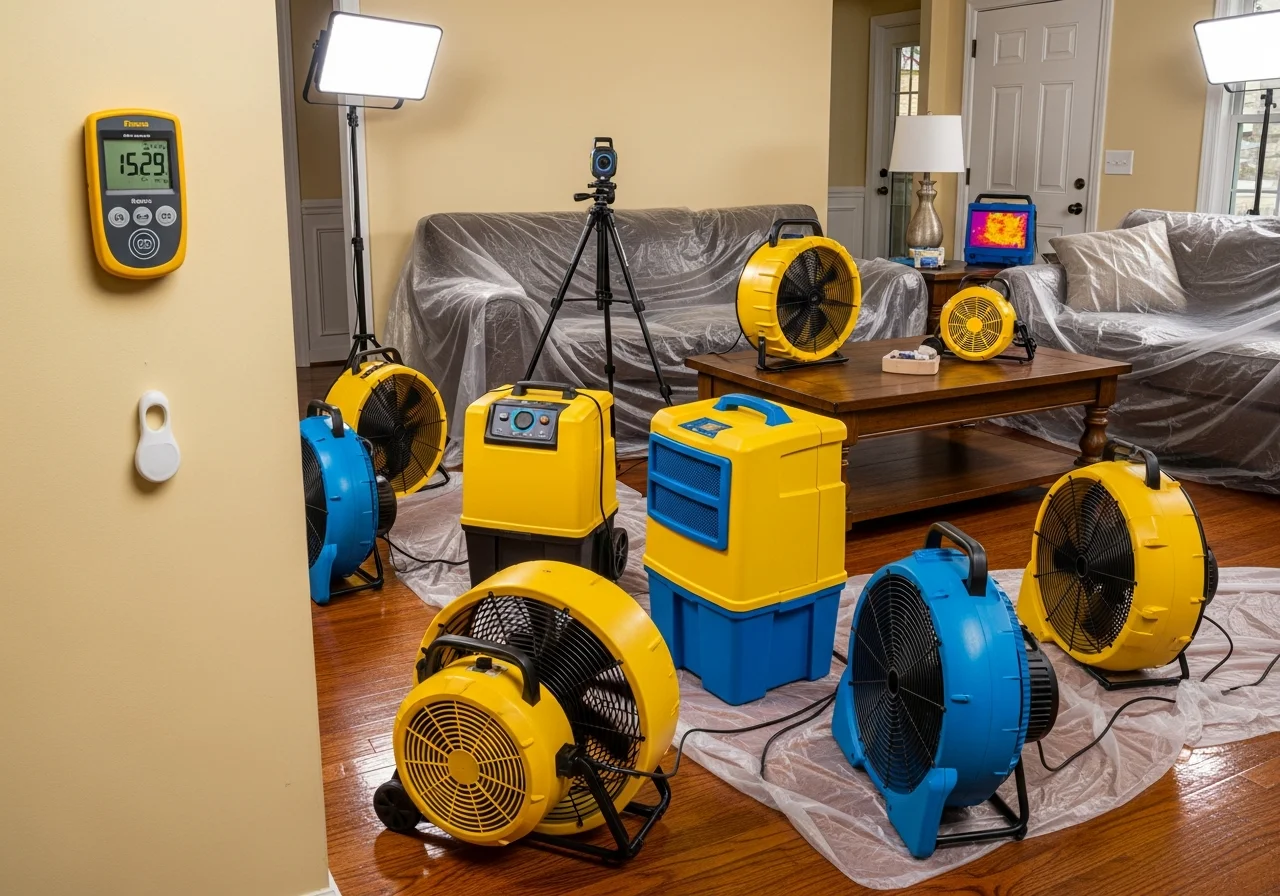
Structural drying equipment deployed to address fire suppression water — firefighting water causes secondary damage in crawl space homes
The Palm Build Difference
Why Monroe Homeowners Choose Palm Build After a Fire
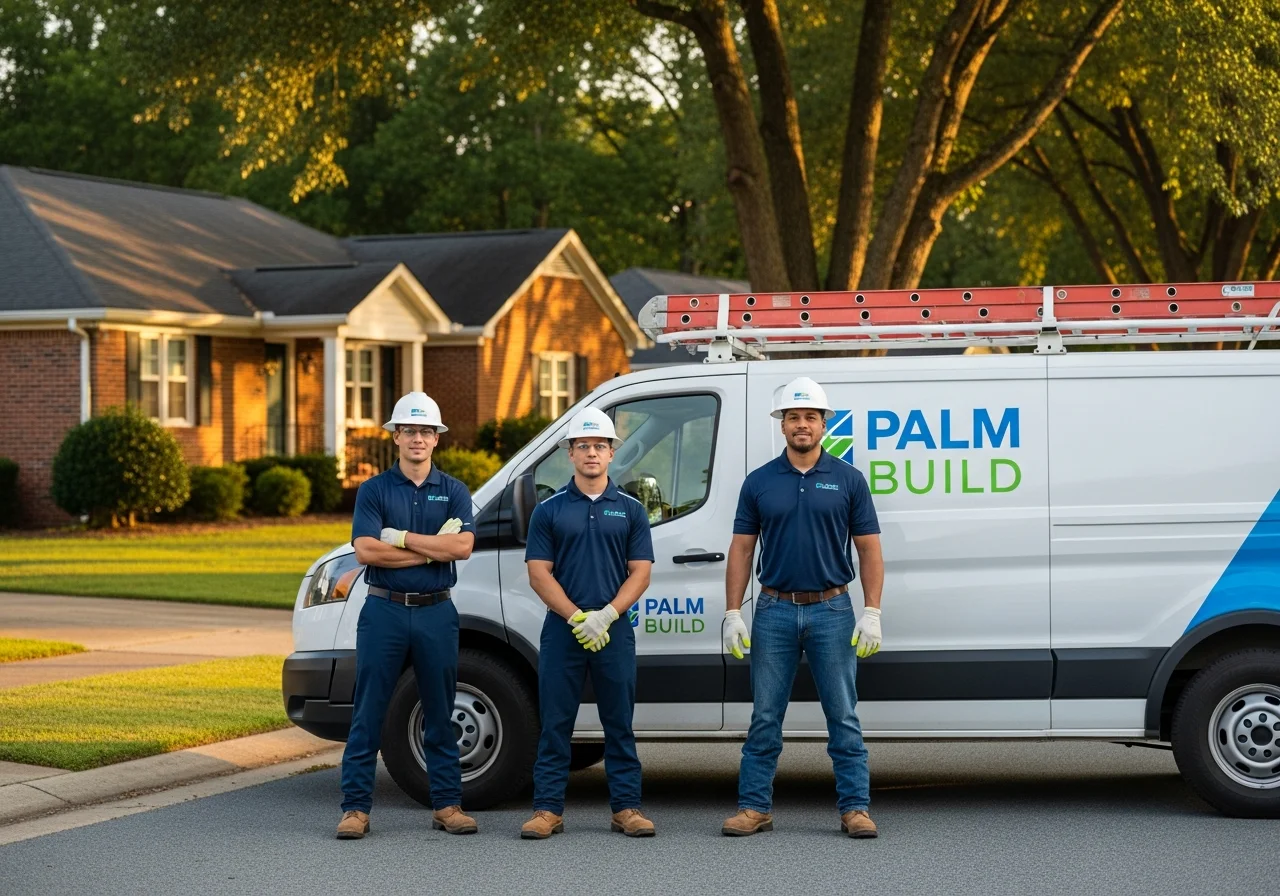
Palm Build's IICRC-certified team — responding to Monroe fire and smoke emergencies
from our Charlotte operations hub.
45-60 Minute Response to Monroe
Our Charlotte operations hub is 28 miles from Monroe via US-74. When you call (704) 464-0121, our fire restoration crew dispatches immediately — arriving with emergency board-up materials, soot stabilization compounds, and water extraction equipment. Early response prevents soot from permanently etching surfaces and stops fire suppression water from triggering mold in crawl spaces.
Full-Service: Board-Up to Rebuild
From emergency board-up and tarping the night of the fire through final paint, trim, and punch list, Palm Build handles the entire fire restoration project. No subcontractor handoffs, no waiting for separate trades. One team, one point of contact, one scope of work from the first emergency call through certificate of occupancy.
IICRC Fire & Smoke Certified
Every crew lead holds current IICRC Fire and Smoke Restoration Technician (FSRT) certification. We follow the S540 standard for professional fire and smoke damage restoration procedures — the same standard insurance adjusters use to evaluate restoration quality. Our soot classification, cleaning chemistry, and odor elimination protocols are science-based, not guesswork.
Union County Permit Expertise
Fire reconstruction in Monroe requires permits through the City of Monroe and Union County building inspection. Palm Build manages the full permitting process — from application through final inspection — so your restoration is never delayed by paperwork or compliance issues. For Historic District properties, we coordinate with preservation guidelines to maintain architectural character.
Insurance Advocacy and Documentation
Fire claims involve the most comprehensive insurance documentation of any restoration type. Our structural assessments, soot type classification, moisture readings, photo evidence, and detailed scopes of work are formatted exactly how NC carriers — State Farm, Travelers, Safeco, NC Farm Bureau — expect to receive them. We advocate for full scope approval and minimize supplement disputes.
Contents Restoration Capability
Fire doesn't just damage your structure — it damages everything inside. Palm Build provides full contents restoration: professional cleaning of smoke-damaged furniture, electronics assessment and data recovery, textile and garment ozone treatment, document and photo preservation, and secure pack-out and storage during reconstruction.
Common Questions
Monroe Fire & Smoke Cleanup FAQ
How quickly can Palm Build respond to a fire emergency in Monroe?
Our Charlotte-based fire restoration team typically arrives in Monroe within 45 to 60 minutes from our Crompton Street operations hub — approximately 28 miles via US-74. We dispatch 24/7/365 for fire and smoke emergencies. Call (704) 464-0121 any time, day or night. Early response is critical because soot becomes increasingly acidic within hours and begins permanently etching hardwood floors, countertops, and painted surfaces.
Does homeowners insurance cover fire damage in Monroe?
Yes — fire damage is one of the most comprehensively covered perils under standard North Carolina homeowners policies (HO-3). Coverage typically includes structural repair, contents replacement, soot and smoke cleanup, temporary living expenses (ALE), and debris removal. Monroe homeowners pay approximately $1,800-$2,200 per year for coverage through carriers like State Farm, Travelers, Safeco, and NC Farm Bureau. Palm Build provides detailed documentation from the first emergency call to maximize your claim settlement.
Why are older Monroe homes at higher fire risk?
Monroe's Historic District contains Queen Anne and Italianate homes dating to the 1870s-1940s, some still carrying original knob-and-tube wiring behind plaster walls. Ranch-style brick homes built through the 1960s-1980s across Benton Acres, Benton Heights, and Bearskin Place carry aging HVAC systems, outdated electrical panels, and in some cases recalled Federal Pacific breaker panels. Legacy wiring combined with modern appliance loads — EV chargers, home offices, upgraded kitchens — pushes these 35-60 year old systems beyond their design capacity.
How long does fire damage restoration take in Monroe?
Timeline depends on severity and property type. A contained kitchen fire in a Stonebridge or Cresswind home may take 1 to 3 weeks. Moderate residential fires with smoke spread throughout the structure typically require 4 to 8 weeks. Major structural fires in Historic District homes — where material matching, lead paint abatement, and potential asbestos remediation add complexity — can take 3 to 6 months. St Johns Forest and Bethany Estates restorations with custom finish matching may extend timelines further.
What about water damage from firefighting in Monroe homes?
Fire suppression water is the leading cause of secondary damage after a house fire — a single fire hose delivers 150 to 250 gallons per minute. In Monroe's crawl space homes, suppression water pools beneath the structure on Piedmont clay soil that drains extremely slowly, triggering mold growth within 24 to 48 hours. Palm Build handles fire and water damage simultaneously, beginning water extraction and structural drying while performing soot stabilization to prevent both types of secondary damage.
Can smoke odor be completely eliminated from a Monroe home?
Yes, but only with professional-grade equipment and techniques. Surface cleaning alone will not eliminate embedded smoke odor. Palm Build uses a three-layer approach: thermal fogging to reach smoke particles inside wall cavities and HVAC ductwork, hydroxyl generator treatment to break down odor molecules at the chemical level, and ozone shock treatment for deep penetration in unoccupied spaces. For Monroe's older plaster-wall homes in the Historic District where smoke penetrates porous lime-based plaster, we also apply odor-sealing primer before repainting.
What areas of Monroe does Palm Build serve for fire restoration?
We serve all of Monroe and Union County including the Historic District, Bearskin Place, Benton Acres, Benton Heights, Bethany Estates, St Johns Forest, Stonebridge, Crooked Creek Estates, Cresswind, and surrounding communities including Indian Trail, Weddington, Stallings, Wingate, Marshville, and Waxhaw. Both 28110 and 28112 zip codes. Our Charlotte team reaches all Monroe neighborhoods within 45 to 60 minutes.
Should I attempt to clean soot damage myself after a fire in Monroe?
No. Improper soot cleaning is one of the most common mistakes homeowners make after a fire. Wiping dry soot with a wet cloth or standard cleaning products smears the residue and drives it deeper into surfaces — turning what could be professionally cleaned into a permanent stain requiring full replacement. Different fire types produce different soot chemistry: protein soot from kitchen fires requires enzymatic cleaners, while synthetic soot from plastic and synthetic materials requires solvent-based agents. Call (704) 464-0121 for professional assessment before touching any soot-contaminated surfaces.
Fire Damage in Monroe? Every Hour Counts.
Soot becomes permanently damaging within hours — and Monroe's hardwood floors, plaster walls, and brick mantels are especially vulnerable. Palm Build's Charlotte team responds in 45-60 minutes with emergency board-up, soot stabilization, and water extraction, plus full insurance documentation from the first call.