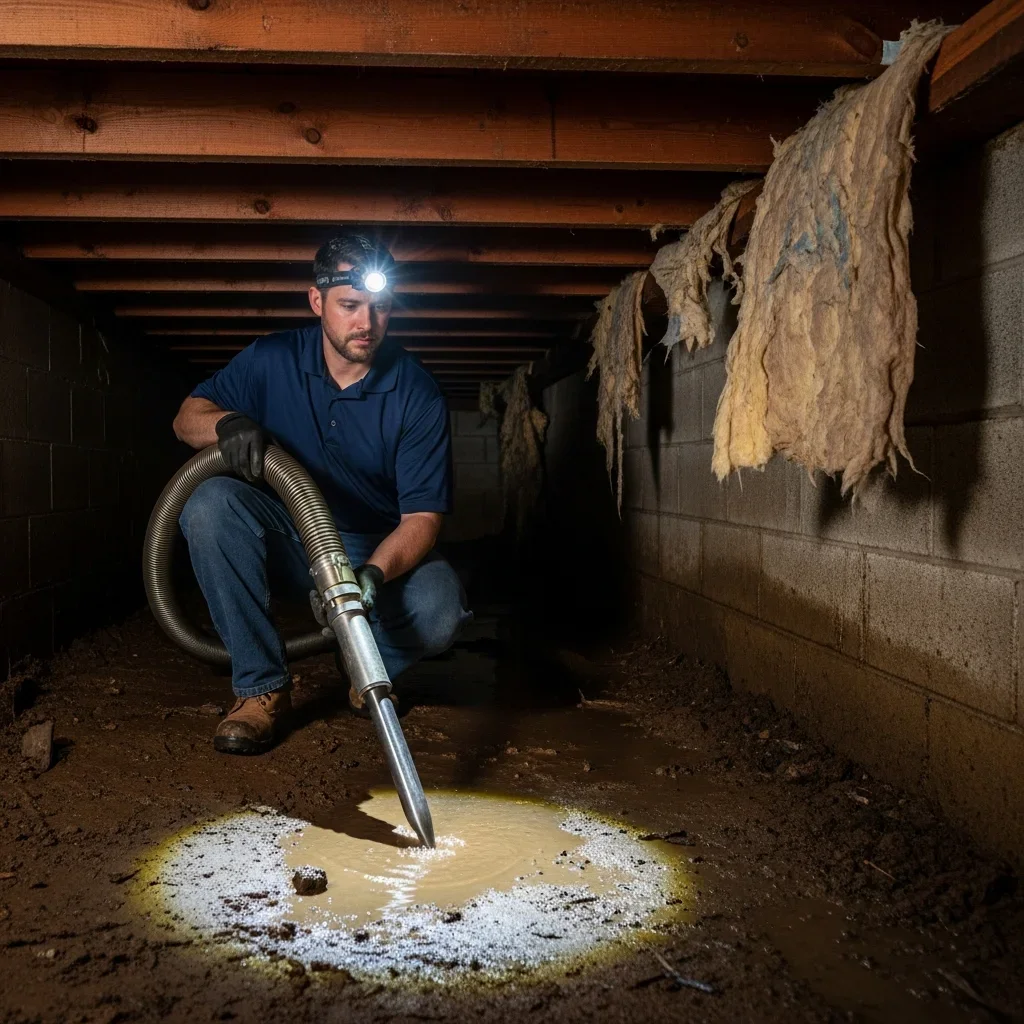
Water Damage Restoration in Lawndale, North Carolina
When the First Broad River rises or a spring storm soaks Lawndale's clay-heavy soil, Palm Build's Charlotte-based emergency team reaches ZIP 28090 in 60–75 minutes with truck-mounted extraction, structural drying systems, and complete insurance documentation — day or night.
55 miles from Lawndale 60-75 min Response IICRC Certified
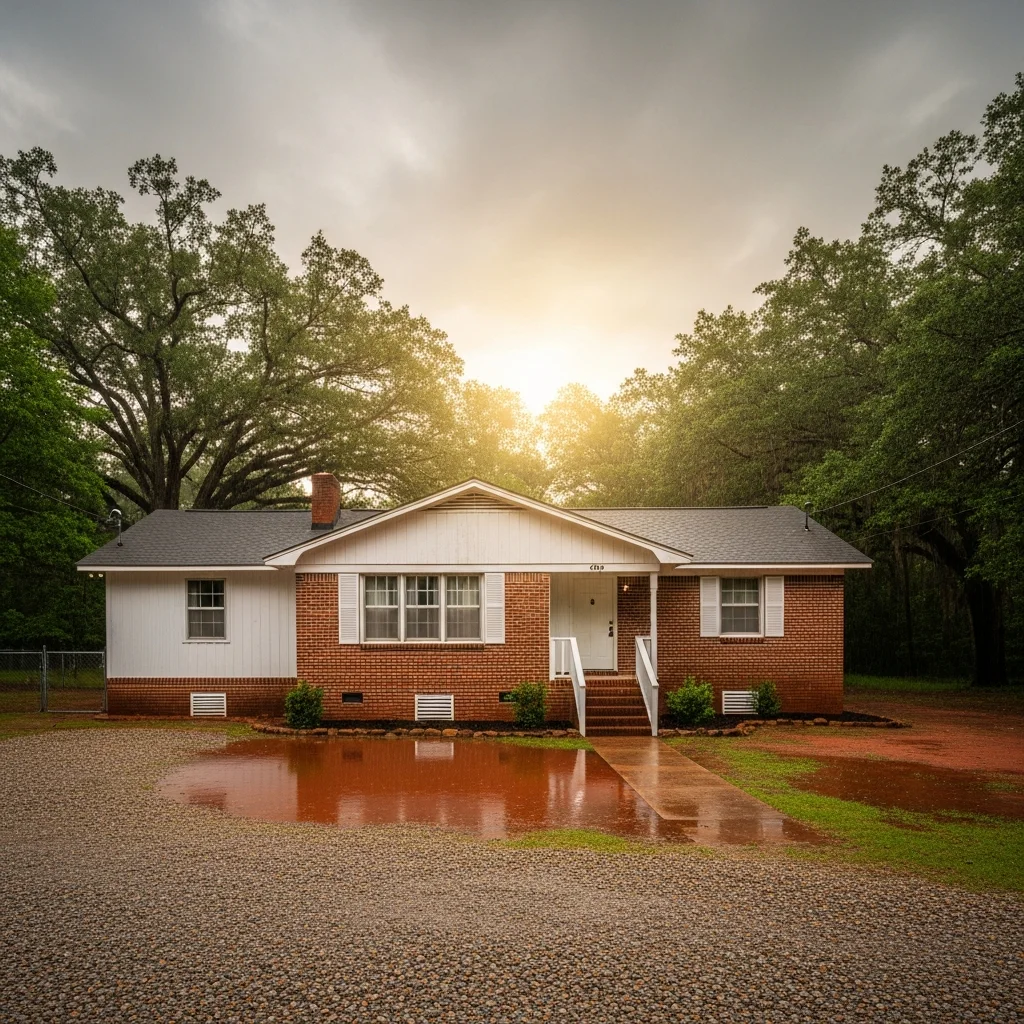
"We bought this place knowing it was old. Built around 1955, crawl space foundation,
the whole thing. Never thought much about it until that March when we got four
inches of rain in two days. Went under the house and there was standing water six
inches deep. The floor joists were already dark. I didn't know who to call — I
didn't even know if insurance would cover it."
Homeowner, ZIP 28090 — Cleveland County, NC
1958
Lawndale median home age
~50"
50"
Annual rainfall (Shelby proxy)
hrs
24–48 hrs
To mold onset on wet wood
What this means for Lawndale: In a town where most
homes were built before 1960 with vented crawl spaces, water damage isn't a fluke — it's a
predictable consequence of the local soil, rainfall, and construction era. Palm Build's Charlotte
team reaches ZIP 28090 in 60–75 minutes with truck-mounted extraction and full drying systems,
24 hours a day.
Cleveland County, NC — 2026
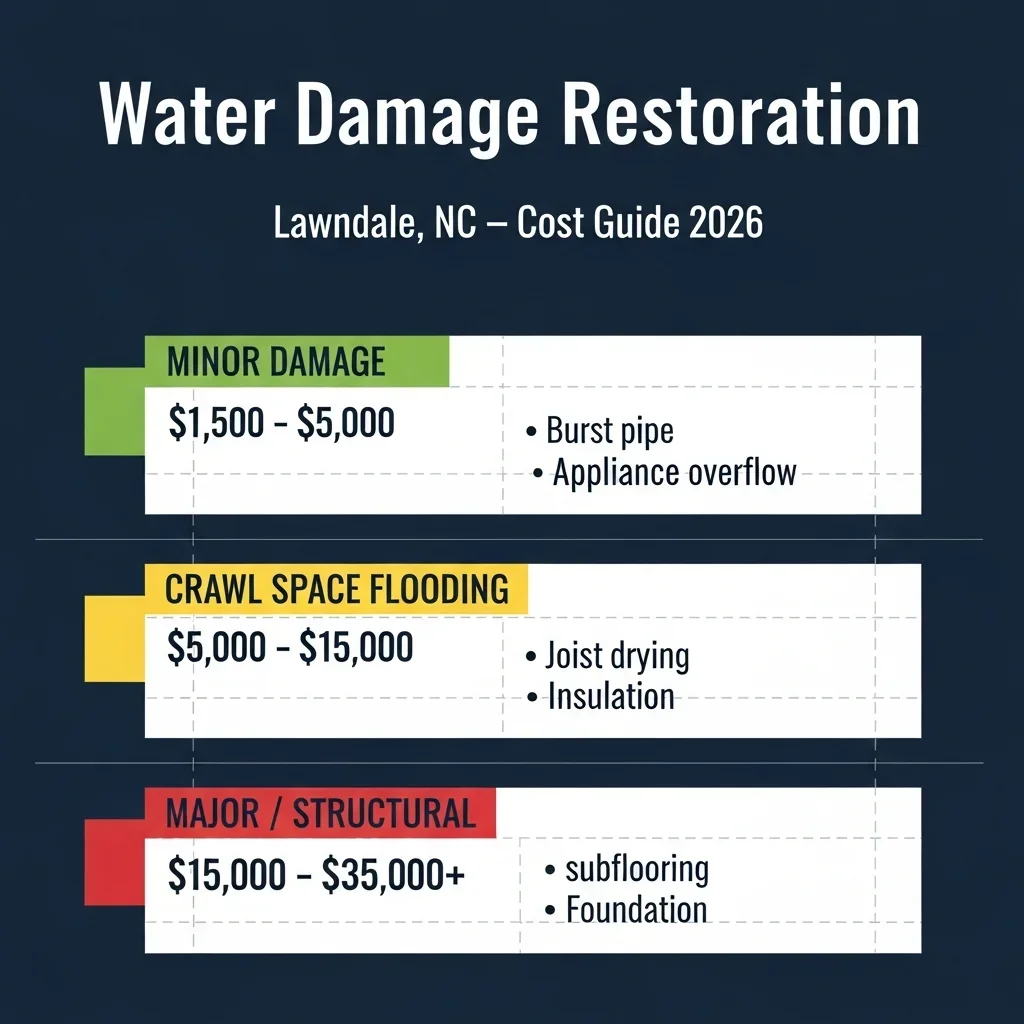
Water Damage Restoration Costs in Lawndale
Restoration costs in Lawndale depend primarily on how long water sat and whether the
crawl space was involved. Older homes with vented crawl space foundations over clay soil
almost always fall into Tier 2 or higher when a significant rainfall event occurs.
Minor / Contained
$1,500 – $5,000
Caught within 24 hours, no mold, no structural involvement
Burst supply line — contained to one room
Appliance overflow (washer, dishwasher)
Roof leak into attic with no structural damage
Small crawl space puddle caught early
Crawl Space Flooding
$5,000 – $15,000
Most common scenario in Lawndale's 1958-era homes after significant rain
Standing water in full crawl space
Saturated floor joists and insulation
Vapor barrier displacement or failure
Subfloor damage from sustained moisture
Structural / Major
$15,000 – $35,000+
Delayed response, pre-existing damage, or severe storm/flood event
Floor joist replacement required
Subfloor and hardwood removal
Foundation seepage with wall damage
Multi-room or whole-home water event
Insurance note: Most standard NC homeowner policies cover sudden and accidental
water damage but cap mold-related restoration at $5,000–$10,000. Policies do not cover flood
damage from rising water — that requires separate flood insurance. North Carolina is in an
active rate adjustment cycle through mid-2026; documentation quality directly affects claim
outcomes. Palm Build provides insurance-ready reports from day one.
Lawndale's Unique Risk Factor
First Broad River at Lawndale: What Flood Stage Means for Your Property
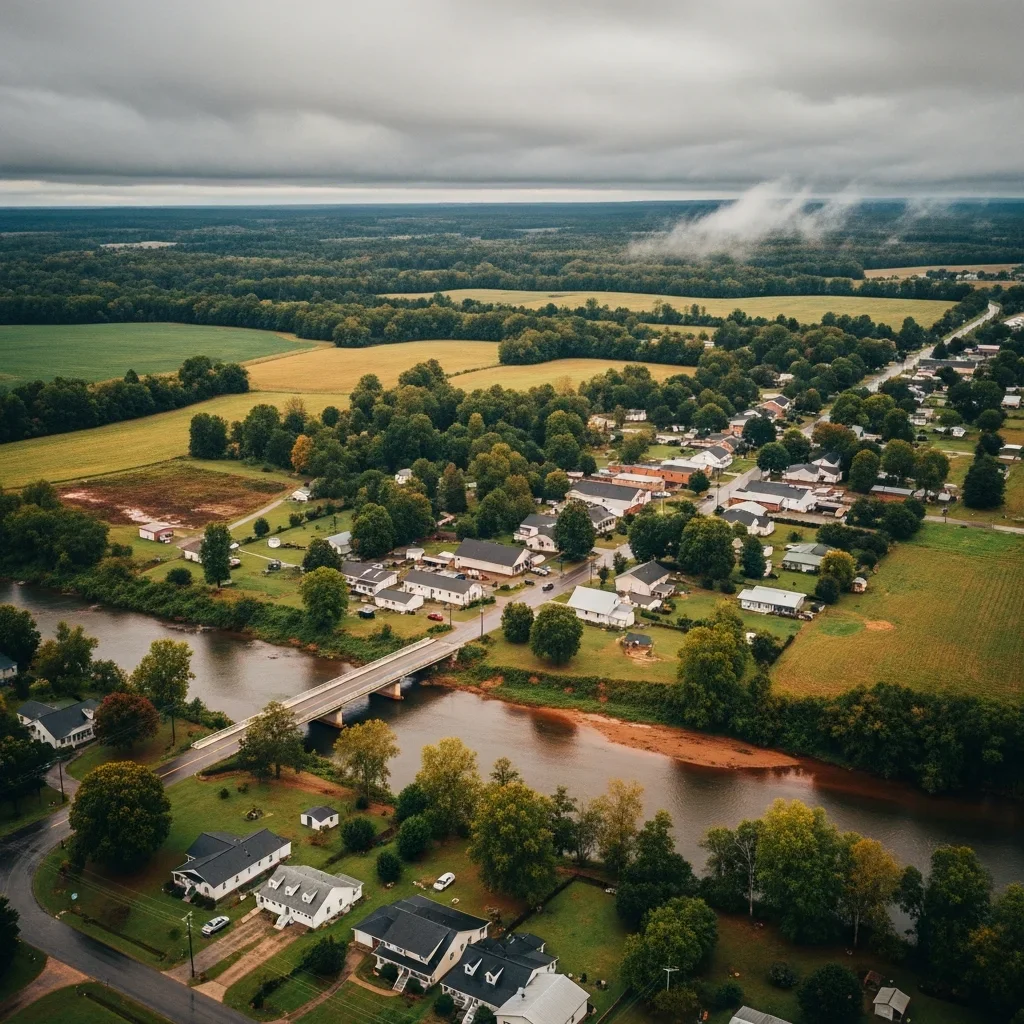
Unlike most small NC towns, Lawndale has a named, monitored river gauge at the town
itself — published flood impact statements tell you exactly what floods at which water
level. Competitors don't use this data. We do.
The First Broad River at Lawndale has a named NOAA gauge. At stage 20, the Main Street
bridge begins to flood — limiting access for restoration crews. Call early.
Stage 18 ftFlood Watch
Flood Impacts
Old mill site begins to flood
Dirt road off Main Street floods
Low-lying outbuildings at risk
→ Your action: Pre-stage dehumidifiers. Move vehicles from low ground. Locate your shutoff valves.
Stage 20 ftFlood Warning
Flood Impacts
Main Street bridge begins to flood
Road access in river corridor may be limited
Crawl spaces near riverbank fill rapidly
→ Your action: Do not attempt to drive through flooded roads. Call Palm Build now — response time increases if Main Street is inaccessible.
Pre-Storm Readiness Checklist
Locate your main water shutoff valve
Move vehicles away from low-lying areas near the river
Pre-stage a wet/dry vacuum and fans if you have them
Take photos of your crawl space and basement now (for insurance baseline)
Know your flood zone — check FEMA Flood Map Service Center
Four Reasons Lawndale Homes Face Elevated Water Damage Risk
Lawndale isn't a high-traffic metro market — it's a small rural town with 570 residents
and homes built around the Korean War era. That combination creates specific,
predictable water damage patterns that generic restoration companies don't account for.
We do.
Piedmont Clay Soil
<0.2 in/hr
Clay drainage rate
Cleveland County sits on heavy Piedmont clay — the same Cecil and Pacolet soil series found throughout the NC foothills — with drainage rates below 0.2 inches per hour. After significant rain, water doesn't drain away. It pools against foundations and crawl space walls, wicking moisture upward for days or weeks after the storm passes.
First Broad River Corridor
~50"
Annual rainfall
Lawndale has a named, monitored NOAA flood gauge at the town itself — rare for a community this size. When the First Broad River approaches 18 feet, nearby roads and low-lying outbuildings flood. At 20 feet, the Main Street bridge begins to flood. Properties in the river corridor face elevated soil saturation that extends well beyond the flood zone boundary.
1958 Housing Stock
1958
Median year built
Lawndale's median year built is 1958 — a construction era characterized by vented crawl space foundations, early copper or galvanized supply lines approaching end-of-life, and minimal thermal insulation in plumbing runs. These homes are more vulnerable to burst pipes in winter and to chronic crawl space moisture year-round.
70–90% Summer Humidity
24–48 hrs
Mold onset window
Cleveland County summers push relative humidity to 70–90%, which means any wet surface in a poorly ventilated crawl space will not dry on its own — it will grow mold. The 24–48 hour mold onset window that applies nationally shrinks in Lawndale's summer climate. Extraction and active drying must begin immediately.
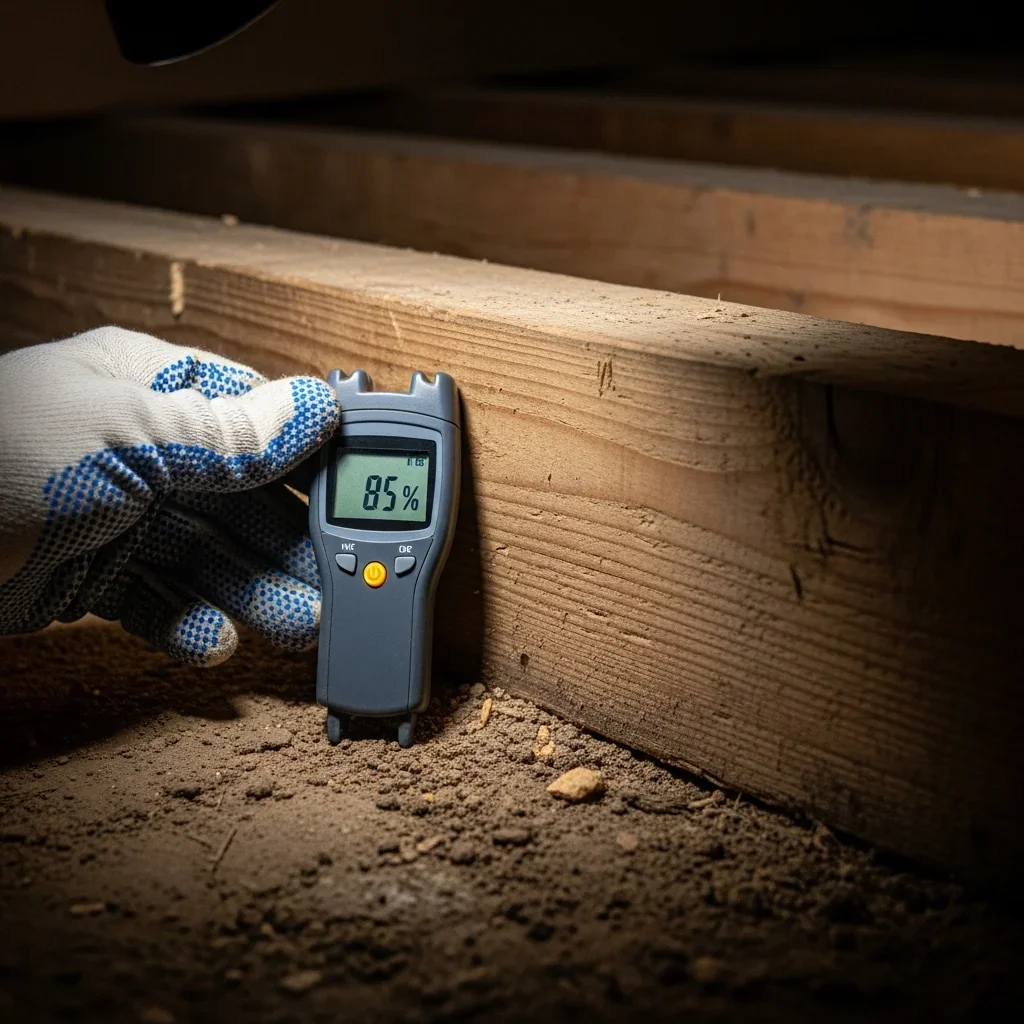
In homes built around 1958 with vented crawl spaces, moisture meter readings on floor
joists often exceed 25% after a significant rain — well above the safe threshold of 19%.
IICRC S500 Protocol
How Palm Build Restores a Lawndale Home After Water Damage
Every job follows the IICRC S500 standard for water damage restoration — the same
protocol used by IICRC-certified professionals nationwide. No shortcuts. No guessing at
dryness.
01
Emergency Dispatch
60–75 min response
Call received, crew dispatched from Charlotte. We route to Lawndale via the fastest path — typically I-85 South to Shelby Road — arriving in 60–75 minutes. Truck-mounted extraction and drying equipment loaded before departure.
02
Inspection & Moisture Mapping
30–60 min on-site
On arrival, we conduct a full moisture assessment with calibrated meters — walls, floor joists, subfloor, and crawl space. We document every reading with photos. This creates the insurance evidence trail and defines the true scope of damage.
03
Extraction
1–4 hours
Truck-mounted extractors remove standing water at up to 25 gallons per minute. For crawl spaces, we use portable extraction equipment that fits in tight spaces. We do not stop when the visible water is gone — we extract until meters confirm no standing water remains.
04
Structural Drying
3–7 days
Industrial LGR dehumidifiers and high-velocity air movers are deployed in a scientifically calculated configuration for the affected area. In Lawndale's crawl spaces, we use desiccant dehumidifiers in wet months when ambient humidity defeats LGR units.
05
Daily Monitoring
Daily check-ins
We return daily to document moisture readings and adjust equipment placement. Drying is not complete until every affected material reaches the dry standard defined by the IICRC S500 — typically wood below 19% moisture content. No guessing.
06
Restoration
1–3 weeks
Once dry, we remove damaged materials and restore affected surfaces — insulation, drywall, flooring, trim — to pre-loss condition. We coordinate with Cleveland County Building Inspections on permit requirements for any structural repairs.
NC Insurance Guide
Water Damage Insurance in Lawndale: What Your Policy Covers
North Carolina is in a homeowner insurance rate adjustment cycle through mid-2026.
Carriers are reviewing claims more carefully. Documentation quality matters more than it
has in recent years.
Typically Covered
Burst or failed supply lines (sudden and accidental)
Appliance overflow — washer, dishwasher, water heater
Roof leak from storm event (with prompt reporting)
Firefighting water used during a covered fire event
Overflow from a plumbing fixture (toilet, tub)
Typically Not Covered
Gradual seepage or slow leak over months
Long-term crawl space humidity and vapor migration
• Moisture maps and calibrated meter readings from day one
• Time-stamped photo documentation of all damage
• Written scope of loss in carrier-accepted format
• Direct communication with adjusters on request
Cleveland County Building Inspections
Structural repairs — replacing subfloor, floor joists, or any load-bearing element —
may require a Cleveland County permit. Palm Build identifies permit requirements
upfront and coordinates with the county so your restoration doesn't stall at
inspection.
Restoration Results
Before & After: Water Damage Restoration in Lawndale
Every job in Cleveland County is documented from first extraction to final inspection.
BEFOREAFTER
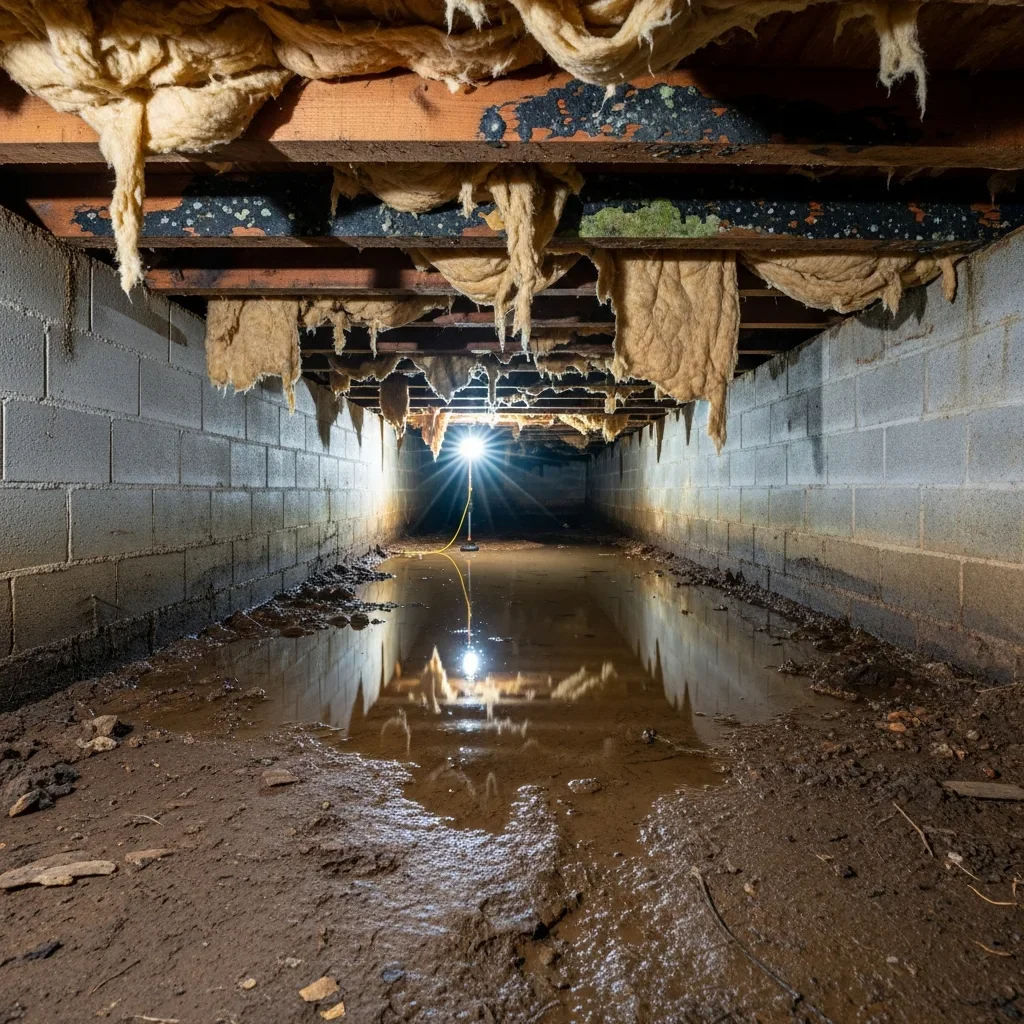
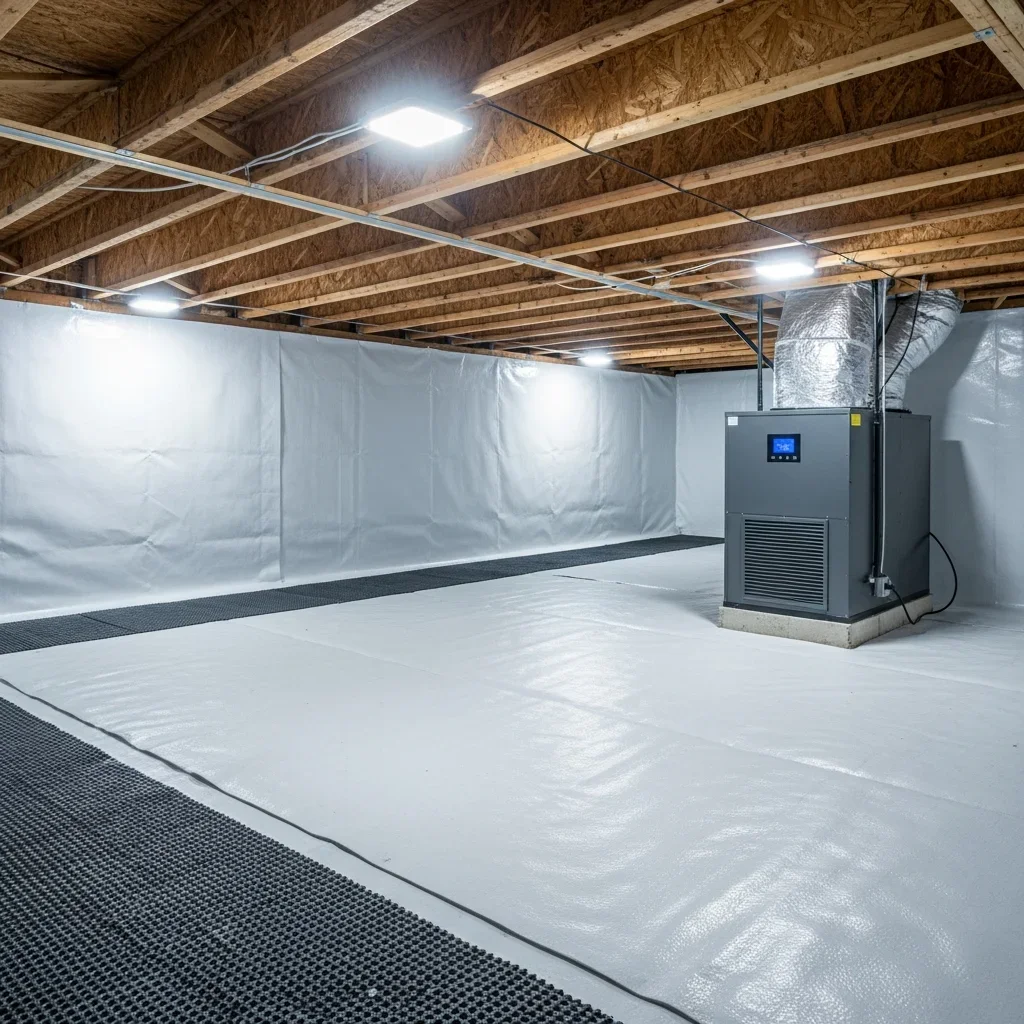
Crawl Space Flooding
Standing water and saturated joists → dry, clean crawl space
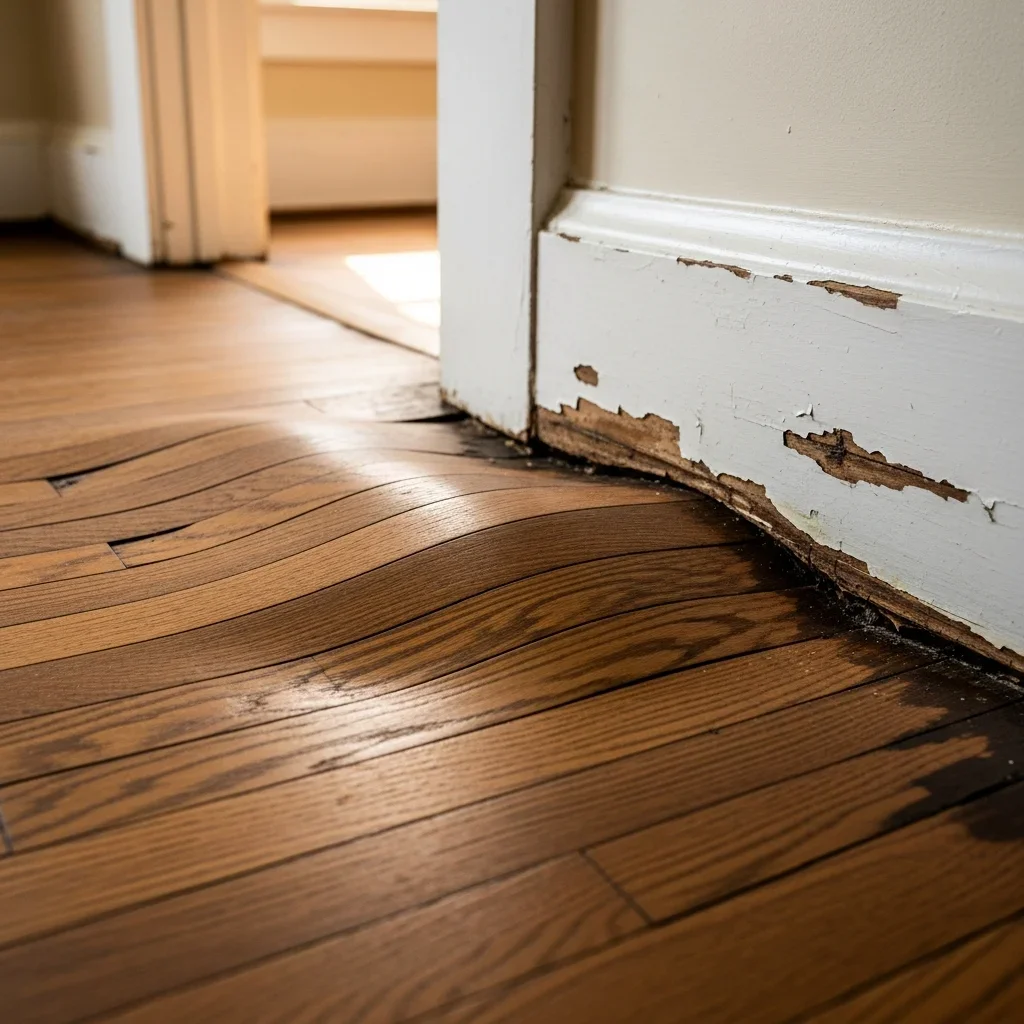
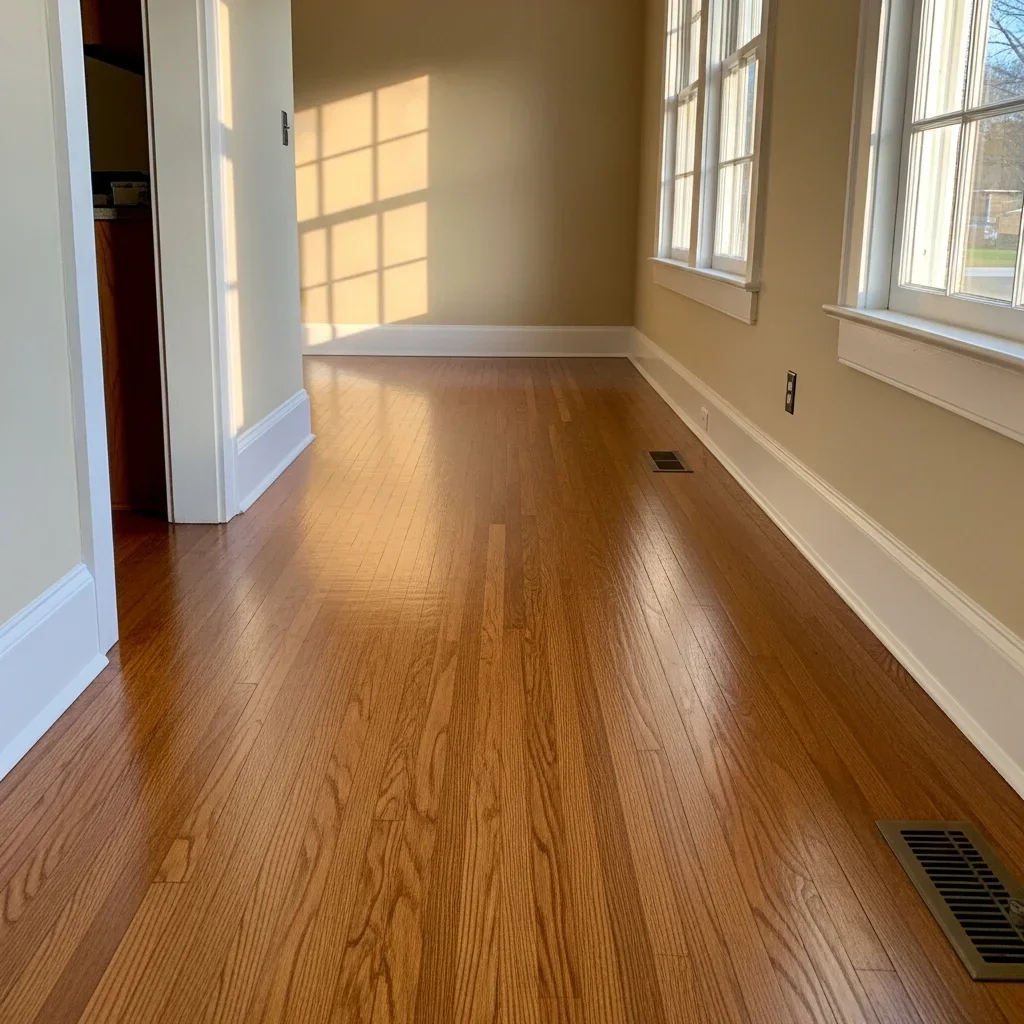
BEFOREAFTER
Hardwood Floor Damage
Water-buckled hardwood → restored floor
Truck-mounted extraction removes standing water from Lawndale crawl spaces at rates
conventional pumps can't match — critical when clay soil keeps pushing water back in.
Seasonal Risk Guide
When Lawndale Homes Are Most Vulnerable — Month by Month
Water damage doesn't follow a calendar, but Lawndale's climate creates predictable risk
windows that homeowners — especially in older crawl space homes — should know.
🌧️
Late Winter – Spring
Feb – MayHighest Risk
Repeated rainfall saturates Cleveland County's clay soil until it can absorb nothing more. Water pools against foundations and floods crawl spaces from below — not from a single storm, but from the cumulative weight of weeks of rain on soil that drains slower than it fills.
Crawl space flooding from saturated clay
Foundation seepage as soil swells
Burst pipes as freeze-thaw cycles stress older plumbing
→ If your crawl space floods in spring, call immediately — mold onset begins within 48 hours.
⛈️
Summer
Jun – SepHigh Risk
Sudden high-intensity thunderstorms create rapid runoff that overwhelms gutters and downspouts on older homes. HVAC condensate lines that are partially clogged overflow into attic spaces or inside walls. At 70–90% humidity, any moisture intrusion becomes a mold event within 24 hours.
Flash storm runoff through roof or window flashing
HVAC condensate overflow in older systems
High humidity accelerates mold from any existing moisture
→ Summer water events are the highest-velocity mold risk of the year — don't wait to call.
🌀
Fall
Oct – NovHigh Risk
Tropical systems that have weakened to tropical depressions or post-tropical storms still carry 3–8 inches of rain when they track through the NC foothills. The First Broad River can rise quickly under these conditions. Fall is also when standing water from summer HVAC events is sometimes discovered — months after onset.
Tropical remnant rainfall and river stage rise
Delayed discovery of summer moisture events
Clay soil re-saturation from extended rainfall
→ Watch NOAA gauge forecasts for the First Broad River before fall storms.
🧊
Winter
Dec – JanModerate Risk
Lawndale experiences periodic freeze-thaw cycles rather than sustained cold. Homes built in 1958 often have supply lines running through uninsulated crawl spaces or exterior walls that weren't designed with thermal protection in mind. A single overnight freeze below 20°F can split a pipe. Interior water events discovered weeks later are common in these homes.
Burst supply lines in uninsulated crawl spaces
Ice dam formation on older low-slope roofs
Slow interior leak from hairline pipe crack
→ Pre-freeze pipe check in older homes prevents the most expensive winter losses.
Why Palm Build
Why Lawndale Homeowners Choose Palm Build
In a town this size, you're not going to find a local restoration company on every
corner. What you need is a regional company that treats your property like it's the only
job they're on — and documents everything.
60–75 min
Charlotte-Based, 60–75 Min to Lawndale
Our Charlotte operations hub puts us 55 miles from ZIP 28090 — close enough for genuine emergency response, far enough that you need a company you can trust to show up on time with the right equipment. We do both.
S500 Standard
IICRC S500 Certified
Every water damage project follows the IICRC S500 Standard — the industry benchmark for inspection, extraction, structural drying, and documentation. No proprietary processes. No guesswork. Verifiable methodology.
365 days
24/7 Emergency Dispatch
Water doesn't wait for business hours. Our emergency line at (704) 464-0121 is answered by a real person around the clock — no answering service, no callback queue. Dispatch begins during the call.
Day-1 records
Insurance-Ready Documentation
We document every job for insurance from the moment we arrive — moisture maps, time-stamped photos, extraction records, and written scope. With NC's rate cycle tightening carrier scrutiny, documentation quality directly affects your claim outcome.
Local intel
First Broad River Familiarity
We know the specific flood impact patterns at the Lawndale gauge. We understand that Main Street access may be limited at stage 20 and plan response routing accordingly. Local knowledge matters when minutes count.
No delays
Cleveland County Permit Coordination
When structural repairs require a county permit — as they often do in older homes with joist or subfloor replacement — we identify the requirement early, prepare the documentation, and coordinate with Cleveland County Building Inspections so your project doesn't stall.
Serving Lawndale, Fallston, Polkville, Kingstown, Belwood, Casar, Waco, Lattimore, and all
of Cleveland County.
Common Questions
Water Damage Restoration in Lawndale — FAQ
Answers to what Lawndale and Cleveland County homeowners ask most.
How fast can Palm Build respond to a water emergency in Lawndale, NC?
Our Charlotte-based team can reach any Lawndale address in approximately 60–75 minutes. We dispatch 24 hours a day, 7 days a week, 365 days a year with truck-mounted extraction equipment and full structural drying systems. Call (704) 464-0121 — we answer every call, day or night.
What happens when the First Broad River floods near Lawndale?
The First Broad River at Lawndale has a named NOAA gauge with published impact statements. When the river approaches 18 feet, the old mill area and a dirt road off Main Street begin to flood. At 20 feet, the Main Street bridge itself begins to flood. If you're in a low-lying area near the river corridor, water can enter crawl spaces, basements, and outbuildings quickly — even without direct river contact, because saturated clay soil pushes water laterally for days after a flood event. Palm Build can mobilize as the flood stage drops and access is restored.
Why are Lawndale crawl spaces especially vulnerable to water damage?
Lawndale sits in Cleveland County on Piedmont clay soil — the same Cecil and Pacolet series found throughout the NC foothills — that drains at less than 0.2 inches per hour. The median home in Lawndale was built in 1958, which means most houses have vented crawl spaces rather than encapsulated ones. That combination is a chronic moisture trap: rainwater saturates the clay, vapor migrates upward through the soil, and the crawl space never fully dries out. Summer humidity regularly reaches 70–90%, which accelerates mold growth on wood floor joists within 24–48 hours of a water event.
Does homeowners insurance cover water damage in Lawndale, NC?
Most standard NC homeowner policies cover sudden and accidental damage — burst pipes, appliance failures, roof leaks from storm events. Gradual seepage, long-term crawl space moisture, and flood damage from rising water require separate flood insurance. North Carolina is currently in a rate adjustment cycle: the NC Rate Bureau settled a phased premium increase through mid-2026, which means carriers are scrutinizing claims more carefully. Palm Build provides insurance-ready documentation from day one — moisture maps, extraction logs, and photo evidence — to support your claim.
What are the peak water damage seasons in Lawndale?
Late winter through spring (February–May) is the highest-risk window for crawl space flooding and slow seepage — repeated rain saturates the clay soil and it stays wet for weeks. Summer (June–September) brings sudden thunderstorms that create rapid runoff, and HVAC condensate issues in older homes add moisture risk. Fall is when to watch the First Broad River: tropical remnants track through Cleveland County in September and October and can bring 4–8 inches of rain quickly. Winter events typically involve pipe failures in older homes with inadequate insulation in crawl spaces.
How long does water damage restoration take in a Lawndale home?
Structural drying for contained damage typically takes 3–5 days. Crawl space flooding and Lawndale's saturated clay soil often extend drying to 5–7 days because moisture continues wicking from the ground even after standing water is removed. Full restoration including flooring, drywall, and trim replacement typically takes 1–3 weeks depending on scope. We monitor moisture levels with calibrated meters every day until every affected material reaches dry standard.
Do I need a permit for water damage restoration work in Lawndale?
Permit requirements depend on the scope of work. Cleveland County Building Inspections handles permits for Cleveland County and can advise whether your specific repair requires a permit — especially for structural work like replacing subfloor, floor joists, or any load-bearing element. Palm Build coordinates with the county on permit requirements so your restoration doesn't stall at inspection. Unpermitted structural work can create problems when you sell or file future claims.
What areas near Lawndale does Palm Build serve?
We serve all of Lawndale and the surrounding communities in Cleveland County including Fallston, Polkville, Kingstown, Belwood, Casar, Waco, and Lattimore — all within the 28090 ZIP code service area. We also serve neighboring areas in Lincoln County and Rutherford County. If you're not sure whether we reach your address, call (704) 464-0121 and we'll confirm in under a minute.
Water in Your Lawndale Home? Every Hour Counts.
Lawndale's clay soil holds moisture for weeks and summer humidity can turn a water event into a mold problem within 24 hours. Call Palm Build now for immediate 24/7 dispatch, truck-mounted extraction, structural drying, and full insurance documentation.