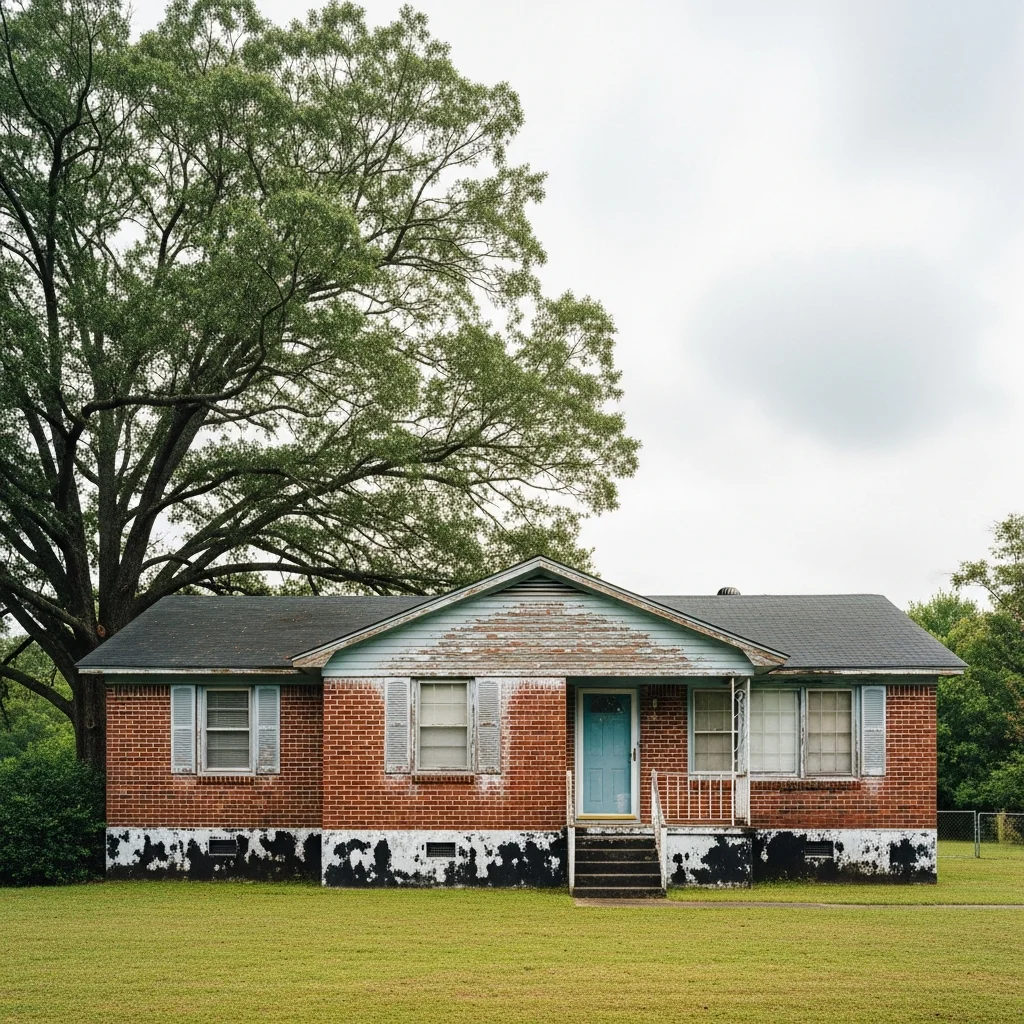
Lawndale's 1958-median housing age and summer humidity of 70–90% make crawl space mold one of the most common — and most overlooked — problems in Cleveland County homes. Palm Build's Charlotte team reaches ZIP 28090 in 60–75 minutes with IICRC S520-trained technicians, full containment, and documentation your insurance carrier will accept.
55 miles from Lawndale 60-75 min Response IICRC Certified
Why Lawndale Homes Develop Mold: Four Converging Factors
Mold in Lawndale isn't bad luck. It's a predictable result of specific conditions that
have existed in most homes here since they were built — conditions that no amount of
surface cleaning resolves permanently without addressing the source.
70–90% Summer Humidity
70–90%
Summer RH, Apr–Oct
Cleveland County summers sustain relative humidity between 70–90% for four to six months. In a vented crawl space, this means the air under your floor joists is nearly saturated for half the year. Any wet material — insulation, wood, paper-faced drywall — provides a substrate for mold colonization within 24–48 hours.
1958 Vented Crawl Space Construction
1958
Median year built
Lawndale's median home was built in 1958 with vented crawl spaces — a design that pulls warm, humid outdoor air directly under the floor joists during summer months. NCSU Extension estimates that 70–90% of older southeastern homes show moisture damage or mold at first professional crawl space inspection.
Clay Soil Moisture Wicking
<0.2 in/hr
Clay drainage rate
Piedmont clay soil under Lawndale's homes holds moisture by volume at rates that dramatically exceed sandy or loam soils. Even without a flood event, vapor pressure from clay-saturated soil rises through dirt crawl space floors into wood framing continuously — especially in spring and early summer when the soil is heaviest with winter and spring rain.
24–48 Hour Mold Window
24–48 hrs
Mold onset on wet wood
Mold can begin colonizing on wet wood and drywall within 24–48 hours under typical conditions. In Lawndale's summer climate — warm temperatures combined with ambient humidity already near the mold germination threshold — that window compresses. A crawl space that flooded on a Tuesday morning can show visible mold colonies by Wednesday night.
Warning Signs
Signs of Mold in a Lawndale Home — By Severity
If you're seeing any of these in an older home, especially near the crawl space, call
before the problem grows.
CRITICAL
Visible black or green mold colonies on walls, joists, or subfloor
Remediation required — do not attempt DIY removal of large areas
CRITICAL
Musty odor that persists after ventilating — especially in crawl space areas
Persistent odor means active mold growth, not just past moisture
HIGH
Water staining on subfloor or floor joists visible from crawl space
Staining indicates past or ongoing moisture; may have active mold
HIGH
Unexplained respiratory symptoms, eye irritation, or fatigue in occupants
Health effects are a late indicator — mold is typically extensive by this point
HIGH
Soft or spongy floor sections — especially in older homes with wood subfloor
Structural damage from mold-compromised joists or subfloor
MODERATE
Condensation regularly forming on interior walls or windows
Peeling paint or wallpaper with no obvious source of moisture
May indicate vapor migration from crawl space pushing through walls
MODERATE
Recent water event (flooding, pipe burst) with no professional drying
Mold can begin within 24–48 hours in Lawndale's summer climate
MODERATE
Crawl space insulation that has fallen, sagged, or darkened
Insulation darkening often indicates mold on the batt material itself
Critical Information for Lawndale Homeowners
NC Has No State Mold License — Here's What to Ask Instead
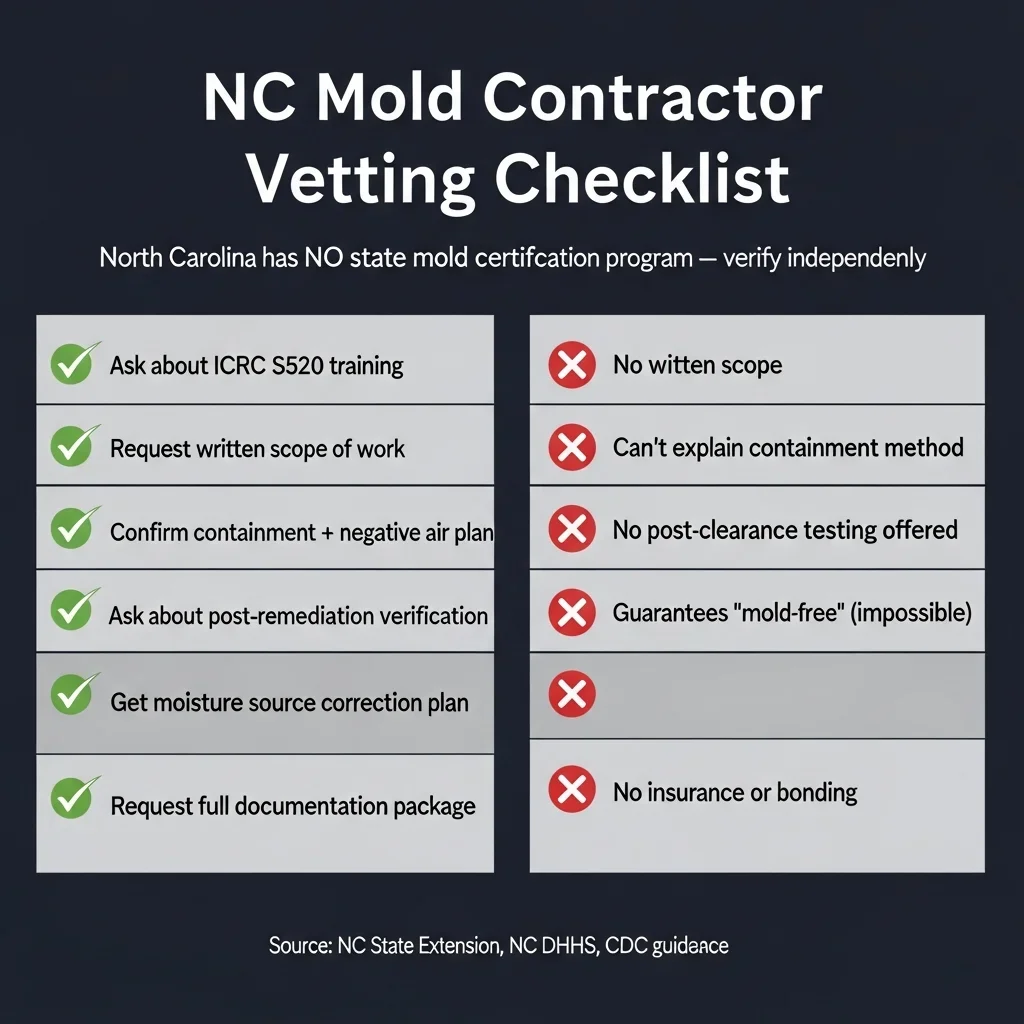
North Carolina has no state or federal certification program for mold remediation
contractors. There is no "NC mold license" to check. The NC State University Extension,
NC Department of Health and Human Services, and the CDC all confirm this. Anyone can
call themselves a mold remediation company in North Carolina.
What this means for you: The absence of state licensing
doesn't mean quality doesn't matter — it means you can't rely on a government-issued credential
as a shortcut. The IICRC S520 Standard is the accepted industry benchmark for mold remediation.
Any contractor worth hiring should be able to explain exactly what S520 requires and how they
comply. If they can't, walk away.
What to Ask Any Contractor
Ask for IICRC S520 training documentation — not just a certificate, but a scope explanation
Request a written scope of work before any work begins
Confirm containment plan: sealed plastic sheeting, zipper closures, negative air direction
Ask about negative air pressure equipment — HEPA air scrubbers with exterior exhaust
Confirm all mold-affected material will be removed and bagged — not just treated in place
Ask about post-remediation verification: clearance testing options after work is done
Ask how they will document the completed scope for your insurance carrier
Verify general liability and workers' compensation insurance — get a certificate
Red Flags — Walk Away
Offers to "spray and seal" without removing affected material
Cannot explain their containment setup
Claims to have a "state mold license" — no such thing exists in NC
Won't provide a written scope before asking for payment
Guarantees "100% mold-free" — no contractor can make this guarantee
Wants to skip clearance testing to "save you money"
How Palm Build approaches this: We follow the IICRC
S520 Standard on every mold remediation project. Our scope is always written before work begins.
We set up full containment with negative air pressure, remove all mold-affected material,
apply EPA-registered antimicrobials, and document the completed scope for your insurance carrier.
We offer post-remediation clearance testing through independent third parties — not our own
team — because that's the only way clearance testing means anything.
The Root Cause
Lawndale's Crawl Spaces: Why 1958 Vented Construction Is a Mold Factory
A vented crawl space in Cleveland County's summer climate pulls warm, humid outdoor air
directly under your floor joists — where it meets cooler surfaces and condenses. Add
clay soil vapor pressure below and you have mold conditions that are essentially
continuous from April through October.
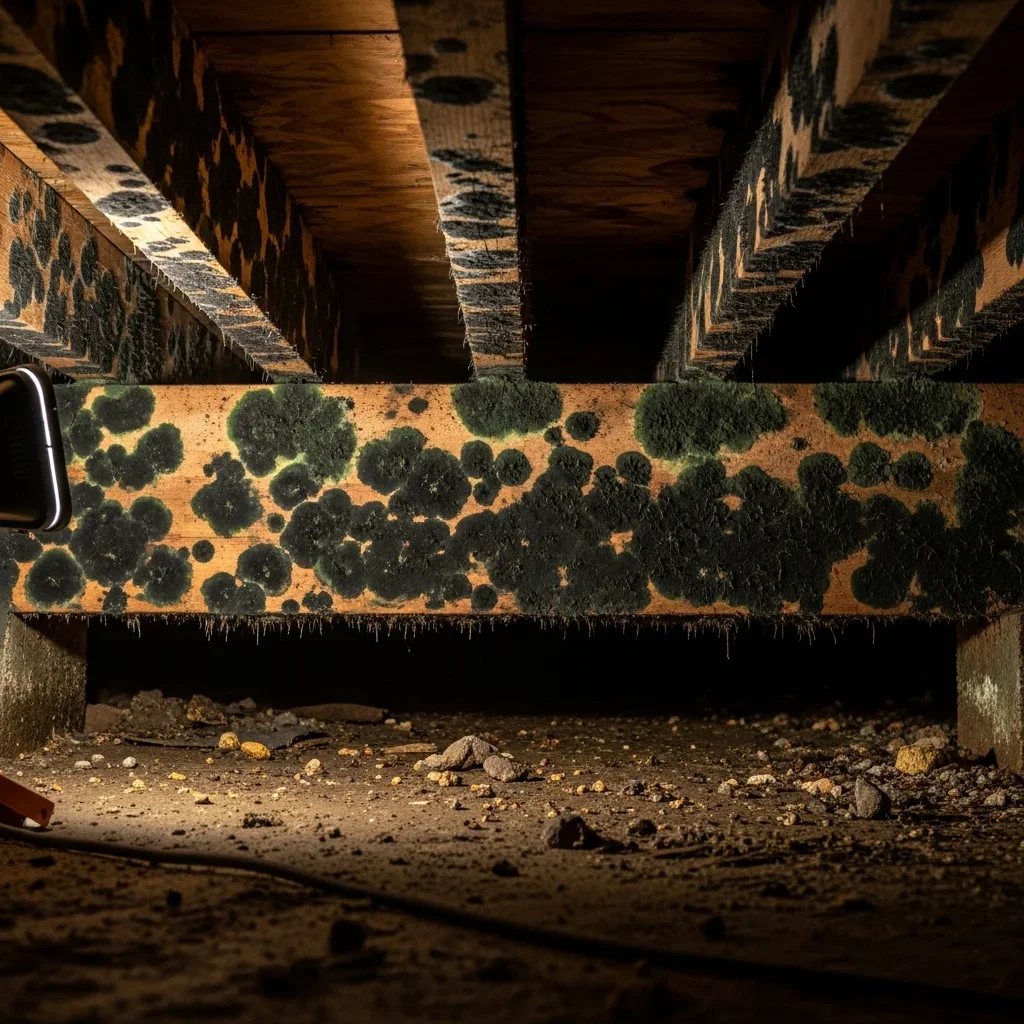
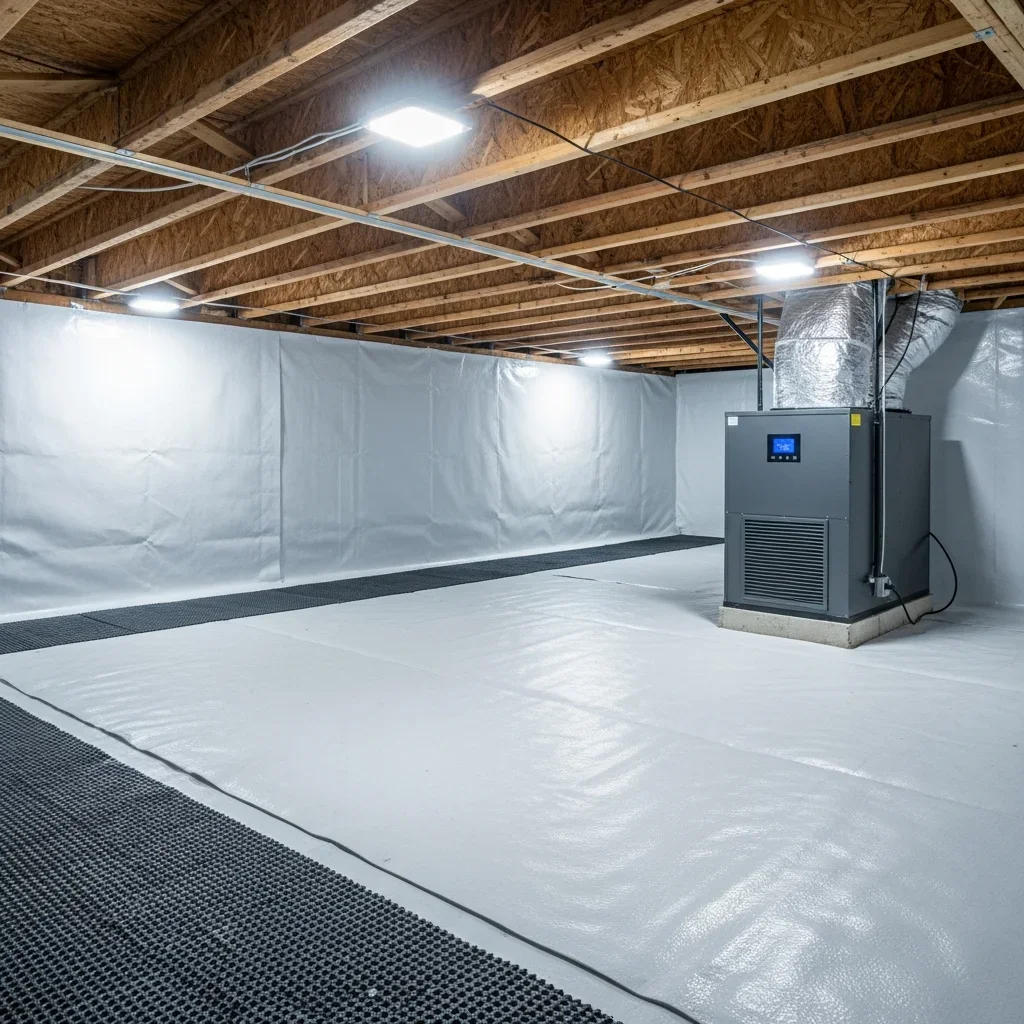
Before: Active mold in vented crawl spaceAfter: Encapsulated crawl space, controlled humidity
Vented vs. Encapsulated: Lawndale Crawl Space Comparison
Metric
Vented (Current)
Encapsulated
Vented Crawl Space RH (Summer)
70–90%
45–55%
Active Mold Risk
High (year-round)
Low (controlled)
Floor Temperature Consistency
Variable (cold/hot)
Stable
HVAC Efficiency
Reduced (humid air)
Improved
Estimated Cost Ranges — Lawndale Crawl Space
Crawl space mold remediation only$5,000 – $15,000
Remediation + basic vapor barrier$8,000 – $18,000
Full encapsulation (Class I barrier + dehumidifier)$12,000 – $22,000+
Estimates based on Cleveland County, NC market rates 2026. Scope and soil conditions
vary. Remediation must precede any encapsulation — mold cannot be sealed in.
NC now permits fully closed crawl spaces with a Class I vapor barrier and
mechanical dehumidification — a departure from the older vented design standard. For homes
built in the 1950s and 60s in Lawndale, encapsulation is the permanent solution to recurring
crawl space mold.
Cleveland County, NC — 2026
Mold Remediation Costs in Lawndale, NC
Costs depend on affected square footage, material type, and whether the moisture source
has been corrected. In Lawndale's crawl space homes, the most common scenario falls in
Tier 2 — especially when the problem has gone undetected through a full humid season.
Small Surface Area
$1,500 – $5,000
(Under 50 sq ft)
Bathroom tile grout and caulk mold
Window frame condensation mold
Small wall section from a pinhole leak
HVAC drip pan overflow — localized area
Often covered by standard policy mold sublimit
Medium Area / Crawl Space
$5,000 – $15,000
(50–200 sq ft)
Crawl space joist remediation — partial
Basement wall mold from seepage
Bedroom or bathroom wall — full wall section
HVAC system contamination — ducts and air handler
Most common scenario in Lawndale's 1958-era crawl space homes
Important: Standard NC homeowner policies typically cap mold coverage at
$5,000–$10,000. This covers small surface areas but rarely covers full crawl space remediation.
Mold from long-term humidity or gradual seepage is typically excluded entirely. Palm Build
provides complete documentation to maximize what your carrier will authorize — and transparent
pricing on the out-of-pocket balance.
IICRC S520 Protocol
How Palm Build Remediates Mold in a Lawndale Home
Every mold remediation project follows the IICRC S520 Standard — the same protocol
referenced by NC State Extension and NC DHHS guidance. No spray-and-seal shortcuts.
01
Assessment & Moisture Source Identification
Day 1
Every remediation starts with finding why the mold is there. We inspect the crawl space, wall cavities, HVAC system, and any moisture-prone areas with calibrated meters and thermal imaging. We identify the moisture source before creating a scope — because remediation without source correction fails within months.
02
Containment
Day 1
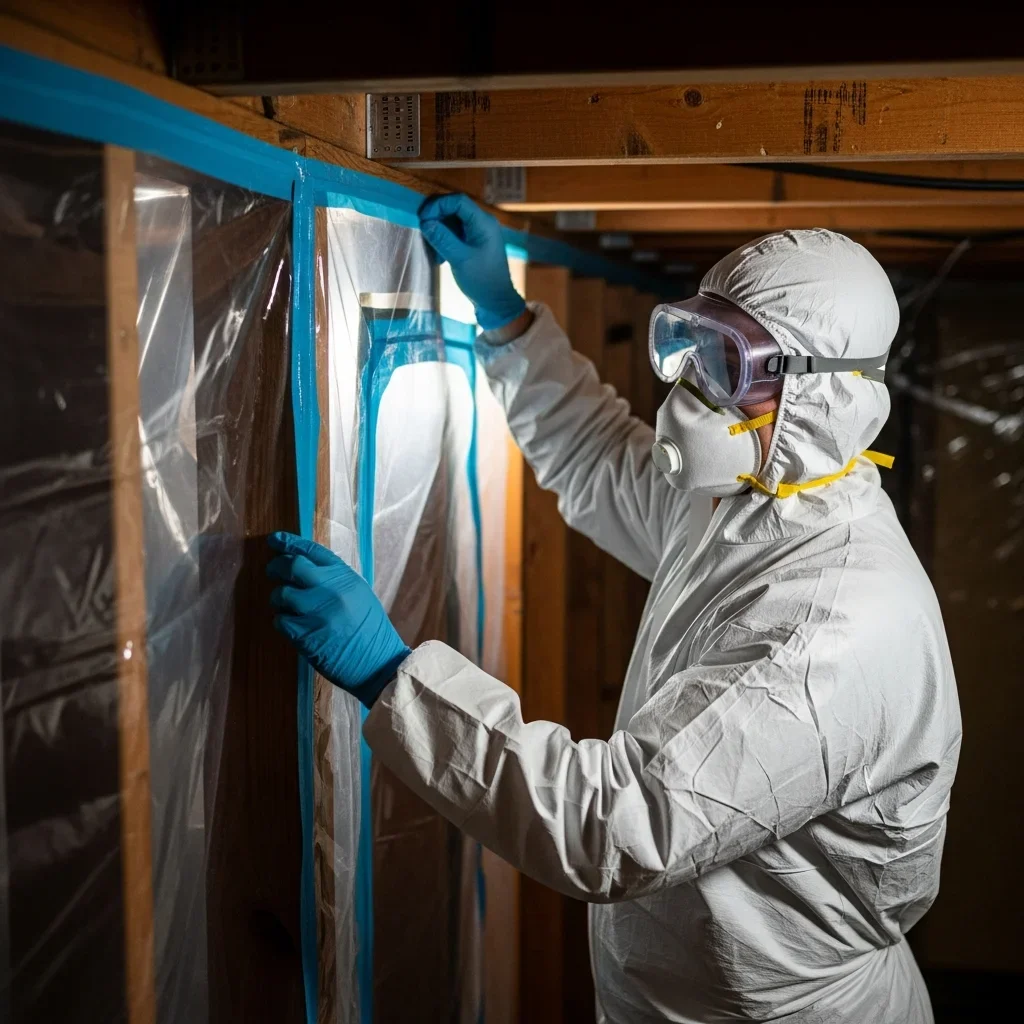
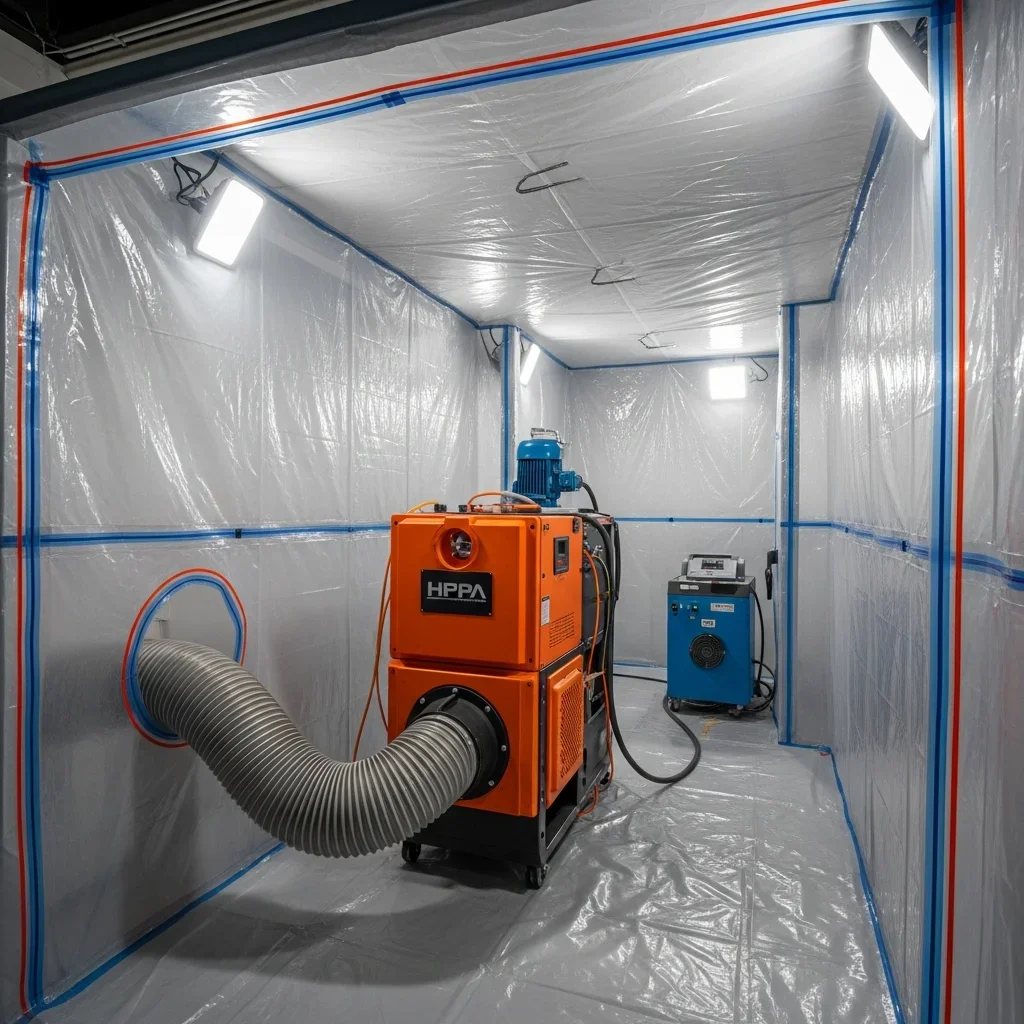
Mold-affected areas are sealed with polyethylene plastic sheeting and zip closures. Negative air pressure is established using HEPA-filtered air scrubbers exhausted to the exterior — so any disturbed spores are captured and exhausted rather than spreading to the rest of the home. Workers enter and exit through decontamination zones.
03
HEPA Air Filtration
Continuous
Industrial HEPA air scrubbers run continuously throughout the remediation to capture airborne spores. In Lawndale's older homes with open joists and penetrations between crawl space and living area, controlling airborne spores is essential. Air changes are documented.
04
Removal & Disposal
Days 1–3
All mold-affected porous materials — insulation, drywall, wood trim, cardboard — are removed, double-bagged in sealed poly bags, and disposed of. Non-porous surfaces with surface mold are HEPA-vacuumed and cleaned. In crawl spaces, this means all contaminated insulation and any structurally compromised joist sections.
05
Antimicrobial Treatment
Day 2–3
Remaining surfaces — wood framing, concrete block, subfloor — are treated with EPA-registered antimicrobial agents. In Lawndale's clay-soil crawl spaces, we apply a borate-based wood preservative to exposed joists and subfloor to inhibit future mold growth. This is not a substitute for moisture control — it's a last line of defense.
06
Post-Remediation Verification
Day 3–5
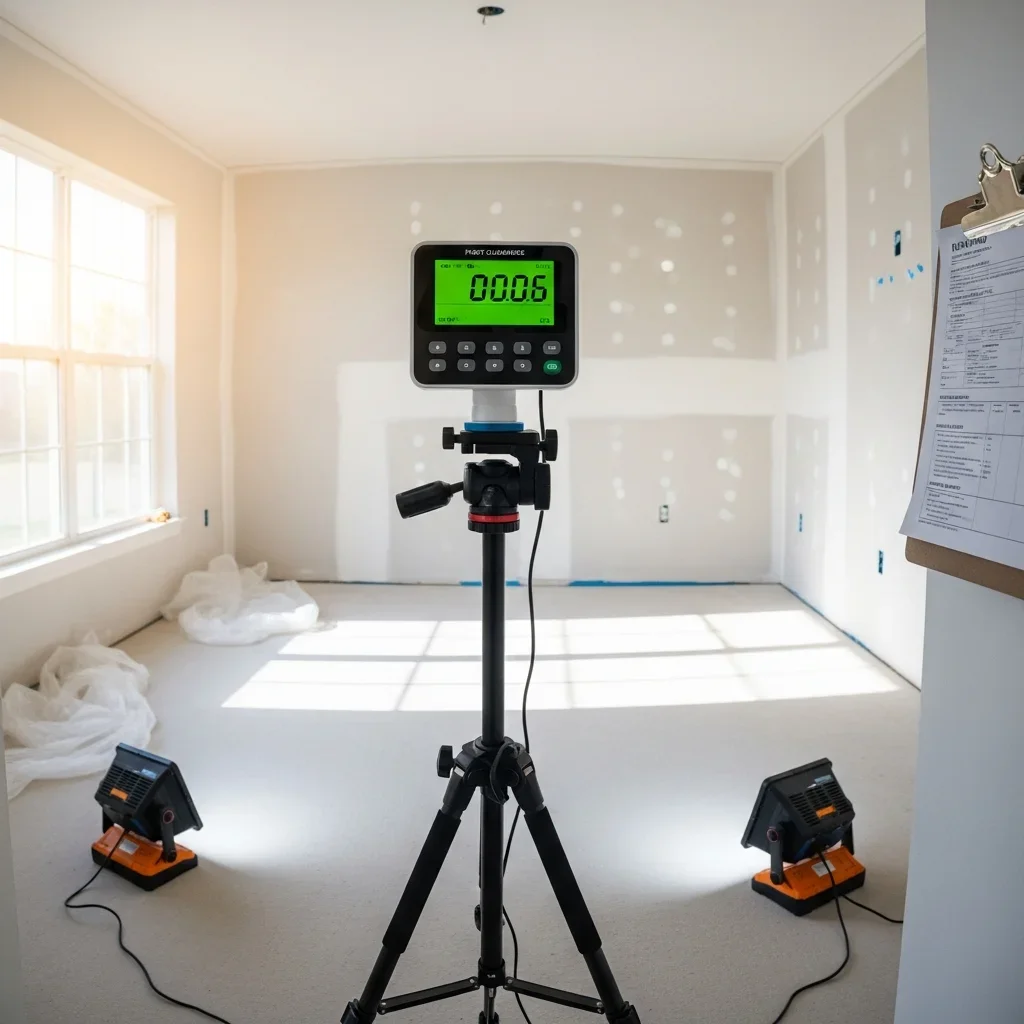
After remediation is complete and the space has dried, we document the completed scope with photos and moisture readings. Clearance air quality sampling by an independent third-party industrial hygienist is available and recommended for crawl space projects — especially if occupants have had health symptoms. We help arrange it.
Documented Process
Mold Remediation in Lawndale — From Discovery to Clearance
Every project is documented at every stage. In older homes where mold has gone
undetected, the before and after difference is significant.
Before
Active Mold — Crawl Space
During
Containment Setup
During
Negative Air Filtration
After
Post-Remediation Clearance
NC has no state mold license. The IICRC S520 Standard is the only credible benchmark —
ask any contractor to explain exactly how they comply.
Insurance Coverage
Does Homeowners Insurance Cover Mold Remediation in Lawndale?
The honest answer is: sometimes, partially. Most Lawndale homeowners are surprised to
learn how limited standard mold coverage is — and how documentation quality determines
what the carrier will authorize.
May Be Covered
Mold resulting from a covered sudden water event (burst pipe, appliance overflow)
Mold endorsement coverage — if you added it to your policy (up to policy sublimit)
Mold discovered during an active covered water damage claim
Typically Not Covered
Mold from gradual moisture, humidity, or long-term crawl space vapor migration
Mold from flooding or rising water (requires separate flood policy)
Pre-existing mold discovered during renovation or purchase inspection
Mold exceeding your policy's sublimit — typically $5,000–$10,000
Mold caused by deferred maintenance (neglected gutters, known leaks not repaired)
How Palm Build Maximizes Your Mold Claim
• Moisture source documentation tying mold to a covered event where applicable
• Complete photographic evidence from initial inspection through completed scope
• Written scope with line-item pricing in carrier-accepted format
• Air sampling reports from independent industrial hygienists where arranged
• Direct adjuster communication on request — we speak the same language
Why Palm Build
Why Lawndale Homeowners Choose Palm Build for Mold Remediation
In a state with no mold licensing, your contractor's quality is entirely your
responsibility to verify. Here's why our process holds up to scrutiny.
S520 Standard
IICRC S520 — The Only Credible NC Benchmark
With no state mold license in North Carolina, IICRC S520 training is what separates legitimate remediation from spray-and-pray cleanup. Every Palm Build project follows S520 protocol — containment, negative air, removal, antimicrobial, documentation. We can explain every step.
Source first
Root Cause Correction, Not Just Surface Treatment
Mold that comes back within a year wasn't remediated — it was masked. We identify the moisture source before creating a scope. In Lawndale's crawl space homes, this usually means addressing drainage, vapor barrier failure, or ventilation before any remediation material is removed.
Third-party
Independent Clearance Testing Available
We offer to arrange post-remediation air quality sampling by an independent industrial hygienist — someone who has no financial interest in the outcome. This is the only way clearance testing is meaningful. Some contractors skip it. We recommend it.
Day-1 records
Insurance-Ready Documentation
NC's rate cycle means carriers are scrutinizing mold claims more carefully. Our documentation — moisture maps, photos, scope records, antimicrobial application logs — gives your adjuster everything needed to process the claim without back-and-forth delays.
60–75 min
60–75 Minutes from Charlotte to Lawndale
Mold growth is measurable in hours, not days. A 60–75 minute response from Charlotte means we can be in your crawl space the same day you call — critical when a wet crawl space in July can have visible mold growth by the next morning.
Transparent
We Know NC's No-License Landscape
We've seen the damage done by fly-by-night operators who capitalize on the absence of state licensing. We help Lawndale homeowners understand what to ask, what to verify, and what red flags mean. An informed homeowner makes better choices — even if that choice isn't us.
Serving Lawndale, Fallston, Polkville, Kingstown, Belwood, Casar, Waco, Lattimore, and all
of Cleveland County.
Common Questions
Mold Remediation in Lawndale — FAQ
Answers to what Cleveland County homeowners ask most about mold.
Is there a state mold license requirement in North Carolina?
No — and this matters enormously for Lawndale homeowners. North Carolina has no state or federal certification program for mold remediation companies or individual technicians. There is no state-issued 'mold license' to check. The NC State University Extension, NC Department of Health and Human Services, and the CDC all note the absence of recognized regulatory credentials. What this means: anyone can call themselves a mold remediation contractor in NC. The only credible benchmark is IICRC S520 training and adherence to that standard's protocols. Ask any contractor you consider for their S520 credentials, written scope of work, and containment plan — and read our full vetting checklist on this page.
Why is mold so common in Lawndale homes?
Three factors converge in Lawndale: First, the median home was built in 1958, which means most houses have vented crawl spaces — a design that made sense in drier climates but creates a chronic moisture problem over Piedmont clay soil. Second, summer relative humidity in Cleveland County regularly reaches 70–90%, and vented crawl spaces pull that humid outdoor air directly under your floor joists. Third, Lawndale averages approximately 50 inches of annual rainfall, and clay soil drains at less than 0.2 inches per hour — meaning the soil stays saturated and vapor pressure stays high for weeks after any significant rain event. Mold can begin colonizing on wet wood within 24–48 hours.
How much does mold remediation cost in Lawndale, NC?
Cost depends entirely on scope. A small surface mold area (under 50 sq ft) in a bathroom or around a window typically runs $1,500–$5,000 including containment, removal, and antimicrobial treatment. A mold-affected crawl space — the most common scenario in Lawndale's 1958-era homes — typically runs $5,000–$15,000 for remediation alone, and $12,000–$20,000+ if encapsulation is included. Full-house mold from a long-term water intrusion can exceed $30,000. Most standard homeowner policies cap mold coverage at $5,000–$10,000, which often covers surface remediation but not full crawl space work.
Should I test for mold before calling a remediation company?
The CDC and NC DHHS both advise that if you can see mold, you don't need a test — you need remediation. Mold testing is most useful when you suspect mold but can't find it (musty odor, unexplained health symptoms), or for post-remediation clearance verification. Pre-remediation testing by the same company that will do the work is a conflict of interest — any reputable contractor should acknowledge this. We don't push unnecessary testing, but we do offer post-remediation air quality sampling through an independent third party if you want documentation of clearance.
What is the IICRC S520 standard and why does it matter for Lawndale homeowners?
The IICRC S520 is the industry's accepted standard for mold remediation — published by the Institute of Inspection, Cleaning and Restoration Certification. It covers assessment protocols, containment requirements, personal protective equipment, negative air pressure procedures, removal and disposal, antimicrobial application, and post-remediation verification. Because NC has no state mold license, S520 is the only meaningful credential to verify. A contractor following S520 will create containment zones, run negative air pressure to prevent cross-contamination, bag and remove all mold-affected material, and document the process. One who skips these steps — even if cheaper — risks spreading mold spores throughout your home.
Does homeowners insurance cover mold remediation in Lawndale?
Standard NC homeowner policies cover mold that resulted from a covered sudden and accidental water event — like a burst pipe or appliance failure. They typically exclude mold from gradual moisture, long-term crawl space humidity, or pre-existing conditions. Most policies also cap mold coverage at $5,000–$10,000, which is often insufficient for crawl space remediation. Palm Build provides complete documentation — moisture maps, air sampling where applicable, containment photos, and scope records — to maximize what your carrier will authorize.
How long does mold remediation take in a Lawndale home?
A contained surface mold project (bathroom, small wall area) typically takes 1–2 days. A crawl space remediation project in a typical Lawndale home takes 2–4 days for the remediation itself, followed by 1–2 days of drying verification before any encapsulation work begins. The source of moisture must be corrected first — whether that's a drainage issue, plumbing leak, or HVAC problem. Remediation without source correction means the mold returns within months.
What areas near Lawndale does Palm Build serve for mold remediation?
We serve all of Lawndale (ZIP 28090) and surrounding communities including Fallston, Polkville, Kingstown, Belwood, Casar, Waco, and Lattimore in Cleveland County. We also serve portions of neighboring Lincoln County and Rutherford County. Call (704) 464-0121 to confirm service to your specific address — we typically answer within two rings.
Mold in Your Lawndale Home? Don't Wait.
Lawndale's humidity and older housing stock mean mold spreads fast — and without a state license requirement in NC, verifying any contractor falls on you. Call Palm Build for IICRC S520-trained remediation, full containment, and insurance-ready documentation.