PALM BEACH GARDENS FL — 24/7 WATER DAMAGE RESPONSE
Water Damage Restoration in Palm Beach Gardens, Florida
Palm Beach Gardens receives 61.75 inches of rain annually, summer thunderstorms overwhelm stormwater conveyance across gated communities from Avenir to BallenIsles, and the December 2024 FEMA flood remap added thousands of properties to high-risk zones. From a burst supply line in your PGA National villa to an HVAC condensation flood in your Frenchman's Creek estate, Palm Build responds from our Deerfield Beach hub with truck-mounted extraction and the documentation that Palm Beach County's insurance carriers demand.
Deerfield Beach — Rapid Response to Palm Beach County Under 60 min Response IICRC Certified
Why Palm Beach Gardens Homes Face Unique Water Damage Risks
Palm Beach Gardens is one of South Florida's most affluent communities — and one of its
most water-damage-prone. Gated communities built on reclaimed wetlands, a water table
within feet of your foundation, and a tropical climate that delivers five feet of rain
annually create conditions where mold can begin growing in 24 to 48 hours after any water intrusion event.
61.75 Inches of Annual Rainfall
61.75"
Annual rainfall
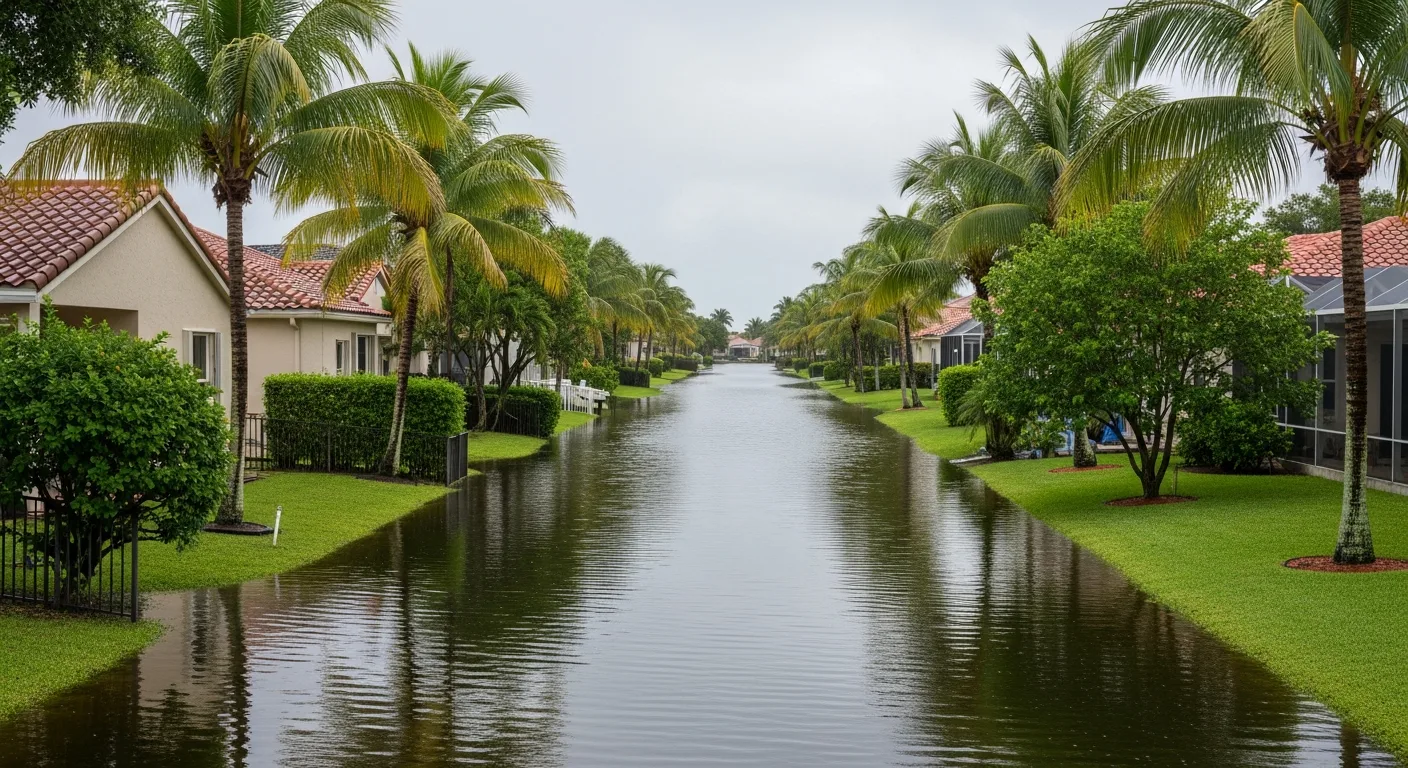
Palm Beach Gardens receives 61.75 inches of rain annually — nearly double the national average — with 70% concentrated in the May-October wet season. Afternoon thunderstorms routinely drop 2-4 inches in under an hour, overwhelming the city's stormwater system and the Northern Palm Beach County Improvement District's canal network. Flash flooding hits low-lying communities like Sanctuary Cove, Evergrene, and canal-adjacent sections of PGA National before water levels recede.
CBS Stucco on Slab-on-Grade
95%+
CBS construction
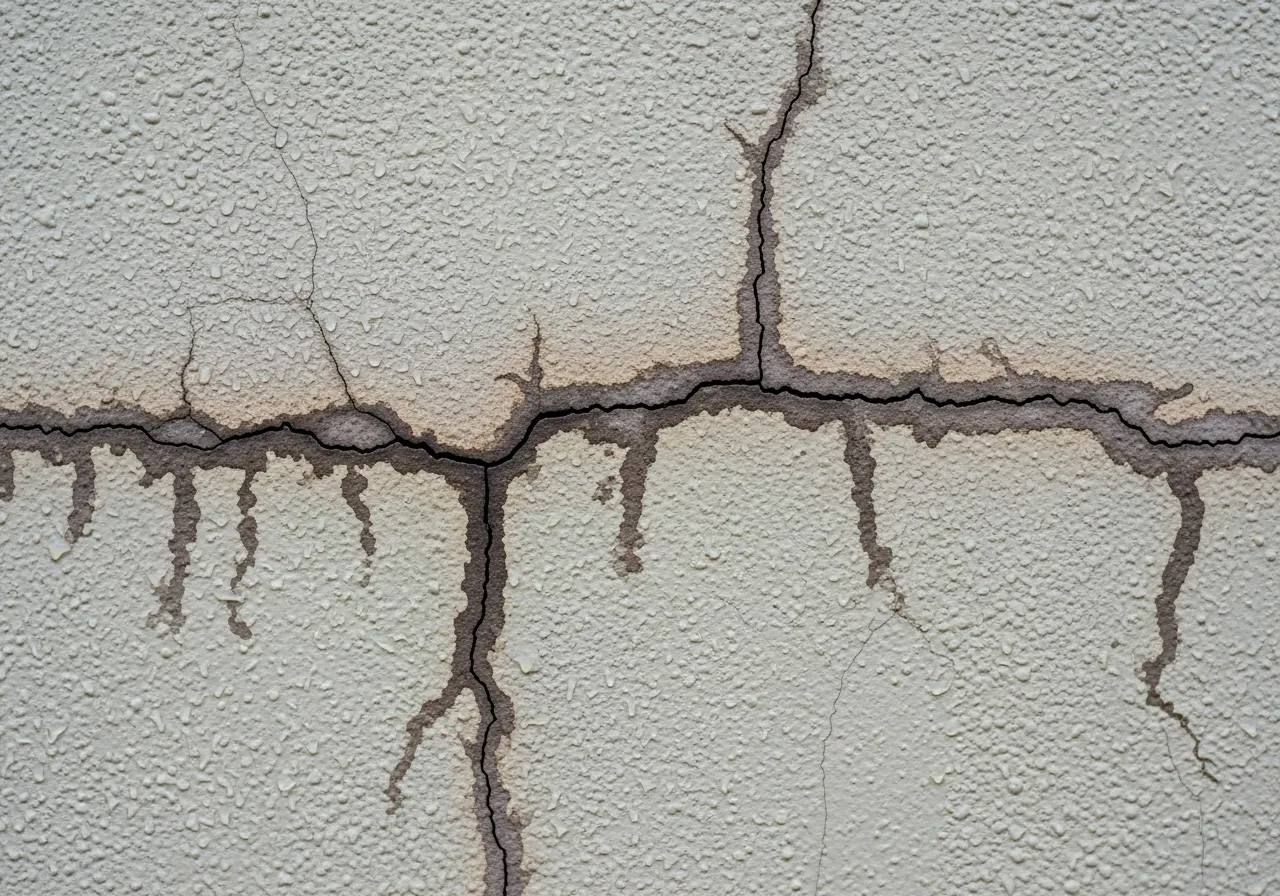
Nearly every Palm Beach Gardens home is concrete block structure (CBS) with stucco exterior on a slab-on-grade foundation. Thermal cycling and hurricane-force winds create hairline stucco cracks that allow water to saturate the porous block cavity — hidden moisture that standard drying cannot reach. Without wall cavity injection drying, mold colonies establish behind finished walls within 48-72 hours in PBG's year-round humidity.
Year-Round HVAC Condensation Risk
12 mo
AC runs per year
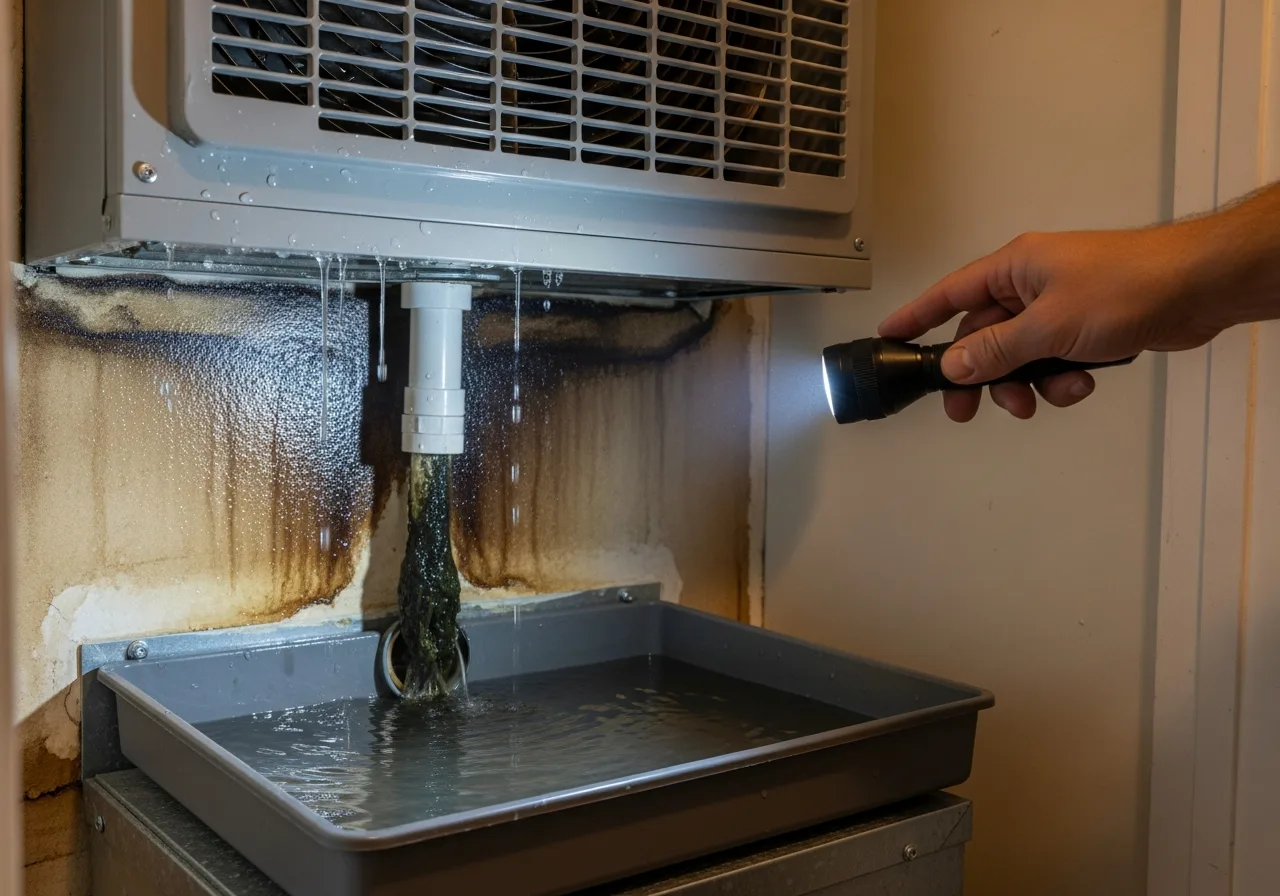
Central AC systems in Palm Beach Gardens run 11-12 months per year, creating chronic condensation exposure. Clogged condensate drain lines, cracked drip pans, and oversized units that short-cycle are the single most common source of hidden water damage in PBG homes — particularly in sealed, energy-efficient builds like Avenir and Alton where moisture has nowhere to escape.
High Water Table & Poor Drainage
3-6 ft
Water table depth
Palm Beach Gardens sits on the Surficial Aquifer with a water table often just 3-6 feet below grade. During wet season, saturated soils cannot absorb additional rainfall, and slab-on-grade foundations experience upward moisture wicking. Ground moisture migrates through concrete slabs into flooring systems — creating persistent dampness that seeds mold beneath tile, engineered wood, and carpet in communities from Old Palm to San Michele.
Hairline stucco cracks on Palm Beach Gardens CBS homes allow water to saturate the
porous block cavity during intense tropical downpours — creating hidden moisture damage
that homeowners often don't discover until mold has established behind finished walls.
Neighborhood Risk Assessment
Palm Beach Gardens Neighborhood Water Damage Risk Map
Not every Palm Beach Gardens community faces the same risks. A 1980s PGA National villa
with original plumbing has fundamentally different vulnerabilities than a 2020 Avenir
estate exposed to tornado damage. Here's what Palm Build's technicians see in each area.
PGA National
1980s–2000s · CBS stucco, barrel tile roofs
Critical
Primary Risks
Canal overflow flooding, HVAC condensation, aging plumbing in original sections
Common Damage Patterns
Flash flooding from internal canal and lake system during heavy rain events, HVAC mold in sealed clubhouse-adjacent villas, polybutylene plumbing failures in 1980s-era homes
BallenIsles Country Club
1998–2010s · CBS stucco, concrete tile roofs
High Risk
Primary Risks
HVAC condensation, roof tile deterioration, HOA access logistics
Common Damage Patterns
Premium finish water damage from AC pan overflow, tile roof leak intrusion through concrete decking, coordinating emergency access through triple-gated entry system
Avenir
2018–present · Modern CBS, impact glass, energy-efficient envelope
October 2024 EF-3 tornado during Hurricane Milton caused direct structural damage; tight building envelope traps interior moisture from any water intrusion with no natural ventilation path
Waterfront exposure, aging plumbing, premium material vulnerability
Common Damage Patterns
Canal-adjacent flooding during drainage overflow, Italian marble and exotic hardwood damage requiring specialist restoration, 30+ year old plumbing in original sections
Among the most flood-prone PBG communities due to low-lying terrain adjacent to the NPBCID canal network; street flooding enters garages and ground-floor living spaces during heavy rain
Mirasol
2000–2015 · CBS stucco, barrel tile, gated estate lots
High Risk
Primary Risks
HVAC condensation in large homes, roof tile wind damage
Common Damage Patterns
5,000-10,000 sq ft homes with multiple AC zones create complex condensation patterns; barrel tile roofs on high-wind-exposure lots sustain storm damage that leads to progressive water intrusion
Old Palm Golf Club
2003–2015 · Custom luxury CBS, flat and barrel tile
Moderate
Primary Risks
Premium finish vulnerability, irrigation system failures
Common Damage Patterns
Custom stone, exotic wood, and designer finishes require specialist restoration; oversized irrigation systems near foundations cause slab moisture migration and exterior wall saturation
Evergrene
2002–2008 · CBS townhomes and single-family
High Risk
Primary Risks
Multi-unit water migration, shared-wall damage
Common Damage Patterns
Townhome construction means upper-floor pipe failures cascade to lower units; shared CBS walls complicate moisture mapping and drying — both units often require treatment
Pipe failures in upper units cascade through multiple floors; flat roof ponding creates persistent leaks; 1980s-era buildings face polybutylene plumbing and original waterproofing failure
Canal-Adjacent Communities (Alton, San Michele, The Isles)
2005–present · Modern CBS stucco, impact windows
High Risk
Primary Risks
NPBCID canal overflow, high water table, stormwater backflow
Common Damage Patterns
Newer construction but vulnerable to NPBCID canal system capacity limits during extreme rain; high water table amplifies slab moisture; storm drain backflow during canal overflow events
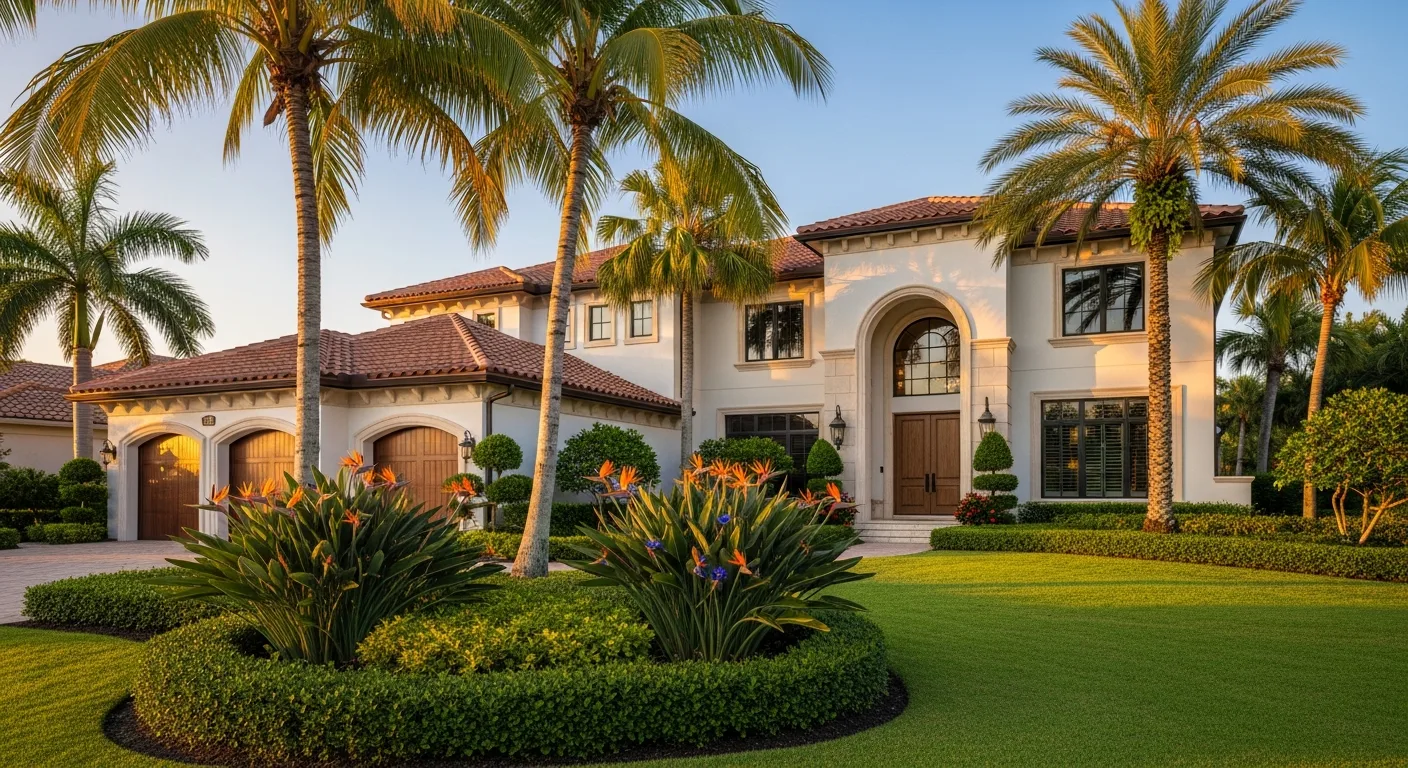
Palm Beach Gardens' gated communities — PGA National, BallenIsles, Mirasol, Old Palm,
and Frenchman's Creek — represent a significant share of the city's $606K median home
value, each with HOA-governed restoration protocols and multi-gate access logistics.
FEMA Flood Map Update
Palm Beach Gardens Flood Zones Changed in December 2024
FEMA significantly updated Palm Beach County's flood maps effective December 20, 2024,
moving more than 16,000 parcels countywide into
higher-risk zones. Palm Beach Gardens homeowners who haven't checked their status since the
remap may discover their property now requires mandatory flood insurance — and that their
existing coverage has critical gaps.
Zone AE
High Risk (1% annual chance / 100-year flood)
Flood insurance is mandatory for mortgaged properties in this zone. The December 2024 remap expanded Zone AE significantly in Palm Beach Gardens — particularly in canal-adjacent neighborhoods, low-lying areas near the NPBCID system, and sections of PGA National and Sanctuary Cove that were previously classified as moderate risk.
PBG Areas: PGA National (south sections), Sanctuary Cove, canal-adjacent properties, eastern condo corridor
Not in the 100-year floodplain but exposed to 500-year events. Many PBG homeowners in this zone mistakenly believe they have no flood risk. The October 2024 tornado events and recurring flash flooding during wet season demonstrate that Zone X properties regularly experience water damage.
PBG Areas: Most interior residential areas, Mirasol, BallenIsles, Alton, San Michele
Zone X (Unshaded)
Lower Risk (above 500-year flood level)
Lowest FEMA-designated flood risk. However, in Palm Beach Gardens, even "low-risk" areas experience street flooding from intense afternoon thunderstorms due to flat terrain, high water table, and stormwater system capacity limits. The 2024 remap reduced the number of PBG properties in this zone.
PBG Areas: Western elevated developments, Avenir, newer subdivisions on higher ground
What Palm Beach Gardens Homeowners Should Do Now
1
Check your updated flood zone designation Urgent
Your property may have moved from Zone X to Zone AE in the December 2024 update. Look up your parcel at pbc.gov/pzb or FEMA's Flood Map Service Center. If your designation changed, your mortgage lender may now require flood insurance.
2
Understand flood zone vs. evacuation zone
FEMA flood zones (AE, X) indicate insurance requirements based on statistical flood probability. Palm Beach County evacuation zones (A, B, C, D, E) indicate hurricane storm surge risk and when to evacuate. They are separate systems — you can be in flood Zone X but evacuation Zone B.
3
Review your insurance coverage immediately Urgent
Standard HO-3 homeowner policies do NOT cover rising water or flood damage — regardless of your flood zone. A separate NFIP or private flood policy is required. In Palm Beach Gardens, where the median home is $606K, an uninsured flood event can mean six-figure losses.
4
Know the Substantial Improvement rule
If restoration costs exceed 50% of your home's market value in a flood zone, the entire structure must be brought into compliance with current flood elevation requirements. On a $606K PBG home, this threshold is approximately $303K — but for luxury estates in Frenchman's Creek or Old Palm, the calculation becomes critical.
5
Document your property's pre-loss condition
Photograph every room, mechanical system, and exterior surface now — before any water event. This documentation is essential for insurance claims and helps establish pre-loss condition when adjusters assess damage.
NPBCID Drainage: The System Behind Your Neighborhood's Flood Risk
The Northern Palm Beach County Improvement District (NPBCID) manages the primary canal
and drainage infrastructure serving Palm Beach Gardens. When their system reaches
capacity during heavy rain — as it did during the October 2024 tornado events — water
backs up through community drainage outfalls into streets, yards, and structures. Your
HOA's internal drainage connects to NPBCID's network, which connects to the South
Florida Water Management District's regional system. Understanding this chain is
essential for knowing why your neighborhood floods and who's responsible.
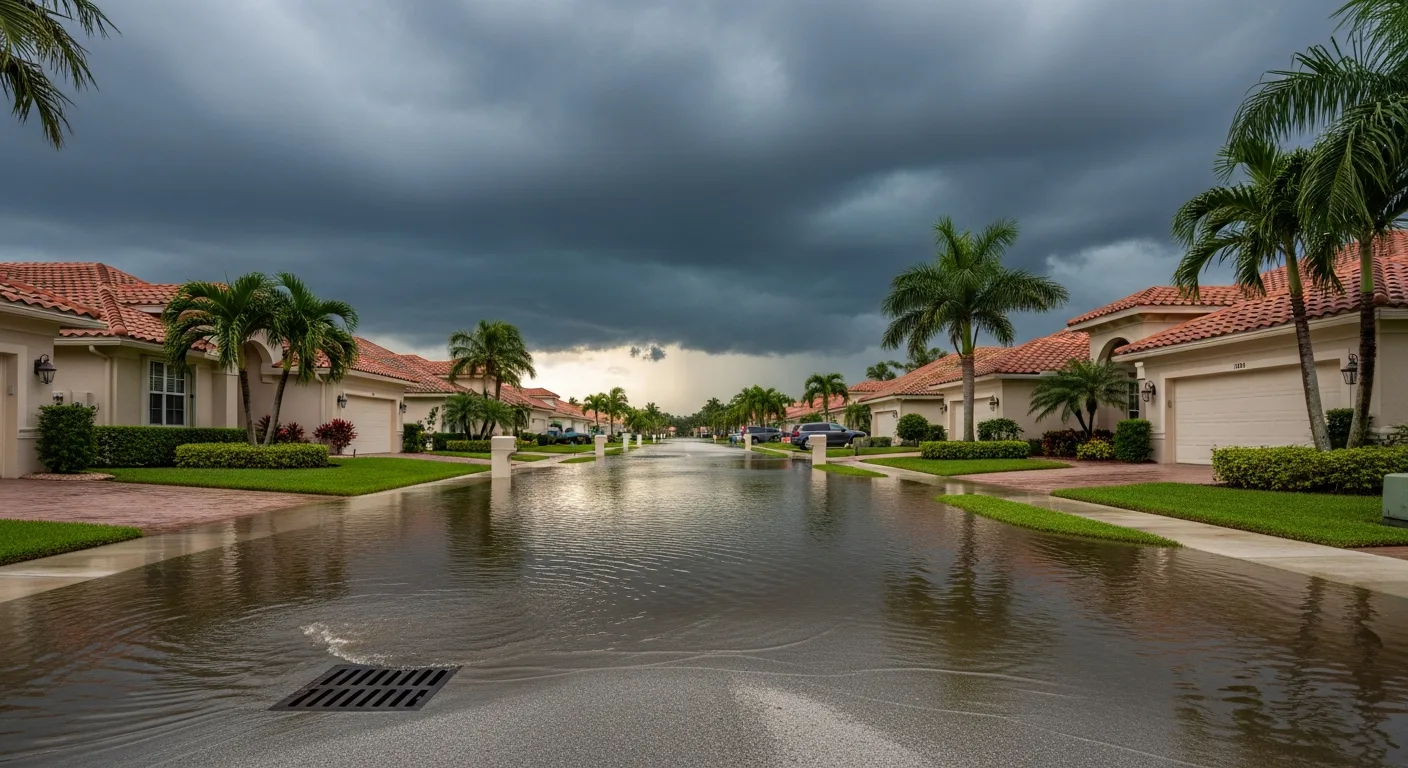
Palm Beach Gardens' flat terrain, high water table, and stormwater infrastructure
capacity limits produce widespread street flooding during intense wet season
thunderstorms — affecting neighborhoods from PGA National to Sanctuary Cove.
Our Process
How Palm Build Restores Water-Damaged Palm Beach Gardens Homes
CBS stucco construction, premium finishes, and gated community logistics require
specialized protocols that generic franchise companies don't offer. Here's what our
IICRC-certified team does differently for Palm Beach Gardens homeowners.
01
Emergency Dispatch
Under 60 minutes
Call (754) 600-3369 any time, day or night. Our Deerfield Beach team dispatches immediately to Palm Beach Gardens with truck-mounted extraction, commercial dehumidifiers, and thermal imaging equipment. We coordinate gate access with your community's security — PGA National, BallenIsles, Frenchman's Creek, Mirasol, Old Palm — our crews carry pre-registered access credentials for major PBG communities.
02
Damage Assessment & Documentation
First 2 hours
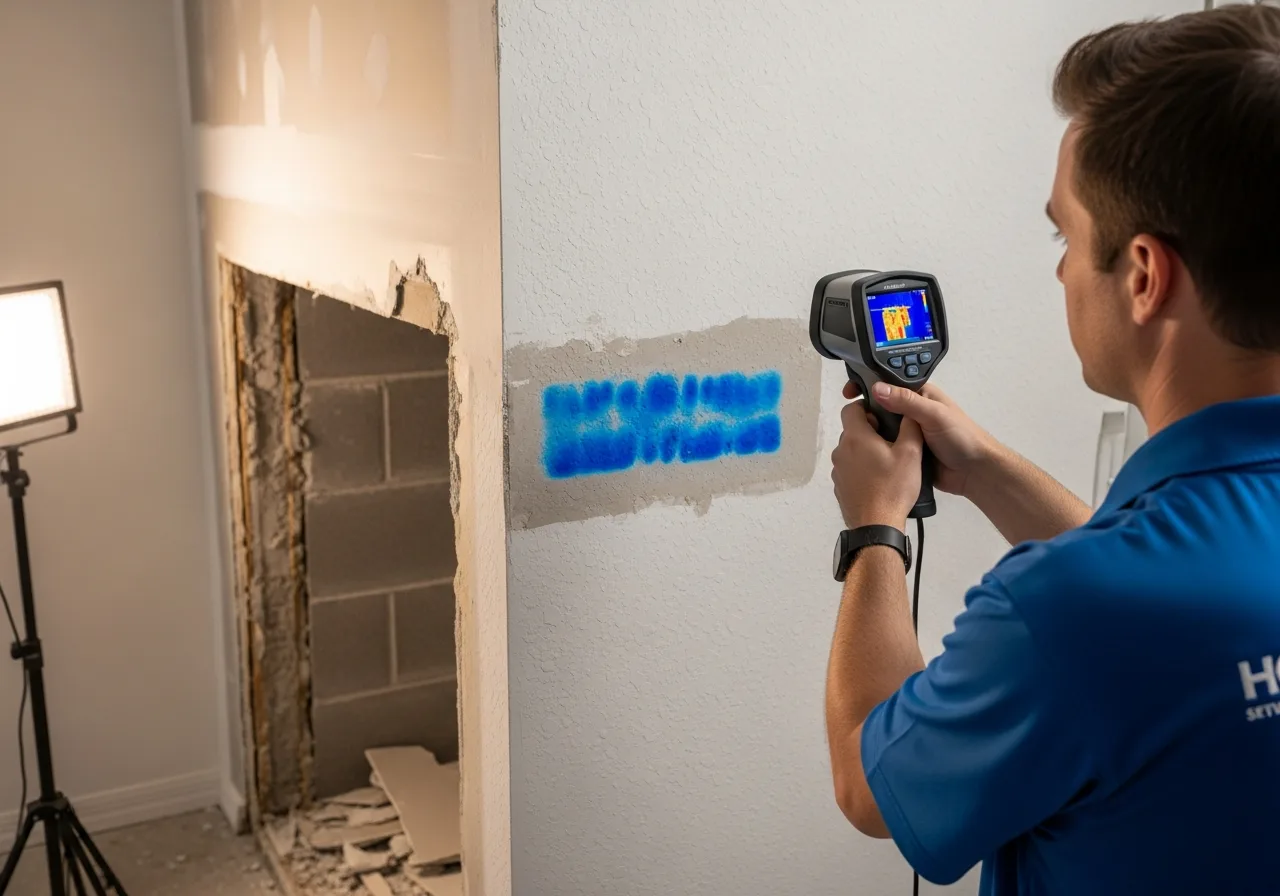
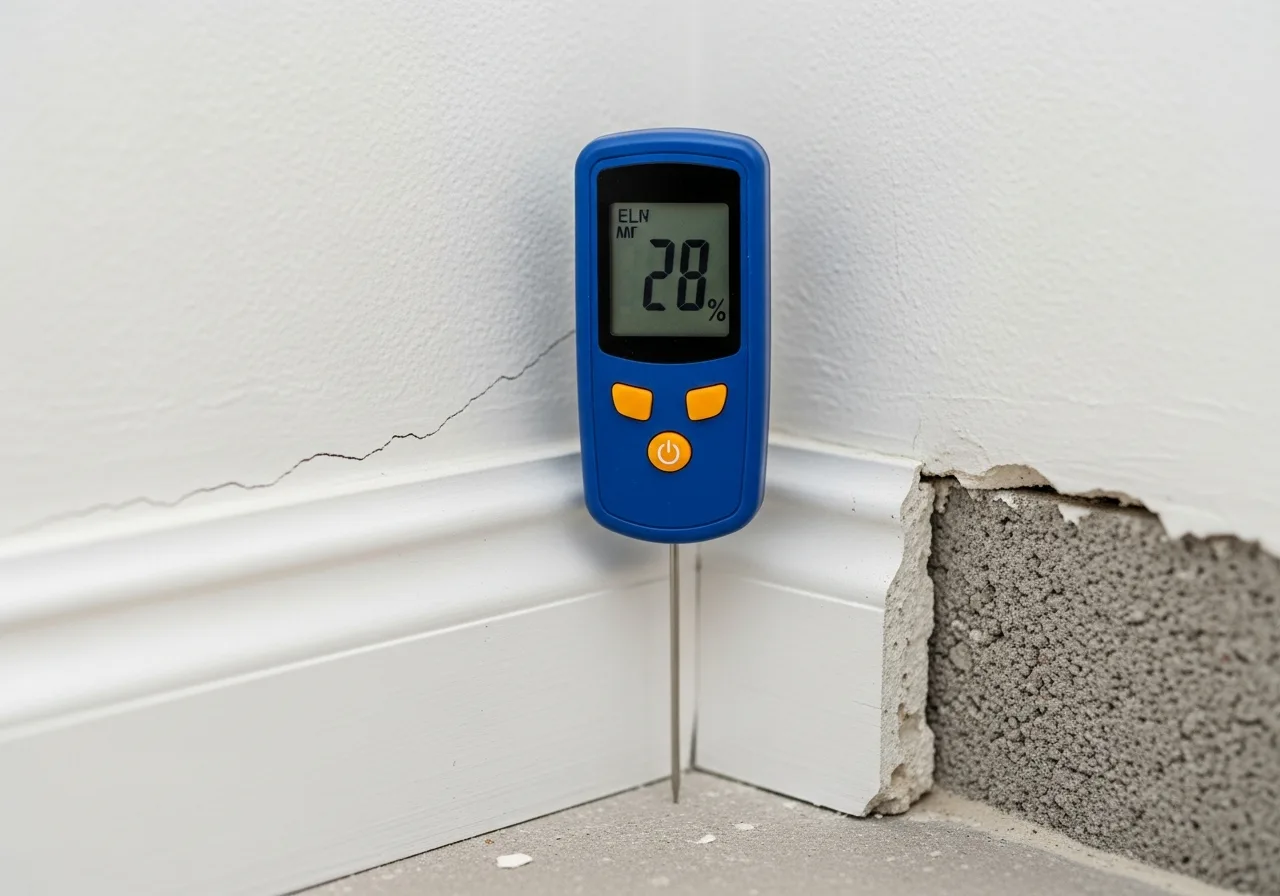
We map every affected surface using FLIR thermal imaging cameras and dual-mode pin/pinless hygrometers. In Palm Beach Gardens' CBS stucco homes, this is critical — moisture trapped inside concrete block cavities is completely invisible from the surface but creates devastating mold conditions within 48-72 hours in our year-round humidity. We also photograph and document everything from the first moment for your insurance claim.
03
Water Extraction
Hours 2-6
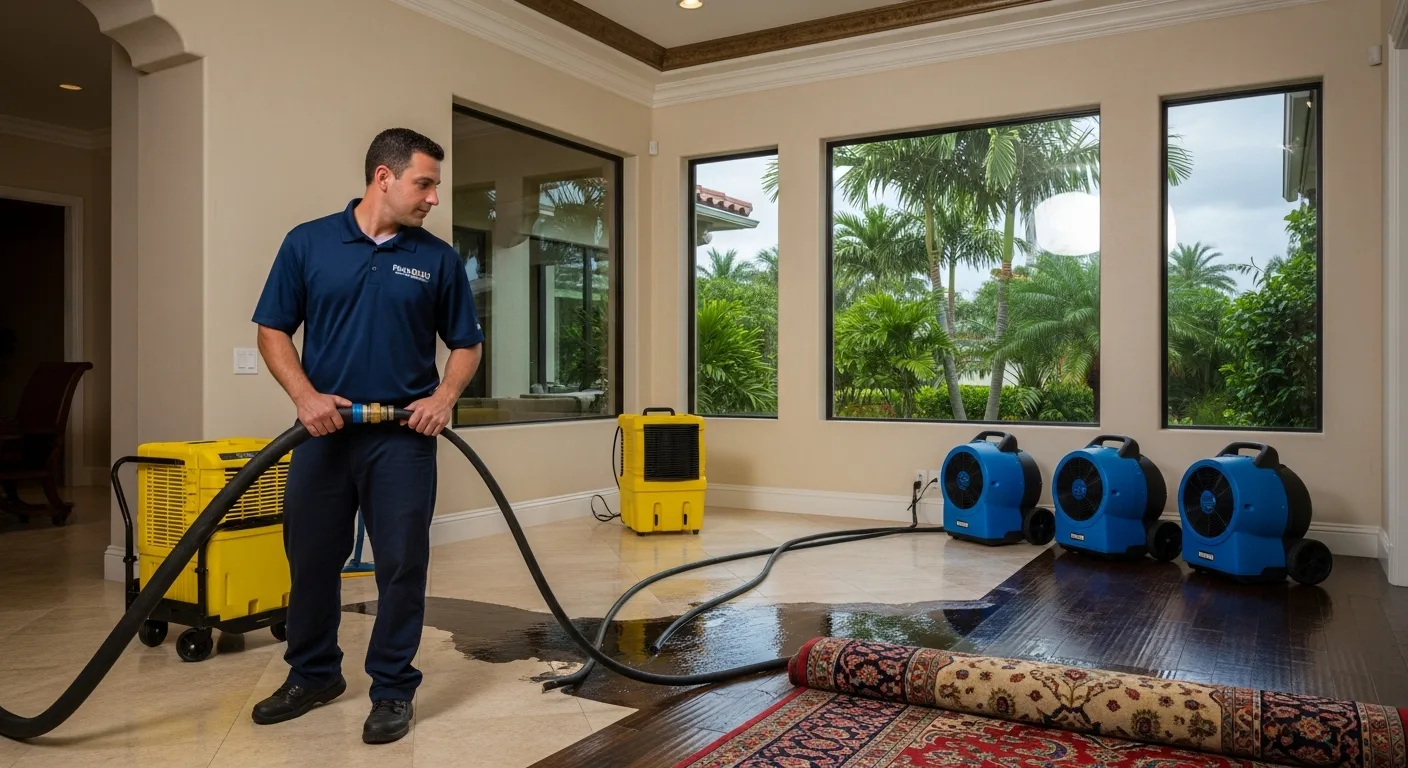
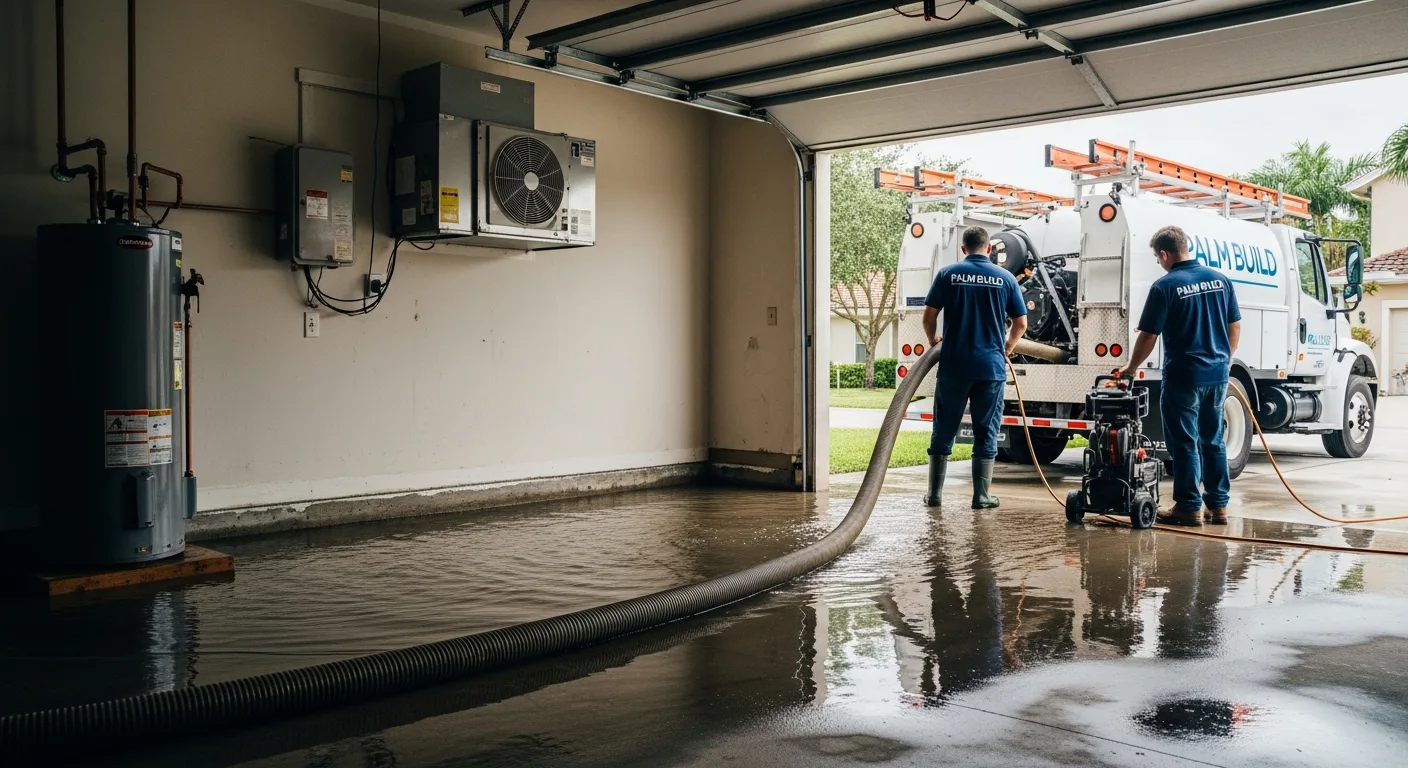
Truck-mounted extractors remove standing water at up to 30 gallons per minute. For Palm Beach Gardens homes with premium flooring — marble, travertine, engineered hardwood — we use weighted extraction tools and low-pressure techniques that maximize water removal without damaging delicate surfaces. Garage flooding from flash storms gets immediate attention to protect vehicles and stored valuables.
04
Structural Drying
3-5 days
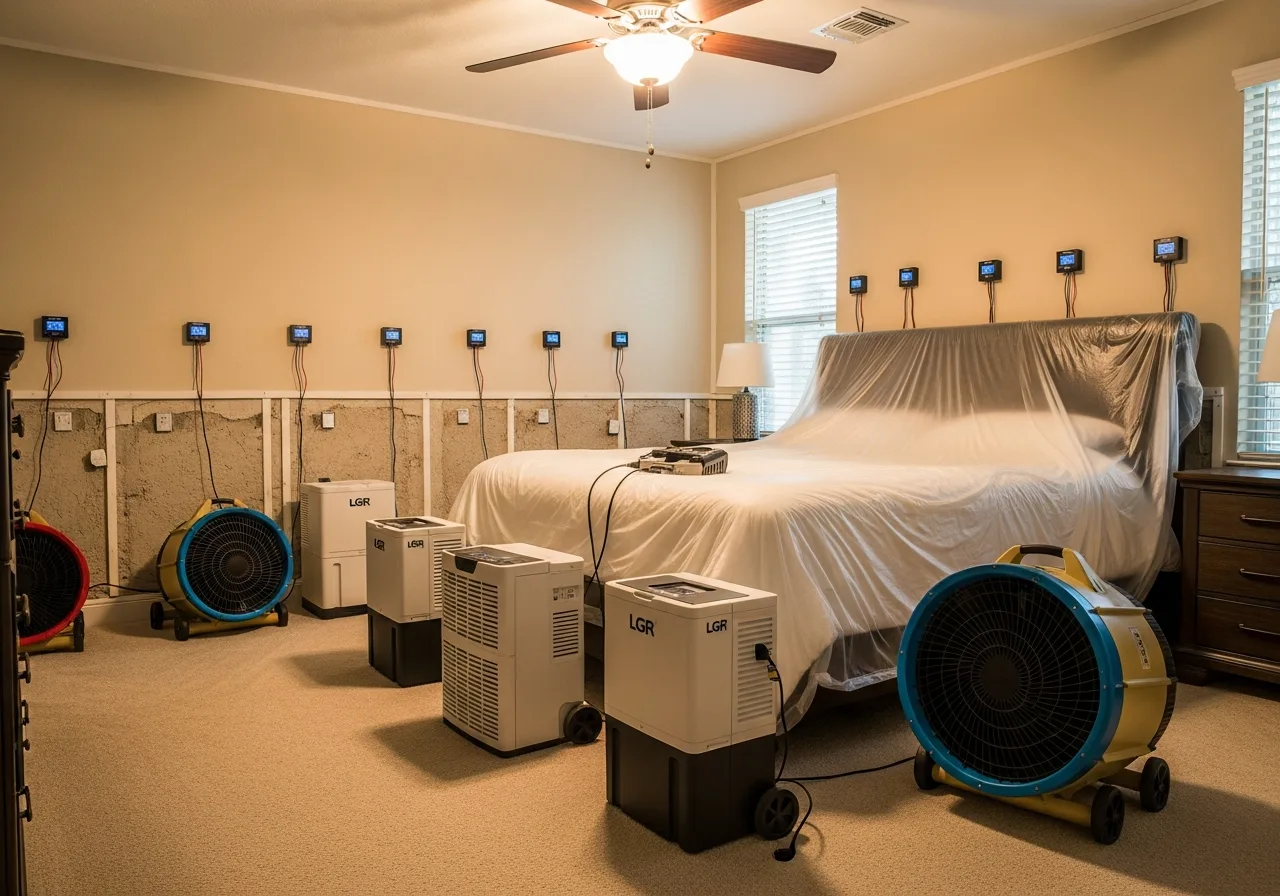
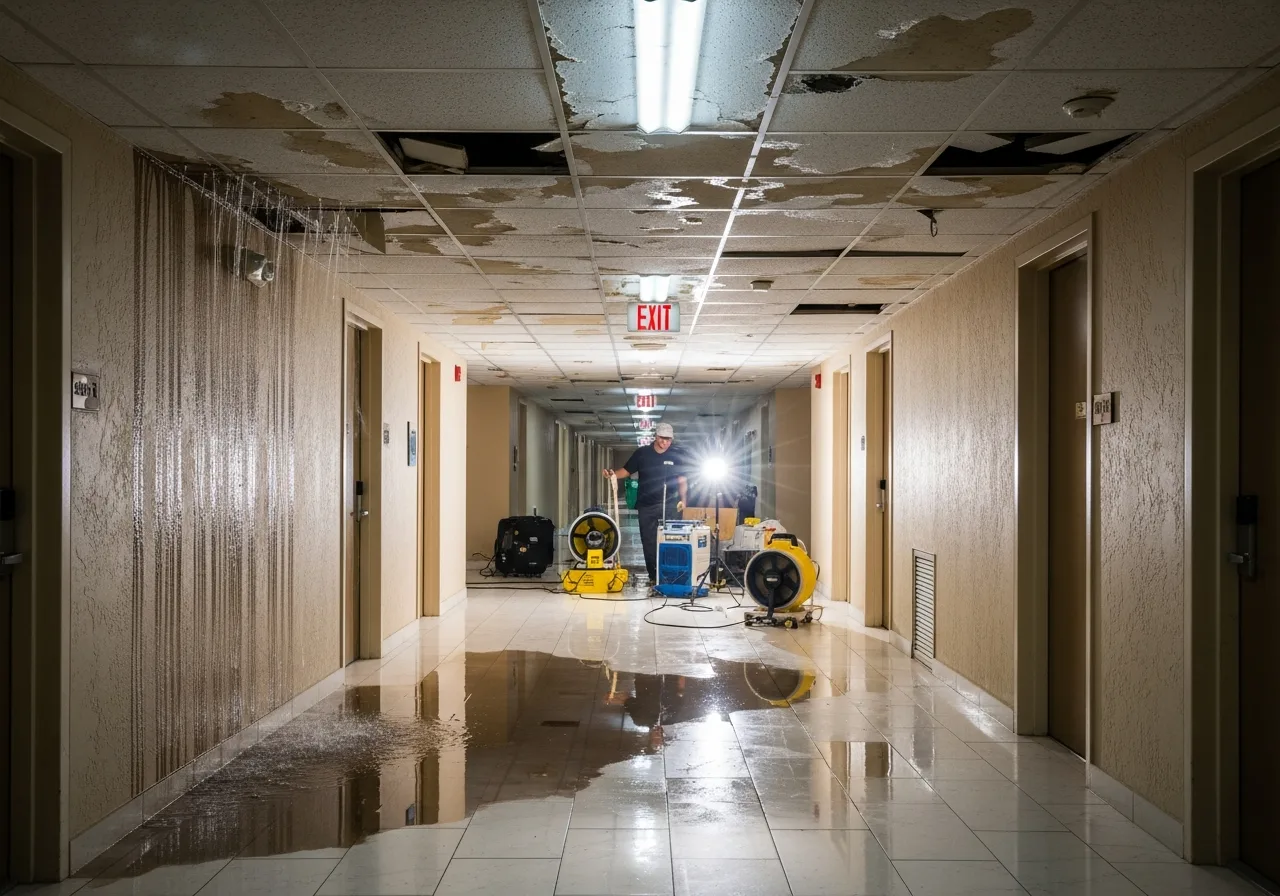
Commercial LGR dehumidifiers pulling 15-30 gallons per day and high-velocity air movers create a controlled drying environment. For CBS block walls — the dominant construction type in every PBG community — we use directed heat drying and wall cavity injection systems that deliver warm dry air directly into the hollow block cores. Standard air drying does not work in Palm Beach Gardens' 80%+ ambient humidity.
05
Antimicrobial Treatment & Mold Prevention
During drying
EPA-registered antimicrobial agents are applied to all affected surfaces during the drying process. In Palm Beach Gardens' tropical climate, mold prevention isn't optional — it's a required step. We treat CBS block cavities, slab-to-wall junctions, and HVAC systems to prevent secondary colonization. Licensed mold assessors verify clearance before reconstruction begins.
06
Restoration & Reconstruction
1-4 weeks
Stucco repair, drywall replacement, premium flooring installation, custom cabinetry, paint, and trim — we handle everything from emergency mitigation through full reconstruction. For Palm Beach Gardens' luxury homes, we match existing high-end finishes: natural stone, custom millwork, designer tile, and specialty paint. One company manages the entire project from first call to final walkthrough.
Commercial LGR dehumidifiers and wall cavity injection systems are essential for drying
Palm Beach Gardens' CBS block construction — standard air drying cannot reach moisture
trapped inside hollow concrete block cavities.
Damage Classification
Types of Water Damage in Palm Beach Gardens Homes
Each water damage type requires different remediation protocols and affects Palm Beach
Gardens neighborhoods differently. Understanding the category classification helps you
know what to expect from the restoration process.
Thunderstorm Flash Flooding
Category 2-3
Palm Beach Gardens receives 61.75 inches of rain annually, with afternoon thunderstorms routinely dropping 2-4 inches in under an hour during wet season. The city's flat terrain and high water table prevent rapid absorption, sending sheet flow across yards and into garages, lanais, and ground-floor living spaces. Sanctuary Cove, PGA National's southern sections, and canal-adjacent communities in Alton and The Isles are repeat flash flood zones.
Palm Build Response
Emergency extraction, Category 2-3 contaminated water protocols, antimicrobial treatment of all surfaces in contact with stormwater runoff.
HVAC Condensation Damage
Category 1
Central AC running nearly year-round creates chronic condensation risk throughout Palm Beach Gardens. Clogged condensate drain lines, cracked drip pans, and oversized units that short-cycle produce standing moisture in air handlers — often undetected until ceiling stains, warped flooring, or mold odors appear. Sealed, energy-efficient homes in Avenir and Alton trap this moisture with nowhere to escape.
Palm Build Response
Source identification and repair, targeted water extraction, focused drying of affected ceiling and floor areas, HVAC system cleaning and drain line restoration.
Stucco & CBS Water Intrusion
Category 1-2
Thermal cycling and hurricane winds create hairline stucco cracks across virtually every CBS home in Palm Beach Gardens. Water wicks through these micro-fractures, saturating the porous concrete block cavity behind — creating hidden moisture and mold growth that homeowners never see. Barrel tile roof-to-wall junctions and window frame seals are secondary intrusion points during wind-driven rain.
Palm Build Response
Thermal imaging to map hidden moisture, wall cavity injection drying, antimicrobial treatment of block cavities, stucco crack repair and waterproof coating.
Plumbing System Failures
Category 1-2
Palm Beach Gardens communities built between 1980-1995 — including original sections of PGA National and eastern corridor condos — may contain polybutylene plumbing that degrades from chlorinated municipal water and fails without warning. CPVC, copper supply lines, and water heater failures account for the majority of emergency calls in homes built before 2000.
Palm Build Response
Immediate shutoff and extraction, moisture mapping of CBS block walls and slab, controlled structural drying with commercial dehumidifiers, insurance documentation from first response.
Tile Roof Leak Damage
Category 1
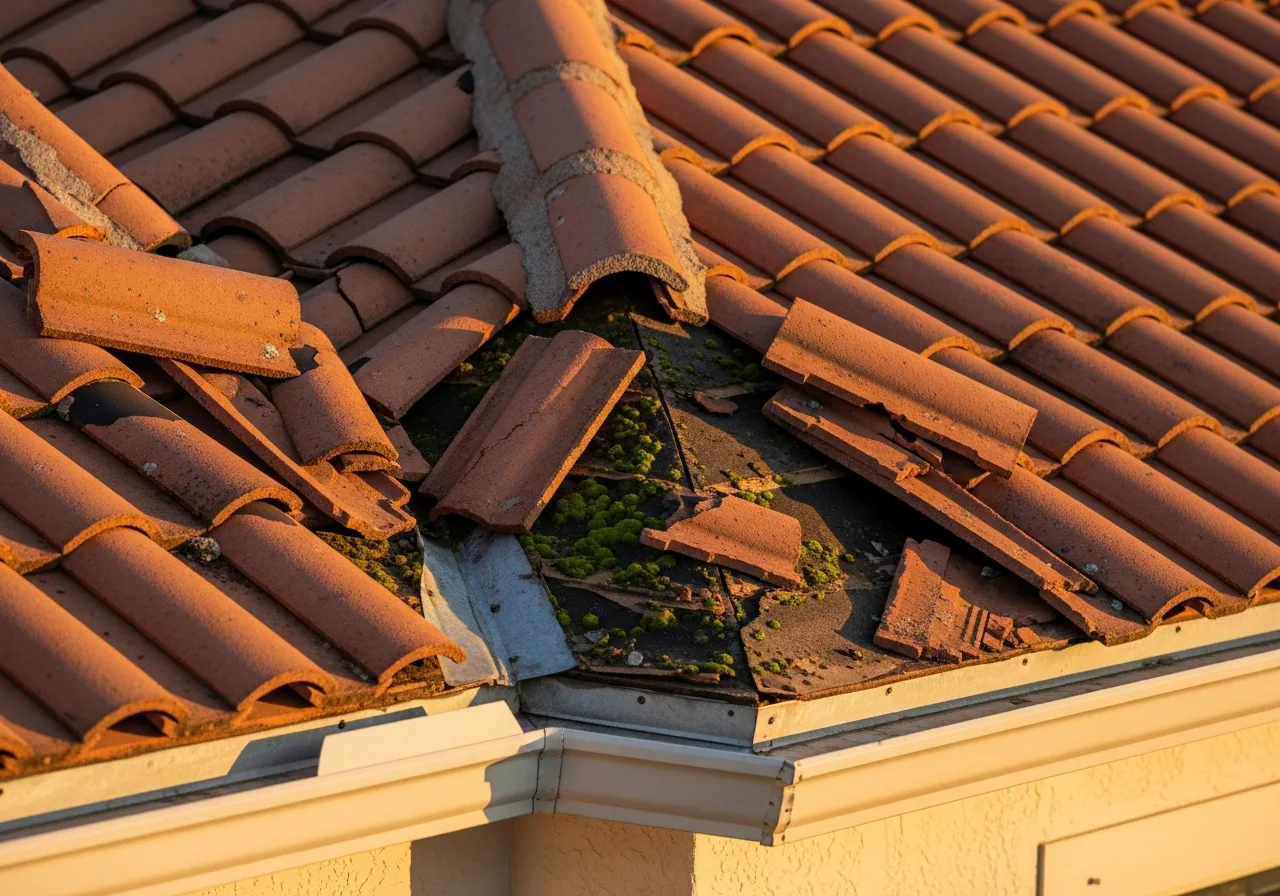
Barrel and flat concrete tile roofs are standard across Palm Beach Gardens. Storm winds shift tiles, crack underlayment, and break individual tiles — creating progressive water intrusion that worsens with each rain event. Many PBG homeowners discover roof leak damage only when ceiling stains appear, by which time the roof decking, trusses, and attic insulation may harbor mold colonies.
Palm Build Response
Emergency tarping, interior water extraction, attic mold assessment, structural drying of roof assembly, coordination with roofing contractor for permanent repair.
Canal & Drainage Overflow
Category 3
The NPBCID canal network serving Palm Beach Gardens reaches capacity during extreme rain events, causing water to back up through drainage outfalls into adjacent streets and properties. Canal-adjacent communities — sections of PGA National, Sanctuary Cove, San Michele, and The Isles — face contaminated water intrusion requiring aggressive remediation protocols.
Palm Build Response
Category 3 (contaminated water) protocols: remove all porous materials in contact with canal water, full antimicrobial treatment, structural drying, complete reconstruction of affected areas.
Truck-mounted extraction removes standing water at up to 30 gallons per minute — the
critical first step in preventing secondary mold damage in Palm Beach Gardens'
year-round tropical humidity.
Seasonal Risk Guide
When Palm Beach Gardens Homes Are Most at Risk
Palm Beach Gardens' tropical climate produces year-round water damage risk, but the
threat profile shifts dramatically between wet and dry seasons. Understanding your
seasonal exposure helps you prepare — and respond faster when damage occurs.
Wet Season
May – October
PEAK
Hurricane & Tornado Damage
PEAK
Palm Beach Gardens is in the direct hurricane strike zone. Hurricane Milton spawned an EF-3 tornado through Avenir in October 2024 — the second confirmed tornado in PBG in two years (EF-2 in 2023). Wind-driven rain penetrates windows, door frames, and roof-wall junctions simultaneously across multiple homes.
Flash Flooding & Canal Overflow
PEAK
Afternoon thunderstorms drop 2-4 inches in under an hour. The NPBCID canal system reaches capacity, backing water into Sanctuary Cove, PGA National south, and canal-adjacent neighborhoods. Sheet flooding enters garages, lanais, and ground-floor spaces across low-lying communities.
HVAC Condensation & Mold Growth
HIGH
AC systems running at maximum capacity 24/7 produce the highest condensation volumes. Combined with 80%+ outdoor humidity, any water intrusion event accelerates mold colonization to 24-48 hours — half the time of drier climates.
Thermal cycling from occasional cold fronts stresses aging plumbing — particularly polybutylene pipes in 1980s-1990s PGA National homes and eastern corridor condos. Water heater failures peak as seasonal residents return and restart dormant systems.
Snowbird Vacancy Damage Discovery
HIGH
Seasonal residents returning November-January frequently discover water damage that occurred during their absence — slow HVAC condensate leaks, roof tile intrusion, or pipe failures that ran undetected for weeks or months. Mold remediation is almost always required in these cases.
King Tide & Coastal Flooding
ELEVATED
September-November King Tides raise canal and drainage system levels across North Palm Beach County. While PBG lacks direct oceanfront, elevated canal levels reduce drainage capacity and increase the risk of backflow flooding during even moderate rain events.
Why Your Palm Beach Gardens Neighborhood Floods — and Who's Responsible
Palm Beach Gardens' stormwater system isn't managed by a single entity. Four overlapping
authorities — each with different infrastructure, capacity limits, and maintenance
schedules — determine whether your neighborhood floods during a heavy rain event.
Understanding this chain helps you know who to contact, what coverage you need, and why
"it never flooded before" doesn't mean it won't flood next time.
Level 1
Your HOA / Community Association
Internal community drainage, retention ponds, swales
Maintains the stormwater infrastructure within your gated community — retention ponds, internal drainage pipes, swales, and catch basins. In communities like PGA National, BallenIsles, and Mirasol, the HOA manages a complex internal system that connects to the NPBCID network. When your HOA's system backs up, water floods streets, yards, and enters homes through garage doors and lanai openings.
PBG Examples: PGA National retention lakes, BallenIsles golf course drainage, Evergrene community swales
Level 2
City of Palm Beach Gardens — Streets & Stormwater
Public road drainage, city-owned catch basins, roadside swales
The city manages stormwater infrastructure along public roads and rights-of-way — catch basins, culverts, and roadside swales on PGA Boulevard, Military Trail, Burns Road, and other city-maintained streets. When city infrastructure reaches capacity, water backs up into adjacent residential areas. The city coordinates with NPBCID but does not control the primary canal network.
PBG Examples: PGA Blvd drainage, Military Trail culverts, Burns Road stormwater system
Level 3
Northern Palm Beach County Improvement District (NPBCID)
Primary canal network, control structures, major drainage infrastructure
NPBCID operates the primary canal and water control infrastructure serving Palm Beach Gardens. Their canal network collects stormwater from HOA and city systems and conveys it south and east toward the Intracoastal Waterway and the ocean. When NPBCID canals reach capacity during extreme rain events — as they did during the October 2024 tornado events — water cannot drain from upstream communities, causing backflow flooding in Sanctuary Cove, southern PGA National, and canal-adjacent neighborhoods.
PBG Examples: Primary north-south canals, east-west lateral canals, water control structures
Level 4
South Florida Water Management District (SFWMD)
Regional flood control, major canals, Lake Okeechobee discharge
SFWMD manages the regional water management system across 16 counties, including the C-18 canal that serves as a major outfall for North Palm Beach County. SFWMD water level management decisions — particularly during hurricane season — directly affect how quickly NPBCID can discharge water from Palm Beach Gardens' local system. When SFWMD holds water levels high for ecological or supply reasons, local drainage capacity is reduced.
PBG Examples: C-18 canal, regional water control schedules, Loxahatchee River basin management
The Chain Failure Problem: When Multiple Systems Overflow Simultaneously
During the October 2024 tornado events, all four levels of drainage infrastructure in
Palm Beach Gardens reached capacity simultaneously. SFWMD held regional canal levels
high for hurricane preparation; NPBCID canals could not discharge effectively; city
catch basins overflowed; and HOA retention ponds in Sanctuary Cove, PGA National, and
Evergrene exceeded capacity — sending water into streets, garages, and homes. This
chain failure is becoming more frequent as development increases impervious surface
area and extreme rain events intensify.
Standard homeowner insurance does NOT cover this type of flooding. A separate flood
policy is essential — regardless of your FEMA zone designation.
The NPBCID canal network serving Palm Beach Gardens — when the system reaches capacity
during extreme rain events, water backs up through community drainage outfalls into
streets, yards, and ground-floor living spaces.
Our Work
Palm Beach Gardens Water Damage Restoration Gallery
From emergency response to completed restoration — see how Palm Build handles water
damage in Palm Beach Gardens' luxury homes and gated communities.
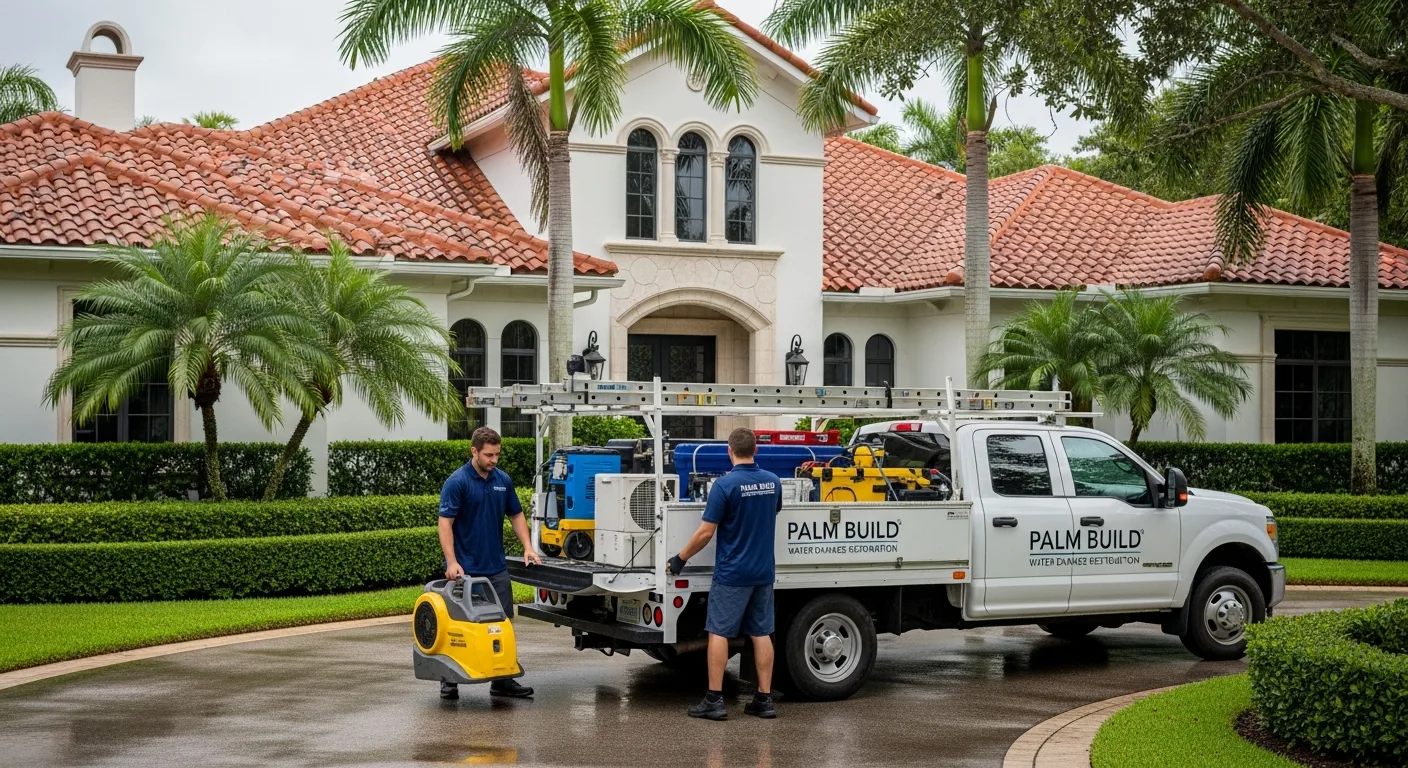
Emergency response: Palm Build dispatches to Palm Beach Gardens within 60 minutes with truck-mounted extraction and commercial drying equipment.
FLIR thermal imaging reveals hidden moisture inside CBS block cavities — invisible from the surface but critical to identify before mold establishes.
Dual-mode hygrometer readings at multiple wall depths track the drying process — CBS block requires extended monitoring compared to wood framing.
Commercial LGR dehumidifiers pulling 15-30 gallons per day create a controlled drying environment that overcomes PBG's 80%+ ambient humidity.
Eastern corridor condo cascade: upper-floor pipe failures in PGA Blvd mid-rises can affect multiple units below — requiring coordinated multi-unit restoration.
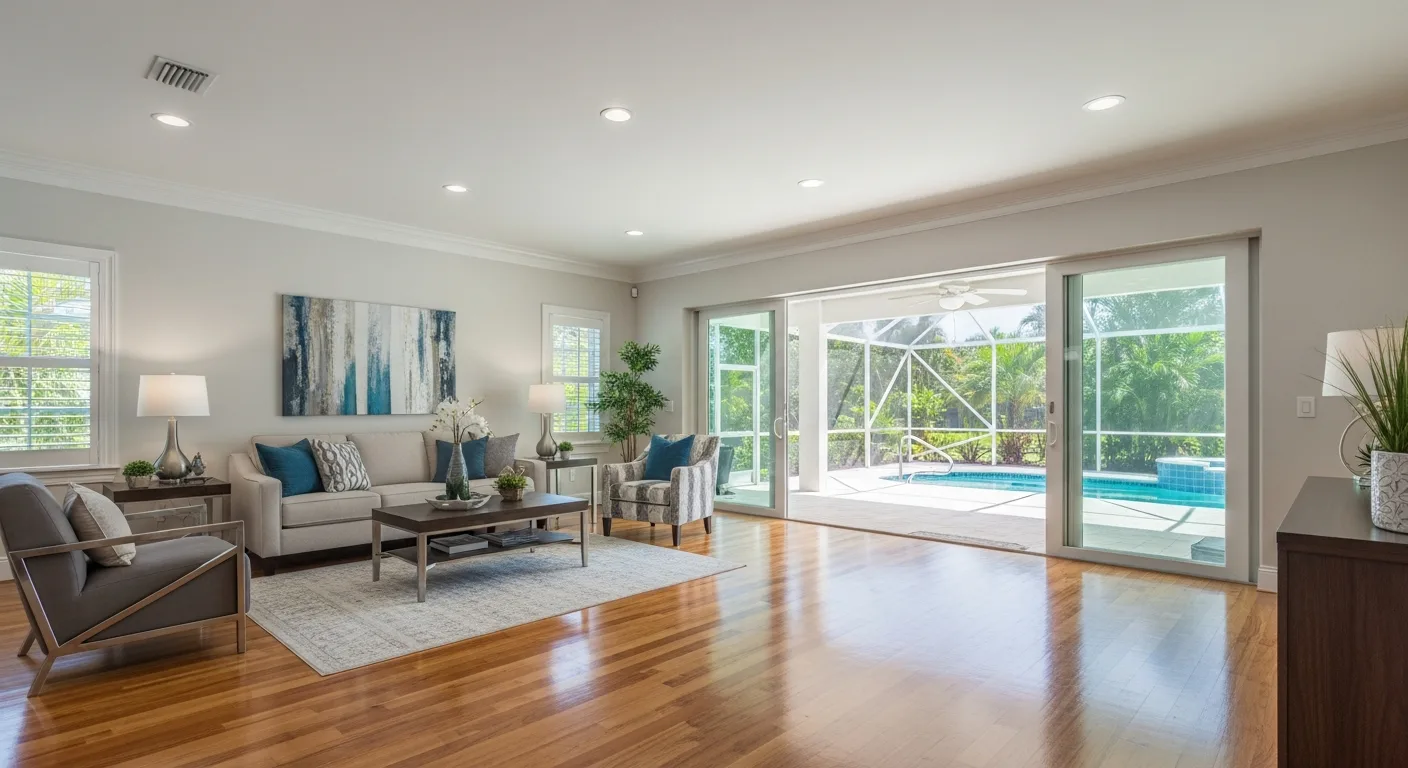
Completed restoration: new premium flooring, fresh paint, and restored architectural details — returned to pre-loss condition or better.
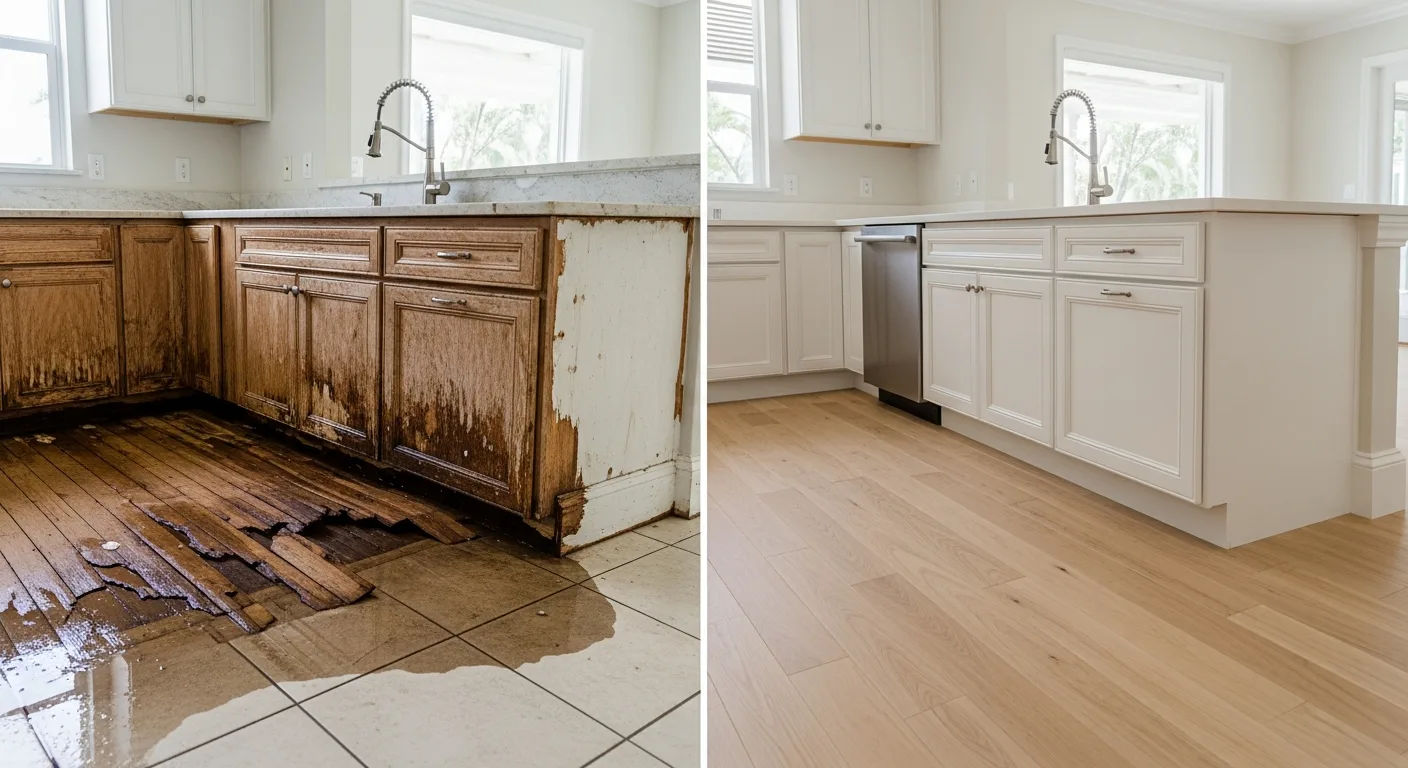
Before and after: complete water damage restoration in a Palm Beach Gardens luxury home
— from standing water and damaged premium finishes to fully restored living space.
Cost Transparency
Water Damage Restoration Costs in Palm Beach Gardens
Palm Beach Gardens restoration costs reflect the city's affluent market — premium
finishes, CBS-specific drying protocols, and luxury home complexity drive costs above
national averages. Here's what to expect based on damage type.
Standard Damage
Burst Pipe / Supply Line Failure
Single room, clean water, prompt response within 24 hours
Flooring extraction, cabinet base treatment, subfloor drying
$1,500 – $4,000
Complex Damage
Hurricane / Tornado Water Intrusion
Multi-room wind-driven rain damage, structural drying, full reconstruction of affected areas
$15,000 – $75,000+
Multi-Unit Condo Cascade Event
Per unit — upper floor failure affecting 2-4 units below, HOA claim coordination
$10,000 – $40,000+
Flash Flood / Canal Overflow
Category 3 contaminated water, full demo of porous materials, antimicrobial treatment, reconstruction
$12,000 – $50,000+
Delayed Discovery (Vacancy/Snowbird)
Mold remediation required in nearly all cases; total cost depends on colonization extent
$8,000 – $35,000+
Average PBG Restoration Project
$5,000 – $15,000
Standard burst pipe or HVAC condensation event with prompt response. Complex projects
involving storms, multi-unit cascades, or delayed discovery range significantly higher.
Palm Beach Gardens' $606K median home value and premium finishes mean that even moderate
damage involves high-end material replacement. Free assessments — call (754) 600-3369.
Florida Insurance Guide
Palm Beach Gardens Insurance Claims: What You Need to Know
Florida's property insurance landscape is the most complex and expensive in the nation.
Recent legislative changes have fundamentally altered how homeowners file and manage
restoration claims. Here's what every Palm Beach Gardens homeowner must understand.
1-Year Claim Filing Deadline
Under Fla. Stat. § 627.70132 (effective December 16, 2022), initial property insurance claims must be filed within 1 year of the date of loss. Supplemental claims must be filed within 18 months. These are hard deadlines — a late claim is legally barred regardless of merit. In Palm Beach Gardens, where seasonal residents may discover damage months after it occurs, this deadline is especially critical.
If your damage occurred more than 10 months ago, act now.
Hurricane Deductibles on $606K Homes
Florida policies carry separate hurricane deductibles of 2-5% of insured value. On Palm Beach Gardens' $606K median home, that's $12,120 to $30,300 out of pocket before the insurer pays anything on a hurricane claim. For luxury estates in Frenchman's Creek, Old Palm, or Mirasol — many insured at $1.5M-$5M — hurricane deductibles can reach $100,000 or more.
PBG median hurricane deductible: $12,120 – $30,300. Know yours before storm season.
Flood Insurance Gap
Standard HO-3 homeowner policies do NOT cover rising water or flood damage. A separate NFIP or private flood policy is required. Following the December 2024 FEMA flood map update, thousands of Palm Beach Gardens properties now fall in higher-risk zones — but many homeowners haven't purchased flood coverage. In Palm Beach County, average annual homeowner premiums already exceed $6,500 before adding flood coverage.
Estimated annual homeowner premium in PBC: ~$6,500. Flood coverage is additional.
AOB Reform: You Manage Your Claim
Since January 1, 2023, post-loss Assignment of Benefits is prohibited for residential property insurance. Homeowners can no longer sign over their insurance rights to a restoration contractor. You must manage your own claim — but Palm Build provides all documentation, moisture maps, thermal imaging reports, daily drying logs, photo evidence, and scope-of-work estimates formatted for your adjuster.
Palm Build works as your documentation partner, not your insurance representative.
Common Coverage Gaps for PBG Homeowners
Flood vs. Water Damage
Standard HO-3 excludes rising water. Separate flood policy required. Many PBG
homeowners in newly designated high-risk zones after the Dec 2024 FEMA remap lack
coverage entirely.
Mold Sublimits
Many policies cap mold at $10,000-$25,000 or exclude it entirely unless caused by a
covered peril. In PBG's humidity, mold costs routinely exceed sublimits — especially
in delayed discovery cases.
Ordinance or Law Coverage
Required when code upgrades (hurricane strapping, elevation, impact glazing) must be
made during restoration. Critical in flood zones subject to the Substantial
Improvement rule.
Our Deerfield Beach operations hub puts us within fast response range of every Palm Beach Gardens community — from PGA National and BallenIsles to Avenir and Frenchman's Creek. We're dispatching locally, not from a franchise headquarters hours away. Our crews carry pre-registered gate access credentials for major PBG communities to eliminate security delays.
IICRC Certified Water Restoration Technicians
Every crew lead holds current IICRC Water Restoration Technician (WRT) certification and follows S500 standards. Our technicians are trained specifically for South Florida CBS stucco construction — including wall cavity injection drying, slab moisture testing, and the critical difference between Category 1 clean water and Category 3 canal overflow protocols.
Insurance Documentation From First Response
Moisture maps, FLIR thermal imaging reports, daily drying logs, photo documentation, and scope-of-work estimates — all formatted for your adjuster from the moment we arrive. Under Florida's 1-year claim deadline and the post-2023 AOB reform, thorough documentation from day one is the foundation of a successful claim. We work with Citizens, Universal, Heritage, and all major FL carriers.
Florida Building Code & CBS Expertise
We specialize in CBS stucco drying protocols, barrel tile roof water intrusion, polybutylene plumbing failures, HVAC condensation patterns, and slab-on-grade moisture migration — all daily realities in Palm Beach Gardens that generic franchise companies miss. Our team understands the Substantial Improvement rule and how it affects restoration in flood zones.
Licensed Mold Prevention & Remediation
Florida law requires separate licensing for mold assessment and remediation. Palm Build holds the proper credentials for both — we apply EPA-registered antimicrobial treatments during every water restoration project and coordinate licensed mold assessors for clearance testing. In PBG's tropical climate, mold prevention is a required step, not an upsell.
Gated Community & HOA Experience
Palm Beach Gardens is one of the most heavily gated cities in South Florida. Our team understands the logistics — multi-gate access coordination, HOA board notification requirements, architectural review compliance for exterior restoration, and multi-unit cascade claim management in condo communities along the eastern PGA corridor.
Palm Build crews carry pre-registered gate access credentials for major Palm Beach
Gardens communities — PGA National, BallenIsles, Mirasol, Frenchman's Creek, and Old
Palm — eliminating security delays during emergencies.
Common Questions
Palm Beach Gardens Water Damage Restoration FAQ
How quickly can Palm Build respond to water damage in Palm Beach Gardens?
Our Deerfield Beach operations hub is approximately 35 minutes from Palm Beach Gardens. We typically respond within 60 minutes to communities including PGA National, BallenIsles, Avenir, Frenchman's Creek, Mirasol, and all surrounding neighborhoods. Our trucks carry truck-mounted extraction equipment, commercial LGR dehumidifiers, and air movers — we begin mitigation immediately upon arrival.
Why does my Palm Beach Gardens home keep getting water behind the walls?
Most Palm Beach Gardens homes are CBS (concrete block structure) with stucco exterior — built for hurricane winds, not chronic moisture. Hairline stucco cracks from thermal cycling allow wind-driven rain to saturate block cores and furring cavities. The moisture travels behind intact-looking drywall, invisible until mold colonizes or finishes delaminate. We use infrared thermal imaging and pin-type moisture meters to detect hidden moisture behind walls that look perfectly fine from the surface.
Did the December 2024 FEMA flood remap affect Palm Beach Gardens?
Yes. New FEMA flood zone maps took effect December 20, 2024, and Palm Beach Gardens was specifically listed among affected municipalities. The remap added more properties into high-risk flood zones, particularly in eastern areas of the county. If you've been newly mapped into a flood zone, you may now need flood insurance — standard homeowners insurance does not cover flood damage. Contact your insurance agent and consider our free property assessment to identify water vulnerability points.
What's the difference between flood damage and water damage for insurance?
This is one of the most common — and costly — misunderstandings for Palm Beach Gardens homeowners. Flood damage (rising water from outside) requires separate NFIP or private flood insurance and is excluded from standard HO-3 policies. Water damage from plumbing failures, HVAC condensation, or appliance leaks is typically covered by your homeowners policy. Wind-driven rain intrusion during storms falls into a gray area that often requires documentation proving the water entered through a wind-created opening. Palm Build documents every water event thoroughly to support whichever claim type applies.
My HVAC is leaking — is that an emergency?
In Palm Beach Gardens' subtropical climate, HVAC systems run almost constantly and are one of the top three sources of residential water damage. A clogged condensate drain line can release gallons of water per day into walls, ceilings, and closets. Because Florida's humidity prevents natural drying, even a small HVAC leak can produce mold within 24-48 hours. Yes — call us immediately. Shut off the system if possible and call (754) 600-3369 for same-day response.
How does Palm Beach Gardens' drainage system affect flooding risk?
Palm Beach Gardens' stormwater flows through a complex system managed by multiple authorities — the city's Streets and Stormwater division handles catch basins and some canals, the Northern Palm Beach County Improvement District manages drainage districts, and HOAs maintain swales and retention ponds within communities. When any link in this chain fails during heavy summer rains, standing water can persist for hours and enter garages, low thresholds, and ground-floor living spaces. Understanding which authority controls drainage in your specific community is key to prevention and insurance documentation.
What does water damage restoration cost in Palm Beach Gardens?
Standard water damage restoration in Palm Beach Gardens typically ranges from $3,000 to $12,000 for a single-room event (burst pipe, HVAC leak). Multi-room flooding from storm events or major plumbing failures ranges from $8,000 to $35,000+. Palm Beach Gardens' higher-end finishes — hardwood floors, custom cabinetry, stone countertops — increase restoration costs compared to basic construction. We provide detailed estimates and work directly with your insurance carrier to maximize your covered claim.
Trusted Vendors
Trusted local pros in Palm Beach Gardens
Outside our restoration scope, these are the vetted, licensed contractors we trust
alongside our work. Personally evaluated, reference-checked, and recommended by Palm
Build.
Our South Florida team responds to Palm Beach Gardens with truck-mounted extraction, commercial drying, and insurance-ready documentation. Call now for 24/7 emergency response — IICRC-certified technicians who understand CBS stucco construction, FEMA flood zones, gated community access, and Florida insurance requirements.