(888) 245-5155
Call Now 24/7
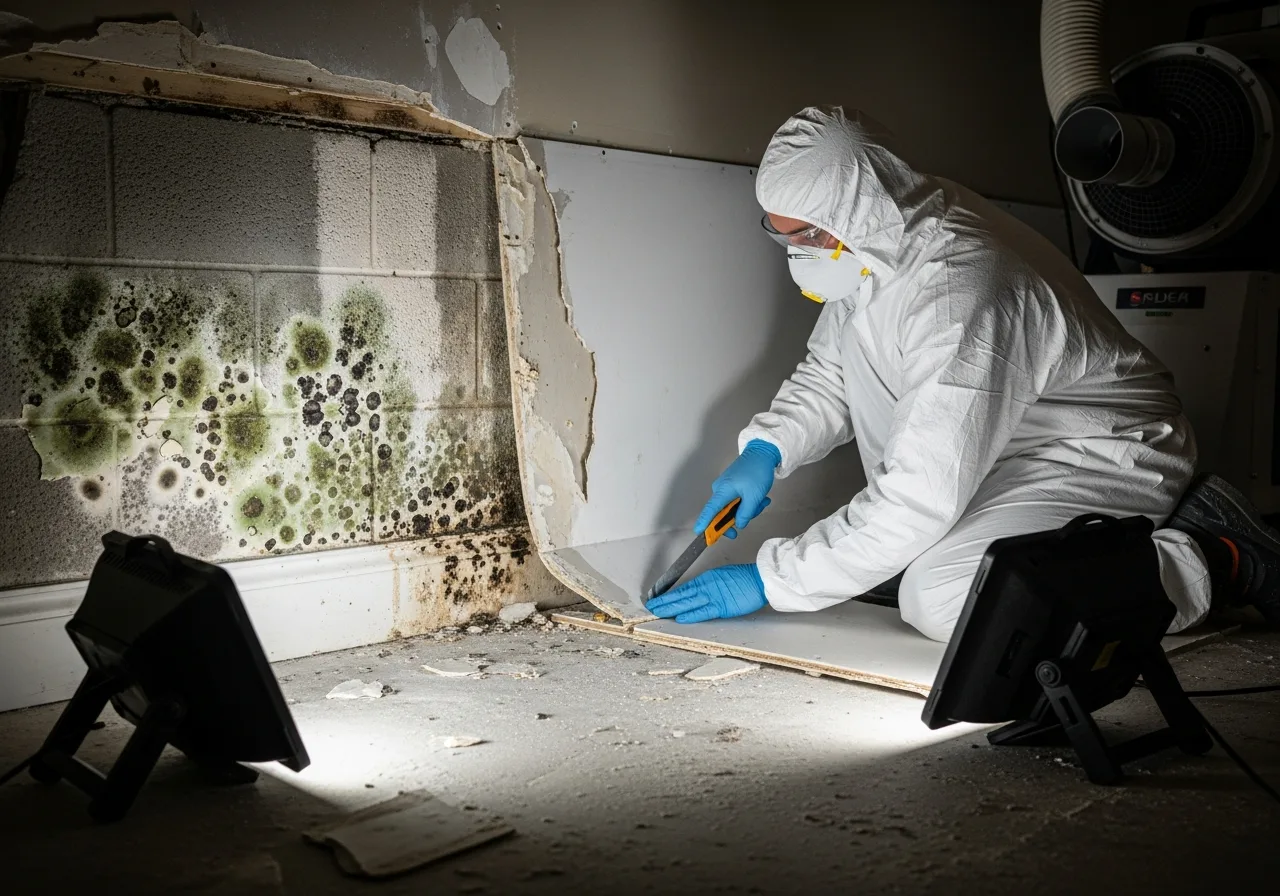
Palm Build technician in full PPE performing mold remediation in a Palm Beach Gardens Florida home, removing contaminated drywall from CBS stucco wall
PALM BEACH GARDENS FL — LICENSED MOLD REMEDIATION

Mold Remediation in Palm Beach Gardens, Florida

With year-round humidity averaging above 60%, CBS stucco construction that traps moisture in wall cavities, and HVAC systems running 10+ months per year, Palm Beach Gardens homes face persistent mold risk that most homeowners never see until it's a full-scale remediation. Palm Build holds Florida DBPR mold remediation licenses and deploys IICRC-certified technicians from our Deerfield Beach hub with containment, HEPA filtration, and the post-remediation verification that Florida's licensing framework requires.

Deerfield Beach — Rapid Response to Palm Beach County Under 60 min Response IICRC Certified

Under 60 min

Emergency Response

24/7

Dispatch Available

IICRC

Certified Technicians

Why Mold Thrives Here

Palm Beach Gardens: A Perfect Environment for Mold Growth

Palm Beach Gardens' subtropical climate, CBS concrete block construction, near-constant HVAC operation, and exposure to tropical storms create some of the highest baseline mold risk in Palm Beach County. With a median home value exceeding $606,000, understanding why mold thrives here is the first step toward protecting your investment — not just cosmetic cleanup.

Year-Round Humidity Above 60%

60%+

Year-round RH

Palm Beach Gardens sustains relative humidity above 60% year-round — exceeding 80% during the wet season from May through October. This is well above the 60% threshold where mold colonizes building materials. The city's location between the Loxahatchee Slough to the west and the Intracoastal Waterway to the east creates a moisture corridor that keeps ambient humidity elevated even during the brief dry season. Building materials in PBG homes never fully dry, keeping wall cavities, attic spaces, and HVAC systems perpetually mold-ready.
CBS/Stucco Construction Traps Moisture

Hidden

Behind CBS walls

Palm Beach Gardens homes are predominantly CBS (concrete block and stucco) construction — the standard for South Florida building since the 1970s. Stucco develops hairline cracks from decades of thermal cycling in PBG's heat, allowing moisture to enter wall cavities where it becomes trapped against the block. Without modern vapor retarders (absent in homes built before the mid-2000s), this moisture creates dark, humid environments where mold thrives unseen for months. By the time musty odors or dark spots appear on interior surfaces, CBS cavity contamination behind drywall is typically extensive.

HVAC Condensation in Sealed Homes

#1

Mold trigger citywide

HVAC systems in Palm Beach Gardens run 10-12 months per year, generating constant condensation on evaporator coils, drip pans, and ductwork interiors. Clogged condensate drain lines are the single most common mold trigger we respond to in PBG's golf course communities. Many luxury homes in PGA National, BallenIsles, and Frenchman's Creek have oversized AC systems that short-cycle — cooling air without adequately dehumidifying it. The result is 55-65% indoor humidity even with the AC running, creating conditions where mold colonizes any organic surface.

Post-Storm Hidden Mold Growth

24-48 hrs

Mold onset post-storm

Palm Beach Gardens sits in one of the highest hurricane risk zones in the continental United States. Wind-driven rain during tropical storms and hurricanes penetrates at angles that normal rainfall cannot — through barrel tile roofs, soffit vents, window frames, and stucco cracks. Post-storm mold in PBG's luxury homes is frequently discovered weeks or months after the event, when homeowners notice musty odors or water stains. In 80%+ post-storm humidity, mold colonizes saturated building materials within 24-48 hours and spreads aggressively behind walls where it remains invisible.

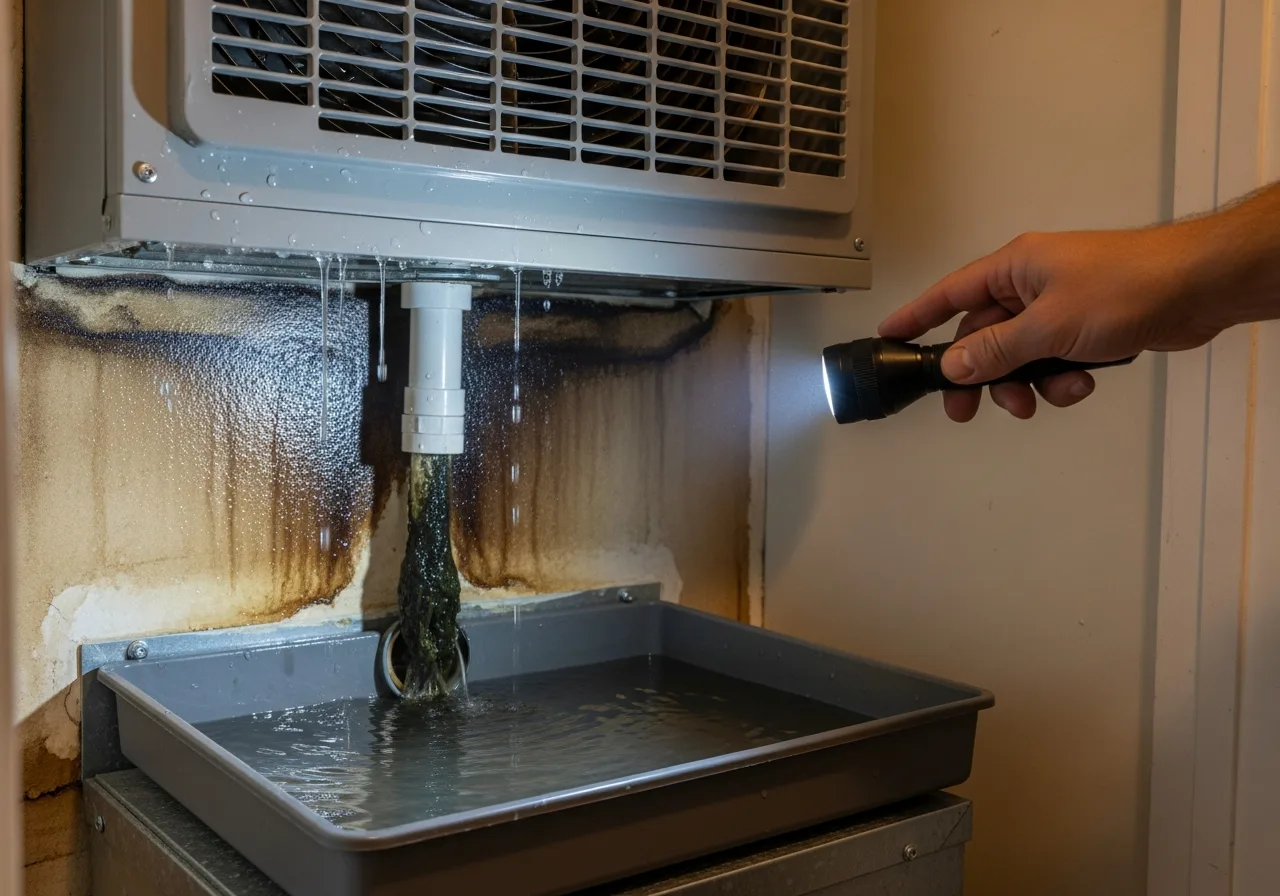
HVAC condensation damage causing mold growth in a Palm Beach Gardens FL luxury home showing moisture on evaporator coils and drip pan
HVAC condensation damage in a Palm Beach Gardens home — clogged condensate lines and oversized AC systems in sealed luxury homes are the #1 mold trigger across PBG's golf course communities.

Neighborhood Risk Profiles

Mold Risk by Palm Beach Gardens Neighborhood

Every Palm Beach Gardens neighborhood has mold risk — but construction era, HVAC system age, proximity to water features, and housing type create dramatically different risk profiles. PGA National and BallenIsles homes with aging HVAC systems, Frenchman's Creek waterfront estates, and Evergrene townhomes with shared walls face the highest baseline exposure.

PGA National

Critical Risk 1980s-2000s | Gated resort community

PGA National's mix of 1980s original construction and 2000s renovated homes creates a two-tier mold risk profile. Older homes lack modern vapor retarders and contain original HVAC systems well past designed lifespan — corroded drip pans, degraded duct insulation, and failing condensate pumps. Renovated units with tightly sealed building envelopes trap moisture when HVAC dehumidification fails. The community's extensive lake system and championship golf course irrigation elevate ambient humidity 5-10% above surrounding areas for lakefront and course-adjacent homes.

BallenIsles

Critical Risk 1990s-2010s | Gated country club community

BallenIsles' premium CBS homes with complex floor plans create multiple HVAC zones with condensation management challenges. Oversized AC systems that short-cycle are common in the community's larger estate homes — cooling air without adequately dehumidifying, maintaining 55-65% indoor humidity that supports mold colonization. Three golf courses and extensive waterway features elevate ambient humidity around perimeter homes. High property values (many exceeding $1M) make professional remediation documentation critical for protecting home equity.

Avenir

Moderate Risk 2020s | Master-planned new construction

Avenir's newest construction benefits from modern building codes and vapor management — but energy-tight building envelopes create new mold risks when HVAC systems are improperly sized or maintained. Tightly sealed homes with insufficient fresh air exchange develop negative pressure that pulls humid outdoor air through any building envelope gap. Construction moisture trapped in new CBS walls during the build process can take 12-18 months to fully dry in PBG's humidity, driving early mold colonization in homes less than two years old.

Frenchman's Creek

Critical Risk 1980s-2000s | Ultra-luxury gated estate community

Frenchman's Creek's waterfront estate homes face the highest moisture exposure in Palm Beach Gardens. Canal-adjacent and Intracoastal-proximity lots sustain ambient humidity significantly above inland readings. Large homes with 5,000-15,000+ sq ft floor plans require complex multi-zone HVAC systems where condensation imbalances between zones create localized humidity spikes. Original 1980s homes contain aging CBS construction without vapor retarders and HVAC systems that have been replaced but where original ductwork may harbor decades of biofilm accumulation.

Sanctuary Cove

High Risk 2000s | Gated community

Sanctuary Cove homes built during the 2000s construction boom feature tight building envelopes that trap interior moisture when HVAC dehumidification fails. Recurring condensate drain line clogs are the primary mold driver in this community. Barrel tile roofs with underlayment that is now 20+ years old allow slow water intrusion into attic spaces during heavy rain events. The community's retention lake system elevates ambient humidity for homes along the water's edge.

Mirasol

High Risk 2000s-2010s | Gated country club community

Mirasol's luxury homes with multiple air handlers per residence create complex HVAC condensation management challenges. Zones that cycle off while others run allow humidity to spike in unoccupied wings. Two championship golf courses with continuous irrigation maintain elevated soil and ambient moisture levels throughout the community. Premium finishes including hardwood floors, custom cabinetry, and designer wallcoverings are particularly susceptible to mold damage — making early detection and professional remediation critical for preserving investment.

Old Palm

High Risk 2000s-2010s | Ultra-luxury golf estate community

Old Palm's estate homes (typically 4,000-10,000+ sq ft) with multiple HVAC zones face condensation management complexity that smaller homes avoid. Interior utility closets housing air handlers in confined, unventilated spaces create concentrated moisture environments. When condensate lines clog, water saturates the closet and migrates under baseboards into adjacent rooms before detection. Complex architectural features — coffered ceilings, custom millwork, imported stone — increase remediation costs and require specialized restoration expertise to preserve.

Evergrene

High Risk 2000s | Gated community with townhomes and single-family

Evergrene's mix of single-family homes and townhomes creates different mold risk profiles within the same community. Shared walls in townhome sections allow mold migration between units through CBS block cavities — one unit's water damage becomes the neighboring unit's mold problem. Single-family homes face standard PBG risks of HVAC condensation and stucco moisture intrusion. HOA-maintained common areas with delayed leak repairs in shared structures create mold exposure for adjacent units. Complex insurance coordination between unit owner policies and HOA master policies complicates claims.

PBG's #1 Mold Source

HVAC System Mold: The Hidden Epidemic in Palm Beach Gardens Homes

HVAC condensate failures are the single most common mold trigger we respond to across Palm Beach Gardens' golf course and gated communities. AC systems running 10-12 months per year generate constant condensation — and when drain lines clog, ducts sweat, or undersized systems short-cycle, mold colonizes the air handler and distributes spores to every room through the ductwork before visible signs ever appear.

Clogged Condensate Drain Lines

5-20 gal/day

Condensate volume

The #1 mold trigger in Palm Beach Gardens. Condensate drain lines carry water generated by AC evaporator coils to an exterior drain. In PBG's year-round humidity, these lines produce 5-20 gallons of condensate daily. Algae and biofilm accumulate inside the drain line year-round, eventually creating a complete blockage. When the line clogs, water backs up into the drip pan, overflows into the air handler cabinet, and saturates surrounding drywall, insulation, and flooring — often inside an interior utility closet in PGA National and BallenIsles homes where the damage goes unnoticed for days or weeks.

Duct Condensation in Unconditioned Spaces

85°F+

Temp differential

Supply ducts running through unconditioned attic spaces in Palm Beach Gardens homes face extreme temperature differentials — 140°F+ attic temperatures in summer versus 55°F conditioned air inside the duct. This drives perpetual condensation on the exterior of ductwork and at connection points. Insulation failures, loose connections, and deteriorated flex duct allow humid attic air to mix with conditioned air, creating condensation inside the duct where mold colonizes on the inner liner. Homes in Frenchman's Creek and Old Palm with extensive duct runs through large attic spaces face the highest duct condensation risk.

Return Plenum Issues

Hidden

Inside wall cavities

Many Palm Beach Gardens homes use building cavities — the space between walls, floor joists, or platform returns — as part of the return air system instead of sealed ductwork. These unlined cavities collect dust, moisture, and organic debris that become nutrient sources for mold. In CBS construction, return plenums built into block wall cavities are particularly problematic because moisture from stucco crack intrusion enters the same cavity that feeds air to the HVAC system. Every time the blower runs, it draws air across mold-contaminated surfaces and distributes spores to every room.

Undersized Systems in Sealed Homes

55-65%

Indoor RH when cycling

Luxury homes in Palm Beach Gardens with high ceilings, large window walls, and open floor plans often have HVAC systems that were properly sized at installation but cannot keep up with PBG's extreme heat and humidity loads — particularly after energy-efficient window and door upgrades that change the building's thermal dynamics. Short-cycling occurs when the system satisfies thermostat temperature without adequately dehumidifying. Indoor humidity climbs to 55-65% even while the AC runs, creating conditions where mold colonizes any organic surface. Multi-zone systems in homes over 4,000 sq ft compound this problem when zones cycle independently.

HVAC system condensation damage showing mold on evaporator coils and drip pan overflow in a Palm Beach Gardens FL home
HVAC condensation damage in a Palm Beach Gardens home — once mold colonizes the air handler, the blower distributes spores to every room through the ductwork at 800-1,200 CFM.

Warning Signs of HVAC Mold

  • Musty or stale odor when AC cycles on — strongest at supply registers
  • Visible dark spots around supply vents, return grilles, or air handler cabinet
  • Recurring respiratory symptoms or allergies that improve when away from home
  • Water stains on ceiling or walls near interior air handler closet
  • AC producing less cooling with the same thermostat setting — contaminated coils reduce efficiency
  • Condensate drain line overflow or water pooling around air handler base
Schedule HVAC Mold Inspection

IICRC S520 Protocol

Our Palm Beach Gardens Mold Remediation Process

Professional mold remediation follows a strict sequence defined by the IICRC S520 standard and Florida DBPR regulations. Here is exactly what happens when Palm Build's DBPR-licensed team arrives at your Palm Beach Gardens home.

01

Assessment & Testing

Day 1

Comprehensive visual inspection, infrared thermal imaging of CBS walls, and air quality sampling at multiple locations throughout the home. We identify the moisture source — HVAC condensate overflow, stucco crack intrusion, plumbing failure, or post-storm water entry — and classify contamination level per IICRC S520. Florida law requires a separate DBPR-licensed mold assessor for the initial report. In Palm Beach Gardens' gated communities like PGA National and BallenIsles, we coordinate with HOA access requirements and community management before arrival.

02

Containment Setup

Day 1-2

Sealed polyethylene containment barriers isolate affected areas, including CBS wall cavities and HVAC system components. In Palm Beach Gardens' year-round humidity exceeding 60%, containment must account for the elevated moisture pressure that accelerates spore dispersal outside the work zone. HEPA air scrubbers create negative air pressure within the containment to prevent migration to unaffected areas of the home.

03

HEPA Air Filtration

Continuous

HEPA air scrubbers and negative air machines run continuously throughout the project, capturing airborne spores down to 0.3 microns. In Palm Beach Gardens homes with HVAC contamination — the city's most common mold source — the entire duct system is isolated and filtered separately to prevent recontamination of cleaned areas during remediation. Multiple air scrubber stages maintain clean air outside containment zones.

04

Mold Removal

Days 2-4

Contaminated materials are removed using controlled demolition. Affected drywall on CBS walls, contaminated HVAC components (evaporator coils, drip pans, ductwork sections), impacted insulation, and mold-damaged flooring are removed. Salvageable CBS block surfaces are HEPA-vacuumed and media blasted to remove embedded mold from block pores. In PBG's luxury homes with premium finishes, we document all materials removed for accurate replacement scope.

05

Antimicrobial Treatment

Days 4-5

EPA-registered antimicrobial agents are applied to all treated surfaces. For CBS construction prevalent in Palm Beach Gardens, this includes interior block wall faces, window bucks, slab edges, and any areas where moisture intrusion was identified. HVAC components receive specialized coil and duct treatment. Treatment protocols are calibrated for PBG's persistent humidity — standard treatments designed for drier climates fail in South Florida's moisture environment.

06

Post-Remediation Verification

Day 5-6

Post-remediation air quality testing by an independent DBPR-licensed mold assessor confirms spore counts have returned to acceptable levels. Florida's conflict-of-interest rule requires clearance from a different licensed assessor than the remediation company. Complete documentation is provided for your records, insurance carrier, and HOA if required by your Palm Beach Gardens community's governing documents. Independent clearance testing protects your investment.

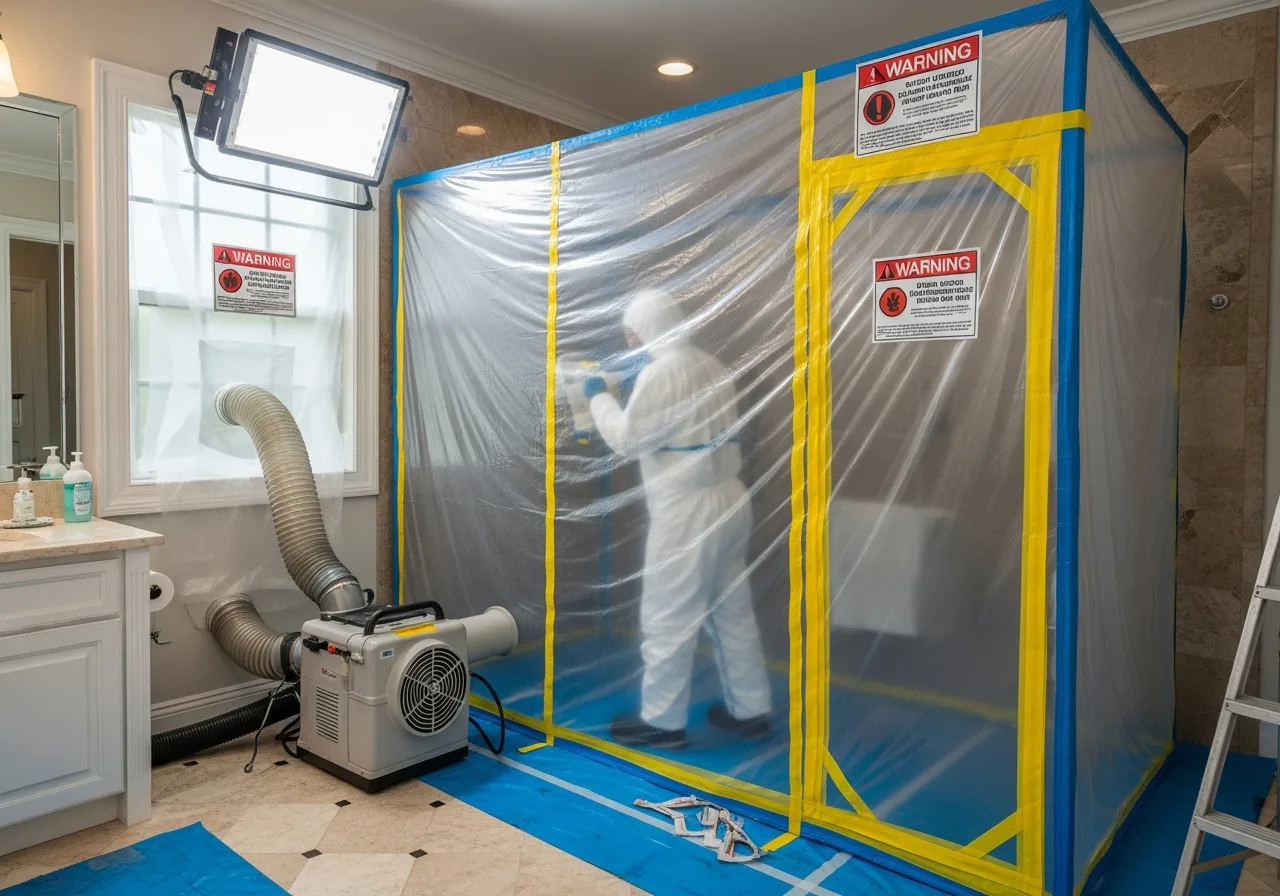
Professional mold remediation containment setup with HEPA filtration and negative air machines in a Palm Beach Gardens FL luxury home

Why Containment Matters in Palm Beach Gardens

Disturbing mold without proper containment sends billions of spores airborne. In Palm Beach Gardens' persistent humidity above 60%, those spores find viable growth surfaces within hours — and your HVAC system can distribute them to every room within minutes. Our containment protocol ensures mold stays isolated during removal, protecting the rest of your home.

1

Sealed Barriers

Polyethylene sheeting floor-to-ceiling on CBS walls

2

Negative Pressure

HEPA air scrubbers pull air through containment zone

3

HVAC Isolation

AC system sealed to prevent spore distribution

4

Decontamination

Air lock entry/exit with HEPA decon chamber

Schedule Mold Assessment

FL Regulatory Landscape

Florida Mold Licensing: What Palm Beach Gardens Homeowners Must Know

Florida has one of the strictest mold regulatory frameworks in the country. Under DBPR Chapter 468, Part XVI, the state requires separate licenses for mold assessment and mold remediation — and explicitly prohibits the same company from performing both on the same project within 12 months.

Separate Assessor vs. Remediator Licenses

Florida issues distinct license types: Mold Assessor (inspection, testing, and reporting) and Mold Remediator (physical removal and treatment). Each requires separate application, insurance, and examination. This separation prevents the entity that finds mold from profiting by removing it — a consumer protection unique to Florida among restoration licensing states.

The 12-Month Conflict-of-Interest Rule

The same company cannot perform both mold assessment and mold remediation on the same structure within 12 months. This "Chinese wall" rule means your initial mold assessor and your post-remediation clearance tester must be independent from the remediation company. In Palm Beach Gardens, where some operators try to bundle both services in affluent communities, this rule is frequently violated — making license verification critical before hiring.

Education & Exam Requirements

DBPR mold licenses require documented training hours, passing a state examination, proof of $1 million general liability insurance, and continuing education credits for renewal. Mold remediators must additionally demonstrate financial responsibility and workers' compensation coverage. These requirements ensure licensed operators have the training, insurance, and resources to handle contamination safely — protecting Palm Beach Gardens homeowners from fly-by-night operators.

How to Verify a Florida Mold License

Before hiring any mold company in Palm Beach Gardens, verify their DBPR license at myfloridalicense.com. The lookup is free and instant — search by company name or license number. Confirm the license type (assessor vs. remediator), status (active/inactive), and expiration date. Any company that refuses to provide a license number or claims "no license needed" should be avoided — period.

Verify License on DBPR Website
Verify DBPR mold remediator license before hiring any company
Assessor and remediator MUST be separate licensed entities
Same company cannot assess and remediate within 12 months
Post-remediation clearance must come from a different licensed assessor
Unlicensed mold work can void your insurance claim

Palm Build Credentials

  • DBPR-licensed mold remediator — Florida compliant
  • IICRC AMRT (Applied Microbial Remediation Technician) certified
  • CBS/stucco construction and HVAC mold expertise
  • $1M+ general liability insurance and workers' comp coverage
  • Coordinates with independent FL-licensed assessors for clearance
  • Deerfield Beach hub — under 60 minutes to all PBG neighborhoods

Red Flags to Watch For

  • No DBPR mold license or refuses to provide license number
  • Same company offers to assess AND remediate your mold
  • Offers to "spray and seal" without removing contamination
  • No containment barriers or HEPA filtration during work
  • Claims "no license needed" in Florida (false — it is state law)
  • Targets gated communities door-to-door after storms without credentials

Insurance Impact of Unlicensed Work

Florida insurance carriers increasingly require proof of DBPR licensing for mold remediation claims. Work performed by an unlicensed operator may void your mold coverage, disqualify your remediation from the claim, or provide grounds for the carrier to deny the entire loss. In Palm Beach Gardens' affluent market where remediation projects commonly exceed $15,000, this risk is too significant to ignore.

Health & Indoor Air Quality

Mold Health Risks in Palm Beach Gardens Homes

The Florida Department of Health recognizes mold exposure as a significant indoor air quality concern. Palm Beach Gardens' year-round humidity creates conditions where four common mold genera thrive — each with different health implications. Understanding what grows in your home and who is most vulnerable helps you make informed decisions about testing and remediation.

Common Mold Species in Palm Beach Gardens Homes

Aspergillus

The most common indoor mold genus found in Palm Beach Gardens homes. Multiple species thrive in HVAC systems, on damp drywall, and in wall cavities. Aspergillus niger (black) and Aspergillus fumigatus are the species most frequently identified in PBG air quality testing. Produces allergens and, in immunocompromised individuals, can cause aspergillosis — a serious respiratory infection.

Penicillium

Frequently found alongside Aspergillus in PBG homes, particularly in water-damaged drywall, carpet padding, and HVAC ductwork. Penicillium spreads rapidly in Palm Beach Gardens' humidity and produces a strong musty odor that is often the first sign of contamination. High spore counts are common in homes with HVAC condensate issues.

Stachybotrys (Black Mold)

Stachybotrys chartarum requires sustained moisture on cellulose-rich materials — drywall paper, wood framing, cardboard. In Palm Beach Gardens, it is most commonly found behind walls where slow plumbing leaks, condensate line overflows, or stucco crack moisture intrusion have kept materials wet for weeks. Stachybotrys grows more slowly than Aspergillus or Penicillium but produces mycotoxins that are associated with more severe health effects. Its presence typically indicates a chronic moisture problem, not a recent event.

Cladosporium

An outdoor mold that readily colonizes indoor surfaces in Palm Beach Gardens due to the city's year-round warm temperatures. Commonly found on bathroom surfaces, window sills, and HVAC supply registers where condensation collects. Elevated indoor Cladosporium levels in PBG air testing typically indicate inadequate HVAC filtration or air sealing gaps that allow outdoor air infiltration.

Who Is Most at Risk?

Children & Infants

Developing respiratory systems are more susceptible to mold exposure. Children in Palm Beach Gardens homes with HVAC mold may experience chronic coughing, wheezing, and increased asthma episodes.

Elderly Residents

Many PBG golf communities have significant retirement-age populations. Weakened immune systems in older adults increase vulnerability to mold-related respiratory infections.

Immunocompromised Individuals

People with HIV/AIDS, organ transplants, cancer treatment, or autoimmune conditions face serious infection risk from Aspergillus and other common PBG indoor mold species.

Asthma & Allergy Sufferers

Mold is a documented asthma trigger. The CDC reports that damp indoor environments are associated with 30-50% increases in respiratory and asthma-related outcomes.

When to Test Your PBG Home for Mold

  • Persistent musty odor — especially when AC cycles on or in specific rooms
  • Visible mold growth on any surface — walls, ceilings, baseboards, HVAC registers
  • Unexplained respiratory symptoms, allergies, or headaches that improve when you leave the home
  • Recent water damage — plumbing leak, condensate overflow, roof leak, or flooding
  • Post-hurricane or tropical storm — wind-driven rain enters through stucco, roof, or windows
  • Buying or selling a PBG home — mold testing protects both buyer and seller
  • Home has been closed or unoccupied during summer (snowbird season) with AC set above 78°F
Schedule Mold Testing

Mold in Palm Beach Gardens Homes

Palm Beach Gardens Mold Remediation: Our Work

From HVAC system contamination and CBS wall cavity mold to professional containment protocols and complete restorations — these images show the most common mold presentations and remediation work we perform across Palm Beach Gardens' golf course and gated communities.

Palm Build technician performing professional mold remediation in a Palm Beach Gardens FL luxury home with full PPE and containment
Active mold remediation in progress — Palm Build technician in full PPE performing controlled removal of mold-contaminated materials inside sealed containment in a PGA National home
Professional mold containment setup with sealed polyethylene barriers and HEPA air scrubbers in a Palm Beach Gardens FL home
Sealed containment setup — polyethylene barriers and HEPA air scrubbers isolate the remediation zone to prevent spore migration in a Palm Beach Gardens luxury home
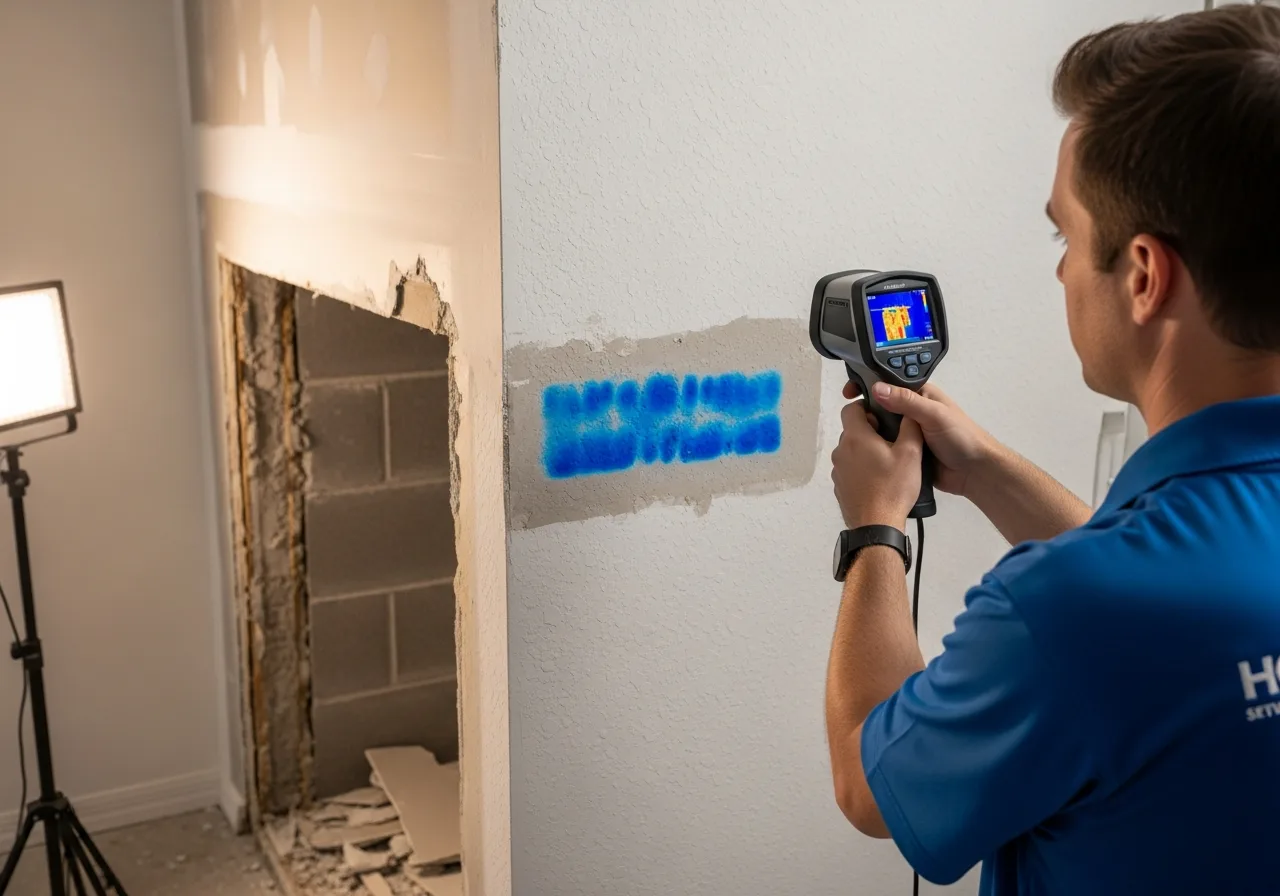
Infrared thermal imaging camera detecting hidden moisture behind CBS walls in a Palm Beach Gardens FL home during mold assessment
Infrared thermal imaging detecting hidden moisture behind CBS walls — non-destructive investigation identifies contamination without tearing into walls unnecessarily
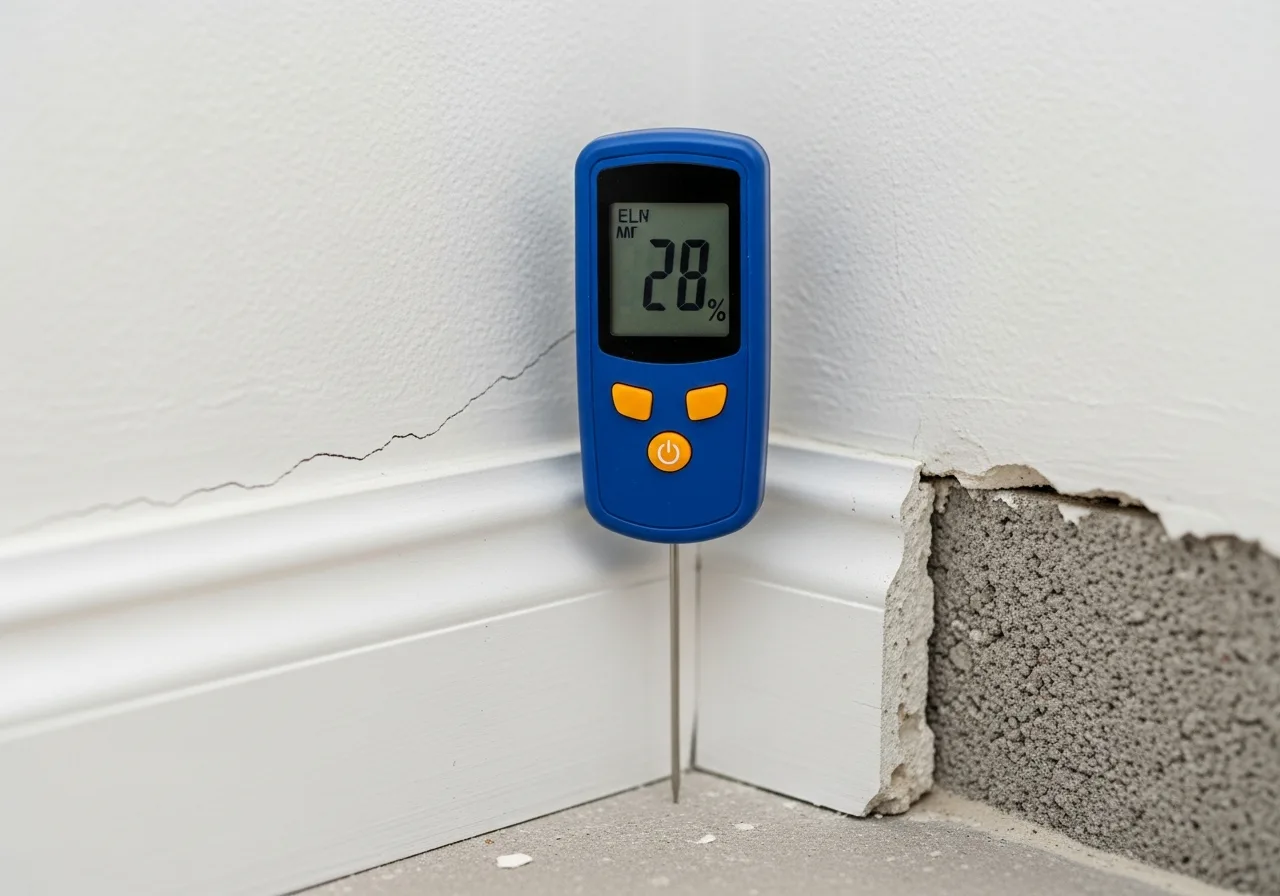
Palm Build technician using a moisture meter to measure wall moisture levels in a Palm Beach Gardens FL home during mold assessment
Moisture meter readings document wall moisture levels — essential data for both remediation scope and insurance claim documentation in Palm Beach Gardens homes
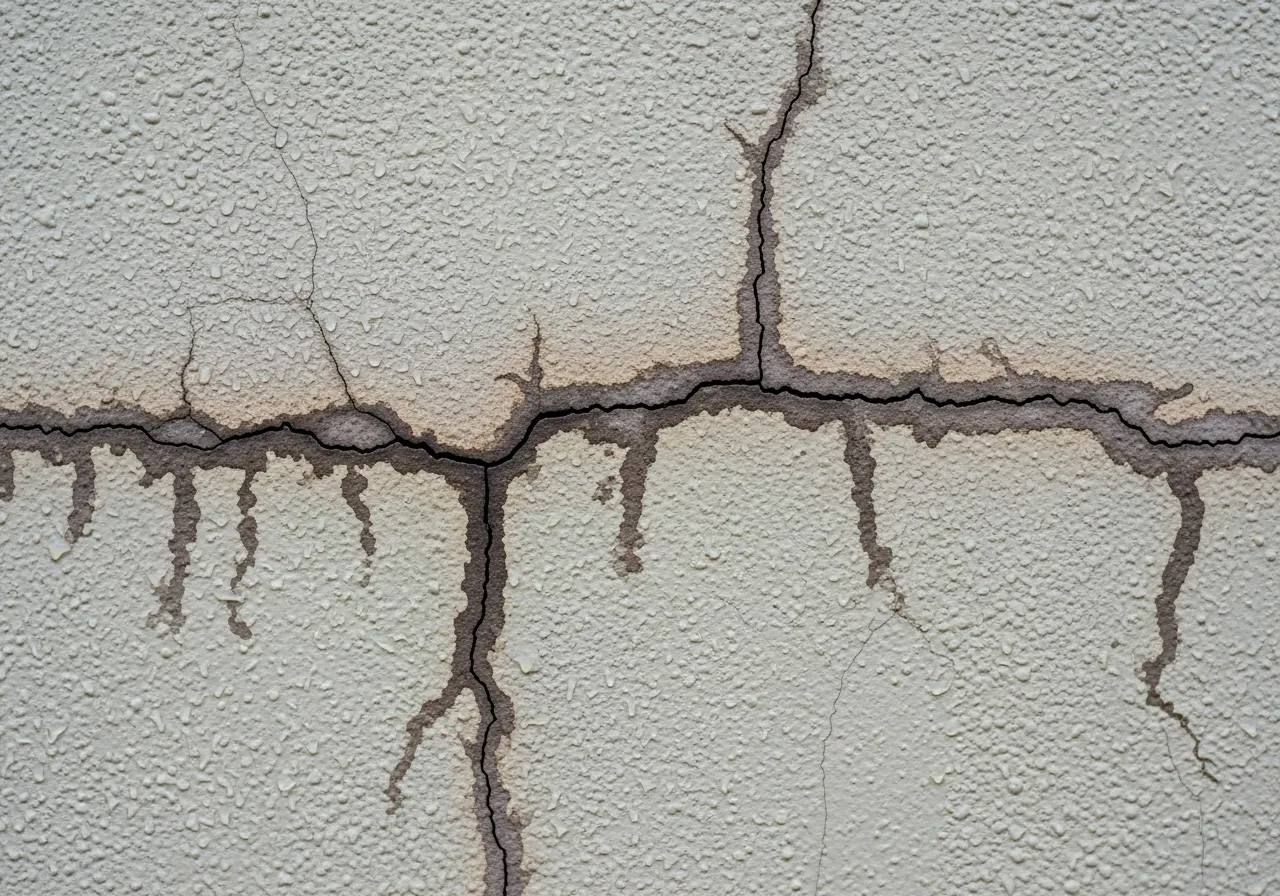
Stucco crack allowing moisture intrusion into CBS wall cavity causing hidden mold growth in a Palm Beach Gardens FL home
Stucco crack moisture intrusion — hairline cracks from thermal cycling allow water into CBS wall cavities where mold thrives unseen in PBG's humidity
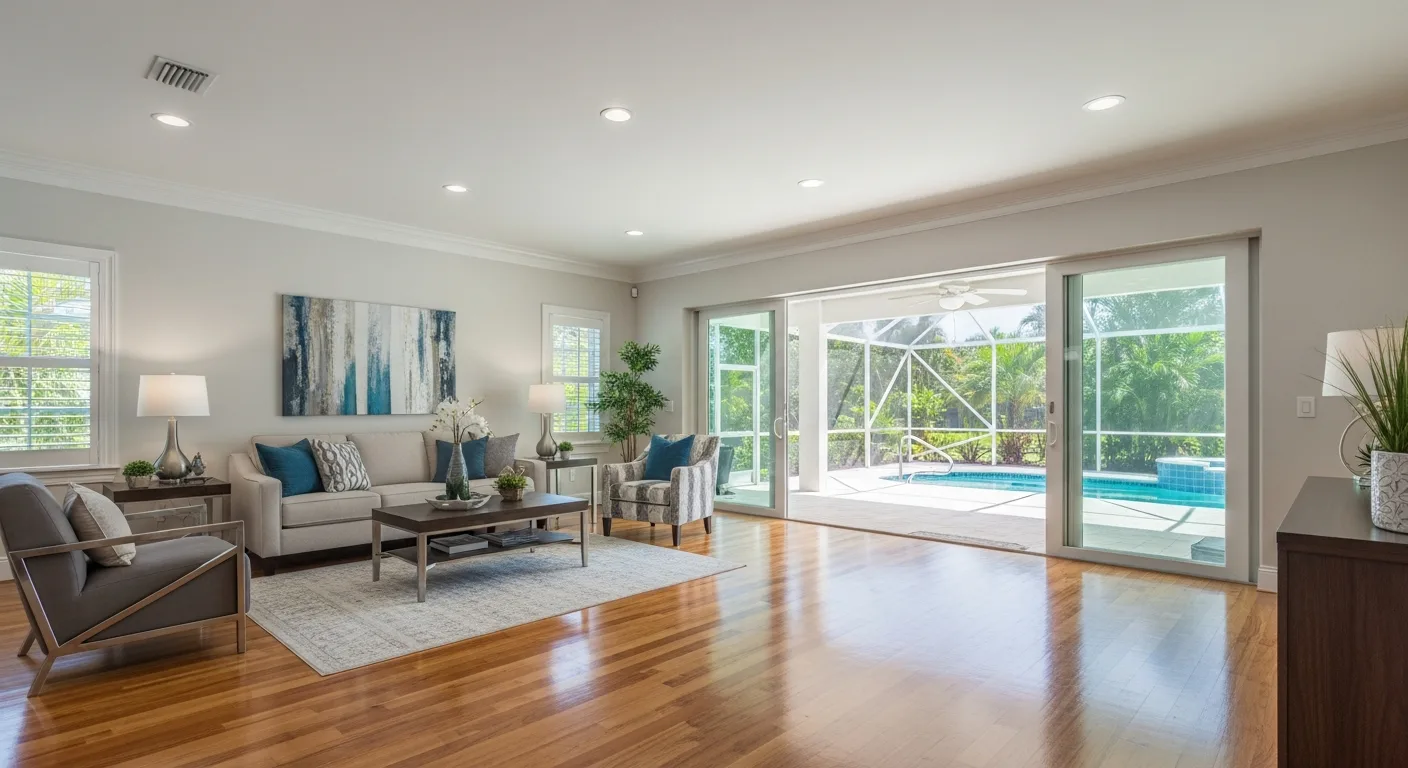
Fully restored living room after professional mold remediation in a Palm Beach Gardens FL luxury home showing premium finishes
Post-remediation restoration complete — this Palm Beach Gardens living room shows no trace of the extensive CBS wall mold that was hidden behind the original drywall

Palm Beach Gardens Pricing

Mold Remediation Costs: Palm Beach Gardens vs. National Average

Palm Beach Gardens mold remediation costs reflect the city's affluent market, CBS construction complexity, mandatory DBPR-licensed separate assessors, HVAC system scope, and Florida insurance requirements. Understanding cost ranges helps set realistic expectations before work begins.

Mold Assessment

Air sampling, infrared imaging, lab analysis, DBPR-licensed assessor report

Palm Beach Gardens

$500 - $1,500

National Avg.

$300 - $800

Small Area Remediation

Single room: bathroom, closet, utility closet, HVAC component

Palm Beach Gardens

$3,000 - $10,000

National Avg.

$1,500 - $5,000

Multi-Area Remediation

Multi-room, CBS wall cavities, attic, extensive ductwork contamination

Palm Beach Gardens

$12,000 - $35,000

National Avg.

$5,000 - $18,000

Complex / Full Home

Whole-house contamination, structural, post-flood, complete CBS cavity scope

Palm Beach Gardens

$25,000 - $65,000+

National Avg.

$10,000 - $30,000

HVAC System Treatment

Air handler, evaporator coil, drip pan, ductwork cleaning or replacement

Palm Beach Gardens

$4,000 - $15,000

National Avg.

$2,000 - $7,000

Why PBG Mold Costs Run Higher Than National Averages

Palm Beach Gardens mold remediation costs exceed national averages due to several PBG-specific factors: CBS (concrete block and stucco) construction requires specialized demolition and restoration techniques that wood-frame specialists lack. HVAC system contamination — the most common mold type in PBG — adds air handler, evaporator coil, and ductwork scope to every project. Florida's mandatory separate-assessor requirement adds independent testing costs at both pre- and post-remediation phases. PBG's gated communities often require HOA coordination, compliance documentation, and architectural review for exterior restoration. Premium finishes in luxury homes — imported tile, custom cabinetry, designer wallcoverings — increase both removal care and replacement costs. With a median home value exceeding $606,000, proper remediation protects a substantial investment.

Insurance Navigation

Mold Insurance Claims in Palm Beach Gardens

Mold coverage in Florida is limited and has become more restrictive following recent insurance reforms. Understanding sublimits ($10K-$50K typical caps), the gradual damage exclusion, DBPR licensing requirements, the documentation chain from water event to mold claim, and post-AOB reform changes can save Palm Beach Gardens homeowners thousands.

Most Florida policies cap mold coverage with sublimits of $10,000 to $50,000 — HVAC mold and CBS wall remediation in Palm Beach Gardens frequently exceed these limits, leaving homeowners responsible for the difference

Mold resulting from a covered sudden water event (burst pipe, appliance failure, storm damage) is typically covered up to your policy's mold sublimit

Mold from gradual moisture, humidity, HVAC condensation, slab vapor transmission, or long-term stucco intrusion is almost always excluded as a maintenance issue

Florida's DBPR licensing requirement means unlicensed mold work can void your insurance claim — carriers increasingly require proof that the remediator holds a current FL mold license

Florida's 1-year claim filing deadline (Fla. Stat. 627.70132) is strictly enforced — post-hurricane mold discovered months later in PBG homes may face coverage challenges if not documented promptly

Post-AOB reform (2023 SB 2-A) eliminated assignment of benefits for property insurance claims — PBG homeowners must now manage the claim process directly or work with a public adjuster

Some Florida carriers offer mold endorsements for additional premium that raise the sublimit to $25,000-$50,000 — ask your agent about expanded coverage before you need it

Common Carriers in Palm Beach County

Citizens Property InsuranceUniversal Property & CasualtyHeritage Property & CasualtySecurity First InsuranceSlide InsuranceTower Hill Insurance

Each carrier has different mold sublimits, endorsement options, and claim handling procedures. We document remediation work to satisfy all major Palm Beach County carriers.

Palm Build's Approach to PBG Mold Claims

When mold results from a covered water event, our documentation connects the mold to the original loss — moisture maps, infrared thermal images, air quality reports, and remediation scope all formatted for the adjuster. We understand post-AOB reform requirements, Florida's strict 1-year claim deadline, and Palm Beach County-specific claim patterns. For mold not covered by insurance (HVAC condensation, humidity, gradual moisture), we provide transparent pricing and financing options. For PBG HOA properties in PGA National, BallenIsles, and Evergrene, we coordinate documentation between unit owner policies and master HOA policies.

Insurance Claims Guide

The Palm Build Difference

Why Palm Beach Gardens Homeowners Choose Palm Build for Mold

FL DBPR Licensed Mold Remediator

Palm Build holds a current Florida DBPR mold remediation license and complies fully with Chapter 468, Part XVI requirements. We coordinate with independent DBPR-licensed assessors for the conflict-of-interest separation Florida law mandates — the same company cannot assess and remediate on the same property within 12 months. Every Palm Beach Gardens project follows this legal framework without exception.

IICRC AMRT Certified

Every Palm Build crew lead carries current IICRC Applied Microbial Remediation Technician (AMRT) certification — the industry gold standard for mold remediation. Our protocols follow IICRC S520 standards for professional mold remediation in every Palm Beach Gardens project, from PGA National resort homes to Frenchman's Creek waterfront estates.

CBS/Stucco Construction Specialists

Palm Beach Gardens is built on CBS concrete block — and we specialize in it. We understand stucco crack moisture intrusion patterns, CBS wall cavity mold, slab vapor transmission, thermal bridge condensation, and the specific remediation and restoration techniques required for block construction that wood-frame specialists miss. Infrared moisture mapping identifies hidden contamination without destructive investigation.

Gated Community Experience

PBG's premier communities — PGA National, BallenIsles, Frenchman's Creek, Mirasol, Old Palm, Sanctuary Cove — require HOA coordination for gate access, work hours, noise restrictions, exterior modifications, and compliance documentation. We maintain current insurance certificates required by HOAs and provide project documentation formatted for board review. We work within your community's requirements without delay.

Insurance Documentation Specialists

We understand Florida's post-AOB reform claim requirements, mold sublimits ($10K-$50K), the 1-year filing deadline, and Palm Beach County-specific claim patterns. Our documentation connects mold to the original water event with moisture maps, infrared thermal images, air quality reports, and scope details formatted for your adjuster. For HOA properties, we coordinate between unit owner and master policy documentation.

Under 60-Minute Response

From our Deerfield Beach hub, Palm Build reaches every Palm Beach Gardens neighborhood in under 60 minutes — PGA National, BallenIsles, Avenir, Frenchman's Creek, Mirasol, Old Palm, Sanctuary Cove, and Evergrene. For active water damage driving mold growth, response time directly determines remediation scope and cost. Our dispatchers coordinate HOA gate access en route so there is no delay at the community entrance.

Luxury home in a Palm Beach Gardens FL golf course community showing CBS stucco construction typical of PBG neighborhoods
Palm Beach Gardens' luxury golf course communities feature CBS concrete block construction that requires specialized mold remediation expertise — from our Deerfield Beach hub, we reach every PBG neighborhood in under 60 minutes with full containment, HEPA filtration, and remediation equipment.

Common Questions

Palm Beach Gardens Mold Remediation FAQ

Does Palm Build hold Florida mold remediation licenses?
Yes. Florida requires specific licensing for mold-related services under the Florida DBPR (Department of Business and Professional Regulation). Mold assessors and mold remediators must hold separate licenses, pass examinations, and complete background checks. Palm Build maintains current Florida mold remediation licenses and employs IICRC-certified technicians. Always verify that any mold company you hire holds valid DBPR credentials — unlicensed mold work is illegal in Florida.
Why is mold so common in Palm Beach Gardens homes?
Three factors converge in Palm Beach Gardens to create ideal mold conditions. First, year-round humidity that rarely drops below 60% — the threshold for mold growth. Second, CBS (concrete block/stucco) construction that allows moisture to migrate through hairline cracks and remain trapped behind drywall in wall cavities. Third, HVAC systems running 10+ months per year that produce condensation, especially when drain lines clog. Even homes built in the 2000s with modern impact windows can develop hidden mold in wall cavities and HVAC closets.
How much does mold remediation cost in Palm Beach Gardens?
Small-area mold remediation (under 10 sq ft, single location) typically ranges from $1,500 to $4,000. Multi-area remediation in a Palm Beach Gardens home — common when mold has spread through wall cavities or HVAC ductwork — ranges from $5,000 to $20,000+. Complex projects involving multiple rooms, structural components, or HVAC system remediation can exceed $25,000. Costs reflect Palm Beach Gardens' higher labor rates, premium finish replacement, and Florida's licensing and containment requirements.
Does insurance cover mold remediation in Palm Beach Gardens?
Florida homeowners insurance typically covers mold remediation only when it results from a covered water damage event — like a burst pipe or appliance failure. Most policies cap mold coverage at $10,000-$50,000. Mold from long-term humidity, deferred maintenance, or flooding (which requires separate flood insurance) is generally excluded. Filing a timely water damage claim under Florida's 1-year deadline (Fla. Stat. 627.70132) is critical, because if the underlying water event isn't claimed, the resulting mold won't be covered either.
Can I stay in my home during mold remediation?
It depends on the scope. Small, contained remediation projects allow homeowners to remain in the home as long as the affected area is properly sealed with polyethylene containment barriers and negative air pressure. For large-scale remediation — multiple rooms, HVAC system contamination, or immunocompromised family members — we recommend temporary relocation. Palm Build maintains full containment with HEPA-filtered negative air machines to prevent cross-contamination to unaffected areas of your home.
What happens after mold remediation is complete?
Florida's mold licensing framework requires post-remediation verification. After our remediation work is complete, an independent mold assessor (a separately licensed professional) conducts clearance testing — air sampling and surface sampling — to verify that mold levels have returned to normal. Palm Build does not perform our own clearance testing to avoid conflicts of interest. We provide all documentation needed for your insurance claim and for Florida compliance.

Mold Problem in Palm Beach Gardens?

Florida-licensed mold remediation from Palm Build. We eliminate mold at the source with full containment, HEPA filtration, and independent clearance testing. Serving PGA National, BallenIsles, Avenir, Frenchman's Creek, and all Palm Beach Gardens communities.

Under 60 min Response IICRC Certified