Fire & Smoke Damage Types
Types of Fire Damage in Palm Beach Gardens Homes
Different fire sources produce different soot types, odor profiles, and damage patterns
— each requiring a specific remediation approach. Palm Beach Gardens' affluent golf
communities face a distinct mix of fire risks tied to luxury appliances, aging
electrical infrastructure, and Florida's extreme lightning season.
Kitchen Fires
PGA National, BallenIsles, Mirasol, Old Palm
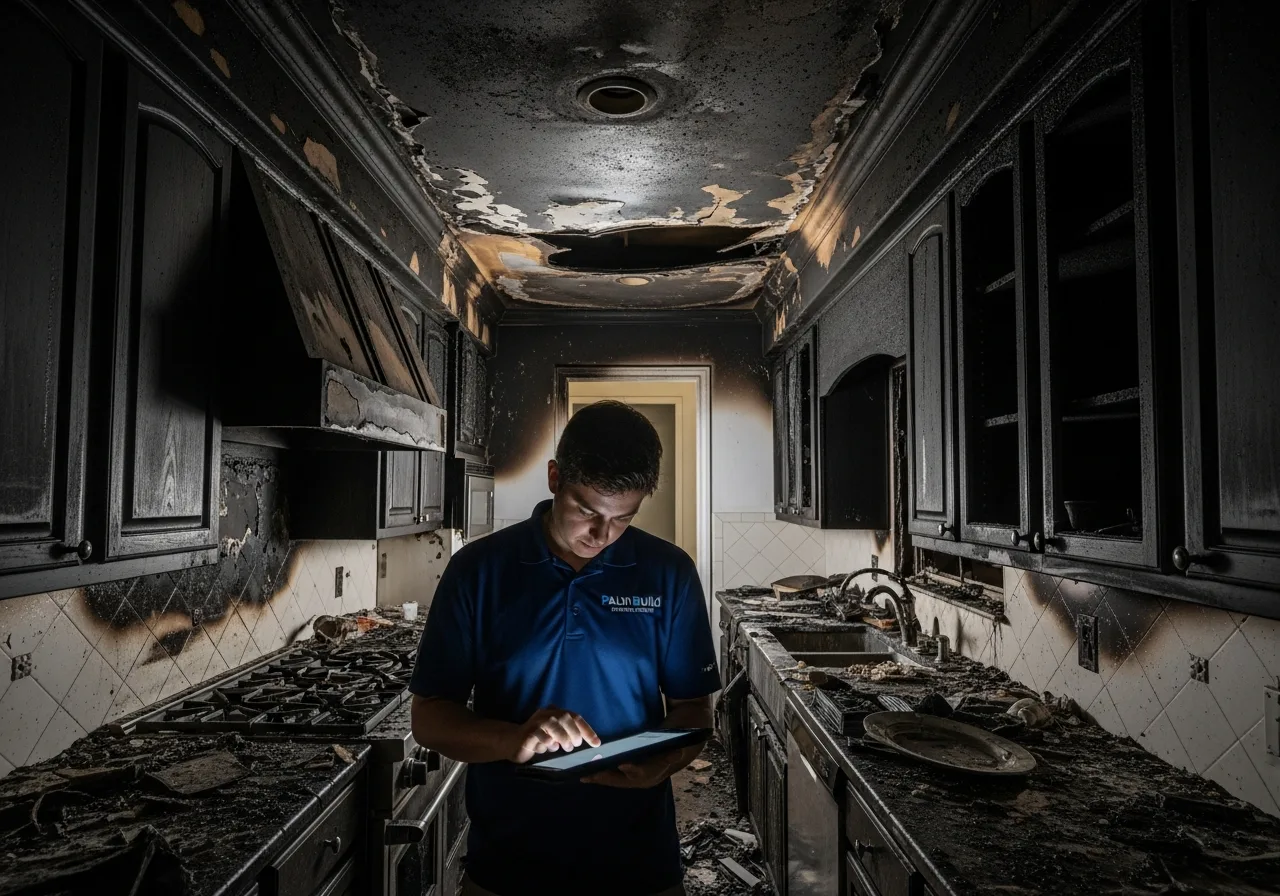
The most common fire type in Palm Beach Gardens. Luxury kitchens with commercial-grade ranges, built-in griddles, and high-BTU gas cooktops produce intense grease fires that generate protein smoke — nearly invisible but extremely persistent. Open-concept floor plans in PGA National's estate homes and BallenIsles' custom residences allow smoke to travel through the entire living area within minutes. Protein smoke bonds chemically with porous surfaces, requiring enzymatic cleaning followed by thermal fogging to fully neutralize odor embedded in custom cabinetry, stone countertops, and hardwood finishes.
Electrical Fires
All PBG communities — 1990s-era wiring under modern loads
Electrical fires in Palm Beach Gardens typically originate from overloaded circuits in 1990s-era homes now serving modern loads: whole-home automation, EV chargers, upgraded HVAC, pool heat pumps, and home office equipment. These fires smolder inside CBS wall cavities for hours before detection, filling hollow concrete block cores with thick synthetic soot from burning wire insulation and plastic components. By the time flames become visible, the wall interior is heavily contaminated. Restoration requires opening wall cavities for access — a process that must be carefully documented for insurance purposes.
Lightning Strike Fires
All communities — 80-100 strikes/mi² June-Aug
Lightning strikes cause both immediate structural fires and delayed electrical fires. Direct strikes to rooflines ignite sheathing and truss members, producing natural smoke that concentrates in attic spaces before being drawn through HVAC returns and distributed throughout the home. Indirect strikes damage electrical wiring inside CBS walls — surge damage to circuits can smolder for 12-24 hours before igniting. PBG homes with tile roofs, metal pool cages, and tall royal palms in the yard are frequent strike targets during the daily afternoon thunderstorms of wet season.
HVAC & Air Handler Fires
Evergrene, Avenir, PGA National, BallenIsles
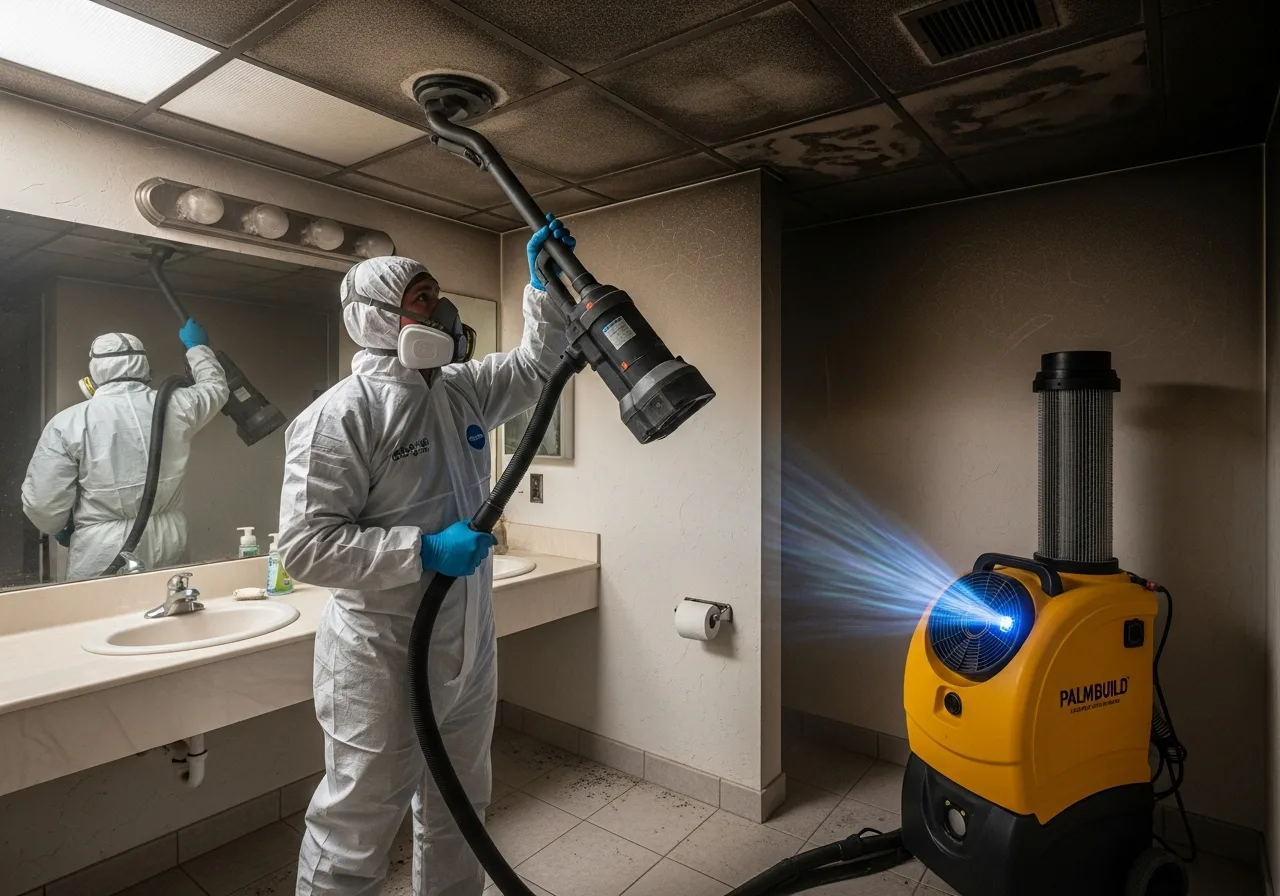
Palm Beach Gardens homes run air conditioning 10-11 months per year, putting extreme stress on HVAC systems. Air handler fires start from overheated motors, failed capacitors, or accumulated dust igniting on heat strips during rare heating cycles. Because the HVAC system is the primary air distribution network, an air handler fire immediately distributes smoke to every room through the duct system. Contaminated ductwork requires complete cleaning and sanitization — not just filter replacement. Attic-mounted air handlers in two-story PBG homes create additional risk of fire spreading into roof truss systems.
Pool Heater & Equipment Fires
PGA National, Frenchman's Creek, Old Palm, Mirasol
Nearly every Palm Beach Gardens home has a pool, and many feature gas-fired pool heaters that run year-round. Pool heater fires start from gas line leaks, failed heat exchangers, or electrical faults in the equipment pad. Because pool equipment is typically located adjacent to the home — often under a screened lanai or against an exterior wall — equipment fires can spread to the structure's exterior stucco, soffit, and screened enclosure. The proximity to the home means smoke damage often extends into adjacent interior rooms through wall penetrations for plumbing and electrical runs.
Exterior Landscape & Brush Fires
Avenir (western edge), PGA National, Evergrene
Palm Beach Gardens communities on the western edge — including Avenir's newer sections and the western reaches of PGA National — border the Loxahatchee Slough and undeveloped preserve land. During dry season (November through May), brush fires in adjacent natural areas produce smoke that infiltrates neighborhoods for days, coating exterior surfaces and entering homes through HVAC systems. Ornamental mulch beds, dried palm fronds, and landscape debris near homes also ignite from equipment sparks, discarded materials, or lightning. Exterior smoke infiltration requires the same interior remediation as a structural fire.