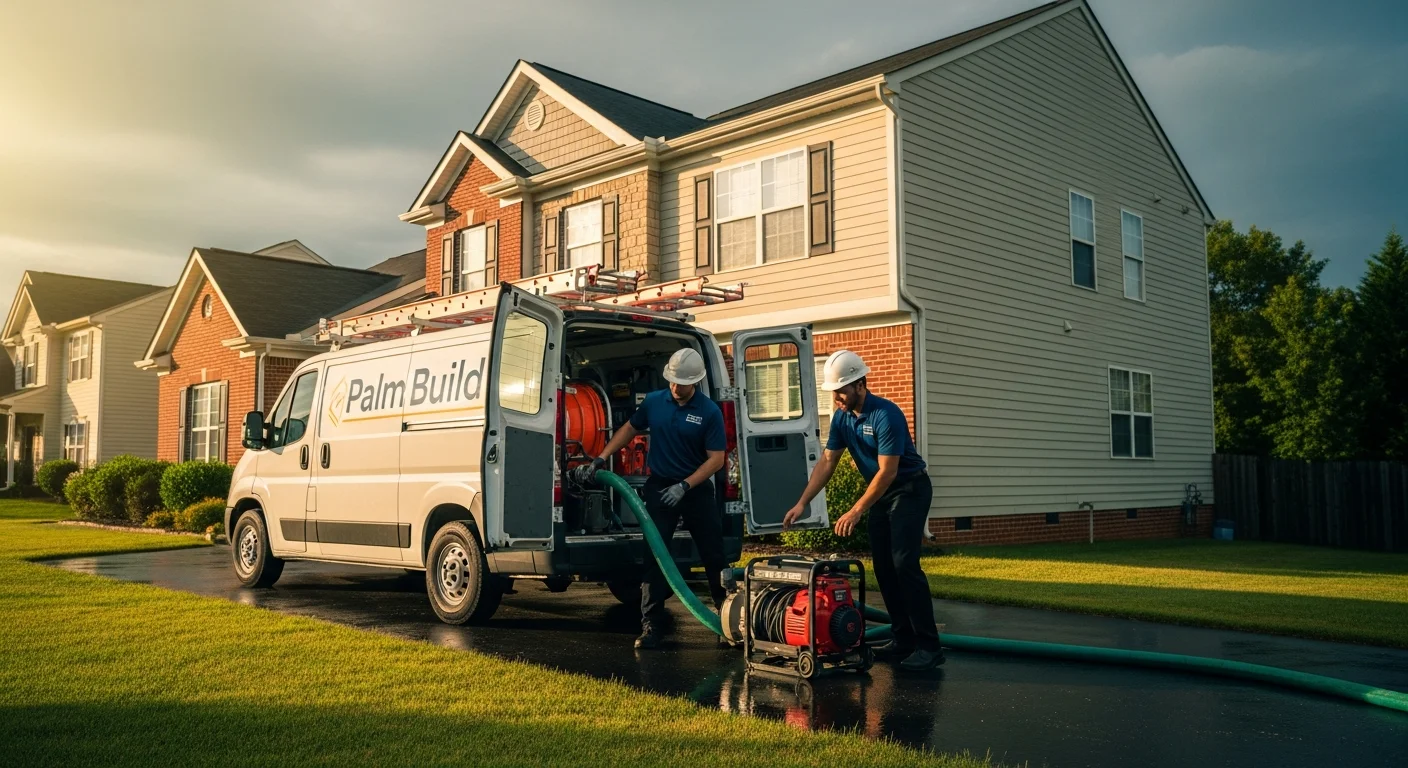
Water Damage Restoration in Boiling Springs, South Carolina
Boiling Springs is one of the fastest-growing residential communities in Spartanburg County — and its post-2000 housing stock, crawl space foundations, and inland storm exposure mean water damage here looks different than coastal SC. Palm Build brings measured drying, insurer-ready documentation, and permit-aware reconstruction to every job in Boiling Springs and the surrounding 29316 area.
Same-day dispatch
Emergency Response
24/7
Dispatch Available
IICRC
Certified Technicians
Water Damage in Boiling Springs? Every Hour Counts.
Boiling Springs's humidity and post-2000 homes mean water damage escalates fast. Call Palm Build for emergency extraction, measured structural drying, and Spartanburg County permit-aware reconstruction.
Boiling Springs Water Damage Risk
Why Boiling Springs Homes Face Real Water Damage Pressure
Boiling Springs is not a coastal city — but inland Spartanburg County has its own set of water damage drivers that no national franchise template addresses. Here is what Palm Build sees when we work this market.
~47"
Annual Rainfall
Greenville-Spartanburg normals
74%
Owner-Occupied
Direct decision-makers
$244K
Median Home Value
Insurance-claim sweet spot
+27%
Population Growth
2010–2020 census decade
47 Inches of Rain Per Year — Spread Year-Round
Boiling Springs and Spartanburg County receive approximately 47 inches of annual precipitation, with rainfall in every month and a notable summer peak. Unlike coastal South Carolina, there is no true dry season. That sustained moisture load means any un-dried water intrusion — behind a wall, under a floor, in a crawl space — faces a persistently humid environment that accelerates mold growth and structural degradation.
Post-2000 Housing With Crawl Space Foundations
Most Boiling Springs homes were built after 2000, many in the 2000s and 2010s as the area absorbed Spartanburg County's residential growth. This means post-framing construction with engineered lumber, OSB sheathing, and crawl space or slab foundations depending on subdivision. Crawl space homes are especially vulnerable — ground moisture and post-storm drainage issues can saturate floor joists and subfloor sheathing before homeowners notice any signs above grade.
Clay Soil Drainage and Flash Flooding Risk
Spartanburg County shares the Piedmont clay-rich soil profile common across the Charlotte metro region. Clay soil does not drain readily after heavy rain — it holds saturation and sheds water laterally rather than allowing it to percolate. During severe storms, this creates localized flash flooding in low-lying areas, ponding around foundations, and crawl space water intrusion even in homes with no obvious drainage failures.
Fast-Growing HOA Subdivisions With Complex Claims
Communities like Glen Lake and Cobbs Creek represent the newer HOA-governed neighborhoods that now define Boiling Springs. Multi-home density means water losses can affect adjacent properties quickly — a neighbor's burst pipe can travel into shared wall assemblies, and stormwater from upstream lots can drain toward lower-lying homes. HOA claims require coordination between individual homeowner policies and association master policies, which Palm Build handles.
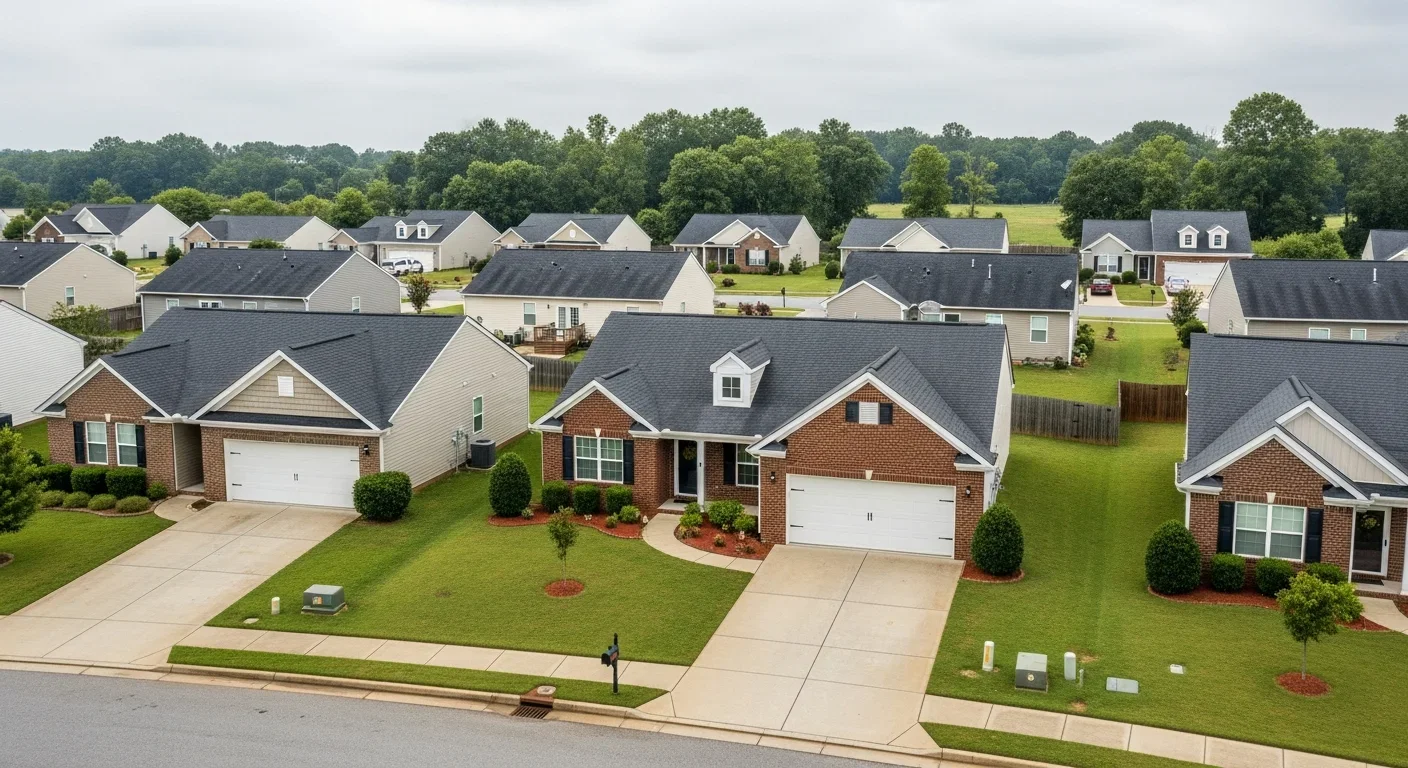
Boiling Springs's post-2000 suburban neighborhoods — many with crawl space foundations and clay-soil lots — are this region's primary water damage profile. Palm Build specializes in the specific failure modes that show up here.
Neighborhood Guide
Boiling Springs Neighborhood Water Damage Risk Guide
Location, construction era, and soil drainage all shape your water damage risk in Boiling Springs. Use this guide to understand your neighborhood's risk profile — and what Palm Build does differently for each property type.
| Neighborhood / Area | Era | Property Type | Primary Risk |
|---|---|---|---|
| Glen Lake | 2000s–2010s | Gated HOA community | Amenity-rich community with density. Water losses can cross shared walls in attached sections. HOA master policy coordination required. Post-2000 construction with modern plumbing but early-generation OSB sheathing. |
| Cobbs Creek | 2000s–2010s | HOA subdivision | Crawl space homes on lots with varied drainage. Clay-soil lots near the subdivision edges can pond during heavy rain events. Subfloor moisture common when crawl space vapor barriers fail. |
| Boiling Springs Corridor (Hwy 9) | 1980s–2000s | Mixed-age residential | Older homes along the Highway 9 corridor have aging plumbing details and original HVAC systems. Higher supply-line and water heater failure rates. Some homes have outdated crawl space ventilation. |
| Lawson's Fork Creek Area | Mixed eras | Low-lying residential | Properties near Lawson's Fork Creek and its tributaries face flash flood risk during heavy rain events. Low-lying lots in this corridor have experienced localized flooding during tropical storm remnants including Helene (2024). |
| New Construction Subdivisions (29316) | 2010s–2020s | Active development | Newest construction is generally well-built but HVAC condensate drain clogs and appliance supply line failures are the dominant early-life failure modes. Grading and drainage during construction phases can leave some lots with poor drainage patterns. |
| Inman Road Corridor | 1990s–2010s | Single-family residential | Mix of slab and crawl space construction. Slab homes are vulnerable to under-slab plumbing failures that can be difficult to detect until significant floor damage has occurred. Crawl space homes face the standard inland SC moisture profile. |
| Campobello Highway Area | Mixed eras | Rural-suburban fringe | Larger lots with more ground coverage. Basement and crawl space moisture issues common. Roofing ages faster on properties with significant tree cover — roof leak water damage a common call driver here. |
Glen Lake
2000s–2010s · Gated HOA community
Amenity-rich community with density. Water losses can cross shared walls in attached sections. HOA master policy coordination required. Post-2000 construction with modern plumbing but early-generation OSB sheathing.
Cobbs Creek
2000s–2010s · HOA subdivision
Crawl space homes on lots with varied drainage. Clay-soil lots near the subdivision edges can pond during heavy rain events. Subfloor moisture common when crawl space vapor barriers fail.
Boiling Springs Corridor (Hwy 9)
1980s–2000s · Mixed-age residential
Older homes along the Highway 9 corridor have aging plumbing details and original HVAC systems. Higher supply-line and water heater failure rates. Some homes have outdated crawl space ventilation.
Lawson's Fork Creek Area
Mixed eras · Low-lying residential
Properties near Lawson's Fork Creek and its tributaries face flash flood risk during heavy rain events. Low-lying lots in this corridor have experienced localized flooding during tropical storm remnants including Helene (2024).
New Construction Subdivisions (29316)
2010s–2020s · Active development
Newest construction is generally well-built but HVAC condensate drain clogs and appliance supply line failures are the dominant early-life failure modes. Grading and drainage during construction phases can leave some lots with poor drainage patterns.
Inman Road Corridor
1990s–2010s · Single-family residential
Mix of slab and crawl space construction. Slab homes are vulnerable to under-slab plumbing failures that can be difficult to detect until significant floor damage has occurred. Crawl space homes face the standard inland SC moisture profile.
Campobello Highway Area
Mixed eras · Rural-suburban fringe
Larger lots with more ground coverage. Basement and crawl space moisture issues common. Roofing ages faster on properties with significant tree cover — roof leak water damage a common call driver here.
Risk profiles reflect typical patterns for each area. Individual property conditions and construction details vary. Call Palm Build at (704) 464-0121 for a free assessment specific to your Boiling Springs property.
Our Process
How Palm Build Restores Water Damage in Boiling Springs
Every Boiling Springs restoration follows a documented six-step process — from emergency dispatch through permit-aware rebuild completion. No undocumented scope changes. No surprises on your insurance claim.
24/7 Emergency Dispatch
Call Palm Build any time — night, weekend, mid-storm. We triage on the phone immediately: what is the water source, how much standing water, is electricity safe. For Boiling Springs emergencies, we dispatch from Charlotte, NC with same-day arrival capability. Getting extraction started within the first few hours is the most impactful step in any residential water loss.
Assessment & Moisture Mapping
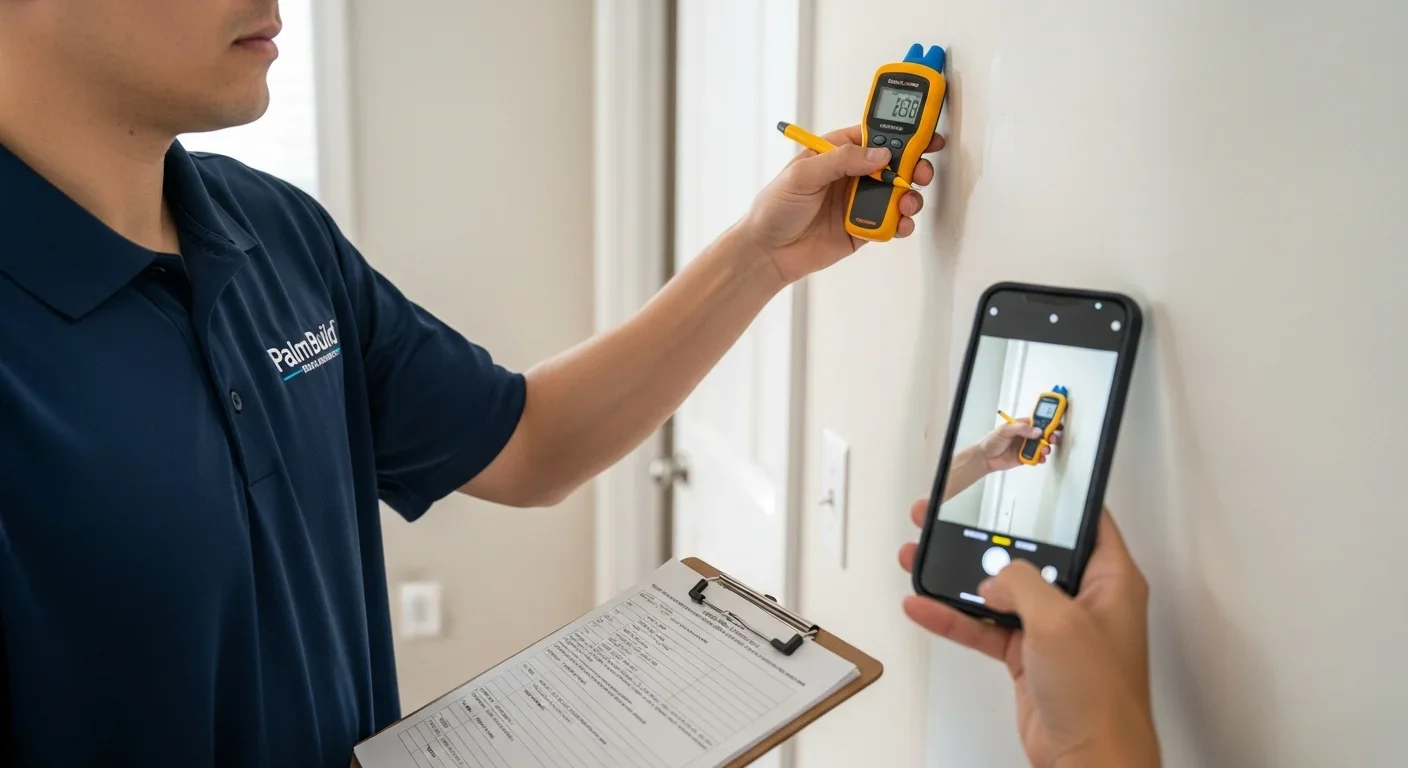
On arrival, our technicians use calibrated moisture meters and thermal imaging cameras to map every affected surface — walls, floors, ceilings, and crawl space assemblies. We document with photographs and readings before touching anything. This baseline is your insurance adjuster's primary evidence and establishes the full affected footprint — including hidden moisture that does not show up in a visual inspection.
Emergency Water Extraction
Truck-mounted extraction systems remove standing water quickly and efficiently. For crawl space events, we access the sub-floor area directly and extract from the source. In Boiling Springs's humid climate, getting to zero standing water is urgent — every hour of delay in a summer-peak humidity environment narrows the mold prevention window. We extract before we dry.
Structural Drying & Daily Monitoring
After extraction, industrial air movers and dehumidifiers are placed according to a calculated drying plan — not guesswork. We return daily to monitor moisture readings, adjust equipment positioning, and document progress. Structural drying in Spartanburg County's climate typically takes 3–5 days for contained events, longer for crawl space or multi-room losses. Every daily reading is logged for your insurance file.
Scope & Insurance Documentation
Once drying is complete, we produce a detailed written damage scope for your insurance carrier — including moisture logs, photo documentation, affected material inventory, and cause-of-loss narrative. We distinguish between homeowners-covered losses and flood losses that require separate coverage, helping you navigate the right claim pathway without guesswork. Spartanburg County permit requirements are identified at this stage.
Restoration & Permit-Aware Rebuild
From drywall and flooring replacement to crawl space repair and structural rebuilds, Palm Build coordinates or performs the restoration work. When Spartanburg County building permits are required — for structural repairs, plumbing, or electrical work — we identify those requirements upfront and sequence inspections correctly so your rebuild does not stall waiting on an inspector at a stage that should have been caught earlier.
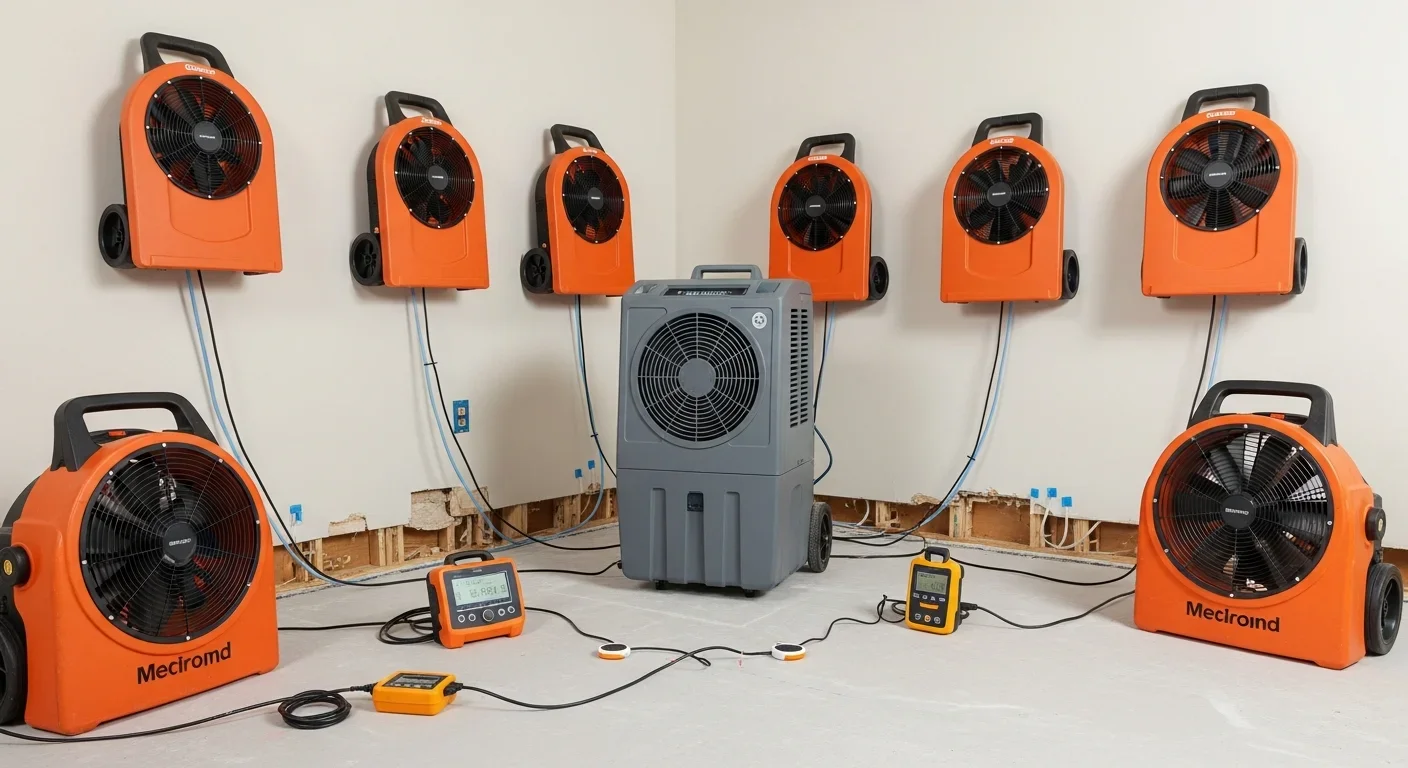
Structural drying in a Boiling Springs home — calibrated equipment placement, daily moisture monitoring, and a documented drying log that your insurer requires for full claim support.
Seasonal Risk Guide
When Does Boiling Springs See the Most Water Damage?
Boiling Springs receives approximately 47 inches of rain per year with no true dry season. Summer months carry peak storm and humidity risk. Winter brings burst-pipe risk from cold snaps. Click any month to see detail.
Click any month bar for details
Spartanburg County Rebuild Guide
Permits & Inspections for Boiling Springs Water Damage Repairs
Spartanburg County requires permits for many types of restoration work. Not knowing which repairs trigger a permit — and when — can result in failed inspections, costly uncovering of finished work, or rebuilds that violate code. Palm Build builds permit awareness into every scope from the start.
What Triggers a Permit in Spartanburg County?
Structural Framing Repair
Any repair to load-bearing walls, floor joists, roof rafters, or subfloor structural members requires a Spartanburg County building permit. Water damage that penetrates to structural framing almost always falls into this category.
Plumbing Work
Repairing or replacing water supply lines, drain lines, or fixtures requires a plumbing permit and inspection. If a burst pipe caused the water damage, the plumbing repair itself is a permitted scope item.
Electrical Work
If water intrusion affected electrical wiring, panels, outlets, or fixtures, any electrical repair or replacement requires a separate electrical permit and inspection. Work must be inspected before walls are closed.
HVAC Replacement
Replacing HVAC equipment or ductwork damaged by water requires a mechanical permit. This applies even when the replacement is identical to the original system.
Drywall-Only Replacement
Replacing drywall that was removed during mitigation does not typically require a permit on its own. However, if drywall removal exposed any of the permit-triggering conditions above, those must be permitted first.
Flooring Replacement
Replacing water-damaged flooring — carpet, LVP, hardwood — typically does not require a permit. Exception: if sub-floor sheathing or structural members beneath the flooring were also replaced due to damage.
Floodplain Properties — Additional Rules Apply
If your Boiling Springs property is within a FEMA-designated Special Flood Hazard Area, repair costs that equal or exceed 50% of the pre-damage market value may trigger substantial damage rules — requiring the structure to be brought into full floodplain compliance before repairs proceed. Spartanburg County Engineering manages floodplain oversight for the unincorporated areas of the county.
Palm Build Identifies Permit Requirements Before Work Begins
We build the permit and inspection sequence into your restoration scope from day one — no surprise holds, no uncovering finished work at county inspection.
(704) 464-0121 — Free Scope ReviewInsurance & Claims
Navigating Insurance for Boiling Springs Water Damage
The biggest source of confusion in water damage claims is the line between homeowners-covered losses and flood losses. In Boiling Springs, where both storm water and plumbing failures cause damage, getting this right matters — and Palm Build documents your loss to support the correct claim from the start.
Standard Homeowners — What It Covers
- ✓ Burst or frozen pipe water damage
- ✓ Appliance supply line failures (washing machine, dishwasher, ice maker)
- ✓ Water heater failures
- ✓ Wind-driven rain entering through a storm-damaged roof opening
- ✓ Overflow from a bathtub, sink, or toilet (sudden and accidental)
- ✓ Weight-of-ice roof collapse leading to water intrusion
Standard Homeowners — What It Does NOT Cover
- ✗ Flood damage (rising water from storms, drainage overflow, or surface flooding)
- ✗ Groundwater or surface water entering a crawl space or basement
- ✗ Sewer or drain backup (requires a separate endorsement)
- ✗ Gradual water damage from slow leaks or poor maintenance
- ✗ Mold resulting from neglect or chronic moisture — not a covered water loss
The Flood vs. Homeowners Coverage Distinction in Boiling Springs
South Carolina's Department of Insurance highlights that standard homeowners policies do not include flood coverage. For Boiling Springs homeowners, this matters most during heavy rain events that saturate yards and push water toward foundations — that is flood damage, not homeowners damage.
The National Flood Insurance Program (NFIP) provides flood coverage in Spartanburg County. Federally regulated lenders require NFIP or private flood coverage for homes in FEMA Special Flood Hazard Areas. Check FEMA's Flood Map Service Center to find your flood zone designation before filing any claim for water intrusion from exterior sources.
How Palm Build Supports Your Claim
- → Photo documentation from arrival — every affected surface
- → Calibrated moisture readings before and during drying
- → Written cause-of-loss narrative distinguishing peril types
- → Daily drying logs formatted for adjuster review
- → Scope that identifies permit requirements — no hidden costs
- → Direct coordination with your adjuster on scope alignment
Our Work in Boiling Springs
Water Damage Restoration — Boiling Springs, SC
From crawl space moisture events to full interior rebuilds after storm flooding — Palm Build's work in Boiling Springs and Spartanburg County is documented, measurable, and built to last.
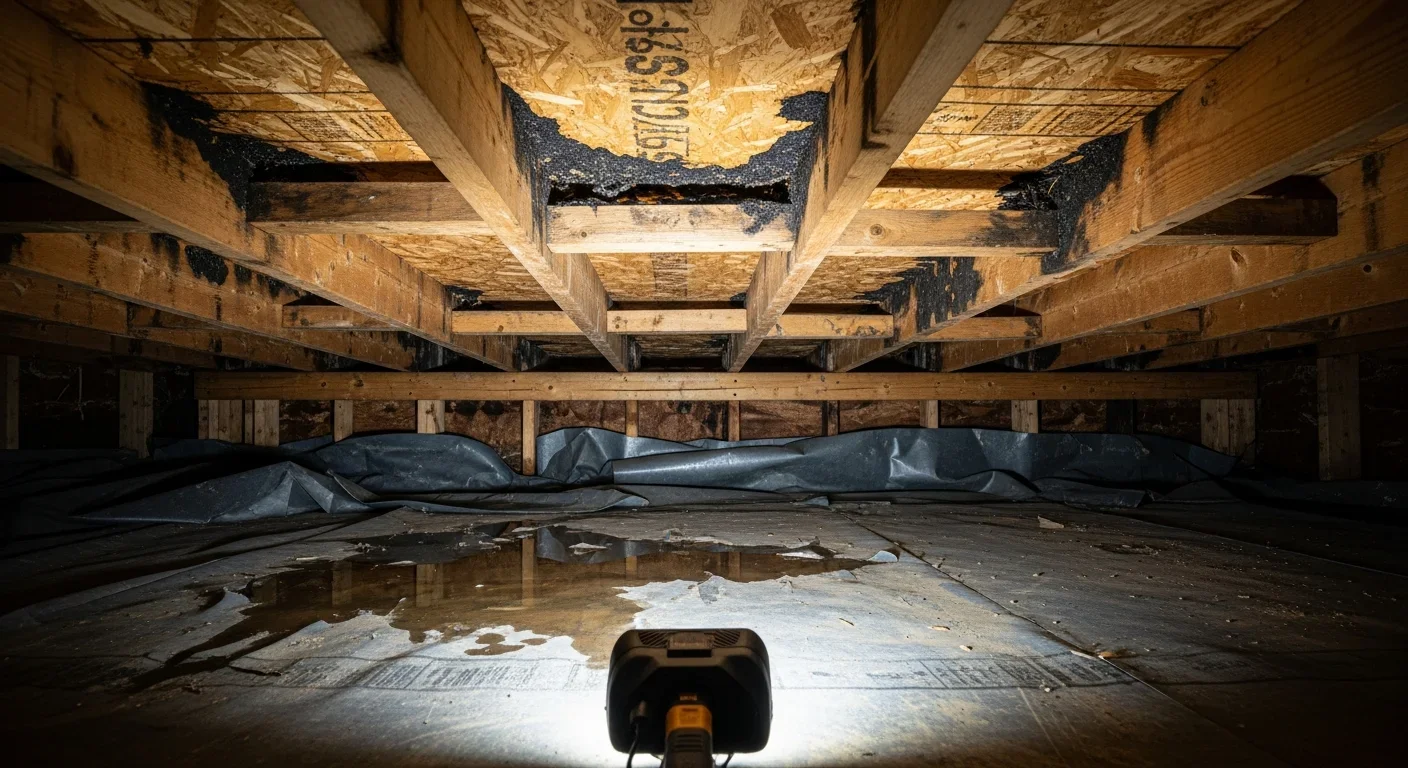
Crawl space moisture event — Boiling Springs, SC
Why Palm Build
Why Boiling Springs Homeowners Choose Palm Build
Boiling Springs is a fast-growing suburban market in Spartanburg County — not a coastal city, not a city center. The restoration needs here are different, and Palm Build addresses them specifically.
24/7 Emergency Dispatch
Water damage in Boiling Springs does not wait for business hours — and neither do we. Palm Build dispatches around the clock for Spartanburg County emergencies. Call (704) 464-0121 any time and reach someone who can begin coordinating your response immediately.
Insurance-Ready Documentation
Every Boiling Springs loss is documented from arrival — moisture readings, photos, cause-of-loss narrative, daily drying logs. Our documentation is formatted for insurance adjuster review and distinguishes homeowners-covered losses from flood losses, so your claim has the right evidence from day one.
IICRC Certified Technicians
Palm Build technicians hold IICRC certifications in water damage restoration, structural drying, and applied microbial remediation. Certification matters increasingly to insurance carriers approving restoration scopes, and it means our drying plans are based on measured science — not guesswork.
Crawl Space and Inland SC Expertise
Boiling Springs's post-2000 crawl space construction has specific failure modes that coastal-focused franchises miss. We know how moisture moves in these assemblies, where it hides in subfloor cavities, and how to dry them properly — including encapsulation coordination when warranted.
Spartanburg County Permit Coordination
We identify which repairs require Spartanburg County permits before work begins — not after walls are re-closed. Our permit-aware rebuild approach prevents costly inspection failures and ensures your restoration is code-compliant for insurance, resale, and your own peace of mind.
Single Point of Contact
From extraction crew through final rebuilt completion, Palm Build manages every phase. You deal with one team, one contact, one consistent documentation chain — not a patchwork of subcontractors passing your file between companies.
Serving Boiling Springs and All of Spartanburg County
Palm Build serves Boiling Springs and the broader Spartanburg County market — including Inman, Campobello, Chesnee, Lyman, and Roebuck. Whether you are in a newer HOA subdivision or an older section of 29316, our team brings the same documented, insurance-aligned approach to every job.
Call (704) 464-0121 any time. We respond to Boiling Springs water damage emergencies around the clock.
Frequently Asked Questions
Boiling Springs Water Damage Questions Answered
From insurance coverage to permit requirements and crawl space damage — here are the questions Boiling Springs homeowners ask most often.
Still have questions about your Boiling Springs property?
Call Palm Build — our team knows Spartanburg County construction, permits, and insurance requirements inside out.
(704) 464-0121 — 24/7More in Boiling Springs
Other Restoration Services in Boiling Springs, SC
Related Services
Related Restoration Services
Helpful Resources