Mold Remediation in Boiling Springs, South Carolina
With 47 inches of annual rainfall, high summer humidity, and a housing stock dominated by crawl space construction built since 2000, Boiling Springs homes face real mold pressure — especially when water events go unresolved or crawl space moisture is left unmanaged. Palm Build delivers IICRC-certified containment, HEPA remediation, and the documentation Boiling Springs homeowners and insurers need.
Same-day dispatch available
Emergency Response
24/7
Dispatch Available
IICRC
Certified Technicians
Mold in Your Boiling Springs Home? Act Before It Spreads.
Boiling Springs crawl spaces and humid summers create year-round mold pressure. Call Palm Build for IICRC-certified containment, remediation, and the documentation your insurer requires.
Boiling Springs Mold Risk
Why Mold Is a Real Threat in Boiling Springs Homes
Boiling Springs has the climate, the construction type, and the seasonal weather patterns that drive mold growth. Understanding the specific risk factors for this market is the first step in addressing them properly.
~47"
Annual Rainfall
Year-round with no dry season
70–80%
Summer Humidity
Outdoor RH peak months
24–48h
Mold Onset Window
EPA/CDC guidance after moisture event
74%
Owner-Occupied
Homeowners motivated to resolve fast
Year-Round Rainfall With No Dry Season
Unlike regions with a defined dry season that naturally resets moisture levels, Boiling Springs receives precipitation in every month of the year — approximately 47 inches annually. This persistent moisture load means that any unresolved water event exists in a continuously humid environment, accelerating the timeline from wet material to active mold growth.
Crawl Space Construction Dominates
The majority of Boiling Springs homes built since 2000 use crawl space foundations. These sub-floor spaces are the most common source of hidden mold in the Spartanburg County market. Ground moisture, inadequate ventilation, and post-storm drainage issues combine to keep crawl space humidity elevated — often to levels that support mold colonization on floor joists and subfloor sheathing without any visible interior symptom.
HVAC Systems Running Hard in Humid Summers
Boiling Springs summers are hot and humid. HVAC systems run nearly continuously from May through September, and their condensate drain lines are a common failure point. A clogged drain can overflow into a utility closet, wall cavity, or crawl space — and since the failure is gradual, it may go undetected until mold is already established behind the drywall.
Post-Storm Mold Risk After Tropical Remnants
Boiling Springs sits inland but is not immune to tropical storm impacts. Hurricane Helene (2024) triggered a FEMA major disaster declaration for South Carolina and brought severe rainfall inland across Spartanburg County. When water intrusion from a storm event is not fully dried within 24–48 hours — which can be challenging when demand for restoration services spikes after a major event — mold risk escalates significantly.
Crawl Space Mold Guide — Spartanburg County
Crawl Space Mold in Boiling Springs Homes
Crawl space mold is the most common — and most often overlooked — mold problem in Boiling Springs. Here is what to look for, what it means, and how Palm Build addresses it specifically for Spartanburg County homes.
Warning Signs of Crawl Space Mold in Your Boiling Springs Home
Musty or earthy odor — strongest near floors or in rooms above the crawl space
Soft, spongy, or discolored flooring from subfloor moisture damage
Visible dark staining on floor joists, rim joists, or subfloor sheathing
Condensation on crawl space ductwork or HVAC components
Unexplained allergy-like symptoms (sneezing, eye irritation) that improve outdoors
Standing water or saturated soil visible through access door after rain events
Increased heating or cooling costs from insulation that has absorbed moisture
How Palm Build Remediates Crawl Space Mold
Thorough Inspection and Moisture Mapping
We access the crawl space directly and inspect all surfaces — floor joists, rim joists, subfloor sheathing, insulation, vapor barriers, HVAC components, and the perimeter. Moisture meters and relative humidity sensors establish actual readings throughout the space. Affected zones are photographed and documented.
Source Correction First
Remediating mold without fixing the moisture source is wasted effort — it will return. We identify and address the cause: damaged vapor barrier, inadequate drainage, HVAC condensate issues, plumbing leak, or foundation drainage failure. This step is what separates lasting remediation from repeat calls.
Containment, Removal, and HEPA Treatment
Contaminated insulation is removed and bagged for disposal. HEPA air scrubbers are run to capture spores. Affected structural wood is treated with antimicrobial EPA-registered solutions following IICRC protocols. Heavily affected members may require removal and replacement — which we identify and scope in advance.
Encapsulation and Prevention
Following remediation, we assess whether full crawl space encapsulation — a sealed vapor barrier system with a dedicated dehumidifier — is the appropriate long-term prevention solution for your Boiling Springs home. Encapsulation is especially effective for homes on clay-soil lots where ground moisture is a persistent issue.
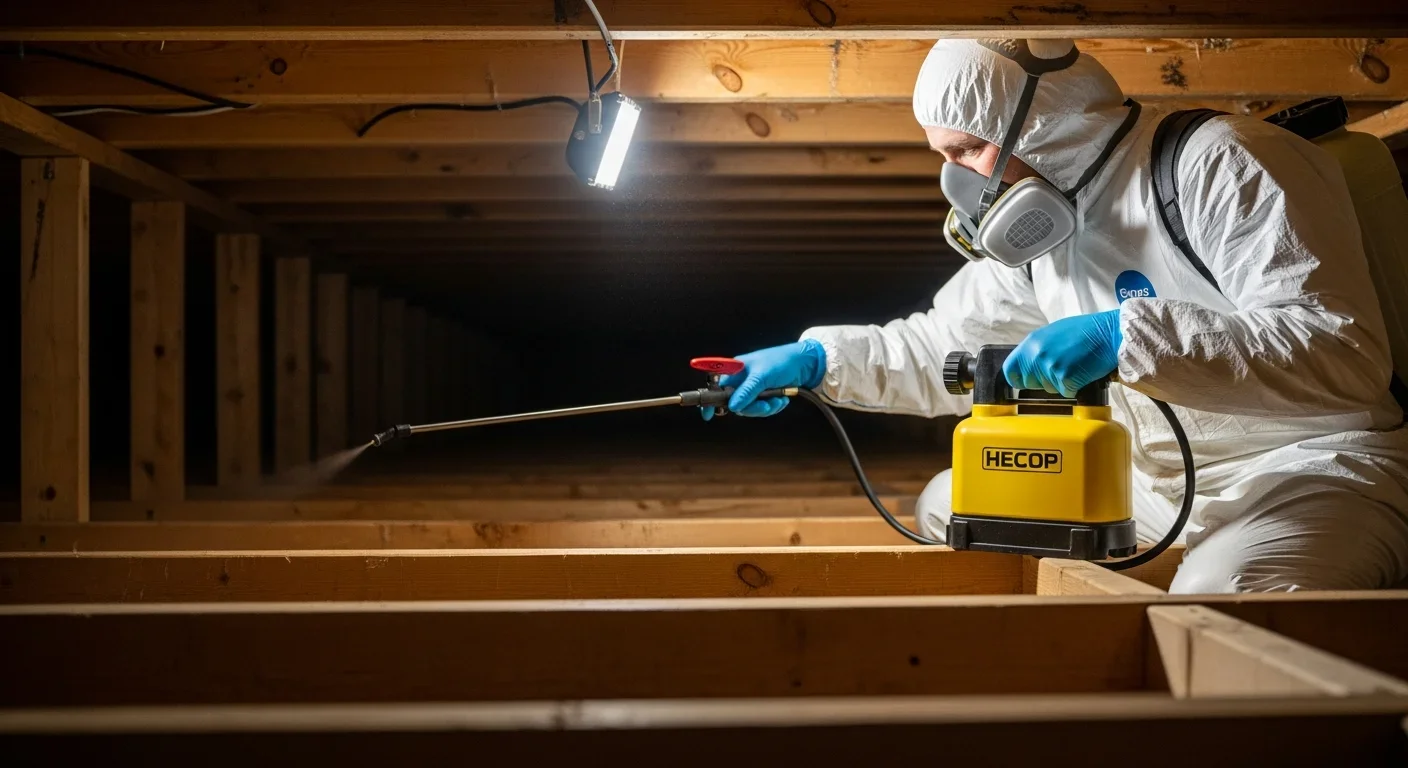
Crawl space mold remediation in Boiling Springs — treating affected floor joists with EPA-registered antimicrobial solution following IICRC protocols, with source correction and encapsulation assessment included.
Our Process
Mold Remediation Process for Boiling Springs Homes
Effective mold remediation starts with finding the moisture source — not just treating what is visible. Palm Build follows IICRC S520 protocols from assessment through final documentation on every Boiling Springs job.
Assessment & Dispatch
Call Palm Build at (704) 464-0121 to describe what you are seeing — visible mold, musty odor, recent water event. We triage on the phone and schedule an assessment promptly. For Boiling Springs properties, we can typically be on-site quickly. Early intervention limits the affected footprint and the total remediation cost.
Moisture Source Investigation
Visible mold is never the starting point — moisture source identification is. We use moisture meters, thermal imaging, and relative humidity sensors to find where water is entering or accumulating. In Boiling Springs crawl space homes, this often involves sub-floor access and perimeter drainage assessment. We do not quote remediation until we understand the source.
Containment Setup
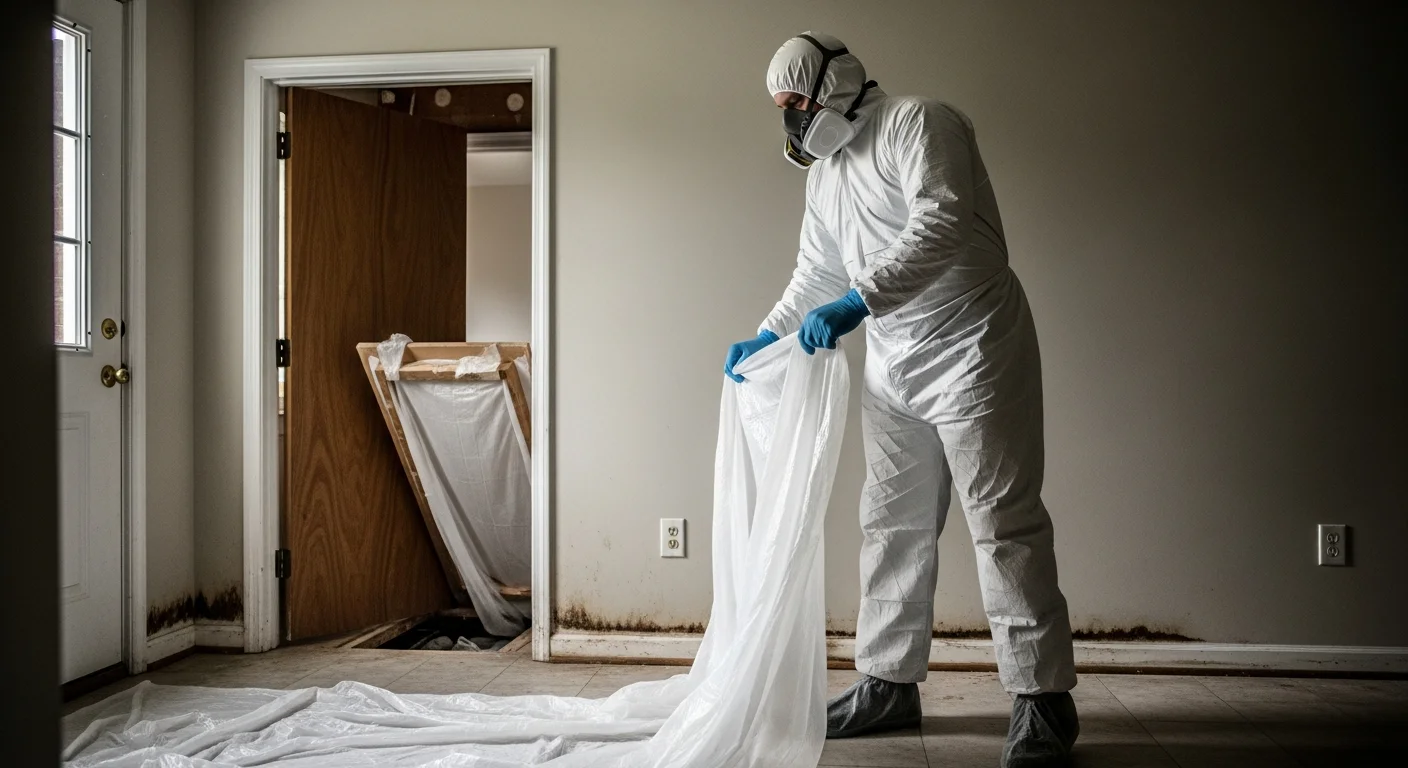
Before disturbing any mold, we establish negative air pressure containment using poly sheeting and HEPA-filtered air scrubbers. This prevents spore migration to unaffected areas of your home during work. For crawl space events, containment is established at the access point and internally within the affected zone.
HEPA Filtration & Material Removal
HEPA air scrubbers run continuously throughout remediation, capturing airborne spores as work proceeds. Affected porous materials — insulation, drywall, damaged wood — are removed and triple-bagged for disposal. Non-porous surfaces are cleaned with EPA-registered antimicrobial solutions following IICRC S520 protocols.
Source Correction & Structural Drying
With mold materials removed, we address the underlying moisture source — repairing vapor barriers, correcting drainage, fixing plumbing, or coordinating HVAC repairs. Structural drying equipment is deployed to bring affected materials to acceptable moisture levels before any rebuild work begins.
Documentation & Clearance
Upon completion, we provide written remediation documentation covering affected areas, materials removed, treatments applied, and final moisture readings. This documentation supports your insurance claim and provides the record a future buyer or property inspector may request. Clearance testing is available if required by your insurer or lender.
SC Mold Regulations
What South Carolina Law Says About Mold Remediation
South Carolina's mold oversight landscape is in transition. Here is what Boiling Springs homeowners need to know before hiring a remediation company.
Current Status: No State License Required
South Carolina currently has no statewide licensing requirement for mold inspectors or remediators. State environmental guidance acknowledges there are no state or federal laws establishing mandatory mold standards. Any company can legally claim to offer mold remediation — which means credentials matter more, not less.
Pending: SC Bill 5109 (2026)
SC Bill 5109, introduced in February 2026, proposes a formal certification framework for mold assessment and remediation in South Carolina — including a definition that professional remediation covers mold-affected areas larger than ten square feet. The bill is currently in committee. If passed, it would establish licensing requirements consistent with IICRC industry standards.
What to Look For Now: IICRC Certification
The IICRC (Institute of Inspection, Cleaning and Restoration Certification) sets the industry standard for mold remediation through the S520 Standard for Professional Mold Remediation. Spartanburg County guidance advises verifying professional training and certifications through organizations like IICRC. Palm Build technicians hold IICRC certifications and follow S520 protocols on every Boiling Springs job.
Palm Build — IICRC Certified, Protocol-Driven
Our technicians hold current IICRC certifications. We follow documented protocols — not shortcuts. In a state where anyone can claim to do mold remediation, certification and process discipline are the only reliable differentiators.
(704) 464-0121 — Free AssessmentCost Guide
Mold Remediation Costs in Boiling Springs
Mold remediation cost in Boiling Springs ranges widely based on affected area, materials involved, and whether structural work is required. These are realistic ranges — not low-ball estimates.
| Scope | Typical Range | What It Includes |
|---|---|---|
| Surface Mold — Bathroom / Utility | $500–$1,500 | Small, contained areas with no structural involvement. Affected surfaces cleaned and treated. Typical for tile grout, caulk, or minor drywall spots caught early. |
| Wall Cavity Mold — Single Room | $1,500–$4,000 | Mold behind drywall in one room — typically from a slow pipe leak or HVAC condensate event. Requires drywall removal, treatment, and replacement. |
| Crawl Space Mold — Partial | $2,000–$5,000 | One section of crawl space with affected insulation and partial joist contamination. Includes insulation removal, HEPA treatment of structural members, and vapor barrier repair. |
| Crawl Space Mold — Full | $4,000–$10,000+ | Full crawl space affected — common in Boiling Springs homes after an unresolved drainage or plumbing issue. Includes full insulation removal, structural treatment, and encapsulation assessment. |
| Multi-Room Post-Storm Event | $5,000–$15,000+ | Mold resulting from unresolved storm or flood water intrusion across multiple rooms or levels. Scope varies significantly — inspection required before any cost estimate can be provided. |
Surface Mold — Bathroom / Utility
$500–$1,500
Small, contained areas with no structural involvement. Affected surfaces cleaned and treated. Typical for tile grout, caulk, or minor drywall spots caught early.
Wall Cavity Mold — Single Room
$1,500–$4,000
Mold behind drywall in one room — typically from a slow pipe leak or HVAC condensate event. Requires drywall removal, treatment, and replacement.
Crawl Space Mold — Partial
$2,000–$5,000
One section of crawl space with affected insulation and partial joist contamination. Includes insulation removal, HEPA treatment of structural members, and vapor barrier repair.
Crawl Space Mold — Full
$4,000–$10,000+
Full crawl space affected — common in Boiling Springs homes after an unresolved drainage or plumbing issue. Includes full insulation removal, structural treatment, and encapsulation assessment.
Multi-Room Post-Storm Event
$5,000–$15,000+
Mold resulting from unresolved storm or flood water intrusion across multiple rooms or levels. Scope varies significantly — inspection required before any cost estimate can be provided.
Why Early Intervention Saves Thousands
The difference between a $1,500 surface remediation and a $10,000+ crawl space or multi-room event is often just time. Mold that is caught and treated within days of a moisture event is dramatically cheaper to remediate than mold discovered weeks or months later. In Boiling Springs's humid climate, the window between wet material and established mold growth is 24–48 hours. Call (704) 464-0121 immediately after any water event — do not wait to see if mold develops.
Our Work
Mold Remediation in Boiling Springs, SC
From crawl space containment through post-remediation encapsulation — documented, verified, and built to prevent recurrence in Spartanburg County homes.
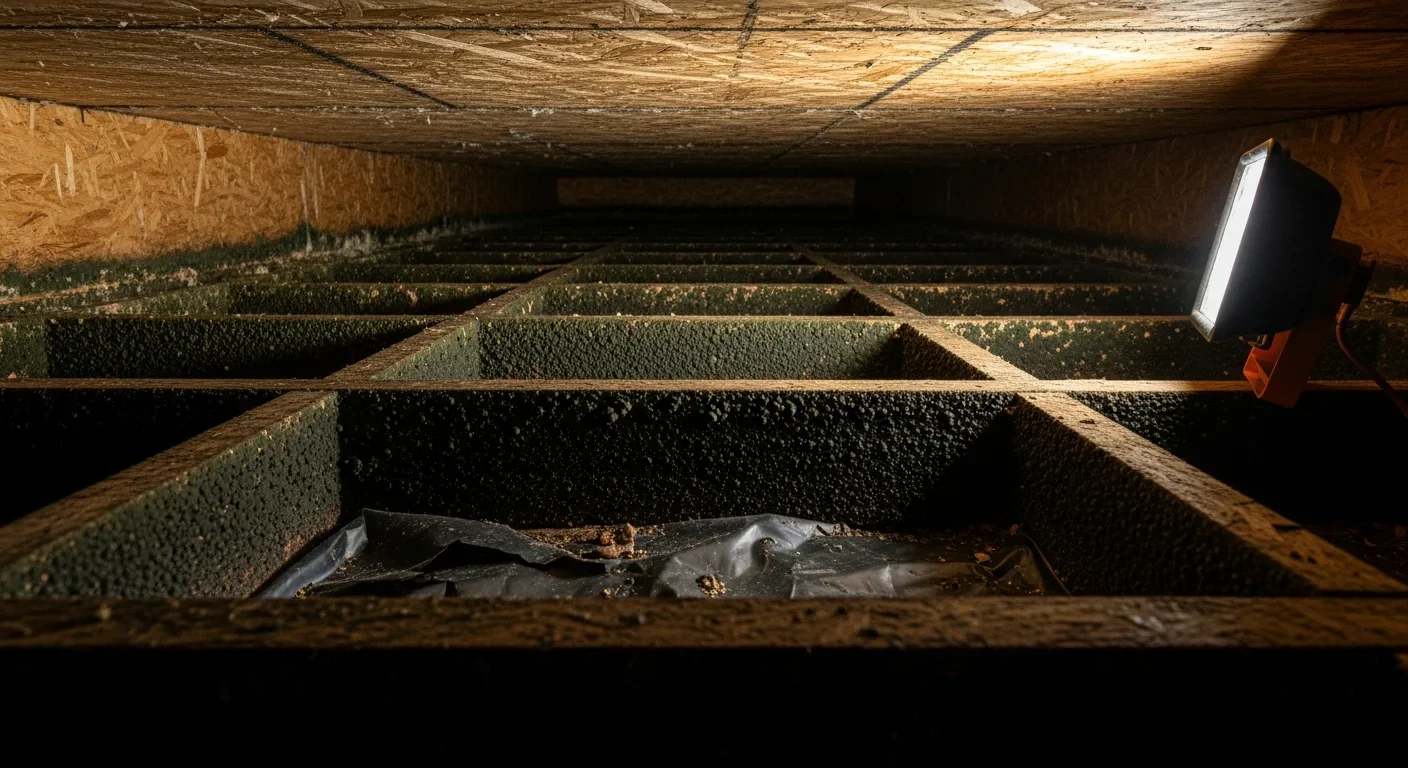
Crawl space joist mold — common in 29316 homes
Why Palm Build
Why Boiling Springs Homeowners Choose Palm Build for Mold
In a state without mandatory mold licensing, the difference between a good remediation and a failed one comes down to process, documentation, and knowing the local market.
Moisture Source First — Always
We do not remediate visible mold without finding the moisture source. Every Palm Build Boiling Springs assessment begins with moisture mapping and source identification — because mold that grows back after remediation is a failure of diagnosis, not just treatment.
IICRC S520 Protocol Compliance
Palm Build follows IICRC S520 Standard for Professional Mold Remediation on every job. In South Carolina's current no-license environment, protocol compliance is the only objective measure of remediation quality. Our process is documented, measurable, and defensible to your insurer.
Crawl Space Expertise for Spartanburg County
Crawl space mold is the defining mold problem in Boiling Springs. We have assessed and remediated crawl spaces throughout the 29316 area — understanding the specific soil drainage, construction details, and vapor barrier configurations common here. We know what a Boiling Springs crawl space looks like when it is failing.
Insurance-Ready Documentation
Written remediation scope, pre- and post-treatment moisture readings, materials-removed inventory, cause-of-loss narrative — all formatted for insurance adjuster review. When your insurer asks for proof that remediation was done correctly, Palm Build's documentation answers every question.
24/7 Emergency Response
Mold emergencies do not wait. When you discover significant mold growth — especially after a water event — call Palm Build immediately. We dispatch around the clock and can begin assessment the same day in most Boiling Springs situations.
Single Team, Start to Finish
Remediation, source correction, structural drying, and rebuild coordination — all through one team with one consistent documentation chain. No hand-off between a remediation company and a separate rebuild contractor. Palm Build stays on your Boiling Springs job through completion.
Mold in Your Boiling Springs Home? Call Now.
Every hour matters in Boiling Springs's humid climate. Palm Build dispatches 24/7 for Spartanburg County mold emergencies — assessment, containment, and remediation.
(704) 464-0121 — Free AssessmentFrequently Asked Questions
Boiling Springs Mold Questions Answered
From crawl space mold to SC licensing rules and insurance coverage — here are the questions Boiling Springs homeowners ask most often about mold remediation.
Still have mold questions?
Call Palm Build — we know Boiling Springs construction, crawl spaces, and SC mold regulations better than any national franchise.
(704) 464-0121 — 24/7More in Boiling Springs
Other Restoration Services in Boiling Springs, SC
Related Services
Related Restoration Services
Helpful Resources