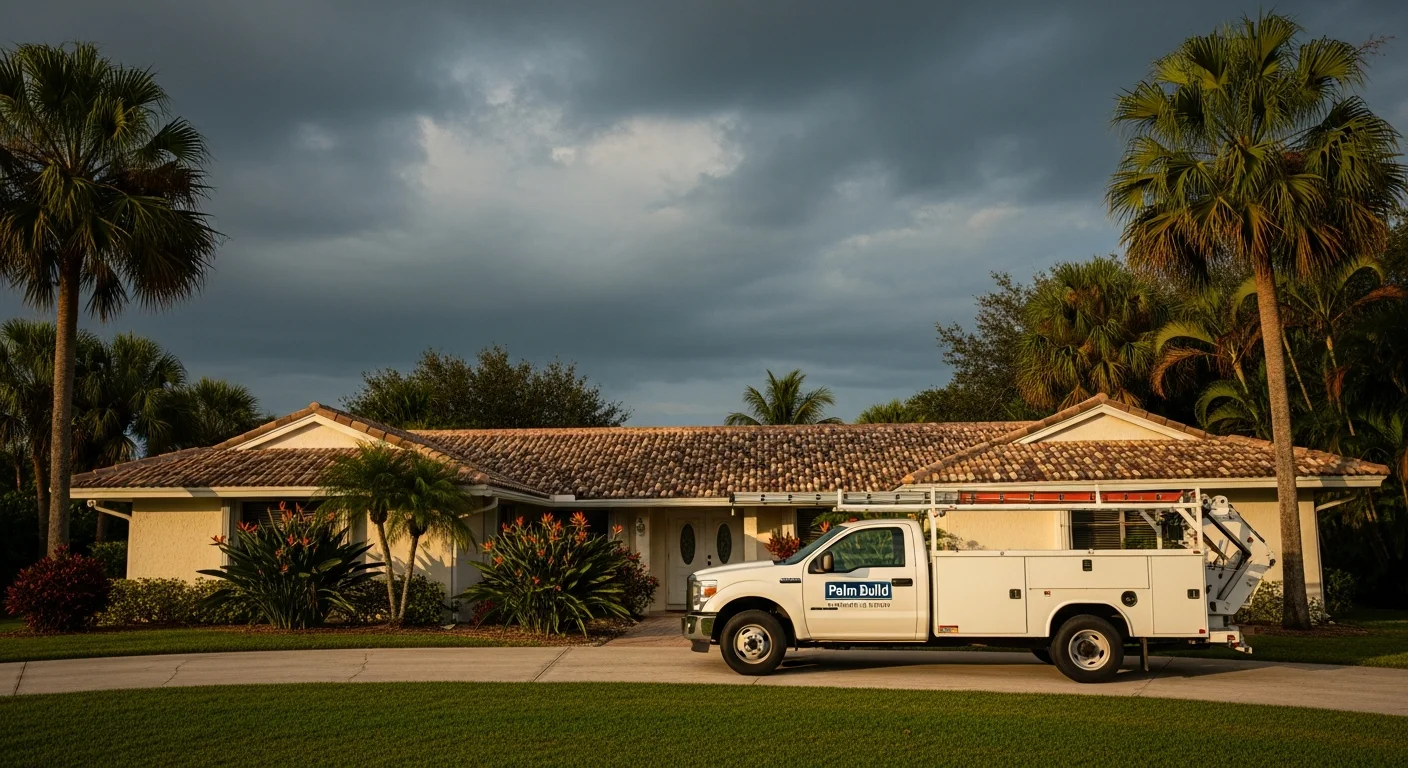
Palm Build restoration truck parked in the driveway of an older CBS stucco home in Fort Pierce Florida after water damage emergency
FORT PIERCE FL — 24/7 WATER DAMAGE RESPONSE

Water Damage Restoration in Fort Pierce, Florida

From Lakewood Park's older CBS homes to Hutchinson Island's coastal properties, Palm Build's Treasure Coast team responds with truck-mounted extraction, industrial dehumidifiers, and the insurance-ready documentation Fort Pierce homeowners need — before mold takes hold in Florida's relentless humidity.

Serving Fort Pierce from Deerfield Beach, FL 75-90 min Response IICRC Certified

75-90 min

Emergency Response

24/7

Dispatch Available

IICRC

Certified Technicians

Water Damage in Fort Pierce? Every Hour Counts.

In Fort Pierce's subtropical humidity, water damage becomes mold damage within 24–48 hours. Call Palm Build now for 24/7 emergency extraction, structural drying, and insurance-ready documentation.

75-90 min Response IICRC Certified

Local Risk Factors

Why Fort Pierce Homes Face Unique Water Damage Risks

Fort Pierce isn't a headline-grabbing resort city — it's a working Treasure Coast community with the oldest housing stock in St. Lucie County, a majority renter population, and annual rainfall that rivals South Florida's wettest markets. When water intrusion hits here, the damage patterns reflect decades-old construction, not brand-new builds.

Fort Pierce's Aging Housing Stock

30%

Homes built pre-1970

Roughly 30% of Fort Pierce's homes were built before 1970 — the highest share of pre-1970 housing on the Treasure Coast. These CBS concrete block structures feature original jalousie windows, flat or low-pitched roofs, and aging supply lines that create more failure points than newer construction.
Multi-Family Density and Shared Plumbing

52.7%

Renter-occupied households

Fort Pierce is majority renter (52.7% renter-occupied), with a dense mix of single-family rentals, duplexes, and older apartment buildings. Shared plumbing stacks, stacked HVAC units, and common-wall construction mean a single unit's water failure quickly becomes a multi-unit event.

Hurricane Season and Tropical Rainfall

55.89 in

Annual rainfall

Fort Pierce averages 55.89 inches of rainfall annually — nearly all front-loaded into the June–November Atlantic hurricane season. Hurricane Milton (2024) produced deadly tornadoes in St. Lucie County. Wind-driven rain through older window frames and roof edges is a primary damage source every wet season.

Year-Round Subtropical Humidity

75–85%

Year-round outdoor humidity

Fort Pierce sits on the Indian River Lagoon in St. Lucie County — one of the most biodiverse coastal lagoons in North America and a constant source of ambient moisture. Year-round outdoor humidity of 75–85% means wet materials begin growing mold within 24 to 48 hours without professional dehumidification.

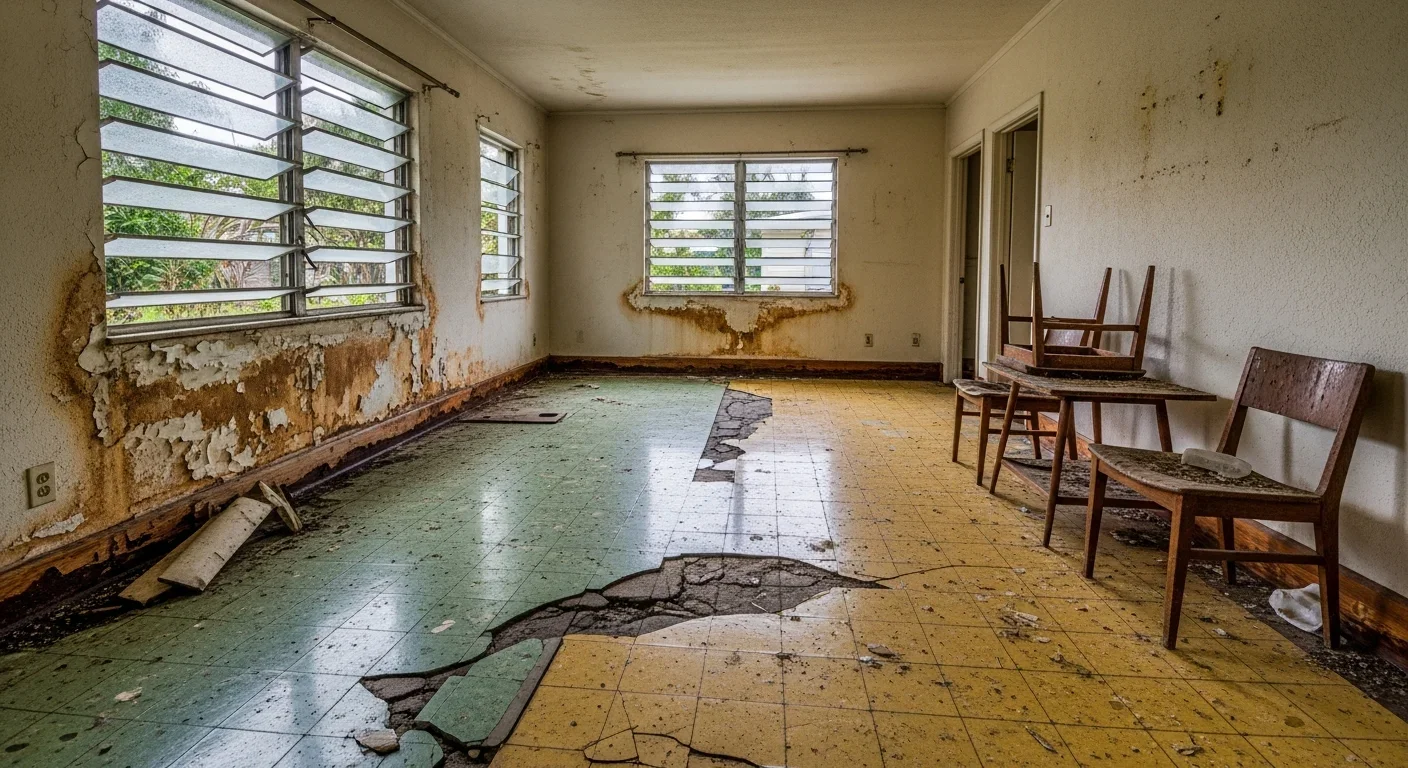
Water damage visible inside an older Fort Pierce Florida CBS home showing waterlogged tile flooring and stained stucco walls near jalousie windows
Wind-driven rain through aging jalousie windows and stucco cracks is among the most common water intrusion sources in Fort Pierce's pre-1970 housing stock.

Neighborhood-Level Intelligence

Fort Pierce Neighborhood Water Damage Risk Profiles

Water damage in Fort Pierce follows predictable patterns tied to building era, construction type, proximity to the Indian River Lagoon, and neighborhood drainage capacity. Here are the areas where we respond most frequently — and what we find when we get there.

Lakewood Park

High

Built: 1950s–1970s

Primary risk: Aging plumbing, flat roof failures, jalousie windows

Common damage: Original galvanized or copper supply lines near end of life, flat roof membrane deterioration allowing ponding water, wind-driven rain intrusion through original jalousie frames

White City

High

Built: 1950s–1970s

Primary risk: Older CBS construction, drainage constraints, storm flooding

Common damage: Low-lying topography with limited drainage during multi-day rain events, older HVAC condensate systems, original stucco with hairline cracks admitting moisture

Hutchinson Island

High

Built: Mixed 1960s–2000s

Primary risk: Coastal storm surge, salt air corrosion, barrier island flooding

Common damage: Atlantic-facing exposure to wind-driven rain and surge, salt air accelerating metal corrosion in HVAC and window hardware, flood insurance complexity for oceanfront properties

St. Lucie Village

High

Built: 1930s–1960s

Primary risk: Very old construction, pre-code plumbing, tree-related roof damage

Common damage: Some of the oldest residential structures in the county, galvanized plumbing past service life, overhanging mature trees causing roof damage in storms

Indrio / Lakewood Park North

Elevated

Built: 1970s–1990s

Primary risk: Rural drainage, flat terrain, storm water ponding

Common damage: Agricultural drainage areas with slow-moving storm water, older manufactured and CBS homes with flat roofs, long response times from fire/rescue affecting water damage escalation

Fort Pierce Farms

Elevated

Built: 1960s–1980s

Primary risk: Agricultural-residential mix, irrigation-adjacent flooding

Common damage: Proximity to agricultural irrigation infrastructure, older CBS structures on large lots with poor grading, slow-drain soil during wet season

North Beach / South Beach (Hutchinson Island)

High

Built: 1960s–1980s condos

Primary risk: Multi-unit plumbing migration, ocean exposure, surge

Common damage: Older oceanfront condo buildings with shared plumbing stacks, unit-to-unit water migration from upper floors, hurricane shutter damage causing window frame intrusion

Downtown Fort Pierce / Inlet Area

Elevated

Built: Mixed, some pre-1950

Primary risk: Very old mixed-use structures, storm surge proximity, flat roofs

Common damage: Commercial-to-residential conversions with aging roof systems, proximity to the Fort Pierce Inlet and Indian River Lagoon surge pathways, older drainage infrastructure

Treasure Coast Airpark Estates

Moderate

Built: 1980s–2000s

Primary risk: Aging appliances, supply line failures, HVAC condensate

Common damage: Mid-era CBS homes with appliances reaching end of service life, HVAC condensate line blockages, water heater failures common in 25+ year old units

Weatherbee / Angle Road Corridor

Elevated

Built: 1970s–1990s

Primary risk: Multi-family density, shared plumbing, renter market

Common damage: High renter density means faster property manager calls but slower documentation windows, shared plumbing failures affect multiple units simultaneously, deferred maintenance common

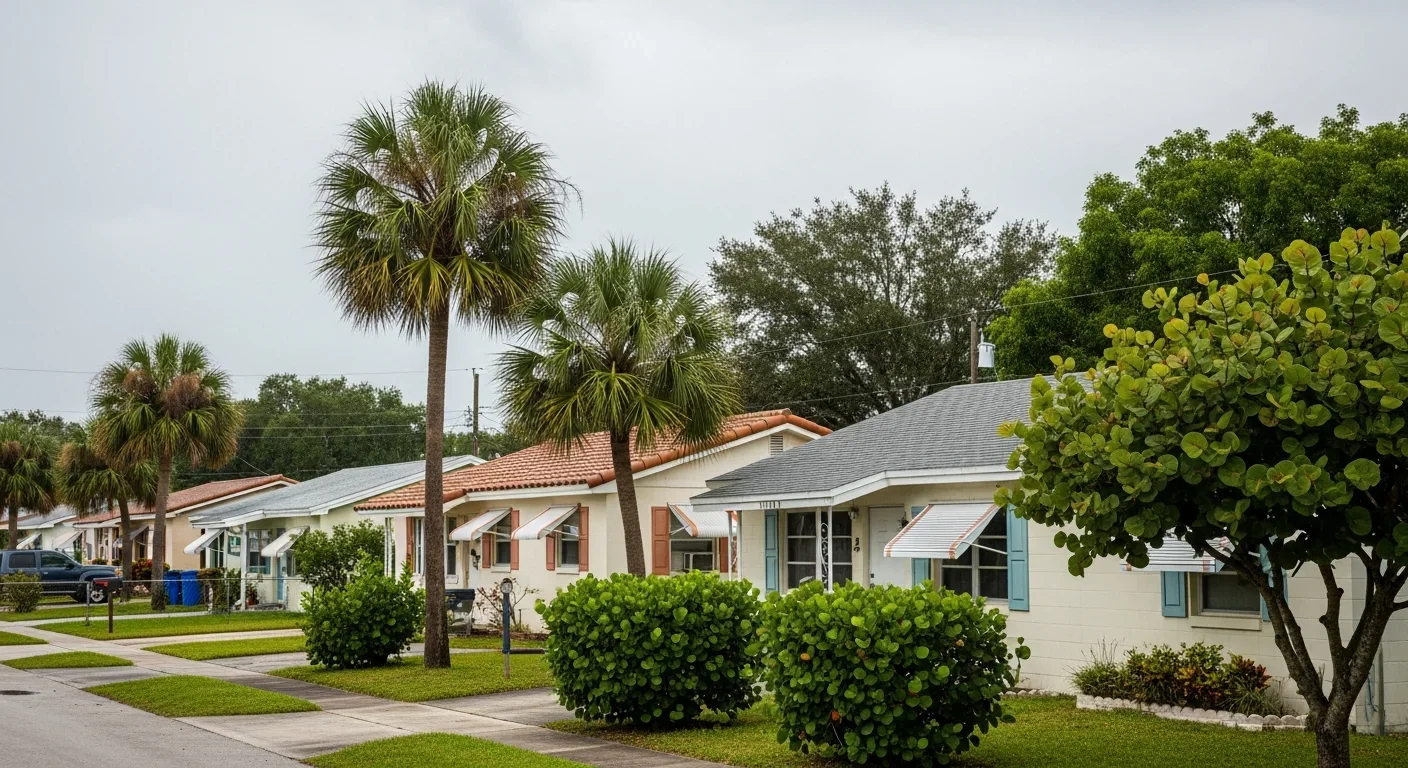
Row of older CBS stucco homes on a Fort Pierce Florida residential street with palm trees and low-pitched tile roofs
Fort Pierce's older residential neighborhoods feature CBS construction built in the 1950s–1970s — a building era with specific vulnerability patterns our technicians know well.

Fort Pierce Exclusive

The Pre-1970 Housing Challenge in Fort Pierce

Approximately 30% of Fort Pierce's housing units were built before 1970 — a higher share than anywhere else on the Treasure Coast. These homes have distinct vulnerability patterns that newer construction doesn't share. Understanding them is the difference between a surface repair and a genuine restoration.

Pre-1970 Risk

Flat and Low-Pitched Roof Membranes

Many pre-1970 Fort Pierce CBS homes have flat or barely-sloped roofs with original built-up roofing membranes. After 50+ years of sun, expansion, and storm cycling, these membranes develop cracks and blisters that allow water to pond and permeate into interior ceiling assemblies. A single September storm can push enough water through a compromised flat roof to damage every room below.

Hidden Leak Risk

Aging Supply Lines and Galvanized Plumbing

Homes built before 1970 often contain original galvanized steel supply lines. At 50–60 years old, galvanized pipes are well past their 40-year design life — internal rust narrows the pipe, then pinhole failures begin. These leaks are slow, hidden inside walls, and often go undetected until a homeowner notices discoloration, a musty smell, or buckled drywall. At that point, mold has usually already colonized the wall cavity.

Storm Intrusion

Jalousie Windows and Wind-Driven Rain

The jalousie window — a classic Florida feature of the 1950s–1970s — is essentially a louvered glass system that seals poorly even when closed. During heavy rain or hurricane-force gusts, water easily penetrates the frame joints and drips onto interior windowsills, walls, and flooring below. After decades, the aluminum frames corrode and the seals shrink further, making them essentially permeable in storms.

Palm Build Approach

What Palm Build Does Differently for Older Homes

Older Fort Pierce homes require a different restoration approach than newer construction. We conduct comprehensive moisture mapping behind walls and above ceilings before opening structure — because damage in older CBS homes is often far more extensive than it appears at the surface. We also work with St. Lucie County's permitting process for restoration work that crosses into structural repair scope, and we advise on whether discovered conditions trigger additional required inspections.

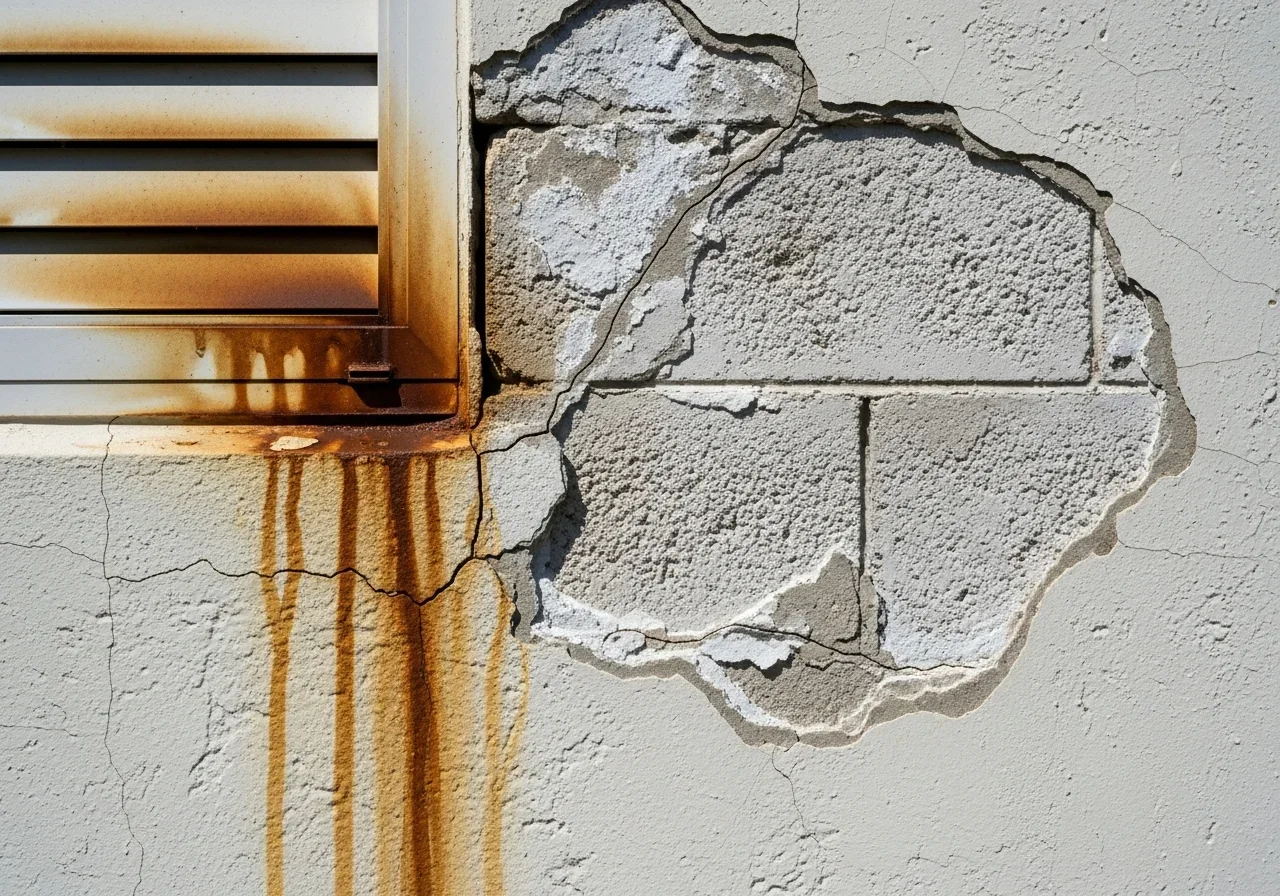
Close-up of hairline stucco cracks and water staining near a window frame on an older Fort Pierce Florida CBS home exterior
Stucco hairline cracks and window frame deterioration — typical in Fort Pierce's pre-1970 CBS homes — allow persistent moisture intrusion.
Fort Pierce Florida residential neighborhood with storm water ponding on streets and lawns after heavy tropical rainfall
Low-lying Fort Pierce neighborhoods experience water ponding during multi-day rain events, elevating flood risk for older slab-on-grade homes.

How We Work

Our Water Damage Restoration Process in Fort Pierce

Every Fort Pierce water damage restoration follows our proven six-step process — adapted for the specific challenges of Florida's Treasure Coast climate, the CBS construction common in this market, and the documentation expectations of St. Lucie County insurance adjusters.

01

Emergency Response and Safety Assessment

We arrive within 75–90 minutes. First priority: ensure the property is safe. We verify electrical shutoffs, identify water category (clean, gray, or black), assess structural ceiling risk in older plaster-ceiling homes, and contain contaminated water if present.

02

Moisture Mapping and Damage Documentation

We use penetrating and non-penetrating moisture meters and thermal imaging to map the full extent of saturation — including inside CBS wall cavities that are invisible from the surface. In older Fort Pierce homes, water travels farther than it appears. We photograph and log every reading from day one.

03

Truck-Mounted Water Extraction

Our truck-mounted extraction units remove hundreds of gallons per hour from tile, terrazzo, and carpet surfaces common in Fort Pierce homes. For standing water on slab foundations, rapid extraction is critical — Florida's ambient humidity means any standing water accelerates microbial growth within hours.

04

Structural Drying with Industrial Equipment

We deploy commercial-grade dehumidifiers and air movers calibrated to Florida's ambient humidity levels. Standard household fans are not sufficient in Fort Pierce's climate. We monitor readings daily, adjusting equipment to achieve the ANSI/IICRC S500 verified dry standard for each material class.

05

Antimicrobial Treatment

Fort Pierce's humidity makes every water damage event a mold prevention race. We apply EPA-registered antimicrobial treatments to all affected surfaces before closing walls — protecting the structural assembly and your indoor air quality.

06

Final Inspection and Insurance Documentation Package

Once verified dry standards are confirmed, we compile your complete documentation package: daily moisture logs, equipment placement records, photo timeline, and a detailed scope of damage. This is exactly what your insurance adjuster needs — organized and delivered digitally.

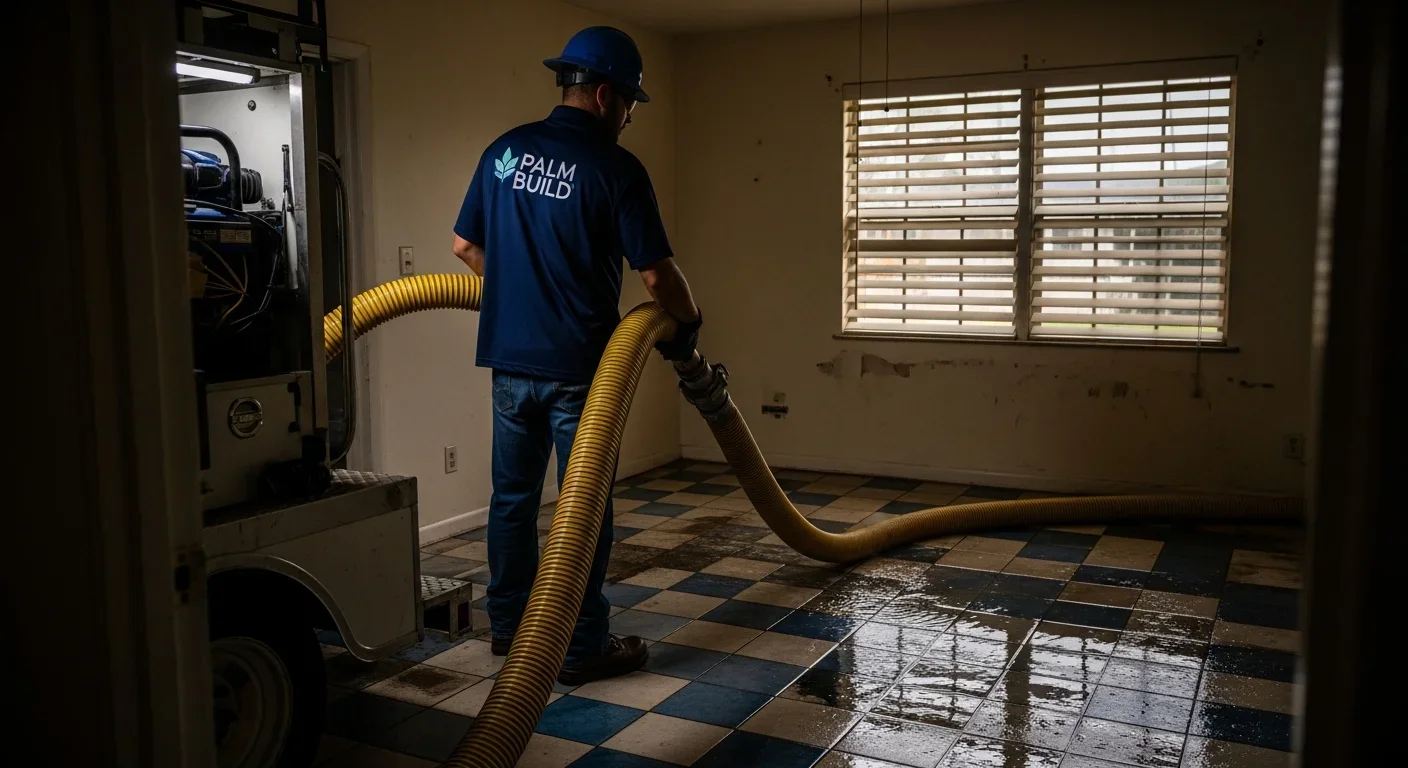
Palm Build technician performing truck-mounted water extraction inside an older Fort Pierce Florida home with tile flooring
Truck-mounted extraction removes hundreds of gallons per hour — critical in Fort Pierce's humidity where standing water accelerates mold colonization.

Seasonal Risk Guide

Fort Pierce Water Damage Risk by Month

Fort Pierce's water damage calls follow a predictable seasonal pattern tied to the Treasure Coast wet season and Atlantic hurricane cycle. Understanding the calendar helps you prepare — and respond faster when damage occurs.

Jan
Feb
Mar
Apr
May
Jun
Jul
Aug
Sep
Oct
Nov
Dec
Low Risk
Moderate Risk
High Risk
Critical (Peak Hurricane)
Jan 2.7 in

Dry season. HVAC condensate issues, plumbing leaks from temperature swings.

Feb 2.9 in

Lowest risk month. Cold fronts can cause freeze-related pipe stress in older homes.

Mar 3.4 in

Pre-season. Humidity begins rising. Good time for inspection of roof and windows.

Apr 3.0 in

Humidity building. AC units starting heavy cycles — check condensate lines now.

May 4.9 in

Pre-wet season. Afternoon storms beginning. Stucco crack inspections critical.

Jun 6.2 in

Hurricane season opens June 1. Heavy rainfall. Storm-driven water intrusion spikes.

Jul 6.2 in

Peak humidity + storms. Older flat roofs most vulnerable. Mold growth accelerates.

Aug 7.3 in

Wettest period. Multi-day rainfall events overwhelm drainage in low-lying areas.

Sep 8.2 in

Highest-risk month. Peak hurricane season. 8.21 in average rainfall. Storm surge threat.

Oct 6.2 in

Hurricane season continues through Nov 30. Wind-driven rain still primary threat.

Nov 3.8 in

Season winding down. Post-storm mold assessments peak. Deferred damage discovered.

Dec 2.6 in

Dry season. Slow-leak discoveries common as heating use increases.

September is Fort Pierce's highest-risk month — averaging 8.21 inches of rainfall with full Atlantic hurricane season exposure and tornado risk from embedded tropical systems (Hurricane Milton, 2024 produced deadly tornadoes near Fort Pierce and Vero Beach). Palm Build maintains emergency dispatch availability 24/7 throughout hurricane season.

Insurance Guidance

Navigating Insurance Claims in Fort Pierce

Florida's insurance landscape is unlike any other state — and St. Lucie County recorded 9,119 closed residential property claims in 2022 alone. Understanding how Fort Pierce's claims environment works before a loss occurs can be the difference between a smooth claim and a denied one.

Florida Claim Deadline: 1 Year

Under Fla. Stat. § 627.70132, you must file your initial property damage claim within 1 year of the date of loss. Supplemental claims must be filed within 18 months. These deadlines are firm — a delayed call can cost you your entire claim, regardless of the severity of damage.

Hurricane Deductibles in Florida

Florida insurers must offer hurricane deductible options: $500, 2%, 5%, or 10% of your dwelling limits. For a $250,000 home, a 2% hurricane deductible means $5,000 out of pocket before insurance pays. Water damage from storm surge is typically excluded from homeowners policies — it requires separate flood insurance through NFIP or a private carrier.

Citizens Insurance and Florida's Volatile Market

Many Fort Pierce and St. Lucie County homeowners are insured through Citizens Property Insurance Corporation — Florida's insurer of last resort — after private carriers have exited the market. Citizens has specific claim procedures and assignment-of-benefits restrictions (AOB is prohibited for post-loss benefits on policies issued after Jan 1, 2023). Palm Build works within current Florida law — we bill directly and provide complete documentation.

What We Document for Your Adjuster

Our documentation package includes: daily moisture meter readings with GPS-tagged locations, photo logs from initial response through final dryness verification, equipment placement and runtime logs, ANSI/IICRC S500 drying log, and a detailed scope of damage with material quantities. St. Lucie County adjusters have seen our documentation format before — it reduces disputes and speeds approval.

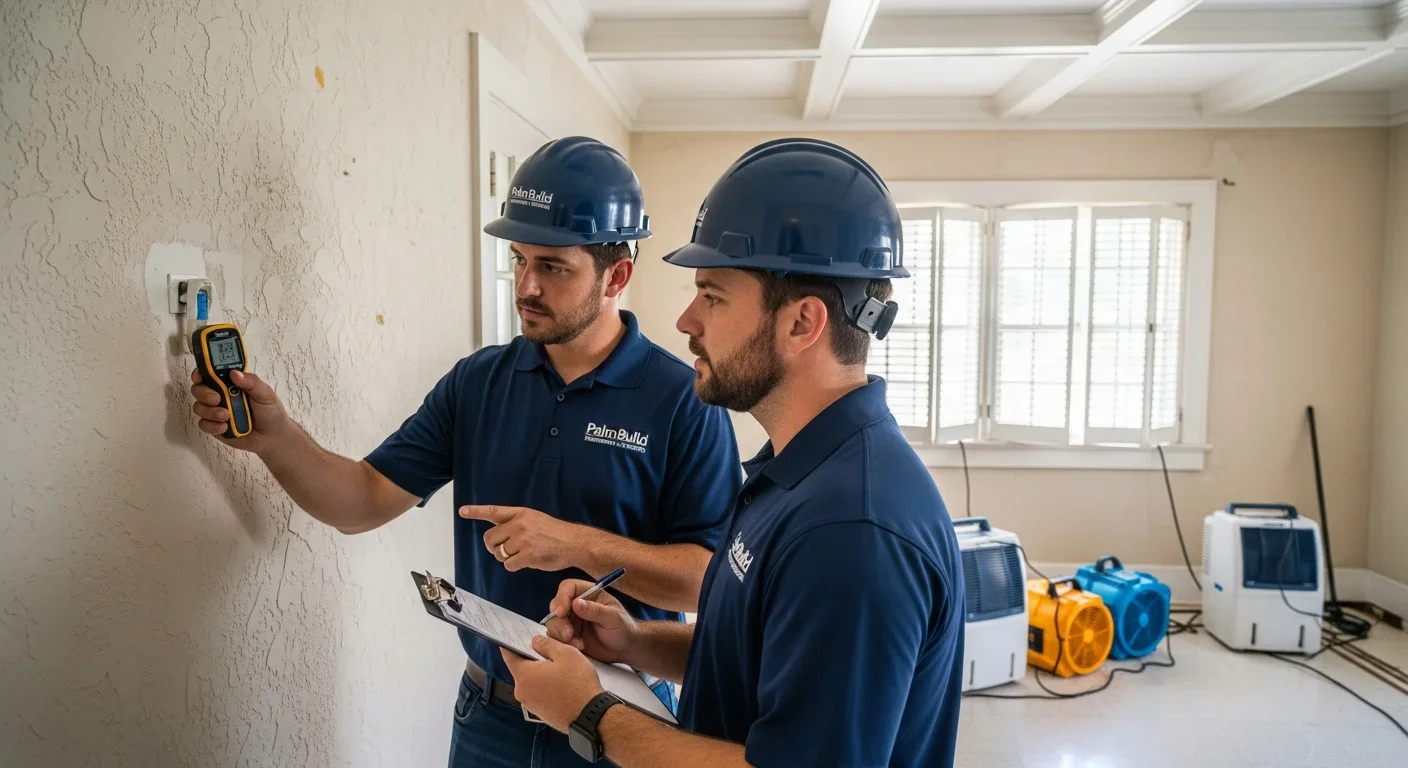
Palm Build technicians reviewing moisture readings and documentation inside a Fort Pierce Florida home during water damage restoration
Palm Build documents every phase with daily moisture logs, photo records, and equipment reports — giving Fort Pierce homeowners the evidence their insurer requires.

Our Work in Fort Pierce

Fort Pierce Water Damage Restoration Gallery

Real results from real homes on the Treasure Coast — from Lakewood Park to Hutchinson Island, the damage patterns are local and our work is documented.

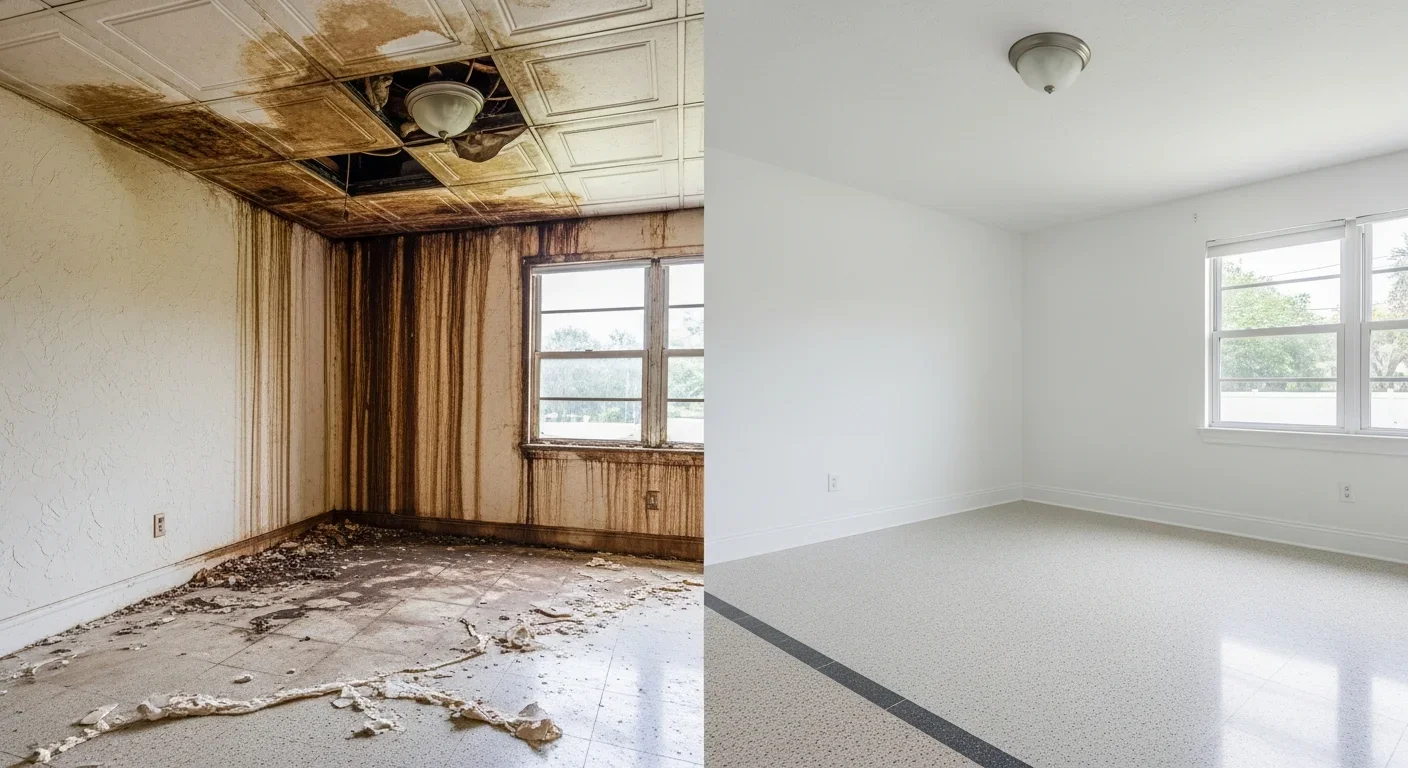
Before and after water damage restoration in a Fort Pierce Florida home showing complete recovery from severe water intrusion
Fort Pierce bedroom — complete recovery from storm-driven water intrusion through flat roof.
Palm Build structural drying equipment deployed in a Fort Pierce Florida home with moisture monitoring in progress
Industrial dehumidifiers and air movers deployed for Fort Pierce slab-on-grade drying.
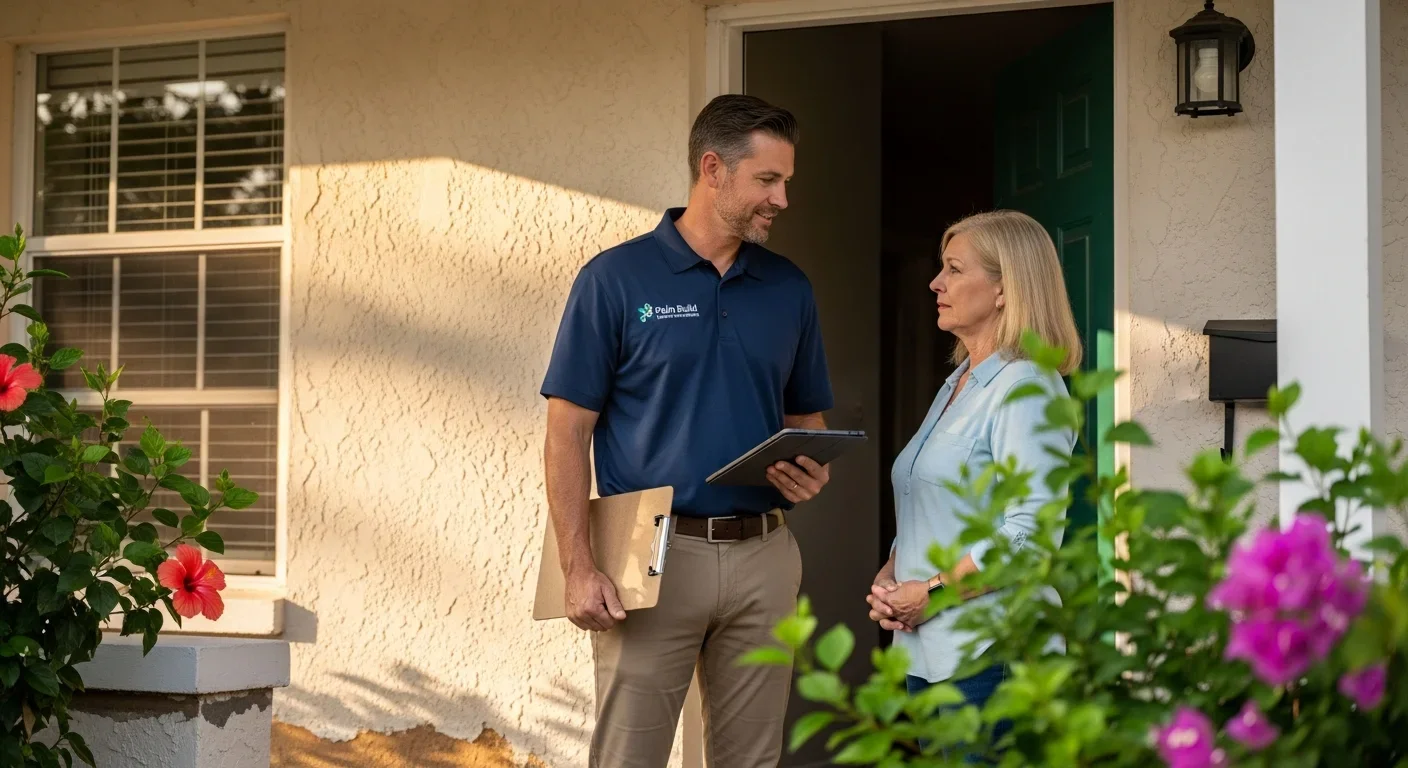
Palm Build project manager consulting with a Fort Pierce Florida homeowner at their front door after water damage
On-site consultation — we explain every step before work begins.
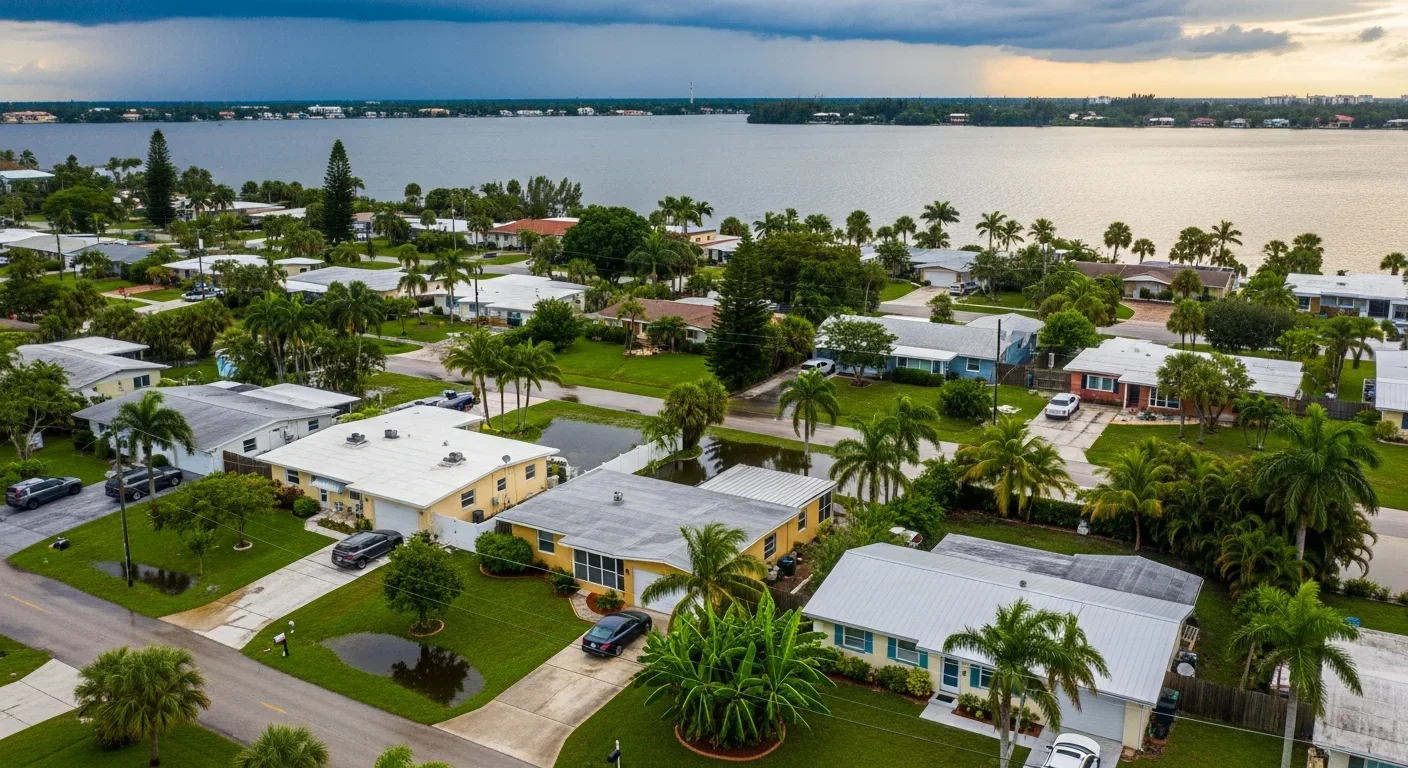
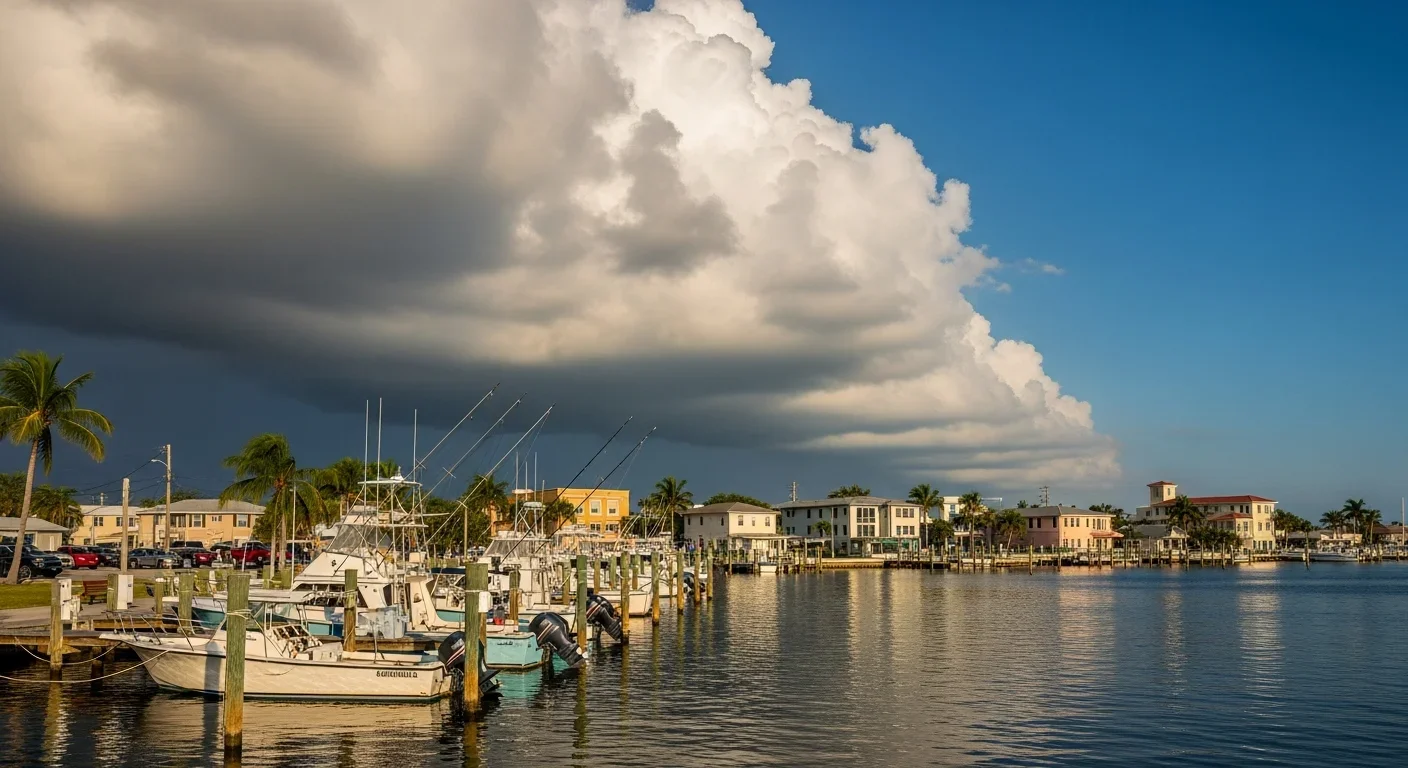
Fort Pierce Florida waterfront along the Indian River Lagoon showing residential properties and storm clouds building over the water
Fort Pierce's Indian River Lagoon proximity contributes to the area's elevated humidity and storm surge exposure.

Common Causes

Most Common Water Damage Types in Fort Pierce Homes

Fort Pierce's mix of aging housing stock, subtropical climate, and high renter density produces distinct, repeatable water damage patterns. Knowing them helps you respond faster.

Wind-Driven Rain and Roof Intrusion

Hurricane and tropical storm winds force rainwater horizontally through aging stucco cracks, jalousie window joints, and flat roof edges in ways that vertical rainfall never would. Fort Pierce's pre-1970 housing stock is especially vulnerable — older window frames and roof-to-wall joints are rarely sealed to modern storm-rated standards.

Burst and Pinhole Pipe Failures

Galvanized and copper supply lines in Fort Pierce's older homes are reaching end of service life. Galvanized pipes fail from internal corrosion; copper develops pinhole leaks from aggressive South Florida water chemistry. Both leak slowly inside CBS wall cavities where damage accumulates for weeks before discovery.

HVAC Condensate Line Overflow

In Fort Pierce's humid climate, air handlers run nearly year-round. Condensate drain lines clog with algae growth — a direct result of humidity — and overflow into closet floors, adjacent rooms, or ceilings below. A clogged condensate line in a second-floor closet air handler can soak an entire first-floor ceiling before it's noticed.

Appliance and Water Heater Failures

Water heaters in Fort Pierce's older homes often went in 15–20 years ago and are approaching or past end of life. Tank failure produces sudden, large-volume water events. Dishwashers, washing machine supply lines, and refrigerator water lines in older kitchens also fail without warning — often while homeowners are away during snowbird season.

Not Sure What Caused Your Damage?

Our Fort Pierce technicians identify the source before any work begins. Misidentifying the cause is the most common reason restoration scopes are incomplete — and why damage returns.

Call (754) 600-3369

Why Choose Palm Build

Fort Pierce's Water Damage Restoration Partner

Fort Pierce homeowners have no shortage of restoration options. Here is what sets Palm Build apart in this specific market.

Treasure Coast Specialists

Palm Build's South Florida team knows Fort Pierce's specific building inventory — pre-1970 CBS homes, jalousie windows, flat roofs, and older plumbing systems. We don't apply a generic national playbook to a city with genuinely distinct construction history.

ANSI/IICRC S500 Standards

We follow the ANSI/IICRC S500 professional standard for water damage restoration — meaning verified dry readings, material-class drying protocols, and documentation that matches what St. Lucie County insurance adjusters expect and accept.

Insurance-Ready from Day One

Fort Pierce's insurance market is challenging — Citizens Property Insurance, private carrier exits, hurricane deductibles, and tight claim deadlines mean documentation errors cost homeowners money. We build your claim file from the first hour on-site, not after.

24/7 Emergency Dispatch

Water damage in Fort Pierce's subtropical climate does not wait for business hours. Our emergency line connects you directly to a live dispatcher 24/7, and we are on-site within 75–90 minutes from our Deerfield Beach operations hub, every time.

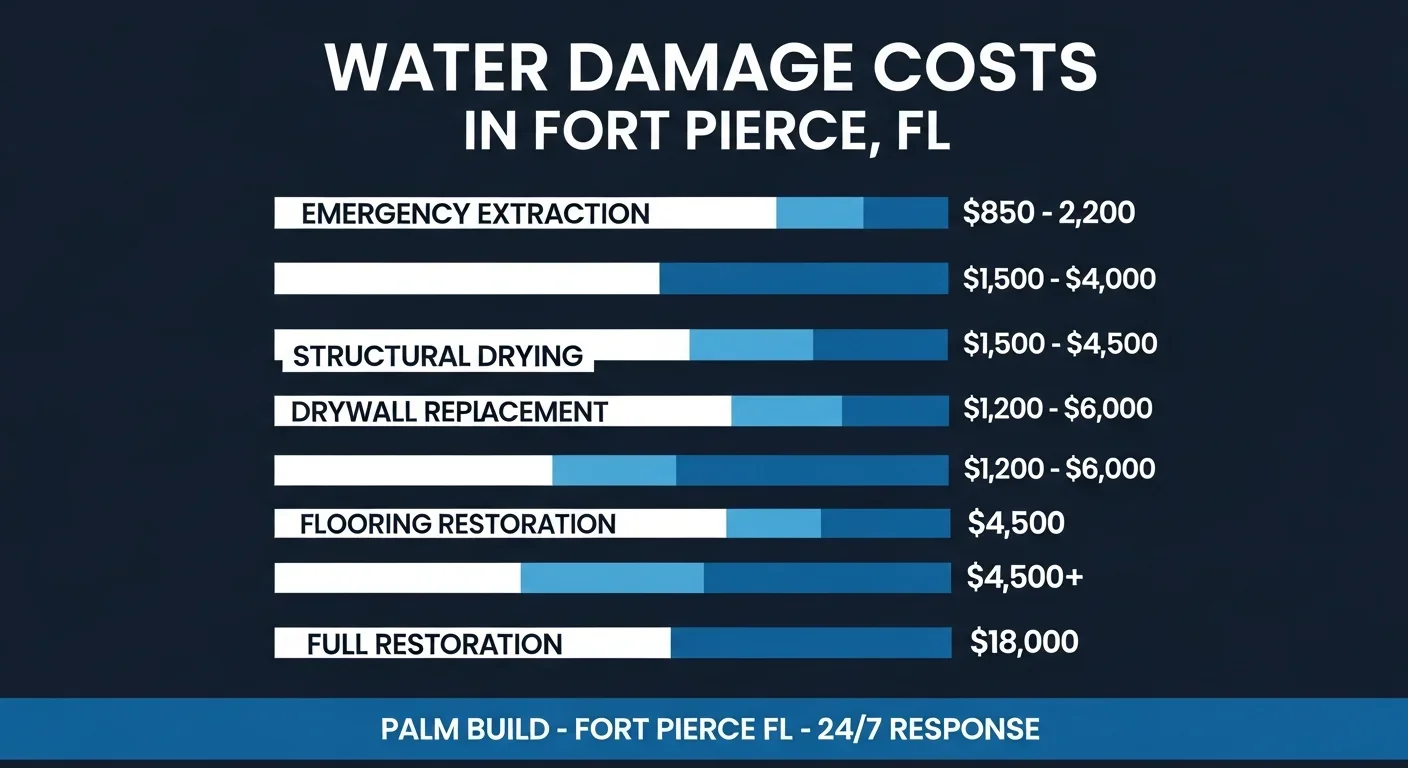
Water damage restoration cost guide infographic for Fort Pierce Florida showing price ranges for extraction, drying, and reconstruction
Fort Pierce water damage costs vary widely by scope, water category, and how quickly professional drying begins — speed is always the most cost-effective factor.

Common Questions

Fort Pierce Water Damage FAQ

More in Fort Pierce

Other Palm Build Services in Fort Pierce, FL

Service Area

Other Treasure Coast Locations

Palm Build serves the entire Treasure Coast from our Deerfield Beach, FL operations hub.