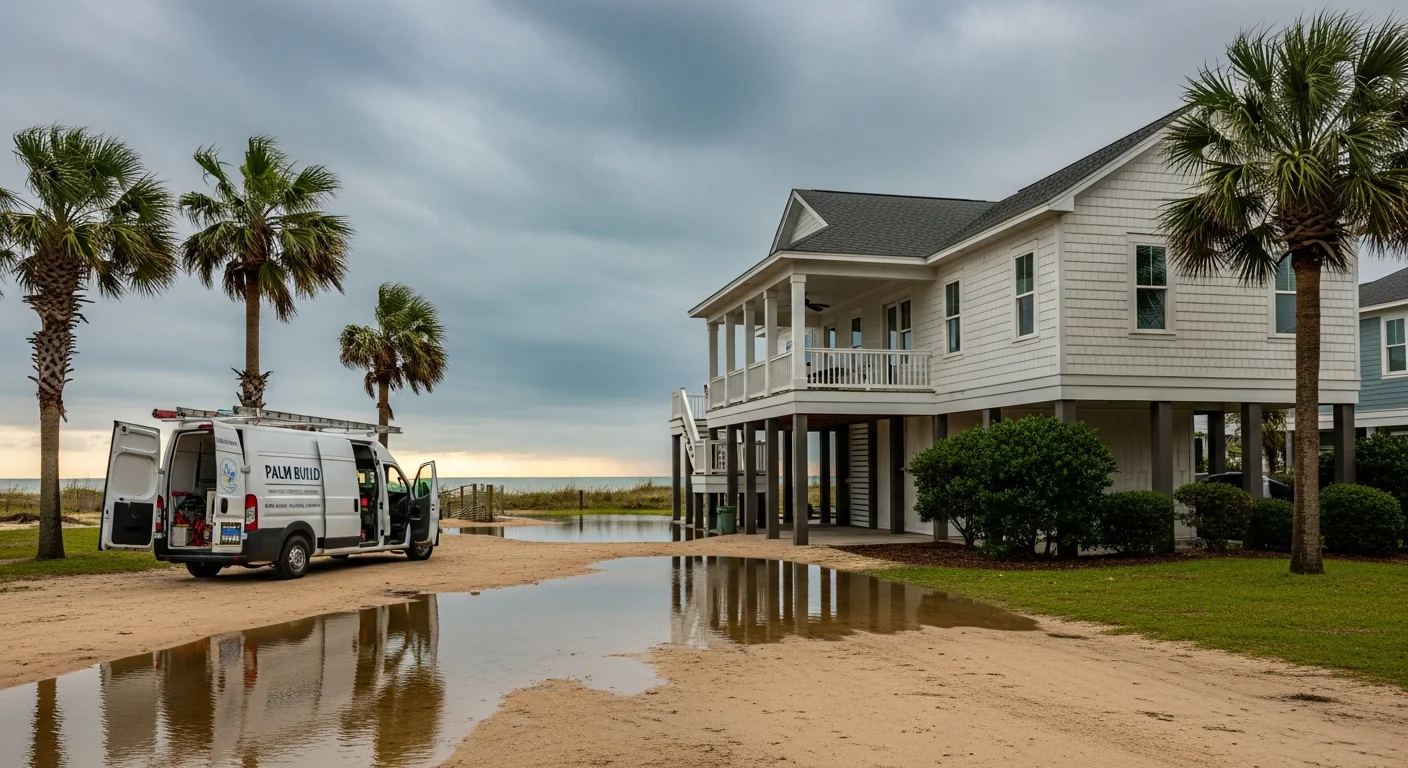
Water Damage Restoration in Myrtle Beach, South Carolina
From oceanfront condos east of Ocean Boulevard to inland neighborhoods near the Withers and Midway swashes, Myrtle Beach water damage has a distinctly coastal character. Palm Build dispatches experienced crews for storm surge, tropical flooding, and everyday water losses — with the floodplain documentation and insurance clarity that Grand Strand homeowners and property managers need.
Same-day dispatch
Emergency Response
24/7
Dispatch Available
IICRC
Certified Technicians
Water Damage in Myrtle Beach? Don't Wait on the Humidity.
Myrtle Beach's subtropical climate turns water damage into mold damage in 24–48 hours. Call Palm Build for emergency extraction, structural drying, floodplain documentation, and insurance-ready restoration.
Myrtle Beach Flood Geography
The 5 Swash Flood Pathways That Define Myrtle Beach Water Damage
Myrtle Beach is crossed by five natural drainage channels called swashes — Bear Branch, Cane Patch, Deep Head, Midway, and Withers. During tropical storms and major rain events, these swashes overflow in both directions. The City of Myrtle Beach identifies low land near all five as flood-prone. If your home or condo is near any of these corridors, you face a different flooding risk than the beachfront.
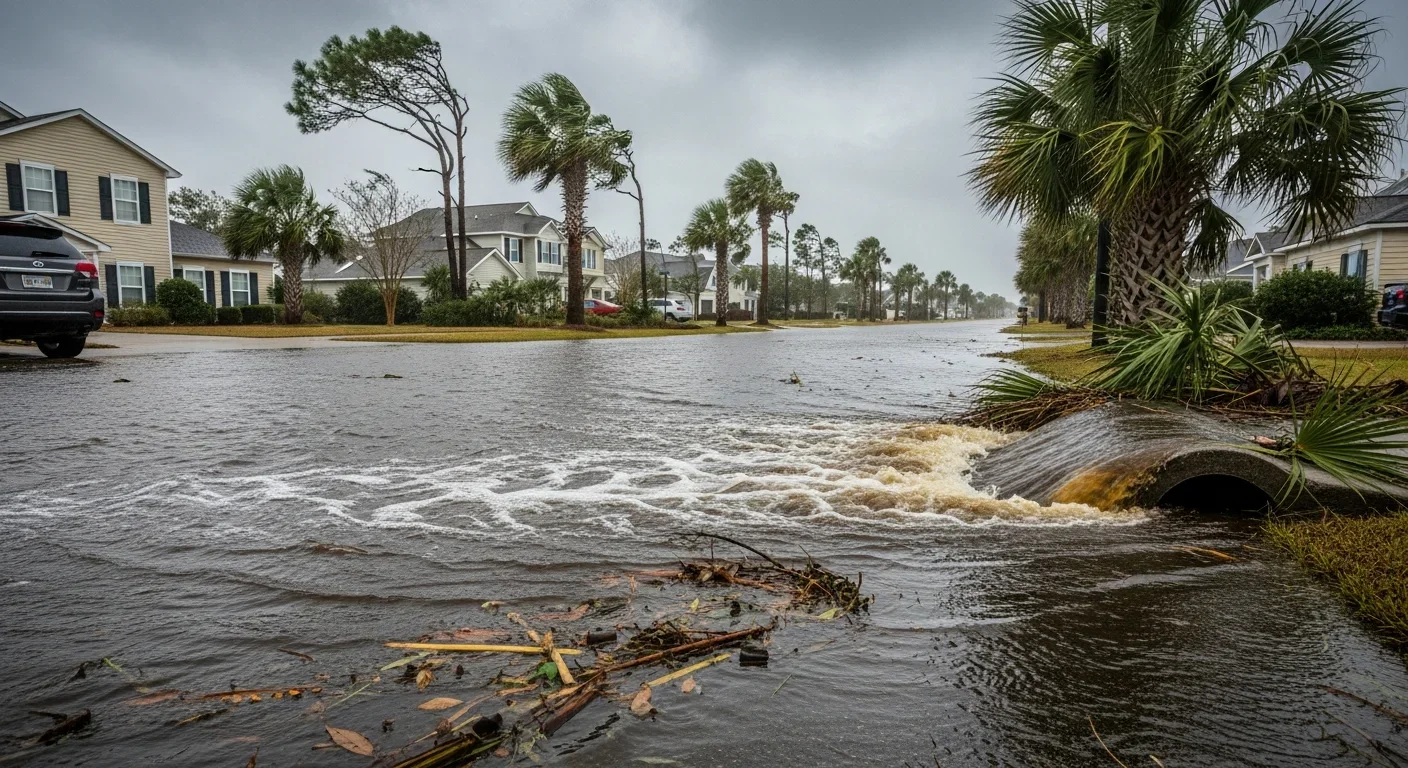
When Myrtle Beach's swash drainage channels overflow during tropical storms, floodwater can back up several blocks inland from Ocean Boulevard — reaching neighborhoods that feel far from the beach. This type of flooding is distinct from storm surge and requires separate flood insurance coverage.
| Swash | Location | Flood Risk Profile |
|---|---|---|
| Bear Branch Swash | Northern Myrtle Beach | Drains into the ocean near 82nd Avenue N. Heavy rainfall causes overflow across adjacent residential streets and low-lying lots in the northern corridor. |
| Cane Patch Swash | Central Myrtle Beach | One of the longer swash corridors running through central Myrtle Beach neighborhoods. During sustained tropical rain, the drainage capacity is exceeded and adjacent properties experience standing water for 12–48 hours. |
| Deep Head Swash | Central Myrtle Beach | Historically prone to backing up during major storm events. Properties within two blocks of this swash corridor have experienced repeated flooding from tropical storm rain accumulation. |
| Midway Swash | Mid-to-South Myrtle Beach | The city specifically identifies this as a low-land flood-prone area. During Hurricane Helene in September 2024, the Midway corridor experienced significant water intrusion from combined ocean surge and rainfall runoff. |
| Withers Swash | South Myrtle Beach | Suffered severe erosion during Tropical Storm Helene (September 2024) per the City of Myrtle Beach. Inland flooding from this swash can extend several blocks during Category 1+ storm events. |
Bear Branch Swash
Northern Myrtle Beach
Drains into the ocean near 82nd Avenue N. Heavy rainfall causes overflow across adjacent residential streets and low-lying lots in the northern corridor.
Cane Patch Swash
Central Myrtle Beach
One of the longer swash corridors running through central Myrtle Beach neighborhoods. During sustained tropical rain, the drainage capacity is exceeded and adjacent properties experience standing water for 12–48 hours.
Deep Head Swash
Central Myrtle Beach
Historically prone to backing up during major storm events. Properties within two blocks of this swash corridor have experienced repeated flooding from tropical storm rain accumulation.
Midway Swash
Mid-to-South Myrtle Beach
The city specifically identifies this as a low-land flood-prone area. During Hurricane Helene in September 2024, the Midway corridor experienced significant water intrusion from combined ocean surge and rainfall runoff.
Withers Swash
South Myrtle Beach
Suffered severe erosion during Tropical Storm Helene (September 2024) per the City of Myrtle Beach. Inland flooding from this swash can extend several blocks during Category 1+ storm events.
Beachfront Surge vs. Swash Overflow
Storm surge affects oceanfront properties. Swash overflow affects inland properties blocks or miles from the beach. Both require separate flood insurance from your standard homeowners policy.
50% Substantial Damage Rule
Myrtle Beach enforces the NFIP rule: if repairs exceed 50% of market value after flood damage, the structure must meet current floodplain elevation standards. We help you understand this threshold before work begins.
Permits After Flood Damage
The city requires a permit to repair flood-damaged buildings. Development in the floodplain requires an elevation certificate before, during, and after construction. Palm Build coordinates this documentation.
Neighborhood Guide
Myrtle Beach Neighborhood Water Damage Risk Guide
Location, construction era, and flood zone all shape your water damage risk in Myrtle Beach. Use this guide to understand how your neighborhood compares — and what Palm Build brings to your specific property type.
| Neighborhood | Era | Property Type | Primary Risk |
|---|---|---|---|
| Ocean Boulevard Corridor | 1960s–1990s | Oceanfront condos & motels | Direct storm surge exposure east of Ocean Blvd. City-designated floodplain. Post-storm water intrusion through aging windows, balcony doors, and flat roof flashings. |
| Shore Drive (Arcadian Shores) | 1970s–1990s | Beach cottages & condos | Low-lying wooded area prone to swash overflow. Mix of aging wood-frame and CBS construction. Elevated storm surge and tree-fall roof damage risk during tropical storms. |
| Grande Dunes | 2000s–2020s | Luxury golf community | Premium-finish homes require careful contents protection. ICW proximity creates localized flood risk. Insurance documentation standards are high for luxury property claims. |
| Carolina Forest | 1990s–2010s | Planned community | Inland location reduces surge risk but not swash overflow. Large stormwater retention ponds that can overflow during Myrtle Beach's 6+ inch September rain events. |
| Market Common | 2000s–2010s | Mixed residential / retail | Former Air Force base land. Some areas in or near FEMA-designated zones. Below-grade areas and townhome units may experience water intrusion during heavy rain events. |
| Forestbrook | 1980s–2000s | Suburban residential | West of Highway 17 bypass — less storm surge risk. Aging plumbing and older construction details. Drainage to swash system; flooding risk rises with sustained tropical rainfall. |
| Pine Island / Windy Hill | 1970s–1990s | Older beach cottages | North Myrtle Beach transition area. Older wood-frame construction on smaller lots. Storm surge affected from Ian (2022) — some blocks flooded 3–4 feet deep in Cherry Grove area. |
| Murrells Inlet / Garden City | 1980s–2000s | Inlet-front & beachside | Saltmarsh adjacency. Inlet-front homes face surge from two directions — ocean and inlet. Garden City Beach saw significant Ian flooding. High NFIP policy concentration. |
| Conway (inland) | Mixed eras | Inland city | Waccamaw River flood risk. Historically flooded severely during Hurricane Floyd and Florence. Older housing stock with crawl spaces common. Lower surge risk, higher river flood risk. |
| Surfside Beach | 1960s–1990s | Beachside residential | Lower density than Myrtle Beach proper. Older CBS and wood-frame homes. Oceanfront exposure similar to Myrtle Beach. Separate municipal regulations — verify permit requirements. |
Ocean Boulevard Corridor
1960s–1990s · Oceanfront condos & motels
Direct storm surge exposure east of Ocean Blvd. City-designated floodplain. Post-storm water intrusion through aging windows, balcony doors, and flat roof flashings.
Shore Drive (Arcadian Shores)
1970s–1990s · Beach cottages & condos
Low-lying wooded area prone to swash overflow. Mix of aging wood-frame and CBS construction. Elevated storm surge and tree-fall roof damage risk during tropical storms.
Grande Dunes
2000s–2020s · Luxury golf community
Premium-finish homes require careful contents protection. ICW proximity creates localized flood risk. Insurance documentation standards are high for luxury property claims.
Carolina Forest
1990s–2010s · Planned community
Inland location reduces surge risk but not swash overflow. Large stormwater retention ponds that can overflow during Myrtle Beach's 6+ inch September rain events.
Market Common
2000s–2010s · Mixed residential / retail
Former Air Force base land. Some areas in or near FEMA-designated zones. Below-grade areas and townhome units may experience water intrusion during heavy rain events.
Forestbrook
1980s–2000s · Suburban residential
West of Highway 17 bypass — less storm surge risk. Aging plumbing and older construction details. Drainage to swash system; flooding risk rises with sustained tropical rainfall.
Pine Island / Windy Hill
1970s–1990s · Older beach cottages
North Myrtle Beach transition area. Older wood-frame construction on smaller lots. Storm surge affected from Ian (2022) — some blocks flooded 3–4 feet deep in Cherry Grove area.
Murrells Inlet / Garden City
1980s–2000s · Inlet-front & beachside
Saltmarsh adjacency. Inlet-front homes face surge from two directions — ocean and inlet. Garden City Beach saw significant Ian flooding. High NFIP policy concentration.
Conway (inland)
Mixed eras · Inland city
Waccamaw River flood risk. Historically flooded severely during Hurricane Floyd and Florence. Older housing stock with crawl spaces common. Lower surge risk, higher river flood risk.
Surfside Beach
1960s–1990s · Beachside residential
Lower density than Myrtle Beach proper. Older CBS and wood-frame homes. Oceanfront exposure similar to Myrtle Beach. Separate municipal regulations — verify permit requirements.
Risk profiles reflect typical patterns for each area. Individual property conditions, specific flood zone designations, and construction details vary — call Palm Build at (704) 464-0121 for a free assessment specific to your Myrtle Beach property.
Our Process
How Palm Build Restores Water Damage in Myrtle Beach
Every Myrtle Beach water damage restoration follows a documented six-step process — from emergency dispatch through final rebuilt and permit-compliant completion. No surprises. No undocumented scope changes.
24/7 Emergency Dispatch
Call Palm Build any time — day, night, during a storm, or after. We triage immediately on the phone: how much water, what type of loss, whether electricity and structural safety concerns are present. For active coastal storm events, we stage crews for same-day mobilization to Myrtle Beach. Your call starts the clock on our response.
Assessment & Moisture Mapping
On arrival, our team conducts a thorough property assessment using moisture meters, thermal imaging cameras, and relative humidity sensors. We document every affected area with photographs and moisture readings. This assessment establishes the baseline your insurance adjuster will need and identifies hidden moisture in walls, subfloor cavities, and ceiling assemblies — especially important in older coastal construction where water travels along framing.
Emergency Water Extraction
Truck-mounted extraction systems remove standing water from affected areas rapidly — capable of hundreds of gallons per hour. For condo events, we coordinate entry timing with HOA management. For coastal storm losses, we extract before mold-friendly conditions can establish — Myrtle Beach's subtropical humidity means the 24–48 hour mold window is not a theoretical risk, it is a practical deadline.
Structural Drying & Monitoring
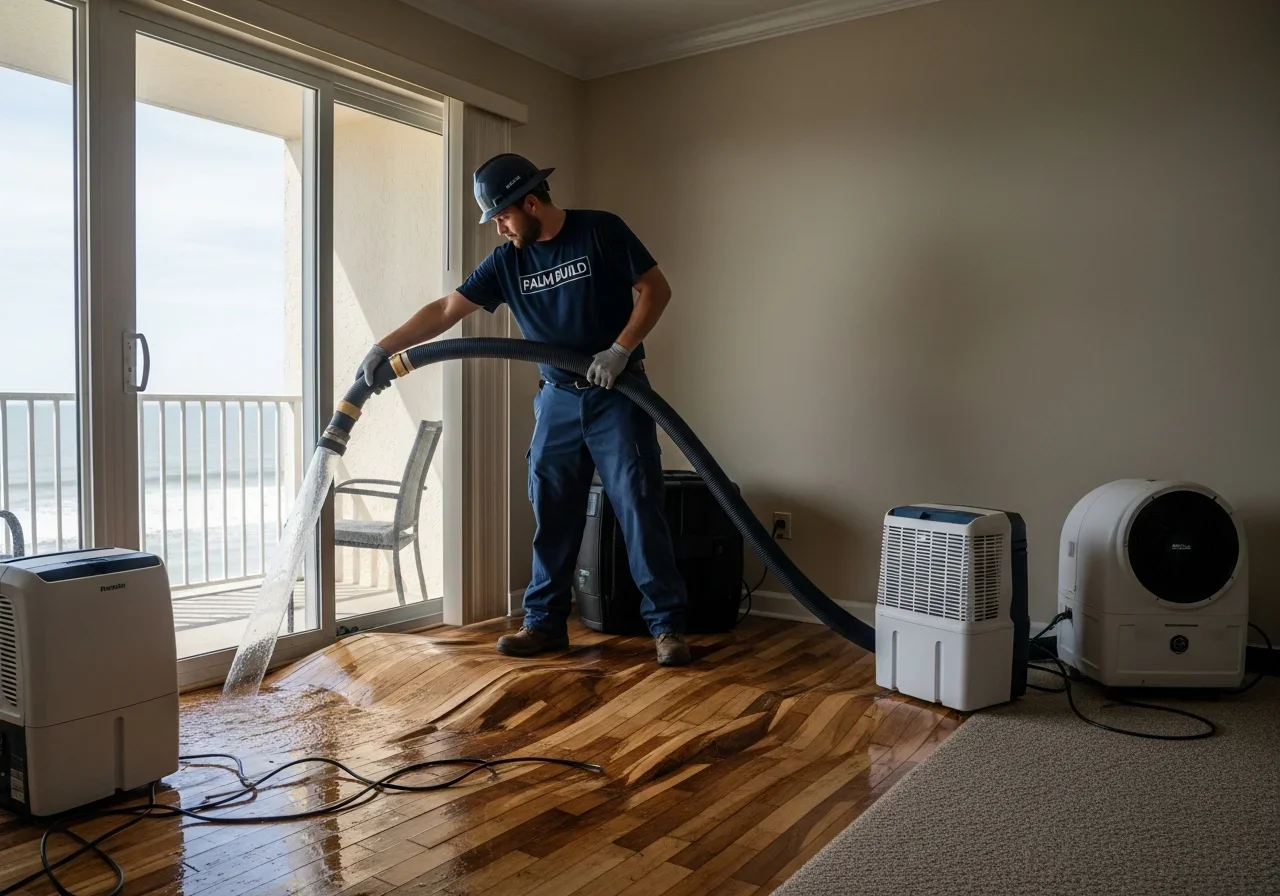
After extraction, industrial air movers and dehumidifiers are placed according to a calculated drying plan. We monitor moisture readings daily and adjust equipment placement as drying progresses. Structural drying in Myrtle Beach typically requires 3–7 days. We document daily readings throughout, creating the drying log your insurer requires for claim support.
Scope, Documentation & Permit Coordination
Once drying is complete, we produce a detailed written scope of damage for your insurance carrier. For flood losses — where a city permit is required to make repairs — we outline what the rebuild will involve and whether the 50% substantial damage threshold applies to your property. For properties in the floodplain, we coordinate elevation certificate requirements with your contractor and the city.
Restoration & Rebuild Coordination
From drywall and flooring replacement to full structural rebuilds in flood-compliant configurations, Palm Build coordinates or performs the restoration work. We work directly with your insurance adjuster to ensure scope alignment, and we can assist with contractor coordination for trade permits required by the City of Myrtle Beach. We stay involved from extraction through final walkthrough.
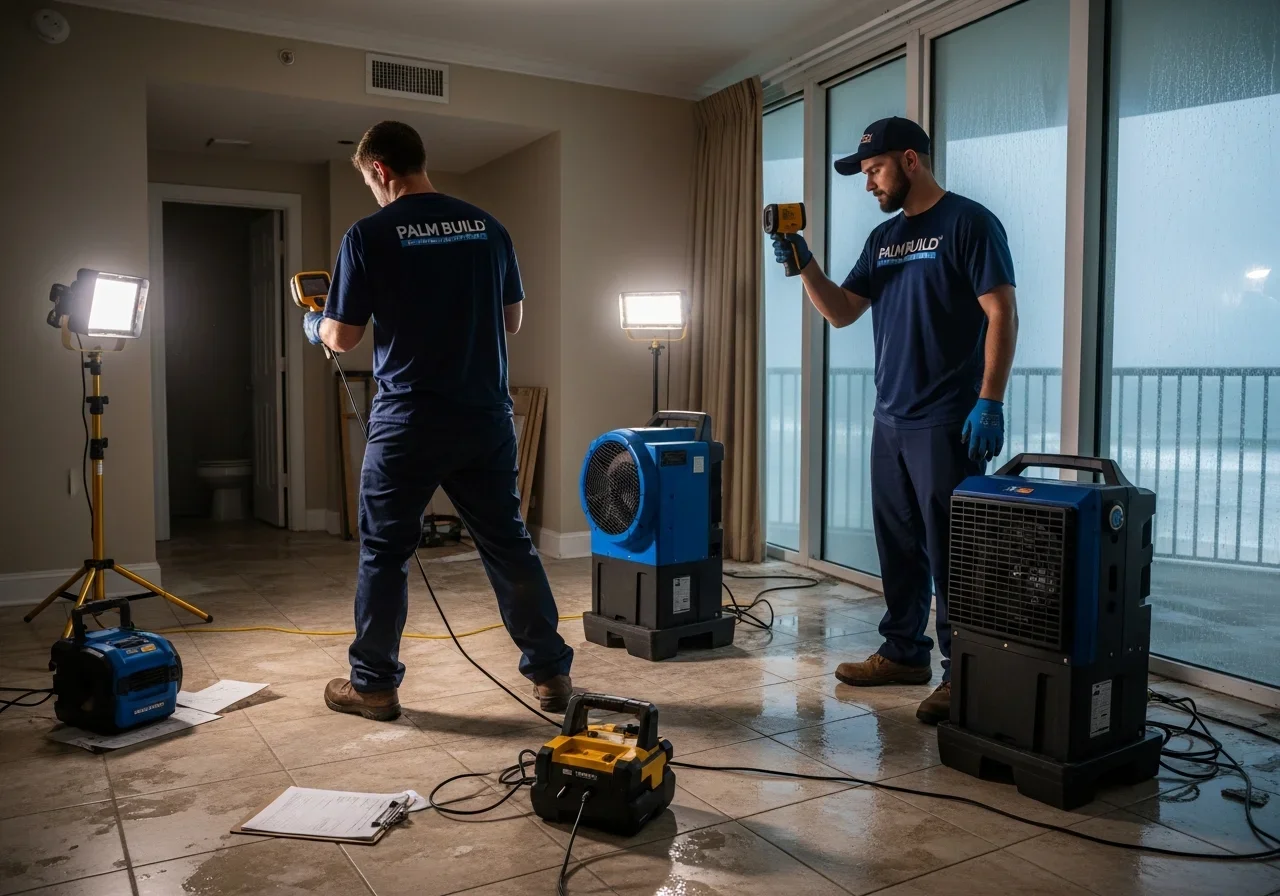
Structural drying setup in a Myrtle Beach property — industrial air movers and dehumidifiers positioned according to a calculated drying plan. Daily moisture monitoring creates the drying log your insurer requires.
Seasonal Risk Guide
When Does Myrtle Beach See the Most Water Damage?
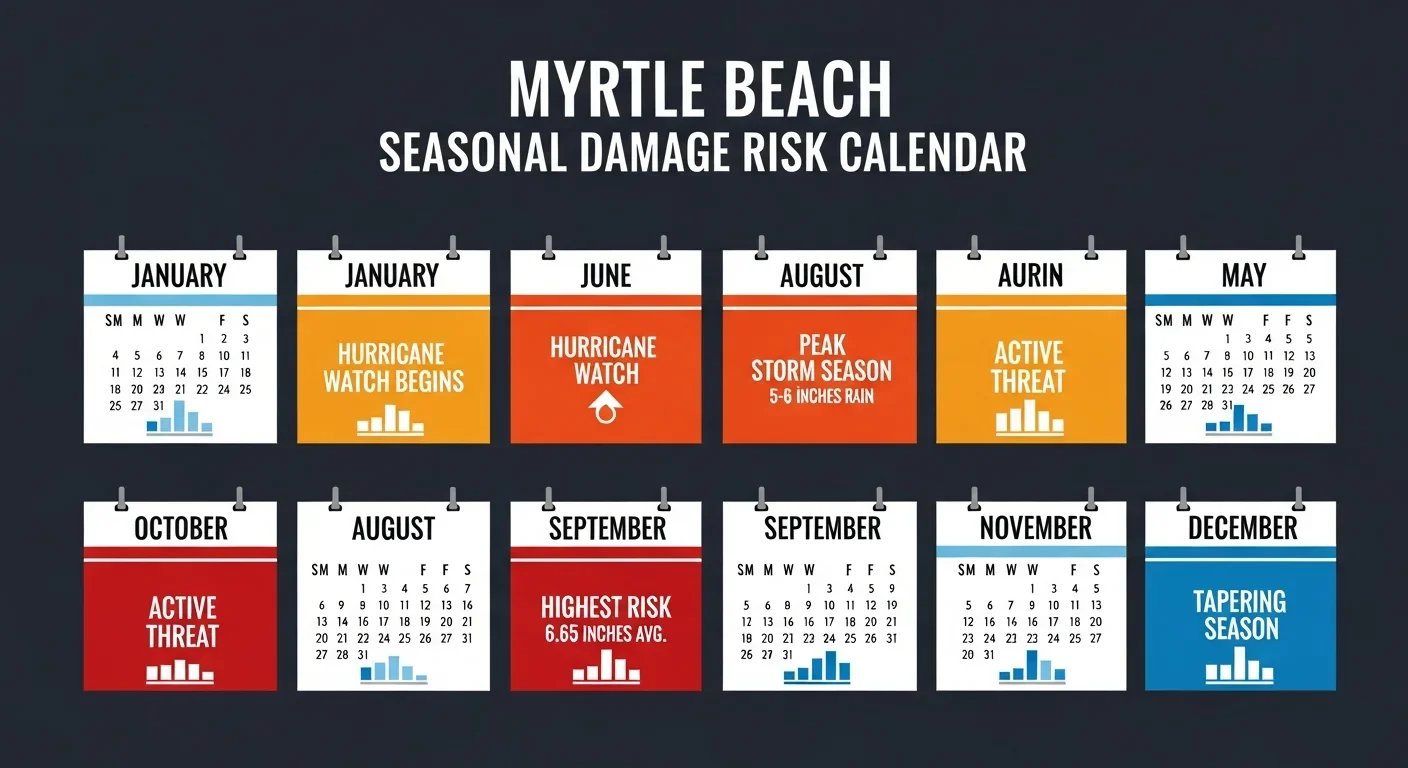
Myrtle Beach receives 48+ inches of rain per year, but it is not evenly distributed. September is the wettest month (6.65" average) and the heart of Atlantic hurricane season. Use this calendar to understand when your Grand Strand property faces the highest risk — and plan ahead. Hover each month for detail.
Click any month bar for details
Insurance in Myrtle Beach
Wind vs. Flood vs. Homeowners: The Coastal Insurance Divide
Myrtle Beach is one of the most insurance-complex markets in South Carolina. The South Carolina Wind and Hail Underwriting Association (SCWHIA) provides coastal wind coverage separately from your homeowners policy — and flood requires yet another policy. Knowing which loss type triggers which carrier is critical for every claim.
Standard Homeowners Policy
- ✓ Wind-driven rain entering through a damaged roof or broken window
- ✓ Burst pipe or appliance failure water damage
- ✓ Fire and smoke damage
- ✓ Vandalism and theft during restoration
What Standard Policies Do NOT Cover
- ✗ Flood damage from storm surge — requires separate NFIP or private flood policy
- ✗ Rising water from swash or creek overflow
- ✗ Groundwater seepage
- ✗ Damage from neglected maintenance (e.g., long-term roof leak)
SC Wind Pool (SCWHIA) in Horry County
The South Carolina Wind and Hail Underwriting Association (SCWHIA) provides coverage for wind and hail in the coastal zone when admitted carriers decline to offer it. As of 2024–2025, over 7,700 policies in Horry County were written through the wind pool, representing more than $2.3 billion in insured value. If your homeowners policy excludes wind coverage, you may have a wind pool policy in addition to standard homeowners and flood coverage — meaning storm damage could trigger two or three separate claims.
Palm Build documents damage in a way that supports all three: wind-driven damage for homeowners or wind pool claims, and water intrusion scope for flood claims. Clear separation of cause-of-loss in documentation is essential when multiple policies are involved.
Condo Owners: Unit Policy vs. Master Policy
Myrtle Beach's thousands of oceanfront condo units operate under two tiers of coverage: your individual HO-6 unit policy and the building association's master policy. Whether your unit or the association's policy covers a given loss depends on the cause of loss and where the damage originated. Palm Build works directly with HOA boards and property managers to document unit-level and common-area damage separately so each carrier receives the correct scope.
Restoration Gallery
Myrtle Beach Water Damage Restoration — Before & After
From storm-surge flooding in oceanfront condos to swash overflow in residential neighborhoods, every Palm Build project is documented from first call to final walkthrough.
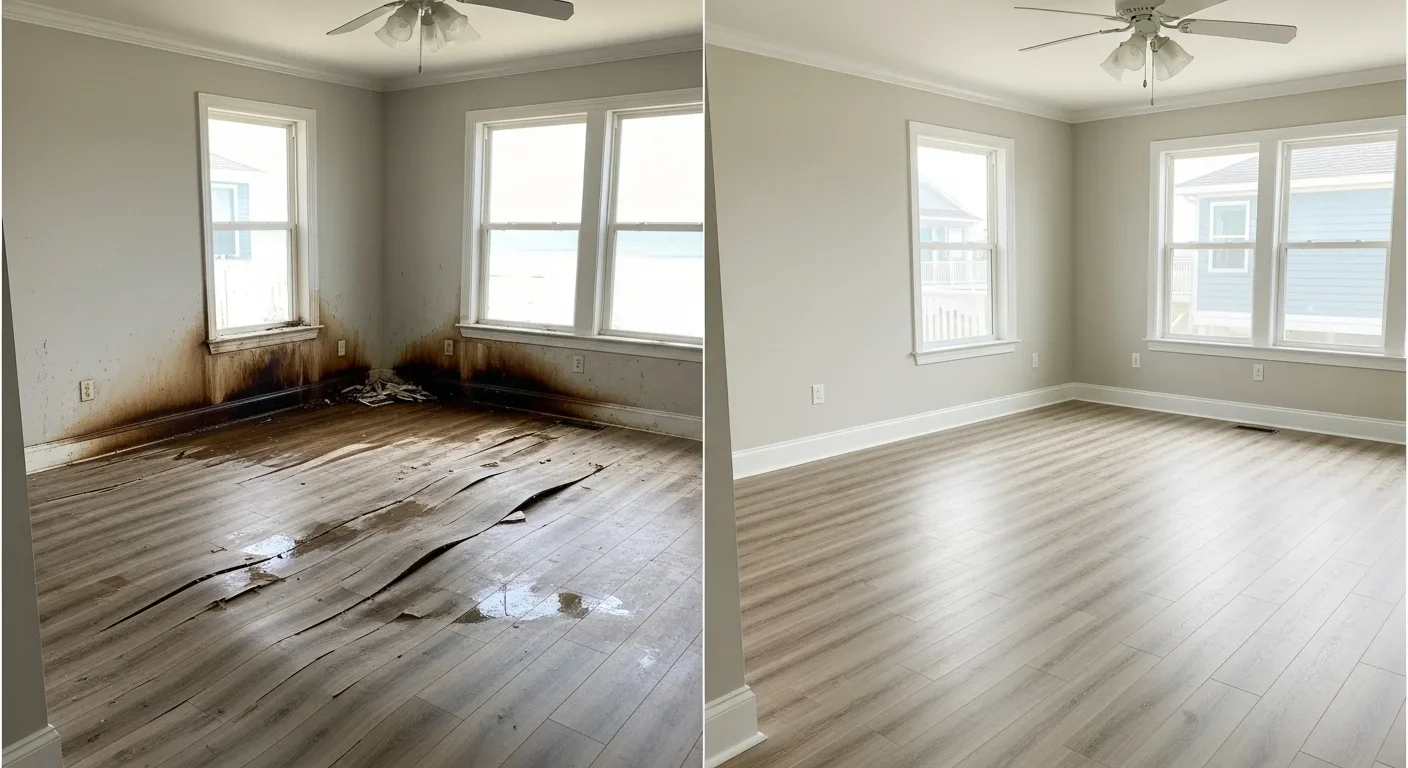
Complete project documentation on every job — photographs, moisture readings, drying logs, and scope reports from first assessment through final completion. In Myrtle Beach's complex coastal insurance environment, this documentation is not optional — it is the foundation of your claim.
Why Palm Build
Why Myrtle Beach Homeowners Choose Palm Build
Myrtle Beach's coastal insurance complexity, floodplain regulations, and subtropical climate require a restoration partner who knows the market — not a franchise following a national script.
24/7 Emergency Dispatch
Water damage doesn't respect business hours — especially during Atlantic storm season. Palm Build dispatches around the clock for Myrtle Beach emergencies. Call (704) 464-0121 any time and reach a real person who can begin coordinating your response immediately.
Insurance-Ready Documentation
Myrtle Beach's layered coastal insurance environment — homeowners, wind pool, and NFIP — demands precise documentation that separates each cause of loss. Our photo logs, moisture readings, and written scopes are formatted for insurance adjuster review from day one.
IICRC Certified Technicians
Palm Build technicians hold IICRC certifications in water damage restoration, structural drying, and applied microbial remediation. Certification matters in South Carolina's current regulatory environment and is increasingly required by insurance carriers for claim approval.
Coastal Construction Knowledge
Myrtle Beach's mix of oceanfront condos on pilings, older CBS beach houses, and inland wood-frame neighborhoods each require different approaches. We know coastal South Carolina construction — what hides water, where it travels, and how long it stays in your walls.
Floodplain & Permit Coordination
City of Myrtle Beach permits are required to repair flood-damaged buildings. The 50% substantial damage rule can change your rebuild scope entirely. Palm Build helps you understand these requirements before you commit to a repair plan — avoiding compliance surprises that add cost and delay.
Single Point of Contact
From extraction crew to insurance adjuster to rebuild contractor, restoration projects involve a lot of moving parts. Palm Build acts as your single point of contact — coordinating every phase and making sure nothing falls through the cracks between mitigation and final restoration.
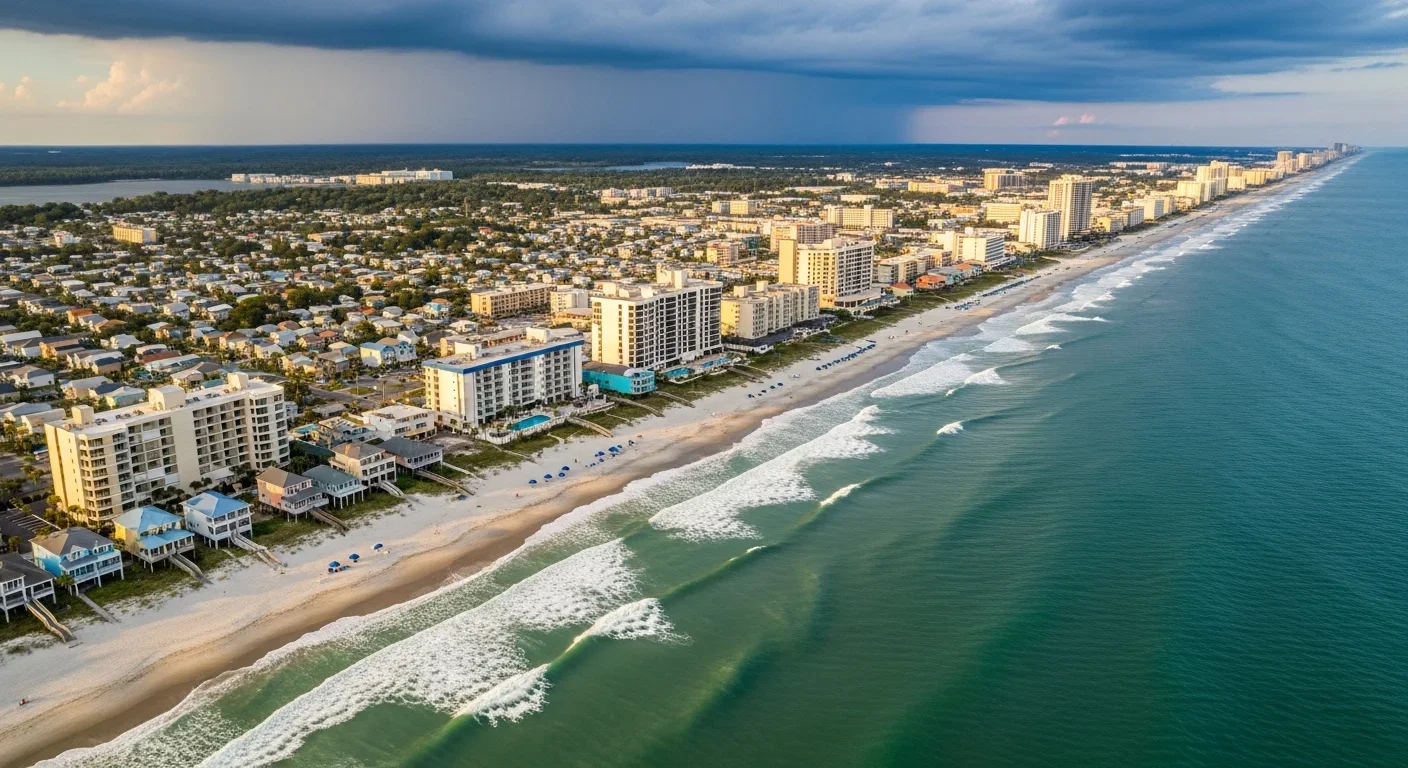
Serving the Entire Grand Strand
Palm Build serves Myrtle Beach and the broader Grand Strand — from North Myrtle Beach through Surfside Beach, Murrells Inlet, Garden City, and Pawleys Island. Whether you're a homeowner, condo owner, vacation rental operator, or property manager, our team brings the same documented, insurance-aligned approach to every job.
Call (704) 464-0121 any time. We respond to Myrtle Beach water damage emergencies around the clock — storm season and off-season alike.
Frequently Asked Questions
Myrtle Beach Water Damage Questions Answered
From flood insurance coverage to permit requirements and the 50% rule, here are the questions Myrtle Beach homeowners ask most often.
Still have questions?
Call Palm Build any time — our team knows Myrtle Beach's coastal insurance and floodplain landscape inside out.
(704) 464-0121 — 24/7More in Myrtle Beach
Other Restoration Services in Myrtle Beach, SC
Related Services
Related Restoration Services
Helpful Resources