Water Damage Restoration in Lenoir, North Carolina
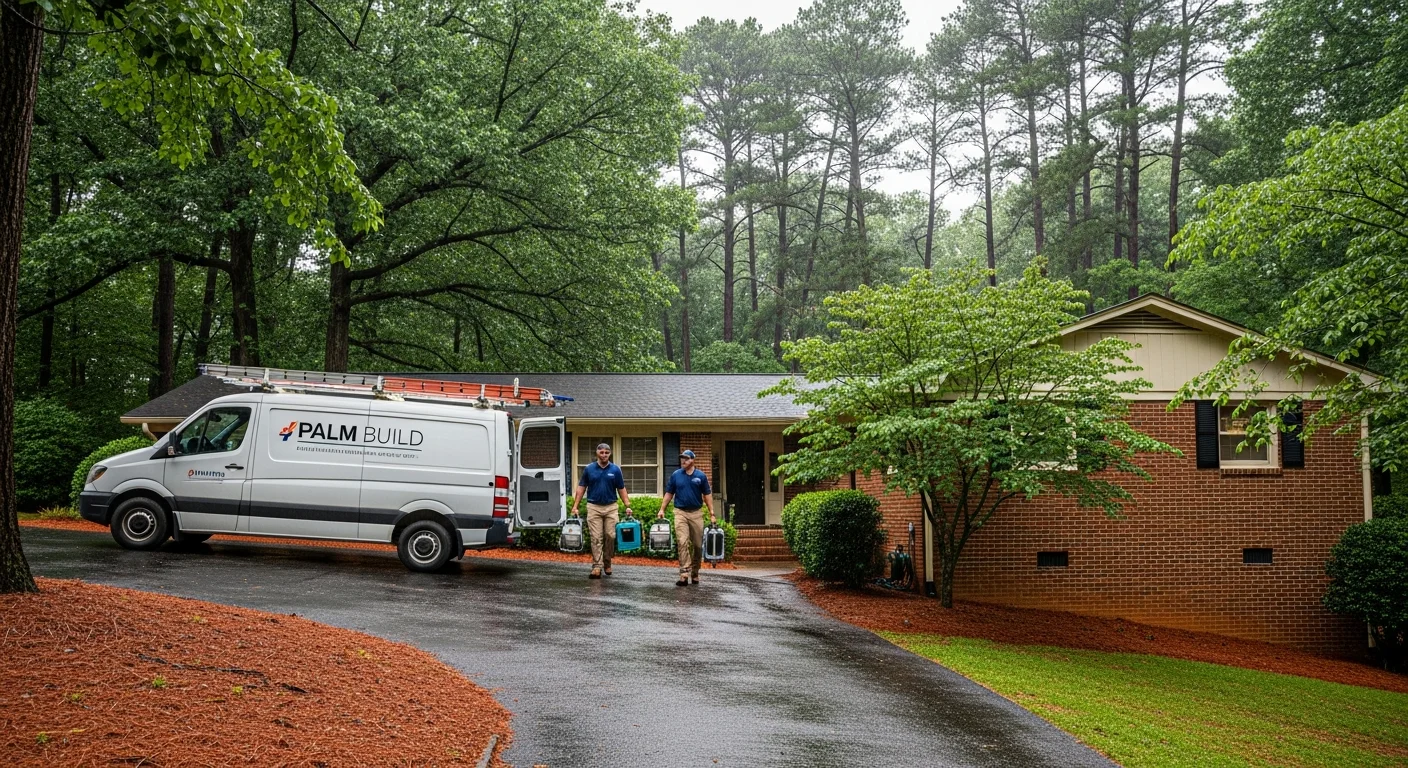
Lenoir sits in the NC foothills where Caldwell County's clay-heavy soils hold water like a sponge — and when they're saturated, foundations, crawl spaces, and basements take it from every direction. Tropical Storm Helene (September 2024) dumped 7–12 inches in three days across western Caldwell County, generating $40 million in property damage and a FEMA disaster declaration. Palm Build's Charlotte team responds 24/7 with IICRC-certified drying, crawl space expertise, and insurance documentation that holds up through every stage of your claim.
90-120 min
Emergency Response
24/7
Dispatch Available
IICRC
Certified Technicians
Water Emergency in Lenoir? Call 24/7.
Palm Build's Charlotte team reaches the Lenoir area with IICRC-certified water damage restoration for NC foothills homes — crawl spaces, basements, older brick construction, and storm-event documentation. 24/7 response.
Seasonal Risk Calendar
When Lenoir Properties Are Most at Risk
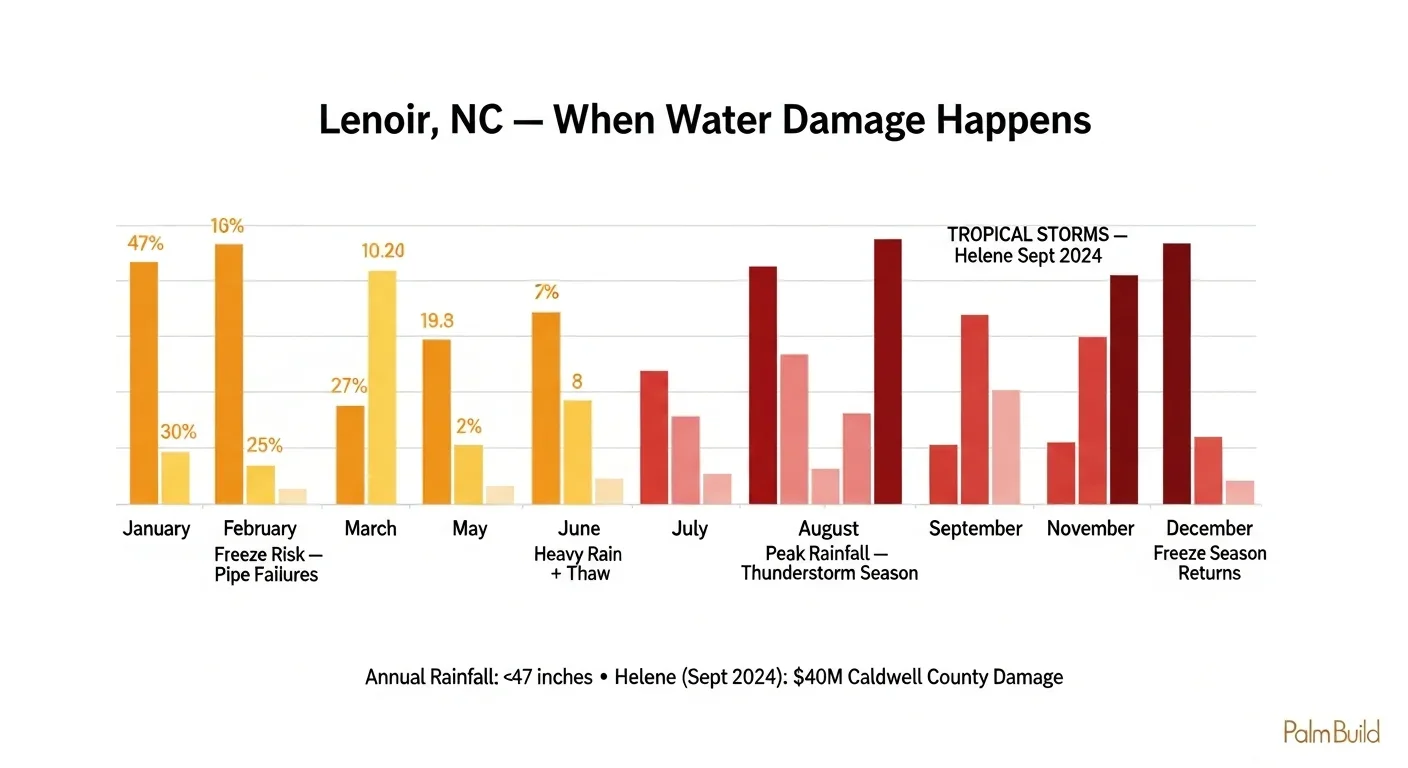
Based on Hickory FAA Airport 1991–2020 climate normals — the closest station to Lenoir. Caldwell County's foothills climate delivers rain year-round, with tropical storm exposure July through October. Click any month for details.
Peak Risk: Jul–Sep
July and August are Lenoir's wettest months at 4.5–4.6 inches average. September 2024 brought Helene — 7–12 inches in 3 days, a Caldwell County record, $40M in property damage.
Real Events: 2024 Helene
FEMA DR-4827 declared Caldwell County a major disaster area after Helene. Flash flooding along Lower Creek tributaries, saturated soils, roof breaches, and thousands of water damage claims across the county.
Year-Round Crawl Space Risk
Even in winter, Lenoir's clay soils retain moisture from prior wet periods. Crawl spaces in older homes can maintain above-80% relative humidity from spring through fall — above the mold growth threshold — with no flood event required.
Why Lenoir Floods Differently
Watershed, Clay Soil & Helene: The Lenoir Equation
Three factors combine to make water damage in Lenoir more persistent and more damaging than in many NC cities. Understanding them is the first step to protecting your property.
The Lower Creek Watershed
The Lower Creek watershed covers 99 square miles and explicitly includes Lenoir and Gamewell. Major tributaries feeding this system include Zack's Fork, Greasy Creek, Bristol Creek, and Spainhour Creek — all named waterways that can flash-flood during heavy rain events.
Lake Rhodhiss is the receiving water body. The NC DEQ identifies stormwater scour, channelization, floodplain encroachment, and sedimentation as recognized watershed problems in this system.
The foothills pattern: after 2–3 days of heavy rain, seepage increases and basement dampness becomes standing water. This is not a single-storm phenomenon — it is accumulated ground saturation working through clay subsoil.
Zack's Fork · Greasy Creek · Bristol Creek · Spainhour Creek — all within Lenoir's immediate watershed
Clay Soil: Why Lenoir Doesn't Drain
NC State Extension describes Piedmont subsoils as heavy clay with very slow water movement. This isn't a minor detail — it defines how every rainstorm affects Lenoir foundations.
Clay soil means: damp crawl spaces and humid basements even without a single flood event. Foundation seepage after repeated wet days — not just single storms. Yard grading that looks fine until repeated storm events reveal where water actually travels.
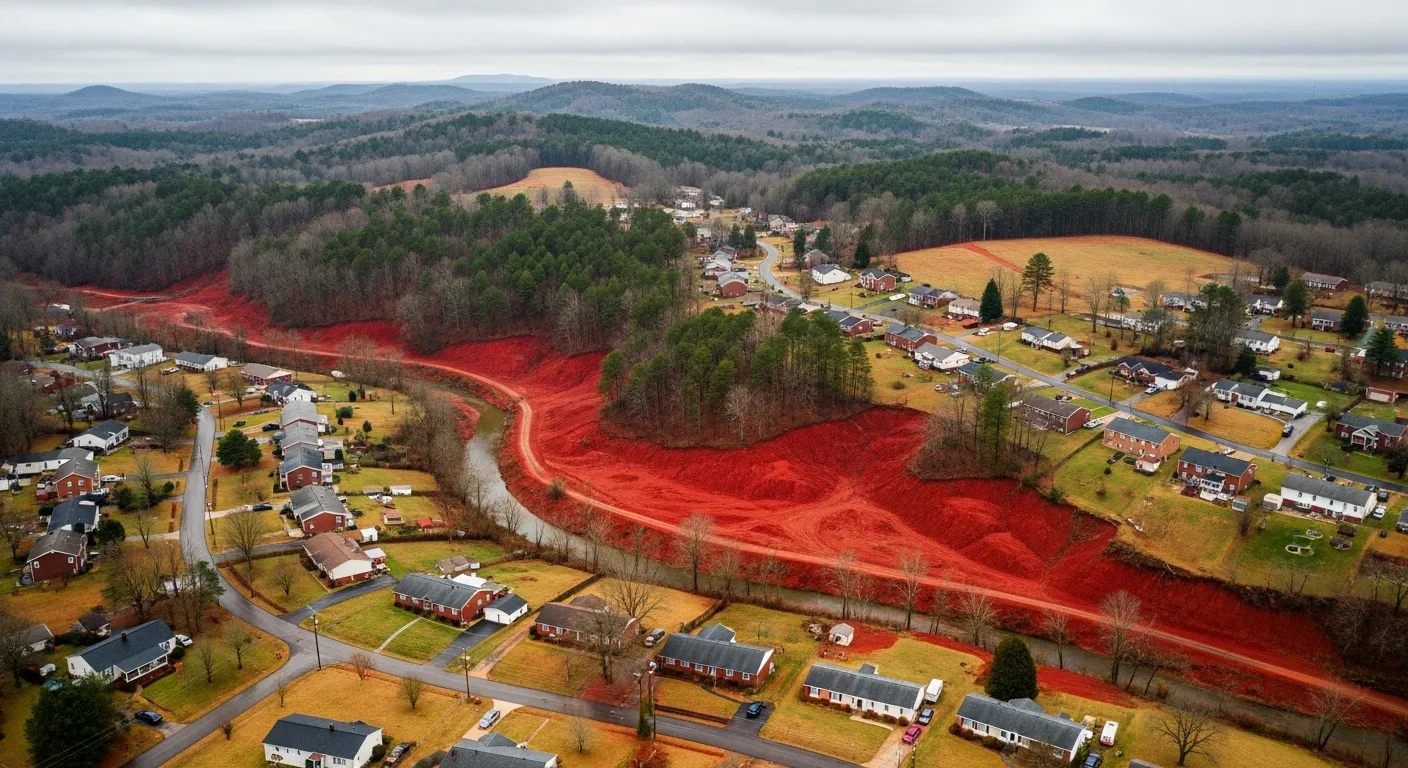
Red clay soil visible at foundation edges after rain is a signature Lenoir visual. When you see that rust-colored soil exposed near your foundation after a wet week, your crawl space has been saturated for longer than the rain lasted.
NC State Extension note:
Piedmont clay subsoils are rated as having very slow permeability — water moves at less than 0.06 inches per hour through these soils.
Tropical Storm Helene: September 2024
NOAA documented 7–12 inches over three days across western Caldwell County. This was not a 1-in-100-year event in isolation — it was a tropical remnant interacting with foothills terrain that amplified rainfall totals.
$40 million in property damage was recorded for the county event. FEMA issued major disaster declaration DR-4827, designating Caldwell County for individual assistance.
What Helene proved: foothills terrain amplifies tropical rainfall. Saturated soils generated flash flooding along all Lower Creek corridor tributaries. Wind-driven roof breaches produced interior water damage across thousands of properties simultaneously.
FEMA DR-4827 — Caldwell County
Individual Assistance declared. NC Emergency Management activated county emergency posture. Multi-week recovery operations across the region.
Lenoir Neighborhood Guide
Water Damage Risk by Lenoir Neighborhood
Each Lenoir neighborhood has a distinct risk profile based on construction era, topography, proximity to creek corridors, and foundation type. Know your neighborhood before a storm hits.
Georgetown Estates / Georgetown Village
Mixed-era residential subdivision · Est. 1974–2021
Mixed plumbing ages — some units on original 1970s supply lines, others post-2000 renovations. Clay subsoil at foundation perimeters. Older units: watch for slow leaks behind finishes. Newer units: inadequate site grading can direct stormwater toward foundations.
Stonecroft / Tremont Park
Suburban residential subdivision · Est. 1987–2004
Older HVAC systems and insulation. Crawl spaces common on moderately-sloped lots. Tremont Park's lower-elevation sections see crawl space moisture accumulation after multi-day rain events. Attic condensation on aging systems can produce ceiling water stains that are misread as roof leaks.
Crestmere
Older established neighborhood · Est. 1950s–1970s
Mid-century construction — documented examples from 1953. Original supply lines and older plumbing valves. Vented crawl spaces with minimal or no vapor barrier. These homes experience 'slow leak becomes big loss' patterns: minor pipe failures go undetected in crawl spaces until wood framing is compromised.
The Coves Mountain River Club
Gated mountain community · Est. 2000s–2020s
River frontage on the Johns River. Steep grade and daylight basement settings. Helene-type events (Sept 2024) showed exactly what mountain river communities experience: fast-moving flooding, hydrostatic pressure on daylight basement walls, slope drainage events overwhelming culverts and access roads.
Woodridge
Early 2000s residential · Est. 2001–2004
Early-2000s construction — more modern plumbing than mid-century stock but HVAC condensation events and appliance supply line failures are common. Clay soil grading issues around foundations in newer builds.
Park Ridge Estates / Rocky Top
Newer subdivision lots · Est. 2000s+
Newer construction but heavy rainfall on Caldwell County clay soil still causes foundation seepage when gutters discharge near foundations or grading is flat. Pre-construction moisture checks recommended for recent builds in areas with clay-heavy fill.
Blackberry Ridge Condominiums
Older condo complex · Est. 1986+
1986-era construction. Shared assemblies mean one unit's water loss can migrate through shared walls or subfloor. HVAC condensate failures and appliance supply line bursts are the primary culprits. HOA coordination required for multi-unit drying and documentation.
Powell Park / Park View / Summerhill
City-platted residential subdivisions · Est. Mixed
Typical city subdivision lots. Risk varies by topography — lower-lying areas near parks and creek channels see more foundation seepage. All experience the Caldwell County standard: clay soil slow-drains means moisture problems persist longer after a rain event than homeowners expect.
FEMA Flood Zone Status — Caldwell County
FEMA major disaster declaration DR-4827 designated Caldwell County following Tropical Storm Helene (September 2024). All Lenoir-area homeowners should verify their property's flood zone status on official FEMA flood maps at msc.fema.gov before assuming standard homeowners insurance covers storm-related water damage. Properties in Special Flood Hazard Areas (SFHA) along Lower Creek and its tributaries may require separate flood insurance.
Our Process
How Palm Build Restores Lenoir Homes
A documented, IICRC-standard process built for NC foothills construction — crawl spaces, older brick homes, and clay-soil drainage challenges.
Emergency Response (90–120 min from Charlotte)
Palm Build dispatches from Charlotte when you call. Lenoir's distance from our hub means the first 30 minutes after you call matter — stop active water intrusion, move contents above the wet line, and do not run HVAC into wet spaces (this circulates moisture into every room).
Damage Assessment & Documentation
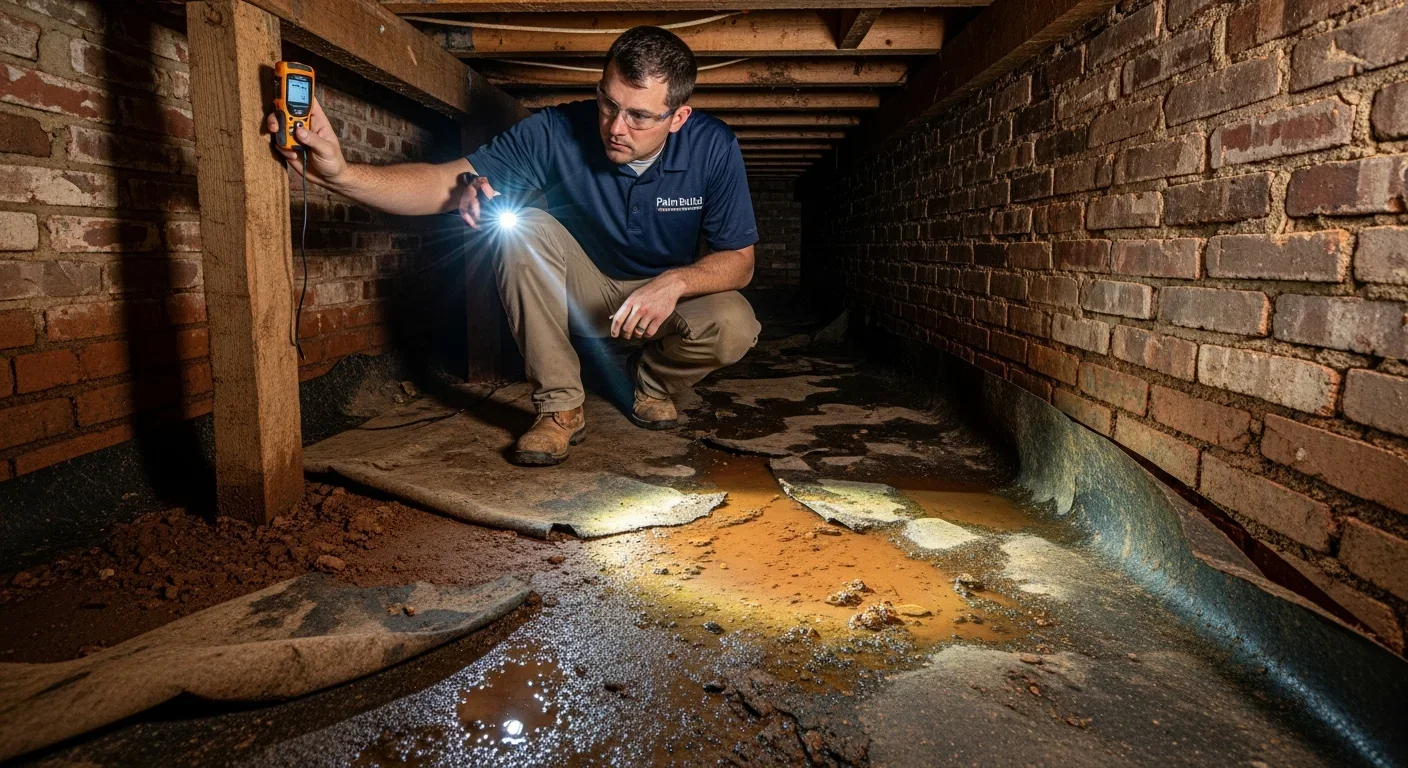
IICRC-certified technicians assess every affected area with moisture meters, thermal imaging, and photography. In Lenoir's older homes, this includes the crawl space — because water in the main living area often means water has been in the crawl space far longer. We note construction era, foundation type, and water source category for your insurance claim.
Water Extraction
Commercial truck-mounted or portable extraction systems remove standing water from living areas, basements, and crawl spaces. Clay soil environments require thorough extraction — residual moisture in subfloor materials in a crawl space environment can persist for weeks without intervention.
Crawl Space & Structural Drying
Industrial dehumidifiers and air movers target all affected assemblies. In Lenoir's foothills climate, ambient outdoor humidity is high enough (70–90% in summer) that opening windows actively worsens drying. We seal and control the environment. Crawl space drying gets dedicated equipment — it is not an afterthought.
Mold Prevention Treatment
Antimicrobial treatment is applied to all affected wood framing, subfloor, and drywall. In a crawl space environment, this step is mandatory — wood framing that's been damp for any period in NC's humid summers is a mold risk. We coordinate with IICRC-certified mold assessors when scope warrants post-remediation verification.
Reconstruction & Final Documentation
From subfloor replacement to drywall, Palm Build handles full-scope restoration. We document every step — moisture readings, equipment logs, photo evidence — because NC insurance carriers expect this evidence for both initial and supplemental claims.
Lenoir's #1 Risk
Lenoir's #1 Water Damage Risk: The Crawl Space
More than half of Lenoir's homes are older than 40 years. Most have crawl space foundations. In Caldwell County's clay-soil foothills climate, these crawl spaces are persistently at risk — with or without a flood event.
Why Lenoir's Crawl Spaces Fail
50%+ of Lenoir homes are older than 40 years (Caldwell County Housing Plan). Vented crawl spaces were standard construction through the 1990s — the building code changed, but older homes still have them.
Clay soil holds moisture at the surface: even without a flood, soil moisture migrates upward into crawl spaces. Damaged or absent vapor barriers accelerate this transfer dramatically.
NC summer humidity (70–90%) means crawl space relative humidity routinely exceeds 80% — the threshold above which mold begins colonizing wood framing and subfloor. No flood required. No pipe burst required. Just a Caldwell County summer.
Warning Signs
- Musty smell anywhere in the home
- Floors feel soft, bouncy, or spongy
- Visible moisture or condensation on HVAC ductwork in crawl
- White efflorescence on foundation walls
- Pest activity (roaches, termites attracted to damp wood)
- Higher-than-expected heating/cooling bills
- Visible mold or dark staining on crawl space framing
What Palm Build Does
- Full extraction and pump-out if standing water present
- HEPA air scrubbing if mold spores are suspected
- Antimicrobial treatment of all affected wood surfaces
- Vapor barrier replacement (6-mil poly minimum)
- Moisture reading documentation through the full drying cycle
- Coordination with inspector for structural assessment if framing is compromised
NC Insurance Guide
Insurance Coverage for Water Damage in Lenoir
Understanding the coverage gap between standard homeowners insurance and flood insurance is critical for Lenoir homeowners — especially after Helene.
The Coverage Gap You Need to Know
Typically Covered (Standard Policy)
- Burst pipe or supply line failure
- Appliance overflow (washer, dishwasher, water heater)
- Roof leak from storm wind or hail damage
- Accidental discharge from plumbing fixtures
Typically NOT Covered (Standard Policy)
- Rising water from rivers, streams, or flooding (Flood — NFIP required)
- Sewer/drain backup (separate endorsement required)
- Gradual leaks or slow seepage discovered over time
- Lower Creek or tributary overflow onto property
Helene Coverage Note
If Helene-related damage originated from rising water in Lower Creek tributaries, standard homeowners policies would not cover it. An NFIP or private flood policy would have been required. The NC DOI confirms standard policies do not cover flood damage from rising water.
NC Insurance Carrier Landscape
Top homeowners carriers by NC market share (NC DOI 2024 report):
Rate trend: NC DOI approved 7.5% rate increases in both 2025 and 2026. Documentation quality affects claim outcomes with all carriers.
Documentation Matters
Carriers expect: moisture readings from day one, equipment deployment logs, photo documentation of water source and affected materials, and scope estimates before work begins. Palm Build produces all of this — because documentation gaps are the #1 reason claims get underpaid in Caldwell County loss events.
Cost Guide
Water Damage Restoration Costs in Lenoir
Estimates based on Lenoir's housing stock characteristics — older homes, crawl space foundations, and clay-soil drying environments.
$1,500–$4,000
Category 1
Single room, clean water source
- Burst supply line (contained)
- Appliance overflow (small area)
- 24hr response, one room
$4,000–$10,000
Category 2
Multiple rooms or crawl space
- Multi-room water event
- Crawl space flooding (clay soil drying)
- Subfloor drying with equipment
$10,000–$30,000+
Category 2–3
Basement + crawl space + structural
- Basement flooding with structural drying
- Full crawl space + main level dry-out
- Tropical storm event — possible Cat 3
Loss Type Cost Breakdown
| Loss Type | Typical Range | Notes |
|---|---|---|
| Burst pipe (single room) | $1,500–$3,500 | 24hr response = lower cost |
| Crawl space flooding | $3,000–$8,000 | Clay soil slows drying |
| Basement flooding | $5,000–$12,000 | Foundation type affects cost |
| Tropical storm water intrusion | $8,000–$25,000+ | Multi-system, possible Cat 3 |
| Full crawl space + main level | $12,000–$30,000+ | Complete structural dry-out |
Lenoir note: Older housing stock means higher frequency of secondary damage — wood framing in crawl spaces and basements that has absorbed moisture over long periods requires longer drying cycles than newer construction. Clay soil environments also slow the overall drying timeline. Palm Build provides detailed scope estimates before work begins.
Our Work in Lenoir
Before & After: Water Restoration in Lenoir, NC
Real Lenoir restoration projects — basement flooding, crawl space water intrusion, and foothills-area water extraction.
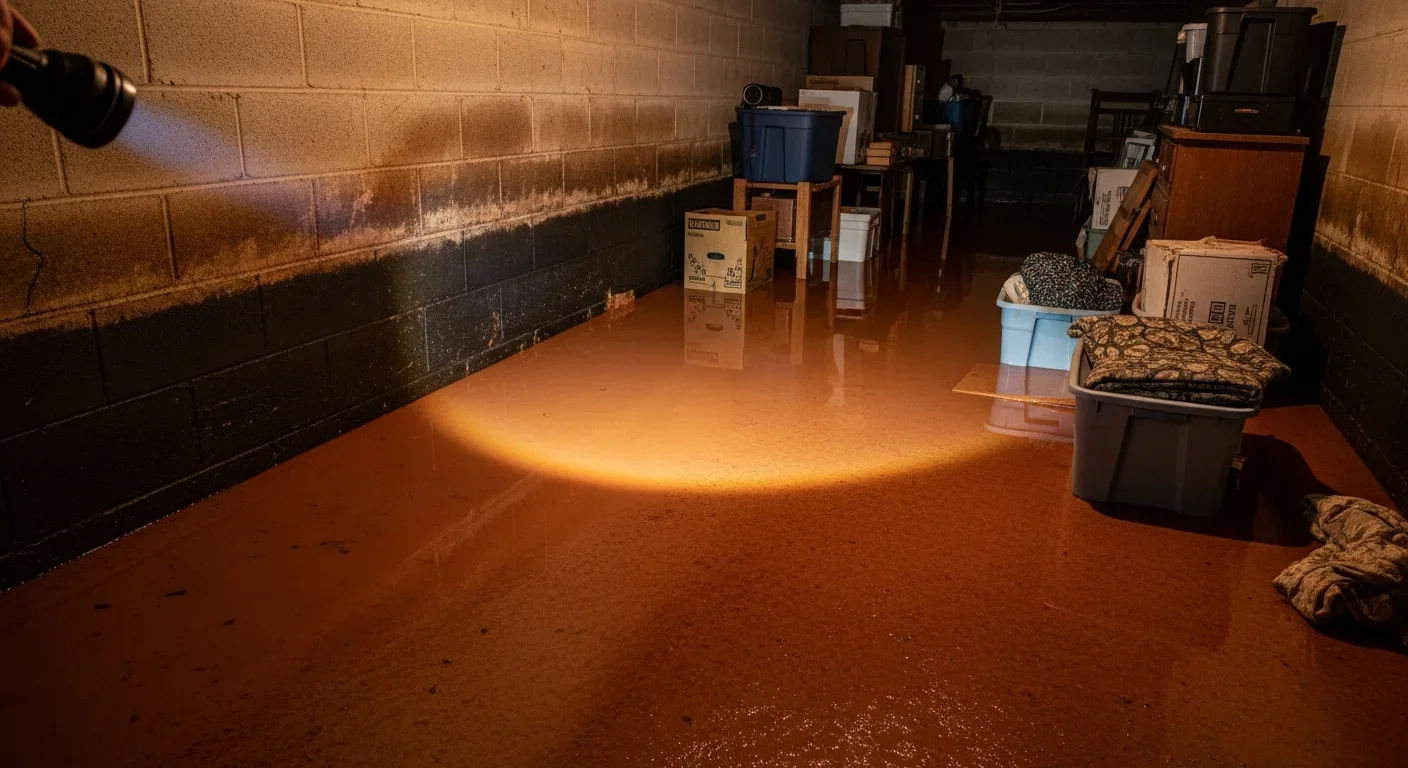 BEFORE
Lenoir basement flooding — clay-soil groundwater saturation after Helene-level rainfall
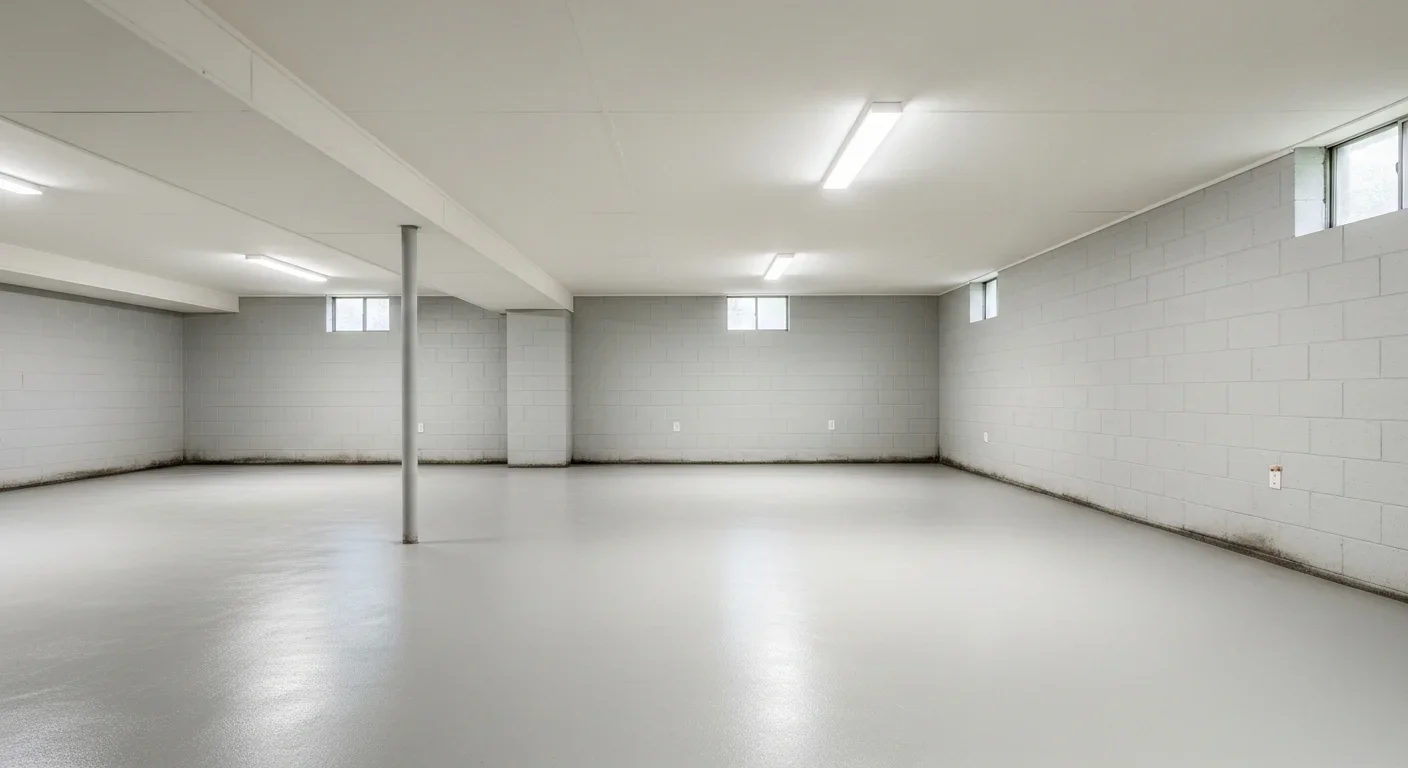 AFTER
AFTERFully restored and dry — complete structural dry-out documented with daily readings
 EXTRACTION
IICRC-certified water extraction in Lenoir brick ranch home
CRAWL SPACECrawl space assessment in older Lenoir home — moisture mapping before drying begins
Why Palm Build
Why Lenoir Homeowners Choose Palm Build
IICRC-certified restoration built for NC foothills construction — crawl spaces, clay-soil drainage, older brick homes, and the unique challenges of Helene-era storm recovery.
IICRC Certified
S500 Water Damage Standard. The industry's highest benchmark for structural drying, documentation, and safety protocols.
Crawl Space Specialists
NC foothills crawl space water damage expertise. Clay soil moisture dynamics, vapor barrier replacement, and wood framing treatment.
Helene-Ready Response
Tropical storm emergency protocols and FEMA documentation support for DR-level events. We've worked Caldwell County storm recoveries.
NC Insurance Documentation
Flood vs. covered water guidance for every loss. Moisture logs, equipment records, and photo evidence from day one — because documentation gaps cost homeowners money.
Older Home Expertise
Lenoir's mid-century and foothills housing stock. Brick ranch, hardwood subfloor, mixed plumbing systems, and vented crawl spaces.
Full Reconstruction
From structural drying to new drywall, flooring, and subfloor. One contractor from extraction through finished — no handoff gaps.
Common Questions
Frequently Asked Questions — Water Damage in Lenoir, NC
Answers to the questions Lenoir homeowners ask most about water damage restoration, crawl spaces, Helene recovery, and insurance claims.
More in Lenoir