Key takeaways
- Florida Statute 627.70132 generally requires written notice of a Citizens property insurance claim within 1 year of the date of loss; supplemental claims must be filed within 18 months.
- Citizens must acknowledge claim communications within 7 days and generally pay or deny an initial, reopened, or supplemental claim within 60 days after receiving notice, subject to statutory tolling for factors beyond the insurer's control.
- The Citizens Managed Repair Program offers free emergency water removal for non-weather losses, but if you decline MRP and use your own contractor your reimbursement is capped at $3,000 for mitigation and $10,000 total for permanent repairs.
- Florida hurricane deductibles run 2%, 5%, or 10% of your Coverage A limit — on a $400,000 home, a 2% deductible is $8,000 you absorb before insurance applies.
- Citizens denied 50.4% of hurricane claims and 77% of homeowners claims from Hurricane Debby; documentation aligned with the IICRC S500 standard is the single biggest factor that prevents denials.
If your Florida home has water or storm damage and you carry a Citizens Property Insurance policy, three numbers govern everything that happens next: 1 year to file written notice, generally 60 days for Citizens to pay or deny after receiving notice of claim (subject to statutory tolling), and a $3,000 cap on water mitigation if you decline the Managed Repair Program. This guide walks every stage of a Citizens claim — from the first call to the final check — covering the hurricane deductible math, the $10,000 sublimit if you bring your own contractor, the eight most common denial traps, and what to do when Citizens denies or underpays. If you want a deeper read on how Florida adjusters evaluate documentation, our insurance restoration process overview covers the moisture-mapping and daily drying-log workflow that Citizens adjusters approve.
Active Citizens policies
395K
January 2026 — down 76% from a 2023 peak of 1.4 million
Hurricane denial rate
50.4%
Highest among Florida's largest property insurers
Free MRP cap if declined
$3,000
Water mitigation reimbursement if you bring your own contractor
Statutory filing deadline
1 year
Fla. Stat. § 627.70132 — written notice of new or reopened claims
What Citizens Property Insurance Covers — And What It Doesn't
Citizens Property Insurance Corporation is Florida's state-backed insurer of last resort. As of January 2026, Citizens carries approximately 395,000 policies — a dramatic decline from its 2023 peak of 1.4 million — driven by Florida's depopulation program and the 2022–2023 legislative reforms. Coverage is real but narrower than a standard ISO homeowners policy in several important places. Knowing the gaps before disaster strikes is the difference between a claim that pays and one that surprises you.
Water damage coverage
Citizens generally covers sudden and accidental water damage — a burst pipe, a washing machine overflow on its first occurrence, a supply line that fails without prior warning, or a sudden storm-driven roof leak after wind damage. The critical word is sudden. Adjusters look for evidence that the damage had an identifiable onset, not a slow buildup over weeks or months. The single most common dispute pattern in Florida is a carrier characterizing a covered sudden event as a gradual leak — which is why a moisture-mapped timeline of the water intrusion is the most important document in your claim file.
Typically covered under Citizens
- Burst pipe from sudden pressure failure
- Supply line failure without prior warning
- Accidental overflow from an appliance (first occurrence)
- Sudden roof leak directly caused by covered wind damage
- Water heater failure (sudden, not from deferred maintenance)
Typically excluded under Citizens
- Slow drip behind a wall that ran for weeks or months
- Gradual seepage through a foundation or slab
- Damage from deferred maintenance
- Repeated overflow from the same appliance
- Pre-existing mold or mold unrelated to the reported water event
Storm and hurricane damage coverage
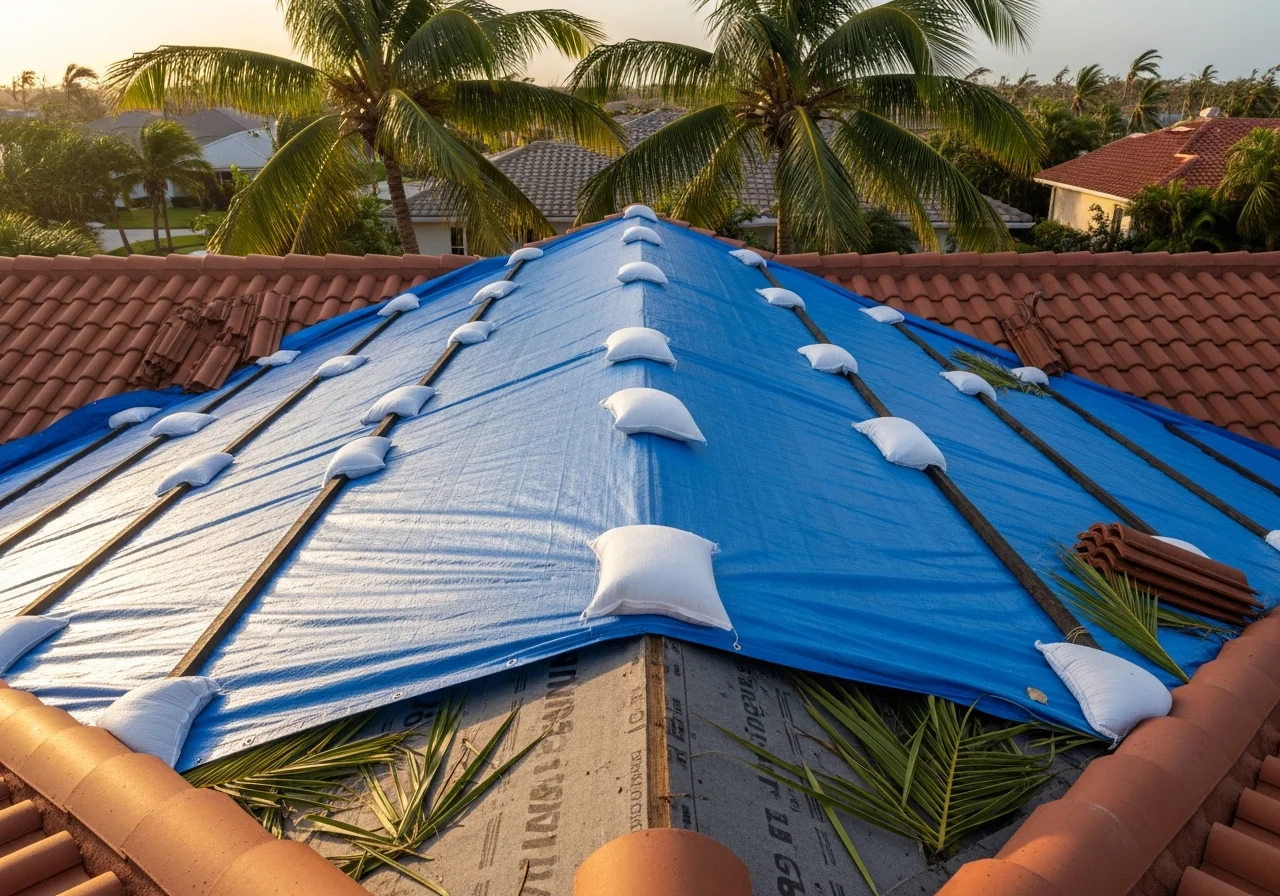
Citizens multiperil policies cover wind damage from named hurricanes, tropical storms, and other windstorms. Flood damage — water rising from the ground up — is not covered under a standard Citizens policy and requires a separate flood policy through the National Flood Insurance Program (NFIP) or a private flood insurer. The wind-versus-flood distinction is one of the most common claim friction points in Florida. As of January 2026, Citizens policyholders with wind coverage outside a Special Flood Hazard Area whose dwelling coverage is $400,000 or more must also carry flood insurance under a phased-in mandate. For a deeper look at how this dispute usually plays out, see our breakdown of wind vs. flood coverage. For the mitigation side of these losses — emergency tarping, debris-out, large-loss response — see our storm and hurricane damage response overview.
What Citizens does NOT cover
| Coverage | Citizens policy | Standard ISO HO-3 |
|---|---|---|
| Mold / fungi / wet rot | $10,000 sublimit | No sublimit |
| Loss of use | 10% of dwelling, 24-month cap | 20% of dwelling, no cap |
| Other structures | Not covered | Covered (10% of dwelling) |
| Water / sewer backup | Not covered (endorsement required) | Available endorsement |
| Flood damage | Not covered (separate NFIP/private policy) | Not covered |
Citizens HO-3 policy gaps compared to a standard ISO homeowners policy
The Citizens Hurricane Deductible Explained
Florida law requires insurers to offer hurricane deductibles of $500, 2%, 5%, or 10% of your dwelling coverage limit. For homes insured at $250,000 or more, the $500 flat option is generally not available — meaning most Citizens policyholders face a percentage-based deductible. The hurricane deductible is calculated as a percentage of your Coverage A (dwelling) limit — not the market value of your home and not your total policy limit. It applies only when a named storm is officially classified as a hurricane, and it resets on a calendar-year basis. Once your hurricane deductible is fully satisfied for the year, subsequent hurricane losses fall under your lower All Other Perils (AOP) deductible — a fixed-dollar deductible that also applies to non-hurricane losses including non-weather water damage, fire, and theft.
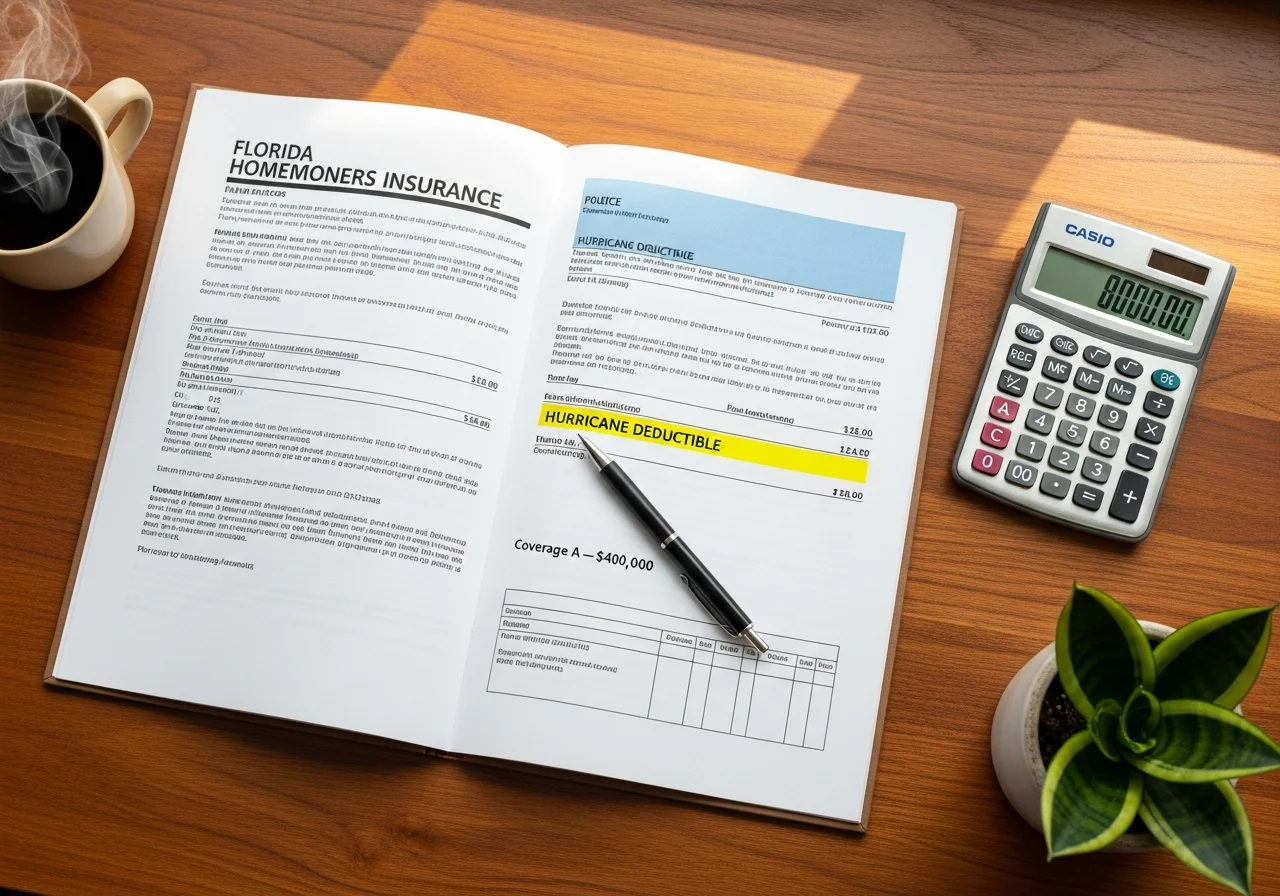
| Home insured value | 2% deductible | 5% deductible | 10% deductible |
|---|---|---|---|
| $200,000 | $4,000 | $10,000 | $20,000 |
| $300,000 | $6,000 | $15,000 | $30,000 |
| $400,000 | $8,000 | $20,000 | $40,000 |
| $500,000 | $10,000 | $25,000 | $50,000 |
| $750,000 | $15,000 | $37,500 | $75,000 |
Florida hurricane deductible by home value (Coverage A × deductible %)
How to File a Citizens Claim: Step-by-Step
- 1
Stop the loss and stay safe
Do not enter the home if it is structurally unsafe. Your Citizens policy requires reasonable steps to mitigate further damage — covering a damaged roof with a tarp, shutting off the water supply, boarding broken windows. Keep all receipts for emergency measures, as they may be reimbursable.
- 2
Document everything before mitigation begins
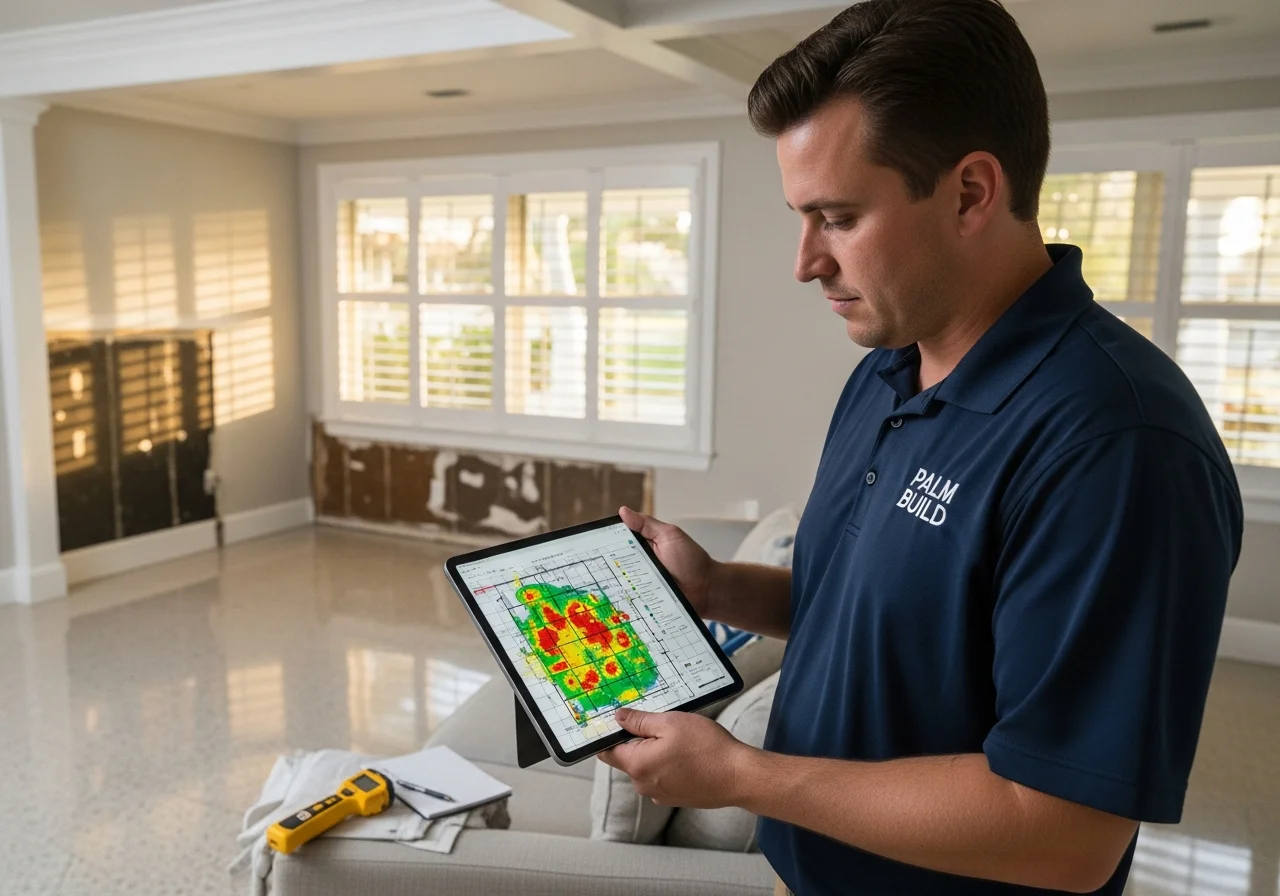
Walk every affected room with timestamped video before touching furniture or pulling up flooring. Capture the water source, the spread pattern, depth, and visible staining from multiple angles. Photograph all affected surfaces. This documentation establishes what existed before mitigation — which matters if Citizens later questions the damage scope.
- 3
Report your claim to Citizens
Report as soon as possible. Citizens accepts claims through the myPolicy portal at citizensfla.com or by phone at the 24/7 Claims Hotline (866-411-2742). Have your policy number, contact information (including any temporary address), and a description of the damage ready. You will receive a claim number and a Citizens-assigned adjuster. If you have active damage right now, contact Palm Build's 24/7 emergency line before starting any work — our IICRC-certified team documents the damage in the format Citizens adjusters need.
- 4
Determine Managed Repair Program eligibility
For non-weather water losses (burst pipes, appliance overflows), ask your adjuster immediately whether your claim qualifies for the Citizens Managed Repair Program. This program is critical — it defines how much your claim will be worth depending on which contractor you use. Hurricane losses do not qualify for the free MRP.
- 5
Walk the adjuster through the loss
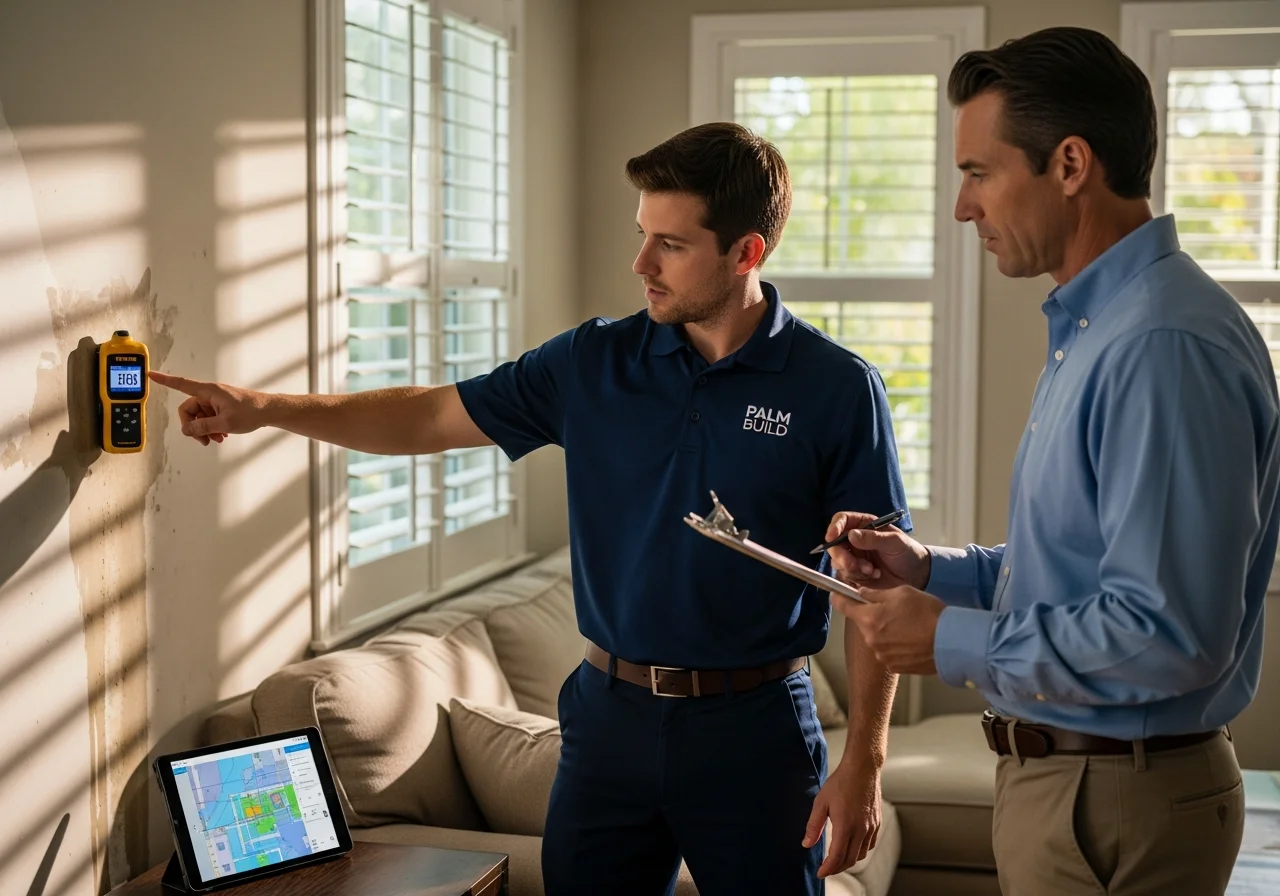
Be present during the adjuster's inspection and walk them through every area of damage. Present all documentation. If the adjuster misses damage — particularly hidden damage behind walls or under floors — note it in writing afterward. Citizens generally must acknowledge claim communications within 7 days and issue a payment decision within 60 days after receiving notice of claim, subject to statutory tolling.
- 6
Track the claim and request supplements
Use the myPolicy portal to track status and upload documents. If repairs uncover additional covered damage not in the original estimate, file a supplemental claim. Under Florida law, supplemental claims must generally be filed within 18 months of the date of loss — a separate, longer window than the 1-year initial filing deadline.
- Date- and time-stamped photos and video of the source AND all affected areas before any work begins
- Moisture meter readings mapped to a floor plan sketch
- Written identification of the leak source — plumber's note, appliance serial number, or repair invoice
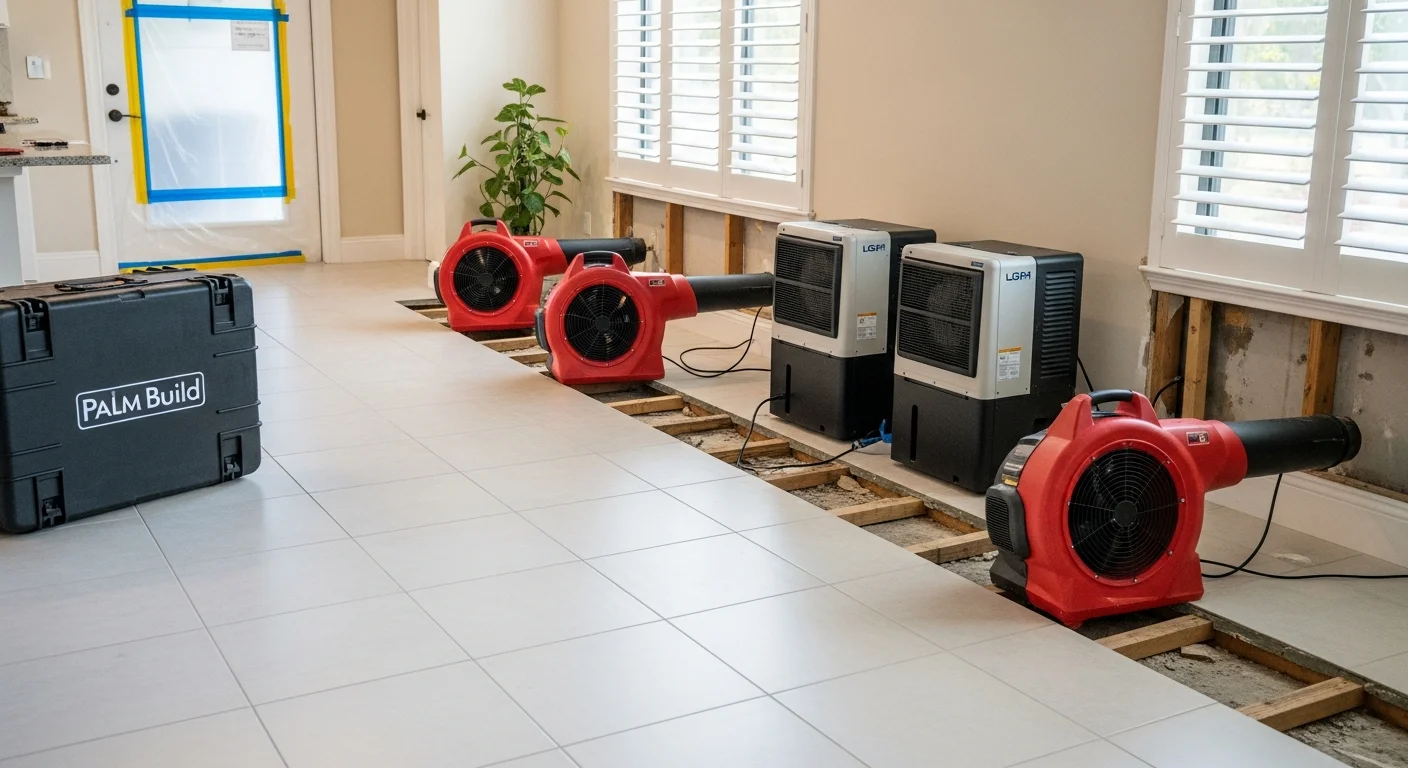
- Photos of extraction equipment and dehumidifier placement at setup
- Daily drying logs with psychrometric readings showing drying progress
- Before-and-after photos documenting every material removed
- Mitigation company invoice with line-item scope of work
- Maintenance records showing the property was actively maintained (counters the 'gradual' denial argument)
- Written timeline from discovery → claim report → mitigation start
- Video walkthrough with visible timestamp
Citizens' Managed Repair Program: What You Must Know
**Free emergency water removal (non-weather losses only).** For eligible non-weather water losses, Citizens offers free emergency water removal and drying services. When you call to report a non-weather water claim and accept the offer, a Citizens-network mitigation contractor contacts you within 1 hour, arrives on-site within 4 hours to begin extraction and drying, and you pay nothing for mitigation services — even if the loss is ultimately not covered. The catch: this program exists exclusively for non-weather losses. If your damage was caused by a hurricane or tropical storm, the free MRP does not apply.
**The $3,000 cap if you use your own mitigation contractor.** This is where many policyholders get hurt financially. If you decline Citizens' free Emergency Water Removal Services and hire your own mitigation contractor instead, your reimbursement for water mitigation is capped at $3,000 (less any applicable deductible). This cap was established when Citizens launched the Managed Repair Program in 2017 and has remained in place. Average water damage restoration in Florida runs $1,300 to $5,600, and Miami-area moderate multi-room damage typically runs $2,500 to $6,000 — meaning the $3,000 cap can leave a real gap.
**The $10,000 sublimit if you decline MRP for permanent repairs.** If you do not participate in the Managed Repair Contractor Network for permanent repairs, Citizens limits payment on non-weather water losses to a total of $10,000 — inclusive of any amount paid for mitigation. Under the MRP, permanent repairs are covered up to your full policy limits with a 5-year contractor guarantee. The financial difference between participating and declining can run into the tens of thousands on even moderate losses.
| Scenario | Mitigation coverage | Permanent repair coverage |
|---|---|---|
| Use Citizens' free MRP (full participation) | Covered (no cost to you) | Up to policy limits, 5-year guarantee |
| Bring your own mitigation + join MRP for repairs | Capped at $3,000 | Up to policy limits via MRP |
| Decline MRP entirely (own contractor for everything) | Capped at $3,000 | $10,000 total sublimit (less mitigation paid) |
Citizens non-weather water damage: contractor choice comparison
Florida Claim Deadlines You Cannot Miss
| Deadline | Timeframe | Notes |
|---|---|---|
| Initial claim filing | 1 year from date of loss | Fla. Stat. § 627.70132 — applies to all property damage claims |
| Supplemental claim | 18 months from date of loss | For damage discovered after the initial claim |
| Insurer must acknowledge | 7 days from receiving communication | Applies to all FL insurers including Citizens |
| Insurer must pay or deny | 60 days from notice of claim | Late payment triggers statutory interest |
| Payment after settlement | 20 days from agreement | Florida law |
| File lawsuit | 2 years from breach date | Significantly shortened from the prior 5-year window |
| Flood proof of loss (NFIP) | 60 days from date of loss | Separate, stricter rules apply to flood claims |
Florida statutory and contractual deadlines for Citizens water and storm claims
Why Citizens Claims Get Denied — and How to Avoid It
Citizens' claim denial rate for hurricane claims has reached 50.4%, the highest among major Florida insurers — compared to roughly 46% at State Farm Florida and Allstate Florida. After Hurricanes Milton and Helene, 42% of the 329,000+ residential claims filed were closed without payment, with the majority falling below hurricane deductibles. Citizens denied 77% of homeowners claims from Hurricane Debby. Understanding why claims are denied is how you build a file that prevents it from happening to you. For broader market context, see Florida's 2026 insurance crisis overview.
- **Gradual vs. sudden damage** — Citizens routinely denies claims by alleging the damage resulted from an ongoing leak rather than a sudden event. Without professional moisture mapping establishing the timeline of the water intrusion, you have no defense against this argument.
- **Missing or incomplete documentation** — Claims without photographs, professional repair estimates, or a clear written timeline are routinely denied.
- **Inaccurate proof of loss form** — Adjusters scrutinize this document; errors or omissions give insurers grounds to deny.
- **Repairs made before inspection** — Making permanent repairs before a Citizens adjuster inspects the property can void your claim entirely.
- **Failure to mitigate** — If you leave water sitting in your walls while waiting for the adjuster, Citizens can deny part or all of your claim for failure to prevent further damage.
- **Late reporting** — Florida's average property damage reporting lag is 47 days — dangerously late given the evidence degradation that occurs over time.
- **Flood mislabeled as water damage (or vice versa)** — Insurers frequently deny water intrusion claims by categorizing them as flood damage, which requires a separate policy.
- **Mold sublimit exceeded** — Citizens' standard HO-3 caps mold/fungi/wet rot coverage at $10,000. Once that sublimit is reached, mold exclusions can be used to limit coverage on the underlying water damage. Professional mold remediation coordinated with mitigation keeps mold from running away from the sublimit.
Do
- Mitigate immediately — extraction and dehumidification within hours of discovery
- Document the loss before any material is moved or removed
- File written notice within 24 hours of discovery, even if details are still emerging
- Keep daily drying logs with psychrometric readings
- Coordinate adjuster inspection before permanent repairs begin
Avoid
- DIY repairs before the adjuster has inspected
- Gaps in the timeline between discovery and notice
- Allowing wet materials to sit unaddressed for 24+ hours
- Demolition without a documented scope-of-work invoice
- Exceeding the $10,000 mold sublimit without an endorsement on file
If Citizens Denies or Underpays Your Claim
- 1
Request DFS free mediation
Florida homeowners can request free mediation through the Department of Financial Services. Call DFS at 1-877-693-5236 or visit myfloridacfo.com to file. The insurer must respond within 20 days. According to Florida Office of Insurance Regulation data, insurers underpay between 15% and 35% on the average major claim — DFS mediation is the lowest-friction first step to recover that gap.
- 2
Invoke the appraisal clause
Most Citizens policies include an appraisal provision for disputes over the amount of loss. Each party selects an appraiser; if they cannot agree, an impartial umpire decides. This is separate from disputes over coverage (whether the loss is covered at all) — appraisal only resolves the dollar amount.
- 3
Consider DOAH alternative dispute resolution
Since February 2023, Citizens has had the ability to route claim disputes to the Division of Administrative Hearings (DOAH) — an administrative tribunal that resolves disputes within roughly four months. The process operates like a mini-trial before an administrative law judge, without a jury. DOAH does NOT apply to sinkhole claims or disputes involving the Managed Repair Program.
- 4
Hire a licensed public adjuster
A licensed public adjuster represents you — not Citizens — in evaluating damage, preparing the claim, and negotiating settlement. Under Florida law (SB1770), public adjusters can charge up to 10% in the first year and up to 20% in subsequent years or for supplemental and reopened claims; during a declared emergency, the cap is 10% for the first year. A Florida state agency study found Citizens policyholders with public adjuster representation received 747% higher catastrophe payouts and 574% higher non-catastrophe payouts compared to those without.
What Citizens Depopulation Means for Your Claim
Citizens shed approximately 541,000 policies in 2025, bringing its count to a 13-year low of 395,144 as of January 2026. Seventeen new insurance companies have entered the Florida market since the 2022 reforms. Under Florida's takeout rule, you generally cannot remain with Citizens if a private insurer offers you a policy priced within 20% of your current Citizens premium. If your policy is taken out, the new private insurer must match Citizens' coverage terms during the transition. Pending claims at the time of transfer remain with Citizens; new claims go to your new carrier.
- Review the new policy's declarations page carefully and compare every limit and sublimit to your Citizens policy
- Confirm the new insurer's financial stability rating (Demotech or AM Best)
- Ask your agent whether the depopulation offer meets the 20% threshold — if all private offers are 20%+ higher than your Citizens renewal premium, you can stay
- Verify your flood coverage separately — Citizens' flood requirements do not automatically carry to the private insurer
How Palm Build Supports Florida Citizens Policyholders
Palm Build responds 24 hours a day, 7 days a week across Florida and works directly with Citizens Property Insurance. Our IICRC-certified team produces the documentation package your adjuster needs — moisture mapping, psychrometric logs, IICRC S500-aligned scope-of-work — and coordinates Managed Repair Program eligibility on your behalf. We handle the full restoration arc from emergency mitigation through permanent reconstruction, on residential and commercial large-loss claims alike.
"Documentation turns chaos into approved claims. Every photo, every reading, every dated invoice is a brick in the wall an adjuster cannot deny."
Water Damage Restoration
24/7 Florida water mitigation aligned to the IICRC S500 standard Citizens adjusters approve.
Storm, Wind & Hurricane Damage
Emergency tarping, debris-out, and large-loss response for hurricane and named-storm losses.
Mold Remediation
Containment, removal, and post-remediation verification — coordinated to keep claims under the $10,000 mold sublimit.
Insurance Restoration Process
How Palm Build coordinates directly with Citizens and other Florida carriers from initial claim through rebuild completion.
Florida's 1-Year Water Damage Claim Deadline
The statutory framework behind every Citizens claim — when the clock starts, what counts as notice, and how to lock in your deadline.
Florida 2026 Insurance Market Overview
Citizens rate cuts, county-by-county premiums, and the FIGA assessment phase-out reshaping Florida claims in 2026.
Citizens Property Insurance Corporation
Official policy, claim procedures, and Managed Repair Program details from Florida's insurer of last resort.
Florida Department of Financial Services
DFS free mediation portal, hurricane deductible explainer, and consumer complaint intake.
Frequently Asked Questions
How do I file a water damage claim with Citizens Property Insurance? +
What is the Citizens Managed Repair Program (MRP), and do I have to use it? +
How long does Citizens have to pay my claim in Florida? +
Does Citizens cover mold damage? +
What is a hurricane deductible and how much will I owe? +
Does Citizens cover flood damage? +
What if Citizens denies or underpays my claim? +
What happens to my Citizens policy during depopulation? +
Can I use my own contractor for water mitigation with Citizens? +
Filing a Citizens claim? We document it right the first time.
Palm Build's IICRC-certified teams respond 24/7 across Florida. We coordinate directly with Citizens adjusters, manage MRP eligibility on your behalf, and produce the documentation package that turns covered losses into approved claims.
Found this helpful? Send it to someone who needs it.