Key takeaways
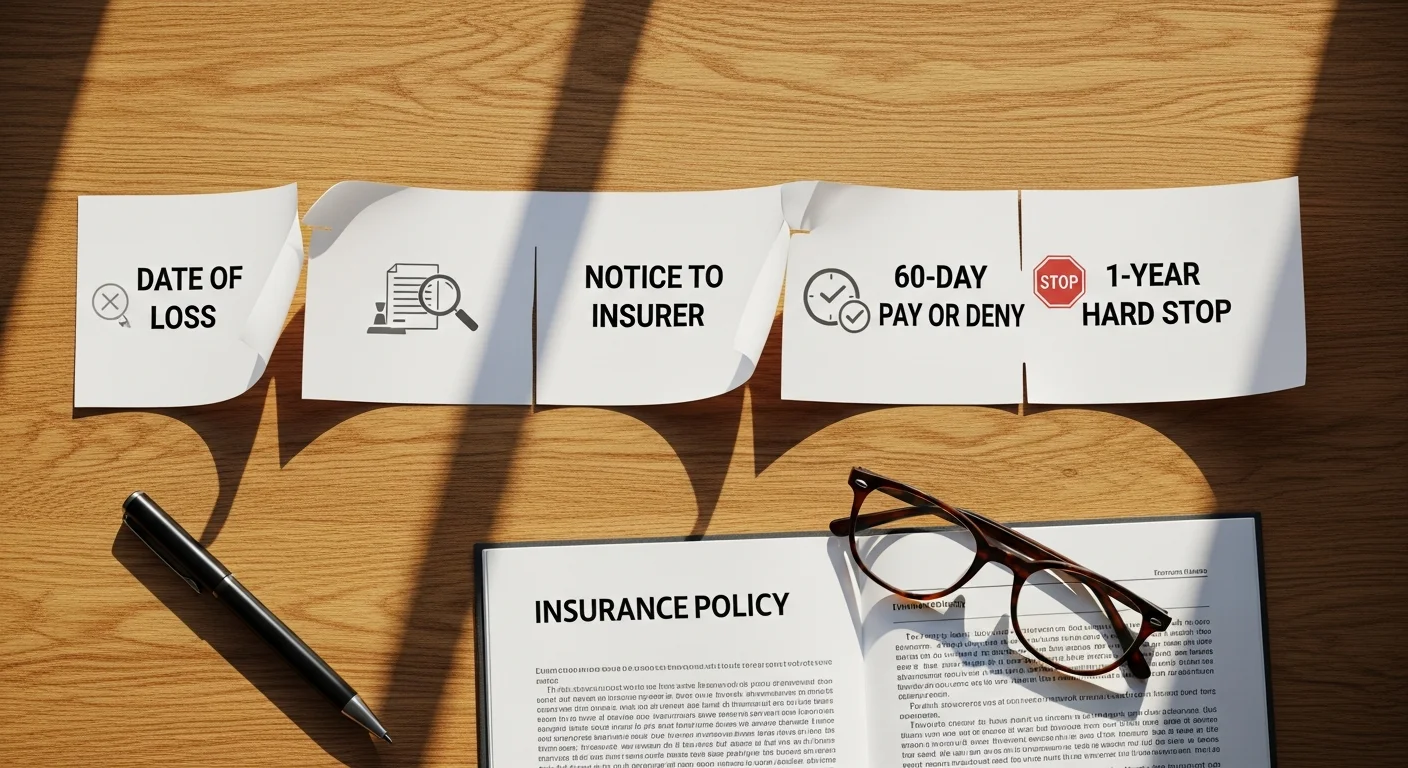
- Florida Statute 627.70132 generally bars new or reopened property insurance claims unless written notice is given to the insurer within 1 year after the date of loss.
- Supplemental claims — for additional damage discovered later — generally require notice within 18 months of the date of loss.
- Once you give notice, Florida law generally requires the insurer to pay or deny the claim within 60 days, with interest accruing on late payments.
- The 'date of loss' clock often starts when sudden damage occurred, but for slow leaks it usually starts when the damage was discovered or should have been discovered with reasonable care.
- Verbal notice to an agent is risky — written notice with a date- and time-stamped record is the only reliable way to lock in your deadline.
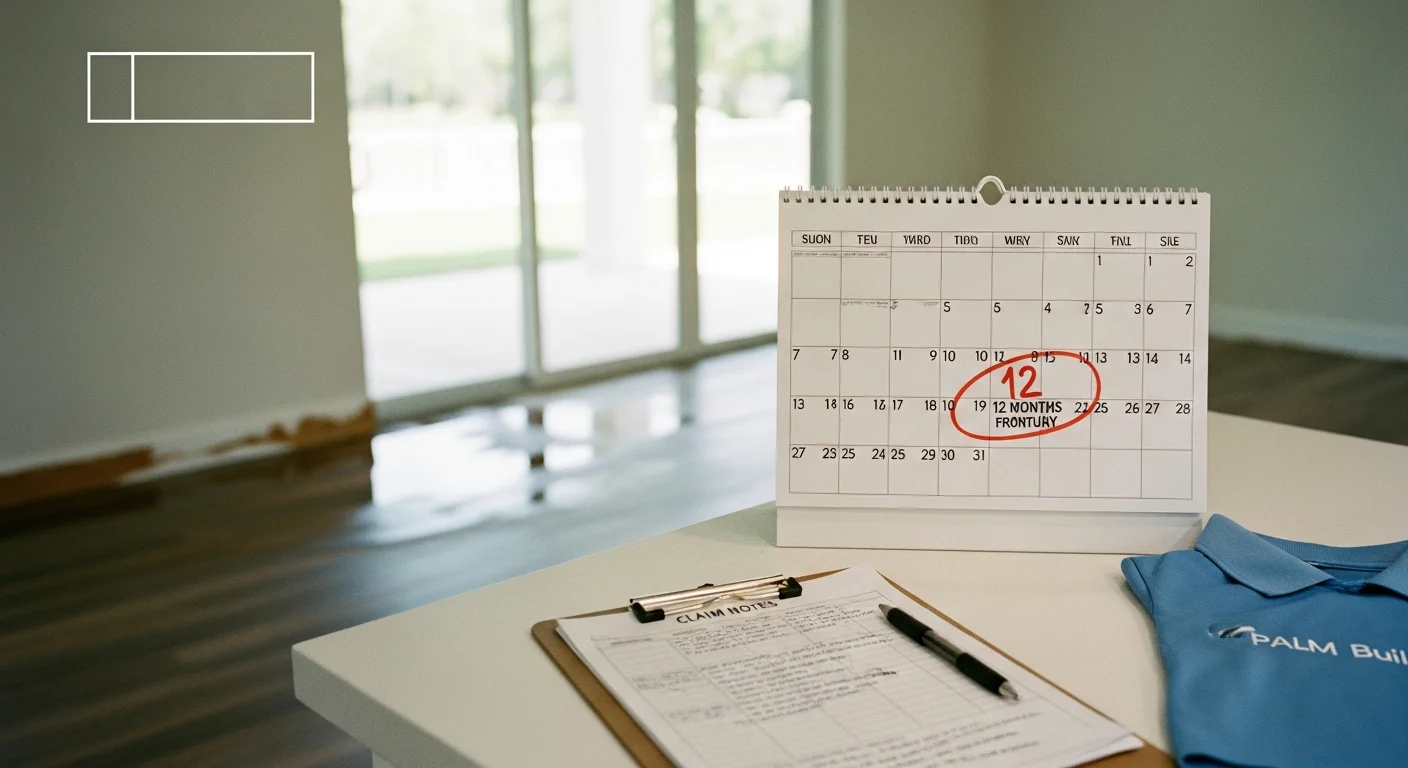
Florida gives you exactly 1 year to put your insurer on notice of a new or reopened property insurance claim, and 18 months to add a supplemental claim. Once you give notice, the insurer has 60 days to pay or deny. These three numbers — 365 days, 18 months, and 60 days — are written into Fla. Stat. § 627.70132, and missing the first one can wipe out an otherwise covered claim. This guide walks through how the clock starts, how to give proper notice, and how to keep your payout intact when the difference between a covered loss and a barred claim comes down to a calendar. If you want broader market context, see our Florida 2026 insurance market overview; if you have active damage right now, jump straight to emergency water damage restoration — every hour matters before mold establishes.
New or reopened claims
365 days
Statutory notice window from the date of loss (Fla. Stat. § 627.70132)
Supplemental claims
18 months
Statutory notice window for newly-discovered damage
Insurer pay-or-deny clock
60 days
From the date you give written notice — interest accrues if missed
What Florida's 1-Year Notice-of-Claim Rule Actually Says
Florida Statute § 627.70132 is the single most important law for any homeowner with property damage. In plain English, it sets three windows. First, a claim, supplemental claim, or reopened claim under a residential property insurance policy is generally barred unless notice was given to the insurer within the statutory time period after the date of loss. Second, the windows are 1 year for new or reopened claims and 18 months for supplemental claims. Third, the deadline runs from the date of loss — not from the date you read your policy, hired an attorney, or got around to calling. The Florida Legislature shortened these windows in late 2022 and early 2023 as part of the property insurance reform package, and they remain in force for the 2026 policy year.
The statute does not require that the entire claim be resolved inside the window. It only requires that you give the insurer notice of the claim. That distinction matters. You do not have to know the dollar amount, you do not have to have estimates, and you do not have to have started repairs. You just have to put the insurer on the clock with a written, dated record that a covered event occurred and you intend to seek coverage for it. Everything else — investigation, scope, payment — happens after the notice.
When the Clock Starts: Defining 'Date of Loss'
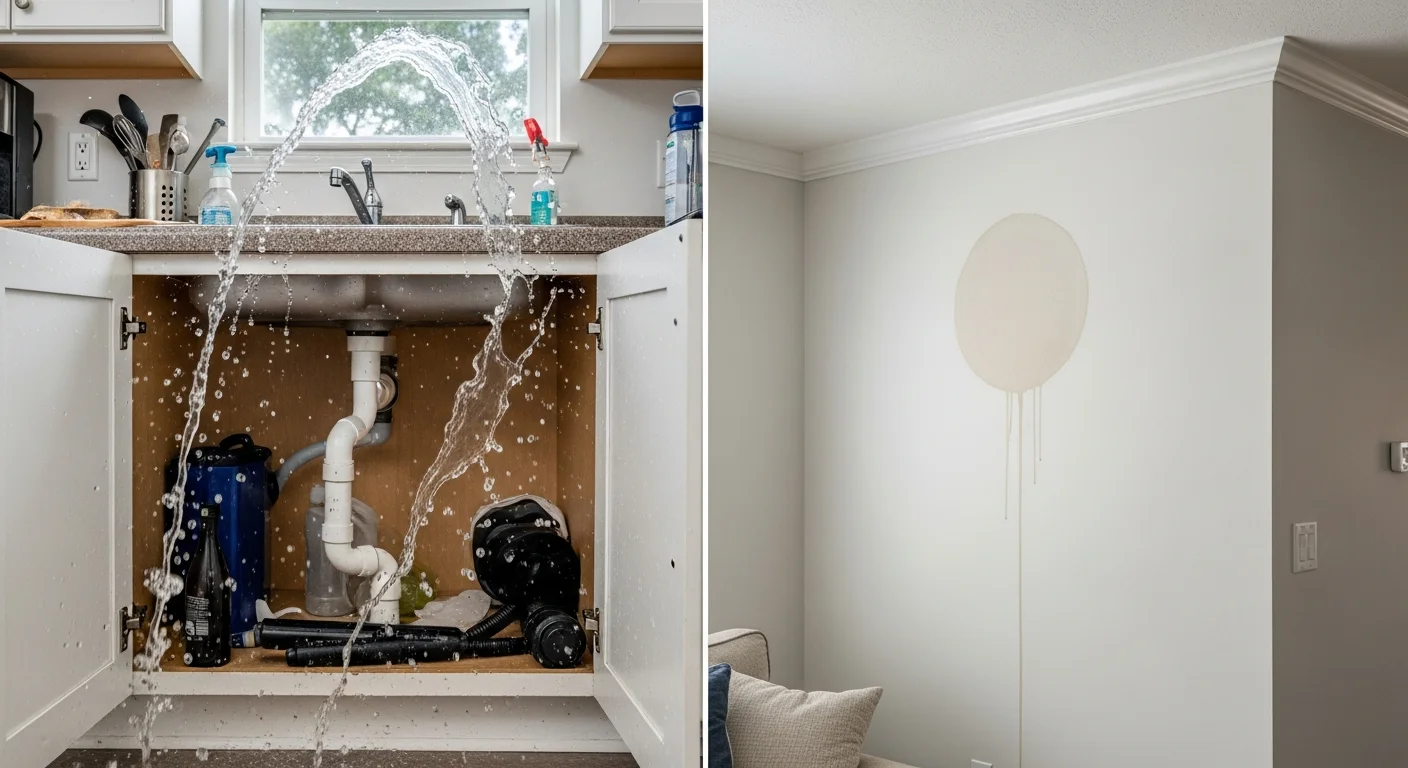
The 1-year clock starts on the date of loss, which sounds simple until you have a slow leak that quietly soaked into a wall for six weeks before the ceiling stained. Florida policies and case law generally treat sudden events — burst pipes, supply line failures, storm-driven roof intrusion — as having a date of loss equal to the day the event occurred. For gradual or hidden damage, courts have generally held that the date of loss is when the damage was first discovered or should have been discovered through reasonable care. The discovery date matters because honest homeowners can lose a claim by reporting too late after a slow leak surfaces. If you can document when you first saw the stain, smelled the mustiness, or heard the drip, that documentation can become the anchor for your timeline. For a deeper read on coverage triggers, see does homeowners insurance cover water damage.
Sudden burst — date of loss is the event date
- Supply line ruptures while you are home — date of loss is that day
- Toilet supply hose fails overnight — date of loss is the morning of discovery (sudden onset)
- Storm-driven roof leak after a windstorm — date of loss is the storm date
- Dishwasher overflows during a cycle — date of loss is the cycle date
- Frozen pipe bursts during a cold snap — date of loss is the burst date
Slow or hidden — date of loss is discovery date
- Pinhole leak behind drywall surfaces months later — clock generally starts at discovery
- Slab leak that gradually warps flooring — discovery date governs
- Roof underlayment leak that stained an attic ceiling — when you saw the stain
- Ice maker line slow drip surfaced as warped flooring — date you noticed the floor
- HVAC condensate overflow that surfaced as ceiling sag — date of visible damage
Three Different Deadlines: New, Reopened, and Supplemental Claims
The statute distinguishes between three claim types and assigns different windows to each. Treating them interchangeably is one of the most common mistakes Florida homeowners make. Here is how the categories actually work in practice.
| Claim type | Notice deadline | What it covers |
|---|---|---|
| New claim | 1 year from date of loss | First-time notice of damage from a covered event you have not previously reported |
| Reopened claim | 1 year from date of loss | A claim that was closed (paid or denied) and you are asking the insurer to reopen — same loss event |
| Supplemental claim | 18 months from date of loss | Additional damage from the same covered loss that was not in the original claim — for example, hidden mold or structural damage discovered later |
Florida property insurance notice windows under Fla. Stat. § 627.70132
Reopened and supplemental are not the same thing. Reopened means the original claim was closed and you want it back open — usually because new evidence shows the original payout was inadequate or denial was wrong. Supplemental means the original claim was active or paid but you found additional damage from the same event that nobody knew about at the time. The 18-month supplemental window is your safety net for damage that emerges months after the loss — for example, mold colonies that surfaced behind drywall that was never opened during the original mitigation.
How to Give Proper Notice (And What to Avoid)
Notice has to land on the insurer in a form they can date and trace. Verbal notice to your agent is the riskiest form because it is hard to prove later. The five-step process below produces a defensible notice record that locks in your deadline whether or not the case ever goes to dispute.
- 1
Identify your carrier and policy number
Pull your declarations page and confirm your current carrier — Florida's depopulation program means your policy may have moved between insurers between renewals. Note the policy number, effective dates, and the exact name of the insurance company on the declarations page (not just the agent's brokerage name).
- 2
Write down the damage in detail
Date and time of discovery, what room or rooms are affected, what the visible damage is, and the apparent cause. Keep this written log with you when you call — every adjuster will ask for the same information twice. See our deeper guide on how to file a water damage insurance claim for a longer walk-through.
- 3
Photograph everything before you move it
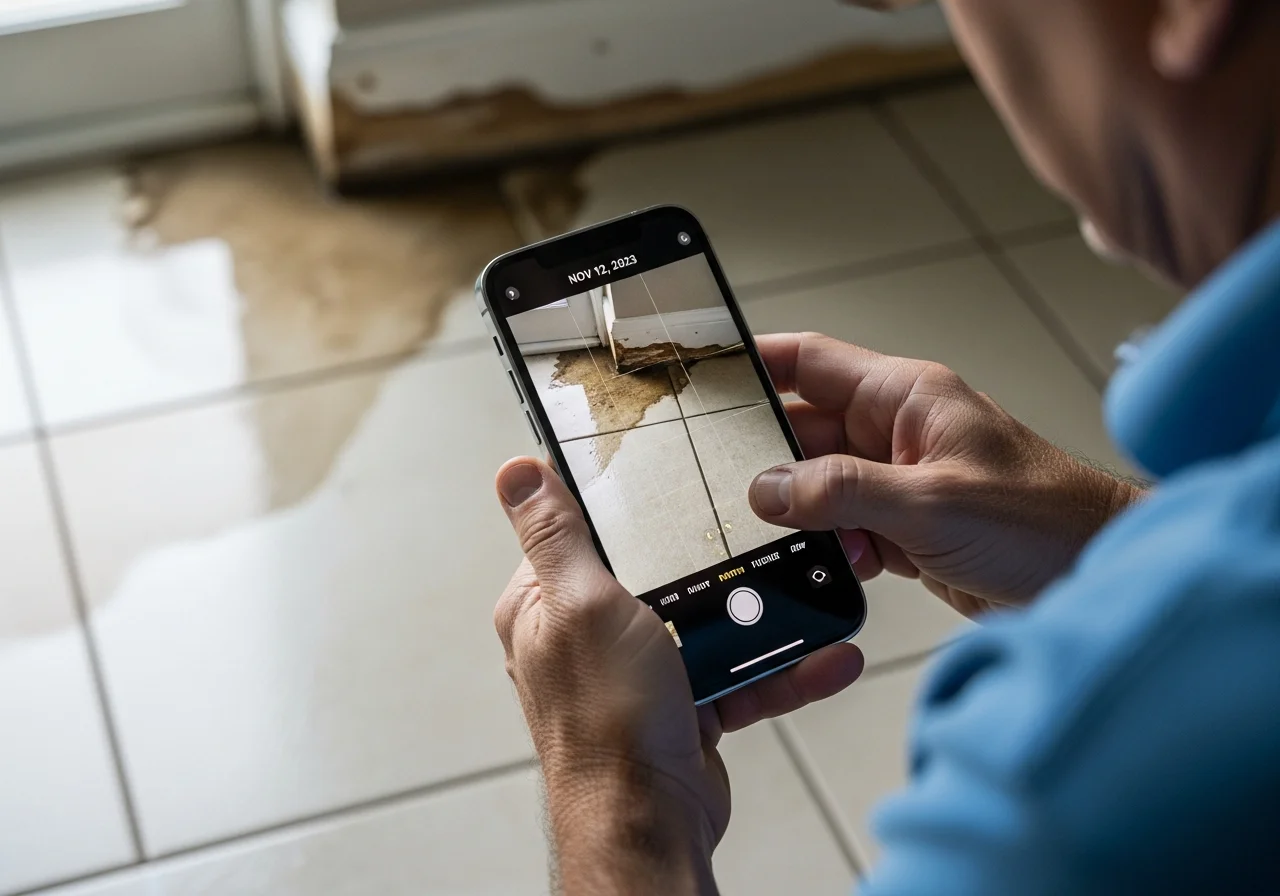
Phone video and stills with timestamps. Capture the source, the spread, the depth, and any relevant date-bearing artifacts (a current newspaper, a phone screen showing the date, a calendar visible in the room). Photograph affected materials before any extraction or demolition.
- 4
Call the insurer's claims line and log the call
Use the dedicated claims phone number on your declarations page or the carrier's website — not a general agent line. Get a claim number, the representative's name, and the date and time of the call. Write all of this down immediately.
- 5
Follow up the call with a written notice within 24 hours
Email or the carrier's online portal works. Reference the claim number, the date of loss, the policy number, and the damage description. Save the sent email and any portal confirmation. This written record is your proof of notice if the timing of the claim is ever disputed.
The 60-Day Pay-or-Deny Clock
Once the insurer receives written notice of the claim, Florida law generally requires payment or denial within 60 days. The clock can pause if there are factors clearly beyond the insurer's control — for example, a declared state of emergency that interrupts processing — but the default rule is straightforward: 60 days, then a decision. If the insurer pays late, statutory interest generally accrues on the unpaid amount from the date payment was due. This is one of the strongest pro-homeowner provisions in Florida insurance law, and it is why early notice protects you twice: once by complying with the 1-year window, and once by starting the 60-day clock as soon as possible. For more on how the post-notice process actually unfolds, see our overview of the insurance restoration process.
Exceptions and Tolling Situations
The 1-year and 18-month deadlines are firm but not absolute. Florida law and case law recognize a narrow set of situations where the clock can pause or where missed deadlines may be excused. None of these are guarantees, and all of them require evidence.
- Factors clearly beyond the insurer's control may toll the insurer's 60-day pay/deny clock — but typically not the homeowner's 1-year notice clock.
- A declared state of emergency may pause certain insurance deadlines, depending on the executive order or statute invoked.
- Concealment or misrepresentation by the insurer about coverage may, in narrow cases, raise an estoppel argument — but proving it is heavy lift.
- If the insurer fails to respond within the statutory time after a sworn proof of loss, that may have separate implications outside § 627.70132.
- Bankruptcy of the carrier and transfer to a successor or to FIGA can complicate timing and notice — get legal advice fast in this scenario.
Common Ways Florida Homeowners Accidentally Forfeit the Deadline
Most missed deadlines are not from people who read the statute and chose to ignore it. They are from people who thought their agent had filed the claim, who waited for repairs to start before calling, or who assumed their HOA's policy was theirs. The pattern is almost always the same: time passed, no written notice was filed, and by the time the homeowner realized it, the year was up.
Do
- Call the insurer the same day damage is discovered
- Get a claim number on the first call and write it down
- Follow up with a written email or portal submission within 24 hours
- Document the date of discovery on a phone photo or text-to-self
- Add the 1-year and 18-month dates to your calendar with reminders 60 days before each
Don't
- Assume your agent filed the claim because you mentioned it
- Wait for the contractor to call your insurer for you
- Rely on a voicemail or unanswered call as 'notice'
- Confuse a courtesy mitigation call with a formal claim
- Assume an HOA master policy claim covers your unit's interior — separate notice usually required
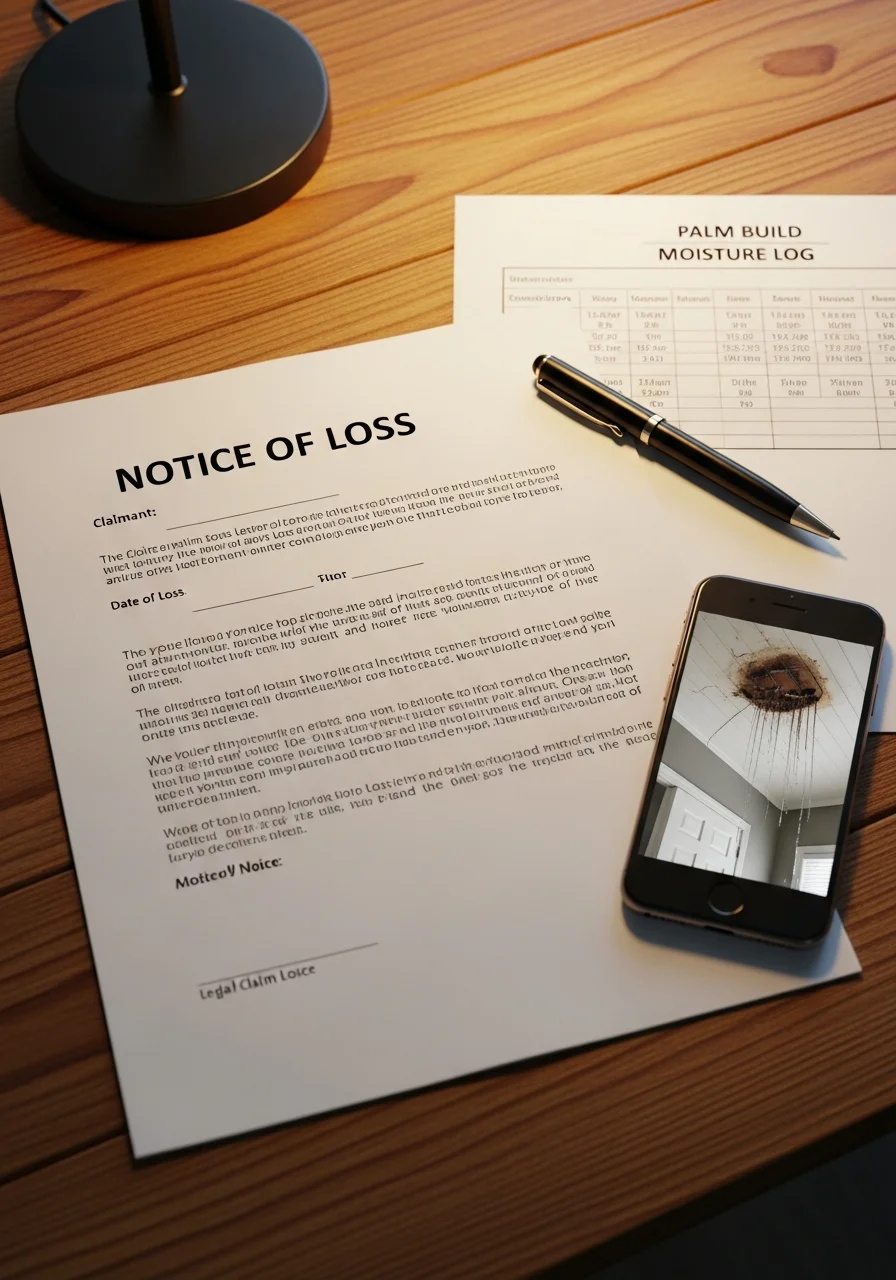
First-48-Hours Playbook to Lock In Your Deadline
The 1-year window is generous. The 24-to-48-hour mold window is not. Both deadlines are real, and the only way to honor both at the same time is to start documentation, notice, and mitigation as parallel tasks the day damage is discovered. Use the checklist below as a same-day playbook.
- Stop the water at the source: shut off the main supply or the dedicated valve and photograph the source before anyone touches it
- Note the exact date and time of discovery in a written log and a text-to-self for an independent timestamp
- Photograph and video every affected room before any item is moved, with timestamps visible
- Call the carrier's claims line, get a claim number, and write down the representative's name and time of call
- Send a written notice within 24 hours referencing the claim number, policy number, and date of loss
- Call a professional mitigation crew so extraction and dehumidification start within hours — mold can grow within 24 to 48 hours
- Save every receipt, invoice, and communication into a single file or email folder labeled with the claim number
- Add 60-day, 18-month, and 1-year reminders to your calendar from the date of loss

Costs and Mitigation Timeline (Brief)
Florida water damage restoration generally runs from low single digits to mid-double digits per square foot for mitigation, and full restoration projects typically range from a few thousand dollars to mid-five figures depending on materials affected and whether reconstruction is required. The dry-out phase usually takes 3 to 5 days for residential losses. For a deeper cost breakdown — including how mitigation, mold remediation, and reconstruction are usually scoped — see our 2026 water damage restoration cost guide.

How North Carolina and South Carolina Compare
Florida's 1-year statutory rule is unusual. North Carolina and South Carolina do not have an equivalent statute requiring notice within 1 year of the date of loss for residential property claims. That does not mean homeowners in those states have unlimited time. Most policies in NC and SC contain contractual 'prompt notice' provisions that require notice as soon as reasonably practicable after the loss, plus a contractual statute of limitations — often 1 to 3 years — for filing suit on a coverage dispute. The practical advice is the same in all three states: report the moment damage is discovered, document continuously, and never rely on verbal notice. The penalty structure simply differs by state.
When to Call Palm Build
Mitigation crews do not give legal advice on deadlines, but the documentation a properly equipped crew produces — moisture readings mapped to a floor plan, daily drying logs, before-and-after photos, scope-of-work invoices — is exactly what an adjuster needs to approve a claim quickly and what an attorney would want to see if a deadline ever becomes contested. We respond 24/7 across Florida, North Carolina, and South Carolina.
- 1
Residential Water Loss
We dispatch within hours and begin extraction and dehumidification before mold can establish. Our water restoration team produces a claim-ready documentation package alongside the job.
- 2
Commercial and HOA Claims
Multi-unit losses involve parallel notice obligations across owners, HOA boards, and management companies. Our commercial restoration and HOA services teams coordinate the documentation so each policy's notice clock is preserved.
- 3
Large-Loss and CAT Response
Catastrophic events — hurricanes, multi-unit pipe failures, structural failures — create dozens of claims with overlapping deadlines. Our large-loss handling team operates with the same documentation discipline at scale.
Florida 2026 Insurance Market Overview
How Citizens rate cuts, county-by-county premiums, and the FIGA assessment phase-out are reshaping Florida claims in 2026.
How to File a Water Damage Insurance Claim
Step-by-step guide to the claims process from first call to final payout, with documentation templates.
Does Homeowners Insurance Cover Water Damage?
Sudden vs. gradual, what is covered, and how the date-of-loss question gets answered.
How Fast Does Mold Grow After Water Damage?
Why the EPA and FEMA 24-to-48-hour window decides whether mold becomes a covered extension or an exclusion.
Water Damage Restoration Cost (2026)
Mitigation, demolition, and reconstruction pricing ranges with the variables that drive each number.
Insurance Restoration Process
How Palm Build coordinates directly with insurers from initial claim through rebuild completion.
How long do I have to report a water damage claim in Florida? +
What is Florida Statute 627.70132? +
Does the 1-year deadline apply to my old water damage from last year? +
What's the difference between a new claim and a supplemental claim in Florida? +
Does verbal notice to my agent count as filing a claim? +
What if I missed the 1-year deadline? +
Should I start mitigation before reporting the claim? +
Worried about a Florida claim deadline?
Our IICRC-certified teams respond 24/7 across Florida, North Carolina, and South Carolina. We document every step of the mitigation so your insurer's adjuster — and your calendar — both stay on track.
Found this helpful? Send it to someone who needs it.