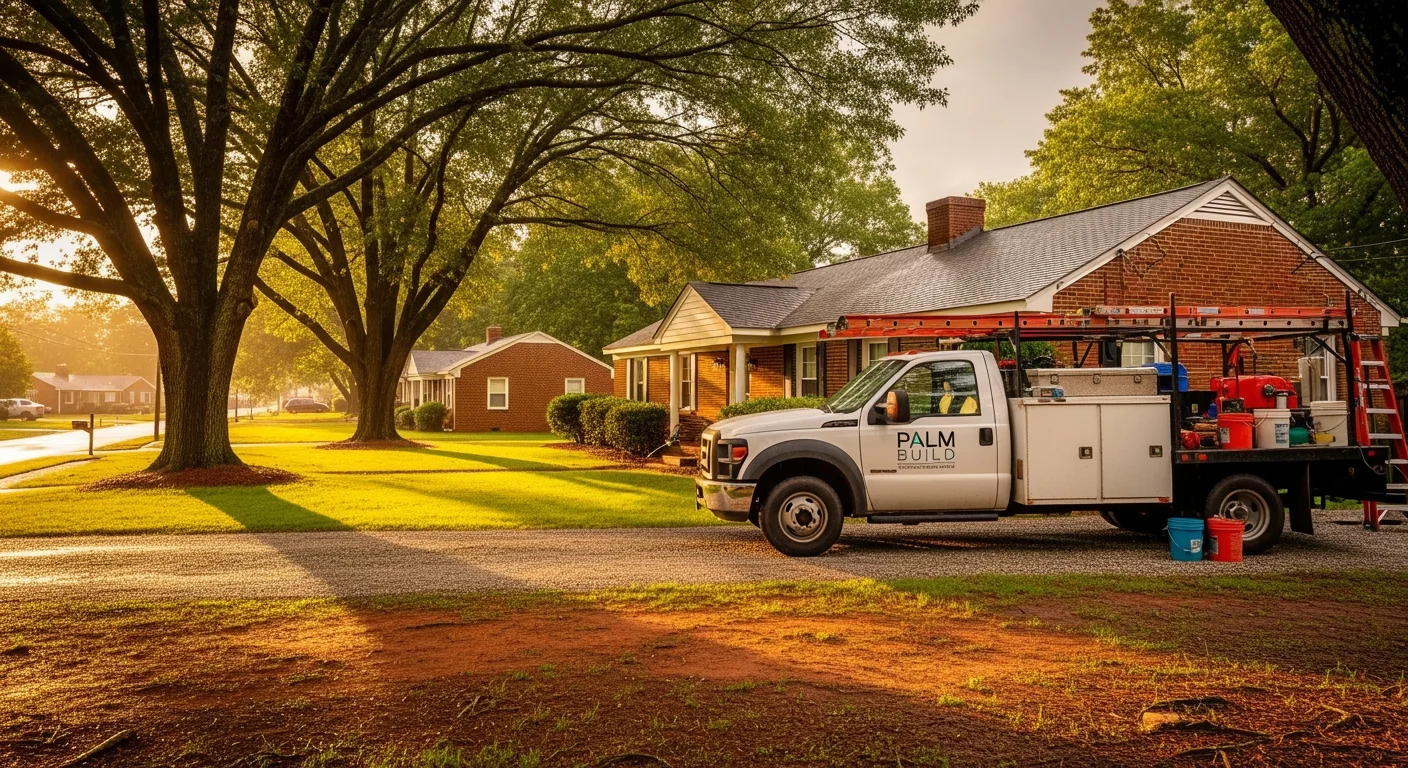
Palm Build restoration truck parked at a brick ranch home in Dallas, North Carolina with red clay soil and mature oak trees visible after rain
DALLAS NC — 24/7 WATER DAMAGE RESPONSE

Water Damage Restoration in Dallas, North Carolina

When a burst supply line floods your Dallas home at 2 a.m. or Gaston County's clay soil pushes groundwater into your crawl space after three days of rain, Palm Build responds in 30 to 60 minutes with truck-mounted extraction, structural drying, and insurance-ready documentation.

Local Office — Charlotte, NC (30-60 min to Dallas) 30-60 min Response IICRC Certified

30-60 min

Emergency Response

24/7

Dispatch Available

IICRC

Certified Technicians

Local Risk Factors

Why Dallas Homes Face Unique Water Damage Risks

Dallas isn't just another Gaston County town. Its Long Creek watershed, heavy Piedmont clay, a housing stock peaking in the 2000-2009 failure window, and a documented history of severe storms create a water damage risk profile that generic restoration companies routinely miss — and mold can begin growing in 24 to 48 hours.

Long Creek Watershed

3 Tributaries

Through Dallas

Dallas sits within the Long Creek watershed, with drainage flowing through Dallas Branch and Little Long Creek tributaries before joining the South Fork Catawba River. Homes near these tributaries face elevated crawl space and basement seepage during multi-inch rain events — even outside FEMA-mapped flood zones. In March 2021, heavy rainfall raised flooding concerns along the South Fork in Gaston County with river levels expected to exceed flood thresholds.
Piedmont Clay Soil

<0.2 in/hr

Infiltration rate

Dallas's Piedmont clay has infiltration rates below 0.2 inches per hour. NC State Extension specifically flags these subsoils as causing slow water movement and prolonged wetness. After heavy rain, water pools against foundations for days. The state's geologic-hazards guidance documents clay shrink-swell behavior — wet periods swell clay and dry periods shrink it — creating cracks, shifting, and new seepage pathways at foundations and slab edges.

2000s-Era Housing Peak

28.5%

Built 2000-2009

28.5% of Dallas homes were built between 2000 and 2009 — the town's largest construction cohort. These homes are now entering the critical plumbing failure window: CPVC supply line degradation, original water heater failures (12-15 year lifespan), and washing machine hose deterioration. OSB roof decking absorbs water faster than plywood. Mixed crawl space and slab foundations mean no single restoration approach fits every home.

Storm Exposure History

4 Events

In 4 years

Gaston County has documented multiple significant weather events in recent years: May 2024 EF-1 tornadoes triggering a Governor's disaster declaration, September 2024 Hurricane Helene impacts earning federal designation FEMA-4827-DR, September 2022 Hurricane Ian remnants, and March 2021 flood-stage concerns on the South Fork River. Dallas homeowners live in active storm country.

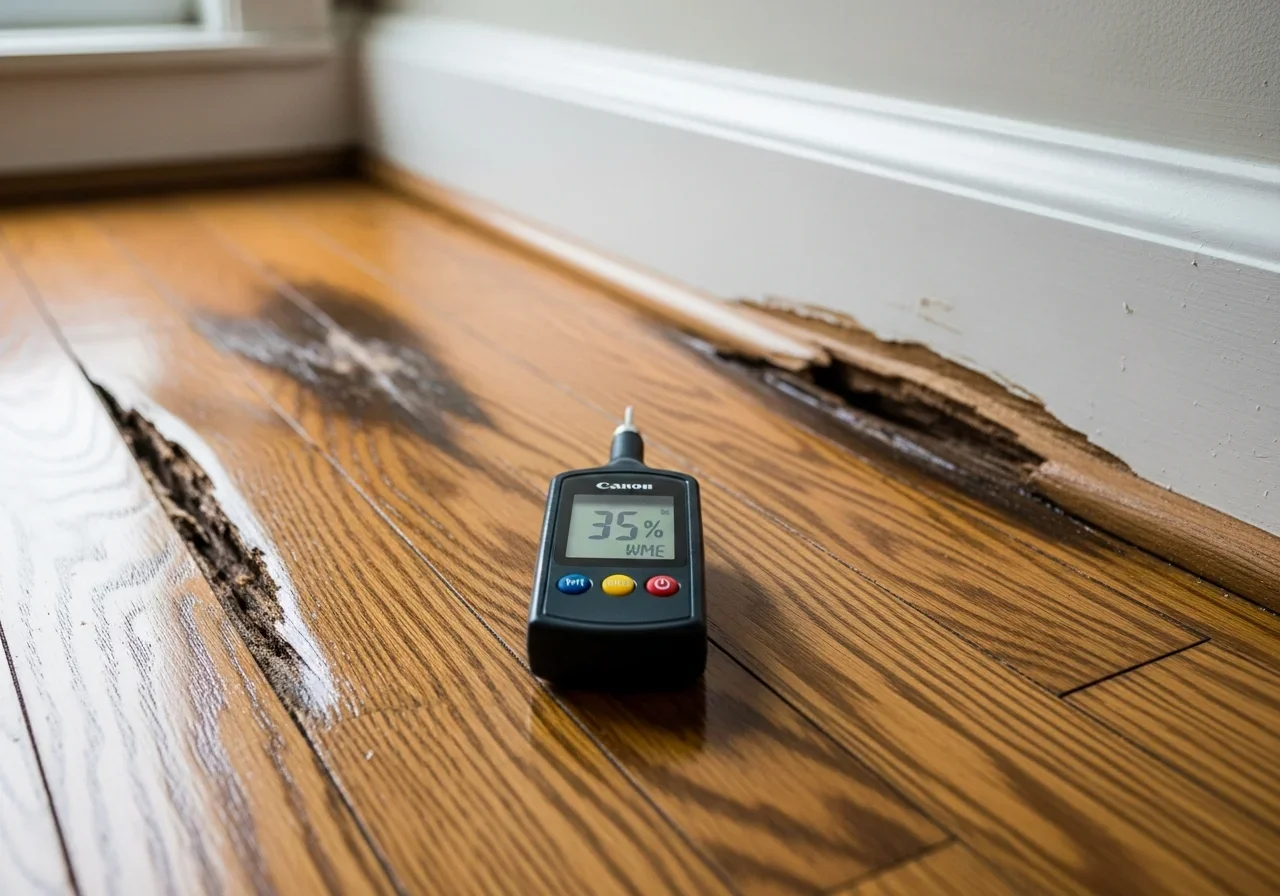
Water damage to hardwood floors in a Dallas NC home showing warping and buckling from moisture intrusion with a moisture meter reading
Hardwood floor buckling in a Dallas home — Piedmont clay soil pushes moisture from below while interior leaks attack from above.

Unique to Dallas

Long Creek Watershed: Dallas's Hidden Flood Risk

Dallas sits within the Long Creek watershed — a drainage network that channels stormwater through residential areas via Dallas Branch and Little Long Creek before reaching the South Fork Catawba River. Even homes outside FEMA-mapped flood zones face elevated moisture risk when these tributaries rise.

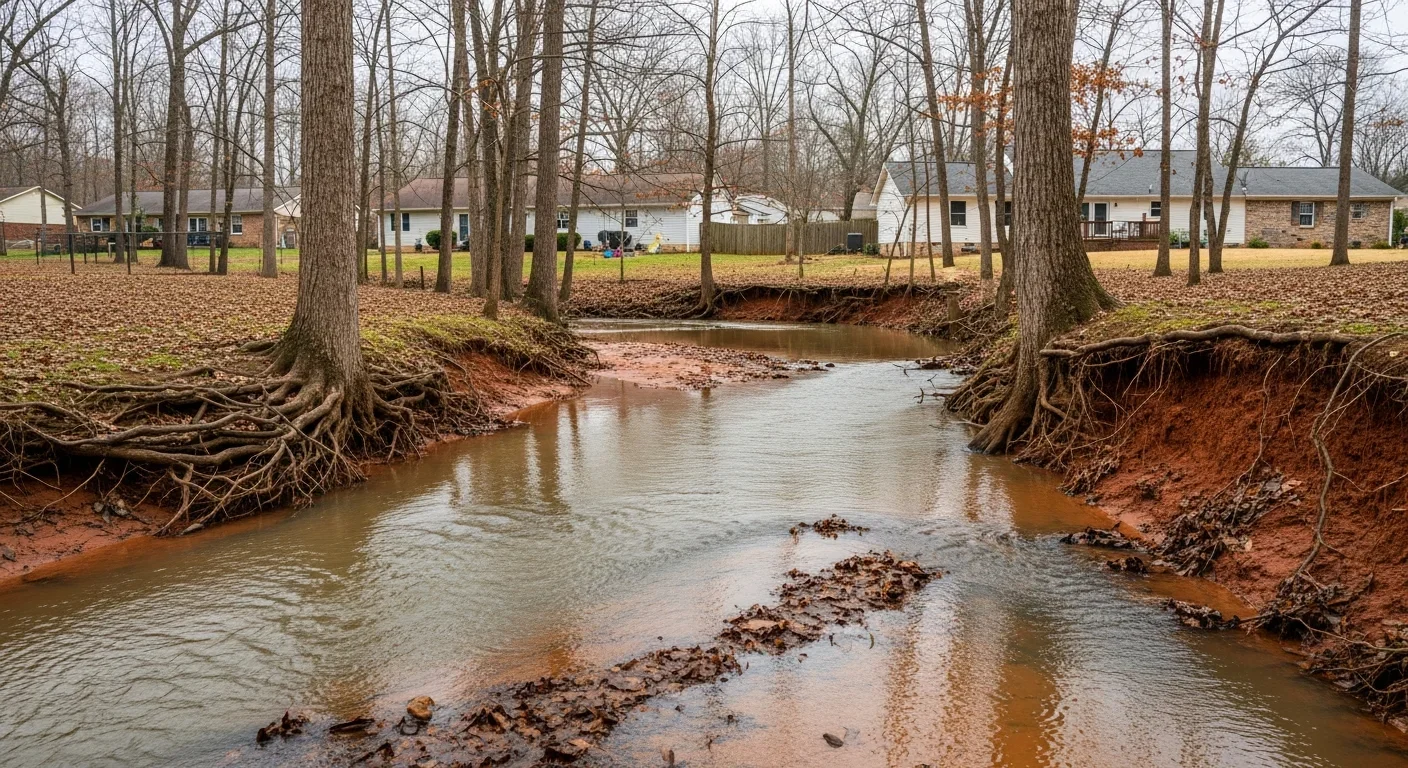
Long Creek tributary flowing through a wooded residential area near Dallas North Carolina with elevated water levels after rainfall
A Long Creek tributary after heavy rainfall — creek-adjacent Dallas properties face persistent groundwater and crawl space seepage risk.

Dallas Branch

Primary tributary running through the town, collecting runoff from residential and commercial areas before joining Long Creek.

Little Long Creek

Secondary drainage tributary with residential neighborhoods along its corridor. Properties in lower elevations face elevated seepage risk.

South Fork Catawba River

Long Creek drains into the South Fork. In March 2021, heavy rainfall raised river levels above flood thresholds in Gaston County, saturating soils for weeks afterward.

Floodplain Permitting

Gaston County building development services handle floodplain permitting for Dallas and explicitly list it among their service categories. Post-loss structural repairs in SFHA zones may require floodplain development permits.

Check Your Flood Zone Status

FEMA flood zones are property-specific, not townwide. Mapped high-risk areas in Dallas correlate with Long Creek tributaries and low-lying drainageways. Look up your exact address at the FEMA Flood Map Service Center to understand your specific risk and insurance requirements.

Unique to Dallas

Gaston County Permits & Rebuild Readiness

Knowing when permits are required — and when they're not — prevents costly delays. Palm Build handles all Gaston County permitting as part of our full-service restoration, including floodplain permits that most competitors don't even know about.

No Permit Needed

Emergency water extraction and pumping
Structural drying with dehumidifiers and air movers
Mold prevention antimicrobial treatment
Contents pack-out and temporary storage
Damaged material removal (demo only)

Palm Build begins mitigation immediately — no permitting delay.

Gaston County Permit Required

Structural framing repairs or replacement
Electrical rewiring or panel upgrades
Plumbing repair or rerouting
HVAC ductwork replacement
Drywall replacement exceeding county threshold

We pull permits through Gaston County building development services and schedule all inspections.

Floodplain Development Permit

Structural work within FEMA Special Flood Hazard Areas
Foundation modifications near Long Creek tributaries
Substantial improvement calculations (50% rule)
Elevation certificate requirements

Gaston County explicitly lists floodplain permitting among their services for Dallas. Competitors rarely address this.

Our Dallas Process

How We Restore Dallas Homes After Water Damage

Every water damage event is different, but the science of restoration follows a proven sequence. Here's exactly what happens when you call Palm Build for a Dallas water emergency.

01

Emergency Response

30-60 Minutes

Call our North Carolina line at (704) 464-0121 any time, day or night. Our dispatcher sends a crew from our Charlotte operations hub — approximately 25 miles east via I-85 and Highway 321. We arrive with truck-mounted extraction, commercial LGR dehumidifiers, and air movers ready to deploy immediately.

02

Moisture Mapping & Assessment

60-90 Minutes

IICRC-certified technicians use infrared thermal imaging and pin-type moisture meters to map exactly where water has traveled — behind walls, under flooring, into crawl spaces. For Dallas homes on clay soil, we check for groundwater influence and crawl space saturation. Every reading feeds your insurance documentation.

03

Contents Protection & Extraction

2-6 Hours

Contents are inventoried, photographed, and relocated before extraction begins. Truck-mounted extractors remove standing water at rates exceeding 25 gallons per minute. For Dallas crawl spaces on clay soil, submersible pumps and low-profile extractors handle confined-space removal. Wet padding and unsalvageable materials are removed immediately.

04

Structural Drying

3-5 Days

Commercial LGR dehumidifiers and high-velocity air movers create a controlled drying environment. Dallas's clay soil means moisture pressure persists from below even as we dry from above — we compensate with additional dehumidification capacity and continuous moisture monitoring at every structural point. Daily readings confirm progress toward IICRC dry standard.

05

Antimicrobial Treatment

Days 2-5

Every Dallas water restoration includes antimicrobial treatment of affected framing, subfloor, and crawl space materials within the first 24 hours. Gaston County's summer humidity accelerates mold colonization — we don't wait for visible growth. HEPA air scrubbers run continuously during drying to capture airborne spores.

06

Repairs & Reconstruction

1-6 Weeks

All structural work is permitted through Gaston County building services. We restore to pre-loss specifications — matching existing materials, finishes, and trim profiles. For properties in FEMA-mapped flood zones, we coordinate floodplain development permits when required. Your home comes back right, not just fast.

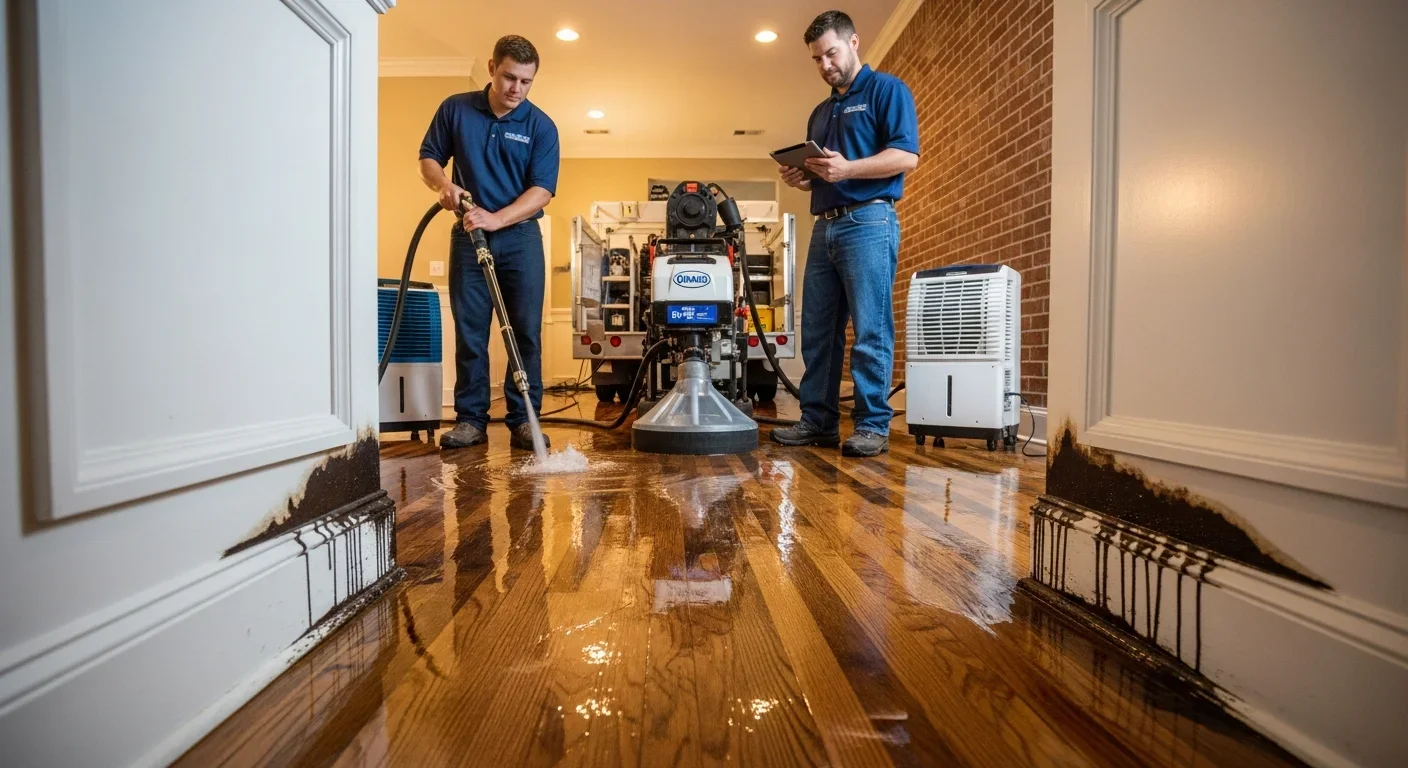
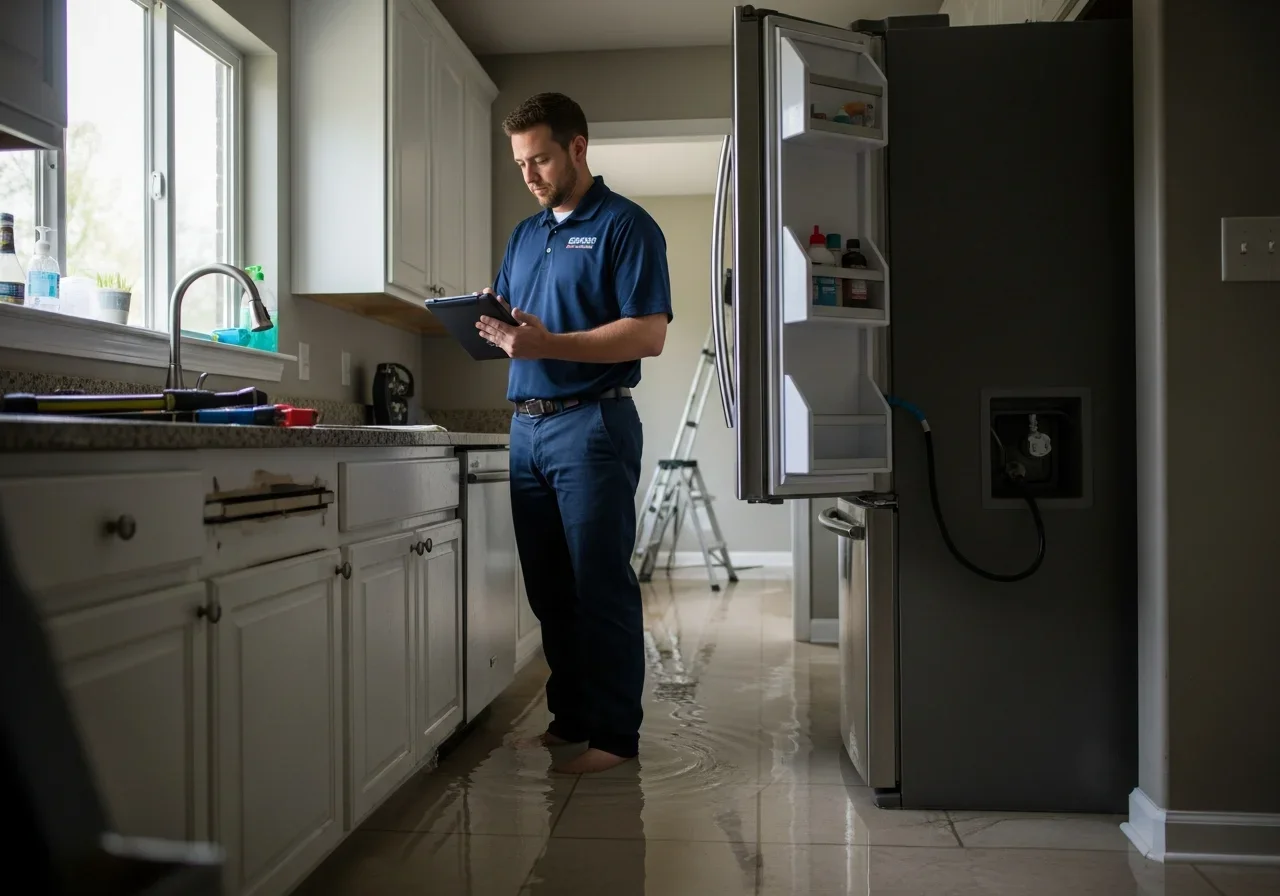
Palm Build technicians performing emergency water extraction in a Dallas NC home with commercial equipment

Why Our Dallas Process Works

1

Clay Soil Specialists

We understand Piedmont clay dynamics and how they extend drying timelines

2

30-60 Min Response

Direct dispatch from Charlotte — Dallas is a priority Gaston County zone

3

Gaston County Permit Knowledge

We navigate county building services and floodplain permitting requirements

4

Insurance-Ready Documentation

Moisture maps, thermal images, and daily drying logs formatted for your adjuster from hour one

Schedule an Assessment

Seasonal Risk

When Dallas Homes Are Most at Risk

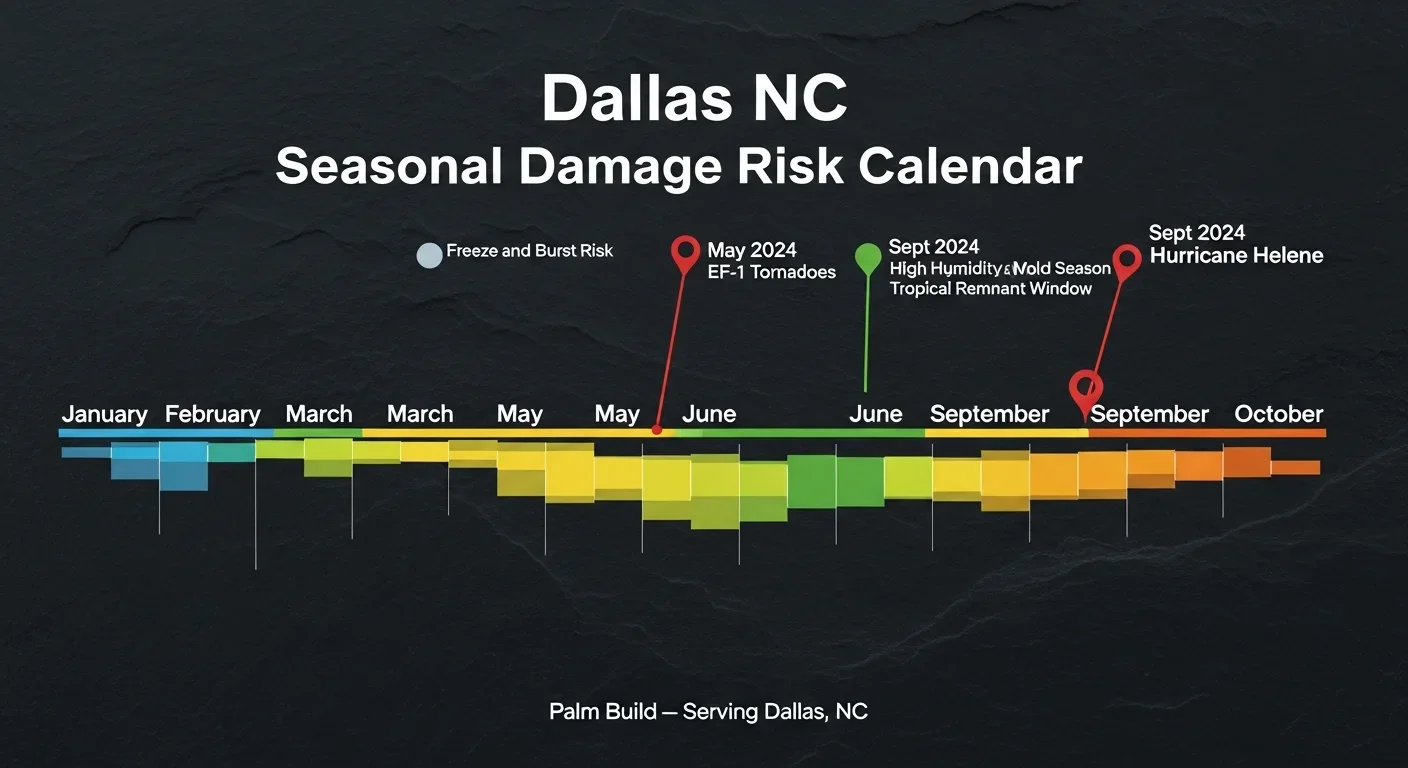
Dallas's Piedmont climate produces distinct water damage patterns anchored by documented local events. This isn't theoretical — these are real storms and real impacts that affected Gaston County homes.

Seasonal damage risk calendar for Dallas NC showing monthly risk patterns with documented storm events marked

Late Winter — Early Spring

February - April

  • Supply line freezes in exposed crawl spaces
  • Roof leaks from wind events and failed flashing
  • Ceiling stains surfacing weeks later during spring rains

Peak Storm Season

May - July

  • Severe thunderstorms and tornado-driven wind damage
  • Emergency tarping, tree impact, water intrusion calls spike
  • Flash flooding overwhelms stormwater and yard drainage

May 8, 2024: Two EF-1 tornadoes hit Gaston County — Governor disaster declaration

High Humidity Season

June - September

  • Crawl space moisture accumulation on clay soil
  • Mold colonization in wall cavities within 24-48 hours of water events
  • HVAC condensate failures in older systems

Tropical Remnant Window

September - October

  • Wind-driven rain from tropical remnants
  • Multi-day drying needs with power-loss contingencies
  • Roof leak response and downed-tree intrusion

Sept 2024: Hurricane Helene — FEMA-4827-DR federal disaster designation

Damage Profiles

Common Water Damage Types in Dallas Homes

Dallas's housing stock produces predictable failure patterns by construction era. Knowing your home's risk profile helps you prepare — and tells us what to check first when we arrive.

High

Supply Line & Plumbing Failures

2000-2009 homes (28.5% of stock)

CPVC pipe degradation, water heater failures after 12-15 years, washing machine hose bursts. The most common water damage source in Dallas.

Moderate-High

Crawl Space Moisture Intrusion

All homes with crawl space foundations

Clay soil saturation drives moisture through block walls and open vents. Standing water on clay below and humid air above create persistent dampness even without a visible leak.

Variable

Storm & Roof-Driven Water Entry

All eras — especially OSB-decked roofs

Wind-driven rain, missing shingles, failed flashing, and clogged gutters. Gaston County averaged four major storm events in four years. OSB roof decking absorbs water faster than plywood.

High

Freeze-and-Burst Events

Older homes with exposed crawl space lines

Piedmont freeze-thaw cycles burst exposed supply lines in crawl spaces, especially where insulation has fallen. Water may flow for hours before detection in unoccupied spaces.

Moderate

Groundwater & Drainage Failures

Homes near Long Creek tributaries

Negative grading, disconnected downspouts, and clogged French drains push clay-held water against foundations. Lower-elevation properties near Dallas Branch face elevated risk.

Moderate

Tight-Envelope Moisture Trapping

2010s-2020s construction

Newer energy-efficient homes trap construction moisture and condensation. Without adequate mechanical ventilation, moisture accumulates in wall cavities and attic assemblies.

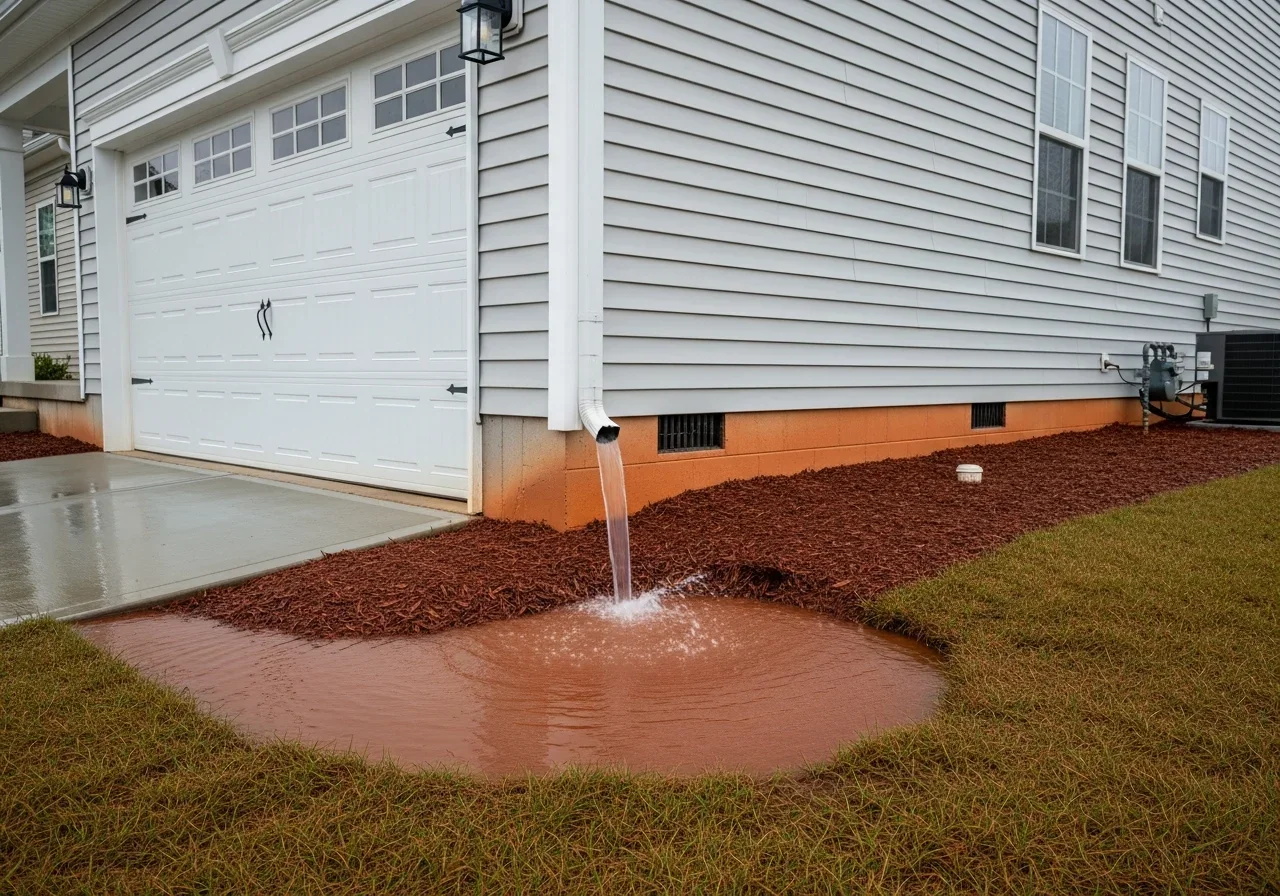
Disconnected downspout dumping water against foundation of a newer subdivision home in Dallas NC with clay soil pooling
Disconnected downspouts on compacted clay — the drainage failure that drives foundation moisture across Dallas's newer subdivisions.

Dallas Gallery

Water Damage Restoration in Dallas Homes

Real conditions in Dallas and Gaston County homes — from storm damage to crawl space moisture to full restoration.

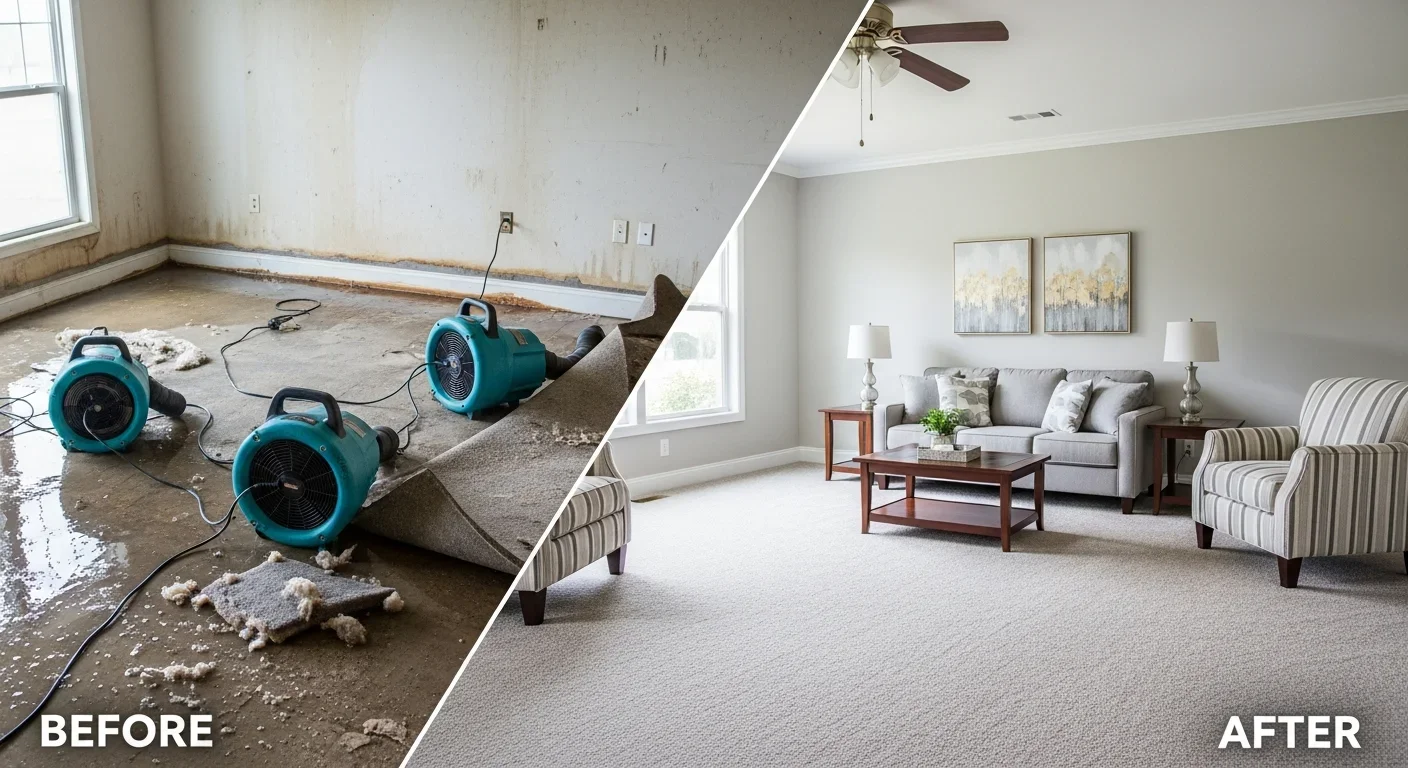
Before and after water damage restoration in a Dallas NC living room showing waterlogged carpet transformed to fully restored space
Living room water damage — from saturated carpet and exposed padding to full restoration.
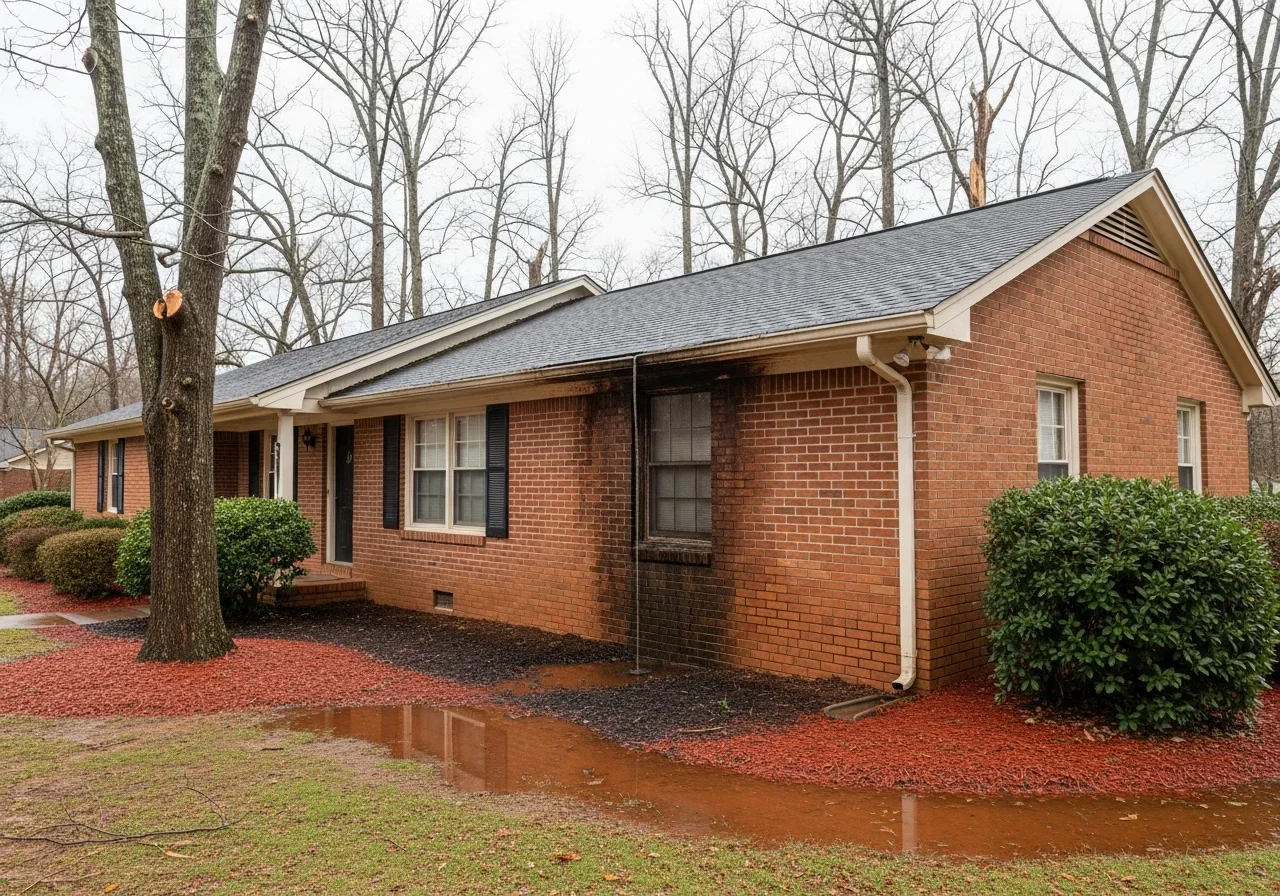
Exterior of a brick ranch home in Dallas NC showing water staining from a damaged gutter on the brick wall
Exterior water damage on a 1990s-era Dallas brick ranch — gutter failure channeling water against the foundation.
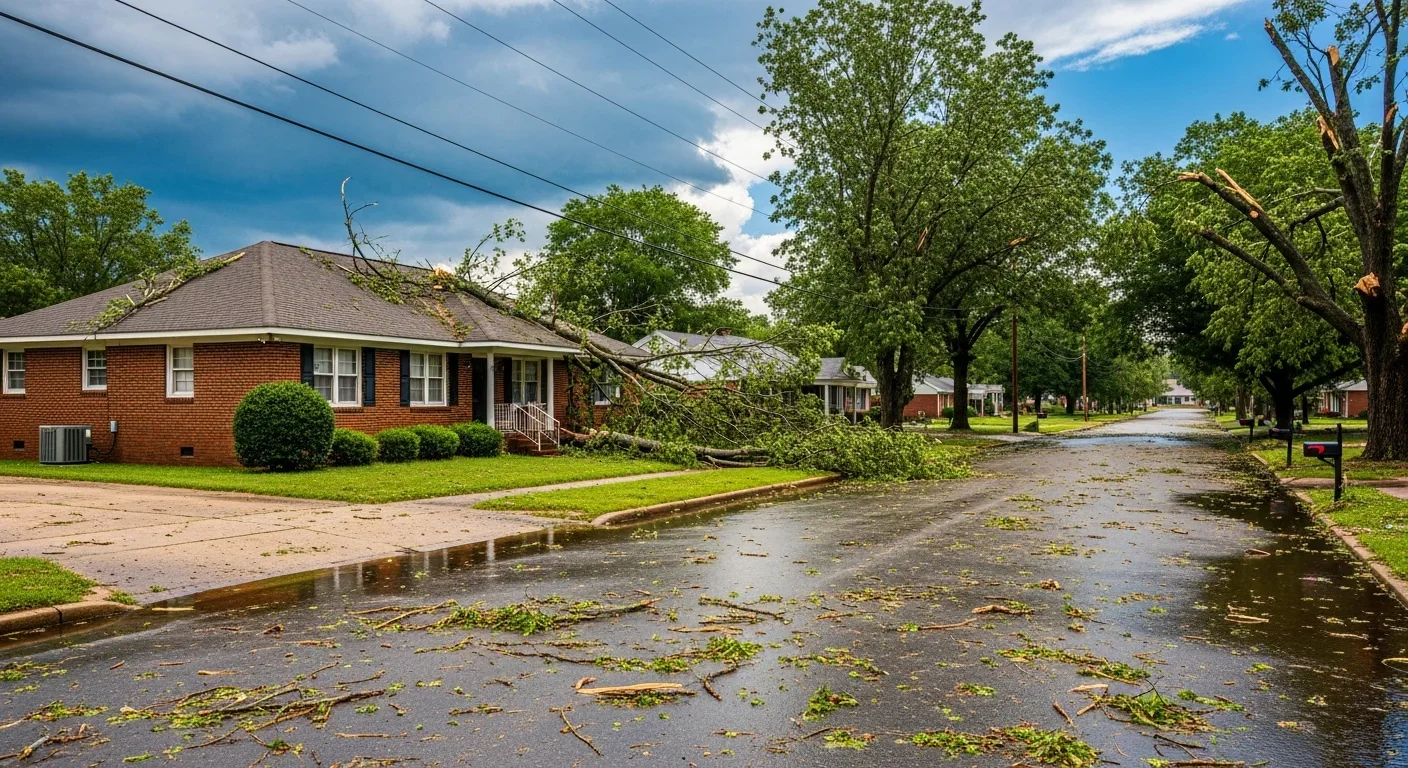
Dallas NC neighborhood street after a severe thunderstorm with downed tree limbs on a roof and debris on wet pavement
Post-storm conditions in a Dallas neighborhood — the kind of event that triggers emergency tarping and water intrusion calls.
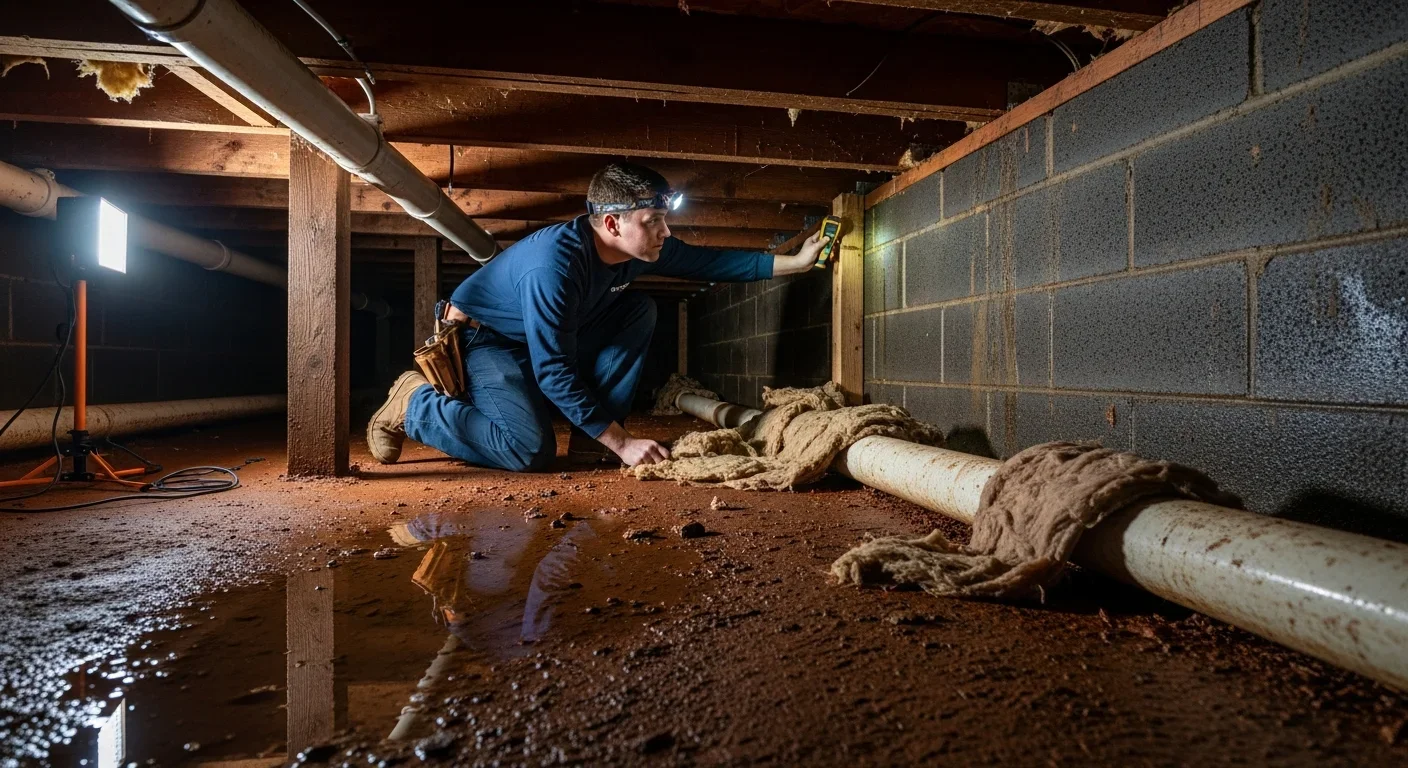
Restoration technician inspecting a damp crawl space in Dallas NC with moisture meter on floor joists above red clay soil
Crawl space moisture assessment — red clay soil and standing moisture on block walls in a Dallas home.

Cost Guide

Water Damage Restoration Costs in Dallas

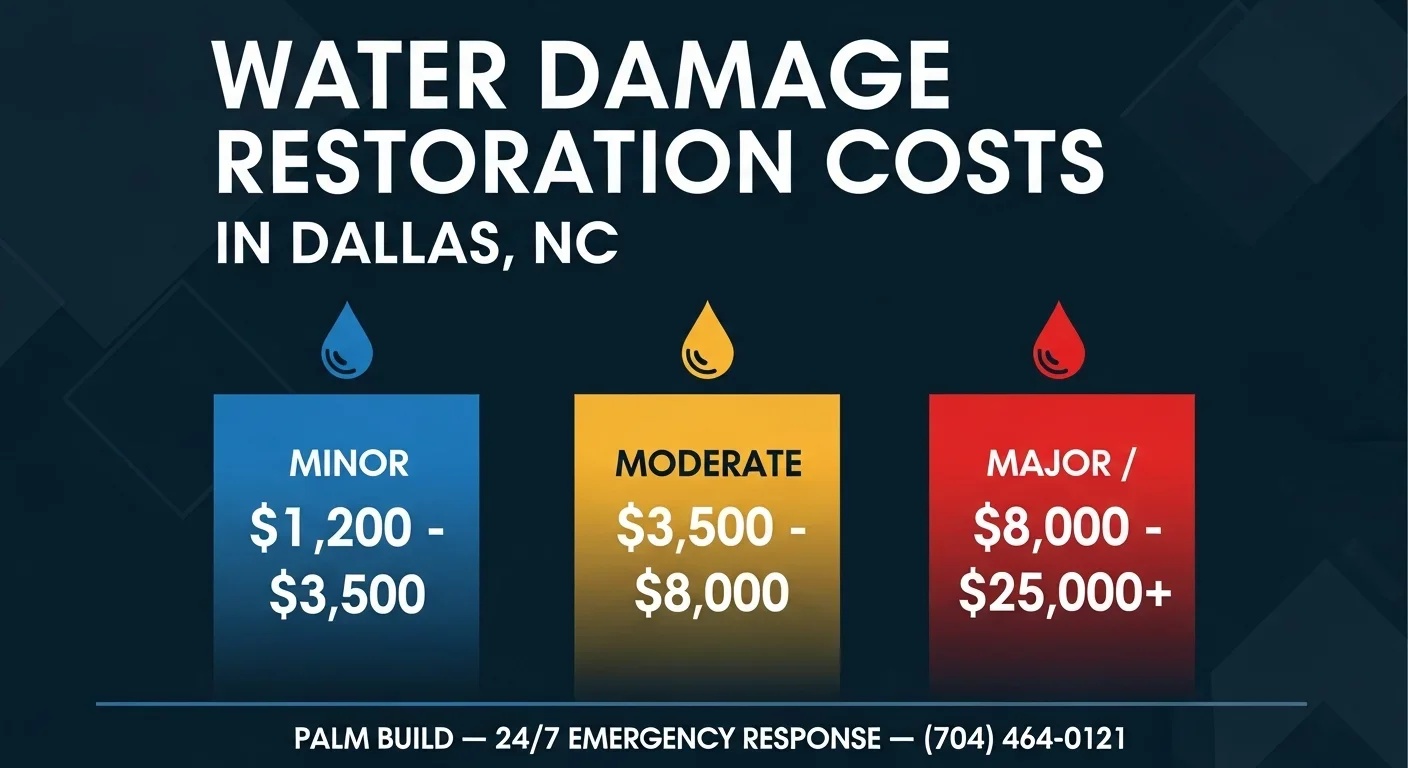
Costs depend on severity, affected materials, and whether clay soil complications extend drying timelines. NC base homeowners insurance rates are increasing approximately 15% by mid-2026 — fast mitigation protects both your home and your insurability.

Water damage restoration cost breakdown for Dallas NC showing minor, moderate, and major damage price ranges

Minor Water Damage

$1,200 - $3,500

Common Causes

Single-room leak, small appliance failure, toilet overflow

Typical Timeline

1-3 days drying

Dallas Note

Fast response can keep most Dallas water events in this range

Moderate Water Damage

$3,500 - $8,000

Common Causes

Multi-room water damage, crawl space flooding, broken supply line

Typical Timeline

3-5 days drying + repairs

Dallas Note

Clay soil extends drying timelines — plan for extra dehumidification

Major Water Damage

$8,000 - $25,000+

Common Causes

Whole-floor flooding, storm damage, sewage backup, extended crawl space remediation

Typical Timeline

5+ days drying + reconstruction

Dallas Note

Gaston County permits required for structural reconstruction

Insurance Support

Insurance Claims for Water Damage in Dallas

NC insurance rates are rising approximately 15% by mid-2026. Thorough documentation that proves fast, professional mitigation protects your claim and your future insurability.

Photo Documentation

Every affected area photographed before, during, and after mitigation with timestamped images.

Moisture Mapping

Pin-type and non-invasive meter readings at every monitoring point, logged daily with GPS coordinates.

Daily Drying Logs

Temperature, humidity, and moisture readings recorded at standardized intervals to prove drying progress.

Complete Loss Package

Scope of damage, materials inventory, equipment logs, and reconstruction estimate — all in adjuster-ready format.

Palm Build technician documenting water damage on a digital tablet for insurance claims in a Dallas NC home
Insurance-grade documentation from the first hour — every reading and photo feeds your claim file.

Common Carriers in the Dallas Area

State Farm Largest NC market share — requires detailed moisture logs and progress photos
NC Farm Bureau Strong in Gaston County — preferred vendor documentation speeds approvals
Erie Insurance Growing NC presence — responsive adjusters, detailed scope requirements
Allstate Standard documentation accepted — we format reports to their adjuster templates

Why Palm Build

Why Dallas Homeowners Choose Palm Build

Not a franchise crew from three counties away with a generic playbook. Palm Build is a Charlotte-based restoration team that knows Gaston County's soil, watersheds, building stock, and permitting requirements firsthand.

We Know Gaston County

Clay soil behavior, Long Creek watershed dynamics, building eras, and Gaston County permitting — we don't guess, we know.

30-60 Minute Response

Direct dispatch from our Charlotte operations hub. Dallas is a priority Gaston County response zone.

IICRC Certified

Every technician holds current IICRC water restoration certification. We follow ANSI/IICRC S500 protocols on every project.

Insurance-Obsessive Documentation

Moisture maps, thermal images, daily drying logs, and complete loss packages formatted for NC carrier requirements.

Full-Service Restoration

From emergency extraction through permitted reconstruction — one team, one point of contact, no handoffs between contractors.

Permit-Ready Rebuilds

We pull Gaston County building permits, schedule inspections, and handle floodplain permitting when required.

Commercial dehumidifiers and air movers set up for structural drying in a Dallas NC home by Palm Build restoration team
Aggressive structural drying in a Dallas home — fighting Gaston County's persistent clay-soil moisture with commercial-grade equipment.

Common Questions

Dallas Water Damage FAQ

Answers to the questions Dallas and Gaston County homeowners ask most about water damage, clay soil complications, insurance claims, and restoration timelines.

Water Damage in Dallas? Don't Let Clay Soil Win.

Gaston County's clay holds water for days — and every hour of delay means deeper moisture penetration. Call Palm Build for 30-60 minute emergency response, truck-mounted extraction, and IICRC-certified restoration.

30-60 min Response IICRC Certified

More in Dallas

Other Palm Build Services in Dallas, NC