Palm Build mold remediation technician in full PPE setting up containment barriers inside a Dallas North Carolina home with hardwood floors and traditional trim work
DALLAS NC — IICRC-CERTIFIED MOLD REMEDIATION

Mold Remediation in Dallas, North Carolina

Gaston County's clay soil holds moisture for weeks, Dallas's crawl space foundations trap humidity year-round, and North Carolina has no statewide mold license — which means choosing an IICRC-certified team with proper containment protocols is the only way to protect your home. Palm Build delivers verified, science-based mold remediation for Dallas homes.

Local Office — Charlotte, NC (30-60 min to Dallas) 30-60 min Response IICRC Certified

30-60 min

Emergency Response

24/7

Dispatch Available

IICRC

Certified Technicians

Local Mold Risk

Why Dallas Homes Are Especially Vulnerable to Mold

Mold doesn't just happen in Dallas \u2014 it's practically engineered by the environment. Clay soil, watershed humidity, crawl space foundations, and 70-90% summer relative humidity create ideal growth conditions that begin colonizing wet materials in 24 to 48 hours.

Clay Soil Moisture Source

<0.2 in/hr

Soil drainage

NC State Extension flags Piedmont subsoils as having high clay content causing slow water movement and prolonged wetness. Dallas's clay stays saturated for weeks after rain, creating a permanent moisture source beneath crawl space foundations that feeds humidity upward through block walls, open vents, and any crack in the foundation envelope.
Long Creek Watershed Humidity

3 Tributaries

Dallas watershed

Dallas sits within the Long Creek drainage system, with tributaries running through residential areas. Creek-adjacent properties and lower-elevation homes face elevated groundwater and crawl space humidity year-round — creating conditions where mold can colonize floor joists and subfloor even without a visible water event.

72% Single-Family with Crawl Spaces

72.7%

Single-family homes

About 72.7% of Dallas housing units are single-family detached, most with crawl space foundations typical of Piedmont construction. Open-vent crawl spaces on clay soil — still common in Dallas's pre-2010 housing — allow humid outdoor air to enter and condense on cooler surfaces. Clay below plus humidity above equals ideal mold growth conditions.

70-90% Summer Humidity

70-90%

Summer RH

Dallas's summer relative humidity routinely reaches 70-90%, creating peak crawl space mold growth conditions from June through September. When water damage occurs during this window, the 24-48 hour mold colonization timeline can be even shorter because ambient moisture supports rapid spore germination.

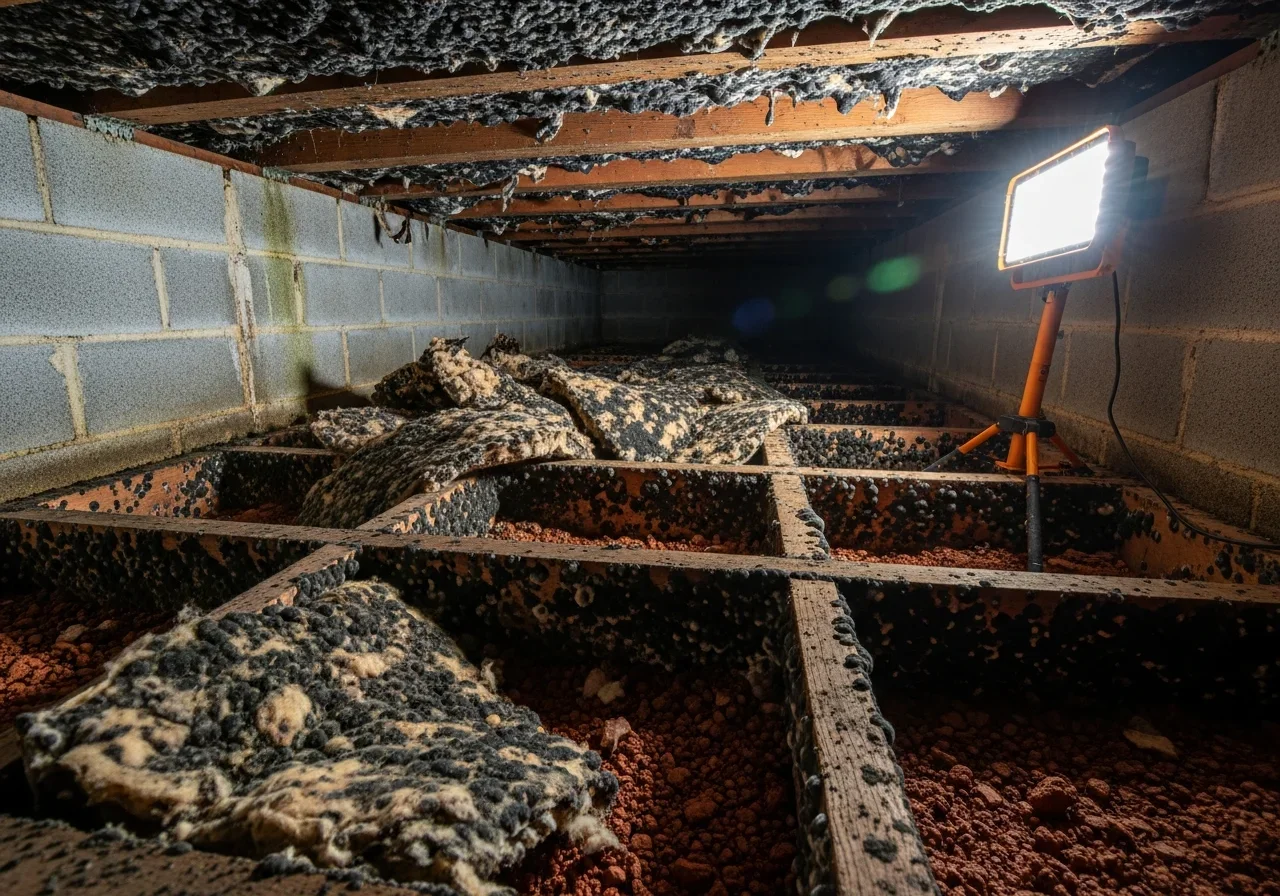
Severe mold growth on crawl space floor joists in a Dallas NC home with red clay soil visible below
Crawl space mold in a Dallas home — clay soil below feeds moisture upward while humid air enters through open foundation vents.

Dallas Soil Science

Clay Soil & Crawl Space Mold: The Dallas, NC Connection

NC State Cooperative Extension classifies most of Gaston County under the Cecil soil series — a deep, well-drained clay loam on the surface, but dense red clay below 12 inches that holds water against foundations like a sponge. This is the root cause of most Dallas crawl space mold problems.

The Moisture Pathway: Clay to Mold

Step 1

Clay Soil Below

Gaston County Cecil clay retains moisture for weeks after rain, saturating the soil against your foundation walls and crawl space floor.

Step 2

Block Walls Wick Moisture

Concrete block foundations absorb groundwater through capillary action, drawing moisture upward into the crawl space environment.

Step 3

Open Vents Pull Humid Air

Foundation vents designed to "ventilate" actually introduce warm, humid outdoor air — especially May through October when dew points exceed 65 degrees F.

Step 4

Condensation Forms

Warm humid air contacts cooler crawl space surfaces — ductwork, floor joists, and pipes — hitting the dew point and depositing liquid water on every surface.

Step 5

Mold Colonizes

With sustained relative humidity above 60% and organic material (wood framing, paper-faced insulation), mold colonies establish within 48-72 hours and spread rapidly.

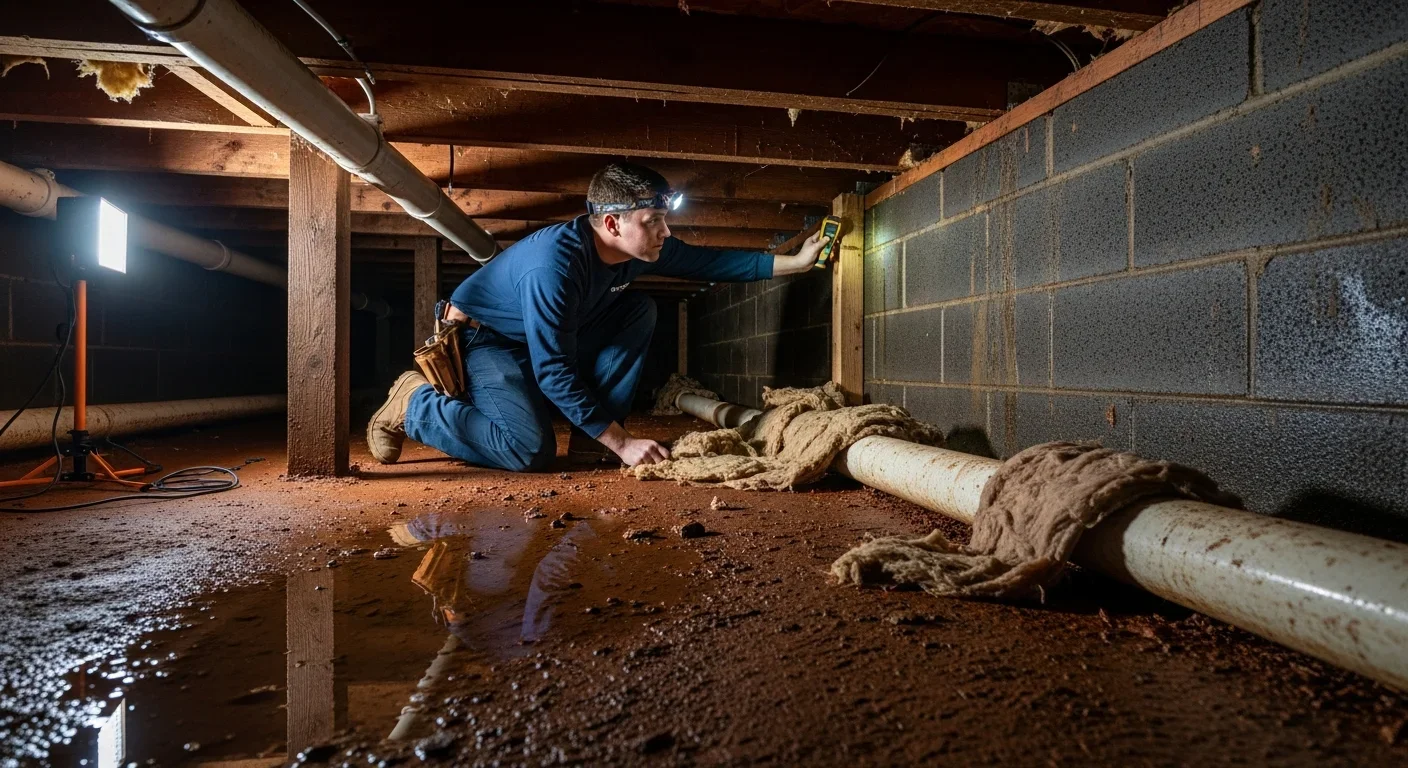
Palm Build technician inspecting crawl space moisture and mold conditions under a Dallas NC home
Crawl space inspection in Dallas, NC revealing moisture accumulation on floor joists caused by clay soil moisture and open foundation vents.

Open-Vent Crawl Space

  • Humidity 70-90% RH in summer
  • Condensation on ducts and joists
  • 40%+ of indoor air from crawl space
  • Active mold growth year-round on clay

Encapsulated Crawl Space

  • Humidity controlled at 45-55% RH
  • Class I vapor barrier seals soil moisture
  • Mechanical dehumidification runs 24/7
  • NC code-compliant termite inspection gap

NC State Extension Fact: Cecil series clay — the dominant soil type in Gaston County — has a permeability rate of 0.6 to 2.0 inches per hour in the upper horizon but drops to 0.2 to 0.6 inches in the clay subsoil. This means rainwater percolates quickly through topsoil but pools at the clay layer, creating persistent hydrostatic pressure against foundations.

Schedule Crawl Space Assessment

Housing Age Analysis

Dallas, NC Mold Risk by Housing Era

Mold risk in Dallas follows predictable patterns tied to construction era. The plumbing materials, crawl space design, and building envelope standards used when your home was built determine which moisture problems you are most likely to face.

Pre-1980

Older Stock
High Risk

Galvanized steel pipe — corroded, leak-prone, and often hidden behind original plaster walls

Original vented crawl spaces on clay with no vapor barrier

Lead paint on exterior trim means moisture intrusion goes unnoticed behind intact paint film

Cast iron drain lines approaching or past useful life, creating slow leaks under slabs

Typical mold pattern: Chronic crawl space mold on floor joists and subfloor. Hidden pipe leaks behind walls feed colonies for months before detection.

1980-1999

Transitional Era
High Risk

First-generation CPVC supply lines — brittle joints prone to stress fractures

Polybutylene (PB) pipe in many homes — known defect class, settlement-era plumbing

Vented crawl spaces standard, often with thin 4-mil poly on dirt floor

Single-pane windows with condensation buildup feeding window-frame mold

Typical mold pattern: Polybutylene burst events cause catastrophic water damage. Crawl space vapor barriers degrade, exposing soil moisture to framing.

2000-2009

28.5% of Dallas Stock
Moderate Risk

CPVC supply lines now entering the 15-20 year degradation window

OSB (oriented strand board) sheathing absorbs moisture faster than plywood

Some homes still built with vented crawl spaces before NC code updates

Tighter construction with insufficient bathroom exhaust ventilation

Typical mold pattern: OSB moisture absorption behind siding or in crawl spaces. CPVC joint failures cause hidden wall cavity mold. Bathroom moisture trapped by tighter envelopes.

2010-Present

New Construction
Low-Moderate

Tight building envelopes with spray foam insulation and house wrap

Construction moisture trapping — lumber installed before drying, sealed inside walls

Encapsulated crawl spaces when properly installed reduce mold risk significantly

PEX plumbing and better materials, but HVAC condensation remains a risk

Typical mold pattern: Construction moisture trapped during build-out. HVAC condensate line failures in tight homes. Improper encapsulation installation creates hidden moisture pockets.

Not Sure When Your Dallas Home Was Built?

Gaston County GIS records and the Dallas town permit office can confirm your home's construction year, original plumbing materials, and crawl space type. Our inspection includes a full assessment of your home's era-specific risk factors as part of the mold evaluation — no separate fee.

Know The Signs

Warning Signs of Mold in Dallas, NC Homes

Mold in Dallas homes rarely starts with a dramatic event. It builds quietly — fed by Gaston County's clay-heavy soil, aging crawl space vents, and Carolina humidity — until the signs become impossible to ignore and remediation costs multiply.

Musty Crawl Space Odors

Most Reported

Dallas homes built on vented crawl spaces over Gaston County clay regularly pull damp, earthy air into living areas through the stack effect. If your home smells musty within minutes of closing windows, crawl space mold is the most likely source.

Persistent Allergy Symptoms

Health Risk

Sneezing, watery eyes, and congestion that improve when you leave the house and return when you come home. The CDC links chronic mold exposure to nasal stuffiness, throat irritation, and worsening asthma — especially in children and the elderly.

Visible Discoloration on Baseboards & Walls

Advanced

Dark streaking along baseboards, brown or greenish patches on drywall near the floor line, or fuzzy growth behind furniture pushed against exterior walls. In Dallas homes, this often traces back to moisture wicking through the foundation from saturated clay soil.

Peeling Paint in Bathrooms

Early Warning

Bubbling or flaking paint on bathroom ceilings and walls signals chronic moisture accumulation behind the surface. Without adequate exhaust ventilation — common in older Dallas homes — shower steam feeds hidden mold colonies between drywall and framing.

Condensation on Crawl Space Vents

Early Warning

Water droplets forming on foundation vent screens and metal ductwork inside the crawl space. This means warm humid air is hitting the dew point on cooler surfaces — relative humidity is already above the 60% threshold where mold actively colonizes.

Dark Spots on Ceiling Near HVAC Registers

Structural

Discoloration rings around supply registers indicate mold spores are being distributed through your ductwork. When contaminated crawl space air enters the HVAC return, the entire system becomes a mold delivery network throughout your Dallas home.

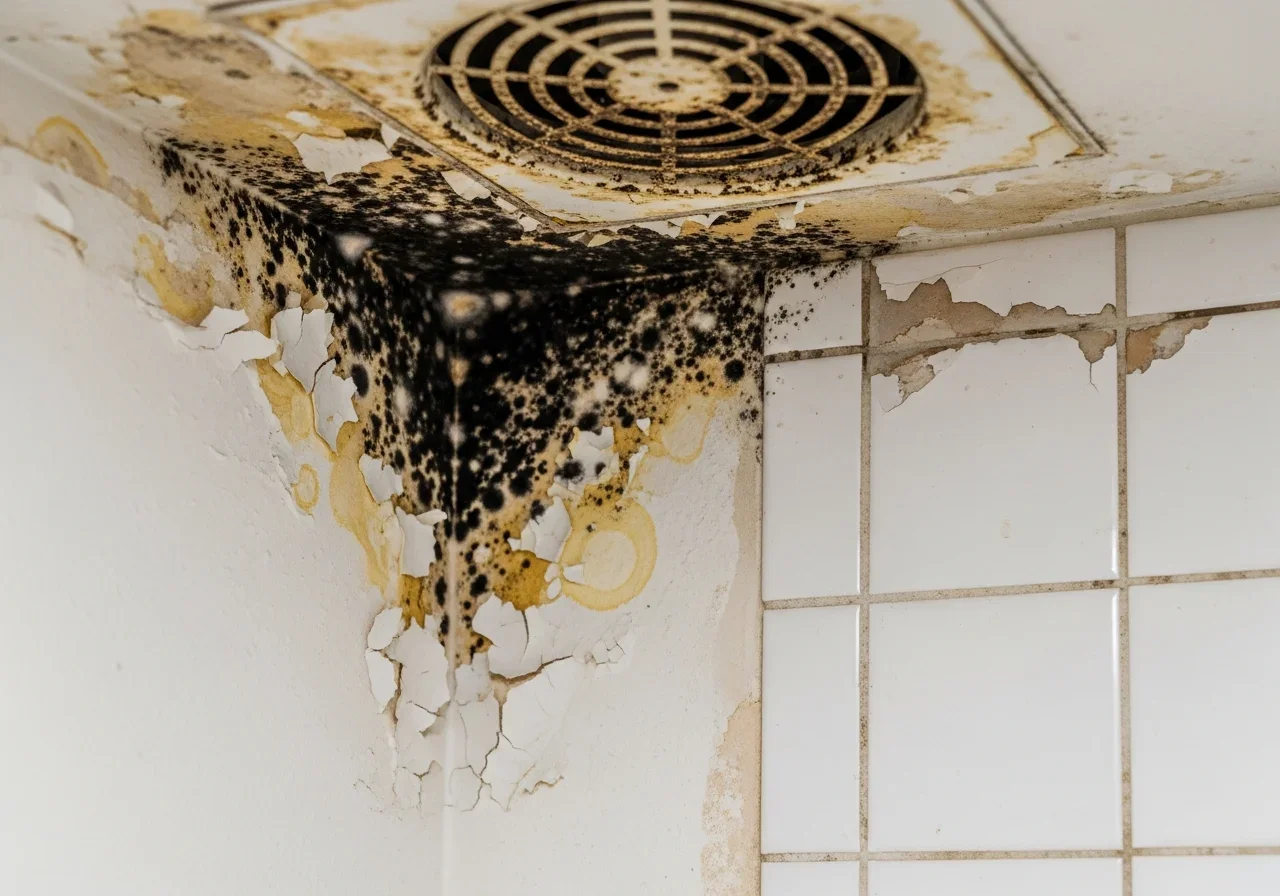
Close-up of bathroom mold growth on wall and ceiling in a Dallas NC home showing advanced moisture damage
Bathroom mold in a Dallas, NC home caused by inadequate exhaust ventilation and chronic moisture buildup behind drywall.

When to Call Immediately

If you see widespread mold covering more than 10 square feet, structural damage like rotted joists, or standing water in your crawl space — do not attempt DIY cleanup. Contact a certified mold remediation professional and document everything for your insurance claim.

IICRC S520 Protocol

Our Dallas, NC Mold Remediation Process

Professional mold remediation follows a strict sequence defined by the IICRC S520 standard. In Dallas, where clay soil and crawl space moisture drive most mold problems, our process targets the source — not just the symptoms.

01

Inspection & Air Testing

Day 1

Comprehensive visual inspection of all accessible areas including crawl space, attic, and HVAC system. Infrared moisture mapping identifies hidden wet zones in walls and subfloor. Air cassette samples are collected indoors and outdoors for lab comparison — critical for Dallas homes where crawl space spores migrate through the stack effect.

02

Containment & HEPA Negative Air

Day 1-2

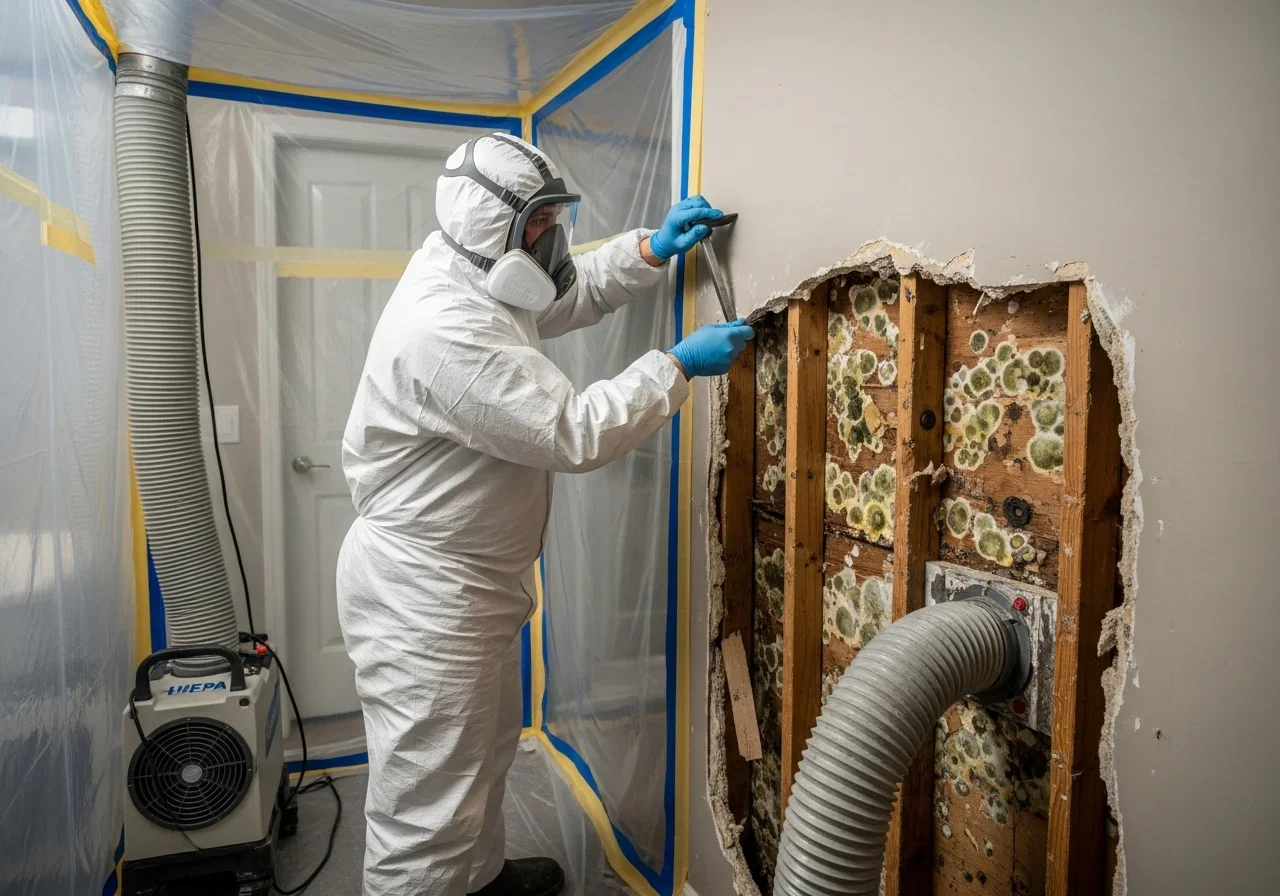
Sealed polyethylene containment barriers isolate affected areas floor-to-ceiling. HEPA air scrubbers create negative pressure inside the work zone, ensuring spores cannot escape into clean areas. For Dallas crawl space projects, the entire crawl access point is sealed with a decontamination airlock.

03

Source Moisture Identification

Day 2

Before removing a single spore, we trace the moisture source. In Dallas, this typically means Gaston County clay soil driving humidity through block foundation walls, failed crawl space vapor barriers, condensation on uninsulated ductwork, or plumbing leaks hidden behind finished walls. Without fixing the source, mold returns.

04

Contaminated Material Removal

Days 2-4

Non-salvageable materials — saturated drywall, contaminated insulation, rotted subfloor panels — are removed using controlled demolition and double-bagged for disposal. Salvageable structural wood is cleaned with wire brushing and HEPA vacuuming. All debris exits through sealed pathways to prevent cross-contamination.

05

Antimicrobial Treatment & HEPA Vacuuming

Days 4-5

EPA-registered antimicrobial agents are applied to all treated surfaces — joist faces, subfloor panels, foundation block walls, and HVAC components. Every surface is HEPA vacuumed to capture residual spores. For Dallas crawl spaces, we treat the entire enclosure including sill plates and band joists where clay soil moisture concentrates.

06

Clearance Testing & Prevention

Day 5-6

Independent post-remediation air sampling confirms spore counts are at or below outdoor baseline levels. Visual inspection verifies all contamination has been addressed. We provide clearance documentation for your records and insurance, plus a prevention plan addressing Dallas-specific moisture risks like crawl space encapsulation and drainage improvements.

Professional mold remediation containment barrier and HEPA negative air setup in a Dallas NC home

Why Dallas Homes Need Source-First Remediation

Dallas sits on Gaston County's dense Cecil clay soil — the same clay that holds water against foundations for weeks after rain. Spraying antimicrobial without addressing the moisture pathway guarantees mold returns within months. Our process eliminates the source before treating the symptom.

1

Clay Soil Assessment

Grade analysis and drainage evaluation around foundation

2

Crawl Space Sealing

Vapor barrier, vent closure, and mechanical dehumidification

3

HVAC Decontamination

Supply and return duct cleaning to stop spore redistribution

4

Clearance Documentation

Lab-verified air samples for insurance and peace of mind

Schedule Dallas Mold Assessment

Dallas Pricing

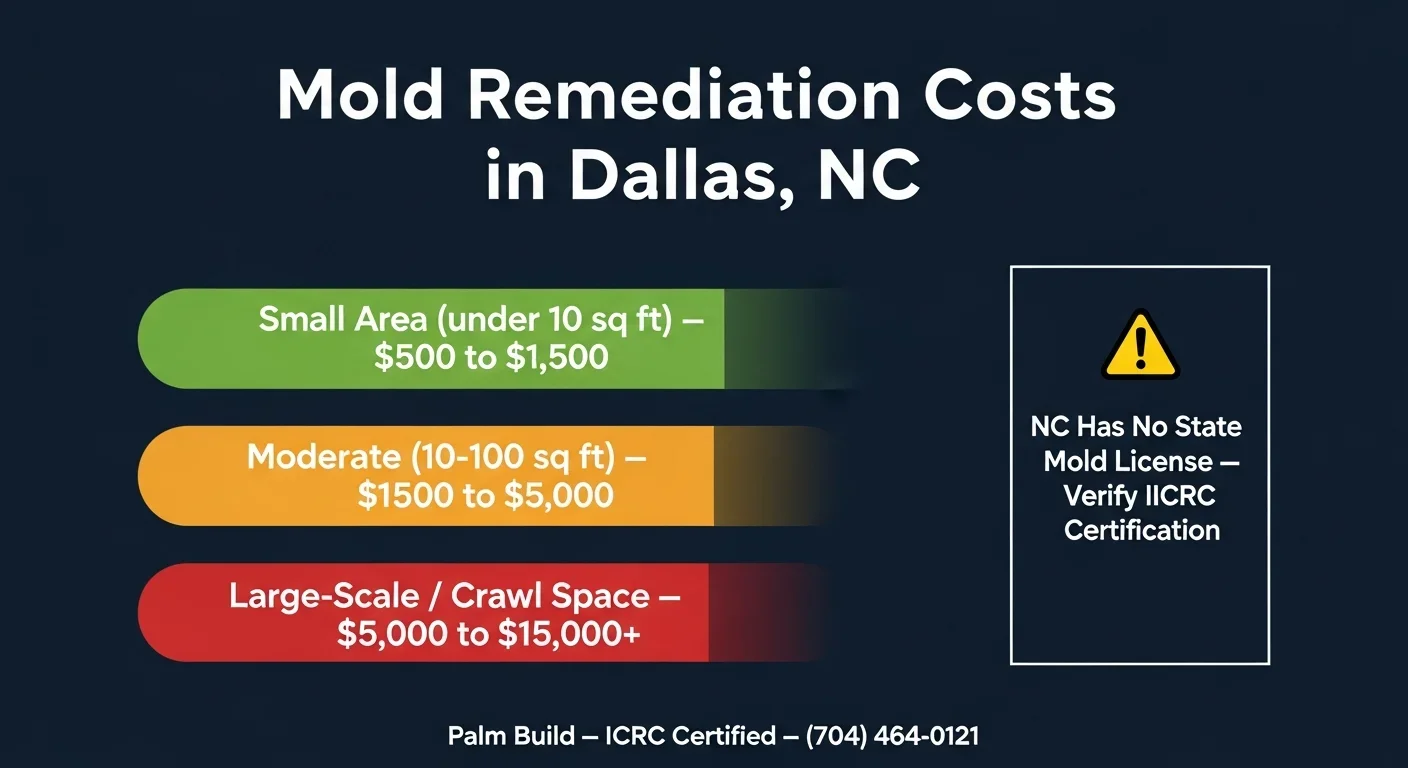
Mold Remediation Costs in Dallas, NC

Costs depend on contamination size, materials affected, and whether crawl space work is needed. Dallas homes on clay soil frequently require moisture source correction in addition to mold removal, which affects total project scope.

Small Area

Bathroom, closet, window frame — under 50 sq ft

$500 - $1,500

  • Visual inspection and moisture reading
  • Containment of affected area
  • Removal and antimicrobial treatment
  • Typically completed in 1-2 days

Moderate Area

Multiple rooms, wall cavities, HVAC system — 50-200 sq ft

$1,500 - $5,000

  • Air quality testing before and after
  • Full containment with negative air
  • Material removal and HEPA cleaning
  • Post-remediation clearance testing

Large / Crawl Space

Full crawl space, structural, multi-zone — 200+ sq ft

$5,000 - $15,000+

  • Comprehensive air and surface sampling
  • Full crawl space containment and remediation
  • Structural wood treatment or replacement
  • Encapsulation and dehumidification setup

North Carolina Has No Mold Remediation License

Unlike Florida, North Carolina does not require a state license for mold remediation. This means anyone with a truck and a spray bottle can legally advertise mold removal services. Always verify your contractor holds current IICRC S520 certification, carries adequate liability insurance, and uses third-party post-remediation clearance testing — not their own air samples.

Mold remediation cost breakdown infographic for Dallas NC showing small, moderate, and large project pricing tiers

Insurance Guide

Mold Insurance Claims in Dallas, NC

The key to mold coverage in North Carolina is the causal water event. Palm Build documents the connection between the original water damage and the resulting mold growth from day one — moisture maps, timeline photos, and remediation scope all formatted for the adjuster.

Mold resulting from a sudden and accidental water event (burst pipe, appliance failure, supply line rupture) is typically covered up to your policy mold sublimit

Gradual moisture intrusion from clay soil, crawl space humidity, or slow plumbing leaks is excluded on virtually all NC HO-3 policies

Standard NC policies cap mold coverage at $5,000 to $10,000 as a sublimit — Dallas crawl space remediation with encapsulation often exceeds $15,000 to $25,000

Pre-existing mold discovered during a renovation, inspection, or real estate transaction is not covered

Some carriers (State Farm, Erie, NC Farm Bureau, Allstate) offer mold endorsements for $25K-$50K coverage at $50-$150/year additional premium — ask your agent before you need it

Common Carriers in Dallas & Gaston County

State Farm: Mold sublimit varies by policy; endorsement available

NC Farm Bureau: Common in Gaston County; limited mold sublimit on standard HO-3

Erie Insurance: Competitive mold endorsement option for expanded coverage

Allstate: Standard mold sublimit; supplemental endorsement available in NC

Palm Build's Documentation Approach

When mold results from a covered water event, our documentation connects the causal water-to-mold chain — moisture readings, air sampling, photo evidence with timestamps, and daily work logs formatted for adjuster workflows. Even within restrictive mold sublimits, proper documentation maximizes your covered amount. For non-covered mold, we provide transparent pricing and financing options.

Insurance Claims Guide
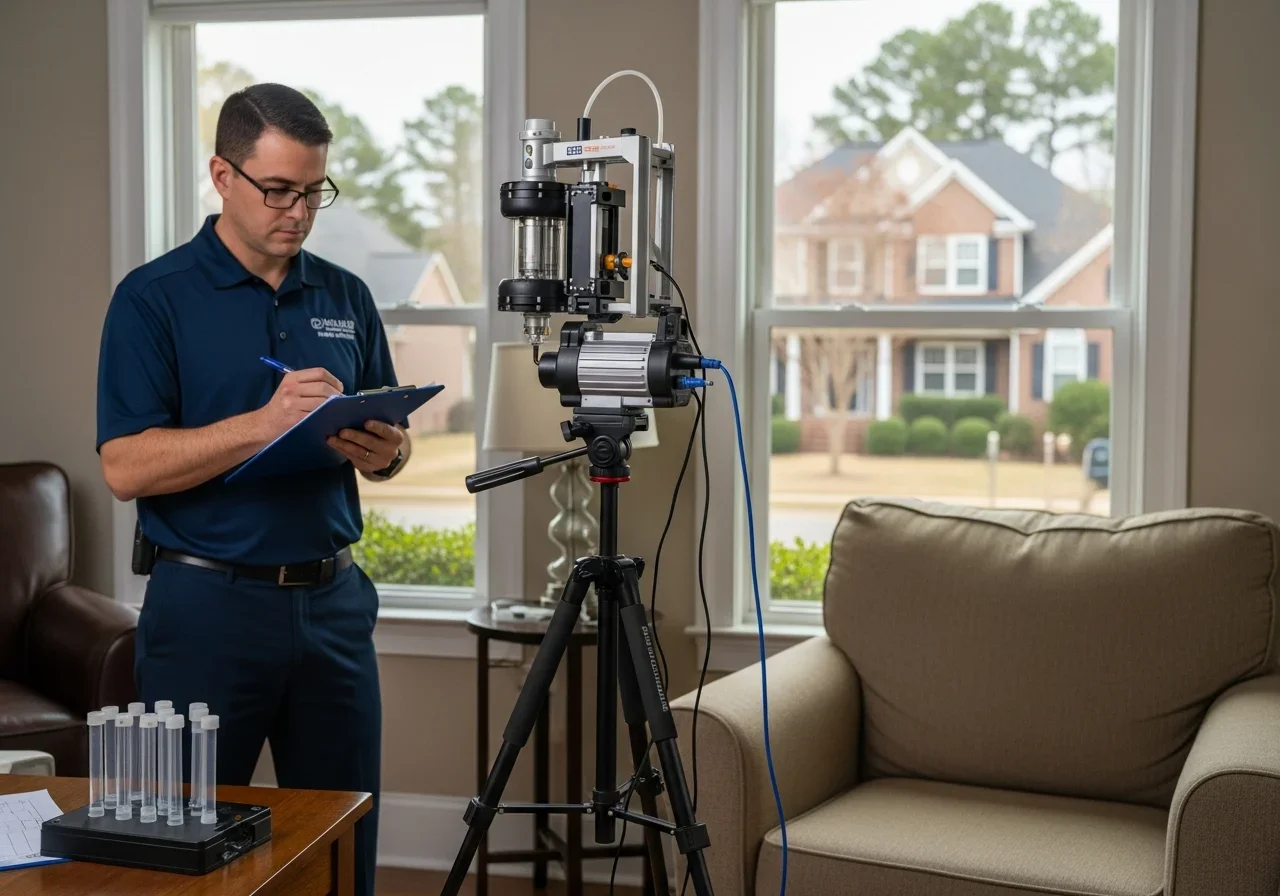
Palm Build technician performing mold testing and moisture assessment in a Dallas NC home for insurance documentation
Moisture mapping and mold testing during a Dallas home assessment — this documentation establishes the causal water-to-mold connection your insurance adjuster needs.

Our Work

Mold Remediation in Dallas Homes

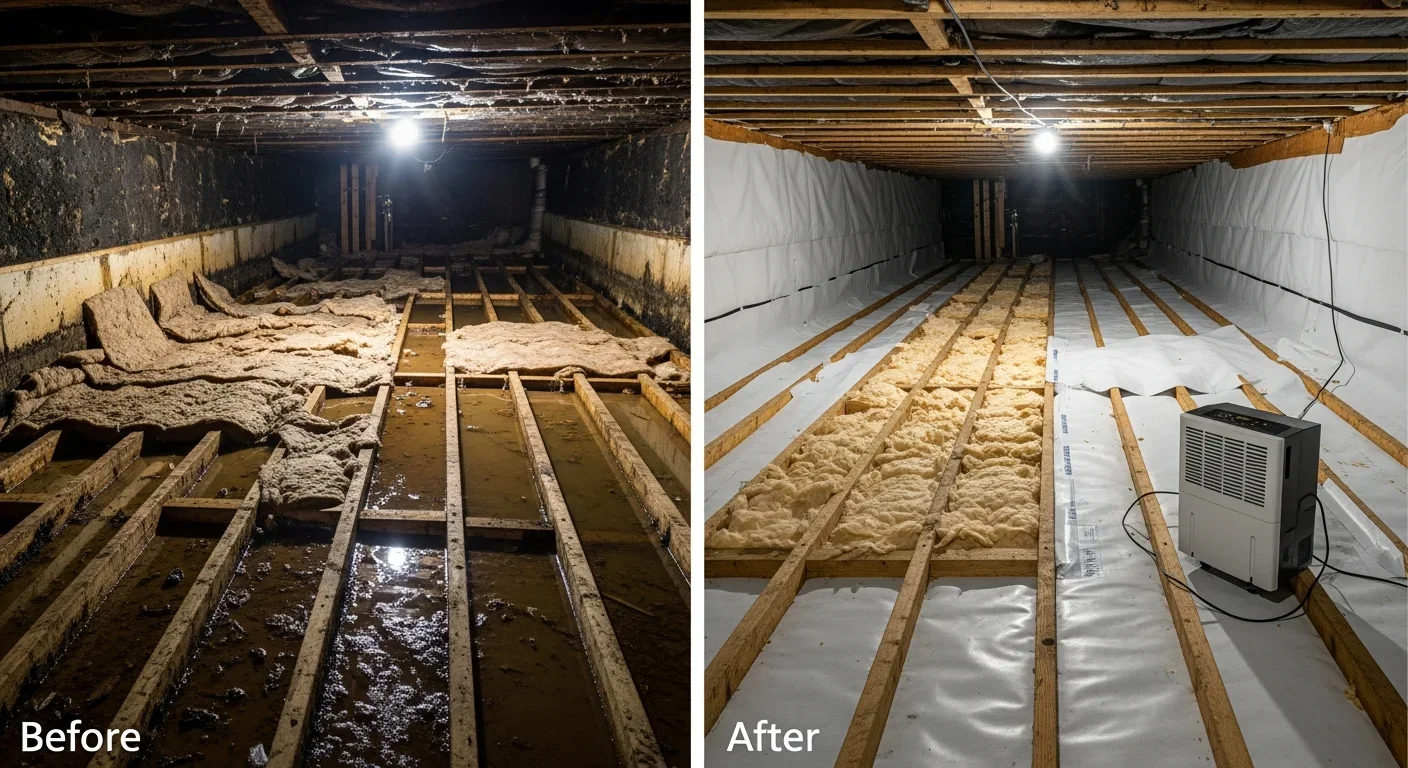
Before and after mold remediation in a crawl space beneath a Dallas NC home showing treated floor joists and clean surfaces
Crawl space before and after mold remediation
Untreated mold growth on floor joists above red clay soil in a Dallas NC crawl space
Untreated mold on floor joists above clay soil
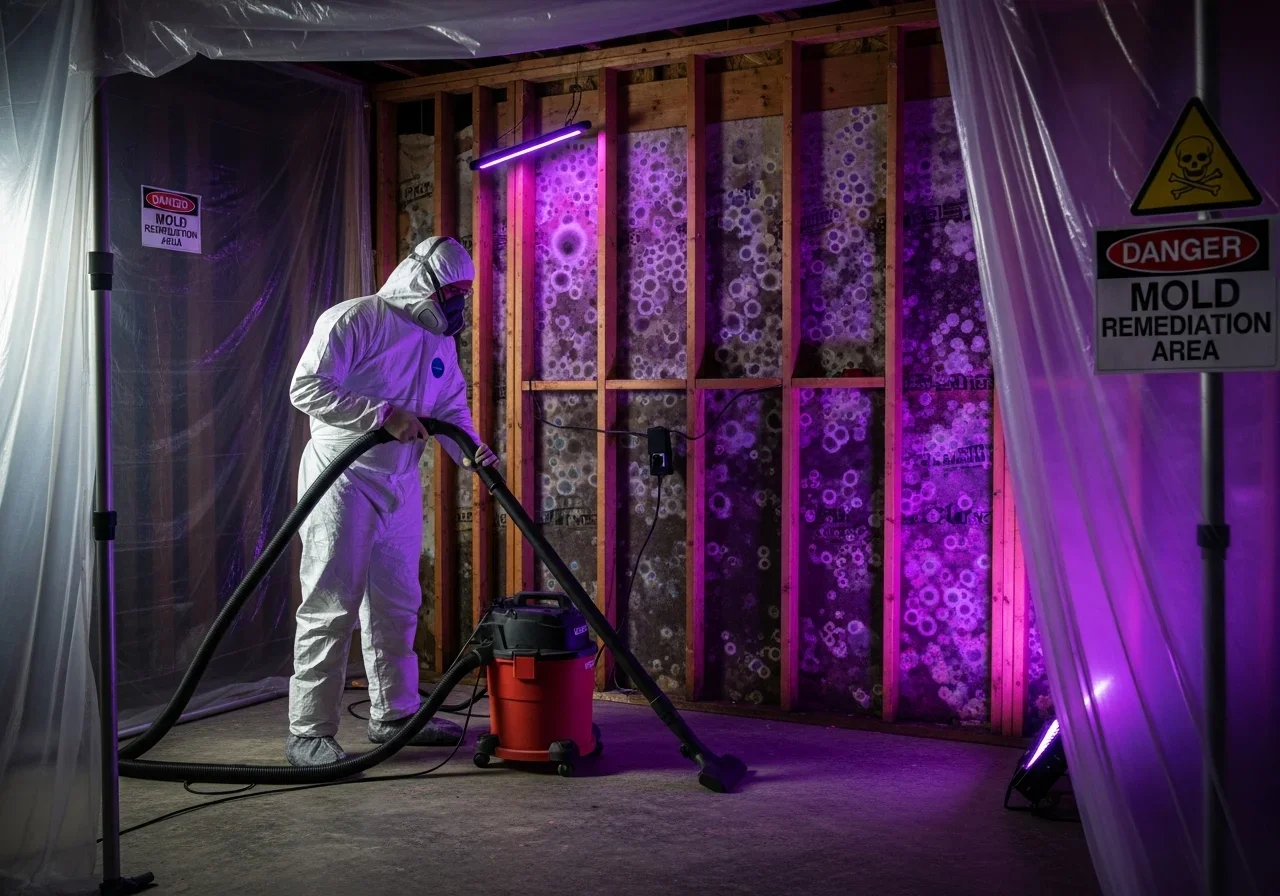
HEPA vacuuming inside full containment during mold remediation in a Dallas NC home
HEPA vacuuming inside full containment
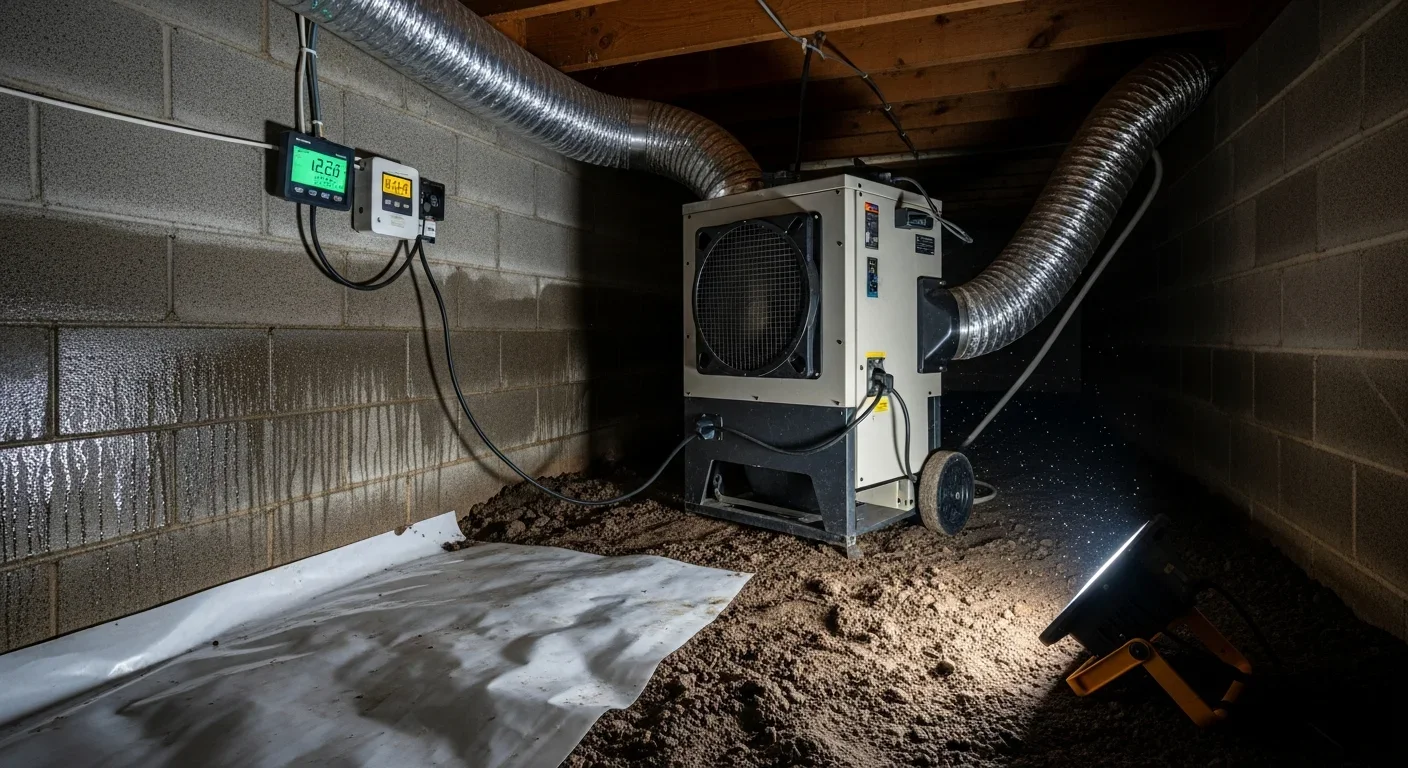
Post-remediation dehumidification equipment with vapor barrier installed in a Dallas NC crawl space
Post-remediation dehumidification with vapor barrier

Indoor Air Quality

Radon, Mold & Indoor Air Quality in Dallas Homes

Mold isn't the only air quality threat entering your home through the crawl space. Radon — an invisible, odorless radioactive gas — follows the same soil-gas pathways. When we remediate crawl space mold and seal the building envelope, we recommend testing for radon at the same time.

Crawl Space Openings Are Soil-Gas Pathways

The same unsealed crawl space penetrations that allow moisture vapor to enter your Dallas home also serve as entry points for radon — a radioactive soil gas that seeps through cracks in foundation walls, gaps around pipes, and open vents in direct contact with Gaston County clay soil.

EPA Action Level: 4 pCi/L

The EPA recommends remediation when indoor radon levels reach or exceed 4 picocuries per liter (pCi/L). Radon is the second leading cause of lung cancer in the United States, and exposure risk compounds in homes with poor ventilation — the same conditions that promote mold growth.

77 of 100 NC Counties Above EPA Level

Seventy-seven of North Carolina's 100 counties have average indoor radon levels at or above the EPA action level. Gaston County falls within this elevated-risk zone due to the underlying geology — granitic and metamorphic bedrock that naturally produces higher radon concentrations in soil gas.

Test During Mold Remediation

When we remediate a crawl space for mold, we recommend radon testing as part of the project scope. Encapsulation and sealing work that addresses moisture also changes soil-gas dynamics — this is the ideal time to establish a baseline radon measurement and install a sub-membrane depressurization system if levels warrant it.

Why This Matters for Dallas Homeowners

A crawl space mold project that seals the envelope without addressing radon may actually increase indoor radon concentrations by reducing natural ventilation. Palm Build coordinates radon testing alongside mold remediation so that encapsulation work accounts for both moisture control and soil-gas mitigation — solving both problems with a single project scope rather than two separate contractors.

The Palm Build Difference

Why Dallas Homeowners Choose Palm Build for Mold

IICRC Certified

Every crew lead holds current IICRC Mold Remediation Specialist (MRS) certification. In a state with zero mold licensing requirements, we hold ourselves to the national standard on every Dallas project.

ANSI/IICRC S520 Protocols

Every remediation follows the full S520 standard: independent assessment, written remediation plan, engineering controls, containment, HEPA filtration, antimicrobial application, and post-remediation verification.

Full Containment & HEPA

We establish sealed containment barriers with negative air pressure and HEPA air scrubbers on every project — preventing cross-contamination to unaffected areas of your Dallas home during remediation.

Independent Clearance Testing

We recommend third-party post-remediation verification — not self-testing. An independent hygienist confirms spore counts meet acceptable levels, giving you unbiased proof the job was done right.

Source Moisture Correction

We identify and fix the moisture source — not just scrub visible mold. Without addressing root cause moisture from clay soil, crawl space humidity, or plumbing leaks, mold returns within months.

Gaston County Clay Soil Expertise

We understand the Cecil series clay that underlies Dallas — slow drainage, prolonged saturation, and the moisture vapor it pushes into crawl spaces. We've remediated hundreds of homes on this same soil profile across Gaston County.

Palm Build technician performing HEPA vacuuming inside sealed containment during mold remediation in a Dallas NC home
Full containment with HEPA air scrubbers during a Dallas mold remediation project — negative air pressure prevents spore migration to unaffected rooms.

Common Questions

Dallas Mold Remediation FAQ

Answers to the questions Dallas and Gaston County homeowners ask most about mold, crawl space moisture, NC licensing, and remediation costs.

Mold in Your Dallas Home? NC Has No License — Choose IICRC Certified.

Gaston County's clay soil and crawl space foundations create year-round mold risk. Palm Build delivers ANSI/IICRC S520-compliant remediation with full containment, HEPA filtration, and independent clearance testing.

30-60 min Response IICRC Certified

More in Dallas

Other Palm Build Services in Dallas, NC