ROYAL PALM BEACH FL — PALM BEACH COUNTY — 24/7 WATER DAMAGE RESPONSE
Water Damage Restoration in Royal Palm Beach, Florida
Royal Palm Beach's inland canal network, 1980s–2000s CBS stucco construction, and 61+ inches of annual rainfall create a water damage environment unlike anywhere on Florida's coast. Palm Build's South Florida team dispatches with truck-mounted extraction, block-core injection drying, and the documentation your HOA and insurance carrier require from hour one.
~40 miles south via I-95 Under 60 min Response IICRC Certified
"I woke up at 2 a.m. to the sound of running water. By the time I found the leak
behind the hallway bathroom wall, the carpet in two bedrooms was already saturated.
My house was built in 1989 — I had no idea the pipes could just give out like that
with no warning whatsoever."
This scenario plays out dozens of times each year across Royal Palm Beach's Kensington,
La Mancha, and Counterpoint Estates neighborhoods. Homes built between 1978 and 1995 may
contain polybutylene supply lines — a gray plastic pipe that reacts with chlorinated
municipal water over time, developing micro-fractures that can suddenly rupture. Because
Royal Palm Beach construction is almost universally CBS stucco over concrete slab, water
doesn't drain away: it wicks into block cores and spreads silently across slab joints
for hours before surfacing.
Understanding why Royal Palm Beach homes are vulnerable — from the inland canal stormwater
system to the 70–75% year-round humidity that slows drying — is the first step to protecting
your property and responding effectively when damage occurs.
Cost Reference Guide
Water Damage Restoration Cost Guide for Royal Palm Beach, FL
Costs vary by damage extent, water category, and CBS construction complexity. These
ranges reflect typical Royal Palm Beach residential restoration projects.
Damage Level
Typical Scope
Estimated Cost
Common Cause in RPB
Minor
Single room, clean water (supply line, appliance)
$1,200–$3,500
Poly-B pipe failure, appliance supply line
Moderate
Multiple rooms, extended CBS block drying
$3,500–$9,000
Roof tile intrusion, AC condensate overflow, washer line
Major
Whole-home, stormwater infiltration, HOA cascade
$9,000–$30,000+
Canal flooding event, multi-unit condo cascade
Mold Follow-on
Secondary remediation after water event
$3,000–$15,000
Undetected CBS block-core moisture, delayed response
Minor$1,200–$3,500
Scope: Single room, clean water (supply line, appliance)
Common cause: Poly-B pipe failure, appliance supply line
Moderate$3,500–$9,000
Scope: Multiple rooms, extended CBS block drying
Common cause: Roof tile intrusion, AC condensate overflow, washer line
Major$9,000–$30,000+
Scope: Whole-home, stormwater infiltration, HOA cascade
Common cause: Canal flooding event, multi-unit condo cascade
Mold Follow-on$3,000–$15,000
Scope: Secondary remediation after water event
Common cause: Undetected CBS block-core moisture, delayed response
Florida Claim Deadline: 1 Year from Date of Loss
Under Fla. Stat. §627.70132, homeowners have 1 year from the date of
loss to file an initial or reopened claim, and 18 months for supplemental claims. Document your damage immediately — delays can jeopardize coverage entirely.
Palm Build provides insurance-grade documentation from hour one.
Local Risk Factors
Why Royal Palm Beach Homes Face Unique Water Damage Risks
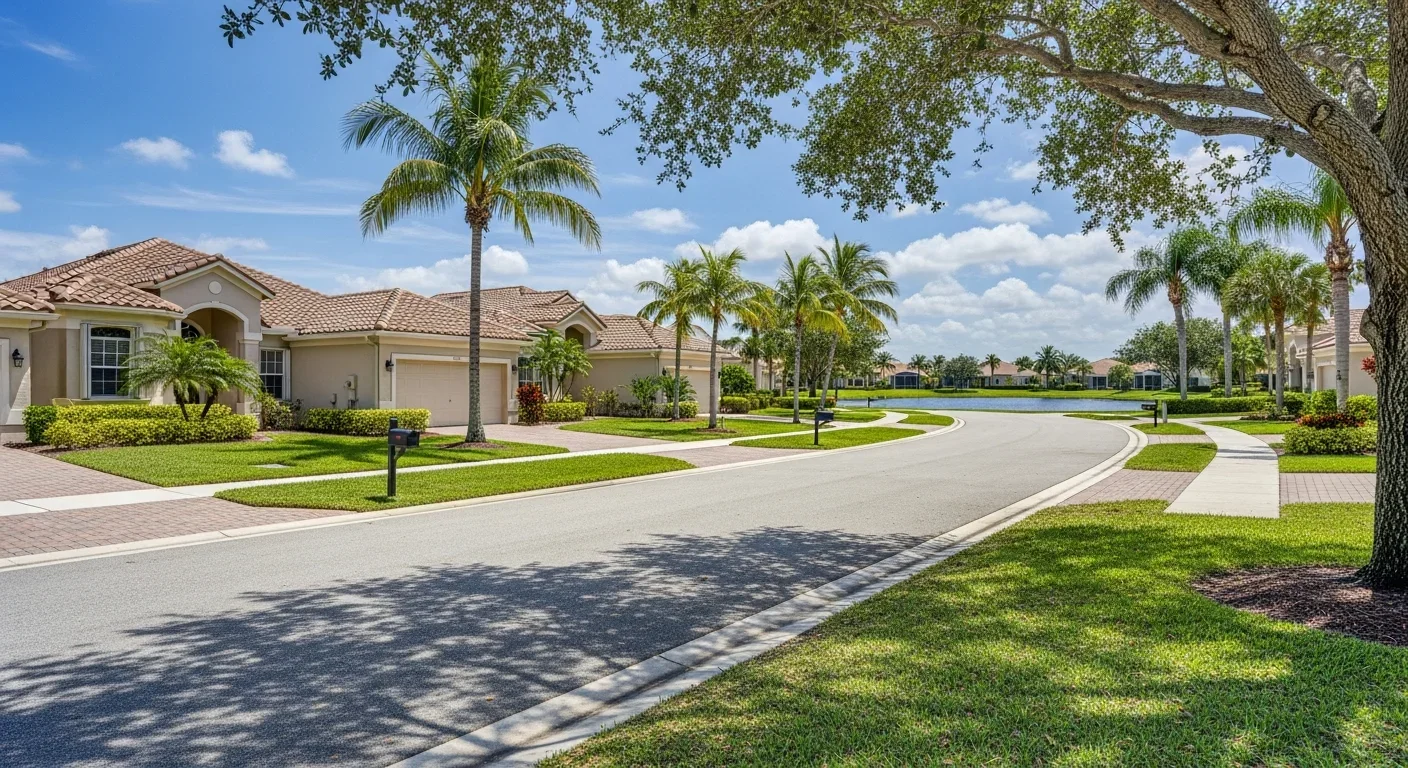
Royal Palm Beach is a planned inland community in western Palm Beach County — not a
coastal city, but one with its own set of compounding water damage risks rooted in its
canal infrastructure, CBS construction, aging plumbing, and year-round humidity. When
water damage occurs here, mold can begin growing in as little as 24 to 48 hours.
M-1 Canal & Inland Stormwater Flooding
61.75"
Annual rainfall
Royal Palm Beach is an inland city threaded with an active stormwater canal network, including sections of the M-1 Canal maintained by the Village. During sustained heavy rain events — common from June through September — the drainage system can overwhelm, causing canals to back up and stormwater to pond across canal-adjacent neighborhoods like Crestwood. This is not coastal surge flooding: it is managed waterway overflow that enters homes at grade level.
CBS Stucco Traps Block-Core Moisture
1990
Median build year
Nearly every home in Royal Palm Beach is CBS (concrete block structure) with stucco exterior built on a slab-on-grade foundation — no basements or crawl spaces. When moisture penetrates stucco cracks or enters at grade, it wicks into the block core and cannot be removed with surface fans alone. Block-core injection drying requires specialized equipment to force dry air through the hollow sections of the block — a process that extends drying timelines and cost compared to wood-frame construction.
Polybutylene Pipe Time Bomb
1978–1995
High-risk plumbing era
A significant portion of Royal Palm Beach's housing stock — particularly in La Mancha, Counterpoint Estates, Kensington, and other neighborhoods established in the late 1970s through mid-1990s — may contain polybutylene supply lines. This gray plastic pipe reacts with chlorinated municipal water over years, developing internal micro-fractures that can suddenly rupture with no warning. When failure occurs inside a CBS wall, water spreads silently through the block core before surfacing.
70–75% Humidity Extends Drying Times
8.68"
August avg rainfall
Royal Palm Beach sits roughly 15 miles inland from the coast, but humidity remains at 70–75% year-round — peaking during the June–September rainy season when monthly rainfall averages 8.48–8.68 inches. High ambient humidity dramatically reduces the effectiveness of standard dehumidification, effectively doubling structural drying times compared to drier climates. Summer water damage events — the most common — require more commercial-grade equipment and more monitoring cycles to reach dry standard within the mold-safe window.
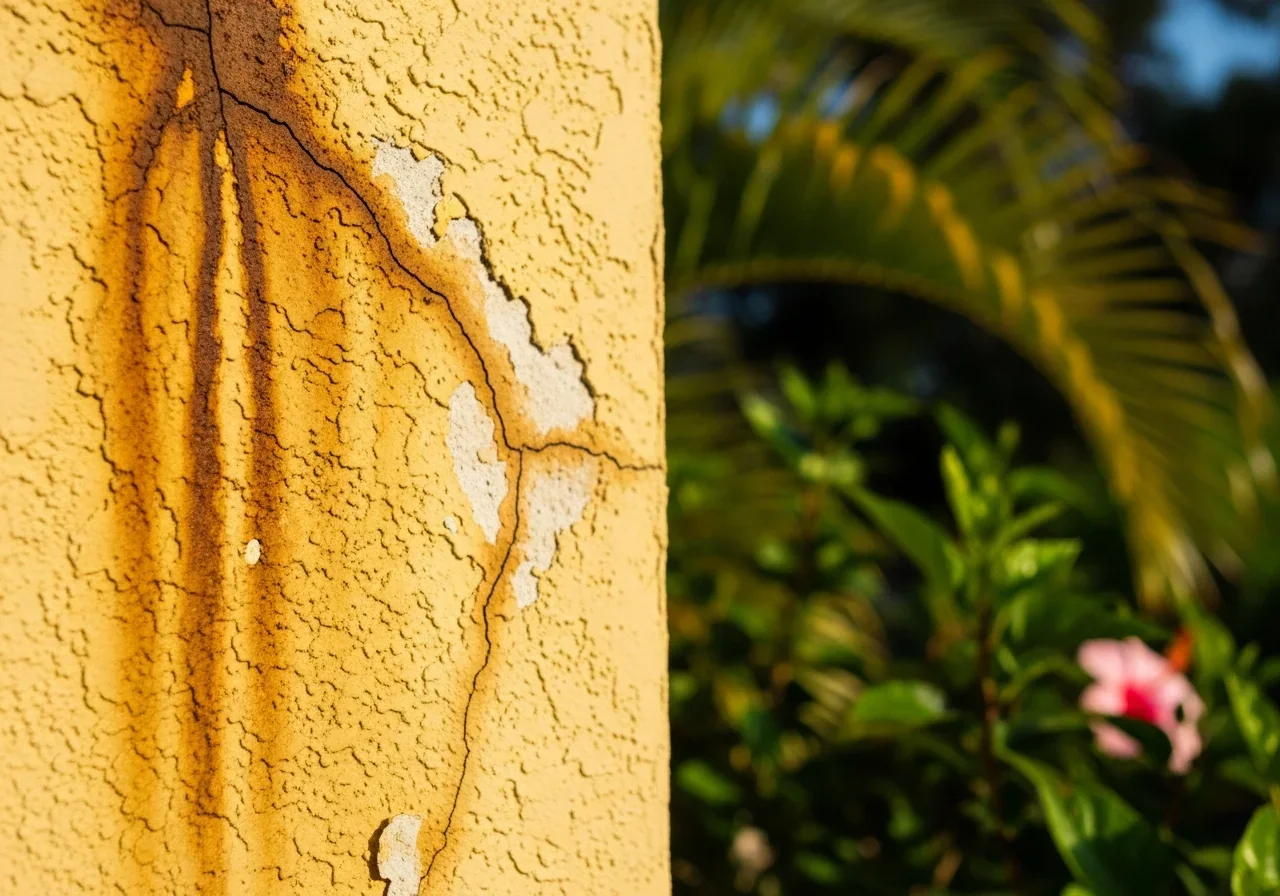
CBS stucco construction — the standard throughout Royal Palm Beach — traps moisture in
concrete block cores. Surface drying alone leaves hidden water that feeds mold growth
for weeks after the visible damage appears dry.
Neighborhood Guide
Royal Palm Beach Neighborhood Water Damage Risk Guide
Construction era, HOA status, and location all affect water damage risk and restoration
complexity. Use this guide to understand your neighborhood's primary risk factors.
Neighborhood
Build Era
HOA / Gated
Primary Water Risk
Crestwood
1980s–2000s
Yes / Gated
Canal-adjacent flooding, HOA coordination delays
La Mancha
1970–1999
Some sections
Polybutylene plumbing, older construction era
Madison Green
2000s
Yes / Active
Lakefront moisture exposure, strict HOA approval process
Nautica Lakes
2000s
Yes / Gated
Lake system adjacency, restricted contractor access
Palm Beach Plantation
2000s
Yes
Barrel tile roof displacement, HOA material approval required
Portosol
2010s+
Yes / Gated
High-finish interiors, premium material replacement costs
Risk profiles are based on typical construction patterns and neighborhood
characteristics. Individual property conditions vary — contact Palm Build for a free
property assessment specific to your home.
Flood Risk Explained
Why Royal Palm Beach Floods from the Inside Out
Royal Palm Beach is not a coastal city. There are no ocean-facing neighborhoods, no
barrier island exposure, and no tidal surge risk. The flood threat here is entirely
different — and in some ways more unpredictable — than in cities like West Palm Beach,
Boca Raton, or Fort Lauderdale. Understanding the mechanics of inland canal flooding is
essential for homeowners and insurance claimants alike.
The M-1 Canal Connection
The Village of Royal Palm Beach maintains an active stormwater canal network, including sections of the M-1 Canal system that runs through western Palm Beach County. Unlike Intracoastal-adjacent cities that flood from tidal surge, Royal Palm Beach's flood risk is stormwater-driven: when the canal system reaches capacity during sustained heavy rain events, water backs up and spreads into canal-adjacent neighborhoods. Crestwood, portions of La Mancha, and other lower-lying communities near these waterways face the highest localized flooding risk during extreme rain events.
When the Drainage System Overwhelms
Royal Palm Beach's stormwater infrastructure is managed under an MS4 (Municipal Separate Storm Sewer System) NPDES permit — a regulated system designed to handle typical rainfall volumes. But August averages 8.68 inches of rain and individual storm events can deliver 3–5 inches in a matter of hours. When the system reaches design capacity, water has nowhere to go: it backs up through catch basins, rises in swales, and enters homes at grade level. Slab-on-grade construction with no basement buffer means any water at grade level can enter immediately through door thresholds, weep screeds, or cracks in the slab perimeter.
What Category Is Your Floodwater?
Stormwater infiltration is typically classified as Category 1 (clean water) or Category 2 (gray water) under IICRC S500 standards — not the Category 3 saltwater contamination common in coastal surge events. However, stormwater mixed with lawn fertilizers, road runoff, or backed-up drainage can escalate to Category 2, requiring additional antimicrobial treatment and expanded scope. Getting the water category right matters for insurance documentation: your adjuster needs accurate categorization to properly value the claim. Palm Build documents water source and category from the moment our technicians arrive.
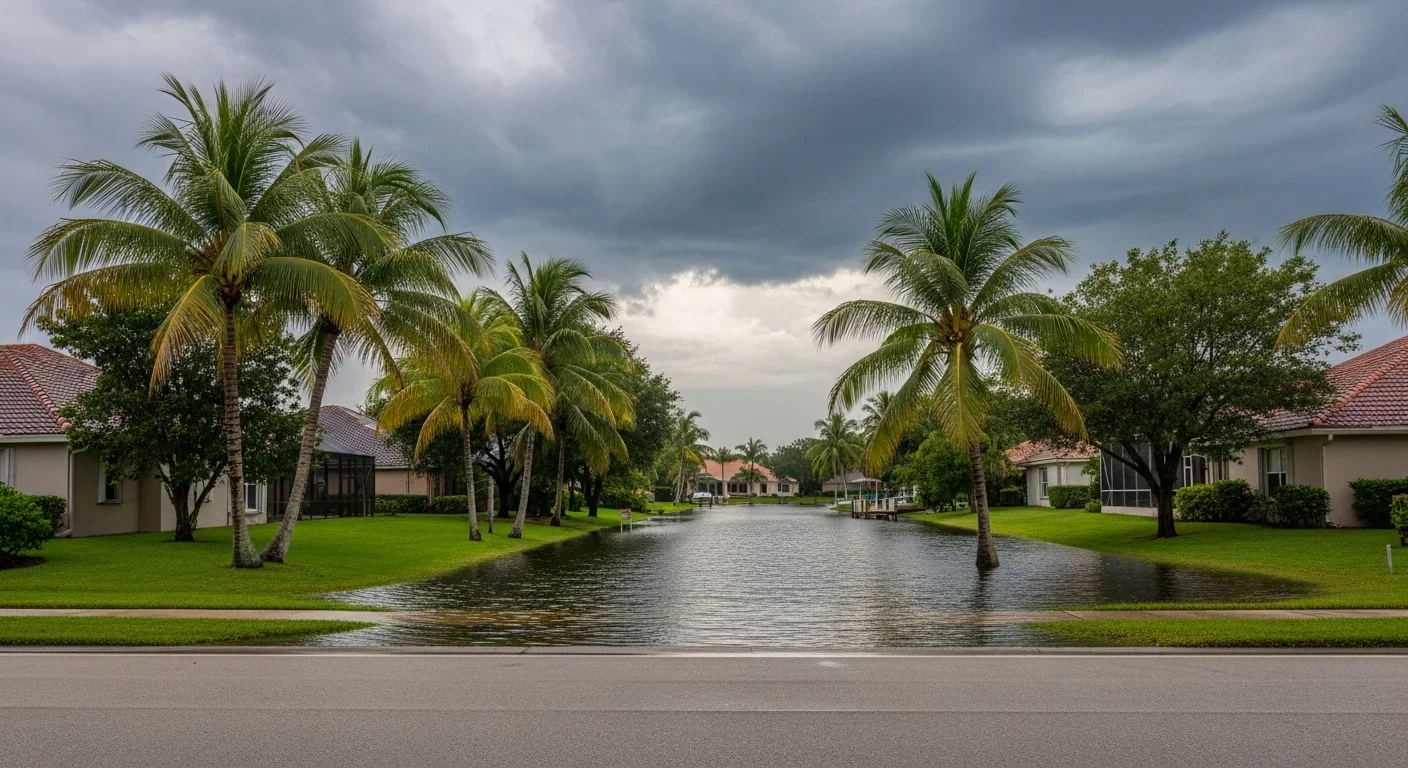
Canal-adjacent neighborhoods in Royal Palm Beach face stormwater backflow risk during
sustained heavy rain events — a flood mechanism distinct from the coastal surge
exposure of eastern Palm Beach County cities.
Our Royal Palm Beach Process
How Palm Build Restores Water-Damaged Homes in Royal Palm Beach
Every water damage event is different, but the science of restoration follows a proven
sequence engineered for South Florida CBS construction and inland humidity conditions.
01
Emergency Dispatch
Under 60 Minutes
02
Damage Assessment & Documentation
First 2 Hours
03
Water Extraction
Hours 2–6
04
CBS Block-Core Injection Drying
3–5 Days
05
Mold Prevention Treatment
During Drying
06
Structural Restoration
1–4 Weeks
01
Emergency Dispatch
Under 60 Minutes
Call our Florida line at (754) 600-3369 any time, 24/7. Palm Build deploys from our Deerfield Beach headquarters — approximately 40 miles south of Royal Palm Beach — arriving on-site in under 60 minutes with truck-mounted extraction equipment, commercial dehumidifiers, and air movers ready to work.
02
Damage Assessment & Documentation
First 2 Hours
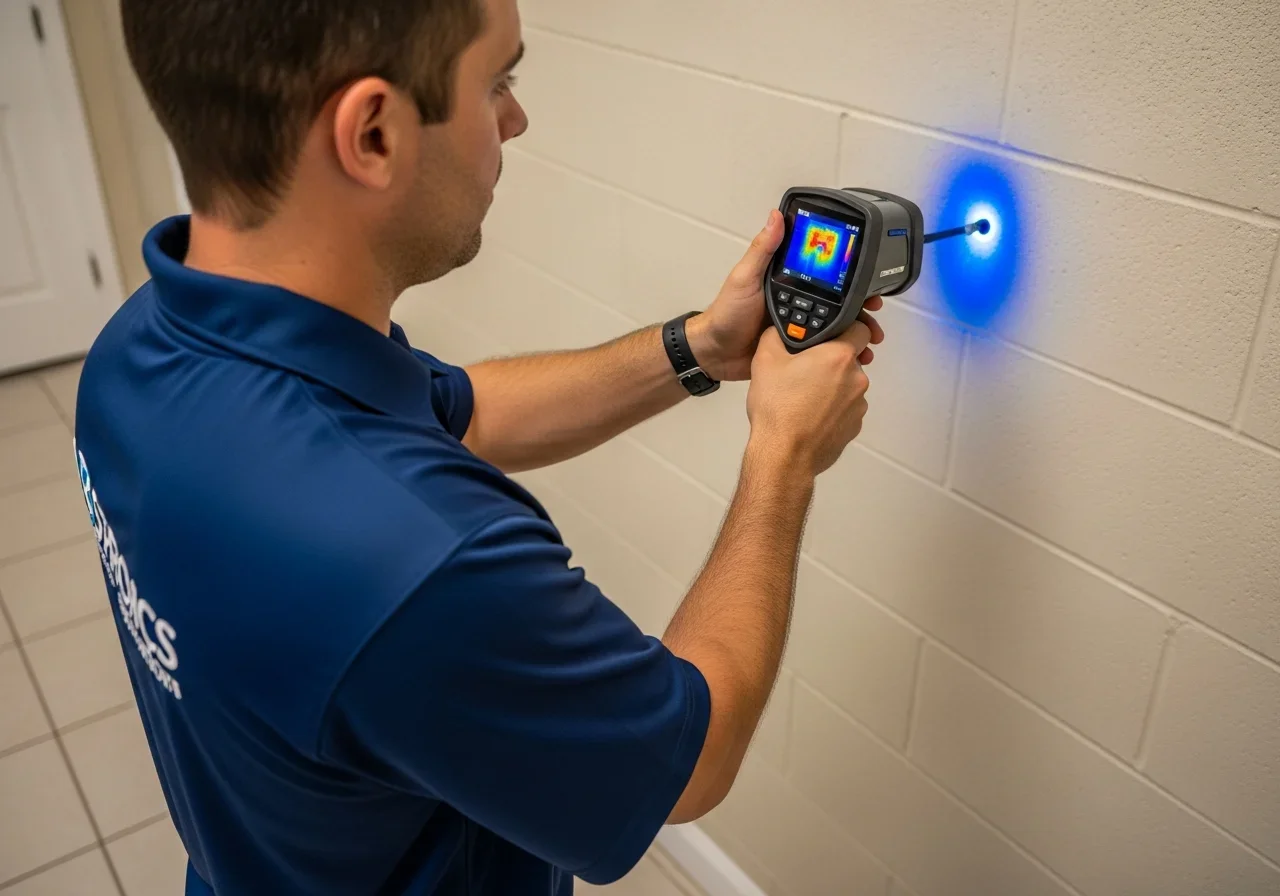
IICRC-certified technicians use infrared thermal imaging cameras and pin-type moisture meters to map exactly where water has traveled — through CBS block cores, under tile flooring, into HVAC systems. Every affected area is photographed and documented in insurance-grade format from hour one, critical under Florida's 1-year claim filing deadline.
03
Water Extraction
Hours 2–6
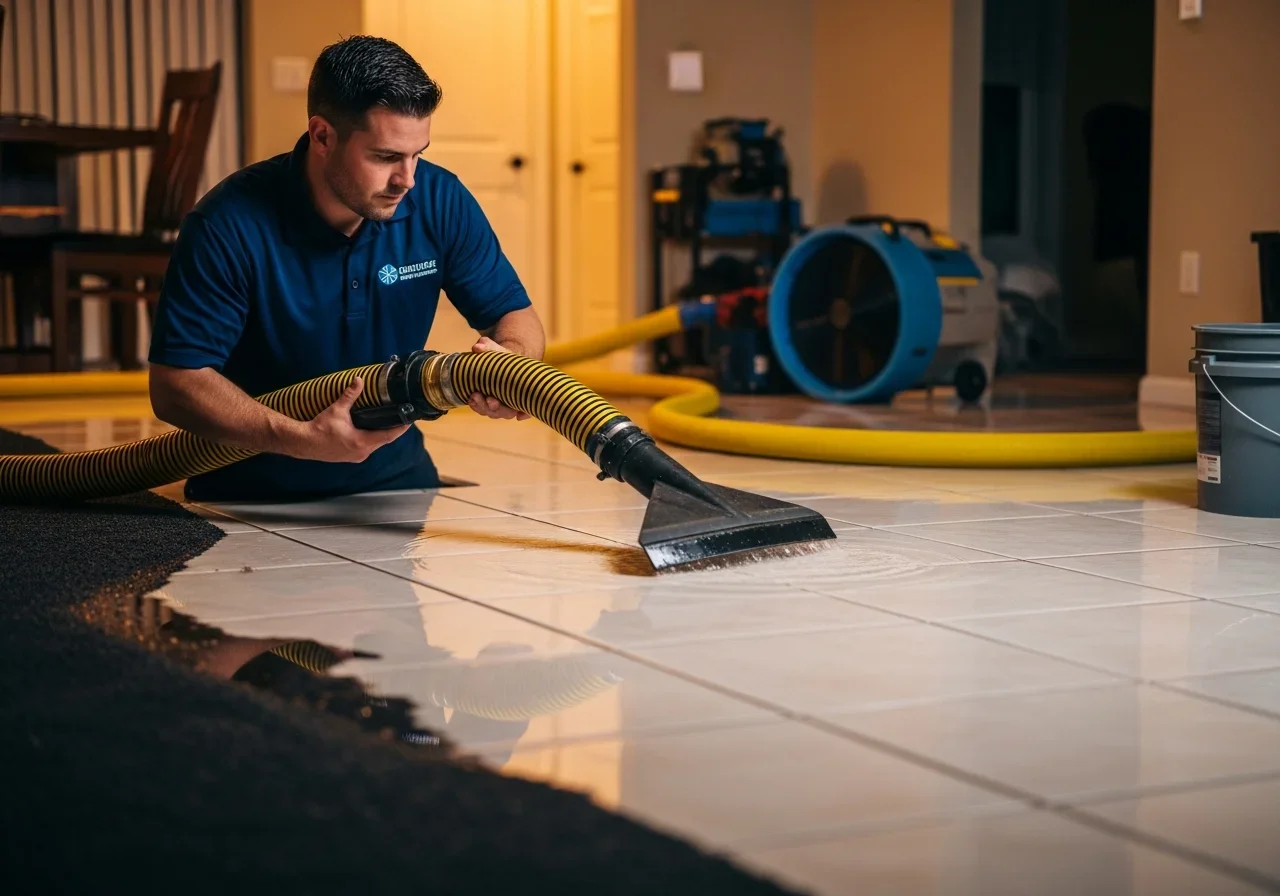
Truck-mounted extraction systems remove hundreds of gallons per hour. Royal Palm Beach slab-on-grade construction means water concentrates in the lowest areas and under floating flooring. We deploy subsurface extraction tools for trapped moisture beneath tile and engineered wood flooring.
04
CBS Block-Core Injection Drying
3–5 Days
Standard fans and dehumidifiers cannot reach moisture trapped inside concrete block cores — the signature construction throughout Royal Palm Beach. Block-core injection drying forces conditioned air directly through hollow block sections, addressing the hidden moisture that drives secondary mold growth. This step is non-negotiable in CBS construction.
05
Mold Prevention Treatment
During Drying
EPA-registered antimicrobial treatments are applied throughout the drying period. Royal Palm Beach's 70–75% year-round humidity means mold risk is elevated from the moment water intrusion occurs. HVAC systems are isolated early to prevent spore distribution through ductwork. Daily moisture readings confirm progress toward dry standard.
06
Structural Restoration
1–4 Weeks
Complete structural restoration: drywall replacement, baseboards, painting, flooring, and stucco repair as needed. For Royal Palm Beach homes with HOA or gated community requirements, we coordinate material approvals and documentation submissions with association management on your behalf.
Why Our Royal Palm Beach Process Works
1
CBS Expertise
Block-core injection drying engineered for Royal Palm Beach CBS construction — not just surface fans
2
Under 60-Min Response
From our Deerfield Beach HQ to Royal Palm Beach in under 60 minutes, day or night
3
Humidity-Calibrated Drying
Daily moisture readings calibrated for 70–75% ambient humidity — the true challenge in Royal Palm Beach's inland environment
4
HOA-Ready Documentation
Material approvals and scope documentation formatted for HOA and condo association review processes
Common Water Damage Types in Royal Palm Beach Homes
Each damage source requires a different response approach. Knowing the source matters
for proper extraction, drying, and insurance documentation.
Polybutylene Pipe Failure
Homes built between 1978 and 1995 throughout Royal Palm Beach — including La Mancha, Counterpoint Estates, and Kensington — may contain polybutylene supply lines. These pipes develop internal micro-fractures from prolonged exposure to chlorinated water and can rupture suddenly, often inside CBS walls. By the time water surfaces, it has already spread through block cores and beneath slab flooring. Discovery often happens months after the initial failure.
Storm & Hurricane Wind-Driven Intrusion
Royal Palm Beach's barrel tile roofs can experience tile displacement during sustained wind events. Once tiles shift, even moderate rainfall can drive water directly into the roof deck and wall cavities. Stucco micro-cracking — common on homes 15+ years old — allows wind-driven rain to infiltrate wall assemblies, where it wicks into CBS block cores and spreads laterally far beyond the visible entry point.
AC Condensate Overflow
Florida air conditioning systems run 12 months per year in Royal Palm Beach. Condensate drain lines accumulate algae and debris over time, causing overflow pans to fill and water to escape into ceiling cavities, walls, or under flooring. Because AC overflows often drip slowly, homeowners may not notice the damage until discoloration or odor appears — by which point secondary mold growth is frequently already underway.
Stormwater Canal Backflow
Canal-adjacent neighborhoods in Royal Palm Beach face a flood risk that differs fundamentally from coastal cities: stormwater backflow from the canal drainage network during extreme rainfall events. When August delivers 8.68 inches of rain in a month — sometimes 3–5 inches in a single storm — the canal system reaches capacity. Water backs up through drainage infrastructure, rises in swales, and enters slab-on-grade homes at grade level across the M-1 Canal area and adjacent communities.
Infrared thermal imaging reveals hidden moisture inside CBS block walls and under tile
flooring — critical for identifying the full extent of water damage before drying
begins.
Seasonal Risk
Royal Palm Beach Water Damage Risk by Month
Rainfall data for Royal Palm Beach, FL (Palm Beach County). Annual average: 61.75
inches. Risk levels reflect stormwater, flooding, and environmental drying conditions.
January
2.87"
Moderate
February
2.77"
Moderate
March
3.47"
Moderate
April
3.52"
Moderate
May
5.21"
Moderate
June
8.48"
High
July
7.02"
High
August
8.68"
High
September
7.96"
High
October
5.48"
Elevated
November
3.47"
Moderate
December
2.74"
Moderate
High Risk (June–September)
Peak rainy season. Canal drainage systems operate near capacity. Poly-B pipe stress accelerates in heat and humidity. AC condensate overflow peaks. A single multi-inch storm event can produce standing water in canal-adjacent neighborhoods. Response time is critical — mold can establish within 24–48 hours in 70%+ humidity.
Elevated Risk (October)
Transitional month. Late-season tropical systems can bring concentrated rainfall. Rainfall decreases but humidity remains elevated. Roof damage from summer storms may begin showing interior water intrusion as weather patterns shift.
Moderate Risk (November–May)
Dry season reduces stormwater and canal flooding risk significantly. Poly-B pipe failures, AC condensate overflow, and appliance line failures remain year-round risks unrelated to rainfall. Insurance claims filed in dry season still face the same 1-year deadline from date of loss.
Insurance Guide
Navigating Water Damage Insurance Claims in Royal Palm Beach
Florida's insurance landscape has changed dramatically. Royal Palm Beach homeowners need
to understand the current rules before damage occurs — not after.
Initial and reopened claims must be filed within 1 year of date of loss
18 Months
Supplemental claims must be filed within 18 months of the original claim date
Missing either deadline forecloses coverage entirely. Document your damage
immediately — Palm Build provides insurance-grade documentation from hour one.
Standard HO Policy vs. Flood Policy
Most Royal Palm Beach homeowners carry a standard HO-3 policy covering sudden and accidental water damage — burst pipes, appliance failures, storm-driven roof intrusion. However, HO policies explicitly exclude flood damage. Flooding from the M-1 Canal stormwater system requires a separate National Flood Insurance Program (NFIP) policy or private flood coverage. Many homeowners only discover this gap after a canal flooding event has already occurred.
Citizens Property Insurance & Market Volatility
Citizens Property Insurance — Florida's state-backed insurer of last resort — covers a significant portion of Royal Palm Beach homeowners who cannot obtain private market coverage. Palm Beach County average homeowner premiums have climbed above $6,000/year as private carriers continue to restrict or exit the Florida market. Rising premiums are driving more homeowners toward higher deductibles, which increases out-of-pocket exposure when water damage claims are filed.
Post-AOB Reform (2023): You Must Manage Your Own Claim
As of January 1, 2023, Florida eliminated Assignment of Benefits (AOB) for new and renewed property insurance policies. Previously, contractors could accept direct assignment of your claim rights and bill the insurer directly. Under the current law, you must file, manage, and negotiate your own claim — and pay your contractor independently before seeking reimbursement. Palm Build acts as your documentation partner from hour one, providing the photo evidence, moisture reports, and scope letters your adjuster requires.
Mold Follow-on Claims: Document Water Damage First
Mold remediation claims are significantly harder to process when the originating water event was not documented immediately. Insurers often dispute mold claims by arguing pre-existing conditions or maintenance neglect if no water damage documentation exists. If you experience a water intrusion event in Royal Palm Beach — even one that appears minor — document it thoroughly before drying. Palm Build's initial assessment report establishes the water damage origin needed to support any mold follow-on claim.
Restoration Gallery
Royal Palm Beach Water Damage Restoration — Before & After
Every restoration project begins with thorough documentation and ends with a fully
restored home. These images show Palm Build's work in Royal Palm Beach — from active
extraction through final drying.
Water extraction in progress at a Royal Palm Beach CBS home. Truck-mounted systems remove hundreds of gallons per hour from saturated flooring and wall cavities before the structural drying phase begins.
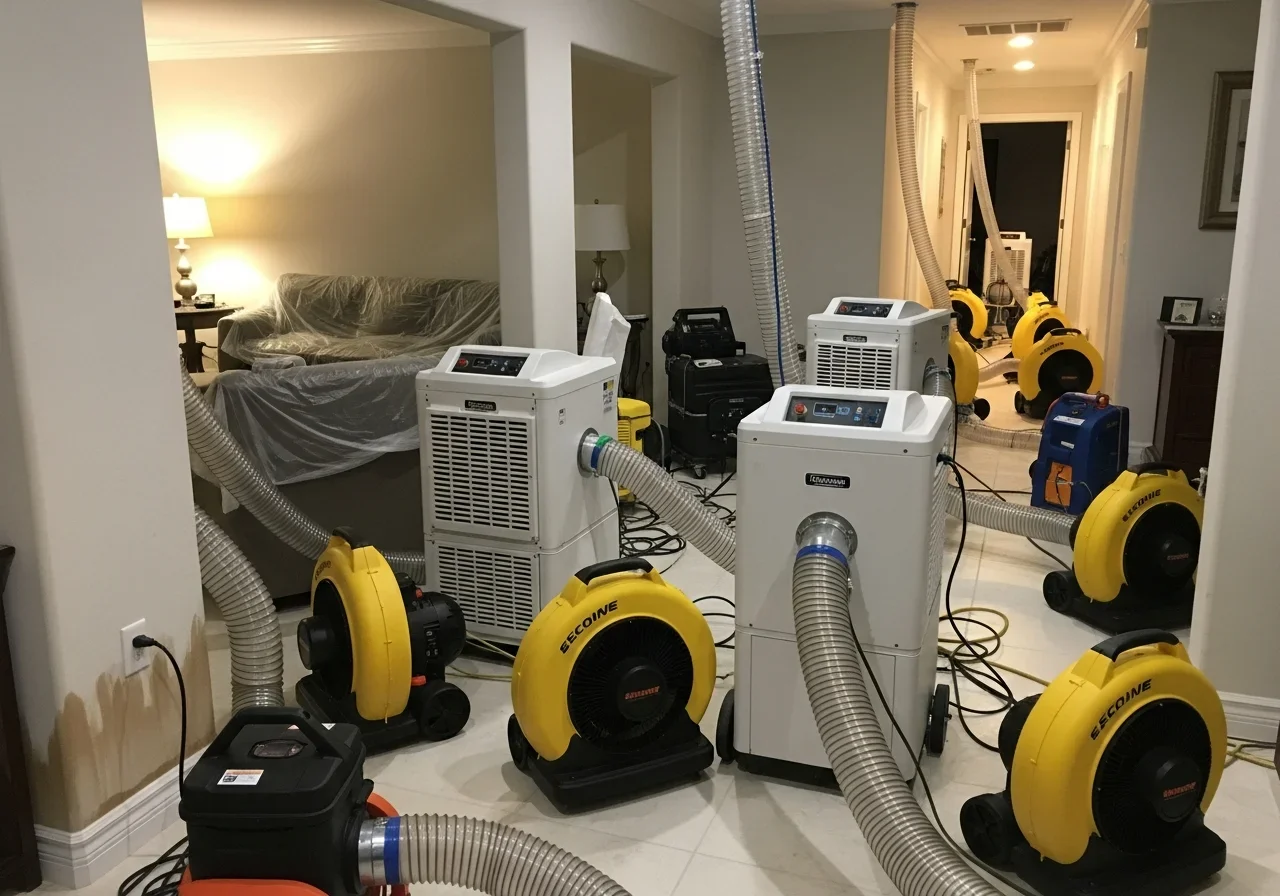
Commercial LGR dehumidifiers and air movers set up for CBS block-core structural drying in a Kensington-area home. Daily moisture readings confirm progress toward dry standard in Royal Palm Beach's 70–75% humidity environment.
The CBS stucco construction standard throughout Royal Palm Beach's neighborhoods — from La Mancha to Madison Green — requires specialized block-core drying techniques that go beyond surface-level restoration methods.
Every Palm Build project is fully documented — photographs, moisture readings,
and scope reports from initial assessment through final sign-off. This documentation supports
your insurance claim and provides a complete record of the restoration.
Why Palm Build
Why Royal Palm Beach Homeowners Choose Palm Build
Credentials matter when your home and insurance claim are on the line. Here's what sets
Palm Build apart in Royal Palm Beach's restoration market.
IICRC Certified
Institute of Inspection, Cleaning and Restoration Certification
IICRC certification is the gold standard for water damage restoration professionals. Our technicians are trained and certified in IICRC S500 Standard for Professional Water Damage Restoration — the same standard your insurance adjuster references when evaluating a claim. This matters for CBS construction, where improper drying leaves hidden moisture that later becomes a mold dispute.
Florida DBPR Licensed
Department of Business and Professional Regulation
Florida requires a separate DBPR license for mold assessment and mold remediation work — any water damage event that produces mold requires a licensed contractor. Palm Build holds the required Florida licenses to perform both water damage restoration and mold remediation under a single project scope, avoiding the coordination delays of using separate contractors.
HOA & Gated Community Experience
Madison Green, Nautica Lakes, Portosol & more
A significant portion of Royal Palm Beach is governed by homeowner associations with their own approval processes, material standards, and contractor access requirements. We maintain documentation packages formatted specifically for HOA review — scope letters, material specifications, timeline commitments — and coordinate directly with association management so you don't have to navigate that layer during an already stressful restoration project.
Insurance Documentation from Hour One
Adjuster-ready reports at every stage
Florida's 1-year claim filing deadline (Fla. Stat. §627.70132) means documentation quality from the very first hours determines whether your claim succeeds. Palm Build provides structured photo documentation, moisture mapping reports, water category assessments, and scope letters formatted for insurance review — not just for our own records. Every project produces a complete evidence file supporting your claim from initial event through final restoration.
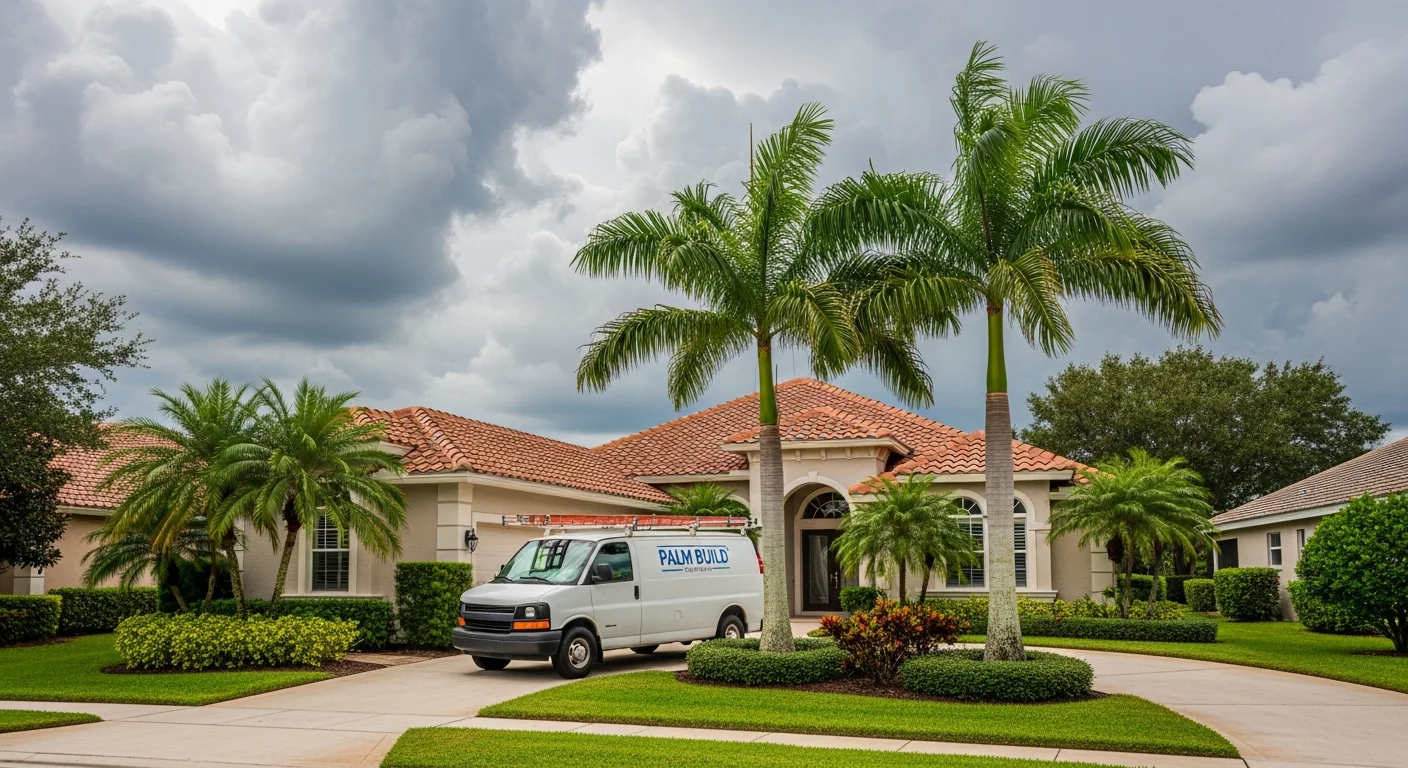
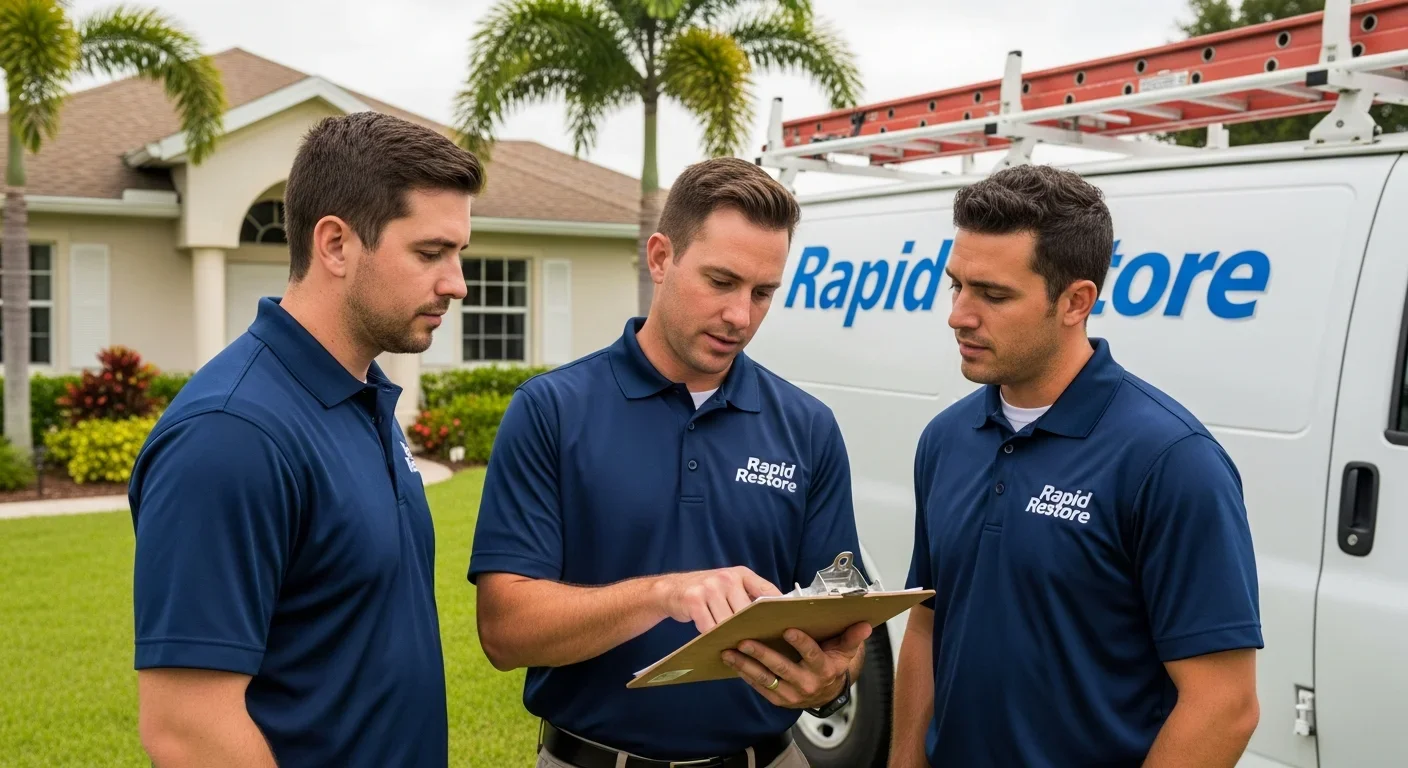
Palm Build's Florida team — IICRC-certified, DBPR-licensed, and experienced in the HOA
coordination that Royal Palm Beach's gated communities require.
Common Questions
Water Damage Restoration Questions from Royal Palm Beach Homeowners
How quickly can Palm Build respond to water damage in Royal Palm Beach?
Palm Build's headquarters is located in Deerfield Beach, approximately 40 miles south of Royal Palm Beach via I-95. Our emergency team can typically be on-site within 60 minutes of your call, 24 hours a day, 7 days a week. We dispatch with truck-mounted extraction and drying equipment — not just assessment tools.
Is the flooding in Royal Palm Beach from storm surge or from canals and drainage?
Royal Palm Beach is an inland city — roughly 15 miles from the Atlantic — so storm surge risk is minimal compared to coastal Palm Beach County communities. The primary flood risk here is from the stormwater canal and drainage system being overwhelmed during sustained heavy rainfall. The Village maintains an active canal network including the M-1 Canal, and neighborhoods like Crestwood that are adjacent to canal sections can experience localized flooding when sustained rainfall exceeds the system's capacity. This is classified as stormwater flooding, not surge flooding — an important distinction for insurance claims.
My Royal Palm Beach home is CBS stucco. Why does water damage cost more to remediate?
CBS (concrete block structure) holds moisture in its hollow-core blocks. Unlike wood-frame construction where you can remove drywall and aim air movers at exposed studs, CBS requires specialized block-core injection drying — forcing conditioned dry air through the block channels to extract trapped moisture. Standard surface-only drying can leave hidden water in the block core for weeks, feeding mold growth and causing progressive damage. Palm Build uses thermal imaging and moisture meters to map block-core moisture and verify complete dryness before closing walls.
What is polybutylene plumbing and do I have it in my Royal Palm Beach home?
Polybutylene (poly-B) pipe was installed in homes built between 1978 and 1995 — which describes a significant portion of Royal Palm Beach's housing stock, particularly in La Mancha, Crestwood, Greenway Village, Counterpoint Estates, and Kensington. Poly-B pipe reacts with chlorine in Florida's municipal water supply and develops internal micro-cracks that produce slow, hidden leaks inside walls and under slabs. These leaks often cause mold to grow behind cabinets and walls for months before visible signs appear. If your home was built in this era, Palm Build recommends a thermal imaging scan during restoration to check for unreported leaks.
How does water damage restoration work in a Royal Palm Beach HOA community?
HOA and condo communities introduce additional coordination steps. The HOA master policy typically covers building shell and common areas; your personal policy covers interior finishes and contents. Access rules, drying verification affecting shared walls, and insurance documentation styles differ from single-family homes. For attached housing like townhomes in Portosol or condos in Shoma Courtyards, Palm Build coordinates directly with both the unit owner's carrier and the HOA management company to establish scope, access, and billing. Since Florida eliminated Assignment of Benefits (AOB) on policies issued after January 1, 2023, you must coordinate the claims process personally — Palm Build handles the documentation side.
What are water damage restoration costs in Royal Palm Beach?
Costs vary widely based on scope and water category. Minor water damage (single room, clean water from a supply line or appliance): $1,200–$3,500. Moderate damage (multiple rooms, extended drying, some drywall removal): $3,500–$9,000. Major events (whole-home flooding, stormwater intrusion, HOA cascade through multiple units): $9,000–$30,000 or more. CBS block-core injection drying adds cost compared to wood-frame homes. Florida homeowners insurance premiums average $6,000+/year in Palm Beach County — most policies cover sudden water damage events but specifically exclude flood. Palm Build provides free on-site estimates and works with all major Florida carriers including Citizens.
When is Royal Palm Beach most at risk for water damage?
The highest-risk window is June through September, when Royal Palm Beach receives 60% of its annual 61.75 inches of rainfall. August is the wettest single month at 8.68 inches; June averages 8.48 inches. During this period, the combination of high rainfall and 70–75% ambient humidity dramatically extends drying times for CBS construction — what would take 3 days to dry in winter can take 7+ days in August. October remains elevated at 5.90 inches, and deferred repairs from summer storms often produce secondary mold losses in October and November. Plumbing and appliance failures drive water damage year-round regardless of season.
What does Palm Build do about FEMA flood zones in Royal Palm Beach?
Royal Palm Beach's FEMA flood maps were updated with a new effective date of December 20, 2024 — more recent than many competitor pages reference. The primary risk for this inland community is Zone X (moderate-to-low risk) properties that may have shifted to Special Flood Hazard Area (SFHA) designations under the updated maps. Standard homeowners policies exclude flood damage — FEMA or private flood coverage is separate. Palm Build advises homeowners to verify their current flood zone status through the FEMA Flood Map Service Center using the December 2024 effective maps before assuming their current policy provides adequate coverage.
Trusted Vendors
Trusted local pros in Royal Palm Beach
Outside our restoration scope, these are the vetted, licensed contractors we trust
alongside our work. Personally evaluated, reference-checked, and recommended by Palm
Build.
Water Damage in Your Royal Palm Beach Home? We Respond 24/7.
Palm Build's South Florida team is on call around the clock. Whether it's a 2 a.m. pipe burst in Kensington or post-storm flooding in a Crestwood canal-adjacent home — we dispatch with the right equipment to stop damage from becoming a mold crisis.