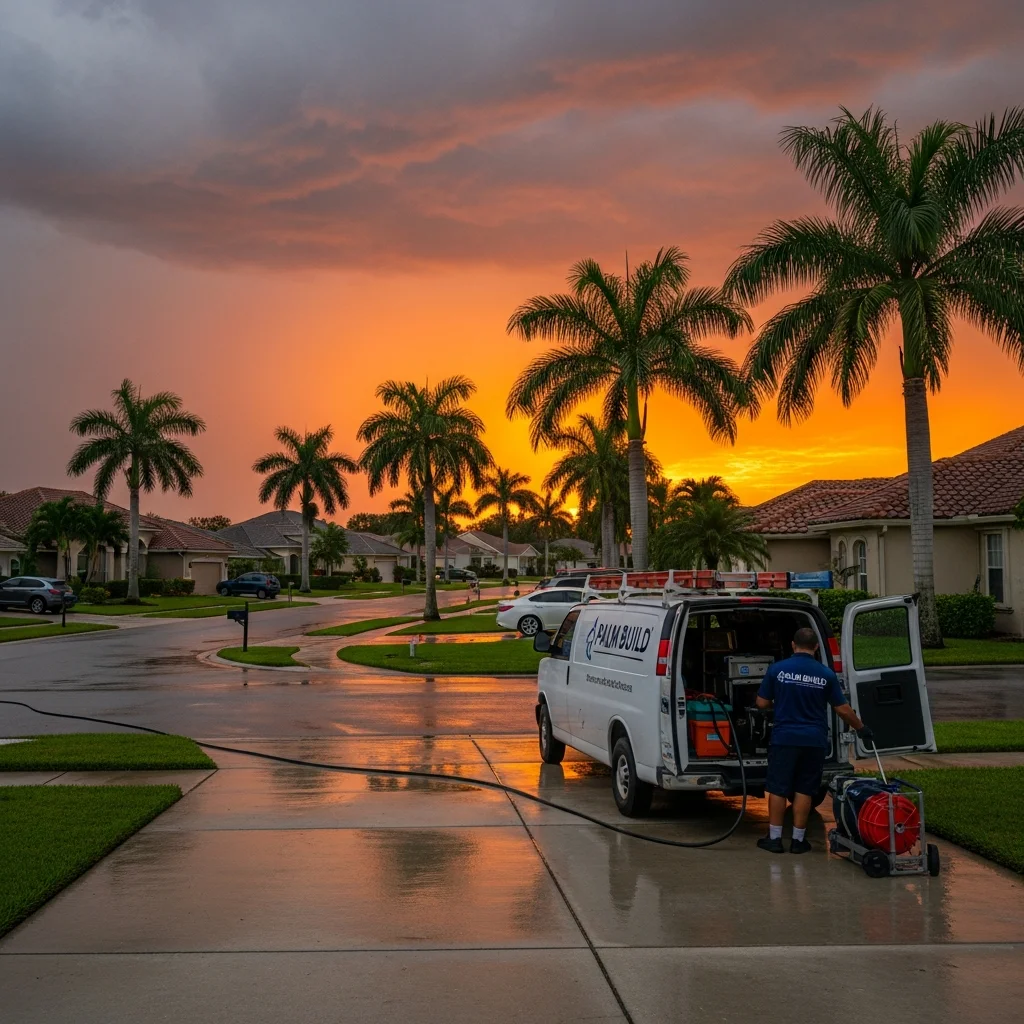
Orlando gets 51 inches of rain a year — and no basements. When water intrudes your slab-on-grade home or condo, every hour counts. Palm Build's IICRC-certified team serves all of Central Florida.
Serving Central Florida from our South Florida hub 3-4 hours Response IICRC Certified
Orlando's water damage risk isn't just about storms. It's about slab foundations, lake
drainage that can't keep up, a 4-month wet season that overwhelms building envelopes,
and the highest multifamily density in our service area. When water enters, it spreads
before you know it's there — and in this humidity, mold follows within 24 to 48 hours.
Slab-on-Grade Hidden Leaks
100%
Slab-on-grade construction
Orlando homes are built entirely on slab-on-grade foundations — no basements, no crawl spaces. Plumbing runs through or beneath the concrete slab. When supply lines fail, water migrates laterally under tile flooring for days before surfacing. By the time you see it, moisture has traveled far beyond the source.
Lake City Stormwater Flooding
300+
Lakes in the metro area
Orlando sits amid 300+ lakes with closed-basin drainage systems — meaning stormwater has nowhere to go except seep, evaporate, or drain into underground wells. In high-intensity rain events, neighborhoods near the Howell Branch Basin and similar watersheds flood repeatedly, even when they sit outside FEMA Special Flood Hazard Areas.
Subtropical Wet Season
8+ in
Average June rainfall
Orlando receives 51.45 inches of rain annually, concentrated in a 16-week window from June through September. June alone averages over 8 inches. The combination of intense rainfall and high pre-existing humidity means that any roof-to-wall breach, stucco crack, or window seal failure that might be minor in a drier climate becomes a significant moisture event here.
High-Rise Plumbing Complexity
25.1%
Units in 20+ unit buildings
25.1% of Orlando's housing units are in buildings with 20 or more units — the highest concentration in our service area. Water from a failed supply line or overflowing appliance on an upper floor migrates through concrete decks, shared wall cavities, and mechanical chases before appearing two or three floors below. Identifying the source requires coordination between multiple units and property management.
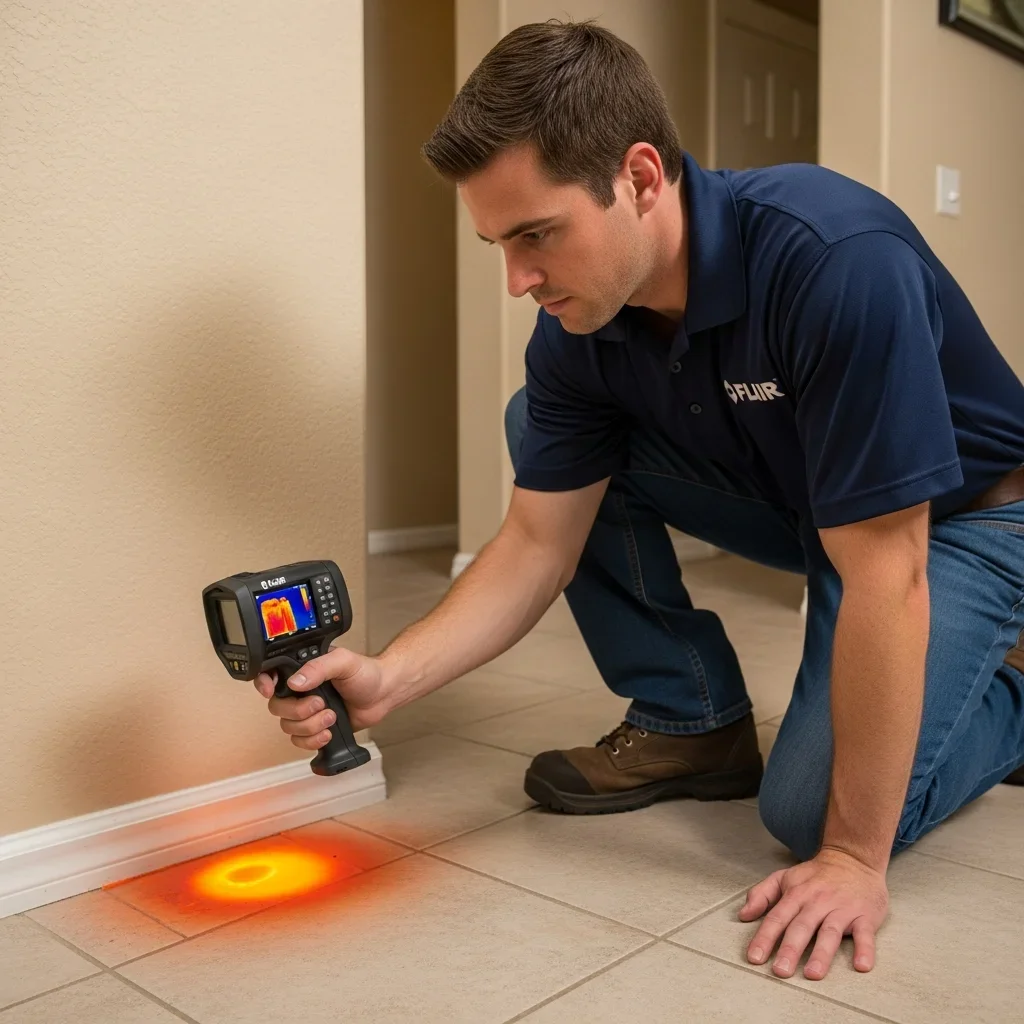
FLIR infrared imaging reveals hidden moisture under Orlando tile floors from slab leaks
— invisible to the eye until significant damage has already spread.
Orlando Neighborhoods
Water Damage Risk by Orlando Neighborhood
Every neighborhood in Orlando has a distinct risk profile based on construction era,
proximity to water, and building type. Here's what we see most often across the areas we
serve.
Modern construction but rapid growth on filled wetlands — drainage saturation during wet season, slab leak risk from ground movement
medium
Metrowest
1980s–1990s
CBS subdivisions
Aging polybutylene or CPVC plumbing (1978–1995 build window), older HVAC systems approaching end of life
high
Conway
1960s–1980s
Ranch-style CBS
Lake-adjacent flooding, aging cast-iron drain lines, single-story slab construction hides lateral water migration
high
Winter Park
1950s–1990s (mixed)
Mixed CBS and wood-frame
Multiple chain lakes with limited drainage, historic wood-frame homes vulnerable to sustained moisture, premium properties warrant priority response
high
Ivanhoe Village
1920s–1960s
Historic mixed-use
Older commercial-to-residential conversions with aging mechanical systems, proximity to Lake Ivanhoe drainage area
medium
Risk levels indicate typical water damage frequency and severity — all areas served equally
by Palm Build's 24/7 response team.
Our Orlando Process
How We Restore Orlando Homes After Water Damage
Every water damage event is different, but the science follows a proven sequence. Here's
exactly what happens when you call Palm Build's Central Florida team.
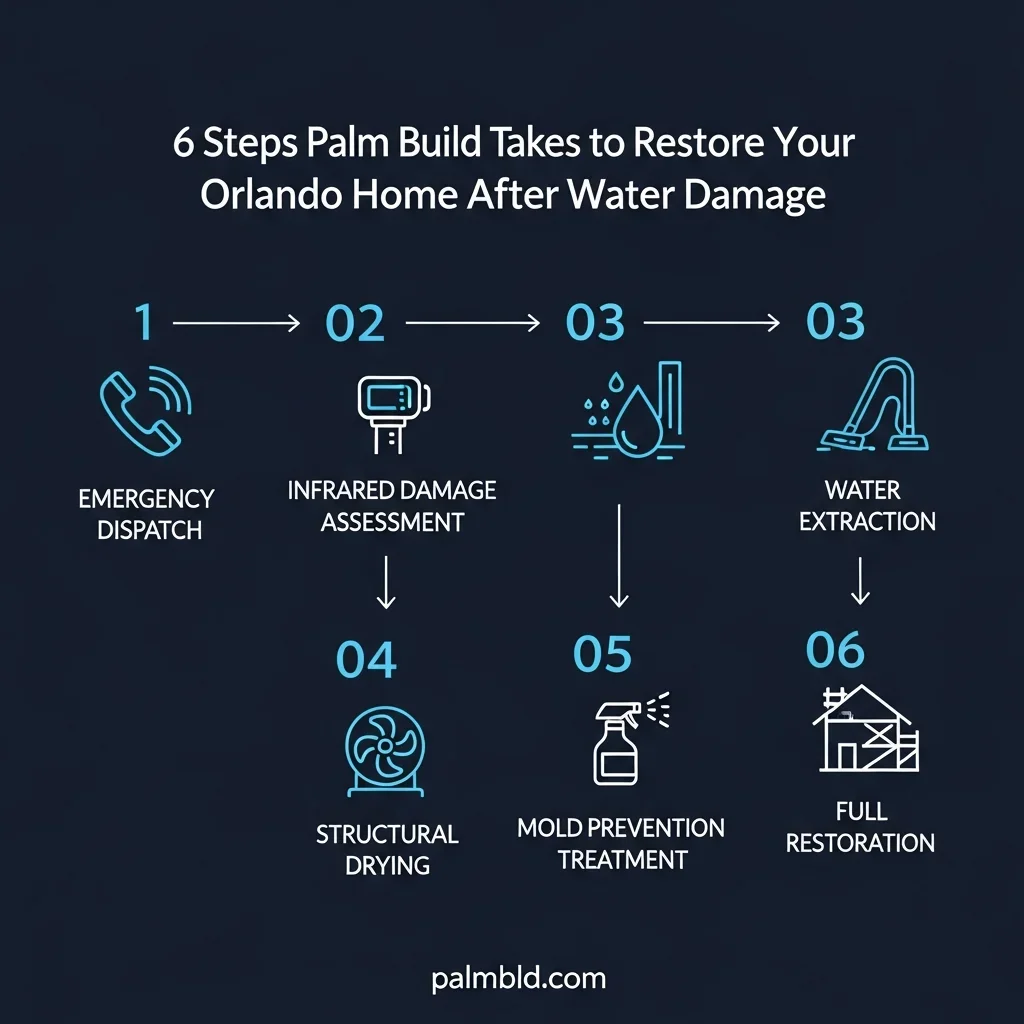
01
Emergency Dispatch
Immediate
02
Infrared Damage Assessment
On Arrival
03
Water Extraction
Hours 1–4
04
Structural Drying
3–5 Days
05
Mold Prevention
During Drying
06
Full Restoration
1–3 Weeks
01
Emergency Dispatch
Immediate
Call our Florida line at (754) 600-3369 any time, day or night. Our dispatch team coordinates a crew from our South Florida hub to reach Orlando within 3–4 hours. While you wait: shut the main water supply, move valuables, and document with photos.
02
Infrared Damage Assessment
On Arrival
IICRC-certified technicians use FLIR infrared thermal cameras to map moisture beneath tile floors and inside stucco walls — critical in Orlando's slab-on-grade homes where water travels horizontally before surfacing. We determine IICRC water category (1, 2, or 3) to set the scope.
03
Water Extraction
Hours 1–4
Truck-mounted extraction systems remove standing water. For tile-on-slab floors common throughout Orlando, we use subsurface extraction tools that reach trapped moisture between the slab and the tile adhesive layer — where standard vacuums can't reach.
04
Structural Drying
3–5 Days
Commercial LGR dehumidifiers and high-velocity air movers are positioned based on the moisture map. In Orlando's 80%+ wet-season humidity, natural air drying is impossible — professional equipment is required to reach dry standard and close the mold window. Daily moisture readings track progress.
05
Mold Prevention
During Drying
EPA-registered antimicrobial treatments are applied immediately. HVAC systems are isolated early to prevent spore distribution through ductwork. Orlando's humidity means the mold clock starts the moment water intrudes — prevention isn't an afterthought, it's step five of every job.
06
Full Restoration
1–3 Weeks
Drywall, tile, baseboard, paint, and structural repairs. For older Orlando neighborhoods like College Park or Thornton Park, we match original finishes. For condos, we coordinate with the HOA adjuster and property manager to document unit-by-unit scope for the master policy.
Why Our Orlando Process Works
1
Slab-on-Grade Expertise
We know how water moves under Orlando's tile floors — and we have the tools to extract it
2
Infrared Assessment
FLIR thermal cameras find moisture invisible to the eye before it becomes mold
3
Central Florida Response
We coordinate dispatch from our South Florida hub to serve all of the Orlando metro
4
Insurance-Ready Documentation
Adjuster-formatted reports from day one — critical under Florida's 1-year filing deadline
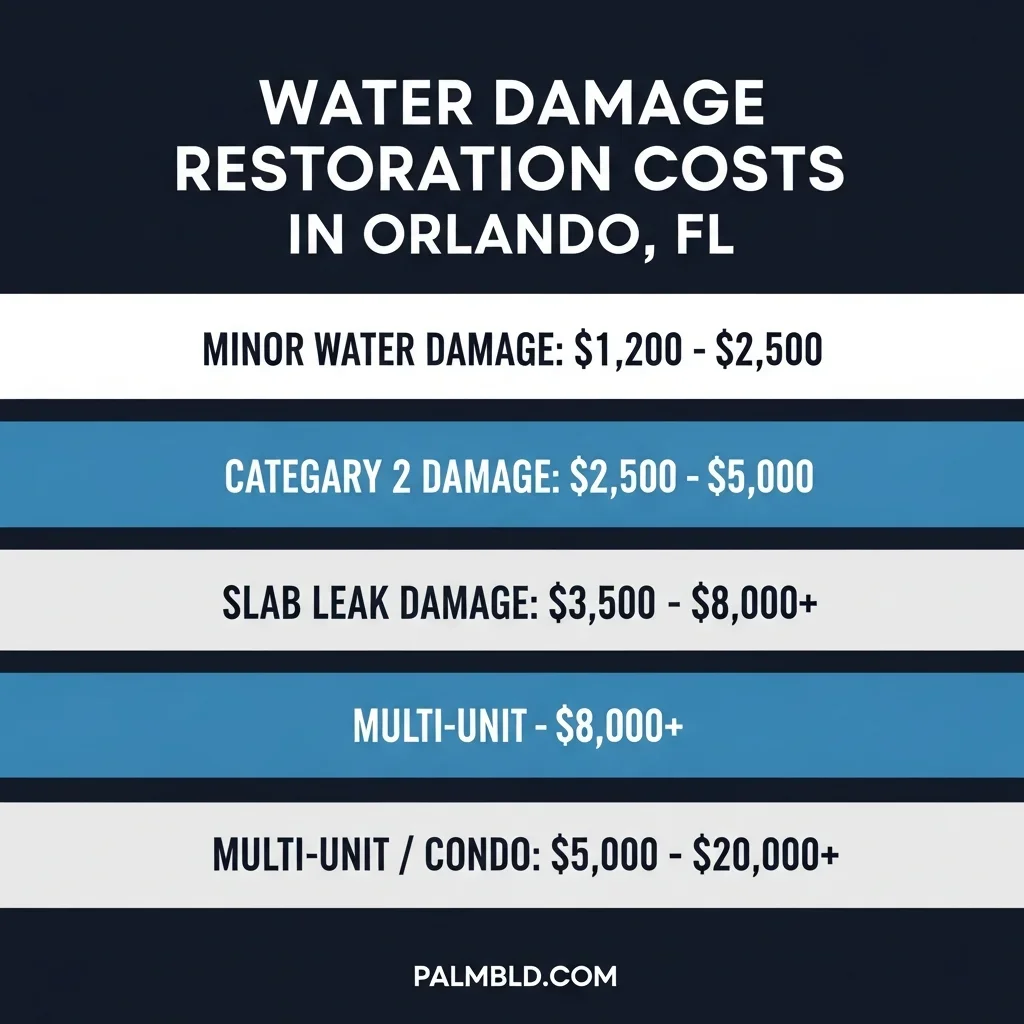
Orlando restoration costs run slightly above national averages due to humid-climate
secondary damage risk, Florida labor rates, and the prevalence of slab-on-grade
foundations that require specialized extraction equipment. Here's what to expect.
Minor Water Damage
Category 1 clean water, small area, no structural involvement
Orlando Range
$1,200 – $2,500
National Avg
$1,000 – $2,000
Typical: appliance overflow, isolated pipe drip, small HVAC condensate spill
Category 2 Damage
Greywater contamination or larger area requiring demolition
Orlando Range
$2,500 – $5,000
National Avg
$2,000 – $4,000
Higher in Orlando due to humidity-accelerated secondary damage and Florida's skilled labor costs
Slab Leak Damage
Under-slab pipe failure with lateral moisture spread under flooring
Orlando Range
$3,500 – $8,000+
National Avg
$2,500 – $6,000
Orlando premium reflects subsurface extraction, tile removal, and re-installation costs specific to slab-on-grade homes
Multi-Unit / Condo Loss
Water migration across multiple units requiring coordinated scope
Orlando Range
$5,000 – $20,000+
National Avg
Highly variable
Cost depends on number of units affected and whether HOA master policy or individual HO-6 is primary
Most sudden and accidental water damage losses are covered by standard Florida HO-3
policies. Palm Build provides adjuster-ready documentation to support your claim from day
one.
Seasonal Risk
When Orlando Homes Are Most at Risk
Orlando's water damage risk follows a predictable seasonal curve — 57% of annual
rainfall arrives between June and September. Hover each month to see specific risks.
Jan
LOWER
Feb
LOWER
Mar
LOWER
Apr
LOWER
May
MODERATE
Jun
HIGH RISK
Jul
HIGH RISK
Aug
HIGH RISK
Sep
HIGH RISK
Oct
ELEVATED
Nov
MODERATE
Dec
LOWER
Hurricane Milton — October 2024
East Central Florida impacts documented by NWS. Orange County under state emergency
declaration. Significant wind and rain intrusion damage across the metro.
EF2 Tornado — March 2025
115 mph peak winds in Seminole County caused structural damage, roof uplift, and
rain intrusion — demonstrating that severe wind events occur year-round in the
metro.
Flood Zones
Orlando Flood Zones and Lake-Adjacent Risk
Orlando's 300+ lakes and closed-basin drainage create flood risk that extends beyond
FEMA's mapped Special Flood Hazard Areas. Understanding your zone affects your insurance
requirements, rebuild rules, and response urgency.
Zone A / AE
High Risk
Special Flood Hazard Area (SFHA) — 1% annual chance of flooding (the "100-year flood"). Federally-backed mortgages require flood insurance. Development must be elevated one foot above base flood elevation.
Zone X (Shaded)
Moderate Risk
0.2% annual flood chance — the '500-year flood' zone. Not required to carry flood insurance, but the City of Orlando's stormwater system can overwhelm these areas during intense wet-season storms.
Zone X (Unshaded)
Lower Risk
Minimal flood hazard outside SFHA. However, Orlando's closed-basin drainage means flooding can occur here during sustained rainfall events — the Howell Branch Basin watershed is an example where repeated flooding occurs outside mapped SFHAs.
Howell Branch Basin: A Known Flooding Problem
The City of Orlando has received "numerous complaints about flooding" in the Howell
Branch Basin watershed, which comprises closed-lake drainage basins without surface
outfalls. The City describes it as relying on "seepage, evaporation, or drainage
wells" to manage water — systems that are quickly overwhelmed during Orlando's wet
season. If your property is in or near this watershed, you may experience repeated
flooding events that occur entirely outside FEMA-mapped flood hazard areas. Standard
flood maps won't reflect your actual risk.
Orlando Post-Flood Rebuild Rules
The City of Orlando's floodplain regulations add compliance requirements that most
restoration contractors don't address. If your home sustained flood damage that requires
structural repairs, these rules affect your scope and costs before reconstruction begins.
Floodplain Fill Permit
Any filling, grading, or re-grading in a floodplain requires a City of Orlando permit from Permitting Services before work begins.
Elevation Requirement
Buildings constructed or substantially improved within a Special Flood Hazard Area must be elevated one foot above the base flood elevation.
Elevation Certificate
Required for all buildings constructed within the SFHA. If you are renovating after a flood loss, confirm whether your property requires an elevation certificate before reconstruction begins.
Substantial Improvement Rule
If restoration cost exceeds 50% of the home's market value, the entire structure may be required to meet current floodplain standards — not just the damaged portion.
Insurance Claims
Navigating Insurance Claims for Orlando Water Damage
Florida's insurance market is unlike any other state — carrier volatility, Citizens as
insurer of last resort, a strict 1-year filing deadline, and AOB reform that changed how
restoration contractors work with insurers. Here's what Orlando homeowners need to know.
Document Immediately
Florida Statute 627.70132 bars claims filed more than 1 year after the date of loss. Take photos and videos before any cleanup. Date-stamp everything. The clock runs from the moment damage occurs — not when you discover it.
File Notice — Don't Wait
File a notice of claim with your insurer as soon as damage is confirmed. You can file the claim and continue restoration simultaneously — you don't need a final invoice to notify your carrier. Supplemental claims must be filed within 18 months.
Understand Your Policy
Standard HO-3 policies cover sudden and accidental water damage from internal sources. Check your policy's mold sublimit (typically $10K in FL), whether you have an ACV or replacement cost policy, and what your deductible is for water damage specifically.
AOB Reform — Know Your Rights
Florida's Assignment of Benefits law changed for policies issued on or after January 1, 2023. Under the new framework, the relationship between your restoration contractor and your insurer depends on clear authorization and compliant invoicing — not a traditional AOB assignment. Palm Build works directly with your adjuster using proper documentation.
Common Insurance Carriers in the Orlando Market
Florida's insurance market is volatile — multiple national carriers have exited the state,
pushing homeowners toward Citizens Property Insurance and regional admitted carriers.
Orange County homeowners should verify their current carrier and policy terms, as coverage
may have changed if their policy was transferred after a carrier exit.
Citizens Property InsuranceFlorida's insurer of last resort — higher claim volume, standard documentation required
Universal Property & CasualtyMajor admitted carrier in FL; standard HO-3 claim process
Heritage Property & CasualtyFlorida-based admitted carrier; verify current policy terms
Slide InsuranceTook over policies from exiting carriers; confirm your coverage level
For current Orange County market share data, verify with the Florida Office of Insurance
Regulation's Market Intelligence Report tool.
Our Work
Orlando Water Damage: Before and After
From HVAC condensate overflow to wet-season flooding — what water damage looks like in
Central Florida homes, and what complete restoration looks like when the job is done.
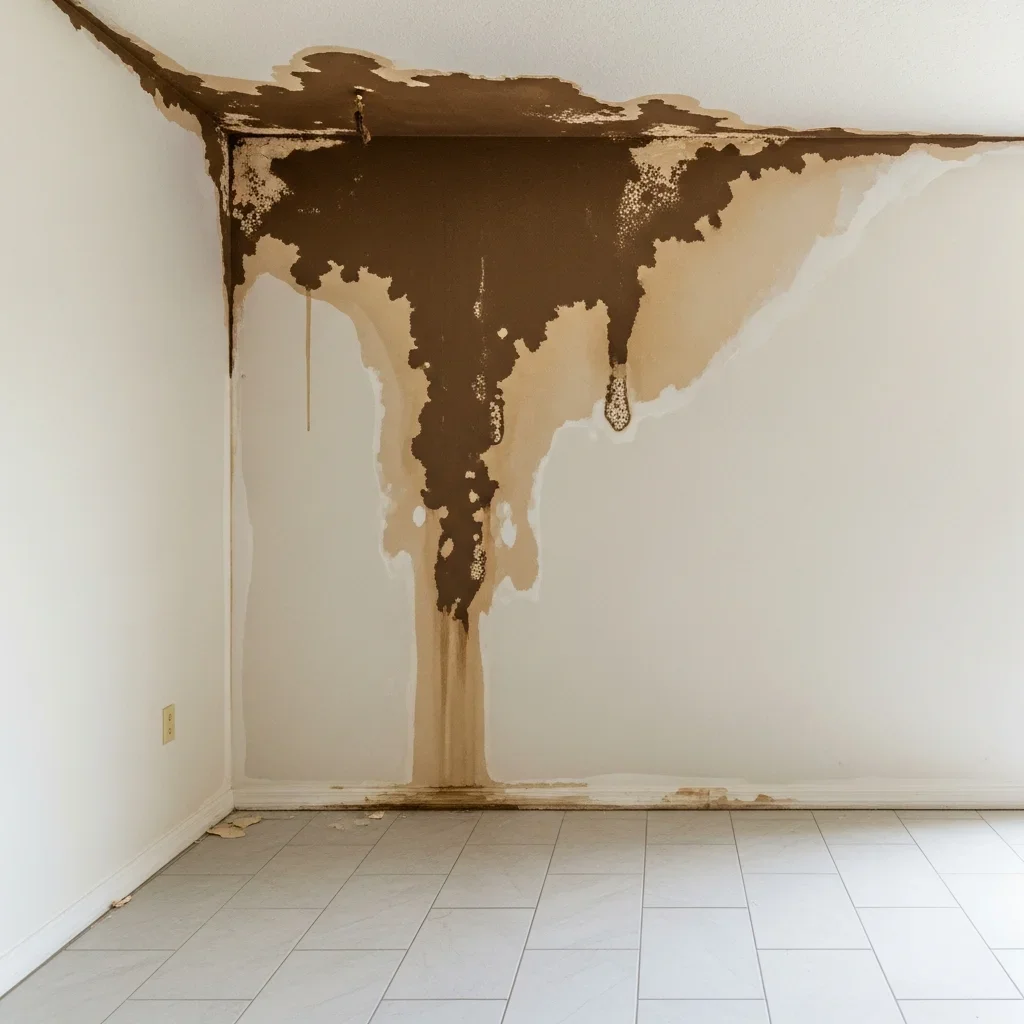
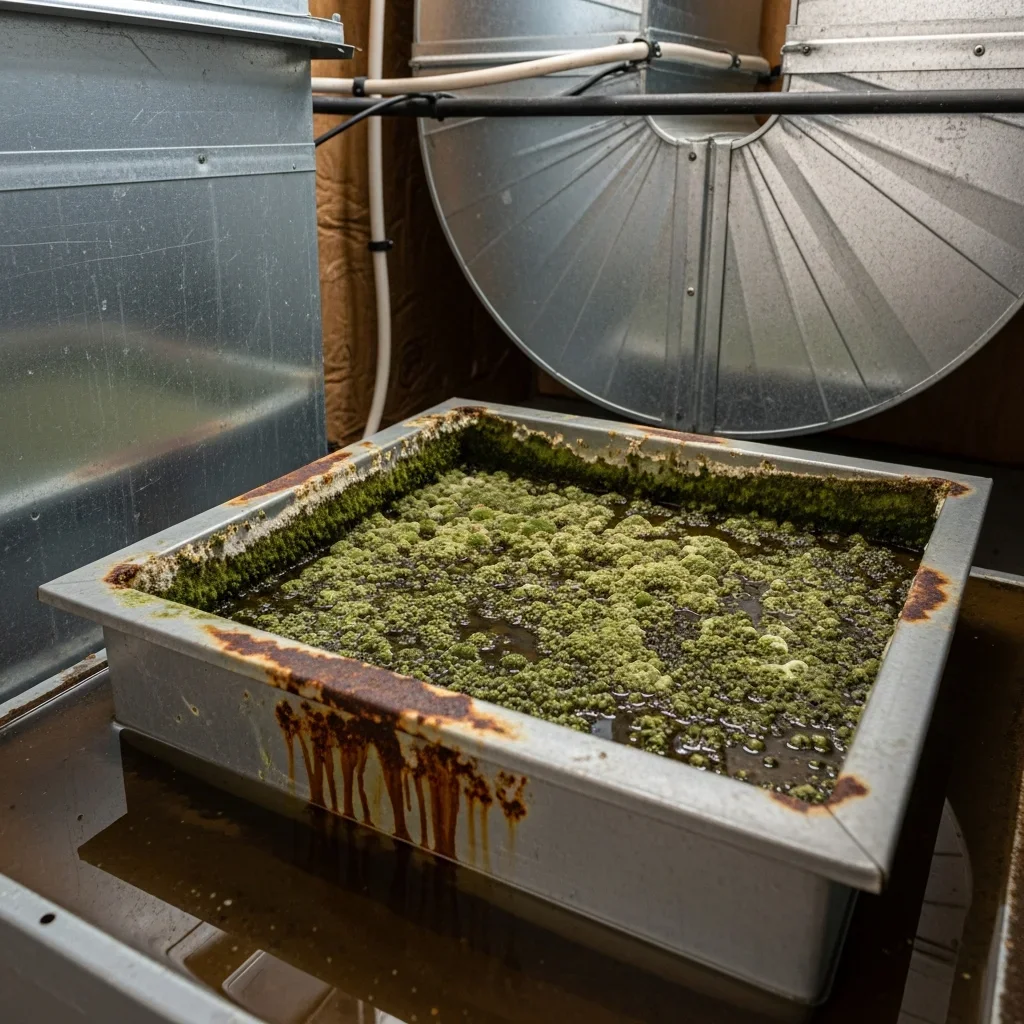
Water staining and drywall failure in a Metrowest Orlando home after an HVAC condensate overflow
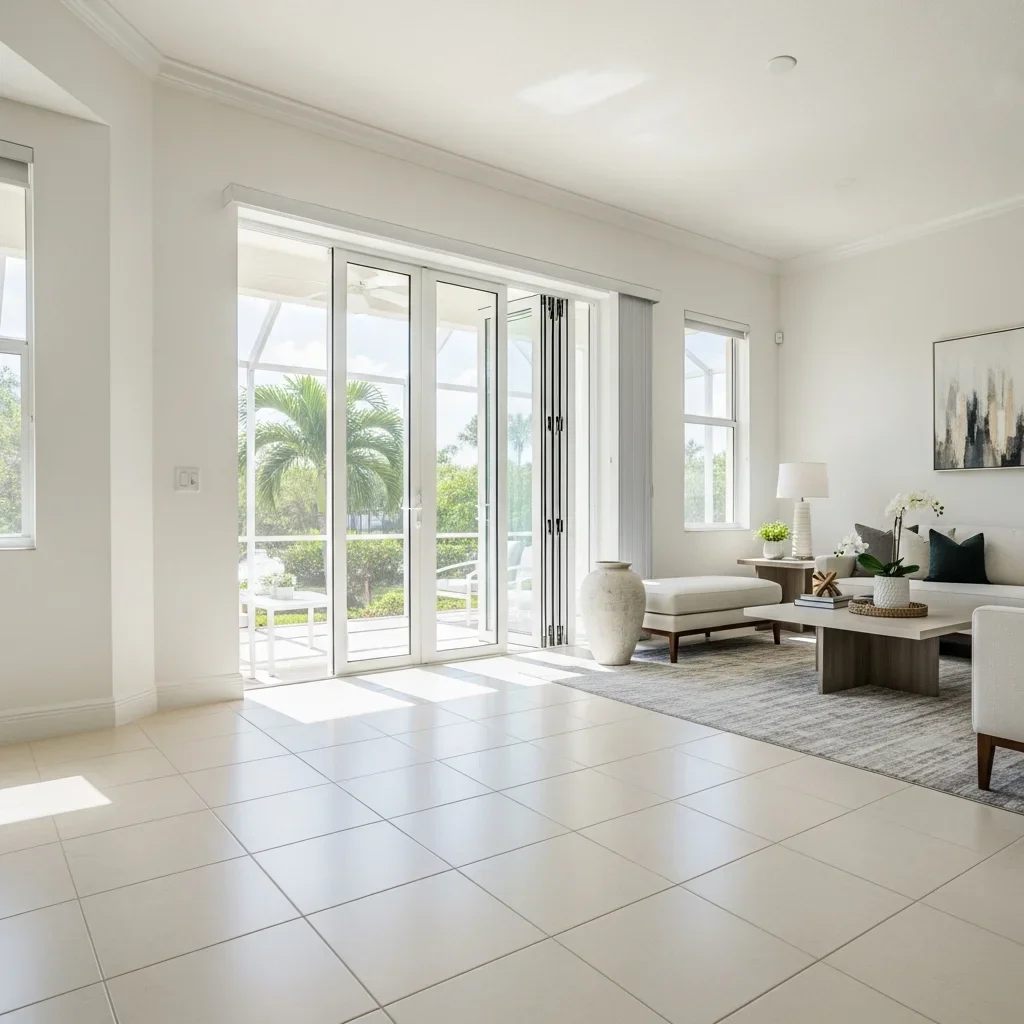
Complete restoration — new tile, fresh drywall, and impact glass doors to the lanai
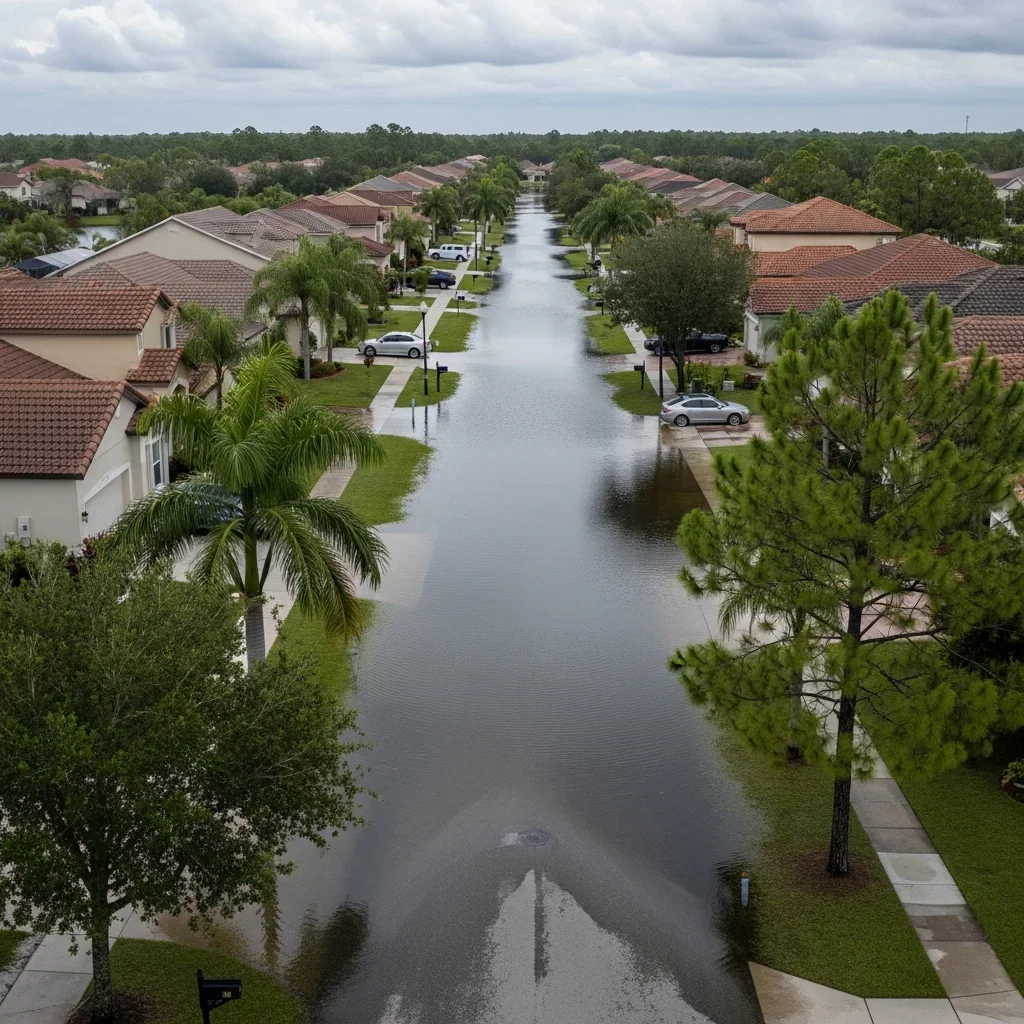
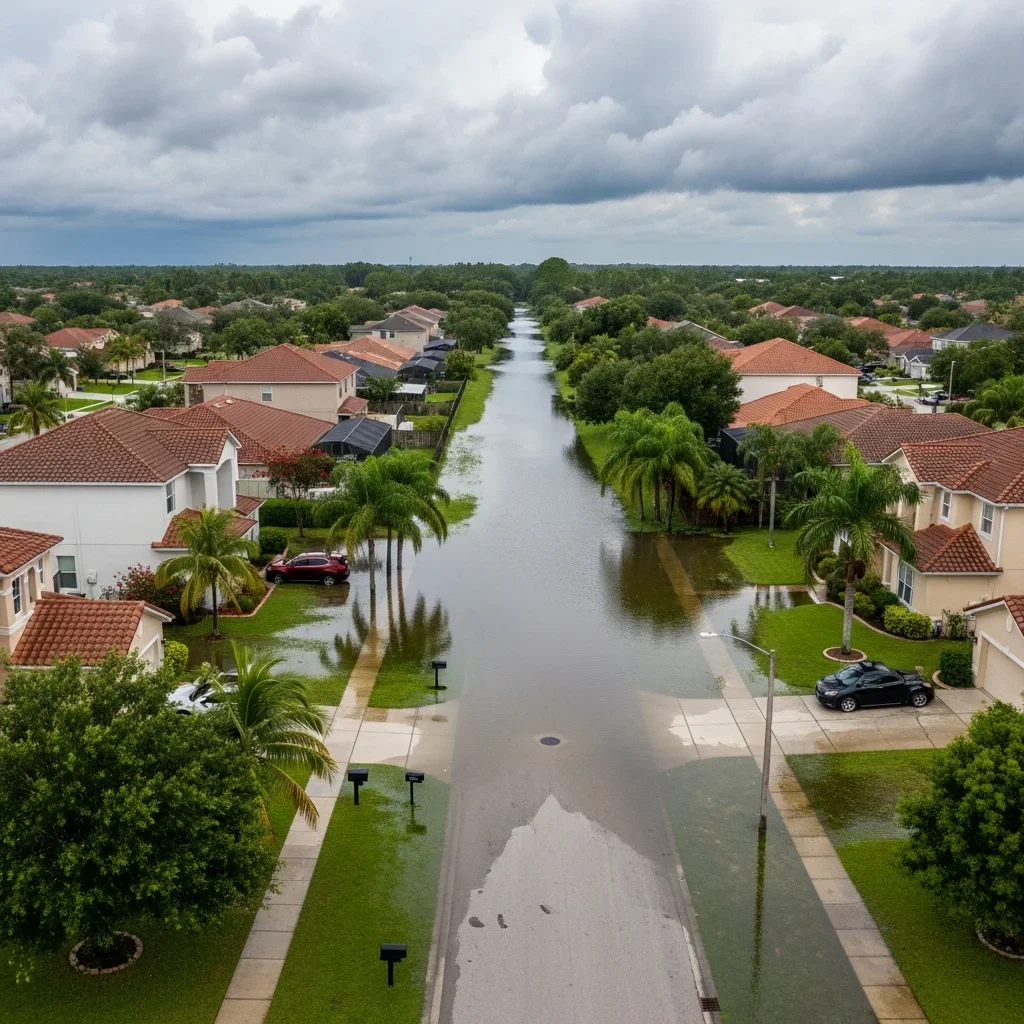
Orlando's closed-basin stormwater drainage overflows into residential streets during wet season
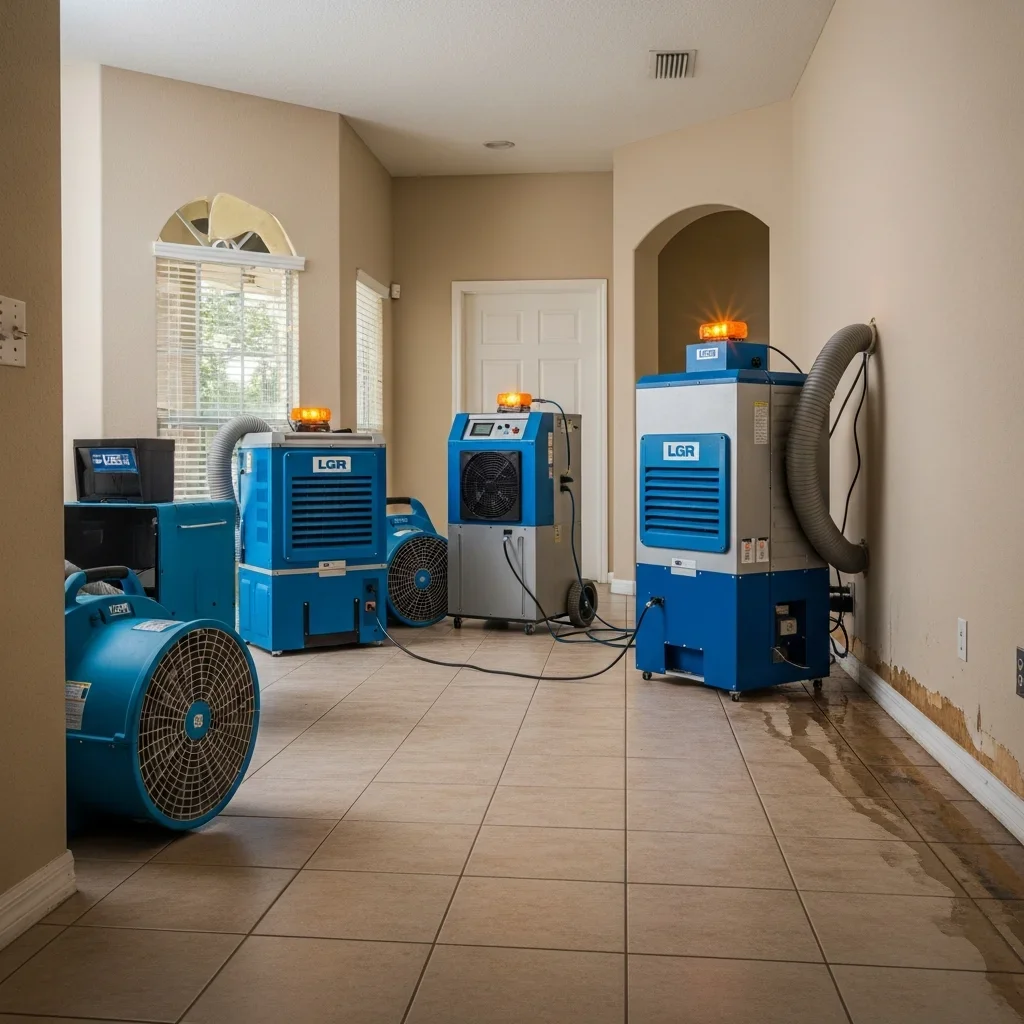
Structural drying in progress — commercial equipment required in Florida's 80%+ wet-season humidity
Damage Types
The 4 Most Common Water Damage Causes in Orlando
Orlando's construction type, climate, and drainage infrastructure create four specific
damage patterns we see on nearly every job in Central Florida.
Slab Leaks
Under-Slab Pipe Failures
Orlando is built entirely on slab-on-grade foundations. Supply and drain lines run through or below the concrete. When they fail — from aging polybutylene pipe, corrosion, or soil movement — water migrates laterally beneath tile flooring. You may not see it for days. By the time surface staining appears, moisture has spread under multiple rooms. FLIR thermal imaging is the only reliable detection method.
Warning signs:
Warm spots on tile floor
Unexplained increase in water bill
Cracking or heaving flooring
Sound of running water with all fixtures off
Roof-to-Wall Intrusion
Stucco and Tile Roof Failures
Orlando's CBS homes and stucco exteriors develop hairline cracks through thermal cycling — the daily expansion and contraction from Florida's heat. During the wet season, each crack allows sustained water saturation into the block wall cavity. Tile roofs can suffer displaced tiles or compromised underlayment after storms. The result is hidden moisture inside walls that homeowners discover when paint bubbles or mold appears.
Warning signs:
Water stains on interior walls near windows
Bubbling or peeling paint on exterior stucco
Damp baseboard after rain
Visible tile displacement on roof
HVAC Condensate Overflow
Air Handler and Drain Pan Failures
Orlando's AC systems run 10 to 11 months per year. Condensate drain pans fill and overflow when lines clog — a maintenance issue that becomes a water damage event. In multi-story homes and condos, the water from an overflowing air handler on the second floor migrates through the ceiling drywall, saturating insulation and structural members before appearing as a ceiling stain on the first floor.
Warning signs:
Water staining on ceiling below HVAC unit
Standing water near air handler
Musty smell from registers
Dripping from ceiling vents
Stormwater Backflow
Closed-Basin Drainage Flooding
In neighborhoods near Orlando's closed-lake drainage basins — including areas around Shingle Creek's headwaters and the Howell Branch Basin — stormwater has no surface outfall. During the wet season, drainage wells and seepage become overwhelmed. Water enters homes through ground-level openings, garage doors, and foundation penetrations. This is freshwater flooding, not storm surge, but it triggers the same mitigation and documentation requirements as any other category of loss.
Warning signs:
Water entering from under doors or slabs
Street flooding before home is affected
Water in garage with no internal source
Neighbors reporting simultaneous flooding
Condo & HOA Guide
Orlando's Condo and High-Rise Water Damage Playbook
25% of Orlando's housing units are in buildings with 20 or more units — the highest
concentration in our service area. Water damage in these buildings requires a different
playbook than single-family restoration.
25.1%
Orlando's housing units in 20+ unit buildings
60.5%
Renter-occupied units in Orlando
3–4
Floors water can travel before appearing
3
Separate insurance relationships in a typical condo loss
Why Multifamily Losses Are Different
In a single-family home, water has one source and one owner. In a 4-story Orlando condo
building, a washing machine hose failure on the 3rd floor can produce water damage in 6
to 8 units across multiple floors before the source is identified. Shared plumbing
risers, concrete deck-to-deck penetrations, and shared mechanical chases all act as
pathways. The restoration scope — and the insurance liability — is distributed across
multiple policy types and parties.
01
Locate and Shut the Source
In multifamily buildings, water migrations start from a specific unit. Find the shutoff for that unit's plumbing first — then the building's main if needed. Don't wait for the property manager to arrive before stopping the flow. Every minute of active water adds scope and cost.
02
Notify Property Management Immediately
Florida multifamily buildings — especially those with 20+ units — have specific emergency protocols. Property managers control building access, have master keys, and coordinate with the HOA's insurance adjuster. Contact them in parallel with your call to Palm Build, not after.
03
Document Across All Affected Units
Water from a single source can migrate to multiple units before it's visible anywhere. Document the affected unit first, then request access to all units above, below, and adjacent. In high-rise buildings, water can travel three to four floors before appearing. Missing a unit's documentation creates disputes with the HOA master policy later.
04
Coordinate the Insurance Triangle
Orlando condo losses typically involve three insurance relationships: the unit owner's HO-6 policy (personal property, interior finishes above the 'bare walls' standard), the HOA's master policy (structural components, common areas), and potentially a neighboring unit's policy if they caused the loss. Palm Build provides separate, unit-specific documentation formatted for each adjuster.
Palm Build Handles the Documentation for All Parties
We provide separate, adjuster-formatted documentation for the unit owner's HO-6, the
HOA master policy, and any neighboring unit involved — so you're not managing three
separate claims processes yourself.
Central Florida's restoration market is full of options. Here's what sets Palm Build
apart for Orlando and Orange County homeowners.
IICRC Certified, Florida Licensed
Every Palm Build technician holds IICRC certification in water damage restoration. We carry all required Florida contractor licenses — and for mold that results from water damage, our separate Chapter 468 mold remediator license means you don't need a second company.
Adjuster-Ready Documentation from Day One
Florida's 1-year claim filing deadline and the volatility of the state's insurance market make proper documentation critical. We produce moisture maps, daily drying logs, photo evidence, and scope reports formatted for your carrier's adjuster — from the first day of response.
Central Florida Coverage
We serve all of Orange County and the greater Orlando metro — College Park, Thornton Park, Lake Nona, Winter Park, Metrowest, Conway, and the surrounding cities including Kissimmee, Sanford, and beyond. Central Florida isn't an afterthought. It's a dedicated service area.
24/7 Emergency Response
Water damage doesn't respect business hours, and in Orlando's humidity, every hour matters. Our dispatch line is answered 24/7. We coordinate Central Florida response from our South Florida operations hub with 3–4 hour arrival for emergency calls.
Water Damage Restoration in Orlando — Your Questions Answered
Water Damage in Orlando? Every Minute Matters.
Orlando's heat and humidity mean mold can establish within 24 hours of water intrusion. Our IICRC-certified team serves all of Central Florida — call now for 24/7 emergency response.