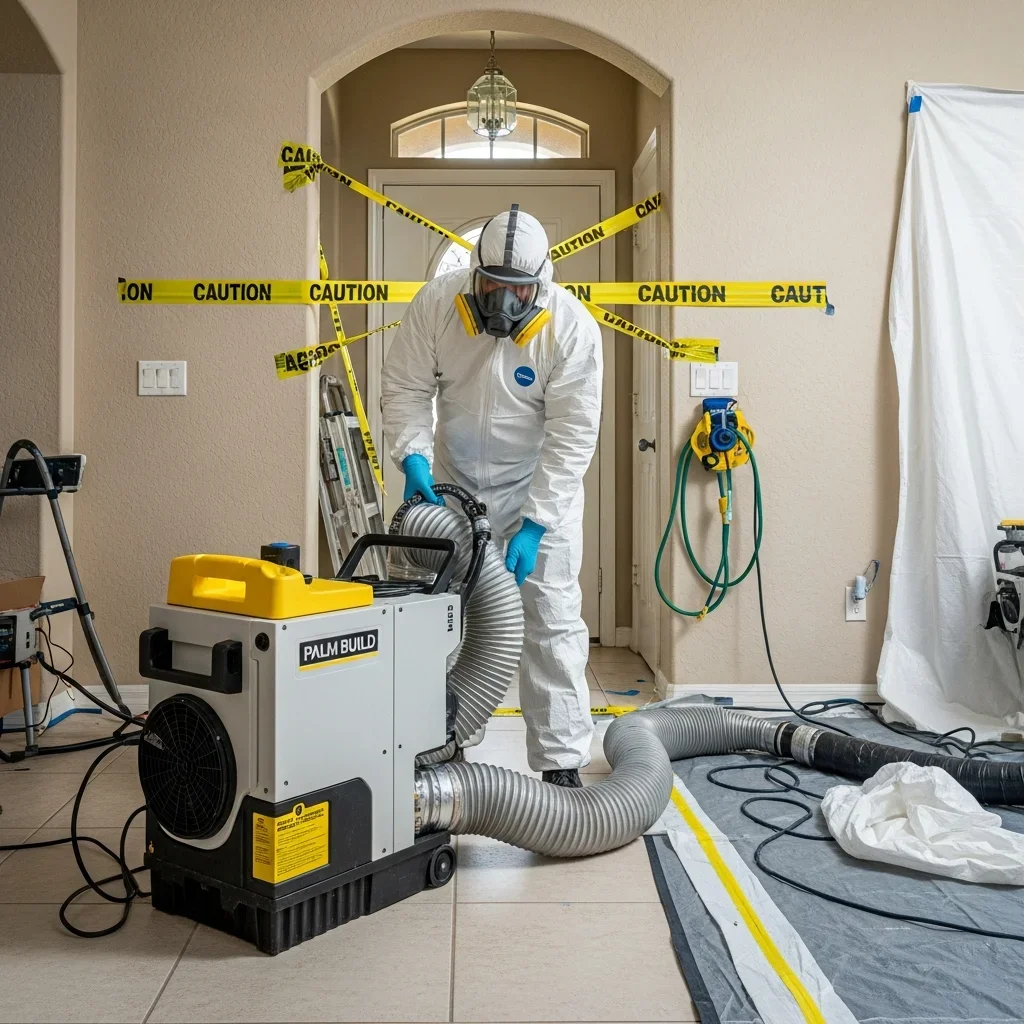
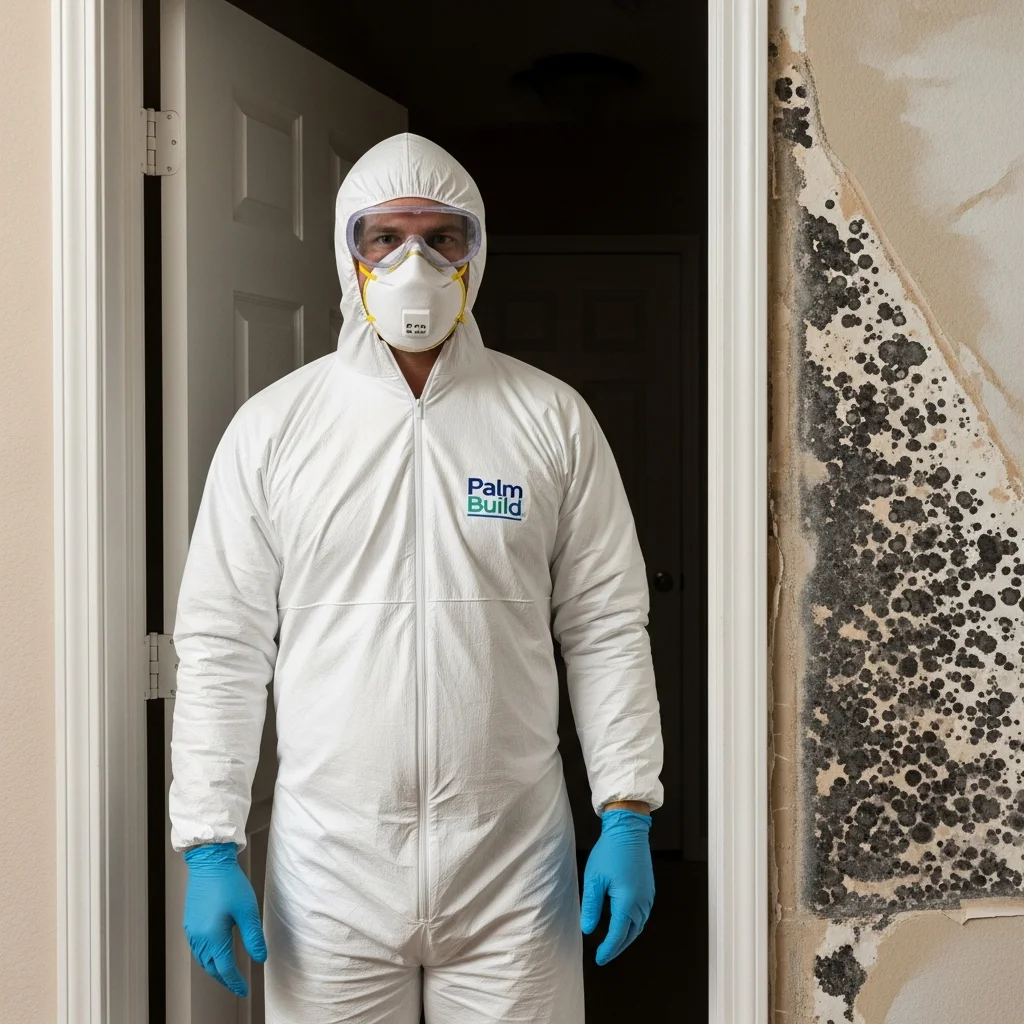
Palm Build mold remediation technician in full Tyvek protective suit and respirator inside an Orlando Florida home with visible mold damage
ORLANDO FL — FL CHAPTER 468 LICENSED MOLD REMEDIATION

Mold Remediation in Orlando, Florida

Orlando's subtropical humidity, year-round AC systems, and dense multifamily housing create persistent mold conditions unlike anywhere else in Florida. Palm Build's FL-licensed remediators serve all of Central Florida.

Serving Central Florida from our South Florida hub 3-4 hours Response IICRC Certified

3-4 hours

Emergency Response

24/7

Dispatch Available

IICRC

Certified Technicians

Why Orlando

Why Orlando Homes Develop Mold More Than Most Florida Cities

Mold in Orlando isn't a weather event. It's a maintenance event — driven by year-round humidity, always-on AC systems, and building types that trap moisture where it can't drain. Understanding what drives mold here helps you catch it before it spreads, and understand what a 24-hour window actually means in practice.

Year-Round Humidity

80%+

Wet-season relative humidity

Orlando's relative humidity stays above 60% year-round and regularly exceeds 80% from June through September. At 60% humidity, mold colonies can establish on wet organic surfaces within 24–48 hours. At 80%, that window shrinks. Unlike northern climates where cold winters interrupt mold cycles, Orlando provides a continuous growth environment every month of the year.

HVAC Runs 10–11 Months

10–11

Months AC operates per year

Central Florida AC systems operate almost year-round. Every system generates condensate — liquid water pulled from humid air. When drain pans clog, drain lines back up, or units are oversized and short-cycle, that moisture accumulates in the air handler. The system then distributes mold spores to every room through the ductwork. This is the single most common mold source we see in Orlando homes.

Slab-on-Grade Hidden Wetting

100%

Slab-on-grade — no crawl space drain

Orlando's slab foundations mean any water that penetrates from a slab leak, stormwater intrusion, or subslab pipe failure stays trapped in a warm, enclosed space beneath flooring. In Florida's heat, the underfloor environment maintains conditions ideal for mold year-round. By the time surface signs appear, mold is often established on adhesive, subfloor material, and baseboard assemblies.

High-Rise Moisture Migration

25.1%

Units in 20+ unit buildings

25% of Orlando's housing units are in buildings with 20+ units. Shared walls, shared mechanical chases, and stacked HVAC systems create moisture migration pathways between units. A single water source — an overflowing washer, a clogged condensate line, a roof deck penetration — can seed mold in multiple units before any occupant notices a problem.

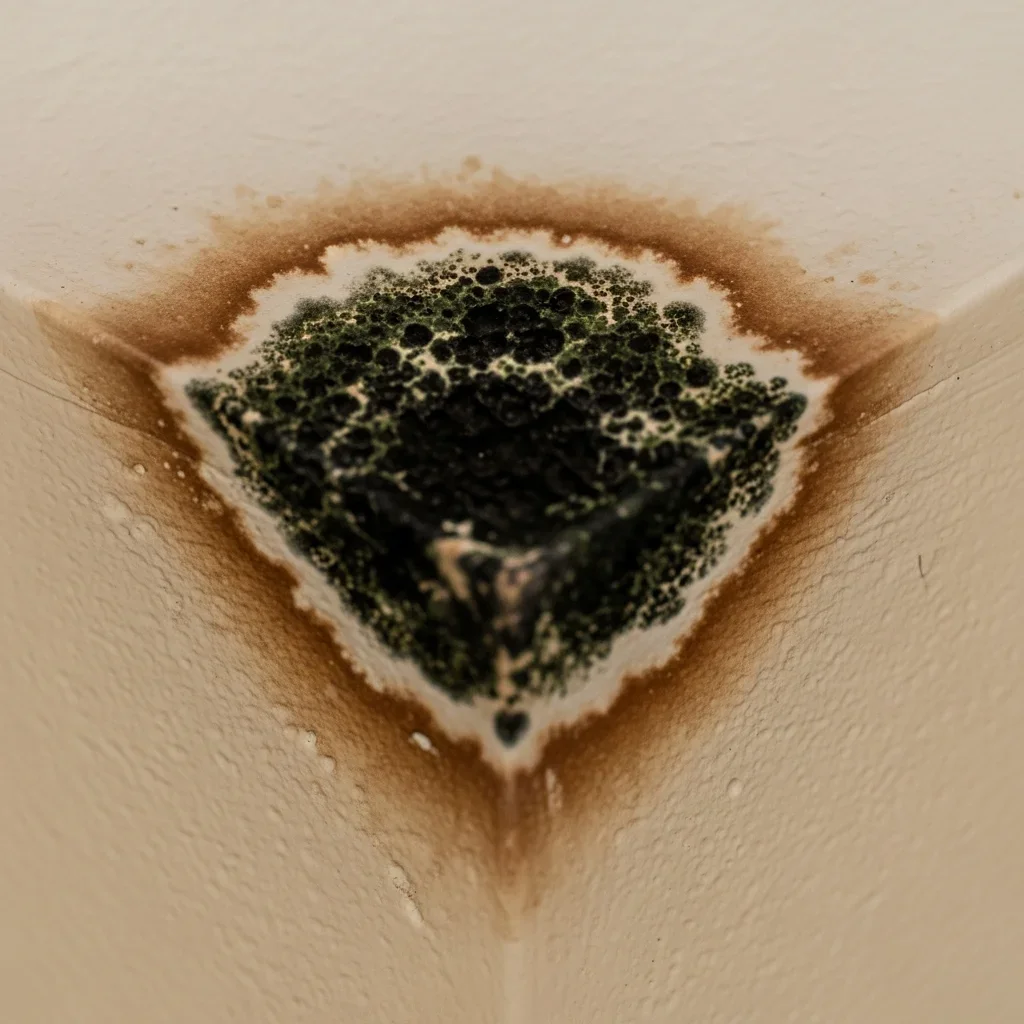
Black and green mold colony spreading from ceiling corner in an Orlando Florida apartment with water stain halo from plumbing or HVAC failure
Ceiling mold in an Orlando apartment — a classic result of an undetected HVAC condensate overflow or upstairs unit plumbing failure in a high-rise building.
HVAC Mold

Orlando's Hidden Mold Problem: Your Air Conditioner

Your AC system runs 10 to 11 months per year in Orlando. When its drain system fails — and without maintenance, it will — it seeds mold through every room in your home. This is the most common mold source we encounter in Central Florida.

How a Clogged Drain Pan Becomes a Whole-House Mold Problem

1

Oversized Unit Short-Cycles

Many Orlando homes have AC units sized for peak summer load. In milder months, oversized units cool the air quickly and shut off before completing a full dehumidification cycle — leaving the air humid.

2

Condensate Drain Clogs

Orlando's year-round AC operation means condensate drain pans and lines accumulate algae and debris. Most homeowners never flush them. When they clog, water backs up into the drain pan.

3

Mold Establishes in the Air Handler

Standing water in the drain pan is a perfect mold substrate — warm, humid, dark, and continuously refreshed with moisture. Mold establishes on the evaporator coil and pan within days.

4

Air System Distributes Spores

Every time the AC runs, it pulls return air across the contaminated evaporator coil and distributes spores through supply registers to every room. One clogged drain pan seeds an entire house.

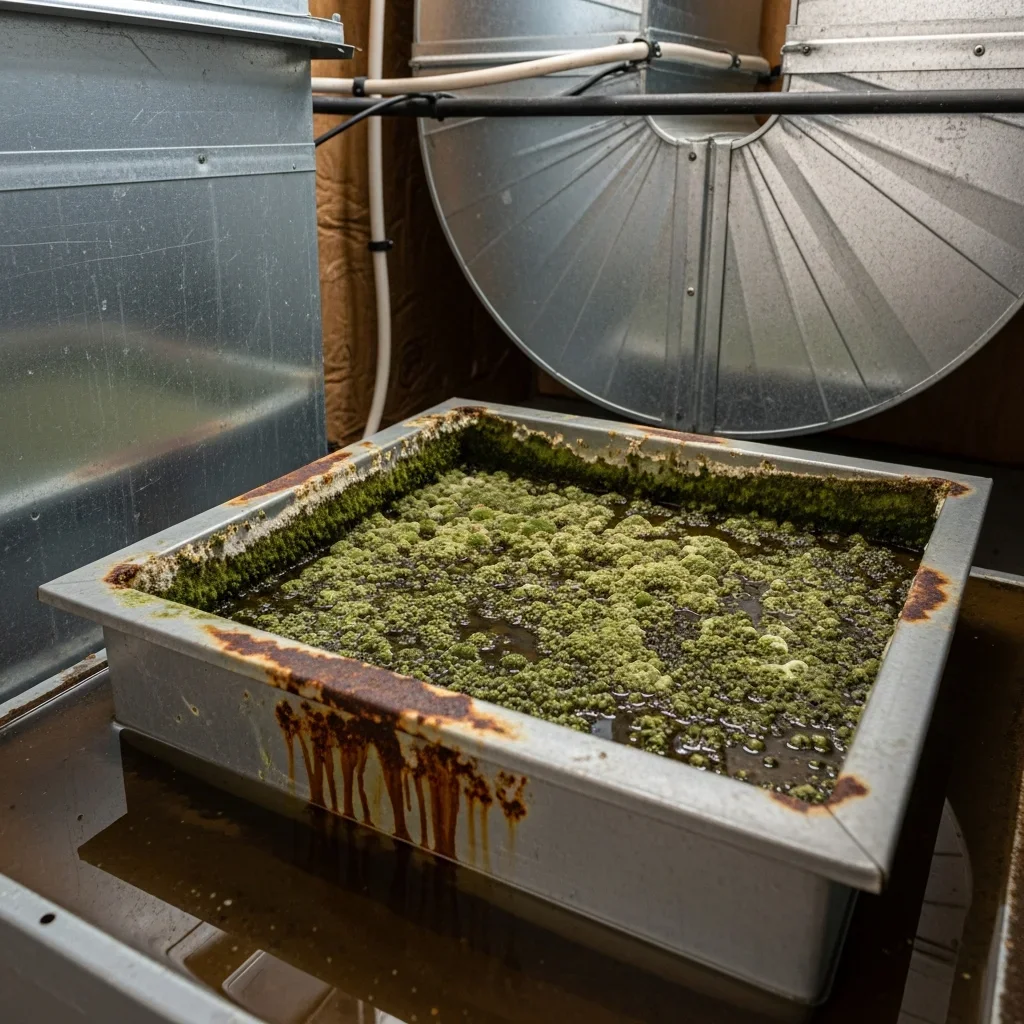
Close-up of clogged condensate drain pan in a Florida AC air handler unit with mold growth in standing water

Prevention Checklist for Orlando Homeowners

Most HVAC mold problems are entirely preventable. This checklist applies specifically to Central Florida's year-round AC climate:

  • Flush condensate drain line monthly with diluted bleach (1 cup per gallon water)
  • Inspect drain pan for standing water every 3 months
  • Replace air filter every 30–60 days (FL environment)
  • Annual professional coil cleaning and drain line inspection
  • Keep indoor humidity at 50% or below with a standalone dehumidifier if needed
  • Check for musty smell from registers — first sign of coil contamination

If you already smell musty air from your registers, professional HEPA coil cleaning and mold assessment is required — maintenance alone won't address active contamination.

Our Process

How Palm Build Remediates Mold in Orlando Homes

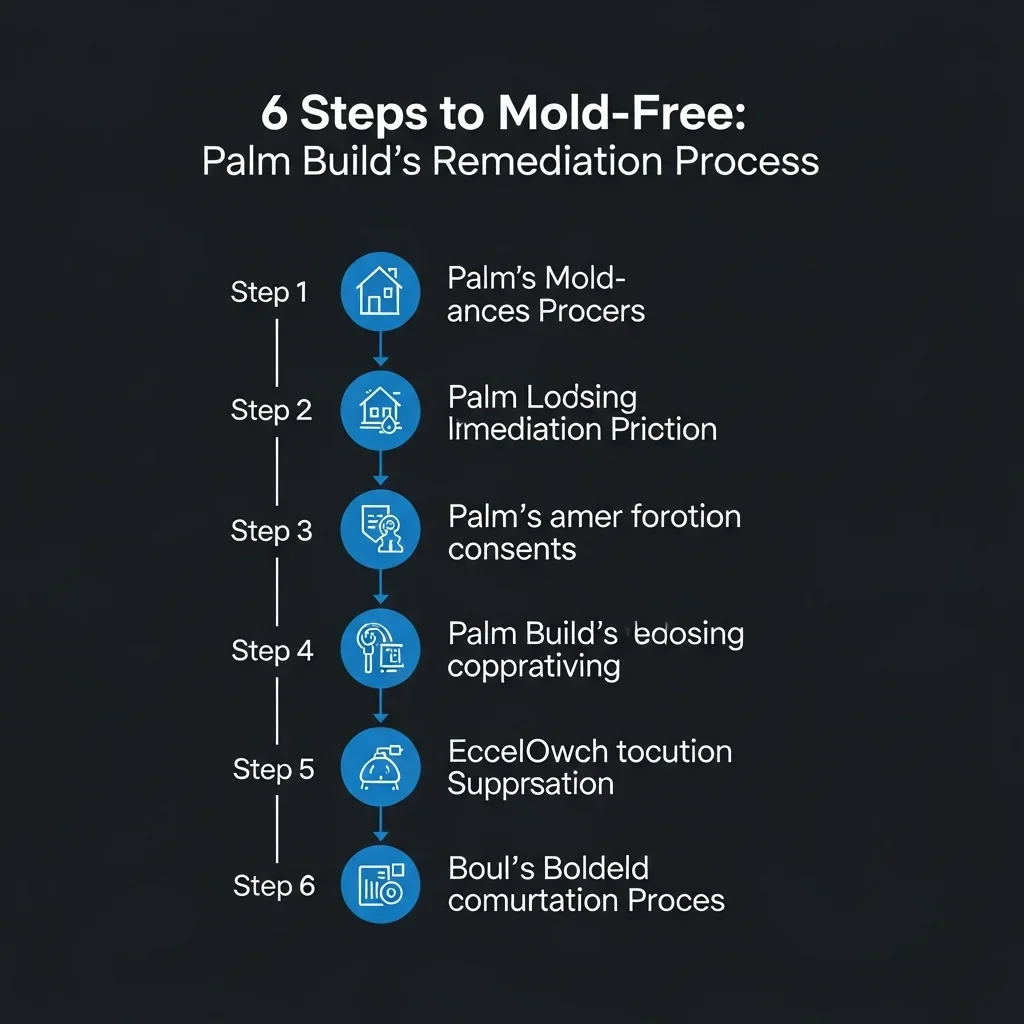
FL Chapter 468-licensed. HEPA containment. Air quality testing before and after. Here's exactly how we work.

01

Inspection & Air Quality Test

Day 1

FL Chapter 468-licensed assessor inspects the property and collects air samples. Spore counts are measured against outdoor baseline levels. The inspection report identifies species, concentrations, and probable moisture sources — without which any remediation is guesswork.

02

Containment Setup

Day 1–2

The affected area is sealed with polyethylene containment barriers and placed under negative pressure using HEPA-filtered air scrubbers. This prevents spore migration to unaffected areas during work — critical in open-plan Florida homes and especially in multifamily buildings.

03

HEPA Air Filtration

Throughout

Commercial HEPA air scrubbers run continuously during remediation, capturing airborne spores down to 0.3 microns. In Orlando's humidity, airborne spore concentrations stay elevated without active filtration. We maintain scrubbers until clearance testing confirms normal levels.

04

Physical Mold Removal

Day 2–4

Porous materials with mold growth (drywall, insulation, wood framing) are removed and bagged within containment. For HVAC contamination — common in Orlando — we clean the evaporator coil, drain pan, and accessible ductwork. All work performed by FL Chapter 468-licensed remediators.

05

Antimicrobial Treatment

Day 3–5

EPA-registered antimicrobial agents are applied to all remediated surfaces and structural members. In Orlando's year-round humidity, untreated structural wood will re-seed within weeks. We address the building envelope conditions that created the moisture source alongside physical removal.

06

Clearance Testing

After Completion

Independent post-remediation verification by a licensed mold assessor confirms that spore counts have returned to acceptable levels. Palm Build provides clearance documentation formatted for your insurer and usable for real estate disclosure if needed.

The Clearance Certificate Matters

Many homeowners stop after physical mold removal. In Orlando's environment, that's a mistake. Without post-remediation clearance testing, you have no documented proof that spore levels are safe — critical for insurance claims, real estate transactions, and peace of mind.

Schedule a Mold Inspection
Infographic showing Palm Build's 6-step mold remediation process for Orlando Florida homes
Warning Signs

6 Warning Signs of Mold in Orlando Homes

Some are obvious. Most are subtle — and Orlando's year-round heat and humidity mean that by the time you see surface mold, it's often been growing behind walls for weeks.

01 Act Fast

Musty Smell from AC Vents

In Orlando, a musty or earthy smell from supply registers is almost always HVAC mold. When you smell it as soon as the air kicks on, the source is the evaporator coil or drain pan — and the air system is distributing spores throughout your home every cycle.

02 Act Fast

Dark Spots on Ceiling Near Vents

Black or gray discoloration in a ring pattern around ceiling supply registers indicates either direct mold growth on the register or mold-contaminated dust settling from the duct system. Either way, it's a signal that the HVAC system needs professional assessment.

03 Investigate

Grout Line Discoloration in Bathrooms

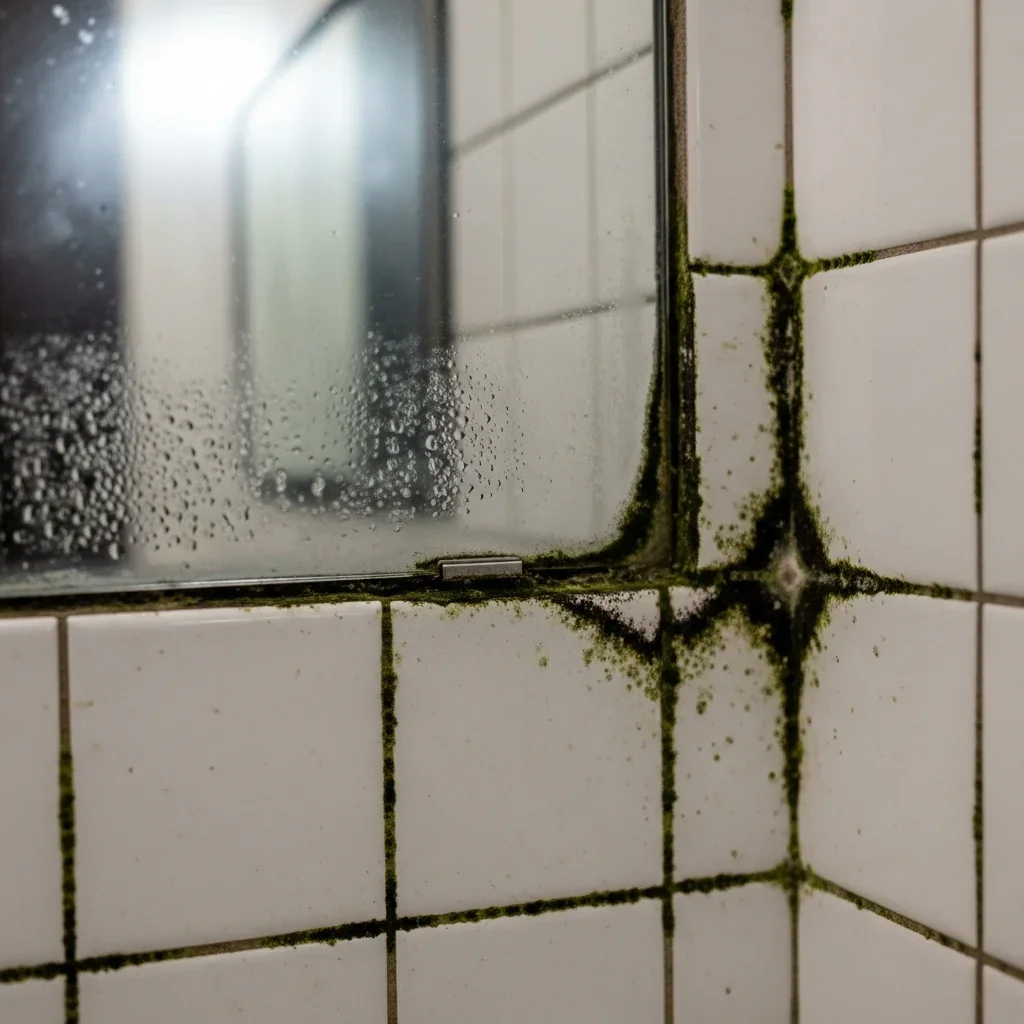
Pink, black, or dark green discoloration in tile grout — especially in shower corners, around the tub, and at floor-to-wall junctions — is surface mold. In Orlando's humidity, without adequate ventilation, bathroom tile mold is nearly universal. Surface mold here is often the first visible sign of deeper problems behind the tile.

04 Investigate

Recurring Allergy or Respiratory Symptoms

Mold spores trigger respiratory symptoms, especially in sensitive individuals. If household members experience worsening allergy symptoms, persistent cough, or asthma-like reactions that improve when they leave the home, airborne mold should be investigated. An air quality test establishes whether spore counts are elevated before any visible mold is present.

05 Investigate

Indoor Humidity Consistently Above 60%

A digital hygrometer is the single best early-warning tool for Orlando homeowners. If indoor relative humidity consistently reads above 60% — even in air-conditioned spaces — conditions are conducive to mold growth on any organic surface. At 70%+, expect active mold within weeks.

06 Act Fast

Staining on Interior Stucco or Drywall

Water stains that appear on interior stucco walls, especially near windows, at wall-ceiling junctions, or near exterior corners, indicate sustained moisture intrusion into the CBS wall cavity. In Orlando's CBS construction, this moisture stays trapped in the block wall and between the stucco and drywall — a prime mold environment.

Mold growth along grout lines in a Florida bathroom tile wall with condensation on mirror showing humid conditions in an Orlando home
FL Licensing

Florida Requires Licensed Mold Professionals — Verify Before You Hire

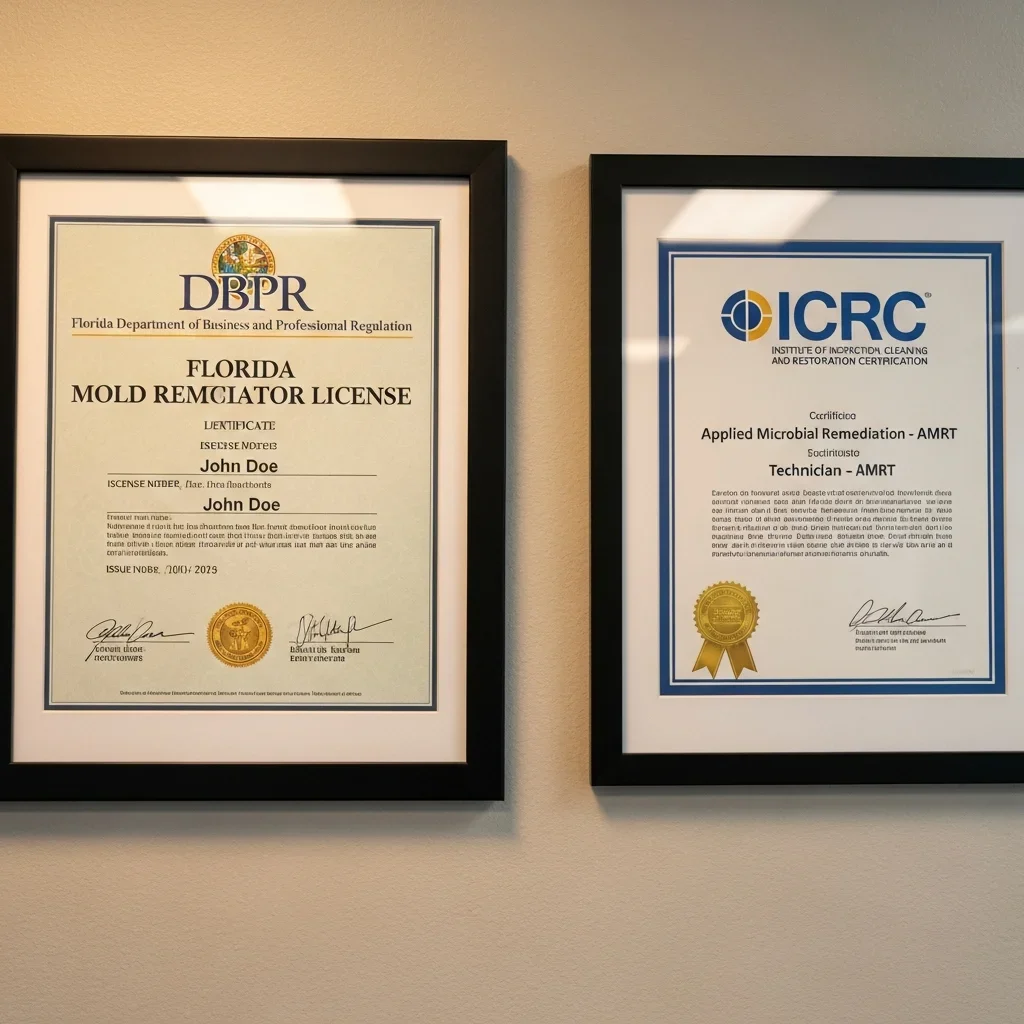
Under Florida Chapter 468, Part XVI, anyone performing mold assessment or mold remediation for compensation must hold a license from the Florida Department of Business and Professional Regulation (DBPR). Orlando homeowners should verify licensure before any contractor begins work.

Mold Assessor License

Required for anyone who inspects a property for mold, collects air or surface samples, or prepares a mold assessment report for compensation. The assessor determines the scope and extent of contamination and writes the remediation protocol.

Mold Remediator License

Required for anyone who physically removes or treats mold growth for compensation. The remediator follows the assessor's protocol. Palm Build holds this license — you can verify our credentials at the Florida DBPR website.
Why Unlicensed Mold Work Costs You More

Insurance Claim Risk

If your mold remediation was performed by an unlicensed contractor, your insurer can deny the claim. Florida courts have upheld insurer denials based on contractor non-compliance with Chapter 468.

No Clearance Documentation

Unlicensed contractors cannot produce legally valid clearance testing reports. Without clearance documentation, you have no proof of remediation for future property sale, refinancing, or additional damage claims.

Incomplete Remediation

Licensed remediators follow documented protocols from a separate assessor. Unlicensed contractors often remove visible mold without addressing moisture sources or testing airborne spore levels — the mold returns.

Verify any Florida mold contractor before hiring:

Florida DBPR License Search — search "Mold Remediator" or "Mold Assessor"

Florida DBPR mold remediator license certificate and IICRC certification displayed in a professional office
Cost Guide

Mold Remediation Costs in Orlando, FL

Cost depends on the extent of contamination, affected materials, and whether HVAC decontamination is required. These ranges reflect typical Orlando job costs including Florida's licensed remediator requirement and clearance testing.

Surface Mold (Limited Area)

$500 – $1,500

Visible surface mold on accessible drywall, tile, or grout with no structural involvement. Small area, no demolition required.

  • Containment setup
  • Surface removal and treatment
  • HEPA filtration
  • Clearance recommendation

Drywall Removal + Remediation

$1,500 – $4,000

Mold inside drywall requiring physical demolition, structural treatment, and reconstruction scope. Most HVAC-related mold and water-damage mold falls here.

  • Full containment
  • Drywall demolition and removal
  • Structural antimicrobial treatment
  • Air quality clearance testing

HVAC System Decontamination

$800 – $2,500

Evaporator coil cleaning, drain pan treatment, and accessible duct sanitization. Often required alongside drywall remediation for full resolution.

  • Coil HEPA cleaning
  • Drain pan treatment
  • Accessible duct antimicrobial
  • Post-treatment air quality test

Full Remediation + Air Quality

$3,000 – $8,000+

Multi-room contamination, structural involvement, or multifamily/condo scope with coordinated unit access and separate documentation.

  • Multi-room containment
  • Full structural removal
  • HVAC decontamination
  • Post-remediation clearance certificate

Insurance coverage: Mold remediation costs are covered when mold resulted from a covered water damage event (burst pipe, HVAC failure, appliance overflow). Most standard FL HO-3 policies limit standalone mold coverage to $10,000. Palm Build provides adjuster-ready scope documentation to maximize covered loss reimbursement.

Insurance

Does Homeowners Insurance Cover Mold Remediation in Orlando?

The answer depends entirely on the source of the mold. Florida HO-3 policies treat mold as a secondary loss — coverage follows the water damage claim, not the mold itself.

Generally Covered

  • Mold resulting from a sudden pipe burst or appliance failure
  • Mold resulting from HVAC condensate overflow (if sudden and accidental)
  • Secondary mold growth after a covered storm damage water intrusion
  • Testing and documentation costs related to a covered loss

Generally Not Covered

  • Mold from long-term high humidity or poor ventilation (gradual cause)
  • Mold from flooding by external stormwater (requires separate flood policy)
  • Pre-existing mold at time of policy purchase
  • Mold from neglected maintenance (gradual cause, not sudden event)

Florida-Specific: The 1-Year Filing Rule

Florida Statute 627.70132 requires that you give notice of a claim within 1 year of the date of loss (18 months for supplemental claims). If mold developed after a water damage event that you didn't immediately report to your carrier, the clock still runs from the water damage date — not the date you discovered the mold. Document and file promptly, even if you're still assessing the full scope.

Our Work

Orlando Mold Remediation: Before, During, and After

Clogged condensate drain pan in Florida air handler with mold growth in standing water — the most common mold source in Orlando homes
The most common mold source in Orlando: a clogged AC drain pan
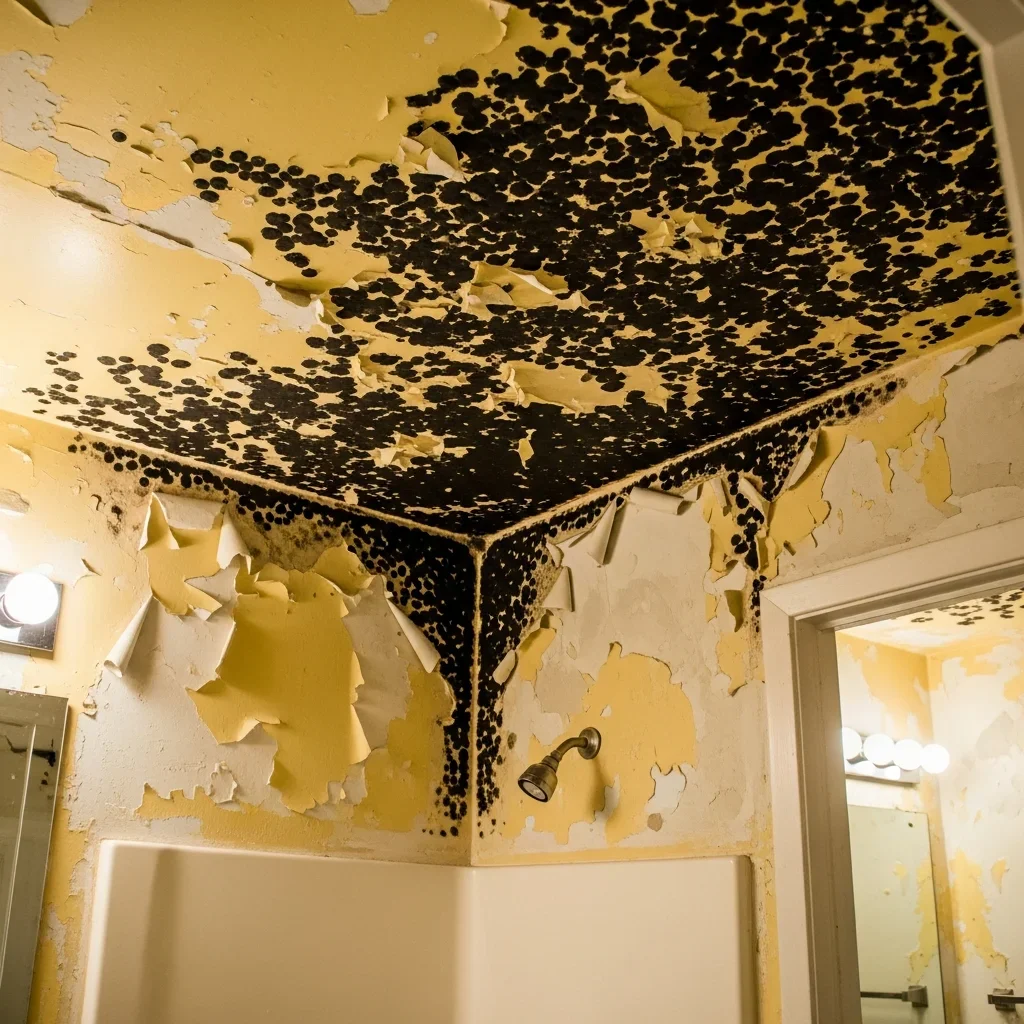
Severe black mold damage on bathroom ceiling and upper walls in an Orlando Florida rental unit from humidity and inadequate ventilation
Before: severe mold from years of inadequate ventilation in an Orlando rental
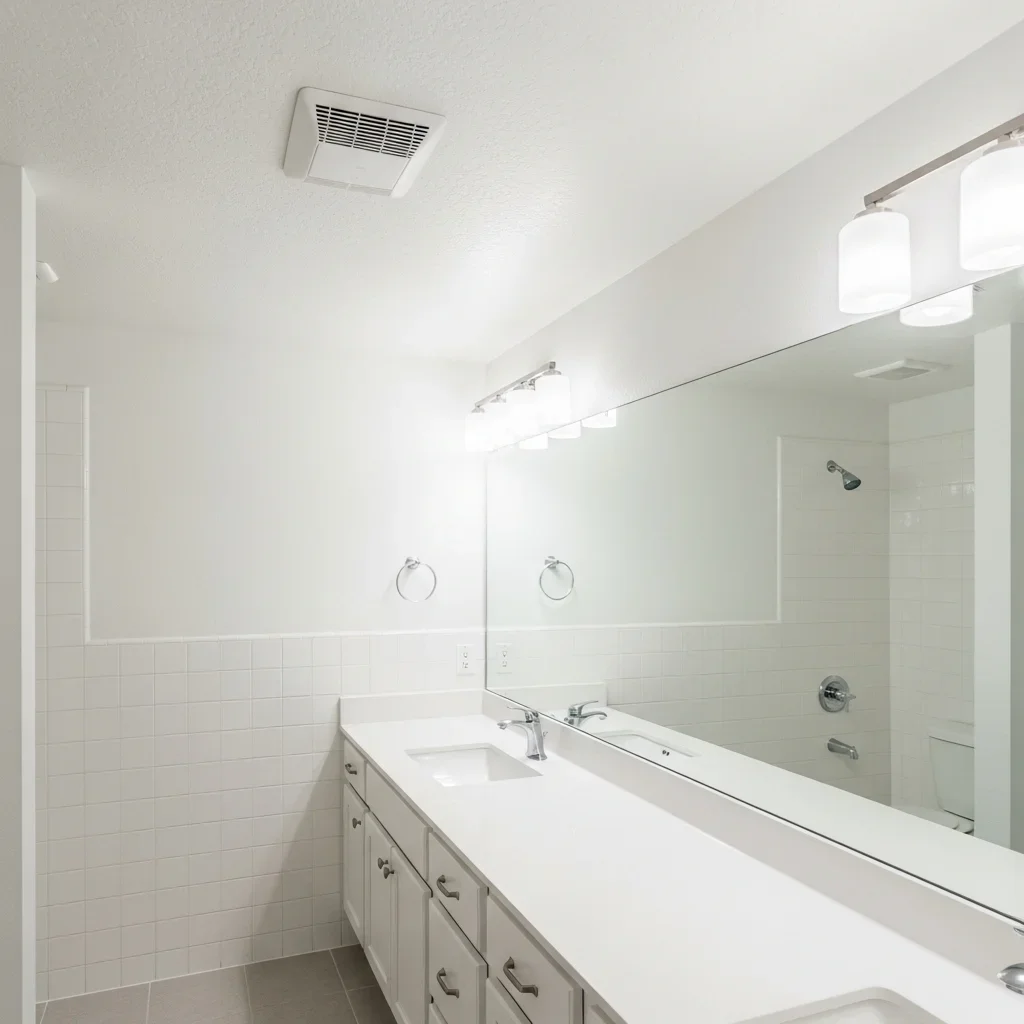
Fully restored clean bathroom in Orlando after professional mold remediation with pristine white ceiling, fresh grout, and new ventilation fan
After: complete remediation — new fan, fresh grout, pristine ceiling
HEPA air scrubber and negative pressure containment setup inside an Orlando Florida home during active mold remediation
Active containment and HEPA filtration in a Central Florida remediation
Seasonal Risk

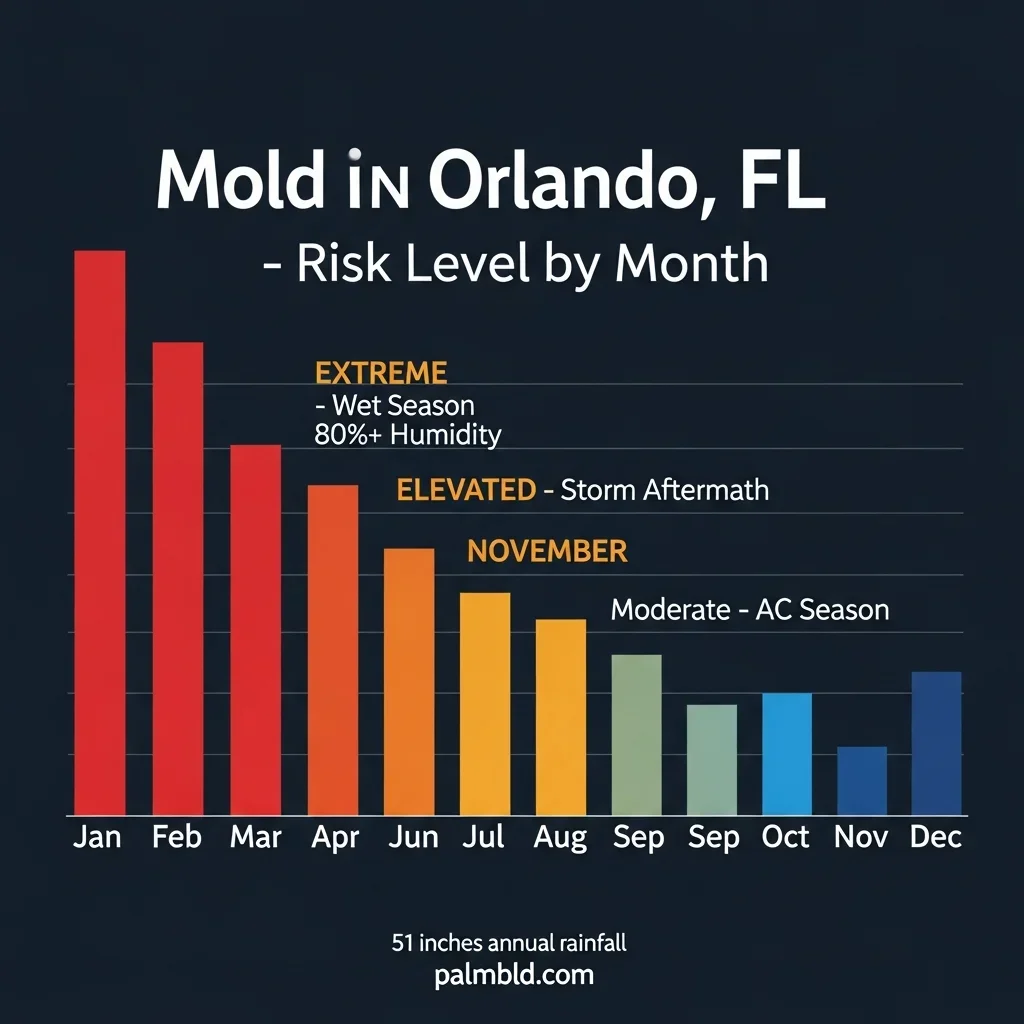
Mold Risk in Orlando by Month

Orlando's mold season runs June through November — but moderate risk persists year-round from HVAC operation. Hover each month for details.

Avg. Relative Humidity by Month
68%
65%
66%
65%
70%
82%
83%
83%
81%
74%
70%
68%

Jan

MODERATE

Feb

MODERATE

Mar

MODERATE

Apr

MODERATE

May

ELEVATED

Jun

EXTREME

Jul

EXTREME

Aug

EXTREME

Sep

EXTREME

Oct

ELEVATED

Nov

ELEVATED

Dec

MODERATE

June–September: 4 consecutive months above 80% relative humidity — mold can establish on wet organic surfaces within 24–48 hours.

Monthly mold risk calendar for Orlando Florida showing June through September as extreme risk with 80% plus humidity

Why Palm Build

Why Orlando Homeowners Choose Palm Build for Mold Remediation

FL Chapter 468 Licensed Remediators

Palm Build holds the Florida mold remediator license required under Chapter 468, Part XVI. Our work produces legally valid clearance documentation — required for insurance claims, real estate disclosure, and proof of remediation.

HEPA Containment and Duct Decontamination

We set up full negative-pressure containment before any physical removal begins. For HVAC-sourced mold — the most common type in Orlando — we clean and treat the evaporator coil, drain pan, and accessible ductwork as part of the standard scope.

Clearance Testing and Documentation

Every Palm Build remediation concludes with post-remediation air quality testing. The clearance certificate documents that spore counts have returned to acceptable levels — not just that visible mold has been removed.

Central Florida Coverage

We serve Orlando, Orange County, Winter Park, Lake Nona, Metrowest, Kissimmee, Sanford, and the surrounding metro. Not an afterthought. A dedicated service area with coordinated dispatch from our South Florida operations hub.

FL Chapter 468 Licensed · IICRC Certified · Clearance Testing Included · Serving All of Central Florida

FAQ

Mold Remediation in Orlando — Your Questions Answered

Mold in Your Orlando Home? Get a Licensed Remediator.

Florida law requires licensed professionals for mold remediation. Palm Build's Chapter 468-licensed team serves all of Central Florida — with HEPA containment, clearance testing, and adjuster-ready documentation.

3-4 hours Response IICRC Certified