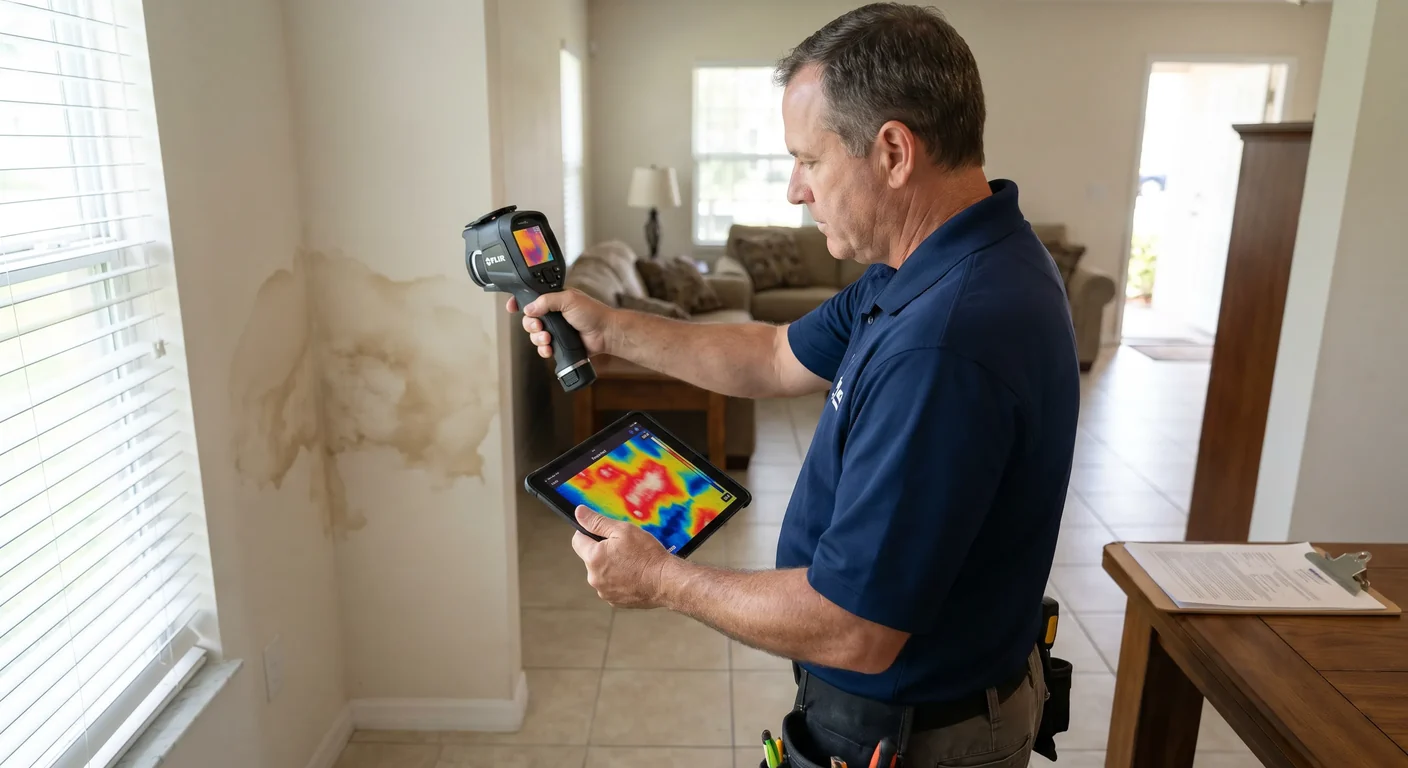
Filing a restoration claim in Florida is its own ordeal — separate from the damage itself. Palm Build navigates the entire insurance process for you: documentation, adjuster coordination, supplement negotiation, and scope approval, including Florida-specific deadlines, post-SB-2A AOB rules, and wind-vs-flood classification — so Orlando homeowners get the coverage they have been paying for.
Serving Central Florida from our South Florida hub 3-4 hours Response IICRC Certified
The Florida Insurance Landscape: A Market Stabilizing After the Crisis
Florida had the most volatile homeowners insurance market in the nation between 2020 and
2023 — but it is now recovering. More than a dozen carriers exited or became insolvent
during the crisis, yet landmark 2022 legislative reforms attracted 20+ new insurers and
$850 million in fresh capital, and the market began stabilizing in 2024. The state-run
Citizens Property Insurance Corporation has fallen to roughly 385,000 policies — down
73% from its 1.42 million October-2023 peak and the lowest since 2002 — and has proposed
its first rate decrease in 10 years. Senate Bill 2-A (December 2022) voided Assignment
of Benefits (AOB) for new claims, fundamentally changing how restoration work is
authorized and paid. Statewide premiums still average about $5,000 to $8,000 a year —
two to three times the national average — though inland Orlando-area homes sit at the
lower end of that range. A stabilizing market does not mean an easier claim:
understanding this landscape before you file is the difference between full coverage and
a costly surprise.
~385,000
Citizens policies (end-2025)
Down 73% from the 1.42M October-2023 peak — the lowest since Citizens was founded in 2002, with its first proposed rate decrease in 10 years
~$5,160/yr
Orlando-area average premium
Roughly 2–3x the national average; inland Central Florida sits at the lower end of the statewide range
SB 2-A
AOB reform (Dec 2022)
Assignment of Benefits void for assignments dated Jan 1, 2023+ — you stay the policyholder and direct the claim
1 Year
Claim filing deadline
FL Stat. 627.70132 — notice within 1 year of the date of loss, supplemental claims within 18 months
The Claims Process
How the Insurance Restoration Process Works in Orlando
From the first phone call through final claim closeout, here is exactly what happens
during an Orlando insurance restoration claim — including Florida-specific deadlines,
AOB reform impacts, and how Palm Build manages each step.
01
Report the Loss & Call Palm Build
Day 1
Call your insurance company to open a claim and call Palm Build simultaneously. Under Florida Statute 627.70132, you must report property damage within 1 year of the loss date (reduced from 2 years by SB 2-A). Your policy also requires immediate mitigation to prevent further damage. We begin emergency response and documentation while you file. Critical: Florida's AOB reform (SB 2-A, effective for assignments dated January 1, 2023 or later) means you no longer assign your insurance benefits to a restoration company — you remain the policyholder and direct the claim. Palm Build works for you, not through an AOB assignment.
02
Initial Documentation & Emergency Mitigation
Days 1-3
Palm Build's IICRC-certified technicians document every affected area using thermal imaging, pin-type moisture meters, and comprehensive photography. We classify the damage by cause — critical in Orlando where wind damage (homeowners policy), inland and lake-adjacent flooding (separate NFIP or private flood policy), and water intrusion from failed building components must be documented separately. Emergency mitigation begins simultaneously: water extraction, structural drying with dehumidifiers calibrated for Central Florida's 80%+ wet-season humidity, or storm board-up and debris clearing.
03
Adjuster Inspection & Scope Development
Days 3-14
Your carrier assigns a field adjuster. Under Florida Statute 627.70131, the insurer must begin investigation within 14 days and provide a coverage determination within 60 days. We coordinate the inspection timing, walk the property with the adjuster, and provide our complete documentation package. Our Xactimate estimate is submitted alongside the adjuster's assessment. For Orlando claims, we ensure the adjuster understands CBS (concrete block and stucco) construction specifics, barrel-tile and concrete-tile roof replacement costs, slab-on-grade subfloor drying, and current Florida Building Code wind-mitigation requirements.
04
Supplement Negotiation (If Needed)
Days 14-45
Initial adjuster estimates frequently miss hidden damage in CBS construction — moisture trapped behind stucco walls, mold behind impermeable vapor barriers, structural damage concealed by ceiling finishes, and supply-line failures under the slab not visible until demolition. Palm Build documents supplemental damage as it is discovered and submits supplement requests with photographic evidence, moisture data, and updated Xactimate line items. Florida's 18-month supplemental claim deadline (Fla. Stat. 627.70132) applies to all supplements. Many Orlando restoration projects require at least one supplement once concealed damage surfaces.
05
Reconstruction & Progress Documentation
Weeks 2-16
Once mitigation is complete and the reconstruction scope is approved, rebuilding begins. Throughout reconstruction, we document progress at each milestone — rough-in completion, Orange County inspection passage, material installation, and finish work. This documentation supports remaining supplements and provides your carrier with evidence that the approved scope is being executed correctly. For Orlando projects requiring Florida Building Code wind-mitigation upgrades, we include engineering certifications and inspection records.
06
Final Walkthrough & Claim Closeout
Project Completion
Final walkthrough confirms every scope item has been completed to satisfaction. A completion certificate is provided to your carrier along with final photos, inspection records, and a summary of all work performed. Your carrier releases final payment — for Florida policies, this includes the recoverable depreciation holdback that is released upon verified completion. NFIP flood claims require a separate 60-day proof-of-loss submission, which we prepare and submit on your behalf.
Documentation That Wins Claims
The Six Types of Documentation Your Florida Adjuster Needs
Insurance claims are won or lost on documentation — and even as Florida's market
stabilizes, carriers still scrutinize every claim. Your adjuster makes coverage
decisions based on the evidence provided — and the format matters as much as the
content. Here are the six documentation types Palm Build produces on every Orlando
restoration project.
Pre-Mitigation Photography
Complete photo and video documentation of all damage before any cleanup begins. This establishes the baseline condition your adjuster will reference for the entire claim. In Orlando's CBS homes where water damage hides behind stucco and beneath tile, initial photography is supplemented with moisture mapping that proves the full extent of damage before it is visible to the naked eye.
Moisture Mapping & Thermal Imaging
Infrared thermal cameras reveal moisture trapped behind CBS stucco walls, under tile floors on slab-on-grade foundations, and in ceiling cavities — damage that is not visible until it becomes catastrophic. Pin-type and non-invasive moisture meters quantify the moisture content of every affected material. This data is critical for Orlando homes where slab-on-grade construction and impermeable surfaces hide concealed damage that generic inspections miss entirely.
Daily Drying Logs
Data-logged moisture readings taken every 24 hours during drying. In Orlando's subtropical environment where wet-season humidity regularly exceeds 80%, proving that professional drying equipment was necessary — not just natural evaporation — requires scientific documentation. Daily logs show progressive moisture reduction against target dry standards, justifying equipment placement and timeline to adjusters who question drying duration.
Xactimate Scope & Estimate
Line-item estimates written in the same software and pricing database your insurance carrier uses. Every damaged item is measured, described, and priced per Xactimate's localized cost database for the Orlando FL market — including the barrel-tile and concrete-tile roofing, stucco repair, and slab-on-grade flooring systems that are standard in Central Florida but often under-priced in generic estimates.
Cause-of-Loss Classification
Each item of damage is classified by its cause — wind, flood, fire, water discharge, mold — because different causes are covered by different policies or have different sublimits. For Orlando storm claims, the wind-vs-flood distinction is the most consequential classification decision in the entire claim. Water entering through a wind-damaged roof is wind damage (homeowners policy). Water rising from inland or lake-adjacent flooding is flood damage (NFIP or private flood policy). We document entry point and causation for every item.
Progress & Completion Photos
Photography at every major milestone — demolition, rough-in, Orange County inspections, material installation, and final completion. This ongoing documentation supports supplement requests for hidden damage discovered during demolition of CBS walls and provides your carrier with evidence that the approved scope — including Florida Building Code wind-mitigation upgrades — was executed correctly.
Know Your Coverage
What's Covered by Peril Type in Orlando
Florida homeowners policies have unique coverage gaps that catch Orlando homeowners off
guard — especially the percentage-based wind deductible, mold sublimits, and the
critical distinction between wind damage and inland flood damage during storm events.
Understanding these distinctions before filing helps you avoid surprises.
Mold coverage sublimited ($10K-$25K typical in FL policies)
Flood from rising water or lake-adjacent flooding (requires separate flood policy)
Wind & Hurricane
Covered (2-5% Wind Deductible)
Roof, tile, stucco, window damage from wind
Rain entering through wind-created openings
Fallen tree removal and structural damage
Inland and lake-adjacent flood damage (requires NFIP or private flood policy)
FL wind/hurricane deductible: 2-5% of dwelling limit (not a flat dollar amount)
Common Pitfalls
Common Insurance Denials Orlando Homeowners Face
These are the five most common reasons Orlando restoration claims are partially or fully
denied — including Florida-specific issues like AOB reform confusion and storm
wind-vs-flood disputes — and how proper documentation and policy awareness can prevent
each one.
Delayed Discovery & Late Filing
Florida Statute 627.70132 requires policyholders to report property damage within 1 year of the date of loss (reduced from 2 years by SB 2-A in 2022). Supplemental claims must be filed within 18 months. For Orlando homes with slow water intrusion through CBS stucco walls or under slab-on-grade flooring — where damage develops gradually behind impermeable surfaces — delayed discovery is the most common basis for denial. By the time mold appears on an interior wall, the underlying damage may have existed for months, and the carrier argues the loss date has passed. Palm Build's documentation establishes the timeline clearly, tying damage to a specific identifiable event when possible.
Prevention: Report any suspected damage immediately. Document the date you first noticed signs of damage, even if minor.
AOB Confusion Post-Reform
Before January 2023, Florida restoration companies routinely used Assignment of Benefits (AOB) to bill carriers directly. SB 2-A made AOB contracts void and unenforceable for new property claims, and repealed one-way attorney's-fee provisions for property-insurance suits. Some Orlando homeowners still sign AOB-like documents from contractors who have not updated their processes — creating authorization confusion that carriers exploit to delay or deny payment. Under the current framework, the homeowner retains all policy benefits and must authorize restoration work directly. Palm Build operates exclusively under the post-reform model: we work for you, you authorize the work, and your carrier pays you.
Prevention: Never sign documents assigning your insurance benefits. Ensure your restoration company operates under the post-2023 framework.
Wind vs. Flood Disputes During Storms
During hurricanes and severe storms, Orlando homes can experience both wind damage (covered by the homeowners policy) and inland or lake-adjacent flood damage (requires a separate flood policy). Without cause-specific documentation, carriers routinely attribute water intrusion to flooding (excluded) rather than wind-driven rain entering through a damaged building envelope (covered). On a large claim, this single classification decision determines whether your homeowners carrier or your flood carrier pays — and if you do not have flood insurance, whether you are covered at all. Palm Build documents damage by entry point and cause.
Prevention: Ensure your restoration company classifies every item of damage by its specific cause — wind, flood, or water discharge.
Mold Sublimit Exhaustion
Florida policies typically cap mold coverage at $10,000 to $25,000. In Orlando's subtropical climate where mold colonizes in 24-48 hours, remediation frequently costs $20,000 to $75,000+ for significant infestations. When the sublimit is exhausted, remaining costs fall to the homeowner. However, when mold results from a covered sudden water event (a burst pipe or appliance failure), the mold remediation may be covered as part of the water damage claim rather than under the mold sublimit. Palm Build's documentation connects mold to the original covered loss when applicable — potentially bypassing the sublimit.
Prevention: Ask your agent about enhanced mold endorsements. Act fast after water damage — mold prevention is cheaper than mold remediation.
Chinese Drywall & Material Exclusions
Some Central Florida homes built or renovated between 2001 and 2009 contain Chinese-manufactured drywall that off-gases corrosive sulfur compounds, corroding copper pipes, HVAC coils, and electrical wiring. Many Florida policies now contain specific exclusions for Chinese drywall-related damage. If your restoration project uncovers Chinese drywall during demolition, the scope and coverage analysis changes significantly. Palm Build identifies Chinese drywall during the demolition phase and documents it separately to ensure proper coverage classification.
Prevention: If your home was built or renovated 2001-2009, ask your agent about Chinese drywall exclusions in your policy.
Industry-Standard Estimating
Why Xactimate Estimates Get Your Florida Claim Approved Faster
Xactimate is the industry-standard estimating software used by virtually every
insurance carrier in Florida to price restoration work. When a restoration company
submits an estimate in a different format — a handwritten bid, a generic spreadsheet,
or a competing software — the adjuster must manually translate every line item into
Xactimate for comparison. Even as Florida's market stabilizes and carriers process
claims more carefully than ever, this translation adds days to weeks of delay.
Palm Build writes every estimate in Xactimate using the same pricing database,
line-item codes, and measurement standards that your Orlando-area adjuster uses. For
Central Florida homes, we include detailed line items for barrel-tile and
concrete-tile roofing, CBS stucco repair, and slab-on-grade flooring systems at
market-accurate pricing — preventing the under-scoping that occurs when adjusters
apply outdated or generic material costs.
Benefits of Xactimate-Based Estimates
Eliminates format-based disputes — your estimate speaks the adjuster's language
Uses the localized Orlando FL pricing database reflecting actual Central Florida labor and material costs
Includes accurate line items for barrel-tile and concrete-tile roofing, stucco repair, and slab-on-grade flooring systems
Supplements are submitted in the same format — no conversion or re-entry needed
Reduces approval timeline from weeks to days for straightforward claims
Creates an auditable record that protects both you and the carrier in post-SB 2-A Florida
We Work With Every Carrier
Orlando Insurance Carriers We Work With
Palm Build works with every carrier writing homeowners policies in the Orlando market —
including national carriers like Travelers, State Farm, and Allstate, the
Florida-domiciled insurers such as Security First, American Integrity, Florida
Peninsula, Homeowners Choice, and Slide that have grown as the market recovered, and
Citizens Property Insurance (Florida's insurer of last resort). Our Xactimate-based
documentation works with any carrier's claims workflow.
Travelers
State Farm
Allstate
Security First Insurance
American Integrity
Florida Peninsula
Homeowners Choice (HCI)
Slide Insurance
Citizens Property Insurance
Nationwide
Chubb
NFIP (National Flood Insurance Program)
The Palm Build Difference
Why Orlando Homeowners Choose Palm Build for Insurance Claims
Xactimate-Native Estimating
Every estimate, supplement, and change order is written in the same software and pricing database your carrier uses. No format translation, no re-entry errors, no weeks of back-and-forth. In Florida's post-SB 2-A environment where carriers scrutinize every line item, Xactimate-native estimating is the single most effective tool for accelerating claim approval.
No Out-of-Pocket Insurance Coordination
Our insurance coordination, documentation, adjuster meetings, and supplement negotiation are included in the restoration scope and paid by your carrier — not out of your pocket. Under Florida's post-AOB framework, we work directly for you as the policyholder. Your only direct cost is your policy deductible.
Direct Adjuster Communication
We meet with your adjuster on-site, walk the property together, and provide our complete documentation package directly. In Florida's market — especially after storm events when adjusters manage heavy claim loads — a well-organized contractor who speaks their language and provides complete documentation gets priority attention and faster approvals.
Supplement Resolution in One Cycle
Many Orlando restoration projects require at least one supplement for hidden damage discovered during demolition of CBS walls or beneath slab-on-grade flooring. Our supplemental documentation includes photos, moisture data, and updated Xactimate line items submitted within 48 hours of discovery — well within Florida's 18-month supplemental claim deadline. Most Palm Build supplements resolve in one revision cycle.
Wind vs. Flood Cause-Specific Documentation
We classify every item of damage by its specific cause — wind, flood, sudden water discharge, fire, mold. This protects Orlando homeowners from incorrect coverage determinations during storm events where wind damage (covered by homeowners) and inland flood damage (a separate policy) coexist. This level of cause-specific documentation is the difference between full coverage and a disputed claim.
Common Questions
Orlando Insurance Claims FAQ
Does Palm Build work with my insurance company in Orlando?
Yes — we work with every carrier writing homeowners policies in the Orlando market, including Travelers, State Farm, Allstate, Security First, American Integrity, Florida Peninsula, Homeowners Choice, Slide, Nationwide, and Citizens Property Insurance. We also coordinate with NFIP and private flood carriers for flood-related damage. Our Xactimate-based documentation works with any carrier's claims workflow.
How does Florida's AOB reform affect my restoration claim?
Senate Bill 2-A (signed December 16, 2022) made Assignment of Benefits (AOB) contracts void and unenforceable for assignments dated January 1, 2023 or later. This means you no longer assign your insurance benefits to a restoration company — you remain the policyholder and direct the claim. The same reform repealed one-way attorney's-fee provisions for property-insurance suits. Palm Build operates under this post-reform framework: we work for you, you authorize the work, and your carrier pays you. Never sign documents that attempt to assign your insurance benefits to any contractor.
What are the Florida deadlines for filing a restoration claim?
Under Florida Statute 627.70132 (as amended by SB 2-A), you must report property damage to your insurer within 1 year of the date of loss, and supplemental or reopened claims must be filed within 18 months. Your insurer must begin investigation within 14 days of receiving your claim and provide a coverage determination within 60 days. For NFIP flood claims, a sworn proof of loss must be submitted within 60 days. These deadlines are strictly enforced — missing them can result in denial regardless of the damage's legitimacy.
What is my wind deductible and how does it work?
Florida homeowners policies carry a separate hurricane/wind deductible calculated as a percentage of your dwelling coverage limit — your options are a $500 flat amount or 2%, 5%, or 10% of the dwelling limit, with 2%–5% the most common choice. For an Orlando home insured at $350,000 dwelling coverage, a 2% deductible is $7,000 out of pocket before insurance pays — far more than a standard flat deductible. It is triggered when the National Hurricane Center issues a hurricane watch or warning for any part of Florida, applies on a calendar-year basis, and covers only wind and hurricane claims. Other perils (fire, water discharge) use your standard flat deductible.
Should I call my insurance company or Palm Build first?
Call Palm Build first — or simultaneously. Your policy requires immediate mitigation to prevent further damage, and documenting the initial damage before cleanup is critical for your claim. In Orlando's humid climate, where relative humidity routinely exceeds 80% in the wet season, delaying mitigation by even 24 hours can allow mold to colonize, complicating your claim and potentially triggering mold sublimit issues. We begin emergency response and documentation while you open your claim with your carrier.
What if my insurance company denies part of my claim?
Partial denials are common in Florida — especially for mold remediation (sublimited at $10K–$25K in most policies), code upgrades (which require an ordinance-and-law endorsement), gradual damage (excluded), and disputed wind-vs-flood classification during storms. Palm Build documents covered items thoroughly to prevent incorrect denials, connects mold to a covered water event when applicable to bypass the sublimit, and files supplements with cause-specific evidence when legitimate items are denied.
How long does the insurance claims process take in Orlando?
For straightforward covered losses (a burst pipe or kitchen fire): 2–4 weeks from filing to scope approval. Complex claims (a hurricane with both wind and inland flooding, disputed coverage, or large losses): 6–16 weeks. Severe-weather events like Hurricane Milton (October 2024) create claims backlogs that extend processing times. Florida's statutory deadlines — 14-day investigation start, 60-day coverage determination — provide structure, but carrier compliance varies, especially when adjusters are managing hundreds of claims after a storm.
What is Florida's insurance market like right now for Orlando homeowners?
Florida's market is stabilizing after the 2020–2023 crisis. More than a dozen carriers exited or became insolvent in that window, but 20+ new insurers have since entered with $850 million in new capital, and the market began recovering in 2024. Citizens Property Insurance has fallen to roughly 385,000 policies — down 73% from its 1.42 million October-2023 peak and the lowest since 2002 — and has proposed its first rate decrease in 10 years. Statewide premiums still average about $5,000–$8,000 per year (2–3x the national average), with inland Orlando properties at the lower end. Filing a legitimate claim is exactly what your policy is for; Palm Build's documentation ensures it is processed efficiently and completely.
Need Help With a Restoration Insurance Claim in Orlando?
Palm Build handles the entire insurance process — documentation, adjuster coordination, supplement negotiation, and Florida-specific deadline compliance — so you can focus on getting your home back. We work with every carrier in the Orlando market.