Key takeaways
- Florida Statute § 627.70132 generally requires written notice of a property insurance claim within 1 year of the date of loss; supplemental claims must be filed within 18 months.
- Florida insurers must acknowledge claim communications within 7 days and generally pay or deny within 60 days of receiving notice, subject to statutory tolling. North Carolina expects acknowledgment within 30 days; South Carolina adjusters typically contact you within 48 hours.
- The U.S. EPA and CDC advise drying wet materials within 24 to 48 hours to prevent mold — a 72-hour delay can convert a clean water claim into a mold claim that hits a sublimit.
- Coastal Carolinas often carry separate wind & hail policies through the NC Insurance Underwriting Association or SC Wind & Hail Underwriting Association — meaning a single hurricane can produce two or three claims with different deductibles.
- South Carolina insurers must furnish a proof-of-loss form within 20 days if they require it; a Florida state agency study found public-adjuster-represented claims received 747% higher catastrophe payouts than unrepresented ones.
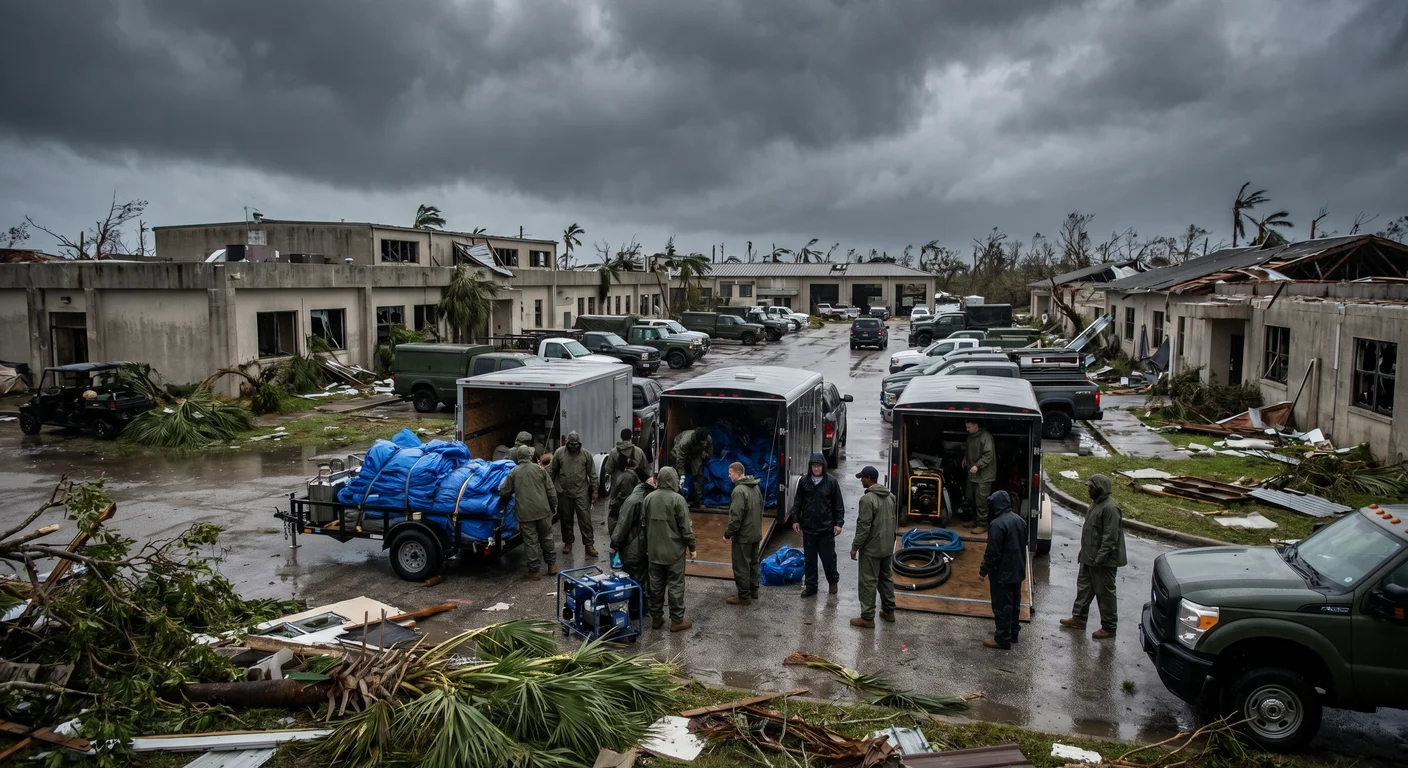
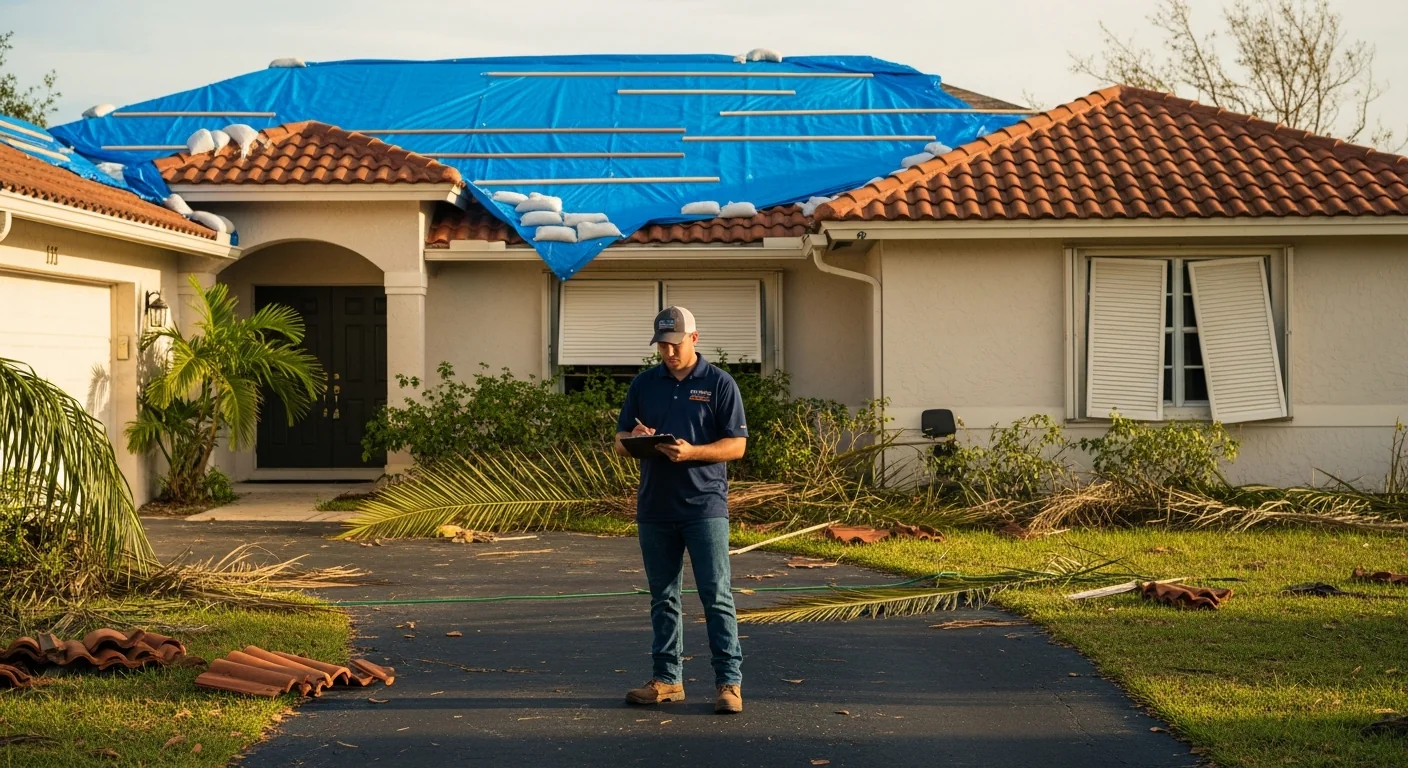
If your home in Florida, North Carolina, or South Carolina took a hit from a windstorm, hurricane, or severe thunderstorm, the difference between a fair payout and a frustrating one almost always comes down to three things: speed, documentation, and an independent repair scope. Florida law generally requires written notice of a property insurance claim within 1 year of the date of loss (and 18 months for supplemental claims) and obligates insurers to acknowledge communications within 7 days and pay or deny a claim within 60 days, subject to statutory tolling. North Carolina insurers should generally acknowledge a claim within 30 days. In South Carolina, an adjuster typically contacts you within 48 hours, and if your insurer requires written proof of loss, they must furnish the form within 20 days. This playbook walks the full storm and hurricane damage claim process across all three states — what to do in the first hour, how to document damage so it cannot be denied, how to read your hurricane and named-storm deductible, how to prepare for the adjuster meeting, and how to push back when the first estimate misses scope. For the mitigation side of these losses, see our storm and hurricane damage restoration overview.
Florida claim filing deadline
1 year
Fla. Stat. § 627.70132 — written notice of new or reopened claims
Florida pay-or-deny rule
60 days
After insurer receives notice of claim, subject to statutory tolling
EPA / CDC mold window
24–48 hrs
Wet materials must be dried within this window to prevent mold growth
Public adjuster catastrophe uplift
747%
Florida agency study — PA-represented Citizens claims vs. unrepresented
Storm Damage Claim Timeline at a Glance
Storm damage claims live and die on deadlines. Florida is the most prescriptive of the three states; North Carolina relies more on policy language and good-faith claims handling rules; South Carolina sits in between, with statutory rules around proof-of-loss forms and a strong appraisal-first culture for disputes. The table below summarizes the milestones every homeowner should track from the moment the storm passes. It is a quick reference — your specific policy conditions still apply, and your insurer's contract language can shorten or expand any step.
| Milestone | Florida | North Carolina | South Carolina |
|---|---|---|---|
| Notice deadline | 1 year for new/reopened, 18 months for supplements (Fla. Stat. § 627.70132) | Policy-driven ("prompt notice"); state FAQ emphasizes acknowledgment over a fixed deadline | Policy-driven; insurer must furnish proof-of-loss form within 20 days if required |
| Insurer acknowledgment | Within 7 days of communication | Within 30 days per NC DOI consumer FAQ | Adjuster typically contacts within 48 hours |
| Investigation / inspection | Investigation begins within 7 days of proof of loss; inspection within 30 days | No fixed statutory inspection deadline | No single statutory inspection deadline; varies by claim severity |
| Pay-or-deny decision | Pay or deny within 60 days of notice (subject to tolling) | No fixed statewide deadline; good-faith standard applies | Improper-claims-practices statute requires prompt, fair, good-faith settlement |
Storm damage claim milestones in Florida, North Carolina, and South Carolina
Step 1 — Make It Safe and Stop Additional Damage
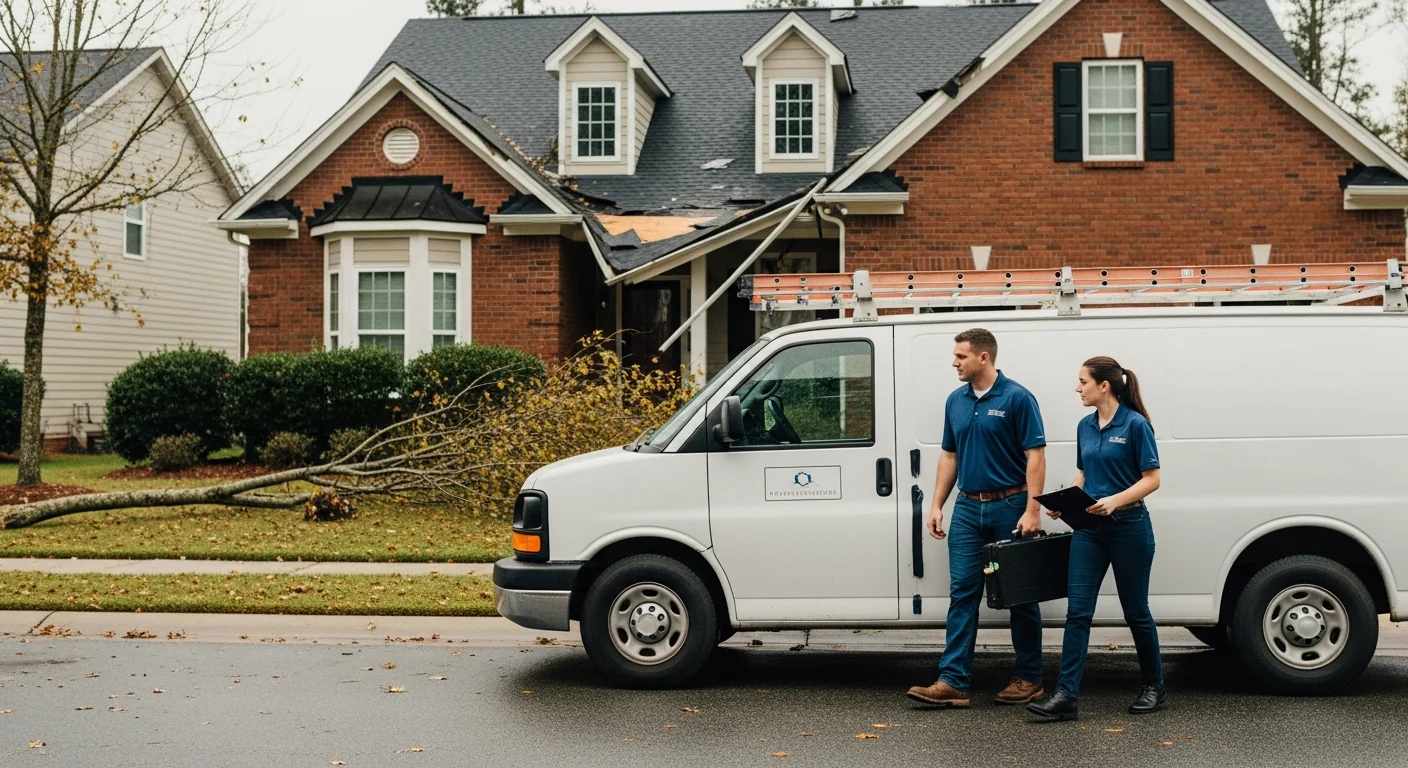
Every Florida, North Carolina, and South Carolina homeowners policy includes a duty to protect property from further damage. That is not optional language — failing to mitigate after the storm has passed can give the carrier grounds to deny part or all of your claim. South Carolina's Department of Insurance explicitly notes that protective measures such as tarps, board-up, and water extraction are reimbursable expenses when reasonable and documented. The first 24 hours are about preventing the loss from getting worse, not about fixing it permanently.
- Cover damaged roof sections with a heavy-gauge tarp; sandbag and batten the edges
- Board up broken windows and doors so wind-driven rain stops entering the structure
- Shut off the main water supply if pipes have been compromised
- Move salvageable contents to a dry area; lift wet rugs and pad up off the floor
- Begin extraction or fan circulation if you can do so safely (no live electrical hazards)
- Keep every receipt — tarps, plywood, fans, hotel nights, meals if displaced
- Photograph each protective step before and after, with the time and date stamp visible
Step 2 — Document Damage Like You'll Need to Prove It Later
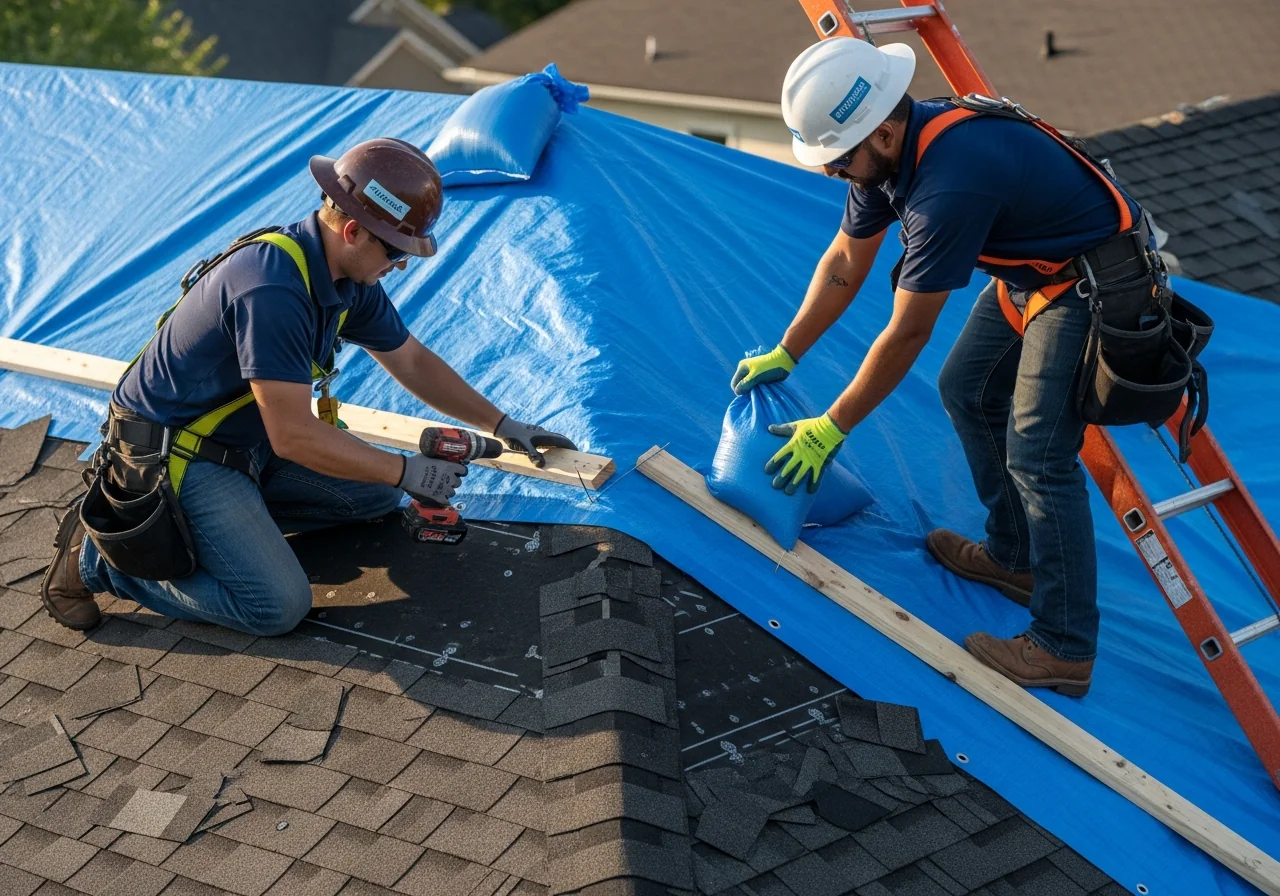
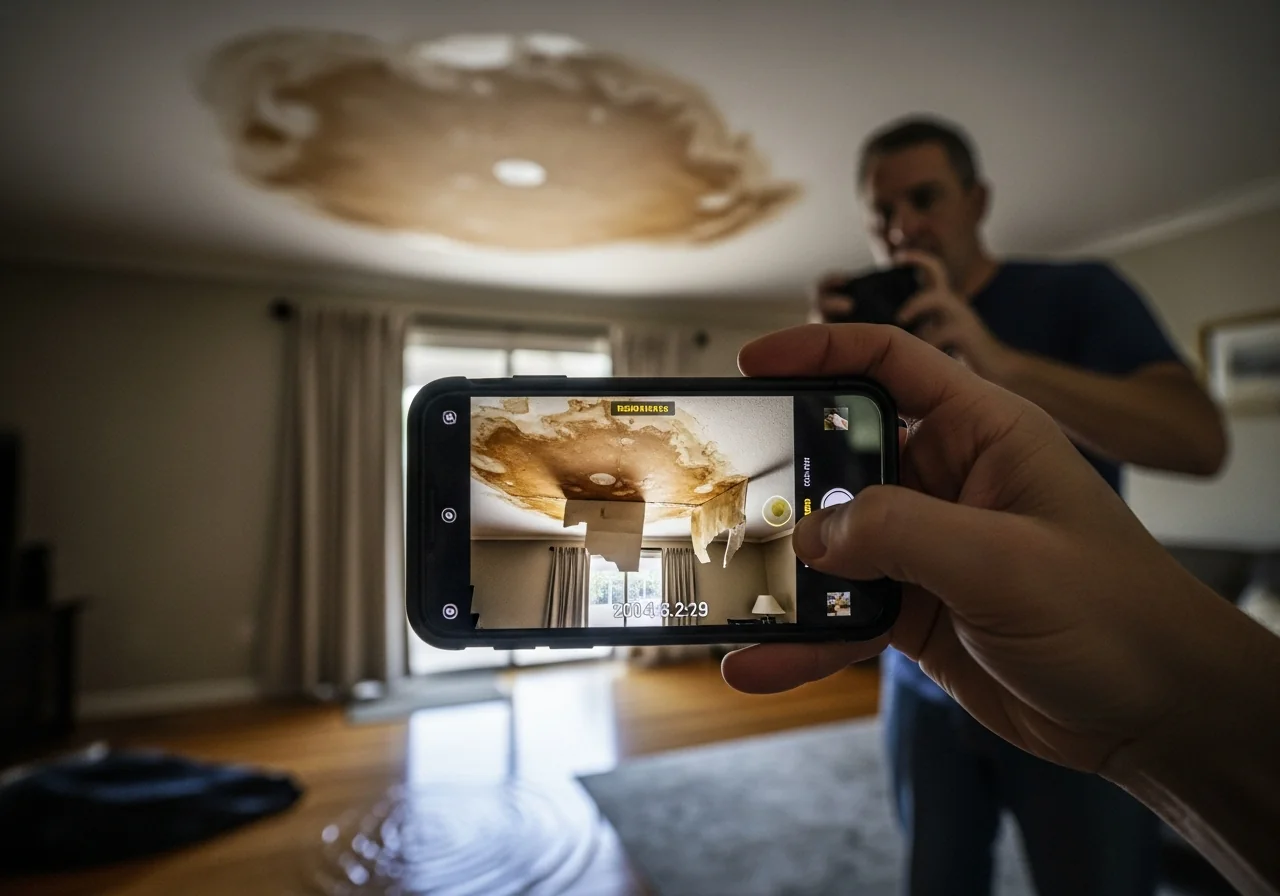
Adjusters are trained to look for evidence that supports denial. The single most common denial pattern is reclassifying a covered sudden event as gradual damage that built up over time. The defense is photographic and instrumental: timestamped images of every affected surface, moisture-meter readings tied to a sketched floor plan, and a written timeline that traces the storm event to the visible damage. Document before any cleanup, demolition, or content removal — once material moves, the evidence is gone, and adjusters will note its absence in their inspection report.
| Area | What to capture | Why it matters |
|---|---|---|
| Exterior elevations | All four sides, roof from ground level, fence and outbuilding damage | Establishes wind direction and storm path |
| Roof | Close-ups of missing or lifted shingles, flashing, ridge caps, vents | Anchors a wind-event narrative for the adjuster |
| Each room | Wide shot showing the full room, then medium shots of each wall | Defines scope of interior loss before repairs begin |
| Ceilings & floors | Stains, sagging, buckling, lifted seams | Captures secondary water damage from wind-driven rain |
| Close-ups | Splinters, soaked drywall, damaged trim, electrical staining | Supports line-item estimate review and supplements |
| Serial numbers | Appliances, HVAC, water heater nameplates | Lets the adjuster price replacements at the correct model |
| Receipts & invoices | Tarp purchase, contractor bills, hotel stays, meals | Required for ALE and mitigation reimbursement |
| Pre-loss photos | Real-estate listing photos, family events, holiday photos | Counters "damage existed before storm" arguments |
Storm damage photo and documentation targets
- Timestamped photos and video of every affected surface before any cleanup
- Moisture meter readings mapped to a hand-sketched floor plan
- Written timeline: date and time of storm event → first damage observed → claim notice
- Receipts for tarps, board-up, fans, dehumidifiers, hotel nights, restaurant meals
- Cuts of damaged materials retained when feasible (drywall sample, soaked insulation in a labeled bag)
- Pre-loss photographs from prior years showing the property's intact condition
- Written statements from any witnesses who observed the storm or its aftermath
Resist the urge to clear debris or pull damaged drywall before the adjuster has inspected. If you must remove materials to protect the structure — flooded carpet, soaked drywall behind containment — keep representative samples, label them with the room and the date, and store them dry. The IICRC S500 standard recognizes that some demolition is necessary mitigation; the adjuster's job is to verify it was reasonable, not to penalize you for doing it.
Step 3 — Confirm What Policy and Deductible Actually Apply
Before you file, pull your declarations page and identify three numbers: your dwelling (Coverage A) limit, your hurricane or named-storm deductible percentage, and your All Other Perils (AOP) deductible. Florida law requires insurers to offer hurricane deductibles of $500, 2%, 5%, or 10% of the dwelling limit — most homeowners insured at $250,000 or above face a percentage-based deductible. The Florida hurricane deductible applies during the defined hurricane period and continues until 72 hours after the National Hurricane Center lifts the last watch or warning anywhere in Florida. Knowing the math before filing prevents a wasted notice clock on a claim that falls below the deductible.
| Home insured value | 2% deductible | 5% deductible | 10% deductible |
|---|---|---|---|
| $200,000 | $4,000 | $10,000 | $20,000 |
| $300,000 | $6,000 | $15,000 | $30,000 |
| $400,000 | $8,000 | $20,000 | $40,000 |
| $500,000 | $10,000 | $25,000 | $50,000 |
| $750,000 | $15,000 | $37,500 | $75,000 |
Hurricane / named-storm deductible math (Coverage A × deductible %)
North Carolina works almost identically. The state Department of Insurance defines named storm deductibles as a percentage of insured home value and provides a 2% deductible on a $300,000 home — $6,000 — as the standard worked example. The named storm deductible period in North Carolina begins when a tropical storm or hurricane warning is issued for any part of the state and continues until 72 hours after the last warning is lifted. South Carolina coastal hurricane deductibles run on similar percentage logic, often through the SC Wind & Hail Underwriting Association policy rather than the homeowners policy. If you live in a coastal Carolinas zone, expect two separate deductibles — one for wind, one for AOP — to apply against a single storm event.
Wind / windstorm / hurricane (homeowners or wind policy)
- Wind-driven rain entering through a roof or window breach
- Wind-blown debris damage to roof, siding, or windows
- Tree falling on the structure during the storm
- Lift-off of shingles, ridge caps, soffit, and fascia
- Damage from a wind-caused power surge
Flood (NFIP or private flood policy)
- Rising surface water, storm surge, mudflow
- Inundation from a swollen river, creek, or canal
- Sewer backup attributable to area-wide flooding
- Below-grade water intrusion that originated from groundwater
- Erosion or land-shift damage caused by floodwater
Step 4 — File the Claim Fast and Control the Communication
Once you have documented the loss and confirmed which policies apply, file the claim by phone and follow up in writing the same day. You want a paper trail of what was reported, when, and to whom. Get a claim number, the assigned adjuster's direct line and email, and a copy of any first notice of loss form. Keep a written log of every call — date, time, person, what was said, and any next step promised. This log will become essential evidence if you ever need to escalate.
- 1
Confirm coverage and capture the claim number
"I'm reporting damage from [date and storm name]. Can you confirm my homeowners, named storm, and flood policies are on file, and read me the claim number?" Write down the claim number, the adjuster's name, and a direct callback number before ending the call.
- 2
Ask for required forms in writing
"Please email me your proof-of-loss form, the first notice of loss form, and any sworn statement requirements. I'd like a written list of every form you'll need from me, with deadlines." South Carolina insurers are statutorily required to furnish proof-of-loss forms within 20 days when written proof is required.
- 3
Activate Additional Living Expenses (ALE) coverage
"If we have to relocate, are hotel and meal receipts covered under ALE? What's the daily and total cap, and what receipts do I need to keep?" Save every hotel folio, meal receipt, mileage log, and pet boarding invoice from day one.
- 4
Get the deductible math confirmed
"Which deductible is being applied to this loss — hurricane, named-storm, or AOP — and how was that determined?" If two policies apply (wind + flood) or three (wind, homeowners, flood), confirm each separately so you know which dollar amount you absorb on each claim.
- 5
Schedule the adjuster inspection
"When is the earliest the adjuster can be on site? I'd like a window I can plan around so I can have my mitigation team and documentation ready." Florida insurers must conduct a physical inspection within 30 days of the proof-of-loss statements when an inspection is required.
- 6
Capture the escalation contact
"Who is your adjuster's direct supervisor, and what's the timeline if I need to escalate a denied or underpaid claim?" Knowing the escalation path before you need it shortens dispute resolution by weeks.
Step 5 — Prepare for the Adjuster Meeting So Scope Is Not Missed
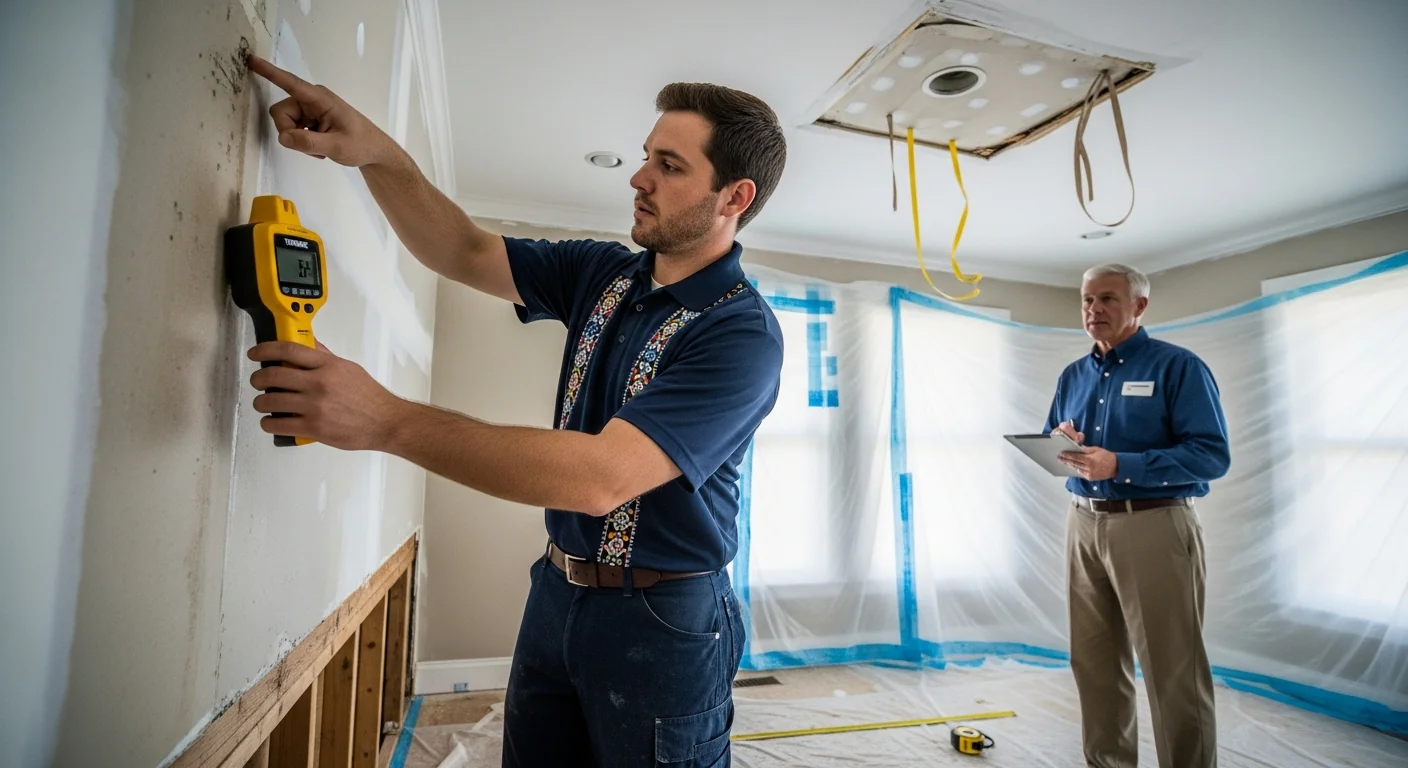
Treat the adjuster meeting as the highest-leverage half-hour of your entire claim. The carrier's adjuster works for the carrier — not for you — and the scope they record on the inspection day is the starting point for everything that follows. Walk every room. Open every closet. Pull back furniture. Point out hidden damage behind walls, under floors, and in attics or crawl spaces that they would otherwise miss. Hand them your photo log and your moisture map; do not assume they'll request it.
What you should bring and do
- Printed photo log organized by room, with timestamps
- Moisture meter readings tied to a labeled floor plan
- Receipts for mitigation and any displacement costs
- Pre-loss photographs and the maintenance history of the home
- Walk every space, point out hidden damage, take notes during the visit
What the carrier's adjuster is doing
- Documenting visible damage to support the carrier's settlement
- Looking for evidence of pre-existing or maintenance-related damage
- Taking measurements that drive the line-item estimate
- Photographing only what they consider claim-relevant
- Preparing a scope you'll need to review and challenge if undersized
The Insurance Information Institute notes that the first check from your carrier is often an advance, not a final settlement. Replacement-cost policies frequently hold back depreciation until repairs are completed and receipts submitted; multiple checks across the life of the claim are normal. If you have a mortgage, the lender is typically a co-payee, and you'll need lender endorsement before you can deposit. Plan around partial payments — do not assume the first check represents the full available coverage, and do not commit to a contractor based on the first check alone.
Step 6 — Review the Estimate Line by Line and Request a Supplement
When the carrier's estimate arrives, read every line. Most underpayments are not denials — they are missing scope items the homeowner doesn't catch. Compare the estimate against your photo log room by room, against your contractor's independent scope, and against any code or matching items required to restore the home to pre-loss condition. If items are missing or undervalued, document the discrepancy and request a supplement in writing — Florida specifically allows supplemental claims through the 18-month deadline.
- **Missing rooms or surfaces** — partial documentation produces partial estimates; if the adjuster did not photograph an affected space, the scope likely omits it
- **Code-required items** — drywall to current fire rating, electrical to current code, hurricane straps where new construction would require them
- **Secondary damage** — water damage downstream of the wind breach, mold below the sublimit, soot from a downed wire
- **Matching** — Florida requires reasonable replacement of adjoining materials when colors, profiles, or sizes do not match; partial roof or siding replacement creates a mismatch that triggers this rule
- **Contents** — soft goods, electronics, and appliances not separately scheduled in the contents inventory
- **Additional Living Expenses (ALE)** — hotel, meals, mileage, and pet boarding while displaced
- **Permits and disposal fees** — line items adjusters frequently omit, especially on roof and reconstruction scope
- **Reconstruction labor escalation** — post-disaster labor pricing in FL/NC/SC routinely runs above pre-event book rates; see our reconstruction services overview for code-compliant rebuild scope
If the carrier refuses to revise the estimate after a supplement request, you have several escalation paths. Florida offers free residential property mediation through the Department of Financial Services, with a 14-day insurer response window. South Carolina policies typically include an appraisal clause that can be invoked for disputes over the dollar amount of loss, with the SC DOI consumer services team often resolving complaints within 7 to 10 days. North Carolina homeowners can file with the NC Department of Insurance complaint portal. Across all three states, a licensed public adjuster represents you — not the carrier — and a Florida state agency study found PA-represented Citizens claims received 747% higher catastrophe payouts than unrepresented ones. For the underlying carrier coordination workflow, see our insurance restoration process overview.
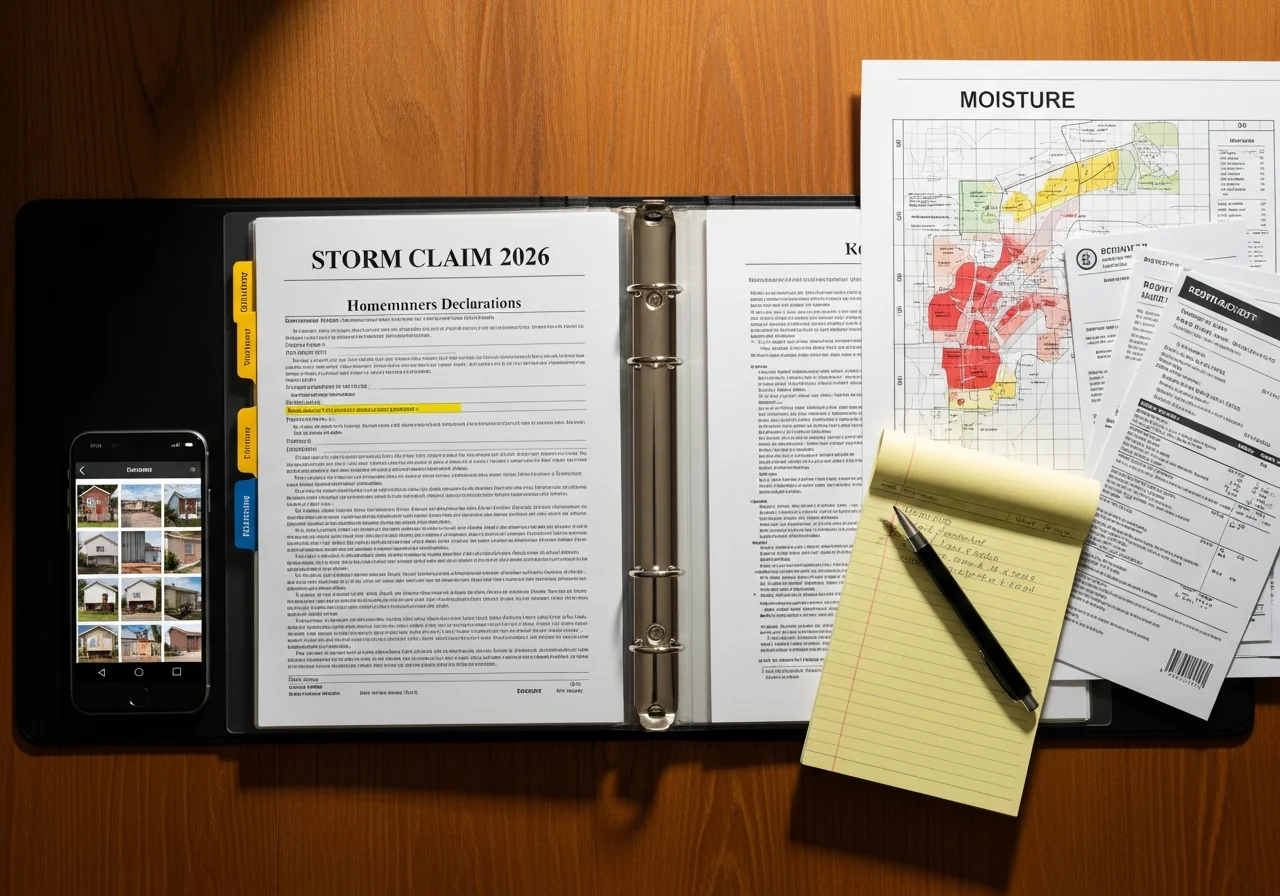
State-Specific Callouts That Genuinely Change Outcomes
Florida: 1-year notice, 60-day pay-or-deny, matching rule, hurricane deductible trigger
Florida is the most prescriptive of the three states. Beyond the 1-year notice and 18-month supplemental rules under Fla. Stat. § 627.70132, the 60-day pay-or-deny clock starts when the insurer receives notice of claim, subject to statutory tolling. Florida statute also requires reasonable replacement of adjoining materials when items do not match in quality, color, or size — a critical rule for partial roof, siding, flooring, and cabinet repairs. The Department of Financial Services offers free pre-suit mediation, requires insurers to respond to DFS within 14 days, and provides a hurricane deductible explainer that defines the 72-hour trigger window. If your claim involves a supplemental discovery after tear-out, the 18-month window — separate from the 1-year initial filing deadline — is your operative clock. For the broader Florida market context, see our 2026 Florida insurance crisis overview.
North Carolina: separate wind/hail policy, NCIUA pool, 30-day acknowledgment
North Carolina's structure is different in two ways. First, wind and hail can be excluded from a primary policy on coastal counties and placed into a separate policy through the North Carolina Insurance Underwriting Association — the Coastal Property Insurance Pool. That means a hurricane in Wrightsville Beach or the Outer Banks may produce a wind claim, a homeowners claim, and a flood claim with different deductibles and different adjusters. Second, North Carolina relies on a 30-day acknowledgment expectation per the consumer FAQ rather than a fixed statutory pay-or-deny clock. Identify whether you have two or three claims before you sign any contractor agreement or remove damaged materials, and factor crawl space saturation into your scope — see our crawl space cleanup overview if your home sits over a vented crawl.
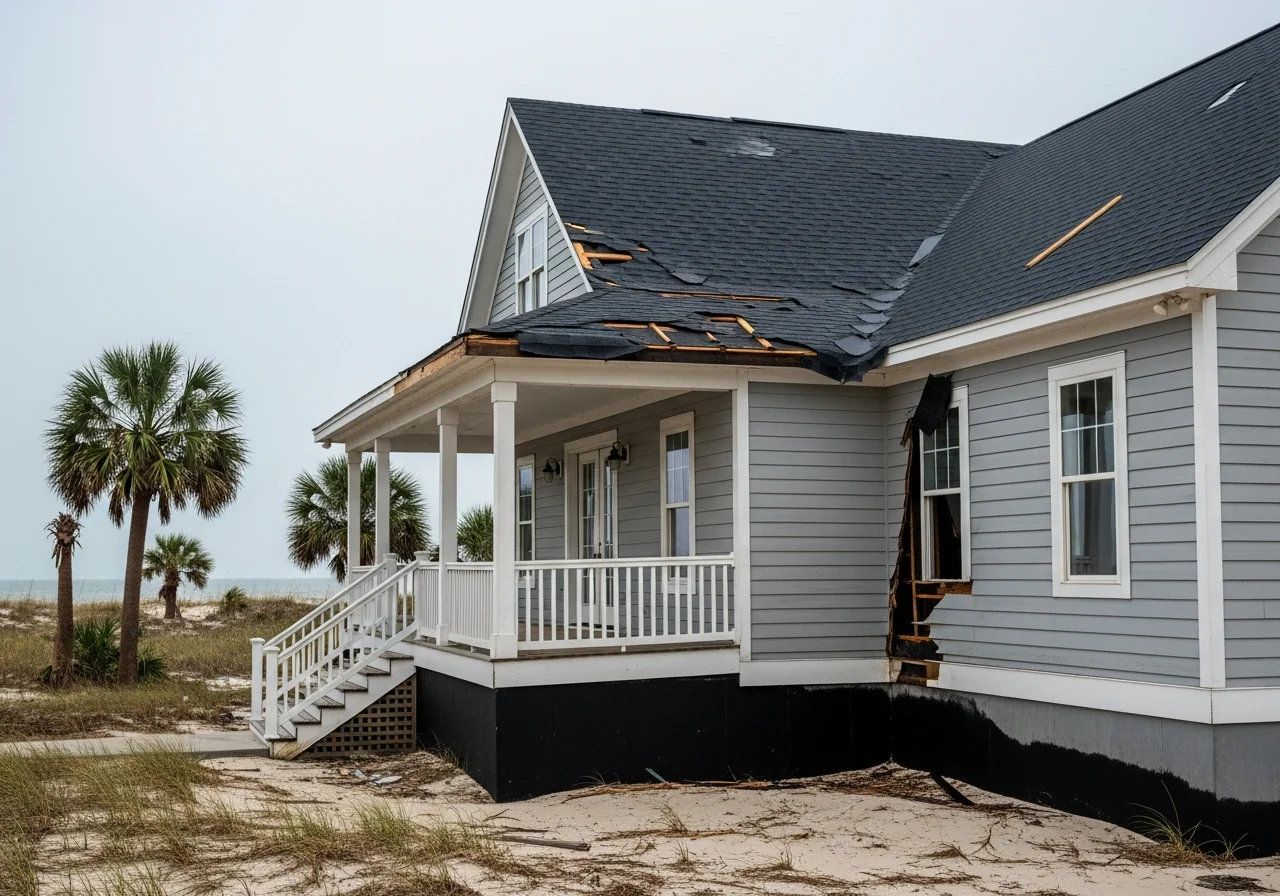
South Carolina: 20-day proof-of-loss form, 48-hour adjuster contact, appraisal-before-suit
South Carolina sits between Florida's prescription and North Carolina's flexibility. If your insurer requires written proof of loss, they must furnish the form within 20 days of notice; once you submit a written statement covering the occurrence, character, and extent of loss within the policy time, you are considered compliant. The Department of Insurance consumer FAQ indicates many claimants are contacted by an adjuster within 48 hours and explicitly states that protective measures — tarps, board-up, and similar mitigation — are reimbursable expenses. SC DOI also recommends invoking your policy's appraisal clause before litigation when the dispute is over repair amount rather than coverage. Many issues are resolved by SC DOI consumer services within 7 to 10 days, and insurers must respond to the Department within 7 days when contacted. For SC-specific seasonal preparation, see our South Carolina hurricane preparation checklist.
How Palm Build Supports Storm Damage Claims Across FL, NC & SC
Palm Build operates 24 hours a day, 7 days a week across Florida, North Carolina, and South Carolina. Our IICRC-certified teams handle the full restoration arc — emergency tarping and board-up, water extraction and structural drying, mold containment under the IICRC S500 standard, code-compliant reconstruction, and direct coordination with carriers across the three-state region. We produce moisture maps, daily drying logs, and scope-of-work invoices in the format adjusters approve, which is the documentation that turns covered losses into approved settlements. For HOA-managed buildings and commercial portfolios, we also coordinate large-loss response — see our commercial restoration and HOA services overviews.
"A claim is built, not filed. Every photo, every receipt, every moisture reading is a brick in the wall an adjuster cannot deny."
Storm, Wind & Hurricane Damage
24/7 emergency tarping, debris-out, and large-loss response across Florida, North Carolina, and South Carolina.
Water Damage Restoration
IICRC S500-aligned mitigation, structural drying, and moisture documentation that adjusters approve.
Insurance Restoration Process
How Palm Build coordinates directly with FL, NC, and SC carriers from initial claim through rebuild completion.
Reconstruction Services
Code-compliant reconstruction after storm and wind damage — roofing, siding, framing, drywall, finishes.
Mold Remediation
Containment, removal, and post-remediation verification when storm water sits longer than the 48-hour mold window.
Florida Department of Financial Services
Free residential property mediation, hurricane deductible explainer, and consumer complaint intake at 1-877-693-5236.
North Carolina Department of Insurance
Consumer FAQ on storm and hurricane claims, named storm deductible rules, and complaint filing.
NAIC Post-Disaster Claims Guide
National Association of Insurance Commissioners checklist on what to ask, what to document, and how to escalate after a disaster.
Frequently Asked Questions
Does homeowners insurance cover wind and storm damage? +
Does homeowners insurance cover flood or storm surge damage? +
How long do I have to file a storm damage claim in Florida, North Carolina, and South Carolina? +
How long does the insurance company have to respond, inspect, and pay? +
Can I start repairs before the adjuster comes out? +
What documents and photos do I need to support my storm damage claim? +
Why is the first insurance check so low, and can I get more later? +
What if the insurance estimate is missing items or the price is too low? +
Storm damage in FL, NC, or SC? We document it right the first time.
Palm Build's IICRC-certified teams respond 24/7 across Florida, North Carolina, and South Carolina. We coordinate directly with your carrier, produce the moisture maps and scope-of-work documentation adjusters approve, and handle the full restoration arc from emergency tarping through code-compliant reconstruction.
Found this helpful? Send it to someone who needs it.