Water Damage Restoration in Salisbury, North Carolina
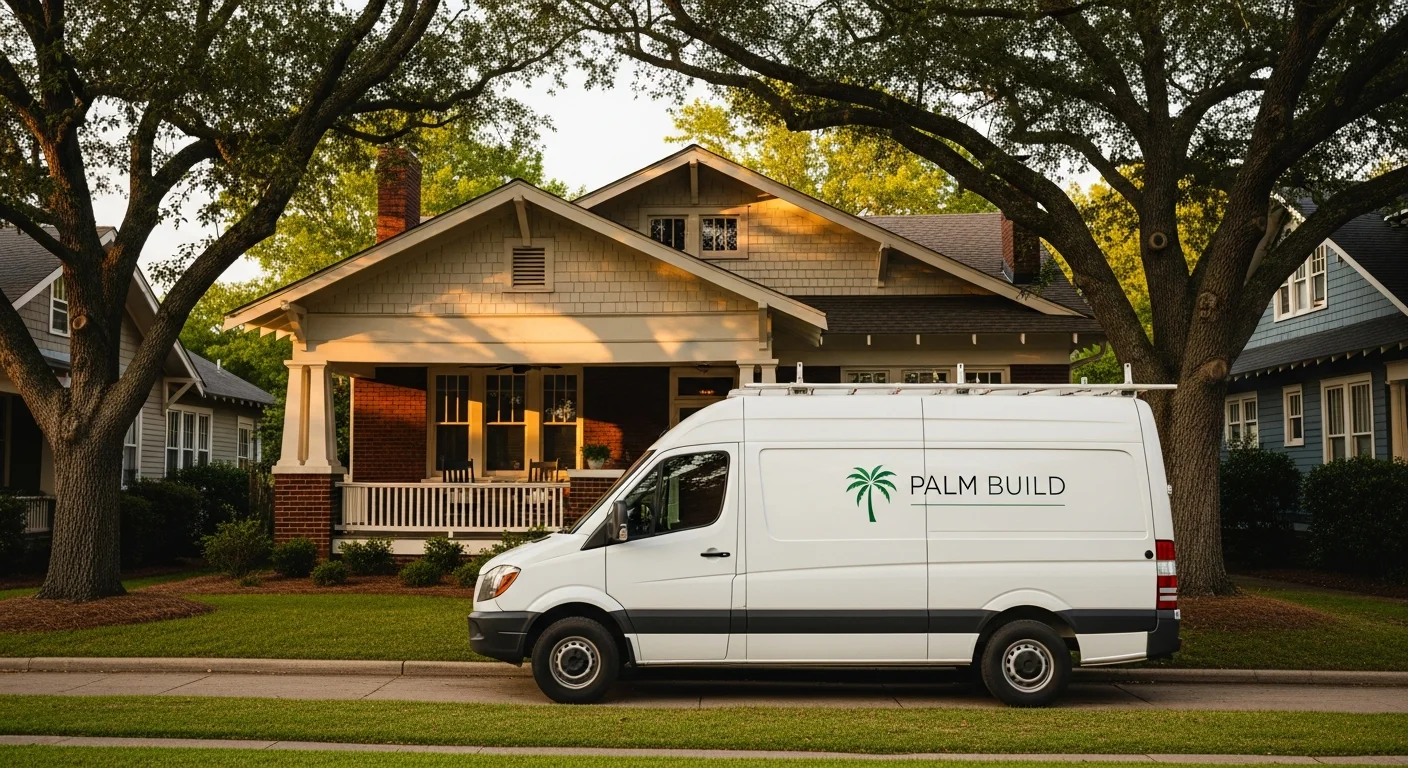
From Fulton Heights' irreplaceable Craftsman bungalows to Forest Hills' mid-century ranches, Salisbury's historic housing stock demands restoration professionals who understand original hardwood, plaster walls, and crawl space construction. Palm Build responds with precision extraction, structural drying, and insurance documentation — preserving what makes your Salisbury home unique.
Serving Salisbury from Charlotte, NC 60-90 min Response IICRC Certified
Why Salisbury Homes Face Unique Water Damage Risks
Salisbury's combination of Piedmont clay soil, an extensive historic housing stock
dating back over a century, creek corridors threading through residential neighborhoods,
and muggy subtropical summers makes it one of the most water-damage-prone communities in
the Piedmont. When a corroded galvanized line fails behind plaster in your Fulton
Heights home at 2 a.m. or a summer thunderstorm overwhelms your Forest Hills crawl
space, the clock starts immediately — mold can begin growing in 24 to 48 hours.
Piedmont Clay Soil
<0.2 in/hr
Clay drainage rate
Salisbury sits on Piedmont red clay with infiltration rates well below 0.2 inches per hour. After rain, this heavy soil holds moisture for weeks, pressing against crawl space walls and foundation vents — feeding water into your home long after the storm passes.
Historic Housing Stock
85+ yrs
Oldest housing stock
ZIP 28144 peaked in the 1960s with a significant pre-1939 inventory. Aging galvanized and cast-iron plumbing, complex wall assemblies with plaster and lath, original hardwood floors, and vented crawl spaces make these homes uniquely vulnerable to water intrusion and slow to dry.
Creek Corridor Flooding
3 creeks
Through residential areas
Second Creek, Grants Creek, and the South Yadkin River thread through residential neighborhoods in Salisbury. When heavy rain saturates clay soils, these waterways rise rapidly — sending floodwater into crawl spaces and ground-level entries of nearby homes.
Hot, Muggy Summers
70°+ dew pt
Summer humidity
Salisbury summers bring persistent high humidity that drives rapid mold growth after any water event. With dew points regularly in the 70s from June through September, even a minor leak can produce visible mold colonies within 24 to 48 hours.
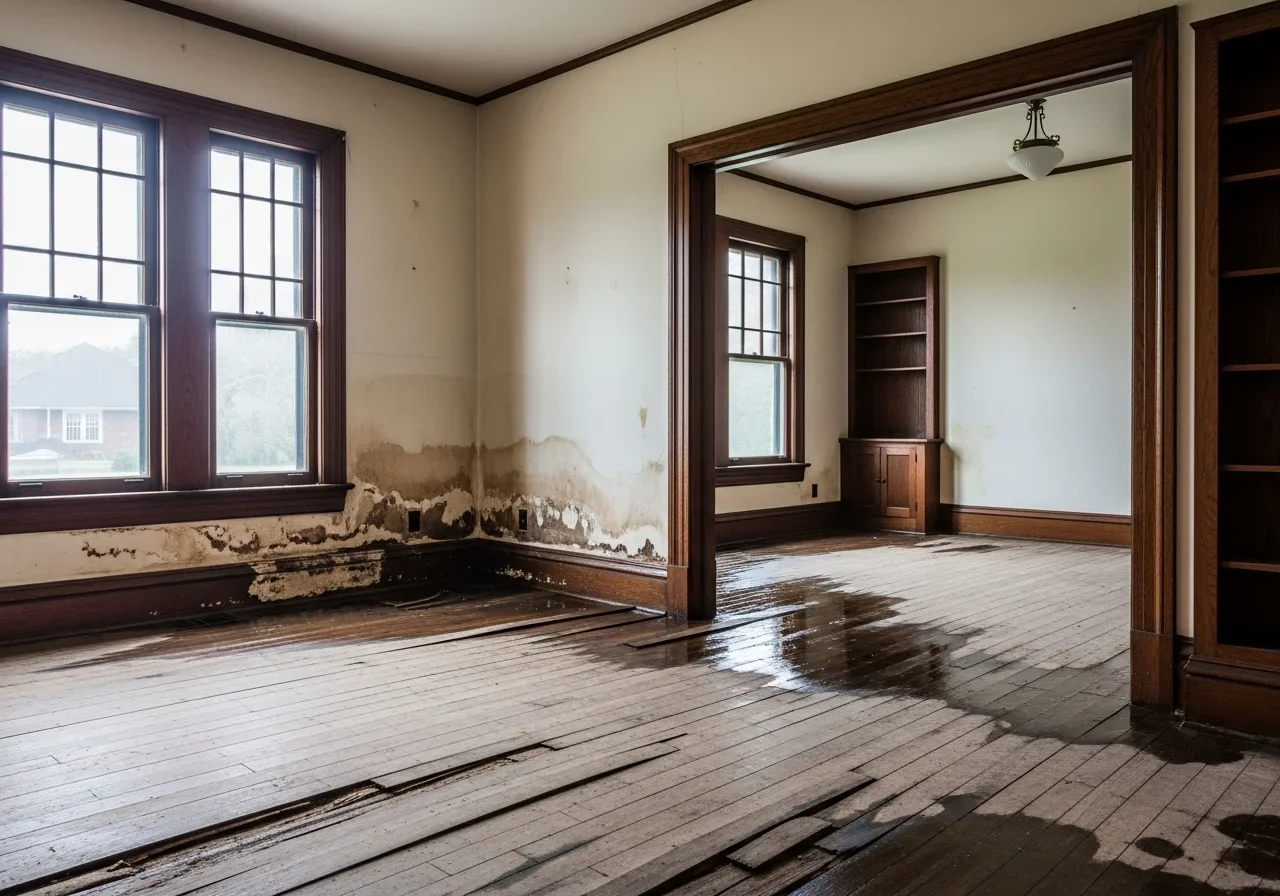
Salisbury's historic homes feature original hardwood floors that are highly susceptible
to water damage — quick extraction and controlled drying are critical to preservation.
Neighborhood-Level Intelligence
Salisbury Neighborhood Water Damage Risk Profiles
Water damage in Salisbury follows predictable patterns based on housing age,
construction type, and proximity to creek corridors. From century-old Fulton Heights
Colonials to lakefront properties on High Rock Lake, here is what we see in the
neighborhoods where we work most frequently.
Common damage: Water damage concealed behind vinyl and paneling, condensate overflow from aging HVAC systems
Olde Salisbury
Lower Risk
Built: 2002–2008
Primary risk: Modern construction, storm and appliance failures
Common damage: Water heater failures, appliance supply line ruptures, storm-driven roof leaks
Woodfield
Lower Risk
Built: 1997+
Primary risk: Water heater and supply line failures
Common damage: Aging water heaters without drain pans, flexible supply line bursts, crawl space condensation
Kingstree
Lower Risk
Built: 1990s
Primary risk: HOA community, shared expectations
Common damage: Supply line failures, shared drainage issues between units, HOA coordination for exterior repairs
Sunset Pointe / High Rock Lake
Moderate
Built: Gated lakefront
Primary risk: Wind, wave, and humidity exposure
Common damage: Lakefront wind-driven rain intrusion, elevated humidity levels year-round, dock and lower-level flooding
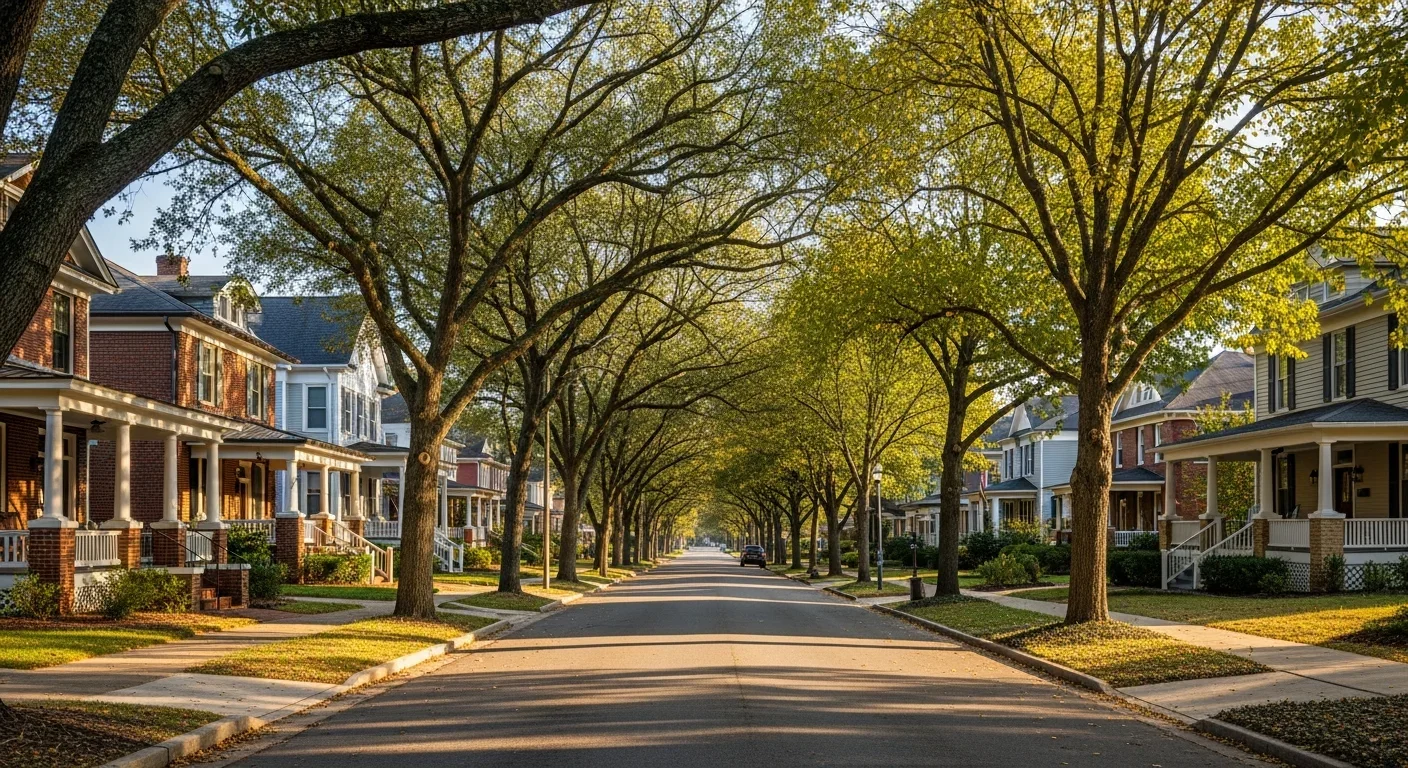
Fulton Heights Historic District features some of Salisbury's most architecturally
significant homes — and its most complex water damage restoration challenges.
Our Salisbury Process
How We Restore Salisbury Homes After Water Damage
Every water event is different, but the science of restoration follows a proven
sequence. For Salisbury's historic homes, we add preservation-first protocols at every
step — protecting original materials that cannot be replaced.
01
Emergency Response
60-90 Minutes
02
Damage Assessment & Moisture Mapping
First 2-3 Hours
03
Water Extraction
Hours 2-6
04
Structural Drying
3-5 Days
05
Cleaning, Sanitization & Antimicrobial Treatment
During Drying
06
Restoration & Reconstruction
1-4 Weeks
01
Emergency Response
60-90 Minutes
Call our NC line at (704) 464-0121 any time, day or night. Our crew dispatches from Charlotte with truck-mounted extraction equipment, commercial dehumidifiers, and air movers — arriving in Salisbury within 60 to 90 minutes.
02
Damage Assessment & Moisture Mapping
First 2-3 Hours
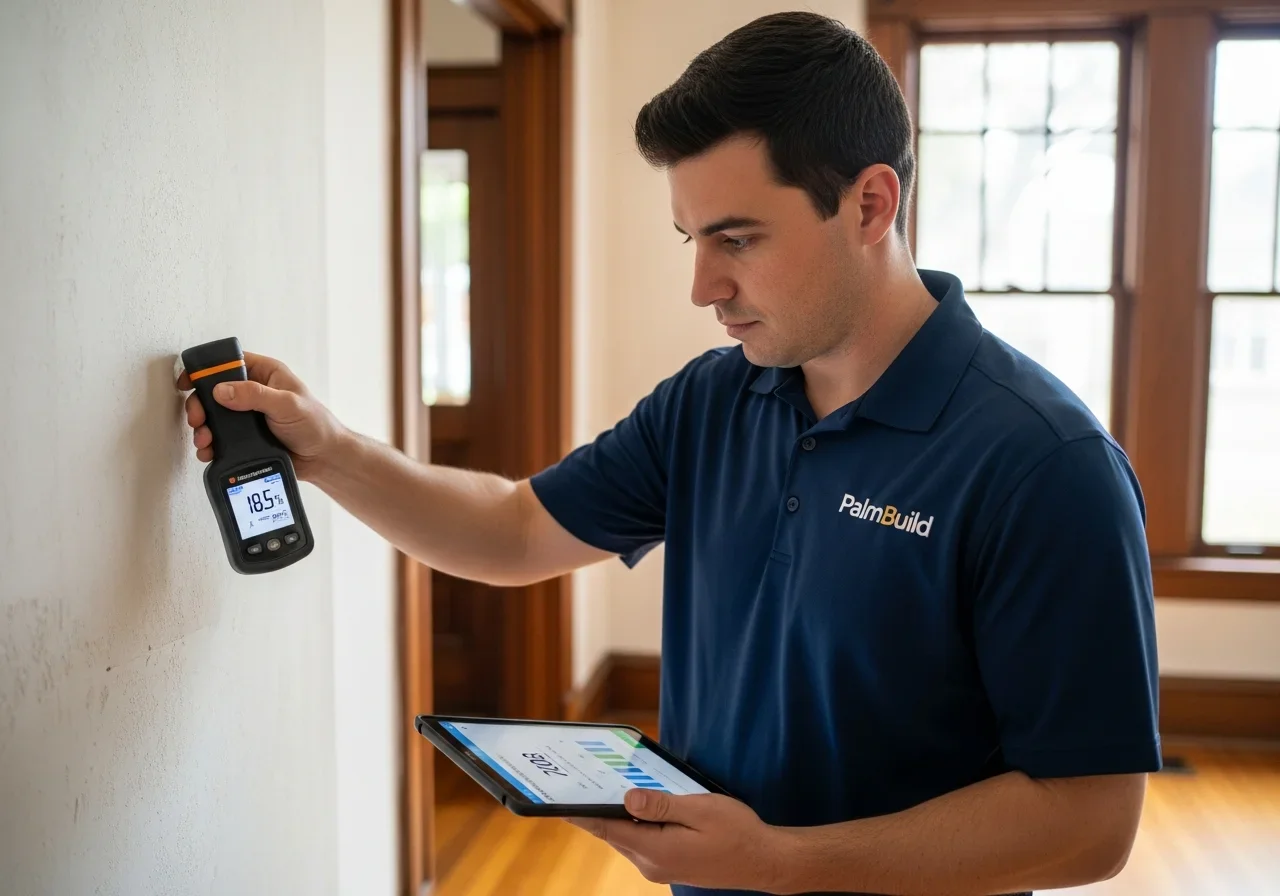
IICRC-certified technicians use infrared thermal imaging and pin-type moisture meters to map water migration through historic wall assemblies, behind plaster, under original hardwood, and into crawl spaces. Extra care is taken to identify moisture in materials that cannot be replaced.
03
Water Extraction
Hours 2-6
Truck-mounted extraction systems pull hundreds of gallons per hour. For Salisbury homes with original hardwood floors — especially heart pine in historic districts — extraction speed and technique are controlled to prevent additional damage from equipment weight and movement.
04
Structural Drying
3-5 Days
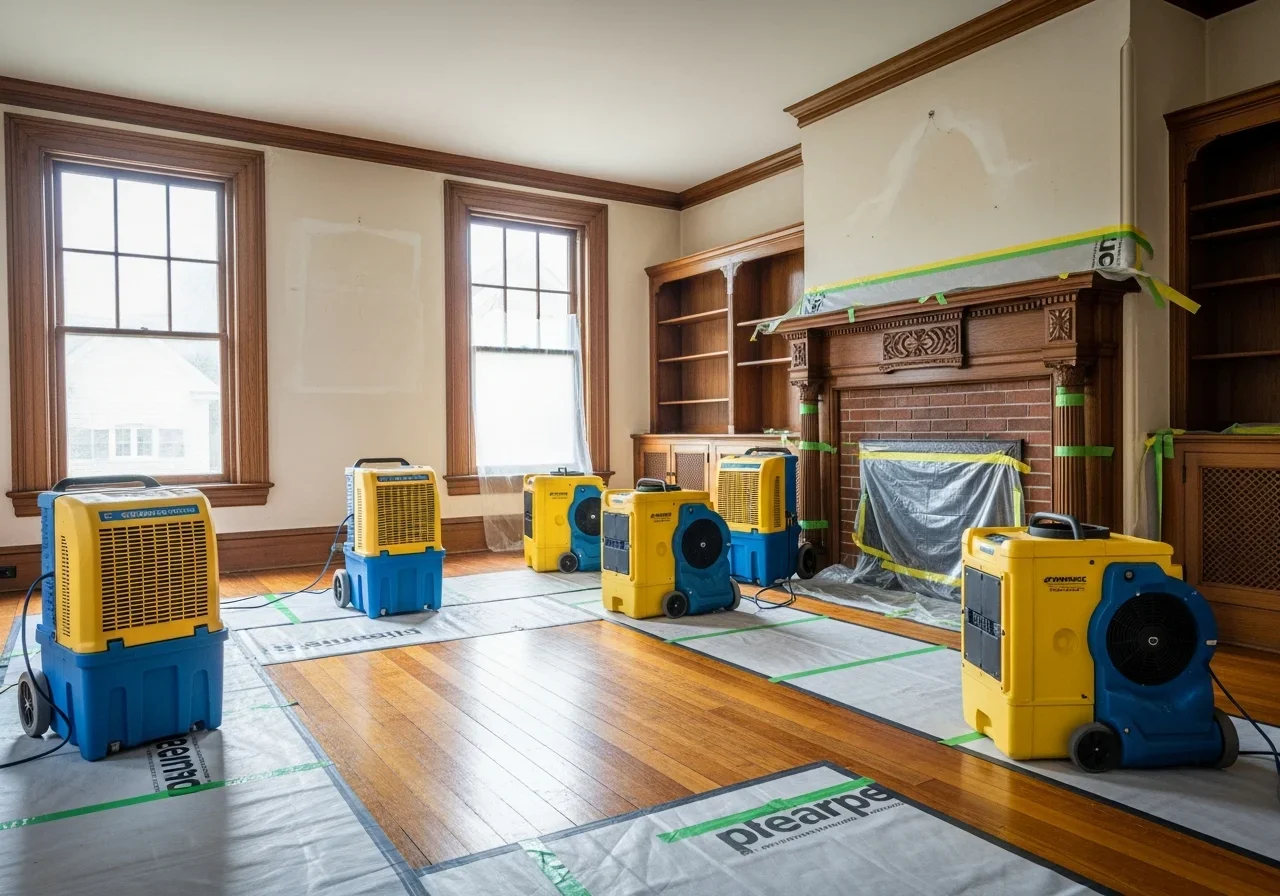
Plaster-safe drying protocols prevent cracking and delamination. Aggressive LGR dehumidifiers and strategically placed air movers target moisture in wall cavities, subfloors, and crawl spaces without over-drying historic materials that can crack or warp when dried too fast.
05
Cleaning, Sanitization & Antimicrobial Treatment
During Drying
EPA-registered antimicrobial treatments are applied to all affected surfaces during the drying phase. Salisbury's humidity means mold risk is elevated from the moment water intrudes. Crawl space treatments target joists, sill plates, and subfloor panels.
06
Restoration & Reconstruction
1-4 Weeks
Drywall, flooring, trim, and painting — with special attention to matching original profiles in historic homes. Custom millwork replication, plaster patching, and hardwood refinishing. Permits pulled through Rowan County when required.
Why Our Salisbury Process Works
1
Preservation Expertise
We know historic plaster, heart pine, and original millwork — and how to dry them without damage
2
Speed
60-90 minute response from our Charlotte hub to Salisbury
3
Scientific Drying
Daily moisture readings with plaster-safe protocols until every material reaches dry standard
4
Insurance-Ready
Documentation formatted for your adjuster — with historic material replacement justification when needed
These ranges reflect real project costs in the Salisbury area — not national averages.
Historic homes typically cost more to restore due to specialized materials and
preservation techniques, but the investment protects significantly higher property
value.
Minor Water Damage
Small leaks, single room
$1,500 - $4,000
Single supply line or appliance leak
One room affected, limited spread
Quick extraction and 2-3 day drying
Minor drywall and baseboard replacement
Moderate Water Damage
Multi-room, crawl space, structural drying
$5,000 - $15,000
Multiple rooms or crawl space involved
Structural drying with commercial equipment
Subfloor and joist treatment
Hardwood floor drying or partial replacement
Antimicrobial treatment and mold prevention
Major / Historic Home Restoration
Full restoration, hardwood replacement, reconstruction
$15,000 - $50,000+
Full-floor or multi-story water damage
Historic hardwood floor replacement or refinishing
Plaster wall restoration or reconstruction
Custom millwork and trim profile matching
Crawl space remediation and encapsulation
Structural joist repair and subfloor replacement
Insurance Rate Alert for Salisbury Homeowners
Salisbury homeowners currently pay approximately $1,016 to $1,221 per year for homeowners insurance. A 15% rate increase is projected for mid-2026, making prompt claim
filing and thorough documentation more important than ever. Historic homes that cost
more to restore also cost more to insure — proper documentation helps ensure your
claim covers actual replacement costs, not depreciated values.
Know Your Risk Window
Salisbury's Seasonal Water Damage Calendar
Salisbury doesn't have a single "water damage season" — different types of damage peak
at different times of year. Understanding this calendar helps you catch problems early
and prepare your home before the highest-risk months.
January - February
MODERATE
Freeze-Related Plumbing & Ice Events
Freeze-thaw cycles burst exposed pipes in crawl spaces, attics, and exterior walls. The January 2026 winter storm emergency brought widespread plumbing failures across Rowan County — homes with galvanized supply lines in unheated crawl spaces were hit hardest. Ice dam formation on older roofs drives water under shingles and into wall cavities.
March - May
MODERATE
Increasing Storms & Spring Rainfall
Spring rains saturate clay soils and creek levels begin rising. Second Creek and Grants Creek respond quickly to rainfall. Crawl space moisture levels climb as ground temperatures lag behind air temps, and many homeowners first notice musty smells or condensation on ductwork.
June - September
HIGH
Peak Humidity, Convective Storms & Mold Risk
Peak season for water damage in Salisbury. Persistent high humidity drives rapid mold growth after any moisture event. Severe convective thunderstorms can drop 2-3 inches in an hour, overwhelming storm drainage and flooding crawl spaces. The EF-1 tornado that struck nearby Landis in August 2023 is a reminder of the destructive potential of Piedmont summer storms. Crawl space moisture levels peak and HVAC condensation issues surge.
October - December
LOW-MODERATE
Tropical Remnants & Catch-Up Repairs
Tropical remnants can bring heavy rainfall deep into fall — the Piedmont is well within range of inland flooding from weakened hurricanes and tropical storms. Many homeowners discover latent water damage during fall maintenance or when HVAC systems switch to heating mode. Gutters clogged with leaves worsen foundation seepage on clay soil.
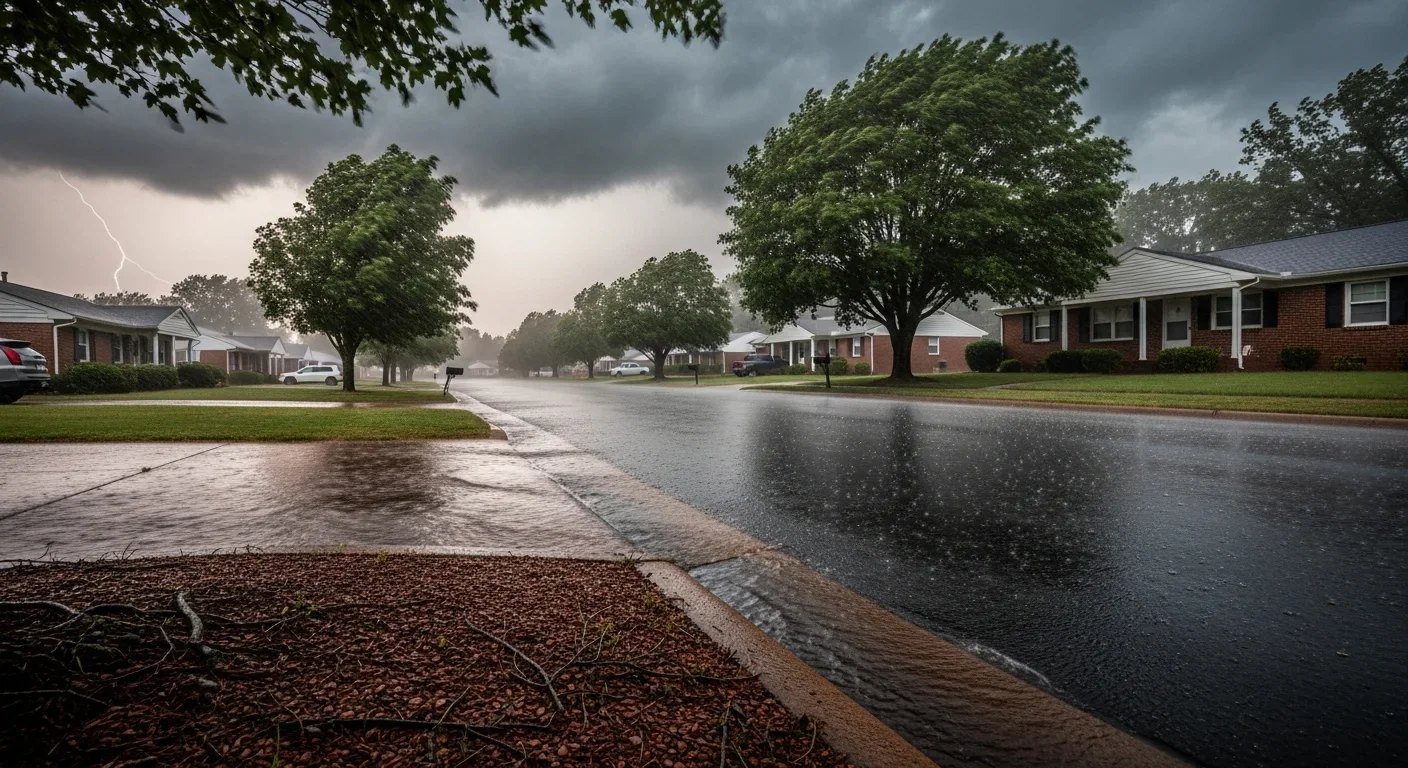
Salisbury's summer thunderstorms can dump 2-3 inches per hour, overwhelming storm
drainage and flooding crawl spaces on clay soil.
Historic Preservation Expertise
Water Damage Restoration in Salisbury's Historic Districts
Salisbury has more National Register Historic District properties per capita than almost
any city in North Carolina. Restoring water damage in these homes is fundamentally
different from standard restoration — the materials are irreplaceable, the construction
is complex, and generic approaches destroy more than they fix.
Fulton Heights (1903-1948)
Colonial Revival, Craftsman
Original heart pine floors, plaster-and-lath walls, built-in cabinetry, crown molding, and exterior trim that cannot be purchased off the shelf. Water damage here requires preservation-first protocols — every material decision has both structural and historic significance.
Heart pine flooring must be dried slowly to prevent checking and splitting
Built-in cabinetry and trim may need contents-first packout before restoration begins
Insurance documentation must justify higher replacement costs for non-standard materials
West End / Academy / Race Street
Legacy housing with layered renovations
Decades of renovations have created complex assemblies — plaster behind drywall, original framing with modern insulation, mixed plumbing materials. Water finds every gap between old and new, and moisture can travel through hidden voids that standard assessment misses.
Layered walls trap moisture between renovation generations
Previous repairs may have concealed existing damage
Selective demolition required to avoid destroying original features behind modern finishes
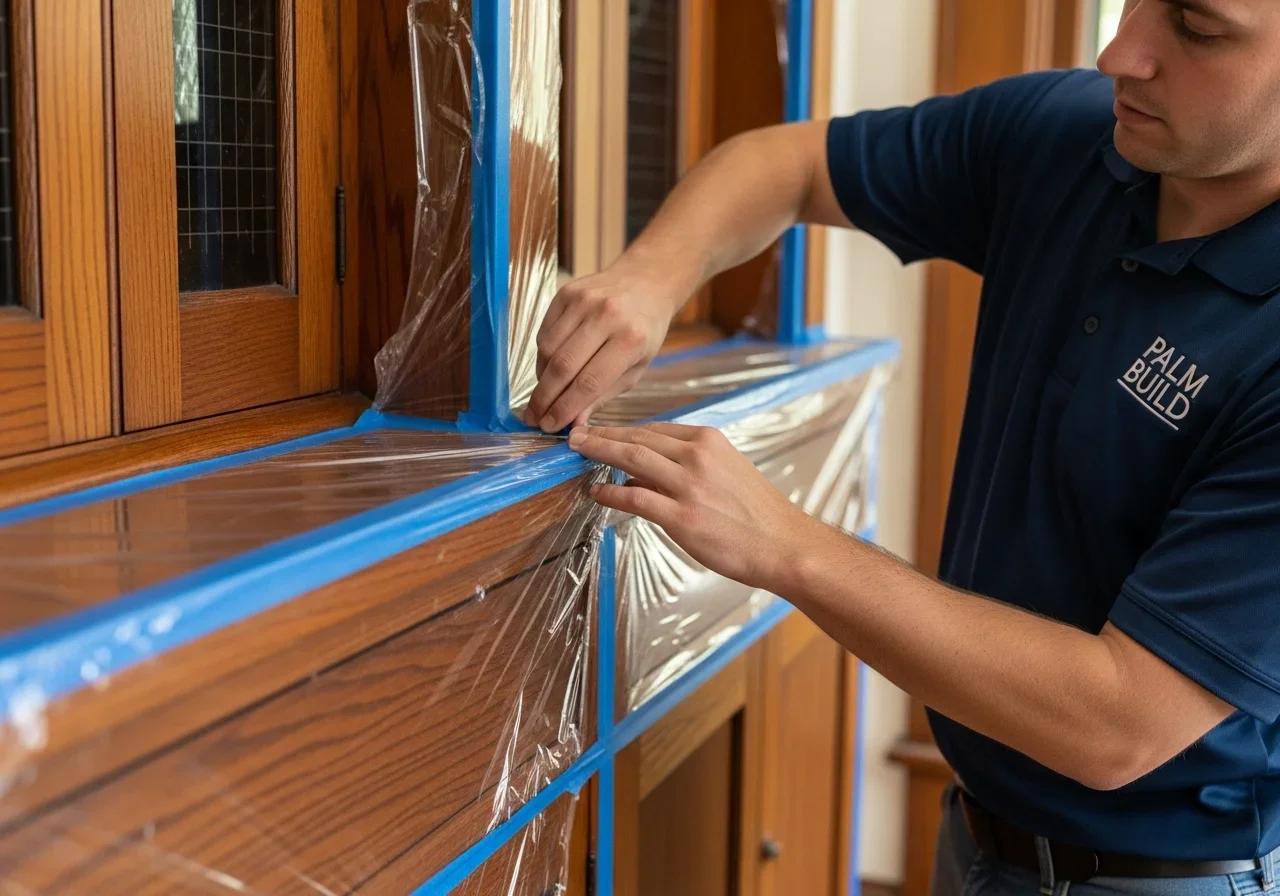
Fulton Heights Historic District — Colonial Revival and Craftsman homes dating to 1903Protecting original trim and millwork during water damage restoration in a historic
Salisbury home
Preservation-First Restoration Principles
Controlled Drying
Historic hardwood and plaster cannot be kiln-dried like modern materials. We use slower, more controlled dehumidification and targeted airflow to bring moisture content down gradually — preventing the cracking, cupping, and delamination that aggressive drying causes in old-growth wood and lime-based plaster.
Selective Demolition
In a modern home, we cut two feet above the water line. In a historic home, every cut is deliberate. We preserve original trim, baseboard, and chair rail whenever possible — removing only what cannot be saved and documenting everything for both insurance and preservation records.
Original Profile Matching
When trim, molding, or millwork must be replaced, we match the original profile exactly — running custom knife profiles when needed. This is what separates preservation-quality restoration from generic rebuild work that destroys a home's character.
Contents-First Packout & Documentation
Historic homes contain irreplaceable contents — from built-in bookcases to original hardware. We photograph, catalog, and carefully pack out contents before restoration begins, creating documentation that serves both the insurance claim and any historic preservation requirements.
Standard vs. Historic Restoration: What's Different
Standard Approach
Our Historic Approach
Standard:Cut drywall 2 ft above water line
Our approach:Selective plaster removal — preserve sound plaster, patch and skim-coat where possible
Standard:Replace flooring with off-the-shelf match
Our approach:Salvage original hardwood, kiln-dry slowly, sand and refinish — replace only what cannot be saved
Standard:Install stock baseboard and trim
Our approach:Run custom knife profiles to match original millwork exactly
Standard:Aggressive high-heat drying
Our approach:Controlled low-temp dehumidification to protect plaster bond and wood cell structure
Standard:Standard insurance line-item pricing
Our approach:Detailed material justification with preservation-grade replacement costs
Insurance Navigation
Insurance Claims for Water Damage in Salisbury
Salisbury homeowners pay approximately $1,016 to $1,221 per year for
homeowners insurance, with a 15% rate increase projected for mid-2026.
North Carolina has no specific claim filing deadline, but prompt reporting is critical —
delays can lead to coverage disputes, especially when secondary mold damage develops.
Top NC Carriers We Work With
State FarmNC Farm BureauUSAAAllstateErieNationwideTravelers
Sudden and accidental discharge — burst pipe, appliance failure, supply line rupture
Storm-driven roof and window damage resulting in interior water intrusion
Flood damage from rising water, creek overflow, or storm surge — requires separate NFIP or private flood policy
Sewer backup damage — requires specific sewer/drain endorsement (not included in standard policies)
Gradual damage from slow leaks, seepage, or long-term crawl space moisture
Mold coverage typically limited to $5,000-$10,000 sublimits — historic home remediation often exceeds this
Coverage Gaps to Watch
Flood Exclusion
Standard homeowners insurance does not cover flooding from rising water. Properties near Second Creek, Grants Creek, or the South Yadkin River should carry separate flood insurance. Coordinate with the Rowan County flood map and NC Floodplain Mapping Program to determine your zone.
Sewer Backup Endorsement
Sewer backup is excluded from standard policies but is a common add-on. Older Salisbury neighborhoods with aging municipal infrastructure are especially vulnerable — this endorsement typically costs $50-$100/year.
Mold Limitations
Most NC policies cap mold coverage at $5,000-$10,000 — far below the cost of full crawl space remediation in a historic home. If your home has a vented crawl space on clay soil, consider requesting increased mold sublimits.
Palm Build Handles the Documentation
We work directly with your insurance adjuster from the first inspection. Our moisture
maps, thermal images, daily drying logs, and photo documentation are formatted for the
adjuster workflow — reducing delays and disputes. For historic homes, we provide
detailed material justification to support higher replacement cost claims.
Thorough documentation from day one — moisture readings, thermal images, and photo
evidence formatted for your insurance adjuster.
Our Work
Salisbury Water Damage: Before and After
From historic district homes with irreplaceable hardwood to creek-adjacent properties
dealing with chronic moisture, here is a look at the water damage we see and restore in
Salisbury.
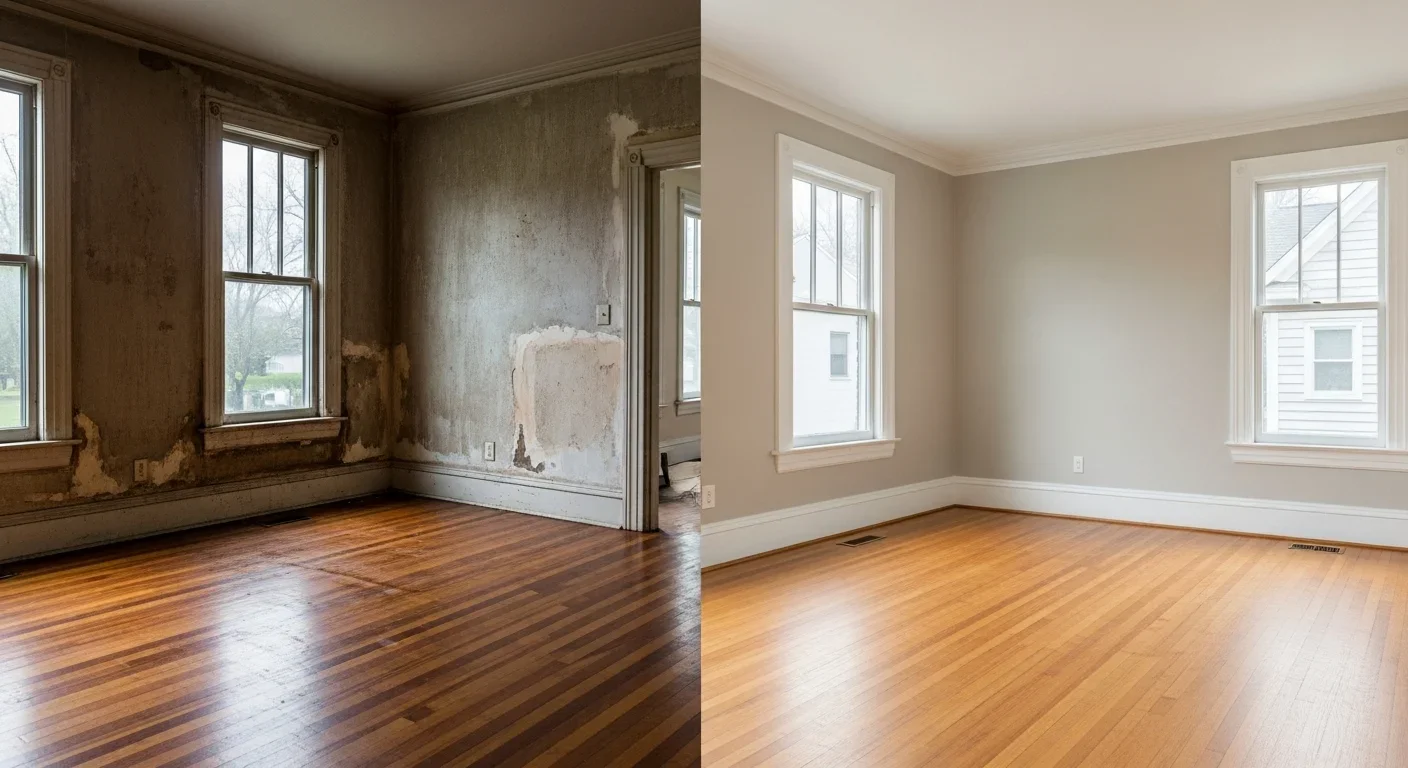
Full water damage restoration — from standing water to complete recovery
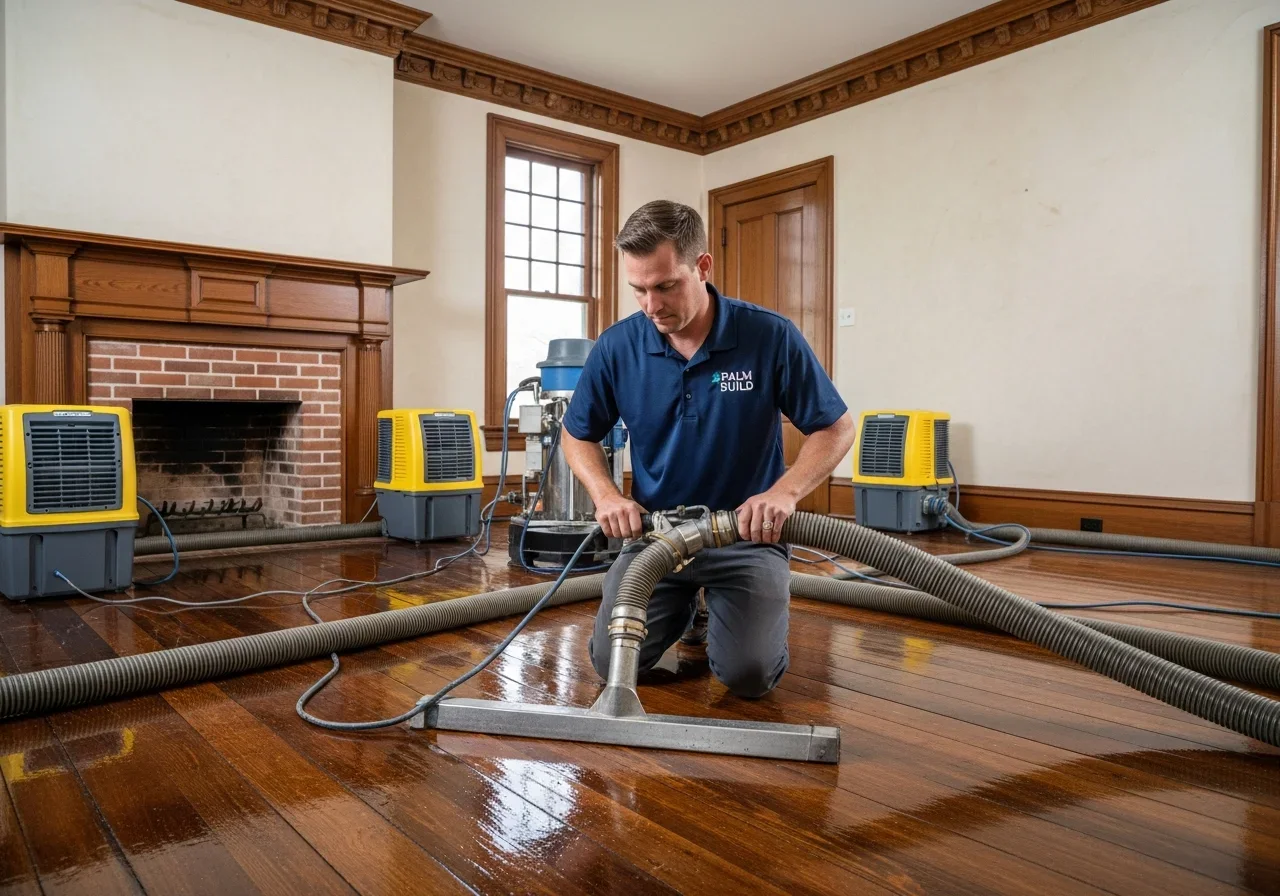
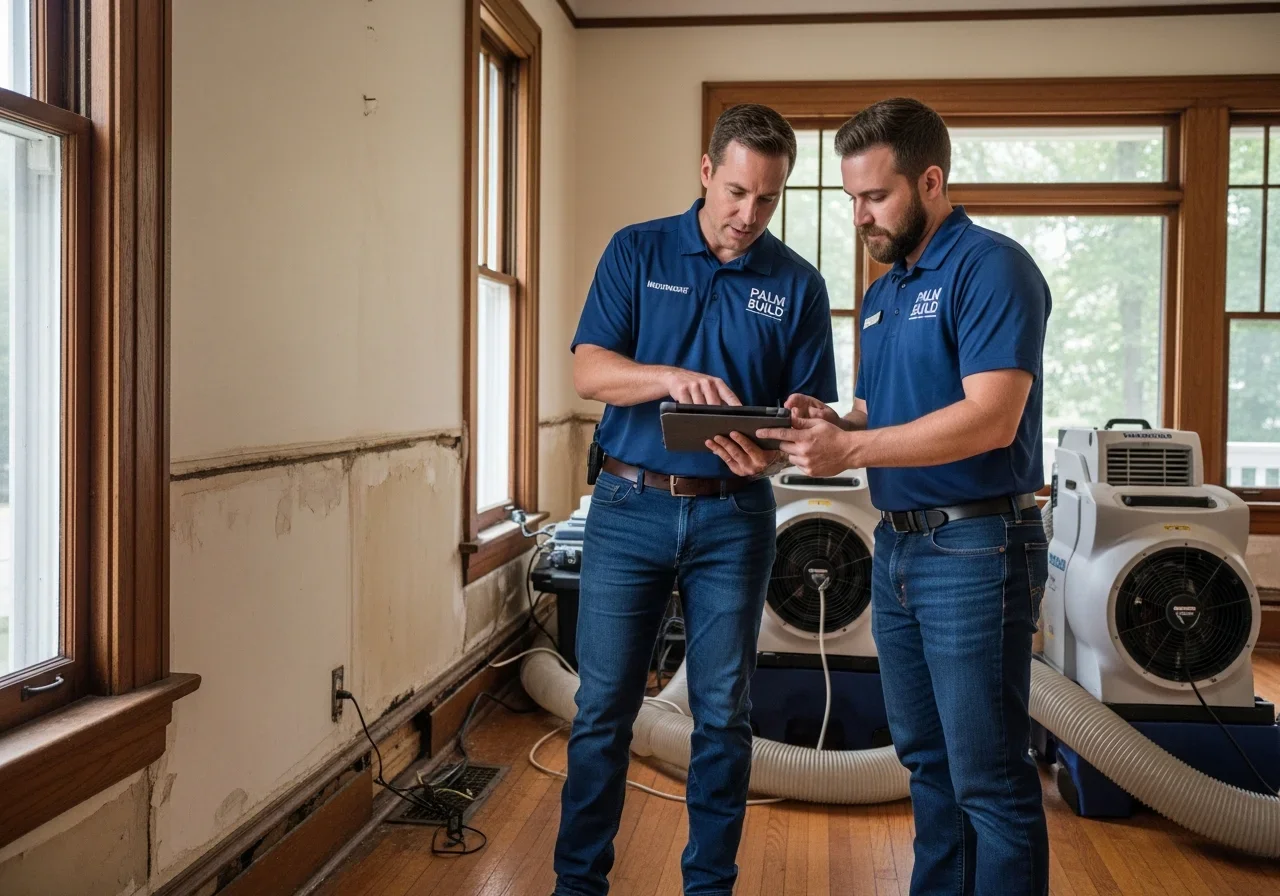
Structural drying in progress with plaster-safe equipment placement in a historic home
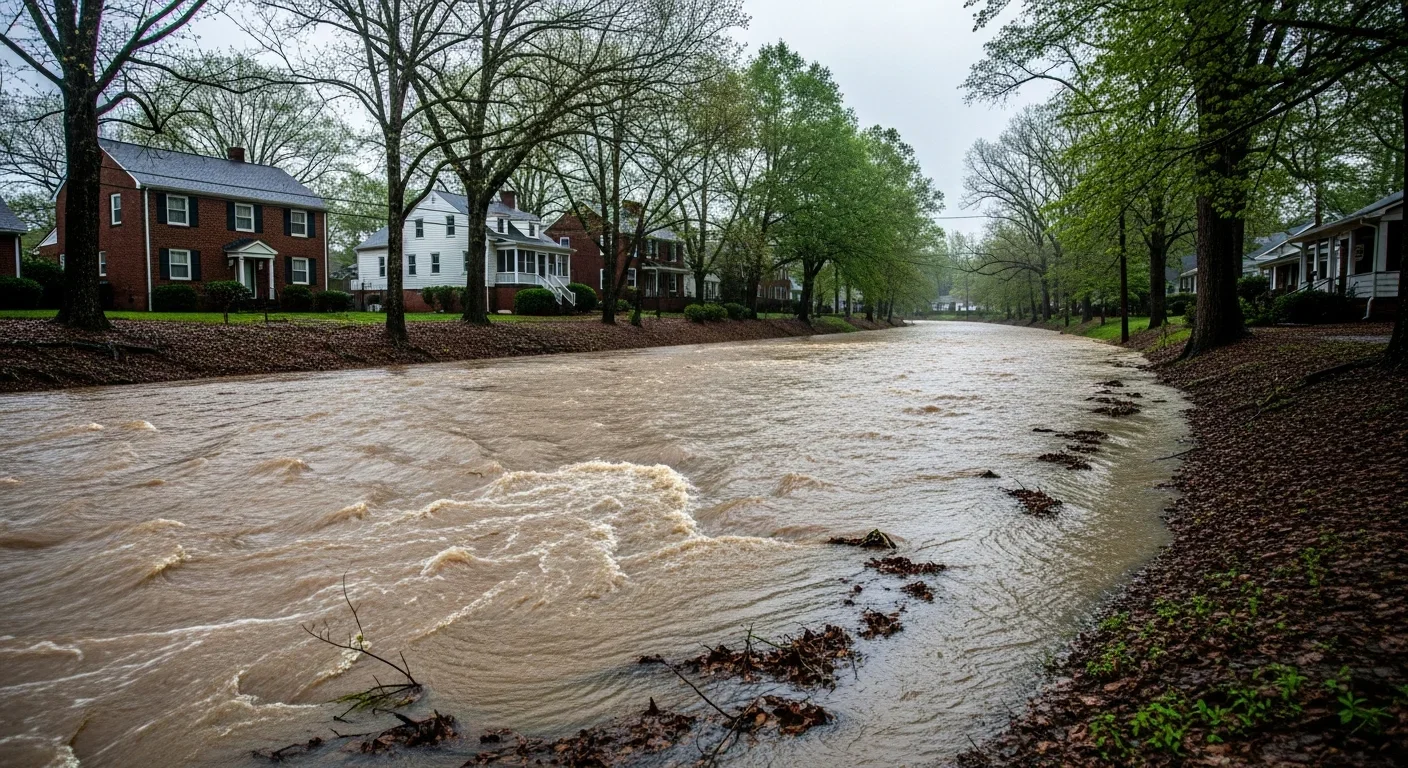
Second Creek and Grants Creek can rise rapidly after heavy rain, flooding nearby crawl spaces and ground-level entries
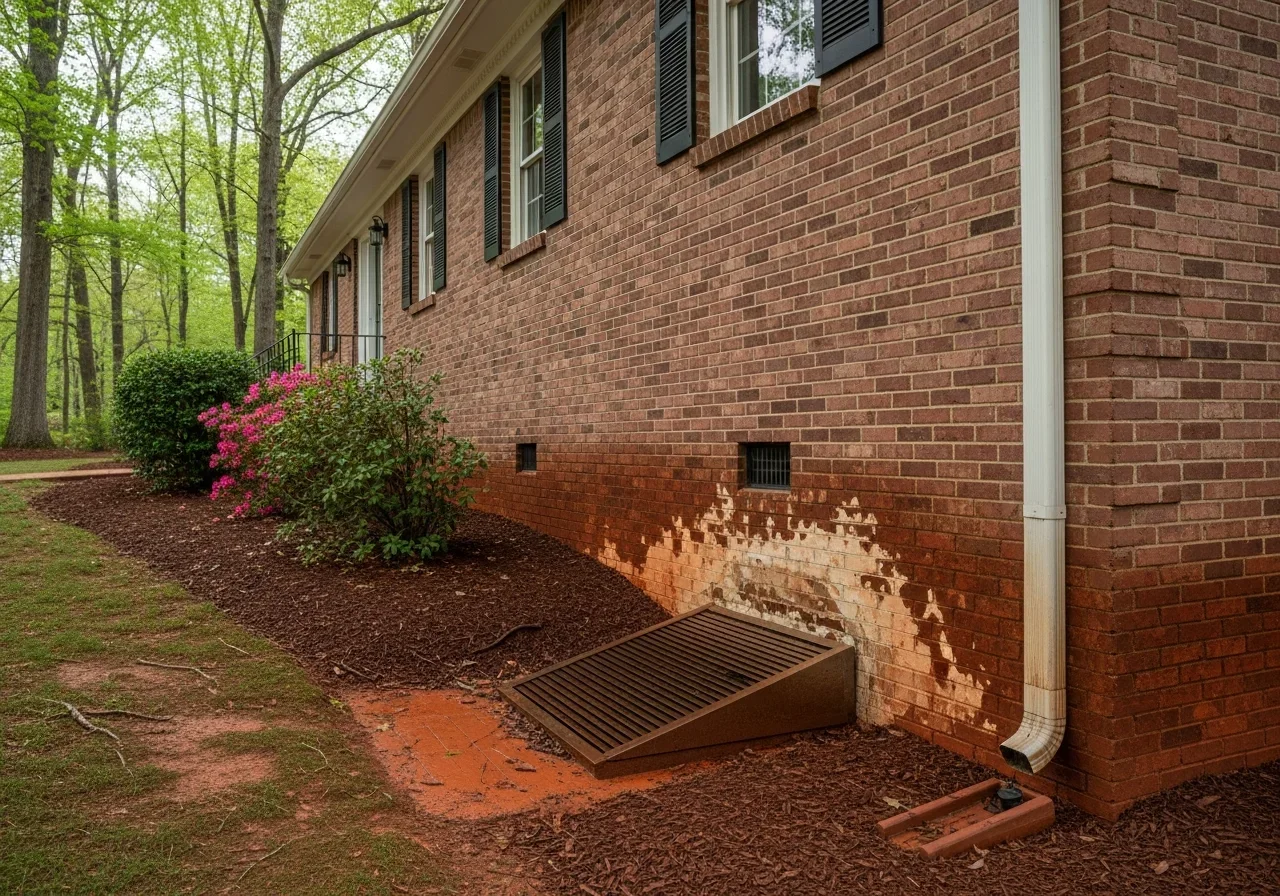
Piedmont clay soil holds moisture against brick foundations for weeks, driving chronic seepage into crawl spaces
What We See Most
Common Types of Water Damage in Salisbury Homes
Salisbury's mix of historic housing, Piedmont clay soil, and creek proximity creates a
distinct set of water damage patterns. Here are the damage types we encounter most
frequently in Rowan County.
Aging Plumbing Failures
Galvanized and cast-iron plumbing in pre-1960 Salisbury homes corrodes from the inside out, producing silent leaks behind plaster walls and under original hardwood floors. By the time water is visible, damage has often spread through wall cavities and into subfloor assemblies.
Crawl Space Moisture Infiltration
Vented crawl spaces on Piedmont clay are a chronic moisture factory. Warm, humid air enters through foundation vents, condenses on cooler surfaces, and saturates joists, subfloors, and ductwork. This is Salisbury's most persistent water damage pathway.
Creek Corridor Flash Flooding
Second Creek, Grants Creek, and the South Yadkin River thread through Salisbury residential areas. Heavy rainfall saturates clay soils quickly, and these waterways can rise several feet in hours — flooding crawl spaces, garages, and ground-level entries of nearby homes.
Storm-Driven Roof & Window Leaks
Severe thunderstorms and straight-line winds can compromise aging roof systems and original windows. The EF-1 tornado that struck nearby Landis in August 2023 damaged dozens of structures. Storm-driven water infiltration through compromised roofing may not become visible for days.
Gutter & Downspout Foundation Damage
Clay soil expands when wet and contracts when dry, pulling away from foundations and creating gaps where water pools. Clogged gutters and improperly directed downspouts concentrate water against brick foundations, driving chronic seepage into crawl spaces.
HVAC Condensation
Muggy Salisbury summers push older HVAC systems beyond capacity. Condensate drain lines clog or overflow, depositing water into ceiling cavities, wall assemblies, and attic spaces. Aging ductwork in crawl spaces also sweats, adding moisture to an already saturated environment.
Salisbury's brick homes on clay soil face chronic foundation seepage — clogged gutters
and poorly directed downspouts make it worse.
The Palm Build Difference
Why Salisbury Homeowners Choose Palm Build
Salisbury's historic districts and unique construction demand more than a generic
franchise restoration. We combine IICRC-certified water damage science with preservation
expertise that protects your home's character and value.
IICRC-Certified with Historic Preservation Expertise
Every crew lead holds current IICRC Water Restoration Technician (WRT) certification and follows the S500 standard. We add preservation-first protocols for historic homes — controlled drying, selective demolition, and original profile matching that generic restoration companies don't offer.
Insurance Documentation From Day One
Our moisture maps, thermal images, daily drying logs, and photo documentation are formatted for the adjuster workflow. For historic homes, we provide detailed material justification to support higher replacement cost claims with NC carriers.
24/7 Dispatch, 60-90 Minute Salisbury Response
Call (704) 464-0121 any time, day or night. Our crew dispatches from Charlotte with truck-mounted extraction equipment, arriving in Salisbury within 60 to 90 minutes — faster than most regional franchise networks.
Knowledge of NC Carriers & Rowan County Permitting
We work regularly with State Farm, NC Farm Bureau, USAA, Allstate, Erie, Nationwide, and Travelers on Rowan County claims. We know the permitting process for reconstruction work and coordinate with local inspectors.
Full-Service Through Reconstruction
From emergency extraction through final reconstruction, one company manages the entire project. For historic homes, that includes custom millwork replication, plaster patching, hardwood refinishing, and matching original trim profiles — no handoffs, no gaps.
Professional moisture mapping identifies water migration paths that visual inspection
misses — critical in historic wall assemblies with hidden voids.
Common Questions
Salisbury Water Damage FAQ
How quickly can Palm Build respond to water damage in Salisbury NC?
Our 24/7 emergency dispatch sends crews from our Charlotte operations hub, with typical Salisbury response times of 60 to 90 minutes. We bring truck-mounted extraction equipment and industrial dehumidifiers so mitigation begins immediately.
Can you restore water damage in Salisbury's historic homes without destroying original features?
Yes — this is one of our specialties. Salisbury's Fulton Heights, West End, and other historic districts contain irreplaceable original hardwood, plaster, and trim. Our preservation-first approach uses controlled drying techniques, selective demolition only where necessary, and meticulous documentation of original materials before any removal work begins.
Does homeowners insurance cover water damage in Salisbury?
Most policies cover sudden and accidental water damage from burst pipes, appliance failures, and roof leaks. However, flood damage from rising water requires separate flood insurance, and sewer backup coverage is typically an optional endorsement. NC does not impose specific claim filing deadlines, but prompt reporting is critical. Palm Build documents everything from day one to support your claim.
How long does water damage restoration take in Salisbury?
Most restorations take 3 to 7 days for the drying phase. Historic homes with plaster walls and original hardwood may require extended, controlled drying to prevent cracking and over-drying. Full reconstruction, if needed, may add 2 to 6 weeks. City of Salisbury permits are required for structural, electrical, or plumbing rebuild work.
What areas of Salisbury are most at risk for water damage?
Neighborhoods near Second Creek, Grants Creek, and the South Yadkin River corridors face the highest flood risk. The historic core (ZIP 28144) with its pre-war and mid-century homes faces elevated plumbing failure and crawl space moisture risk. An EF-1 tornado hit nearby Landis in August 2023, and the city declared a winter storm emergency in January 2026 — showing that storm damage is a year-round concern.
Should I worry about mold after water damage in Salisbury?
Absolutely. Salisbury's hot, muggy summers create ideal mold conditions. Wet materials can develop mold growth within 24 to 48 hours, especially in crawl spaces and behind walls where air circulation is limited. Professional dehumidification is essential — running household fans alone cannot overcome the Piedmont's ambient humidity during summer months.
What's the difference between ZIP 28144 and 28147 for water damage risk?
ZIP 28144 (central Salisbury) has a large share of 1960s and pre-1939 homes with aging plumbing, vented crawl spaces, and complex layered renovations. ZIP 28147 skews toward 1980s-1990s construction with different failure points: water heater and appliance line failures, HVAC condensation issues, and stormwater drainage concerns in newer subdivisions.
Water Damage in Salisbury? Every Minute Counts.
In Salisbury's humid Piedmont climate, water damage becomes mold damage fast — especially in homes with crawl spaces and original materials. Call Palm Build for 24/7 emergency restoration that preserves what makes your home irreplaceable.