Salisbury's Piedmont clay soil, vented crawl spaces, and hot muggy summers create ideal mold conditions — especially in the city's older housing stock. North Carolina has no statewide mold license, so choosing an IICRC-certified company with proper containment protocols isn't optional. Palm Build delivers verified mold remediation that protects your Salisbury home and preserves its character.
Serving Salisbury from Charlotte, NC 60-90 min Response IICRC Certified
Salisbury's combination of Piedmont clay soil, humid subtropical summers, aging housing
stock, and creek corridor moisture creates persistent, year-round mold risk that demands
professional remediation — not surface-level cleanup.
Piedmont Clay Soil & Crawl Spaces
70%+
Crawl space RH
Salisbury sits on heavy Piedmont clay that holds moisture for weeks after rainfall — draining at less than 0.2 inches per hour. This saturated clay continuously feeds humidity into vented crawl spaces, keeping relative humidity above 70% for months at a time.
Hot, Muggy Summers
65°F+
Summer dew points
From May through September, outdoor dew points in Salisbury routinely exceed 65°F — well above the indoor targets needed to prevent condensation. Warm, moisture-laden air enters vented crawl spaces and condenses on cooler structural surfaces, feeding mold colonies.
Aging Housing Stock (28144)
1960s
Dominant build era
Central Salisbury's housing stock is dominated by 1960s construction and a significant number of pre-1939 homes. Plaster walls create complex cavity assemblies that hide moisture pathways — leaks can travel through lathe channels and feed mold for months before anyone notices.
Creek Corridor Moisture
3+
Creek corridors
Second Creek, Grants Creek, and the South Yadkin River corridor elevate soil moisture levels across much of Salisbury. Properties near these waterways face chronically wet crawl spaces and higher baseline humidity — even without direct flooding events.
Complex Layered Renovations
HIGH
Concealed mold risk
Older Salisbury homes have often been remodeled multiple times over decades. Each renovation layer can trap moisture between materials — new drywall over old plaster, vinyl flooring over hardwood, foam insulation over original sheathing — creating hidden condensation zones.
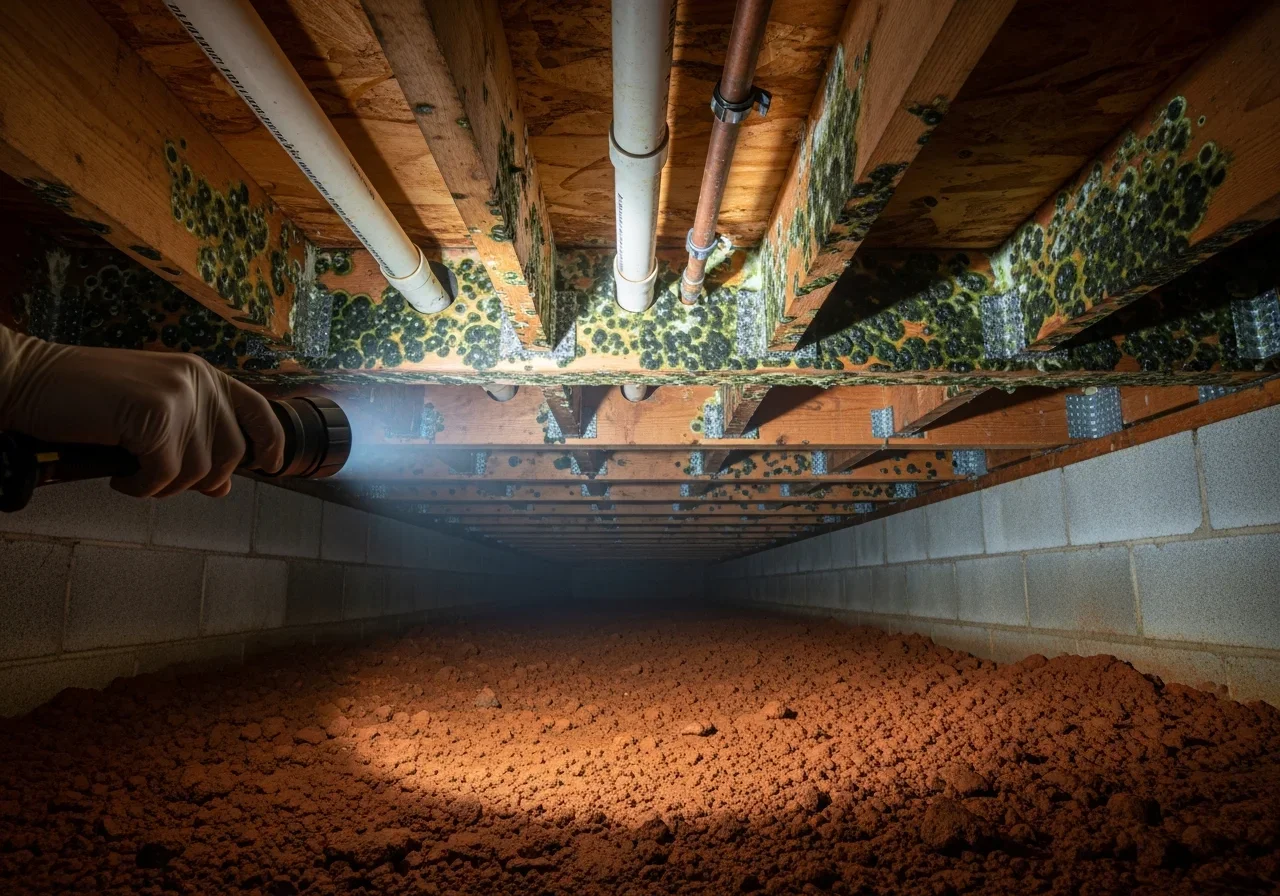
Active mold colonization on crawl space joists — a common finding in Salisbury homes
built on Piedmont clay
Know The Signs
Warning Signs of Mold in Salisbury Homes
Mold in Salisbury homes rarely starts with a dramatic event. It builds gradually —
subtle signs that are easy to dismiss until remediation costs multiply and health
effects become chronic.
Musty Odor from Crawl Space or HVAC
Most Reported
The most common early sign in Salisbury homes. If you notice a damp, earthy smell — especially when your HVAC kicks on or after opening the crawl space access — mold is likely growing below and distributing spores through your ductwork.
Visible Discoloration on Walls, Ceilings, Baseboards
Advanced
Dark spots, fuzzy patches, or staining along baseboards and ceiling corners. In older Salisbury homes with plaster walls, mold often colonizes behind the surface — visible discoloration means the problem is already well-established.
Persistent Indoor Allergy Symptoms
Health Risk
Nasal congestion, itchy eyes, throat irritation, or worsening asthma that improves when you leave the house. The CDC links these symptoms to elevated indoor mold spore counts — a sign your home environment needs professional assessment.
Condensation on Pipes, Windows, Ductwork
Early Warning
Visible moisture on cold surfaces means relative humidity has exceeded the dew point locally. In Salisbury's humid summers, condensation on crawl space ductwork and plumbing is a direct precursor to mold colonization.
Water Stains (Even Old, Dried Ones)
Early Warning
Past water intrusion leaves mineral deposits and cellulose damage that mold can feed on long after the surface dries. Old water stains on ceilings and walls may harbor active but hidden mold colonies inside the wall cavity.
Sagging or Buckled Hardwood Floors
Structural
When crawl space moisture migrates upward through the subfloor, hardwood planks absorb it and warp. Bouncy or sagging spots indicate wood moisture content above 19% — the threshold where mold and decay organisms thrive.
Dark Spots in HVAC Vents or Registers
Advanced
Mold inside your HVAC system distributes spores to every room, every time the system runs. Dark residue on supply registers or return grilles signals contamination that requires professional duct cleaning and source remediation.
When to Call Immediately
If you see widespread mold covering more than 10 square feet, notice structural
softening in floors or joists, or find standing water in your crawl space — do not
attempt DIY cleanup. Contact a certified mold remediation professional and document everything for your insurance claim.
IICRC S520 Protocol
Our Salisbury Mold Remediation Process
Professional mold remediation follows a strict sequence defined by the IICRC S520
standard. Every step is documented, every decision is defensible, and independent
verification confirms the result.
01
Assessment & Air Sampling
Day 1
02
Containment
Day 1-2
03
HEPA Vacuuming & Source Removal
Days 2-4
04
Antimicrobial Treatment
Days 4-5
05
Dehumidification & Climate Control
Days 3-6
06
Clearance Testing
Day 6-7
01
Assessment & Air Sampling
Day 1
An independent qualified mold assessor performs visual inspection, moisture mapping, and air quality sampling. The assessment identifies the moisture source, contamination extent, and mold species — not just the visible growth. This independence ensures unbiased results.
02
Containment
Day 1-2
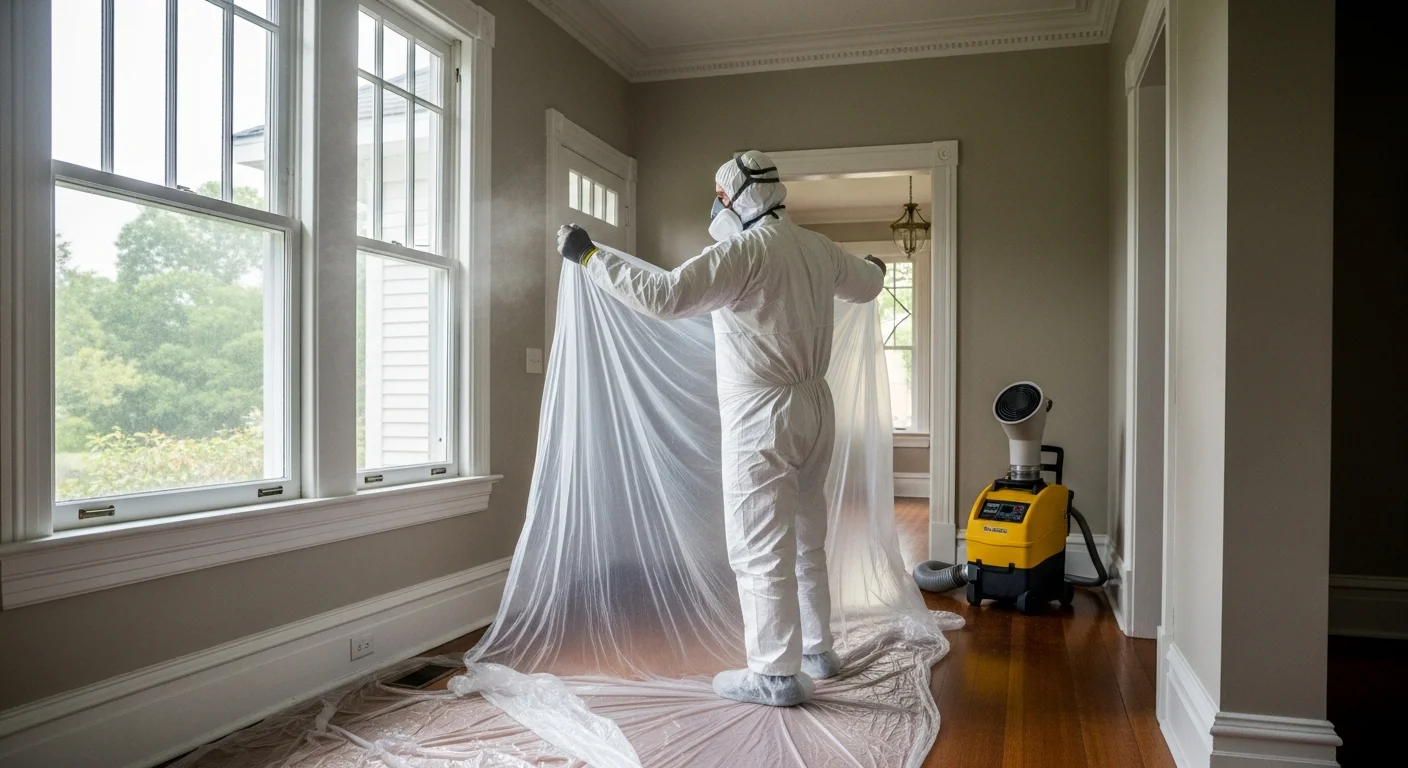
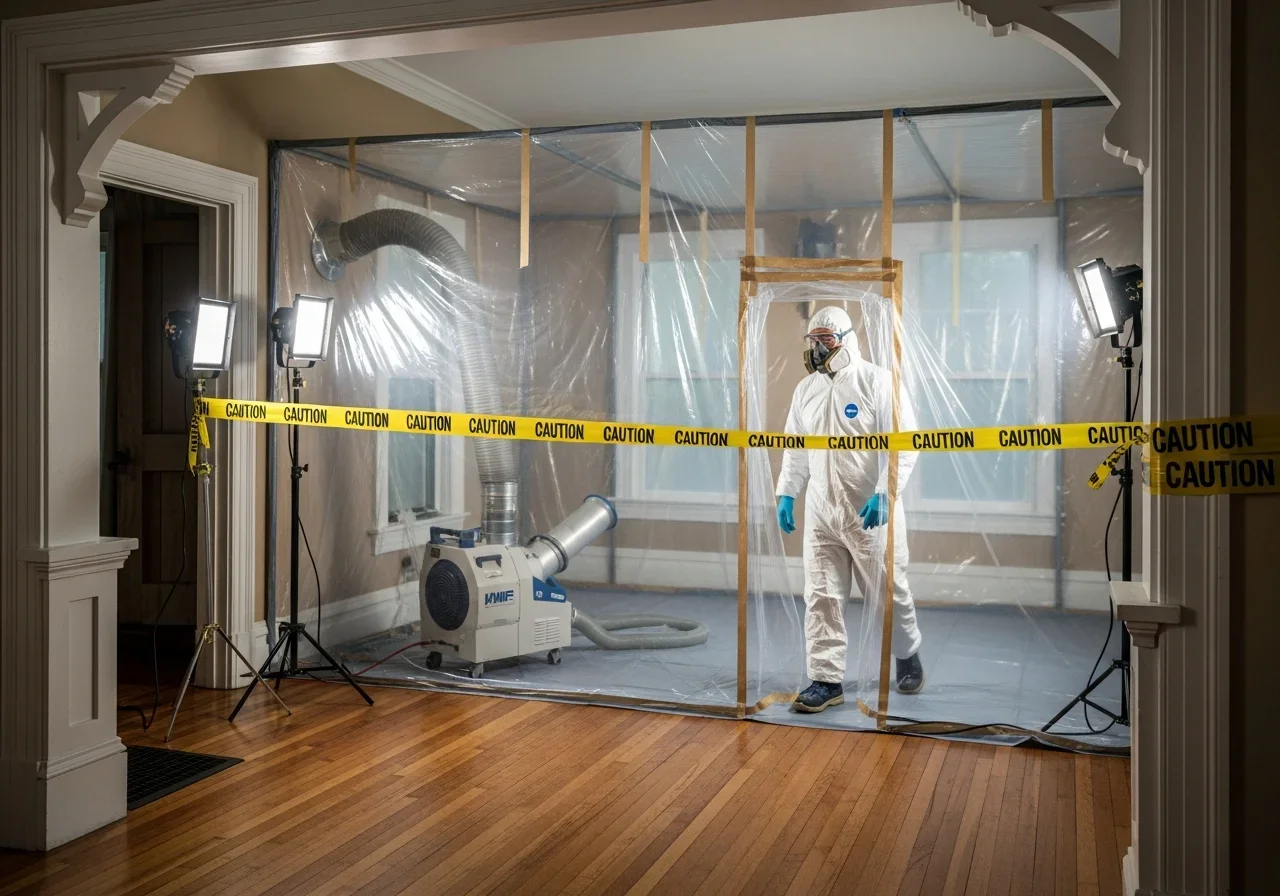
Poly barriers seal the affected area floor-to-ceiling. HEPA air scrubbers create negative air pressure inside the containment zone, preventing spore migration to clean areas. Critical path materials and furnishings are protected or relocated.
03
HEPA Vacuuming & Source Removal
Days 2-4
All contaminated surfaces are HEPA-vacuumed before removal begins. In Salisbury's historic homes with plaster walls, we use careful extraction techniques that preserve the lathe and structural integrity while removing contaminated material. Non-salvageable materials are double-bagged for disposal.
04
Antimicrobial Treatment
Days 4-5
EPA-registered antimicrobial agents are applied to all treated structural elements — joists, subfloor panels, studs, and foundation walls. The treatment prevents regrowth during the drying and reconstruction phases.
05
Dehumidification & Climate Control
Days 3-6
Aggressive commercial dehumidification drives moisture levels below 60% RH and holds them there. In Salisbury's Piedmont humidity, this step is critical — ambient outdoor moisture will re-colonize inadequately dried materials within weeks.
06
Clearance Testing
Day 6-7
An independent third party — not Palm Build — performs post-remediation air sampling and visual verification. Spore counts must return to acceptable levels. Clearance documentation is provided for your records and insurance file.
Why Containment Matters in Salisbury
Disturbing mold without proper containment sends billions of spores airborne —
potentially contaminating previously clean areas. In Salisbury's older homes with
interconnected wall cavities and open floor plans from renovations, uncontrolled
disturbance can spread contamination throughout the entire structure.
1
Sealed Barriers
Polyethylene sheeting floor-to-ceiling at all openings
Not all Salisbury homes face the same mold risks. Housing age, construction methods, and
local drainage patterns vary significantly between ZIP codes — and so do the types of
mold problems we see.
ZIP 28144
Central Salisbury
HIGH
Neighborhoods:
Downtown, Fulton Heights, North Main, Ellis Street, Livingstone College area, West End, Park Avenue
Dominant era:1960s + Pre-1939
Mold Drivers
Aging galvanized and cast-iron plumbing with silent pinhole leaks feeding hidden wall moisture
Vented crawl spaces sitting on heavy Piedmont clay that holds moisture for weeks
Plaster walls with complex cavity assemblies — moisture travels through lathe channels unseen
Layered renovations that trap moisture between old and new materials
Common Mold Locations
Crawl space joists and subfloor
Behind bathroom and kitchen plaster walls
Inside HVAC closets and return plenums
Behind brick veneer at flashing defects
ZIP 28147
Outer Salisbury
MODERATE-HIGH
Neighborhoods:
Woodleaf Road corridor, Jake Alexander Blvd West, Bringle Ferry area, Country Club Hills, Meadowbrook
Dominant era:1980s-1990s
Mold Drivers
HVAC condensate line failures — many systems are nearing or past end of useful life
Water heater leaks in interior closets with inadequate drain pans
Builder-grade materials (OSB, vinyl-backed wallpaper) with less moisture tolerance
Stormwater drainage issues in subdivisions built before modern grading standards
Common Mold Locations
HVAC ductwork and air handler closets
Behind drywall near bathrooms and laundry rooms
Garage-to-living space transitions and bonus rooms
Attic insulation near bathroom exhaust fan terminations
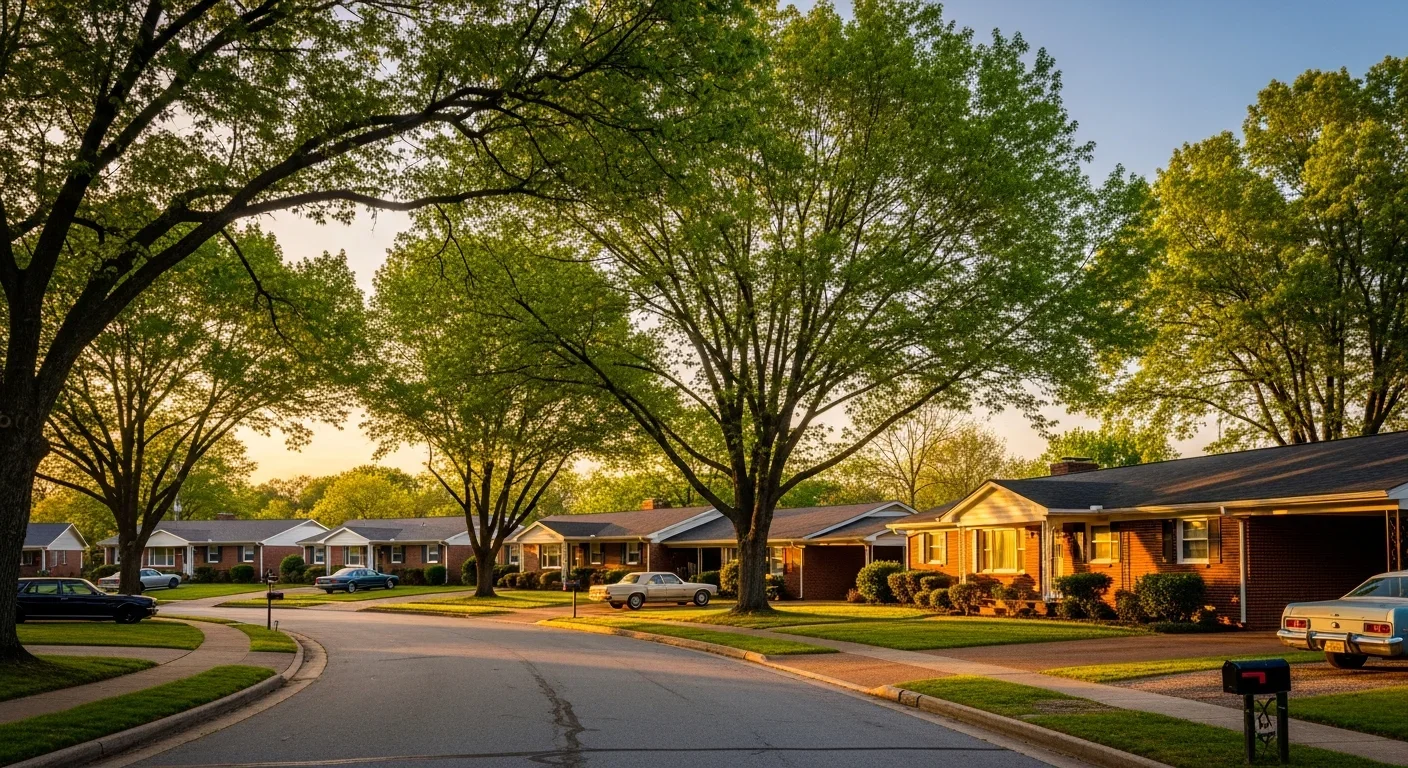
Mid-century ranch homes dominate Salisbury's housing stock — vented crawl spaces on
Piedmont clay make them the highest-risk category for mold
Salisbury's #1 Mold Problem
Crawl Space Mold: The Hidden Crisis Under Salisbury Homes
Salisbury's Piedmont crawl spaces are mold hotspots by design. Heavy clay soil holds
moisture for weeks after rainfall, and traditional vented crawl space construction
invites warm, humid outdoor air directly into contact with cooler structural surfaces
below the home.
The condensation cycle: humid outdoor air enters through
foundation vents, contacts the cooler underside of floor joists and HVAC ductwork, and condenses.
This persistent moisture film feeds mold colonies that can cover hundreds of square feet of
structural wood — all invisible from the living space above.
Local crawl space specialists confirm what we see on every Salisbury inspection: high
humidity and clay soil are the primary drivers of crawl space mold in this area. Vented
crawl space designs that were standard through the 1990s simply do not work in the
Piedmont climate.
Crawl Space Mold Warning Signs
Musty odor upstairs
Crawl space air migrates into living space through gaps, HVAC returns, and the stack effect
Black or green colonies on floor joists, subfloor panels, and sill plates
Condensation on ductwork
Warm humid air hitting cooler HVAC duct surfaces — RH has already exceeded the dew point
Our Crawl Space Remediation Approach
Crawl space humidity (vented)70-90% RH
Safe humidity threshold<60% RH
After encapsulation45-55% RH
Full remediation includes containment, HEPA vacuuming, source removal, antimicrobial
treatment, and our strong recommendation: crawl space encapsulation to permanently break
the condensation cycle.
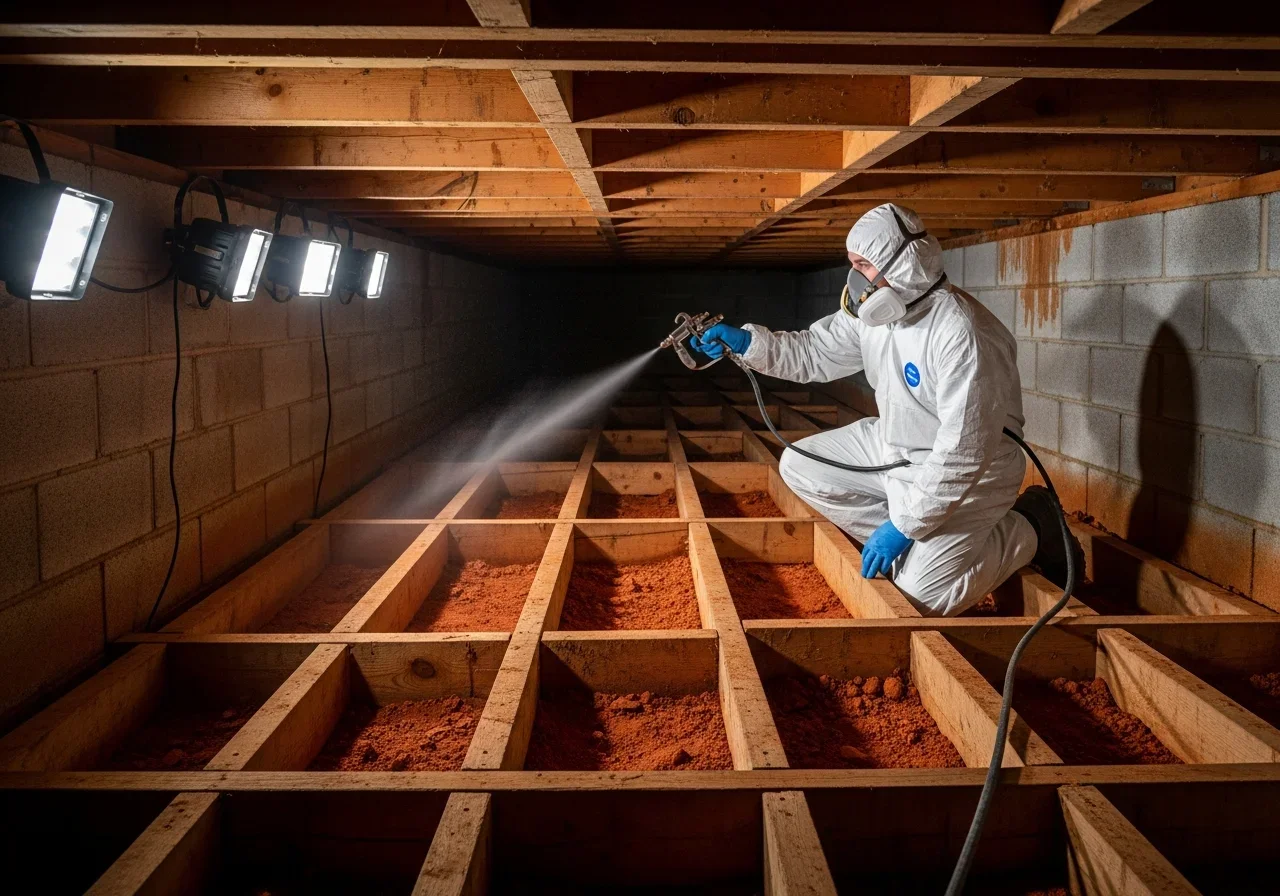
Active mold colonization on floor joists in a vented Salisbury crawl space — clay soil
moisture is the primary driverAntimicrobial treatment applied to joists and subfloor after HEPA vacuuming and source
removal
Salisbury Pricing
Mold Remediation Costs in Salisbury
Remediation costs depend on contamination size, materials affected, accessibility, and
whether crawl space work is involved. Salisbury's older housing stock and historic homes
often add complexity and cost.
Small Area
$1,500 – $3,500
Single area, accessible, under 50 sq ft
Bathroom wall, window frame, small closet
Moderate Scope
$3,500 – $10,000
Multiple rooms, crawl space, concealed mold
Crawl space joists, HVAC ductwork, behind bathroom walls
Large / Whole-Home
$10,000 – $30,000+
Extensive removal, HVAC, historic material reconstruction
Full crawl space + living areas, multi-system contamination
Historic Home Cost Factors
Salisbury's historic homes — particularly pre-1939 properties in Fulton Heights and
the downtown historic districts — involve plaster walls, complex cavity assemblies,
and irreplaceable trim work. Remediation in these homes requires preservation-first
techniques that add 15-30% to standard costs. Insurance mold coverage caps are often
$10,000, which may not cover the full scope for historic properties.
Insurance Navigation
Mold Insurance Claims in Salisbury
Mold coverage in North Carolina is limited and carrier-specific. The critical
distinction: was the mold caused by a sudden, covered water event — or by gradual
conditions? That single question determines whether your claim is accepted or denied.
Mold resulting from a covered sudden water event (burst pipe, appliance failure) is typically covered up to policy sublimits
Mold from gradual humidity, long-term crawl space moisture, or deferred maintenance is almost always excluded
Pre-existing mold discovered during renovation, inspection, or a real estate transaction is not covered
Flood-related mold requires separate NFIP or private flood policy — standard homeowners does not cover flood damage
Report water damage to your carrier immediately — delays can void the coverage chain from water event to mold discovery
Common NC Carriers in Rowan County
State FarmFarm BureauUSAAAllstateErieNationwideTravelers
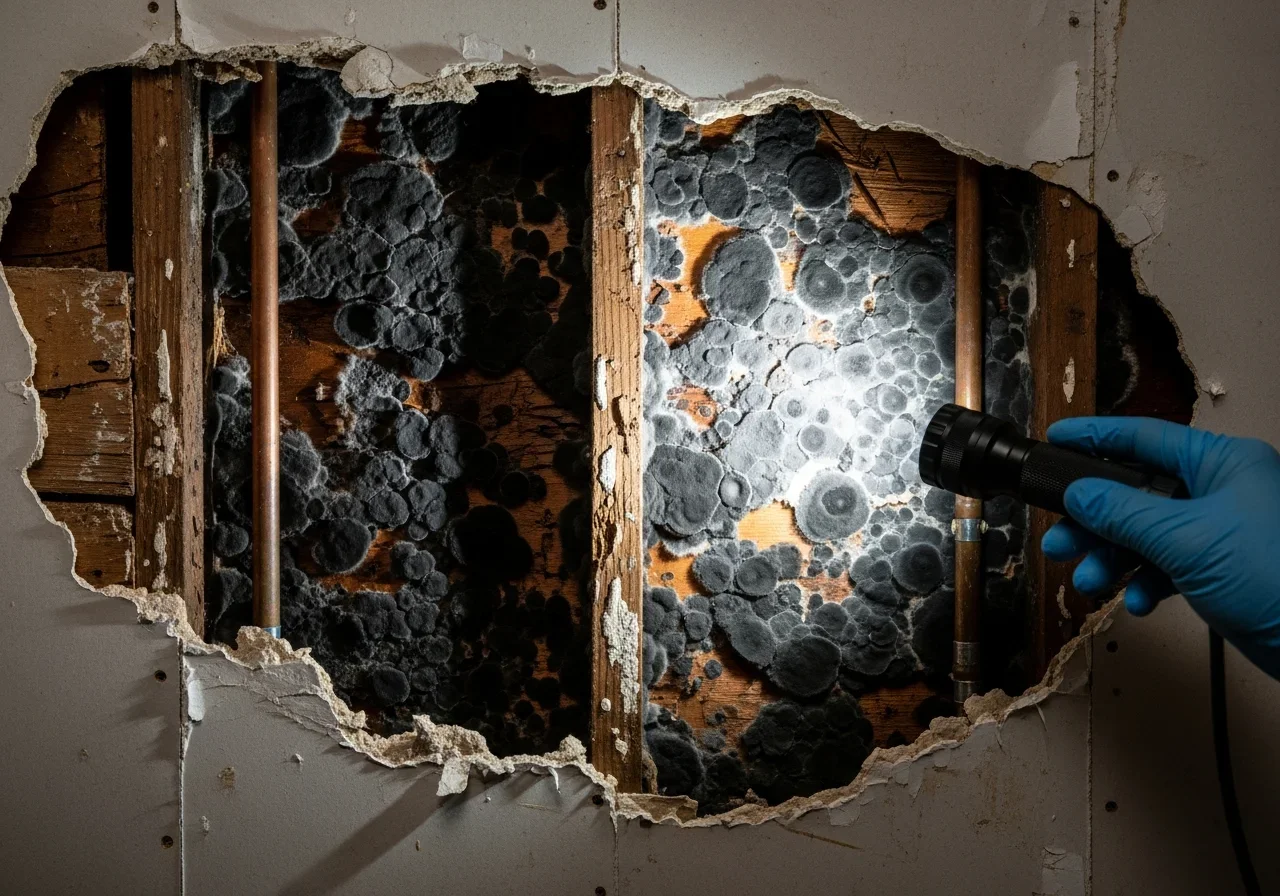
Hidden mold inside a wall cavity — if caused by a sudden pipe failure, insurance may
cover remediation; if from gradual humidity, it will not
Palm Build's Approach to Mold Claims
When mold results from a covered water event, our documentation connects the mold to
the original loss — moisture maps, timeline photos, species identification, and
remediation scope all formatted for your adjuster. We build the coverage chain from
day one so your claim has the best chance of approval.
Report water damage to your insurance carrier immediately. Delays between the water
event and your claim can break the coverage chain and give the carrier grounds to
deny mold remediation costs.
Crawl space mold colonization on floor joists — Piedmont clay moisture is the driver
Hidden mold inside a wall cavity — plaster walls in older Salisbury homes conceal moisture pathways
Antimicrobial treatment applied to structural elements after HEPA vacuuming and removal
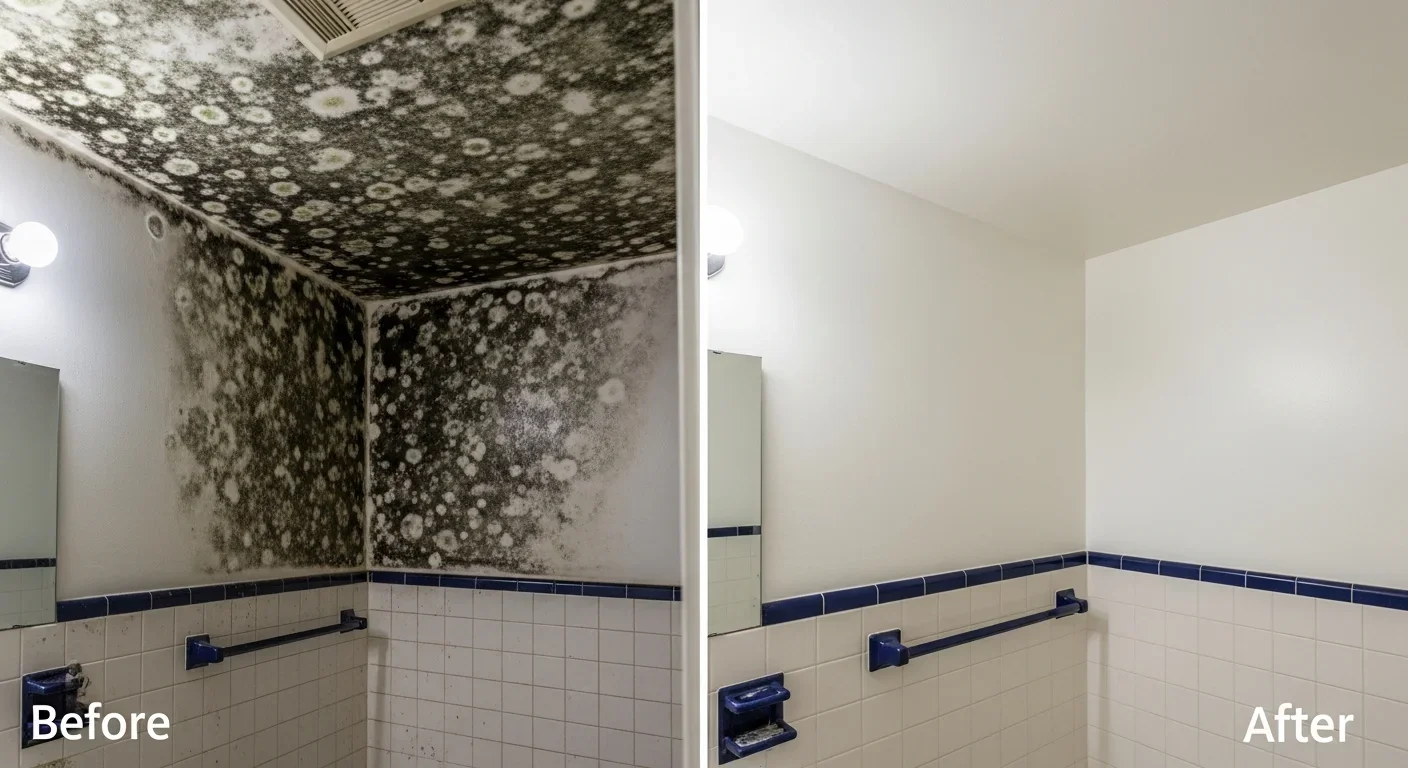
Before and after: professional mold remediation with independent clearance verification
The Palm Build Difference
Why Salisbury Homeowners Choose Palm Build for Mold
IICRC Certified in an Unlicensed Market
North Carolina does not require mold remediation licensing. That means anyone with a truck can call themselves a mold company. Our crew leads hold current IICRC Mold Remediation Specialist (MRS) certification — the industry gold standard. In an unregulated market, voluntary certification is the only quality signal homeowners can trust.
Full Containment with HEPA Filtration
Every project follows ANSI/IICRC S520 containment protocol: sealed poly barriers, negative air pressure with HEPA air scrubbers, PPE for all crew, and air lock decontamination chambers. No shortcuts, no exceptions — even when the scope seems small.
Independent Clearance Testing
We never self-verify our own work. Post-remediation air sampling and visual inspection are performed by an independent third-party assessor. This eliminates conflicts of interest and gives you unbiased proof the remediation met clearance standards.
Preservation-First Approach for Historic Homes
Salisbury's historic districts — Fulton Heights, North Main, West Square — contain irreplaceable architectural details. Our remediation protocols prioritize preservation of plaster, trim, and original materials. We remove the mold without destroying the history.
Piedmont Crawl Space & Clay Soil Expertise
We understand Salisbury's specific mold ecosystem: Piedmont clay that holds moisture for weeks, vented crawl space designs that trap humid air, and the condensation cycle that feeds structural mold. We address root causes — not just visible symptoms.
Insurance Documentation
When mold results from a covered water event, our documentation links the mold to the original loss — moisture maps, timeline photos, species identification, and scope reports formatted for your adjuster from day one.
IICRC-certified technician applying EPA-registered antimicrobial treatment to crawl
space joists following full containment and HEPA source removal
Common Questions
Salisbury Mold Remediation FAQ
Does North Carolina require a license for mold remediation?
No. NC DHHS and NC State Extension both confirm that no federal or state mold certification exists in North Carolina. The IICRC (Institute of Inspection, Cleaning and Restoration Certification) is the most widely accepted industry benchmark, and ANSI/IICRC S520 defines professional mold remediation procedures. Always verify your company holds current IICRC certification.
How do I know if I need mold remediation in my Salisbury home?
Common signs include musty odors (especially from crawl spaces), visible discoloration on walls or ceilings, persistent allergy symptoms indoors, condensation on pipes or ductwork, and sagging or buckled hardwood floors. In Salisbury's older homes, mold often grows in concealed spaces for months before becoming visible. Professional air sampling provides definitive answers.
Is mold remediation covered by insurance in Salisbury?
Mold is typically covered only when it results from a covered peril — a burst pipe, appliance failure, or storm damage. Mold from gradual humidity, crawl space moisture, or deferred maintenance is generally excluded. Report water damage immediately to establish the causal chain that preserves your mold coverage rights.
Why is crawl space mold so common in Salisbury?
Salisbury's older homes use vented crawl spaces over Piedmont clay soil — a combination that traps moisture during hot, muggy summers. Warm humid air enters through foundation vents, contacts cooler floor joists, and condenses. The clay soil holds moisture against the foundation for weeks. Local crawl space specialists explicitly identify this as Salisbury's most common residential moisture problem.
What's the difference between mold risk in ZIP 28144 and 28147?
ZIP 28144 (central Salisbury) has a large share of 1960s and pre-1939 homes with aging plumbing, vented crawl spaces, plaster walls, and complex layered renovations where moisture hides. ZIP 28147 skews toward 1980s-1990s construction with different mold drivers: HVAC condensation issues, water heater failures, and stormwater drainage concerns.
How long does mold remediation take in Salisbury?
Most residential remediations take 3 to 5 days for containment, removal, and treatment. Clearance testing adds 1 to 2 days. Historic homes with plaster walls and complex assemblies may require more careful, extended work. Full reconstruction of removed materials adds 1 to 3 weeks depending on scope.
Can you remediate mold in Salisbury's historic homes without damaging original features?
Yes. Our preservation-first approach prioritizes saving original plaster, hardwood, and trim wherever structurally sound. We use selective demolition only where necessary, document original materials before any removal, and coordinate reconstruction to match existing profiles. Containment barriers protect unaffected areas throughout the process.
Mold in Your Salisbury Home? Don't Wait.
NC has no mold license requirement — which makes choosing an IICRC-certified company critical. Call Palm Build for professional mold remediation with containment, HEPA filtration, and independent clearance testing.